

On Pixel-Wise Explanations for Non-Linear Classifier Decisions by Layer-Wise Relevance Propagation
Open accessThe DOI matches its Crossref record; 55 of the 56 references it cites were found in a registry or an index.
Abstract
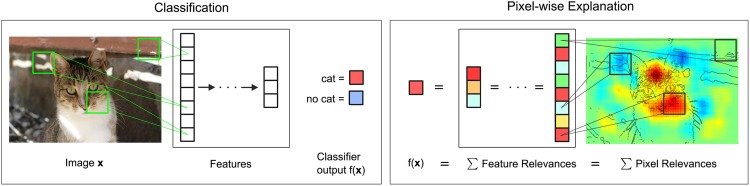
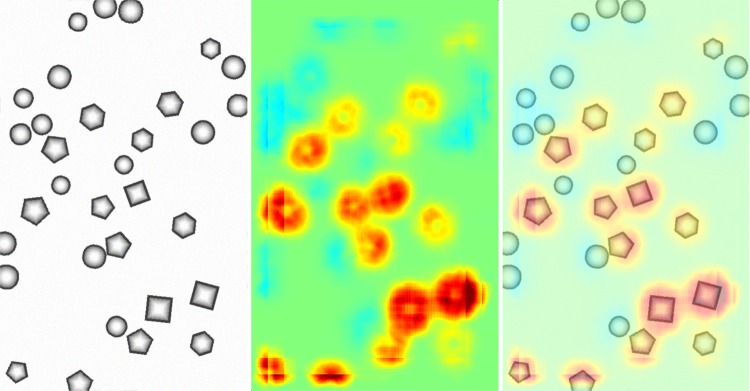
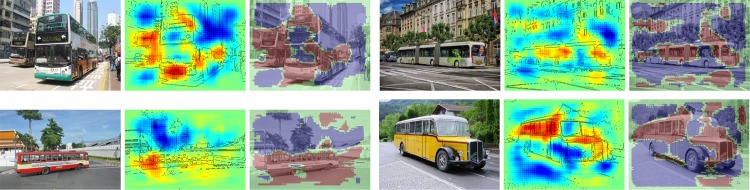
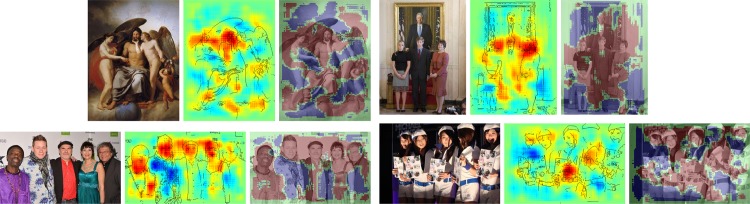
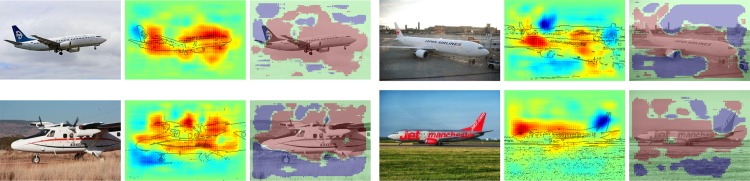
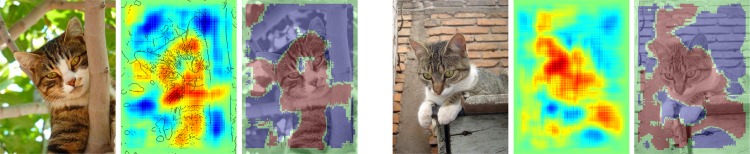
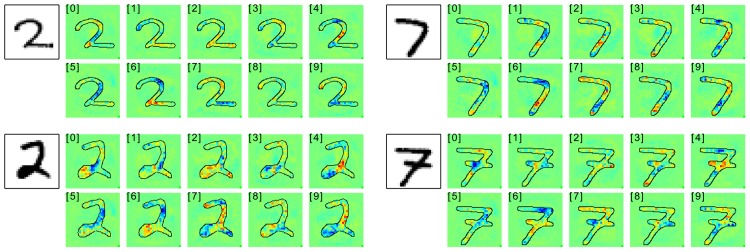
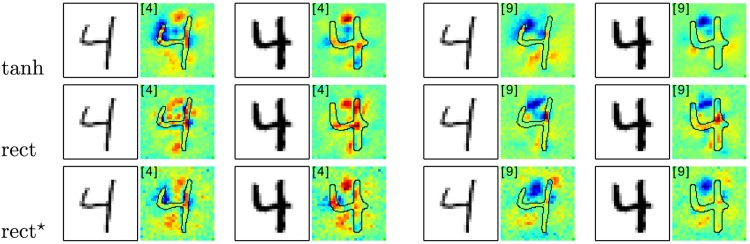
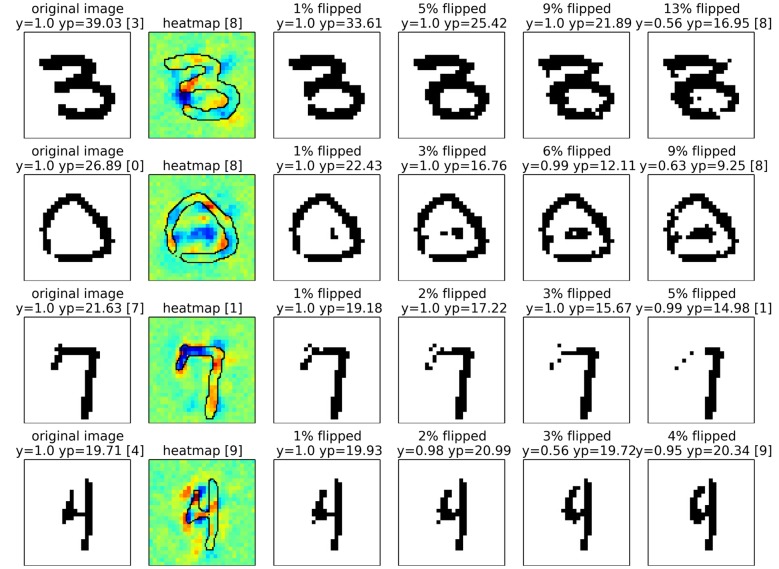
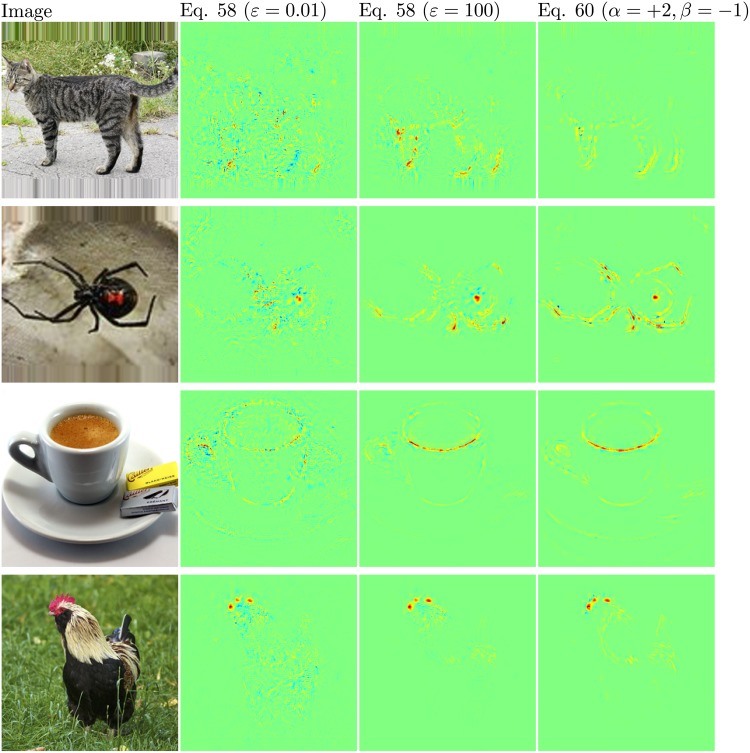
Understanding and interpreting classification decisions of automated image classification systems is of high value in many applications, as it allows to verify the reasoning of the system and provides additional information to the human expert. Although machine learning methods are solving very successfully a plethora of tasks, they have in most cases the disadvantage of acting as a black box, not providing any information about what made them arrive at a particular decision. This work proposes a general solution to the problem of understanding classification decisions by pixel-wise decomposition of nonlinear classifiers. We introduce a methodology that allows to visualize the contributions of single pixels to predictions for kernel-based classifiers over Bag of Words features and for multilayered neural networks. These pixel contributions can be visualized as heatmaps and are provided to a human expert who can intuitively not only verify the validity of the classification decision, but also focus further analysis on regions of potential interest. We evaluate our method for classifiers trained on PASCAL VOC 2009 images, synthetic image data containing geometric shapes, the MNIST handwritten digits data set and for the pre-trained ImageNet model available as part of the Caffe open source package.
Overview
The claims and statistics of this paper haven’t been checked yet.
Free: it reads the open-access text and checks the first 5 claims that cite a source we can check. Create a free account to check every claim.
Integrity signals
Registry
Cites
Statistics
Figures



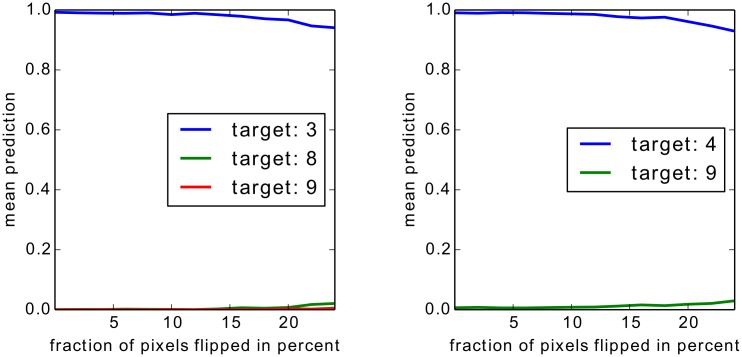
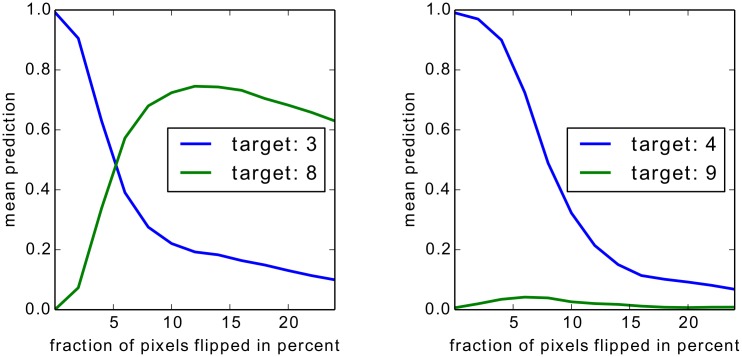
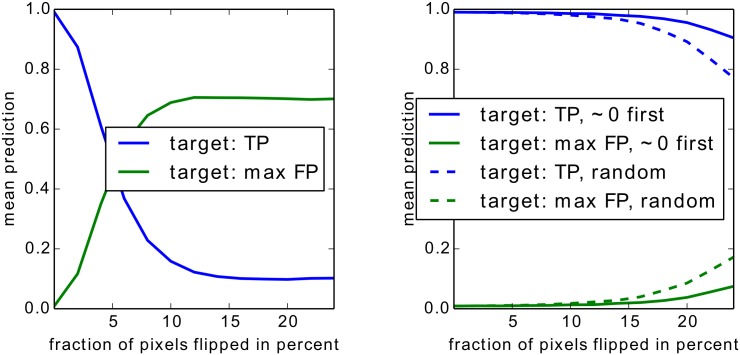
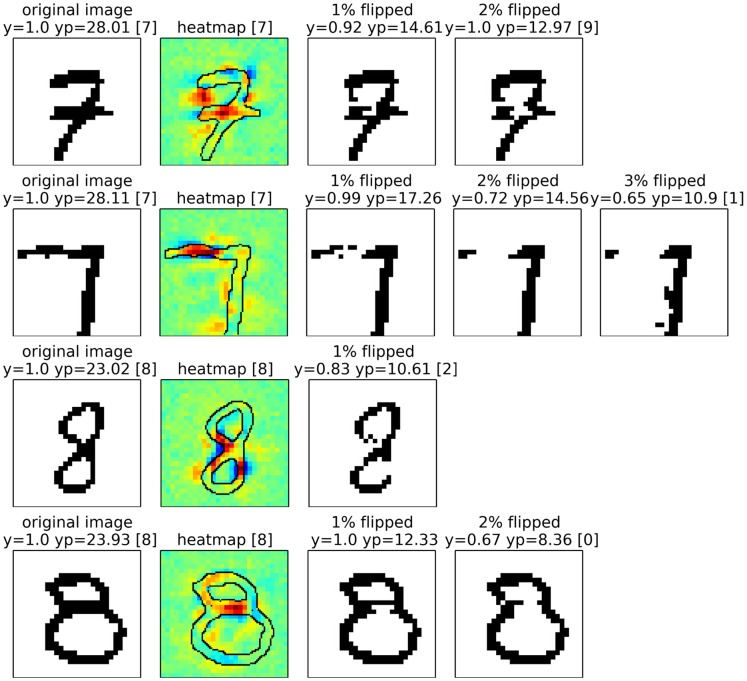
Verification
Claims the paper makes
The claims and statistics of this paper haven’t been checked yet.
Free: it reads the open-access text and checks the first 5 claims that cite a source we can check. Create a free account to check every claim.
Claims other papers make about this one
Each is checked against this paper’s own text: does it say what the citing paper says it does?
The source backs part of the claim, not all of it — or backs it for a different population, condition or comparison.
In the citing paper
“Barring a few exceptions (Caruana et al., 2015; Lundberg et al., 2018b; Ustun et al., 2019; Jesus et al., 2021), much of the existing work is designed and developed for benchmark classification problems, often with synthetic data and usually validated with user studies limited to users in research settings such as Amazon Mechanical Turk (AMT; Simonyan et al., 2013; Zeiler and Fergus, 2014; Bach et”
From Explainable machine learning for public policy: Use cases, gaps, and research directions (2023) · cites this paper as Bach et al., 2015
Experimental — accuracy not yet measuredThe cited source says what the claim attributes to it.
In the citing paper
“Unfortunately, most of the work in this area fails to meet these criteria, focusing only on benchmark ML problems and datasets (e.g., image classification on MNIST data, newsgroups data; Bach et al., 2015; Ribeiro et al., 2016, 2018; Shrikumar et al., 2017).”
From Explainable machine learning for public policy: Use cases, gaps, and research directions (2023) · cites this paper as Bach et al., 2015
In the citing paper
“LRP and DTD are capable of improving a model’s interpretability.”
From Survey of Explainable AI Techniques in Healthcare (2023) · cites this paper as [31]
Self-check
Percentages, sums and reported differences re-computed from the paper’s own numbers.
The self-check needs the paper’s full text.
Citations
Cites
ImageNet classification with deep convolutional neural networks
Krizhevsky, A., Sutskever, I., & Hinton, G. E. (2017) · Communications of the ACM · doi:10.1145/3065386 · Cited by 112,155 · cited 2×
“It is known from [21] that lower layers of deep networks which are very similar to the one from [60] used here may act like learned texture or gradient detectors.”
BackgroundDistinctive Image Features from Scale-Invariant Keypoints
Lowe, D. G. (2004) · International Journal of Computer Vision · doi:10.1023/b:visi.0000029664.99615.94 · Cited by 55,589
Learning representations by back-propagating errors
Rumelhart, D. E., Hinton, G. E., & Williams, R. J. (1986) · Nature · doi:10.1038/323533a0 · Cited by 31,892 · cited 2×
“The derivative @f(x)/@x(d) required for pixel-wise decomposition can be computed efficiently by reusing the network topology using the backpropagation algorithm [56].”
BackgroundMethodThe pascal visual object classes (VOC) challenge
Everingham, M., Van Gool, L., Williams, C. K. I., Winn, J., & Zisserman, A. (2010) · International Journal of Computer Vision · doi:10.1007/s11263-009-0275-4 · Cited by 19,599
Neural networks for pattern recognition
(1994) · Choice Reviews Online · doi:10.5860/choice.31-5500 · Cited by 18,538
Rapid object detection using a boosted cascade of simple features
Viola, P., & Jones, M. (2005) · Proceedings of the 2001 IEEE Computer Society Conference on Computer Vision and Pattern Recognition. CVPR 2001 · doi:10.1109/cvpr.2001.990517 · Cited by 18,300
Visualizing and understanding convolutional networks
Zeiler, M. D., & Fergus, R. (2014) · Lecture Notes in Computer Science · doi:10.1007/978-3-319-10590-1_53 · Cited by 15,839
Explaining and Harnessing Adversarial Examples
Goodfellow, I. J., Shlens, J., & Szegedy, C. (2014) · arXiv · doi:10.48550/arxiv.1412.6572 · Cited by 10,381 · cited 1×
“A different type of analysis for understanding neural networks deals with creating counter-intuitive examples, see for example the work in [24, 25].”
BackgroundIntriguing properties of neural networks
Szegedy, C., Zaremba, W., Sutskever, I., Bruna, J., Erhan, D., Goodfellow, I., & Fergus, R. (2013) · arXiv · doi:10.48550/arxiv.1312.6199 · Cited by 8,143 · cited 2×
“However, as noted in [24], this can lead to points of the input space that are perceptually equivalent to the original sample x and whose choice as a root would produce non-informative pixel-wise decompositions.”
BackgroundDeep Inside Convolutional Networks: Visualising Image Classification Models and Saliency Maps
Simonyan, K., Vedaldi, A., & Zisserman, A. (2013) · arXiv · doi:10.48550/arxiv.1312.6034 · Cited by 5,370 · cited 4×
“Besides deviating in the usage of a Taylor series, the work in [22] does not make use of the layer-wise propagation strategy for neural networks presented in this paper, which unlike a Taylor series does not rely on a local approximation.”
BackgroundMethodResultInfluential
Research works printed but not linked: 4
- Montavon G, Orr GB, Müller KR, editors. Neural Networks: Tricks of the Trade, Reloaded vol. 7700 of Lecture Notes in Computer Science (LNCS). 2nd ed Springer; 2012.
- Everingham M, Van Gool L, Williams CKI, Winn J, Zisserman A. The PASCAL Visual Object Classes Challenge 2010 (VOC2010) Results;. · DOI · Paper page
- Lanckriet GRG, Cristianini N, Bartlett PL, Ghaoui LE, Jordan MI. Learning the Kernel Matrix with Semidefinite Programming. Journal of Machine Learning Research. 2004; 5: 27– 72.
- Kloft M, Brefeld U, Sonnenburg S, Laskov P, Müller KR, Zien A. Efficient and Accurate Lp-norm Multiple Kernel Learning. Advances in Neural Information Processing Systems. 2009; 22(22): 997– 1005.
Cited by
Items 501–600 of 1,049
Lundberg, H., Mowla, N. I., Abedin, S. F., Thar, K., Mahmood, A., Gidlund, M., & Raza, S. (2022) · IEEE Access · doi:10.1109/access.2022.3208573 · Cited by 102
“SHAP is a framework of explainability methods developed by Lundberg and Lee [36], that weaves together previously proposed methods, such as LIME [37], DeepLIFT [38], and Layer-Wise Relevance Propagation [39].”
MethodNomura, Y., Xu, Q., Shirato, H., Shimizu, S., & Xing, L. (2019) · Medical Physics · doi:10.1002/mp.13583 · Cited by 99
Accurate and robust neural networks for face morphing attack detection
Seibold, C., Samek, W., Hilsmann, A., & Eisert, P. (2020) · Journal of Information Security and Applications · doi:10.1016/j.jisa.2020.102526 · Cited by 101
Self-citationWang, N., Yao, D., Ma, L., & Liu, M. (2022) · Medical Image Analysis · doi:10.1016/j.media.2021.102279 · Cited by 85
Chatila, R., Dignum, V., Fisher, M., Giannotti, F., Morik, K. J., Russell, S., & Yeung, K. (2021) · Lecture notes in computer science · doi:10.1007/978-3-030-69128-8_2 · Cited by 118
The LRP toolbox for artificial neural networks
Lapuschkin, S., Binder, A., Montavon, G., Müller, K., & Samek, W. (2016) · Publikationsdatenbank der Fraunhofer-Gesellschaft (Fraunhofer-Gesellschaft) · Cited by 95
Self-citationGroen, A. M., Kraan, R., Amirkhan, S. F., Daams, J. G., & Maas, M. (2022) · European Journal of Radiology · doi:10.1016/j.ejrad.2022.110592 · Cited by 89
Understanding Deep Networks via Extremal Perturbations and Smooth Masks
Fong, R., Patrick, M., & Vedaldi, A. (2019) · IEEE/CVF International Conference on Computer Vision (ICCV) · doi:10.1109/iccv.2019.00304 · Cited by 546
“Most attribution methods are based on backtracking the network’s activations from the output back to the input, usually via a modification of the backpropagation algorithm [22, 30, 25, 31, 21, 2].”
MethodLee, S., Kim, J., Park, S. W., Jin, S., & Park, S. (2020) · IEEE Journal of Biomedical and Health Informatics · doi:10.1109/jbhi.2020.3002022 · Cited by 108
“C. Interpreting the AI Decision We further conducted an input-output relevance analysis to interpret the insulin infusion rate controlled by the trained policy by using layer-wise relevance propagation (LRP) [43], [44], which is a method used to explain the decision of an AI.”
MethodInfluentialQuantifying Explainers of Graph Neural Networks in Computational Pathology
Jaume, G., Pati, P., Bozorgtabar, B., Foncubierta, A., Anniciello, A. M., Feroce, F., Rau, T., Thiran, J.-P., Gabrani, M., & Goksel, O. (2021) · 2021 IEEE/CVF Conference on Computer Vision and Pattern Recognition (CVPR) · doi:10.1109/cvpr46437.2021.00801 · Cited by 73
“We use the proposed metrics to evaluate three types of graph-explainers, (1) graph pruning: GNNEXPLAINER [65, 29], (2) gradient-based saliency: GRAPHGRAD-CAM [52, 46], GRAPHGRAD-CAM++ [11], (3) layer-wise relevance propagation: GRAPHLRP [6, 40, 51], for explaining Cell-Graphs [22] in Breast Cancer Subtyping as shown i…”
MethodLiu, H., Zhong, C., Alnusair, A., & Islam, S. R. (2021) · Journal of Network and Systems Management · doi:10.1007/s10922-021-09606-8 · Cited by 103
“…[45] propose ‘‘SHAP’’ that combines functionalities from previous seven approaches: LIME [37], DeepLIFT [46], Tree Interpreter [47], QII [48], Shapley sampling values [49], Shapley regression values [50], and Layer-wise relevance propagation [51] to explain the prediction in a model agnostic way.”
BackgroundSalvi, M., Seoni, S., Campagner, A., Gertych, A., Acharya, U. R., Molinari, F., & Cabitza, F. (2025) · International Journal of Medical Informatics · doi:10.1016/j.ijmedinf.2025.105846 · Cited by 118
Debugging Tests for Model Explanations
Adebayo, J., Muelly, M., Liccardi, I., & Kim, B. (2020) · arXiv · doi:10.48550/arxiv.2011.05429 · Cited by 88
Explaining Therapy Predictions with Layer-Wise Relevance Propagation in Neural Networks
Yang, Y., Tresp, V., Wunderle, M., & Fasching, P. A. (2018) · 2018 IEEE International Conference on Healthcare Informatics (ICHI) · doi:10.1109/ichi.2018.00025 · Cited by 82
“A more detailed description of the propagation rules can also be found in [40].”
BackgroundConsiderations when learning additive explanations for black-box models
Tan, S., Hooker, G., Koch, P., Gordo, A., & Caruana, R. (2023) · Machine Learning · doi:10.1007/s10994-023-06335-8 · Cited by 176
Transparency: Motivations and ChallengesPreprint
Weller, A. (2017) · arXiv (Cornell University) · doi:10.17863/cam.101505 · Cited by 189
Evaluating Recurrent Neural Network Explanations
Arras, L., Osman, A., Müller, K.-R., & Samek, W. (2019) · Proceedings of the 2019 ACL Workshop BlackboxNLP: Analyzing and Interpreting Neural Networks for NLP · doi:10.18653/v1/w19-4813 · Cited by 70
“It was originally proposed to explain feed-forward neural networks such as convolutional neural networks (Bach et al., 2015; Lapuschkin et al., 2016), and was recently extended to recurrent neural networks (Arras et al., 2017b; Ding et al., 2017; Arjona-Medina et al., 2018).”
BackgroundMethodInfluentialSelf-citationKenny, E. M., & Keane, M. T. (2019) · Proceedings of the Twenty-Eighth International Joint Conference on Artificial Intelligence · doi:10.24963/ijcai.2019/376 · Cited by 79
“We used three saliency map techniques (see Algorithm 1): Layer-wise Relevance Propagation (LRP) [Bach et al. , 2015], Integrated Gradients (IG) [Sundararajan et al. , 2017] and DeepLIFT [Shrikumar et al. , 2017], which we denote as C-LPR, C-IG and C-DeepLIFT to show they are COLE variants of these…”
MethodInvertible Concept-based Explanations for CNN Models with Non-negative Concept Activation Vectors
Zhang, R., Madumal, P., Miller, T., Ehinger, K. A., & Rubinstein, B. I. P. (2021) · Proceedings of the AAAI Conference on Artificial Intelligence · doi:10.1609/aaai.v35i13.17389 · Cited by 169
Bennett, A. R., & Nijssen, B. (2021) · Water Resources Research · doi:10.1029/2020wr029328 · Cited by 90
Wang, J., Ji, J., Zhang, M., Lin, J., Zhang, G., Gong, W., Cen, L., Lu, Y., Huang, X., Huang, D., et al. (2021) · JAMA Network Open · doi:10.1001/jamanetworkopen.2021.8758 · Cited by 99
Müller, H., Holzinger, A., Plass, M., Brcic, L., Stumptner, C., & Zatloukal, K. (2022) · New Biotechnology · doi:10.1016/j.nbt.2022.05.002 · Cited by 87
Explainable AI: A review of applications to neuroimaging data
Farahani, F. V., Fiok, K., Lahijanian, B., Karwowski, W., & Douglas, P. K. (2022) · Frontiers in Neuroscience · doi:10.3389/fnins.2022.906290 · Cited by 98
“Recently, this notion has been strongly challenged by novel explainable AI studies, in which well-designed interpretation techniques have shed light on many deep non-linear machine learning models (Simonyan et al., 2013; Zeiler and Fergus, 2014; Bach et al., 2015; Nguyen et al., 2016; Ribeiro et al., 2016; Selvaraju e…”
BackgroundMethodInfluentialChen, G., Yuan, J., Zhang, Y., Zhu, H., Huang, R., Wang, F., & Li, W. (2024) · IEEE Access · doi:10.1109/access.2024.3430010 · Cited by 106
“Layer-Wise Relevance Propagation (LRP) is a commonly used visualization method to complete classification tasks [167].”
Evaluating neural network explanation methods using hybrid documents and morphosyntactic agreement
Poerner, N., Schütze, H., & Roth, B. (2018) · Proceedings of the 56th Annual Meeting of the Association for Computational Linguistics (Volume 1: Long Papers) · doi:10.18653/v1/p18-1032 · Cited by 77
A study on the Interpretability of Neural Retrieval Models using DeepSHAP
Fernando, Z. T., Singh, J., & Anand, A. (2019) · International ACM SIGIR Conference on Research and Development in Information Retrieval (SIGIR) · doi:10.1145/3331184.3331312 · Cited by 103
“Following this, there were many works [1, 2, 7, 15] that generate attributions by inspecting the neural network architectures.”
Deep learning a boon for biophotonics?
Pradhan, P., Guo, S., Ryabchykov, O., Popp, J., & Bocklitz, T. W. (2020) · Journal of Biophotonics · doi:10.1002/jbio.201960186 · Cited by 91
SCOUT: Self-Aware Discriminant Counterfactual Explanations
Wang, P., & Vasconcelos, N. (2020) · 2020 IEEE/CVF Conference on Computer Vision and Pattern Recognition (CVPR) · doi:10.1109/cvpr42600.2020.00900 · Cited by 79
“) in the literature [34, 29, 3].”
BackgroundMethodInfluentialECOVNet: a highly effective ensemble based deep learning model for detecting COVID-19
Chowdhury, N. K., Kabir, M. A., Rahman, M. M., & Rezoana, N. (2021) · PeerJ Computer Science · doi:10.7717/peerj-cs.551 · Cited by 92
Importance-driven deep learning system testing
Gerasimou, S., Enişer, H. F., Şen, A., & Çakan, A. (2020) · ACM/IEEE International Conference on Software Engineering: Companion Proceedings (ICSE-Companion) · doi:10.1145/3377811.3380391 · Cited by 110
“Next, we employed the approach from [11], used in the explainable AI area to highlight input parts responsible for a decision, and chose inputs (pixels) whose score is above the 90th percentile (i.”
BackgroundMethodResultInfluentialOgami, C., Tsuji, Y., Seki, H., Kawano, H., To, H., Matsumoto, Y., & Hosono, H. (2021) · CPT Pharmacometrics & Systems Pharmacology · doi:10.1002/psp4.12643 · Cited by 92
Feature selection revisited in the single-cell era
Yang, P., Huang, H., & Liu, C. (2021) · Genome Biology · doi:10.1186/s13059-021-02544-3 · Cited by 83
“These include models based on perturbation [43, 44], such as randomly excluding features to test their impact on the neural network output, and gradient propagation, where the gradient from the trained neural network is backpropagated to determine the importance of the input feature [45, 46].”
MethodExplaining Deep Learning Models for Tabular Data Using Layer-Wise Relevance Propagation
Ullah, I., Rios, A., Gala, V., & McKeever, S. (2021) · Applied Sciences · doi:10.3390/app12010136 · Cited by 100
“They used LRP [41] and Spectral Relevance Analysis (SpRAy) technique and compared both with Fisher Vector-based results to detect and highlight the Clever Hans issue in a famous dataset (PASCAL VOC).”
MethodDeep Learning in Neuroimaging: Promises and challenges
Yan, W., Qu, G., Hu, W., Abrol, A., Cai, B., Qiao, C., Plis, S., Wang, Y., Jing Sui (Beijing Normal University), my correct affiliation is beijing normal university, N. Q. U. O. S. A. T., & Calhoun, V. D. (2022) · IEEE Signal Processing Magazine · doi:10.1109/msp.2021.3128348 · Cited by 86
Li, H., Zhu, C., Zhang, Y., Sun, Y., Shui, Z., Kuang, W., Zheng, S., & Yang, L. (2023) · 2023 IEEE/CVF Conference on Computer Vision and Pattern Recognition (CVPR) · doi:10.1109/cvpr52729.2023.00720 · Cited by 71
“Similar to some visual attribution methods like CAM [38, 50], LRP [3] and patch masking [4, 16, 28] in ViT, an IB-based attribution method is proposed in [37] by adding noise to intermediate feature maps, restricting the flow of information, then how much information image regions provide can be…”
MethodPalaniappan, K., Lin, E. Y. T., Vogel, S., & Lim, J. C. W. (2024) · Healthcare · doi:10.3390/healthcare12171730 · Cited by 98
“An example of an XAI technique is the layer-wise relevance propagation that generates saliency maps, highlighting relevant inputs responsible for the results or recommendations generated within the neural networks [35].”
MethodNeuron Shapley: Discovering the Responsible NeuronsPreprint
Ghorbani, A., & Zou, J. (2020) · arXiv (Cornell University) · doi:10.48550/arxiv.2002.09815 · Cited by 176
“It’s also possible to track the propagation of the signal in the network for a specific input example and quantify a given neuron’s role, though this is typically used to identify important input features (Montavon et al., 2017; Binder et al., 2016; Bach et al., 2015; Shrikumar et al., 2017).”
BackgroundToxic Comment Detection in Online Discussions
Risch, J., & Krestel, R. (2020) · Algorithms for intelligent systems · doi:10.1007/978-981-15-1216-2_4 · Cited by 117
“Another approach, Layer-wise relevance propagation (LRP), has been first proposed to explain image classifications by neural networks [6].”
BackgroundKeane, M. T., & Kenny, E. M. (2019) · Lecture Notes in Computer Science · doi:10.1007/978-3-030-29249-2_11 · Cited by 84
“Amongst others, these methods include Layer-wise Relevance Propagation [85], Integrated Gradients [86], and DeepLIFT [87].”
MethodShi, W., Tong, L., Zhu, Y., & Wang, M. D. (2021) · IEEE Journal of Biomedical and Health Informatics · doi:10.1109/jbhi.2021.3074893 · Cited by 83
“…the gradient of the class score with respect to the input image to provide the final data-driven results; Layer-wise Relevance Propagation (LRP) [48] related methods help identify where neurons contribute the most to the higher-layer and generate explainable visualization results with the…”
BackgroundMethodInfluentialRelevance-CAM: Your Model Already Knows Where to Look
Lee, J. R., Kim, S., Park, I., Eo, T., & Hwang, D. (2021) · IEEE Computer Society Conference on Computer Vision and Pattern Recognition/Proceedings - IEEE Computer Society Conference on Computer Vision and Pattern Recognition/Proceedings · doi:10.1109/cvpr46437.2021.01470 · Cited by 113
“Map(CAM) based methods [36, 25, 6, 30] and the decomposition based methods [27, 33, 9, 14, 19, 34, 4, 21, 3, 26].”
BackgroundMethodInfluentialA survey on artificial intelligence in histopathology image analysis
Abdelsamea, M. M., Zidan, U., Senousy, Z., Gaber, M. M., Rakha, E. A., & Ilyas, M. (2022) · Wiley Interdisciplinary Reviews Data Mining and Knowledge Discovery · doi:10.1002/widm.1474 · Cited by 101
“These approaches are known as activation maximization and include Guided Back-Propagation (Zeiler & Fergus, 2014), DeConvNet (Springenberg et al., 2015), Layer-wise Relevance Propagation (Bach et al., 2015), integrated Gradients (Sundararajan et al., 2017), and SmoothGrad (Smilkov et al., 2017).”
MethodEnabling explainable artificial intelligence capabilities in supply chain decision support making
Olan, F., Spanaki, K., Ahmed, W., & Zhao, G. (2024) · Production Planning & Control · doi:10.1080/09537287.2024.2313514 · Cited by 114
“According to Adadi and Berrada (2018); Bach et al. (2015); Bes¸ikc¸i et al. (2016), the application of particle swarm optimization can effectively optimize the network design problem in complex systems such as transportation.”
Deep interpretable architecture for plant diseases classification
Brahimi, M., Mahmoudi, S., Boukhalfa, K., & Moussaouı, A. (2019) · Signal Processing: Algorithms, Architectures, Arrangements, and Applications · doi:10.23919/spa.2019.8936759 · Cited by 96
“Indeed, gradient, LRP-Z and LRP-Epsilon heatmaps are noisy and difficult to explain.”
MethodInfluentialRony, J., Belharbi, S., Dolz, J., Ayed, I. B., McCaffrey, L. M., & Granger, É. (2023) · The Journal of Machine Learning for Biomedical Imaging · doi:10.59275/j.melba.2023-5g54 · Cited by 94
Gait Spatiotemporal Signal Analysis for Parkinson’s Disease Detection and Severity Rating
Alharthi, A. S., Casson, A. J., & Ozanyan, K. B. (2020) · IEEE Sensors Journal · doi:10.1109/jsen.2020.3018262 · Cited by 89
“However, a well-known limitation of basic deep ANNs is that they do not allow a straightforward link back to what features in the input data were instrumental for the models to arrive at a particular decision [14].”
BackgroundA Survey on Attention Mechanisms for Medical Applications: are we Moving Toward Better Algorithms?
Gonçalves, T., Rio-Torto, I., Teixeira, L. F., & Cardoso, J. S. (2022) · IEEE Access · doi:10.1109/access.2022.3206449 · Cited by 100
“1320 5) POST-MODEL INTERPRETABILITY 1321 In the fifth phase, we generated visual explanation maps 1322 (i.e., saliency maps) using the Deep Learning Important 1323 FeaTures (DeepLIFT) [213] and the Layer-wise Relevance 1324 Propagation (LRP) [214] post-hocmethods.”
MethodInfluentialDeep learning in neuroimaging data analysis: Applications, challenges, and solutions
Avberšek, L. K., & Repovš, G. (2022) · Frontiers in Neuroimaging · doi:10.3389/fnimg.2022.981642 · Cited by 101
Going Beyond XAI: A Systematic Survey for Explanation-Guided Learning
Gao, Y., Gu, S., Jiang, J., Hong, S.-S., Yu, D., & Zhao, L. (2024) · ACM Computing Surveys · doi:10.1145/3644073 · Cited by 121
“, features) in an instance are most responsible for the model prediction [11, 101, 102, 127, 173].”
BackgroundExplaining Machine Learning Models for Clinical Gait Analysis
Slijepcevic, D., Horst, F., Lapuschkin, S., Horsak, B., Raberger, A.-M., Kranzl, A., Samek, W., Breiteneder, C., Schöllhorn, W. I., & Zeppelzauer, M. (2022) · ACM Transactions on Computing for Healthcare · doi:10.1145/3474121 · Cited by 82
“For example, the LRPε rule [7] is defined as:”
BackgroundMethodInfluentialSelf-citationReinforcement Learning Interpretation Methods: A Survey
Alharin, A., Doan, T.-N., & Sartipi, M. (2020) · IEEE Access · doi:10.1109/access.2020.3023394 · Cited by 96
“2) Layerwise Relevance Propagation (LRP) [46]: It generates the contribution of every pixel to the final prediction by decomposing the classifier first into multiple layers.”
MethodAn evolutionary explainable deep learning approach for Alzheimer's MRI classification
Shojaei, S., Abadeh, M. S., & Momeni, Z. (2023) · Expert Systems with Applications · doi:10.1016/j.eswa.2023.119709 · Cited by 92
“Layer-wise Relevance Propagation (LRP) tries to identify the pixels that cause input to be placed in a particular class by making backward connections in the network so that neurons that have stronger connections with higher layers are more affected by these connections (Bach et al., 2015).”
A review of evaluation approaches for explainable AI with applications in cardiology
Salih, A. M., Galazzo, I. B., Gkontra, P., Rauseo, E., Lee, A. M., Lekadir, K., Radeva, P. I., Petersen, S. E., & Menegaz, G. (2024) · Artificial Intelligence Review · doi:10.1007/s10462-024-10852-w · Cited by 107
“Grad-CAM (Selvaraju et al. 2017), DeepTaylor (Montavon et al. 2017), Layer-Wise Relevance Propagation (Bach et al. 2015; Wagner et al. 2024), LIME (Ribeiro et al. 2016) and guided backpropagation (Springenberg et al. 2014) are examples of XAI methods that provide local explanations, while partial dependence plots (PDP…”
MethodPronobis, W., Tkatchenko, A., & Müller, K. (2018) · Journal of Chemical Theory and Computation · doi:10.1021/acs.jctc.8b00110 · Cited by 93
Self-citationDiscovering symmetry invariants and conserved quantities by interpreting siamese neural networks
Wetzel, S. J., Melko, R. G., Scott, J., Panju, M., & Ganesh, V. (2020) · Physical Review Research · doi:10.1103/physrevresearch.2.033499 · Cited by 96
Casiraghi, E., Malchiodi, D., Trucco, G., Frasca, M., Cappelletti, L., Fontana, T., Esposito, A. A., Avola, E., Jachetti, A., Reese, J., et al. (2020) · IEEE Access · doi:10.1109/access.2020.3034032 · Cited by 92
“Another common approach is output back-propagation as used by algorithms such as GRAD-CAM [13], [75] or layer-wise relevance propagation [14], [76], which essentially back-propagate the activation in the output layer to understand which areas are the most relevant in the computation of the final decision.”
MethodInterpretable machine learning for genomics
Watson, D. (2021) · Human Genetics · doi:10.1007/s00439-021-02387-9 · Cited by 96
Torres, J. M. M., Medina-DeVilliers, S., Clarkson, T., Lerner, M. D., & Riccardi, G. (2023) · Artificial Intelligence in Medicine · doi:10.1016/j.artmed.2023.102545 · Cited by 92
Explainable multimodal trajectory prediction using attention models
Zhang, K., & Li, L. (2022) · Transportation Research Part C Emerging Technologies · doi:10.1016/j.trc.2022.103829 · Cited by 84
Predicting speech intelligibility with deep neural networks
Spille, C., Ewert, S. D., Kollmeier, B., & Meyer, B. T. (2017) · Computer Speech & Language · doi:10.1016/j.csl.2017.10.004 · Cited by 81
Zhou, Y., Zhang, J., Huang, J., Deng, K., Zhang, J., Qin, Z., Wang, Z., Zhang, X., Tuo, Y., Chen, L., et al. (2019) · Forensic Science International · doi:10.1016/j.forsciint.2019.109922 · Cited by 81
Townsend, J., Chaton, T., & Monteiro, J. M. (2020) · IEEE Transactions on Neural Networks and Learning Systems · doi:10.1109/tnnls.2019.2944672 · Cited by 78
“Layerwise relevance propagation (LRP) is one such method [8], [10].”
BackgroundMethodBassi, P. R. A. S., Dertkigil, S. S. J., & Cavalli, A. (2024) · Nature Communications · doi:10.1038/s41467-023-44371-z · Cited by 100
“Hierarchical Attention Mining 3 (HAM, in Supplementary Note 7.2) and Guided Attention Inference Network 4 (GAIN) optimize Grad-CAM 5 , Right for the Right Reasons 6 (RRR) optimizes input gradients 7 , and the ISNet Grad*Input is an ablation experiment where we substitute the ISNet ’ s LRP heatmaps…”
InfluentialWhy are Saliency Maps Noisy? Cause of and Solution to Noisy Saliency Maps
Kim, B., Seo, J., Jeon, S., Koo, J., Choe, J., & Jeon, T. (2019) · 2019 IEEE/CVF International Conference on Computer Vision Workshop (ICCVW) · doi:10.1109/iccvw.2019.00510 · Cited by 70
“We used Saliency Map, Grad ∗ Input, Guided BP, SmoothGrad, IntegGrad, Epsilon-LRP and DeepLIFT as baseline methods.”
BackgroundMethodInfluentialNeural Network Attributions: A Causal Perspective
Chattopadhyay, A., Manupriya, P., Sarkar, A., & Balasubramanian, V. N. (2019) · arXiv (Cornell University) · doi:10.48550/arxiv.1902.02302 · Cited by 31
“…a uniform manner, newer methods (Sundararajan et al., 2017) have spelt out axioms that can be used to evaluate a given method: (i) Conservativeness (Bach et al., 2015), (ii) Sensitivity, (iii) Implementation invariance, (iv) Symmetry preservation (Sundararajan et al., 2017), and (v) Input…”
BackgroundMethodInfluentialNascita, A., Aceto, G., Ciuonzo, D., Montieri, A., Persico, V., & Pescapè, A. (2024) · IEEE Communications Surveys & Tutorials · doi:10.1109/comst.2024.3504955 · Cited by 102
“Layer-wise Relevance Propagation (LRP) [52] assigns relevance scores to input features by systematically distributing relevance backward from the output layer to the input layer.”
Keyl, J., Keyl, P., Montavon, G., Hosch, R., Brehmer, A., Mochmann, L. H., Jurmeister, P. S., Dernbach, G., Kim, M., Koitka, S., et al. (2025) · Nature Cancer · doi:10.1038/s43018-024-00891-1 · Cited by 100
“We modeled patient outcomes using a deep neural network and applied the xAI method layer-wise relevance propagation (LRP) to disentangle how each piece of clinical information contributed to an individual patient’s prognosis 5,12 .”
Self-citationAhmed, F., Naz, N. S., Khan, S., Rehman, A. U., Ismael, W. M., & Khan, M. A. (2026) · BMC Medical Imaging · doi:10.1186/s12880-025-02118-w · Cited by 104
“LRP [36] creates an explicit understanding of neural network decisions by distributing relevance scores to inputs and backpropagating the scores through the network layers.”
Charte, D., Charte, F., del Jesús, M. J., & Herrera, F. (2020) · Neurocomputing · doi:10.1016/j.neucom.2020.04.057 · Cited by 90
Analyzing the Source and Target Contributions to Predictions in Neural Machine Translation
Voita, E., Sennrich, R., & Titov, I. (2021) · Proceedings of the 59th Annual Meeting of the Association for Computational Linguistics and the 11th International Joint Conference on Natural Language Processing (Volume 1: Long Papers) · doi:10.18653/v1/2021.acl-long.91 · Cited by 61
Xiong, R., Zheng, Y., Chen, N., Tian, Q., Liu, W., Han, F., Jiang, S., Lu, M., & Zheng, Y. L. (2022) · Environmental Science & Technology · doi:10.1021/acs.est.2c02232 · Cited by 82
Pawlicki, M., Pawlicka, A., Uccello, F., Szelest, S., D’Antonio, S., Kozik, R., & Choraś, M. (2024) · Neurocomputing · doi:10.1016/j.neucom.2024.128282 · Cited by 63
Detecting Climate Signals Using Explainable AI With Single‐Forcing Large Ensembles
Labe, Z. M., & Barnes, E. A. (2021) · Journal of Advances in Modeling Earth Systems · doi:10.1029/2021ms002464 · Cited by 85
“For this work, we use an interpretation method called LRP (Bach et al., 2015; Montavon et al., 2018) for tracing the decisions determined by the ANN.”
MethodExplaining CNN and RNN Using Selective Layer-Wise Relevance Propagation
Jung, Y.-J., Han, S.-H., & Choi, H.-J. (2021) · IEEE Access · doi:10.1109/access.2021.3051171 · Cited by 68
“LRP [5] is a typical relevance-based method.”
BackgroundMethodResultInfluentialKim, J.-K., Bae, M., Lee, K., Kim, J., & Hong, S. G. (2022) · Biosensors · doi:10.3390/bios12030167 · Cited by 83
“Unlike LIME and SHAP, which interpret the model using the sensitivity analysis technique, LRP [25] is a mixture of relevance propagation and decomposition.”
MethodRole of artificial intelligence in MS clinical practice
Bonacchi, R., Filippi, M., & Rocca, M. A. (2022) · NeuroImage Clinical · doi:10.1016/j.nicl.2022.103065 · Cited by 88
DIFNet: Boosting Visual Information Flow for Image Captioning
Wu, M., Zhang, X., Sun, X., Zhou, Y., Chen, C., Gu, J., Sun, X., & Ji, R. (2022) · IEEE Computer Society Conference on Computer Vision and Pattern Recognition/Proceedings - IEEE Computer Society Conference on Computer Vision and Pattern Recognition/Proceedings · doi:10.1109/cvpr52688.2022.01749 · Cited by 100
“To gain more insights, we apply Layerwise Relevance Propagation (LRP) [4] to estimate how the visual information and partially caption contexts contribute to prediction, whose re-sults demonstrate that our proposed model can enhance the contribution of visual information for prediction.”
MethodInfluentialB-cos Networks: Alignment is All We Need for Interpretability
Böhle, M., Fritz, M., & Schiele, B. (2022) · IEEE Computer Society Conference on Computer Vision and Pattern Recognition/Proceedings - IEEE Computer Society Conference on Computer Vision and Pattern Recognition/Proceedings · doi:10.1109/cvpr52688.2022.01008 · Cited by 142
“Examples of this include perturbation-based, [21, 26, 28], activationbased, [8, 17], or backpropagation-based explanations, [3, 30, 32, 33, 35, 36, 38, 44].”
BackgroundKumar, D., Wong, A., & Taylor, G. W. (2017) · 2017 IEEE Conference on Computer Vision and Pattern Recognition Workshops (CVPRW) · doi:10.1109/cvprw.2017.215 · Cited by 75
Williford, J. R., May, B. B., & Byrne, J. (2020) · Lecture Notes in Computer Science · doi:10.1007/978-3-030-58621-8_15 · Cited by 76
Interpretable Deep Convolutional Fuzzy Classifier
Yeganejou, M., Dick, S., & Miller, J. (2019) · IEEE Transactions on Fuzzy Systems · doi:10.1109/tfuzz.2019.2946520 · Cited by 88
“These propagate backwards until the system input is reached [65].”
BackgroundMethodAlert Classification for the ALeRCE Broker System: The Real-time Stamp Classifier
Carrasco-Davis, R., Reyes, E., Valenzuela, C., Förster, F., Estévez, P. A., Pignata, G., Bauer, F. E., Reyes, I., Sanchéz-Sáez, P., Cabrera-Vives, G., et al. (2021) · The Astronomical Journal · doi:10.3847/1538-3881/ac0ef1 · Cited by 88
“Classifier Architecture The classification model is a CNN based on the real/bogus classifier proposed by Reyes et al. (2018), which is an improvement over Deep-HiTS (Cabrera-Vives et al. 2017) by adding rotational invariance to the CNN and analyzing the predictions of the model using Layer-wise Relevance Propagation (…”
MethodVerifying explainability of a deep learning tissue classifier trained on RNA-seq data
Yap, M., Johnston, R. L., Foley, H., MacDonald, S., Kondrashova, O., Tran, K. A., Nones, K., Koufariotis, L. T., Bean, C., Pearson, J. V., et al. (2021) · Scientific Reports · doi:10.1038/s41598-021-81773-9 · Cited by 69
Leveraging explanations in interactive machine learning: An overview
Teso, S., Alkan, Ö., Stammer, W., & Daly, E. (2023) · Frontiers in Artificial Intelligence · doi:10.3389/frai.2023.1066049 · Cited by 106
“The characteristic words are obtained using layer-wise relevance propagation (Bach et al., 2015), a technique akin to input gradients, to all examples in the training set.”
MethodExplaining Deep Learning Models for Credit Scoring with SHAP: A Case Study Using Open Banking Data
Hjelkrem, L. O., & de Lange, P. E. (2023) · Journal of risk and financial management · doi:10.3390/jrfm16040221 · Cited by 91
Explainable Artificial Intelligence for Medical Applications: A Review
Sun, Q., Akman, A., & Schuller, B. W. (2025) · ACM Transactions on Computing for Healthcare · doi:10.1145/3709367 · Cited by 141
“The layer-wise relevance propagation (LRP) approach is based on the idea of backpropagation [17].”
A Comprehensive Review of Deep Learning Applications with Multi-Omics Data in Cancer Research
Sartori, F., Codicè, F., Caranzano, I., Rollo, C., Birolo, G., Fariselli, P., & Pancotti, C. (2025) · Genes · doi:10.3390/genes16060648 · Cited by 85
“To enhance interpretability, EMOGI incorporates Layer-wise Relevance Propagation (LRP) [128] to explain individual predictions by identifying key features, such as mutations or interactions within PPI networks.”
Black Box Explanation by Learning Image Exemplars in the Latent Feature Space
Guidotti, R., Monreale, A., Matwin, S., & Pedreschi, D. (2020) · Lecture notes in computer science · doi:10.1007/978-3-030-46150-8_12 · Cited by 96
Causal Learning and Explanation of Deep Neural Networks via Autoencoded Activations
Harradon, M., Druce, J., & Ruttenberg, B. E. (2018) · arXiv (Cornell University) · doi:10.48550/arxiv.1802.00541 · Cited by 44
“For example, GradCAM [ Selvaraju et al. , 2016 ] and LRP [ Binder et al. , 2016 ] are two popular methods of generating saliency maps that indicate the relevance of pixels in the image to the output of the CNN.”
BackgroundMethodInfluentialOn the Word Alignment from Neural Machine Translation
Li, X., Li, G., Liu, L., Meng, M. Q. ‐., & Shi, S. (2019) · Proceedings of the conference - Association for Computational Linguistics. Meeting · doi:10.18653/v1/p19-1124 · Cited by 107
“Therefore, it is closely related to many works on visualizing and interpreting neural networks (Lei et al., 2016; Bach et al., 2015; Zintgraf et al., 2017).”
BackgroundMethodEitel, F., Ritter, K., & Initiative, A. D. N. (2019) · Lecture notes in computer science · doi:10.1007/978-3-030-33850-3_1 · Cited by 97
How do Decisions Emerge across Layers in Neural Models? Interpretation with Differentiable Masking
De Cao, N., Schlichtkrull, M. S., Aziz, W., & Titov, I. (2020) · Proceedings of the 2020 Conference on Empirical Methods in Natural Language Processing (EMNLP) · doi:10.18653/v1/2020.emnlp-main.262 · Cited by 75
Explainable artificial intelligence (XAI): From inherent explainability to large language models
Mumuni, F., & Mumuni, A. (2026) · Array · doi:10.1016/j.array.2026.101133 · Cited by 102
IMPROVED EXPLAINABILITY OF CAPSULE NETWORKS: RELEVANCE PATH BY AGREEMENT
Shahroudnejad, A., Afshar, P., Plataniotis, K. N., & Mohammadi, A. (2018) · IEEE Global Conference on Signal and Information Processing · doi:10.1109/globalsip.2018.8646474 · Cited by 84
Correlating Neural and Symbolic Representations of Language
Chrupała, G., & Alishahi, A. (2019) · Proceedings of the conference - Association for Computational Linguistics. Meeting · doi:10.18653/v1/p19-1283 · Cited by 98
“Others modify the neural architecture itself to make it more interpretable: Croce et al. (2018) adapt layerwise relevance propagation (Bach et al., 2015) to Kernel-based Deep Architectures (Croce et al., 2017) in order to retrieve examples which motivate model decisions.”
BackgroundBuilding and Interpreting Deep Similarity Models
Eberle, O., Buttner, J., Krautli, F., Muller, K.-R., Valleriani, M., & Montavon, G. (2022) · IEEE Transactions on Pattern Analysis and Machine Intelligence · doi:10.1109/tpami.2020.3020738 · Cited by 68
Self-citationAn Interpretable Deep Learning Model for Automatic Sound Classification
Zinemanas, P., Rocamora, M., Miron, M., Font, F., & Serra, X. (2021) · Electronics · doi:10.3390/electronics10070850 · Cited by 102
“It is also possible to propagate the model’s prediction backward while using rules about relevance [45] or deep Taylor decomposition [46].”
BackgroundExplainable reinforcement learning (XRL): a systematic literature review and taxonomy
Bekkemoen, Y. (2023) · Machine Learning · doi:10.1007/s10994-023-06479-7 · Cited by 91
Lai, T. (2024) · BioMedInformatics · doi:10.3390/biomedinformatics4010008 · Cited by 90
Metadata
- Authors
- Bach, S., Binder, A., Montavon, G., Klauschen, F., Müller, K.-R., & Samek, W.
- Affiliations
- Singapore University of Technology and Design (SG)
- Technische Universität Berlin (DE)
- Stiftung Charité (DE)
- Korea University (KR)
- Fraunhofer Institute for Telecommunications, Heinrich Hertz Institute (DE)
- Corresponding author
- Müller, Klaus-Robert
- Samek, Wojciech
- Venue
- PLOS ONE
- Publisher
- Public Library of Science (PLoS)
- Published
- 2015-07-10
- Volume
- 10
- Issue
- 7
- Pages
- e0130140
- ISSN
- 1932-6203 (ISSN-L)
- PMC
- PMC4498753
- OpenAlex
- W1787224781
- Cited by
- 4,524
- References
- 56
- Citations by year
- 2026: 347 · 2025: 628 · 2024: 653 · 2023: 648 · 2022: 566 · 2021: 647 · 2020: 489 · 2019: 299 · 2018: 145 · 2017: 63 · 2016: 27 · 2015: 6
- FWCI
- 78.76
- Type
- journal article
- Language
- en
- Open access
- gold
- doi.org
- Licence
- Locations
- PLoS ONE (publishedVersion, cc-by)
- PubMed Central (publishedVersion, cc-by)
- PubMed (publishedVersion)
- RePEc: Research Papers in Economics (submittedVersion)
- DOAJ (DOAJ: Directory of Open Access Journals) (submittedVersion, cc-by-sa)
- Publikationsdatenbank der Fraunhofer-Gesellschaft (Fraunhofer-Gesellschaft) (submittedVersion, other-oa)
- Fraunhofer-Publica (Fraunhofer-Gesellschaft) (submittedVersion)
- Refubium (Universitätsbibliothek der Freien Universität Berlin) (submittedVersion, cc-by)
- Universitätsbibliothek der FU Berlin Hochschulschriftenstelle u. Dokumentenserver (cc-by)
- Funders
- National Research Foundation
- Deutsche Forschungsgemeinschaft (01GQ1115)
- Bundesministerium für Bildung und Forschung (01 IS 14013 A, 01GQ1115)
- Bundesministerium für Wirtschaft und Technologie (01MQ07018)
- National Research Foundation of Korea (01IS14013A, BK21 program)
- Technische Universität Berlin
- Banting and Best Diabetes Centre, University of Toronto (01IS14013A)
- Topics
- Physical Sciences › Computer Science › Artificial Intelligence › Explainable Artificial Intelligence (XAI)
- Physical Sciences › Computer Science › Computer Vision and Pattern Recognition › Advanced Neural Network Applications
- Physical Sciences › Computer Science › Computer Vision and Pattern Recognition › Image Retrieval and Classification Techniques
- Keywords
- layer-wise relevance propagation, nonlinear classifiers, kernel-based classifiers, bag-of-words features, multilayer neural networks, heatmaps, image classification, black box, MNIST, ImageNet
- MeSH terms
- Algorithms, Artificial Intelligence, Humans, Image Processing, Computer-Assisted, Pattern Recognition, Automated
About these checks
Registry, retraction, Cites and statistics results are computed, not judged, with one exception: a printed reference that no index lists is read once by a model before it counts as a citation error. Claims are extracted by a model and kept only when their quote appears verbatim in the text; each cited source is then checked, with a model’s help, for whether it says what the claim relies on. Those verdicts can be wrong — read the claim’s quote and the cited source before relying on one.
Statistics and arithmetic are recomputed, not judged.
Confidence bands are shown only for fields calibrated on our annotated test set. None is calibrated yet, so no band is shown.
What counts as a claim ›How we measure confidence ›How we check this ›
Are you an author, or do you see a problem with this page? Request a review
Data sources
Bibliographic data: Semantic Scholar, OpenAlex, Crossref.
Contains information from the Semantic Scholar Academic Graph Datasets, made available under the ODC Attribution License (ODC-BY 1.0).
Semantic Scholar’s data is described in: Kinney, R., et al. (2023). The Semantic Scholar Open Data Platform. arXiv:2301.10140.
