

On Pixel-Wise Explanations for Non-Linear Classifier Decisions by Layer-Wise Relevance Propagation
Open accessThe DOI matches its Crossref record; 55 of the 56 references it cites were found in a registry or an index.
Abstract
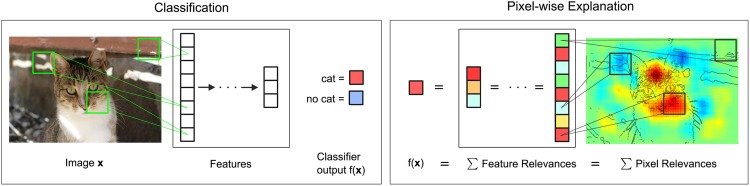
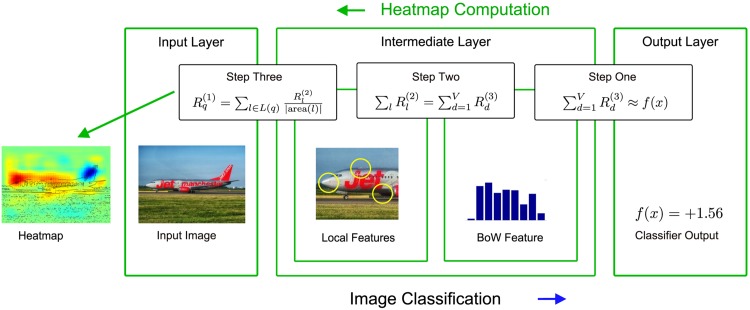
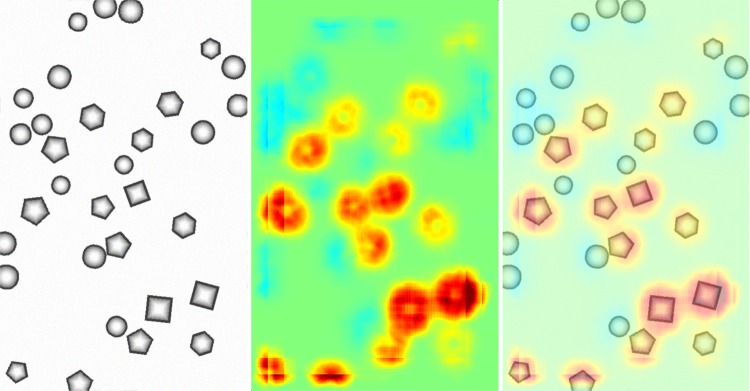
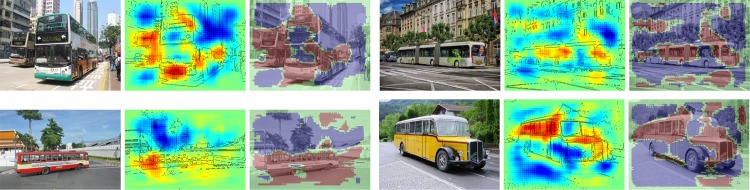
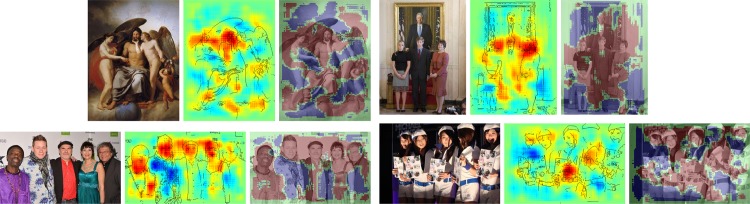
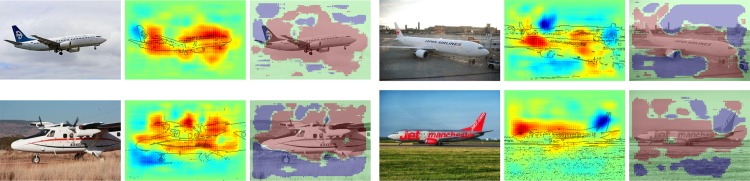
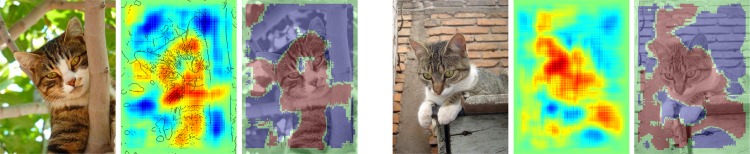
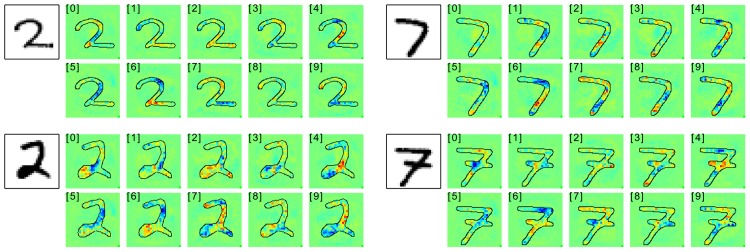
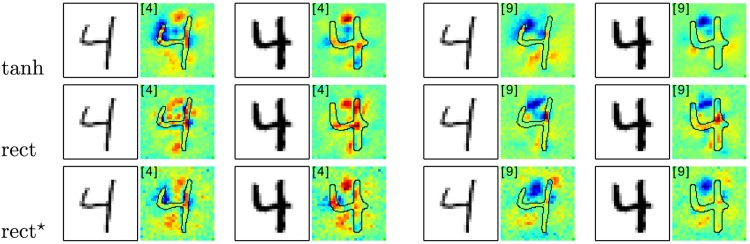
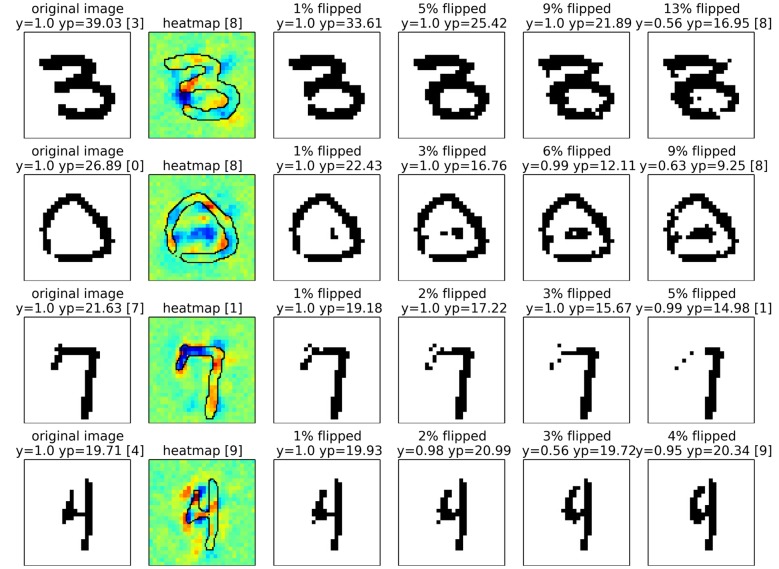
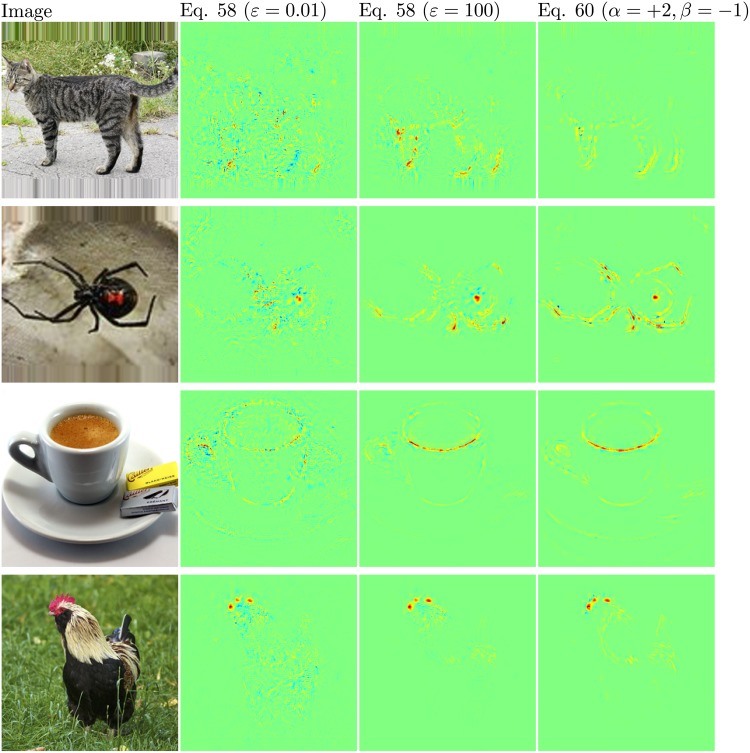
Understanding and interpreting classification decisions of automated image classification systems is of high value in many applications, as it allows to verify the reasoning of the system and provides additional information to the human expert. Although machine learning methods are solving very successfully a plethora of tasks, they have in most cases the disadvantage of acting as a black box, not providing any information about what made them arrive at a particular decision. This work proposes a general solution to the problem of understanding classification decisions by pixel-wise decomposition of nonlinear classifiers. We introduce a methodology that allows to visualize the contributions of single pixels to predictions for kernel-based classifiers over Bag of Words features and for multilayered neural networks. These pixel contributions can be visualized as heatmaps and are provided to a human expert who can intuitively not only verify the validity of the classification decision, but also focus further analysis on regions of potential interest. We evaluate our method for classifiers trained on PASCAL VOC 2009 images, synthetic image data containing geometric shapes, the MNIST handwritten digits data set and for the pre-trained ImageNet model available as part of the Caffe open source package.
Overview
The claims and statistics of this paper haven’t been checked yet.
Free: it reads the open-access text and checks the first 5 claims that cite a source we can check. Create a free account to check every claim.
Integrity signals
Registry
Cites
Statistics
Figures



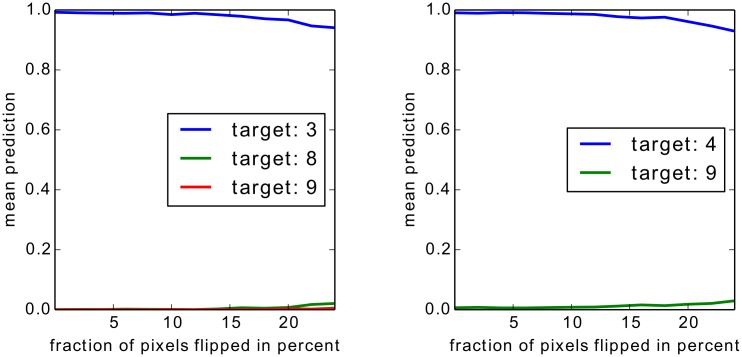
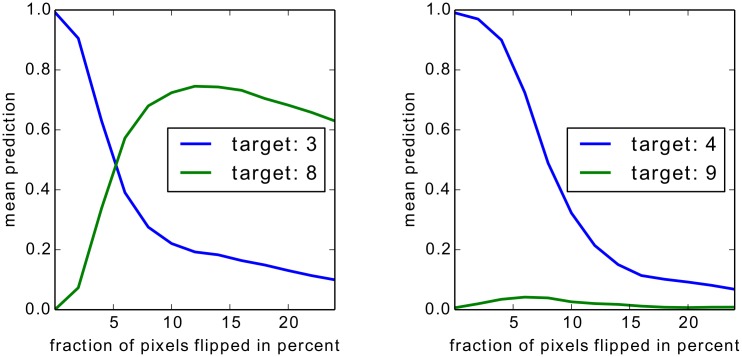
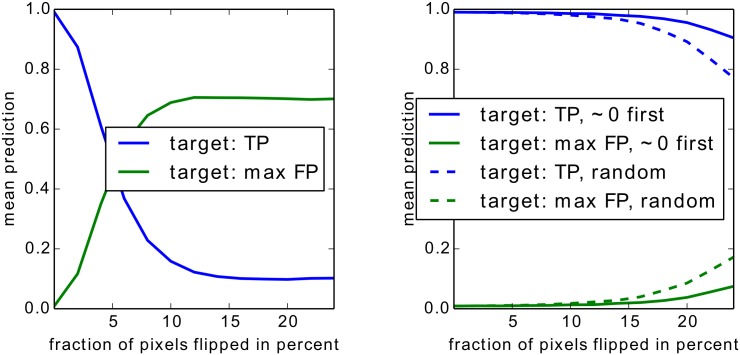
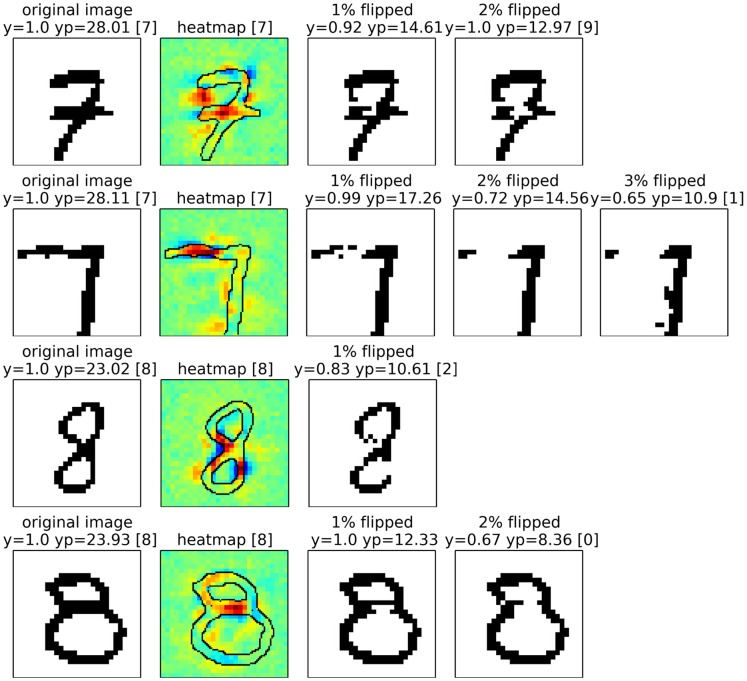
Verification
Claims the paper makes
The claims and statistics of this paper haven’t been checked yet.
Free: it reads the open-access text and checks the first 5 claims that cite a source we can check. Create a free account to check every claim.
Claims other papers make about this one
Each is checked against this paper’s own text: does it say what the citing paper says it does?
The source backs part of the claim, not all of it — or backs it for a different population, condition or comparison.
In the citing paper
“Barring a few exceptions (Caruana et al., 2015; Lundberg et al., 2018b; Ustun et al., 2019; Jesus et al., 2021), much of the existing work is designed and developed for benchmark classification problems, often with synthetic data and usually validated with user studies limited to users in research settings such as Amazon Mechanical Turk (AMT; Simonyan et al., 2013; Zeiler and Fergus, 2014; Bach et”
From Explainable machine learning for public policy: Use cases, gaps, and research directions (2023) · cites this paper as Bach et al., 2015
Experimental — accuracy not yet measuredThe cited source says what the claim attributes to it.
In the citing paper
“Unfortunately, most of the work in this area fails to meet these criteria, focusing only on benchmark ML problems and datasets (e.g., image classification on MNIST data, newsgroups data; Bach et al., 2015; Ribeiro et al., 2016, 2018; Shrikumar et al., 2017).”
From Explainable machine learning for public policy: Use cases, gaps, and research directions (2023) · cites this paper as Bach et al., 2015
In the citing paper
“LRP and DTD are capable of improving a model’s interpretability.”
From Survey of Explainable AI Techniques in Healthcare (2023) · cites this paper as [31]
Self-check
Percentages, sums and reported differences re-computed from the paper’s own numbers.
The self-check needs the paper’s full text.
Citations
Cites
ImageNet classification with deep convolutional neural networks
Krizhevsky, A., Sutskever, I., & Hinton, G. E. (2017) · Communications of the ACM · doi:10.1145/3065386 · Cited by 112,155 · cited 2×
“It is known from [21] that lower layers of deep networks which are very similar to the one from [60] used here may act like learned texture or gradient detectors.”
BackgroundDistinctive Image Features from Scale-Invariant Keypoints
Lowe, D. G. (2004) · International Journal of Computer Vision · doi:10.1023/b:visi.0000029664.99615.94 · Cited by 55,589
Learning representations by back-propagating errors
Rumelhart, D. E., Hinton, G. E., & Williams, R. J. (1986) · Nature · doi:10.1038/323533a0 · Cited by 31,892 · cited 2×
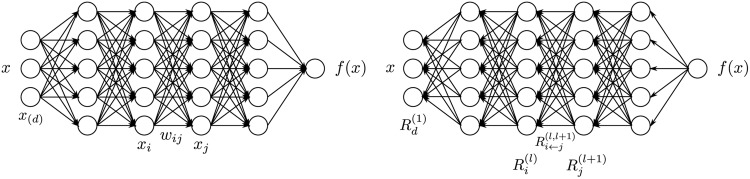
“The derivative @f(x)/@x(d) required for pixel-wise decomposition can be computed efficiently by reusing the network topology using the backpropagation algorithm [56].”
BackgroundMethodThe pascal visual object classes (VOC) challenge
Everingham, M., Van Gool, L., Williams, C. K. I., Winn, J., & Zisserman, A. (2010) · International Journal of Computer Vision · doi:10.1007/s11263-009-0275-4 · Cited by 19,599
Neural networks for pattern recognition
(1994) · Choice Reviews Online · doi:10.5860/choice.31-5500 · Cited by 18,538
Rapid object detection using a boosted cascade of simple features
Viola, P., & Jones, M. (2005) · Proceedings of the 2001 IEEE Computer Society Conference on Computer Vision and Pattern Recognition. CVPR 2001 · doi:10.1109/cvpr.2001.990517 · Cited by 18,300
Visualizing and understanding convolutional networks
Zeiler, M. D., & Fergus, R. (2014) · Lecture Notes in Computer Science · doi:10.1007/978-3-319-10590-1_53 · Cited by 15,839
Explaining and Harnessing Adversarial Examples
Goodfellow, I. J., Shlens, J., & Szegedy, C. (2014) · arXiv · doi:10.48550/arxiv.1412.6572 · Cited by 10,381 · cited 1×
“A different type of analysis for understanding neural networks deals with creating counter-intuitive examples, see for example the work in [24, 25].”
BackgroundIntriguing properties of neural networks
Szegedy, C., Zaremba, W., Sutskever, I., Bruna, J., Erhan, D., Goodfellow, I., & Fergus, R. (2013) · arXiv · doi:10.48550/arxiv.1312.6199 · Cited by 8,143 · cited 2×
“However, as noted in [24], this can lead to points of the input space that are perceptually equivalent to the original sample x and whose choice as a root would produce non-informative pixel-wise decompositions.”
BackgroundDeep Inside Convolutional Networks: Visualising Image Classification Models and Saliency Maps
Simonyan, K., Vedaldi, A., & Zisserman, A. (2013) · arXiv · doi:10.48550/arxiv.1312.6034 · Cited by 5,370 · cited 4×
“Besides deviating in the usage of a Taylor series, the work in [22] does not make use of the layer-wise propagation strategy for neural networks presented in this paper, which unlike a Taylor series does not rely on a local approximation.”
BackgroundMethodResultInfluential
Research works printed but not linked: 4
- Montavon G, Orr GB, Müller KR, editors. Neural Networks: Tricks of the Trade, Reloaded vol. 7700 of Lecture Notes in Computer Science (LNCS). 2nd ed Springer; 2012.
- Everingham M, Van Gool L, Williams CKI, Winn J, Zisserman A. The PASCAL Visual Object Classes Challenge 2010 (VOC2010) Results;. · DOI · Paper page
- Lanckriet GRG, Cristianini N, Bartlett PL, Ghaoui LE, Jordan MI. Learning the Kernel Matrix with Semidefinite Programming. Journal of Machine Learning Research. 2004; 5: 27– 72.
- Kloft M, Brefeld U, Sonnenburg S, Laskov P, Müller KR, Zien A. Efficient and Accurate Lp-norm Multiple Kernel Learning. Advances in Neural Information Processing Systems. 2009; 22(22): 997– 1005.
Cited by
Items 701–800 of 1,049
Weitz, K., Hassan, T., Schmid, U., & Garbas, J.-U. (2019) · tm - Technisches Messen · doi:10.1515/teme-2019-0024 · Cited by 59
“Besides the stabilizing effect, α and β values can be used to visualize positive and negative relevance-activations of pixels [4].”
InfluentialRole of deep learning in infant brain MRI analysis
Mostapha, M., & Styner, M. A. (2019) · Magnetic Resonance Imaging · doi:10.1016/j.mri.2019.06.009 · Cited by 72
“Layer-wise feature activity maps: Other class of methods try to understand individual decisions made by the classifier while assuming a black-box classifier or assuming a particular structure of how decisions are made [151, 152, 153, 154].”
MethodAdversarial Robustness on In- and Out-Distribution Improves Explainability
Augustin, M., Meinke, A., & Hein, M. (2020) · Lecture notes in computer science · doi:10.1007/978-3-030-58574-7_14 · Cited by 111
Agarwal, P., Tamer, M. I., & Budman, H. M. (2021) · Computers & Chemical Engineering · doi:10.1016/j.compchemeng.2021.107467 · Cited by 76
“, 2015 [4] to explain the predictions of DNNs by back-propagating the classification scores from the output layer to the input layer.”
BackgroundMethodInfluentialInspect, Understand, Overcome: A Survey of Practical Methods for AI Safety
Houben, S., Abrecht, S., Akila, M., Bär, A., Brockherde, F., Feifel, P., Fingscheidt, T., Gannamaneni, S. S., Ghobadi, S. E., Hammam, A., et al. (2022) · Springer eBooks · doi:10.1007/978-3-031-01233-4_1 · Cited by 74
Corn leaf disease: insightful diagnosis using VGG16 empowered by explainable AI
Tariq, M., Ali, U., Abbas, S., Hassan, S. G., Naqvi, R. A., Khan, M. A., & Jeong, D. (2024) · Frontiers in Plant Science · doi:10.3389/fpls.2024.1402835 · Cited by 68
Interpretability of deep neural networks: A review of methods, classification and hardware
Antamis, T., Drosou, A., Vafeiadis, T., Nizamis, A., Ioannidis, D., & Tzovaras, D. K. (2024) · Neurocomputing · doi:10.1016/j.neucom.2024.128204 · Cited by 70
Generalizable and explainable deep learning for medical image computing: An overview
Chaddad, A., Hu, Y., Wu, Y., Wen, B., & Kateb, R. (2024) · Current Opinion in Biomedical Engineering · doi:10.1016/j.cobme.2024.100567 · Cited by 83
Conditional generative adversarial network for gene expression inference
Wang, X., Dizaji, K. G., & Huang, H. (2018) · Bioinformatics · doi:10.1093/bioinformatics/bty563 · Cited by 71
Understanding Unequal Gender Classification Accuracy from Face Images
Muthukumar, V., Pedapati, T., Ratha, N., Sattigeri, P., Wu, C.-W., Kingsbury, B. E. D., Kumar, A., Thomas, S., Mojsilović, A., & Varshney, K. R. (2018) · arXiv (Cornell University) · doi:10.48550/arxiv.1812.00099 · Cited by 42
“One class of interpretability methods explains a neural network’s decision on each image [2, 31, 33, 20].”
BackgroundDeep Learning Movement Intent Decoders Trained With Dataset Aggregation for Prosthetic Limb Control
Dantas, H., Warren, D. J., Wendelken, S., Davis, T. S., Clark, G. A., & Mathews, V. J. (2019) · IEEE Transactions on Biomedical Engineering · doi:10.1109/tbme.2019.2901882 · Cited by 66
“Finally, we used layer-wise relevance propagation (LRP) [38], [39] to investigate the impact of each EMG principal component”
BackgroundMethodXAI Handbook: Towards a Unified Framework for Explainable AI
Palacio, S., Lucieri, A., Munir, M., Ahmed, S., Hees, J., & Dengel, A. R. (2021) · IEEE International Conference on Computer Vision Workshops · doi:10.1109/iccvw54120.2021.00420 · Cited by 81
“, computation of relevance values [4, 36], mapping of high-level conceptual constructs in intermediate activations [5, 17]), the how is almost always thoroughly defined.”
BackgroundVisualizing and Understanding Patch Interactions in Vision Transformer
Ma, J., Bai, Y., Zhong, B., Zhang, W., Yao, T., & Mei, T. (2023) · IEEE Transactions on Neural Networks and Learning Systems · doi:10.1109/tnnls.2023.3270479 · Cited by 80
“Explainability for Vision Transformer Given the key role of explainability in deep learning, several works have analyzed the gradients [28, 30–32, 34] and attribute propagation [ 1, 21 ] in”
BackgroundScheda, R., & Diciotti, S. (2022) · Applied Sciences · doi:10.3390/app12136681 · Cited by 70
“For this purpose, many explainable AI (XAI) methods have been proposed to unfold models’ behavior [4–8].”
MethodTowards Evaluating Explanations of Vision Transformers for Medical Imaging
Komorowski, P., Baniecki, H., & Biecek, P. (2023) · IEEE/CVF Conference on Computer Vision and Pattern Recognition Workshops (CVPRW) · doi:10.1109/cvprw59228.2023.00383 · Cited by 83
“Of the latter, Layerwise Relevance Propagation (LRP) [17] is a notable example that is formalized and theoretically justified in the Deep Taylor Decomposition framework [20].”
BackgroundAudio Explainable Artificial Intelligence: A Review
Akman, A., & Schuller, B. W. (2024) · Intelligent Computing · doi:10.34133/icomputing.0074 · Cited by 83
SMEMO: Social Memory for Trajectory Forecasting
Marchetti, F., Becattini, F., Seidenari, L., & Bimbo, A. D. (2024) · IEEE Transactions on Pattern Analysis and Machine Intelligence · doi:10.1109/tpami.2024.3356755 · Cited by 72
“Providing explainable predictions is a particularly sensitive aspect when dealing with safety-critical systems, as demonstrated by the increasing interest that this topic has recently started to gain [1], [16], [17].”
BackgroundMethodDermatologist-like explainable AI enhances melanoma diagnosis accuracy: eye-tracking study
Chanda, T., Haggenmueller, S., Bucher, T.-C., Holland‐Letz, T., Kittler, H., Tschandl, P., Heppt, M. V., Berking, C., Utikal, J. S., Schilling, B., et al. (2025) · Nature Communications · doi:10.1038/s41467-025-59532-5 · Cited by 68
“XAI is an extension of arti fi cial intelligence (AI) that focuses on developing algorithms and modelsthatcanprovidetransparentand/orinterpretableexplanations for their decisions and predictions 2 – 4 .”
Phan, N., Vu, M. N., Liu, Y., Jin, R., Dou, D., Wu, X., & Thai, M. T. (2019) · International Joint Conference on Artificial Intelligence · doi:10.24963/ijcai.2019/660 · Cited by 63
Self-explaining AI as an Alternative to Interpretable AI
Elton, D. C. (2020) · Lecture Notes in Computer Science · doi:10.1007/978-3-030-52152-3_10 · Cited by 37
“, 2017) Meaningful Perturbations (Fong & Vedaldi, 2017) Layerwise relevance propagation based heatmapping layerwise relevance propagation (Bach et al., 2015) Pattern LRP (Kindermans et al.”
Miles, C., Bohrdt, A., Wu, R., Chiu, C., Xu, M., Ji, G., Greiner, M., Weinberger, K. Q., Demler, E., & Kim, E.-A. (2021) · Nature Communications · doi:10.1038/s41467-021-23952-w · Cited by 60
STQS: Interpretable multi-modal Spatial-Temporal-seQuential model for automatic Sleep scoring
Pathak, S., Lu, C., Nagaraj, S. B., van Putten, M. J. A. M., & Seifert, C. (2021) · Artificial Intelligence in Medicine · doi:10.1016/j.artmed.2021.102038 · Cited by 66
“To this end, we applied LRP [35], consisting of a forward activation and a specific backward calculation, to calculate an importance score of a filter per test instance.”
MethodEvaluating Feature Importance EstimatesPreprint
Hooker, S., Erhan, D., Kindermans, P.-J., & Kim, B. (2018) · arXiv (Cornell University) · Cited by 84
Interpreting Deep Learning Models in Natural Language Processing: A ReviewPreprint
Sun, X., Yang, D., Li, X., Zhang, T., Meng, Y., Qiu, H., Wang, G., Hovy, E. H., & Li, J. (2021) · arXiv (Cornell University) · doi:10.48550/arxiv.2110.10470 · Cited by 82
“Similar to LRP, DeepLIFT [171, 8] proceeds in a progressive backward fashion, but the relevance score is calculated in a relative view: instead of directly propagating and redistributing the relevance score from the upper layer to the lower layer, DeepLIFT assigns each neuron a score that represents the relative effec…”
MethodInfluentialSecure and robust machine learning for healthcare: A survey
Qayyum, A., Qadir, J., Bilal, M., & Al-Fuqaha, A. (2021) · IEEE Reviews in Biomedical Engineering · doi:10.1109/rbme.2020.3013489 · Cited by 59
“relevance propagation for interpreting the predictions of nonlinear classifiers [202].”
BackgroundExplainable Sentiment Analysis with Applications in Medicine
Zucco, C., Liang, H., Fatta, G. D., & Cannataro, M. (2018) · 2018 IEEE International Conference on Bioinformatics and Biomedicine (BIBM) · doi:10.1109/bibm.2018.8621359 · Cited by 59
“For example, LRP model [8] was also applied in order to extract from text which words were most relevant for a CNN’s classifier trained on a topic categorization task [65].”
BackgroundMethodInterpretable Time-series Classification on Few-shot Samples
Tang, W., Liu, L., & Long, G. (2020) · International Joint Conference on Neural Networks (IJCNN) · doi:10.1109/ijcnn48605.2020.9206860 · Cited by 80
“Layer-Wise Relevance Propagation [32], and gradient sensitivity analysis [31].”
BackgroundShad, R., Cunningham, J. P., Ashley, E. A., Langlotz, C. P., & Hiesinger, W. (2021) · Nature Machine Intelligence · doi:10.1038/s42256-021-00399-8 · Cited by 55
“44,45 Adebayo et al recently describe how relying solely on the visual appearance of saliency maps can be misleading even if at first glance they appear contextually relevant.”
BackgroundFocus! Rating XAI Methods and Finding Biases
Arias-Duart, A., Parés, F., García-Gasulla, D., & Giménez-Ábalos, V. (2022) · IEEE International Conference on Fuzzy Systems (FUZZ-IEEE) · doi:10.1109/fuzz-ieee55066.2022.9882821 · Cited by 80
“Examples of numeric evaluations are the Pixel Flipping algorithm Bach et al. [2015] and the Average Drop % metric Chattopadhay et al. [2018].”
BackgroundMethodInfluentialA Survey on Continual Semantic Segmentation: Theory, Challenge, Method and Application
Yuan, B., & Zhao, D. (2024) · IEEE Transactions on Pattern Analysis and Machine Intelligence · doi:10.1109/tpami.2024.3446949 · Cited by 81
Analyzing and interpreting neural networks for NLP: A report on the first BlackboxNLP workshop
Alishahi, A., Chrupała, G., & Linzen, T. (2019) · Natural Language Engineering · doi:10.1017/s135132491900024x · Cited by 87
“They adapt the technique of layerwise relevance propagation (Bach et al. 2015) to Kernel-based Deep Ar-chitectures (Croce et al. 2017) in order to retrieve such examples.”
MethodGe, W., Huang, W., Guo, S., & Scott, M. (2019) · IEEE/CVF International Conference on Computer Vision (ICCV) · doi:10.1109/iccv.2019.00344 · Cited by 68
“The dilations in our atrous spatial pyramid pooling layers are [1, 2, 4, 6].”
BackgroundMouchès, P., Wilms, M., Rajashekar, D., Langner, S., & Forkert, N. D. (2022) · Human Brain Mapping · doi:10.1002/hbm.25805 · Cited by 68
Nucleotide sequence and DNaseI sensitivity are predictive of 3D chromatin architecture
Schreiber, J., Libbrecht, M., Bilmes, J., & Noble, W. S. (2017) · bioRxiv (Cold Spring Harbor Laboratory) · doi:10.1101/103614 · Cited by 56
“Most of these methods currently involve a sampling-based approach for explaining single predictions which identify which inputs were relevant in classifying that particular sample (Shrikumar et al., 2017; Ribeiro et al., 2016; Lundberg and Lee, 2017; Bach et al., 2015).”
MethodNeural Mechanics: Symmetry and Broken Conservation Laws in Deep Learning DynamicsPreprint
Kunin, D., Sagastuy-Breña, J., Ganguli, S., Yamins, D. L. K., & Tanaka, H. (2020) · arXiv (Cornell University) · doi:10.48550/arxiv.2012.04728 · Cited by 107
“Beyond theoretical studies, geometric properties of the gradient and Hessian have been applied to optimize Neyshabur et al. (2015), interpret Bach et al. (2015), and prune Tanaka et al. (2020) neural networks.”
Secure and Robust Machine Learning for Healthcare: A Survey
Qayyum, A., Qadir, J., Bilal, M., & Al-Fuqaha, A. (2020) · arXiv · doi:10.48550/arxiv.2001.08103 · Cited by 59
“relevance propagation for interpreting the predictions of nonlinear classifiers [202].”
BackgroundLekadir, K., Osuala, R., Gallin, C., Lazrak, N., Kushibar, K., Tsakou, G., Aussó, S., Alberich, L. C., Marias, K., Tsiknakis, M., et al. (2021) · arXiv · doi:10.48550/arxiv.2109.09658 · Cited by 58
Nationwide prediction of type 2 diabetes comorbidities
Dworzynski, P., Aasbrenn, M., Rostgaard, K., Melbye, M., Gerds, T. A., Hjalgrim, H., & Pers, T. H. (2020) · Scientific Reports · doi:10.1038/s41598-020-58601-7 · Cited by 58
A Survey on Adversarial Attacks for Malware Analysis
Aryal, K., Gupta, M., Abdelsalam, M., Kunwar, P., & Thuraisingham, B. (2024) · IEEE Access · doi:10.1109/access.2024.3519524 · Cited by 85
Lomazzi, L., Fabiano, S., Parziale, M., Giglio, M., & Cadini, F. (2022) · Mechanical Systems and Signal Processing · doi:10.1016/j.ymssp.2022.109642 · Cited by 62
Ravindran, A. S., & Contreras-Vidal, J. L. (2023) · Scientific Reports · doi:10.1038/s41598-023-43871-8 · Cited by 71
A survey of strategy-driven evasion methods for PE malware: Transformation, concealment, and attack
Geng, J., Wang, J., Fang, Z., Zhou, Y., Wu, D. J., & Ge, W. (2023) · Computers & Security · doi:10.1016/j.cose.2023.103595 · Cited by 72
Chang-Brahim, I., Koppensteiner, L. J., Beltrame, L., Bodner, G., Saranti, A., Salzinger, J., Fanta‐Jende, P., Sulzbachner, C., Bruckmüller, F., Trognitz, F., et al. (2024) · Frontiers in Plant Science · doi:10.3389/fpls.2024.1319938 · Cited by 63
Machine learning–based extreme event attribution
Trok, J. T., Barnes, E. A., Davenport, F. V., & Diffenbaugh, N. S. (2024) · Science Advances · doi:10.1126/sciadv.adl3242 · Cited by 69
“…[e.g., layer-wise relevance propagation, which can be used to determine which input pixels are most important for a given output prediction ( 53 )] have been used to interpret the predictions of trained CNNs ( 34 , 47 , 54 ) and gain insights into the physical climate processes simulated by…”
Privacy-preserving explainable AI: a survey
Nguyên, T. T., Huynh, T. T., Ren, Z., Nguyen, T. T., Nguyen, P. L., Yin, H., & Nguyen, Q. V. H. (2024) · Science China Information Sciences · doi:10.1007/s11432-024-4123-4 · Cited by 88
“LRP is proposed by Klauschen et al. [33] to assign relevance from the output layer back to the input features.”
On Attribution of Recurrent Neural Network Predictions via Additive Decomposition
Du, M., Liu, N., Yang, F., Ji, S., & Hu, X. (2019) · The World Wide Web Conference · doi:10.1145/3308558.3313545 · Cited by 54
“Besides gradient signal, some work proposes to back-propagate different signals to the input, such as the relevance of the final prediction score through each layer of the network onto the input layer [1, 2], or only considering the positive gradient signals in the back-propagation process [40].”
BackgroundHoffmann, A., Fanconi, C., Rade, R., & Köhler, J. (2021) · arXiv (Cornell University) · doi:10.48550/arxiv.2105.02968 · Cited by 83
“While many works in this regard have focused on ex-post interpretation of black-box machine learning models (e.g. Bach et al. (2015); Kim et al. (2018); Bau et al. (2017); La-puschkin et al. (2019)), a recent line of research breaks with this paradigm by proposing to develop network architectures…”
BackgroundSerradilla, O., Zugasti, E., Cernuda, C., Aranburu, A., de Okariz, J. R., & Zurutuza, U. (2020) · 2020 IEEE International Conference on Fuzzy Systems (FUZZ-IEEE) · doi:10.1109/fuzz48607.2020.9177537 · Cited by 49
“Propagation-based approaches integrate in model structure using local redistribution rules based on methods as Layer-wise Relevance Propagation (LRP) [21].”
MethodEl–Sappagh, S., Alonso, J. M., Abuhmed, T., Ali, F., & Bugarín, A. (2023) · Artificial Intelligence Review · doi:10.1007/s10462-023-10415-5 · Cited by 70
Recent Advances in Explainable Artificial Intelligence for Magnetic Resonance Imaging
Qian, J., Li, H., Wang, J., & He, L. (2023) · Diagnostics · doi:10.3390/diagnostics13091571 · Cited by 64
“Bach et al. introduced layer-wise relevance propagation (LRP) to understand the classification decisions of the pixel-wise decomposition of nonlinear classifiers [37].”
BackgroundAn Explainable AI Approach for Breast Cancer Metastasis Prediction Based on Clinicopathological Data
Maouche, I., Terrissa, L. S., Benmohammed, K., & Zerhouni, N. (2023) · IEEE Transactions on Biomedical Engineering · doi:10.1109/tbme.2023.3282840 · Cited by 61
“Two commonly used methods of visual explanation for deep neural networks are Layer-wise Relevance Propagation (LRP) [31] and Gradient-weighted Class Activation Mapping (Grad-CAM) [32].”
MethodJang, H., & Tong, F. (2024) · Nature Communications · doi:10.1038/s41467-024-45679-0 · Cited by 72
“We performed layer-wise relevance propagation to identify the diagnostic features of objects that account for a network ’ s classi fi cation decision 53 .”
Goettling, M., Hammer, A., Malberg, H., & Schmidt, M. U. (2024) · Scientific Reports · doi:10.1038/s41598-024-63656-x · Cited by 70
“To analyze which method can generate the most truthful explanations, pixel-flipping was applied to the sample ranking 10 .”
MethodOn the interpretability of quantum neural networks
Pira, L., & Ferrie, C. (2024) · Quantum Machine Intelligence · doi:10.1007/s42484-024-00191-y · Cited by 77
Self-eXplainable AI for medical image analysis: A survey and new outlooks
Hou, J., Liu, S., Bie, Y., Wang, H., Tan, A., Luo, L., & Chen, H. (2026) · Information Fusion · doi:10.1016/j.inffus.2026.104791 · Cited by 66
Kondaveeti, H. K., & Simhadri, C. G. (2025) · Scientific Reports · doi:10.1038/s41598-025-14306-3 · Cited by 65
“Each feature or region is assigned a color according to its significance, with warmer colors such as red denoting higher importance, while cooler colors such as blue indicate lower importance 102 .”
Deep Neural Network Attribution Methods for Leakage Analysis and Symmetric Key Recovery
Hettwer, B., Gehrer, S., & Güneysu, T. E. (2020) · Lecture notes in computer science · doi:10.1007/978-3-030-38471-5_26 · Cited by 69
“More specific, we investigate saliency maps [20], occlusion [24], and LRP [5] to extract the features or POIs from a trained DNN which are most informative for symmetric key recovery.”
BackgroundMethodHuman-in-the-loop Extraction of Interpretable Concepts in Deep Learning Models
Zhao, Z., Xu, P., Scheidegger, C., & Ren, L. (2021) · IEEE Transactions on Visualization and Computer Graphics · doi:10.1109/tvcg.2021.3114837 · Cited by 67
“LRP [3] redistributes the relevance of each neuron through additive functions that conserve a measure of total importance from layer to layer.”
Confidential Inference via Ternary Model PartitioningPreprint
Gu, Z., Huang, H., Zhang, J., Su, D., Jamjoom, H. T., Lamba, A., Pendarakis, D. E., & Molloy, I. (2018) · arXiv (Cornell University) · doi:10.48550/arxiv.1807.00969 · Cited by 106
Unwrapping The Black Box of Deep ReLU Networks: Interpretability, Diagnostics, and SimplificationPreprint
Sudjianto, A., Knauth, W., Singh, R., Yang, Z., & Zhang, A. (2020) · arXiv (Cornell University) · doi:10.48550/arxiv.2011.04041 · Cited by 79
Security and Privacy Issues in Deep Learning
Bae, H., Jang, J., Jung, D., Jang, H., Ha, H., Lee, H., & Yoon, S. (2018) · arXiv · doi:10.48550/arxiv.1807.11655 · Cited by 56
“[2017b] injects noise from the Laplace distribution into the Layer-wise Relevance Propagation (LRP) [Bach et al. 2015a] to estimate the relevance between the output of the model and the input features.”
BackgroundMethodMachine Learning Reveals the Critical Interactions for SARS-CoV-2 Spike Protein Binding to ACE2
Pavlova, A., Zhang, Z., Acharya, A., Lynch, D. L., Pang, Y. T., Mou, Z., Parks, J. M., Chipot, C., & Gumbart, J. C. (2021) · The Journal of Physical Chemistry Letters · doi:10.1021/acs.jpclett.1c01494 · Cited by 57
Human-centered explainability for life sciences, healthcare, and medical informatics
Dey, S., Chakraborty, P., Kwon, B. C., Dhurandhar, A., Ghalwash, M., Suarez Saiz, F. J., Ng, K., Sow, D., Varshney, K. R., & Meyer, P. (2022) · Patterns · doi:10.1016/j.patter.2022.100493 · Cited by 45
Quantifying Explainability of Saliency Methods in Deep Neural Networks With a Synthetic Dataset
Tjoa, E., & Guan, C. (2022) · IEEE Transactions on Artificial Intelligence · doi:10.1109/tai.2022.3228834 · Cited by 65
“Note also that the original implementation of (cid:15) - Layerwise Relevance Propagation (LRP) 2 [2] has been shown to be equivalent to gradient*input or DeepLIFT depending on a few conditions [9].”
BackgroundMethodInseq: An Interpretability Toolkit for Sequence Generation Models
Sarti, G., Feldhus, N., Sickert, L., & van der Wal, O. (2023) · Proceedings of the 61st Annual Meeting of the Association for Computational Linguistics (Volume 3: System Demonstrations) · doi:10.18653/v1/2023.acl-demo.40 · Cited by 34
Wu, Z., Chen, J., Li, Y., Deng, Y., Zhao, H., Hsieh, C., & Hou, T. (2023) · Journal of Chemical Information and Modeling · doi:10.1021/acs.jcim.3c01642 · Cited by 71
Geyer, P., Singh, M. M., & Chen, X. (2024) · Advanced Engineering Informatics · doi:10.1016/j.aei.2024.102843 · Cited by 64
Explainable Deep CNNs for MRI-Based Diagnosis of Alzheimer’s Disease
Nigri, E., Ziviani, N., Cappabianco, F. A. M., Antunes, A., & Veloso, A. (2020) · International Joint Conference on Neural Networks (IJCNN) · doi:10.1109/ijcnn48605.2020.9206837 · Cited by 69
“Variations of the occlusion test are possible when the network parameters can be inspected directly [46], leading to a number of approaches, including LRP [47], DeepLift [48], CAM [49], and GradCAM [50].”
BackgroundDeep Learning-Driven Data Curation and Model Interpretation for Smart Manufacturing
Zhang, J., & Gao, R. X. (2021) · Chinese Journal of Mechanical Engineering · doi:10.1186/s10033-021-00587-y · Cited by 59
VisualBackProp: visualizing CNNs for autonomous driving.Preprint
Bojarski, M., Choromanska, A., Choromański, K., Firner, B., Jackel, L., Müller, U., & Zieba, K. (2016) · arXiv (Cornell University) · Cited by 69
A prediction and interpretation framework of acute kidney injury in critical care
Gong, K., Lee, H. K., Yu, K., Xie, X., & Li, J. (2020) · Journal of Biomedical Informatics · doi:10.1016/j.jbi.2020.103653 · Cited by 57
Sattarzadeh, S., Sudhakar, M., Plataniotis, K. N., Jang, J., Jeong, Y., & Kim, H. (2021) · IEEE International Conference on Acoustics Speech and Signal Processing · doi:10.1109/icassp39728.2021.9415064 · Cited by 78
“To develop such meth-ods, some approaches such as [12, 13] modify their back-propagation rules to assign scores to the input features de-noting the relevance or irrelevance of the input features to the model’s prediction.”
MethodZhao, H., You, J., Peng, Y., & Feng, Y. (2021) · Frontiers in Surgery · doi:10.3389/fsurg.2021.634629 · Cited by 60
“The correlation coefficient was calculated by the layer-wise relevance propagation (LRP) method, which backpropagated relevance recursively from the output layer to the input layer (12, 13).”
MethodGordon, E. M., Barnes, E. A., & Hurrell, J. W. (2021) · Geophysical Research Letters · doi:10.1029/2021gl095392 · Cited by 56
“To investigate the decisions made by the ANNs, we use the neural network attribution technique called layer-wise relevance propagation (LRP; Bach et al., 2015).”
MethodA visualization method based on the Grad-CAM for medical image segmentation model
Xiao, M., Zhang, L., Shi, W., Liu, J., He, W., & Jiang, Z. (2021) · International Conference on Electronic Information Engineering and Computer Science (EIECS) · doi:10.1109/eiecs53707.2021.9587953 · Cited by 69
Abdullah, T. A. A., Zahid, M. S. M., Ali, W., & Hassan, S. U. (2023) · Processes · doi:10.3390/pr11020595 · Cited by 70
Bender, T., Metsch, J. M., Krefting, D., Müller, C., Dathe, H., Seidler, T., Spicher, N., & Hauschild, A.-C. (2023) · IEEE Journal of Biomedical and Health Informatics · doi:10.1109/jbhi.2023.3271858 · Cited by 69
“To counteract this, a different treatment of positive and negative activations x i is proposed in [21].”
BackgroundMethodViT-CX: Causal Explanation of Vision Transformers
Xie, W., Li, X., Cao, C. C., & Zhang, N. L. (2023) · International Joint Conference on Artificial Intelligence · doi:10.24963/ijcai.2023/174 · Cited by 72
Unifying Fourteen Post-Hoc Attribution Methods With Taylor Interactions
Deng, H., Zou, N., Du, M., Chen, W., Feng, G., Yang, Z., Li, Z., & Zhang, Q. (2024) · IEEE Transactions on Pattern Analysis and Machine Intelligence · doi:10.1109/tpami.2024.3358410 · Cited by 74
“LRP-αβ [3] is also a typical back-propagation at-tribution method.”
BackgroundMethodInfluentialMiró-Nicolau, M., Jaume-i-Capó, A., & Moyà-Alcover, G. (2024) · Artificial Intelligence · doi:10.1016/j.artint.2024.104179 · Cited by 40
A task-and-technique centered survey on visual analytics for deep learning model engineering
Garcia, R., Telea, A. C., Castro da Silva, B., Tørresen, J., & Dihl Comba, J. L. (2018) · Computers & Graphics · doi:10.1016/j.cag.2018.09.018 · Cited by 54
Rocca, M. A., Anzalone, N., Storelli, L., Poggio, A. D., Cacciaguerra, L., Manfredi, A. A., Meani, A., & Filippi, M. (2020) · Investigative Radiology · doi:10.1097/rli.0000000000000735 · Cited by 60
Liang, S., Sabri, A. Q. M., Alnajjar, F., & Loo, C. K. (2021) · IEEE Access · doi:10.1109/access.2021.3061455 · Cited by 60
“In order to understand the model’s internal classifi-cation mechanism, the Layer-wise Relevance Propagation (LRP) [21] algorithm will be used to explain the Temporal Coherency Deep Networks and Support-Vector Machines (TCDN-SVM) hybrid algorithm that was created.”
MethodThe Democratization of Artificial Intelligence: Net Politics in the Era of Learning Algorithms
Sudmann, A. (2019) · AI critique · doi:10.14361/9783839447192 · Cited by 60
Evaluations and Methods for Explanation through Robustness AnalysisPreprint
Hsieh, C.-Y., Yeh, C., Liu, X., Ravikumar, P., Kim, S., Kumar, S., & Hsieh, C. (2020) · arXiv (Cornell University) · doi:10.48550/arxiv.2006.00442 · Cited by 65
“The capability of capturing pertinent negative features has also been observed in explanations proposed in some recent work [12, 3, 27].”
BackgroundEUCA: the End-User-Centered Explainable AI FrameworkPreprint
Jin, W., Fan, J., Gromala, D., Pasquier, P., & Hamarneh, G. (2021) · arXiv (Cornell University) · doi:10.48550/arxiv.2102.02437 · Cited by 71
Clinical validation of saliency maps for understanding deep neural networks in ophthalmology
Ayhan, M. S., Kuemmerle, L. B., Kuehlewein, L., INHOFFEN, W., Aliyeva, G., Ziemssen, F., & Berens, P. (2022) · Medical Image Analysis · doi:10.1016/j.media.2022.102364 · Cited by 71
Evaluating eXplainable artificial intelligence tools for hard disk drive predictive maintenance
Ferraro, A., Galli, A., Moscato, V., & Sperlí, G. (2022) · Artificial Intelligence Review · doi:10.1007/s10462-022-10354-7 · Cited by 63
“…used DL models are Multi-layer Neural Networks (Che et al. 2017; Shri-kumar et al. 2017; Zilke et al. 2016), Convolutional Neural Networks (CNN) (Bach et al. 2015; Selvaraju et al. 2019; Xu et al. 2016; Zeiler et al. 2011) and Recurrent Neural Networks (RNNs) (Arras et al. 2017; Karpathy et al.…”
MethodToward human-level concept learning: Pattern benchmarking for AI algorithms
Holzinger, A., Saranti, A., Angerschmid, A., Finzel, B., Schmid, U., & Mueller, H. (2023) · Patterns · doi:10.1016/j.patter.2023.100788 · Cited by 68
Comprehensible Artificial Intelligence on Knowledge Graphs: A survey
Schramm, S., Wehner, C., & Schmid, U. (2023) · Journal of Web Semantics · doi:10.1016/j.websem.2023.100806 · Cited by 66
“At each step of this scheme, layer-wise relevance propagation (LRP) [120, 121] is applied in order to determine relevance.”
MethodExplainable deep learning for automatic rock classification
Zheng, D., Zhong, H., Camps‐Valls, G., Cao, Z., Ma, X., Mills, B. J. W., Hu, X., Hou, M., & Ma, C. (2023) · Computers & Geosciences · doi:10.1016/j.cageo.2023.105511 · Cited by 55
Generating and evaluating synthetic data in digital pathology through diffusion models
Pozzi, M., Noei, S., Robbi, E., Cima, L., Moroni, M., Munari, E., Torresani, E., & Jurman, G. (2024) · Scientific Reports · doi:10.1038/s41598-024-79602-w · Cited by 62
“It is based on Layer-wise Relevance Propagation (LRP) 64 but extended to disentangle explanations based on concepts learned by the network.”
On Guaranteed Optimal Robust Explanations for NLP Models
Malfa, E. L., Michelmore, R., Zbrzezny, A. M., Paoletti, N., & Kwiatkowska, M. (2021) · International Joint Conference on Artificial Intelligence · doi:10.24963/ijcai.2021/366 · Cited by 89
Interpreting the Predictions of Complex ML Models by Layer-wise Relevance PropagationPreprint
Samek, W., Montavon, G., Binder, A., Lapuschkin, S., & Müller, K. (2016) · arXiv (Cornell University) · doi:10.48550/arxiv.1611.08191 · Cited by 54
“From the multitude of recently proposed methods for explaining predictions, we can identify decomposition approaches [12, 13, 1, 14], which seek to redistribute the value of the prediction function on the input variables, such that the sum of redistributed terms corresponds to the actual function value.”
BackgroundMethodInfluentialSelf-citationTaxonomy of Machine Learning Safety: A Survey and Primer
Mohseni, S., Wang, H., Xiao, C., Yu, Z., Wang, Z., & Yadawa, J. (2023) · ACM Computing Surveys · doi:10.1145/3551385 · Cited by 53
“Design Model Transparency Visualization Tools ([103, 114, 152, 218, 251]) Global Explanations ([69, 81, 120, 126ś128, 130, 253, 269]) Local Explanations ([9, 150, 187, 188, 201, 208, 211, 213, 216, 278])”
BackgroundLocal and global explanations of agent behavior: Integrating strategy summaries with saliency maps
Huber, T., Weitz, K., André, E., & Amir, O. (2021) · Artificial Intelligence · doi:10.1016/j.artint.2021.103571 · Cited by 53
“[12] proposed Layer-wise Relevance Propagation (LRP), which uses the intermediate activations of the neurons during the forward pass to estimate the contribution of each input pixels to prediction.”
This looks More Like that: Enhancing Self-Explaining Models by Prototypical Relevance Propagation
Gautam, S., Höhne, M., Hansen, S., Jenssen, R., & Kampffmeyer, M. (2022) · Pattern Recognition · doi:10.1016/j.patcog.2022.109172 · Cited by 71
Explainable machine learning in cybersecurity: A survey
Yan, F., Wen, S., Nepal, ., Paris, C. L., & Xiang, Y. (2022) · International Journal of Intelligent Systems · doi:10.1002/int.23088 · Cited by 59
“92,93 It accurately and quantitatively informs features that contribute or counteract the model in making decisions.”
BackgroundA quantitative approach for the comparison of additive local explanation methods
Doumard, E., Aligon, J., Escriva, E., Excoffier, J.-B., Monsarrat, P., & Soulé-Dupuy, C. (2022) · Information Systems · doi:10.1016/j.is.2022.102162 · Cited by 61
Feature relevance XAI in anomaly detection: Reviewing approaches and challenges
Tritscher, J., Krause, A., & Hotho, A. (2023) · Frontiers in Artificial Intelligence · doi:10.3389/frai.2023.1099521 · Cited by 64
Metadata
- Authors
- Bach, S., Binder, A., Montavon, G., Klauschen, F., Müller, K.-R., & Samek, W.
- Affiliations
- Singapore University of Technology and Design (SG)
- Technische Universität Berlin (DE)
- Stiftung Charité (DE)
- Korea University (KR)
- Fraunhofer Institute for Telecommunications, Heinrich Hertz Institute (DE)
- Corresponding author
- Müller, Klaus-Robert
- Samek, Wojciech
- Venue
- PLOS ONE
- Publisher
- Public Library of Science (PLoS)
- Published
- 2015-07-10
- Volume
- 10
- Issue
- 7
- Pages
- e0130140
- ISSN
- 1932-6203 (ISSN-L)
- PMC
- PMC4498753
- OpenAlex
- W1787224781
- Cited by
- 4,524
- References
- 56
- Citations by year
- 2026: 347 · 2025: 628 · 2024: 653 · 2023: 648 · 2022: 566 · 2021: 647 · 2020: 489 · 2019: 299 · 2018: 145 · 2017: 63 · 2016: 27 · 2015: 6
- FWCI
- 78.76
- Type
- journal article
- Language
- en
- Open access
- gold
- doi.org
- Licence
- Locations
- PLoS ONE (publishedVersion, cc-by)
- PubMed Central (publishedVersion, cc-by)
- PubMed (publishedVersion)
- RePEc: Research Papers in Economics (submittedVersion)
- DOAJ (DOAJ: Directory of Open Access Journals) (submittedVersion, cc-by-sa)
- Publikationsdatenbank der Fraunhofer-Gesellschaft (Fraunhofer-Gesellschaft) (submittedVersion, other-oa)
- Fraunhofer-Publica (Fraunhofer-Gesellschaft) (submittedVersion)
- Refubium (Universitätsbibliothek der Freien Universität Berlin) (submittedVersion, cc-by)
- Universitätsbibliothek der FU Berlin Hochschulschriftenstelle u. Dokumentenserver (cc-by)
- Funders
- National Research Foundation
- Deutsche Forschungsgemeinschaft (01GQ1115)
- Bundesministerium für Bildung und Forschung (01 IS 14013 A, 01GQ1115)
- Bundesministerium für Wirtschaft und Technologie (01MQ07018)
- National Research Foundation of Korea (01IS14013A, BK21 program)
- Technische Universität Berlin
- Banting and Best Diabetes Centre, University of Toronto (01IS14013A)
- Topics
- Physical Sciences › Computer Science › Artificial Intelligence › Explainable Artificial Intelligence (XAI)
- Physical Sciences › Computer Science › Computer Vision and Pattern Recognition › Advanced Neural Network Applications
- Physical Sciences › Computer Science › Computer Vision and Pattern Recognition › Image Retrieval and Classification Techniques
- Keywords
- layer-wise relevance propagation, nonlinear classifiers, kernel-based classifiers, bag-of-words features, multilayer neural networks, heatmaps, image classification, black box, MNIST, ImageNet
- MeSH terms
- Algorithms, Artificial Intelligence, Humans, Image Processing, Computer-Assisted, Pattern Recognition, Automated
About these checks
Registry, retraction, Cites and statistics results are computed, not judged, with one exception: a printed reference that no index lists is read once by a model before it counts as a citation error. Claims are extracted by a model and kept only when their quote appears verbatim in the text; each cited source is then checked, with a model’s help, for whether it says what the claim relies on. Those verdicts can be wrong — read the claim’s quote and the cited source before relying on one.
Statistics and arithmetic are recomputed, not judged.
Confidence bands are shown only for fields calibrated on our annotated test set. None is calibrated yet, so no band is shown.
What counts as a claim ›How we measure confidence ›How we check this ›
Are you an author, or do you see a problem with this page? Request a review
Data sources
Bibliographic data: Semantic Scholar, OpenAlex, Crossref.
Contains information from the Semantic Scholar Academic Graph Datasets, made available under the ODC Attribution License (ODC-BY 1.0).
Semantic Scholar’s data is described in: Kinney, R., et al. (2023). The Semantic Scholar Open Data Platform. arXiv:2301.10140.
