

On Pixel-Wise Explanations for Non-Linear Classifier Decisions by Layer-Wise Relevance Propagation
Open accessThe DOI matches its Crossref record; 55 of the 56 references it cites were found in a registry or an index.
Abstract
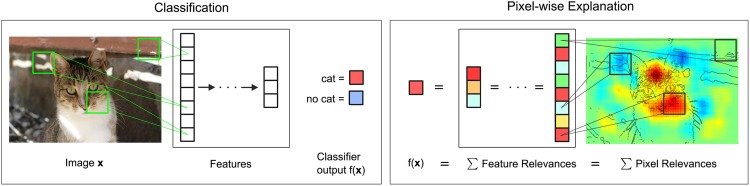
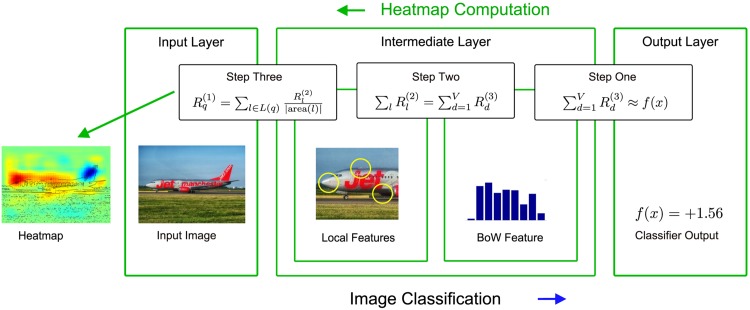
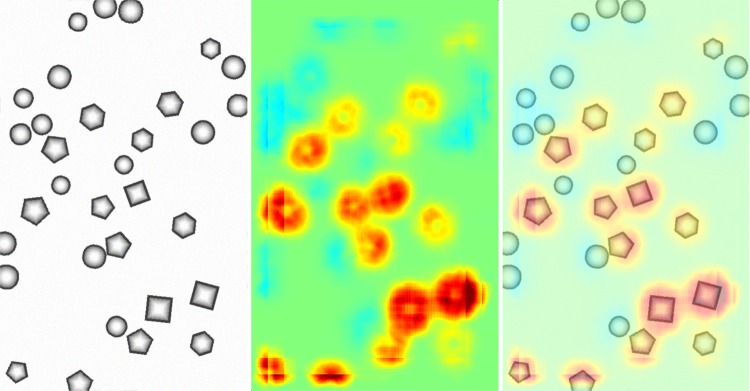
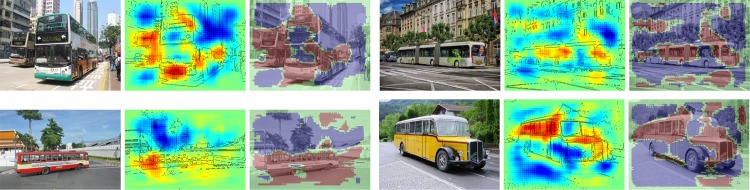
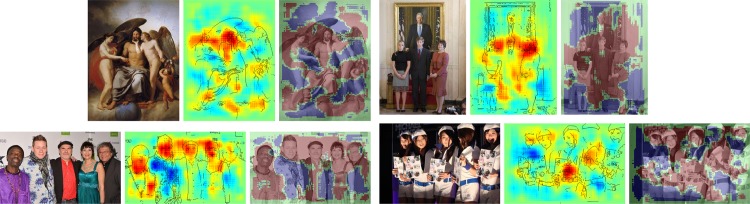
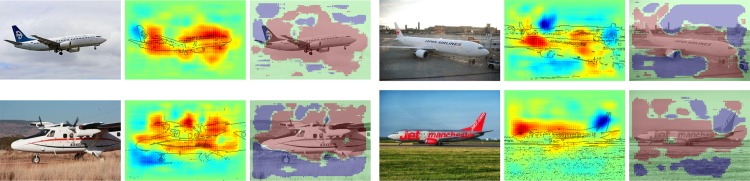
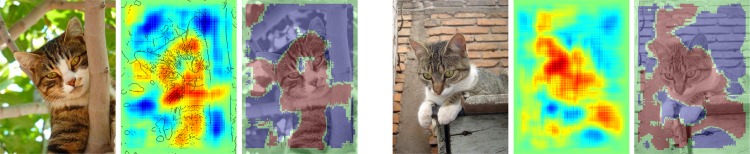
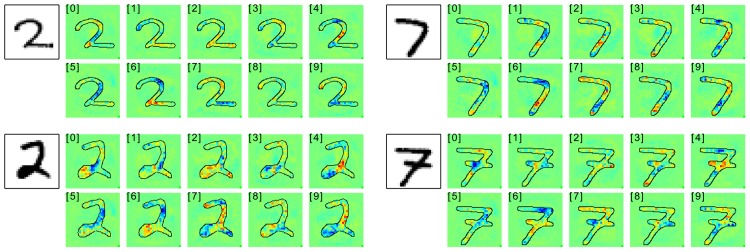
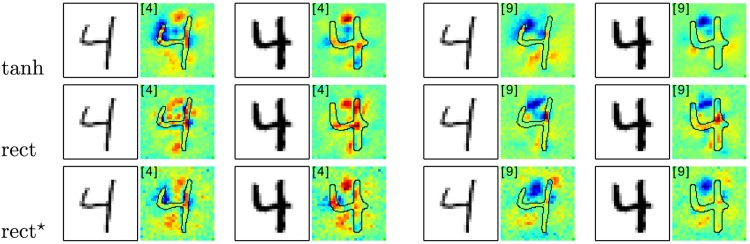
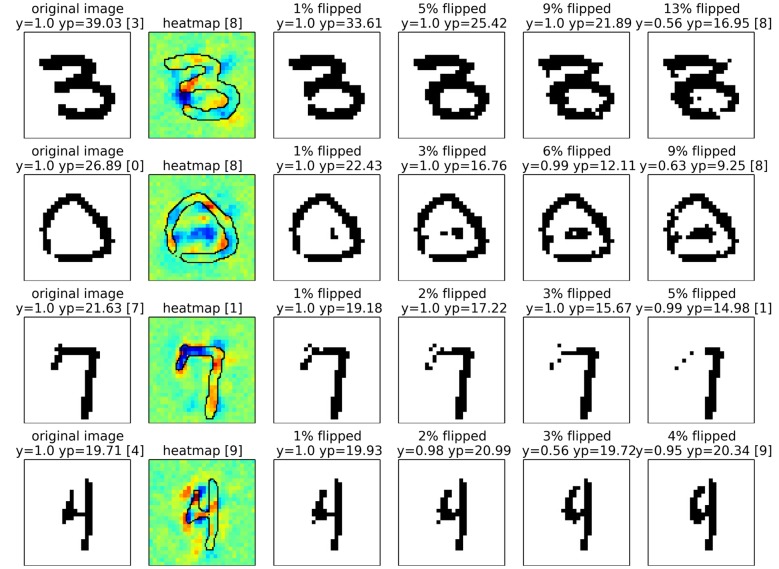
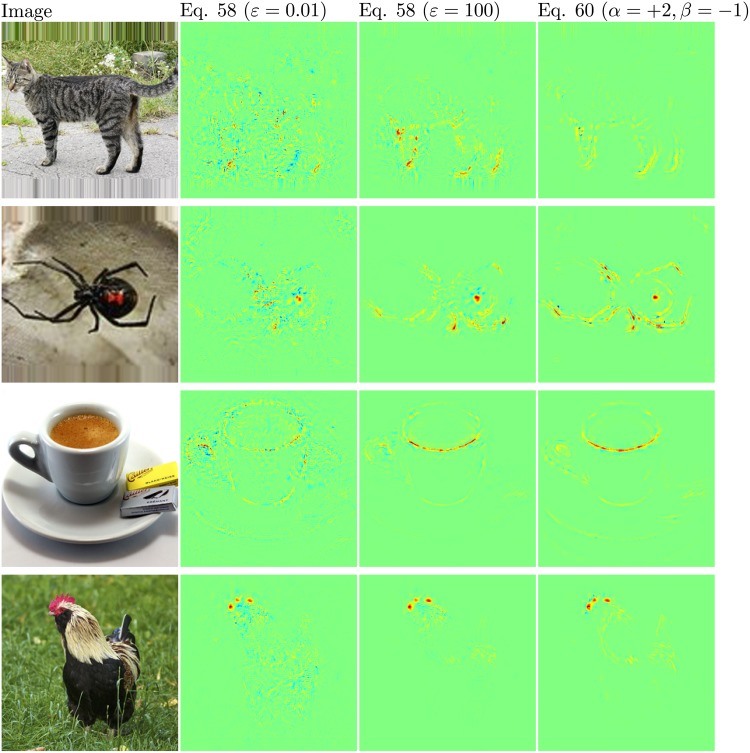
Understanding and interpreting classification decisions of automated image classification systems is of high value in many applications, as it allows to verify the reasoning of the system and provides additional information to the human expert. Although machine learning methods are solving very successfully a plethora of tasks, they have in most cases the disadvantage of acting as a black box, not providing any information about what made them arrive at a particular decision. This work proposes a general solution to the problem of understanding classification decisions by pixel-wise decomposition of nonlinear classifiers. We introduce a methodology that allows to visualize the contributions of single pixels to predictions for kernel-based classifiers over Bag of Words features and for multilayered neural networks. These pixel contributions can be visualized as heatmaps and are provided to a human expert who can intuitively not only verify the validity of the classification decision, but also focus further analysis on regions of potential interest. We evaluate our method for classifiers trained on PASCAL VOC 2009 images, synthetic image data containing geometric shapes, the MNIST handwritten digits data set and for the pre-trained ImageNet model available as part of the Caffe open source package.
Overview
The claims and statistics of this paper haven’t been checked yet.
Free: it reads the open-access text and checks the first 5 claims that cite a source we can check. Create a free account to check every claim.
Integrity signals
Registry
Cites
Statistics
Figures



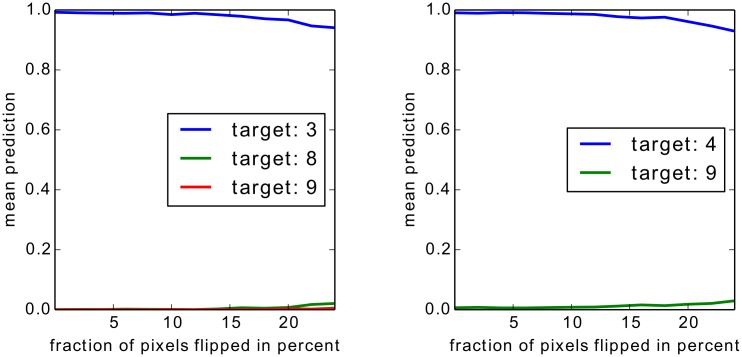
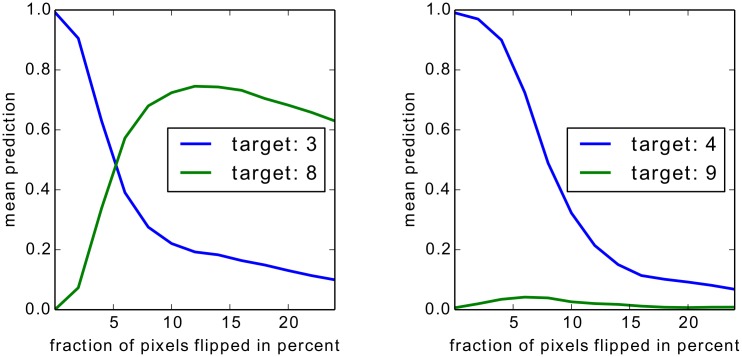
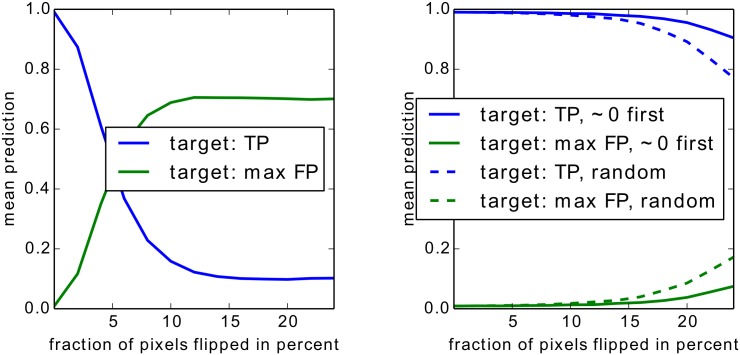
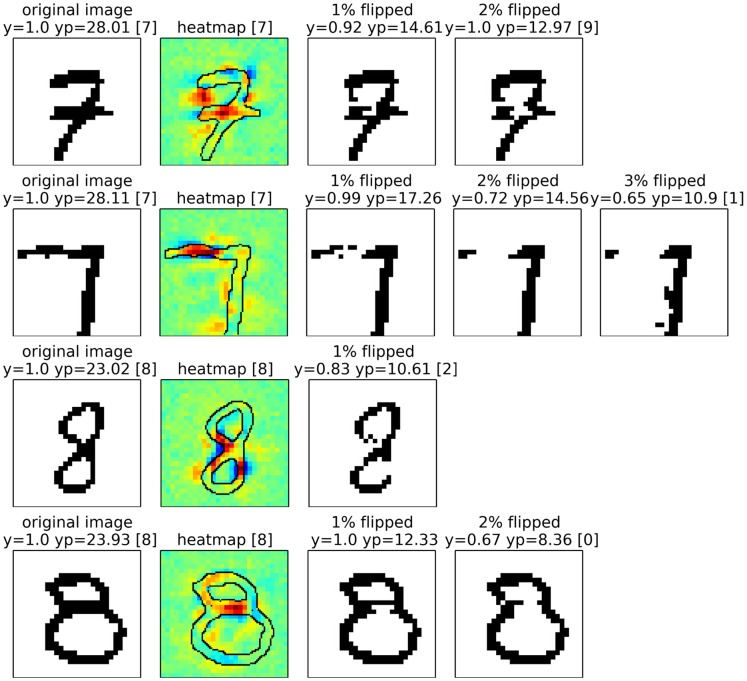
Verification
Claims the paper makes
The claims and statistics of this paper haven’t been checked yet.
Free: it reads the open-access text and checks the first 5 claims that cite a source we can check. Create a free account to check every claim.
Claims other papers make about this one
Each is checked against this paper’s own text: does it say what the citing paper says it does?
The source backs part of the claim, not all of it — or backs it for a different population, condition or comparison.
In the citing paper
“Barring a few exceptions (Caruana et al., 2015; Lundberg et al., 2018b; Ustun et al., 2019; Jesus et al., 2021), much of the existing work is designed and developed for benchmark classification problems, often with synthetic data and usually validated with user studies limited to users in research settings such as Amazon Mechanical Turk (AMT; Simonyan et al., 2013; Zeiler and Fergus, 2014; Bach et”
From Explainable machine learning for public policy: Use cases, gaps, and research directions (2023) · cites this paper as Bach et al., 2015
Experimental — accuracy not yet measuredThe cited source says what the claim attributes to it.
In the citing paper
“Unfortunately, most of the work in this area fails to meet these criteria, focusing only on benchmark ML problems and datasets (e.g., image classification on MNIST data, newsgroups data; Bach et al., 2015; Ribeiro et al., 2016, 2018; Shrikumar et al., 2017).”
From Explainable machine learning for public policy: Use cases, gaps, and research directions (2023) · cites this paper as Bach et al., 2015
In the citing paper
“LRP and DTD are capable of improving a model’s interpretability.”
From Survey of Explainable AI Techniques in Healthcare (2023) · cites this paper as [31]
Self-check
Percentages, sums and reported differences re-computed from the paper’s own numbers.
The self-check needs the paper’s full text.
Citations
Cites
ImageNet classification with deep convolutional neural networks
Krizhevsky, A., Sutskever, I., & Hinton, G. E. (2017) · Communications of the ACM · doi:10.1145/3065386 · Cited by 112,155 · cited 2×
“It is known from [21] that lower layers of deep networks which are very similar to the one from [60] used here may act like learned texture or gradient detectors.”
BackgroundDistinctive Image Features from Scale-Invariant Keypoints
Lowe, D. G. (2004) · International Journal of Computer Vision · doi:10.1023/b:visi.0000029664.99615.94 · Cited by 55,589
Learning representations by back-propagating errors
Rumelhart, D. E., Hinton, G. E., & Williams, R. J. (1986) · Nature · doi:10.1038/323533a0 · Cited by 31,892 · cited 2×
“The derivative @f(x)/@x(d) required for pixel-wise decomposition can be computed efficiently by reusing the network topology using the backpropagation algorithm [56].”
BackgroundMethodThe pascal visual object classes (VOC) challenge
Everingham, M., Van Gool, L., Williams, C. K. I., Winn, J., & Zisserman, A. (2010) · International Journal of Computer Vision · doi:10.1007/s11263-009-0275-4 · Cited by 19,599
Neural networks for pattern recognition
(1994) · Choice Reviews Online · doi:10.5860/choice.31-5500 · Cited by 18,538
Rapid object detection using a boosted cascade of simple features
Viola, P., & Jones, M. (2005) · Proceedings of the 2001 IEEE Computer Society Conference on Computer Vision and Pattern Recognition. CVPR 2001 · doi:10.1109/cvpr.2001.990517 · Cited by 18,300
Visualizing and understanding convolutional networks
Zeiler, M. D., & Fergus, R. (2014) · Lecture Notes in Computer Science · doi:10.1007/978-3-319-10590-1_53 · Cited by 15,839
Explaining and Harnessing Adversarial Examples
Goodfellow, I. J., Shlens, J., & Szegedy, C. (2014) · arXiv · doi:10.48550/arxiv.1412.6572 · Cited by 10,381 · cited 1×
“A different type of analysis for understanding neural networks deals with creating counter-intuitive examples, see for example the work in [24, 25].”
BackgroundIntriguing properties of neural networks
Szegedy, C., Zaremba, W., Sutskever, I., Bruna, J., Erhan, D., Goodfellow, I., & Fergus, R. (2013) · arXiv · doi:10.48550/arxiv.1312.6199 · Cited by 8,143 · cited 2×
“However, as noted in [24], this can lead to points of the input space that are perceptually equivalent to the original sample x and whose choice as a root would produce non-informative pixel-wise decompositions.”
BackgroundDeep Inside Convolutional Networks: Visualising Image Classification Models and Saliency Maps
Simonyan, K., Vedaldi, A., & Zisserman, A. (2013) · arXiv · doi:10.48550/arxiv.1312.6034 · Cited by 5,370 · cited 4×
“Besides deviating in the usage of a Taylor series, the work in [22] does not make use of the layer-wise propagation strategy for neural networks presented in this paper, which unlike a Taylor series does not rely on a local approximation.”
BackgroundMethodResultInfluential
Research works printed but not linked: 4
- Montavon G, Orr GB, Müller KR, editors. Neural Networks: Tricks of the Trade, Reloaded vol. 7700 of Lecture Notes in Computer Science (LNCS). 2nd ed Springer; 2012.
- Everingham M, Van Gool L, Williams CKI, Winn J, Zisserman A. The PASCAL Visual Object Classes Challenge 2010 (VOC2010) Results;. · DOI · Paper page
- Lanckriet GRG, Cristianini N, Bartlett PL, Ghaoui LE, Jordan MI. Learning the Kernel Matrix with Semidefinite Programming. Journal of Machine Learning Research. 2004; 5: 27– 72.
- Kloft M, Brefeld U, Sonnenburg S, Laskov P, Müller KR, Zien A. Efficient and Accurate Lp-norm Multiple Kernel Learning. Advances in Neural Information Processing Systems. 2009; 22(22): 997– 1005.
Cited by
Items 401–500 of 1,049
Eigen-CAM: Visual Explanations for Deep Convolutional Neural Networks
Muhammad, M. B., & Yeasin, M. (2021) · SN Computer Science · doi:10.1007/s42979-021-00449-3 · Cited by 139
Explainability in AI-based behavioral malware detection systems
Galli, A., Gatta, V. L., Moscato, V., Postiglione, M., & Sperlí, G. (2024) · Computers & Security · doi:10.1016/j.cose.2024.103842 · Cited by 145
Explainable Artificial Intelligence (XAI) on TimeSeries Data: A Survey
Rojat, T., Puget, R., Filliat, D., Del Ser, J., Gelin, R., & Díaz-Rodríguez, N. (2021) · arXiv · doi:10.48550/arxiv.2104.00950 · Cited by 116
Haghighatlari, M., Li, J., Heidar‐Zadeh, F., Liu, Y., Guan, X., & Head-Gordon, T. L. (2020) · Chem · doi:10.1016/j.chempr.2020.05.014 · Cited by 135
Surgical data science – from concepts toward clinical translation
Maier‐Hein, L., Eisenmann, M., Sarıkaya, D., März, K., Collins, T., Malpani, A., Fallert, J., Feußner, H., Giannarou, S., Mascagni, P., et al. (2021) · Medical Image Analysis · doi:10.1016/j.media.2021.102306 · Cited by 516
“models are still in their infancies and are primarily studied by the ML community (Adebayo et al., 2018; Bach et al., 2015; Koh and Liang, 2017; Shrikumar et al., 2017).”
BackgroundSteimers, A., & Schneider, M. (2022) · International Journal of Environmental Research and Public Health · doi:10.3390/ijerph19063641 · Cited by 151
“Reviewing the output of a convolutional neural network by having its internal state inspected by a human expert is an approach that is extended in related work, such as [112–114].”
MethodOpening the Black Box: A systematic review on explainable artificial intelligence in remote sensing
Höhl, A., Obadić, I., Fernández‐Torres, M., Najjar, H., Oliveira, D. A. B., Akata, Z., Dengel, A. R., & Zhu, X. X. (2024) · IEEE Geoscience and Remote Sensing Magazine · doi:10.1109/mgrs.2024.3467001 · Cited by 142
Interpretable and Trustworthy Deepfake Detection via Dynamic Prototypes
Trinh, L., Tsang, M., Rambhatla, S., & Liu, Y. (2021) · 2021 IEEE Winter Conference on Applications of Computer Vision (WACV) · doi:10.1109/wacv48630.2021.00202 · Cited by 115
“One prominent approach to explaining deep neural networks is posthoc analysis via gradient [54, 52, 56, 5, 53] and perturbation-based methods [19, 51, 71, 43]; however, it is known that these methods do not modify the complex underlying architecture of the network.”
BackgroundResTS: Residual Deep interpretable architecture for plant disease detection
Shah, D., Trivedi, V., Sheth, V., Shah, A., & Chauhan, U. (2021) · Information Processing in Agriculture · doi:10.1016/j.inpa.2021.06.001 · Cited by 157
Explainable Artificial Intelligence (XAI): Adoption and Advocacy
Ridley, M. (2022) · Information Technology and Libraries · doi:10.6017/ital.v41i2.14683 · Cited by 82
“There are various feature audit techniques 34 but all of them are “ decompositional ” in that they attempt to reduce the work of the algorithm to its component parts and then use those results as an explanation.”
Ennab, M., & Mcheick, H. (2025) · Machine Learning and Knowledge Extraction · doi:10.3390/make7010012 · Cited by 114
“This technique has been urged to become more vital in medical imaging applications, such as histopathology, due to intrinsic complex image interpretations [25].”
Universal Adversarial Attack on Attention and the Resulting Dataset DAmageNet
Chen, S., He, Z., Sun, C., Yang, J., & Huang, X. (2020) · IEEE Transactions on Pattern Analysis and Machine Intelligence · doi:10.1109/tpami.2020.3033291 · Cited by 142
Generative Counterfactual Introspection for Explainable Deep Learning
Liu, S., Kailkhura, B., Loveland, D., & Han, Y. (2019) · 2019 IEEE Global Conference on Signal and Information Processing (GlobalSIP) · doi:10.1109/globalsip45357.2019.8969491 · Cited by 83
“Many CNN interpretation methods [4]–[6], [12], [13], such as GradCAM [12], utilize backpropagation to conduct sensitivity analysis by attributing the prediction to the input domain (e.”
MethodXia, T., Zhao, B., Li, B., Lei, Y., Song, Y. S., Wang, Y., Tang, T., & Ju, S. (2023) · Journal of Magnetic Resonance Imaging · doi:10.1002/jmri.28982 · Cited by 125
“85 CAM is a popular and common technique that displays the areas of an image that a model considers most signi fi cant through a visual thermal map in the medical fi eld.”
MethodMutalib, N. H. A., Sabri, A. Q. M., Wahab, A. W. A., Abdullah, E. R. M. F., & AlDahoul, N. (2024) · Artificial Intelligence Review · doi:10.1007/s10462-024-10890-4 · Cited by 138
“By assigning relevance scores to input features, the LRP aims to interpret their contributions to model decisions.”
InfluentialMachine Learning Methods for Weather Forecasting: A Survey
Zhang, H., Liu, Y., Zhang, C., & Li, N. (2025) · Atmosphere · doi:10.3390/atmos16010082 · Cited by 113
(2018) · arXiv (Cornell University) · Cited by 113
The autofeat Python Library for Automated Feature Engineering and Selection
Horn, F., Pack, R., & Rieger, M. (2019) · PKDD/ECML Workshops · doi:10.1007/978-3-030-43823-4_10 · Cited by 159
Towards Better Explanations of Class Activation Mapping
Jung, H., & Oh, Y. (2021) · 2021 IEEE/CVF International Conference on Computer Vision (ICCV) · doi:10.1109/iccv48922.2021.00137 · Cited by 112
“Under this scheme, each activation map can be seen as an individual feature in additive feature attribution methods [2, 9, 11, 15].”
MethodResultExplainable Convolutional Neural Network for Gearbox Fault Diagnosis
Grezmak, J. E., Wang, P. E., Sun, C., & Gao, R. X. (2019) · Procedia CIRP · doi:10.1016/j.procir.2018.12.008 · Cited by 117
Subseasonal Forecasts of Opportunity Identified by an Explainable Neural Network
Mayer, K. J., & Barnes, E. A. (2021) · Geophysical Research Letters · doi:10.1029/2020gl092092 · Cited by 126
“Here, we utilize a relatively new neural network explainability technique to the geosciences called LRP (Bach et al., 2015; Montavon et al., 2019) to extract and visualize the features the trained ANN employs to make accurate predictions.”
MethodCombining Bottom-Up, Top-Down, and Smoothness Cues for Weakly Supervised Image Segmentation
Roy, A., & Todorović, S. (2017) · IEEE Computer Society Conference on Computer Vision and Pattern Recognition/Proceedings - IEEE Computer Society Conference on Computer Vision and Pattern Recognition/Proceedings · doi:10.1109/cvpr.2017.770 · Cited by 122
“Following a long line of work on estimating probabilistic visual attention maps [38, 17, 35], as well as recent approaches to visualizing neural activations [43, 32, 2, 44], we use a top-down computation process for estimating probabilistic visual attention maps of neural activations at each layer of our CNN.”
MethodExplaining and Interpreting LSTMs
Arras, L., Arjona-Medina, J., Widrich, M., Montavon, G., Gillhofer, M., Müller, K.-R., Hochreiter, S., & Samek, W. (2019) · Lecture notes in computer science · doi:10.1007/978-3-030-28954-6_11 · Cited by 138
Self-citationExplainable AI for Interpretable Credit Scoring
Demajo, L. M., Vella, V., & Dingli, A. (2020) · Computer Science & Information Technology (CS & IT) · doi:10.5121/csit.2020.101516 · Cited by 123
“The authors in [20] propose Layer-wise Relevance Propagation (LRP), a post-hoc interpretability model for interpreting the individual predictions of a Deep Neural Network (DNN) rather than”
BackgroundInterpretable Deep Learning under FirePreprint
Zhang, X., Wang, N., Shen, H., Ji, S., Luo, X., & Wang, T. (2018) · arXiv (Cornell University) · doi:10.48550/arxiv.1812.00891 · Cited by 122
“This attack is extensible to other back-propagation-based interpreters (e.g., DEEPLIFT [48], SMOOTHGRAD [51], and LRP [6]), due to their fundamentally equivalent, gradientcentric formulations [3].”
BackgroundArtificial Intelligence Techniques for Smart City Applications
Luckey, D., Fritz, H., Legatiuk, D., Dragos, K., & Smarsly, K. (2020) · Lecture notes in civil engineering · doi:10.1007/978-3-030-51295-8_1 · Cited by 135
Zhang, Z., Zhang, Y., Guo, D., Yao, L. Y., & Zhao, L. (2022) · Future Generation Computer Systems · doi:10.1016/j.future.2022.04.010 · Cited by 121
Neural network attribution methods for problems in geoscience: A novel synthetic benchmark dataset
Mamalakis, A., Ebert‐Uphoff, I., & Barnes, E. A. (2022) · Environmental Data Science · doi:10.1017/eds.2022.7 · Cited by 120
“(7), LRP α=1,β=0 considers only positive preactivations (Bach et al., 2015), one might assume that it will only highlight the features that positively contribute to the prediction.”
BackgroundMethodInfluentialExploiting Explanations for Model Inversion Attacks
Zhao, X., Zhang, W., Xiao, X., & Lim, B. Y. (2021) · IEEE/CVF International Conference on Computer Vision (ICCV) · doi:10.1109/iccv48922.2021.00072 · Cited by 142
“The last explanation type we evaluated was layer-wise relevance propagation (LRP) [3], which attributes the importance of pixels by backpropagating the relevance of neurons in a neural network while obeying the axiom of conservation of total relevance.”
BackgroundMethodInfluentialDeep learning detection of informative features in tau PET for Alzheimer’s disease classification
Initiative, F. T. A. N., Jo, T., Nho, K., Risacher, S. L., & Saykin, A. J. (2020) · BMC Bioinformatics · doi:10.1186/s12859-020-03848-0 · Cited by 103
“We applied a layer-wise relevance propagation (LRP) algorithm to identify informative features and visualize the classification results [30, 31].”
MethodReview on Interpretable Machine Learning in Smart Grid
Xu, C., Liao, Z., Li, C., Zhou, X., & Xie, R. (2022) · Energies · doi:10.3390/en15124427 · Cited by 129
“Layer-wise relevance propagation (LRP) is an interpretability method based on deep Taylor decomposition [101,117].”
MethodAutomatic Detection of Pain from Facial Expressions: A Survey
Hassan, T., Seuß, D., Wollenberg, J., Weitz, K., Kunz, M., Lautenbacher, S., Garbas, J.-U., & Schmid, U. (2020) · IEEE Transactions on Pattern Analysis and Machine Intelligence · doi:10.1109/tpami.2019.2958341 · Cited by 122
“Explainable Artificial Intelligence (AI) methods such as Layer-wise Relevance Propagation [142] and Local Inter-pretable Model-Agnostic Explanations (LIME) [143] could be used to make decision-making transparent and compre-hensible to humans [23].”
A General Framework for Inference on Algorithm-Agnostic Variable Importance
Williamson, B. D., Gilbert, P. B., Simon, N., & Carone, M. (2022) · Journal of the American Statistical Association · doi:10.1080/01621459.2021.2003200 · Cited by 177
Understanding Individual Decisions of CNNs via Contrastive Backpropagation
Gu, J., Yang, Y., & Tresp, V. (2019) · Lecture notes in computer science · doi:10.1007/978-3-030-20893-6_8 · Cited by 128
ML-LOO: Detecting Adversarial Examples with Feature Attribution
Yang, P., Chen, J., Hsieh, C., Wang, J.-L., & Jordan, M. I. (2020) · Proceedings of the AAAI Conference on Artificial Intelligence · doi:10.1609/aaai.v34i04.6140 · Cited by 143
Mutual Information-Driven Subject-Invariant and Class-Relevant Deep Representation Learning in BCI
Jeon, E., Ko, W., Yoon, J. S., & Suk, H. (2021) · IEEE Transactions on Neural Networks and Learning Systems · doi:10.1109/tnnls.2021.3100583 · Cited by 120
“We implemented LRPs by following -rule to calculate relevance scores [40] and then compared them to the PSD of raw motor imagery EEGs”
MethodA machine learning model that outperforms conventional global subseasonal forecast models
Chen, L., Zhong, X., Li, H., Wu, J., Lu, B., Chen, D., Xie, S.-P., Wu, L., Chao, Q., Lin, C., et al. (2024) · Nature Communications · doi:10.1038/s41467-024-50714-1 · Cited by 105
Elucidating the Behavior of Nanophotonic Structures through Explainable Machine Learning Algorithms
Yeung, C. J., Tsai, J.-M., King, B., Kawagoe, Y., Ho, D., Knight, M. W., & Raman, A. P. (2020) · ACS Photonics · doi:10.1021/acsphotonics.0c01067 · Cited by 111
“XAI approaches include sensitivity analysis, Taylor decomposition, deconvolution, guided backpropagation, and layer-wise relevance propagation 38-41 .”
MethodAutomatic strain sensor design via active learning and data augmentation for soft machines
Yang, H., Li, J., Lim, K. Z., Pan, C., Truong, T. V., Wang, Q., Li, K., Li, S., Xiao, X., Ding, M., et al. (2022) · Nature Machine Intelligence · doi:10.1038/s42256-021-00434-8 · Cited by 115
Mamalakis, A., Barnes, E. A., & Ebert-Uphoff, I. (2022) · Artificial Intelligence for the Earth Systems · doi:10.1175/aies-d-22-0012.1 · Cited by 94
“For more details on the methods ’ analytical formulas, the reader is referred to appendix B and the corresponding studies cited below.”
MethodWang, J., Zheng, Y., Ma, J., Li, X., Wang, C., Gee, J. C., Wang, H., & Huang, W. (2022) · Medical Image Analysis · doi:10.1016/j.media.2022.102687 · Cited by 114
Deep neural network models of sensory systems: windows onto the role of task constraints
Kell, A. J. E., & McDermott, J. H. (2019) · Current Opinion in Neurobiology · doi:10.1016/j.conb.2019.02.003 · Cited by 120
From Responsibility to Reason-Giving Explainable Artificial Intelligence
Baum, K., Mantel, S., Schmidt, E., & Speith, T. (2022) · Philosophy & Technology · doi:10.1007/s13347-022-00510-w · Cited by 103
“At the same time, there is a broad variety of technically minded papers from computer science introducing and discussing concrete methods for coaxing explanations out of AI systems (e.g., Bach et al., 2015; Kim et al., 2018; Montavon et al., 2017; Ribeiro et al., 2016; Selvaraju et al., 2017).”
BackgroundTowards explaining anomalies: A deep Taylor decomposition of one-class models
Kauffmann, J., Müller, K.-R., & Montavon, G. (2020) · Pattern Recognition · doi:10.1016/j.patcog.2020.107198 · Cited by 101
“Taylor decomposition [4, 2] seeks to determine the importance of input variables for a certain prediction f(x) by performing an expansion of the function f at a certain reference point x̃:”
BackgroundSelf-citationSurveying neuro-symbolic approaches for reliable artificial intelligence of things
Lu, Z., Afridi, I. U., Kang, H. J., Ruchkin, I., & Zheng, X. (2024) · Journal of Reliable Intelligent Environments · doi:10.1007/s40860-024-00231-1 · Cited by 132
Brik, B., Chergui, H., Zanzi, L., Devoti, F., Ksentini, A., Siddiqui, M. S., Costa‐Pérez, X., & Verikoukis, C. V. (2024) · IEEE Communications Surveys & Tutorials · doi:10.1109/comst.2024.3510543 · Cited by 151
“While human-in-the-loop (HITL) approaches can only yield subjective assessment of the trustworthiness of AI, the existence of objective metrics to characterize the transparency of AI models is a requirement to develop explanation-aware AI Authorized licensed use limited to the terms of the…”
Analyzing Neuroimaging Data Through Recurrent Deep Learning Models
Thomas, A. W., Heekeren, H. R., Müller, K.-R., & Samek, W. (2019) · Frontiers in Neuroscience · doi:10.3389/fnins.2019.01321 · Cited by 90
Self-citationOn Model Stability as a Function of Random Seed
Madhyastha, P., & Jain, R. (2019) · Conference on Computational Natural Language Learning · doi:10.18653/v1/k19-1087 · Cited by 123
“, 2019; Jain and Wallace, 2019; Koh and Liang, 2017); b) interpretations based on feature attributions using attention or input perturbation or gradient-based measures; (Ghaeini et al., 2018; Feng et al., 2018; Bach et al., 2015); c) interpretations using surro-”
BackgroundMethodDecoding and mapping task states of the human brain via deep learning
Wang, X., Liang, X., Jiang, Z., Nguchu, B. A., Zhou, Y., Wang, Y., Wang, H., Li, Y., Zhu, Y., Wu, F., et al. (2019) · Human Brain Mapping · doi:10.1002/hbm.24891 · Cited by 118
Explainable image classification with evidence counterfactual
Vermeire, T., Brughmans, D., Goethals, S., Oliveira, R., & Martens, D. (2022) · Pattern Analysis and Applications · doi:10.1007/s10044-021-01055-y · Cited by 135
“As a first example of feature importance methods, LRP heat maps [6] for the chihuahua image are shown in Fig.”
MethodRodis, N., Sardianos, C., Grammatikis, P. I. R., Sarigiannidis, P. G., Varlamis, I., & Papadopoulos, G. T. (2024) · IEEE Access · doi:10.1109/access.2024.3467062 · Cited by 123
“Moreover, the list of references of each research article was also analyzed, in order to identify additional relevant studies.”
BackgroundAhmed, M. T., Ahmed, M. W., & Kamruzzaman, M. (2025) · Computers and Electronics in Agriculture · doi:10.1016/j.compag.2025.110354 · Cited by 116
A recurrent convolutional neural network approach for sensorless force estimation in robotic surgery
Marbán, A., Srinivasan, V., Samek, W., Fernández, J., & Casals, A. (2019) · Biomedical Signal Processing and Control · doi:10.1016/j.bspc.2019.01.011 · Cited by 111
Self-citationExplanation-Guided Training for Cross-Domain Few-Shot Classification
Sun, J., Lapuschkin, S., Samek, W., Zhao, Y., Cheung, N. M., & Binder, A. (2021) · Proceedings - International Conference on Pattern Recognition/Proceedings/International Conference on Pattern Recognition · doi:10.1109/icpr48806.2021.9412941 · Cited by 141
“Many explanation methods [13], [15], [17] explain predictions on a per-sample basis.”
BackgroundMethodInfluentialSelf-citationMeister, S., Wermes, M., Stüve, J., & Groves, R. M. (2021) · Composites Part B Engineering · doi:10.1016/j.compositesb.2021.109160 · Cited by 104
Keleko, A. T., Kamsu-Foguem, B., Ngouna, R. H., & Tongne, A. (2022) · Advances in Engineering Software · doi:10.1016/j.advengsoft.2022.103339 · Cited by 110
Preserving differential privacy in convolutional deep belief networks
Phan, N., Wu, X., & Dou, D. (2017) · Machine Learning · doi:10.1007/s10994-017-5656-2 · Cited by 95
“Similar to Layer-wise Relevance Propagation [7], the approximation errors will propagate across neural layers.”
ResultISeeU: Visually interpretable deep learning for mortality prediction inside the ICU
Caicedo-Torres, W., & Gutierrez, J. (2019) · Journal of Biomedical Informatics · doi:10.1016/j.jbi.2019.103269 · Cited by 95
“…is an importance attribution method for feed forward neural networks, that is akin to the Layer-wise Relevance Propagation method (LRP) proposed by [41], in the sense that both use a backpropagation-like approach to the calculation and attribution of relevance/importance scores to the input…”
MethodLayerwise Relevance Visualization in Convolutional Text Graph Classifiers
Schwarzenberg, R., Hübner, M., Harbecke, D., Alt, C., & Hennig, L. (2019) · Workshop on Graph Based Methods for Natural Language Processing · doi:10.18653/v1/d19-5308 · Cited by 110
“For instance, in the vision domain Bach et al. (2015) propose the Layerwise Relevance Propagation (LRP) algorithm that propagates contributions from an output activation back to the first layer, the input pixel space.”
BackgroundLearning Invariant Representations From EEG via Adversarial Inference
Ozdenizci, O., Wang, Y., Koike-Akino, T., & Erdogmus, D. (2020) · IEEE Access · doi:10.1109/access.2020.2971600 · Cited by 95
“In our implementations, we utilize a slight variant of the LRP framework called (cid:15) -LRP from the original work [20], which only differs with an additional term in the denominator to preserve numerical stability.”
MethodExplainable deep learning in healthcare: A methodological survey from an attribution view
Jin, D., Sergeeva, E., Weng, W., Chauhan, G., & Szolovits, P. (2022) · WIREs Mechanisms of Disease · doi:10.1002/wsbm.1548 · Cited by 72
Anderson, S., & Radić, V. (2022) · Hydrology and earth system sciences · doi:10.5194/hess-26-795-2022 · Cited by 111
“Another technique, layer-wise relevance propagation (LRP), backpropagates from a single output neuron through the trained network to identify the input region which is most relevant for determining the value of the output neuron (Bach et al., 2015).”
MethodExplainable deep learning in plant phenotyping
Mostafa, S., Mondal, D., Panjvani, K., Kochian, L. V., & Stavness, I. (2023) · Frontiers in Artificial Intelligence · doi:10.3389/frai.2023.1203546 · Cited by 112
“is considered post-hoc if an external explainer is used on a trained model to understand the reasoning behind its decision (Bach et al., 2015; Lundberg and Lee, 2017; Tan et al., 2018; Brunese et al., 2020; Soares et al., 2020).”
BackgroundInfluentialBommer, P. L., Kretschmer, M., Hedström, A., Bareeva, D., & Höhne, M. (2024) · Artificial Intelligence for the Earth Systems · doi:10.1175/aies-d-23-0074.1 · Cited by 139
Nam, W.-J., Gur, S., Choi, J., Wolf, L., & Lee, S.-W. (2020) · Proceedings of the AAAI Conference on Artificial Intelligence · doi:10.1609/aaai.v34i03.5632 · Cited by 98
Survey on Explainable AI: Techniques, challenges and open issues
Abusitta, A., Li, M. Q., & Fung, B. C. M. (2024) · Expert Systems with Applications · doi:10.1016/j.eswa.2024.124710 · Cited by 98
The Road to Explainability is Paved with Bias: Measuring the Fairness of Explanations
Balagopalan, A., Zhang, H., Hamidieh, K., Hartvigsen, T., Rudzicz, F., & Ghassemi, M. (2022) · ACM Conference on Fairness, Accountability, and Transparency (FAccT) · doi:10.1145/3531146.3533179 · Cited by 136
“In contrast, some methods are designed exclusively for deep learning, requiring their internal structure and gradients [8, 57, 63, 103, 103].”
MethodFocused Attention in Transformers for interpretable classification of retinal images
Playout, C., Duval, R., Boucher, M. C., & Cheriet, F. (2022) · Medical Image Analysis · doi:10.1016/j.media.2022.102608 · Cited by 110
Interpretable Machine Learning
Krishnan, N. M. A., Kodamana, H., & Bhattoo, R. (2024) · Machine intelligence for materials science · doi:10.1007/978-3-031-44622-1_9 · Cited by 100
Comprehensive review of recent developments in visual object detection based on deep learning
Edozie, E., Shuaibu, A. N., John, U. K., & Sadiq, B. O. (2025) · Artificial Intelligence Review · doi:10.1007/s10462-025-11284-w · Cited by 118
Explaining Deep Neural Networks with a Polynomial Time Algorithm for Shapley Values Approximation
Ancona, M., Öztireli, C., & Groß, M. H. (2019) · Repository for Publications and Research Data (ETH Zurich) · doi:10.3929/ethz-b-000342737 · Cited by 42
Won, D.-O., Müller, K., & Lee, S. (2020) · Science Robotics · doi:10.1126/scirobotics.abb9764 · Cited by 106
Self-citationZou, L., Goh, H. L., Liew, C. J. Y., Quah, J. L., Gu, G. T., Chew, J. J., Kumar, M. P., Ang, C. G. L., & Ta, A. W. A. (2023) · IEEE Transactions on Artificial Intelligence · doi:10.1109/tai.2022.3153754 · Cited by 92
“While there is extensive work in explaining the decision of an algorithm, for example, commonly used layer-wise relevance propagation [12] and localization, gradients, and perturbations [13], [14].”
BackgroundBenchmarking of Machine Learning Ocean Subgrid Parameterizations in an Idealized Model
Ross, A. S., Li, Z., Perezhogin, P. A., Fernandez‐Granda, C., & Zanna, L. (2023) · Journal of Advances in Modeling Earth Systems · doi:10.1029/2022ms003258 · Cited by 122
“Note that although there are many proposed methods for quantifying neural network input saliency (Bach et al., 2015; Springenberg et al., 2014), input gradients consistently pass sanity checks that have been developed to validate these methods, while many alternatives do not (Adebayo et al., 2018;…”
VisualBackProp: efficient visualization of CNNs
Bojarski, M., Choromanska, A., Choromański, K., Firner, B., Jackel, L., Müller, U., & Zieba, K. (2016) · arXiv (Cornell University) · doi:10.48550/arxiv.1611.05418 · Cited by 46
“C V ] 2 4 Fe b 20 17 nitude faster than the state-of-the-art visualization method, LRP (Bach et al., 2015), while at the same time it leads to very similar visualization results.”
BackgroundResultInfluentialTSViz: Demystification of Deep Learning Models for Time-Series Analysis
Siddiqui, S. A., Mercier, D., Munir, M., Dengel, A., & Ahmed, S. (2019) · IEEE Access · doi:10.1109/access.2019.2912823 · Cited by 95
“This is specifically the case for visual recognition models since visualizing the kernels themselves and their activations can give hints about the feature that the system is learning and the kernels themselves are directly interpretable by humans [6]–[8], [14].”
BackgroundMANet: A two-stage deep learning method for classification of COVID-19 from Chest X-ray images
Xu, Y., Lam, H., & Jia, G. (2021) · Neurocomputing · doi:10.1016/j.neucom.2021.03.034 · Cited by 100
Razavi, S., Hannah, D. M., ELSHORBAGY, A. A., Kumar, S. V., Marshall, L. A., SOLOMATINE, D. P., Dezfuli, A., Sadegh, M., & Famiglietti, J. S. (2022) · Hydrological Processes · doi:10.1002/hyp.14596 · Cited by 102
“Motivated by these challenges is a recent increasing drive towards ‘Explainable ML’ using various numerical heuristics (e.g., Bach et al., 2015; Rudin, 2019; Samek & Müller, 2019; Toms et al., 2020), typically rooted in sensitivity analysis (see section 3.4 of Razavi et al., 2021 for a review), to…”
MethodInfluentialAn Interpretable Deep Learning Classifier for Epileptic Seizure Prediction Using EEG Data
Jemal, I., Mezghani, N., Abou-Abbas, L., & Mitiche, A. (2022) · IEEE Access · doi:10.1109/access.2022.3176367 · Cited by 105
Visualizing convolutional neural network protein-ligand scoring
Hochuli, J. E., Helbling, A., Skaist, T., Ragoza, M., & Koes, D. R. (2018) · Journal of Molecular Graphics and Modelling · doi:10.1016/j.jmgm.2018.06.005 · Cited by 103
User Authentication Based on Mouse Dynamics Using Deep Neural Networks: A Comprehensive Study
Chong, P., Elovici, Y., & Binder, A. (2019) · IEEE Transactions on Information Forensics and Security · doi:10.1109/tifs.2019.2930429 · Cited by 106
“the layer-wise relevance propagation (LRP) algorithm [27], a technique that decomposes the prediction score, f (x) to”
MethodSelf-citationJia, X., Xing, X., Yuan, Y., Xing, L., & Meng, M. Q. ‐. (2019) · Proceedings of the IEEE · doi:10.1109/jproc.2019.2950506 · Cited by 101
“To build trustworthy and interpretable medical diagnosis systems, many efforts have been dedicated from the perspectives of sensitivity analysis [138], [139], statistical analysis [140], model visualization [141], [142], and fuzzy rule-based modeling [143].”
MethodStenzinger, A., Alber, M., Allgäuer, M., Jurmeister, P. S., Bockmayr, M. L., Budczies, J., Lennerz, J. K., Eschrich, J., Kazdal, D. N., Schirmacher, P., et al. (2021) · Seminars in Cancer Biology · doi:10.1016/j.semcancer.2021.02.011 · Cited by 102
Self-citationState of the Art of Visual Analytics for eXplainable Deep Learning
Rosa, B. L., Blasilli, G., Bourqui, R., Auber, D., Santucci, G., Capobianco, R., Bertini, E., Giot, R., & Angelini, M. (2023) · Computer Graphics Forum · doi:10.1111/cgf.14733 · Cited by 117
Explainable artificial intelligence in transport Logistics: Risk analysis for road accidents
Abdulrashid, I., Farahani, R. Z., Mammadov, S., Khalafalla, M., & Chiang, W. (2024) · Transportation Research Part E Logistics and Transportation Review · doi:10.1016/j.tre.2024.103563 · Cited by 94
Kuo, C. ‐. J., & Chen, Y. (2017) · Journal of Visual Communication and Image Representation · doi:10.1016/j.jvcir.2017.11.023 · Cited by 99
Hilburn, K., Ebert‐Uphoff, I., & Miller, S. D. (2020) · Journal of Applied Meteorology and Climatology · doi:10.1175/jamc-d-20-0084.1 · Cited by 103
A survey for trust-aware recommender systems: A deep learning perspective
Dong, M., Yuan, F., Yao, L., Wang, X., Xu, X., & Zhu, L. (2022) · Knowledge-Based Systems · doi:10.1016/j.knosys.2022.108954 · Cited by 102
Searching for Critical Power System Cascading Failures With Graph Convolutional Network
Liu, Y., Zhang, N., Wu, D., Botterud, A., Yao, R., & Kang, C. (2021) · IEEE Transactions on Control of Network Systems · doi:10.1109/tcns.2021.3063333 · Cited by 93
The Role of Explainability in Assuring Safety of Machine Learning in Healthcare
Jia, Y., McDermid, J. A., Lawton, T., & Habli, I. (2022) · IEEE Transactions on Emerging Topics in Computing · doi:10.1109/tetc.2022.3171314 · Cited by 125
“, saturation, there are also a number of other methods proposed, for example, Integrated Gradients [20], LRP [21], and DeepLIFT [22].”
MethodInterpretable Machine Learning Tools: A Survey
Agarwal, N., & Das, S. (2020) · IEEE Symposium Series on Computational Intelligence (SSCI) · doi:10.1109/ssci47803.2020.9308260 · Cited by 106
Benchmarks for interpretation of QSAR models
Matveieva, M., & Полищук, П. Г. (2021) · Journal of Cheminformatics · doi:10.1186/s13321-021-00519-x · Cited by 104
“There are multiple post hoc interpretation approaches developed specifically for neural network models, e.g., Layer-wise Relevance Propagation (LRP) [5], DeepLift [6], CAM [7], GRAD-CAM [8], etc.”
Visual interpretability in 3D brain tumor segmentation network
Saleem, H., Shahid, A. R., & Raza, B. (2021) · Computers in Biology and Medicine · doi:10.1016/j.compbiomed.2021.104410 · Cited by 86
Explainable reinforcement learning in production control of job shop manufacturing system
Kuhnle, A., May, M. C., Schäfer, L., & Lanza, G. (2021) · International Journal of Production Research · doi:10.1080/00207543.2021.1972179 · Cited by 101
“Regarding image classification, Bach et al. (2015) emphasise a large gap between classification quality and interpretability.”
BackgroundLearning to Correct Climate Projection Biases
Pan, B., Anderson, G. J., Gonçalves, A. R., Lucas, D. D., Bonfils, C., Lee, J., Tian, Y., & Ma, H. (2021) · Journal of Advances in Modeling Earth Systems · doi:10.1029/2021ms002509 · Cited by 105
“…al., 2013), occlusion sensitivity analysis (Zeiler & Fergus, 2014), backward optimization (Olah et al., 2017) and layerwise relevance propagation (Bach et al., 2015; Toms et al., 2020), could be applied to verify if the RADA methodology identifies meaningful model biases, enhance our…”
MethodDeep-learning-based counting methods, datasets, and applications in agriculture: a review
Farjon, G., Hui-jun, L., & Edan, Y. (2023) · Precision Agriculture · doi:10.1007/s11119-023-10034-8 · Cited by 113
“The AP score is the area under the recall-precision curve, where recall is the percentage of correct predictions out of the number of positive examples [58] and precision is the percentage of positive predictions that are correct [34].”
BackgroundMethodDeep learning in microbiome analysis: a comprehensive review of neural network models
Przymus, P., Rykaczewski, K., Martín‐Segura, A., Truu, J., Pau, E. C. D. S., Kolev, M., Naskinova, I., Gruca, A., Sampri, A., Frohme, M., et al. (2025) · Frontiers in Microbiology · doi:10.3389/fmicb.2024.1516667 · Cited by 108
VisualBackProp: Efficient Visualization of CNNs for Autonomous Driving
Bojarski, M., Choromanska, A., Choromanski, K., Firner, B., Ackel, L. J., Muller, U., Yeres, P., & Zieba, K. (2018) · 2018 IEEE International Conference on Robotics and Automation (ICRA) · doi:10.1109/icra.2018.8461053 · Cited by 87
“We empirically demonstrate that it is order of magnitude faster than the state-of-the-art visualization method, layerwise relevance propagation (LRP) [10], while at the same time it leads to very similar visualization results.”
BackgroundResultInfluentialExplAIn: Explanatory artificial intelligence for diabetic retinopathy diagnosis
Quellec, G., Hajj, H. A., Lamard, M., Conze, P.-H., Massin, P., & Cochener, B. (2021) · Medical Image Analysis · doi:10.1016/j.media.2021.102118 · Cited by 110
“Various improvements on sensitivity analysis, including layer-wise relevance propagation (Bach et al., 2015), also rely on backpropagated quantities to build a high-resolution heatmap showing the relevance of each pixel (Samek et al.”
BackgroundSensitivity analysis: A discipline coming of age
Saltelli, A., Jakeman, A. J., Razavi, S., & Wu, Q. (2021) · Environmental Modelling & Software · doi:10.1016/j.envsoft.2021.105226 · Cited by 92
Metadata
- Authors
- Bach, S., Binder, A., Montavon, G., Klauschen, F., Müller, K.-R., & Samek, W.
- Affiliations
- Singapore University of Technology and Design (SG)
- Technische Universität Berlin (DE)
- Stiftung Charité (DE)
- Korea University (KR)
- Fraunhofer Institute for Telecommunications, Heinrich Hertz Institute (DE)
- Corresponding author
- Müller, Klaus-Robert
- Samek, Wojciech
- Venue
- PLOS ONE
- Publisher
- Public Library of Science (PLoS)
- Published
- 2015-07-10
- Volume
- 10
- Issue
- 7
- Pages
- e0130140
- ISSN
- 1932-6203 (ISSN-L)
- PMC
- PMC4498753
- OpenAlex
- W1787224781
- Cited by
- 4,524
- References
- 56
- Citations by year
- 2026: 347 · 2025: 628 · 2024: 653 · 2023: 648 · 2022: 566 · 2021: 647 · 2020: 489 · 2019: 299 · 2018: 145 · 2017: 63 · 2016: 27 · 2015: 6
- FWCI
- 78.76
- Type
- journal article
- Language
- en
- Open access
- gold
- doi.org
- Licence
- Locations
- PLoS ONE (publishedVersion, cc-by)
- PubMed Central (publishedVersion, cc-by)
- PubMed (publishedVersion)
- RePEc: Research Papers in Economics (submittedVersion)
- DOAJ (DOAJ: Directory of Open Access Journals) (submittedVersion, cc-by-sa)
- Publikationsdatenbank der Fraunhofer-Gesellschaft (Fraunhofer-Gesellschaft) (submittedVersion, other-oa)
- Fraunhofer-Publica (Fraunhofer-Gesellschaft) (submittedVersion)
- Refubium (Universitätsbibliothek der Freien Universität Berlin) (submittedVersion, cc-by)
- Universitätsbibliothek der FU Berlin Hochschulschriftenstelle u. Dokumentenserver (cc-by)
- Funders
- National Research Foundation
- Deutsche Forschungsgemeinschaft (01GQ1115)
- Bundesministerium für Bildung und Forschung (01 IS 14013 A, 01GQ1115)
- Bundesministerium für Wirtschaft und Technologie (01MQ07018)
- National Research Foundation of Korea (01IS14013A, BK21 program)
- Technische Universität Berlin
- Banting and Best Diabetes Centre, University of Toronto (01IS14013A)
- Topics
- Physical Sciences › Computer Science › Artificial Intelligence › Explainable Artificial Intelligence (XAI)
- Physical Sciences › Computer Science › Computer Vision and Pattern Recognition › Advanced Neural Network Applications
- Physical Sciences › Computer Science › Computer Vision and Pattern Recognition › Image Retrieval and Classification Techniques
- Keywords
- layer-wise relevance propagation, nonlinear classifiers, kernel-based classifiers, bag-of-words features, multilayer neural networks, heatmaps, image classification, black box, MNIST, ImageNet
- MeSH terms
- Algorithms, Artificial Intelligence, Humans, Image Processing, Computer-Assisted, Pattern Recognition, Automated
About these checks
Registry, retraction, Cites and statistics results are computed, not judged, with one exception: a printed reference that no index lists is read once by a model before it counts as a citation error. Claims are extracted by a model and kept only when their quote appears verbatim in the text; each cited source is then checked, with a model’s help, for whether it says what the claim relies on. Those verdicts can be wrong — read the claim’s quote and the cited source before relying on one.
Statistics and arithmetic are recomputed, not judged.
Confidence bands are shown only for fields calibrated on our annotated test set. None is calibrated yet, so no band is shown.
What counts as a claim ›How we measure confidence ›How we check this ›
Are you an author, or do you see a problem with this page? Request a review
Data sources
Bibliographic data: Semantic Scholar, OpenAlex, Crossref.
Contains information from the Semantic Scholar Academic Graph Datasets, made available under the ODC Attribution License (ODC-BY 1.0).
Semantic Scholar’s data is described in: Kinney, R., et al. (2023). The Semantic Scholar Open Data Platform. arXiv:2301.10140.
