

On Pixel-Wise Explanations for Non-Linear Classifier Decisions by Layer-Wise Relevance Propagation
Open accessThe DOI matches its Crossref record; 55 of the 56 references it cites were found in a registry or an index.
Abstract
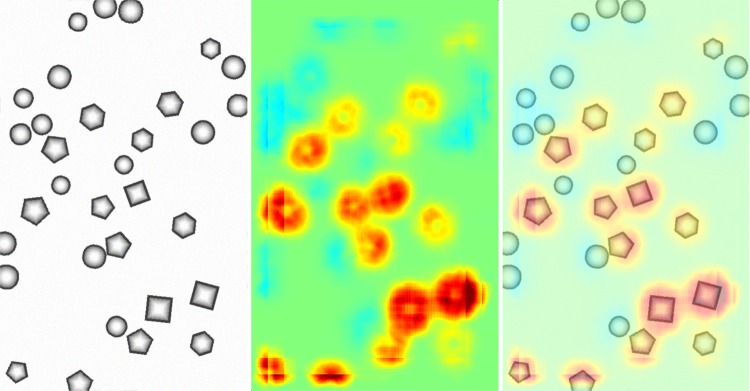
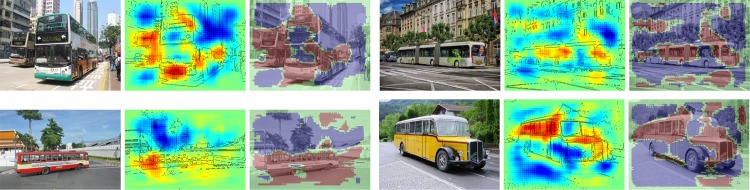
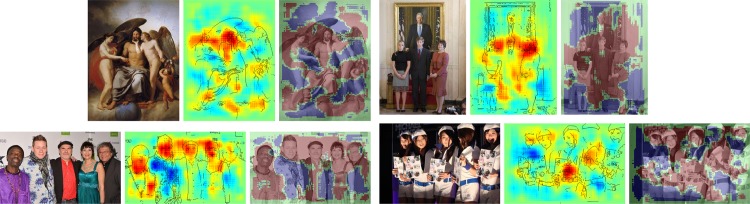
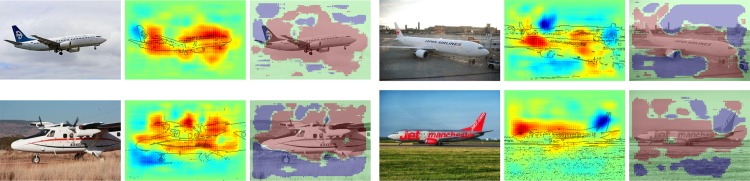
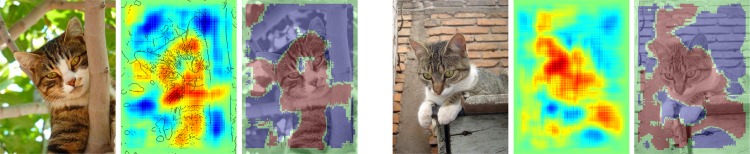
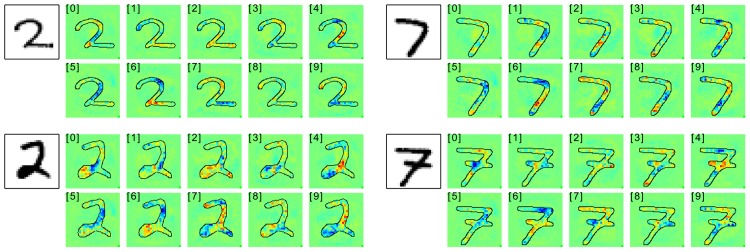
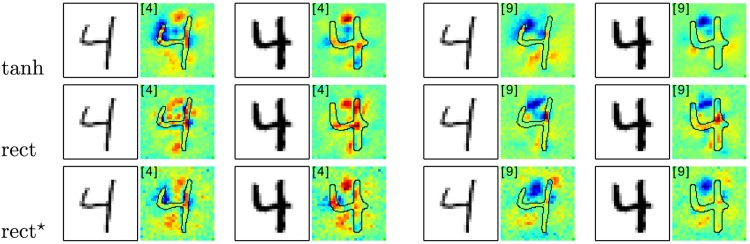
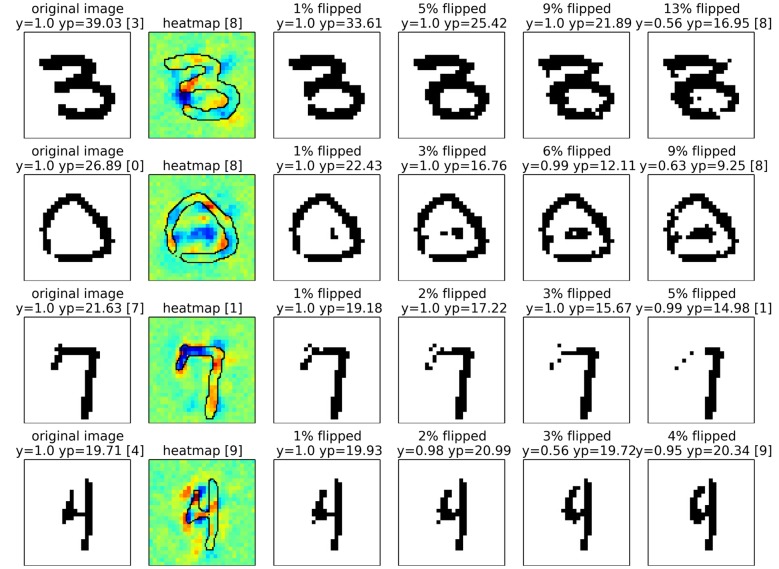
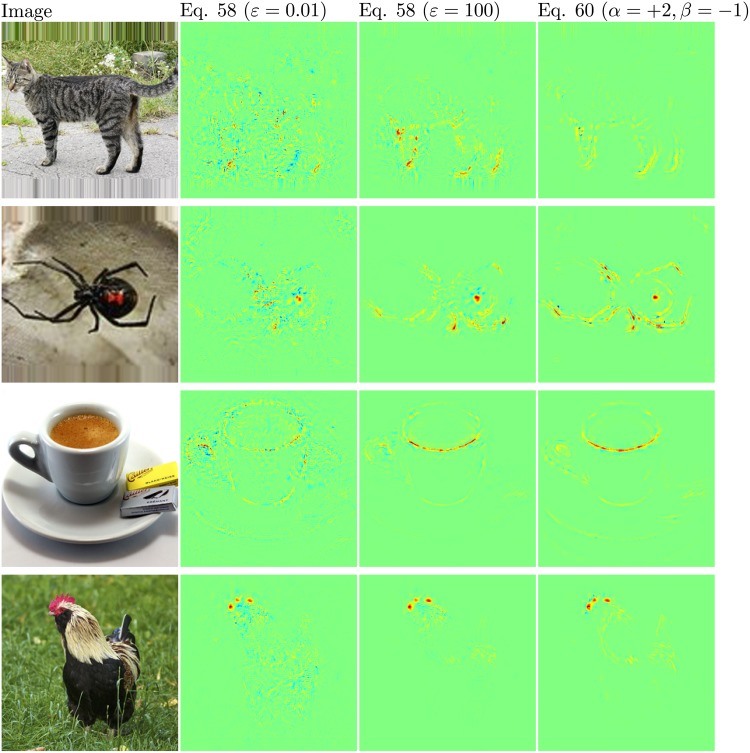
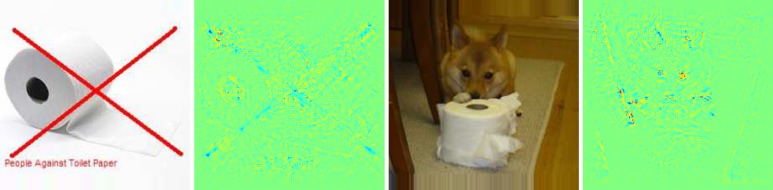
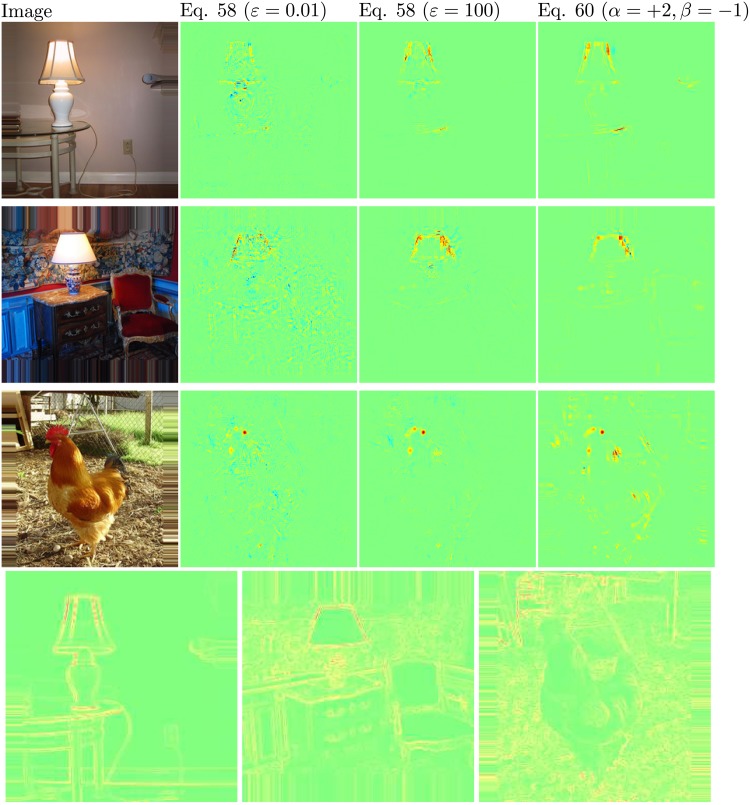
Understanding and interpreting classification decisions of automated image classification systems is of high value in many applications, as it allows to verify the reasoning of the system and provides additional information to the human expert. Although machine learning methods are solving very successfully a plethora of tasks, they have in most cases the disadvantage of acting as a black box, not providing any information about what made them arrive at a particular decision. This work proposes a general solution to the problem of understanding classification decisions by pixel-wise decomposition of nonlinear classifiers. We introduce a methodology that allows to visualize the contributions of single pixels to predictions for kernel-based classifiers over Bag of Words features and for multilayered neural networks. These pixel contributions can be visualized as heatmaps and are provided to a human expert who can intuitively not only verify the validity of the classification decision, but also focus further analysis on regions of potential interest. We evaluate our method for classifiers trained on PASCAL VOC 2009 images, synthetic image data containing geometric shapes, the MNIST handwritten digits data set and for the pre-trained ImageNet model available as part of the Caffe open source package.
Overview
The claims and statistics of this paper haven’t been checked yet.
Free: it reads the open-access text and checks the first 5 claims that cite a source we can check. Create a free account to check every claim.
Integrity signals
Registry
Cites
Statistics
Figures



Verification
Claims the paper makes
The claims and statistics of this paper haven’t been checked yet.
Free: it reads the open-access text and checks the first 5 claims that cite a source we can check. Create a free account to check every claim.
Claims other papers make about this one
Each is checked against this paper’s own text: does it say what the citing paper says it does?
The source backs part of the claim, not all of it — or backs it for a different population, condition or comparison.
In the citing paper
“Barring a few exceptions (Caruana et al., 2015; Lundberg et al., 2018b; Ustun et al., 2019; Jesus et al., 2021), much of the existing work is designed and developed for benchmark classification problems, often with synthetic data and usually validated with user studies limited to users in research settings such as Amazon Mechanical Turk (AMT; Simonyan et al., 2013; Zeiler and Fergus, 2014; Bach et”
From Explainable machine learning for public policy: Use cases, gaps, and research directions (2023) · cites this paper as Bach et al., 2015
Experimental — accuracy not yet measuredThe cited source says what the claim attributes to it.
In the citing paper
“Unfortunately, most of the work in this area fails to meet these criteria, focusing only on benchmark ML problems and datasets (e.g., image classification on MNIST data, newsgroups data; Bach et al., 2015; Ribeiro et al., 2016, 2018; Shrikumar et al., 2017).”
From Explainable machine learning for public policy: Use cases, gaps, and research directions (2023) · cites this paper as Bach et al., 2015
In the citing paper
“LRP and DTD are capable of improving a model’s interpretability.”
From Survey of Explainable AI Techniques in Healthcare (2023) · cites this paper as [31]
Self-check
Percentages, sums and reported differences re-computed from the paper’s own numbers.
The self-check needs the paper’s full text.
Citations
Cites
ImageNet classification with deep convolutional neural networks
Krizhevsky, A., Sutskever, I., & Hinton, G. E. (2017) · Communications of the ACM · doi:10.1145/3065386 · Cited by 112,155 · cited 2×
“It is known from [21] that lower layers of deep networks which are very similar to the one from [60] used here may act like learned texture or gradient detectors.”
BackgroundDistinctive Image Features from Scale-Invariant Keypoints
Lowe, D. G. (2004) · International Journal of Computer Vision · doi:10.1023/b:visi.0000029664.99615.94 · Cited by 55,589
Learning representations by back-propagating errors
Rumelhart, D. E., Hinton, G. E., & Williams, R. J. (1986) · Nature · doi:10.1038/323533a0 · Cited by 31,892 · cited 2×
“The derivative @f(x)/@x(d) required for pixel-wise decomposition can be computed efficiently by reusing the network topology using the backpropagation algorithm [56].”
BackgroundMethodThe pascal visual object classes (VOC) challenge
Everingham, M., Van Gool, L., Williams, C. K. I., Winn, J., & Zisserman, A. (2010) · International Journal of Computer Vision · doi:10.1007/s11263-009-0275-4 · Cited by 19,599
Neural networks for pattern recognition
(1994) · Choice Reviews Online · doi:10.5860/choice.31-5500 · Cited by 18,538
Rapid object detection using a boosted cascade of simple features
Viola, P., & Jones, M. (2005) · Proceedings of the 2001 IEEE Computer Society Conference on Computer Vision and Pattern Recognition. CVPR 2001 · doi:10.1109/cvpr.2001.990517 · Cited by 18,300
Visualizing and understanding convolutional networks
Zeiler, M. D., & Fergus, R. (2014) · Lecture Notes in Computer Science · doi:10.1007/978-3-319-10590-1_53 · Cited by 15,839
Explaining and Harnessing Adversarial Examples
Goodfellow, I. J., Shlens, J., & Szegedy, C. (2014) · arXiv · doi:10.48550/arxiv.1412.6572 · Cited by 10,381 · cited 1×
“A different type of analysis for understanding neural networks deals with creating counter-intuitive examples, see for example the work in [24, 25].”
BackgroundIntriguing properties of neural networks
Szegedy, C., Zaremba, W., Sutskever, I., Bruna, J., Erhan, D., Goodfellow, I., & Fergus, R. (2013) · arXiv · doi:10.48550/arxiv.1312.6199 · Cited by 8,143 · cited 2×
“However, as noted in [24], this can lead to points of the input space that are perceptually equivalent to the original sample x and whose choice as a root would produce non-informative pixel-wise decompositions.”
BackgroundDeep Inside Convolutional Networks: Visualising Image Classification Models and Saliency Maps
Simonyan, K., Vedaldi, A., & Zisserman, A. (2013) · arXiv · doi:10.48550/arxiv.1312.6034 · Cited by 5,370 · cited 4×
“Besides deviating in the usage of a Taylor series, the work in [22] does not make use of the layer-wise propagation strategy for neural networks presented in this paper, which unlike a Taylor series does not rely on a local approximation.”
BackgroundMethodResultInfluential
Research works printed but not linked: 4
- Montavon G, Orr GB, Müller KR, editors. Neural Networks: Tricks of the Trade, Reloaded vol. 7700 of Lecture Notes in Computer Science (LNCS). 2nd ed Springer; 2012.
- Everingham M, Van Gool L, Williams CKI, Winn J, Zisserman A. The PASCAL Visual Object Classes Challenge 2010 (VOC2010) Results;. · DOI · Paper page
- Lanckriet GRG, Cristianini N, Bartlett PL, Ghaoui LE, Jordan MI. Learning the Kernel Matrix with Semidefinite Programming. Journal of Machine Learning Research. 2004; 5: 27– 72.
- Kloft M, Brefeld U, Sonnenburg S, Laskov P, Müller KR, Zien A. Efficient and Accurate Lp-norm Multiple Kernel Learning. Advances in Neural Information Processing Systems. 2009; 22(22): 997– 1005.
Cited by
A Unified Approach to Interpreting Model Predictions
Lundberg, S., & Lee, S.-I. (2017) · arXiv · doi:10.48550/arxiv.1705.07874 · Cited by 23,707
Gauriat, C.-M., Pencolé, Y., Ribot, P., & Brouillet, G. (2024) · HAL (Le Centre pour la Communication Scientifique Directe) · doi:10.4230/oasics.dx.2024.27 · Cited by 12,586
Arrieta, A. B., Díaz-Rodríguez, N., Del Ser, J., Bennetot, A., Tabik, S., Barbado, A., García, S., Gil-López, S., Molina, D., Benjamins, R., et al. (2019) · arXiv · doi:10.48550/arxiv.1910.10045 · Cited by 11,321
“The authors in [72] proposed visualizing the contribution to the prediction of each single pixel of the input image in the form of a heatmap.”
From local explanations to global understanding with explainable AI for trees
Lundberg, S. M., Erion, G., Chen, H., DeGrave, A., Prutkin, J. M., Nair, B., Katz, R., Himmelfarb, J., Bansal, N., & Lee, S.-I. (2020) · Nature Machine Intelligence · doi:10.1038/s42256-019-0138-9 · Cited by 10,551
Barredo Arrieta, A., Díaz-Rodríguez, N., Del Ser, J., Bennetot, A., Tabik, S., Barbado, A., Garcia, S., Gil-Lopez, S., Molina, D., Benjamins, R., et al. (2020) · Information Fusion · doi:10.1016/j.inffus.2019.12.012 · Cited by 10,423
“The authors in [72] proposed visualizing the contribution to the prediction of each single pixel of the input image in the form of a heatmap.”
Peeking Inside the Black-Box: A Survey on Explainable Artificial Intelligence (XAI)
Adadi, A., & Berrada, M. (2018) · IEEE Access · doi:10.1109/access.2018.2870052 · Cited by 6,294
“Another technique to compute relevances was proposed in [131] as the Layer-wise Relevance Propagation algorithm.”
MethodDeep learning with convolutional neural networks for EEG decoding and visualization
Schirrmeister, R. T., Springenberg, J. T., Fiederer, L. D. J., Glasstetter, M., Eggensperger, K., Tangermann, M., Hutter, F., Burgard, W., & Ball, T. (2017) · Human Brain Mapping · doi:10.1002/hbm.23730 · Cited by 3,751
“Newer visualization methods such as layer-wise relevance propagation (Bach et al., 2015; Montavon et al., 2017), inverting convolutional networks”
Explainable AI: a review of machine learning interpretability methods
Linardatos, P., Papastefanopoulos, V., & Kotsiantis, S. (2020) · Entropy · doi:10.3390/e23010018 · Cited by 2,922
“Kindermans et al. [44] showed that, while the Deconvolution [32], Guided BackPropa-gation [31], and LRP [37] methods help in interpreting deep neural networks, they do not produce the theoretically correct interpretation, even in the simplest neural network setting; a linear model developed while…”
Learning Important Features Through Propagating Activation Differences
Shrikumar, A., Greenside, P., & Kundaje, A. (2017) · arXiv · doi:10.48550/arxiv.1704.02685 · Cited by 2,761
“Bach et al. (Bach et al., 2015) proposed an approach for propagating importance scores called Layerwise Relevance Propagation (LRP).”
BackgroundRecent advances and applications of machine learning in solid-state materials science
Schmidt, J., Marques, M. R. G., Botti, S., & Marques, M. A. L. (2019) · npj Computational Materials · doi:10.1038/s41524-019-0221-0 · Cited by 2,607
On the Opportunities and Risks of Foundation Models
Bommasani, R., Hudson, D. A., Adeli, E., Altman, R., Arora, S., von Arx, S., Bernstein, M. S., Bohg, J., Bosselut, A., Brunskill, E., et al. (2021) · arXiv · doi:10.48550/arxiv.2108.07258 · Cited by 2,676
Methods for interpreting and understanding deep neural networks
Montavon, G., Samek, W., & Müller, K.-R. (2018) · Digital Signal Processing · doi:10.1016/j.dsp.2017.10.011 · Cited by 2,665
“Techniques for interpreting and understanding what the model has learned have therefore become a key ingredient of a robust validation procedure [68,22,5].”
BackgroundMethodInfluentialSelf-citationA Survey on Explainable Artificial Intelligence (XAI): Toward Medical XAI
Tjoa, E., & Guan, C. (2021) · IEEE Transactions on Neural Networks and Learning Systems · doi:10.1109/tnnls.2020.3027314 · Cited by 2,524
Explaining Explanations: An Overview of Interpretability of Machine Learning
Gilpin, L. H., Bau, D., Yuan, B. Z., Bajwa, A., Specter, M., & Kagal, L. (2018) · 2018 IEEE 5th International Conference on Data Science and Advanced Analytics (DSAA) · doi:10.1109/dsaa.2018.00018 · Cited by 2,507
“Examples are LRP [40], DeepLIFT [41], CAM [42], Grad-CAM [43], Integrated gradients [44], and SmoothGrad [45].”
MethodOpportunities and obstacles for deep learning in biology and medicine
Ching, T., Himmelstein, D. S., Beaulieu-Jones, B. K., Kalinin, A. A., Do, B. T., Way, G. P., Ferrero, E., Agapow, P.-M., Zietz, M., Hoffman, M. M., et al. (2018) · Journal of The Royal Society Interface · doi:10.1098/rsif.2017.0387 · Cited by 2,310
SchNet – A deep learning architecture for molecules and materials
Schütt, K. T., Sauceda, H. E., Kindermans, P.-J., Tkatchenko, A., & Müller, K.-R. (2018) · The Journal of Chemical Physics · doi:10.1063/1.5019779 · Cited by 2,217
Self-citationAn overview of deep learning in medical imaging focusing on MRI
Lundervold, A. S., & Lundervold, A. (2019) · Zeitschrift für Medizinische Physik · doi:10.1016/j.zemedi.2018.11.002 · Cited by 2,058
Causability and explainability of artificial intelligence in medicine
Holzinger, A., Langs, G., Denk, H., Zatloukal, K., & Müller, H. (2019) · WIREs Data Mining and Knowledge Discovery · doi:10.1002/widm.1312 · Cited by 1,885
Ali, S., Abuhmed, T., El-Sappagh, S., Muhammad, K., Alonso-Moral, J. M., Confalonieri, R., Guidotti, R., Del Ser, J., Díaz-Rodríguez, N., & Herrera, F. (2023) · Information Fusion · doi:10.1016/j.inffus.2023.101805 · Cited by 1,762
Neural Cleanse: Identifying and Mitigating Backdoor Attacks in Neural Networks
Wang, B., Yao, Y., Shan, S., Li, H., Viswanath, B., Zheng, H., & Zhao, B. Y. (2019) · 2019 IEEE Symposium on Security and Privacy (SP) · doi:10.1109/sp.2019.00031 · Cited by 1,368
“Despite intense interest and collective group efforts, we are only seeing limited progress in definitions [8], frameworks [9], visualization [10], and limited experimentation [11].”
BackgroundExplaining Deep Neural Networks and Beyond: A Review of Methods and Applications
Samek, W., Montavon, G., Lapuschkin, S., Anders, C. J., & Muller, K.-R. (2021) · Proceedings of the IEEE · doi:10.1109/jproc.2021.3060483 · Cited by 1,477
“At the same time, these methods were able to handle different types of data, including images [13], speech [20], text [10], [38], and structured data, such as molecules [162], [165] or genetic sequences [191].”
BackgroundMethodInfluentialSelf-citationDeep learning for computational biology
Angermueller, C., Pärnamaa, T., Parts, L., & Stegle, O. (2016) · Molecular Systems Biology · doi:10.15252/msb.20156651 · Cited by 1,473
“Since more data with informative features usually result in better performance, effort should be spent on collecting, labelling, cleaning and normalizing data.”
Deep Neural Networks and Tabular Data: A Survey
Borisov, V., Leemann, T., Seßler, K., Haug, J., Pawelczyk, M., & Kasneci, G. (2024) · IEEE Transactions on Neural Networks and Learning Systems · doi:10.1109/tnnls.2022.3229161 · Cited by 1,025
“, [161], [162], and gradientbased approaches, e.”
Explainable AI: Interpreting, Explaining and Visualizing Deep Learning
(2019) · Lecture Notes in Computer Science · doi:10.1007/978-3-030-28954-6 · Cited by 1,377
“In Chapter 2, Weller [9] focuses on the challenges of transparency.”
BackgroundMethodInfluentialExplaining nonlinear classification decisions with deep taylor decomposition
Montavon, G., Lapuschkin, S., Binder, A., Samek, W., & Müller, K.-R. (2017) · Pattern Recognition · doi:10.1016/j.patcog.2016.11.008 · Cited by 1,357
“The idea of using an additive term in the denominator was formerly proposed by [25] and called -stabilized rule.”
BackgroundMethodInfluentialSelf-citationExplainable artificial intelligence (XAI) in deep learning-based medical image analysis
van der Velden, B. H. M., Kuijf, H. J., Gilhuijs, K. G. A., & Viergever, M. A. (2022) · Medical Image Analysis · doi:10.1016/j.media.2022.102470 · Cited by 1,328
“Bach et al. (2015) introduced layer-wise relevance propagation (LRP).”
BackgroundInfluentialDeep Neural Networks for No-Reference and Full-Reference Image Quality Assessment
Bosse, S., Maniry, D., Muller, K.-R., Wiegand, T., & Samek, W. (2018) · IEEE Transactions on Image Processing · doi:10.1109/tip.2017.2760518 · Cited by 1,138
“Also explanation methods [51], [52] can be applied to better understand what features were actually learned by the network.”
MethodSelf-citationTechniques for interpretable machine learning
Du, M., Liu, N., & Hu, X. (2019) · Communications of the ACM · doi:10.1145/3359786 · Cited by 1,268
“Other approaches back-propagate different forms of signals to the input, such as discarding negative gradient values at the back-propagation process [34], or back-propagating the relevance of the final prediction score to the input layer [3].”
BackgroundTechniques for Interpretable Machine Learning
Du, M., Liu, N., & Hu, X. (2018) · arXiv · doi:10.48550/arxiv.1808.00033 · Cited by 1,261
“Other approaches back-propagate different forms of signals to the input, such as discarding negative gradient values at the back-propagation process [34], or back-propagating the relevance of the final prediction score to the input layer [3].”
BackgroundA Unifying Review of Deep and Shallow Anomaly Detection
Ruff, L., Kauffmann, J. R., Vandermeulen, R. A., Montavon, G., Samek, W., Kloft, M., Dietterich, T. G., & Muller, K.-R. (2021) · Proceedings of the IEEE · doi:10.1109/jproc.2021.3052449 · Cited by 914
“10 shows, from left to right, an anomaly from the MNIST-C data set, the ground-truth explanation (the squared difference between the digit before and after corruption), and LRP explanations for three AD models (KDE, DOCC, and AE).”
MethodInfluentialSelf-citationEvaluating the Visualization of What a Deep Neural Network Has Learned
Samek, W., Binder, A., Montavon, G., Lapuschkin, S., & Muller, K.-R. (2017) · IEEE Transactions on Neural Networks and Learning Systems · doi:10.1109/tnnls.2016.2599820 · Cited by 1,164
Self-citationExplainable artificial intelligence: A survey
Dosilovic, F. K., Brcic, M., & Hlupic, N. (2018) · 2018 41st International Convention on Information and Communication Technology, Electronics and Microelectronics (MIPRO) · doi:10.23919/mipro.2018.8400040 · Cited by 1,147
Analyzing Multi-Head Self-Attention: Specialized Heads Do the Heavy Lifting, the Rest Can Be Pruned
Voita, E., Talbot, D., Moiseev, F., Sennrich, R., & Titov, I. (2019) · Proceedings of the 57th Annual Meeting of the Association for Computational Linguistics · doi:10.18653/v1/p19-1580 · Cited by 1,146
“Layer-wise relevance propagation (LRP) was originally designed to compute the contributions of single pixels to predictions of image classi-fiers (Bach et al., 2015).”
Shen, C. (2018) · Water Resources Research · doi:10.1029/2018wr022643 · Cited by 1,133
“For example, in thematic annotation (the AI algorithm comments on what the main theme is for an image), if an image is annotated by trained network as having “boat” as the theme, whether correctly or incorrectly, methods exist to find the most crucial patch of pixels that influence the decision [Bach et al., 2015; Mon…”
BackgroundMethodInterpretable Explanations of Black Boxes by Meaningful Perturbation
Fong, R. C., & Vedaldi, A. (2017) · 2017 IEEE International Conference on Computer Vision (ICCV) · doi:10.1109/iccv.2017.371 · Cited by 1,097
Samek, W., Wiegand, T., & Müller, K.-R. (2017) · arXiv · doi:10.48550/arxiv.1708.08296 · Cited by 1,080
“In the following we describe the LRP redistribution process for feed-forward neural networks, redistribution procedures have also been proposed for other popular models [5, 4, 20].”
BackgroundMethodInfluentialSelf-citationDrug discovery with explainable artificial intelligence
Jiménez-Luna, J., Grisoni, F., & Schneider, G. (2020) · Nature Machine Intelligence · doi:10.1038/s42256-020-00236-4 · Cited by 1,063
“79 • Perturbation-based methods modify or remove parts of the input aiming to measure its corresponding change in the model output; this information is then used to assess the feature importance.”
MethodUnmasking Clever Hans predictors and assessing what machines really learn
Lapuschkin, S., Wäldchen, S., Binder, A., Montavon, G., Samek, W., & Müller, K.-R. (2019) · Nature Communications · doi:10.1038/s41467-019-08987-4 · Cited by 1,047
“This step fi nds structure in the distribution of relevance maps, more speci fi cally it groups classi fi er behaviors into fi nitely many clusters (see Supplementary Figure 18 for an example).”
BackgroundSelf-citationMachine Learning for Molecular Simulation
Noé, F., Tkatchenko, A., Müller, K.-R., & Clementi, C. (2020) · Annual Review of Physical Chemistry · doi:10.1146/annurev-physchem-042018-052331 · Cited by 956
Self-citationDeep learning in cancer diagnosis, prognosis and treatment selection
Tran, K. A., Kondrashova, O., Bradley, A., Williams, E. D., Pearson, J. V., & Waddell, N. (2021) · Genome Medicine · doi:10.1186/s13073-021-00968-x · Cited by 932
“The explainability method, LRP [29], was then used to identify and analyse the biological relevance of the most relevant genes for predictions [19].”
MethodInfluentialA Survey on Neural Network Interpretability
Zhang, Y., Tino, P., Leonardis, A., & Tang, K. (2021) · IEEE Transactions on Emerging Topics in Computational Intelligence · doi:10.1109/tetci.2021.3100641 · Cited by 923
“More can be found in reference [73] which proposes a unified view including not only the Shapley value methods but also LRP and DeepLIFT.”
BackgroundMethodInfluentialMuratov, E. N., Bajorath, J., Sheridan, R. P., Tetko, I. V., Filimonov, D., Poroikov, V., Oprea, T. I., Baskin, I. I., Varnek, A., Roitberg, A., et al. (2020) · Chemical Society Reviews · doi:10.1039/d0cs00098a · Cited by 913
Transformer Interpretability Beyond Attention Visualization
Chefer, H., Gur, S., & Wolf, L. (2021) · 2021 IEEE/CVF Conference on Computer Vision and Pattern Recognition (CVPR) · doi:10.1109/cvpr46437.2021.00084 · Cited by 903
“In both cases, the LRP propagation results of the class to be visualized are contrasted with the results of all other classes, to emphasize the differences and produce a class-dependent heatmap.”
BackgroundMethodInfluentialLayer-Wise Relevance Propagation: An Overview
Montavon, G., Binder, A., Lapuschkin, S., Samek, W., & Müller, K.-R. (2019) · Lecture Notes in Computer Science · doi:10.1007/978-3-030-28954-6_10 · Cited by 750
Self-citationNot Just a Black Box: Learning Important Features Through Propagating Activation Differences
Shrikumar, A., Greenside, P., Shcherbina, A., & Kundaje, A. B. (2016) · arXiv (Cornell University) · doi:10.48550/arxiv.1605.01713 · Cited by 496
“…input signal, which corresponds to a first-order Taylor approximation of how the output would change if the input were set to zero; as we show, the layer-wise relevance propagation rules described in Bach et al. (2015) reduce to this approach, assuming bias terms are included in the denomi-nators.”
BackgroundCombining Machine Learning and Computational Chemistry for Predictive Insights Into Chemical Systems
Keith, J. A., Vassilev-Galindo, V., Cheng, B., Chmiela, S., Gastegger, M., Müller, K.-R., & Tkatchenko, A. (2021) · Chemical Reviews · doi:10.1021/acs.chemrev.1c00107 · Cited by 849
Self-citationExplainable artificial intelligence: an analytical review
Angelov, P. P., Soares, E. A., Jiang, R., Arnold, N. I., & Atkinson, P. M. (2021) · WIREs Data Mining and Knowledge Discovery · doi:10.1002/widm.1424 · Cited by 843
“Accordingly, LRP highlights positive contributions to a network's decision.”
BackgroundMethodInfluentialTop-Down Neural Attention by Excitation Backprop
Zhang, J., Bargal, S. A., Lin, Z., Brandt, J., Shen, X., & Sclaroff, S. (2018) · International Journal of Computer Vision · doi:10.1007/s11263-017-1059-x · Cited by 680
A Multidisciplinary Survey and Framework for Design and Evaluation of Explainable AI Systems
Mohseni, S., Zarei, N., & Ragan, E. D. (2021) · ACM Transactions on Interactive Intelligent Systems · doi:10.1145/3387166 · Cited by 785
“…three different saliency explanation techniques for image data (sensitivity-based [190], deconvolution [219], and layer-wise relevance propagation [13]) and investigated the correlation between saliency map quality and network performance on different image datasets under input perturbation.”
BackgroundA Multidisciplinary Survey and Framework for Design and Evaluation of Explainable AI Systems
Mohseni, S., Zarei, N., & Ragan, E. D. (2018) · arXiv · doi:10.48550/arxiv.1811.11839 · Cited by 783
“They compared three different heat-map explanation methods for image data (sensitivity-based [113], deconvolution [131], and layer-wise relevance propagation [6]) and investigate the correlation between heatmap quality and network performance on different image datasets.”
BackgroundInterpretation of Neural Networks Is Fragile
Ghorbani, A., Abid, A., & Zou, J. (2019) · Proceedings of the AAAI Conference on Artificial Intelligence · doi:10.1609/aaai.v33i01.33013681 · Cited by 765
Longo, L., Brcic, M., Cabitza, F., Choi, J., Confalonieri, R., Ser, J. D., Guidotti, R., Hayashi, Y., Herrera, F., Holzinger, A., et al. (2024) · Information Fusion · doi:10.1016/j.inffus.2024.102301 · Cited by 626
“Finally, relevance propagation methods (a type of gradient-based attribution method) such as LRP [145] have to be adjusted to the layer of the DNN. Additionally, some methods have issues with computational efficiency, requiring many passes for calculating attributions.”
MethodSelf-citationThe (Un)reliability of Saliency Methods
Kindermans, P.-J., Hooker, S., Adebayo, J., Alber, M., Schütt, K. T., Dähne, S., Erhan, D., & Kim, B. (2019) · Lecture Notes in Computer Science · doi:10.1007/978-3-030-28954-6_14 · Cited by 580
Loh, H. W., Ooi, C. P., Seoni, S., Barua, P. D., Molinari, F., & Acharya, U. R. (2022) · Computer Methods and Programs in Biomedicine · doi:10.1016/j.cmpb.2022.107161 · Cited by 734
Chen, R. J., Lu, M. Y., Wang, J., Williamson, D. F. K., Rodig, S. J., Lindeman, N. I., & Mahmood, F. (2022) · IEEE Transactions on Medical Imaging · doi:10.1109/tmi.2020.3021387 · Cited by 729
Explainable Deep Learning Models in Medical Image Analysis
Singh, A., Sengupta, S., & Lakshminarayanan, V. (2020) · Journal of Imaging · doi:10.3390/jimaging6060052 · Cited by 718
“Layer wise (LRP)[23] Redistributes the prediction score layer by layer with a backward pass on the network using a particular rule like the (cid:101) -rule while ensuring numerical stability There are alternative stability rules and limited to CNN models with ReLU activation when all activations…”
MethodYang, G., Ye, Q., & Xia, J. (2022) · Information Fusion · doi:10.1016/j.inffus.2021.07.016 · Cited by 717
“A recent comparative study of different models of XAI, including DeepLIFT [145], Guided backpropagation (GBP) [146], Layer wise relevance propagation (LRP) [147], SHapley Additive exPlanations (SHAP) [148] and others, was conducted for ophthalmic diagnosis [76].”
MethodAlbahri, A. S., Duhaim, A. M., Fadhel, M. A., Alnoor, A., Baqer, N. S., Alzubaidi, L., Albahri, O. S., Alamoodi, A. H., Bai, J., Salhi, A., et al. (2023) · Information Fusion · doi:10.1016/j.inffus.2023.03.008 · Cited by 716
Trustworthy Artificial Intelligence: A Review
Kaur, D., Uslu, S., Rittichier, K. J., & Durresi, A. (2023) · ACM Computing Surveys · doi:10.1145/3491209 · Cited by 709
“Some other researchers [9] proposed a technique called LRP (Layerwise Rel-evance Propagation) for image classification algorithms, which includes interpretability by computing every pixel’s contribution to the prediction made by the classifier.”
MethodTowards Explainable Artificial Intelligence
Samek, W., & Müller, K.-R. (2019) · Lecture Notes in Computer Science · doi:10.1007/978-3-030-28954-6_1 · Cited by 580
“Layer-wise Relevance Propagation (LRP) [9,58] provides a general framework for explaining individual predictions, i.e., it is applicable to various ML models, including neural networks [9], LSTMs [7], Fisher Vector classifiers [44] and Support Vector Machines [35].”
BackgroundMethodSelf-citationHart, G. L. W., Mueller, T., Toher, C., & Curtarolo, S. (2021) · Nature Reviews Materials · doi:10.1038/s41578-021-00340-w · Cited by 703
“An interpretable representation informs the user of the reasons behind the algorithm’s predictions 2,16–18 .”
BackgroundLearning Temporal Information for Brain-Computer Interface Using Convolutional Neural Networks
Sakhavi, S., Guan, C., & Yan, S. (2018) · IEEE Transactions on Neural Networks and Learning Systems · doi:10.1109/tnnls.2018.2789927 · Cited by 656
“In image processing, methods such as deconvolution [42], back-propagation-based visualization [43], [44], and layer-wise relevance propagation (LRP) [45] have been used for understanding the network with the latter recently being used for EEG analysis as well [46].”
MethodWhat do we need to build explainable AI systems for the medical domain?
Holzinger, A., Biemann, C., Pattichis, C. S., & Kell, D. B. (2017) · arXiv · doi:10.48550/arxiv.1712.09923 · Cited by 636
“Bach et al. (2015) presented a general solution to the problem of understanding classification decisions by pixel-wise decomposition of nonlinear classifiers which allows to visualize the contributions of single pixels to predictions for kernel-based classifiers over bag of words features and for…”
BackgroundHuang, X., Kroening, D., Ruan, W., Sharp, J., Sun, Y., Thamo, E., Wu, M., & Yi, X. (2020) · Computer Science Review · doi:10.1016/j.cosrev.2020.100270 · Cited by 532
A Survey Of Methods For Explaining Black Box Models
Guidotti, R., Monreale, A., Ruggieri, S., Turini, F., Pedreschi, D., & Giannotti, F. (2018) · arXiv · doi:10.48550/arxiv.1802.01933 · Cited by 630
A Survey of Methods for Explaining Black Box Models
Guidotti, R., Monreale, A., Ruggieri, S., Turini, F., Giannotti, F., & Pedreschi, D. (2019) · ACM Computing Surveys · doi:10.1145/3236009 · Cited by 629
“to overcome a functional approach, where the explanation results form the local analysis of the prediction function [109], and where the explanation is obtained by running a backward pass in that graph [7, 137].”
BackgroundMethodEigen-CAM: Class Activation Map using Principal Components
Muhammad, M. B., & Yeasin, M. (2020) · 2020 International Joint Conference on Neural Networks (IJCNN) · doi:10.1109/ijcnn48605.2020.9206626 · Cited by 503
“The former propagates the probability of SoftMax layer all the way back to the input space to find the relevance of each input pixel, an excellent example of those methods are Deep LIFT [26] and Layer-Wise Relevance Propagation [27], while gradient-based methods backpropagate Gradients to last convolution layer to obt…”
MethodOn Interpretability of Artificial Neural Networks: A Survey
Fan, F.-L., Xiong, J., Li, M., & Wang, G. (2021) · IEEE Transactions on Radiation and Plasma Medical Sciences · doi:10.1109/trpms.2021.3066428 · Cited by 561
Deep Learning for ECG Analysis: Benchmarks and Insights from PTB-XL
Strodthoff, N., Wagner, P., Schaeffter, T., & Samek, W. (2021) · IEEE Journal of Biomedical and Health Informatics · doi:10.1109/jbhi.2020.3022989 · Cited by 491
“1 within the framework of layer-wise relevance propagation [52].”
BackgroundSelf-citationA Review of Explainable Artificial Intelligence in Healthcare
Sadeghi, Z., Alizadehsani, R., CIFCI, M. A., Kausar, S., Rehman, R., Mahanta, P., Bora, P. K., Almasri, A., Alkhawaldeh, R. S., Hussain, S., et al. (2024) · Computers and Electrical Engineering · doi:10.1016/j.compeleceng.2024.109370 · Cited by 598
Notions of explainability and evaluation approaches for explainable artificial intelligence
Vilone, G., & Longo, L. (2021) · Information Fusion · doi:10.1016/j.inffus.2021.05.009 · Cited by 598
Differentiable modelling to unify machine learning and physical models for geosciences
Shen, C., Appling, A. P., Gentine, P., Bandai, T., Gupta, H., Tartakovsky, A., Baity-Jesi, M., Fenicia, F., Kifer, D., Li, L., et al. (2023) · Nature Reviews Earth & Environment · doi:10.1038/s43017-023-00450-9 · Cited by 468
“Although causal representation learning 81 and explain-able artificial intelligence (AI) methods 82–84 are promising approaches for overcoming this limitation, challenges still remain with learning causality and interpretability.”
BackgroundSurvey of Explainable AI Techniques in Healthcare
Chaddad, A., Peng, J., Xu, J., & Bouridane, A. (2023) · Sensors · doi:10.3390/s23020634 · Cited by 591
“To combine LRP and DTD, LRP can be thought of as providing the framework for propagating relevance through a network, whereas DTD provides the means for approximating the complex non-linear functions used by the network.”
BackgroundMethodInfluentialNauta, M., Trienes, J., Pathak, S., Nguyen, E., Peters, M., Schmitt, Y., Schlötterer, J., van Keulen, M., & Seifert, C. (2023) · ACM Computing Surveys · doi:10.1145/3583558 · Cited by 590
“Includes attention maps [222], perturbation masks [71] and Layer-Wise Relevance Propagation [20].”
Ucar, A., Karakose, M., & Kırımça, N. (2024) · Applied Sciences · doi:10.3390/app14020898 · Cited by 444
“Some examples of post hoc techniques are local interpretable model-agnostic explanations (LIME) [155] and SHapley Additive exPlanations (SHAP) [156], class activation map (CAM) [157], layer-wise relevance propagation (LRP) [158], and gradient-weighted class activation mapping (Grad-CAM) [159].”
MethodTowards Robust Interpretability with Self-Explaining Neural Networks
Alvarez-Melis, D., & Jaakkola, T. (2018) · arXiv (Cornell University) · doi:10.48550/arxiv.1806.07538 · Cited by 397
“GRAD) [23] and (✏)-Layerwise Relevance Propagation (E-LRP) [4].”
BackgroundMethodExplainability in Graph Neural Networks: A Taxonomic Survey
Yuan, H., Yu, H., Gui, S., & Ji, S. (2022) · IEEE Transactions on Pattern Analysis and Machine Intelligence · doi:10.1109/tpami.2022.3204236 · Cited by 583
“LRP [54], [59] extends the original LRP algorithm [75] to deep”
Machine Learning for Electrocatalyst and Photocatalyst Design and Discovery
Mai, H., Le, T. C., Chen, D., Winkler, D. A., & Caruso, R. A. (2022) · Chemical Reviews · doi:10.1021/acs.chemrev.2c00061 · Cited by 552
Interpretable deep learning: interpretation, interpretability, trustworthiness, and beyond
Li, X., Xiong, H., Li, X., Wu, X., Zhang, X., Liu, J., Bian, J., & Dou, D. (2022) · Knowledge and Information Systems · doi:10.1007/s10115-022-01756-8 · Cited by 497
“LRP and Variants LRP [16, 27, 118], Contrastive LRP [67], Softmax-Gradient LRP [79], RAP [123], Chefer et al.”
BackgroundInfluentialMachine learning for a sustainable energy future
Yao, Z., Lum, Y., Johnston, A., Mejia-Mendoza, L. M., Zhou, X., Wen, Y., Aspuru-Guzik, A., Sargent, E. H., & Seh, Z. W. (2022) · Nature Reviews Materials · doi:10.1038/s41578-022-00490-5 · Cited by 517
Interpretable Machine Learning: Moving from mythos to diagnostics
Chen, V., Li, J., Kim, J. S., Plumb, G., & Talwalkar, A. (2021) · Queue · doi:10.1145/3511299 · Cited by 516
“IML researchers typically develop and evaluate methods by focusing on quantifiable technical objectives (e.g., maximizing various notions of faithfulness or adherence to some desirable axioms 4,18,24 ).”
Explainable machine learning in materials science
Zhong, X., Gallagher, B., Liu, S., Kailkhura, B., Hiszpanski, A., & Han, T. Y.-J. (2022) · npj Computational Materials · doi:10.1038/s41524-022-00884-7 · Cited by 501
“Except for CAM, there are also other techniques that can generate heat maps for DNNs, such as guided backpropagation (GBP) 47 , integrated gradients(IG) 48 , layer-wise relevance propagation (LRP) 49 , and many more 50 – 52 .”
MethodExplainable Deep Learning: A Field Guide for the Uninitiated
Ras, G., Xie, N., Van Gerven, M., & Doran, D. (2022) · Journal of Artificial Intelligence Research · doi:10.1613/jair.1.13200 · Cited by 446
Deep image mining for diabetic retinopathy screening
Quellec, G., Charrière, K., Boudi, Y., Cochener, B., & Lamard, M. (2017) · Medical Image Analysis · doi:10.1016/j.media.2017.04.012 · Cited by 520
Sequential regulatory activity prediction across chromosomes with convolutional neural networks
Kelley, D. R., Reshef, Y. A., Bileschi, M., Belanger, D., McLean, C. Y., & Snoek, J. (2018) · Genome Research · doi:10.1101/gr.227819.117 · Cited by 537
Deep learning interpretation of echocardiograms
Ghorbani, A., Ouyang, D., Abid, A., He, B., Chen, J. H., Harrington, R. A., Liang, D. H., Ashley, E. A., & Zou, J. Y. (2020) · npj Digital Medicine · doi:10.1038/s41746-019-0216-8 · Cited by 518
Explainable AI Methods - A Brief Overview
Holzinger, A., Saranti, A., Molnar, C., Biecek, P., & Samek, W. (2022) · Lecture Notes in Computer Science · doi:10.1007/978-3-031-04083-2_2 · Cited by 379
“Idea: Layer-wise Relevance Propagation (LRP) [10] is a propagation-based explanation method, i.”
MethodSelf-citationA Benchmark for Interpretability Methods in Deep Neural Networks
Hooker, S., Erhan, D., Kindermans, P.-J., & Kim, B. (2018) · arXiv (Cornell University) · doi:10.48550/arxiv.1806.10758 · Cited by 365
“preservation of relevance [6] or implementation invariance [38].”
BackgroundMethodRight for the Right Reasons: Training Differentiable Models by Constraining their Explanations
Ross, A. S., Hughes, M. C., & Doshi-Velez, F. (2017) · Proceedings of the Twenty-Sixth International Joint Conference on Artificial Intelligence · doi:10.24963/ijcai.2017/371 · Cited by 515
Layer-Wise Relevance Propagation for Neural Networks with Local Renormalization Layers
Binder, A., Montavon, G., Lapuschkin, S., Müller, K.-R., & Samek, W. (2016) · Lecture Notes in Computer Science · doi:10.1007/978-3-319-44781-0_8 · Cited by 418
Self-citationSchütt, K. T., Gastegger, M., Tkatchenko, A., Müller, K.-R., & Maurer, R. J. (2019) · Nature Communications · doi:10.1038/s41467-019-12875-2 · Cited by 476
Self-citationSalahuddin, Z., Woodruff, H. C., Chatterjee, A., & Lambin, P. (2022) · Computers in Biology and Medicine · doi:10.1016/j.compbiomed.2021.105111 · Cited by 508
Opportunities and Challenges in Explainable Artificial Intelligence (XAI): A Survey
Das, A., & Rad, P. (2020) · arXiv · doi:10.48550/arxiv.2006.11371 · Cited by 504
“[69] is used to find relevance scores for individual features in the input data by decomposing the output predictions of the DNN.”
BackgroundMethodInfluentialNeural Machine Translation: A Review
Stahlberg, F. (2020) · Journal of Artificial Intelligence Research · doi:10.1613/jair.1.12007 · Cited by 397
On the interpretability of artificial intelligence in radiology: challenges and opportunities
Reyes, M., Meier, R., Pereira, S., Silva, C. A., Dahlweid, F.-M., Tengg-Kobligk, H. V., Summers, R. M., & Wiest, R. (2020) · Radiology: Artificial Intelligence · doi:10.1148/ryai.2020190043 · Cited by 484
“Layer-wise relevance propagation (21) was proposed to overcome the problem of shattered gradients, which affects the stability of the gradient calculation and worsens with the depth of a DL model.”
BackgroundTransPose: Keypoint Localization via Transformer
Yang, S., Quan, Z., Nie, M., & Yang, W. (2021) · 2021 IEEE/CVF International Conference on Computer Vision (ICCV) · doi:10.1109/iccv48922.2021.01159 · Cited by 418
“There are also works like Network Dissection [3], Feature Visualization [39], Excitation Backprop [66], LRP attribution method [2], CAM [69], and Grad-CAM [48], which aim to explain the prediction of CNN classifier or visualize the saliency area significantly affecting the class.”
BackgroundMethodInfluentialExplaining How a Deep Neural Network Trained with End-to-End Learning Steers a Car
Bojarski, M., Yeres, P., Choromanska, A., Choromański, K., Firner, B., Jackel, L. D., & Müller, U. (2017) · arXiv (Cornell University) · doi:10.48550/arxiv.1704.07911 · Cited by 223
“Among them are sensitivity based approaches [4, 5, 6], deconvolution based ones [7, 8], or more complex ones like layer-wise relevance propagation (LRP) [9].”
BackgroundDeep learning in microscopy image analysis: a survey
Xing, F., Xie, Y., Su, H., Liu, F., & Yang, L. (2018) · IEEE Transactions on Neural Networks and Learning Systems · doi:10.1109/tnnls.2017.2766168 · Cited by 460
GAN Dissection: Visualizing and Understanding Generative Adversarial Networks
Bau, D. A., Zhu, J.-Y., Strobelt, H., Zhou, B., Tenenbaum, J. B., Freeman, W. T., & Torralba, A. B. (2018) · arXiv (Cornell University) · doi:10.48550/arxiv.1811.10597 · Cited by 154
“We can explain individual network decisions using informative heatmaps (Zhou et al., 2018b; 2016; Selvaraju et al., 2017) or modified back-propagation (Simonyan et al., 2014; Bach et al., 2015; Sundararajan et al., 2017).”
MethodLauritsen, S. M., Kristensen, M., Olsen, M. V., Larsen, M. S., Lauritsen, K. M., Jørgensen, M. J., Lange, J., & Thiesson, B. (2020) · Nature Communications · doi:10.1038/s41467-020-17431-x · Cited by 448
Metadata
- Authors
- Bach, S., Binder, A., Montavon, G., Klauschen, F., Müller, K.-R., & Samek, W.
- Affiliations
- Singapore University of Technology and Design (SG)
- Technische Universität Berlin (DE)
- Stiftung Charité (DE)
- Korea University (KR)
- Fraunhofer Institute for Telecommunications, Heinrich Hertz Institute (DE)
- Corresponding author
- Müller, Klaus-Robert
- Samek, Wojciech
- Venue
- PLOS ONE
- Publisher
- Public Library of Science (PLoS)
- Published
- 2015-07-10
- Volume
- 10
- Issue
- 7
- Pages
- e0130140
- ISSN
- 1932-6203 (ISSN-L)
- PMC
- PMC4498753
- OpenAlex
- W1787224781
- Cited by
- 4,524
- References
- 56
- Citations by year
- 2026: 347 · 2025: 628 · 2024: 653 · 2023: 648 · 2022: 566 · 2021: 647 · 2020: 489 · 2019: 299 · 2018: 145 · 2017: 63 · 2016: 27 · 2015: 6
- FWCI
- 78.76
- Type
- journal article
- Language
- en
- Open access
- gold
- doi.org
- Licence
- Locations
- PLoS ONE (publishedVersion, cc-by)
- PubMed Central (publishedVersion, cc-by)
- PubMed (publishedVersion)
- RePEc: Research Papers in Economics (submittedVersion)
- DOAJ (DOAJ: Directory of Open Access Journals) (submittedVersion, cc-by-sa)
- Publikationsdatenbank der Fraunhofer-Gesellschaft (Fraunhofer-Gesellschaft) (submittedVersion, other-oa)
- Fraunhofer-Publica (Fraunhofer-Gesellschaft) (submittedVersion)
- Refubium (Universitätsbibliothek der Freien Universität Berlin) (submittedVersion, cc-by)
- Universitätsbibliothek der FU Berlin Hochschulschriftenstelle u. Dokumentenserver (cc-by)
- Funders
- National Research Foundation
- Deutsche Forschungsgemeinschaft (01GQ1115)
- Bundesministerium für Bildung und Forschung (01 IS 14013 A, 01GQ1115)
- Bundesministerium für Wirtschaft und Technologie (01MQ07018)
- National Research Foundation of Korea (01IS14013A, BK21 program)
- Technische Universität Berlin
- Banting and Best Diabetes Centre, University of Toronto (01IS14013A)
- Topics
- Physical Sciences › Computer Science › Artificial Intelligence › Explainable Artificial Intelligence (XAI)
- Physical Sciences › Computer Science › Computer Vision and Pattern Recognition › Advanced Neural Network Applications
- Physical Sciences › Computer Science › Computer Vision and Pattern Recognition › Image Retrieval and Classification Techniques
- Keywords
- layer-wise relevance propagation, nonlinear classifiers, kernel-based classifiers, bag-of-words features, multilayer neural networks, heatmaps, image classification, black box, MNIST, ImageNet
- MeSH terms
- Algorithms, Artificial Intelligence, Humans, Image Processing, Computer-Assisted, Pattern Recognition, Automated
About these checks
Registry, retraction, Cites and statistics results are computed, not judged, with one exception: a printed reference that no index lists is read once by a model before it counts as a citation error. Claims are extracted by a model and kept only when their quote appears verbatim in the text; each cited source is then checked, with a model’s help, for whether it says what the claim relies on. Those verdicts can be wrong — read the claim’s quote and the cited source before relying on one.
Statistics and arithmetic are recomputed, not judged.
Confidence bands are shown only for fields calibrated on our annotated test set. None is calibrated yet, so no band is shown.
What counts as a claim ›How we measure confidence ›How we check this ›
Are you an author, or do you see a problem with this page? Request a review
Data sources
Bibliographic data: Semantic Scholar, OpenAlex, Crossref.
Contains information from the Semantic Scholar Academic Graph Datasets, made available under the ODC Attribution License (ODC-BY 1.0).
Semantic Scholar’s data is described in: Kinney, R., et al. (2023). The Semantic Scholar Open Data Platform. arXiv:2301.10140.
