

On Pixel-Wise Explanations for Non-Linear Classifier Decisions by Layer-Wise Relevance Propagation
Open accessThe DOI matches its Crossref record; 55 of the 56 references it cites were found in a registry or an index.
Abstract
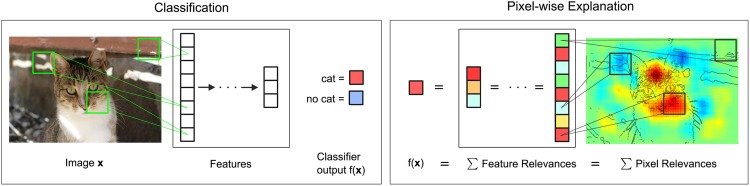
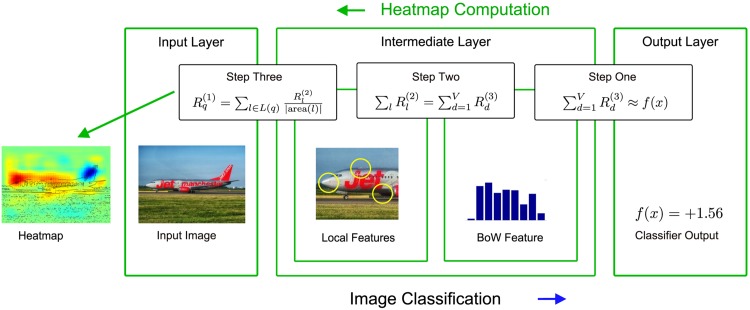
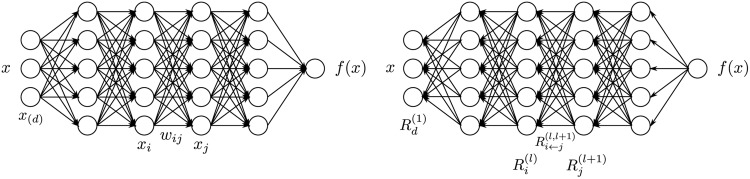
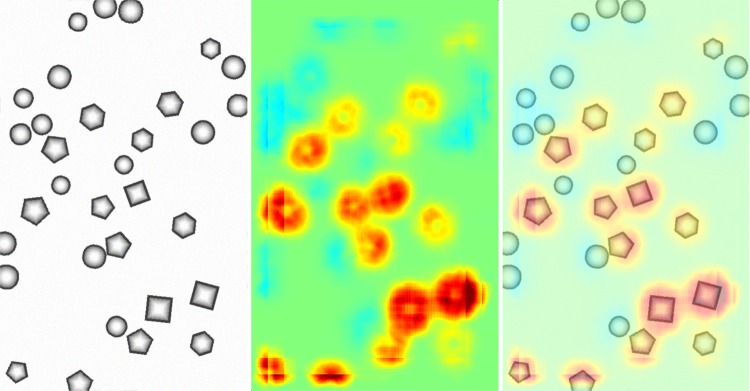
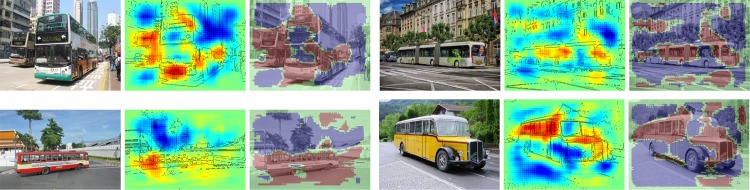
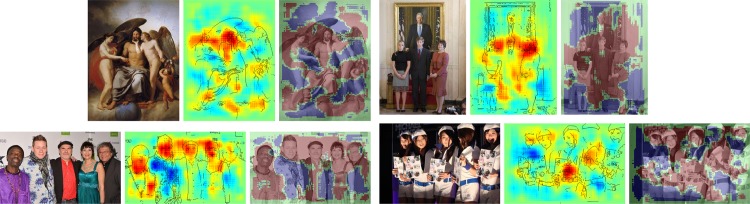
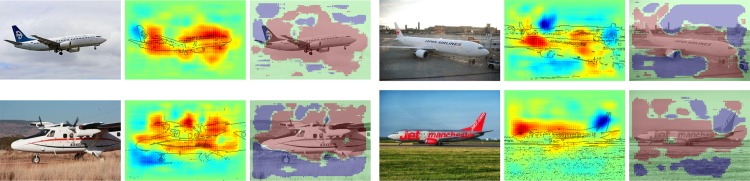
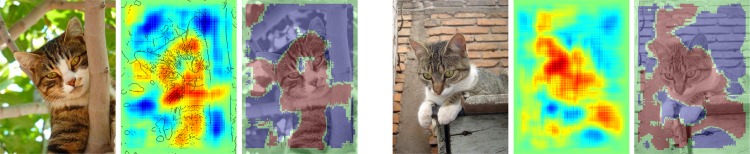
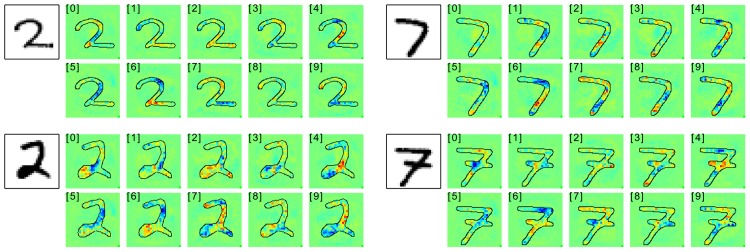
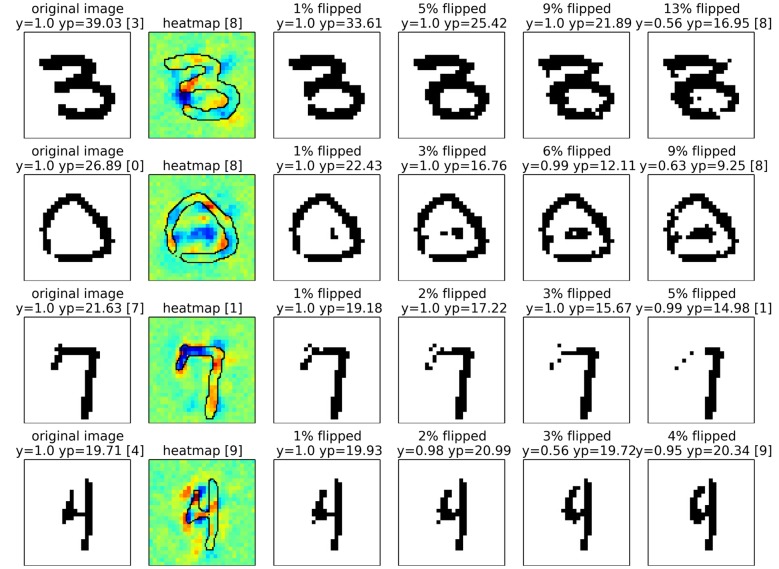
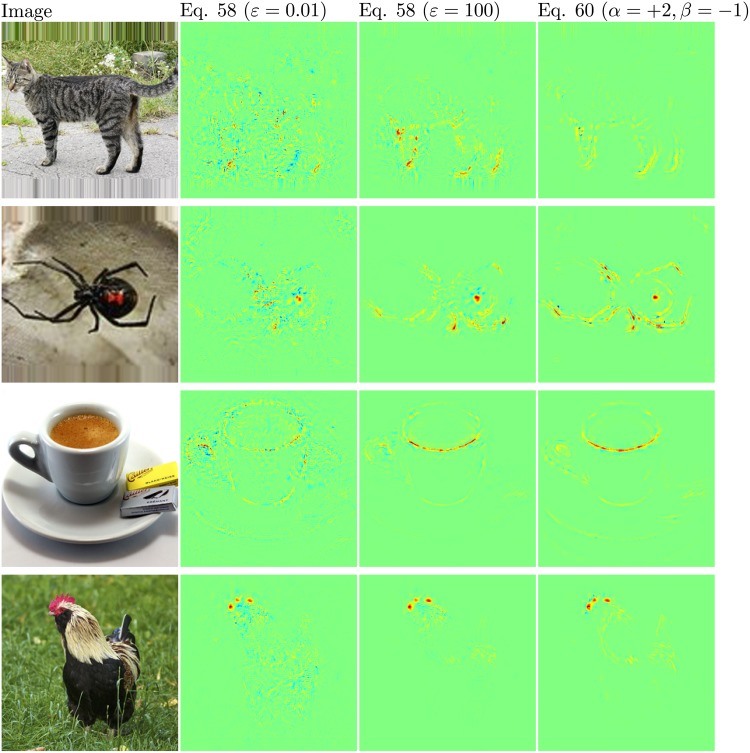
Understanding and interpreting classification decisions of automated image classification systems is of high value in many applications, as it allows to verify the reasoning of the system and provides additional information to the human expert. Although machine learning methods are solving very successfully a plethora of tasks, they have in most cases the disadvantage of acting as a black box, not providing any information about what made them arrive at a particular decision. This work proposes a general solution to the problem of understanding classification decisions by pixel-wise decomposition of nonlinear classifiers. We introduce a methodology that allows to visualize the contributions of single pixels to predictions for kernel-based classifiers over Bag of Words features and for multilayered neural networks. These pixel contributions can be visualized as heatmaps and are provided to a human expert who can intuitively not only verify the validity of the classification decision, but also focus further analysis on regions of potential interest. We evaluate our method for classifiers trained on PASCAL VOC 2009 images, synthetic image data containing geometric shapes, the MNIST handwritten digits data set and for the pre-trained ImageNet model available as part of the Caffe open source package.
Overview
The claims and statistics of this paper haven’t been checked yet.
Free: it reads the open-access text and checks the first 5 claims that cite a source we can check. Create a free account to check every claim.
Integrity signals
Registry
Cites
Statistics
Figures



Verification
Claims the paper makes
The claims and statistics of this paper haven’t been checked yet.
Free: it reads the open-access text and checks the first 5 claims that cite a source we can check. Create a free account to check every claim.
Claims other papers make about this one
Each is checked against this paper’s own text: does it say what the citing paper says it does?
The source backs part of the claim, not all of it — or backs it for a different population, condition or comparison.
In the citing paper
“Barring a few exceptions (Caruana et al., 2015; Lundberg et al., 2018b; Ustun et al., 2019; Jesus et al., 2021), much of the existing work is designed and developed for benchmark classification problems, often with synthetic data and usually validated with user studies limited to users in research settings such as Amazon Mechanical Turk (AMT; Simonyan et al., 2013; Zeiler and Fergus, 2014; Bach et”
From Explainable machine learning for public policy: Use cases, gaps, and research directions (2023) · cites this paper as Bach et al., 2015
Experimental — accuracy not yet measuredThe cited source says what the claim attributes to it.
In the citing paper
“Unfortunately, most of the work in this area fails to meet these criteria, focusing only on benchmark ML problems and datasets (e.g., image classification on MNIST data, newsgroups data; Bach et al., 2015; Ribeiro et al., 2016, 2018; Shrikumar et al., 2017).”
From Explainable machine learning for public policy: Use cases, gaps, and research directions (2023) · cites this paper as Bach et al., 2015
In the citing paper
“LRP and DTD are capable of improving a model’s interpretability.”
From Survey of Explainable AI Techniques in Healthcare (2023) · cites this paper as [31]
Self-check
Percentages, sums and reported differences re-computed from the paper’s own numbers.
The self-check needs the paper’s full text.
Citations
Cites
ImageNet classification with deep convolutional neural networks
Krizhevsky, A., Sutskever, I., & Hinton, G. E. (2017) · Communications of the ACM · doi:10.1145/3065386 · Cited by 112,155 · cited 2×
“It is known from [21] that lower layers of deep networks which are very similar to the one from [60] used here may act like learned texture or gradient detectors.”
BackgroundDistinctive Image Features from Scale-Invariant Keypoints
Lowe, D. G. (2004) · International Journal of Computer Vision · doi:10.1023/b:visi.0000029664.99615.94 · Cited by 55,589
Learning representations by back-propagating errors
Rumelhart, D. E., Hinton, G. E., & Williams, R. J. (1986) · Nature · doi:10.1038/323533a0 · Cited by 31,892 · cited 2×
“The derivative @f(x)/@x(d) required for pixel-wise decomposition can be computed efficiently by reusing the network topology using the backpropagation algorithm [56].”
BackgroundMethodThe pascal visual object classes (VOC) challenge
Everingham, M., Van Gool, L., Williams, C. K. I., Winn, J., & Zisserman, A. (2010) · International Journal of Computer Vision · doi:10.1007/s11263-009-0275-4 · Cited by 19,599
Neural networks for pattern recognition
(1994) · Choice Reviews Online · doi:10.5860/choice.31-5500 · Cited by 18,538
Rapid object detection using a boosted cascade of simple features
Viola, P., & Jones, M. (2005) · Proceedings of the 2001 IEEE Computer Society Conference on Computer Vision and Pattern Recognition. CVPR 2001 · doi:10.1109/cvpr.2001.990517 · Cited by 18,300
Visualizing and understanding convolutional networks
Zeiler, M. D., & Fergus, R. (2014) · Lecture Notes in Computer Science · doi:10.1007/978-3-319-10590-1_53 · Cited by 15,839
Explaining and Harnessing Adversarial Examples
Goodfellow, I. J., Shlens, J., & Szegedy, C. (2014) · arXiv · doi:10.48550/arxiv.1412.6572 · Cited by 10,381 · cited 1×
“A different type of analysis for understanding neural networks deals with creating counter-intuitive examples, see for example the work in [24, 25].”
BackgroundIntriguing properties of neural networks
Szegedy, C., Zaremba, W., Sutskever, I., Bruna, J., Erhan, D., Goodfellow, I., & Fergus, R. (2013) · arXiv · doi:10.48550/arxiv.1312.6199 · Cited by 8,143 · cited 2×
“However, as noted in [24], this can lead to points of the input space that are perceptually equivalent to the original sample x and whose choice as a root would produce non-informative pixel-wise decompositions.”
BackgroundDeep Inside Convolutional Networks: Visualising Image Classification Models and Saliency Maps
Simonyan, K., Vedaldi, A., & Zisserman, A. (2013) · arXiv · doi:10.48550/arxiv.1312.6034 · Cited by 5,370 · cited 4×
“Besides deviating in the usage of a Taylor series, the work in [22] does not make use of the layer-wise propagation strategy for neural networks presented in this paper, which unlike a Taylor series does not rely on a local approximation.”
BackgroundMethodResultInfluential
Research works printed but not linked: 4
- Montavon G, Orr GB, Müller KR, editors. Neural Networks: Tricks of the Trade, Reloaded vol. 7700 of Lecture Notes in Computer Science (LNCS). 2nd ed Springer; 2012.
- Everingham M, Van Gool L, Williams CKI, Winn J, Zisserman A. The PASCAL Visual Object Classes Challenge 2010 (VOC2010) Results;. · DOI · Paper page
- Lanckriet GRG, Cristianini N, Bartlett PL, Ghaoui LE, Jordan MI. Learning the Kernel Matrix with Semidefinite Programming. Journal of Machine Learning Research. 2004; 5: 27– 72.
- Kloft M, Brefeld U, Sonnenburg S, Laskov P, Müller KR, Zien A. Efficient and Accurate Lp-norm Multiple Kernel Learning. Advances in Neural Information Processing Systems. 2009; 22(22): 997– 1005.
Cited by
Items 601–700 of 1,049
Ancajas, C. M. F., Oyedele, A. S., Butt, C. M., & Walker, A. S. (2024) · Natural Product Reports · doi:10.1039/d4np00009a · Cited by 85
Explainable artificial intelligence techniques for interpretation of food models: a review
Arrighi, L., de Moraes, I. A., Zullich, M., Simonato, M., Barbin, D. F., & Barbon, S. (2026) · Artificial Intelligence Review · doi:10.1007/s10462-026-11553-2 · Cited by 82
“LRP [71], CAM [72], and its variant Grad-CAM [73] are NN–specific tools.”
When Explanations Lie: Why Many Modified BP Attributions FailPreprint
Sixt, L., Granz, M., & Landgraf, T. (2019) · arXiv (Cornell University) · doi:10.48550/arxiv.1912.09818 · Cited by 113
“(Bach et al., 2015; Kindermans et al., 2018; Montavon et al., 2017) argue that aggregating explanations of each linear model can explain a a deep neural network.”
BackgroundMethodInfluentialExplainable machine learning for public policy: Use cases, gaps, and research directions
Amarasinghe, K., Rodolfa, K. T., Lamba, H., & Ghani, R. (2023) · Data & Policy · doi:10.1017/dap.2023.2 · Cited by 73
“[2018a,0], Bach et al. [2015], Mothilal et al. [2020], Wachter et al. [2018]. While this expansion of the field has yielded a rich body of methodological work, recently, the community has begun to highlight the shortfalls such as the lack of consistent language and definitions, the lack of clearly defined explainabili…”
BackgroundInfluentialBelharbi, S., Rony, J., Dolz, J., Ayed, I. B., McCaffrey, L. M., & Granger, É. (2021) · IEEE Transactions on Medical Imaging · doi:10.1109/tmi.2021.3123461 · Cited by 86
Li, G., Wang, L., Shen, L., Chen, L., Cheng, H.-D., Xu, C., & Li, F. (2023) · Energy and Buildings · doi:10.1016/j.enbuild.2023.112949 · Cited by 83
Learning Bottleneck Concepts in Image Classification
Wang, B., Li, L., Nakashima, Y., & Nagahara, H. (2023) · IEEE Computer Society Conference on Computer Vision and Pattern Recognition/Proceedings - IEEE Computer Society Conference on Computer Vision and Pattern Recognition/Proceedings · doi:10.1109/cvpr52729.2023.01055 · Cited by 111
Ahmed, F., Abbas, S., Athar, A., Shahzad, T., Khan, W. A., Alharbi, M., Khan, M. A., & Ahmed, A. (2024) · Scientific Reports · doi:10.1038/s41598-024-56478-4 · Cited by 85
“(1) Employing the LRP technique on the modified VGG16 model allowed us to pinpoint the regions in the KUB X-ray image that significantly contribute to the model’s prediction of kidney stone presence.”
MethodInfluentialLi, H., Han, Z., Sun, Y., Wang, F., Hu, P., Gao, Y., Bai, X., Peng, S., Ren, C., Xu, X., et al. (2024) · Nature Communications · doi:10.1038/s41467-024-50426-6 · Cited by 93
Explaining A Black-box By Using A Deep Variational Information Bottleneck Approach
Bang, S., Xie, P., Lee, H., Wu, W., & Xing, E. P. (2021) · Proceedings of the AAAI Conference on Artificial Intelligence · doi:10.1609/aaai.v35i13.17358 · Cited by 96
Confidence Modeling for Neural Semantic Parsing
Dong, L., Quirk, C., & Lapata, M. (2018) · Proceedings of the 56th Annual Meeting of the Association for Computational Linguistics (Volume 1: Long Papers) · doi:10.18653/v1/p18-1069 · Cited by 63
“In this section, we introduce an algorithm that backpropagates token-level uncertainty scores (see Equation (7)) from predictions to input to-kens, following the ideas of Bach et al. (2015) and Zhang et al. (2016).”
MethodMahmoud, A. H., Masters, M. R., Ying, Y., & Lill, M. A. (2020) · Communications Chemistry · doi:10.1038/s42004-020-0261-x · Cited by 77
A Disentangling Invertible Interpretation Network for Explaining Latent Representations
Esser, P., Rombach, R., & Ommer, B. (2020) · 2020 IEEE/CVF Conference on Computer Vision and Pattern Recognition (CVPR) · doi:10.1109/cvpr42600.2020.00924 · Cited by 72
HIVE: Evaluating the Human Interpretability of Visual Explanations
Kim, S. S. Y., Meister, N., Ramaswamy, V. V., Fong, R., & Russakovsky, O. (2022) · Lecture Notes in Computer Science · doi:10.1007/978-3-031-19775-8_17 · Cited by 72
Promises and pitfalls of deep neural networks in neuroimaging-based psychiatric research
Eitel, F., Schulz, M.-A., Seiler, M., Walter, H., & Ritter, K. (2021) · Experimental Neurology · doi:10.1016/j.expneurol.2021.113608 · Cited by 80
“A popular method of this kind is layer-wise relevance propagation (LRP; [108]), in which a relevance score is introduced to the output layer, which is then then propagated back to the input layer using a modified backpropagation algorithm.”
MethodEvaluation of Explainable Deep Learning Methods for Ophthalmic Diagnosis
Singh, A., Balaji, J. J., Rasheed, M. A., Jayakumar, V., Raman, R., & Lakshminarayanan, V. (2021) · Clinical ophthalmology · doi:10.2147/opth.s312236 · Cited by 79
Akula, A. R., Wang, K., Liu, C., Saba-Sadiya, S., Lu, H., Todorovic, S., Chai, J., & Zhu, S.-C. (2022) · iScience · doi:10.1016/j.isci.2021.103581 · Cited by 64
Freeborough, W., & van Zyl, T. L. (2022) · Applied Sciences · doi:10.3390/app12031427 · Cited by 80
“Such post hoc analyses can further be divided into modelagnostic and model-specific [8,9].”
BackgroundSingle-cell gene regulatory network prediction by explainable AI
Keyl, P., Bischoff, P., Dernbach, G., Bockmayr, M. L., Fritz, R., Horst, D. A., Blüthgen, N., Montavon, G., Müller, K., & Klauschen, F. (2023) · Nucleic Acids Research · doi:10.1093/nar/gkac1212 · Cited by 80
Self-citationHuman-Centric Multimodal Machine Learning: Recent Advances and Testbed on AI-Based Recruitment
Peña, A., Serna, I., Morales, A., Fiérrez, J., Ortega, A., Sánchez, A. H., Saéz, M. A., & Ortega-García, J. (2023) · SN Computer Science · doi:10.1007/s42979-023-01733-0 · Cited by 98
“The LRP method [37] applies a propagation rule that distributes back (without gradients) the classification output f(x) decomposed into pixel relevance onto the input variables.”
BackgroundMethodExploring Evaluation Methods for Interpretable Machine Learning: A Survey
Alangari, N., Menaï, M. E. B., Mathkour, H. I., & Almosallam, I. A. (2023) · Information · doi:10.3390/info14080469 · Cited by 92
Privacy Leakage on DNNs: A Survey of Model Inversion Attacks and Defenses
Fang, H., Qiu, Y., Yu, H., Yu, W., Kong, J., Chong, B., Chen, B., Wang, X., Xia, S., & Xu, K. (2026) · International Journal of Computer Vision · doi:10.1007/s11263-026-03049-x · Cited by 77
Local Interpretations for Explainable Natural Language Processing: A Survey
Luo, S., Ivison, H., Han, S. C., & Poon, J. (2024) · ACM Computing Surveys · doi:10.1145/3649450 · Cited by 105
“…proposed a post hoc interpretable method that leaves the original training model untouched by examining the hidden states passed along by RNNs. Ding et al. [42] applied LRP [13] to neural machine translation to provide interpretations using the hidden state values of each source and target word.”
BackgroundMethodCyber Attack Prediction: From Traditional Machine Learning to Generative Artificial Intelligence
Ankalaki, S., Atmakuri, A. R., Pallavi, M., Hukkeri, G. S., Jan, T., & Naik, G. R. (2025) · IEEE Access · doi:10.1109/access.2025.3547433 · Cited by 95
“XAI helps us to understand why AI makes certain decisions [137].”
p1-FP: Extraction, Classification, and Prediction of Website Fingerprints with Deep Learning
Oh, S. E., Sunkam, S., & Hopper, N. (2019) · Proceedings on Privacy Enhancing Technologies · doi:10.2478/popets-2019-0043 · Cited by 87
CoCoX: Generating Conceptual and Counterfactual Explanations via Fault-Lines
Akula, A., Wang, S., & Zhu, S.-C. (2020) · Proceedings of the AAAI Conference on Artificial Intelligence · doi:10.1609/aaai.v34i03.5643 · Cited by 64
On Interpretability of Deep Learning based Skin Lesion Classifiers using Concept Activation Vectors
Lucieri, A., Bajwa, M. N., Alexander Braun, S., Malik, M. I., Dengel, A., & Ahmed, S. (2020) · 2020 International Joint Conference on Neural Networks (IJCNN) · doi:10.1109/ijcnn48605.2020.9206946 · Cited by 52
Leveraging Latent Features for Local Explanations
Luss, R., Chen, P., Dhurandhar, A., Sattigeri, P., Zhang, Y., Shanmugam, K., & Tu, C. (2021) · ACM SIGKDD Conference on Knowledge Discovery and Data Mining (KDD) · doi:10.1145/3447548.3467265 · Cited by 119
“There have been many methods proposed in literature [1, 20, 29, 32, 38] that explain predictions of deep neural networks based on the relevance of different features or pixels/superpixels for an image.”
BackgroundMethodZhang, X., Chan, F. T. S., & Mahadevan, S. (2022) · Knowledge-Based Systems · doi:10.1016/j.knosys.2022.108418 · Cited by 84
Transparency in AI Decision Making: A Survey of Explainable AI Methods and Applications
Jain, R. (2024) · Advances in robotic technology. · doi:10.23880/art-16000110 · Cited by 71
Comprehensive review of Transformer‐based models in neuroscience, neurology, and psychiatry
Cong, S., Wang, H., Zhou, Y., Wang, Z., Yao, X., & Yang, C. (2024) · Brain‐X · doi:10.1002/brx2.57 · Cited by 82
Importance of Self-Attention for Sentiment Analysis
Letarte, G., Paradis, F., Giguère, P., & Laviolette, F. (2018) · Proceedings of the 2018 EMNLP Workshop BlackboxNLP: Analyzing and Interpreting Neural Networks for NLP · doi:10.18653/v1/w18-5429 · Cited by 70
“Research efforts in order to solve this issue have steadily increased (Simonyan et al., 2013; Zeiler and Fergus, 2014; Bach et al., 2015; Ribeiro et al., 2016; Fong and Vedaldi, 2017).”
BackgroundExplainable Deep-Fake Detection Using Visual Interpretability Methods
Malolan, B., Parekh, A., & Kazi, F. (2020) · 2020 3rd International Conference on Information and Computer Technologies (ICICT) · doi:10.1109/icict50521.2020.00051 · Cited by 70
Wang, D., Honnorat, N., Fox, P. T., Ritter, K., Eickhoff, S. B., Seshadri, S. S., & Habes, M. (2023) · NeuroImage · doi:10.1016/j.neuroimage.2023.119929 · Cited by 80
“The 𝛽 parameter aiming at balancing the relevance scores associated with positive and negative neural network activations was set to 0.5 to account for both activations in a similar manner ( Bach et al., 2015 ).”
InfluentialIncremental permutation feature importance (iPFI): towards online explanations on data streams
Fumagalli, F., Muschalik, M., Hüllermeier, E., & Hammer, B. (2023) · Machine Learning · doi:10.1007/s10994-023-06385-y · Cited by 81
“In addition, model-specific variants have been proposed for neural networks (Bach et al. 2015; Selvaraju et al. 2017).”
BackgroundStudying Noncovalent Interactions in Molecular Systems with Machine Learning
Tretiakov, S., Nigam, A., & Pollice, R. (2025) · Chemical Reviews · doi:10.1021/acs.chemrev.4c00893 · Cited by 85
Influence-Directed Explanations for Deep Convolutional Networks
Leino, K., Sen, S., Datta, A., Fredrikson, M., & Li, L. (2018) · 2018 IEEE International Test Conference (ITC) · doi:10.1109/test.2018.8624792 · Cited by 55
Toward Interpretable Machine Learning: Transparent Deep Neural Networks and BeyondPreprint
Samek, W., Montavon, G., Lapuschkin, S., Anders, C. J., & Müller, K. (2020) · arXiv (Cornell University) · Cited by 95
Self-citationStatistical Postprocessing of Wind Speed Forecasts Using Convolutional Neural Networks
Veldkamp, S., Whan, K., Dirksen, S., & Schmeits, M. J. (2021) · Monthly Weather Review · doi:10.1175/mwr-d-20-0219.1 · Cited by 82
Development of Data-Driven Machine Learning Models for the Prediction of Casting Surface Defects
Chen, S., & Kaufmann, T. (2021) · Metals · doi:10.3390/met12010001 · Cited by 73
NPC: N euron P ath C overage via Characterizing Decision Logic of Deep Neural Networks
Xie, X., Li, T., Wang, J., Ma, L., Guo, Q., Juefei-Xu, F., & Liu, Y. (2022) · ACM Transactions on Software Engineering and Methodology · doi:10.1145/3490489 · Cited by 87
Zhao, M., Yan, W., Luo, N., Zhi, D., Fu, Z., Du, Y., Yu, S. P., Jiang, T., Calhoun, V. D., & Sui, J. (2022) · Medical Image Analysis · doi:10.1016/j.media.2022.102413 · Cited by 77
“For more details on LRP, please refer to (Bach et al., 2015).”
BackgroundAlgorithmic Harm in Consumer Markets
Bar‐Gill, O., Sunstein, C. R., & Talgam-Cohen, I. (2023) · The Journal of Legal Analysis · doi:10.1093/jla/laad003 · Cited by 89
Natural Language Processing: Chances and Challenges in Dentistry
Büttner, M., Leser, U., Schneider, L., & Schwendicke, F. (2023) · Journal of Dentistry · doi:10.1016/j.jdent.2023.104796 · Cited by 75
A Survey of Evaluation Methods and Measures for Interpretable Machine LearningPreprint
Mohseni, S., Zarei, N., & Ragan, E. D. (2018) · arXiv (Cornell University) · Cited by 80
Wei, Z., Fernandes, H., Herrmann, H., Tarpani, J. R., & Osman, A. (2021) · Sensors · doi:10.3390/s21020395 · Cited by 74
“There are several approaches addressing this problem: visualizing input patches that maximize a output unit activation [44]; the input attribution method to highlight certain input data areas that contribute the most to a model’s decision [40,45].”
MethodMamalakis, A., Ebert-Uphoff, I., & Barnes, E. A. (2022) · Lecture Notes in Computer Science · doi:10.1007/978-3-031-04083-2_16 · Cited by 54
Abbas, S., Ahmed, F., Khan, W. A., Ahmad, M., Khan, M. A., & Ghazal, T. M. (2025) · Scientific Reports · doi:10.1038/s41598-024-83966-4 · Cited by 77
Mohamed, E., Sirlantzis, K., & Howells, G. (2022) · Displays · doi:10.1016/j.displa.2022.102239 · Cited by 67
“Methods that goes under this class are DeconvNet [29], Back-propagation [31], Guided Backpropagation [32], Layer-wise Relevance Propagation (LRP) [33] and Class Activation Maps (CAM) [34].”
BackgroundMethodInfluentialTowards relatable explainable AI with the perceptual process
Zhang, W., & Lim, B. Y. (2022) · CHI Conference on Human Factors in Computing Systems · doi:10.1145/3491102.3501826 · Cited by 67
“We determine which cues were more important by calculating an attribution explanation ?̂? c with layer-wise relevance propagation (LRP) [8].”
BackgroundMethodInfluentialRevealing cytotoxic substructures in molecules using deep learning
Webel, H. E., Kimber, T. B., Radetzki, S., Neuenschwander, M., Nazaré, M., & Volkamer, A. (2020) · Journal of Computer-Aided Molecular Design · doi:10.1007/s10822-020-00310-4 · Cited by 66
“[53] proposed a method to decompose layer-wise a given model score and redistribute the decomposed scores to the inputs.”
MethodDyrba, M., Hanzig, M., Altenstein, S., Bader, S., Ballarini, T., Brosseron, F., Buerger, K., Cantré, D., Dechent, P., Dobisch, L., et al. (2021) · Alzheimer's Research & Therapy · doi:10.1186/s13195-021-00924-2 · Cited by 66
“Recently, three studies compared LRP with other CNN visualization methods for the detection of Alzheimer’s disease in T1-weighted MRI scans [11, 12, 14].”
BackgroundMethodInfluentialMieth, B., Rozier, A., Rodríguez, J. A., Höhne, M., Görnitz, N., & Müller, K. (2021) · NAR Genomics and Bioinformatics · doi:10.1093/nargab/lqab065 · Cited by 75
Self-citationAn Explainable Machine Learning Model for Material Backorder Prediction in Inventory Management
Ntakolia, C., Kokkotis, C., Karlsson, P., & Moustakidis, S. (2021) · Sensors · doi:10.3390/s21237926 · Cited by 76
Deciphering urban traffic impacts on air quality by deep learning and emission inventory
Du, W., Chen, L., Wang, H., Shan, Z., Zhou, Z., Li, W., & Wang, Y. (2022) · Journal of Environmental Sciences · doi:10.1016/j.jes.2021.12.035 · Cited by 71
“In addition, an important output of iDeepAir is a ranking of the contributions of single parameter to the prediction in LRP method (take the 24-hour prediction results as an example) ( Bach et al., 2015 ) ( Fig.”
MethodHarren, T., Matter, H., Heßler, G., Rarey, M., & Grebner, C. (2022) · Journal of Chemical Information and Modeling · doi:10.1021/acs.jcim.1c01263 · Cited by 76
Reinforced Causal Explainer for Graph Neural Networks
Wang, X., Wu, Y., Zhang, A., Feng, F., He, X., & Chua, T. (2022) · IEEE Transactions on Pattern Analysis and Machine Intelligence · doi:10.1109/tpami.2022.3170302 · Cited by 96
“In general, the existing attribution meth-ods roughly fall into three groups: • One research line [8], [9], [10], [31], [32] decomposes the model outcome to the input features via backpropagation, such that the gradient-like signals are viewed as the importance of input features.”
Hofmann, S., Beyer, F., Lapuschkin, S., Goltermann, O., Loeffler, M., Müller, K., Villringer, A., Samek, W., & Witte, A. V. (2022) · NeuroImage · doi:10.1016/j.neuroimage.2022.119504 · Cited by 78
Self-citationGongane, V. U., Munot, M. V., & Anuse, A. D. (2024) · Journal of Computational Social Science · doi:10.1007/s42001-024-00248-9 · Cited by 92
“[45] Layer-wise relevance propagation (LRP) is a propagation-based explanation technique applicable to deep neural networks.”
The Explainability of Transformers: Current Status and Directions
Fantozzi, P., & Naldi, M. (2024) · Computers · doi:10.3390/computers13040092 · Cited by 85
Drug discovery and mechanism prediction with explainable graph neural networks
Wang, C., Kumar, G. A., & Rajapakse, J. C. (2025) · Scientific Reports · doi:10.1038/s41598-024-83090-3 · Cited by 85
Holzinger, A. (2018) · Informatik-Spektrum · doi:10.1007/s00287-018-1102-5 · Cited by 77
“Das LRP (Layer-Wise Relevance Propagation)Verfahren [1] stellt eine weitere allgemeine Lösung zum Verstehen von Klassifikationsentscheidungen durch pixelweise Zerlegung von nichtlinearen Klassifikatoren dar.”
MethodAn Efficient Bit-Flip Resilience Optimization Method for Deep Neural Networks
Schorn, C., Guntoro, A., & Ascheid, G. (2019) · Design, Automation, and Test in Europe · doi:10.23919/date.2019.8714885 · Cited by 67
“Instead of error backpropagation, layer-wise relevance propagation (LRP) [21] was used to determine mean neuron relevancies over a set of training data.”
MethodHuman-grounded Evaluations of Explanation Methods for Text Classification
Lertvittayakumjorn, P., & Toni, F. (2019) · Proceedings of the 2019 Conference on Empirical Methods in Natural Language Processing and the 9th International Joint Conference on Natural Language Processing (EMNLP-IJCNLP) · doi:10.18653/v1/d19-1523 · Cited by 60
“Others are applicable to a class of models such as neural networks (Bach et al., 2015a; Dimopoulos et al., 1995) or to a specific model such as Convolutional Neural Networks (CNNs) (Zhou et al., 2016).”
BackgroundMethodDifferential Privacy in Deep Learning: An Overview
Ha, T., Dang, T. K., Dang, T. T., Truong, T. A., & Nguyen, M. T. (2019) · International Conference on Advanced Computing and Applications (ACOMP) · doi:10.1109/acomp.2019.00022 · Cited by 86
“For the central system, after companies provide deep learning models and services to the public such as machine learning as a service like Microsoft Azure Learning, Google, Amazon, BigML, etc [9].”
BackgroundInterpretability Beyond Classification Output: Semantic Bottleneck NetworksPreprint
Losch, M., Fritz, M., & Schiele, B. (2019) · arXiv (Cornell University) · doi:10.48550/arxiv.1907.10882 · Cited by 73
“The first being post-hoc interpretation, for which we take an already trained and well performing model and dissect its decisions a-posteriori to identify important input features via attribution [2, 21, 13, 33, 22, 24] or attempt to assign meaning to single or groups of features in order to understand the inner worki…”
Explanation by Progressive ExaggerationPreprint
Singla, S., Pollack, B., Chen, J., & Batmanghelich, K. N. (2019) · arXiv (Cornell University) · doi:10.48550/arxiv.1911.00483 · Cited by 84
“(2017) and other variants such as LPR (Bach et al., 2015) use a linear or non-linear combination of the activation layers to derive relevance score for every pixel in an image.”
BackgroundZhang, J., & Li, J. (2020) · Information and Software Technology · doi:10.1016/j.infsof.2020.106296 · Cited by 80
“Improving interpretability of NN Understand how a specific decision is made [102],[103],[104],[105],[106],[107],[108],[109], [110],[111],[112],[113],[114],[115],[116], [117], [118],[119],[120] Facilitate understanding of internal logic of”
BackgroundMethodA graph neural network framework for causal inference in brain networks
Wein, S., Malloni, W. M., Tomé, A. M., Frank, S., Henze, G., Wüst, S., Greenlee, M. W., & Lang, E. W. (2021) · Scientific Reports · doi:10.1038/s41598-021-87411-8 · Cited by 85
Karim, M. R., Jiao, J., Döhmen, T., Cochez, M., Beyan, O., Rebholz‐Schuhmann, D., & Decker, S. (2021) · IEEE Access · doi:10.1109/access.2021.3062493 · Cited by 73
“Therefore, We decided the best ones based on our manual judgment and on account of assisting diagnoses based on multimodality, Grad-CAM ++ is adopted along with LRP in our pipeline for mitigating prediction-biases.”
BackgroundInfluentialTowards Trustworthy AI in Dentistry
Ma, J., Schneider, L., Lapuschkin, S., Achtibat, R., Duchrau, M., Krois, J., Schwendicke, F., & Samek, W. (2022) · Journal of Dental Research · doi:10.1177/00220345221106086 · Cited by 61
“…et al. 2016) (at the cost of increased computational cost), based on the gradient (Simonyan et al. 2014; Sundararajan et al. 2017) (given the prediction function is differentiable), or with techniques applying a modified backward pass through the model (Bach et al. 2015; Shrikumar et al. 2017).”
BackgroundMethodSelf-citationUnderstanding and Detecting Hallucinations in Neural Machine Translation via Model Introspection
Xu, W., Agrawal, S., Briakou, E., Martindale, M. J., & Carpuat, M. (2023) · Transactions of the Association for Computational Linguistics · doi:10.1162/tacl_a_00563 · Cited by 53
“We test the three source contribution hypotheses described in § 2 on the resulting dataset by contrasting the contributions of relevant tokens to the generation of a hallucinated versus a nonhallucinated translation using LRP (Bach et al., 2015).”
BackgroundMethodInfluentialSeeing What a GAN Cannot Generate
Bau, D., Zhu, J.-Y., Wulff, J., Peebles, W., Zhou, B., Strobelt, H., & Torralba, A. (2019) · 2019 IEEE/CVF International Conference on Computer Vision (ICCV) · doi:10.1109/iccv.2019.00460 · Cited by 45
“Most prior work on network visualization concerns discriminative clas-sifiers [1, 3, 23, 26, 37, 38, 48, 50].”
BackgroundGong, M., Pan, K., Xie, Y., Qin, A. K., & Tang, Z. (2020) · Neural Networks · doi:10.1016/j.neunet.2020.02.001 · Cited by 64
Interpretable machine learning as a tool for scientific discovery in chemistry
Dybowski, R. (2020) · New Journal of Chemistry · doi:10.1039/d0nj02592e · Cited by 67
Bastings, J., Ebert, S., Zablotskaia, P., Sandholm, A., & Filippova, K. (2022) · Conference on Empirical Methods in Natural Language Processing (EMNLP) · doi:10.18653/v1/2022.emnlp-main.64 · Cited by 110
Bhowmik, A., Berecibar, M., Casas‐Cabanas, M., Cśanyi, G., Dominko, R., Hermansson, K., Palacín, M. R., Stein, H. S., & Vegge, T. (2021) · Advanced Energy Materials · doi:10.1002/aenm.202102698 · Cited by 72
A review and benchmark of feature importance methods for neural networks
Mandler, H., & Weigand, B. (2024) · ACM Computing Surveys · doi:10.1145/3679012 · Cited by 77
“While the natural salience metric is the contribution to the output and most methods decompose the prediction [11, 84, 94, 122, 136], there are also methods that use the prediction error as indicator for the salience [24, 42, 137].”
Interpretable detection of novel human viruses from genome sequencing data
Bartoszewicz, J. M., Seidel, A., & Renard, B. Y. (2021) · NAR Genomics and Bioinformatics · doi:10.1093/nargab/lqab004 · Cited by 73
CAMERAS: Enhanced Resolution And Sanity preserving Class Activation Mapping for image saliency
Jalwana, M. A. A. K., Akhtar, N., Bennamoun, M., & Mian, A. S. (2021) · IEEE Computer Society Conference on Computer Vision and Pattern Recognition/Proceedings - IEEE Computer Society Conference on Computer Vision and Pattern Recognition/Proceedings · doi:10.1109/cvpr46437.2021.01606 · Cited by 82
“Similarly, DeepLIFT [26], LRP [4] and Excitation Backprop [34] recast the backpropagation rules such that the sum of attribution signal becomes unity.”
MethodAmini, M., Bagheri, A., & Delen, D. (2022) · Reliability Engineering & System Safety · doi:10.1016/j.ress.2022.108720 · Cited by 66
NLX-GPT: A Model for Natural Language Explanations in Vision and Vision-Language Tasks
Sammani, F., Mukherjee, T., & Deligiannis, N. (2022) · IEEE Computer Society Conference on Computer Vision and Pattern Recognition/Proceedings - IEEE Computer Society Conference on Computer Vision and Pattern Recognition/Proceedings · doi:10.1109/cvpr52688.2022.00814 · Cited by 110
“Different from visual or textual explanations which highlight regions or tokens in an image or sentence that lead to a specific prediction [5, 45, 48, 49], natural language explanation models [8, 33] explain the decision-making process of a model through natural language sentences.”
BackgroundBig data and deep learning for RNA biology
Hwang, H., Jeon, H., Yeo, N., & Baek, D. (2024) · Experimental & Molecular Medicine · doi:10.1038/s12276-024-01243-w · Cited by 74
Review of deep learning-based methods for non-destructive evaluation of agricultural products
Li, Z., Wang, D., Zhu, T., Tao, Y., & Ni, C. (2024) · Biosystems Engineering · doi:10.1016/j.biosystemseng.2024.07.002 · Cited by 72
Pereira, F. D., Fonseca, S. C., Oliveira, E. H. T., Cristea, A. I., Bellhauser, H., Rodrigues, L., Oliveira, D. B. F., Isotani, S., & Carvalho, L. S. G. (2021) · IEEE Access · doi:10.1109/access.2021.3105956 · Cited by 63
“This state-of-the-art method unifies in a single framework prestigious additive feature attribution methods such as LIME [57], DeepLIFT [64], classic Shapley value estimation [34], layer-wise relevance propagation [3] and others.”
MethodClare, M., Sonnewald, M., Lguensat, R., Deshayes, J., & Balaji, V. (2022) · Journal of Advances in Modeling Earth Systems · doi:10.1029/2022ms003162 · Cited by 74
“This leads to the construction of a ‘heatmap’ where a positive/negative ‘relevance’ means a feature contributes positively/negatively to the output (Bach et al., 2015).”
A comprehensive study on fidelity metrics for XAI
Miró-Nicolau, M., Jaume-i-Capó, A., & Moyà-Alcover, G. (2024) · Information Processing & Management · doi:10.1016/j.ipm.2024.103900 · Cited by 83
Lavecchia, A. (2025) · Wiley Interdisciplinary Reviews Computational Molecular Science · doi:10.1002/wcms.70049 · Cited by 87
“LRP [58], Taylor decomposition [59], and Excitation Backpropagation [60] have been adapted for GNNs (e.g., GNN-LRP [61]).”
CNN Fixations: An Unraveling Approach to Visualize the Discriminative Image Regions
Mopuri, K. R., Garg, U., & Venkatesh Babu, R. (2019) · IEEE Transactions on Image Processing · doi:10.1109/tip.2018.2881920 · Cited by 59
Barman, A., Inam, M. E., Lee, S., Savitz, S. I., Sheth, S. A., & Giancardo, L. (2019) · IEEE International Symposium on Biomedical Imaging (ISBI) · doi:10.1109/isbi.2019.8759475 · Cited by 74
Saliency-driven Word Alignment Interpretation for Neural Machine Translation
Ding, S., Xu, H., & Koehn, P. (2019) · Conference on Machine Translation (WMT) · doi:10.18653/v1/w19-5201 · Cited by 82
“Most similar to our work in spirit, Ding et al. (2017) used Layer-wise Relevance Propagation (LRP; Bach et al. 2015), an interpretation method resembling saliency, to interpret the internal working mechanisms of RNN-based neural machine translation systems.”
MethodImproving healthcare access management by predicting patient no-show behaviour
Barrera, D., Brailsford, S., Bravo, C., & Smith, H. K. (2020) · Decision Support Systems · doi:10.1016/j.dss.2020.113398 · Cited by 72
“Recent applications of LRP include sentiment analysis [64] and image classification [65].”
BackgroundMethodInfluentialIndividual variation underlying brain age estimates in typical development
Ball, G., Kelly, C. E., Beare, R. J., & Seal, M. L. (2021) · NeuroImage · doi:10.1016/j.neuroimage.2021.118036 · Cited by 68
Anders, C. J., Neumann, D., Samek, W., Müller, K., & Lapuschkin, S. (2026) · PLoS ONE · doi:10.1371/journal.pone.0336683 · Cited by 79
“It is mainly focused on implementing the rule-based approach used by LRP [6] in a simple and intuitive manner: The provision of an easy to modify and flexible implementation of LRP is paramount for obtaining excellent results, by optimally aligning the method to the characteristics of the model (or parts thereof) to b…”
Self-citationTowards robust explanations for deep neural networks
Dombrowski, A.-K., Anders, C. J., Müller, K., & Kessel, P. (2021) · Pattern Recognition · doi:10.1016/j.patcog.2021.108194 · Cited by 94
Self-citationMey, O., & Neufeld, D. (2022) · Sensors · doi:10.3390/s22239037 · Cited by 68
“Examples are GradCAM (Gradient-weighted Class Activation Mapping) [26], LRP (Layer-wise Relevance Propagation) [27], LIME [28], DeepLift [29], Integrated Gradients [30], or SHAP (Shapley Additive Explanations) [31].”
MethodLogic-Based Explainability in Machine Learning
Marques-Silva, J. P. (2023) · Lecture notes in computer science · doi:10.1007/978-3-031-31414-8_2 · Cited by 122
Causal explaining guided domain generalization for rotating machinery intelligent fault diagnosis
Guo, C., Zhao, Z., Ren, J., Wang, S., Liu, Y., & Chen, X. (2023) · Expert Systems with Applications · doi:10.1016/j.eswa.2023.122806 · Cited by 66
CLARUS: An interactive explainable AI platform for manual counterfactuals in graph neural networks
Metsch, J. M., Saranti, A., Angerschmid, A., Pfeifer, B., Klemt, V., Holzinger, A., & Hauschild, A.-C. (2024) · Journal of Biomedical Informatics · doi:10.1016/j.jbi.2024.104600 · Cited by 76
Counterfactual Causal-Effect Intervention for Interpretable Medical Visual Question Answering
Cai, L., Fang, H., Xu, N., & Ren, B. (2024) · IEEE Transactions on Medical Imaging · doi:10.1109/tmi.2024.3425533 · Cited by 66
“4) Counterfactual Sample Generation: We introduce a layer-wise relevance propagation (LRP) method [45], [46] for generating counterfactual samples.”
Metadata
- Authors
- Bach, S., Binder, A., Montavon, G., Klauschen, F., Müller, K.-R., & Samek, W.
- Affiliations
- Singapore University of Technology and Design (SG)
- Technische Universität Berlin (DE)
- Stiftung Charité (DE)
- Korea University (KR)
- Fraunhofer Institute for Telecommunications, Heinrich Hertz Institute (DE)
- Corresponding author
- Müller, Klaus-Robert
- Samek, Wojciech
- Venue
- PLOS ONE
- Publisher
- Public Library of Science (PLoS)
- Published
- 2015-07-10
- Volume
- 10
- Issue
- 7
- Pages
- e0130140
- ISSN
- 1932-6203 (ISSN-L)
- PMC
- PMC4498753
- OpenAlex
- W1787224781
- Cited by
- 4,524
- References
- 56
- Citations by year
- 2026: 347 · 2025: 628 · 2024: 653 · 2023: 648 · 2022: 566 · 2021: 647 · 2020: 489 · 2019: 299 · 2018: 145 · 2017: 63 · 2016: 27 · 2015: 6
- FWCI
- 78.76
- Type
- journal article
- Language
- en
- Open access
- gold
- doi.org
- Licence
- Locations
- PLoS ONE (publishedVersion, cc-by)
- PubMed Central (publishedVersion, cc-by)
- PubMed (publishedVersion)
- RePEc: Research Papers in Economics (submittedVersion)
- DOAJ (DOAJ: Directory of Open Access Journals) (submittedVersion, cc-by-sa)
- Publikationsdatenbank der Fraunhofer-Gesellschaft (Fraunhofer-Gesellschaft) (submittedVersion, other-oa)
- Fraunhofer-Publica (Fraunhofer-Gesellschaft) (submittedVersion)
- Refubium (Universitätsbibliothek der Freien Universität Berlin) (submittedVersion, cc-by)
- Universitätsbibliothek der FU Berlin Hochschulschriftenstelle u. Dokumentenserver (cc-by)
- Funders
- National Research Foundation
- Deutsche Forschungsgemeinschaft (01GQ1115)
- Bundesministerium für Bildung und Forschung (01 IS 14013 A, 01GQ1115)
- Bundesministerium für Wirtschaft und Technologie (01MQ07018)
- National Research Foundation of Korea (01IS14013A, BK21 program)
- Technische Universität Berlin
- Banting and Best Diabetes Centre, University of Toronto (01IS14013A)
- Topics
- Physical Sciences › Computer Science › Artificial Intelligence › Explainable Artificial Intelligence (XAI)
- Physical Sciences › Computer Science › Computer Vision and Pattern Recognition › Advanced Neural Network Applications
- Physical Sciences › Computer Science › Computer Vision and Pattern Recognition › Image Retrieval and Classification Techniques
- Keywords
- layer-wise relevance propagation, nonlinear classifiers, kernel-based classifiers, bag-of-words features, multilayer neural networks, heatmaps, image classification, black box, MNIST, ImageNet
- MeSH terms
- Algorithms, Artificial Intelligence, Humans, Image Processing, Computer-Assisted, Pattern Recognition, Automated
About these checks
Registry, retraction, Cites and statistics results are computed, not judged, with one exception: a printed reference that no index lists is read once by a model before it counts as a citation error. Claims are extracted by a model and kept only when their quote appears verbatim in the text; each cited source is then checked, with a model’s help, for whether it says what the claim relies on. Those verdicts can be wrong — read the claim’s quote and the cited source before relying on one.
Statistics and arithmetic are recomputed, not judged.
Confidence bands are shown only for fields calibrated on our annotated test set. None is calibrated yet, so no band is shown.
What counts as a claim ›How we measure confidence ›How we check this ›
Are you an author, or do you see a problem with this page? Request a review
Data sources
Bibliographic data: Semantic Scholar, OpenAlex, Crossref.
Contains information from the Semantic Scholar Academic Graph Datasets, made available under the ODC Attribution License (ODC-BY 1.0).
Semantic Scholar’s data is described in: Kinney, R., et al. (2023). The Semantic Scholar Open Data Platform. arXiv:2301.10140.
