

The DOI matches its Crossref record; 66 of the 66 references it cites were found in a registry or an index.
The Effects of Natural and Anthropogenic Microparticles on Individual Fitness in Daphnia magna
Open accessAbstract
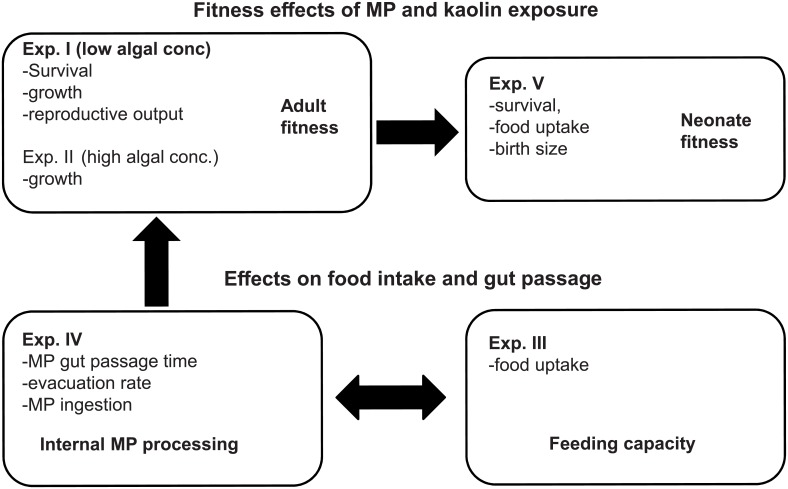
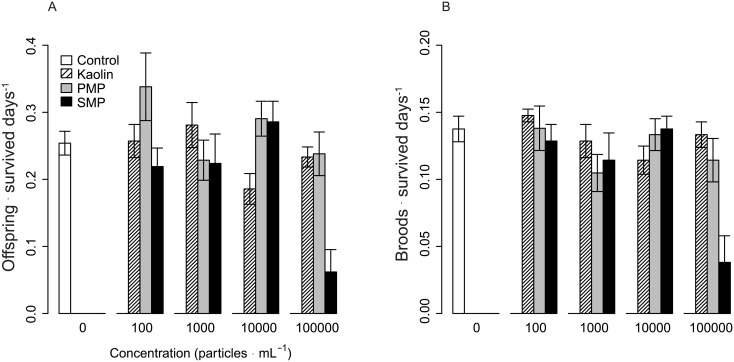
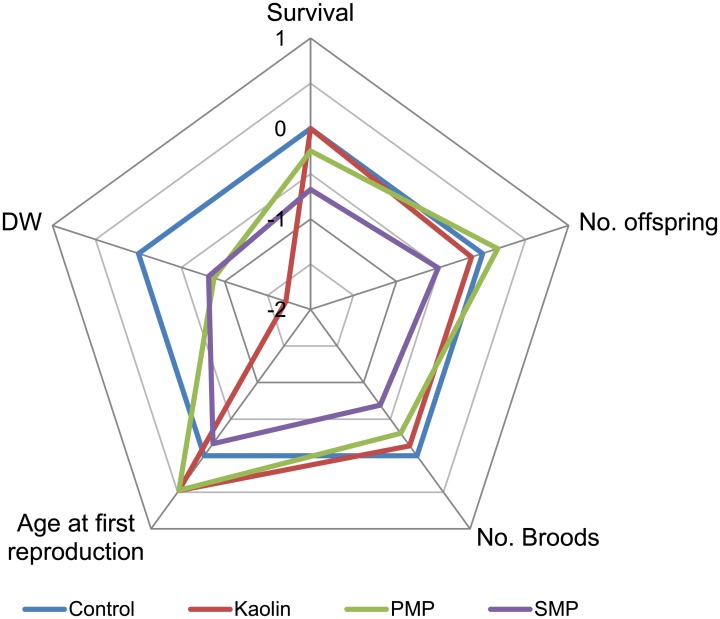
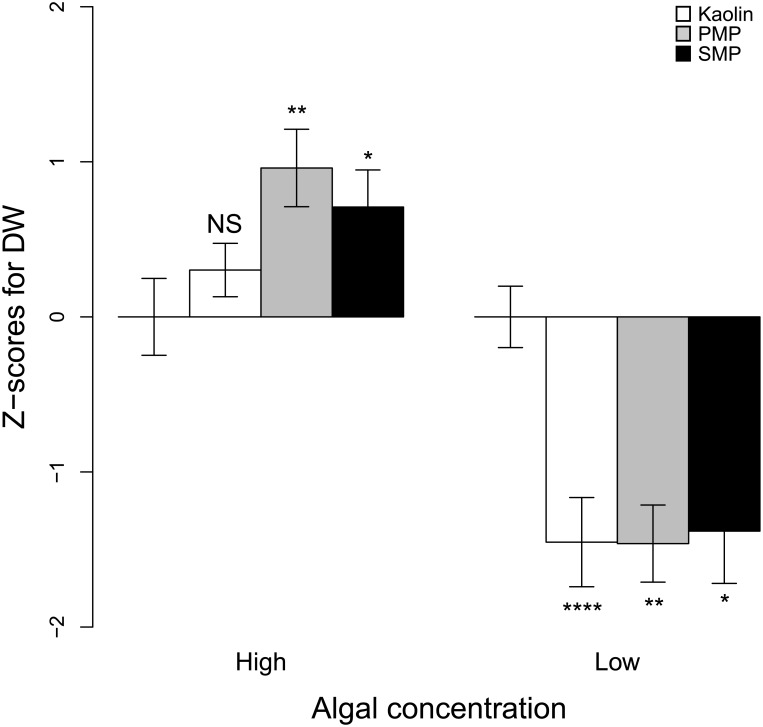
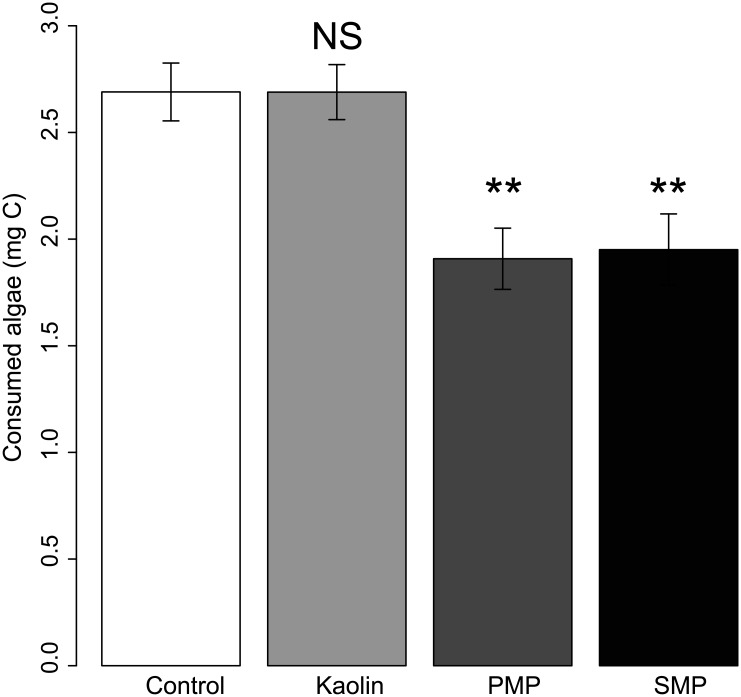
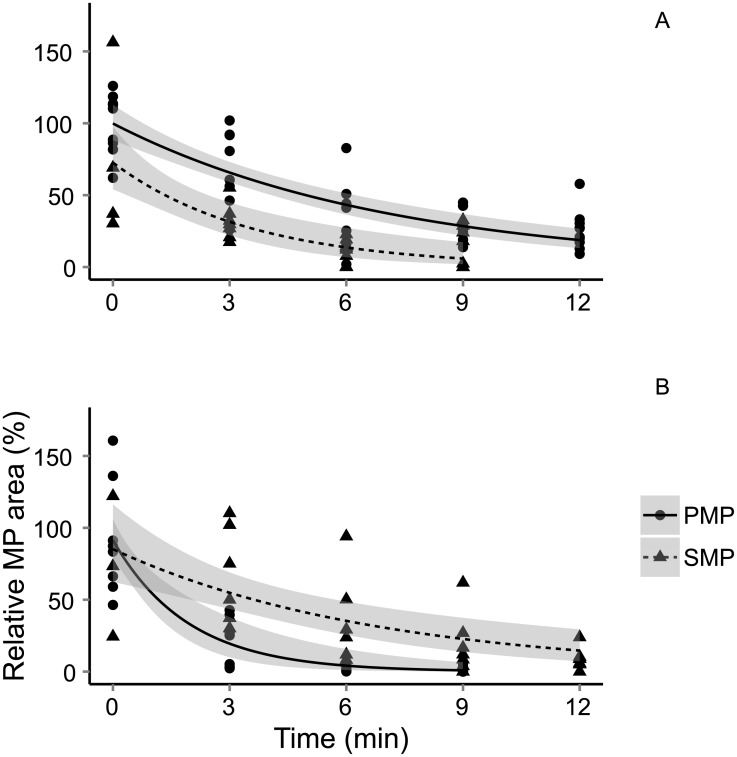
Concerns are being raised that microplastic pollution can have detrimental effects on the feeding of aquatic invertebrates, including zooplankton. Both small plastic fragments (microplastics, MPs) produced by degradation of larger plastic waste (secondary MPs; SMPs) and microscopic plastic spheres used in cosmetic products and industry (primary MPs; PMPs) are ubiquitously present in the environment. However, despite the fact that most environmental MPs consist of weathered plastic debris with irregular shape and broad size distribution, experimental studies of organism responses to MP exposure have largely used uniformly sized spherical PMPs. Therefore, effects observed for PMPs in such experiments may not be representative for MP-effects in situ. Moreover, invertebrate filter-feeders are generally well adapted to the presence of refractory material in seston, which questions the potential of MPs at environmentally relevant concentrations to measurably affect digestion in these organisms. Here, we compared responses to MPs (PMPs and SMPs) and naturally occurring particles (kaolin clay) using the cladoceran Daphnia magna as a model organism. We manipulated food levels (0.4 and 9 μg C mL-1) and MP or kaolin contribution to the feeding suspension (<1 to 74%) and evaluated effects of MPs and kaolin on food uptake, growth, reproductive capacity of the daphnids, and maternal effects on offspring survival and feeding. Exposure to SMPs caused elevated mortality, increased inter-brood period and decreased reproduction albeit only at high MP levels in the feeding suspension (74% by particle count). No such effects were observed in either PMP or kaolin treatments. In daphnids exposed to any particle type at the low algal concentration, individual growth decreased by ~15%. By contrast, positive growth response to all particle types was observed at the high algal concentration with 17%, 54% and 40% increase for kaolin, PMP and SMP, respectively. When test particles comprised 22% in the feeding suspension, both MP types decreased food intake by 30%, while kaolin had no effect. Moreover, SMPs were found to homoaggregate in a concentration-dependent manner, which resulted in a 77% decrease of the ingested SMPs compared to PMPs. To better understand MP-processing in the gut, gut passage time (GPT) and evacuation rate of MPs were also assayed. SMPs and PMPs differed in their effects on daphnids; moreover, the particle effects were dependent on the MP: algae ratio in the suspension. When the MP contribution to the particle abundance in the medium changed from 1 to 4%, GPT for daphnids exposed to SMPs increased 2-fold. Our results suggest that MPs and, in particular, SMPs, have a greater capacity to negatively affect feeding in D. magna compared to naturally occurring mineral particles of similar size. Moreover, grazer responses observed in experiments with PMPs cannot be extrapolated to the field where SMPs dominate, because of the greater effects caused by the latter.
Overview
The claims and statistics of this paper haven’t been checked yet.
Run the check — free, no account needed. It reads the open-access text and checks the sources it cites.
Integrity signals
Registry
Cites
Statistics
Figures
Verification
Claims the paper makes
The claims and statistics of this paper haven’t been checked yet.
Run the check — free, no account needed. It reads the open-access text and checks the sources it cites.
Claims other papers make about this one
Each is checked against this paper’s own text: does it say what the citing paper says it does?
The cited source says what the claim attributes to it.
In the citing paper
“The mixed effects of microplastics at the community scale, coupled with several reports of negative impacts of microplastics at the individual or population scale (Bosker et al., 2019;Liu et al., 2022;Ogonowski et al., 2016;Schür et al., 2020) point to an apparent mismatch in effects across scales.”
From No Effect of Realistic Concentrations of Polyester Microplastic Fibers on Freshwater Zooplankton Communities (2024) · cites this paper as Ogonowski et al., 2016
The cited source says what the claim attributes to it.
In the citing paper
“Microplastics have been shown to have a range of effects on freshwater Daphnia.For example, the uptake of microplastics decreased filtration capacity (Colomer et al., 2019), food intake (Ogonowski et al., 2016;Rist et al., 2017), growth (Castro-Castellon et al., 2022;Eltemsah & Bøhn, 2019), swimming velocity (Magester et al., 2021), and reproductive output (Huang et al., 2022;Jaikumar et al., 2019”
From No Effect of Realistic Concentrations of Polyester Microplastic Fibers on Freshwater Zooplankton Communities (2024) · cites this paper as Ogonowski et al., 2016
Self-check
Percentages, sums and reported differences re-computed from the paper’s own numbers.
The self-check needs the paper’s full text.
Citations
Cites
Microplastics in the marine environment
Andrady, A. L. (2011) · Marine Pollution Bulletin · doi:10.1016/j.marpolbul.2011.05.030 · Cited by 8,105
Microplastics as contaminants in the marine environment: A review
Cole, M., Lindeque, P., Halsband, C., & Galloway, T. S. (2011) · Marine Pollution Bulletin · doi:10.1016/j.marpolbul.2011.09.025 · Cited by 6,023
Eriksen, M., Lebreton, L. C. M., Carson, H. S., Thiel, M., Moore, C. J., Borerro, J. C., Galgani, F., Ryan, P. G., & Reisser, J. (2014) · PLoS ONE · doi:10.1371/journal.pone.0111913 · Cited by 4,710
The Physical Impacts of Microplastics on Marine Organisms: A Review
Wright, S. L., Thompson, R. C., & Galloway, T. S. (2013) · Environmental Pollution · doi:10.1016/j.envpol.2013.02.031 · Cited by 4,524
The pollution of the marine environment by plastic debris: a review.
Derraik, J. G. B. (2002) · Marine Pollution Bulletin · doi:10.1016/s0025-326x(02)00220-5 · Cited by 4,042
Microplastic ingestion by zooplankton
Cole, M., Lindeque, P., Fileman, E., Halsband, C., Goodhead, R., Moger, J., & Galloway, T. S. (2013) · Environmental Science & Technology · doi:10.1021/es400663f · Cited by 2,763
Zuur, A. F., Ieno, E. N., & Smith, G. M. (2007) · Statistics in the health sciences · doi:10.1007/978-0-387-45972-1 · Cited by 2,460
Microplastics in bivalves cultured for human consumption
Cauwenberghe, L. V., & Janssen, C. (2014) · Environmental Pollution · doi:10.1016/j.envpol.2014.06.010 · Cited by 2,105
Microplastic pollution in the surface waters of the Laurentian Great Lakes
Eriksen, M., Mason, S., Wilson, S., Box, C., Zellers, A., Edwards, W., Farley, H., & Amato, S. (2013) · Marine Pollution Bulletin · doi:10.1016/j.marpolbul.2013.10.007 · Cited by 1,937
Ingestion and transfer of microplastics in the planktonic food web
Setälä, O., Fleming-Lehtinen, V., & Lehtiniemi, M. (2014) · Environmental Pollution · doi:10.1016/j.envpol.2013.10.013 · Cited by 1,635
Research works printed but not linked: 1
- CW Blemishev, 1962, Superfluous feeding of marine herbivorous zooplankton, Rapp Procès-Verbaux La Réun Cons Perm Int Pour Explor Mer, 153, 108
Cited by
Sorted by citations
Interactions of microplastic debris throughout the marine ecosystem
Galloway, T. S., Cole, M., & Lewis, C. (2017) · Nature Ecology & Evolution · doi:10.1038/s41559-017-0116 · Cited by 1,955
Rummel, C. D., Jahnke, A., Gorokhova, E., Kühnel, D., & Schmitt-Jansen, M. (2017) · Environmental Science & Technology Letters · doi:10.1021/acs.estlett.7b00164 · Cited by 1,444
Self-citationde Sá, L. C., Oliveira, M., Ribeiro, F., Rocha, T. L., & Futter, M. N. (2018) · Science of The Total Environment · doi:10.1016/j.scitotenv.2018.07.207 · Cited by 1,316
Risk assessment of microplastic particles
Koelmans, A. A., Redondo‐Hasselerharm, P. E., Nor, N. H. M., de Ruijter, V. N., Mintenig, S. M., & Kooi, M. (2022) · Nature Reviews Materials · doi:10.1038/s41578-021-00411-y · Cited by 1,204
Sampling, isolating and identifying microplastics ingested by fish and invertebrates
Lusher, A., Welden, N. A. C., Sobral, P., & Cole, M. (2016) · Analytical Methods · doi:10.1039/c6ay02415g · Cited by 1,122
Qiao, R., Deng, Y., Zhang, S., Wolosker, M. B., Zhu, Q., Ren, H., & Zhang, Y. (2019) · Chemosphere · doi:10.1016/j.chemosphere.2019.07.065 · Cited by 946
Microplastics in aquatic environments: Occurrence, accumulation, and biological effects
Xu, S., Ma, J., Ji, R., Pan, K., & Miao, A. (2019) · The Science of The Total Environment · doi:10.1016/j.scitotenv.2019.134699 · Cited by 904
Ecotoxicological effects of microplastics on biota: a review
Anbumani, S., & Kakkar, P. (2018) · Environmental Science and Pollution Research · doi:10.1007/s11356-018-1999-x · Cited by 854
Microplastic in marine organism: Environmental and toxicological effects
Guzzetti, E., Sureda, A., Tejada, S., & Faggio, C. (2018) · Environmental Toxicology and Pharmacology · doi:10.1016/j.etap.2018.10.009 · Cited by 833
Ding, J., Zhang, S., Razanajatovo, R. M., Zou, H., & Zhu, W. (2018) · Environmental Pollution · doi:10.1016/j.envpol.2018.03.001 · Cited by 766
Microplastics: A Real Global Threat for Environment and Food Safety: A State of the Art Review
Ziani, K., Ioniță-Mîndrican, C.-B., Mititelu, M., Neacșu, S. M., Negrei, C., Moroșan, E., Drăgănescu, D., & Preda, O.-T. (2023) · Nutrients · doi:10.3390/nu15030617 · Cited by 829
Burns, E. E., & Boxall, A. B. A. (2018) · Environmental Toxicology and Chemistry · doi:10.1002/etc.4268 · Cited by 713
Bucci, K., Tulio, M., & Rochman, C. M. (2020) · Ecological Applications · doi:10.1002/eap.2044 · Cited by 658
A meta-analysis of the effects of exposure to microplastics on fish and aquatic invertebrates
Foley, C. J., Feiner, Z. S., Malinich, T. D., & Höök, T. O. (2018) · The Science of The Total Environment · doi:10.1016/j.scitotenv.2018.03.046 · Cited by 707
Using mussel as a global bioindicator of coastal microplastic pollution
Li, J., Lusher, A., Rotchell, J. M., Deudero, S., Turra, A., Bråte, I. L. N., Sun, C., Hossain, M. S., Li, Q., Kolandhasamy, P., et al. (2018) · Environmental Pollution · doi:10.1016/j.envpol.2018.10.032 · Cited by 637
Histopathological and molecular effects of microplastics in Eisenia andrei Bouché
Rodríguez-Seijo, A., Lourenço, J., Rocha‐Santos, T., da Costa, J. P., Duarte, A. C., Vala, H., & Pereira, R. (2016) · Environmental Pollution · doi:10.1016/j.envpol.2016.09.092 · Cited by 615
Jahnke, A., Arp, H. P. H., Escher, B. I., Gewert, B., Gorokhova, E., Kühnel, D., Ogonowski, M., Potthoff, A., Rummel, C., Schmitt-Jansen, M., et al. (2017) · Environmental Science & Technology Letters · doi:10.1021/acs.estlett.7b00008 · Cited by 580
Self-citationRist, S., Baun, A., & Hartmann, N. B. (2017) · Environmental Pollution · doi:10.1016/j.envpol.2017.05.048 · Cited by 571
Micro- and nanoplastic toxicity on aquatic life: Determining factors
Kögel, T., Bjorøy, Ø., Toto, B., Bienfait, A. M., & Sanden, M. (2020) · Science of The Total Environment · doi:10.1016/j.scitotenv.2019.136050 · Cited by 518
Environmental occurrences, fate, and impacts of microplastics
Wu, P., Huang, J., Zheng, Y., Yang, Y., Zhang, Y., He, F., Chen, H., Quan, G., Yan, J., Li, T., et al. (2019) · Ecotoxicology and Environmental Safety · doi:10.1016/j.ecoenv.2019.109612 · Cited by 544
Reducing environmental plastic pollution by designing polymer materials for managed end-of-life
Law, K. L., & Narayan, R. (2021) · Nature Reviews Materials · doi:10.1038/s41578-021-00382-0 · Cited by 499
Zebrafish: An emerging model to study microplastic and nanoplastic toxicity
Bhagat, J., Zang, L., Nishimura, N., & Shimada, Y. (2020) · The Science of The Total Environment · doi:10.1016/j.scitotenv.2020.138707 · Cited by 484
Microplastic ingestion in fish larvae in the western English Channel
Steer, M., Cole, M., Thompson, R. C., & Lindeque, P. K. (2017) · Environmental Pollution · doi:10.1016/j.envpol.2017.03.062 · Cited by 484
Sangkham, S., Faikhaw, O., Munkong, N., Sakunkoo, P., Arunlertaree, C., Chavali, M., Mousazadeh, M., & Tiwari, A. (2022) · Marine Pollution Bulletin · doi:10.1016/j.marpolbul.2022.113832 · Cited by 465
Ziajahromi, S., Kumar, A., Neale, P. A., & Leusch, F. D. L. (2017) · Environmental Science & Technology · doi:10.1021/acs.est.7b03574 · Cited by 470
Feeding type and development drive the ingestion of microplastics by freshwater invertebrates
Scherer, C., Brennholt, N., Reifferscheid, G., & Wagner, M. (2017) · Scientific Reports · doi:10.1038/s41598-017-17191-7 · Cited by 448
Microplastics Are Contaminants of Emerging Concern in Freshwater Environments: An Overview
Lambert, S., & Wagner, M. (2017) · The handbook of environmental chemistry · doi:10.1007/978-3-319-61615-5_1 · Cited by 448
Microplastic ingestion by Daphnia magna and its enhancement on algal growth
Canniff, P. M., & Hoang, T. C. (2018) · Science of The Total Environment · doi:10.1016/j.scitotenv.2018.03.176 · Cited by 411
Choi, J. S., Jung, Y.-J., Hong, N.-H., Hong, S. H., & Park, J. (2018) · Marine Pollution Bulletin · doi:10.1016/j.marpolbul.2018.02.039 · Cited by 400
Zimmermann, L., Göttlich, S., Oehlmann, J., Wagner, M., & Völker, C. (2020) · Environmental Pollution · doi:10.1016/j.envpol.2020.115392 · Cited by 380
Microplastics and the gut microbiome: How chronically exposed species may suffer from gut dysbiosis
Fackelmann, G., & Sommer, S. (2019) · Marine Pollution Bulletin · doi:10.1016/j.marpolbul.2019.04.030 · Cited by 399
Size matters more than shape: Ingestion of primary and secondary microplastics by small predators
Lehtiniemi, M., Hartikainen, S., Näkki, P., Engström‐Öst, J., Koistinen, A. P., & Setälä, O. (2018) · Food Webs · doi:10.1016/j.fooweb.2018.e00097 · Cited by 374
Impacts of plastic products used in daily life on the environment and human health: What is known?
Rodrigues, M., Abrantes, N., Gonçalves, F. J. M., Nogueira, H. I. S., Marques, J. C., & Gonçalves, A. M. M. (2019) · Environmental Toxicology and Pharmacology · doi:10.1016/j.etap.2019.103239 · Cited by 356
Weathering plastics as a planetary boundary threat: exposure, fate, and hazards
Arp, H. P. H., Kühnel, D., Rummel, C., MacLeod, M., Potthoff, A., Reichelt, S., Rojo-Nieto, E., Schmitt-Jansen, M., Sonnenberg, J., Toorman, E., et al. (2021) · Environmental Science & Technology · doi:10.1021/acs.est.1c01512 · Cited by 322
Ziajahromi, S., Kumar, A., Neale, P. A., & Leusch, F. D. L. (2018) · Environmental Pollution · doi:10.1016/j.envpol.2018.01.094 · Cited by 325
Kumar, R., Sharma, P., Manna, C., & Jain, M. (2021) · The Science of The Total Environment · doi:10.1016/j.scitotenv.2021.146695 · Cited by 336
Mateos-Cárdenas, A., Scott, D. T., Seitmaganbetova, G., van Pelt Frank, N. A. M., O’Halloran, J., & Jansen, M. A. K. (2019) · The Science of The Total Environment · doi:10.1016/j.scitotenv.2019.06.359 · Cited by 313
Liu, Z., Yu, P., Cai, M., Wu, D., Zhang, M., Huang, Y., & Zhao, Y. (2018) · Chemosphere · doi:10.1016/j.chemosphere.2018.09.176 · Cited by 302
Nanoplastics impaired oyster free living stages, gametes and embryos
Tallec, K., Huvet, A., Poi, C. D., González-Fernández, C., Christophe Lambert, B., Petton, B., Goïc, N. L., Berchel, M., Soudant, P., & Paul-Pont, I. (2018) · Environmental Pollution · doi:10.1016/j.envpol.2018.08.020 · Cited by 303
Trophic transfer of microplastics in aquatic ecosystems: Identifying critical research needs
Au, S. Y., Lee, C. M., Weinstein, J. E., van den Hurk, P., & Klaine, S. J. (2017) · Integrated Environmental Assessment and Management · doi:10.1002/ieam.1907 · Cited by 298
Microplastics in the Marine Environment: Sources, Fates, Impacts and Microbial Degradation
Yang, H., Chen, G., & Wang, J. (2021) · Toxics · doi:10.3390/toxics9020041 · Cited by 302
Paul-Pont, I., Tallec, K., González-Fernández, C., Christophe Lambert, B., Vincent, D., Mazurais, D., Zambonino‐Infante, J., Brotons, G., Lagarde, F., Fabioux, C., et al. (2018) · Frontiers in Marine Science · doi:10.3389/fmars.2018.00252 · Cited by 286
Linking effects of microplastics to ecological impacts in marine environments
Khalid, N., Aqeel, M. A., Noman, A., Hashem, M., Mostafa, Y. S., Alhaithloul, H. A. S., & Alghanem, S. M. S. (2020) · Chemosphere · doi:10.1016/j.chemosphere.2020.128541 · Cited by 281
Saavedra, J., Stoll, S., & Slaveykova, V. I. (2019) · Environmental Pollution · doi:10.1016/j.envpol.2019.05.135 · Cited by 269
Feasting on microplastics: ingestion by and effects on marine organisms
Egbeocha, C., Malek, S., Emenike, C. U., & Milow, P. (2018) · Aquatic Biology · doi:10.3354/ab00701 · Cited by 284
Occurrence and ecological impact of microplastics in aquaculture ecosystems
Chen, G., Li, Y., & Wang, J. (2021) · Chemosphere · doi:10.1016/j.chemosphere.2021.129989 · Cited by 274
Effects of microplastics and nanoplastics on marine environment and human health
Sana, S. S., Dogiparthi, L. K., Gangadhar, L., Chakravorty, A., & Abhishek, N. (2020) · Environmental Science and Pollution Research · doi:10.1007/s11356-020-10573-x · Cited by 275
The impact of microplastics on marine environment: A review
Gola, D., Tyagi, P. K., Arya, A., Chauhan, N. M., Agarwal, M., Singh, S. K., & Gola, S. (2021) · Environmental Nanotechnology Monitoring & Management · doi:10.1016/j.enmm.2021.100552 · Cited by 281
Martins, A., & Guilhermino, L. M. (2018) · The Science of The Total Environment · doi:10.1016/j.scitotenv.2018.03.054 · Cited by 243
Detrimental effects of microplastic exposure on normal and asthmatic pulmonary physiology
Lu, K., Lai, K. P., Stoeger, T., Ji, S., Lin, Z., Lin, X., Chan, T., Fang, J. K., Lo, H., Gao, L., et al. (2021) · Journal of Hazardous Materials · doi:10.1016/j.jhazmat.2021.126069 · Cited by 247
Microplastic sampling techniques in freshwaters and sediments: a review
Razeghi, N., Hamidian, A. H., Wu, C., Zhang, Y., & Yang, M. (2021) · Environmental Chemistry Letters · doi:10.1007/s10311-021-01227-6 · Cited by 243
Jaikumar, G., Brun, N. R., Vijver, M. G., & Bosker, T. (2019) · Environmental Pollution · doi:10.1016/j.envpol.2019.03.085 · Cited by 238
Weber, A., Scherer, C., Brennholt, N., Reifferscheid, G., & Wagner, M. (2018) · Environmental Pollution · doi:10.1016/j.envpol.2017.11.014 · Cited by 233
Towards an ecology of soil microplastics
Helmberger, M. S., Tiemann, L. K., & Grieshop, M. J. (2019) · Functional Ecology · doi:10.1111/1365-2435.13495 · Cited by 235
Learning from natural sediments to tackle microplastics challenges: A multidisciplinary perspective
Waldschläger, K., Brückner, M., Almroth, B. C., Hackney, C., Adyel, T. M., Alimi, O. S., Belontz, S. L., Cowger, W., Doyle, D., Gray, A. B., et al. (2022) · Earth-Science Reviews · doi:10.1016/j.earscirev.2022.104021 · Cited by 239
Schrank, I., Trotter, B., Dummert, J., Scholz‐Böttcher, B. M., Löder, M. G. J., & Laforsch, C. (2019) · Environmental Pollution · doi:10.1016/j.envpol.2019.113233 · Cited by 228
Straub, S., Hirsch, P. E., & Burkhardt-Holm, P. (2017) · International Journal of Environmental Research and Public Health · doi:10.3390/ijerph14070774 · Cited by 209
Merga, L. B., Redondo‐Hasselerharm, P. E., den Brink, P. J. V., & Koelmans, A. A. (2020) · The Science of The Total Environment · doi:10.1016/j.scitotenv.2020.140527 · Cited by 225
Size-dependent chronic toxicity of fragmented polyethylene microplastics to Daphnia magna
An, D., Na, J., Song, J., & Jung, J. (2021) · Chemosphere · doi:10.1016/j.chemosphere.2021.129591 · Cited by 204
Gouin, T. (2020) · Environmental Toxicology and Chemistry · doi:10.1002/etc.4718 · Cited by 208
Microplastic materials in the environment: Problem and strategical solutions
Tian, W., Song, P., Zhang, H., Duan, X., Wei, Y., Wang, H., & Wang, S. (2022) · Progress in Materials Science · doi:10.1016/j.pmatsci.2022.101035 · Cited by 207
Schür, C., Rist, S., Baun, A., Mayer, P., Hartmann, N. B., & Wagner, M. (2019) · Environmental Toxicology and Chemistry · doi:10.1002/etc.4436 · Cited by 212
Self-citationToxicological effects of microplastics and heavy metals on the Daphnia magna
Yuan, W., Zhou, Y., Chen, Y., Liu, X., & Wang, J. (2020) · The Science of The Total Environment · doi:10.1016/j.scitotenv.2020.141254 · Cited by 202
Dawson, A. L., Huston, W. M., Kawaguchi, S., King, C. K., Cropp, R., Wild, S., Eisenmann, P., Townsend, K. A., & Nash, S. B. (2018) · Environmental Science & Technology · doi:10.1021/acs.est.7b05759 · Cited by 208
Acute and chronic effects of polystyrene microplastics on juvenile and adult Daphnia magna
Eltemsah, Y. S., & Bøhn, T. (2019) · Environmental Pollution · doi:10.1016/j.envpol.2019.07.087 · Cited by 195
Polystyrene microplastics ingestion induced behavioral effects to the cladoceran Daphnia magna
De Felice, B., Sabatini, V., Antenucci, S., Gattoni, G., Santo, N., Bacchetta, R., Ortenzi, M. A., & Parolini, M. (2019) · Chemosphere · doi:10.1016/j.chemosphere.2019.05.115 · Cited by 190
LeMoine, C. M. R., Kelleher, B. M., Lagarde, R., Northam, C., Elebute, O. O., & Cassone, B. J. (2018) · Environmental Pollution · doi:10.1016/j.envpol.2018.08.084 · Cited by 199
Nano- and microplastics affect the composition of freshwater benthic communities in the long term
Redondo‐Hasselerharm, P. E., Gort, G., Peeters, E. T. H. M., & Koelmans, A. A. (2020) · Science Advances · doi:10.1126/sciadv.aay4054 · Cited by 192
Shape, size, and polymer dependent effects of microplastics on Daphnia magna
Schwarzer, M., Brehm, J., Vollmer, M., Jasinski, J., Xu, C., Zainuddin, S., Fröhlich, T., Schott, M., Greiner, A., Scheibel, T., et al. (2021) · Journal of Hazardous Materials · doi:10.1016/j.jhazmat.2021.128136 · Cited by 190
Silva, C. J. M., Silva, A. L. P., Gravato, C., & Pestana, J. L. T. (2019) · The Science of The Total Environment · doi:10.1016/j.scitotenv.2019.04.017 · Cited by 177
Kokalj, A. J., Kunej, U., & Skalar, T. (2018) · Chemosphere · doi:10.1016/j.chemosphere.2018.05.172 · Cited by 174
Interactions of Microplastics with Freshwater Biota
Scherer, C., Weber, A., Lambert, S., & Wagner, M. (2017) · The handbook of environmental chemistry · doi:10.1007/978-3-319-61615-5_8 · Cited by 181
Advancing the quality of environmental microplastic research
Connors, K. A., Dyer, S. D., & Belanger, S. E. (2017) · Environmental Toxicology and Chemistry · doi:10.1002/etc.3829 · Cited by 172
Rozman, U., & Kalčíková, G. (2021) · Journal of Hazardous Materials · doi:10.1016/j.jhazmat.2021.127529 · Cited by 175
Al-Jaibachi, R., & Callaghan, A. (2018) · PeerJ · doi:10.7717/peerj.4601 · Cited by 175
Kukkola, A. T., Krause, S., Lynch, I., Smith, G. H. S., & Nel, H. (2021) · Environment International · doi:10.1016/j.envint.2021.106504 · Cited by 171
Micro/nanoplastics effects on organisms: A review focusing on ‘dose’
Agathokleous, E., Iavicoli, I., Barceló, ., & Calabrese, E. J. (2021) · Journal of Hazardous Materials · doi:10.1016/j.jhazmat.2021.126084 · Cited by 164
Pacheco, A., Martins, A., & Guilhermino, L. M. (2018) · The Science of The Total Environment · doi:10.1016/j.scitotenv.2018.02.081 · Cited by 165
Wang, Y., Mao, Z., Zhang, M., Ding, G., Sun, J., Du, M., Liu, Q., Cong, Y., Jin, F., Zhang, W., et al. (2019) · Chemosphere · doi:10.1016/j.chemosphere.2019.05.267 · Cited by 158
Rozman, U., Turk, T., Skalar, T., Zupančič, M., Korošin, N. Č., Marinšek, M., Olivero‐Verbel, J., & Kalčíková, G. (2021) · The Science of The Total Environment · doi:10.1016/j.scitotenv.2021.145576 · Cited by 159
Microplastics but not natural particles induce multigenerational effects in Daphnia magna
Schür, C., Zipp, S., Thalau, T., & Wagner, M. (2020) · Environmental Pollution · doi:10.1016/j.envpol.2019.113904 · Cited by 152
Self-citationRetention and characteristics of microplastics in natural zooplankton taxa from the East China Sea
Sun, X., Liu, T., Zhu, M., Liang, J., Zhao, Y., & Zhang, B. (2018) · The Science of The Total Environment · doi:10.1016/j.scitotenv.2018.05.308 · Cited by 159
Kurniawan, T. A., Haider, A., Ahmad, H. M., Mohyuddin, A., Aslam, H. M. U., Nadeem, S., Javed, M., Othman, M. H. D., Goh, H. H., & Chew, K. W. (2023) · Chemosphere · doi:10.1016/j.chemosphere.2023.138367 · Cited by 149
RetractedWhat we know and what we think we know about microplastic effects – A critical perspective
Ogonowski, M., Gerdes, Z., & Gorokhova, E. (2017) · Current Opinion in Environmental Science & Health · doi:10.1016/j.coesh.2017.09.001 · Cited by 157
Self-citationHumic acid alleviates the toxicity of polystyrene nanoplastic particles to Daphnia magna
Fadare, O. O., Wan, B., Guo, L., Yan, X., Qin, W., & Yang, Y. (2019) · Environmental Science Nano · doi:10.1039/c8en01457d · Cited by 145
Zhang, Q., He, Y., Cheng, R., Li, Q., Qian, Z., & Lin, X. (2022) · Environmental Science and Pollution Research · doi:10.1007/s11356-022-19745-3 · Cited by 155
Peez, N., Janiska, M.-C., & Imhof, W. (2018) · Analytical and Bioanalytical Chemistry · doi:10.1007/s00216-018-1510-z · Cited by 144
Song, X., Zhuang, W., Cui, H.-Z., Liu, M., Gao, T., Li, A., & Gao, Z. (2022) · The Science of The Total Environment · doi:10.1016/j.scitotenv.2022.156068 · Cited by 146
Ecological risks in a ‘plastic’ world: A threat to biological diversity?
Agathokleous, E., Iavicoli, I., Barceló, ., & Calabrese, E. J. (2021) · Journal of Hazardous Materials · doi:10.1016/j.jhazmat.2021.126035 · Cited by 148
Long-term exposure to nanoplastics reduces life-time in Daphnia magna
Kelpsiene, E., Torstensson, O., Ekvall, M. T., Hansson, L., & Cedervall, T. (2020) · Scientific Reports · doi:10.1038/s41598-020-63028-1 · Cited by 141
Trevisan, R., Ranasinghe, P., Jayasundara, N., & Giulio, R. T. D. (2022) · Toxics · doi:10.3390/toxics10060326 · Cited by 144
O’Connor, J., Mahon, A. M., Ramsperger, A. F. R. M., Trotter, B., Redondo‐Hasselerharm, P. E., Koelmans, A. A., Lally, H., & Murphy, S. (2019) · Global Challenges · doi:10.1002/gch2.201800118 · Cited by 144
Aquatic Ecotoxicity of Microplastics and Nanoplastics: Lessons Learned from Engineered Nanomaterials
Rist, S., & Hartmann, N. B. (2017) · The handbook of environmental chemistry · doi:10.1007/978-3-319-61615-5_2 · Cited by 139
Napper, I. E., & Thompson, R. C. (2023) · Annual Review of Environment and Resources · doi:10.1146/annurev-environ-112522-072642 · Cited by 145
Adeogun, A. O., Ibor, O. R., Khan, E. A., Chukwuka, A. V., Omogbemi, E. D., & Arukwe, A. (2020) · Environmental Science and Pollution Research · doi:10.1007/s11356-020-09031-5 · Cited by 134
Na, J., Song, J., Achar, J., & Jung, J.-H. (2021) · Journal of Hazardous Materials · doi:10.1016/j.jhazmat.2020.123845 · Cited by 101
Gouin, T., Becker, R. A., Collot, A., Davis, J. W., Howard, B. E., Inawaka, K., Lampi, M. A., Ramón, B. S., Shi, J., & Hopp, P. W. (2019) · Environmental Toxicology and Chemistry · doi:10.1002/etc.4529 · Cited by 127
Bioaccumulation and reproductive effects of fluorescent microplastics in medaka fish
Assas, M. A., Qiu, X., Chen, K., Ogawa, H., Xu, H., Shimasaki, Y., & Oshima, Y. (2020) · Marine Pollution Bulletin · doi:10.1016/j.marpolbul.2020.111446 · Cited by 129
Xia, B., Sui, Q., Du, Y., Wang, L., Jing, J., Zhu, L., Zhao, X., Sun, X., Booth, A. M., Chen, B., et al. (2021) · Journal of Hazardous Materials · doi:10.1016/j.jhazmat.2021.127421 · Cited by 122
Jaikumar, G., Baas, J., Brun, N. R., Vijver, M. G., & Bosker, T. (2018) · Environmental Pollution · doi:10.1016/j.envpol.2018.04.069 · Cited by 119
Metadata
- Authors
- Ogonowski, M., Schür, C., Jarsén, Å., & Gorokhova, E.
- Affiliations
- Stockholm University (SE)
- Corresponding author
- Ogonowski, Martin
- Venue
- PLOS ONE
- Publisher
- Public Library of Science (PLoS)
- Published
- 2016-05-13
- Volume
- 11
- Issue
- 5
- Pages
- e0155063
- ISSN
- 1932-6203 (ISSN-L)
- PMC
- PMC4866784
- OpenAlex
- W2368279972
- Cited by
- 480
- References
- 65
- Citations by year
- 2026: 28 · 2025: 51 · 2024: 54 · 2023: 69 · 2022: 56 · 2021: 63 · 2020: 56 · 2019: 49 · 2018: 33 · 2017: 19 · 2016: 2
- FWCI
- 18.75
- Type
- journal article
- Language
- en
- Open access
- gold
- doi.org
- Licence
- Locations
- PLoS ONE (publishedVersion, cc-by)
- PubMed Central (publishedVersion, cc-by)
- PubMed (publishedVersion)
- RePEc: Research Papers in Economics (submittedVersion)
- DOAJ (DOAJ: Directory of Open Access Journals) (submittedVersion, cc-by-sa)
- Figshare (submittedVersion, cc-by)
- Funders
- Svenska Forskningsrådet Formas (216-2013-1010)
- Topics
- Physical Sciences › Environmental Science › Pollution › Microplastics and Plastic Pollution
- Physical Sciences › Environmental Science › Health, Toxicology and Mutagenesis › Environmental Toxicology and Ecotoxicology
- Physical Sciences › Environmental Science › Pollution › Pharmaceutical and Antibiotic Environmental Impacts
- Keywords
- microplastics, primary microplastics, secondary microplastics, kaolin clay, zooplankton grazing, dietary intake, particle aggregation, gut transit time, maternal effects, reproduction, growth, mortality, microplastic pollution, particle size and shape, Daphnia magna, filter feeders, algal concentration
- MeSH terms
- Animals, Daphnia, Digestive System, Feeding Behavior, Human Activities, Kaolin, Particle Size, Reproduction, Water Pollutants, Chemical, Survival Analysis
About these checks
Registry, retraction, Cites and statistics results are computed, not judged, with one exception: a printed reference that no index lists is read once by a model before it counts as a citation error. Claims are extracted by a model and kept only when their quote appears verbatim in the text; each cited source is then checked, with a model’s help, for whether it says what the claim relies on. Those verdicts can be wrong — read the claim’s quote and the cited source before relying on one.
Statistics and arithmetic are recomputed, not judged.
Confidence bands are shown only for fields calibrated on our annotated test set. None is calibrated yet, so no band is shown.
What counts as a claim ›How we measure confidence ›How we check this ›
Are you an author, or do you see a problem with this page? Request a review
