

High-Resolution Phenotypic Profiling Defines Genes Essential for Mycobacterial Growth and Cholesterol Catabolism
Open accessThe DOI matches its Crossref record; 47 of the 47 references it cites were found in a registry or an index.
Abstract
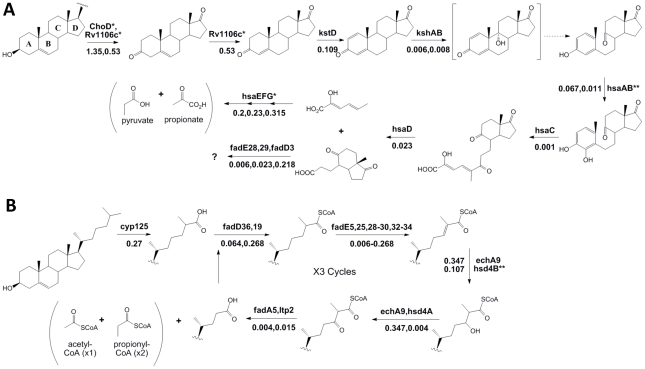
The pathways that comprise cellular metabolism are highly interconnected, and alterations in individual enzymes can have far-reaching effects. As a result, global profiling methods that measure gene expression are of limited value in predicting how the loss of an individual function will affect the cell. In this work, we employed a new method of global phenotypic profiling to directly define the genes required for the growth of Mycobacterium tuberculosis. A combination of high-density mutagenesis and deep-sequencing was used to characterize the composition of complex mutant libraries exposed to different conditions. This allowed the unambiguous identification of the genes that are essential for Mtb to grow in vitro, and proved to be a significant improvement over previous approaches. To further explore functions that are required for persistence in the host, we defined the pathways necessary for the utilization of cholesterol, a critical carbon source during infection. Few of the genes we identified had previously been implicated in this adaptation by transcriptional profiling, and only a fraction were encoded in the chromosomal region known to encode sterol catabolic functions. These genes comprise an unexpectedly large percentage of those previously shown to be required for bacterial growth in mouse tissue. Thus, this single nutritional change accounts for a significant fraction of the adaption to the host. This work provides the most comprehensive genetic characterization of a sterol catabolic pathway to date, suggests putative roles for uncharacterized virulence genes, and precisely maps genes encoding potential drug targets.
Overview
The claims and statistics of this paper haven’t been checked yet.
Free: it reads the open-access text and checks the first 5 claims that cite a source we can check. Create a free account to check every claim.
Integrity signals
Registry
Cites
Statistics
Figures


Verification
Claims the paper makes
The claims and statistics of this paper haven’t been checked yet.
Free: it reads the open-access text and checks the first 5 claims that cite a source we can check. Create a free account to check every claim.
Claims other papers make about this one
Each is checked against this paper’s own text: does it say what the citing paper says it does?
The check wasn’t confident either way, so it gives no verdict — never disputed.
In the citing paper
“A recent transposon-site hybridization (TraSH) screen in M. tuberculosis suggested that SDH1 but not SDH2 was essential for growth under aerobic conditions on standard medium (26).”
From Energetics of Respiration and Oxidative Phosphorylation in Mycobacteria (2014) · cites this paper as [26]
Experimental — accuracy not yet measuredThe check wasn’t confident either way, so it gives no verdict — never disputed.
In the citing paper
“Several studies have suggested that ndh is essential for growth of M. tuberculosis (12, 26, 28, 29) (Table 1).”
From Energetics of Respiration and Oxidative Phosphorylation in Mycobacteria (2014) · cites this paper as [26]
Experimental — accuracy not yet measured
Self-check
Percentages, sums and reported differences re-computed from the paper’s own numbers.
The self-check needs the paper’s full text.
Citations
Cites
Deciphering the biology of Mycobacterium tuberculosis from the complete genome sequence
Cole, S. T., Brosch, R., Parkhill, J., Garnier, T., Churcher, C., Harris, D., Gordon, S. V., Eiglmeier, K., Gas, S., Barry, C. E., et al. (1998) · Nature · doi:10.1038/31159 · Cited by 7,847
SOAP: Short oligonucleotide alignment program
Li, R., Li, Y., Kristiansen, K., & Wang, J. (2008) · Bioinformatics · doi:10.1093/bioinformatics/btn025 · Cited by 3,597 · cited 1×
“11 alignment software [48] at default settings (2 mismatches allowed per read).”
BackgroundGenes required for mycobacterial growth defined by high density mutagenesis
Sassetti, C. M., Boyd, D. H., & Rubin, E. J. (2003) · Molecular Microbiology · doi:10.1046/j.1365-2958.2003.03425.x · Cited by 2,544 · cited 3×
“About 15% of the Mtb genome, or 614 genes, were previously predicted to be required for optimal growth in vitro using microarray hybridization to map insertions sites [6].”
BackgroundSelf-citationMcKinney, J. D., zu Bentrup, K. H., Muñoz-Elías, E. J., Miczak, A., Chen, B., Chan, W.-T., Swenson, D., Sacchettini, J. C., Jacobs, W. R., & Russell, D. G. (2000) · Nature · doi:10.1038/35021074 · Cited by 1,360 · cited 1×
“A few genes that we found to contain very significant gaps in transposon coverage have been successfully deleted, and produce strains that grow normally under similar conditions to those used in our study [33,34,35,36,37,38].”
Genetic requirements for mycobacterial survival during infection
Sassetti, C. M., & Rubin, E. J. (2003) · Proceedings of the National Academy of Sciences · doi:10.1073/pnas.2134250100 · Cited by 1,354 · cited 2×
“When we compared these data to previous genome-wide screens for mutants attenuated in mouse models of infection [46] we found that a full ten percent of genes specifically required for bacterial growth in vivo are also required for the utilization of cholesterol in vitro (Table S3).”
MethodResultSelf-citationComprehensive transposon mutant library of Pseudomonas aeruginosa
Jacobs, M. A., Alwood, A., Thaipisuttikul, I., Spencer, D., Haugen, E., Ernst, S., Will, O., Kaul, R., Raymond, C., Levy, R., et al. (2003) · Proceedings of the National Academy of Sciences · doi:10.1073/pnas.2036282100 · Cited by 1,126 · cited 1×
“[5,6] or conventional sequencing [7,8,9] to map the sites of transposon insertions in large libraries of random mutants and identify regions of the chromosome that were unable to sustain mutation.”
BackgroundMycobacterial persistence requires the utilization of host cholesterol
Pandey, A. K., & Sassetti, C. M. (2008) · Proceedings of the National Academy of Sciences · doi:10.1073/pnas.0711159105 · Cited by 1,064 · cited 5×
“Disruption of Mce4 function by deleting an essential transmembrane component has been shown to cause specific defects in cholesterol uptake and growth in this carbon source [14].”
BackgroundMethodResultInfluentialSelf-citationvan Opijnen, T., Bodi, K. L., & Camilli, A. (2009) · Nature Methods · doi:10.1038/nmeth.1377 · Cited by 933
Global Transposon Mutagenesis and a Minimal Mycoplasma Genome
Hutchison, C. A., Peterson, S. N., Gill, S. R., Cline, R. T., White, O., Fraser, C. M., Smith, H. O., & Craig Venter, J. (1999) · Science · doi:10.1126/science.286.5447.2165 · Cited by 932
Muñoz-Elías, E. J., & McKinney, J. D. (2005) · Nature Medicine · doi:10.1038/nm1252 · Cited by 756 · cited 1×
“tuberculosis H37Rv encodes a multifunctional protein with both isocitrate lyase and methylisocitrate lyase activity, which is required for both pathways [25,26].”
Background
Cited by
Items 301–400 of 1,001
Application of microbial 3-ketosteroid Δ1-dehydrogenases in biotechnology
Rohman, A., & Dijkstra, B. W. (2021) · Biotechnology Advances · doi:10.1016/j.biotechadv.2021.107751 · Cited by 40
Tassinari, M., Doan, T., Bellinzoni, M., Chabalier, M., Assaya, M. B., Martínez, M., Gaday, Q., Alzari, P. M., Cascalès, E., Fronzes, R., et al. (2022) · mBio · doi:10.1128/mbio.00134-22 · Cited by 43
Pyrazinoic Acid Inhibits a Bifunctional Enzyme in Mycobacterium tuberculosis
Njire, M. M., Wang, N., Wang, B., Tan, Y., Cai, X., Liu, Y., Mugweru, J., Guo, J. T., Hameed, H. M. A., Tan, S., et al. (2017) · Antimicrobial Agents and Chemotherapy · doi:10.1128/aac.00070-17 · Cited by 40
“genome sequencing (34, 35), suggesting the essentiality of Rv2783c for M.”
BackgroundBrown, K. L., Wilburn, K. M., Montague, C. R., Grigg, J. C., Sanz, O., Pérez‐Herrán, E., Barros, D., Ballell, L., VanderVen, B. C., & Eltis, L. D. (2023) · Antimicrobial Agents and Chemotherapy · doi:10.1128/aac.01294-22 · Cited by 39
Catalytic Asymmetric Total Synthesis of (+)-Caprazol
Gopinath, P., Wang, L., Abe, H., Ravi, G., Masuda, T., Watanabe, T., & Shibasaki, M. (2014) · Organic Letters · doi:10.1021/ol501397b · Cited by 39
Lv, Y., Kandale, A., Wun, S. J., McGeary, R. P., Williams, S. J., Kobe, B., Sieber, V., Schembri, M. A., Schenk, G., & Guddat, L. W. (2016) · FEBS Journal · doi:10.1111/febs.13672 · Cited by 39
Ho, N. A. T., Dawes, S. S., Crowe, A. M., Casabon, I., Gao, C., Kendall, S. L., Baker, E. N., Eltis, L. D., & Lott, J. S. (2016) · Journal of Biological Chemistry · doi:10.1074/jbc.m115.707760 · Cited by 55
MAGenTA: a Galaxy implemented tool for complete Tn-Seq analysis and data visualization
McCoy, K. M., Antonio, M. L., & van Opijnen, T. (2017) · Bioinformatics · doi:10.1093/bioinformatics/btx320 · Cited by 39
Microbial Offense vs Host Defense: Who Controls the TB Granuloma?
Martinot, A. J. (2017) · Veterinary Pathology · doi:10.1177/0300985817705177 · Cited by 45
Potential drug targets in the Mycobacterium tuberculosis cytochrome P450 system
de Montellano, P. R. O. (2018) · Journal of Inorganic Biochemistry · doi:10.1016/j.jinorgbio.2018.01.010 · Cited by 39
“tuberculosis required for growth on cholesterol (65).”
Rv1460, a SufR homologue, is a repressor of the suf operon in Mycobacterium tuberculosis
Willemse, D., Weber, B. W., Masino, L., Warren, R. M., Adinolfi, S., Pastore, A., & Williams, M. J. (2018) · PLoS ONE · doi:10.1371/journal.pone.0200145 · Cited by 39
1 H -Benzo[ d ]Imidazole Derivatives Affect MmpL3 in Mycobacterium tuberculosis
Korycka‐Machała, M., Viljoen, A. J., Pawełczyk, J., Borówka, P., Dziadek, B. R., Gobis, K., Brzostek, A. M., Kawka, M., Blaise, M., Strapagiel, D., et al. (2019) · Antimicrobial Agents and Chemotherapy · doi:10.1128/aac.00441-19 · Cited by 40
Brötz‐Oesterhelt, H., & Vorbach, A. (2021) · Frontiers in Molecular Biosciences · doi:10.3389/fmolb.2021.690902 · Cited by 40
“tuberculosis is essential for survival under all growth conditions, and this refers to the ClpP1 and ClpP2 paralogs as well as the cooperating Clp-ATPases ClpC1 and ClpX (Sassetti et al., 2003; Griffin et al., 2011; Ollinger et al., 2012; Raju et al., 2012; Roberts et al., 2013).”
BackgroundProteases in Mycobacterium Tuberculosis Pathogenesis: Potential as Drug Targets
Roberts, D. M., Personne, Y., Ollinger, J., & Parish, T. (2013) · Future Microbiology · doi:10.2217/fmb.13.25 · Cited by 44
“tuberculosis can use as a carbon source in vivo [87,88].”
BackgroundTateishi, Y., Minato, Y., Baughn, A. D., Ohnishi, H., Nishiyama, A., Ozeki, Y., & Matsumoto, S. (2020) · Scientific Reports · doi:10.1038/s41598-020-62287-2 · Cited by 39
The Mycobacterium tuberculosis genome at 25 years: lessons and lingering questions
Koleske, B. N., Jacobs, W. R., & Bishai, W. R. (2023) · Journal of Clinical Investigation · doi:10.1172/jci173156 · Cited by 39
Korte, J., Alber, M., Trujillo, C., Syson, K., Koliwer‐Brandl, H., Deenen, R., Köhrer, K., DeJesus, M. A., Hartman, T. E., Jacobs, W. R., et al. (2016) · PLoS Pathogens · doi:10.1371/journal.ppat.1006043 · Cited by 41
Self-citationFreidlin, P. J., Nissan, I., Luria, A., Goldblatt, D., Schaffer, L., Kaidar-Shwartz, H., Chemtob, D., Dveyrin, Z., Head, S. R., & Rorman, E. G. (2017) · BMC Genomics · doi:10.1186/s12864-017-3560-6 · Cited by 38
Occurrence, function, and biosynthesis of mycofactocin
Ayikpoe, R. S., Govindarajan, V., & Latham, J. A. (2019) · Applied Microbiology and Biotechnology · doi:10.1007/s00253-019-09684-4 · Cited by 38
Mycofactocin Is Associated with Ethanol Metabolism in Mycobacteria
Gopinath, K., Kaiser, P., Lozza, L., Hahnke, K., Mollenkopf, H., & Kaufmann, S. H. E. (2019) · mBio · doi:10.1128/mbio.00190-19 · Cited by 40
“Carbon utilization assays were performed using minimal medium as described earlier (20).”
BackgroundMethodInfluentialSalina, E. G., Grigorov, A., Skvortsova, Y. V., Majorov, K. B., Bychenko, O. S., Ostrik, A., Logunova, N. N., Ignatov, D., Kaprelyants, A. S., Apt, A. S., et al. (2019) · Frontiers in Cellular and Infection Microbiology · doi:10.3389/fcimb.2019.00405 · Cited by 40
Dragset, M. S., Ioerger, T. R., Loevenich, M., Haug, M., Sivakumar, N., Marstad, A., Cardona, P.-J., Klinkenberg, G., Rubin, E. J., Steigedal, M., et al. (2019) · mSystems · doi:10.1128/msystems.00402-19 · Cited by 40
Self-citationSanchez, K. G., Ferrell, M. J., Chirakos, A. E., Nicholson, K. R., Abramovitch, R. B., Champion, M. M., & Champion, P. A. D. (2020) · mBio · doi:10.1128/mbio.02807-19 · Cited by 39
“A total of 90 fields were counted for each strain. be essential for growth in vitro in some genome-wide studies (57, 58) and nonessential in others (59), which may complicate study in M. tuberculosis .”
Zhou, X., Gao, Y., Wang, W., Yang, X., Yang, X., Liu, F., Tang, Y., Lam, S. M., Shui, G., Yu, L., et al. (2021) · Proceedings of the National Academy of Sciences · doi:10.1073/pnas.2022308118 · Cited by 37
“It has been shown that Sdh1 activity is essential for Mycobacterium tuberculosis to adapt to optimal growth and survival under aerobic conditions (13 – 15).”
Deciphering the Transcriptional Regulation of Cholesterol Catabolic Pathway in Mycobacteria
García‐Fernández, E., Medrano, F. J., Galán, B., & García, J. L. (2014) · Journal of Biological Chemistry · doi:10.1074/jbc.m113.545715 · Cited by 43
“Recent research has used this model to investigate different aspects of cholesterol catabolism (1–3), exploited as a carbon and energy source by the pathogen and necessary for persistence in animal infection models (4).”
MethodMcGuigan, C., Derudas, M., Gönczy, B., Hinsinger, K., Kandil, S., Pertusati, F., Serpi, M., Snoeck, R., Andreï, G., Balzarini, J. M., et al. (2014) · Bioorganic & Medicinal Chemistry · doi:10.1016/j.bmc.2014.02.056 · Cited by 38
Veeranagouda, Y., Husain, F., Tenorio, E. L., & Wexler, H. M. (2014) · BMC Genomics · doi:10.1186/1471-2164-15-429 · Cited by 38
“Recent advancement in sequencing technologies has allowed the simultaneous study of large mutant libraries and the subsequent identification of genes necessary for bacterial survival [14,15] and has resulted in the identification of essential genes in many pathogenic bacteria such as Mycobacterium tuberculosis, Salmon…”
BackgroundCyclic nucleotide signaling in Mycobacterium tuberculosis: an expanding repertoire
Johnson, R. M., & McDonough, K. A. (2018) · Pathogens and Disease · doi:10.1093/femspd/fty048 · Cited by 41
“The Sdh1 operon is required for optimal growth ofMtb in vitro (Sassetti and Rubin 2003) as well as in a mouse infection model (Griffin et al. 2011).”
BackgroundMetabolism of Plasma Membrane Lipids in Mycobacteria and Corynebacteria
K., P., Luo, C.-Y., & S., Y. (2013) · Lipid Metabolism · doi:10.5772/52781 · Cited by 35
Rienksma, R. A., Diez, M. S., Spina, L., Schaap, P. J., & dos Santos, V. A. P. M. (2014) · Seminars in Immunology · doi:10.1016/j.smim.2014.09.013 · Cited by 39
“Those genes were said to be essential and compared to an in vitro gene essentiality dataset generated via deep sequencing [5].”
BackgroundRastogi, S., Singh, A. K., Pant, G., Mitra, K., Sashidhara, K. V., & Krishnan, M. Y. (2016) · Microbiology · doi:10.1099/mic.0.000417 · Cited by 39
“Transposon mutagenesis studies report PE11 as essential [33] and non-essential [34] for the in vitro growth of Mtb H37Rv.”
BackgroundHarrison, G. A., Bridwell, A. E. M., Singh, M., Jayaraman, K., Weiss, L. A., Kinsella, R. L., Aneke, J. S., Flentie, K., Schene, M. E., Gaggioli, M. R., et al. (2019) · mSphere · doi:10.1128/msphere.00606-19 · Cited by 45
Li, M., Patel, H. V., Cognetta, A. B., Smith, T. C., Mallick, I., Cavalier, J., Previti, M. L., Canaan, S., Aldridge, B. B., Cravatt, B. F., et al. (2021) · Cell chemical biology · doi:10.1016/j.chembiol.2021.09.002 · Cited by 39
The Mycobacterium tuberculosis protein O-phosphorylation landscape
Frando, A., Boradia, V. M., Gritsenko, M., Beltejar, C., Day, L. Z., Sherman, D. R., Ma, S., Jacobs, J., & Grundner, C. (2023) · Nature Microbiology · doi:10.1038/s41564-022-01313-7 · Cited by 37
“We next determined the number of phosphoproteins that are essential 172 as defined by in vitro transposon mutagenesis (30).”
BackgroundKim, W. S., Kim, J.-S., Bin, S., Kim, H., Kwon, K. W., Kim, S. J., Han, S. J., Choi, S. Y., Cho, S.-N., Park, J., et al. (2016) · Oncotarget · doi:10.18632/oncotarget.8771 · Cited by 37
“Rv3628 is constitutively expressed and is important for the survival and growth of Mtb in vitro; in particular, it is an essential factor that is up-regulated in dormant phages [17-19].”
Neglected Tropical Diseases in the Post-Genomic Era
Buscaglia, C. A., Kissinger, J. C., & Agüero, F. (2015) · Trends in Genetics · doi:10.1016/j.tig.2015.06.002 · Cited by 40
“Therefore new statistical methods for inferring gene essentiality from transposon insertions [108] had to be developed to take advantage of the rich data produced by the deep-sequencing experiments used to characterize the composition of mutant libraries [100].”
BackgroundMethodSmall organic molecules targeting the energy metabolism of Mycobacterium tuberculosis
Urban, M., Šlachtová, V., & Brulíková, L. (2020) · European Journal of Medicinal Chemistry · doi:10.1016/j.ejmech.2020.113139 · Cited by 37
Mechanism of Feedback Allosteric Inhibition of ATP Phosphoribosyltransferase
Pedreño‐López, S., Pisco, J. P., Larrouy-Maumus, G. J., Kelly, G. P., & de Carvalho, L. P. S. (2012) · Biochemistry · doi:10.1021/bi300808b · Cited by 36
McLean, K. J., Leys, D., & Munro, A. W. (2015) · Springer eBooks · doi:10.1007/978-3-319-12108-6_6 · Cited by 39
The Sec Pathways and Exportomes of Mycobacterium tuberculosis
Miller, B. K., Zulauf, K. E., & Braunstein, M. (2017) · Microbiology Spectrum · doi:10.1128/microbiolspec.tbtb2-0013-2016 · Cited by 35
“This presumed SecA1 exportome consists of 213 proteins in M. tuberculosis that are predicted to be essential for bacterial viability using saturating transposon mutagenesis screens such as transposon site hybridization or Tnseq (2, 29).”
BackgroundInfluentialSenzani, S., Li, D., Bhaskar, A., Ealand, C. S., Chang, J. D., Rimal, B., Liu, C., Kim, S. J., Dhar, N., & Kana, B. D. (2017) · Scientific Reports · doi:10.1038/s41598-017-01184-7 · Cited by 41
Trofimov, V., Kicka, S., Mucaria, S., Hanna, N., Ramón, F., Peral, L. V.-G. D., Lelièvre, J., Ballell, L., Scapozza, L., Besra, G. S., et al. (2018) · Scientific Reports · doi:10.1038/s41598-018-22228-6 · Cited by 36
Unprecedented Properties of Phenothiazines Unraveled by a NDH-2 Bioelectrochemical Assay Platform
Nakatani, Y., Shimaki, Y., Dutta, D., Muench, S. P., Ireton, K., Cook, G. M., & Jeuken, L. J. C. (2019) · Journal of the American Chemical Society · doi:10.1021/jacs.9b10254 · Cited by 35
Park, H., Back, Y. W., Jang, I., Lee, K.-I., Son, Y., Choi, H., Dang, T. B., & Kim, H. (2021) · Frontiers in Immunology · doi:10.3389/fimmu.2021.666293 · Cited by 35
“Transposon mutagenesis studies have shown that Rv2145c is an essential gene for the in vitro growth of Mtb (36, 37).”
BackgroundMallick, I., Santucci, P., Poncin, I., Point, V., Kremer, L., Cavalier, J., & Canaan, S. (2021) · FEMS Microbiology Reviews · doi:10.1093/femsre/fuab029 · Cited by 37
Whole cell screen based identification of spiropiperidines with potent antitubercular properties
Tantry, S. J., Degiacomi, G., Sharma, S., Jena, L. K., Narayan, A., Guptha, S., Shanbhag, G., Menasinakai, S., Mallya, M., Awasthy, D., et al. (2015) · Bioorganic & Medicinal Chemistry Letters · doi:10.1016/j.bmcl.2015.05.087 · Cited by 37
Burian, J., & Thompson, C. J. (2017) · Molecular Microbiology · doi:10.1111/mmi.13890 · Cited by 35
“Studies in Mtb (Griffin et al., 2011; Zhang et al., 2012) suggest more than half”
BackgroundStructure of the M. tuberculosis DnaK−GrpE complex reveals how key DnaK roles are controlled
Xiao, X., Fay, A., Molina, P. S., Kovach, A., Glickman, M. S., & Li, H. (2024) · Nature Communications · doi:10.1038/s41467-024-44933-9 · Cited by 34
“It plays critical roles in Mtb physiology and persistence in the host 26,27 .”
Characterization of Novel Acyl Coenzyme A Dehydrogenases Involved in Bacterial Steroid Degradation
Ruprecht, A., Maddox, J., Stirling, A. J., Visaggio, N., & Seah, S. Y. K. (2015) · Journal of Bacteriology · doi:10.1128/jb.02420-14 · Cited by 33
“tuberculosis is FadE34 (16), which has approximately twice the number of amino acid residues as other previously characterized ACADs.”
BackgroundThe Ser/Thr Protein Kinase Protein-Protein Interaction Map of M. tuberculosis*
Wu, F., Liu, Y., Jiang, H., Luan, Y., Zhang, H., He, X., Xu, Z., Hou, J., Ji, L., Xie, Z., et al. (2017) · Molecular & Cellular Proteomics · doi:10.1074/mcp.m116.065771 · Cited by 37
Rosado, L. A., Wahni, K., Degiacomi, G., Pedre, B., Young, D., la Rubia, A. G. D., Boldrin, F., Martens, E., Marcos-Pascual, L., Sancho‐Vaello, E., et al. (2017) · Journal of Biological Chemistry · doi:10.1074/jbc.m117.797837 · Cited by 33
“tuberculosis under normal growth conditions (20), under oxidative stress conditions, both SigH and Rv2466c are essential for survival.”
BackgroundNagel, A. C., Michalik, S., Débarbouillé, M., Hertlein, T., Salazar, M. G., Rath, H., Msadek, T., Ohlsen, K., van Dijl, J. M., Völker, U., et al. (2018) · mBio · doi:10.1128/mbio.01332-18 · Cited by 33
Handling the Hurdles on the Way to Anti-tuberculosis Drug Development
Dalberto, P. F., de Souza, E. V., Abbadi, B. L., Neves, C. E., Rambo, R. S., Ramos, A. S., Macchi, F. S., Machado, P., Bizarro, C. V., & Basso, L. A. (2020) · Frontiers in Chemistry · doi:10.3389/fchem.2020.586294 · Cited by 38
“Others are more suitable as screening tools or for creating large mutant libraries, such as the transposon randommutagenesis (Griffin et al., 2011; DeJesus et al., 2017).”
BackgroundRamos‐León, F., Bush, M. J., Sallmen, J. W., Chandra, G., Richardson, J., Findlay, K., McCormick, J. R., & Schlimpert, S. (2021) · eLife · doi:10.7554/elife.63387 · Cited by 33
Habjan, E., Ho, V. Q. T., Gallant, J., van Stempvoort, G., Jim, K. K., Kuijl, C. P., Geerke, D. P., Bitter, W., & Speer, A. (2021) · Disease Models & Mechanisms · doi:10.1242/dmm.049145 · Cited by 38
“According to transposon mutagenesis studies, mmpL13 is not an essential gene for Mtb or M. marinum , whereas aspS was shown to be essential in both species (Dejesus et al., 2017; Griffin et al., 2011; Weerdenburg et al., 2015).”
Wilburn, K. M., Montague, C. R., Qin, B., Woods, A. K., Love, M. S., McNamara, C. W., Schultz, P. G., Southard, T. L., Huang, L., Petrassi, H. M., et al. (2022) · PLoS Pathogens · doi:10.1371/journal.ppat.1009862 · Cited by 38
Jeffreys, L. N., Ardrey, A., Hafiz, T. A., Dyer, L.-A., Warman, A. J., Mosallam, N., Nixon, G. L., Fisher, N. E., Hong, W. D., Leung, S. C., et al. (2023) · ACS Infectious Diseases · doi:10.1021/acsinfecdis.2c00283 · Cited by 35
Molecular Mechanisms of MmpL3 Function and Inhibition
Williams, J. T., & Abramovitch, R. B. (2023) · Microbial Drug Resistance · doi:10.1089/mdr.2021.0424 · Cited by 36
Viljoen, A. J., Kirsten, C. J., Baker, B., van Helden, P. D., & Wiid, I. J. F. (2013) · PLoS ONE · doi:10.1371/journal.pone.0084452 · Cited by 33
“tuberculosis [1,11,12], we successfully generated a gene replacement mutant of the entire gltBD operon as well as an unmarked deletion mutant of gdh in M.”
BackgroundMethodStatistical analysis of genetic interactions in Tn-Seq data
DeJesus, M. A., Nambi, S., Smith, C. M., Baker, R. E., Sassetti, C. M., & Ioerger, T. R. (2017) · Nucleic Acids Research · doi:10.1093/nar/gkx128 · Cited by 35
“Some essential genes can tolerate insertions at the Nor C- termini, or in linkers between domains (15).”
BackgroundSelf-citationAdolph, C., McNeil, M. B., & Cook, G. M. (2022) · mBio · doi:10.1128/mbio.01672-22 · Cited by 32
“Likewise, while high-throughput transposon hybridization (TraSH) 94 screens have hinted at the essentiality of SDH enzymes for mycobacterial growth and 95 persistence (3, 41, 42), they have also been unable to overcome the functional 96 redundancy in SDH catalysis.”
Backgroundde Keijzer, J., de Haas, P. E., de Ru, A. H., van Veelen, P. A., & van Soolingen, D. (2014) · Molecular & Cellular Proteomics · doi:10.1074/mcp.m114.038380 · Cited by 32
Alonso, H., Parra, J., Malaga, W., Payros, D., Liu, C.-F., Berrone, C., Robert, C. B., Meunier, É., Burlet‐Schiltz, O., Rivière, M., et al. (2017) · Scientific Reports · doi:10.1038/s41598-017-08489-7 · Cited by 32
D’Heygere, F., Schwartz, A., Coste, F., Castaing, B., & Boudvillain, M. (2015) · Nucleic Acids Research · doi:10.1093/nar/gkv505 · Cited by 32
“tuberculosis (23) and appears to be essential for growth (21,22), seeking MtubRho inhibitors by using a screening strategy derived from ATP-dependent motor assays (such as the ones presented in this study) could thus prove useful in the fight against tuberculosis, a major and global health concern.”
MethodTargeting the Histidine Pathway in Mycobacterium tuberculosis
Lunardi, J., Nunes, J., Bizarro, C. V., Basso, L. A., Santos, D. S., & Machado, P. (2013) · Current Topics in Medicinal Chemistry · doi:10.2174/15680266113136660203 · Cited by 32
“Himar1-based transposon mutagenesis in strain MtbH37Rv [28, 29] predicted the gene to be essential for mycobacterial survival, placing this enzyme among those that are potential targets for drug development.”
BackgroundInfluentialUnsaturated Lipid Assimilation by Mycobacteria Requires Auxiliary cis-trans Enoyl CoA Isomerase
Srivastava, S., Chaudhary, S., Thukral, L., Shi, C., Gupta, T., Gupta, R., Kinatukara, P., Vats, A., Haque, A. S., Sankaranarayanan, R., et al. (2015) · Chemistry & Biology · doi:10.1016/j.chembiol.2015.10.009 · Cited by 32
Vandewalle, K., Festjens, N., Plets, E., Vuylsteke, M., Saeys, Y., & Callewaert, N. (2015) · Nature Communications · doi:10.1038/ncomms8106 · Cited by 33
Mitachi, K., Siricilla, S., Yang, D., Kong, Y., Skorupińska‐Tudek, K., Świeżewska, E., Franzblau, S. G., & Kurosu, M. (2016) · Analytical Biochemistry · doi:10.1016/j.ab.2016.08.008 · Cited by 32
“against non-replicating bacteria is especially significant, suggesting that the WecA enzyme is necessary to maintain viability of Mtb in a latent state (66,67).”
BackgroundRienksma, R. A., Schaap, P. J., dos Santos, V. A. P. M., & Diez, M. S. (2019) · Frontiers in Cellular and Infection Microbiology · doi:10.3389/fcimb.2019.00144 · Cited by 33
“This ESX-3 system is essential for in vitro growth (Griffin et al., 2011).”
BackgroundInvestigating β-Lactam Drug Targets in Mycobacterium tuberculosis Using Chemical Probes
Levine, S. R., & Beatty, K. E. (2021) · ACS Infectious Diseases · doi:10.1021/acsinfecdis.0c00809 · Cited by 34
Mycobacterial nucleoid associated proteins: An added dimension in gene regulation
Kriel, N. L., Gallant, J., van Wyk, N., van Helden, P. D., Sampson, S. L., Warren, R. M., & Williams, M. J. (2017) · Tuberculosis · doi:10.1016/j.tube.2017.12.004 · Cited by 31
Novel Type III Polyketide Synthases Biosynthesize Methylated Polyketides in Mycobacterium marinum
Parvez, A., Giri, S., Giri, G. R., Kumari, M., Bisht, R., & Saxena, P. (2018) · Scientific Reports · doi:10.1038/s41598-018-24980-1 · Cited by 42
Dubey, N., Khan, M. Z., Kumar, S., Sharma, A. K., Das, L., Bhaduri, A., Singh, Y. P., & Nandicoori, V. K. (2021) · The Journal of Infectious Diseases · doi:10.1093/infdis/jiab081 · Cited by 31
Structural and Biochemical Characterization of Mycobacterium tuberculosis Zinc SufU-SufS Complex
Elchennawi, I., Carpentier, P., Caux‐Thang, C., Ponge, M., & de Choudens, S. O. (2023) · Biomolecules · doi:10.3390/biom13050732 · Cited by 33
“This operon was shown to be essential for Mtb viability under normal growth conditions [6,9,10].”
BackgroundJiang, D., Zhang, Q., Zheng, Q., Zhou, H., Jin, J., Zhou, W., Bartlam, M. G., & Rao, Z. (2013) · FEBS Journal · doi:10.1111/febs.12600 · Cited by 34
ChoD and HsdD can be dispensable for cholesterol degradation in mycobacteria
Brzostek, A. M., Rumijowska-Galewicz, A., Dziadek, B. R., Wójcik, E. A., & Dziadek, J. (2012) · The Journal of Steroid Biochemistry and Molecular Biology · doi:10.1016/j.jsbmb.2012.09.028 · Cited by 37
Shrivastava, P., Navratna, V., Silla, Y., Dewangan, R. P., Pramanik, A., Chaudhary, S., Rayasam, G., Kumar, A., Gopal, B., & Ramachandran, S. (2016) · Scientific Reports · doi:10.1038/srep30827 · Cited by 31
van Wyk, N., Drancourt, M., Henrissat, B., & Kremer, L. (2016) · Glycobiology · doi:10.1093/glycob/cww099 · Cited by 31
“Surprisingly, little is known of mycobacterial TreX (encoded in the same operon as TreY and TreZ), which is predicted to be an essential protein for survival (Griffin et al. 2011).”
BackgroundPerry, B. J., Akter, M. S., & Yost, C. K. (2016) · Frontiers in Microbiology · doi:10.3389/fmicb.2016.01873 · Cited by 35
Hírmondó, R., Lopata, A., Surányi, É. V., Vértessy, B. G., & Tóth, J. S. (2017) · Scientific Reports · doi:10.1038/s41598-017-06206-y · Cited by 31
Discovery of antimicrobial compounds targeting bacterial type FAD synthetases
Sebastián, M., Anoz‐Carbonell, E., Gracia, B., Cossio, P., Aínsa, J. A., Lans, I., & Medina, M. (2017) · Journal of Enzyme Inhibition and Medicinal Chemistry · doi:10.1080/14756366.2017.1411910 · Cited by 34
“Among these, only 9, benzethonium chloride (14), methyl-benzethonium chloride (29), alexidine dihydrochloride (33) and verteporfin (47) showed MIC values for C.”
BackgroundMehaffy, C., Belisle, J. T., & Dobos, K. M. (2019) · Tuberculosis · doi:10.1016/j.tube.2019.01.001 · Cited by 33
Otchere, I. D., van Tonder, A. J., Asante-Poku, A., Sánchez-Busó, L., Coscollá, M., Osei-Wusu, S., Asare, P. P. A., Aboagye, S. Y., Acquah, S. K. E., Yahayah, A. I., et al. (2019) · PLoS ONE · doi:10.1371/journal.pone.0209395 · Cited by 31
Lyonnet, B. B., Diacovich, L., Cabruja, M., Bardou, F., Quémard, A., Gago, G., & Gramajo, H. C. (2014) · PLoS ONE · doi:10.1371/journal.pone.0099853 · Cited by 33
“essential for the viability of this microorganism [34,35].”
BackgroundBuilding a better bacillus: the emergence of Mycobacterium tuberculosis
Wang, J., & Behr, M. A. (2014) · Frontiers in Microbiology · doi:10.3389/fmicb.2014.00139 · Cited by 30
Mycobacterial Gene cuvA Is Required for Optimal Nutrient Utilization and Virulence
Mir, M. A., Prišić, S., Kang, C.-M., Lun, S., Guo, H., Murry, J. P., Rubin, E. J., & Husson, R. N. (2014) · Infection and Immunity · doi:10.1128/iai.02207-14 · Cited by 33
“tuberculosis growth on cholesterol (36).”
BackgroundSpatial control of cell envelope biosynthesis in mycobacteria
Puffal, J., García-Heredia, A., Rahlwes, K. C., Siegrist, M. S., & Morita, Y. S. (2018) · Pathogens and Disease · doi:10.1093/femspd/fty027 · Cited by 32
Peng, Z., Yue, Y., & Xiong, S. (2022) · Frontiers in Immunology · doi:10.3389/fimmu.2022.690667 · Cited by 30
“On the one hand, it is dispensable for mycobacteria survival and growth (12); on the other hand, it is ubiquitous in various bacterial strains (6, 13).”
BackgroundAll trans retinoic acid as a host-directed immunotherapy for tuberculosis
Bahlool, A. Z., Grant, C., Cryan, S., Keane, J., & O’Sullivan, M. P. (2022) · Current Research in Immunology · doi:10.1016/j.crimmu.2022.03.003 · Cited by 33
Oxadiazoles Have Butyrate-Specific Conditional Activity against Mycobacterium tuberculosis
Early, J. V., Casey, A. C., MARTINEZ‐GRAU, A., Valcarcel, I. C. G., Vieth, M., Ollinger, J., Bailey, M. A., Alling, T., Files, M. A., Ovechkina, Y., et al. (2016) · Antimicrobial Agents and Chemotherapy · doi:10.1128/aac.02896-15 · Cited by 30
“We developed a phenotypic screen using a short-chain fatty acid as the primary carbon source based on the observation that carbon source modification could be used to generate gene expression profiles similar to those in the host environment (38).”
MethodOdermatt, N. T., Sala, C., Benjak, A., & Cole, S. T. (2018) · Scientific Reports · doi:10.1038/s41598-018-32340-2 · Cited by 32
Gokulan, K., O’Leary, S. E., Russell, W. K., Russell, D. H., Lalgondar, M., Begley, T. P., Ioerger, T. R., & Sacchettini, J. C. (2013) · Journal of Biological Chemistry · doi:10.1074/jbc.m113.468892 · Cited by 30
Self-citationHigh-Throughput Sequencing Enhanced Phage Display Identifies Peptides That Bind Mycobacteria
Ngubane, N. A. C., Gresh, L., Ioerger, T. R., Sacchettini, J. C., Zhang, Y. J., Rubin, E. J., Pym, A. S., & Khati, M. (2013) · PLoS ONE · doi:10.1371/journal.pone.0077844 · Cited by 29
“This enabled amplicons to be directly sequenced on an Illumina Genome Analyzer II as previously described [22].”
MethodSelf-citationSingh, V., Dhar, N., Pató, J., Kolly, G. S., Korduláková, J., Forbak, M., Evans, J. C., Székely, R., Rybniker, J., Palčeková, Z., et al. (2016) · Molecular Microbiology · doi:10.1111/mmi.13535 · Cited by 32
“3), confirming the predicted essentiality of wag31 in M. tuberculosis (Sassetti et al., 2003; Griffin et al., 2011), although only the Tet-OFF configuration fully repressed growth and Wag31 protein production (>100 ng/mL of ATc, Fig.”
BackgroundSavitskaya, A. G., Nishiyama, A., Yamaguchi, T., Tateishi, Y., Ozeki, Y., Nameta, M., Kon, T., Kaboso, S. A., Ohara, N., Перьянова, О. В., et al. (2018) · Scientific Reports · doi:10.1038/s41598-018-26463-9 · Cited by 29
Nguyen, P. C., Nguyen, V. S., Martin, B. P., Fourquet, P., Camoin, L., Spilling, C. D., Cavalier, J., Cambillau, C., & Canaan, S. (2018) · Journal of Molecular Biology · doi:10.1016/j.jmb.2018.09.017 · Cited by 30
“infected cells, becoming more susceptible to antibiotics [9, 10, 20, 23].”
BackgroundButler, R. E., Smith, A. A., Mendum, T. A., Chandran, A., Wu, H., Lefrançois, L. H., Chambers, M. A., Soldati, T., & Stewart, G. R. (2020) · The ISME Journal · doi:10.1038/s41396-019-0572-z · Cited by 35
A systematic evaluation of Mycobacterium tuberculosis Genome-Scale Metabolic Networks
López-Agudelo, V. A., Mendum, T. A., Laing, E., Wu, H., Baena, A., Barrera, L. F., Beste, D. J. V., & Ríos‐Estepa, R. (2020) · PLoS Computational Biology · doi:10.1371/journal.pcbi.1007533 · Cited by 29
“For the in silico gene essentiality analysis, we set the simulation conditions (asparagine, phosphate, sodium, ammonium, citrate, sulfate, zinc, calcium, chloride, Fe, Fe, and glycerol or cholesterol) according to Griffin minimal medium [62], 7H9 OADC medium, and “MtbYM” medium and a FBA-based gene essentiality analys…”
BackgroundMethodInfluentialRole of VapBC12 Toxin-Antitoxin Locus in Cholesterol-Induced Mycobacterial Persistence
Talwar, S., Pandey, M., Sharma, C., Kutum, R., Lum, J., Carbajo, D., Goel, R., Poidinger, M., Dash, D., Singhal, A., et al. (2020) · mSystems · doi:10.1128/msystems.00855-20 · Cited by 31
“tuberculosis H37Rv to identify genes essential for growth under the condition where cholesterol is provided as the sole carbon source (33).”
BackgroundMetabolic Fate of Human Immunoactive Sterols in Mycobacterium tuberculosis
Varaksa, T., Bukhdruker, S. S., Grabovec, I. P., Marin, E., Kavaleuski, A., Gusach, A., Kovalev, K., Maslov, I., Luginina, A. P., Zabelskii, D. V., et al. (2020) · Journal of Molecular Biology · doi:10.1016/j.jmb.2020.166763 · Cited by 29
Metadata
- Authors
- Griffin, J. E., Gawronski, J. D., DeJesus, M. A., Ioerger, T. R., Akerley, B. J., & Sassetti, C. M.
- Affiliations
- University of Massachusetts Chan Medical School (US)
- Texas A&M University (US)
- Howard Hughes Medical Institute (US)
- Corresponding author
- Sassetti, Christopher M.
- Venue
- PLoS Pathogens
- Publisher
- Public Library of Science (PLoS)
- Published
- 2011-09-29
- Volume
- 7
- Issue
- 9
- Pages
- e1002251
- ISSN
- 1553-7366 (ISSN-L)
- 1553-7374
- PMC
- PMC3182942
- OpenAlex
- W2067576392
- Cited by
- 1,048
- References
- 47
- Citations by year
- 2026: 32 · 2025: 50 · 2024: 56 · 2023: 58 · 2022: 50 · 2021: 85 · 2020: 79 · 2019: 102 · 2018: 90 · 2017: 89 · 2016: 82 · 2015: 99 · 2014: 79 · 2013: 68 · 2012: 27
- FWCI
- 38.15
- Type
- journal article
- Language
- en
- Open access
- gold
- doi.org
- Locations
- PLoS Pathogens (publishedVersion, cc-by)
- Europe PMC (PubMed Central) (publishedVersion, cc-by)
- PubMed Central (publishedVersion, cc-by)
- PubMed (publishedVersion)
- The Journal of the American Medical Association (JAMA) Network (American Medical Association) (submittedVersion, cc-by)
- DOAJ (DOAJ: Directory of Open Access Journals) (submittedVersion, cc-by-sa)
- Figshare (submittedVersion, cc-by)
- OakTrust (Texas A&M University Libraries) (submittedVersion)
- Funders
- Howard Hughes Medical Institute
- Bill and Melinda Gates Foundation
- National Institutes of Health
- National Institute of Allergy and Infectious Diseases (AI064282, AI073509, R21AI073509, R01AI064282)
- Topics
- Health Sciences › Medicine › Infectious Diseases › Tuberculosis Research and Epidemiology
- Life Sciences › Biochemistry, Genetics and Molecular Biology › Genetics › Bacterial Genetics and Biotechnology
- Physical Sciences › Chemistry › Organic Chemistry › Steroid Chemistry and Biochemistry
- Keywords
- Mycobacterium tuberculosis, essential genes, phenotypic profiling, cholesterol catabolism, bacterial growth, mutant library, host adaptation, virulence genes, therapeutic target, carbon source utilization
- MeSH terms
- Animals, Cholesterol, Genes, Bacterial, Mycobacterium tuberculosis, Tuberculosis, Virulence, Gene Expression Regulation, Bacterial, Mutagenesis, Gene Expression Profiling, Mice
About these checks
Registry, retraction, Cites and statistics results are computed, not judged, with one exception: a printed reference that no index lists is read once by a model before it counts as a citation error. Claims are extracted by a model and kept only when their quote appears verbatim in the text; each cited source is then checked, with a model’s help, for whether it says what the claim relies on. Those verdicts can be wrong — read the claim’s quote and the cited source before relying on one.
Statistics and arithmetic are recomputed, not judged.
Confidence bands are shown only for fields calibrated on our annotated test set. None is calibrated yet, so no band is shown.
What counts as a claim ›How we measure confidence ›How we check this ›
Are you an author, or do you see a problem with this page? Request a review
Data sources
Bibliographic data: Semantic Scholar, OpenAlex, Crossref.
Contains information from the Semantic Scholar Academic Graph Datasets, made available under the ODC Attribution License (ODC-BY 1.0).
Semantic Scholar’s data is described in: Kinney, R., et al. (2023). The Semantic Scholar Open Data Platform. arXiv:2301.10140.
