

High-Resolution Phenotypic Profiling Defines Genes Essential for Mycobacterial Growth and Cholesterol Catabolism
Open accessThe DOI matches its Crossref record; 47 of the 47 references it cites were found in a registry or an index.
Abstract
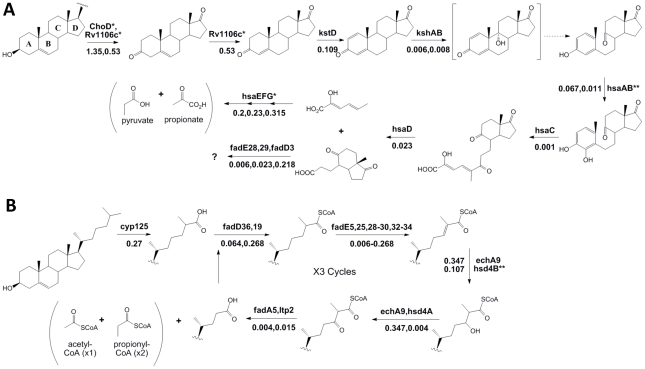
The pathways that comprise cellular metabolism are highly interconnected, and alterations in individual enzymes can have far-reaching effects. As a result, global profiling methods that measure gene expression are of limited value in predicting how the loss of an individual function will affect the cell. In this work, we employed a new method of global phenotypic profiling to directly define the genes required for the growth of Mycobacterium tuberculosis. A combination of high-density mutagenesis and deep-sequencing was used to characterize the composition of complex mutant libraries exposed to different conditions. This allowed the unambiguous identification of the genes that are essential for Mtb to grow in vitro, and proved to be a significant improvement over previous approaches. To further explore functions that are required for persistence in the host, we defined the pathways necessary for the utilization of cholesterol, a critical carbon source during infection. Few of the genes we identified had previously been implicated in this adaptation by transcriptional profiling, and only a fraction were encoded in the chromosomal region known to encode sterol catabolic functions. These genes comprise an unexpectedly large percentage of those previously shown to be required for bacterial growth in mouse tissue. Thus, this single nutritional change accounts for a significant fraction of the adaption to the host. This work provides the most comprehensive genetic characterization of a sterol catabolic pathway to date, suggests putative roles for uncharacterized virulence genes, and precisely maps genes encoding potential drug targets.
Overview
The claims and statistics of this paper haven’t been checked yet.
Free: it reads the open-access text and checks the first 5 claims that cite a source we can check. Create a free account to check every claim.
Integrity signals
Registry
Cites
Statistics
Figures


Verification
Claims the paper makes
The claims and statistics of this paper haven’t been checked yet.
Free: it reads the open-access text and checks the first 5 claims that cite a source we can check. Create a free account to check every claim.
Claims other papers make about this one
Each is checked against this paper’s own text: does it say what the citing paper says it does?
The check wasn’t confident either way, so it gives no verdict — never disputed.
In the citing paper
“A recent transposon-site hybridization (TraSH) screen in M. tuberculosis suggested that SDH1 but not SDH2 was essential for growth under aerobic conditions on standard medium (26).”
From Energetics of Respiration and Oxidative Phosphorylation in Mycobacteria (2014) · cites this paper as [26]
Experimental — accuracy not yet measuredThe check wasn’t confident either way, so it gives no verdict — never disputed.
In the citing paper
“Several studies have suggested that ndh is essential for growth of M. tuberculosis (12, 26, 28, 29) (Table 1).”
From Energetics of Respiration and Oxidative Phosphorylation in Mycobacteria (2014) · cites this paper as [26]
Experimental — accuracy not yet measured
Self-check
Percentages, sums and reported differences re-computed from the paper’s own numbers.
The self-check needs the paper’s full text.
Citations
Cites
Deciphering the biology of Mycobacterium tuberculosis from the complete genome sequence
Cole, S. T., Brosch, R., Parkhill, J., Garnier, T., Churcher, C., Harris, D., Gordon, S. V., Eiglmeier, K., Gas, S., Barry, C. E., et al. (1998) · Nature · doi:10.1038/31159 · Cited by 7,847
SOAP: Short oligonucleotide alignment program
Li, R., Li, Y., Kristiansen, K., & Wang, J. (2008) · Bioinformatics · doi:10.1093/bioinformatics/btn025 · Cited by 3,597 · cited 1×
“11 alignment software [48] at default settings (2 mismatches allowed per read).”
BackgroundGenes required for mycobacterial growth defined by high density mutagenesis
Sassetti, C. M., Boyd, D. H., & Rubin, E. J. (2003) · Molecular Microbiology · doi:10.1046/j.1365-2958.2003.03425.x · Cited by 2,544 · cited 3×
“About 15% of the Mtb genome, or 614 genes, were previously predicted to be required for optimal growth in vitro using microarray hybridization to map insertions sites [6].”
BackgroundSelf-citationMcKinney, J. D., zu Bentrup, K. H., Muñoz-Elías, E. J., Miczak, A., Chen, B., Chan, W.-T., Swenson, D., Sacchettini, J. C., Jacobs, W. R., & Russell, D. G. (2000) · Nature · doi:10.1038/35021074 · Cited by 1,360 · cited 1×
“A few genes that we found to contain very significant gaps in transposon coverage have been successfully deleted, and produce strains that grow normally under similar conditions to those used in our study [33,34,35,36,37,38].”
Genetic requirements for mycobacterial survival during infection
Sassetti, C. M., & Rubin, E. J. (2003) · Proceedings of the National Academy of Sciences · doi:10.1073/pnas.2134250100 · Cited by 1,354 · cited 2×
“When we compared these data to previous genome-wide screens for mutants attenuated in mouse models of infection [46] we found that a full ten percent of genes specifically required for bacterial growth in vivo are also required for the utilization of cholesterol in vitro (Table S3).”
MethodResultSelf-citationComprehensive transposon mutant library of Pseudomonas aeruginosa
Jacobs, M. A., Alwood, A., Thaipisuttikul, I., Spencer, D., Haugen, E., Ernst, S., Will, O., Kaul, R., Raymond, C., Levy, R., et al. (2003) · Proceedings of the National Academy of Sciences · doi:10.1073/pnas.2036282100 · Cited by 1,126 · cited 1×
“[5,6] or conventional sequencing [7,8,9] to map the sites of transposon insertions in large libraries of random mutants and identify regions of the chromosome that were unable to sustain mutation.”
BackgroundMycobacterial persistence requires the utilization of host cholesterol
Pandey, A. K., & Sassetti, C. M. (2008) · Proceedings of the National Academy of Sciences · doi:10.1073/pnas.0711159105 · Cited by 1,064 · cited 5×
“Disruption of Mce4 function by deleting an essential transmembrane component has been shown to cause specific defects in cholesterol uptake and growth in this carbon source [14].”
BackgroundMethodResultInfluentialSelf-citationvan Opijnen, T., Bodi, K. L., & Camilli, A. (2009) · Nature Methods · doi:10.1038/nmeth.1377 · Cited by 933
Global Transposon Mutagenesis and a Minimal Mycoplasma Genome
Hutchison, C. A., Peterson, S. N., Gill, S. R., Cline, R. T., White, O., Fraser, C. M., Smith, H. O., & Craig Venter, J. (1999) · Science · doi:10.1126/science.286.5447.2165 · Cited by 932
Muñoz-Elías, E. J., & McKinney, J. D. (2005) · Nature Medicine · doi:10.1038/nm1252 · Cited by 756 · cited 1×
“tuberculosis H37Rv encodes a multifunctional protein with both isocitrate lyase and methylisocitrate lyase activity, which is required for both pathways [25,26].”
Background
Cited by
Items 201–300 of 1,001
Periwal, V., Patowary, A., Vellarikkal, S. K., Gupta, A., Singh, M., Mittal, A., Jeyapaul, S., Chauhan, R. K., Singh, A. V., Singh, P. K., et al. (2015) · PLoS ONE · doi:10.1371/journal.pone.0122979 · Cited by 66
The molecular biology of mycobacterial trehalose in the quest for advanced tuberculosis therapies
Nobre, A., Alarico, S., Maranha, A., Mendes, V., & Empadinhas, N. (2014) · Microbiology · doi:10.1099/mic.0.075895-0 · Cited by 71
Ma, S., Jaipalli, S., Larkins‐Ford, J., Lohmiller, J., Aldridge, B. B., Sherman, D. R., & Chandrasekaran, S. (2019) · mBio · doi:10.1128/mbio.02627-19 · Cited by 63
Transposon Insertion Sequencing, a Global Measure of Gene Function
van Opijnen, T., & Levin, H. L. (2020) · Annual Review of Genetics · doi:10.1146/annurev-genet-112618-043838 · Cited by 61
A high-resolution network model for global gene regulation in Mycobacterium tuberculosis
Peterson, E. J. R., Reiss, D. J., Turkarslan, S., Minch, K. J., Rustad, T. R., Plaisier, C. L., Longabaugh, W. J. R., Sherman, D. R., & Baliga, N. S. (2014) · Nucleic Acids Research · doi:10.1093/nar/gku777 · Cited by 63
“This study was also motivated and facilitated by a previously conducted genomewide screen on essentiality of genes for cholesterol utilization in MTB (18).”
BackgroundMethodSoni, D. K., Dubey, S. K., & Bhatnagar, R. (2020) · Emerging Microbes & Infections · doi:10.1080/22221751.2020.1714488 · Cited by 64
“Further, it has been shown to be essential for in vitro growth [50].”
BackgroundTranscription termination factor Rho: a hub linking diverse physiological processes in bacteria
Grylak-Mielnicka, A., Bidnenko, V., Bardowski, J. K., & Bidnenko, E. (2016) · Microbiology · doi:10.1099/mic.0.000244 · Cited by 61
“sphaeroides (Gomelsky & Kaplan, 1996), Mycobacterium tuberculosis (Sassetti et al., 2003; Griffin et al., 2011), Bacteroides fragilis (Veeranagouda et al.”
BackgroundInfluentialUncovering major genomic features of essential genes in Bacteria and a methanogenic Archaea
Grazziotin, A. L., Vidal, N. M., & Venâncio, T. M. (2015) · FEBS Journal · doi:10.1111/febs.13350 · Cited by 65
Immune oxysterols: Role in mycobacterial infection and inflammation
Bah, S. Y., Dickinson, P., Forster, T., Kampmann, B., & Ghazal, P. (2016) · The Journal of Steroid Biochemistry and Molecular Biology · doi:10.1016/j.jsbmb.2016.04.015 · Cited by 60
Ruecker, N., Jansen, R. S., Trujillo, C., Puckett, S. E., Jayachandran, P., Piroli, G. G., Frizzell, N., Molina, H., Rhee, K. Y., & Ehrt, S. (2017) · Cell chemical biology · doi:10.1016/j.chembiol.2017.01.005 · Cited by 63
Su, L., Shen, Y., Zhang, W., Gao, T., Shang, Z., & Wang, M. (2017) · Microbial Cell Factories · doi:10.1186/s12934-017-0796-4 · Cited by 59
“Furthermore, the degradation process is closely related to the glucose and fatty acid related metabolic pathways [37, 38].”
BackgroundPrigozhin, D. M., Mavrici, D., Huizar, J., Vansell, H. J., & Alber, T. (2013) · Journal of Biological Chemistry · doi:10.1074/jbc.m113.510792 · Cited by 56
Williams, J. T., Haiderer, E. R., Coulson, G. B., Conner, K. N., Ellsworth, E. L., Chen, C., Álvarez, N., Li, W., Jackson, M., Dick, T., et al. (2019) · Antimicrobial Agents and Chemotherapy · doi:10.1128/aac.00547-19 · Cited by 58
Levine, T. P. (2019) · BMC Molecular and Cell Biology · doi:10.1186/s12860-019-0226-z · Cited by 54
“tuberculosis, Rv0817c and Rv0479 are essential for growth, but Rv3243c is not [27, 28].”
BackgroundFoo, C. S.-Y., Pethe, K., & Lupien, A. (2020) · Applied Sciences · doi:10.3390/app10072339 · Cited by 61
“tb suggest that Sdh1 is essential for optimal growth under aerobic conditions [32], whereas Sdh2 seems to play a more significant role in the growth arrest and dormancy of M.”
BackgroundA comprehensive map of genome-wide gene regulation in Mycobacterium tuberculosis
Turkarslan, S., Peterson, E. J. R., Rustad, T. R., Minch, K. J., Reiss, D. J., Morrison, R., Ma, S., Price, N. D., Sherman, D. R., & Baliga, N. S. (2015) · Scientific Data · doi:10.1038/sdata.2015.10 · Cited by 61
Mycobacterial Pathogenomics and Evolution
Bottai, D., Stinear, T. P., Supply, P., & Brosch, R. (2014) · Microbiology Spectrum · doi:10.1128/microbiolspec.mgm2-0025-2013 · Cited by 48
“However, the NGS-based study suggested 321 additional genes that seem essential for in vitro growth, depending on the culture media used (44).”
DNA Replication in Mycobacterium tuberculosis
Ditse, Z., Lamers, M. H., & Warner, D. F. (2017) · Microbiology Spectrum · doi:10.1128/microbiolspec.tbtb2-0027-2016 · Cited by 57
Gorla, P., Płocińska, R., Sarva, K., Satsangi, A. T., Pandeeti, E., DONNELLY, R. J., Dziadek, J., Rajagopalan, M. R., & Madiraju, M. V. V. S. (2018) · Frontiers in Microbiology · doi:10.3389/fmicb.2018.02839 · Cited by 58
LipG a bifunctional phospholipase/thioesterase involved in mycobacterial envelope remodeling
Santucci, P., Point, V., Poncin, I., Guy, A., Crauste, C., Serveau, C., Galano, J., Spilling, C. D., Cavalier, J., & Canaan, S. (2018) · Bioscience Reports · doi:10.1042/bsr20181953 · Cited by 57
Metabolic fluxes for nutritional flexibility of Mycobacterium tuberculosis
Borah, K., Mendum, T. A., Hawkins, N. D., Ward, J. L., Beale, M. H., Larrouy-Maumus, G. J., Bhatt, A., Moulin, M., Haertlein, M., Strohmeier, G. A., et al. (2021) · Molecular Systems Biology · doi:10.15252/msb.202110280 · Cited by 54
“High-throughput Tn screen also identified Rv1127c as required for growth on cholesterol (Griffin et al, 2011).”
Boldrin, F., Ventura, M., Degiacomi, G., Ravishankar, S., Sala, C., Svetlíková, Z., Ambady, A., Dhar, N., Korduláková, J., Zhang, M., et al. (2014) · Journal of Bacteriology · doi:10.1128/jb.01346-13 · Cited by 56
“Overall, the availability of both structural and strong mechanistic information about PimA (19, 39, 40), along with its essentiality for in vitro growth in mycobacteria (33, 41) and a lack of a human homolog, makes PimA an appealing drug target (42).”
BackgroundMethodMolybdenum cofactor: A key component ofMycobacterium tuberculosispathogenesis?
Williams, M. J., Mizrahi, V., & Kana, B. D. (2013) · Critical Reviews in Microbiology · doi:10.3109/1040841x.2012.749211 · Cited by 58
“Individual mutants within a transposon mutant library may also have a competitive growth disadvantage not observed in pure culture; this might explain the discrepancy between the in vitro essentiality inferred for moaA1-moaB1-moaC1-moaD1 by genomewide essentiality screening (Griffin et al., 2011; Sassetti et al., 2003…”
BackgroundMycobacterial genes essential for the pathogen's survival in the host
Ehrt, S., Rhee, K. Y., & Schnappinger, D. (2015) · Immunological Reviews · doi:10.1111/imr.12256 · Cited by 60
“Accordingly, nadE is essential for growth of Mtb and cannot be deleted (30, 45, 46) complicating the analysis whether this enzyme is required for viability of Mtb populations that are non-replicating or slowly replicating such as those associated with the chronic phase of infection.”
BackgroundCharacterization of Conserved and Novel Septal Factors in Mycobacterium smegmatis
Wu, K. J., Zhang, J., Baranowski, C., Leung, V., Rego, E. H., Morita, Y. S., Rubin, E. J., & Boutte, C. C. (2018) · Journal of Bacteriology · doi:10.1128/jb.00649-17 · Cited by 59
“smegmatis according to TnSeq screens (35).”
BackgroundBioenergetic Inhibitors: Antibiotic Efficacy and Mechanisms of Action in Mycobacterium tuberculosis
Hasenoehrl, E., Wiggins, T. J., & Berney, M. (2021) · Frontiers in Cellular and Infection Microbiology · doi:10.3389/fcimb.2020.611683 · Cited by 61
Franco, T. M. A., Favrot, L., Vergnolle, O., & Blanchard, J. S. (2017) · ACS Chemical Biology · doi:10.1021/acschembio.7b00142 · Cited by 53
Mehaffy, C., Kruh‐Garcia, N. A., Graham, B., Jarlsberg, L. G., Willyerd, C. E., Borisov, A. S., Sterling, T. R., Nahid, P., & Dobos, K. M. (2020) · Journal of Clinical Microbiology · doi:10.1128/jcm.00393-20 · Cited by 53
Distinct Bacterial Pathways Influence the Efficacy of Antibiotics against Mycobacterium tuberculosis
Bellerose, M. M., Proulx, M. K., Smith, C. M., Baker, R. E., Ioerger, T. R., & Sassetti, C. M. (2020) · mSystems · doi:10.1128/msystems.00396-20 · Cited by 54
Self-citationO-Antigen-Dependent Colicin Insensitivity of Uropathogenic Escherichia coli
Sharp, C., Boinett, C. J., Cain, A. K., Housden, N. G., Kumar, S., Turner, A. K., Parkhill, J., & Kleanthous, C. (2018) · Journal of Bacteriology · doi:10.1128/jb.00545-18 · Cited by 52
“Twenty reads per insertion was considered significant, and reads within 10% of the 3= end of the open reading frame were ignored, as these insertions may not disrupt protein function (54).”
BackgroundPawełczyk, J., Brzostek, A. M., Minias, A. E., Płociński, P., Rumijowska-Galewicz, A., Strapagiel, D., Zakrzewska‐Czerwińska, J., & Dziadek, J. (2021) · Scientific Reports · doi:10.1038/s41598-021-91812-0 · Cited by 54
Lupoli, T. J., Fay, A., Adura, C., Glickman, M. S., & Nathan, C. (2016) · Proceedings of the National Academy of Sciences · doi:10.1073/pnas.1617644113 · Cited by 54
“Transposon mutagenesis analysis predicts that dnaK is also essential for growth in Mtb (14, 15).”
BackgroundHong, W. D., Gibbons, P. D., Leung, S. C., Amewu, R. K., Stocks, P. A., Stachulski, A. V., Horta, P., Cristiano, M. L. S., Shone, A. E., Moss, D. M., et al. (2017) · Journal of Medicinal Chemistry · doi:10.1021/acs.jmedchem.6b01718 · Cited by 55
When Dicty Met Myco, a (Not So) Romantic Story about One Amoeba and Its Intracellular Pathogen
Cardenal‐Muñoz, E., Barisch, C., Lefrançois, L. H., López-Jiménez, A. T., & Soldati, T. (2018) · Frontiers in Cellular and Infection Microbiology · doi:10.3389/fcimb.2017.00529 · Cited by 53
“, 2015) Thanks to this method, various researchers have identified essential genes for Mtb growth and cholesterol metabolism (Griffin et al., 2011; Zhang et al., 2012; DeJesus and Ioerger, 2013) and have investigated the Mtb virulence factors required for survival in human dendritic cells (Mendum et al.”
MethodPrkA controls peptidoglycan biosynthesis through the essential phosphorylation of ReoM
Wamp, S., Rutter, Z. J., Rismondo, J., Jennings, C. E., Möller, L., Lewis, R. J., & Halbedel, S. (2020) · eLife · doi:10.7554/elife.56048 · Cited by 55
“tuberculosis and in many other bacterial species tested (Brown et al., 1995; Kock et al., 2004; Griffin et al., 2011; Rismondo et al., 2017).”
Khaliullin, B., Aggarwal, P., Bubas, M., Eaton, G. R., Eaton, S. S., & Latham, J. A. (2016) · FEBS Letters · doi:10.1002/1873-3468.12249 · Cited by 51
Ferraris, D. M., Miggiano, R., Rossi, F., & Rizzi, M. (2018) · Pathogens · doi:10.3390/pathogens7010017 · Cited by 51
“Among the three MTB IMPDH homologs (guaB1, guaB2, and guaB3), only one (guaB2, Rv3411c) has been shown to be essential for the NAD+-dependent dehydrogenation and hydrolysis of inosine 5′-monophosphate to xanthine 5′-monophosphate [90,91].”
BackgroundEmerging Trends in the Formation and Function of Tuberculosis Granulomas
Lugo‐Villarino, G., Hudrisier, D., Bénard, A., & Neyrolles, O. (2013) · Frontiers in Immunology · doi:10.3389/fimmu.2012.00405 · Cited by 54
“Second, M2 Mφs may represent a transitional state into the formation of “foamy” Mφs that are rich in cholesterol, a carbon source for microbial intracellular survival (Pandey and Sassetti, 2008; Peyron et al., 2008; Russell et al., 2009; Griffin et al., 2011).”
BackgroundPetri, J., Shimaki, Y., Jiao, W., Bridges, H. R., Russell, E. R., Parker, E. J., Aragão, D., Cook, G. M., & Nakatani, Y. (2018) · Biochimica et Biophysica Acta (BBA) - Bioenergetics · doi:10.1016/j.bbabio.2018.03.014 · Cited by 53
Dragset, M. S., Ioerger, T. R., Zhang, Y. J., Mærk, M., Ginbot, Z., Sacchettini, J. C., Flo, T. H., Rubin, E. J., & Steigedal, M. (2019) · Scientific Reports · doi:10.1038/s41598-019-47905-y · Cited by 49
Self-citationTranscriptional regulation of fatty acid biosynthesis in mycobacteria
Mondino, S., Gago, G., & Gramajo, H. C. (2013) · Molecular Microbiology · doi:10.1111/mmi.12282 · Cited by 55
“FasR is essential for mycobacteria viability The fasR gene has been proposed to be essential in M. tuberculosis based on a combination of high density mutagenesis and deep sequencing analysis (Griffin et al., 2011).”
BackgroundMetabolomics of Central Carbon Metabolism in Mycobacterium tuberculosis
Baughn, A. D., & Rhee, K. Y. (2014) · Microbiology Spectrum · doi:10.1128/microbiolspec.mgm2-0026-2013 · Cited by 52
“Based on its apparent essentiality for growth in vitro , gltA2 is thought to encode the major citrate synthase of M. tuberculosis central metabolism (23).”
BackgroundInfluentialShtratnikova, V., Schelkunov, M. I., Фокина, В. В., Pekov, Y. A., Ивашина, Т. В., & Donova, M. V. (2016) · Current Genetics · doi:10.1007/s00294-016-0568-4 · Cited by 49
“FadD17 was not essential for growth of M. tuberculosis on cholesterol (Griffin et al. 2011), but its homolog was upregulated on cholate in R. jostii RHA1 (Mohn et al. 2012).”
BackgroundPhan, T. H., van Leeuwen, L. M., Kuijl, C. P., Ummels, R., van Stempvoort, G., Rubio-Canalejas, A., Piersma, S. R., Jiménez, C. R., van der Sar, A. M., Houben, E. N. G., et al. (2018) · PLoS Pathogens · doi:10.1371/journal.ppat.1007247 · Cited by 54
Tuberculosis drug discovery and emerging targets
Mdluli, K. E., Kaneko, T., & Upton, A. M. (2014) · Annals of the New York Academy of Sciences · doi:10.1111/nyas.12459 · Cited by 51
Jastrab, J. B., Wang, T., Murphy, J. P., Bai, L., Hu, K., Merkx, R., Huang, J. Y., Chatterjee, C., Ovaa, H., Gygi, S. P., et al. (2015) · Proceedings of the National Academy of Sciences · doi:10.1073/pnas.1423319112 · Cited by 50
“Our initial efforts to generate a pafE deletion strain were unsuccessful, likely due to polar effects on several downstream genes that are predicted to be essential for growth (54, 55).”
Su, H., Kong, C., Zhu, L., Huang, Q. Q., Luo, L., Wang, H., & Xu, Y. (2015) · Oncotarget · doi:10.18632/oncotarget.5956 · Cited by 49
“PPE26 is a nonessential gene for the in vitro growth of H37Rv [42] and caused no significant difference in the growth rate of the rBCG::PPE26 strain compared with the BCG strain (Supplementary Figure S1B).”
ResultInfluentialReductive Stress: New Insights in Physiology and Drug Tolerance of Mycobacterium
Mavi, P. S., Singh, S., & Kumar, A. (2019) · Antioxidants and Redox Signaling · doi:10.1089/ars.2019.7867 · Cited by 50
“Importantly, TR is essential for in vitro growth (55), suggesting a necessary function of TR during normal growth even in the absence of oxidative stress.”
Cryo-EM Structures and Regulation of Arabinofuranosyltransferase AftD from Mycobacteria
Tan, Y. Z., Zhang, L., Rodrigues, J., Zheng, R. B., Giacometti, S. I., Rosário, A. L., Kloss, B., Dandey, V. P., Wei, H., Brunton, R., et al. (2020) · Molecular Cell · doi:10.1016/j.molcel.2020.04.014 · Cited by 61
Trujillo, C., Blumenthal, A., Marrero, J., Rhee, K. Y., Schnappinger, D., & Ehrt, S. (2014) · mBio · doi:10.1128/mbio.00085-14 · Cited by 54
Kennedy, G. M., Hooley, G. C., Champion, M. M., Mba Medie, F., & Champion, P. A. D. (2014) · Journal of Bacteriology · doi:10.1128/jb.01502-14 · Cited by 48
“tuberculosis, including the ortholog of the gene immediately upstream of the transposon insertion, MMAR_1663 (54).”
BackgroundA Chemical Proteomics Approach to Profiling the ATP-binding Proteome of Mycobacterium tuberculosis
Wolfe, L. M., Usha, V., Idicula‐Thomas, S., Schürer, S. C., Wennerberg, K., Reynolds, R. C., Besra, G. S., & Dobos, K. M. (2013) · Molecular & Cellular Proteomics · doi:10.1074/mcp.m112.025635 · Cited by 50
“tuberculosis ATPome harbor essential functions to support growth (23, 24), indicating that the M.”
BackgroundYee, M., Gopal, P., & Dick, T. (2016) · Antimicrobial Agents and Chemotherapy · doi:10.1128/aac.02342-16 · Cited by 47
“It has been shown that clpC1 is essential for growth in vitro (32, 33) and for survival within macrophages (34).”
BackgroundMadani, A., Ridenour, J. N., Martin, B. P., Paudel, R. R., Basir, A. A., Moigne, V. L., Herrmann, J., Audebert, S., Camoin, L., Kremer, L., et al. (2019) · ACS Infectious Diseases · doi:10.1021/acsinfecdis.9b00172 · Cited by 48
Hosfelt, J., Richards, A., Zheng, M., Adura, C., Nelson, B., Yang, A., Fay, A., Resager, W., Ueberheide, B. M., Glickman, J. F., et al. (2021) · Cell chemical biology · doi:10.1016/j.chembiol.2021.11.004 · Cited by 46
Ravishankar, S., Ambady, A., Awasthy, D., Mudugal, N. V., Menasinakai, S., Jatheendranath, S., Guptha, S., Sharma, S., Balakrishnan, G., Nandishaiah, R., et al. (2015) · Tuberculosis · doi:10.1016/j.tube.2015.05.004 · Cited by 47
Singhal, A., Arora, G., Virmani, R., Kundu, P., Khanna, T., Sajid, A., Misra, R., Joshi, J., Yadav, V., Samanta, S. K., et al. (2015) · Journal of Biological Chemistry · doi:10.1074/jbc.m115.687269 · Cited by 48
Glutamate Dehydrogenase Is Required by Mycobacterium bovis BCG for Resistance to Cellular Stress
Gallant, J., Viljoen, A. J., van Helden, P. D., & Wiid, I. J. F. (2016) · PLoS ONE · doi:10.1371/journal.pone.0147706 · Cited by 46
Igarashi, M., Ishizaki, Y., & Takahashi, Y. (2017) · The Journal of Antibiotics · doi:10.1038/ja.2017.126 · Cited by 48
Gan, F., Liu, R., Wang, F., & Schultz, P. G. (2018) · Journal of the American Chemical Society · doi:10.1021/jacs.7b13452 · Cited by 46
Mycobacterial genomics and structural bioinformatics: opportunities and challenges in drug discovery
Waman, V., Vedithi, S. C., Thomas, S. E., Bannerman, B. P., Munir, A., Skwark, M. J., Malhotra, S., & Blundell, T. L. (2019) · Emerging Microbes & Infections · doi:10.1080/22221751.2018.1561158 · Cited by 46
“…for the survival of the bacterium, and are critical components of metabolic and physico-chemical pathways, can be identi fi ed by gene knockouts, saturation transposon mutagenesis, RNA interference, etc. Essential genes have been characterized experimentally in the case of M. tuberculosis [50 – 52].”
Identification of new components of the RipC-FtsEX cell separation pathway of Corynebacterineae
Lim, H. C., Sher, J. W., Rodriguez‐Rivera, F. P., Fumeaux, C., Bertozzi, C. R., & Bernhardt, T. G. (2019) · PLoS Genetics · doi:10.1371/journal.pgen.1008284 · Cited by 47
“By defining the essential gene content of Cglu for comparison with similar datasets available for Mtb [18,42,43], the results provide an important resource for researchers studying the growth of this group of organisms.”
Perkowski, E. F., Miller, B. K., McCann, J. R., Sullivan, J. T., Malik, S., Allen, I. C., Godfrey, V., Hayden, J., & Braunstein, M. (2015) · Molecular Microbiology · doi:10.1111/mmi.13303 · Cited by 51
“Data from transposon mutagenesis screens predicts similar phenotypes for mutations in mam genes and the adjoining mce operons (Sassetti and Rubin, 2003; Rengarajan et al., 2005; Griffin et al., 2011), which supports the idea of mam genes functioning with their linked mce system.”
BackgroundMethodInfluentialA Mycobacterial Systems Resource for the Research Community
Judd, J. A., Canestrari, J., Clark, R., Joseph, A., Lapierre, P., Lasek-Nesselquist, E., Mir, M., Palumbo, M., Smith, C., Stone, M., et al. (2021) · mBio · doi:10.1128/mbio.02401-20 · Cited by 45
“Transposon insertion sequencing (Tn-seq) analyses have identi fi ed genes essential for growth in vivo and in vitro , but do not address gene function (21 – 23).”
BackgroundWagner, J. M., Evans, T. J., Chen, J., Zhu, H., Houben, E. N. G., Bitter, W., & Korotkov, K. V. (2013) · Journal of Structural Biology · doi:10.1016/j.jsb.2013.09.022 · Cited by 38
“tuberculosis H37Rv (Griffin et al., 2011; Sassetti et al., 2003), we can infer that these mycosins can not substitute for each other.”
BackgroundInfluentialA Novel Antimycobacterial Compound Acts as an Intracellular Iron Chelator
Dragset, M. S., Poce, G., Alfonso, S., Padilla-Benavides, T., Ioerger, T. R., Kaneko, T., Sacchettini, J. C., Biava, M., Parish, T., Argüello, J. M., et al. (2015) · Antimicrobial Agents and Chemotherapy · doi:10.1128/aac.05114-14 · Cited by 42
Self-citationAlbesa-Jové, D., Chiarelli, L. R., Makarov, V., Pasca, M. R., Urresti, S., Mori, G., Salina, E. G., Vocat, A., Comino, N., Mohorko, E., et al. (2014) · ACS Chemical Biology · doi:10.1021/cb500149m · Cited by 46
Mycobacterium tuberculosis Resists Stress by Regulating PE19 Expression
Ramakrishnan, P., Aagesen, A. M., McKinney, J. D., & Tischler, A. D. (2016) · Infection and Immunity · doi:10.1128/iai.00942-15 · Cited by 46
Inoue, M., Niki, M., Ozeki, Y., Nagi, S., Chadeka, E. A., Yamaguchi, T., Osada‐Oka, M., Ono, K., Oda, T., Mwende, F., et al. (2018) · Scientific Reports · doi:10.1038/s41598-018-24233-1 · Cited by 45
Gcebe, N., Michel, A. L., van Pittius, N. C. G., & Rutten, V. P. M. G. (2016) · Frontiers in Microbiology · doi:10.3389/fmicb.2016.00795 · Cited by 51
Martini, M. C., Hicks, N. D., Xiao, J., Alonso, M. N., Barbier, T., Sixsmith, J. D., Fortune, S. M., & Shell, S. S. (2022) · PLoS Pathogens · doi:10.1371/journal.ppat.1010705 · Cited by 47
“Unusually, mycobacteria encode both RNase E, which is essential and seems to play a rate-limiting step in degradation of most mRNAs [23,27–29], and RNase J, which is non-essential [23,27,29,30].”
Evans, J. C., & Mizrahi, V. (2015) · Frontiers in Microbiology · doi:10.3389/fmicb.2015.00812 · Cited by 50
“Genome-wide transposon mutagenesis has played a critical role in defining the genetic requirements for growth and viability of Mtb under various conditions (Sassetti and Rubin, 2003; Sassetti et al., 2003; Rengarajan et al., 2005; Beste et al., 2009; Griffin et al., 2011).”
BackgroundNucleotide Metabolism and DNA Replication
Warner, D. F., Evans, J. C., & Mizrahi, V. (2014) · Microbiology Spectrum · doi:10.1128/microbiolspec.mgm2-0001-2013 · Cited by 47
“The majority of enzymes involved in salvage pathways are dispensable in vitro and during growth in macrophages and in animal tissue (Table 1); in contrast, the mono-functional dUTPase ( dut ; Rv2697c) is distinguished by virtue of its essentiality in M. tuberculosis (39, 49) and M. smegmatis (62).”
BackgroundResultInfluentialActinobacterial Acyl Coenzyme A Synthetases Involved in Steroid Side-Chain Catabolism
Casabon, I., Swain, K., Crowe, A. M., Eltis, L. D., & Mohn, W. W. (2013) · Journal of Bacteriology · doi:10.1128/jb.01012-13 · Cited by 51
“tuberculosis is essential for cholesterol degradation (31).”
MethodSrivastav, R., Kumar, D., Grover, A., Singh, A., Manjasetty, B. A., Sharma, R., & Taneja, B. (2014) · Nucleic Acids Research · doi:10.1093/nar/gku425 · Cited by 45
Rebollo-López, M. J., Lelièvre, J., Álvarez-Gómez, D., Castro‐Pichel, J., Martínez-Jiménez, F., Papadatos, G., Kumar, V. D., Colmenarejo, G., Mugumbate, G., Hurle, M. R., et al. (2015) · PLoS ONE · doi:10.1371/journal.pone.0142293 · Cited by 47
Kalra, P., Mishra, S. K., Kaur, S., Kumar, A., Prasad, H. K., Sharma, T. K., & Tyagi, J. S. (2018) · Molecular Therapy — Nucleic Acids · doi:10.1016/j.omtn.2018.08.011 · Cited by 44
“The nucleoid-associated histone-like protein HupB (Rv2986c; also known as HlpMt, MtbHU, MtHU, MDP1, LBP, Irep-28) is an essential protein in pathogenic mycobacteria and is consequently acknowledged as a promising drug target.(2,3) The indispensable nature of HupB is attributed to its ability to maintain the”
BackgroundBucşan, A. N., Mehra, S., Khader, S. A., & Kaushal, D. (2019) · Pathogens and Disease · doi:10.1093/femspd/ftz037 · Cited by 45
Ankley, L. M., Thomas, S. M., & Olive, A. J. (2020) · Infection and Immunity · doi:10.1128/iai.00916-19 · Cited by 46
“Recent advances in deep-sequencing technology (now termed transposon sequencing [Tn-seq]) have accelerated the speed and sensitivity of Tn-seq experiments, yet few studies have focused on immune-related phenotypes (101).”
BackgroundMycobacterium tuberculosis virulence lipid PDIM inhibits autophagy in mice
Mittal, E., Prasad, G. V. R. K., Upadhyay, S., Sadadiwala, J., Olive, A. J., Yang, G., Sassetti, C. M., & Philips, J. A. (2024) · Nature Microbiology · doi:10.1038/s41564-024-01797-5 · Cited by 43
“Starting with a pool of Himar1 transposon (Tn) mutants 50,51 , we infected IFN-γ-activated bone marrow-derived macrophages (BMDMs) that were WT ( Atg5 fl/fl Cre −/− and Atg7 fl/fl Cre −/− ) or Atg -deficient conditional knock-out (cKO) ( Atg5 fl/fl LysM Cre +/− and Atg7 fl/fl LysM Cre +/− ) (Fig.”
Self-citationEng, W. S., Hocková, D., Špaček, P., Janeba, Z., West, N. P., Woods, K. J., Naesens, L. M. J., Keough, D. T., & Guddat, L. W. (2015) · Journal of Medicinal Chemistry · doi:10.1021/acs.jmedchem.5b00611 · Cited by 43
Gene Essentiality Analysis Based on DEG 10, an Updated Database of Essential Genes
Gao, F., Luo, H., Zhang, C., & Zhang, R. (2015) · Methods in molecular biology · doi:10.1007/978-1-4939-2398-4_14 · Cited by 45
Esx Systems and the Mycobacterial Cell Envelope: What's the Connection?
Bosserman, R. E., & Champion, P. A. (2017) · Journal of Bacteriology · doi:10.1128/jb.00131-17 · Cited by 42
Gene Transfer in Mycobacterium tuberculosis : Shuttle Phasmids to Enlightenment
Jacobs, W. R. (2014) · Microbiology Spectrum · doi:10.1128/microbiolspec.mgm2-0037-2013 · Cited by 42
“TraSH has been used extensively to identify the essential genes under various growth conditions in vitro (130) and in vivo (131).”
MethodSharma, D., Lata, M., Singh, R., Deo, N., Venkatesan, K., & Bisht, D. (2016) · Frontiers in Microbiology · doi:10.3389/fmicb.2016.01816 · Cited by 42
“However, to the best of our knowledge, no study on cytosolic proteome analysis with AK and KM resistantM. tuberculosis isolates has been reported.”
BackgroundUgalde, S. O., Boot, M., Commandeur, J. N. M., Jennings, P., Bitter, W., & Vos, J. C. (2019) · Applied Microbiology and Biotechnology · doi:10.1007/s00253-019-09697-z · Cited by 47
“Even though an initial study indicated that cyp128a1was among the essential genes unique to mycobacteria, this could not be confirmed in later TraSH studies (Sassetti et al. 2003; Lamichhane et al. 2003; Griffin et al. 2011; Zhang et al. 2012; DeJesus et al. 2017).”
BackgroundResultInfluentialCholesterol metabolism: a potential therapeutic target in Mycobacteria
Abuhammad, A. (2016) · British Journal of Pharmacology · doi:10.1111/bph.13694 · Cited by 42
“For example, in deep-sequencing studies of a transposon mutant library of strain H37Rv, 3β-hsd was not among the 96 genes predicted to be specifically required for growth on cholesterol (Griffin et al., 2011).”
BackgroundGopal, P., Tasneen, R., Yee, M., Lanoix, J., Sarathy, J. P., Rasic, G., Li, L., Dartois, V. A., Nuermberger, E. L., & Dick, T. (2017) · ACS Infectious Diseases · doi:10.1021/acsinfecdis.7b00017 · Cited by 42
Kim, M.-S., Jang, J., Rahman, N. B. A., Pethe, K., Berry, E. A., & Huang, L.-S. (2015) · Journal of Biological Chemistry · doi:10.1074/jbc.m114.624312 · Cited by 46
“QcrB is predicted to be essential based on transposon mutagenesis experiments (18, 19).”
BackgroundHC2091 Kills Mycobacterium tuberculosis by Targeting the MmpL3 Mycolic Acid Transporter
Zheng, H., Williams, J. T., Coulson, G. B., Haiderer, E. R., & Abramovitch, R. B. (2018) · Antimicrobial Agents and Chemotherapy · doi:10.1128/aac.02459-17 · Cited by 41
“libraries (7, 8) and an inability to generate deletion mutants by homologous recombination (6, 9).”
BackgroundZiemski, M., Leodolter, J., Taylor, G., Kerschenmeyer, A., & Weber‐Ban, E. (2021) · The FEBS Journal · doi:10.1111/febs.15335 · Cited by 38
Nonredundant functions of Mycobacterium tuberculosis chaperones promote survival under stress
Harnagel, A. P., Quezada, L. A. L., Park, S. W., Baranowski, C., Kieser, K. J., Jiang, X., Roberts, J., Vaubourgeix, J., Yang, A., Nelson, B., et al. (2020) · Molecular Microbiology · doi:10.1111/mmi.14615 · Cited by 43
Mycobacterial fatty acid catabolism is repressed by FdmR to sustain lipogenesis and virulence
Dong, W., Nie, X., Zhu, H. M., Liu, Q., Shi, K.-X., You, L., Zhang, Y., Fan, H. C., Yan, B., Niu, C., et al. (2021) · Proceedings of the National Academy of Sciences · doi:10.1073/pnas.2019305118 · Cited by 44
“The fadE5 is likely involved in β-oxidation of the acyl side chain of cholesterol (40), and a recent study showed broad specificity of FadE5 for acyl-CoAs (41).”
BackgroundKnapp, G. S., Lyubetskaya, A., Peterson, M., Gomes, A. L. C., Ma, Z., Galagan, J. E., & McDonough, K. A. (2015) · Nucleic Acids Research · doi:10.1093/nar/gkv420 · Cited by 45
“smegmatis sdh1) is required for Mtb growth and virulence (45,46), and we observed regulation of Rv0249c expression in hypoxic BCG cultures.”
BackgroundPerry, B. J., & Yost, C. K. (2014) · BMC Microbiology · doi:10.1186/s12866-014-0298-z · Cited by 46
TuberQ: a Mycobacterium tuberculosis protein druggability database
Radusky, L., Defelipe, L. A., Lanzarotti, E., Luque, F. J., Barril, X., Marti, M. A., & Turjanski, A. G. (2014) · Database · doi:10.1093/database/bau035 · Cited by 40
“Finally, in the fourth study, Sassetti and coworkers used a himar1based transposon mutation system to determine the frequency of insertions, thus providing an update to the previous works by Rubin and coworkers (34).”
MethodMycobacterium Tuberculosis Evolutionary Pathogenesis and its Putative Impact on Drug Development
Chevalier, F. L., Cascioferro, A., Majlessi, L., Herrmann, J., & Brosch, R. (2014) · Future Microbiology · doi:10.2217/fmb.14.70 · Cited by 45
“tuberculosis grown under different in vitro conditions was combined with next-generation sequencing (NGS),[31] which allowed a set of 774 genes to be identified, of which 451 overlapped with the initial TraSH-based screen.”
BackgroundResultInfluentialKim, W. S., Jung, I. D., Kim, J. S., Kim, H. M., Kwon, K. W., Park, Y.-M., & Shin, S. J. (2018) · Frontiers in Cellular and Infection Microbiology · doi:10.3389/fcimb.2018.00095 · Cited by 41
“In addition, grpE has been demonstrated to be an essential gene by Himar1-based transposon mutagenesis in the H37Rv strain (Sassetti et al., 2003; Griffin et al., 2011).”
BackgroundLipid Metabolism and Intracellular Bacterial Virulence: key to Next-Generation Therapeutics
Rameshwaram, N. R., Singh, P., Ghosh, S., & Mukhopadhyay, S. (2018) · Future Microbiology · doi:10.2217/fmb-2018-0013 · Cited by 45
Butman, H. S., Kotzé, T. J., Dowd, C. S., & Strauss, E. (2020) · Frontiers in Cellular and Infection Microbiology · doi:10.3389/fcimb.2020.605662 · Cited by 40
“However, the panE gene is nonessential in Mtb by Himar-1 transposon mutagenesis (Sassetti et al., 2003; Griffin et al., 2011; DeJesus et al., 2017), most likely due to the ability of other enzymes to perform the reduction at sufficient levels to provide the needs for Pan biosynthesis.”
Background
Metadata
- Authors
- Griffin, J. E., Gawronski, J. D., DeJesus, M. A., Ioerger, T. R., Akerley, B. J., & Sassetti, C. M.
- Affiliations
- University of Massachusetts Chan Medical School (US)
- Texas A&M University (US)
- Howard Hughes Medical Institute (US)
- Corresponding author
- Sassetti, Christopher M.
- Venue
- PLoS Pathogens
- Publisher
- Public Library of Science (PLoS)
- Published
- 2011-09-29
- Volume
- 7
- Issue
- 9
- Pages
- e1002251
- ISSN
- 1553-7366 (ISSN-L)
- 1553-7374
- PMC
- PMC3182942
- OpenAlex
- W2067576392
- Cited by
- 1,048
- References
- 47
- Citations by year
- 2026: 32 · 2025: 50 · 2024: 56 · 2023: 58 · 2022: 50 · 2021: 85 · 2020: 79 · 2019: 102 · 2018: 90 · 2017: 89 · 2016: 82 · 2015: 99 · 2014: 79 · 2013: 68 · 2012: 27
- FWCI
- 38.15
- Type
- journal article
- Language
- en
- Open access
- gold
- doi.org
- Locations
- PLoS Pathogens (publishedVersion, cc-by)
- Europe PMC (PubMed Central) (publishedVersion, cc-by)
- PubMed Central (publishedVersion, cc-by)
- PubMed (publishedVersion)
- The Journal of the American Medical Association (JAMA) Network (American Medical Association) (submittedVersion, cc-by)
- DOAJ (DOAJ: Directory of Open Access Journals) (submittedVersion, cc-by-sa)
- Figshare (submittedVersion, cc-by)
- OakTrust (Texas A&M University Libraries) (submittedVersion)
- Funders
- Howard Hughes Medical Institute
- Bill and Melinda Gates Foundation
- National Institutes of Health
- National Institute of Allergy and Infectious Diseases (AI064282, AI073509, R21AI073509, R01AI064282)
- Topics
- Health Sciences › Medicine › Infectious Diseases › Tuberculosis Research and Epidemiology
- Life Sciences › Biochemistry, Genetics and Molecular Biology › Genetics › Bacterial Genetics and Biotechnology
- Physical Sciences › Chemistry › Organic Chemistry › Steroid Chemistry and Biochemistry
- Keywords
- Mycobacterium tuberculosis, essential genes, phenotypic profiling, cholesterol catabolism, bacterial growth, mutant library, host adaptation, virulence genes, therapeutic target, carbon source utilization
- MeSH terms
- Animals, Cholesterol, Genes, Bacterial, Mycobacterium tuberculosis, Tuberculosis, Virulence, Gene Expression Regulation, Bacterial, Mutagenesis, Gene Expression Profiling, Mice
About these checks
Registry, retraction, Cites and statistics results are computed, not judged, with one exception: a printed reference that no index lists is read once by a model before it counts as a citation error. Claims are extracted by a model and kept only when their quote appears verbatim in the text; each cited source is then checked, with a model’s help, for whether it says what the claim relies on. Those verdicts can be wrong — read the claim’s quote and the cited source before relying on one.
Statistics and arithmetic are recomputed, not judged.
Confidence bands are shown only for fields calibrated on our annotated test set. None is calibrated yet, so no band is shown.
What counts as a claim ›How we measure confidence ›How we check this ›
Are you an author, or do you see a problem with this page? Request a review
Data sources
Bibliographic data: Semantic Scholar, OpenAlex, Crossref.
Contains information from the Semantic Scholar Academic Graph Datasets, made available under the ODC Attribution License (ODC-BY 1.0).
Semantic Scholar’s data is described in: Kinney, R., et al. (2023). The Semantic Scholar Open Data Platform. arXiv:2301.10140.
