

High-Resolution Phenotypic Profiling Defines Genes Essential for Mycobacterial Growth and Cholesterol Catabolism
Open accessThe DOI matches its Crossref record; 47 of the 47 references it cites were found in a registry or an index.
Abstract
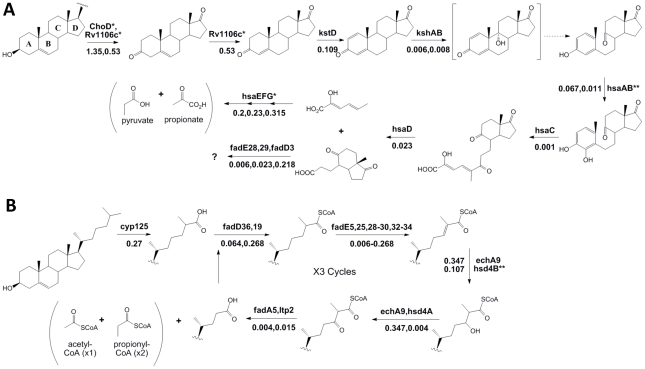
The pathways that comprise cellular metabolism are highly interconnected, and alterations in individual enzymes can have far-reaching effects. As a result, global profiling methods that measure gene expression are of limited value in predicting how the loss of an individual function will affect the cell. In this work, we employed a new method of global phenotypic profiling to directly define the genes required for the growth of Mycobacterium tuberculosis. A combination of high-density mutagenesis and deep-sequencing was used to characterize the composition of complex mutant libraries exposed to different conditions. This allowed the unambiguous identification of the genes that are essential for Mtb to grow in vitro, and proved to be a significant improvement over previous approaches. To further explore functions that are required for persistence in the host, we defined the pathways necessary for the utilization of cholesterol, a critical carbon source during infection. Few of the genes we identified had previously been implicated in this adaptation by transcriptional profiling, and only a fraction were encoded in the chromosomal region known to encode sterol catabolic functions. These genes comprise an unexpectedly large percentage of those previously shown to be required for bacterial growth in mouse tissue. Thus, this single nutritional change accounts for a significant fraction of the adaption to the host. This work provides the most comprehensive genetic characterization of a sterol catabolic pathway to date, suggests putative roles for uncharacterized virulence genes, and precisely maps genes encoding potential drug targets.
Overview
The claims and statistics of this paper haven’t been checked yet.
Free: it reads the open-access text and checks the first 5 claims that cite a source we can check. Create a free account to check every claim.
Integrity signals
Registry
Cites
Statistics
Figures


Verification
Claims the paper makes
The claims and statistics of this paper haven’t been checked yet.
Free: it reads the open-access text and checks the first 5 claims that cite a source we can check. Create a free account to check every claim.
Claims other papers make about this one
Each is checked against this paper’s own text: does it say what the citing paper says it does?
The check wasn’t confident either way, so it gives no verdict — never disputed.
In the citing paper
“A recent transposon-site hybridization (TraSH) screen in M. tuberculosis suggested that SDH1 but not SDH2 was essential for growth under aerobic conditions on standard medium (26).”
From Energetics of Respiration and Oxidative Phosphorylation in Mycobacteria (2014) · cites this paper as [26]
Experimental — accuracy not yet measuredThe check wasn’t confident either way, so it gives no verdict — never disputed.
In the citing paper
“Several studies have suggested that ndh is essential for growth of M. tuberculosis (12, 26, 28, 29) (Table 1).”
From Energetics of Respiration and Oxidative Phosphorylation in Mycobacteria (2014) · cites this paper as [26]
Experimental — accuracy not yet measured
Self-check
Percentages, sums and reported differences re-computed from the paper’s own numbers.
The self-check needs the paper’s full text.
Citations
Cites
Deciphering the biology of Mycobacterium tuberculosis from the complete genome sequence
Cole, S. T., Brosch, R., Parkhill, J., Garnier, T., Churcher, C., Harris, D., Gordon, S. V., Eiglmeier, K., Gas, S., Barry, C. E., et al. (1998) · Nature · doi:10.1038/31159 · Cited by 7,847
SOAP: Short oligonucleotide alignment program
Li, R., Li, Y., Kristiansen, K., & Wang, J. (2008) · Bioinformatics · doi:10.1093/bioinformatics/btn025 · Cited by 3,597 · cited 1×
“11 alignment software [48] at default settings (2 mismatches allowed per read).”
BackgroundGenes required for mycobacterial growth defined by high density mutagenesis
Sassetti, C. M., Boyd, D. H., & Rubin, E. J. (2003) · Molecular Microbiology · doi:10.1046/j.1365-2958.2003.03425.x · Cited by 2,544 · cited 3×
“About 15% of the Mtb genome, or 614 genes, were previously predicted to be required for optimal growth in vitro using microarray hybridization to map insertions sites [6].”
BackgroundSelf-citationMcKinney, J. D., zu Bentrup, K. H., Muñoz-Elías, E. J., Miczak, A., Chen, B., Chan, W.-T., Swenson, D., Sacchettini, J. C., Jacobs, W. R., & Russell, D. G. (2000) · Nature · doi:10.1038/35021074 · Cited by 1,360 · cited 1×
“A few genes that we found to contain very significant gaps in transposon coverage have been successfully deleted, and produce strains that grow normally under similar conditions to those used in our study [33,34,35,36,37,38].”
Genetic requirements for mycobacterial survival during infection
Sassetti, C. M., & Rubin, E. J. (2003) · Proceedings of the National Academy of Sciences · doi:10.1073/pnas.2134250100 · Cited by 1,354 · cited 2×
“When we compared these data to previous genome-wide screens for mutants attenuated in mouse models of infection [46] we found that a full ten percent of genes specifically required for bacterial growth in vivo are also required for the utilization of cholesterol in vitro (Table S3).”
MethodResultSelf-citationComprehensive transposon mutant library of Pseudomonas aeruginosa
Jacobs, M. A., Alwood, A., Thaipisuttikul, I., Spencer, D., Haugen, E., Ernst, S., Will, O., Kaul, R., Raymond, C., Levy, R., et al. (2003) · Proceedings of the National Academy of Sciences · doi:10.1073/pnas.2036282100 · Cited by 1,126 · cited 1×
“[5,6] or conventional sequencing [7,8,9] to map the sites of transposon insertions in large libraries of random mutants and identify regions of the chromosome that were unable to sustain mutation.”
BackgroundMycobacterial persistence requires the utilization of host cholesterol
Pandey, A. K., & Sassetti, C. M. (2008) · Proceedings of the National Academy of Sciences · doi:10.1073/pnas.0711159105 · Cited by 1,064 · cited 5×
“Disruption of Mce4 function by deleting an essential transmembrane component has been shown to cause specific defects in cholesterol uptake and growth in this carbon source [14].”
BackgroundMethodResultInfluentialSelf-citationvan Opijnen, T., Bodi, K. L., & Camilli, A. (2009) · Nature Methods · doi:10.1038/nmeth.1377 · Cited by 933
Global Transposon Mutagenesis and a Minimal Mycoplasma Genome
Hutchison, C. A., Peterson, S. N., Gill, S. R., Cline, R. T., White, O., Fraser, C. M., Smith, H. O., & Craig Venter, J. (1999) · Science · doi:10.1126/science.286.5447.2165 · Cited by 932
Muñoz-Elías, E. J., & McKinney, J. D. (2005) · Nature Medicine · doi:10.1038/nm1252 · Cited by 756 · cited 1×
“tuberculosis H37Rv encodes a multifunctional protein with both isocitrate lyase and methylisocitrate lyase activity, which is required for both pathways [25,26].”
Background
Cited by
Items 601–700 of 1,001
CtpB Facilitates Mycobacterium tuberculosis Growth in Copper-Limited Niches
Shey-Njila, O., Hikal, A. F., Gupta, T., Sakamoto, K., Azami, H. Y., Watford, W. T., Quinn, F. D., & Karls, R. K. (2022) · International Journal of Molecular Sciences · doi:10.3390/ijms23105713 · Cited by 14
The unusual convergence of steroid catabolic pathways in Mycobacterium abscessus
Crowe, A. M., Krekhno, J. M. C., Brown, K. L., Kulkarni, J. A., Yam, K. C., & Eltis, L. D. (2022) · Proceedings of the National Academy of Sciences · doi:10.1073/pnas.2207505119 · Cited by 15
“tuberculosis that have been implicated in cholesterol catabolism in various genomic studies (7, 17, 21, 40).”
BackgroundSilveiro, C., Marques, M., Olivença, F., Pires, D., Mortinho, D., Nunes, A., Pimentel, M., Anes, E., & Catalão, M. J. (2023) · Frontiers in Cellular and Infection Microbiology · doi:10.3389/fcimb.2023.1089911 · Cited by 15
“, 2005) and in its Mtb orthologue, Rv3818 (Sassetti et al., 2003; Griffin et al., 2011; DeJesus et al., 2017).”
BackgroundResultInfluentialJohnston, J. B., Singh, A. A., Clary, A. A., Chen, C.-K., Hayes, P. Y., Chow, S., Voss, J. J. D., & de Montellano, P. R. O. (2012) · Bioorganic & Medicinal Chemistry · doi:10.1016/j.bmc.2012.05.003 · Cited by 14
Novel regulatory roles of cAMP receptor proteins in fast-growing environmental mycobacteria
Aung, H. L., Robson, J. R., Smith, L. J., Green, J., Berney, M., Cook, G. M., Sweeney, N. P., Buxton, R. S., & Dixon, L. L. (2014) · Microbiology · doi:10.1099/mic.0.000015 · Cited by 17
Yu, G., Cui, Z., Sun, X. L., Peng, J., Jiang, J. H., Wu, W., Huang, W., Chu, K., Zhang, L., Ge, B., et al. (2015) · Tuberculosis · doi:10.1016/j.tube.2015.03.008 · Cited by 16
Falcão, V. C. A., Villela, A. D., Rodrigues-Junior, V. S., Pissinate, K., Eichler, P., Pinto, A. F. M., Basso, L. A., Santos, D. S., & Bizarro, C. V. (2017) · Biochemical and Biophysical Research Communications · doi:10.1016/j.bbrc.2017.02.137 · Cited by 15
Anti-tubercular drug discovery: in silico implications and challenges
Mehra, R., Khan, I. A., & Nargotra, A. (2017) · European Journal of Pharmaceutical Sciences · doi:10.1016/j.ejps.2017.03.028 · Cited by 14
Gorla, S. K., Zhang, Y., Rabideau, M. M., Qin, A., Chacko, S., House, A. L., Johnson, C. R., Mandapati, K., Bernstein, H. M., McKenney, E. S., et al. (2017) · Antimicrobial Agents and Chemotherapy · doi:10.1128/aac.00939-17 · Cited by 14
Computational Approaches to Identify Molecules Binding to Mycobacterium tuberculosis KasA
Puhl, A. C., Lane, T. R., Vignaux, P. A., Zorn, K. M., Capodagli, G. C., Neiditch, M. B., Freundlich, J. S., & Ekins, S. (2020) · ACS Omega · doi:10.1021/acsomega.0c04271 · Cited by 15
Singh, V., Dziwornu, G. A., Mabhula, A., & Chibale, K. (2021) · ACS Infectious Diseases · doi:10.1021/acsinfecdis.1c00195 · Cited by 14
Singh, J., Quadir, N., Vashishtha, S., Chakraborty, A., Alam, A., Kundu, B., Ahmad, U., Sundar, D., Ehtesham, N. Z., & Hasnain, S. E. (2023) · Biochemical Journal · doi:10.1042/bcj20230143 · Cited by 13
Potential of Mycobacterium tuberculosis Type II NADH-Dehydrogenase in Antitubercular Drug Discovery
Saha, P., Kumar, M., & Sharma, D. K. (2025) · ACS Infectious Diseases · doi:10.1021/acsinfecdis.4c01005 · Cited by 14
Sun, M., Xing, J., Li, X., Ren, F., Zhang, Y., Li, Z.-L., & Song, N. (2025) · Journal of Microbiology Immunology and Infection · doi:10.1016/j.jmii.2025.03.017 · Cited by 15
Type VII Secretion: A Highly Versatile Secretion System
Ates, L. S., Houben, E. N. G., & Bitter, W. (2016) · ASM Press eBooks · doi:10.1128/9781555819286.ch13 · Cited by 14
Direct capture, inhibition and crystal structure of HsaD (Rv3569c) from M. tuberculosis
Barelier, S., Avellan, R., Gnawali, G. R., Fourquet, P., Roig-Zamboni, V., Poncin, I., Point, V., Bourne, Y., Audebert, S., Camoin, L., et al. (2022) · FEBS Journal · doi:10.1111/febs.16645 · Cited by 13
Bakali, J. E., Błaszczyk, M., Evans, J. C., Boland, J. A., McCarthy, W. J., Fathoni, I., Dias, M. V. B., Johnson, E. O., Coyne, A. G., Mizrahi, V., et al. (2023) · Angewandte Chemie International Edition · doi:10.1002/anie.202300221 · Cited by 13
Doherty, D. Z., Ghith, A., Ho, A., Voss, J. J. D., & Bell, S. G. (2023) · Chemical Communications · doi:10.1039/d3cc02312e · Cited by 13
A Serine/threonine kinase PknL , is involved in the adaptive response of Mycobacterium tuberculosis
Refaya, A. K., Sharma, D., Kumar, V., Bisht, D., & Narayanan, S. (2016) · Microbiological Research · doi:10.1016/j.micres.2016.02.005 · Cited by 13
Kaur, G., Saini, V., Kumari, B., Kaur, J., & Kaur, J. (2017) · International Journal of Biological Macromolecules · doi:10.1016/j.ijbiomac.2017.03.096 · Cited by 13
Odermatt, N. T., Sala, C., Benjak, A., Kolly, G. S., Vocat, A., Lupien, A., & Cole, S. T. (2017) · Journal of Bacteriology · doi:10.1128/jb.00129-17 · Cited by 13
“8 kDa, and is predicted to be nonessential by transposon mutagenesis (13).”
BackgroundPDIM and SL1 accumulation in Mycobacterium tuberculosis is associated with mce4A expression
Singh, P., Sinha, R., Tyagi, G., Sharma, N. K., Saini, N. K., Chandolia, A., Prasad, A. K., Basil, M. V., & Bose, M. (2017) · Gene · doi:10.1016/j.gene.2017.09.062 · Cited by 13
Chuang, Y.-M., Pinn, M. L., Karakousis, P. C., & Hung, C. (2018) · Frontiers in Cellular and Infection Microbiology · doi:10.3389/fcimb.2018.00031 · Cited by 14
“In Mtb, DnaK is encoded by an essential gene (Sassetti et al., 2003; Griffin et al., 2011), which is required for bacterial growth and proper protein folding (Fay and Glickman, 2014).”
BackgroundCarabalí-Isajar, M. L., Ocampo, M., Rodríguez, D. C., Vanegas, M., Curtidor, H., Patarroyo, M. A., & Patarroyo, M. E. (2018) · Bioorganic & Medicinal Chemistry · doi:10.1016/j.bmc.2018.03.044 · Cited by 13
Shi, K.-X., Wu, Y.-K., Tang, B., Zhao, G.-P., & Lyu, L.-D. (2019) · Emerging Microbes & Infections · doi:10.1080/22221751.2018.1559706 · Cited by 15
da Conceição, M. L., Conceição, E. C., Furlaneto, I. P., da Silva, S. P., Guimarães, A. E. D. S., Gomes, P., Boschiroli, M. L., Michelet, L., Kohl, T. A., Kranzer, K., et al. (2020) · Scientific Reports · doi:10.1038/s41598-020-58398-5 · Cited by 13
Structure-aided optimization of non-nucleoside M. tuberculosis thymidylate kinase inhibitors
Song, L., Merceron, R., Hulpia, F., Lucía, A., Gracia, B., Jian, Y., Risseeuw, M., Verstraelen, T., Cos, P., Aínsa, J. A., et al. (2021) · European Journal of Medicinal Chemistry · doi:10.1016/j.ejmech.2021.113784 · Cited by 13
Gibson, A. J., Stiens, J., Passmore, I. J., Faulkner, V., Miculob, J., Willcocks, S., Coad, M., Berg, S., Werling, D., Wren, B. W., et al. (2022) · mBio · doi:10.1128/mbio.00672-22 · Cited by 13
Li, W., Fan, X., Long, Q., Xie, L., & Xie, J. (2015) · Infection Genetics and Evolution · doi:10.1016/j.meegid.2015.02.014 · Cited by 13
“identified 773 genes required for the viability of Mtb (Griffin et al., 2011).”
BackgroundHuang, Y., Zhu, C., Pan, L., & Zhang, Z. (2023) · Frontiers in Cellular and Infection Microbiology · doi:10.3389/fcimb.2023.1218583 · Cited by 13
Worakitchanon, W., Yanai, H., Piboonsiri, P., Miyahara, R., Nedsuwan, S., Imsanguan, W., Chaiyasirinroje, B., Sawaengdee, W., Wattanapokayakit, S., Wichukchinda, N., et al. (2024) · Cell Host & Microbe · doi:10.1016/j.chom.2024.10.004 · Cited by 14
Discovery of ANTAR-RNAs and their Mechanism of Action in Mycobacteria
Mehta, D., Koottathazhath, A., Achuthan, A., Gupta, R., & Ramesh, A. (2020) · Journal of Molecular Biology · doi:10.1016/j.jmb.2020.05.003 · Cited by 12
Medley, J., Goff, A., Bettencourt, P. J. G., Dare, M., Cole, L., Cantillon, D. M., & Waddell, S. J. (2022) · Vaccines · doi:10.3390/vaccines10010113 · Cited by 12
“bovis BCG macrophage infection; green, the essential genes for growth on cholesterol [15]; red, the essential genes for macrophage infection [14].”
BackgroundResultInfluentialGenomic landscapes of bacterial transposons and their applications in strain improvement
Wu, S., Tian, P., & Tan, T. (2022) · Applied Microbiology and Biotechnology · doi:10.1007/s00253-022-12170-z · Cited by 12
Eshraghisamani, R., Mirto, A. J., Wang, J., Behr, M. A., Barkema, H. W., & Buck, J. D. (2022) · Frontiers in Microbiology · doi:10.3389/fmicb.2022.994421 · Cited by 23
“The mutant of bacA was found to be nonessential for in vitro growth of H37Rv (Griffin et al., 2011).”
BackgroundMethodInfluentialLi, F., Guo, X., Bi, Y., Jia, R., Pitt, M. E., Pan, S., Li, S., Gasser, R. B., Coin, L., & Song, J. (2023) · Computers in Biology and Medicine · doi:10.1016/j.compbiomed.2023.107155 · Cited by 13
Zhu, Q., Lin, Q., Jiang, Y., Chen, S., Tian, J., Yang, S., Li, Y., Li, M., Wang, Y., Shen, C., et al. (2023) · Applied and Environmental Microbiology · doi:10.1128/aem.00956-23 · Cited by 13
Discovery and Mechanistic Study of Novel Mycobacterium tuberculosis ClpP1P2 Inhibitors
Yang, Y., Zhao, N., Xu, X. S., Zhou, Y., Luo, B., Zhang, J., Sui, J., Huang, J., Qiu, Z., Zhang, X., et al. (2023) · Journal of Medicinal Chemistry · doi:10.1021/acs.jmedchem.3c01054 · Cited by 12
Banerjee, A., Chakraborty, M., Sharma, S., Chaturvedi, R., Bose, A., Biswas, P., Singh, A., & Visweswariah, S. S. (2024) · Journal of Biological Chemistry · doi:10.1016/j.jbc.2024.107287 · Cited by 15
“In the promoter and 5 0 -UTR of rv1636 , TA sites are located Except for the − 3 site, all sites had transposon insertions (45, 46) indicating that transcription could start from the +5 position (47).”
InfluentialThe mycobacterial P55 efflux pump is required for optimal growth on cholesterol
Ramón‐García, S., Stewart, G. R., Hui, Z. K., Mohn, W. W., & Thompson, C. J. (2015) · Virulence · doi:10.1080/21505594.2015.1044195 · Cited by 12
“1A), the gene encoding the P55 efflux pump (rv1410c) was not identified in a previous screen for genes essential for growth on cholesterol.(17) This is consistent with our growth kinetic analyses of the P55 mutant demonstrating that it had a dramatic fitness reduction on cholesterol but was able to grow after prolonge…”
ResultUson, M. L., Ordonez, H., & Shuman, S. (2015) · Journal of Bacteriology · doi:10.1128/jb.00418-15 · Cited by 13
“tuberculosis HelY (Rv2092c) is inessential for bacterial growth in culture (38, 39) and suggested that PNPase is essential.”
BackgroundRamakrishnan, G., Ochoa‐Montaño, B., Raghavender, U. S., Mudgal, R., Joshi, A. G., Chandra, N. R., Sowdhamini, R., Blundell, T. L., & Srinivasan, N. (2014) · Tuberculosis · doi:10.1016/j.tube.2014.10.009 · Cited by 13
Villela, A. D., Eichler, P., Pinto, A. F. M., Rodrigues-Junior, V. S., Yates, J. R., Bizarro, C. V., Basso, L. A., & Santos, D. S. (2015) · Biochemistry and Biophysics Reports · doi:10.1016/j.bbrep.2015.10.005 · Cited by 13
“tuberculosis growth in previous high density mutagenesis studies [7,8].”
ADP‐ribosylation of DNA moving into focus
Dölle, C., & Ziegler, M. (2017) · FEBS Journal · doi:10.1111/febs.14326 · Cited by 12
Targeting NAD-dependent dehydrogenases in drug discovery against infectious diseases and cancer
Ferraris, D. M., Gelardi, E. L. M., Garavaglia, S., Miggiano, R., & Rizzi, M. (2020) · Biochemical Society Transactions · doi:10.1042/bst20191261 · Cited by 12
Banerjee, U., Sankar, S., Singh, A., & Chandra, N. R. (2020) · Frontiers in Chemistry · doi:10.3389/fchem.2020.593497 · Cited by 12
“It is also reported to catalyze thioesterification of C8 alkanoate side chain of cholestenoate, which is an intermediate of cholesterol degradation (Casabon et al., 2014) and is essential for cholesterol degradation in Mtb (Griffin et al., 2011).”
BackgroundGao, J., & Sampson, N. S. (2014) · Biochemistry · doi:10.1021/bi4015083 · Cited by 12
Pandey, P., Lynn, A. M., & Bandyopadhyay, P. (2017) · Bioinformation · doi:10.6026/97320630013144 · Cited by 12
Shanmugasundaram, K., Mutharia, L. M., Kelton, D. F., Karrow, N. A., & Kirby, G. M. (2018) · Microbiology · doi:10.1099/mic.0.000606 · Cited by 12
“This may be essential for MAP survival and persistence in the host, particularly dependence on cholesterol for growth within macrophages, under nutrientdeprived conditions [16, 31, 32].”
BackgroundChaperone-Proteases of Mycobacteria
Laederach, J., Leodolter, J., Warweg, J., & Weber-Ban, E. U. (2014) · Springer eBooks · doi:10.1007/978-1-4939-1130-1_16 · Cited by 12
“Under standard culture conditions, only the Clp system and FtsH are essential [7–9], whereas the proteasome and its associated AAA unfoldase are not required and thus appear to present a degradation pathway that is important or acts mostly under specific environmental pressures [10, 11].”
BackgroundMethodde Wet, T. J. (2018) · bioRxiv (Cold Spring Harbor Laboratory) · doi:10.17605/osf.io/6x7vb · Cited by 16
Knejzlík, Z., Doležal, M., Herkommerová, K., Clarová, K., Klíma, M., Dedola, M., Zborníková, E., Rejman, D., & Pichová, I. (2022) · FEBS Journal · doi:10.1111/febs.16448 · Cited by 11
“In the Mtb genome, only guaB2 (Rv3411c) has been shown to encode a functional IMPDH enzyme (Griffin et al, 2011; Usha et al., 2011), which catalyzes a rate-limiting step in the de novo biosynthesis of guanine nucleotides from IMP.”
BackgroundMrp and SufT, Two Bacterial Homologs of Eukaryotic CIA Factors Involved in Fe-S Clusters Biogenesis
Aubert, C., Mandin, P., & Py, B. (2023) · Inorganics · doi:10.3390/inorganics11110431 · Cited by 11
“In M. tuberculosis , SufT is essential for viability under standard growth conditions but SufT could be depleted thanks to the CRISPR interference technology [62,69,70].”
BackgroundSturm, A., Sun, P., Ávila-Pacheco, J., Clatworthy, A. E., Bloom‐Ackermann, Z., Wuo, M. G., Gomez, J. E., Jin, S., Clish, C. B., Kiessling, L. L., et al. (2024) · mBio · doi:10.1128/mbio.03208-23 · Cited by 12
“Of these, only the function of Mce1 as a lipid transporter (35) and Mce4 as a sterol transporter has been identified (32, 34).”
BackgroundInfluentialSatsangi, A. T., Pandeeti, E. P., Sarva, K., Rajagopalan, M. R., & Madiraju, M. V. V. S. (2013) · Tuberculosis · doi:10.1016/s1472-9792(13)70007-6 · Cited by 11
Leishmania infantum Asparagine Synthetase A Is Dispensable for Parasites Survival and Infectivity
Faria, J., Loureiro, I., Santarém, N., Macedo‐Ribeiro, S., Tavares, J., & Cordeiro‐da‐Silva, A. (2016) · PLoS neglected tropical diseases · doi:10.1371/journal.pntd.0004365 · Cited by 12
Dong, W., Huang, J., Li, Y., Tan, Y., Shen, Z., Song, Y., Wang, D., Xiao, S., Chen, H., Fu, Z. F., et al. (2015) · Scientific Reports · doi:10.1038/srep15073 · Cited by 12
“Genetic regulation of Mycobacterium tuberculosis in a lipid-rich environment”
Aguilar-Ayala, D. A., Palomino, J. C., Vandamme, P. A. R., Martin, A., & González-y-Merchand, J. A. (2016) · Infection Genetics and Evolution · doi:10.1016/j.meegid.2016.10.015 · Cited by 11
Tonini, L., Sadet, B., Stella, A., Bouyssié, D., Nigou, J., Burlet‐Schiltz, O., & Rivière, M. (2020) · Molecules · doi:10.3390/molecules25102348 · Cited by 12
“These new glycopeptides evidence de nitely the unpredicted mannosylation of 8 additional Mtb proteins including some that are considered as essential such as the TatA Sec-independent protein translocase Rv2094c [ 55], the GlnA1 Glutamine synthase Rv2220 [55] and the MtrAB two-component system associated LpqB lipoprote…”
BackgroundYang, W., Liu, M., Yu, X., Huang, Y., Zeng, J., Dai, Y., Luo, H., Huang, Q., Fan, L., & Xie, J. (2021) · Microbial Pathogenesis · doi:10.1016/j.micpath.2021.104778 · Cited by 12
Lázaro, M., Melero, R., Huet, C., López-Alonso, J. P., Delgado, S., Dodu, A., Bruch, E. M., Abriata, L. A., Alzari, P. M., Valle, M., et al. (2021) · Communications Biology · doi:10.1038/s42003-021-02222-x · Cited by 11
“This enzyme is essential for the in vitro growth of the tubercle bacillus (DeJesus et al., 2013; Griffin et al., 2011) whereas it is crucial for Mycobacterium bovis BCG survival in media containing glutamate as the sole carbon source (Gallant et al., 2016).”
Cashmore, T. J., Klatt, S., Brammananth, R., Rainczuk, A. K., Crellin, P. K., McConville, M. J., & Coppel, R. L. (2021) · Biomolecules · doi:10.3390/biom11121760 · Cited by 11
“tuberculosis H37Rv based on high density mutagenesis and sequencing studies [29,30].”
BackgroundSvetlíková, Z., Baráth, P., Jackson, M., Korduláková, J., & Mikušová, K. (2014) · Protein Expression and Purification · doi:10.1016/j.pep.2014.04.014 · Cited by 11
“tuberculosis involves an action of three essential enzymes [5, 6], two mannosyltransferases – PimA (Rv2610c) [7] and PimB (previously known as PimB′) (Rv2188c) [8], and acyltransferase Rv2611c [9] (Fig.”
BackgroundBalakrishnan, K., Mohareer, K., & Banerjee, S. (2017) · Tuberculosis · doi:10.1016/j.tube.2017.01.003 · Cited by 13
Sharma, R., Keshari, D., Singh, K. S., & Singh, S. K. (2017) · Biochemical and Biophysical Research Communications · doi:10.1016/j.bbrc.2017.04.149 · Cited by 11
Vanunu, M., Lang, Z., & Barkan, D. (2017) · Scientific Reports · doi:10.1038/s41598-017-15618-9 · Cited by 11
Chiliza, T. E., Pillay, M., Naidoo, K., & Pillay, B. (2019) · Tuberculosis · doi:10.1016/j.tube.2019.03.005 · Cited by 11
Immunological Evaluation of a Novel Mycobacterium tuberculosis Antigen Rv0674.
Xiao, T. Y., Liu, H. C., Li, X., Huang, M. X., Li, G. L., Li, N., Yan, Y. H., Luo, Q., Wang, X. Z., Li, M. C., et al. (2019) · PubMed · doi:10.3967/bes2019.056 · Cited by 11
Steroid Metabolism in Thermophilic Actinobacterium Saccharopolyspora hirsuta VKM Ac-666T
Lobastova, T. G., Фокина, В. В., Tarlachkov, S. V., Шутов, А. А., Bragin, E. Y., Kazantsev, A. V., & Donova, M. V. (2021) · Microorganisms · doi:10.3390/microorganisms9122554 · Cited by 11
Koleske, B. N., Saranathan, R., Schill, C., Lun, S., Vilchèze, C., Das, L., Gupta, M. K., Martinez-Martinez, Y. B., Bishai, W. R., & Jacobs, W. R. (2025) · Proceedings of the National Academy of Sciences · doi:10.1073/pnas.2509997122 · Cited by 11
Zhou, W., Huang, S., Cumming, B. M., Zhang, Y., Tang, W., Steyn, A. J. C., Chen, S., & Hu, Y. (2022) · mBio · doi:10.1128/mbio.03343-21 · Cited by 11
Pangenome evaluation of gene essentiality in Streptococcus pyogenes
Jespersen, M. G., Hayes, A. J., Tong, S. Y. C., & Davies, M. R. (2024) · Microbiology Spectrum · doi:10.1128/spectrum.03240-23 · Cited by 10
“Alignment and counting of reads were done using the Transit TPP tool v.3.2.6 modified to run bowtie v.1.3.1 as the alignment tool, using flags: -”
MethodInfluentialRamakrishnan, G., Chandra, N. R., & Srinivasan, N. (2014) · IUBMB Life · doi:10.1002/iub.1331 · Cited by 11
“Both the mycobacterial proteins Rv1605 and Rv1602 experimentally verified to be essential in growth of the pathogen (73,74) have been proposed to have an upregulated expression during the dormant phase of tuberculosis infection (75).”
BackgroundCell‐Peptide Specific Interaction Can Inhibit Mycobacterium tuberculosis H37Rv Infection
Rodríguez, D. C., Ocampo, M., Reyes, C., Arévalo‐Pinzón, G., Muñoz, M., Patarroyo, M. A., & Patarroyo, M. E. (2015) · Journal of Cellular Biochemistry · doi:10.1002/jcb.25379 · Cited by 10
“It was also found that it was not required for cholesterol metabolism, this being an essential process for mycobacterial survival in the host [Griffin et al., 2011].”
BackgroundPaul, A., Mishra, A., Surolia, A., & Vijayan, M. (2013) · Acta Crystallographica Section F Structural Biology and Crystallization Communications · doi:10.1107/s1744309113031138 · Cited by 10
“Argininosuccinate lyase is a 470-amino-acid enzyme with a molecular mass of 49.7 kDa that is essential in M. tuberculosis (Griffin et al., 2011).”
BackgroundInfluentialRv0579 Is Involved in the Resistance to the TP053 Antitubercular Prodrug
Mori, G., Orena, B. S., Chiarelli, L. R., Degiacomi, G., Riabova, O., Sammartino, J. C., Makarov, V., Riccardi, G., & Pasca, M. R. (2020) · Frontiers in Microbiology · doi:10.3389/fmicb.2020.00292 · Cited by 10
Jha, R., Udupa, S., Kumar, A., Rani, P., Singh, P. R., Govind, S., & Nagaraja, V. (2020) · Scientific Reports · doi:10.1038/s41598-020-62703-7 · Cited by 10
Cholo, M. C., Matjokotja, M. T., Osman, A. G., & Anderson, R. (2021) · Frontiers in Genetics · doi:10.3389/fgene.2021.698875 · Cited by 10
Comparison of carbohydrate ABC importers from Mycobacterium tuberculosis
la Torre, L. I. D., Vergara-Meza, J. G., Cabarca, S., Costa-Martins, A. G., & Balan, A. (2021) · BMC Genomics · doi:10.1186/s12864-021-07972-w · Cited by 11
Protein Cofactor Mimics Disrupt Essential Chaperone Function in Stressed Mycobacteria
Nelson, B., Hong, S. H., & Lupoli, T. J. (2022) · ACS Infectious Diseases · doi:10.1021/acsinfecdis.1c00651 · Cited by 11
Bloodworth, R. A. M., Zlitni, S., Brown, E. D., & Cardona, S. T. (2015) · Microbiology · doi:10.1099/mic.0.000156 · Cited by 11
Yang, Z. R., Bullifent, H. L., Moore, K., Paszkiewicz, K. H., Saint, R. J., Southern, S. J., Champion, O. L., Senior, N. J., Sarkar‐Tyson, M., Oyston, P. C. F., et al. (2017) · Scientific Reports · doi:10.1038/srep41923 · Cited by 10
“in the genome, and therefore by identifying genes with a reduced frequency of transposon insertions, it is possible to identify essential genes 16,18–21 .”
BackgroundPanchal, V. N., Jatana, N., Malik, A., Taneja, B., Pal, R., Bhatt, A., Besra, G. S., Thukral, L., Chaudhary, S., & Rao, V. (2019) · FASEB BioAdvances · doi:10.1096/fba.2018-00039 · Cited by 10
Mittal, P., Sinha, R., Kumar, A., Singh, P., Ngasainao, M. R., Singh, A. K., & Singh, I. K. (2020) · Current Topics in Medicinal Chemistry · doi:10.2174/1568026620666200110114322 · Cited by 10
A mycobacterial DivIVA domain-containing protein involved in cell length and septation
Pickford, H., Alcock, E., Singh, A., Kelemen, G. H., & Bhatt, A. (2020) · Microbiology · doi:10.1099/mic.0.000952 · Cited by 12
Shtratnikova, V., Schelkunov, M. I., Фокина, В. В., Bragin, E. Y., Lobastova, T. G., Шутов, А. А., Kazantsev, A. V., & Donova, M. V. (2020) · Genes · doi:10.3390/genes11101229 · Cited by 10
“Over the past decade, much has become known about cholesterol degradation by different actinobacteria such as Mycobacterium tuberculosis [8], Rhodococcus strains [9,10], Mycolicibacterium smegmatis (basonym Mycobacterium smegmatis) [11], Gordonia cholesterolivorans [12], and proteobacterium Comamonas testosteroni [13].”
BackgroundModi, G. P., Marqus, G. M., Vippila, M. R., Gollapalli, D. R., Kim, Y., Manna, A. C., Chacko, S., Maltseva, N., Wang, X., Cullinane, R. T., et al. (2021) · ACS Infectious Diseases · doi:10.1021/acsinfecdis.1c00342 · Cited by 10
Immanuel, S. R. C., Arrieta‐Ortiz, M. L., Ruiz, R. A., Pan, M., de Lomana, A. L. G., Peterson, E. J. R., & Baliga, N. S. (2021) · npj Systems Biology and Applications · doi:10.1038/s41540-021-00205-6 · Cited by 10
The alr-groEL1 operon in Mycobacterium tuberculosis: an interplay of multiple regulatory elements
Bhat, A. H., Pathak, D., & Rao, A. (2017) · Scientific Reports · doi:10.1038/srep43772 · Cited by 10
“Essentiality of alr for cellular viability is already known through knock-out/knock down and transposon mutagenesis studies 13,15,16 .”
Dalberto, P. F., Rodrigues-Junior, V. S., Falcão, V. C. A., Pinto, A. F. M., Abbadi, B. L., Bizarro, C. V., Basso, L. A., Villela, A. D., & Santos, D. S. (2018) · Microbial Pathogenesis · doi:10.1016/j.micpath.2018.03.056 · Cited by 10
Gibson, A. J., Passmore, I. J., Faulkner, V., Xia, D., Nobeli, I., Stiens, J., Willcocks, S., Clark, T. G., Sobkowiak, B., Werling, D., et al. (2021) · Frontiers in Veterinary Science · doi:10.3389/fvets.2021.760717 · Cited by 11
“tuberculosis, these genes have been found to be essential in vitro in some studies (22, 23) but not others (21).”
BackgroundCanB, a Druggable Cellular Target in Mycobacterium tuberculosis
Degiacomi, G., Gianibbi, B., Recchia, D., Stelitano, G., Truglio, G. I., Marra, P., Stamilla, A., Makarov, V., Chiarelli, L. R., Manetti, F., et al. (2023) · ACS Omega · doi:10.1021/acsomega.3c02311 · Cited by 9
Nishiyama, A., Shimizu, M., Narita, T., Kodera, N., Ozeki, Y., Yokoyama, A., Mayanagi, K., Yamaguchi, T., Hakamata, M., Kaboso, S. A., et al. (2023) · Nucleic Acids Research · doi:10.1093/nar/gkad1149 · Cited by 9
“MDP1 is essential for Mtb growth ( 57 ) and contributes to, for example, long-term survival and isoniazid tolerance in mycobacteria ( 2 , 11 , 51 ), suggesting an attractive drug target for mycobacterial diseases.”
BackgroundShleeva, M. O., Linge, I. A., Gligonov, I. A., Vostroknutova, G. N., Shashin, D. M., Tsedilin, A. M., Apt, A. S., Kaprelyants, A. S., & Savitsky, A. P. (2024) · Scientific Reports · doi:10.1038/s41598-024-51227-z · Cited by 9
“…found in triton extracts and identified by LC–MS, the function of which remains unknown 30 ; Rv2207 (nicotinate nucleotide dimethylbenzimidazole phosphoribosyltransferase) 30 ; Rv2208 (adenosylcobinamide-GDP ribazole transferase), which is involved in the synthesis of cobalamin 5 ʹ -phosphate 29 .”
BackgroundTetR family transcriptional regulators: Lipid metabolism and drug resistance in mycobacteria
Singh, P., Jain, A., Chhabra, R., & Kaur, J. (2024) · Gene Reports · doi:10.1016/j.genrep.2024.101938 · Cited by 9
Wink, P. L., Sánchez-Quitian, Z. A., Rosado, L. A., Rodrigues-Junior, V. S., Petersen, G. O., Lorenzini, D. M., Paes, T. L., Timmers, L. F. S. M., de Souza, O. N., Basso, L. A., et al. (2013) · Archives of Biochemistry and Biophysics · doi:10.1016/j.abb.2013.08.011 · Cited by 9
Transposon mutagenesis of Bacteroides fragilis using a mariner transposon vector
Veeranagouda, Y., Husain, F., & Wexler, H. M. (2013) · Anaerobe · doi:10.1016/j.anaerobe.2013.04.012 · Cited by 9
“With the help of NGS technology, transposon vectors have been successfully exploited for identification of essential/fitness genes in many pathogenic bacteria such as Mycobacterium tuberculosis [19], Pseudomonas aeruginosa [20], B.”
BackgroundVenkatesan, A., Palaniyandi, K., Sharma, D., Bisht, D., & Narayanan, S. (2018) · Canadian Journal of Microbiology · doi:10.1139/cjm-2017-0385 · Cited by 9
MapB Protein is the Essential Methionine Aminopeptidase in Mycobacterium tuberculosis
Vanunu, M., Schall, P., Reingewertz, T.-H., Chakraborti, P. K., Grimm, B., & Barkan, D. (2019) · Cells · doi:10.3390/cells8050393 · Cited by 9
“The essentiality of the MetAP pathway was never formally proven in Mtb, although the outcome of studies with other organisms makes this a likely assumption.”
BackgroundResultInfluentialHe, L., Cui, P., Shi, W., Li, Q., Zhang, W., Li, M., & Zhang, Y. (2019) · Pathogens · doi:10.3390/pathogens8040230 · Cited by 9
Metadata
- Authors
- Griffin, J. E., Gawronski, J. D., DeJesus, M. A., Ioerger, T. R., Akerley, B. J., & Sassetti, C. M.
- Affiliations
- University of Massachusetts Chan Medical School (US)
- Texas A&M University (US)
- Howard Hughes Medical Institute (US)
- Corresponding author
- Sassetti, Christopher M.
- Venue
- PLoS Pathogens
- Publisher
- Public Library of Science (PLoS)
- Published
- 2011-09-29
- Volume
- 7
- Issue
- 9
- Pages
- e1002251
- ISSN
- 1553-7366 (ISSN-L)
- 1553-7374
- PMC
- PMC3182942
- OpenAlex
- W2067576392
- Cited by
- 1,048
- References
- 47
- Citations by year
- 2026: 32 · 2025: 50 · 2024: 56 · 2023: 58 · 2022: 50 · 2021: 85 · 2020: 79 · 2019: 102 · 2018: 90 · 2017: 89 · 2016: 82 · 2015: 99 · 2014: 79 · 2013: 68 · 2012: 27
- FWCI
- 38.15
- Type
- journal article
- Language
- en
- Open access
- gold
- doi.org
- Locations
- PLoS Pathogens (publishedVersion, cc-by)
- Europe PMC (PubMed Central) (publishedVersion, cc-by)
- PubMed Central (publishedVersion, cc-by)
- PubMed (publishedVersion)
- The Journal of the American Medical Association (JAMA) Network (American Medical Association) (submittedVersion, cc-by)
- DOAJ (DOAJ: Directory of Open Access Journals) (submittedVersion, cc-by-sa)
- Figshare (submittedVersion, cc-by)
- OakTrust (Texas A&M University Libraries) (submittedVersion)
- Funders
- Howard Hughes Medical Institute
- Bill and Melinda Gates Foundation
- National Institutes of Health
- National Institute of Allergy and Infectious Diseases (AI064282, AI073509, R21AI073509, R01AI064282)
- Topics
- Health Sciences › Medicine › Infectious Diseases › Tuberculosis Research and Epidemiology
- Life Sciences › Biochemistry, Genetics and Molecular Biology › Genetics › Bacterial Genetics and Biotechnology
- Physical Sciences › Chemistry › Organic Chemistry › Steroid Chemistry and Biochemistry
- Keywords
- Mycobacterium tuberculosis, essential genes, phenotypic profiling, cholesterol catabolism, bacterial growth, mutant library, host adaptation, virulence genes, therapeutic target, carbon source utilization
- MeSH terms
- Animals, Cholesterol, Genes, Bacterial, Mycobacterium tuberculosis, Tuberculosis, Virulence, Gene Expression Regulation, Bacterial, Mutagenesis, Gene Expression Profiling, Mice
About these checks
Registry, retraction, Cites and statistics results are computed, not judged, with one exception: a printed reference that no index lists is read once by a model before it counts as a citation error. Claims are extracted by a model and kept only when their quote appears verbatim in the text; each cited source is then checked, with a model’s help, for whether it says what the claim relies on. Those verdicts can be wrong — read the claim’s quote and the cited source before relying on one.
Statistics and arithmetic are recomputed, not judged.
Confidence bands are shown only for fields calibrated on our annotated test set. None is calibrated yet, so no band is shown.
What counts as a claim ›How we measure confidence ›How we check this ›
Are you an author, or do you see a problem with this page? Request a review
Data sources
Bibliographic data: Semantic Scholar, OpenAlex, Crossref.
Contains information from the Semantic Scholar Academic Graph Datasets, made available under the ODC Attribution License (ODC-BY 1.0).
Semantic Scholar’s data is described in: Kinney, R., et al. (2023). The Semantic Scholar Open Data Platform. arXiv:2301.10140.
