

High-Resolution Phenotypic Profiling Defines Genes Essential for Mycobacterial Growth and Cholesterol Catabolism
Open accessThe DOI matches its Crossref record; 47 of the 47 references it cites were found in a registry or an index.
Abstract
The pathways that comprise cellular metabolism are highly interconnected, and alterations in individual enzymes can have far-reaching effects. As a result, global profiling methods that measure gene expression are of limited value in predicting how the loss of an individual function will affect the cell. In this work, we employed a new method of global phenotypic profiling to directly define the genes required for the growth of Mycobacterium tuberculosis. A combination of high-density mutagenesis and deep-sequencing was used to characterize the composition of complex mutant libraries exposed to different conditions. This allowed the unambiguous identification of the genes that are essential for Mtb to grow in vitro, and proved to be a significant improvement over previous approaches. To further explore functions that are required for persistence in the host, we defined the pathways necessary for the utilization of cholesterol, a critical carbon source during infection. Few of the genes we identified had previously been implicated in this adaptation by transcriptional profiling, and only a fraction were encoded in the chromosomal region known to encode sterol catabolic functions. These genes comprise an unexpectedly large percentage of those previously shown to be required for bacterial growth in mouse tissue. Thus, this single nutritional change accounts for a significant fraction of the adaption to the host. This work provides the most comprehensive genetic characterization of a sterol catabolic pathway to date, suggests putative roles for uncharacterized virulence genes, and precisely maps genes encoding potential drug targets.
Overview
The claims and statistics of this paper haven’t been checked yet.
Free: it reads the open-access text and checks the first 5 claims that cite a source we can check. Create a free account to check every claim.
Integrity signals
Registry
Cites
Statistics
Figures


Verification
Claims the paper makes
The claims and statistics of this paper haven’t been checked yet.
Free: it reads the open-access text and checks the first 5 claims that cite a source we can check. Create a free account to check every claim.
Claims other papers make about this one
Each is checked against this paper’s own text: does it say what the citing paper says it does?
The check wasn’t confident either way, so it gives no verdict — never disputed.
In the citing paper
“A recent transposon-site hybridization (TraSH) screen in M. tuberculosis suggested that SDH1 but not SDH2 was essential for growth under aerobic conditions on standard medium (26).”
From Energetics of Respiration and Oxidative Phosphorylation in Mycobacteria (2014) · cites this paper as [26]
Experimental — accuracy not yet measuredThe check wasn’t confident either way, so it gives no verdict — never disputed.
In the citing paper
“Several studies have suggested that ndh is essential for growth of M. tuberculosis (12, 26, 28, 29) (Table 1).”
From Energetics of Respiration and Oxidative Phosphorylation in Mycobacteria (2014) · cites this paper as [26]
Experimental — accuracy not yet measured
Self-check
Percentages, sums and reported differences re-computed from the paper’s own numbers.
The self-check needs the paper’s full text.
Citations
Cites
Deciphering the biology of Mycobacterium tuberculosis from the complete genome sequence
Cole, S. T., Brosch, R., Parkhill, J., Garnier, T., Churcher, C., Harris, D., Gordon, S. V., Eiglmeier, K., Gas, S., Barry, C. E., et al. (1998) · Nature · doi:10.1038/31159 · Cited by 7,847
SOAP: Short oligonucleotide alignment program
Li, R., Li, Y., Kristiansen, K., & Wang, J. (2008) · Bioinformatics · doi:10.1093/bioinformatics/btn025 · Cited by 3,597 · cited 1×
“11 alignment software [48] at default settings (2 mismatches allowed per read).”
BackgroundGenes required for mycobacterial growth defined by high density mutagenesis
Sassetti, C. M., Boyd, D. H., & Rubin, E. J. (2003) · Molecular Microbiology · doi:10.1046/j.1365-2958.2003.03425.x · Cited by 2,544 · cited 3×
“About 15% of the Mtb genome, or 614 genes, were previously predicted to be required for optimal growth in vitro using microarray hybridization to map insertions sites [6].”
BackgroundSelf-citationMcKinney, J. D., zu Bentrup, K. H., Muñoz-Elías, E. J., Miczak, A., Chen, B., Chan, W.-T., Swenson, D., Sacchettini, J. C., Jacobs, W. R., & Russell, D. G. (2000) · Nature · doi:10.1038/35021074 · Cited by 1,360 · cited 1×
“A few genes that we found to contain very significant gaps in transposon coverage have been successfully deleted, and produce strains that grow normally under similar conditions to those used in our study [33,34,35,36,37,38].”
Genetic requirements for mycobacterial survival during infection
Sassetti, C. M., & Rubin, E. J. (2003) · Proceedings of the National Academy of Sciences · doi:10.1073/pnas.2134250100 · Cited by 1,354 · cited 2×
“When we compared these data to previous genome-wide screens for mutants attenuated in mouse models of infection [46] we found that a full ten percent of genes specifically required for bacterial growth in vivo are also required for the utilization of cholesterol in vitro (Table S3).”
MethodResultSelf-citationComprehensive transposon mutant library of Pseudomonas aeruginosa
Jacobs, M. A., Alwood, A., Thaipisuttikul, I., Spencer, D., Haugen, E., Ernst, S., Will, O., Kaul, R., Raymond, C., Levy, R., et al. (2003) · Proceedings of the National Academy of Sciences · doi:10.1073/pnas.2036282100 · Cited by 1,126 · cited 1×
“[5,6] or conventional sequencing [7,8,9] to map the sites of transposon insertions in large libraries of random mutants and identify regions of the chromosome that were unable to sustain mutation.”
BackgroundMycobacterial persistence requires the utilization of host cholesterol
Pandey, A. K., & Sassetti, C. M. (2008) · Proceedings of the National Academy of Sciences · doi:10.1073/pnas.0711159105 · Cited by 1,064 · cited 5×
“Disruption of Mce4 function by deleting an essential transmembrane component has been shown to cause specific defects in cholesterol uptake and growth in this carbon source [14].”
BackgroundMethodResultInfluentialSelf-citationvan Opijnen, T., Bodi, K. L., & Camilli, A. (2009) · Nature Methods · doi:10.1038/nmeth.1377 · Cited by 933
Global Transposon Mutagenesis and a Minimal Mycoplasma Genome
Hutchison, C. A., Peterson, S. N., Gill, S. R., Cline, R. T., White, O., Fraser, C. M., Smith, H. O., & Craig Venter, J. (1999) · Science · doi:10.1126/science.286.5447.2165 · Cited by 932
Muñoz-Elías, E. J., & McKinney, J. D. (2005) · Nature Medicine · doi:10.1038/nm1252 · Cited by 756 · cited 1×
“tuberculosis H37Rv encodes a multifunctional protein with both isocitrate lyase and methylisocitrate lyase activity, which is required for both pathways [25,26].”
Background
Cited by
Items 501–600 of 1,001
Yuan, T., Werman, J. M., Yin, X., Yang, M., García–Díaz, M., & Sampson, N. S. (2021) · ACS Infectious Diseases · doi:10.1021/acsinfecdis.1c00069 · Cited by 20
Iron–Sulfur Clusters toward Stresses: Implication for Understanding and Fighting Tuberculosis
Elchennawi, I., & de Choudens, S. O. (2022) · Inorganics · doi:10.3390/inorganics10100174 · Cited by 21
Expression profile of mce4 operon of Mycobacterium tuberculosis following environmental stress
Rathor, N., Garima, K., Sharma, N. K., Narang, A., Basil, M. V., & Bose, M. (2016) · International Journal of Mycobacteriology · doi:10.1016/j.ijmyco.2016.08.004 · Cited by 24
“tuberculosis has the unusual ability to use the host cholesterol as a source of carbon and energy, and this unusual capacity seems to be responsible for persistence with in the animal tissues [4].”
BackgroundNamanja-Magliano, H. A., Evans, G. B., Harijan, R. K., Tyler, P. C., & Schramm, V. L. (2017) · Biochemistry · doi:10.1021/acs.biochem.7b00576 · Cited by 20
SufT is required for growth of Mycobacterium smegmatis under iron limiting conditions
Tamuhla, T., Joubert, L., Willemse, D., & Williams, M. J. (2019) · Microbiology · doi:10.1099/mic.0.000881 · Cited by 20
Functional annotation and importance of marine bacterial transporters of plankton exometabolites
Schroer, W. F., Kepner, H. E., Uchimiya, M., Mejia, C., Rodríguez, L. T., Reisch, C. R., & Moran, M. A. (2023) · ISME Communications · doi:10.1038/s43705-023-00244-6 · Cited by 19
Kasus Bullying Dunia Pendidikan di Indonesia dari Perspektif Media dan Pemberitaannya
Asyifah, C., Firmansyah, M. A., & Budiman, D. A. (2024) · Syntax Literate Jurnal Ilmiah Indonesia · doi:10.36418/syntax-literate.v9i1.14855 · Cited by 19
Mishra, A., & Sarkar, D. M. (2015) · Frontiers in Microbiology · doi:10.3389/fmicb.2015.00451 · Cited by 19
Ramakrishnan, G., Chandra, N. R., & Srinivasan, N. (2015) · Molecular BioSystems · doi:10.1039/c5mb00476d · Cited by 21
Heras, L. F. D. L., Perera, J., & Lloréns, J. M. N. (2013) · The Journal of Steroid Biochemistry and Molecular Biology · doi:10.1016/j.jsbmb.2013.10.001 · Cited by 19
A multi-level multi-scale approach to study essential genes in Mycobacterium tuberculosis
Ghosh, S., Baloni, P., Mukherjee, S., Anand, P., & Chandra, N. R. (2013) · BMC Systems Biology · doi:10.1186/1752-0509-7-132 · Cited by 21
“[16] High density mutagenesis and deep sequencing carried out to identify essential genes.”
BackgroundMethodLagautriere, T., Bashiri, G., Paterson, N. G., Berney, M., Cook, G. M., & Baker, E. N. (2014) · Acta Crystallographica Section D Biological Crystallography · doi:10.1107/s1399004713034391 · Cited by 22
Overexpression of the Rv0805 phosphodiesterase elicits a cAMP-independent transcriptional response
Matange, N., Hunt, D. M., Buxton, R. S., & Visweswariah, S. S. (2013) · Tuberculosis · doi:10.1016/j.tube.2013.05.004 · Cited by 19
“tuberculosis overexpressing Rv0805, Rv0805N97A or Rv0805(1-278)N97A.”
BackgroundMethodInfluentialDisruption of Mycobacterium avium subsp. paratuberculosis-specific genes impairs in vivo fitness
Wang, J., Pritchard, J. R., Kreitmann, L., Montpetit, A., & Behr, M. A. (2014) · BMC Genomics · doi:10.1186/1471-2164-15-415 · Cited by 22
Advances in the development of molecular genetic tools for Mycobacterium tuberculosis
Chhotaray, C., Tan, Y., Mugweru, J., Islam, M. M., Hameed, H. M. A., Wang, S., Lu, Z., Wang, C., Li, X., Tan, S., et al. (2018) · Journal of genetics and genomics/Journal of Genetics and Genomics · doi:10.1016/j.jgg.2018.06.003 · Cited by 20
“have important roles in optimal growth (Griffin et al., 2011; Zhang et al., 2012).”
Subramaniyam, S., Zaveri, A., DeJesus, M. A., Smith, C. M., Baker, R. E., Ehrt, S., Schnappinger, D., Sassetti, C. M., & Ioerger, T. R. (2019) · BMC Bioinformatics · doi:10.1186/s12859-019-3156-z · Cited by 20
Self-citationRainczuk, A. K., Klatt, S., Yamaryo‐Botté, Y., Brammananth, R., McConville, M. J., Coppel, R. L., & Crellin, P. K. (2020) · Journal of Biological Chemistry · doi:10.1074/jbc.ra119.011688 · Cited by 19
“tuberculosis H37Rv, Rv0224c, is reported to be essential for in vitro growth based on several high-density mutagenesis and sequencing studies (36, 37, 46).”
BackgroundBeck, I. N., Usher, B., Hampton, H. G., Fineran, P. C., & Blower, T. R. (2020) · Biochemical Journal · doi:10.1042/bcj20200368 · Cited by 19
Székely, R., Monica, R.-G., Singh, V., Riabova, O., Benjak, A., Piton, J., Cimino, M., Kornobis, É., Mizrahi, V., Johnsson, K., et al. (2020) · ACS Infectious Diseases · doi:10.1021/acsinfecdis.0c00531 · Cited by 23
Abe, H., Gopinath, P., Ravi, G., Wang, L., Watanabe, T., & Shibasaki, M. (2015) · Tetrahedron Letters · doi:10.1016/j.tetlet.2015.04.065 · Cited by 19
DeJesus, M. A., & Ioerger, T. R. (2016) · Journal of Bioinformatics and Computational Biology · doi:10.1142/s021972001642004x · Cited by 19
Self-citationLi, Q., Ge, F., Tan, Y., Zhang, G., & Li, W. (2016) · International Journal of Molecular Sciences · doi:10.3390/ijms17050689 · Cited by 22
“As several degradation reactions can be catalyzed by different enzymes [41], functional redundancy should be the most likely reason.”
BackgroundInfluentialRastogi, S., Singh, A. K., Chandra, G., Kushwaha, P., Pant, G., Singh, K., Mitra, K., Sashidhara, K. V., & Krishnan, M. Y. (2017) · Tuberculosis · doi:10.1016/j.tube.2017.02.001 · Cited by 19
Identification of Arginine Phosphorylation in Mycolicibacterium smegmatis
Ogbonna, E. C., Anderson, H. R., & Schmitz, K. R. (2022) · Microbiology Spectrum · doi:10.1128/spectrum.02042-22 · Cited by 18
“Several studies show that Clp protease components are strictly essential for Mtb viability (Sassetti et al., 2003; Griffin et al., 2011; Raju et al., 2012; Raju et al., 2014; DeJesus et al., 2017) and are viable targets for anti-Mtb therapeutics (Compton et al., 2013; Gavrish et al, 2014; Gao et…”
BackgroundWang, S., Wang, K., Song, K., Lai, Z. W., Li, P., Li, D., Sun, Y., Mei, Y., Xu, C., & Liao, M. (2024) · Nature Communications · doi:10.1038/s41467-024-51948-9 · Cited by 18
“The essential role of EfpA in the in vitro growth of Mtb 19,20 indicates that, in addition to export drugs, EfpA may have other crucial, unknown endogenous functions.”
Jinich, A., Zaveri, A., DeJesus, M. A., Spencer, A., Almada‐Monter, R., Flores‐Bautista, E., Smith, C. M., Sassetti, C. M., Rock, J. M., Ehrt, S., et al. (2025) · Molecular Microbiology · doi:10.1111/mmi.15370 · Cited by 18
Self-citationInvestigation of the Essentiality of Glutamate Racemase in Mycobacterium smegmatis
Li, Y., Mortuza, R., Milligan, D. L., Tran, S. L., Strych, U., Cook, G. M., & Krause, K. L. (2014) · Journal of Bacteriology · doi:10.1128/jb.02090-14 · Cited by 19
“In support of this interpretation, a more recent investigation of this issue employing transposon mutagenesis coupled with deep sequencing did conclude that murI was likely to be an essential gene (14).”
ResultRevisiting the essentiality of glutamate racemase in Mycobacterium tuberculosis
Morayya, S., Awasthy, D., Yadav, R., Ambady, A., & Sharma, U. K. (2014) · Gene · doi:10.1016/j.gene.2014.11.017 · Cited by 20
Glucosylglycerate metabolism, bioversatility and mycobacterial survival
Nunes‐Costa, D., Maranha, A., Costa, M., Alarico, S., & Empadinhas, N. (2016) · Glycobiology · doi:10.1093/glycob/cww132 · Cited by 19
Eng, W. S., Rejman, D., Pohl, R., West, N. P., Woods, K. J., Naesens, L. M. J., Keough, D. T., & Guddat, L. W. (2018) · European Journal of Medicinal Chemistry · doi:10.1016/j.ejmech.2018.09.039 · Cited by 18
Xu, J., Zhao, L., Xu, Y. D., Li, B., Zhai, L., Tan, M., & Ye, B. (2020) · mSystems · doi:10.1128/msystems.00424-19 · Cited by 18
“01% has been widely used to culture the mycobacterium in vitro, while 10 mM glucose was used as a control (15, 26, 42, 43).”
MethodMadani, A., Mallick, I., Guy, A., Crauste, C., Durand, T., Fourquet, P., Audebert, S., Camoin, L., Canaan, S., & Cavalier, J. (2020) · PLoS ONE · doi:10.1371/journal.pone.0238178 · Cited by 18
“…them, MAB_1675, the probable DNA repair protein RecO ( i . e ., Rv2362c), and MAB_1053c ( i . e ., Rv0948c) a putative chorismate mutase possibly involved in phenylalanine, tyrosine and tryptophan biosynthesis, are annotated as essential enzymes for the in vitro growth of M . tuberculosis [44, 45].”
A Role for Mycobacterium tuberculosis Sigma Factor C in Copper Nutritional Immunity
Grosse-Siestrup, B. T., Gupta, T., Helms, S., Tucker, S. L., Voskuil, M. I., Quinn, F. D., & Karls, R. K. (2021) · International Journal of Molecular Sciences · doi:10.3390/ijms22042118 · Cited by 19
An insight into the regulation of mce4 operon of Mycobacterium tuberculosis
Rathor, N., Chandolia, A., Saini, N. K., Sinha, R., Pathak, R., Garima, K., Singh, S., Basil, M. V., & Bose, M. (2013) · Tuberculosis · doi:10.1016/j.tube.2013.03.007 · Cited by 18
Alarico, S., Costa, M., Sousa, M. S. E., Maranha, A., Lourenço, E. C., Faria, T. Q., Ventura, M. R., & Empadinhas, N. (2014) · Scientific Reports · doi:10.1038/srep06766 · Cited by 18
Antimycobacterial Metabolites from Marine Invertebrates
Δαλέτος, Γ., Ancheeva, E., Chaidir, C., Kalscheuer, R., & Proksch, P. (2016) · Archiv der Pharmazie · doi:10.1002/ardp.201600128 · Cited by 18
Eagen, W. J., Baumoel, L. R., Osman, S. H., Rahlwes, K. C., & Morita, Y. S. (2018) · FEMS Microbiology Letters · doi:10.1093/femsle/fny025 · Cited by 18
Kaur, G., Pandey, B., Kumar, A., Garewal, N., Grover, A., & Kaur, J. (2018) · Journal of Biomolecular Structure and Dynamics · doi:10.1080/07391102.2018.1454852 · Cited by 18
“Genomics organization and sequence analysis According to Operon Browser for M. tuberculosis H37Rv (http://www.webtb.org/) and ProOpDB (http:// operons.ibt.unam.mx/OperonPredictor/) LipU and cbs were part of the same operon.”
BackgroundArun, P. V. P. S., Miryala, S. K., Rana, A., Kurukuti, S., Akhter, Y., & Yellaboina, S. (2018) · Scientific Reports · doi:10.1038/s41598-018-22884-8 · Cited by 19
Transcription initiation in mycobacteria: a biophysical perspective
Boyaci, H., Saecker, R. M., & Campbell, E. A. (2019) · Transcription · doi:10.1080/21541264.2019.1707612 · Cited by 18
“[5] Griffin JE, Gawronski JD, DeJesus MA, et al.”
BackgroundSharma, R., Keshari, D., Singh, K. S., Yadav, S., & Singh, S. K. (2016) · Scientific Reports · doi:10.1038/srep27997 · Cited by 19
“Given the possibilities for threonine metabolism and its possible role in isoleucine synthesis as well as its essentiality for in vitro growth 22 , we studied the role of MRA_1571, annotated to be a threonine dehydratase (IlvA) during Mtb growth and survival.”
Singly PafE-capped 20S CP in Mycobacterium tuberculosis
Li, H., & Hu, K. (2017) · Worldwide Protein Data Bank · doi:10.2210/pdb6bgo/pdb · Cited by 18
Arora, G., Chaudhary, D., Kidwai, S., Sharma, D., & Singh, R. (2020) · Frontiers in Cellular and Infection Microbiology · doi:10.3389/fcimb.2020.587907 · Cited by 18
Identification of arginine phosphorylation in Mycolicibacterium smegmatis
(2021) · doi:10.1101/2021.04.05.438432 · Cited by 18
Ding, Y., Li, Y., Wu, Z., Zhou, Y., Guo, Y., Tian, S. I. P., Yu, R., Deng, C., Wei, R., Chen, H., et al. (2025) · npj Vaccines · doi:10.1038/s41541-025-01216-8 · Cited by 19
Lefrançois, L. H., Nitschke, J., Wu, H., Panis, G., Prados, J., Butler, R. E., Mendum, T. A., Hanna, N., Stewart, G. R., & Soldati, T. (2024) · mSystems · doi:10.1128/msystems.01326-23 · Cited by 17
“Our study identified 568 essential genes (10.2%), comparable to previous Tn-Seq studies in M. tuberculosis (40, 77).”
ResultInfluentialFernández-García, G., Valdés-Chiara, P., Villazán-Gamonal, P., Alonso-Fernández, S., & Manteca, Á. (2024) · International Journal of Molecular Sciences · doi:10.3390/ijms252011298 · Cited by 17
Crespo, R. A., Dang, Q., Zhou, N., Guthrie, L. M., Snavely, T. C., Dong, W., Loesch, K. A., Suzuki, T., You, L.-Y., Wang, W., et al. (2019) · Journal of Medicinal Chemistry · doi:10.1021/acs.jmedchem.9b00020 · Cited by 17
Tiwari, P., Gosain, T. P., Singh, M., Sankhe, G. D., Arora, G., Kidwai, S., Agarwal, S., Chugh, S., Saini, D. K., & Singh, R. (2019) · Journal of Biological Chemistry · doi:10.1074/jbc.ra119.008370 · Cited by 19
RetractedAerobic catabolism of sterols by microorganisms: key enzymes that open the 3-ketosteroid nucleus
Kreit, J. (2019) · FEMS Microbiology Letters · doi:10.1093/femsle/fnz173 · Cited by 17
RNase HI Is Essential for Survival of Mycobacterium smegmatis
Minias, A. E., Brzostek, A. M., Korycka‐Machała, M., Dziadek, B. R., Minias, P., Rajagopalan, M. R., Madiraju, M. V. V. S., & Dziadek, J. (2015) · PLoS ONE · doi:10.1371/journal.pone.0126260 · Cited by 17
“tuberculosis seem to confirm this hypothesis [64].”
Thirunavukkarasu, S., de Silva, K., Plain, K. M., & Whittington, R. J. (2014) · Critical Reviews in Microbiology · doi:10.3109/1040841x.2014.932327 · Cited by 23
“Griffin et al. (2011) showed that the presence of the sterol catabolic pathway genes in mycobacteria was necessary for their growth within the host, indicating the importance of host-associated lipids in mycobacterial pathogenesis.”
BackgroundThe Role of fadD19 and echA19 in Sterol Side Chain Degradation by Mycobacterium smegmatis
Wrońska, N., Brzostek, A. M., Szewczyk, R., Soboń, A., Dziadek, J., & Lisowska, K. (2016) · Molecules · doi:10.3390/molecules21050598 · Cited by 19
“FadD19 was predicted to be specifically required in Mtb for growth on cholesterol [17].”
BackgroundInfluentialNakatani, Y., Jiao, W., Aragão, D., Shimaki, Y., Petri, J., Parker, E. J., & Cook, G. M. (2017) · Acta Crystallographica Section F Structural Biology Communications · doi:10.1107/s2053230x17013073 · Cited by 20
Zeng, X., Kwok, J. S.-L., Yang, Y., Leung, K. S.-S., Shi, M., Yang, Z., Yam, W.-C., & Tsui, S. K. (2018) · BMC Genomics · doi:10.1186/s12864-018-4734-6 · Cited by 17
“Among them, there were 10 (Additional file 2: Table S11) out of 40 IGRs expressing sRNAs, while one (sigM) out of the 40 genes was essential for cell growth [17, 18].”
BackgroundCharacterization of putative DD-carboxypeptidase-encoding genes in Mycobacterium smegmatis
Ealand, C. S., Asmal, R., Mashigo, L., Campbell, L. J., & Kana, B. D. (2019) · Scientific Reports · doi:10.1038/s41598-019-41001-x · Cited by 18
Generating Transposon Insertion Libraries in Gram-Negative Bacteria for High-Throughput Sequencing
Kazi, M. I., Schargel, R. D., & Boll, J. M. (2020) · Journal of Visualized Experiments · doi:10.3791/61612 · Cited by 20
Vemula, M. H., Ganji, R., Sivangala, R., Jakkala, K., Gaddam, S., Penmetsa, S., & Banerjee, S. (2016) · Frontiers in Microbiology · doi:10.3389/fmicb.2016.00418 · Cited by 17
Carbon dioxide regulates Mycobacterium tuberculosis PhoPR signaling and virulence
Dechow, S. J., Goyal, R., Johnson, B. K., Haiderer, E. R., & Abramovitch, R. B. (2025) · Infection and Immunity · doi:10.1128/iai.00568-24 · Cited by 18
“However, efforts to generate a canB knockout have been unsuccessful, despite evidence suggesting it is non-essential (44).”
Minias, A. E., Minias, P., Czubat, B., & Dziadek, J. (2018) · Genome Biology and Evolution · doi:10.1093/gbe/evy153 · Cited by 16
Agapova, Y. K., Altukhov, D. A., Timofeev, V. I., Stroylov, V. S., Сергеевич, М. В., Korzhenevskiy, D. A., Vlaskina, A. V., Smirnova, E. V., Bocharov, E. V., & Rakitina, T. V. (2020) · Scientific Reports · doi:10.1038/s41598-020-72113-4 · Cited by 16
Adane, G., Lemma, M., Geremew, D., Sisay, T., Tessema, M. K., Damtie, D., & Ayelign, B. (2021) · Journal of Evidence-Based Integrative Medicine · doi:10.1177/2515690x211006344 · Cited by 18
“Host genetics remain the main players of susceptibility and/or resistance to many communicable diseases including TB.”
BackgroundInfluentialGene Fitness of Azotobacter vinelandii under Diazotrophic Growth
Knutson, C. M., Pieper, M. N., & Barney, B. M. (2021) · Journal of Bacteriology · doi:10.1128/jb.00404-21 · Cited by 16
“Insertions into the beginning and the end of a gene can lead to potentially erroneous results, as these disruptions may not result in a detrimental phenotype (7, 8).”
BackgroundActivity-based annotation: the emergence of systems biochemistry
Rhee, K. Y., Jansen, R. S., & Grundner, C. (2022) · Trends in Biochemical Sciences · doi:10.1016/j.tibs.2022.03.017 · Cited by 16
Cook, G. M., Hards, K., Dunn, E. A., Heikal, A., Nakatani, Y., Greening, C., Crick, D. C., Fontes, F. L., Pethe, K., Hasenoehrl, E., et al. (2017) · ASM Press eBooks · doi:10.1128/9781555819569.ch14 · Cited by 18
Pensinger, D. A., Gutierrez, K. V., Smith, H. B., Vincent, W. J. B., Stevenson, D. S., Black, K. A., Medina, K. M. P., Dillard, J. P., Rhee, K. Y., Amador‐Noguez, D., et al. (2023) · mBio · doi:10.1128/mbio.00073-23 · Cited by 16
“monocytogenes and Mycobacterium tuberculosis in vivo (16, 19, 20).”
BackgroundOctanoylation of early intermediates of mycobacterial methylglucose lipopolysaccharides
Maranha, A., Moynihan, P. J., Miranda, V. P. B., Lourenço, E. C., Nunes‐Costa, D., Fraga, J. S., Pereira, P. J. B., Macedo‐Ribeiro, S., Ventura, M. R., Clarke, A. J., et al. (2015) · Scientific Reports · doi:10.1038/srep13610 · Cited by 16
Zhao, Q., Li, W., Chen, T., He, Y., Deng, W., Luo, H., & Xie, J. (2014) · Journal of Interferon & Cytokine Research · doi:10.1089/jir.2013.0071 · Cited by 16
Balhana, R., Swanston, S. N., Coade, S. B., Withers, M., Sikder, M. H., Stoker, N. G., & Kendall, S. L. (2013) · FEMS Microbiology Letters · doi:10.1111/1574-6968.12196 · Cited by 16
“, 2008) as have many of the genes in the KstR and KstR2 regulons (Hu et al., 2009; Nesbitt et al., 2009; Griffin et al., 2011).”
BackgroundSridhar, S., Dash, P., & Guruprasad, K. (2016) · Gene · doi:10.1016/j.gene.2015.12.054 · Cited by 16
Li, C., Lee, Y., & Chen, B. (2016) · Frontiers in Cellular and Infection Microbiology · doi:10.3389/fcimb.2016.00124 · Cited by 17
“The first part includes the mRNA and miRNA expression levels of human Mφs and DCs at 0, 4, 18, and 48 h post-infection with Mtb H37Rv (ArrayExpress accession number E-MEXP-3521).”
BackgroundInfluentialEaland, C. S., Machowski, E. E., & Kana, B. D. (2018) · IUBMB Life · doi:10.1002/iub.1761 · Cited by 17
“tuberculosis LMW PBP homologues, Rv3330 (dacB1) and Rv2911 (dacB2) are known to be dispensable, whereas Rv3627c is essential (124,125).”
BackgroundComprehensive Comparative Analysis of Cholesterol Catabolic Genes/Proteins in Mycobacterial Species
van Wyk, R., van Wyk, M., Mashele, S. S., Nelson, D. R., & Syed, K. (2019) · International Journal of Molecular Sciences · doi:10.3390/ijms20051032 · Cited by 16
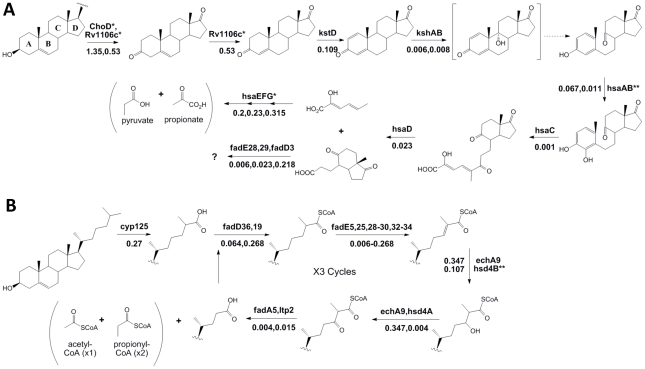
“[26] identified genes fadE28, fadE29 and fadD3 to be probably involved in the degradation of DOHNAA.”
BackgroundInfluentialYang, X., Yuan, T., Ma, R., Chacko, K., Smith, M. L., Deikus, G. Y., Sebra, R., Kasarskis, A., van Bakel, H., Franzblau, S. G., et al. (2019) · ACS Infectious Diseases · doi:10.1021/acsinfecdis.9b00099 · Cited by 17
“Transposon disruption of mce3R significantly inhibits growth of Mtb on cholesterol.(34) However, the genes within the Mce3R regulon are not required for catabolism of cholesterol,(8,9) suggesting that these genes have an alternate role in Mtb survival.”
Syed, P. R., Chen, W., Nelson, D. R., Kappo, A. P., Yu, J., Karpoormath, R. V., & Syed, K. (2019) · International Journal of Molecular Sciences · doi:10.3390/ijms20112690 · Cited by 16
Gharbi, R., Khanna, V., Frigui, W., Mhenni, B., Brosch, R., & Mardassi, H. (2021) · Scientific Reports · doi:10.1038/s41598-021-91737-8 · Cited by 17
Singh, M., Kumar, P., Yadav, S., Gautam, R., Sharma, N., & Karthikeyan, S. (2013) · Acta Crystallographica Section D Biological Crystallography · doi:10.1107/s0907444913011402 · Cited by 16
“Recently, it has been shown that the riboflavin-biosynthesis pathway is essential for pathogens including Mtb but is absent in humans (Fassbinder et al., 2000; Cole et al., 2001; Gerdes et al., 2001; Sassetti et al., 2003; Long et al., 2010; Griffin et al., 2011).”
BackgroundInfluentialvan Winden, V. J. C., Damen, M. P. M., Ummels, R., Bitter, W., & Houben, E. N. G. (2019) · Journal of Biological Chemistry · doi:10.1074/jbc.ra118.007090 · Cited by 15
Interactome Analysis Identifies MSMEI_3879 as a Substrate of Mycolicibacterium smegmatis ClpC1
Ogbonna, E. C., Anderson, H. R., Beardslee, P. C., Bheemreddy, P., & Schmitz, K. R. (2023) · Microbiology Spectrum · doi:10.1128/spectrum.04548-22 · Cited by 15
Otchere, I. D., Aboagye, S. Y., Arthur, P. K., & Asante-Poku, A. (2024) · Frontiers in Tropical Diseases · doi:10.3389/fitd.2024.1443248 · Cited by 15
Faksri, K., Tan, J. H., Disratthakit, A., Xia, E., Prammananan, T., Suriyaphol, P., Khor, C. C., Teo, Y., Ong, R. T., & Chaiprasert, A. (2016) · PLoS ONE · doi:10.1371/journal.pone.0160992 · Cited by 16
“Comparison between isolates WBB270 (DS19048) with WBB273 (DS21277) in Patient II showed a silent mutation at genomic position 711,556 C>A (CCC>CCA, Pro7Pro) in galTa (non-essential gene, probable galactose-1-phosphate uridylyl transferase [38]) and a missense SNP at genomic position 2,783,640 A>C (TGG>GGG of the minus…”
BackgroundNew Era of TB Drug Discovery and Its Impact on Disease Management
Zheng, X., & Av‐Gay, Y. (2016) · Current treatment options in infectious diseases/Current treatment options in infectious disease · doi:10.1007/s40506-016-0098-0 · Cited by 15
Lipolytic enzymes inhibitors: A new way for antibacterial drugs discovery
Cavalier, J., Spilling, C. D., Durand, T., Camoin, L., & Canaan, S. (2020) · European Journal of Medicinal Chemistry · doi:10.1016/j.ejmech.2020.112908 · Cited by 16
Lin, X., Kurz, J. L., Patel, K. M., Wun, S. J., Hussein, W. M., Lonhienne, T. G. A., West, N. P., McGeary, R. P., Schenk, G., & Guddat, L. W. (2020) · Chemistry - A European Journal · doi:10.1002/chem.202004665 · Cited by 15
Bharti, S., Maurya, R. K., Venugopal, U., Singh, R., Akhtar, M. S., & Krishnan, M. Y. (2021) · Frontiers in Microbiology · doi:10.3389/fmicb.2020.611122 · Cited by 17
Rao, S. D., Datta, P., Gennaro, M. L., & Igoshin, O. A. (2021) · mSystems · doi:10.1128/msystems.00979-20 · Cited by 15
“tuberculosis, 292 therefore deletionmutants are not viable (27, 28).”
BackgroundGoar, H., Paul, P., Khan, H., & Sarkar, D. (2022) · Journal of Bacteriology · doi:10.1128/jb.00110-22 · Cited by 16
McDowell, J. R., Bai, G., Lasek‐Nesselquist, E., Eisele, L. E., Wu, Y., Hurteau, G. J., Johnson, R., Bai, Y., Chen, Y., Chan, J., et al. (2023) · Molecular Microbiology · doi:10.1111/mmi.15030 · Cited by 17
“Observations from transposon mutagenesis screens suggest a role for Rv0805 in bacterial growth on cholesterol, propionate or long chain fatty acids (Griffin et al., 2011; Lee et al., 2013), and cAMP signaling has been implicated in lipid and propionyl- CoA metabolism of TB complex mycobacteria…”
BackgroundLi, W., Ge, F., Zhang, Q., Ren, Y., Yuan, J., He, J., Li, W., Chen, G., Zhang, G., Zhuang, Y., et al. (2014) · Genome · doi:10.1139/gen-2014-0030 · Cited by 15
“tuberculosis H37Rv, which demonstrated that ChoG is not required for growth in cholesterol in this strain (Griffin et al. 2011).”
BackgroundGenome-Wide Transposon Mutagenesis in Mycobacterium tuberculosis and Mycobacterium smegmatis
Majumdar, G., Mbau, R. D., Singh, V., Warner, D. F., Dragset, M. S., & Mukherjee, R. (2016) · Methods in molecular biology · doi:10.1007/978-1-4939-6472-7_21 · Cited by 15
Flavin Storage and Sequestration by Mycobacterium tuberculosis Dodecin
Bourdeaux, F., Hammer, C. A., Vogt, S., Schweighöfer, F., Nöll, G., Wachtveitl, J., & Grininger, M. (2018) · ACS Infectious Diseases · doi:10.1021/acsinfecdis.7b00237 · Cited by 15
Nandy, A., Mondal, A. K., Pandey, R., Arumugam, P., Dawa, S., Jaisinghani, N., Rao, V., Dash, D., & Gandotra, S. (2018) · Infection and Immunity · doi:10.1128/iai.00041-18 · Cited by 16
“The upregulation of fadE5 and pks2 suggests that bacilli encounter a cholesterol-rich environment in necrotic adipocytes (21).”
Identification of Enolase as the Target of 2-Aminothiazoles in Mycobacterium tuberculosis
Wescott, H., Zuniga, E. S., Bajpai, A., Trujillo, C., Ehrt, S., Schnappinger, D., Roberts, D. M., & Parish, T. (2018) · Frontiers in Microbiology · doi:10.3389/fmicb.2018.02542 · Cited by 15
Gadbery, J. E., Round, J. W., Yuan, T., Wipperman, M. F., Story, K. T., Crowe, A. M., Casabon, I., Liu, J., Yang, X., Eltis, L. D., et al. (2020) · Biochemistry · doi:10.1021/acs.biochem.0c00005 · Cited by 15
“10,49 The Biochemistry inability to grow on cholesterol has been associated with the accumulation of HIP-derived CoA thioesters and the concomitant depletion of CoASH in the cell.”
McNeil, M. B., Cheung, C., Waller, N. J. E., Adolph, C., Chapman, C. L., Seeto, N. E. J., Jowsey, W. J., Li, Z., Hameed, H. M. A., Zhang, T., et al. (2022) · Frontiers in Cellular and Infection Microbiology · doi:10.3389/fcimb.2022.980844 · Cited by 15
“This is in contrast to transposon mutagenesis and whole genome CRISPR-interference studies, in which both genes were designated as being necessary for mycobacterial growth (Griffin et al., 2011; Bosch et al., 2021).”
BackgroundResultInfluentialBeck, I. N., Arrowsmith, T. J., Grobbelaar, M. J., Bromley, E. H. C., Marles‐Wright, J., & Blower, T. R. (2023) · Nucleic Acids Research · doi:10.1093/nar/gkad1220 · Cited by 14
Singh, M., Dhanwal, A., Verma, A., Augustin, L., Kumari, N., Chakraborti, S., Agarwal, N., Sriram, D., & Dey, R. J. (2024) · Scientific Reports · doi:10.1038/s41598-024-63051-6 · Cited by 17
Gupta, R. S. (2018) · Microarrays · doi:10.3390/ht7040031 · Cited by 14
“literature [45,46], * Some exceptions are seen for these CSIs.”
BackgroundBudell, W. C., Germain, G. A., Janisch, N., McKie-Krisberg, Z. M., Jayaprakash, A. D., Resnick, A., & Quadri, L. E. N. (2020) · MicrobiologyOpen · doi:10.1002/mbo3.988 · Cited by 15
“…locus-dependent transposition biases often associated with saturation Tn mutagenesis approaches used in gene essentiality analysis (DeJesus, Ambadipudi, Baker, Sassetti, & Ioerger, 2015; DeJesus et al., 2017; DeJesus & Ioerger, 2013; DeJesus et al., 2013; Griffin et al., 2011; Long et al., 2015).”
MethodBayaraa, T., Gaete, J., Sutiono, S., Kurz, J. L., Lonhienne, T. G. A., Harmer, J. R., Bernhardt, P. V., Sieber, V., Guddat, L. W., & Schenk, G. (2022) · Chemistry - A European Journal · doi:10.1002/chem.202200927 · Cited by 14
Metadata
- Authors
- Griffin, J. E., Gawronski, J. D., DeJesus, M. A., Ioerger, T. R., Akerley, B. J., & Sassetti, C. M.
- Affiliations
- University of Massachusetts Chan Medical School (US)
- Texas A&M University (US)
- Howard Hughes Medical Institute (US)
- Corresponding author
- Sassetti, Christopher M.
- Venue
- PLoS Pathogens
- Publisher
- Public Library of Science (PLoS)
- Published
- 2011-09-29
- Volume
- 7
- Issue
- 9
- Pages
- e1002251
- ISSN
- 1553-7366 (ISSN-L)
- 1553-7374
- PMC
- PMC3182942
- OpenAlex
- W2067576392
- Cited by
- 1,048
- References
- 47
- Citations by year
- 2026: 32 · 2025: 50 · 2024: 56 · 2023: 58 · 2022: 50 · 2021: 85 · 2020: 79 · 2019: 102 · 2018: 90 · 2017: 89 · 2016: 82 · 2015: 99 · 2014: 79 · 2013: 68 · 2012: 27
- FWCI
- 38.15
- Type
- journal article
- Language
- en
- Open access
- gold
- doi.org
- Locations
- PLoS Pathogens (publishedVersion, cc-by)
- Europe PMC (PubMed Central) (publishedVersion, cc-by)
- PubMed Central (publishedVersion, cc-by)
- PubMed (publishedVersion)
- The Journal of the American Medical Association (JAMA) Network (American Medical Association) (submittedVersion, cc-by)
- DOAJ (DOAJ: Directory of Open Access Journals) (submittedVersion, cc-by-sa)
- Figshare (submittedVersion, cc-by)
- OakTrust (Texas A&M University Libraries) (submittedVersion)
- Funders
- Howard Hughes Medical Institute
- Bill and Melinda Gates Foundation
- National Institutes of Health
- National Institute of Allergy and Infectious Diseases (AI064282, AI073509, R21AI073509, R01AI064282)
- Topics
- Health Sciences › Medicine › Infectious Diseases › Tuberculosis Research and Epidemiology
- Life Sciences › Biochemistry, Genetics and Molecular Biology › Genetics › Bacterial Genetics and Biotechnology
- Physical Sciences › Chemistry › Organic Chemistry › Steroid Chemistry and Biochemistry
- Keywords
- Mycobacterium tuberculosis, essential genes, phenotypic profiling, cholesterol catabolism, bacterial growth, mutant library, host adaptation, virulence genes, therapeutic target, carbon source utilization
- MeSH terms
- Animals, Cholesterol, Genes, Bacterial, Mycobacterium tuberculosis, Tuberculosis, Virulence, Gene Expression Regulation, Bacterial, Mutagenesis, Gene Expression Profiling, Mice
About these checks
Registry, retraction, Cites and statistics results are computed, not judged, with one exception: a printed reference that no index lists is read once by a model before it counts as a citation error. Claims are extracted by a model and kept only when their quote appears verbatim in the text; each cited source is then checked, with a model’s help, for whether it says what the claim relies on. Those verdicts can be wrong — read the claim’s quote and the cited source before relying on one.
Statistics and arithmetic are recomputed, not judged.
Confidence bands are shown only for fields calibrated on our annotated test set. None is calibrated yet, so no band is shown.
What counts as a claim ›How we measure confidence ›How we check this ›
Are you an author, or do you see a problem with this page? Request a review
Data sources
Bibliographic data: Semantic Scholar, OpenAlex, Crossref.
Contains information from the Semantic Scholar Academic Graph Datasets, made available under the ODC Attribution License (ODC-BY 1.0).
Semantic Scholar’s data is described in: Kinney, R., et al. (2023). The Semantic Scholar Open Data Platform. arXiv:2301.10140.
