

High-Resolution Phenotypic Profiling Defines Genes Essential for Mycobacterial Growth and Cholesterol Catabolism
Open accessThe DOI matches its Crossref record; 47 of the 47 references it cites were found in a registry or an index.
Abstract
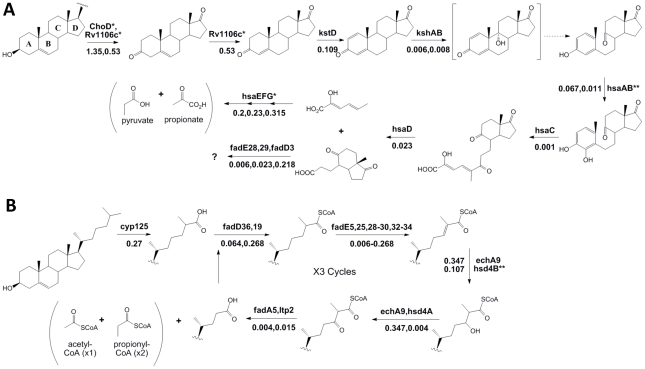
The pathways that comprise cellular metabolism are highly interconnected, and alterations in individual enzymes can have far-reaching effects. As a result, global profiling methods that measure gene expression are of limited value in predicting how the loss of an individual function will affect the cell. In this work, we employed a new method of global phenotypic profiling to directly define the genes required for the growth of Mycobacterium tuberculosis. A combination of high-density mutagenesis and deep-sequencing was used to characterize the composition of complex mutant libraries exposed to different conditions. This allowed the unambiguous identification of the genes that are essential for Mtb to grow in vitro, and proved to be a significant improvement over previous approaches. To further explore functions that are required for persistence in the host, we defined the pathways necessary for the utilization of cholesterol, a critical carbon source during infection. Few of the genes we identified had previously been implicated in this adaptation by transcriptional profiling, and only a fraction were encoded in the chromosomal region known to encode sterol catabolic functions. These genes comprise an unexpectedly large percentage of those previously shown to be required for bacterial growth in mouse tissue. Thus, this single nutritional change accounts for a significant fraction of the adaption to the host. This work provides the most comprehensive genetic characterization of a sterol catabolic pathway to date, suggests putative roles for uncharacterized virulence genes, and precisely maps genes encoding potential drug targets.
Overview
The claims and statistics of this paper haven’t been checked yet.
Free: it reads the open-access text and checks the first 5 claims that cite a source we can check. Create a free account to check every claim.
Integrity signals
Registry
Cites
Statistics
Figures


Verification
Claims the paper makes
The claims and statistics of this paper haven’t been checked yet.
Free: it reads the open-access text and checks the first 5 claims that cite a source we can check. Create a free account to check every claim.
Claims other papers make about this one
Each is checked against this paper’s own text: does it say what the citing paper says it does?
The check wasn’t confident either way, so it gives no verdict — never disputed.
In the citing paper
“A recent transposon-site hybridization (TraSH) screen in M. tuberculosis suggested that SDH1 but not SDH2 was essential for growth under aerobic conditions on standard medium (26).”
From Energetics of Respiration and Oxidative Phosphorylation in Mycobacteria (2014) · cites this paper as [26]
Experimental — accuracy not yet measuredThe check wasn’t confident either way, so it gives no verdict — never disputed.
In the citing paper
“Several studies have suggested that ndh is essential for growth of M. tuberculosis (12, 26, 28, 29) (Table 1).”
From Energetics of Respiration and Oxidative Phosphorylation in Mycobacteria (2014) · cites this paper as [26]
Experimental — accuracy not yet measured
Self-check
Percentages, sums and reported differences re-computed from the paper’s own numbers.
The self-check needs the paper’s full text.
Citations
Cites
Deciphering the biology of Mycobacterium tuberculosis from the complete genome sequence
Cole, S. T., Brosch, R., Parkhill, J., Garnier, T., Churcher, C., Harris, D., Gordon, S. V., Eiglmeier, K., Gas, S., Barry, C. E., et al. (1998) · Nature · doi:10.1038/31159 · Cited by 7,847
SOAP: Short oligonucleotide alignment program
Li, R., Li, Y., Kristiansen, K., & Wang, J. (2008) · Bioinformatics · doi:10.1093/bioinformatics/btn025 · Cited by 3,597 · cited 1×
“11 alignment software [48] at default settings (2 mismatches allowed per read).”
BackgroundGenes required for mycobacterial growth defined by high density mutagenesis
Sassetti, C. M., Boyd, D. H., & Rubin, E. J. (2003) · Molecular Microbiology · doi:10.1046/j.1365-2958.2003.03425.x · Cited by 2,544 · cited 3×
“About 15% of the Mtb genome, or 614 genes, were previously predicted to be required for optimal growth in vitro using microarray hybridization to map insertions sites [6].”
BackgroundSelf-citationMcKinney, J. D., zu Bentrup, K. H., Muñoz-Elías, E. J., Miczak, A., Chen, B., Chan, W.-T., Swenson, D., Sacchettini, J. C., Jacobs, W. R., & Russell, D. G. (2000) · Nature · doi:10.1038/35021074 · Cited by 1,360 · cited 1×
“A few genes that we found to contain very significant gaps in transposon coverage have been successfully deleted, and produce strains that grow normally under similar conditions to those used in our study [33,34,35,36,37,38].”
Genetic requirements for mycobacterial survival during infection
Sassetti, C. M., & Rubin, E. J. (2003) · Proceedings of the National Academy of Sciences · doi:10.1073/pnas.2134250100 · Cited by 1,354 · cited 2×
“When we compared these data to previous genome-wide screens for mutants attenuated in mouse models of infection [46] we found that a full ten percent of genes specifically required for bacterial growth in vivo are also required for the utilization of cholesterol in vitro (Table S3).”
MethodResultSelf-citationComprehensive transposon mutant library of Pseudomonas aeruginosa
Jacobs, M. A., Alwood, A., Thaipisuttikul, I., Spencer, D., Haugen, E., Ernst, S., Will, O., Kaul, R., Raymond, C., Levy, R., et al. (2003) · Proceedings of the National Academy of Sciences · doi:10.1073/pnas.2036282100 · Cited by 1,126 · cited 1×
“[5,6] or conventional sequencing [7,8,9] to map the sites of transposon insertions in large libraries of random mutants and identify regions of the chromosome that were unable to sustain mutation.”
BackgroundMycobacterial persistence requires the utilization of host cholesterol
Pandey, A. K., & Sassetti, C. M. (2008) · Proceedings of the National Academy of Sciences · doi:10.1073/pnas.0711159105 · Cited by 1,064 · cited 5×
“Disruption of Mce4 function by deleting an essential transmembrane component has been shown to cause specific defects in cholesterol uptake and growth in this carbon source [14].”
BackgroundMethodResultInfluentialSelf-citationvan Opijnen, T., Bodi, K. L., & Camilli, A. (2009) · Nature Methods · doi:10.1038/nmeth.1377 · Cited by 933
Global Transposon Mutagenesis and a Minimal Mycoplasma Genome
Hutchison, C. A., Peterson, S. N., Gill, S. R., Cline, R. T., White, O., Fraser, C. M., Smith, H. O., & Craig Venter, J. (1999) · Science · doi:10.1126/science.286.5447.2165 · Cited by 932
Muñoz-Elías, E. J., & McKinney, J. D. (2005) · Nature Medicine · doi:10.1038/nm1252 · Cited by 756 · cited 1×
“tuberculosis H37Rv encodes a multifunctional protein with both isocitrate lyase and methylisocitrate lyase activity, which is required for both pathways [25,26].”
Background
Cited by
Items 801–900 of 1,001
Santoshi, M., Bansia, H., Hussain, M., Jha, A. K., & Nagaraja, V. (2024) · Molecular Microbiology · doi:10.1111/mmi.15265 · Cited by 4
“Among them 111 are annotated as acyltransferases (Cole et al., 1998) of (DeJesus et al., 2017), Rv2483c during infection in mouse spleen (Griffin et al., 2011), and Rv3816c to maintain the non-replicating state of bacteria in vivo (Baek et al., 2011 ).”
BackgroundWáng, Q., Bao, G., Fan, S., Pei, X., & Fan, H. (2024) · Journal of Integrative Agriculture · doi:10.1016/j.jia.2024.07.009 · Cited by 4
Doherty, D. Z., Voss, J. J. D., Bruning, J. B., & Bell, S. G. (2025) · Chemical Science · doi:10.1039/d5sc01863c · Cited by 4
Zhang, J., Zhang, B., Zhao, Y., Yang, X., Huang, M., Cui, P., Zhang, W., Li, J., & Zhang, Y. (2018) · Biochemical and Biophysical Research Communications · doi:10.1016/j.bbrc.2018.02.056 · Cited by 4
Mycobacterium avium subsp. paratuberculosis Proteome Changes Profoundly in Milk
Kleinwort, K. J. H., Hobmaier, B., Mayer, R., Hölzel, C. S., Degroote, R. L., Märtlbauer, E. P., Hauck, S. M., & Deeg, C. A. (2021) · Metabolites · doi:10.3390/metabo11080549 · Cited by 4
“The intact Dut protein is essential in NTM mycobacteria and plays an exclusive role for biosynthesis and growth [44].”
BackgroundKumar, S., Sega, S., Lynn-Barbe, J. K., Harris, D. L., Koehn, J. T., Crans, D. C., & Crick, D. C. (2023) · Pathogens · doi:10.3390/pathogens12091171 · Cited by 7
Ahmad, M., Jha, B., Bose, S., Tiwari, S., Dwivedy, A., Kar, D., Pal, R., Mariadasse, R., Parish, T., Jeyakanthan, J., et al. (2022) · IUCrJ · doi:10.1107/s2052252523008485 · Cited by 4
Metabolic Tagging Reveals Surface-Associated Lipoproteins in Mycobacteria
Parkin, L. A., Becker, K. L., Maceren, J. P., Palande, A., Jaisinghani, N., Previti, M. L., & Seeliger, J. C. (2025) · ACS Infectious Diseases · doi:10.1021/acsinfecdis.5c00365 · Cited by 4
Translating genomics research into control of tuberculosis: lessons learned and future prospects
Warner, D. F., & Mizrahi, V. (2014) · Genome biology · doi:10.1186/s13059-014-0514-z · Cited by 4
“tuberculosis under standard in vitro conditions, and to identify the genes needed for growth on cholesterol, a critical carbon source during infection [56].”
BackgroundProteomic analysis of sensitive and multi drug resistant Mycobacterium tuberculosis strains
Yari, S., Tasbiti, A. H., Ghanei, M., Shokrgozar, M. A., Vaziri, B., Mahdian, R., Yari, F., & Bahrmand, A. R. (2016) · Microbiology · doi:10.1134/s0026261716030164 · Cited by 4
“The nucleoid-associated protein HU (Rv2986c), plays an important role in maintenance of chromosomal architecture Although HU is essential for growth in Mycobacterium tuberculosis This protein belongs to the histone like family of prokaryotic DNA-binding proteins which are capable of wrapping DNA to stabilize it, and p…”
BackgroundInfluentialJudd, J., Boucher, N., Roey, E. V., Gray, T. A., & Derbyshire, K. M. (2017) · Journal of Bacteriology · doi:10.1128/jb.00410-17 · Cited by 4
“tuberculosis ortholog, Rv3421 (67% identical), is essential for survival in macrophages and for in vitro growth on cholesterol (24, 25).”
BackgroundRedefining genetic essentiality in Mycobacterium tuberculosis
Patil, S., Palande, A., Lodhiya, T., Pandit, A., & Mukherjee, R. (2020) · Gene · doi:10.1016/j.gene.2020.145091 · Cited by 4
Minimal Genomes: How Many Genes Does a Cell Require To Be Viable
Baba, T., Kakizawa, S., Mori, H., Kuruma, Y., Kurokawa, K., & Oshima, T. (2020) · Journal of Geography (Chigaku Zasshi) · doi:10.5026/jgeography.129.805 · Cited by 4
Rv3722c Promotes Mycobacterium tuberculosis Survival in Macrophages by Interacting With TRAF3
Lei, Y., Cao, X., Xu, W., Yang, B., Xu, Y., Zhou, W., Dong, S., Wu, Q., Rahman, K., Tyagi, R., et al. (2021) · Frontiers in Cellular and Infection Microbiology · doi:10.3389/fcimb.2021.627798 · Cited by 4
“Rv3722c was identified to be essential for bacillus growth in vitro and infection (Griffin et al., 2011; Jansen et al., 2020).”
BackgroundKhan, S. S., Sudasinghe, T. D., Landgraf, A. D., Ronning, D. R., & Sucheck, S. J. (2021) · ACS Infectious Diseases · doi:10.1021/acsinfecdis.1c00283 · Cited by 4
Nucleotide Metabolism and DNA Replication
Warner, D. F., Evans, J. C., & Mizrahi, V. (2015) · ASM Press eBooks · doi:10.1128/9781555818845.ch30 · Cited by 5
Balamurugan, M., Banerjee, R., Kasibhatla, S. M., Achalere, A., & Joshi, R. (2022) · Frontiers in Genetics · doi:10.3389/fgene.2022.800083 · Cited by 4
Hegelmeyer, N. K., Parkin, L. A., Previti, M. L., Andrade, J., Utama, R., Sejour, R., Gardin, J., Muller, S., Ketchum, S., Yurovsky, A., et al. (2023) · mBio · doi:10.1128/mbio.00841-23 · Cited by 6
“The idea that synonymous mutations can cause phenotypes is not new (1, 33–37).”
BackgroundA computational protocol for the discovery of lead molecules targeting DNA unique to pathogens
Mishra, A., Pant, P., Mrinal, N., & Jayaram, B. (2017) · Methods · doi:10.1016/j.ymeth.2017.07.017 · Cited by 4
Stietz, M. S., Lopez, C., Osifo, O., Tolmasky, M. E., & Cardona, S. T. (2017) · Canadian Journal of Microbiology · doi:10.1139/cjm-2017-0350 · Cited by 4
Genome-wide assessment of Mycobacterium tuberculosis conditionally essential metabolic pathwaysPreprint
Minato, Y., Gohl, D. M., Thiede, J. M., Chacón, J. M., Harcombe, W. R., Maruyama, F., & Baughn, A. D. (2019) · bioRxiv (Cold Spring Harbor Laboratory) · doi:10.1101/534289 · Cited by 4
Dual biological role of glycoside hydrolase family fifty-seven glycogen branching enzymes
Xiang, G. (2021) · University of Groningen research database (University of Groningen / Centre for Information Technology) · doi:10.33612/diss.195152904 · Cited by 4
“Lastly, experimentally verification of the involvement of Rv3031 (Mt GH57 GBE) in the accumulation of MGLP in-vivo is meaningful; however this is challenging since Rv3031 was regarded as a growth essential gene [4-5].”
BackgroundOketade, N., Chengalroyen, M. D., Kain, D. C., Lewinsohn, D. M., & Dobos, K. M. (2026) · Frontiers in Immunology · doi:10.3389/fimmu.2025.1656167 · Cited by 3
Santoshi, M., Anand, C., Hussain, M., Rajmani, R. S., Ghosh, S., & Nagaraja, V. (2026) · Nucleic Acids Research · doi:10.1093/nar/gkag246 · Cited by 3
Dinshaw, K. M., Lien, K. A., Knight, M., Ouonkap, S. V. Y., Liu, H., Savage, D. F., Carlson, H. K., Deutschbauer, A. M., & Stanley, S. A. (2026) · PLoS Biology · doi:10.1371/journal.pbio.3003529 · Cited by 3
“Interestingly, both our dataset and previously published cholesterol TnSeq screen [22] indicate that lldD1 may be important for cholesterol utilization.”
InfluentialZheng, M., Kumar, A., vishakha, V., Behl, T., Rawat, R., Wal, P., Rani, K., Agarwal, M., Waghmode, R. R., Gulati, M., et al. (2025) · Current Medicinal Chemistry · doi:10.2174/0109298673346116250227101530 · Cited by 3
Shi, X., Shi, K.-X., Han, F., Wang, L., Cai, X., Zhao, G., Sha, W., & Lyu, L.-D. (2025) · Microbiology Spectrum · doi:10.1128/spectrum.01096-25 · Cited by 3
“A himar1-transposon mutant library was generated in Mtb by transduction with phiMycoMarT7(24).”
InfluentialVillela, A. D., Rodrigues-Junior, V. S., Pinto, A. F. M., Falcão, V. C. D. A., Sánchez-Quitian, Z. A., Eichler, P., Bizarro, C. V., Basso, L. A., & Santos, D. S. (2017) · Memórias do Instituto Oswaldo Cruz · doi:10.1590/0074-02760170105 · Cited by 3
“The cdd gene was predicted to be non-essential by Himar1-based transposon mutagenesis in H37Rv (Sas- setti et al. 2003, Griffin et al. 2011).”
BackgroundManicheva, O. A., Догонадзе, М. З., Мельникова, Н. Н., Vishnevsky, B., & Manichev, S. (2018) · Russian Journal of Infection and Immunity · doi:10.15789/2220-7619-2018-2-175-186 · Cited by 3
“tuberculosis обнаружены гены, экспрессия или ингибиция которых определяет скорость размножения микобактерий in vitro и/или in vivo, переход в дормантное состояние [4, 20, 22, 23, 24, 26].”
A platform for target prediction of phenotypic screening hit molecules
Homeyer, N., van Deursen, R., Ochoa‐Montaño, B., Heikamp, K., Ray, P. C., Zuccotto, F., Blundell, T. L., & Gilbert, I. H. (2019) · Journal of Molecular Graphics and Modelling · doi:10.1016/j.jmgm.2019.107485 · Cited by 3
Arya, S., Singh, P., Kaur, J., Kumar, A., & Kaur, J. (2022) · Molecular Biology Reports · doi:10.1007/s11033-022-07305-4 · Cited by 3
Mycobacterial Genetic Technologies for Probing the Host-Pathogen Microenvironment
Adefisayo, O. O., Curtis, E. R., & Smith, C. M. (2023) · Infection and Immunity · doi:10.1128/iai.00430-22 · Cited by 3
“gene essentiality analysis of Mtb are Transposon Insertion Mutagenesis (TIM) techniques, such as Transposon Sequencing (TnSeq), which involve generating a bacterial library through phage-mediated delivery of transposon elements that integrate at TA dinucleotide sequences and subsequent sequencing to confirm transposon…”
MethodSaha, R., Mukherjee, S., Singh, B. K., De, S., Weiss, M. S., & Das, A. K. (2023) · Biochemical and Biophysical Research Communications · doi:10.1016/j.bbrc.2023.06.029 · Cited by 3
Veyron‐Churlet, R., Lecher, S., Lacoste, A., Saliou, J., & Locht, C. (2023) · The FASEB Journal · doi:10.1096/fj.202202018rr · Cited by 3
Mégalizzi, V., Tanina, A., Grosse, C., Mirgaux, M., Legrand, P., Mirandela, G. D., Wohlkönig, A., Bifani, P. J., & Wintjens, R. T. (2024) · Heliyon · doi:10.1016/j.heliyon.2024.e40494 · Cited by 3
Khandelwal, N., Gupta, M., Gomez, J. E., Barkho, S., Guan, Z., Eng, A. Y., Kawate, T., Balasubramani, S. G., Šali, A., Hung, D. T., et al. (2025) · Nature Communications · doi:10.1038/s41467-025-58133-6 · Cited by 3
Bonnet, I., Orgeur, M., Brossier, F., Sayes, F., Frigui, W., Madacki, J., Varet, H., Chauffour, A., Aubry, A., Véziris, N., et al. (2025) · Microbiology Spectrum · doi:10.1128/spectrum.03224-24 · Cited by 4
“For kdpE , this observation differs from an initial high-density transposon mutation analysis in which kdpE was found to be required for optimal in vitro growth (32), whereas in a later study, a few kdpE transposon insertion mutant strains could be observed (33).”
Sharma, T., Tyagi, S., Pal, R., Kundu, J., Gupta, S. K., Barik, V., Nain, V. K., Pandey, M., Dwivedi, P., Panda, B. N., et al. (2025) · mSystems · doi:10.1128/msystems.00420-25 · Cited by 3
“S6A) (41).”
Bacterial c-type cytochromes and pathogenicity
Wilson, A. C. (2015) · European Journal of BioMedical Research · doi:10.18088/ejbmr.1.1.2015.pp17-21 · Cited by 4
“Mutagenesis screens indicate that the ccm, qcrCAB (cytochrome bc1 complex), and ctaCDE (aa3-type cytochrome c oxidase) genes are essential to mycobacterial growth (14, 15).”
BackgroundShahine, A., Littler, D. R., Brammananath, R., Chan, P. Y., Crellin, P. K., Coppel, R. L., Rossjohn, J., & Beddoe, T. (2014) · Acta Crystallographica Section D Biological Crystallography · doi:10.1107/s139900471401092x · Cited by 3
“However, MSMEG_5817 is most likely not required for normal growth, as Rv0807, the M. tuberculosis homologue of MSMEG_5817, has been shown to be non-essential (Sassetti et al., 2003; Griffin et al., 2011).”
BackgroundRespiration and Oxidative Phosphorylation in Mycobacteria
Berney, M., & Cook, G. M. (2014) · Advances in photosynthesis and respiration · doi:10.1007/978-94-017-8742-0_15 · Cited by 4
Expression and production of soluble Mycobacterium tuberculosis H37Rv mycosin-3
Fang, Z., Schubert, W., & van Pittius, N. C. G. (2016) · Biochemistry and Biophysics Reports · doi:10.1016/j.bbrep.2016.02.005 · Cited by 3
Otal, I., Pérez‐Herrán, E., García-Morales, L., Menendez, M. C., González-y-Merchand, J. A., Martín, C., & García, M. J. (2017) · Frontiers in Microbiology · doi:10.3389/fmicb.2017.00315 · Cited by 3
“Interestingly, this ncRNA seems to be essential for M. tuberculosis when the bacillus grows in cholesterol (Griffin et al., 2011).”
BackgroundZheng, S., Zhou, Y., Fleming, J., Zhou, Y., Liu, W., & Bi, L. (2017) · Acta Crystallographica Section F Structural Biology Communications · doi:10.1107/s2053230x17008937 · Cited by 3
“The protein Rv0164 is conserved among mycobacteria (Marmiesse, 2004) and has been identified as an essential gene product for growth of M. tuberculosis (Griffin et al., 2011).”
BackgroundSingh, K. H., Yadav, S., Kumar, D., & Biswal, B. K. (2018) · Acta Crystallographica Section D Structural Biology · doi:10.1107/s205979831800952x · Cited by 3
Identification of robust genes in transcriptional regulatory network of Mycobacterium tuberculosis
Singh, P. K., Amir, M., Chaudhary, U., Ahmad, F., Bhatt, S., Sankhwar, S., & Dohare, R. (2020) · IET Systems Biology · doi:10.1049/iet-syb.2020.0039 · Cited by 3
The Sec Pathways and Exportomes of Mycobacterium tuberculosis
Miller, B. K., Zulauf, K. E., & Braunstein, M. (2017) · ASM Press eBooks · doi:10.1128/9781555819569.ch28 · Cited by 6
Campen, R. (2015) · Open Access Victoria University of Wellington | Te Herenga Waka (Figshare) · doi:10.26686/wgtn.17009687.v1 · Cited by 4
“This is especially pertinent when using a mutagenesis approach such as random transposon mutagenesis which is unable to create mutations in essential genes (Griffin et al., 2011; Sassetti et al., 2001, 2003).”
Diversity of Mycobacterium tuberculosis across evolutionary scalesPreprint
O’Neill, M. B., Mortimer, T. D., & Pepperell, C. S. (2015) · bioRxiv (Cold Spring Harbor Laboratory) · doi:10.1101/014217 · Cited by 4
Whole genome-scale assessment of gene fitness of Novosphingobium aromaticavorans during spaceflight
Sharma, G., Zee, P. C., Zea, L., & Curtis, P. D. (2023) · BMC Genomics · doi:10.1186/s12864-023-09799-z · Cited by 2
“The insertion density of the replicates was in the range of 40–60%, with mean tem-plate-counts ranging from 50 to 90 per TA site [77].”
BackgroundMethodInfluentialArshad, K., Salim, J., Talat, M. A., Ashraf, A., & Kanwal, N. (2024) · PLoS ONE · doi:10.1371/journal.pone.0312860 · Cited by 2
Francis, T., Dedaki, C., Ananida-Dasenaki, P., Bolka, D., Albanis, K., Foteinakis, F., Mezquida, J., Hance, M. L. C., Athanasoulis, A., Papagiorgou, A.-K., et al. (2025) · RSC Medicinal Chemistry · doi:10.1039/d5md00102a · Cited by 2
“82,83 Interestingly, several hydrolases were detected, including a putative hydrolase (MAB_3501/Rv3195), a putative cyclase (MAB_3566c), a probable aldolase (MAB_2912c/Rv0727c), a putative quinolone synthase (MAB_0302/Rv1260), and the monoacylglycerol lipase (MAB_4551c/Rv0183) which has previously…”
Naidoo, T. J., Ashokcoomar, S., Truebody, B. E., Mackenzie, J. S., Steyn, A. J. C., & Pillay, M. (2025) · Metabolomics · doi:10.1007/s11306-025-02320-5 · Cited by 2
“The PPP aids in carbon homeostasis (Baughn & Rhee, 2014; Griffin et al., 2011; Sassetti et al., 2003).”
Development and preclinical evaluation of next-generation ΔsigH-based live candidate vaccines
Arora, G., Munson, C. W., Ahmed, M., Shivanna, V., Devi, A., Devireddy, V. S. R., Antony, B., Hall-Ursone, S., González, O., Dick, E. J., et al. (2025) · JCI Insight · doi:10.1172/jci.insight.195947 · Cited by 2
Shiraz, M., Biswas, D., Priyanka, G., Prabhu, N. P., & Akif, M. (2025) · Proteins Structure Function and Bioinformatics · doi:10.1002/prot.70095 · Cited by 2
Hunt, D. M., Pisco, J. P., Rodgers, A., de Chiara, C., Zaveri, A., Pacholarz, K. J., Evangelopoulos, D., Garza-García, A., Ehrt, S., Schnappinger, D., et al. (2026) · Nature Communications · doi:10.1038/s41467-026-70510-3 · Cited by 2
“It has been shown that L -histidine is not present at suf fi cient levels in host niches occupied by M. tuberculosis , as illustrated by the essentiality of all his biosyntheticgenesinvitroandinvivo 23 – 26 .”
Pascoe, J., Newcombe, J., Mendoza, J., Birua, S., Mendum, T. A., Anand, K., Singh, A., Sinha, A., Papavinasasundaram, K. G., Bhatt, A., et al. (2026) · EMBO Reports · doi:10.1038/s44319-026-00818-0 · Cited by 2
Encoded metabolic remodeling amplifies drug resistance in Mycobacterium tuberculosis
Frey, A. M., Babunovic, G. H., Culviner, P. H., Wang, X., Meirav, E., Gan, M., Zhu, J., Moody, D. B., Liu, Q., & Fortune, S. M. (2026) · PLoS Pathogens · doi:10.1371/journal.ppat.1014237 · Cited by 2
Crystal structure of theMSMEG_4306gene product fromMycobacterium smegmatis
Kumar, A. M., & Karthikeyan, S. (2018) · Acta Crystallographica Section F Structural Biology Communications · doi:10.1107/s2053230x18002236 · Cited by 2
“The MSMEG_4306 gene in Mycobacterium smegmatis encodes a protein of unknown function, and its homologue Rv2229c in M. tuberculosis has been shown to be essential for survival (Sassetti et al., 2003; Griffin et al., 2011; Xu et al., 2013).”
BackgroundIdentification of Streptococcus mitis321A vaccine antigens based on reverse vaccinology
Zhang, Q., Lin, K., Wang, C., Xu, Z. Z., Li, Y., & Ma, Q. (2018) · Molecular Medicine Reports · doi:10.3892/mmr.2018.8799 · Cited by 2
“Essential genes were defined as pivotal genes for organism survival, which are often involved in metabolism, DNA replication and translation into proteins (46).”
BackgroundHeat Shock Proteins in the Pathogenesis of Mycobacterium tuberculosis
Tripathi, P., & Batra, J. K. (2019) · Springer eBooks · doi:10.1007/978-981-32-9413-4_13 · Cited by 3
Santamaria, G., Ruiz-Rodríguez, P., Renau-Mínguez, C., Pinto, F. R., & Coscollá, M. (2022) · Biomolecules · doi:10.3390/biom12030376 · Cited by 2
Mycobacterium bovis BCG dodecin gene codes a functional protein despite of a start codon mutation
Schwarz, M. G. A., Corrêa, P. R., Almeida, P., & Mendonça-Lima, L. (2023) · Tuberculosis · doi:10.1016/j.tube.2023.102400 · Cited by 3
Deciphering the mannose transfer mechanism of mycobacterial PimE by molecular dynamics simulations
Bhattacharje, G., Ghosh, A., & Das, A. K. (2023) · Glycobiology · doi:10.1093/glycob/cwad096 · Cited by 2
Zmyslia, M., Fröhlich, K., Dao, T. T., Schmidt, A., & Jessen‐Trefzer, C. (2023) · Proteomes · doi:10.3390/proteomes11040039 · Cited by 2
“In recent years, several groups have investigated metabolic and transcriptional changes induced by cholesterol, since fatty acids and cholesterol are proposed to act as major carbon and energy sources for Mtb in vivo, especially at later stages of infection [21–23].”
BackgroundВладиславович, М. И., Angelova, V. T., Slavchev, I., Bezruchko, M. V., Dimitrov, S., Polev, D. E., Dobrikov, G. M., & Valcheva, V. (2025) · Antibiotics · doi:10.3390/antibiotics14030225 · Cited by 2
“In three Himar1 transposon mutagenesis studies, Rv3755c was identified as a nonessential gene for H37Rv growth in vitro [34–36].”
InfluentialGrzegorzewicz, A. E., Bui, D. T., De, P., Kitova, E. N., Belardinelli, J. M., Angala, S. K., Palčeková, Z., Vill, K., Kalscheuer, R., Klassen, J. S., et al. (2025) · ACS Infectious Diseases · doi:10.1021/acsinfecdis.4c00883 · Cited by 2
Leveraging a synthetic biology approach to enhance BCG-mediated expansion of Vγ9Vδ2 T cells
Qabar, C. M., Roberts, A. W., Waldburger, L. M., Baidoo, E. E. K., Turumtay, E. A., Keasling, J. D., Portnoy, D. A., & Cox, J. S. (2026) · PLoS ONE · doi:10.1371/journal.pone.0343925 · Cited by 2
Essential Gene Dynamics across Distinct Growth Conditions in Xanthomonas citri
Lv, W., Wang, X., Tan, Y., Zhu, J., Ge, Y., Wang, Y., Wu, M., Song, M., Zhang, Y., Shen, Y., et al. (2025) · Horticulture Research · doi:10.1093/hr/uhaf160 · Cited by 2
Lin, C., Liu, Y., Wan, W., Gao, J., & Sun, L. (2025) · International Journal of Biological Macromolecules · doi:10.1016/j.ijbiomac.2025.146122 · Cited by 2
Jaskulski, L., Rosado, L. A., Rostirolla, D. C., Timmers, L. F. S. M., de Souza, O. N., Santos, D. S., & Basso, L. A. (2013) · Archives of Biochemistry and Biophysics · doi:10.1016/j.abb.2013.05.012 · Cited by 2
Comparative analysis of metabolic machinery of Frankia along with other selected actinobacteria
Thakur, S., & Sen, A. (2016) · Symbiosis · doi:10.1007/s13199-016-0410-2 · Cited by 2
“F. alniACN14a (fal) was found to share 20 enzymes exclusively with M. tuberculosis H37Rv (mtv) and 74 such enzymes with S. coelicolor A3 (2) (sco).”
MethodInfluentialGenetic Determinants of Salmonella and Campylobacter Required for In Vitro Fitness
Mandal, R. K. (2016) · Journal of the Arkansas Academy of Science · Cited by 2
Rockwood, N., Lai, R., Seldon, R., Young, D. B., & Wilkinson, R. J. (2019) · Wellcome Open Research · doi:10.12688/wellcomeopenres.15332.1 · Cited by 2
Radical SAM Enzymes Involved in Modifications of RiPP Natural Products
Kincannon, W. M., & Bandarian, V. (2020) · Elsevier eBooks · doi:10.1016/b978-0-12-409547-2.14858-9 · Cited by 2
Agapova, Y. K., Altukhov, D. A., Kamashev, D., Timofeev, V. I., Smirnova, E. V., & Rakitina, T. V. (2020) · Crystallography Reports · doi:10.1134/s1063774520060048 · Cited by 2
DNA Replication in Mycobacterium tuberculosis
Ditse, Z., Lamers, M. H., & Warner, D. F. (2017) · ASM Press eBooks · doi:10.1128/9781555819569.ch27 · Cited by 2
The Minimal Unit of Infection: Mycobacterium tuberculosis in the Macrophage
VanderVen, B. C., Huang, L., Rohde, K. H., & Russell, D. G. (2017) · ASM Press eBooks · doi:10.1128/9781555819569.ch30 · Cited by 4
Structural and Functional Studies on Acyl-CoA Carboxylases of Mycobacterium tuberculosis
Anandhakrishnan, M. (2014) · heiDOK (Heidelberg University) · doi:10.11588/heidok.00015509 · Cited by 3
Mirto, A. J. (2017) · Libraries and Cultural Resources (University of Calgary) · doi:10.11575/prism/26430 · Cited by 2
Network stress test reveals novel drug potentiators in Mycobacterium tuberculosisPreprint
Ma, S., Morrison, R., Hobbs, S. J., Farrow-Johnson, J., Rustad, T. R., & Sherman, D. R. (2018) · bioRxiv (Cold Spring Harbor Laboratory) · doi:10.1101/429373 · Cited by 3
Ribosome profiling in Mycobacterium tuberculosis reveals robust leaderless translationPreprint
Sawyer, E. B., Phelan, J. E., Clark, T. G., & Cortes, T. (2020) · bioRxiv (Cold Spring Harbor Laboratory) · doi:10.1101/2020.04.22.055855 · Cited by 3
“12 leaderless and Shine-Dalgarno transcripts and are mostly related to cholesterol metabolism (Griffin et al., 2011) or are SEC substrates (de Souza et al.”
BackgroundBabin, B. M., Keller, L. J., Pinto, Y., Li, V. L., Eneim, A. S., Vance, S. E., Terrell, S. M., Bhatt, A. S., Long, J. Z., & Bogyo, M. S. (2021) · bioRxiv (Cold Spring Harbor Laboratory) · doi:10.1101/2021.06.07.447460 · Cited by 2
Lyonnet, B. B., Diacovich, L., Cabruja, M., Bardou, F., Quémard, A., Gago, G., & Gramajo, H. C. (2020) · PLoS ONE · doi:10.1371/journal.pone.0242528 · Cited by 2
Carey, A. F., Rock, J. M., Krieger, I. V., Chase, M. R., Fernández-Suárez, M., Gagneux, S., Sacchettini, J. C., Ioerger, T. R., & Fortune, S. M. (2019) · PLoS Pathogens · doi:10.1371/journal.ppat.1007846 · Cited by 2
Self-citationA universal stress protein acts as a metabolic rheostat controlling carbon flux in mycobacteriaPreprint
Lougheed, K. E. A., Thomson, M., Koziej, L., Larrouy-Maumus, G. J., & Williams, H. D. (2022) · bioRxiv (Cold Spring Harbor Laboratory) · doi:10.1101/2022.06.10.495724 · Cited by 2
“We aimed to study the function of Rv1636 but were unable to construct a knockout mutant in its gene, a finding that fits with its reported essentially for growth in vitro (36).”
BackgroundHynönen, M. J., Perumal, P., Tir, N., Doutch, J., Ma, K., & Venkatesan, R. (2025) · bioRxiv (Cold Spring Harbor Laboratory) · doi:10.1101/2025.03.26.645568 · Cited by 2
Deschner, F., Chengalroyen, M. D., Ames, L., Quach, D., Olvera, R. A., Bosch, B., Castro, A., Kim, H., Raman, K., Thornton, N., et al. (2025) · bioRxiv (Cold Spring Harbor Laboratory) · doi:10.64898/2025.12.09.693342 · Cited by 2
Self-citationMetabolomics of Central Carbon Metabolism in Mycobacterium tuberculosis
Baughn, A. D., & Rhee, K. Y. (2015) · ASM Press eBooks · doi:10.1128/9781555818845.ch16 · Cited by 1
Synthesis of steroidal inhibitors for Mycobacterium tuberculosis
Churchman, L. R., Beckett, J. R., Tan, L., Woods, K. J., Doherty, D. Z., Ghith, A., Bernhardt, P. V., Bell, S. G., West, N. P., & Voss, J. J. D. (2024) · The Journal of Steroid Biochemistry and Molecular Biology · doi:10.1016/j.jsbmb.2024.106479 · Cited by 1
Griesser, T., Wang, R., Pachón-Angona, I., Rogenmoser, J., Obrist, J., Schneider, G., & Sander, P. (2025) · Nucleic Acids Research · doi:10.1093/nar/gkaf529 · Cited by 1
“The essentiality of gpsI in mycobacterial growth has been confirmed through multiple transposon libraries [ 19–22 ] and deletion of the Mycobacterium smegmatis gpsI was only achievable under merodiploid condition [ 23 ], underscoring its indispensability.”
Masinga, N., Nelson, D. R., & Syed, K. (2025) · International Journal of Molecular Sciences · doi:10.3390/ijms26178531 · Cited by 1
Schumacher, M. A., Singh, R. R., & Salinas, R. (2025) · Journal of Molecular Biology · doi:10.1016/j.jmb.2025.169486 · Cited by 1
Mojanaga, O. O., Woodman, T. J., Lloyd, M. D., & Acharya, K. R. (2025) · Journal of Biological Chemistry · doi:10.1016/j.jbc.2025.110848 · Cited by 1
“In Mycobacterium tuberculosis ( Mtb ), the causative agent of tuberculosis, cholesterol metabolism is crucial for intra-cellular survival and virulence (4, 5).”
InfluentialTran, P. M., Anaya-Sanchez, A., Ji, D. X., Schwarz, M. C. R., Angala, S. K., Jackson, M., Stanley, S. A., & Darwin, K. H. (2025) · Proceedings of the National Academy of Sciences · doi:10.1073/pnas.2523024122 · Cited by 1
“FadE25 putatively encodes a short chain acyl - coA dehydrogenase that is required for growth on cholesterol in vitro ( 41 ), but its actual substrate(s) remain to be identified.”
Silveiro, C., Mortinho, D., Olivença, F., Mandal, M., Pires, D., Anes, E., & Catalão, M. J. (2025) · BMC Microbiology · doi:10.1186/s12866-025-04548-6 · Cited by 2
Alberti, M., & Miggiano, R. (2026) · Biochemical Society Transactions · doi:10.1042/bst20253113 · Cited by 1
Mycobacteria, survival, and universal stress proteins
Giorgi‐Ramos, F., Havis, S., & Bark, S. J. (2026) · FEBS Letters · doi:10.1002/1873-3468.70284 · Cited by 1
“Several functional studies by Himar1-based transposon mutagenesis in M. tuberculosis strain H37Rv implicated multiple USP genes required for mycobacterial growth [13,14].”
The Pyridoxal-5′-Phosphate-Dependent Enzymes of Mycobacterium tuberculosis
Peracchi, A., & Baker, B. (2026) · ACS Infectious Diseases · doi:10.1021/acsinfecdis.5c00996 · Cited by 1
Šarkan, M., Forbak, M., Brown, C. M., Gilleron, M., Angala, S. K., De, K., Tymčuková, V., Gašparovič, H., Guerin, M. E., Nigou, J., et al. (2026) · Journal of Biological Chemistry · doi:10.1016/j.jbc.2026.113077 · Cited by 1
“…published results (28), failure to achieve allelic replacement at the mptB locus of Msmg is consistent with the reported loss of viability that follows the silencing of mptB in Msmg and Mtb (31) and the predicted essentiality of this gene in Mtb based on saturation transposon mutagenesis (32, 33).”
Metadata
- Authors
- Griffin, J. E., Gawronski, J. D., DeJesus, M. A., Ioerger, T. R., Akerley, B. J., & Sassetti, C. M.
- Affiliations
- University of Massachusetts Chan Medical School (US)
- Texas A&M University (US)
- Howard Hughes Medical Institute (US)
- Corresponding author
- Sassetti, Christopher M.
- Venue
- PLoS Pathogens
- Publisher
- Public Library of Science (PLoS)
- Published
- 2011-09-29
- Volume
- 7
- Issue
- 9
- Pages
- e1002251
- ISSN
- 1553-7366 (ISSN-L)
- 1553-7374
- PMC
- PMC3182942
- OpenAlex
- W2067576392
- Cited by
- 1,048
- References
- 47
- Citations by year
- 2026: 32 · 2025: 50 · 2024: 56 · 2023: 58 · 2022: 50 · 2021: 85 · 2020: 79 · 2019: 102 · 2018: 90 · 2017: 89 · 2016: 82 · 2015: 99 · 2014: 79 · 2013: 68 · 2012: 27
- FWCI
- 38.15
- Type
- journal article
- Language
- en
- Open access
- gold
- doi.org
- Locations
- PLoS Pathogens (publishedVersion, cc-by)
- Europe PMC (PubMed Central) (publishedVersion, cc-by)
- PubMed Central (publishedVersion, cc-by)
- PubMed (publishedVersion)
- The Journal of the American Medical Association (JAMA) Network (American Medical Association) (submittedVersion, cc-by)
- DOAJ (DOAJ: Directory of Open Access Journals) (submittedVersion, cc-by-sa)
- Figshare (submittedVersion, cc-by)
- OakTrust (Texas A&M University Libraries) (submittedVersion)
- Funders
- Howard Hughes Medical Institute
- Bill and Melinda Gates Foundation
- National Institutes of Health
- National Institute of Allergy and Infectious Diseases (AI064282, AI073509, R21AI073509, R01AI064282)
- Topics
- Health Sciences › Medicine › Infectious Diseases › Tuberculosis Research and Epidemiology
- Life Sciences › Biochemistry, Genetics and Molecular Biology › Genetics › Bacterial Genetics and Biotechnology
- Physical Sciences › Chemistry › Organic Chemistry › Steroid Chemistry and Biochemistry
- Keywords
- Mycobacterium tuberculosis, essential genes, phenotypic profiling, cholesterol catabolism, bacterial growth, mutant library, host adaptation, virulence genes, therapeutic target, carbon source utilization
- MeSH terms
- Animals, Cholesterol, Genes, Bacterial, Mycobacterium tuberculosis, Tuberculosis, Virulence, Gene Expression Regulation, Bacterial, Mutagenesis, Gene Expression Profiling, Mice
About these checks
Registry, retraction, Cites and statistics results are computed, not judged, with one exception: a printed reference that no index lists is read once by a model before it counts as a citation error. Claims are extracted by a model and kept only when their quote appears verbatim in the text; each cited source is then checked, with a model’s help, for whether it says what the claim relies on. Those verdicts can be wrong — read the claim’s quote and the cited source before relying on one.
Statistics and arithmetic are recomputed, not judged.
Confidence bands are shown only for fields calibrated on our annotated test set. None is calibrated yet, so no band is shown.
What counts as a claim ›How we measure confidence ›How we check this ›
Are you an author, or do you see a problem with this page? Request a review
Data sources
Bibliographic data: Semantic Scholar, OpenAlex, Crossref.
Contains information from the Semantic Scholar Academic Graph Datasets, made available under the ODC Attribution License (ODC-BY 1.0).
Semantic Scholar’s data is described in: Kinney, R., et al. (2023). The Semantic Scholar Open Data Platform. arXiv:2301.10140.
