

High-Resolution Phenotypic Profiling Defines Genes Essential for Mycobacterial Growth and Cholesterol Catabolism
Open accessThe DOI matches its Crossref record; 47 of the 47 references it cites were found in a registry or an index.
Abstract
The pathways that comprise cellular metabolism are highly interconnected, and alterations in individual enzymes can have far-reaching effects. As a result, global profiling methods that measure gene expression are of limited value in predicting how the loss of an individual function will affect the cell. In this work, we employed a new method of global phenotypic profiling to directly define the genes required for the growth of Mycobacterium tuberculosis. A combination of high-density mutagenesis and deep-sequencing was used to characterize the composition of complex mutant libraries exposed to different conditions. This allowed the unambiguous identification of the genes that are essential for Mtb to grow in vitro, and proved to be a significant improvement over previous approaches. To further explore functions that are required for persistence in the host, we defined the pathways necessary for the utilization of cholesterol, a critical carbon source during infection. Few of the genes we identified had previously been implicated in this adaptation by transcriptional profiling, and only a fraction were encoded in the chromosomal region known to encode sterol catabolic functions. These genes comprise an unexpectedly large percentage of those previously shown to be required for bacterial growth in mouse tissue. Thus, this single nutritional change accounts for a significant fraction of the adaption to the host. This work provides the most comprehensive genetic characterization of a sterol catabolic pathway to date, suggests putative roles for uncharacterized virulence genes, and precisely maps genes encoding potential drug targets.
Overview
The claims and statistics of this paper haven’t been checked yet.
Free: it reads the open-access text and checks the first 5 claims that cite a source we can check. Create a free account to check every claim.
Integrity signals
Registry
Cites
Statistics
Figures


Verification
Claims the paper makes
The claims and statistics of this paper haven’t been checked yet.
Free: it reads the open-access text and checks the first 5 claims that cite a source we can check. Create a free account to check every claim.
Claims other papers make about this one
Each is checked against this paper’s own text: does it say what the citing paper says it does?
The check wasn’t confident either way, so it gives no verdict — never disputed.
In the citing paper
“A recent transposon-site hybridization (TraSH) screen in M. tuberculosis suggested that SDH1 but not SDH2 was essential for growth under aerobic conditions on standard medium (26).”
From Energetics of Respiration and Oxidative Phosphorylation in Mycobacteria (2014) · cites this paper as [26]
Experimental — accuracy not yet measuredThe check wasn’t confident either way, so it gives no verdict — never disputed.
In the citing paper
“Several studies have suggested that ndh is essential for growth of M. tuberculosis (12, 26, 28, 29) (Table 1).”
From Energetics of Respiration and Oxidative Phosphorylation in Mycobacteria (2014) · cites this paper as [26]
Experimental — accuracy not yet measured
Self-check
Percentages, sums and reported differences re-computed from the paper’s own numbers.
The self-check needs the paper’s full text.
Citations
Cites
Deciphering the biology of Mycobacterium tuberculosis from the complete genome sequence
Cole, S. T., Brosch, R., Parkhill, J., Garnier, T., Churcher, C., Harris, D., Gordon, S. V., Eiglmeier, K., Gas, S., Barry, C. E., et al. (1998) · Nature · doi:10.1038/31159 · Cited by 7,847
SOAP: Short oligonucleotide alignment program
Li, R., Li, Y., Kristiansen, K., & Wang, J. (2008) · Bioinformatics · doi:10.1093/bioinformatics/btn025 · Cited by 3,597 · cited 1×
“11 alignment software [48] at default settings (2 mismatches allowed per read).”
BackgroundGenes required for mycobacterial growth defined by high density mutagenesis
Sassetti, C. M., Boyd, D. H., & Rubin, E. J. (2003) · Molecular Microbiology · doi:10.1046/j.1365-2958.2003.03425.x · Cited by 2,544 · cited 3×
“About 15% of the Mtb genome, or 614 genes, were previously predicted to be required for optimal growth in vitro using microarray hybridization to map insertions sites [6].”
BackgroundSelf-citationMcKinney, J. D., zu Bentrup, K. H., Muñoz-Elías, E. J., Miczak, A., Chen, B., Chan, W.-T., Swenson, D., Sacchettini, J. C., Jacobs, W. R., & Russell, D. G. (2000) · Nature · doi:10.1038/35021074 · Cited by 1,360 · cited 1×
“A few genes that we found to contain very significant gaps in transposon coverage have been successfully deleted, and produce strains that grow normally under similar conditions to those used in our study [33,34,35,36,37,38].”
Genetic requirements for mycobacterial survival during infection
Sassetti, C. M., & Rubin, E. J. (2003) · Proceedings of the National Academy of Sciences · doi:10.1073/pnas.2134250100 · Cited by 1,354 · cited 2×
“When we compared these data to previous genome-wide screens for mutants attenuated in mouse models of infection [46] we found that a full ten percent of genes specifically required for bacterial growth in vivo are also required for the utilization of cholesterol in vitro (Table S3).”
MethodResultSelf-citationComprehensive transposon mutant library of Pseudomonas aeruginosa
Jacobs, M. A., Alwood, A., Thaipisuttikul, I., Spencer, D., Haugen, E., Ernst, S., Will, O., Kaul, R., Raymond, C., Levy, R., et al. (2003) · Proceedings of the National Academy of Sciences · doi:10.1073/pnas.2036282100 · Cited by 1,126 · cited 1×
“[5,6] or conventional sequencing [7,8,9] to map the sites of transposon insertions in large libraries of random mutants and identify regions of the chromosome that were unable to sustain mutation.”
BackgroundMycobacterial persistence requires the utilization of host cholesterol
Pandey, A. K., & Sassetti, C. M. (2008) · Proceedings of the National Academy of Sciences · doi:10.1073/pnas.0711159105 · Cited by 1,064 · cited 5×
“Disruption of Mce4 function by deleting an essential transmembrane component has been shown to cause specific defects in cholesterol uptake and growth in this carbon source [14].”
BackgroundMethodResultInfluentialSelf-citationvan Opijnen, T., Bodi, K. L., & Camilli, A. (2009) · Nature Methods · doi:10.1038/nmeth.1377 · Cited by 933
Global Transposon Mutagenesis and a Minimal Mycoplasma Genome
Hutchison, C. A., Peterson, S. N., Gill, S. R., Cline, R. T., White, O., Fraser, C. M., Smith, H. O., & Craig Venter, J. (1999) · Science · doi:10.1126/science.286.5447.2165 · Cited by 932
Muñoz-Elías, E. J., & McKinney, J. D. (2005) · Nature Medicine · doi:10.1038/nm1252 · Cited by 756 · cited 1×
“tuberculosis H37Rv encodes a multifunctional protein with both isocitrate lyase and methylisocitrate lyase activity, which is required for both pathways [25,26].”
Background
Cited by
Items 401–500 of 1,001
Rahman, K., Jamal, M., Chen, X., Zhou, W., Yang, B., Zou, Y., Xu, W., Lei, Y., Wu, C., Cao, X., et al. (2021) · Genomics Proteomics & Bioinformatics · doi:10.1016/j.gpb.2021.01.008 · Cited by 31
Domenech, P., Rog, A., Moolji, J., Radomski, N., Fallow, A., León-Solís, L. E., Bowes, J., Behr, M. A., & Reed, M. B. (2014) · Infection and Immunity · doi:10.1128/iai.01791-14 · Cited by 30
Free Glucosylglycerate Is a Novel Marker of Nitrogen Stress in Mycobacterium smegmatis
Behrends, V., Williams, K. J., Jenkins, V. A., Robertson, B. D., & Bundy, J. G. (2012) · Journal of Proteome Research · doi:10.1021/pr300371b · Cited by 33
Guo, J. T., Wang, C., Han, Y., Liu, Z., Wu, T., Liu, Y., Liu, Y., Tan, Y., Cai, X.-S., Cao, Y., et al. (2016) · Journal of Proteome Research · doi:10.1021/acs.jproteome.6b00116 · Cited by 29
Huszár, S., Singh, V., Polčicová, A., Baráth, P., Barrio, M. B. P., Lagrange, S., Leblanc, V., Nacy, C. A., Mizrahi, V., & Mikušová, K. (2017) · Antimicrobial Agents and Chemotherapy · doi:10.1128/aac.01310-17 · Cited by 29
Patel, K. M., Teran, D., Zheng, S., Kandale, A., Garcia, M. D., Lv, Y., Schembri, M. A., McGeary, R. P., Schenk, G., & Guddat, L. W. (2017) · Chemistry - A European Journal · doi:10.1002/chem.201704481 · Cited by 29
Revitalizing antifolates through understanding mechanisms that govern susceptibility and resistance
Kordus, S. L., & Baughn, A. D. (2019) · MedChemComm · doi:10.1039/c9md00078j · Cited by 32
Effects of Host, Sample, and in vitro Culture on Genomic Diversity of Pathogenic Mycobacteria
Shockey, A. C., Dabney, J., & Pepperell, C. S. (2019) · Frontiers in Genetics · doi:10.3389/fgene.2019.00477 · Cited by 29
Arora, G., Chaudhary, D., Kidwai, S., Sharma, D., & Singh, R. (2018) · Frontiers in Cellular and Infection Microbiology · doi:10.3389/fcimb.2018.00385 · Cited by 31
Sharma, A., Rustad, T. R., Mahajan, G., Kumar, A., Rao, K. V. S., Banerjee, S., Sherman, D. R., & Mande, S. C. (2015) · Tuberculosis · doi:10.1016/j.tube.2015.11.003 · Cited by 29
“Of the three, only Rv3208 was essential for in vitro growth [75], while Rv1332 is essential for growth in primary murine macrophages [76] and in C57BL/6J mouse spleen [77].”
BackgroundMycobacterium smegmatis HtrA Blocks the Toxic Activity of a Putative Cell Wall Amidase
Wu, K. J., Boutte, C. C., Ioerger, T. R., & Rubin, E. J. (2019) · Cell Reports · doi:10.1016/j.celrep.2018.12.063 · Cited by 28
“Previous transposon insertion-based (Tn-seq) screens have predicted the essentiality of htrA in both Msm and Mtb (Griffin et al., 2011; Zhang et al., 2012; DeJesus and loerger, 2013).”
BackgroundInfluentialSelf-citationWang, X., Perryman, A. L., Li, S., Paget, S. D., Stratton, T. P., Lemenze, A., Olson, A. J., Ekins, S., Kumar, P., & Freundlich, J. S. (2019) · ACS Infectious Diseases · doi:10.1021/acsinfecdis.9b00295 · Cited by 29
Ofori-Anyinam, B., Riley, A. J., Jobarteh, T., Gitteh, E., Sarr, B., Faal-Jawara, T. I., Rigouts, L., Senghore, M., Kehinde, A. O., Onyejepu, N., et al. (2020) · Tuberculosis · doi:10.1016/j.tube.2020.101899 · Cited by 30
Vilchèze, C., Yan, B., Casey, R., Hingley‐Wilson, S., Ettwiller, L. M., & Jacobs, W. R. (2022) · Frontiers in Immunology · doi:10.3389/fimmu.2022.909904 · Cited by 30
“Mce proteins participate in nutrient uptake, cholesterol uptake and catabolism (23, 73, 74), lipid homeostasis following stress responses (72) and in cell wall modification (75).”
BackgroundYan, M., Zheng, D., Li, S., Ding, X.-Y., Wang, C., Guo, X.-P., Zhan, L., Jin, Q., Yang, J., & Sun, Y. (2022) · Science Advances · doi:10.1126/sciadv.add5907 · Cited by 32
Hírmondó, R., Szabó, J. E., Nyíri, K., Tarjányi, S., Dobrotka, P., Tóth, J. S., & Vértessy, B. G. (2015) · DNA repair · doi:10.1016/j.dnarep.2015.03.005 · Cited by 28
“The monofunctional dUTPase ( dut ) is essential in Mycobacteria [21–23].”
BackgroundResultJeong, J.-A., Park, S. W., Yoon, D., Kim, S., Kang, H.-Y., & Oh, J. (2018) · Journal of Bacteriology · doi:10.1128/jb.00152-18 · Cited by 29
“smegmatis, for which the mutants were successfully generated (24, 26, 45, 51).”
Abhishek, S., Saikia, U. N., Gupta, A., Bansal, R., Gupta, V., Singh, N., Laal, S., & Verma, I. (2018) · Frontiers in Cellular and Infection Microbiology · doi:10.3389/fcimb.2018.00330 · Cited by 29
“Genes (Rv0462: lpdC and Rv1005c: pabB) of folate biosynthesis are predicted to be essential for mycobacterial survival (Griffin et al., 2011) and enzymes of folate metabolism are targets of potent antitubercular agents (Minato et al.”
BackgroundComparing the Metabolic Capabilities of Bacteria in the Mycobacterium tuberculosis Complex
Fieweger, R. A., Wilburn, K. M., & VanderVen, B. C. (2019) · Microorganisms · doi:10.3390/microorganisms7060177 · Cited by 30
“Cholesterol degradation produces excess pyruvate and this intermediate can fuel gluconeogenesis through the production of PEP via pyruvate phosphate dikinase, PpdK activity (Figure 1) [90].”
BackgroundHards, K., Adolph, C., Harold, L. K., McNeil, M. B., Cheung, C., Jinich, A., Rhee, K. Y., & Cook, G. M. (2019) · Progress in Biophysics and Molecular Biology · doi:10.1016/j.pbiomolbio.2019.11.003 · Cited by 30
de Wet, T. J., Gobe, I., Mhlanga, M. M., & Warner, D. F. (2018) · bioRxiv (Cold Spring Harbor Laboratory) · doi:10.1101/358275 · Cited by 29
Clinically relevant mutations in mycobacterial LepA cause rifampicin-specific phenotypic resistance
Wang, B.-W., Zhu, J., & Javid, B. (2020) · Scientific Reports · doi:10.1038/s41598-020-65308-2 · Cited by 27
Bloodworth, R. A. M., Gislason, A. S., & Cardona, S. T. (2013) · MicrobiologyOpen · doi:10.1002/mbo3.71 · Cited by 30
“No correlation was found between the size of the essential genome with the overall number of genes with most of the bacterial essential genomes ranging from 300 to 700 genes (Gerdes et al. 2006; Langridge et al. 2009; Christen et al. 2011; Griffin et al. 2011).”
BackgroundAnand, P., & Chandra, N. R. (2014) · Scientific Reports · doi:10.1038/srep06356 · Cited by 29
Miggiano, R., Morrone, C., Rossi, F., & Rizzi, M. (2020) · Molecules · doi:10.3390/molecules25051205 · Cited by 27
“MTB encodes three apparent homologues of IMPDH on its chromosome (guaB1, guaB2 and guaB3), but only guaB2 (Rv3411c) was found to encode a functional IMPDH enzyme (GuaB2) [29,30].”
BackgroundFragment-based discovery of a new class of inhibitors targeting mycobacterial tRNA modification
Thomas, S. E., Whitehouse, A., Brown, K., Burbaud, S., Belardinelli, J. M., Sangen, J., Lahiri, R., Libardo, M. D. J., Gupta, P., Malhotra, S., et al. (2020) · Nucleic Acids Research · doi:10.1093/nar/gkaa539 · Cited by 27
“…abscessus Previous studies have demonstrated that trmD is essential in diverse bacteria including M. tuberculosis, where different transposon mutagenesis studies have shown that it is essential or that mutants had a growth defect (DeJesus et al., 2017; Griffin et al., 2011; Sassetti et al., 2003).”
BackgroundFeng, Y., Chang, S. K., & Portnoy, D. A. (2023) · mBio · doi:10.1128/mbio.01074-23 · Cited by 26
Ayikpoe, R. S., Salazar, J., Majestic, B. J., & Latham, J. A. (2018) · Biochemistry · doi:10.1021/acs.biochem.8b00816 · Cited by 30
Choe, D., Olson, C. A., Szubin, R., Yang, H., Sung, J., Feist, A. M., & Palsson, B. Ø. (2024) · Nature Communications · doi:10.1038/s41467-024-46486-3 · Cited by 26
Genetic engineering of Mycobacterium tuberculosis: A review
Lamrabet, O., & Drancourt, M. (2012) · Tuberculosis · doi:10.1016/j.tube.2012.06.002 · Cited by 35
Strategies for potentiation of ethionamide and folate antagonists againstMycobacterium tuberculosis
Wolff, K., & Nguyen, L. (2012) · Expert Review of Anti-infective Therapy · doi:10.1586/eri.12.87 · Cited by 31
Ryan, A. J., Polycarpou, E., Lack, N. A., Evangelopoulos, D., Sieg, C., Halman, A., Bhakta, S., Eleftheriadou, O., McHugh, T. D., Keany, S., et al. (2017) · British Journal of Pharmacology · doi:10.1111/bph.13810 · Cited by 26
“More recent studies have also implicated a role for the operon and HsaD inmycobacterial growth linked to cholesterol catabolism (Griffin et al., 2011).”
BackgroundResultInfluentialDelineating FtsQ-mediated regulation of cell division in Mycobacterium tuberculosis
Jain, P., Malakar, B., Khan, M. Z., Lochab, S., Singh, A. K., & Nandicoori, V. K. (2018) · Journal of Biological Chemistry · doi:10.1074/jbc.ra118.003628 · Cited by 26
“Based on high-throughput transposon mutagenesis studies, SepIVA has been identified to be essential for the in vitro growth of the pathogen (42).”
BackgroundMycobacterial virulence: impact on immunogenicity and vaccine research
Kroesen, V. M., Madacki, J., Frigui, W., Sayes, F., & Brosch, R. (2019) · F1000Research · doi:10.12688/f1000research.20572.1 · Cited by 27
Systems Biology-Based Identification of Mycobacterium tuberculosis Persistence Genes in Mouse Lungs
Dutta, N. K., Bandyopadhyay, N., Veeramani, B., Lamichhane, G., Karakousis, P. C., & Bader, J. S. (2014) · mBio · doi:10.1128/mbio.01066-13 · Cited by 27
“Different methods characterize essential genes based on the number of consecutive TA sites without observed insertions (29) or identify overlapping genome regions lacking transposon insertions and then identify genes overlapping these essential regions (29, 31).”
The anti‐sigma factor MucA is required for viability in Pseudomonas aeruginosa
Schofield, M. C., Rodriguez, D. Q., Kidman, A. A., Cassin, E. K., Michaels, L. A., Campbell, E. A., Jorth, P. A., & Tseng, B. S. (2021) · Molecular Microbiology · doi:10.1111/mmi.14732 · Cited by 25
“In Mycobacterium tuberculosis, the gene encoding the anti-sigma factor RslA is identified as essential due to an underrepresentation of interruptions in a genome-wide transposon insertional analysis (Griffin et al., 2011).”
BackgroundBoldrin, F., Anso, I., Alebouyeh, S., Sevilla, I. A., Geijó, M., Garrido, J. M., Marina, A., Mazzabò, L. C., Segafreddo, G., Guerin, M. E., et al. (2021) · Journal of Bacteriology · doi:10.1128/jb.00439-20 · Cited by 25
“The gene patA is predicted to be an essential gene for in vitro growth of H37Rv according to analysis of saturated Himar1 transposon libraries (31, 37, 38).”
BackgroundEssential gene complement of Planctopirus limnophila from the bacterial phylum Planctomycetes
Rivas‐Marín, E., Moyano-Palazuelo, D., Henriques, V., Merino, E., & Devos, D. P. (2023) · Nature Communications · doi:10.1038/s41467-023-43096-3 · Cited by 27
Timms, V. J., Hassan, K. A., Mitchell, H. M., & Neilan, B. A. (2015) · BMC Genomics · doi:10.1186/s12864-015-1889-2 · Cited by 28
“for this gene product in vivo [33, 34].”
Sitote, T. M., & Gakkhar, S. (2015) · BioMed Research International · doi:10.1155/2015/212061 · Cited by 25
“For the purpose of validation, selective comparisons have beenmade among the proposed targets and previously identified drug targets by various othermethods.”
BackgroundMetabolic adaptation of Mycobacterium avium subsp. paratuberculosis to the gut environment
Weigoldt, M., Meens, J., Bange, F., Pich, A., Gerlach, G.-F., & Goethe, R. (2012) · Microbiology · doi:10.1099/mic.0.062737-0 · Cited by 28
“In addition, we observed an increased abundance of AdhB and BcpB, whose orthologues in MTB were identified to be also essential for growth on cholesterol (Griffin et al., 2011).”
BackgroundInfluentialGonzalez-Carrillo, C., Millan-Sauceda, C., Lozano-Garza, H. G., Ortíz-López, R., Elizondo-González, R., Welsh, O., Ocampo‐Candiani, J., & Cabrera, L. V. (2016) · Infection and Immunity · doi:10.1128/iai.00329-16 · Cited by 25
“This protein, together with GroEL or HSP65, is important for the proper folding of many proteins; its deletion in Mycobacterium tuberculosis results in a nonviable clone (9).”
BackgroundDhiman, R. K., Pujari, V., Kincaid, J. M., Ikeh, M. A. C., Parish, T., & Crick, D. C. (2019) · PLoS ONE · doi:10.1371/journal.pone.0214958 · Cited by 25
Hu, K., Jastrab, J. B., Zhang, S., Kovach, A., Zhao, G., Darwin, K. H., & Li, H. (2018) · Journal of Biological Chemistry · doi:10.1074/jbc.ra117.001471 · Cited by 25
“Although we do not yet know the function of ParP, it is likely to have ATPase activity and is not predicted to be essential for bacterial viability in vitro (20).”
BackgroundReyes, A. M., Vazquez, D. S., Zeida, A., Hugo, M., Piñeyro, M. D., Armas, M. I. D., Estrin, D. A., Radí, R., Santos, J., & Trujillo, M. (2016) · Free Radical Biology and Medicine · doi:10.1016/j.freeradbiomed.2016.10.005 · Cited by 24
Babin, B. M., Keller, L. J., Pinto, Y., Li, V. L., Eneim, A. S., Vance, S. E., Terrell, S. M., Bhatt, A. S., Long, J. Z., & Bogyo, M. S. (2021) · Cell chemical biology · doi:10.1016/j.chembiol.2021.08.013 · Cited by 25
“Importantly, none of the genes encoding the putative targets are annotated as essential according to transposon-sequencing datasets (Griffin et al., 2011; Rengarajan et al., 2005; Sassetti et al., 2003; Sassetti and Rubin, 2003).”
BackgroundGradients in gene essentiality reshape antibacterial research
Hogan, A. M., & Cardona, S. T. (2022) · FEMS Microbiology Reviews · doi:10.1093/femsre/fuac005 · Cited by 25
Mycobacterium tuberculosis KasA as a drug target: Structure-based inhibitor design
Reshma, R. S., Daher, S. S., Gallardo‐Macias, R., Wang, X., Neiditch, M. B., & Freundlich, J. S. (2022) · Frontiers in Cellular and Infection Microbiology · doi:10.3389/fcimb.2022.1008213 · Cited by 26
Updating and curating metabolic pathways of TB
Slayden, R. A., Jackson, M., Zucker, J., Ramirez, M. V., Dawson, C. C., Crew, R. M., Sampson, N. S., Thomas, S. T., Jamshidi, N., Sisk, P., et al. (2013) · Tuberculosis · doi:10.1016/j.tube.2012.11.001 · Cited by 27
Cashmore, T. J., Klatt, S., Yamaryo-Botte, Y., Brammananth, R., Rainczuk, A. K., McConville, M. J., Crellin, P. K., & Coppel, R. L. (2017) · Journal of Biological Chemistry · doi:10.1074/jbc.m116.772202 · Cited by 25
“glutamicum, the mycobacterial orthologues are essential for normal growth (39, 40).”
BackgroundInfluentialLefebvre, C., Frigui, W., Slama, N., Lauzéral-Vizcaïno, F., Constant, P., Lemassu, A., Parish, T., Eynard, N., Daffé, M., Brosch, R., et al. (2020) · Scientific Reports · doi:10.1038/s41598-020-58967-8 · Cited by 25
Ma, S., Morrison, R., Hobbs, S. J., Soni, V., Farrow-Johnson, J., Frando, A., Fleck, N. D., Grundner, C., Rhee, K. Y., Rustad, T. R., et al. (2020) · Nature Microbiology · doi:10.1038/s41564-020-00810-x · Cited by 25
“TRIP offers several advantages: (1) emergent phenotypes are accessible, since regulons generally include multiple genes selected for co-regulation by evolution; (2) revealed phenotypes can be deconstructed with the existing baseline regulatory network; (3) transcription factor expression is chemically triggered, enabl…”
BackgroundResultInfluentialCyclic di‐GMP sensing histidine kinase PdtaS controls mycobacterial adaptation to carbon sources
Hariharan, V. N., Yadav, R., Thakur, C., Singh, A., Gopinathan, R., Singh, D. P., Sankhe, G. D., Malhotra, V., Chandra, N. R., Bhatt, A., et al. (2021) · The FASEB Journal · doi:10.1096/fj.202002537rr · Cited by 24
Fullam, E., Prokeš, I., Fütterer, K., & Besra, G. S. (2016) · Open Biology · doi:10.1098/rsob.160105 · Cited by 26
van der Klugt, T. T., van den Biggelaar, R. H. G. A., & Saris, A. (2024) · Critical Reviews in Microbiology · doi:10.1080/1040841x.2024.2370979 · Cited by 26
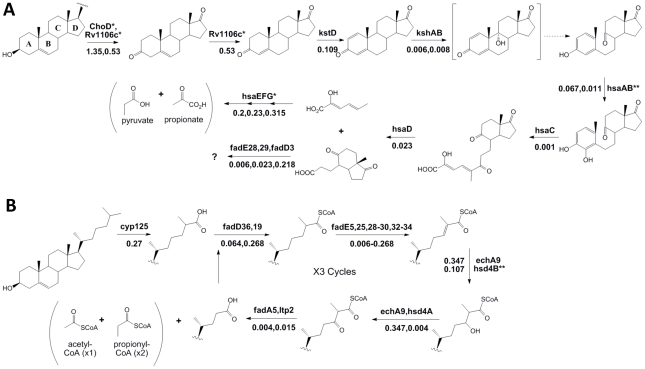
“For cholesterol, the P450 cytochrome enzymes cyp125 or cyp142 initiate the removal of the side chain from the sterol rings (Johnston et al. 2010; Griffin et al. 2011).”
InfluentialStrategies for drug target identification in Mycobacterium leprae
Acebrón-García-de-Eulate, M., Blundell, T. L., & Vedithi, S. C. (2021) · Drug Discovery Today · doi:10.1016/j.drudis.2021.03.026 · Cited by 23
Essential Roles of PPARs in Lipid Metabolism during Mycobacterial Infection
Tanigawa, K., Luo, Y., Kawashima, A., Kiriya, M., Nakamura, Y., Karasawa, K., & Suzuki, K. (2021) · International Journal of Molecular Sciences · doi:10.3390/ijms22147597 · Cited by 24
Behera, A., Jain, P., Ganguli, G., Biswas, M., Padhi, A., Pattanaik, K. P., Nayak, B., Ergün, S., Hagens, K., Redinger, N., et al. (2022) · International Journal of Molecular Sciences · doi:10.3390/ijms23052584 · Cited by 24
Effect of Mycolic Acids on Host Immunity and Lipid Metabolism
Wang, H., Liu, D., & Zhou, X. (2023) · International Journal of Molecular Sciences · doi:10.3390/ijms25010396 · Cited by 25
Long, J., Roy, R. B., Zhang, Y. J., Antrobus, R., Du, Y., Smith, D. L., Weekes, M. P., & Javid, B. (2016) · Frontiers in Microbiology · doi:10.3389/fmicb.2016.01086 · Cited by 23
Wei, W., Yan, H., Zhao, J., Li, H., Li, Z., Guo, H., Wang, X., Zhou, Y., Zhang, X., Zeng, J., et al. (2019) · Emerging Microbes & Infections · doi:10.1080/22221751.2019.1568179 · Cited by 23
Datta, C., Jha, R., Ganguly, S., & Nagaraja, V. (2019) · Journal of Molecular Biology · doi:10.1016/j.jmb.2019.02.029 · Cited by 23
Puffal, J., Mayfield, J. A., Moody, D. B., & Morita, Y. S. (2018) · Frontiers in Microbiology · doi:10.3389/fmicb.2018.03145 · Cited by 24
Baena, A., Cabarcas, F., Alvarez-Eraso, K. L. F., Isaza, J. P., Álzate, J. F., & Barrera, L. F. (2019) · Virulence · doi:10.1080/21505594.2019.1642045 · Cited by 26
“cholesterol [40], it has been proposed that upregulation of fadE5 and pks2 may be related to the cholesterol-rich environment found in necrotic adipocytes [39].”
BackgroundA guide to Mycobacterium mutagenesis
Borgers, K., Vandewalle, K., Festjens, N., & Callewaert, N. (2019) · FEBS Journal · doi:10.1111/febs.15041 · Cited by 25
Girardin, R. C., & McDonough, K. A. (2019) · Molecular Microbiology · doi:10.1111/mmi.14436 · Cited by 24
“Nutrient rich media is often used in batch culture experimentation with Mtb, and the potential confounding effect of multiple nutrient sources on characterizing the essentiality and function of gene products has recently gained appreciation (DeJesus et al., 2017; Griffin et al., 2011).”
BackgroundKrishna, V. S., Zheng, S., Rekha, E. M., Nallangi, R., Prasad, D., George, S. E., Guddat, L. W., & Sriram, D. (2020) · European Journal of Medicinal Chemistry · doi:10.1016/j.ejmech.2020.112178 · Cited by 23
Guan, Q., Ummels, R., Ben-Rached, F., Alzahid, Y. A., Amini, M. S., Adroub, S. A., van Ingen, J., Bitter, W., Abdallah, A. M., & Pain, A. (2020) · Frontiers in Cellular and Infection Microbiology · doi:10.3389/fcimb.2020.00122 · Cited by 23
“growth on cholesterol (Griffin et al., 2011) are uniquely present in M.”
BackgroundAnalysis of Gene Essentiality from TnSeq Data Using Transit
Ioerger, T. R. (2021) · Methods in molecular biology · doi:10.1007/978-1-0716-1720-5_22 · Cited by 41
Self-citationPayros, D., Alonso, H., Malaga, W., Volle, A., Mazères, S., Dejean, S., Valière, S., Moreau, F., Balor, S., Stella, A., et al. (2021) · PLoS Pathogens · doi:10.1371/journal.ppat.1010020 · Cited by 23
Energetics of Respiration and Oxidative Phosphorylation in Mycobacteria
Cook, G. M., Hards, K., Vilchèze, C., Hartman, T. E., & Berney, M. (2015) · ASM Press eBooks · doi:10.1128/9781555818845.ch20 · Cited by 24
Pang, A. H., Garzan, A., Larsen, M. J., McQuade, T. J., Garneau‐Tsodikova, S., & Tsodikov, O. V. (2016) · ACS Chemical Biology · doi:10.1021/acschembio.6b00510 · Cited by 23
Rahlwes, K. C., Ha, S. A., Motooka, D., Mayfield, J. A., Baumoel, L. R., Strickland, J. N., Torres‐Ocampo, A. P., Nakamura, S., & Morita, Y. S. (2017) · Journal of Biological Chemistry · doi:10.1074/jbc.m117.804377 · Cited by 23
“Genome-wide transposon mutagenesis studies further predict that many genes involved in PIMs/LM/LAM biosynthesis, such as pimA, pimB′, pimE , and mptA are essential in Mtb (2).”
BackgroundChen, H., Zhu, S., Casabon, I., Hallam, S., Crocker, F. H., Mohn, W. W., Indest, K. J., & Eltis, L. D. (2012) · Applied and Environmental Microbiology · doi:10.1128/aem.02120-12 · Cited by 22
Taylor, G., Cui, H.-J., Leodolter, J., Giese, C., & Weber-Ban, E. U. (2023) · Communications Biology · doi:10.1038/s42003-023-04658-9 · Cited by 23
Fluorogenic Probes of the Mycobacterial Membrane as Reporters of Antibiotic Action
Wuo, M. G., Dulberger, C. L., Warner, T. C., Brown, R. A., Sturm, A., Ultee, E., Bloom‐Ackermann, Z., Choi, C., Zhu, J., Garner, E. C., et al. (2024) · Journal of the American Chemical Society · doi:10.1021/jacs.4c00617 · Cited by 22
Islam, Z., Kumar, A. M., Singh, S., Salmon, L., & Karthikeyan, S. (2015) · Journal of Biological Chemistry · doi:10.1074/jbc.m114.611830 · Cited by 22
“tuberculosis (7), Helicobacter pylori (37), and Salmonella (38) and its requirement in disease models like typhoid fever and enteritis (39), no inhibitors have been identified until now for this enzyme.”
BackgroundMendum, T. A., Chandran, A., Williams, K. J., Vordermeier, H. M., Villarreal‐Ramos, B., Wu, H., Singh, A., Smith, A. A., Butler, R. E., Prasad, A., et al. (2019) · BMC Genomics · doi:10.1186/s12864-019-5791-1 · Cited by 25
Discovery, Synthesis and Evaluation of a Ketol‐Acid Reductoisomerase Inhibitor
Bayaraa, T., Kurz, J. L., Patel, K. M., Hussein, W. M., Bilyj, J. K., West, N. P., Schenk, G., McGeary, R. P., & Guddat, L. W. (2020) · Chemistry - A European Journal · doi:10.1002/chem.202000899 · Cited by 22
Antitubercular 2-Pyrazolylpyrimidinones: Structure–Activity Relationship and Mode-of-Action Studies
de Melo, C. S., Singh, V., Myrick, A., Simelane, S. B., Taylor, D., Brunschwig, C., Lawrence, N., Schnappinger, D., Engelhart, C. A., Kumar, A., et al. (2021) · Journal of Medicinal Chemistry · doi:10.1021/acs.jmedchem.0c01727 · Cited by 22
Frank, D. J., Zhao, Y., Wong, S. H., Basudhar, D., Voss, J. J. D., & de Montellano, P. R. O. (2016) · Journal of Biological Chemistry · doi:10.1074/jbc.m115.708172 · Cited by 22
Metabolic models and gene essentiality data reveal essential and conserved metabolism in prokaryotes
Xavier, J. C., Patil, K. R., & Rocha, I. (2018) · PLoS Computational Biology · doi:10.1371/journal.pcbi.1006556 · Cited by 23
Borgers, K., Ou, J.-Y., Zheng, P., Tiels, P., Hecke, A. V., Plets, E., Michielsen, G., Festjens, N., Callewaert, N., & Lin, Y. (2019) · BMC Genomics · doi:10.1186/s12864-019-5909-5 · Cited by 22
“tb H37Rv [39, 40], we suspect that the protein function is retained.”
BackgroundInfluentialGrzegorzewicz, A. E., Gee, C. T., Das, S., Liu, J., Belardinelli, J. M., Jones, V., McNeil, M., Lee, R. E., Jr., & Jackson, M. (2019) · ACS Infectious Diseases · doi:10.1021/acsinfecdis.9b00162 · Cited by 21
Antoine, R., Gaudin, C., & Hartkoorn, R. C. (2021) · Microbiology Spectrum · doi:10.1128/spectrum.00019-21 · Cited by 21
“tuberculosis genes under in vitro and ex vivo conditions (3, 4, 21, 22).”
BackgroundMoradigaravand, D., Grandjean, L., Martinez, E. M., Li, H., Zheng, J., Coronel, J., Moore, D., Török, M. E., Sintchenko, V., Huang, H., et al. (2016) · Antimicrobial Agents and Chemotherapy · doi:10.1128/aac.00253-16 · Cited by 21
“Two studies suggested that dfrA is essential in vitro in the H37Rv laboratory strain (5, 6).”
BackgroundChenge, J., Duyệt, L. V., Swami, S., McLean, K. J., Kavanagh, M. E., Coyne, A. G., Rigby, S. E. J., Cheesman, M. R., Girvan, H. M., Levy, C., et al. (2016) · Journal of Biological Chemistry · doi:10.1074/jbc.m116.748822 · Cited by 21
“It was not identified in bacterial culture filtrate or membrane fractions, consistent with it being a soluble, cytosolic protein (57, 58).”
BackgroundMetabolic Perspectives on Persistence
Hartman, T. E., Wang, Z., Jansen, R. S., Gardete, S., & Rhee, K. Y. (2017) · Microbiology Spectrum · doi:10.1128/microbiolspec.tbtb2-0026-2016 · Cited by 21
“Among the latter, work by Griffin and Sassetti identified a gene cluster required for import of host cholesterol (44).”
BackgroundWei, J., Lu, N., Li, Z., Wu, X., Jiang, T., Xu, L., Chun, Y., & Guo, S. (2019) · BioMed Research International · doi:10.1155/2019/7861695 · Cited by 21
Moopanar, K. R., Nyide, A. N. G., Senzani, S., & Mvubu, N. E. (2022) · Pathogens and Disease · doi:10.1093/femspd/ftac046 · Cited by 20
“…have proven the kshA and kshB genes to be indispensable for M. tuberculosis infection in murine and macrophage models (Dormans et al. 2004), leading to the conclusion that metabolism of cholesterol during infection without the functioning of these genes is unachievable (Griffin et al. 2011).”
BackgroundInfluentialRoles of Lipolytic enzymes in Mycobacterium tuberculosis pathogenesis
Lin, H., Xing, J., Wang, H., Wang, S., Ren, F., Li, X., Li, Z., & Song, N. (2024) · Frontiers in Microbiology · doi:10.3389/fmicb.2024.1329715 · Cited by 21
Pratt, A. C., Dewage, S. W., Pang, A. H., Biswas, T., Barnard-Britson, S., Cisneros, G. A., & Tsodikov, O. V. (2015) · Journal of Structural Biology · doi:10.1016/j.jsb.2015.08.010 · Cited by 20
Getting Across the Cell Envelope: Mycobacterial Protein Secretion
van der Woude, A. D., Luirink, J., & Bitter, W. (2012) · Current topics in microbiology and immunology · doi:10.1007/82_2012_298 · Cited by 21
“tuberculosis tatA, tatB and tatC are essential for growth in contrast to tatD (Saint-Joanis et al. 2006; Griffin et al. 2011).”
BackgroundInfluentialDefelipe, L. A., Porto, D. F. D., Ramos, P. I. P., Nicolás, M., Sosa, E. J., Radusky, L., Lanzarotti, E., Turjanski, A. G., & Marti, M. A. (2015) · Tuberculosis · doi:10.1016/j.tube.2015.11.009 · Cited by 23
“I3PS is the protein that converts Glucose-6-P to 1D-myo-inositol 3-phosphate, it has been reported as essential in both high throughput [50,51] as well as single mutant studies [86].”
BackgroundMethodInfluentialOtt, L., Hacker, E., Kunert, T., Karrington, I., Etschel, P., Lang, R., Wiesmann, V., Wittenberg, T. C., Singh, A., Varela, C., et al. (2017) · PLoS ONE · doi:10.1371/journal.pone.0180105 · Cited by 20
“Although it was reported as essential under the tested conditions, mutant strains were obtained in previous screenings [70,71].”
ResultMortuza, R., Aung, H. L., Taiaroa, G., Opel‐Reading, H. K., Kleffmann, T., Cook, G. M., & Krause, K. L. (2017) · Molecular Microbiology · doi:10.1111/mmi.13877 · Cited by 21
“tuberculosis (Morayya et al., 2015; Griffin et al., 2011), contradicting earlier studies (Sassetti et al.”
ResultIntegrated Multi-Omic Analysis of Mycobacterium tuberculosis H37Ra Redefines Virulence Attributes
Pinto, S. M., Verma, R., Advani, J., Chatterjee, O., Patil, A. H., Kapoor, S., Subbannayya, Y., Raja, R., Gandotra, S., & Prasad, T. S. K. (2018) · Frontiers in Microbiology · doi:10.3389/fmicb.2018.01314 · Cited by 20
“tuberculosis has identified this protein to be essential for growth and cholesterol metabolism (Griffin et al., 2011).”
BackgroundIMB-T130 targets 3-dehydroquinate synthase and inhibits Mycobacterium tuberculosis
Zhu, N., Wang, X., Li, D., Lin, Y., You, X., Jiang, J., Xu, Y., Jiang, W., & Si, S. (2018) · Scientific Reports · doi:10.1038/s41598-018-35701-z · Cited by 20
Wei, S., Wang, D., Li, H., Bi, L., Deng, J., Zhu, G., Zhang, J., Li, C., Li, M., Fang, Y., et al. (2019) · Cellular Microbiology · doi:10.1111/cmi.13090 · Cited by 20
“A number of Mtb proteins have been identified their toxicity by interacting with the human macrophage proteins (Griffin et al., 2011; Nair et al., 2009; Parveen et al., 2013; Pathak et al., 2007; Sreejit et al., 2014).”
BackgroundShtratnikova, V., Schelkunov, M. I., Фокина, В. В., Bragin, E. Y., Шутов, А. А., & Donova, M. V. (2021) · BMC Biotechnology · doi:10.1186/s12896-021-00668-9 · Cited by 20
“Cholesterol catabolism has been intensively studied in the so-called mycolic acid rich actinobacteria such as pathogenic species: Mycobacterium tuberculosis [5], Rhodococcus strains [6, 7], as well as in the non-pathogenic species such as Mycolicibacterium smegmatis (basonym Mycobacterium smegmatis) mc(2)155 [4], Gord…”
Background
Metadata
- Authors
- Griffin, J. E., Gawronski, J. D., DeJesus, M. A., Ioerger, T. R., Akerley, B. J., & Sassetti, C. M.
- Affiliations
- University of Massachusetts Chan Medical School (US)
- Texas A&M University (US)
- Howard Hughes Medical Institute (US)
- Corresponding author
- Sassetti, Christopher M.
- Venue
- PLoS Pathogens
- Publisher
- Public Library of Science (PLoS)
- Published
- 2011-09-29
- Volume
- 7
- Issue
- 9
- Pages
- e1002251
- ISSN
- 1553-7366 (ISSN-L)
- 1553-7374
- PMC
- PMC3182942
- OpenAlex
- W2067576392
- Cited by
- 1,048
- References
- 47
- Citations by year
- 2026: 32 · 2025: 50 · 2024: 56 · 2023: 58 · 2022: 50 · 2021: 85 · 2020: 79 · 2019: 102 · 2018: 90 · 2017: 89 · 2016: 82 · 2015: 99 · 2014: 79 · 2013: 68 · 2012: 27
- FWCI
- 38.15
- Type
- journal article
- Language
- en
- Open access
- gold
- doi.org
- Locations
- PLoS Pathogens (publishedVersion, cc-by)
- Europe PMC (PubMed Central) (publishedVersion, cc-by)
- PubMed Central (publishedVersion, cc-by)
- PubMed (publishedVersion)
- The Journal of the American Medical Association (JAMA) Network (American Medical Association) (submittedVersion, cc-by)
- DOAJ (DOAJ: Directory of Open Access Journals) (submittedVersion, cc-by-sa)
- Figshare (submittedVersion, cc-by)
- OakTrust (Texas A&M University Libraries) (submittedVersion)
- Funders
- Howard Hughes Medical Institute
- Bill and Melinda Gates Foundation
- National Institutes of Health
- National Institute of Allergy and Infectious Diseases (AI064282, AI073509, R21AI073509, R01AI064282)
- Topics
- Health Sciences › Medicine › Infectious Diseases › Tuberculosis Research and Epidemiology
- Life Sciences › Biochemistry, Genetics and Molecular Biology › Genetics › Bacterial Genetics and Biotechnology
- Physical Sciences › Chemistry › Organic Chemistry › Steroid Chemistry and Biochemistry
- Keywords
- Mycobacterium tuberculosis, essential genes, phenotypic profiling, cholesterol catabolism, bacterial growth, mutant library, host adaptation, virulence genes, therapeutic target, carbon source utilization
- MeSH terms
- Animals, Cholesterol, Genes, Bacterial, Mycobacterium tuberculosis, Tuberculosis, Virulence, Gene Expression Regulation, Bacterial, Mutagenesis, Gene Expression Profiling, Mice
About these checks
Registry, retraction, Cites and statistics results are computed, not judged, with one exception: a printed reference that no index lists is read once by a model before it counts as a citation error. Claims are extracted by a model and kept only when their quote appears verbatim in the text; each cited source is then checked, with a model’s help, for whether it says what the claim relies on. Those verdicts can be wrong — read the claim’s quote and the cited source before relying on one.
Statistics and arithmetic are recomputed, not judged.
Confidence bands are shown only for fields calibrated on our annotated test set. None is calibrated yet, so no band is shown.
What counts as a claim ›How we measure confidence ›How we check this ›
Are you an author, or do you see a problem with this page? Request a review
Data sources
Bibliographic data: Semantic Scholar, OpenAlex, Crossref.
Contains information from the Semantic Scholar Academic Graph Datasets, made available under the ODC Attribution License (ODC-BY 1.0).
Semantic Scholar’s data is described in: Kinney, R., et al. (2023). The Semantic Scholar Open Data Platform. arXiv:2301.10140.
