

High-Resolution Phenotypic Profiling Defines Genes Essential for Mycobacterial Growth and Cholesterol Catabolism
Open accessThe DOI matches its Crossref record; 47 of the 47 references it cites were found in a registry or an index.
Abstract
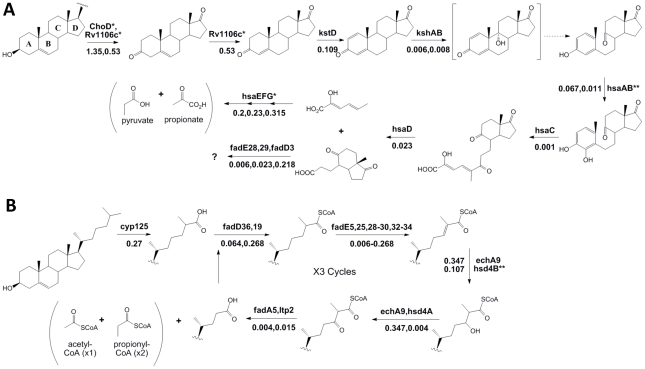
The pathways that comprise cellular metabolism are highly interconnected, and alterations in individual enzymes can have far-reaching effects. As a result, global profiling methods that measure gene expression are of limited value in predicting how the loss of an individual function will affect the cell. In this work, we employed a new method of global phenotypic profiling to directly define the genes required for the growth of Mycobacterium tuberculosis. A combination of high-density mutagenesis and deep-sequencing was used to characterize the composition of complex mutant libraries exposed to different conditions. This allowed the unambiguous identification of the genes that are essential for Mtb to grow in vitro, and proved to be a significant improvement over previous approaches. To further explore functions that are required for persistence in the host, we defined the pathways necessary for the utilization of cholesterol, a critical carbon source during infection. Few of the genes we identified had previously been implicated in this adaptation by transcriptional profiling, and only a fraction were encoded in the chromosomal region known to encode sterol catabolic functions. These genes comprise an unexpectedly large percentage of those previously shown to be required for bacterial growth in mouse tissue. Thus, this single nutritional change accounts for a significant fraction of the adaption to the host. This work provides the most comprehensive genetic characterization of a sterol catabolic pathway to date, suggests putative roles for uncharacterized virulence genes, and precisely maps genes encoding potential drug targets.
Overview
The claims and statistics of this paper haven’t been checked yet.
Free: it reads the open-access text and checks the first 5 claims that cite a source we can check. Create a free account to check every claim.
Integrity signals
Registry
Cites
Statistics
Figures


Verification
Claims the paper makes
The claims and statistics of this paper haven’t been checked yet.
Free: it reads the open-access text and checks the first 5 claims that cite a source we can check. Create a free account to check every claim.
Claims other papers make about this one
Each is checked against this paper’s own text: does it say what the citing paper says it does?
The check wasn’t confident either way, so it gives no verdict — never disputed.
In the citing paper
“A recent transposon-site hybridization (TraSH) screen in M. tuberculosis suggested that SDH1 but not SDH2 was essential for growth under aerobic conditions on standard medium (26).”
From Energetics of Respiration and Oxidative Phosphorylation in Mycobacteria (2014) · cites this paper as [26]
Experimental — accuracy not yet measuredThe check wasn’t confident either way, so it gives no verdict — never disputed.
In the citing paper
“Several studies have suggested that ndh is essential for growth of M. tuberculosis (12, 26, 28, 29) (Table 1).”
From Energetics of Respiration and Oxidative Phosphorylation in Mycobacteria (2014) · cites this paper as [26]
Experimental — accuracy not yet measured
Self-check
Percentages, sums and reported differences re-computed from the paper’s own numbers.
The self-check needs the paper’s full text.
Citations
Cites
Deciphering the biology of Mycobacterium tuberculosis from the complete genome sequence
Cole, S. T., Brosch, R., Parkhill, J., Garnier, T., Churcher, C., Harris, D., Gordon, S. V., Eiglmeier, K., Gas, S., Barry, C. E., et al. (1998) · Nature · doi:10.1038/31159 · Cited by 7,847
SOAP: Short oligonucleotide alignment program
Li, R., Li, Y., Kristiansen, K., & Wang, J. (2008) · Bioinformatics · doi:10.1093/bioinformatics/btn025 · Cited by 3,597 · cited 1×
“11 alignment software [48] at default settings (2 mismatches allowed per read).”
BackgroundGenes required for mycobacterial growth defined by high density mutagenesis
Sassetti, C. M., Boyd, D. H., & Rubin, E. J. (2003) · Molecular Microbiology · doi:10.1046/j.1365-2958.2003.03425.x · Cited by 2,544 · cited 3×
“About 15% of the Mtb genome, or 614 genes, were previously predicted to be required for optimal growth in vitro using microarray hybridization to map insertions sites [6].”
BackgroundSelf-citationMcKinney, J. D., zu Bentrup, K. H., Muñoz-Elías, E. J., Miczak, A., Chen, B., Chan, W.-T., Swenson, D., Sacchettini, J. C., Jacobs, W. R., & Russell, D. G. (2000) · Nature · doi:10.1038/35021074 · Cited by 1,360 · cited 1×
“A few genes that we found to contain very significant gaps in transposon coverage have been successfully deleted, and produce strains that grow normally under similar conditions to those used in our study [33,34,35,36,37,38].”
Genetic requirements for mycobacterial survival during infection
Sassetti, C. M., & Rubin, E. J. (2003) · Proceedings of the National Academy of Sciences · doi:10.1073/pnas.2134250100 · Cited by 1,354 · cited 2×
“When we compared these data to previous genome-wide screens for mutants attenuated in mouse models of infection [46] we found that a full ten percent of genes specifically required for bacterial growth in vivo are also required for the utilization of cholesterol in vitro (Table S3).”
MethodResultSelf-citationComprehensive transposon mutant library of Pseudomonas aeruginosa
Jacobs, M. A., Alwood, A., Thaipisuttikul, I., Spencer, D., Haugen, E., Ernst, S., Will, O., Kaul, R., Raymond, C., Levy, R., et al. (2003) · Proceedings of the National Academy of Sciences · doi:10.1073/pnas.2036282100 · Cited by 1,126 · cited 1×
“[5,6] or conventional sequencing [7,8,9] to map the sites of transposon insertions in large libraries of random mutants and identify regions of the chromosome that were unable to sustain mutation.”
BackgroundMycobacterial persistence requires the utilization of host cholesterol
Pandey, A. K., & Sassetti, C. M. (2008) · Proceedings of the National Academy of Sciences · doi:10.1073/pnas.0711159105 · Cited by 1,064 · cited 5×
“Disruption of Mce4 function by deleting an essential transmembrane component has been shown to cause specific defects in cholesterol uptake and growth in this carbon source [14].”
BackgroundMethodResultInfluentialSelf-citationvan Opijnen, T., Bodi, K. L., & Camilli, A. (2009) · Nature Methods · doi:10.1038/nmeth.1377 · Cited by 933
Global Transposon Mutagenesis and a Minimal Mycoplasma Genome
Hutchison, C. A., Peterson, S. N., Gill, S. R., Cline, R. T., White, O., Fraser, C. M., Smith, H. O., & Craig Venter, J. (1999) · Science · doi:10.1126/science.286.5447.2165 · Cited by 932
Muñoz-Elías, E. J., & McKinney, J. D. (2005) · Nature Medicine · doi:10.1038/nm1252 · Cited by 756 · cited 1×
“tuberculosis H37Rv encodes a multifunctional protein with both isocitrate lyase and methylisocitrate lyase activity, which is required for both pathways [25,26].”
Background
Cited by
Items 701–800 of 1,001
Yokoyama, K., Li, D., & Pang, H. (2021) · ACS Bio & Med Chem Au · doi:10.1021/acsbiomedchemau.1c00046 · Cited by 9
Patel, O., Brammananth, R., Dai, W., Panjikar, S., Coppel, R. L., Lucet, I. S., & Crellin, P. K. (2022) · Acta Crystallographica Section D Structural Biology · doi:10.1107/s2059798322001772 · Cited by 9
Płocińska, R., Wasik, K., Płociński, P., Lechowicz, E., Antczak, M., Błaszczyk, E., Dziadek, B. R., Słomka, M., Rumijowska-Galewicz, A., & Dziadek, J. (2022) · Frontiers in Cellular and Infection Microbiology · doi:10.3389/fcimb.2022.909507 · Cited by 12
“tuberculosis was reported to be essential for neither growth nor persistence under oxygen depletion conditions in a Wayne model (Sassetti et al., 2003; Rao et al., 2008; Griffin et al., 2011; DeJesus et al., 2017).”
BackgroundSharma, R., Muthu, S. A., Agarwal, M., Mehto, N. K., Pahuja, I., Grover, A., Dwivedi, V. P., Ahmad, B., & Grover, S. (2023) · International Journal of Biological Macromolecules · doi:10.1016/j.ijbiomac.2023.127208 · Cited by 9
Coker, O. O., Warit, S., Rukseree, K., Summpunn, P., Prammananan, T., & Palittapongarnpim, P. (2013) · BMC Microbiology · doi:10.1186/1471-2180-13-292 · Cited by 9
“Figure 5 The specific phosphatase activity of C-His-Rv2135c at differe Himar1-based transposon mutagenesis [56], making it a putative target for drug development.”
BackgroundUson, M. L., Ghosh, S., & Shuman, S. (2017) · Journal of Bacteriology · doi:10.1128/jb.00304-17 · Cited by 9
“tuberculosis FenA (Rv2090) is inessential for bacterial growth in culture (32).”
BackgroundHypoxanthine-Guanine Phosphoribosyltransferase Is Dispensable for Mycobacterium smegmatis Viability
Knejzlík, Z., Herkommerová, K., Hocková, D., & Pichová, I. (2019) · Journal of Bacteriology · doi:10.1128/jb.00710-19 · Cited by 9
“tuberculosis (13, 14) identified HGPRT as an essential gene for M.”
BackgroundKumar, S., Khan, M. Z., Khandelwal, N., Chongtham, C., Singha, B., Dabla, A., Behera, D., Singh, A. K., Gopal, B., Arimbasseri, G. A., et al. (2022) · mBio · doi:10.1128/mbio.03836-21 · Cited by 10
“EmbR comes from an in vitro nonessential gene in Himar1 transposon mutagenesis (25, 26).”
BackgroundHomotypic dimerization of a maltose kinase for molecular scaffolding
Li, J., Guan, X., Shaw, N., Chen, W., Dong, Y., Xu, X., Li, X., & Rao, Z. (2014) · Scientific Reports · doi:10.1038/srep06418 · Cited by 9
Singh, S., Sevalkar, R. R., Sarkar, D., & Karthikeyan, S. (2018) · FEBS Journal · doi:10.1111/febs.14676 · Cited by 9
van Winden, V. J. C., Bunduc, C. M., Ummels, R., Bitter, W., & Houben, E. N. G. (2020) · Journal of Molecular Biology · doi:10.1016/j.jmb.2019.12.040 · Cited by 11
Tiwari, P., Gosain, T. P., Chugh, S., Singh, M., Sankhe, G. D., Arora, G., Kidwai, S., Agarwal, S., Saini, D. K., & Singh, R. (2022) · Microbial Pathogenesis · doi:10.1016/j.micpath.2022.105885 · Cited by 8
MSMEG_0311 is a conserved essential polar protein involved in mycobacterium cell wall metabolism
(2024) · doi:10.1016/j.ijbiomac.2024.129583 · Cited by 8
Genetic dissection of the bacterial Fe-S protein biogenesis machineries
Sourice, M., Oriol, C., Aubert, C., Mandin, P., & Py, B. (2024) · Biochimica et Biophysica Acta (BBA) - Molecular Cell Research · doi:10.1016/j.bbamcr.2024.119746 · Cited by 8
Foulon, M., Listian, S. A., Soldati, T., & Barisch, C. (2022) · Elsevier eBooks · doi:10.1016/b978-0-323-91948-7.00011-7 · Cited by 8
Kwon, K. W., Kang, T. G., Lee, A., Jin, S. M., Lim, Y. T., Shin, S. J., & Ha, S. (2023) · Immune Network · doi:10.4110/in.2023.23.e16 · Cited by 8
“been reported to be constitutively expressed and up-regulated in a dormant phase of TB, and essential for the survival of Mtb (32-34), indicating this protein is obligated to express for Mtb’s survival.”
BackgroundBłaszczyk, E., Płociński, P., Lechowicz, E., Brzostek, A. M., Dziadek, B. R., Korycka‐Machała, M., Słomka, M., & Dziadek, J. (2023) · Scientific Reports · doi:10.1038/s41598-023-47944-6 · Cited by 9
“Previous high-density transposon mutagenesis studies have classified rv3907c gene of M. tuberculosis (Mtb) as essential for in vitro growth 32,33 .”
BackgroundChen, K., Zhang, L., Ding, Y., Sun, Z., Meng, J., Luo, R., Zhou, X., Liu, L., & Yang, S. (2024) · Bioorganic Chemistry · doi:10.1016/j.bioorg.2024.107655 · Cited by 9
LytB1 and LytB2 of Mycobacterium tuberculosis Are Not Genetically Redundant
Brown, A. C., Kokoczka, R., & Parish, T. (2015) · PLoS ONE · doi:10.1371/journal.pone.0135638 · Cited by 8
“Our data suggested that LytB1 was unable to complement the loss of LytB2, since we were unable to make a deletion strain of the latter, and deletion strains of the former are viable [40,41].”
BackgroundHammarlöf, D. L., Canals, R., & Hinton, J. C. D. (2013) · Current Opinion in Microbiology · doi:10.1016/j.mib.2013.07.009 · Cited by 8
“Mycobacterium tuberculosis TraSH (mouse, macrophages) [81,82] Macrophages, dendritic cells [85,86] Transposon-insertion sequencing (laboratory conditions) [83,84] Human lung [87]”
BackgroundRahlwes, K. C., Osman, S. H., & Morita, Y. S. (2020) · mSphere · doi:10.1128/msphere.01039-20 · Cited by 8
Black, K. A., Duan, L., Mandyoli, L., Selbach, B. P., Xu, W., Ehrt, S., Sacchettini, J. C., & Rhee, K. Y. (2021) · The Journal of Experimental Medicine · doi:10.1084/jem.20191957 · Cited by 9
Korycka‐Machała, M., Kawka, M., Lach, J., Płocińska, R., Bekier, A., Dziadek, B. R., Brzostek, A. M., Płociński, P., Strapagiel, D., Szczesio, M., et al. (2022) · Frontiers in Pharmacology · doi:10.3389/fphar.2022.1004632 · Cited by 8
“Two of these proteins, Rv1773c and potentially essential Rv1990c (Griffin et al., 2011), were annotated as putative transcriptional regulators.”
Rathnaiah, G., Bannantine, J. P., Bayles, D. O., Zinniel, D. K., Reffett, J. K., Grohn, Y. T., & Barletta, R. G. (2016) · Microbiology · doi:10.1099/mic.0.000258 · Cited by 8
Singhal, A., Virmani, R., Naz, S., Arora, G., Gaur, M., Kundu, P., Sajid, A., Misra, R., Dabla, A., Kumar, S. N., et al. (2020) · Biochemical Journal · doi:10.1042/bcj20200455 · Cited by 8
Mycobacterial Pathogenomics and Evolution
Bottai, D., Stinear, T. P., Supply, P., & Brosch, R. (2015) · ASM Press eBooks · doi:10.1128/9781555818845.ch2 · Cited by 9
Heo, J., Koh, D., Woo, M., Kwon, D., Falcão, V. C. D. A., Wood, C., Lee, H., Kim, K., Choi, I., Jang, J., et al. (2022) · Scientific Reports · doi:10.1038/s41598-022-08209-w · Cited by 8
A promiscuous Bcd amino acid dehydrogenase promotes biofilm development in Bacillus subtilis
Ranava, D., Lander, S. M., Kuan, S.-Y., Winkelman, J. D., Prindle, A. B., & Yap, M.-N. F. (2025) · npj Biofilms and Microbiomes · doi:10.1038/s41522-025-00750-6 · Cited by 7
Theriault, M. E., Wong, A. I., DeJesus, M. A., Pisu, D., Lee, B. N. R., Kirukubar, G., Li, S., Wallach, J. B., Schnappinger, D., Lê-Bury, G., et al. (2026) · mBio · doi:10.1128/mbio.00610-26 · Cited by 8
“3B through D), corroborating vulnerabilities described in nutrient-limited or host-like conditions (21, 22).”
Self-citationBorgers, K., Vandewalle, K., Hecke, A. V., Michielsen, G., Plets, E., van Schie, L., Vanmarcke, S., Schindfessel, L., Festjens, N., & Callewaert, N. (2020) · mSystems · doi:10.1128/msystems.00180-20 · Cited by 7
Pandey, M., Talwar, S., Pal, R., Nain, V. K., Johri, S., Singhal, A., & Pandey, A. K. (2023) · Research in Microbiology · doi:10.1016/j.resmic.2023.104082 · Cited by 7
Sen, B. C., Mavi, P. S., Irazoki, O., Datta, S., Kaiser, S., Cava, F., & Flärdh, K. (2024) · BMC Microbiology · doi:10.1186/s12866-024-03625-6 · Cited by 7
“SepIVA is reported to be essential for viability in M. smegmatis and Mycobacterium tuberculosis [31–34].”
Genetic Strategies for Identifying New Drug Targets
Trauner, A., Sassetti, C. M., & Rubin, E. J. (2014) · Microbiology Spectrum · doi:10.1128/microbiolspec.mgm2-0030-2013 · Cited by 8
“Phage-mediated transposon mutagenesis has become the gold standard for random mutagenesis and has been successfully applied to all domains of life (36 – 38) including mycobacteria (14, 16, 19, 39).”
BackgroundSelf-citationTransposon Activity in Plant Genomes
Gözükırmızı, N., Temel, A., Maraklı, S., & Yılmaz, S. (2016) · Springer eBooks · doi:10.1007/978-3-319-31703-8_4 · Cited by 7
Bennett, M. D., & Högbom, M. (2017) · FEBS Open Bio · doi:10.1002/2211-5463.12212 · Cited by 7
Mao, C., Zhu, Y., Lu, P., Feng, L., Chen, S., & Hu, Y. (2018) · Journal of Bacteriology · doi:10.1128/jb.00159-18 · Cited by 7
“tuberculosis by transposon mutagenesis screening (19, 20).”
Kumar, S., Koehn, J. T., Juarrero, M. G., Crans, D. C., & Crick, D. C. (2020) · ACS Infectious Diseases · doi:10.1021/acsinfecdis.0c00312 · Cited by 8
Pepi, M. J., Chacko, S., Marqus, G. M., Singh, V., Wang, Z., Planck, K., Cullinane, R. T., Meka, P. N., Gollapalli, D. R., Ioerger, T. R., et al. (2022) · ACS Infectious Diseases · doi:10.1021/acsinfecdis.1c00461 · Cited by 7
Self-citationMaksymiuk, C., Ioerger, T. R., Balakrishnan, A. S., Bryk, R., Rhee, K. Y., Sacchettini, J. C., & Nathan, C. (2015) · Tuberculosis · doi:10.1016/j.tube.2015.08.009 · Cited by 7
Self-citationSrivastava, S., Pathak, M., Pandey, H., Tripathi, S., Garg, R., Misra‐Bhattacharya, S., & Arora, A. (2016) · Biochimica et Biophysica Acta (BBA) - General Subjects · doi:10.1016/j.bbagen.2016.01.004 · Cited by 7
Targeting DNA Repair Systems in Antitubercular Drug Development
Minias, A. E., Brzostek, A. M., & Dziadek, J. (2018) · Current Medicinal Chemistry · doi:10.2174/0929867325666180129093546 · Cited by 7
Zheng, S., Zhou, Y., Fleming, J., Zhou, Y., Zhang, M., Li, S., Li, H., Sun, B., Liu, W. Y., & Bi, L. (2018) · FEBS Letters · doi:10.1002/1873-3468.13024 · Cited by 7
Assessing the propensity of TB clinical isolates to form viable but non-replicating subpopulations
Coetzee, J. L., Kriel, N. L., Loubser, J., Dippenaar, A., Sampson, S. L., Malherbe, S. T., & Mouton, J. (2024) · Scientific Reports · doi:10.1038/s41598-024-79389-w · Cited by 6
Dividing lines: compartmentalisation and division in Streptomyces
Bush, M. J., Casu, B., & Schlimpert, S. (2025) · Current Opinion in Microbiology · doi:10.1016/j.mib.2025.102611 · Cited by 6
Fu, X., Wan, X., Memon, A. A., Fan, X., Sun, Q., Chen, H., Yao, Y., Deng, Z., Ma, J., & Ma, W. (2024) · Frontiers in Microbiology · doi:10.3389/fmicb.2024.1415554 · Cited by 6
Dahiya, P., Banerjee, A., Saha, A., Nandicoori, V. K., Ghosh, S., & Mukhopadhyay, S. (2024) · Biochemical and Biophysical Research Communications · doi:10.1016/j.bbrc.2024.150927 · Cited by 6
Iron–sulfur proteins in mycobacteria: master regulators of physiology and pathogenesis
Berdal, V., Py, B., de Choudens, S. O., Kremer, L., & Daher, W. (2025) · Trends in Microbiology · doi:10.1016/j.tim.2025.06.014 · Cited by 6
Banaei‐Esfahani, A., Borrell, S., Trauner, A., Gygli, S. M., Rustad, T. R., Feldmann, J., Gillet, L. C. J., Schubert, O. T., Beisel, C., Sherman, D. R., et al. (2026) · Nature Communications · doi:10.1038/s41467-026-70539-4 · Cited by 6
Warner, D. F., & Mizrahi, V. (2012) · South African Medical Journal · doi:10.7196/samj.5437 · Cited by 6
Sánchez-Barinas, C. D., Ocampo, M., Tabares, L., Bermúdez, M., Patarroyo, M. A., & Patarroyo, M. E. (2019) · BioMed Research International · doi:10.1155/2019/8680935 · Cited by 6
“Transposon site hybridisation (TraSH) analysis has reported that the gene encoding this protein is neither essential for mycobacteria [15], nor essential for mycobacterial in vitro growth [16].”
BackgroundAlam, M. S., Guan, P., Zhu, Y., Zeng, S., Fang, X., Wang, S., Yusuf, B., Zhang, J., Tian, X., Fang, C., et al. (2023) · Frontiers in Cellular and Infection Microbiology · doi:10.3389/fcimb.2022.1056007 · Cited by 6
“The mce operon has been demonstrated to be crucial for mycobacterial invasion and persistence in host macrophages and non-phagocytic mammalian cells, with mce4 being associated with cholesterol catabolism (Zhang and Xie, 2011; Griffin et al., 2011).”
BackgroundMukherjee, A., Dandapat, P., Haque, M. Z., Mandal, S., Jana, P. S., Samanta, S., Pal, S., Das, A. K., Nanda, P. K., Bandyopadhyay, S., et al. (2023) · Animal Gene · doi:10.1016/j.angen.2023.200154 · Cited by 6
Nicotine promotes Mycobacterium tuberculosis H37Rv growth and overexpression of virulence genes
Rivas-Santiago, B. T., de Haro‐Acosta, J., Rodríguez-Carlos, A., García-Hernández, M. H., Serrano, C. J., Gonzalez-Curiel, I. E., & Rivas-Santiago, C. (2023) · Microbiology and Immunology · doi:10.1111/1348-0421.13085 · Cited by 6
“Other reports have shown that nicotine modifies the composition and structure of the biofilms produced by PAO and also regulates the quorum sensing and quorum quenching,3 nonetheless, the growth rates remained the same, suggesting that the growth induction effect induced by nicotine is specific for Mtb. Nicotine has a…”
BackgroundInfluentialKeshavam, C. C., Naz, S., Gupta, A., Sanyal, P., Kochar, M., Gangwal, A., Sangwan, N., Kumar, N., Tyagi, E., Goel, S., et al. (2023) · Journal of Biological Chemistry · doi:10.1016/j.jbc.2023.105364 · Cited by 6
Keough, D. T., Petrová, M., King, G. J., Kratochvíl, M., Pohl, R., Doleželová, E., Zíková, A., Guddat, L. W., & Rejman, D. (2024) · Journal of Medicinal Chemistry · doi:10.1021/acs.jmedchem.4c00021 · Cited by 6
EfpA is required for regrowth of Mycobacterium tuberculosis following isoniazid exposure
Roberts, A. H., Moon, C., Faulkner, V., Kendall, S. L., Waddell, S. J., & Bacon, J. (2024) · Antimicrobial Agents and Chemotherapy · doi:10.1128/aac.00261-24 · Cited by 6
“tuberculosis as demonstrated by transposon mutagenesis studies (Sassetti, Boyd, & Rubin, 2003; Griffin et al., 2011; Dejesus et al., 2017; Minato et al., 2019).”
BackgroundParsons, J. D., Cocker, C. R., East, A. K., Wheatley, R. M., Ramachandran, V. K., Kaschani, F., Kaiser, M., & Poole, P. S. (2024) · mSystems · doi:10.1128/msystems.00422-24 · Cited by 6
“…INSeq classification from a gene ( praR ) containing only four TA sites (located within the central 80% of the coding sequence) disagrees with Lux attachment assay results, which is in line with a suggested limit of six TA sites as a minimum for confident INSeq classification assignment (73, 74).”
BackgroundResultGenome-wide phenotypic insights into mycobacterial virulence using Drosophila melanogaster
Sivakumar, N., Fuentes, E., Selvik, L.-K. M., Arch, M., Gabrielsen, C., Cardona, P.-J., Ioerger, T. R., & Dragset, M. S. (2025) · PLoS Pathogens · doi:10.1371/journal.ppat.1013474 · Cited by 6
“…lipB / rv2217 , encoding a probable lipoate biosynthesis protein B, changed an alanine (hydrophobic side chain) to glutamic acid (negatively charged side chain), potentially altering the protein’s function. rv2217 is essential for in vitro growth according to several genome-wide studies [41,49,83].”
Self-citationKaur, G., Sharma, A., Narang, T. K., Dogra, S., & Kaur, J. (2017) · Gene · doi:10.1016/j.gene.2017.12.001 · Cited by 6
Sharma, N., Aggarwal, S., Kumar, S., Sharma, R., Choudhury, K., Singh, N., Jayaswal, P., Goel, R., Wajid, S., Yadav, A. K., et al. (2019) · PLoS ONE · doi:10.1371/journal.pone.0215123 · Cited by 7
Tomasi, F. G., & Rubin, E. J. (2022) · Frontiers in Cellular and Infection Microbiology · doi:10.3389/fcimb.2022.932556 · Cited by 6
“Frontiers in Cellular and Infection Microbiology 04 Recent work has shed light on genes required for host-relevant conditions such as cholesterol catabolism (Griffin et al., 2011) and different genetic backgrounds in vivo using collaborative cross mouse panels (Smith et al.”
BackgroundMycobacterial MenG: Partial Purification, Characterization, and Inhibition
Pujari, V., Rožman, K., Dhiman, R. K., Aldrich, C. C., & Crick, D. C. (2022) · ACS Infectious Diseases · doi:10.1021/acsinfecdis.2c00190 · Cited by 6
Lobastova, T. G., Фокина, В. В., Pozdnyakova-Filatova, I., Tarlachkov, S. V., Шутов, А. А., & Donova, M. V. (2022) · International Journal of Molecular Sciences · doi:10.3390/ijms232416174 · Cited by 6
“In the last two decades, sterol catabolism has been intensively studied mainly in mesophilic actinobacteria, such as Gordonia cholesterolivorans Chol3T [33], Gordonia neofelifaecis NRRL B-59395 [34], M. tuberculosis H37Rv [35,36], Rhodococcus jostii RHA1 [24], Mycolicibacterium smegmatis mc2 155 [30], and Nocardioides…”
BackgroundInfluentialMohanty, P. S., Sharma, S., Naaz, F., Kumar, D., Raikwar, A., & Patil, S. A. (2019) · Journal of Computational Biology · doi:10.1089/cmb.2019.0156 · Cited by 6
“The es-sentialities of these tRNA-ligases were elucidated by literature search (Sassetti et al., 2003; Griffin et al., 2011; DeJesus et al., 2017).”
Naor, N., Gadot, O., Meir, M., & Barkan, D. (2019) · BMC Microbiology · doi:10.1186/s12866-019-1611-7 · Cited by 6
Kaushik, A., Bandyopadhyay, S., Porwal, C., Srinivasan, A., Rukmangadachar, L. A., Hariprasad, G., Kola, S., Kataria, J., & Singh, U. B. (2022) · Biochemical and Biophysical Research Communications · doi:10.1016/j.bbrc.2022.06.021 · Cited by 6
Nelson, B., Soper, N., & Lupoli, T. J. (2023) · ChemBioChem · doi:10.1002/cbic.202300261 · Cited by 5
Bonefont, L. E., Davenport, H., Chaton, C. T., Korotkov, K. V., & Rohde, K. H. (2024) · Molecular Microbiology · doi:10.1111/mmi.15314 · Cited by 5
“The complex responsible for the final step of oxidative phosphorylation, ATP synthesis, is encoded by another operon in the putative BlaIR Mab regulon, atpIBEFHAGDC (Griffin et al. 2011; Ripoll et al. 2009).”
Targeting type II NADH dehydrogenase in tuberculosis treatment: A review
Wu, H., Huang, M., Xue, Z.-J., Zhong, S.-Y., Shi, J., Chen, N.-P., & Qian, C. (2025) · International Journal of Biological Macromolecules · doi:10.1016/j.ijbiomac.2025.143541 · Cited by 6
Ellerhorst, M., Nikitushkin, V. D., Al‐Jammal, W. K., Gregor, L., Vilotijević, I., & Lackner, G. (2025) · Natural Product Reports · doi:10.1039/d5np00012b · Cited by 5
Sorescu, J. M., González-Montalvo, M. A., Yuan, M., DePaolo-Boisvert, J., Ceapă, C. D., García‐Contreras, R., Flores-Herrera, Ó., Shea, M. E., Tuz, K., & Juárez, O. X. (2025) · Critical Reviews in Biochemistry and Molecular Biology · doi:10.1080/10409238.2025.2545785 · Cited by 7
“M. tuberculosis studies show that NDH-2 is essential for growth in laboratory media (Sassetti et al. 2003; Griffin et al. 2011; Nakatani et al. 2020), and cells lacking this protein exhibit reduced virulence in vivo (Beites et al. 2019).”
FasR Regulates Fatty Acid Biosynthesis and Is Essential for Virulence of Mycobacterium tuberculosis
Mondino, S., Vázquez, C. L., Cabruja, M., Sala, C., Cazenave‐Gassiot, A., Blanco, F. C., Wenk, M. R., Bigi, F., Cole, S. T., Gramajo, H. C., et al. (2020) · Frontiers in Microbiology · doi:10.3389/fmicb.2020.586285 · Cited by 5
Screening of Microbial Fermentation Products for Anti-M. tuberculosis Activity
Reheman, A., Lu, D., Wang, Y., Chen, X., Cao, G., & Wan, C. (2022) · Animals · doi:10.3390/ani12151947 · Cited by 5
Brenner, E. P., & Sreevatsan, S. (2023) · BMC Medical Genomics · doi:10.1186/s12920-023-01695-5 · Cited by 5
“Mycobacterial reliance on cholesterol is known to be critical for pathogenesis, and MTB features around 80 genes involved with cholesterol balance and metabolism [29].”
BackgroundResultInfluentialAgarwal, M., Bhaskar, A., Singha, B., Mukhopadhyay, S., Pahuja, I., Singh, A., Chaturvedi, S., Agarwal, N., Dwivedi, V. P., & Nandicoori, V. K. (2024) · Communications Biology · doi:10.1038/s42003-024-06620-9 · Cited by 5
“GlmM Mtb is essential for bacterial growth High-throughput transposon-based mutagenesis studies suggested glmM Mtb tobeanessentialgenefortheinvitrogrowthofthebacteria 23,24 asit is involved in the synthesis of UDP-GlcNAc a central metabolite of cell wall biosynthesis (Fig.”
Nain, V. K., Barik, V., Pandey, M., Pareek, M., Sharma, T. N., Pal, R., Tyagi, S., Bajpai, M., Dwivedi, P., Panda, B. N., et al. (2025) · Communications Biology · doi:10.1038/s42003-025-08051-6 · Cited by 6
“…for the in-vitrogrowth of M. tuberculosis While Rv0391(metZ) has been reported to be essential for the growth of M. tuberculosis on cholesterol 20 , we hypothesized that the Rv0391 (metZ) gene encodes a putative O-succinyl homoserine sulfhydrylase (OSHS) that is responsible for direct…”
Song, N., Li, Z., Cui, Z., Chen, L., Cui, Y., Dang, G., Li, Z., Li, H., & Liu, S. (2019) · BMC Microbiology · doi:10.1186/s12866-019-1492-9 · Cited by 5
Metabolic Perspectives on Persistence
Hartman, T. E., Wang, Z., Jansen, R. S., Gardete, S., & Rhee, K. Y. (2017) · ASM Press eBooks · doi:10.1128/9781555819569.ch31 · Cited by 5
High‐throughput functional genomics: A (myco)bacterial perspective
Winkler, K., Mizrahi, V., Warner, D. F., & de Wet, T. J. (2023) · Molecular Microbiology · doi:10.1111/mmi.15103 · Cited by 5
Exploring the role of the protein tyrosine kinase a (PtkA) in mycobacterial intracellular survival
Jaiswal, S., Kumar, S., & de la Cruz, E. V. (2023) · Tuberculosis · doi:10.1016/j.tube.2023.102398 · Cited by 5
Rv0495c regulates redox homeostasis in Mycobacterium tuberculosis.
Pal, R., Talwar, S., Pandey, M., Nain, V., Sharma, T., Tyagi, S., Barik, V., Chaudhary, S., Gupta, S., Kumar, Y., et al. (2024) · Tuberculosis · doi:10.1016/j.tube.2024.102477 · Cited by 3
Modulating mycobacterial envelope integrity for antibiotic synergy with benzothiazoles
Habjan, E., Lepioshkin, A., Charitou, V., Egorova, A., Kazakova, E., Ho, V. Q. T., Bitter, W., Makarov, V., & Speer, A. (2024) · Life Science Alliance · doi:10.26508/lsa.202302509 · Cited by 5
Identification of a depupylation regulator for an essential enzyme in Mycobacterium tuberculosis
Kahne, S. C., Yoo, J. H., Chen, J., Nakedi, K. C., Iyer, L. M., Putzel, G., Samhadaneh, N. M., Pironti, A., Aravind, L., Ekiert, D. C., et al. (2024) · Proceedings of the National Academy of Sciences · doi:10.1073/pnas.2407239121 · Cited by 6
Li, W., Liu, M., & Xie, J. (2015) · Journal of Interferon & Cytokine Research · doi:10.1089/jir.2015.0090 · Cited by 5
Pardeshi, P., Rao, K. K., & Balaji, P. V. (2017) · PLoS ONE · doi:10.1371/journal.pone.0175193 · Cited by 6
Govindan, A., Miryala, S., Mondal, S., & Varshney, U. (2018) · Journal of Bacteriology · doi:10.1128/jb.00372-18 · Cited by 5
Karade, S. S., Pandey, S., Ansari, A., Das, S., Tripathi, S., Arora, A., Chopra, S., Pratap, J. V., & Dasgupta, A. (2018) · Biochimica et Biophysica Acta (BBA) - Proteins and Proteomics · doi:10.1016/j.bbapap.2018.10.011 · Cited by 5
Javid, A., Cooper, C., Singh, A., Schindler, S., Hänisch, M., Marshall, R. L., Kalscheuer, R., Bavro, V. N., & Bhatt, A. (2019) · Molecular Microbiology · doi:10.1111/mmi.14437 · Cited by 5
“Indeed, subsequent transposon mutagenesis screens utilising deep sequencing predicted Rv2509 to be essential for in vitro growth of M. tuberculosis (Griffin et al., 2011).”
BackgroundGenetic screening for the protective antigenic targets of BCG vaccination
Smith, A. A., Villarreal‐Ramos, B., Mendum, T. A., Williams, K. J., Jones, G. J., Wu, H., McFadden, J., Vordermeier, H. M., & Stewart, G. R. (2020) · Tuberculosis · doi:10.1016/j.tube.2020.101979 · Cited by 5
Functional Genomics Uncovers Pleiotropic Role of Rhomboids in Corynebacterium glutamicum
Luenenschloss, A., ter Veld, F., Albaum, S. P., Neddermann, T., Wendisch, V. F., & Poetsch, A. (2022) · Frontiers in Microbiology · doi:10.3389/fmicb.2022.771968 · Cited by 5
RNase HI Depletion Strongly Potentiates Cell Killing by Rifampicin in Mycobacteria
Al-Zubaidi, A., Cheung, C., Cook, G. M., Taiaroa, G., Mizrahi, V., Lott, J. S., & Dawes, S. S. (2022) · Antimicrobial Agents and Chemotherapy · doi:10.1128/aac.02091-21 · Cited by 5
“tuberculosis located the essentiality of function to the RNase HI domain of RnhC (22, 23).”
BackgroundDeJesus, M. A., & Ioerger, T. R. (2015) · IEEE Transactions on Computational Biology and Bioinformatics · doi:10.1109/tcbb.2014.2326857 · Cited by 5
Self-citationBachhawat, N. (2018) · Journal of Biosciences · doi:10.1007/s12038-018-9775-0 · Cited by 5
Antibiotic action revealed by real-time imaging of the mycobacterial membranePreprint
Wuo, M. G., Dulberger, C. L., Brown, R. A., Sturm, A., Ultee, E., Bloom‐Ackermann, Z., Choi, C., Garner, E. C., Briegel, A., Hung, D. T., et al. (2022) · bioRxiv (Cold Spring Harbor Laboratory) · doi:10.1101/2022.01.07.475452 · Cited by 5
Yin, J., Waman, V., Sen, N., Firdaus‐Raih, M., Lam, S. D., & Orengo, C. A. (2025) · Structure · doi:10.1016/j.str.2024.12.016 · Cited by 5
James, K. S., Jain, N., Witzl, K., Cicchetti, N., Fortune, S. M., Ioerger, T. R., Martinot, A. J., & Carey, A. F. (2025) · npj Vaccines · doi:10.1038/s41541-025-01150-9 · Cited by 5
“Transposonmuta-genesishasbeenusedtode fi ne the genes mycobacteria require to survive under myriad in vitro and in vivo conditions, providing important insights into bacterial physiology 8 – 20 .”
Self-citationDesign and Development of Lysyl tRNA Synthetase Inhibitors, for the Treatment of Tuberculosis
Davis, S. H., Mathieson, M., Buchanan, K. I., Dawson, A., Smith, A., Cocco, M., Tamaki, F. K., Post, J. M., Baragaña, B., Jansen, C., et al. (2025) · Journal of Medicinal Chemistry · doi:10.1021/acs.jmedchem.5c01331 · Cited by 4
Saha, P., Kumar, M., & Sharma, D. K. (2026) · RSC Medicinal Chemistry · doi:10.1039/d5md00950b · Cited by 4
Mechanistic insights into SteAB regulation of cell wall hydrolase RipA in Mycobacterium tuberculosis
Carloni, G., Gaday, Q., Petit, J., Martínez, M., Megrian, D., Sogues, A., Assaya, M. B., Kakonyi, M., Haouz, A., Alzari, P. M., et al. (2026) · mBio · doi:10.1128/mbio.03700-25 · Cited by 4
Pu, W., Zhang, X., Tian, M., He, Z., Zhu, J., Song, S., Li, L., Lian, P., Lu, R., Wang, R., et al. (2026) · Nature Communications · doi:10.1038/s41467-026-74032-w · Cited by 4
Metadata
- Authors
- Griffin, J. E., Gawronski, J. D., DeJesus, M. A., Ioerger, T. R., Akerley, B. J., & Sassetti, C. M.
- Affiliations
- University of Massachusetts Chan Medical School (US)
- Texas A&M University (US)
- Howard Hughes Medical Institute (US)
- Corresponding author
- Sassetti, Christopher M.
- Venue
- PLoS Pathogens
- Publisher
- Public Library of Science (PLoS)
- Published
- 2011-09-29
- Volume
- 7
- Issue
- 9
- Pages
- e1002251
- ISSN
- 1553-7366 (ISSN-L)
- 1553-7374
- PMC
- PMC3182942
- OpenAlex
- W2067576392
- Cited by
- 1,048
- References
- 47
- Citations by year
- 2026: 32 · 2025: 50 · 2024: 56 · 2023: 58 · 2022: 50 · 2021: 85 · 2020: 79 · 2019: 102 · 2018: 90 · 2017: 89 · 2016: 82 · 2015: 99 · 2014: 79 · 2013: 68 · 2012: 27
- FWCI
- 38.15
- Type
- journal article
- Language
- en
- Open access
- gold
- doi.org
- Locations
- PLoS Pathogens (publishedVersion, cc-by)
- Europe PMC (PubMed Central) (publishedVersion, cc-by)
- PubMed Central (publishedVersion, cc-by)
- PubMed (publishedVersion)
- The Journal of the American Medical Association (JAMA) Network (American Medical Association) (submittedVersion, cc-by)
- DOAJ (DOAJ: Directory of Open Access Journals) (submittedVersion, cc-by-sa)
- Figshare (submittedVersion, cc-by)
- OakTrust (Texas A&M University Libraries) (submittedVersion)
- Funders
- Howard Hughes Medical Institute
- Bill and Melinda Gates Foundation
- National Institutes of Health
- National Institute of Allergy and Infectious Diseases (AI064282, AI073509, R21AI073509, R01AI064282)
- Topics
- Health Sciences › Medicine › Infectious Diseases › Tuberculosis Research and Epidemiology
- Life Sciences › Biochemistry, Genetics and Molecular Biology › Genetics › Bacterial Genetics and Biotechnology
- Physical Sciences › Chemistry › Organic Chemistry › Steroid Chemistry and Biochemistry
- Keywords
- Mycobacterium tuberculosis, essential genes, phenotypic profiling, cholesterol catabolism, bacterial growth, mutant library, host adaptation, virulence genes, therapeutic target, carbon source utilization
- MeSH terms
- Animals, Cholesterol, Genes, Bacterial, Mycobacterium tuberculosis, Tuberculosis, Virulence, Gene Expression Regulation, Bacterial, Mutagenesis, Gene Expression Profiling, Mice
About these checks
Registry, retraction, Cites and statistics results are computed, not judged, with one exception: a printed reference that no index lists is read once by a model before it counts as a citation error. Claims are extracted by a model and kept only when their quote appears verbatim in the text; each cited source is then checked, with a model’s help, for whether it says what the claim relies on. Those verdicts can be wrong — read the claim’s quote and the cited source before relying on one.
Statistics and arithmetic are recomputed, not judged.
Confidence bands are shown only for fields calibrated on our annotated test set. None is calibrated yet, so no band is shown.
What counts as a claim ›How we measure confidence ›How we check this ›
Are you an author, or do you see a problem with this page? Request a review
Data sources
Bibliographic data: Semantic Scholar, OpenAlex, Crossref.
Contains information from the Semantic Scholar Academic Graph Datasets, made available under the ODC Attribution License (ODC-BY 1.0).
Semantic Scholar’s data is described in: Kinney, R., et al. (2023). The Semantic Scholar Open Data Platform. arXiv:2301.10140.
