

The DOI matches its Crossref record; 9 of the 9 references it cites were found in a registry or an index.
Protofibrillar Intermediates of Amyloid β-Protein Induce Acute Electrophysiological Changes and Progressive Neurotoxicity in Cortical Neurons
Abstract
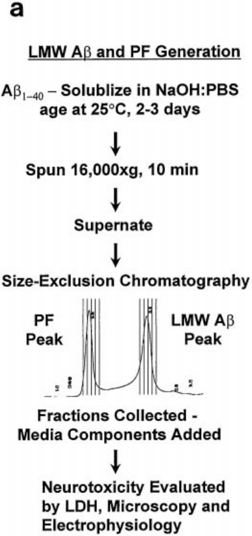
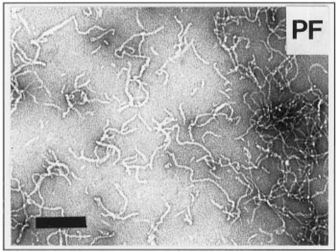
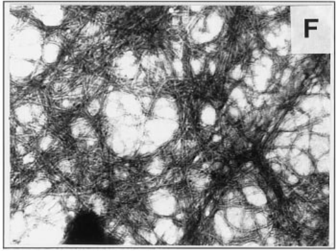
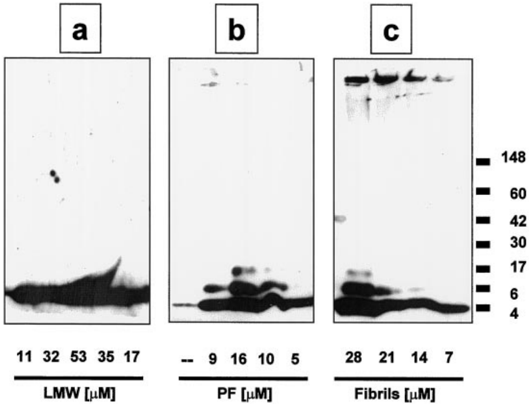
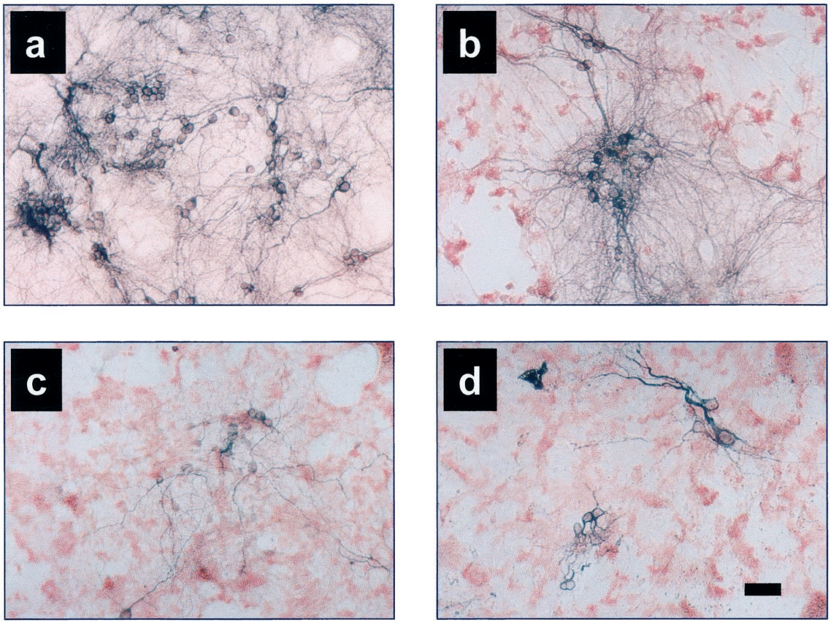
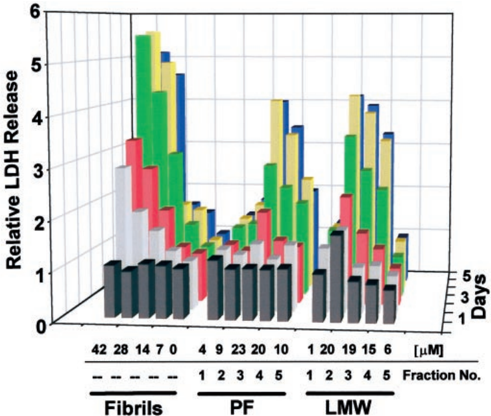
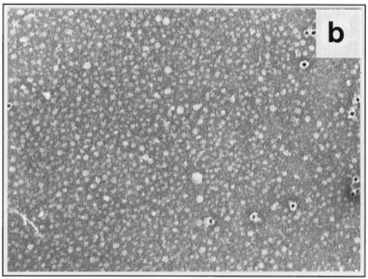
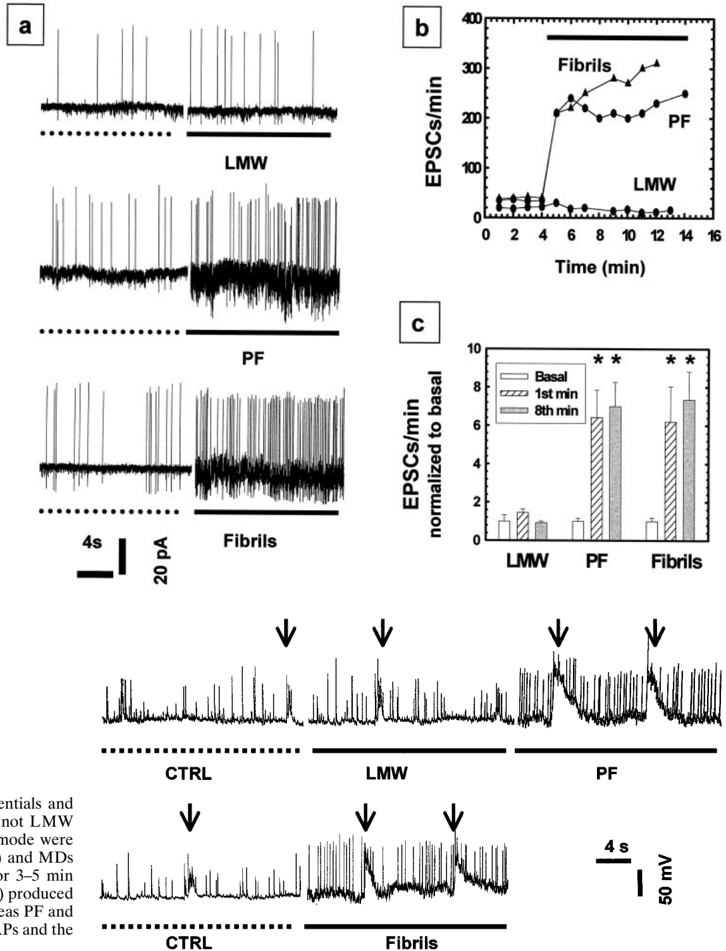
Alzheimer’s disease (AD) is a progressive neurodegenerative disorder that is thought to be caused in part by the age-related accumulation of amyloid β-protein (Aβ). The presence of neuritic plaques containing abundant Aβ-derived amyloid fibrils in AD brain tissue supports the concept that fibril accumulation per se underlies neuronal dysfunction in AD. Recent observations have begun to challenge this assumption by suggesting that earlier Aβ assemblies formed during the process of fibrillogenesis may also play a role in AD pathogenesis. Here, we present the novel finding that protofibrils (PF), metastable intermediates in amyloid fibril formation, can alter the electrical activity of neurons and cause neuronal loss. Both low molecular weight Aβ (LMW Aβ) and PF reproducibly induced toxicity in mixed brain cultures in a time- and concentration-dependent manner. No increase in fibril formation during the course of the experiments was observed by either Congo red binding or electron microscopy, suggesting that the neurotoxicity of LMW Aβ and PF cannot be explained by conversion to fibrils. Importantly, protofibrils, but not LMW Aβ, produced a rapid increase in EPSPs, action potentials, and membrane depolarizations. These data suggest that PF have inherent biological activity similar to that of mature fibrils. Our results raise the possibility that the preclinical and early clinical progression of AD is driven in part by the accumulation of specific Aβ assembly intermediates formed during the process of fibrillogenesis.
Overview
The claims and statistics of this paper haven’t been checked yet.
Run the check — free, no account needed. It reads the open-access text and checks the sources it cites.
Integrity signals
Registry
Cites
Statistics
Figures
Verification
Claims the paper makes
The claims and statistics of this paper haven’t been checked yet.
Run the check — free, no account needed. It reads the open-access text and checks the sources it cites.
Claims other papers make about this one
Each is checked against this paper’s own text: does it say what the citing paper says it does?
In the citing paper
“Evidence suggests that increased uptake of these neurotoxic Aβ42 peptides results in accumulation and aggregation within neurons eventually leading the formation of plaques and neuronal death [40, 41].”
From The Sigma-2 Receptor/TMEM97, PGRMC1, and LDL Receptor Complex Are Responsible for the Cellular Uptake of Aβ42 and Its Protein Aggregates (2020) · cites this paper as [40]
Self-check
Percentages, sums and reported differences re-computed from the paper’s own numbers.
The self-check needs the paper’s full text.
Citations
Cites
Diffusible, nonfibrillar ligands derived from Aβ 1–42 are potent central nervous system neurotoxins
Lambert, M. P., Barlow, A. K., Chromy, B. A., Edwards, C., Freed, R., Liosatos, M., Morgan, T. E., Rozovsky, I., Trommer, B., Viola, K. L., et al. (1998) · Proceedings of the National Academy of Sciences · doi:10.1073/pnas.95.11.6448 · Cited by 3,506
Profound Loss of Layer II Entorhinal Cortex Neurons Occurs in Very Mild Alzheimer’s Disease
Gómez-Isla, T., Price, J. L., McKeel Jr., D. W., Morris, J. C., Growdon, J. H., & Hyman, B. T. (1996) · The Journal of Neuroscience · doi:10.1523/jneurosci.16-14-04491.1996 · Cited by 1,796 · cited 2×
“, 1998), followed by more severe neuronal changes that include increased synaptic loss, widespread neuritic dystrophy, neurofibrillary tangles, and frank neuronal death (Terry et al., 1991; Gómez-Isla et al., 1996; Sze et al., 1997; Anderton et al., 1998).”
BackgroundPlaque-independent disruption of neural circuits in Alzheimer’s disease mouse models
Hsia, A. Y., Masliah, E., McConlogue, L., Yu, G.-Q., Tatsuno, G., Hu, K., Kholodenko, D., Malenka, R. C., Nicoll, R. A., & Mucke, L. (1999) · Proceedings of the National Academy of Sciences · doi:10.1073/pnas.96.6.3228 · Cited by 1,123
Amyloid β-Protein Fibrillogenesis
Walsh, D. M., Hartley, D. M., Kusumoto, Y., Fezoui, Y., Condron, M. M., Lomakin, A., Benedek, G. B., Selkoe, D. J., & Teplow, D. B. (1999) · Journal of Biological Chemistry · doi:10.1074/jbc.274.36.25945 · Cited by 1,046
Self-citationAmyloid β Protein (Aβ) in Alzheimeri's Disease Brain
Gravina, S. A., Ho, L., Eckman, C. B., Long, K. E., Otvos, L., Younkin, L. H., Suzuki, N., & Younkin, S. G. (1995) · Journal of Biological Chemistry · doi:10.1074/jbc.270.13.7013 · Cited by 676 · cited 1×
“Similarly, specific increases principally in Ab1–42 rather than Ab1–40 have been observed in other studies of AD brain tissue (Gravina et al., 1995) or transgenic mice expressing mutant human APP (Johnson-Wood et al., 1997).”
BackgroundLemere, C. A., Blusztajn, J. K., Yamaguchi, H., Wisniewski, T., Saido, T. C., & Selkoe, D. J. (1996) · Neurobiology of Disease · doi:10.1006/nbdi.1996.0003 · Cited by 584 · cited 7×
“Primary antibodies were applied in this blocking buffer for 1 hr at RT using the following concentrations: anti-MAP2, 1:1000 (monoclonal, Sigma M4403); R1282, 1:750 (polyclonal) (Lemere et al., 1996).”
MethodInfluentialSelf-citationSZE, C.-I., TRONCOSO, J. C., KAWAS, C., MOUTION, P., PRICE, D. L., & MARTIN, L. J. (1997) · Journal of Neuropathology and Experimental Neurology · doi:10.1097/00005072-199708000-00011 · Cited by 562 · cited 2×
“, 1998), followed by more severe neuronal changes that include increased synaptic loss, widespread neuritic dystrophy, neurofibrillary tangles, and frank neuronal death (Terry et al., 1991; Gómez-Isla et al., 1996; Sze et al., 1997; Anderton et al., 1998).”
BackgroundOda, T., Wals, P., Osterburg, H. H., Johnson, S. A., Pasinetti, G. M., Morgan, T. E., Rozovsky, I., Stine, W. B., Snyder, S. W., Holzman, T. F., et al. (1995) · Experimental Neurology · doi:10.1006/exnr.1995.1080 · Cited by 352
Klunk, W. E., Jacob, R. F., & Mason, R. P. (1999) · Analytical Biochemistry · doi:10.1006/abio.1998.2933 · Cited by 310
Research works printed but not linked: 37
- 10.1016/0304-3940(96)12717-8 · DOI
- 10.1016/S0301-0082(98)00022-7 · DOI
- 10.1073/pnas.90.22.10573 · DOI
- 10.1038/6374 · DOI · Paper page
- Cummings, 1998, Alzheimer’s disease: etiologies, pathophysiology, cognitive reserve, and treatment opportunities., Neurology, 51, S2, 10.1212/WNL.51.1_Suppl_1.S2 · DOI
- 10.1097/00005072-199704000-00001 · DOI · Paper page
- 10.1523/JNEUROSCI.17-20-07736.1997 · DOI
- 10.1523/JNEUROSCI.16-19-06021.1996 · DOI
- 10.1146/annurev.biochem.66.1.385 · DOI · Paper page
- 10.1016/S1074-5521(97)90255-6 · DOI
- 10.1016/S1074-5521(97)90303-3 · DOI
- 10.1523/JNEUROSCI.13-05-01993.1993 · DOI
- 10.1038/nm0198-097 · DOI · Paper page
- 10.1126/science.274.5284.99 · DOI · Paper page
- 10.1073/pnas.94.4.1550 · DOI
- 10.1016/S0006-3495(97)78048-2 · DOI
- 10.1177/37.8.2666510 · DOI
- 10.1074/jbc.271.8.4077 · DOI · Paper page
- 10.1073/pnas.91.25.12243 · DOI · Paper page
- Mark, 1992, Amyloid β-peptide impairs ion-motive ATPase activities: evidence for a role in loss of neuronal Ca2+ homeostasis and cell death., J Neurosci, 15, 6239, 10.1523/JNEUROSCI.15-09-06239.1995 · DOI
- Mattson, 1992, β-Amyloid peptides destabilize calcium homeostasis and render human cortical neurons vulnerable to excitotoxicity., J Neurosci, 12, 379, 10.1523/JNEUROSCI.12-02-00376.1992 · DOI
- 10.1016/0006-8993(93)90295-X · DOI
- 10.1212/WNL.46.3.707 · DOI · Paper page
- 10.1016/0006-8993(91)91553-D · DOI
- 10.1523/JNEUROSCI.13-04-01676.1993 · DOI · Paper page
- 10.1038/nm0798-832 · DOI
- 10.1074/jbc.270.16.9564 · DOI
- 10.1021/bi972029u · DOI
- 10.1074/jbc.271.34.20631 · DOI
- 10.1006/jsbi.1997.3859 · DOI
- 10.3109/13506129808995290 · DOI
- 10.1002/ana.410300410 · DOI · Paper page
- 10.1074/jbc.272.35.22364 · DOI
- 10.1006/jmbi.1996.0133 · DOI
- Wu, 1995, β-Amyloid selectively augments NMDA receptor-mediated synaptic transmission in rat hippocampus., NeuroReport, 6, 2409, 10.1097/00001756-199511270-00031 · DOI
- 10.1074/jbc.272.12.7977 · DOI
- 10.1002/(SICI)1097-4547(19970301)47:5<547::AID-JNR10>3.0.CO;2-V · DOI
Cited by
Sorted by citations
The Amyloid Hypothesis of Alzheimer’s Disease: Progress and Problems on the Road to Therapeutics
Hardy, J., & Selkoe, D. J. (2002) · Science · doi:10.1126/science.1072994 · Cited by 13,864
Self-citationAlzheimer's Disease: Genes, Proteins, and Therapy
Selkoe, D. J. (2001) · Physiological Reviews · doi:10.1152/physrev.2001.81.2.741 · Cited by 6,063
Self-citationSoluble protein oligomers in neurodegeneration: lessons from the Alzheimer's amyloid β-peptide
Haass, C., & Selkoe, D. J. (2007) · Nature Reviews Molecular Cell Biology · doi:10.1038/nrm2101 · Cited by 4,744
Self-citationAlzheimer's Disease Is a Synaptic Failure
Selkoe, D. J. (2002) · Science · doi:10.1126/science.1074069 · Cited by 4,420
Self-citationWalsh, D. M., Klyubin, I., Fadeeva, J. V., Cullen, W. K., Anwyl, R., Wolfe, M. S., Rowan, M. J., & Selkoe, D. J. (2002) · Nature · doi:10.1038/416535a · Cited by 4,291
Self-citationCommon structure of soluble amyloid oligomers implies common mechanism of pathogenesis
Kayed, R., Head, E., Thompson, J. L., McIntire, T. M., Milton, S. C., Cotman, C. W., & Glabe, C. G. (2003) · Science · doi:10.1126/science.1079469 · Cited by 4,064
Inherent toxicity of aggregates implies a common mechanism for protein misfolding diseases
Bucciantini, M., Giannoni, E., Chiti, F., Baroni, F., Formigli, L., Zurdo, J., Taddei, N., Ramponi, G., Dobson, C. M., & Stefani, M. (2002) · Nature · doi:10.1038/416507a · Cited by 2,434
The Amyloid-β Pathway in Alzheimer’s Disease
Hampel, H., Hardy, J., Blennow, K., Chen, C., Perry, G., Kim, S. H., Villemagne, V. L., Aisen, P., Vendruscolo, M., Iwatsubo, T., et al. (2021) · Molecular Psychiatry · doi:10.1038/s41380-021-01249-0 · Cited by 1,952
Aβ Oligomers – a decade of discovery
Walsh, D. M., & Selkoe, D. J. (2007) · Journal of Neurochemistry · doi:10.1111/j.1471-4159.2006.04426.x · Cited by 1,938
Self-citationMucke, L., Masliah, E., Yu, G.-Q., Mallory, M., Rockenstein, E. M., Tatsuno, G., Hu, K., Kholodenko, D., Johnson-Wood, K., & McConlogue, L. (2000) · The Journal of Neuroscience · doi:10.1523/jneurosci.20-11-04050.2000 · Cited by 1,856
APP Processing and Synaptic Function
Kamenetz, F., Tomita, T., Hsieh, H., Seabrook, G., Borchelt, D., Iwatsubo, T., Sisodia, S., & Malinow, R. (2003) · Neuron · doi:10.1016/s0896-6273(03)00124-7 · Cited by 1,644
Unfolding the role of protein misfolding in neurodegenerative diseases
Soto, C. (2003) · Nature Reviews Neuroscience · doi:10.1038/nrn1007 · Cited by 1,506
Oligomeric and fibrillar species of amyloid-β peptides differentially affect neuronal viability
Dahlgren, K. N., Manelli, A. M., Stine, W. B., Baker, L. K., Krafft, G. A., & LaDu, M. J. (2002) · Journal of Biological Chemistry · doi:10.1074/jbc.m201750200 · Cited by 1,452
Deciphering the Molecular Basis of Memory Failure in Alzheimer's Disease
Walsh, D. M., & Selkoe, D. J. (2004) · Neuron · doi:10.1016/j.neuron.2004.09.010 · Cited by 1,207
Self-citationThe 'Arctic' APP mutation (E693G) causes Alzheimer's disease by enhanced Aβ protofibril formation
Nilsberth, C., Westlind-Danielsson, A., Eckman, C. B., Condron, M. M., Axelman, K., Forsell, C., Stenh, C., Luthman, J., Teplow, D. B., Younkin, S. G., et al. (2001) · Nature Neuroscience · doi:10.1038/nn0901-887 · Cited by 1,209
Self-citationLacor, P. N., Buniel, M. C., Furlow, P. W., Sanz Clemente, A., Velasco, P. T., Wood, M., Viola, K. L., & Klein, W. L. (2007) · The Journal of Neuroscience · doi:10.1523/jneurosci.3501-06.2007 · Cited by 1,188
Gong, Y., Chang, L., Viola, K. L., Lacor, P. N., Lambert, M. P., Finch, C. E., Krafft, G. A., & Klein, W. L. (2003) · Proceedings of the National Academy of Sciences · doi:10.1073/pnas.1834302100 · Cited by 1,061
Soluble oligomers of the amyloid β-protein impair synaptic plasticity and behavior
Selkoe, D. J. (2008) · Behavioural Brain Research · doi:10.1016/j.bbr.2008.02.016 · Cited by 1,038
Self-citationNeurotoxicity of Amyloid -Protein: Synaptic and Network Dysfunction
Mucke, L., & Selkoe, D. J. (2012) · Cold Spring Harbor Perspectives in Medicine · doi:10.1101/cshperspect.a006338 · Cited by 1,000
Self-citationIn vitro characterization of conditions for amyloid-β peptide oligomerization and fibrillogenesis
Stine, W. B., Dahlgren, K. N., Krafft, G. A., & LaDu, M. J. (2003) · Journal of Biological Chemistry · doi:10.1074/jbc.m210207200 · Cited by 1,015
Targeting small Aβ oligomers: the solution to an Alzheimer's disease conundrum?
Klein, W. (2001) · Trends in Neurosciences · doi:10.1016/s0166-2236(00)01749-5 · Cited by 989
Opposing activities protect against age-onset proteotoxicity
Cohen, E., Bieschke, J., Perciavalle, R. M., Kelly, J. W., & Dillin, A. (2006) · Science · doi:10.1126/science.1124646 · Cited by 843
Traumatic brain injury and amyloid-β pathology: a link to Alzheimer's disease?
Johnson, V. E., Stewart, W., & Smith, D. H. (2010) · Nature Reviews Neuroscience · doi:10.1038/nrn2808 · Cited by 587
Kuperstein, I., Broersen, K., Benilova, I., Rozenski, J., Jonckheere, W., Debulpaep, M., Vandersteen, A., Segers‐Nolten, I., Van Der Werf, K., Subramaniam, V., et al. (2010) · The EMBO Journal · doi:10.1038/emboj.2010.211 · Cited by 532
Wang, H.-W., Pasternak, J. F., Kuo, H., Ristic, H., Lambert, M. P., Chromy, B., Viola, K. L., Klein, W. L., Stine, W. B., Krafft, G. A., et al. (2002) · Brain Research · doi:10.1016/s0006-8993(01)03058-x · Cited by 527
Self-Assembly of Aβ 1 - 42 into Globular Neurotoxins
Chromy, B. A., Nowak, R. J., Lambert, M. P., Viola, K. L., Chang, L., Velasco, P. T., Jones, B. W., Fernandez, S. J., Lacor, P. N., Horowitz, P., et al. (2003) · Biochemistry · doi:10.1021/bi030029q · Cited by 522
Dineley, K. T., Westerman, M., Bui, D., Bell, K., Ashe, K. H., & Sweatt, J. D. (2001) · The Journal of Neuroscience · doi:10.1523/jneurosci.21-12-04125.2001 · Cited by 462
Amyloid-β as a positive endogenous regulator of release probability at hippocampal synapses
Abramov, E., Dolev, I., Fogel, H., Ciccotosto, G. D., Ruff, E., & Slutsky, I. (2009) · Nature Neuroscience · doi:10.1038/nn.2433 · Cited by 499
Wang, Q., Walsh, D. M., Rowan, M. J., Selkoe, D. J., & Anwyl, R. (2004) · The Journal of Neuroscience · doi:10.1523/jneurosci.1633-03.2004 · Cited by 437
Self-citationThe chemistry of Alzheimer’s disease
Rauk, A. (2009) · Chemical Society Reviews · doi:10.1039/b807980n · Cited by 417
The crucial role of metal ions in neurodegeneration: the basis for a promising therapeutic strategy
Gaeta, A., & Hider, R. C. (2005) · British Journal of Pharmacology · doi:10.1038/sj.bjp.0706416 · Cited by 411
Cirrito, J. R., May, P. C., O'Dell, M. A., Taylor, J. W., Parsadanian, M., Cramer, J. W., Audia, J. E., Nissen, J. S., Bales, K. R., Paul, S. M., et al. (2003) · The Journal of Neuroscience · doi:10.1523/jneurosci.23-26-08844.2003 · Cited by 394
Vaccination with soluble Aβ oligomers generates toxicity‐neutralizing antibodies
Lambert, M. P., Viola, K. L., Chromy, B. A., Chang, L., Morgan, T. E., Yu, J., Venton, D. L., Krafft, G. A., Finch, C. E., & Klein, W. L. (2001) · Journal of Neurochemistry · doi:10.1046/j.1471-4159.2001.00592.x · Cited by 349
Tomic, J. L., Pensalfini, A., Head, E., & Glabe, C. G. (2009) · Neurobiology of Disease · doi:10.1016/j.nbd.2009.05.024 · Cited by 336
Copper-Dependent Inhibition of Human Cytochrome c Oxidase by a Dimeric Conformer of Amyloid-β1-42
Crouch, P. J., Blake, R., Duce, J. A., Ciccotosto, G. D., Li, Q.-X., Barnham, K. J., Curtain, C. C., Cherny, R. A., Cappai, R., Dyrks, T., et al. (2005) · The Journal of Neuroscience · doi:10.1523/jneurosci.4276-04.2005 · Cited by 327
Anderson, D. H., Talaga, K. C., Rivest, A. J., Barron, E., Hageman, G. S., & Johnson, L. V. (2004) · Experimental Eye Research · doi:10.1016/j.exer.2003.10.011 · Cited by 319
Sensitive ELISA detection of amyloid‐β protofibrils in biological samples
Englund, H., Sehlin, D., Johansson, A., Nilsson, L. N. G., Gellerfors, P., Paulie, S., Lannfelt, L., & Pettersson, F. E. (2007) · Journal of Neurochemistry · doi:10.1111/j.1471-4159.2007.04759.x · Cited by 292
Zou, K., Gong, J.-S., Yanagisawa, K., & Michikawa, M. (2002) · The Journal of Neuroscience · doi:10.1523/jneurosci.22-12-04833.2002 · Cited by 305
Beta amyloid oligomers and fibrils stimulate differential activation of primary microglia
Sondag, C. M., Dhawan, G., & Combs, C. K. (2009) · Journal of Neuroinflammation · doi:10.1186/1742-2094-6-1 · Cited by 295
Jan, A., Gokce, O., Luthi-Carter, R., & Lashuel, H. A. (2008) · Journal of Biological Chemistry · doi:10.1074/jbc.m803159200 · Cited by 291
Dendritic Spine Loss and Synaptic Alterations in Alzheimer’s Disease
Knobloch, M., & Mansuy, I. M. (2008) · Molecular Neurobiology · doi:10.1007/s12035-008-8018-z · Cited by 296
Söllvander, S., Nikitidou, E., Brolin, R., Söderberg, L., Sehlin, D., Lannfelt, L., & Erlandsson, A. (2016) · Molecular Neurodegeneration · doi:10.1186/s13024-016-0098-z · Cited by 267
Misfolded protein aggregates: Mechanisms, structures and potential for disease transmission
Moreno-Gonzalez, I., & Soto, C. (2011) · Seminars in Cell & Developmental Biology · doi:10.1016/j.semcdb.2011.04.002 · Cited by 252
Bates, K. A., Verdile, G., Li, Q.-X., Ames, D., Hudson, P., Masters, C. L., & Martins, R. N. (2009) · Molecular Psychiatry · doi:10.1038/mp.2008.96 · Cited by 247
Apolipoprotein E and cognitive performance
Raber, J., Wong, D., Yu, G.-Q., Buttini, M., Mahley, R. W., Pitas, R. E., & Mucke, L. (2000) · Nature · doi:10.1038/35006165 · Cited by 237
Resende, R., Ferreiro, E., Pereira, C., & Resende de Oliveira, C. (2008) · Neuroscience · doi:10.1016/j.neuroscience.2008.06.036 · Cited by 235
Neurotoxic protein oligomers — what you see is not always what you get
Bitan, G., Fradinger, E. A., Spring, S. M., & Teplow, D. B. (2005) · Amyloid · doi:10.1080/13506120500106958 · Cited by 221
Self-citationNeurotherapeutic applications of nanoparticles in Alzheimer’s disease
Sahni, J. K., Doggui, S., Ali, J., Baboota, S., Dao, L., & Ramassamy, C. (2011) · Journal of Controlled Release · doi:10.1016/j.jconrel.2010.11.033 · Cited by 219
Dineley, K. T., Xia, X., Bui, D., Sweatt, J. D., & Zheng, H. (2002) · Journal of Biological Chemistry · doi:10.1074/jbc.m200164200 · Cited by 212
Cortical Synaptic Integration In Vivo Is Disrupted by Amyloid-β Plaques
Stern, E. A., Bacskai, B. J., Hickey, G. A., Attenello, F. J., Lombardo, J. A., & Hyman, B. T. (2004) · The Journal of Neuroscience · doi:10.1523/jneurosci.0462-04.2004 · Cited by 210
Hung, L. W., Ciccotosto, G. D., Giannakis, E., Tew, D. J., Perez, K., Masters, C. L., Cappai, R., Wade, J. D., & Barnham, K. J. (2008) · The Journal of Neuroscience · doi:10.1523/jneurosci.3916-08.2008 · Cited by 210
Tong, L., Thornton, P. L., Balazs, R., & Cotman, C. W. (2001) · Journal of Biological Chemistry · doi:10.1074/jbc.m010450200 · Cited by 206
Behl, C., & Moosmann, B. (2002) · Biological Chemistry · doi:10.1515/bc.2002.053 · Cited by 203
Goure, W. F., Krafft, G. A., Jerecic, J., & Hefti, F. (2014) · Alzheimer's Research & Therapy · doi:10.1186/alzrt272 · Cited by 190
Buttini, M., Yu, G.-Q., Shockley, K., Huang, Y., Jones, B., Masliah, E., Mallory, M., Yeo, T., Longo, F. M., & Mucke, L. (2002) · The Journal of Neuroscience · doi:10.1523/jneurosci.22-24-10539.2002 · Cited by 183
“…is responsible for the dysfunction and degeneration of neurons in AD remains a matter of active study and debate (Terry, 1996; Davis and Chisholm, 1997; Hartley et al., 1999; Hsia et al., 1999; Lue et al., 1999; McLean et al., 1999; Mucke et al., 2000; Näslund et al., 2000; Klein et al., 2001).”
BackgroundLewy Body Pathology in Alzheimer's Disease
Kotzbauer, P. T., Tojanowski, J. Q., & Lee, V. M. V. (2001) · Journal of Molecular Neuroscience · doi:10.1385/jmn:17:2:225 · Cited by 177
Broersen, K., Rousseau, F., & Schymkowitz, J. (2010) · Alzheimer's Research & Therapy · doi:10.1186/alzrt36 · Cited by 168
Kumar-Singh, S. (2000) · Human Molecular Genetics · doi:10.1093/hmg/9.18.2589 · Cited by 158
Alzheimer’s disease, cerebrovascular disease, and the β-amyloid cascade
Honjo, K., Black, S. E., & Verhoeff, N. P. L. G. (2012) · Canadian Journal of Neurological Sciences / Journal Canadien des Sciences Neurologiques · doi:10.1017/s0317167100015547 · Cited by 152
Why is the amyloid beta peptide of Alzheimer’s disease neurotoxic?
Rauk, A. (2008) · Dalton Transactions · doi:10.1039/b718601k · Cited by 139
Siman, R., Reaume, A. G., Savage, M. J., Trusko, S., Lin, Y.-G., Scott, R. W., & Flood, D. G. (2000) · The Journal of Neuroscience · doi:10.1523/jneurosci.20-23-08717.2000 · Cited by 133
Alzheimer’s disease as oligomeropathy
Ono, K. (2018) · Neurochemistry International · doi:10.1016/j.neuint.2017.08.010 · Cited by 129
Burke, K. A., Yates, E. A., & Legleiter, J. (2013) · Frontiers in Neurology · doi:10.3389/fneur.2013.00017 · Cited by 127
Zinc Lowers Amyloid-β Toxicity by Selectively Precipitating Aggregation Intermediates
Garai, K., Sahoo, B., Kaushalya, S. K., Desai, R., & Maiti, S. (2007) · Biochemistry · doi:10.1021/bi700798b · Cited by 110
Abad, M. A., Enguita, M., DeGregorio-Rocasolano, N., Ferrer, I., & Trullas, R. (2006) · The Journal of Neuroscience · doi:10.1523/jneurosci.0575-06.2006 · Cited by 102
Selective destabilization of soluble amyloid β oligomers by divalent metal ions
Garai, K., Sengupta, P., Sahoo, B., & Maiti, S. (2006) · Biochemical and Biophysical Research Communications · doi:10.1016/j.bbrc.2006.04.056 · Cited by 102
Apolipoprotein E and Alzheimer's disease: the protective effects of ApoE2 and E3
Rebeck, G. W., Kindy, M., & LaDu, M. J. (2002) · Journal of Alzheimer's Disease · doi:10.3233/jad-2002-4304 · Cited by 89
Riad, A., Lengyel-Zhand, Z., Zeng, C., Weng, C.-C., Lee, V. M.-Y., Trojanowski, J. Q., & Mach, R. H. (2020) · Molecular Neurobiology · doi:10.1007/s12035-020-01988-1 · Cited by 81
Cholinotrophic basal forebrain system alterations in 3xTg-AD transgenic mice
Perez, S. E., He, B., Muhammad, N., Oh, K.-J., Fahnestock, M., Ikonomovic, M. D., & Mufson, E. J. (2011) · Neurobiology of Disease · doi:10.1016/j.nbd.2010.10.002 · Cited by 80
Christensen, D. Z., Bayer, T. A., & Wirths, O. (2010) · Neurobiology of Aging · doi:10.1016/j.neurobiolaging.2008.07.022 · Cited by 77
Axonopathy and cytoskeletal disruption in degenerative diseases of the central nervous system
Vickers, J. C., King, A. E., Woodhouse, A., Kirkcaldie, M. T., Staal, J. A., McCormack, G. H., Blizzard, C. A., Musgrove, R. E. J., Mitew, S., Liu, Y., et al. (2009) · Brain Research Bulletin · doi:10.1016/j.brainresbull.2009.08.004 · Cited by 69
Ricciarelli, R., d'Abramo, C., Zingg, J.-M., Giliberto, L., Markesbery, W., Azzi, A., Marinari, U. M., Pronzato, M. A., & Tabaton, M. (2004) · Free Radical Biology and Medicine · doi:10.1016/j.freeradbiomed.2004.01.007 · Cited by 66
Daulatzai, M. A. (2015) · Journal of Neural Transmission · doi:10.1007/s00702-015-1404-6 · Cited by 63
Neuron Specific Toxicity of Oligomeric Amyloid-β: Role for JUN-Kinase and Oxidative Stress
Ebenezer, P. J., Weidner, A. M., LeVine, H., Markesbery, W. R., Murphy, M. P., Zhang, L., Dasuri, K., Fernandez-Kim, S. O., Bruce-Keller, A. J., Gavilán, E., et al. (2010) · Journal of Alzheimer's Disease · doi:10.3233/jad-2010-101161 · Cited by 58
Capsaicin Attenuates Amyloid-β-Induced Synapse Loss and Cognitive Impairments in Mice
Chen, L., Huang, Z., Du, Y., Fu, M., Han, H., Wang, Y., & Dong, Z. (2017) · Journal of Alzheimer's Disease · doi:10.3233/jad-170337 · Cited by 54
Peptide Blockers of the Inhibition of Neuronal Nicotinic Acetylcholine Receptors by Amyloid β
Magdesian, M. H., Nery, A. A., Martins, A. H. B., Juliano, M. A., Juliano, L., Ulrich, H., & Ferreira, S. T. (2005) · Journal of Biological Chemistry · doi:10.1074/jbc.m502406200 · Cited by 44
Moore, B. D., Rangachari, V., Tay, W. M., Milkovic, N. M., & Rosenberry, T. L. (2009) · Biochemistry · doi:10.1021/bi901571t · Cited by 43
A Promising Approach: Magnetic Nanosystems for Alzheimer’s Disease Theranostics
Chaparro, C. I. P., Simões, B. T., Borges, J. P., Castanho, M. A. R. B., Soares, P. I. P., & Neves, V. (2023) · Pharmaceutics · doi:10.3390/pharmaceutics15092316 · Cited by 40
Sundelöf, J., Sundström, J., Hansson, O., Eriksdotter-Jönhagen, M., Giedraitis, V., Larsson, A., Degerman-Gunnarsson, M., Ingelsson, M., Minthon, L., Blennow, K., et al. (2010) · Journal of Alzheimer's Disease · doi:10.3233/jad-2010-091594 · Cited by 32
Protein-Protein Interactions and Aggregation Inhibitors in Alzheimer’s Disease
Ganeshpurkar, A., Swetha, R., Kumar, D., Gangaram, G. P., Singh, R., Gutti, G., Jana, S., Kumar, D., Kumar, A., & Singh, S. K. (2019) · Current Topics in Medicinal Chemistry · doi:10.2174/1568026619666190304153353 · Cited by 30
Beta-amyloid oligomers: recent developments
Borutaite, V., Morkuniene, R., & Valincius, G. (2011) · bmc · doi:10.1515/bmc.2011.019 · Cited by 9
Metadata
- Authors
- Hartley, D. M., Walsh, D. M., Ye, C. P., Diehl, T., Vasquez, S., Vassilev, P. M., Teplow, D. B., & Selkoe, D. J.
- Venue
- The Journal of Neuroscience
- Publisher
- Society for Neuroscience
- Published
- 1999-10-15
- Volume
- 19
- Issue
- 20
- Pages
- 8876-8884
- ISSN
- 0270-6474
- 1529-2401
- Cited by
- 817
- References
- 9
- Language
- en
About these checks
Registry, retraction, Cites and statistics results are computed, not judged, with one exception: a printed reference that no index lists is read once by a model before it counts as a citation error. Claims are extracted by a model and kept only when their quote appears verbatim in the text; each cited source is then checked, with a model’s help, for whether it says what the claim relies on. Those verdicts can be wrong — read the claim’s quote and the cited source before relying on one.
Statistics and arithmetic are recomputed, not judged.
Confidence bands are shown only for fields calibrated on our annotated test set. None is calibrated yet, so no band is shown.
What counts as a claim ›How we measure confidence ›How we check this ›
Are you an author, or do you see a problem with this page? Request a review
