

The DOI matches its Crossref record; 6 of the 6 references it cites were found in a registry or an index.
Role of Tissue Plasminogen Activator Receptor LRP in Hippocampal Long-Term Potentiation
Abstract
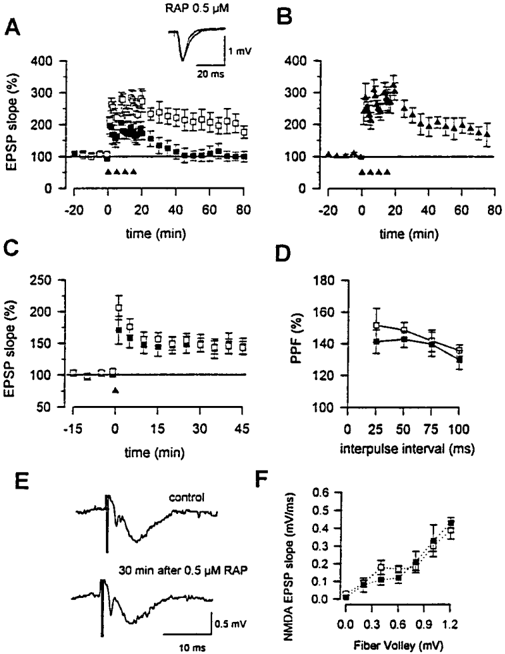
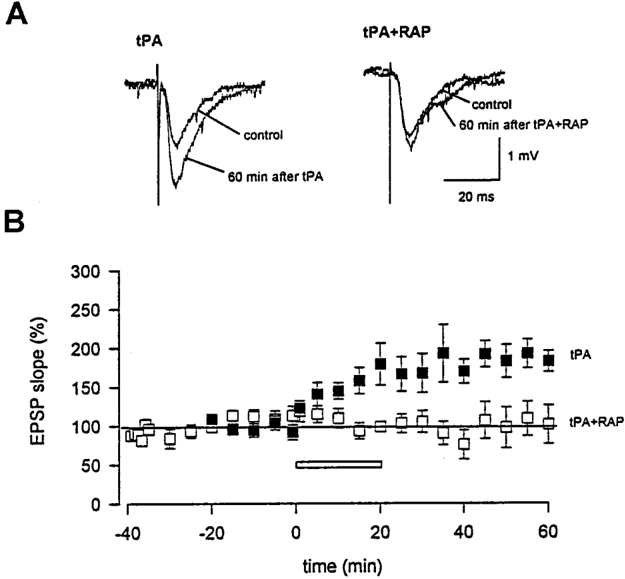
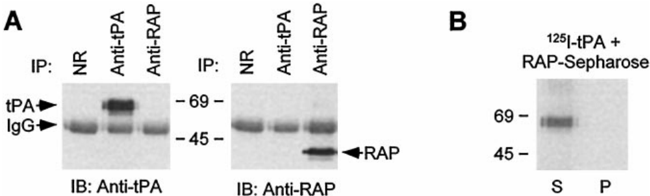
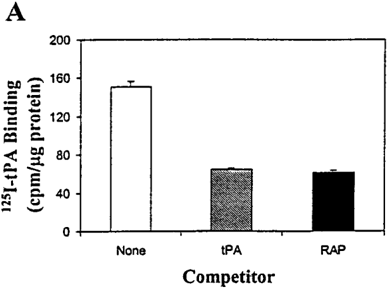
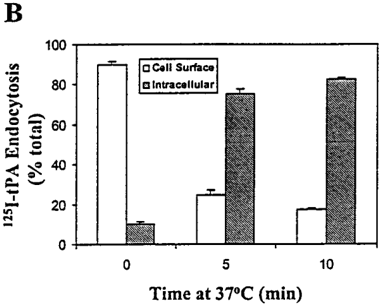
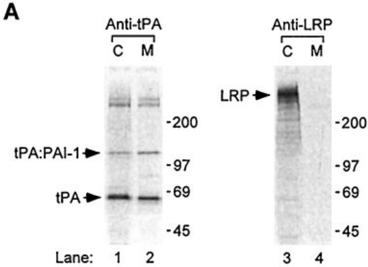
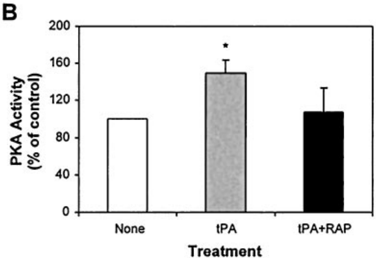
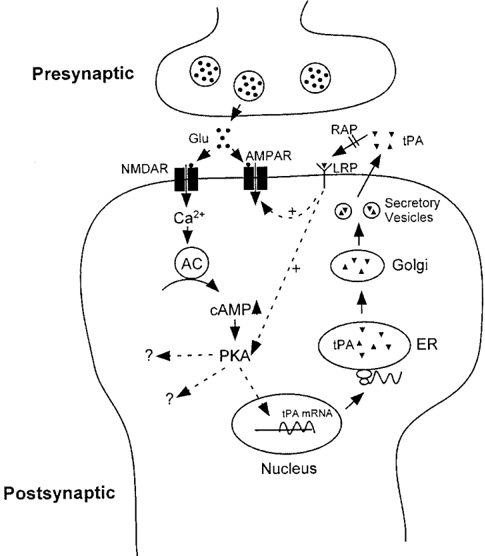
The low-density lipoprotein (LDL) receptor-related protein (LRP) is a multifunctional endocytic receptor that is expressed abundantly in neurons of the CNS. Both LRP and several of its ligands, including tissue plasminogen activator (tPA), apolipoprotein E/lipoproteins, α 2-macroglobulin, and the β-amyloid precursor protein, have been implicated in various neuronal functions and in the pathogenesis of Alzheimer's disease. It has been reported that induction of tPA expression may contribute to activity-dependent synaptic plasticity in the hippocampus and cerebellum. In addition, long-term potentiation (LTP) is significantly decreased in mice lacking tPA. Here we demonstrate that tPA receptor LRP is abundantly expressed in hippocampal neurons and participates in hippocampal LTP. Perfusion of hippocampal slices with receptor-associated protein (RAP), an antagonist for ligand interactions with LRP, significantly reduced late-phase LTP (L-LTP). In addition, RAP also blocked the enhancing effect of synaptic potentiation by exogenous tPA in hippocampal slices prepared from tPA knock-out mice. Metabolic labeling and ligand binding analyses showed that both tPA and LRP are synthesized by hippocampal neurons and that LRP is the major cell surface receptor that binds tPA. Finally, we found that tPA binding to LRP in hippocampal neurons enhances the activity of cyclic AMP-dependent protein kinase, a key molecule that is known to be involved in L-LTP. Taken together, our results demonstrate that interactions between tPA and cell surface LRP are important for hippocampal L-LTP.
Overview
The claims and statistics of this paper haven’t been checked yet.
Run the check — free, no account needed. It reads the open-access text and checks the sources it cites.
Integrity signals
Registry
Cites
Statistics
Figures
Verification
Claims the paper makes
The claims and statistics of this paper haven’t been checked yet.
Run the check — free, no account needed. It reads the open-access text and checks the sources it cites.
Claims other papers make about this one
Each is checked against this paper’s own text: does it say what the citing paper says it does?
In the citing paper
“In addition, RAP also blocked the enhancing effect of synaptic potentiation by exogenous application of the LRP ligand tissue type plasminogen activator (tPA) in hippocampal slices prepared from tPA knock-out mice, indicating that interactions between tPA and cell surface LRP are important for synaptic plasticity (Zhuo et al., 2000).”
From Increased Extracellular Amyloid Deposition and Neurodegeneration in Human Amyloid Precursor Protein Transgenic Mice Deficient in Receptor-Associated Protein (2002) · cites this paper as Zhuo et al., 2000
Self-check
Percentages, sums and reported differences re-computed from the paper’s own numbers.
The self-check needs the paper’s full text.
Citations
Cites
The Medial Temporal Lobe Memory System
Squire, L. R., & Zola-Morgan, S. (1991) · Science · doi:10.1126/science.1896849 · Cited by 3,282
Effects of cAMP simulate a late stage of LTP in hippocampal CA1 neurons
Frey, U., Huang, Y.-Y., & Kandel, E. R. (1993) · Science · doi:10.1126/science.8389057 · Cited by 1,218
Plaque-independent disruption of neural circuits in Alzheimer’s disease mouse models
Hsia, A. Y., Masliah, E., McConlogue, L., Yu, G.-Q., Tatsuno, G., Hu, K., Kholodenko, D., Malenka, R. C., Nicoll, R. A., & Mucke, L. (1999) · Proceedings of the National Academy of Sciences · doi:10.1073/pnas.96.6.3228 · Cited by 1,123
Impaired Spatial Learning after Saturation of Long-Term Potentiation
Moser, E. I., Krobert, K. A., Moser, M.-B., & Morris, R. G. M. (1998) · Science · doi:10.1126/science.281.5385.2038 · Cited by 505
Sun, Y., Wu, S., Bu, G., Onifade, M. K., Patel, S. N., LaDu, M. J., Fagan, A. M., & Holtzman, D. M. (1998) · The Journal of Neuroscience · doi:10.1523/jneurosci.18-09-03261.1998 · Cited by 213
Self-citationNarita, M., Bu, G., Holtzman, D. M., & Schwartz, A. L. (1997) · Journal of Neurochemistry · doi:10.1046/j.1471-4159.1997.68020587.x · Cited by 96
Self-citation
Research works printed but not linked: 65
- 10.1016/S0092-8674(00)81904-2 · DOI · Paper page
- 10.1016/0092-8674(88)90462-X · DOI
- 10.1016/S0896-6273(00)80597-8 · DOI
- 10.1074/jbc.270.45.27063 · DOI · Paper page
- 10.1038/1243 · DOI · Paper page
- 10.1097/00041433-199804000-00012 · DOI
- 10.1016/S0962-8924(98)01283-5 · DOI · Paper page
- Bu, 1992, Identification and partial characterization by chemical cross-linking of a binding protein for tissue-type plasminogen activator (t-PA) on rat hepatoma cells. A plasminogen activator inhibitor type 1-independent t-PA receptor., J Biol Chem, 267, 15595, 10.1016/S0021-9258(19)49578-1 · DOI
- 10.1073/pnas.89.16.7427 · DOI
- Bu, 1993, Receptor-mediated endocytosis of tissue-type plasminogen activator by low density lipoprotein receptor-related protein on human hepatoma HepG2 cells., J Biol Chem, 268, 13002, 10.1016/S0021-9258(18)31486-8 · DOI
- Bu, 1994, Expression and function of the low density lipoprotein receptor-related protein (LRP) in mammalian central neurons., J Biol Chem, 269, 18521, 10.1016/S0021-9258(17)32340-2 · DOI · Paper page
- Bu, 1995, 39 kDa receptor-associated protein is an ER resident protein and molecular chaperone for LDL receptor-related protein., EMBO J, 14, 2269, 10.1002/j.1460-2075.1995.tb07221.x · DOI · Paper page
- 10.1038/368419a0 · DOI
- 10.1038/6374 · DOI · Paper page
- 10.1126/science.8346443 · DOI · Paper page
- 10.1074/jbc.271.47.30121 · DOI · Paper page
- 10.1016/0006-8993(88)90008-X · DOI
- Frey, 1995, Influence of actinomycin D, a RNA-synthesis inhibitor, on long-term potentiation in rat hippocampal neurons in vivo and in vitro., J Physiol (Lond), 490, 703, 10.1113/jphysiol.1996.sp021179 · DOI
- 10.1523/JNEUROSCI.16-06-02057.1996 · DOI
- Fukao, 1998, Analysis of tissue-type plasminogen activator receptor (t-PAR) in human endothelial cells., Semin Thromb Hemost, 24, 269, 10.1055/s-2007-995853 · DOI
- 10.1002/cne.903380203 · DOI
- 10.1042/bj3360381 · DOI · Paper page
- 10.1523/JNEUROSCI.16-24-07950.1996 · DOI
- Hajjar, 1994, An endothelial cell receptor for plasminogen/tissue plasminogen activator., J Biol Chem, 269, 21191, 10.1016/S0021-9258(17)31947-6 · DOI
- 10.1074/jbc.272.10.6812 · DOI
- 10.1146/annurev.ne.16.030193.003205 · DOI
- 10.1523/JNEUROSCI.16-07-02307.1996 · DOI
- Herz, 1988, Surface location and high affinity for calcium of a 500-kd liver membrane protein closely related to the LDL-receptor suggest a physiological role as lipoprotein receptor., EMBO J, 7, 4119, 10.1002/j.1460-2075.1988.tb03306.x · DOI
- 10.1016/0092-8674(92)90511-A · DOI · Paper page
- 10.1016/0092-8674(93)90130-I · DOI · Paper page
- 10.1212/WNL.50.6.1905 · DOI
- 10.1016/0006-8993(96)00384-8 · DOI
- 10.1073/pnas.92.21.9480 · DOI · Paper page
- 10.1016/S1050-1738(98)00017-6 · DOI
- 10.1101/lm.1.1.74 · DOI
- 10.1073/pnas.93.16.8699 · DOI
- 10.1159/000053076 · DOI
- 10.1126/science.284.5414.647 · DOI
- 10.1016/S0006-8993(96)00711-1 · DOI
- 10.1016/0092-8674(95)90320-8 · DOI · Paper page
- 10.1146/annurev.bi.63.070194.003125 · DOI
- 10.1016/S0304-3940(97)13381-X · DOI
- 10.1093/hmg/7.12.1953 · DOI
- Lijnen, 1991, Strategies for the improvement of thrombolytic agents., Thromb Haemost, 66, 88, 10.1055/s-0038-1646377 · DOI
- 10.1038/387500a0 · DOI
- 10.1523/JNEUROSCI.16-10-03189.1996 · DOI
- 10.1126/science.8066450 · DOI · Paper page
- 10.1038/377115a0 · DOI
- 10.1073/pnas.89.16.7422 · DOI
- Orth, 1994, Low density lipoprotein receptor-related protein is necessary for the internalization of both tissue-type plasminogen activator-inhibitor complexes and free tissue-type plasminogen activator., J Biol Chem, 269, 21117, 10.1016/S0021-9258(17)31937-3 · DOI
- Otter, 1991, Binding of tissue-type plasminogen activator by the mannose receptor., J Biol Chem, 266, 13931, 10.1016/S0021-9258(18)92791-2 · DOI
- 10.1523/JNEUROSCI.09-12-04269.1989 · DOI
- 10.1073/pnas.93.4.1571 · DOI
- 10.1038/361453a0 · DOI
- 10.1002/ana.410370212 · DOI · Paper page
- 10.1016/S0896-6273(00)81234-9 · DOI
- 10.1126/science.270.5238.992 · DOI
- 10.1073/pnas.90.5.1977 · DOI · Paper page
- 10.1074/jbc.273.50.33556 · DOI · Paper page
- Trommsdorff, 1999, Reeler/disabled-like disruption of neuronal migration in knockout mice lacking the VLDL receptor and apoE receptor 2., Cell, 9, 689, 10.1016/S0092-8674(00)80782-5 · DOI · Paper page
- 10.1083/jcb.109.1.265 · DOI
- Ware, 1995, Localization of tissue plasminogen activator mRNA in adult rat brain., Brain Res, 37, 275, 10.1016/0361-9230(95)00008-3 · DOI
- Warshawsky, 1993, Identification of domains on the 39-kDa protein that inhibit the binding of ligands to the low density lipoprotein receptor-related protein., J Biol Chem, 268, 22046, 10.1016/S0021-9258(20)80646-2 · DOI
- 10.1006/jsre.1996.0369 · DOI
- Willnow, 1994, Molecular dissection of ligand binding sites on the low density lipoprotein receptor-related protein., J Biol Chem, 269, 15827, 10.1016/S0021-9258(17)40755-1 · DOI
Cited by
Sorted by citations
Apolipoprotein E and Apolipoprotein E Receptors: Normal Biology and Roles in Alzheimer Disease
Holtzman, D. M., Herz, J., & Bu, G. (2012) · Cold Spring Harbor Perspectives in Medicine · doi:10.1101/cshperspect.a006312 · Cited by 782
Self-citationReelin and ApoE receptors cooperate to enhance hippocampal synaptic plasticity and learning
Weeber, E. J., Beffert, U., Jones, C., Christian, J. M., Förster, E., Sweatt, J. D., & Herz, J. (2002) · Journal of Biological Chemistry · doi:10.1074/jbc.m205147200 · Cited by 623
Reelin, lipoprotein receptors and synaptic plasticity
Herz, J., & Chen, Y. (2006) · Nature Reviews Neuroscience · doi:10.1038/nrn2009 · Cited by 524
Matrix metalloproteinase-9 is required for hippocampal late-phase long-term potentiation and memory
Nagy, V., Bozdagi, O., Matynia, A., Balcerzyk, M., Okulski, P., Dzwonek, J., Costa, R. M., Silva, A. J., Kaczmarek, L., & Huntley, G. W. (2006) · The Journal of Neuroscience · doi:10.1523/jneurosci.4359-05.2006 · Cited by 499
Lipoprotein receptors in the nervous system
Herz, J., & Bock, H. H. (2002) · Annual Review of Biochemistry · doi:10.1146/annurev.biochem.71.110601.135342 · Cited by 457
Metadata
- Authors
- Zhuo, M., Holtzman, D. M., Li, Y., Osaka, H., DeMaro, J., Jacquin, M., & Bu, G.
- Venue
- The Journal of Neuroscience
- Publisher
- Society for Neuroscience
- Published
- 2000-01-15
- Volume
- 20
- Issue
- 2
- Pages
- 542-549
- ISSN
- 0270-6474
- 1529-2401
- Cited by
- 258
- References
- 6
- Language
- en
About these checks
Registry, retraction, Cites and statistics results are computed, not judged, with one exception: a printed reference that no index lists is read once by a model before it counts as a citation error. Claims are extracted by a model and kept only when their quote appears verbatim in the text; each cited source is then checked, with a model’s help, for whether it says what the claim relies on. Those verdicts can be wrong — read the claim’s quote and the cited source before relying on one.
Statistics and arithmetic are recomputed, not judged.
Confidence bands are shown only for fields calibrated on our annotated test set. None is calibrated yet, so no band is shown.
What counts as a claim ›How we measure confidence ›How we check this ›
Are you an author, or do you see a problem with this page? Request a review
