

The amyloid hypothesis of Alzheimer's disease at 25 years
Open accessThe DOI matches its Crossref record; 136 of the 137 references it cites were found in a registry or an index.
Abstract
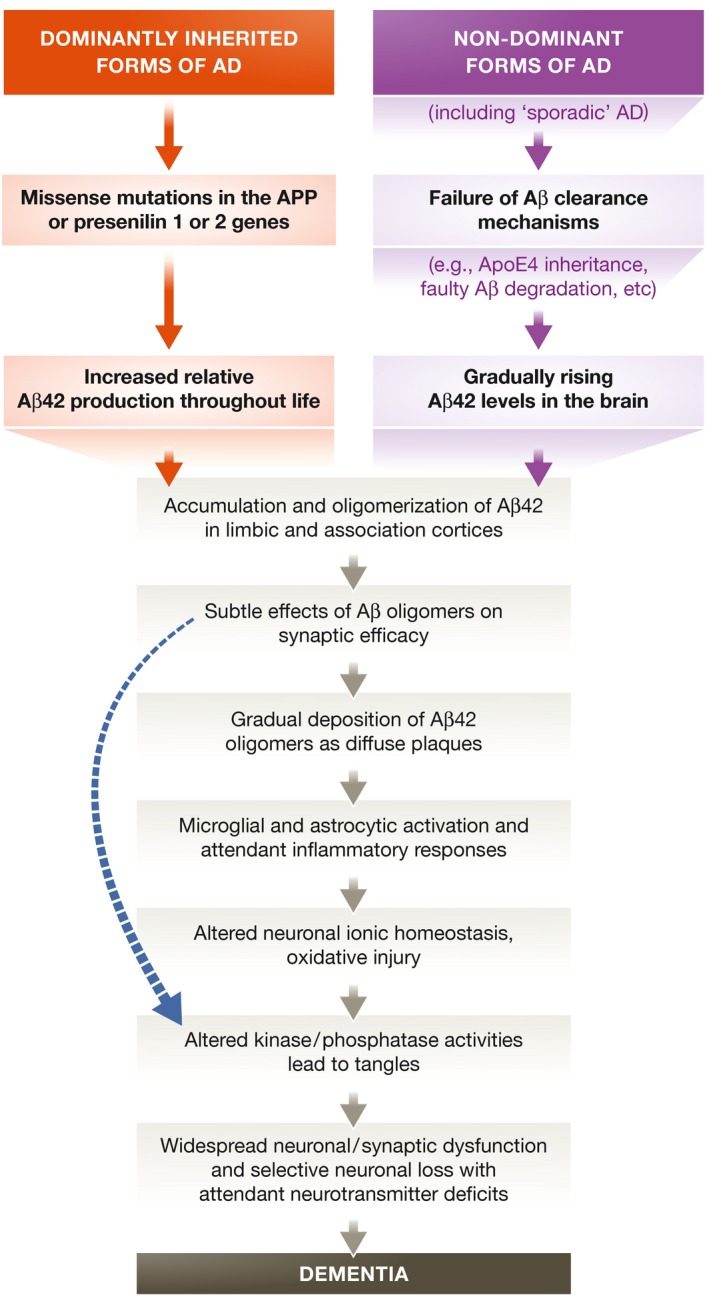
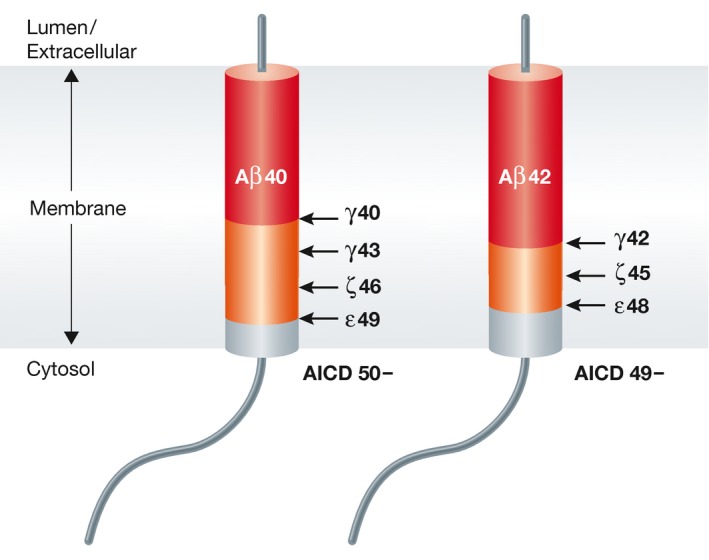
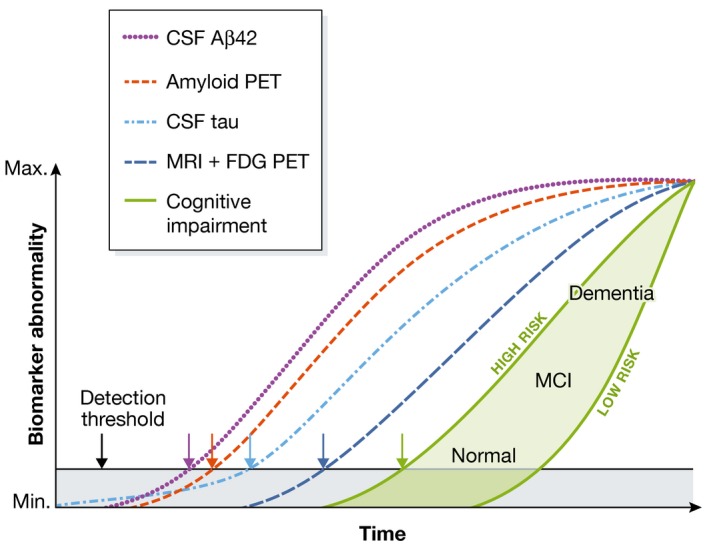
Despite continuing debate about the amyloid β-protein (or Aβ hypothesis, new lines of evidence from laboratories and clinics worldwide support the concept that an imbalance between production and clearance of Aβ42 and related Aβ peptides is a very early, often initiating factor in Alzheimer's disease (AD). Confirmation that presenilin is the catalytic site of γ-secretase has provided a linchpin: all dominant mutations causing early-onset AD occur either in the substrate (amyloid precursor protein, APP) or the protease (presenilin) of the reaction that generates Aβ. Duplication of the wild-type APP gene in Down's syndrome leads to Aβ deposits in the teens, followed by microgliosis, astrocytosis, and neurofibrillary tangles typical of AD Apolipoprotein E4, which predisposes to AD in > 40% of cases, has been found to impair Aβ clearance from the brain. Soluble oligomers of Aβ42 isolated from AD patients' brains can decrease synapse number, inhibit long-term potentiation, and enhance long-term synaptic depression in rodent hippocampus, and injecting them into healthy rats impairs memory. The human oligomers also induce hyperphosphorylation of tau at AD-relevant epitopes and cause neuritic dystrophy in cultured neurons. Crossing human APP with human tau transgenic mice enhances tau-positive neurotoxicity. In humans, new studies show that low cerebrospinal fluid (CSF) Aβ42 and amyloid-PET positivity precede other AD manifestations by many years. Most importantly, recent trials of three different Aβ antibodies (solanezumab, crenezumab, and aducanumab) have suggested a slowing of cognitive decline in post hoc analyses of mild AD subjects. Although many factors contribute to AD pathogenesis, Aβ dyshomeostasis has emerged as the most extensively validated and compelling therapeutic target.
Overview
The claims and statistics of this paper haven’t been checked yet.
Free: it reads the open-access text and checks the first 5 claims that cite a source we can check. Create a free account to check every claim.
Integrity signals
Registry
Cites
Statistics
Figures
Verification
Claims the paper makes
The claims and statistics of this paper haven’t been checked yet.
Free: it reads the open-access text and checks the first 5 claims that cite a source we can check. Create a free account to check every claim.
Claims other papers make about this one
Each is checked against this paper’s own text: does it say what the citing paper says it does?
The source backs part of the claim, not all of it — or backs it for a different population, condition or comparison.
In the citing paper
“Oxidative stress, mitochondrial dysfunction, astrocytic and microglial activation, membrane perturbation, and loss of ionic homeostasis are, at the cellular level, some of the events downstream the Aβ1-42 aggregation and accumulation (Selkoe and Hardy, 2016).”
From Exploring the Therapeutic Potential of Phytochemicals in Alzheimer’s Disease: Focus on Polyphenols and Monoterpenes (2022) · cites this paper as Selkoe and Hardy, 2016
Experimental — accuracy not yet measuredThe source backs part of the claim, not all of it — or backs it for a different population, condition or comparison.
In the citing paper
“Elevated levels of oligomers have been associated with AD, as they are found in AD brains and are considered the most toxic and pathogenic form of Aβ [4,5,6,7,18].”
From Treatment of Alzheimer’s Disease: Beyond Symptomatic Therapies (2023) · cites this paper as [4]
Experimental — accuracy not yet measuredThe source backs part of the claim, not all of it — or backs it for a different population, condition or comparison.
In the citing paper
“Synaptic dysfunction and synapse loss are key hallmarks of AD, present in the early stages of the disease before clinical symptoms appear [79,86,156].”
From Role of Oxidative Damage in Alzheimer’s Disease and Neurodegeneration: From Pathogenic Mechanisms to Biomarker Discovery (2021) · cites this paper as [79]
Experimental — accuracy not yet measuredThe source backs part of the claim, not all of it — or backs it for a different population, condition or comparison.
In the citing paper
“Moreover, the evidence from a failure of reversal of cognitive declines in amyloid-targeting drug trials supports this assumption; for example, patients with AD in whose brains Aβ plaques were virtually cleared by anti-amyloid immunotherapy did not show cognitive benefit [62].”
From Clinical trials of new drugs for Alzheimer disease (2020) · cites this paper as [62]
Experimental — accuracy not yet measuredThe source backs part of the claim, not all of it — or backs it for a different population, condition or comparison.
In the citing paper
“Early-stage AD is characterized primarily by the accumulation of Aβ plaques and subtle synaptic dysfunction, whereas late-stage AD involves extensive neurodegeneration, widespread neuroinflammation, and pronounced BBB disruption [157, 158].”
From Targeted Nanoparticles for Drug Delivery Across the Blood–Brain Barrier in Early and Late Stages of Alzheimer's Disease: A Review (2026) · cites this paper as [157]
Experimental — accuracy not yet measured
26 more claims about this paper
Create a free account to see every claim other papers make about this one.
Self-check
Percentages, sums and reported differences re-computed from the paper’s own numbers.
The self-check needs the paper’s full text.
Citations
Cites
Neuropathological stageing of Alzheimer-related changes.
Braak, H., & Braak, E. (1991) · Acta Neuropathologica · doi:10.1007/bf00308809 · Cited by 16,123 · cited 1×
“An elegant histopathological staging system created by Braak and Braak (1991) is now widely used to establish the severity of AD neuropathology.”
MethodThe Amyloid Hypothesis of Alzheimer’s Disease: Progress and Problems on the Road to Therapeutics
Hardy, J., & Selkoe, D. J. (2002) · Science · doi:10.1126/science.1072994 · Cited by 13,864
Self-citationAmyloid oligomers exacerbate tau pathology in a mouse model of tauopathy
Selenica, M.-L. B., Brownlow, M., Jimenez, J. P., Lee, D. C., Pena, G., Dickey, C. A., Gordon, M. N., & Morgan, D. (2013) · Neurodegenerative Diseases · doi:10.1159/000337230 · Cited by 10,359
Corder, E. H., Saunders, A. M., Strittmatter, W. J., Schmechel, D. E., Gaskell, P. C., Small, G. W., Roses, A. D., Haines, J. L., & Pericak-Vance, M. A. (1993) · Science · doi:10.1126/science.8346443 · Cited by 9,429 · cited 1×
“Cell biology of new AD risk genes Although the importance of ApoE4 as the major risk factor for AD was discovered in 1993 (Corder et al, 1993), it is only since the advent of genomewide association studies and, more recently, exome and genome sequencing that other risk loci for late-onset disease…”
BackgroundAlzheimer's disease: the amyloid cascade hypothesis
Hardy, J. A., & Higgins, G. A. (1992) · Science · doi:10.1126/science.1566067 · Cited by 7,484 · cited 2×
“The amyloid (or Ab) hypothesis (Beyreuther & Masters, 1991; Hardy & Allsop, 1991; Selkoe, 1991; Hardy & Higgins, 1992) has become the dominant model of AD pathogenesis and is guiding the development of potential treatments.”
BackgroundSelf-citationGlenner, G. G., & Wong, C. W. (1984) · Biochemical and Biophysical Research Communications · doi:10.1016/s0006-291x(84)80190-4 · Cited by 5,404
Imaging brain amyloid in Alzheimer's disease with Pittsburgh Compound‐B
Klunk, W. E., Engler, H., Nordberg, A., Wang, Y., Blomqvist, G., Holt, D. P., Bergström, M., Savitcheva, I., Huang, G., Estrada, S., et al. (2004) · Annals of Neurology · doi:10.1002/ana.20009 · Cited by 4,496 · cited 1×
“…fibrillar amyloid burden (but not yet soluble Ab oligomers) by PET scanning, initially with the thioflavin T derivative, Pittsburgh compound B (Klunk et al, 2004); and (iii) the ability to analyze APP metabolism in healthy and diseased humans by quantifying heavy isotope-labeled Ab peptides…”
BackgroundJack, C. R., Knopman, D. S., Jagust, W. J., Petersen, R. C., Weiner, M. W., Aisen, P. S., Shaw, L. M., Vemuri, P., Wiste, H. J., Weigand, S. D., et al. (2013) · The Lancet Neurology · doi:10.1016/s1474-4422(12)70291-0 · Cited by 4,396
Meta-Analysis of 74,046 Individuals Identifies 11 New Susceptibility Loci for Alzheimer’s Disease
(EADI), E. A. D. I., Lambert, J.-C., (GERAD), G. A. E. R. I. A. D., Alzheimer's Disease Genetic Consortium (ADGC), (CHARGE), C. F. H. A. A. R. I. G. E., Ibrahim-Verbaas, C. A., Harold, D., Naj, A. C., Sims, R., Bellenguez, C., et al. (2013) · Nature Genetics · doi:10.1038/ng.2802 · Cited by 4,336 · cited 2×
“This category includes SORL1, BIN1, and PICALM (Rogaeva et al, 2007; Lambert et al, 2013; Zhao et al, 2015).”
BackgroundSelf-citationCorrelative Memory Deficits, Aβ Elevation, and Amyloid Plaques in Transgenic Mice
Hsiao, K., Chapman, P., Nilsen, S., Eckman, C., Harigaya, Y., Younkin, S., Yang, F., & Cole, G. (1996) · Science · doi:10.1126/science.274.5284.99 · Cited by 4,210 · cited 1×
“Early APP mouse models (e.g. Games et al, 1995; Hsiao et al, 1996) suffered from reliance on high transgene expression to drive plaque deposition and from a lack of tangle cytopathology and neuronal death.”
Background
Research works printed but not linked: 3
- Cummings J, Cho W, Ward M, Friesenhahn M, Brunstein F, Honigberg L, Clayton D, Mortensen D, Ho C, Paul R (2014) paper presented at the Alzheimer's Association International Conference (AAIC), Copenhagen, Denmark, 16 July 2014
- Mann DMA, Yuonis N, Jones D, Stoddart DW (1992) The time course of pathological events in Down's Syndrome with particular reference to the involvement of microglial cells and deposits of b/A4. Neurodegeneration 1: 201– 215
- Sevigny J, Chiao P, Williams L, Miao X, O'Gorman J (2015) Randomized, double‐blind Phase 1B study of BIIB037, an anti‐amyloid beta monoclonal antibody, in patients with prodromal or mild Alzheimer's disease. Neurogener Dis 15(Suppl 1): 311
Cited by
Items 901–1,000 of 1,163
Morrone, C. D., Bazzigaluppi, P., Beckett, T. L., Hill, M. E., Koletar, M. M., Stefanovic, B., & McLaurin, J. (2019) · Brain · doi:10.1093/brain/awz371 · Cited by 68
Chen, M., & Xia, W. (2020) · Journal of Alzheimer s Disease · doi:10.3233/jad-200110 · Cited by 65
“Genetic and neuropathologic evidence suggests that AD is caused in part by the overproduction and lack of clearance of A (cid:2) [1–3], accompanied by enhanced neuroinflammation [4–6].”
Limbocker, R., Mannini, B., Ruggeri, F. S., Cascella, R., Xu, C. K., Perni, M., Chia, S., Chen, S. W., Habchi, J., Bigi, A., et al. (2020) · Communications Biology · doi:10.1038/s42003-020-01140-8 · Cited by 66
Hark, T. J., Rao, N. R., Castillon, C., Basta, T., Smukowski, S. N., Bao, H., Upadhyay, A., Bomba-Warczak, E. K., Nomura, T., O'Toole, E. T., et al. (2020) · Cell Systems · doi:10.1016/j.cels.2020.11.007 · Cited by 63
Monoclonal Antibodies as Neurological Therapeutics
Gklinos, P., Papadopoulou, M., Stanulovic, V., Mitsikostas, D. D., & Papadopoulos, D. (2021) · Pharmaceuticals · doi:10.3390/ph14020092 · Cited by 61
Dietary Regulation of Gut-Brain Axis in Alzheimer’s Disease: Importance of Microbiota Metabolites
Frausto, D. M., Forsyth, C. B., Keshavarzian, A., & Voigt, R. M. (2021) · Frontiers in Neuroscience · doi:10.3389/fnins.2021.736814 · Cited by 61
Muraoka, S., Jedrychowski, M. P., Iwahara, N., Abdullah, M., Onos, K. D., Keezer, K. J., Hu, J., Ikezu, S., Howell, G. R., Gygi, S. P., et al. (2021) · Journal of Proteome Research · doi:10.1021/acs.jproteome.0c00934 · Cited by 61
Amyloid-β peptide 37, 38 and 40 individually and cooperatively inhibit amyloid-β 42 aggregation
Braun, G. A., Dear, A. J., Sanagavarapu, K., Zetterberg, H., & Linse, S. S. (2022) · Chemical Science · doi:10.1039/d1sc02990h · Cited by 76
Magnetoelectric dissociation of Alzheimer’s β-amyloid aggregates
Jang, J., & Park, C. B. (2022) · Science Advances · doi:10.1126/sciadv.abn1675 · Cited by 61
Immunotherapies for Alzheimer’s Disease—A Review
Valiukas, Z., Ephraim, R., Tangalakis, K., Davidson, M., Apostolopoulos, V., & Feehan, J. (2022) · Vaccines · doi:10.3390/vaccines10091527 · Cited by 82
“The amyloid hypothesis is the most extensively studied concept of AD, in which abnormal processing of Aβ and/or impairment of its systemic clearance may be responsible for the progression of AD-related phenotypes (Figure 2) [19].”
BackgroundThe Amyloid-Beta Clearance: From Molecular Targets to Glial and Neural Cells
Cai, W., Wu, T., & Chen, N. (2023) · Biomolecules · doi:10.3390/biom13020313 · Cited by 61
“Aβ plaque is now accepted to be a protective mechanism, rather than the cause of AD [40].”
BackgroundAbdullah, S. A., Najm, L., Ladouceur, L., Ebrahimi, F., Shakeri, A., Al‐Jabouri, N., Didar, T. F., & Dellinger, K. (2023) · Advanced Functional Materials · doi:10.1002/adfm.202302673 · Cited by 68
Foret, M. K., Orciani, C., Welikovitch, L. A., Huang, C., Cuello, A. C., & Carmo, S. D. (2024) · Communications Biology · doi:10.1038/s42003-024-06552-4 · Cited by 68
Salloway, S., Wojtowicz, J., Voyle, N., Lane, C., Klein, G., Lyons, M., Rossomanno, S., Mazzo, F., Bullain, S., Barkhof, F., et al. (2024) · JAMA Neurology · doi:10.1001/jamaneurol.2024.3937 · Cited by 71
Alkhalifa, A. E., Mokhlf, A. A., Ali, H., Al-Ghraiybah, N. F., & Syropoulou, V. (2025) · Journal of Personalized Medicine · doi:10.3390/jpm15090437 · Cited by 77
“These the radiological hallmarks of ARIAs observed in patients treated Snow groomers also compact snow, delaying snowmelt by up to four weeks [11]. with anti-amyloid antibodies.”
Search for Alzheimer's Disease Biomarkers in Blood Cells: Hypotheses-Driven Approach
Wojsiat, J., Laskowska-Kaszub, K., Mietelska-Porowska, A., & Wojda, U. (2017) · Biomarkers in Medicine · doi:10.2217/bmm-2017-0041 · Cited by 61
Sleep and circadian rhythm disruption and stress intersect in Alzheimer's disease
Phan, T. X., & Malkani, R. G. (2019) · Neurobiology of Stress · doi:10.1016/j.ynstr.2018.10.001 · Cited by 60
“all the probable confounders, limitations, and technical challenges, one important reason may be the missed therapeutic window; patients even at mild and moderate stage at the time of commencing the clinical trials were already at potentially irreversible stage due to significant synaptic and neuronal losses (Selkoe a…”
Angelucci, F., Čechová, K., Průša, R., & Hort, J. (2018) · CNS Neuroscience & Therapeutics · doi:10.1111/cns.13082 · Cited by 64
Amani, M., Shokouhi, G., & Salari, A. (2018) · Psychopharmacology · doi:10.1007/s00213-018-5137-8 · Cited by 64
Blood amyloid-β oligomerization associated with neurodegeneration of Alzheimer’s disease
Youn, Y. C., Kang, S., Suh, J., Park, Y. H., Kang, M. J., Pyun, J., Choi, S. H., Jeong, J. H., Park, K. W., Lee, H., et al. (2019) · Alzheimer s Research & Therapy · doi:10.1186/s13195-019-0499-7 · Cited by 66
Cieślik, M., Czapski, G. A., Wójtowicz, S., Wieczorek, I., Wencel, P. L., Strosznajder, R. P., Jaber, V., Lukiw, W. J., & Strosznajder, J. B. (2020) · Molecular Neurobiology · doi:10.1007/s12035-019-01819-y · Cited by 61
Sánchez‐Rodríguez, I., Djebari, S., Temprano‐Carazo, S., Vega‐Avelaira, D., Jiménez‐Herrera, R., Iborra‐Lázaro, G., Yajeya, J., Jiménez‐Díaz, L., & Navarro‐López, J. D. (2020) · Journal of Neurochemistry · doi:10.1111/jnc.14946 · Cited by 61
“Alzheimer's disease (AD) has been associated with high levels of amyloid-β (Aβ) peptides in the brain (Selkoe & Hardy, 2016).”
BackgroundInfluentialSuvorexant ameliorates cognitive impairments and pathology in APP/PS1 transgenic mice
Zhou, F., Yan, X.-D., Wang, C., He, Y.-X., Li, Y.-Y., Zhang, J., Wang, Z.-J., Cai, H.-Y., Qi, J.-S., & Wu, M.-N. (2020) · Neurobiology of Aging · doi:10.1016/j.neurobiolaging.2020.02.020 · Cited by 61
Si, G., & Álvarez, A. (2020) · Medicinal Research Reviews · doi:10.1002/med.21722 · Cited by 65
Secretases in Alzheimer's disease: Novel insights into proteolysis of APP and TREM2
Lichtenthaler, S. F., Tschirner, S. K., & Steiner, H. (2022) · Current Opinion in Neurobiology · doi:10.1016/j.conb.2021.09.003 · Cited by 60
Kochman, U., Sitka, H., Kuźniar, J., Czaja, M., Kozubek, P., Beszłej, J. A., & Leszek, J. (2026) · Molecular Neurobiology · doi:10.1007/s12035-025-05417-z · Cited by 60
Jensen, K. M., WuWong, D. J., Wong, S., Matsuyama, M., & Matsuyama, S. (2019) · Experimental Biology and Medicine · doi:10.1177/1535370219833624 · Cited by 65
The Role of Rac GTPase in Dendritic Spine Morphogenesis and Memory
Costa, J. F., Dines, M., & Lamprecht, R. (2020) · Frontiers in Synaptic Neuroscience · doi:10.3389/fnsyn.2020.00012 · Cited by 66
Is γ-secretase a beneficial inactivating enzyme of the toxic APP C-terminal fragment C99?
Checler, F., Afram, E., Pardossi-Piquard, R., & Lauritzen, I. (2021) · Journal of Biological Chemistry · doi:10.1016/j.jbc.2021.100489 · Cited by 59
“While the knowledge about the exact effects of the pathogenic APP mutations is still limited, it seems that mutations close to the β-secretase (such as the Swedish and Leuven (E682K) mutations) favor C99 production, those close to the α-secretase site (such as the Flemish [E693Q] or Arctic [E693G] mutations) lead to t…”
BackgroundInfluential3D-visualization of amyloid-β oligomer interactions with lipid membranes by cryo-electron tomography
Tian, Y., Liang, R., Kumar, A., Szwedziak, P., & Viles, J. H. (2021) · Chemical Science · doi:10.1039/d0sc06426b · Cited by 64
CSF proteomics in autosomal dominant Alzheimer’s disease highlights parallels with sporadic disease
van der Ende, E. L., Veld, S. G. J. G. I. ‘., Hanskamp, I., van der Lee, S. J., Dijkstra, J. I. R., Hok‐A‐Hin, Y. S., Blujdea, E. R., Swieten, J. C. V., Irwin, D. J., Chen‐Plotkin, A. S., et al. (2023) · Brain · doi:10.1093/brain/awad213 · Cited by 62
“45,46 Nonetheless, our results suggest common disease mechanisms downstream of A β pathology, and potential efficacy of drugs The log 2 fold change, which is equivalent to the difference in log 2 -transformed normalized protein expression (NPX) levels, is plotted against the –log 10 -transformed q…”
Wang, Z., Liu, J., Han, J., Zhang, T., Li, S., Hou, Y., Su, H., Han, F., & Zhang, C. (2024) · Journal of Neuroinflammation · doi:10.1186/s12974-024-03166-9 · Cited by 60
Alzheimer′s disease: the silver tsunami of the 21 st century
Singh, A., Sarkar, A., Irwin, M. N., Singh, A., & Riccetti, M. (2016) · Neural Regeneration Research · doi:10.4103/1673-5374.182680 · Cited by 67
“…(NFTs) containing hyper-phosphory-lated forms of a microtubule associated protein Tau, and (2) accumulation of the plaques of amyloid-beta (A β 42) peptide due to aggregation prone amyloidogenic domains (Hardy, 2009; Aguzzi and O’Connor, 2010; Fernandez-Funez et al., 2013; Selkoe and Hardy, 2016).”
Impact of aging immune system on neurodegeneration and potential immunotherapies
Liang, Z., Zhao, Y., Ruan, L., Zhu, L., Jin, K., Zhuge, Q., Su, D., & Zhao, Y. L. (2017) · Progress in Neurobiology · doi:10.1016/j.pneurobio.2017.07.006 · Cited by 67
Fang, P., Xie, J., Sang, S., Zhang, L., Liu, M., Yang, L., Xu, Y., Yan, G., Yao, J. H., Gao, X., et al. (2019) · Analytical Chemistry · doi:10.1021/acs.analchem.9b03555 · Cited by 68
Irwin, M. N., Tare, M., Singh, A. P., Puli, O. R., Gogia, N., Riccetti, M., Deshpande, P., Kango‐Singh, M., & Singh, A. (2020) · Frontiers in Cell and Developmental Biology · doi:10.3389/fcell.2020.00117 · Cited by 59
“The hallmark of AD and other neurodegenerative diseases is loss of cognitive function due to neuronal death (Hardy, 2009; Hirth, 2010; O’Brien and Wong, 2010; Selkoe and Hardy, 2016).”
BackgroundThe Future of Anti-Amyloid Trials
Aisen, P. S., Cummings, J., Doody, R., Kramer, L., Salloway, S., Selkoe, D. J., Sims, J., Sperling, R. A., & Vellas, B. (2020) · The Journal of Prevention of Alzheimer's Disease · doi:10.14283/jpad.2020.24 · Cited by 59
“Learnings from trials of anti-amyloid monoclonal antibody trials The Task Force discussed five anti-amyloid monoclonal ant ibody therapies current ly in clinical development: aducanumab (7), BAN2401 (6), gantenerumab (8), solanezumab (9–13) , and donanemab.”
BackgroundSelf-citationBrain Somatic Mutation in Aging and Alzheimer's Disease
Miller, M. B., Reed, H. C., & Walsh, C. A. (2021) · Annual Review of Genomics and Human Genetics · doi:10.1146/annurev-genom-121520-081242 · Cited by 58
Turning the tide on Alzheimer’s disease: modulation of γ-secretase
Luo, J. E., & Li, Y.-M. (2022) · Cell & Bioscience · doi:10.1186/s13578-021-00738-7 · Cited by 59
“The ability to image amyloid and CSF biomarkers in human subjects has been crucial to monitoring the progress of clinical trials in AD [75].”
BackgroundKumar, N. N., Pizzo, M. E., Nehra, G., Wilken-Resman, B., Boroumand, S., & Thorne, R. G. (2018) · Bioconjugate Chemistry · doi:10.1021/acs.bioconjchem.8b00548 · Cited by 70
Integrin adhesion in brain assembly: From molecular structure to neuropsychiatric disorders
Jaudon, F., Thalhammer, A., & Cingolani, L. A. (2020) · European Journal of Neuroscience · doi:10.1111/ejn.14859 · Cited by 62
“…hypothesis of AD, extracellular accumulation of aggregated amyloid beta (Aβ) peptides induces the formation of senile plaques causing neuro-inflammation and progressive deficits in synaptic transmission and plasticity, ultimately leading to neuronal cell death and dementia (Selkoe & Hardy, 2016).”
BackgroundJahangiri, B., Saei, A. K., Obi, P. O., Asghari, N., Lorzadeh, S., Hekmatirad, S., Rahmati, M., Velayatipour, F., Asghari, M. H., Saleem, A., et al. (2022) · Biochimica et Biophysica Acta (BBA) - Molecular Basis of Disease · doi:10.1016/j.bbadis.2022.166484 · Cited by 73
Shea, D. W., Colasurdo, E. A., Smith, A. S. T., Paschall, C. J., Jayadev, S., Keene, C. D., Galasko, D. R., Ko, A. L., Li, G., Peskind, E. R., et al. (2022) · Proceedings of the National Academy of Sciences · doi:10.1073/pnas.2213157119 · Cited by 65
Neuritic Plaques — Gateways to Understanding Alzheimer’s Disease
Tsering, W., & Prokop, S. (2024) · Molecular Neurobiology · doi:10.1007/s12035-023-03736-7 · Cited by 59
Adarsh, V., Gangadharan, G. R., Fiore, U., & Zanetti, P. (2024) · Scientific Reports · doi:10.1038/s41598-024-52185-2 · Cited by 75
Emerging drugs to reduce abnormal β-amyloid protein in Alzheimer’s disease patients
Panza, F., Seripa, D., Solfrizzi, V., Imbimbo, B. P., Lozupone, M., Leo, A., Sardone, R., Gagliardi, G., Lofano, L., Creanza, B. C., et al. (2016) · Expert Opinion on Emerging Drugs · doi:10.1080/14728214.2016.1241232 · Cited by 59
“Definitive proof of the controversial concept of the amyloid hypothesis could only come from clinical trials that selectively target Aβ, producing slowing and ultimately arrest of cognitive decline in typical AD patients [121].”
BackgroundAn intranasally delivered peptide drug ameliorates cognitive decline in Alzheimer transgenic mice
Cheng, Y.-S., Chen, Z.-T., Liao, T., Lin, C. W., Shen, H. C.-H., Wang, Y., Chang, C., Liu, R., Chen, R. P. ‐., & Tu, P. (2017) · EMBO Molecular Medicine · doi:10.15252/emmm.201606666 · Cited by 63
“The preliminary success of ART with aducanumab immunotherapy in decreasing cognitive decline further strengthens this hypothesis (Moreth et al , 2013; Lannfelt et al , 2014; Ratner, 2015; Underwood, 2015; Selkoe & Hardy, 2016; Sevigny et al , 2016).”
Martínez, G., Vernooij, R. W., Fuentes Padilla, P., Zamora, J., Bonfill Cosp, X., & Flicker, L. (2017) · Cochrane Database of Systematic Reviews · doi:10.1002/14651858.cd012216.pub2 · Cited by 59
Michno, W., Wehrli, P. M., Zetterberg, H., Blennow, K., & Hanrieder, J. (2018) · Biochimica et Biophysica Acta (BBA) - Proteins and Proteomics · doi:10.1016/j.bbapap.2018.09.010 · Cited by 64
“A wealth of studies implicates a critical role of Aβ aggregation in early AD pathogenesis, however the mechanisms behind Aβ aggregation and toxicity in AD are not completely understood [2-4].”
BackgroundOh, J. H., Choi, J. S., & Nam, T. (2018) · Marine Drugs · doi:10.3390/md16100368 · Cited by 60
Structure of amyloid β25–35 in lipid environment and cholesterol-dependent membrane pore formation
Kandel, N., Matos, J. O., & Tatulian, S. A. (2019) · Scientific Reports · doi:10.1038/s41598-019-38749-7 · Cited by 62
Warmack, R. A., Boyer, D. R., Zee, C.-T., Richards, L. S., Sawaya, M. R., Cascio, D., Gonen, T., Eisenberg, D. S., & Clarke, S. G. (2019) · Nature Communications · doi:10.1038/s41467-019-11183-z · Cited by 65
Han, J., Ji, Y., Youn, K., Lim, G., Lee, J., Kim, D. H., & Jun, M. (2019) · Nutrients · doi:10.3390/nu11112694 · Cited by 66
Differences Between Human and Murine Tau at the N-terminal End
Hernández, F., Merchán-Rubira, J., Vallés-Saiz, L., Rodríguez-Matellán, A., & Avila, J. (2020) · Frontiers in Aging Neuroscience · doi:10.3389/fnagi.2020.00011 · Cited by 58
Codonopsis pilosula polysaccharide attenuates Aβ toxicity and cognitive defects in APP/PS1 mice
Wan, L., Zhang, Q., Luo, H., Xu, Z., Huang, S., Yang, F., Liu, Y., Mahaman, Y. A. R., Ke, D., Wang, Q., et al. (2020) · Aging · doi:10.18632/aging.103445 · Cited by 65
“An imbalance between the production and clearance of Aβ42 and related Aβ peptides leads to abnormal accumulation of extracellular Aβ [6].”
BackgroundRoberts, J. P., Stokoe, S. A., Sathler, M. F., Nichols, R. A., & Kim, S. (2021) · Journal of Biological Chemistry · doi:10.1016/j.jbc.2021.100402 · Cited by 58
A role of low-density lipoprotein receptor-related protein 4 (LRP4) in astrocytic Aβ clearance
Zhang, H., Chen, W., Tan, Z., Zhang, L., Dong, Z., Cui, W., Zhao, K., Wang, H., Jing, H., Cao, R., et al. (2020) · The Journal of Neuroscience · doi:10.1523/jneurosci.0250-20.2020 · Cited by 58
“Worsened cognitive deficits in LRP4 deficiency 5xFADmice The clinical hallmark of AD is progressive memory loss (Selkoe and Hardy, 2016).”
BackgroundPanek, D., Więckowska, A., Jończyk, J., Godyń, J., Bajda, M., Wichur, T., Pasieka, A., Knez, D., Pišlar, A. H., Korábečný, J., et al. (2018) · ACS Chemical Neuroscience · doi:10.1021/acschemneuro.7b00461 · Cited by 59
Neurodegenerative pathways as targets for acquired epilepsy therapy development
Casillas-Espinosa, P. M., Ali, I. Y., & O'Brien, T. J. (2020) · Epilepsia Open · doi:10.1002/epi4.12386 · Cited by 66
Endocannabinoid system alterations in Alzheimer’s disease: A systematic review of human studies
Berry, A. J., Zubko, O., Reeves, S., & Howard, R. J. (2020) · Brain Research · doi:10.1016/j.brainres.2020.147135 · Cited by 69
Therapeutic Strategies to Target Calcium Dysregulation in Alzheimer’s Disease
Calvo-Rodríguez, M., Kharitonova, E. K., & Bacskai, B. J. (2020) · Cells · doi:10.3390/cells9112513 · Cited by 68
Kabir, M. T., Uddin, M. S., Jeandet, P., Emran, T. B., Mitra, S., Albadrani, G. M., Sayed, A. A., Abdel‐Daim, M. M., & Simal‐Gándara, J. (2021) · Marine Drugs · doi:10.3390/md19050251 · Cited by 71
“It is suggested by the amyloid cascade hypothesis that Aβ accumulation dysregulates neuronal and synaptic function, which can mediate the intracellular environment for the formation of NFTs, eventually resulting in loss of neurons and further deterioration of neurotransmitter activity [10].”
BackgroundFluid biomarkers in Alzheimer's disease
Simrén, J., Elmgren, A., Blennow, K., & Zetterberg, H. (2023) · Advances in Clinical Chemistry · doi:10.1016/bs.acc.2022.09.006 · Cited by 58
Zhao, X., Sun, J., Li, X., She, L., Li, L., Tang, H., Zeng, Y., Chen, F., Han, X., Ye, S., et al. (2023) · International Journal of Biological Sciences · doi:10.7150/ijbs.81900 · Cited by 66
“Among amyloid-forming fragments, Aβ42 is the most toxic and easily aggregates to form amyloid plaques [5].”
BackgroundRNA‐binding proteins implicated in neurodegenerative diseases
Cookson, M. R. (2017) · WIREs RNA · doi:10.1002/wrna.1397 · Cited by 58
“Secondarily, plaques lead to the formation of tau-positive tangles within neurons.(88) While this ‘amyloid cascade’ hypothesis has some limitations,(89) particularly with respect to its ability to predict useful drug interventions, it does nonetheless position AD as a post-translational disease, being focussed on prot…”
BackgroundLi, X., Zhu, H., Sun, X., Zuo, F., Lei, J., Wang, Z., Bao, X., & Wang, R. (2016) · Frontiers in Aging Neuroscience · doi:10.3389/fnagi.2016.00282 · Cited by 58
Sharma, M., Dierkes, T., & Sajikumar, S. (2017) · Aging Cell · doi:10.1111/acel.12634 · Cited by 56
“Amyloid-b 1–42 (Ab) is responsible for the synaptic failure (Chen et al., 2000; Sheng et al., 2012; Selkoe & Hardy, 2016) that is associated with cognitive decline and forms the basis of clinical AD phenotype (Sheng et al., 2012).”
BackgroundLi, Y., Guan, S., Liu, C., Chen, X., Zhu, Y., Xie, Y., Wang, J., Ji, X., Li, L., Li, Z., et al. (2018) · International Journal of Biological Macromolecules · doi:10.1016/j.ijbiomac.2018.03.035 · Cited by 60
The spectrum of preclinical Alzheimer's disease pathology and its modulation by ApoE genotype
Pletnikova, O., Kageyama, Y., Rudow, G., LaClair, K. D., Albert, M., Crain, B. J., Tian, J., Fowler, D., & Troncoso, J. C. (2018) · Neurobiology of Aging · doi:10.1016/j.neurobiolaging.2018.07.007 · Cited by 58
The Potential Influence of Bone-Derived Modulators on the Progression of Alzheimer’s Disease
Yuan, J., Meloni, B. P., Shi, T., Bonser, A. M., Papadimitriou, J. M., Mastaglia, F. L., Zhang, C., Zheng, M., & Gao, J. (2019) · Journal of Alzheimer s Disease · doi:10.3233/jad-181249 · Cited by 62
“…the abnormal processing of the amyloidogenic amyloid-(cid:2) protein precursor (A (cid:2) PP), which generates A (cid:2) , plays an important role in dereg-ulating kinases, phosphatases, and several signaling pathways promoting tau phosphorylation, synaptic failure and neurodegeneration [31, 32].”
Dal Magro, R., Simonelli, S., Cox, A., Formicola, B., Corti, R., Cassina, V., Nardo, L., Mantegazza, F., Salerno, D., Grasso, G., et al. (2019) · Frontiers in Neuroscience · doi:10.3389/fnins.2019.00419 · Cited by 58
Mechanisms of neurodegeneration — Insights from familial Alzheimer’s disease
Chávez-Gutiérrez, L., & Szaruga, M. (2020) · Seminars in Cell & Developmental Biology · doi:10.1016/j.semcdb.2020.03.005 · Cited by 58
Lau, H. H. C., Ingelsson, M., & Watts, J. (2020) · Acta Neuropathologica · doi:10.1007/s00401-020-02201-2 · Cited by 48
Adiponectin: The Potential Regulator and Therapeutic Target of Obesity and Alzheimer’s Disease
Kim, J. Y., Barua, S., Jeong, Y. J., & Lee, J. E. (2020) · International Journal of Molecular Sciences · doi:10.3390/ijms21176419 · Cited by 65
“and energy xpenditure via AdipoR1-mediated AMPK signaling [23].”
BackgroundInfluentialTransferrin receptor-targeted anti-amyloid antibody enhances brain delivery and mitigates ARIA.
Pizzo, M. E., Plowey, E. D., Khoury, N., Kwan, W., Abettan, J., DeVos, S. L., Discenza, C. B., Earr, T., Joy, D., Lye-Barthel, M., et al. (2025) · Science · doi:10.1126/science.ads3204 · Cited by 63
Advancing combination therapy for Alzheimer's disease
Salloway, S. P., Sevingy, J., Budur, K., Pederson, J. T., DeMattos, R. B., Von Rosenstiel, P., Paez, A., Evans, R., Weber, C. J., Hendrix, J. A., et al. (2020) · Alzheimer's & Dementia: Translational Research & Clinical Interventions · doi:10.1002/trc2.12073 · Cited by 57
Tuovinen, T., Kananen, J., Rajna, Z., Lieslehto, J., Korhonen, V. O., Rytty, R., Mattila, H., Huotari, N., Raitamaa, L., Helakari, H., et al. (2020) · Scientific Reports · doi:10.1038/s41598-020-77984-1 · Cited by 59
Photo-oxygenation by a biocompatible catalyst reduces amyloid-β levels in Alzheimer’s disease mice
Ozawa, S., Hori, Y., Shimizu, Y., Taniguchi, A., Suzuki, T., Wang, W., Chiu, Y. W., Koike, R., Yokoshima, S., Fukuyama, T., et al. (2021) · Brain · doi:10.1093/brain/awab058 · Cited by 60
Franzmeier, N., Ossenkoppele, R., Brendel, M., Rubinski, A., Smith, R., Kumar, A., Mattsson‐Carlgren, N., Strandberg, O., Duering, M., Buerger, K., et al. (2022) · Alzheimer's & Dementia · doi:10.1002/alz.12371 · Cited by 55
“For (1) we used analyses of covariance (ANCOVAs) to determine BIN1 rs744373 effects on annual”
Alzheimer disease neuropathology in a patient previously treated with aducanumab
Plowey, E. D., Bussiere, T., Rajagovindan, R., Sebalusky, J., Hamann, S., von Hehn, C., Castrillo-Viguera, C., Sandrock, A., Budd Haeberlein, S., van Dyck, C. H., et al. (2022) · Acta Neuropathologica · doi:10.1007/s00401-022-02433-4 · Cited by 56
Sturchio, A., (DIAN), T. D. I. A. C., Dwivedi, A. K., Malm, T., Wood, M. J. A., Cilia, R., Sharma, J. S., Hill, E. J., Schneider, L. S., Graff-Radford, N. R., et al. (2022) · Journal of Alzheimer's Disease · doi:10.3233/jad-220808 · Cited by 57
“Early studies argued that absolute levels of A 42 decrease but the A 42/A 40 ratio increases due to the lower decrease of A 40 relative the more aggregation-prone A 42 [32, 33].”
BackgroundMetal–Organic Frameworks as Sensors for Human Amyloid Diseases
Leite, J. P., Figueira, F., Mendes, R. F., Paz, F. A. A., & Gales, L. (2023) · ACS Sensors · doi:10.1021/acssensors.2c02741 · Cited by 59
Tau pathology epigenetically remodels the neuron-glial cross-talk in Alzheimer’s disease
Zhou, L., Liu, D., Kang, H., Lu, L., Huang, H., Ai, W.-Q., Zhou, Y., Deng, M., Li, H., Liu, Z., et al. (2023) · Science Advances · doi:10.1126/sciadv.abq7105 · Cited by 61
Levites, Y., Dammer, E. B., Ran, Y., Tsering, W., Duong, D., Abreha, M., Gadhavi, J., Lolo, K., Trejo-Lopez, J., Phillips, J., et al. (2024) · Cell Reports Medicine · doi:10.1016/j.xcrm.2024.101669 · Cited by 56
Anti-herpetic tau preserves neurons via the cGAS-STING-TBK1 pathway in Alzheimer’s disease
Hyde, V. R., Zhou, C., y Fernández, J. R. M., Chatterjee, K., Ramakrishna, P., Lin, A., Fisher, G. W., Celiker, O. T., Caldwell, J., Bender, O., et al. (2025) · Cell Reports · doi:10.1016/j.celrep.2024.115109 · Cited by 66
Deep Visual Proteomics maps proteotoxicity in a genetic liver disease
Rosenberger, F. A., Mädler, S. C., Thorhauge, K. H., Steigerwald, S., Fromme, M., Lebedev, M., Weiss, C. A. M., Oeller, M., Wahle, M., Zwiebel, M., et al. (2025) · Nature · doi:10.1038/s41586-025-08885-4 · Cited by 82
Caraci, F., Tascedda, F., Merlo, S., Benatti, C., Spampinato, S. F., Munafò, A., Leggio, G. M., Nicoletti, F., Brunello, N., Drago, F., et al. (2016) · Frontiers in Pharmacology · doi:10.3389/fphar.2016.00389 · Cited by 58
“Soluble A β oligomers are highly toxic species that disrupt synaptic function and their burden correlates better with dementia severity than insoluble fibrillar deposits (Selkoe and Hardy, 2016).”
EGCG inhibits the oligomerization of amyloid beta (16-22) hexamer: Theoretical studies
Ngô, S. T., Truong, D. T., Tâm, N. M., & Nguyen, M. T. (2017) · Journal of Molecular Graphics and Modelling · doi:10.1016/j.jmgm.2017.06.018 · Cited by 59
“Of the most popular ones, the Amyloid hypothesis is supported by several recent studies [6-9].”
ResultLiu, S., Park, S., Allington, G., Prelli, F., Sun, Y., Martá-Ariza, M., Scholtzova, H., Biswas, G., Brown, B., Verghese, P. B., et al. (2017) · Scientific Reports · doi:10.1038/s41598-017-08604-8 · Cited by 56
“Serial coronal brain sections (40 μm) were cut evenly spaced every 400 μm μm along the entire rostro-caudal brain axis and stained for immunohistochemical analysis with: (1) a mixture of anti-Aβ monoclonal antibodies 6E10/4G8 (1 :2000) (Covance, Princeton, NJ), (2) polyclonal anti-glial fibrillary acidic protein (GFAP…”
MethodER stress is not elevated in the 5XFAD mouse model of Alzheimer's disease
Sadleir, K. R., Popovic, J., & Vassar, R. (2018) · Journal of Biological Chemistry · doi:10.1074/jbc.ra118.005769 · Cited by 60
“Alzheimer’s disease (AD)(2) is characterized by the pathological misfolding and aggregation of two proteins, -amyloid (A ) and hyperphosphorylated tau, which form the hallmark lesions, amyloid plaques, and neurofibrillary tangles of the disorder (1, 2).”
BackgroundLiu, S., Ando, F., Fujita, Y., Liu, J., Maeda, T., Shen, X., Kikuchi, K., Matsumoto, A., Yokomori, M., Tanabe-Fujimura, C., et al. (2019) · Journal of Biological Chemistry · doi:10.1074/jbc.ra118.006420 · Cited by 57
“To reduce the levels of toxic A 42 or the A 42/A 40 ratio, many -secretase inhibitors or modulators have been designed and tested in clinical trials, but none have succeeded (3, 12).”
BackgroundAmyloid Beta 25–35 induces blood-brain barrier disruption in vitro
Cuevas, E., Rosas-Hernández, H., Burks, S. M., Ramirez-Lee, M. A., Guzmán, A., Imam, S. Z., Ali, S. F., & Sarkar, S. (2019) · Metabolic Brain Disease · doi:10.1007/s11011-019-00447-8 · Cited by 60
Yang, J., Zeng, F., Li, X., Ran, C., Xu, Y., & Li, Y. (2020) · Chemical Communications · doi:10.1039/c9cc08894f · Cited by 61
Biosensors on the road to early diagnostic and surveillance of Alzheimer's disease
Carneiro, P., Morais, S., & Pereira, M. D. C. (2020) · Talanta · doi:10.1016/j.talanta.2019.120700 · Cited by 63
Owen, J. E., Benediktsdóttir, B., Cook, E., Ólafsson, Í., Gíslason, Þ., & Robinson, S. R. (2020) · SLEEP · doi:10.1093/sleep/zsaa195 · Cited by 61
“The primary causative agent(s) of AD is (are) unknown; however, the pattern of hippocampal pathology is well characterized, although there remains some debate as to which neuropathological feature occurs first, Aβ or NFTs [12, 13].”
BackgroundWang, N.-Y., Li, J., Liu, W., Huang, Q., Li, W., Tan, Y., Liu, F., Song, Z., Wang, M.-Y., Xie, N., et al. (2021) · Neurotherapeutics · doi:10.1007/s13311-021-01024-7 · Cited by 65
Friedland, R. P., McMillan, J. D., & Kurlawala, Z. (2020) · International Journal of Molecular Sciences · doi:10.3390/ijms21051652 · Cited by 56
“This led to the “amyloid hypothesis”, which posited that accumulation of the Aβ protein in the brain is responsible for the pathogenesis of AD [2,3].”
BackgroundBlood cell-produced amyloid-β induces cerebral Alzheimer-type pathologies and behavioral deficits
Sun, H.-L., Chen, S.-H., Yu, Z.-Y., Cheng, Y., Tian, D.-Y., Fan, D.-Y., He, C.-Y., Wang, J., Sun, P.-Y., Chen, Y., et al. (2021) · Molecular Psychiatry · doi:10.1038/s41380-020-0842-1 · Cited by 56
Impact of COVID-19 on Alzheimer’s Disease Risk: Viewpoint for Research Action
Abate, G., Memo, M., & Uberti, D. (2020) · Healthcare · doi:10.3390/healthcare8030286 · Cited by 56
Gomes, L. M., Mahammed, A., Prosser, K. E., Smith, J. R., Silverman, M. A., Walsby, C. J., Gross, Z., & Storr, T. (2018) · Chemical Science · doi:10.1039/c8sc04660c · Cited by 62
Metadata
- Authors
- Selkoe, D. J., & Hardy, J.
- Affiliations
- Brigham and Women's Hospital (US)
- UCL Queen Square Institute of Neurology (GB)
- Corresponding author
- Hardy, John
- Venue
- EMBO Molecular Medicine
- Published
- 2016-03-29
- Volume
- 8
- Issue
- 6
- Pages
- 595-608
- ISSN
- 1757-4676 (ISSN-L)
- 1757-4684
- PMC
- PMC4888851
- OpenAlex
- W2329336071
- Cited by
- 6,164
- References
- 137
- Citations by year
- 2026: 553 · 2025: 637 · 2024: 656 · 2023: 658 · 2022: 679 · 2021: 734 · 2020: 728 · 2019: 533 · 2018: 500 · 2017: 388 · 2016: 92
- FWCI
- 59.19
- Type
- journal article
- Language
- en
- Open access
- gold
- doi.org
- Licence
- other-oa
- creativecommons.org/licenses/by/4.0/ (tdm)
- creativecommons.org/licenses/by/4.0/ (vor)
- Locations
- EMBO Molecular Medicine (publishedVersion, other-oa)
- PubMed Central (publishedVersion, cc-by)
- PubMed (publishedVersion)
- Digital Access to Scholarship at Harvard (DASH) (Harvard University) (submittedVersion, cc-by)
- DOAJ (DOAJ: Directory of Open Access Journals) (submittedVersion)
- Funders
- National Institute on Aging (AG06173, AG015379)
- MRC
- ARUK
- Wellcome Trust
- Topics
- Life Sciences › Neuroscience › Cellular and Molecular Neuroscience › Alzheimer's disease research and treatments
- Health Sciences › Medicine › Psychiatry and Mental health › Dementia and Cognitive Impairment Research
- Life Sciences › Neuroscience › Neurology › Neuroinflammation and Neurodegeneration Mechanisms
- Keywords
- Alzheimer's disease, amyloid hypothesis, amyloid-beta, amyloid-beta 42, amyloid precursor protein, presenilin, gamma-secretase, Down syndrome, APOE ε4, amyloid-beta oligomers, tau hyperphosphorylation, amyloid PET, cerebrospinal fluid biomarkers, anti-amyloid antibodies, solanezumab, crenezumab, aducanumab, amyloid clearance, neurofibrillary tangles, synaptic dysfunction
- MeSH terms
- Alzheimer Disease, Animals, Brain, Humans, Mice, Transgenic, Amyloid beta-Peptides, Amyloid beta-Protein Precursor, Rats, Presenilins
About these checks
Registry, retraction, Cites and statistics results are computed, not judged, with one exception: a printed reference that no index lists is read once by a model before it counts as a citation error. Claims are extracted by a model and kept only when their quote appears verbatim in the text; each cited source is then checked, with a model’s help, for whether it says what the claim relies on. Those verdicts can be wrong — read the claim’s quote and the cited source before relying on one.
Statistics and arithmetic are recomputed, not judged.
Confidence bands are shown only for fields calibrated on our annotated test set. None is calibrated yet, so no band is shown.
What counts as a claim ›How we measure confidence ›How we check this ›
Are you an author, or do you see a problem with this page? Request a review
Data sources
Bibliographic data: Semantic Scholar, OpenAlex, Crossref.
Contains information from the Semantic Scholar Academic Graph Datasets, made available under the ODC Attribution License (ODC-BY 1.0).
Semantic Scholar’s data is described in: Kinney, R., et al. (2023). The Semantic Scholar Open Data Platform. arXiv:2301.10140.
