

The amyloid hypothesis of Alzheimer's disease at 25 years
Open accessThe DOI matches its Crossref record; 136 of the 137 references it cites were found in a registry or an index.
Abstract
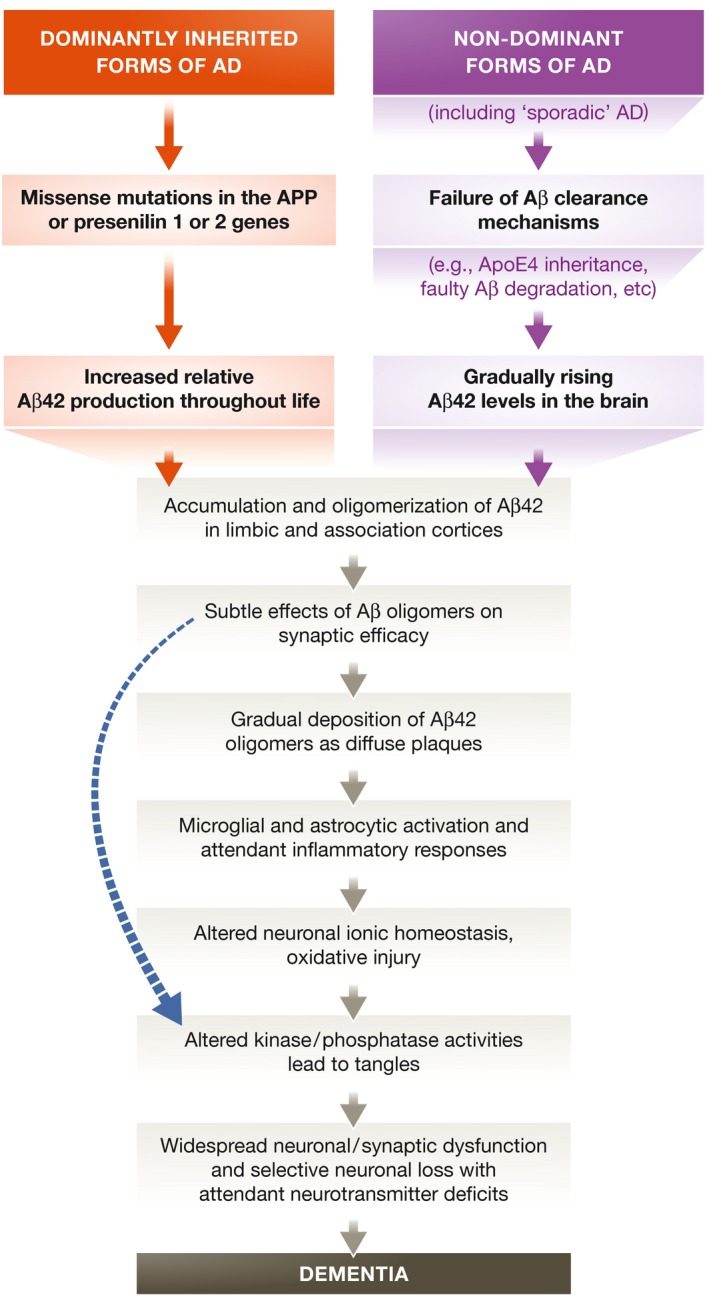
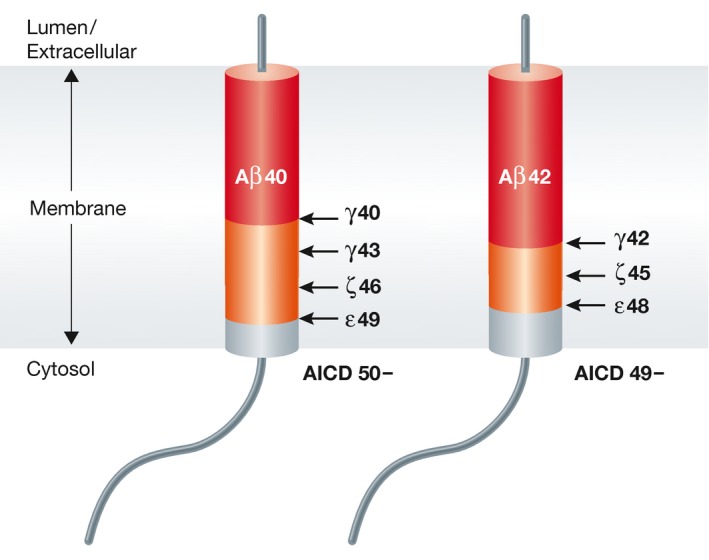
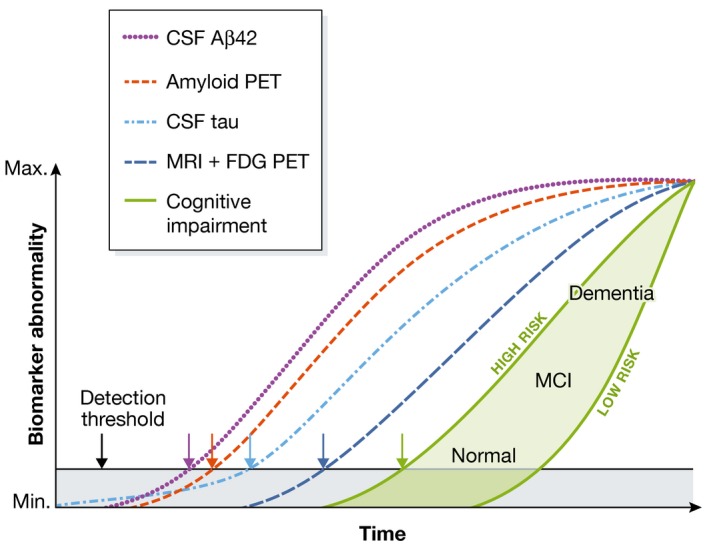
Despite continuing debate about the amyloid β-protein (or Aβ hypothesis, new lines of evidence from laboratories and clinics worldwide support the concept that an imbalance between production and clearance of Aβ42 and related Aβ peptides is a very early, often initiating factor in Alzheimer's disease (AD). Confirmation that presenilin is the catalytic site of γ-secretase has provided a linchpin: all dominant mutations causing early-onset AD occur either in the substrate (amyloid precursor protein, APP) or the protease (presenilin) of the reaction that generates Aβ. Duplication of the wild-type APP gene in Down's syndrome leads to Aβ deposits in the teens, followed by microgliosis, astrocytosis, and neurofibrillary tangles typical of AD Apolipoprotein E4, which predisposes to AD in > 40% of cases, has been found to impair Aβ clearance from the brain. Soluble oligomers of Aβ42 isolated from AD patients' brains can decrease synapse number, inhibit long-term potentiation, and enhance long-term synaptic depression in rodent hippocampus, and injecting them into healthy rats impairs memory. The human oligomers also induce hyperphosphorylation of tau at AD-relevant epitopes and cause neuritic dystrophy in cultured neurons. Crossing human APP with human tau transgenic mice enhances tau-positive neurotoxicity. In humans, new studies show that low cerebrospinal fluid (CSF) Aβ42 and amyloid-PET positivity precede other AD manifestations by many years. Most importantly, recent trials of three different Aβ antibodies (solanezumab, crenezumab, and aducanumab) have suggested a slowing of cognitive decline in post hoc analyses of mild AD subjects. Although many factors contribute to AD pathogenesis, Aβ dyshomeostasis has emerged as the most extensively validated and compelling therapeutic target.
Overview
The claims and statistics of this paper haven’t been checked yet.
Free: it reads the open-access text and checks the first 5 claims that cite a source we can check. Create a free account to check every claim.
Integrity signals
Registry
Cites
Statistics
Figures
Verification
Claims the paper makes
The claims and statistics of this paper haven’t been checked yet.
Free: it reads the open-access text and checks the first 5 claims that cite a source we can check. Create a free account to check every claim.
Claims other papers make about this one
Each is checked against this paper’s own text: does it say what the citing paper says it does?
The source backs part of the claim, not all of it — or backs it for a different population, condition or comparison.
In the citing paper
“Oxidative stress, mitochondrial dysfunction, astrocytic and microglial activation, membrane perturbation, and loss of ionic homeostasis are, at the cellular level, some of the events downstream the Aβ1-42 aggregation and accumulation (Selkoe and Hardy, 2016).”
From Exploring the Therapeutic Potential of Phytochemicals in Alzheimer’s Disease: Focus on Polyphenols and Monoterpenes (2022) · cites this paper as Selkoe and Hardy, 2016
Experimental — accuracy not yet measuredThe source backs part of the claim, not all of it — or backs it for a different population, condition or comparison.
In the citing paper
“Elevated levels of oligomers have been associated with AD, as they are found in AD brains and are considered the most toxic and pathogenic form of Aβ [4,5,6,7,18].”
From Treatment of Alzheimer’s Disease: Beyond Symptomatic Therapies (2023) · cites this paper as [4]
Experimental — accuracy not yet measuredThe source backs part of the claim, not all of it — or backs it for a different population, condition or comparison.
In the citing paper
“Synaptic dysfunction and synapse loss are key hallmarks of AD, present in the early stages of the disease before clinical symptoms appear [79,86,156].”
From Role of Oxidative Damage in Alzheimer’s Disease and Neurodegeneration: From Pathogenic Mechanisms to Biomarker Discovery (2021) · cites this paper as [79]
Experimental — accuracy not yet measuredThe source backs part of the claim, not all of it — or backs it for a different population, condition or comparison.
In the citing paper
“Moreover, the evidence from a failure of reversal of cognitive declines in amyloid-targeting drug trials supports this assumption; for example, patients with AD in whose brains Aβ plaques were virtually cleared by anti-amyloid immunotherapy did not show cognitive benefit [62].”
From Clinical trials of new drugs for Alzheimer disease (2020) · cites this paper as [62]
Experimental — accuracy not yet measuredThe source backs part of the claim, not all of it — or backs it for a different population, condition or comparison.
In the citing paper
“Early-stage AD is characterized primarily by the accumulation of Aβ plaques and subtle synaptic dysfunction, whereas late-stage AD involves extensive neurodegeneration, widespread neuroinflammation, and pronounced BBB disruption [157, 158].”
From Targeted Nanoparticles for Drug Delivery Across the Blood–Brain Barrier in Early and Late Stages of Alzheimer's Disease: A Review (2026) · cites this paper as [157]
Experimental — accuracy not yet measured
26 more claims about this paper
Create a free account to see every claim other papers make about this one.
Self-check
Percentages, sums and reported differences re-computed from the paper’s own numbers.
The self-check needs the paper’s full text.
Citations
Cites
Neuropathological stageing of Alzheimer-related changes.
Braak, H., & Braak, E. (1991) · Acta Neuropathologica · doi:10.1007/bf00308809 · Cited by 16,123 · cited 1×
“An elegant histopathological staging system created by Braak and Braak (1991) is now widely used to establish the severity of AD neuropathology.”
MethodThe Amyloid Hypothesis of Alzheimer’s Disease: Progress and Problems on the Road to Therapeutics
Hardy, J., & Selkoe, D. J. (2002) · Science · doi:10.1126/science.1072994 · Cited by 13,864
Self-citationAmyloid oligomers exacerbate tau pathology in a mouse model of tauopathy
Selenica, M.-L. B., Brownlow, M., Jimenez, J. P., Lee, D. C., Pena, G., Dickey, C. A., Gordon, M. N., & Morgan, D. (2013) · Neurodegenerative Diseases · doi:10.1159/000337230 · Cited by 10,359
Corder, E. H., Saunders, A. M., Strittmatter, W. J., Schmechel, D. E., Gaskell, P. C., Small, G. W., Roses, A. D., Haines, J. L., & Pericak-Vance, M. A. (1993) · Science · doi:10.1126/science.8346443 · Cited by 9,429 · cited 1×
“Cell biology of new AD risk genes Although the importance of ApoE4 as the major risk factor for AD was discovered in 1993 (Corder et al, 1993), it is only since the advent of genomewide association studies and, more recently, exome and genome sequencing that other risk loci for late-onset disease…”
BackgroundAlzheimer's disease: the amyloid cascade hypothesis
Hardy, J. A., & Higgins, G. A. (1992) · Science · doi:10.1126/science.1566067 · Cited by 7,484 · cited 2×
“The amyloid (or Ab) hypothesis (Beyreuther & Masters, 1991; Hardy & Allsop, 1991; Selkoe, 1991; Hardy & Higgins, 1992) has become the dominant model of AD pathogenesis and is guiding the development of potential treatments.”
BackgroundSelf-citationGlenner, G. G., & Wong, C. W. (1984) · Biochemical and Biophysical Research Communications · doi:10.1016/s0006-291x(84)80190-4 · Cited by 5,404
Imaging brain amyloid in Alzheimer's disease with Pittsburgh Compound‐B
Klunk, W. E., Engler, H., Nordberg, A., Wang, Y., Blomqvist, G., Holt, D. P., Bergström, M., Savitcheva, I., Huang, G., Estrada, S., et al. (2004) · Annals of Neurology · doi:10.1002/ana.20009 · Cited by 4,496 · cited 1×
“…fibrillar amyloid burden (but not yet soluble Ab oligomers) by PET scanning, initially with the thioflavin T derivative, Pittsburgh compound B (Klunk et al, 2004); and (iii) the ability to analyze APP metabolism in healthy and diseased humans by quantifying heavy isotope-labeled Ab peptides…”
BackgroundJack, C. R., Knopman, D. S., Jagust, W. J., Petersen, R. C., Weiner, M. W., Aisen, P. S., Shaw, L. M., Vemuri, P., Wiste, H. J., Weigand, S. D., et al. (2013) · The Lancet Neurology · doi:10.1016/s1474-4422(12)70291-0 · Cited by 4,396
Meta-Analysis of 74,046 Individuals Identifies 11 New Susceptibility Loci for Alzheimer’s Disease
(EADI), E. A. D. I., Lambert, J.-C., (GERAD), G. A. E. R. I. A. D., Alzheimer's Disease Genetic Consortium (ADGC), (CHARGE), C. F. H. A. A. R. I. G. E., Ibrahim-Verbaas, C. A., Harold, D., Naj, A. C., Sims, R., Bellenguez, C., et al. (2013) · Nature Genetics · doi:10.1038/ng.2802 · Cited by 4,336 · cited 2×
“This category includes SORL1, BIN1, and PICALM (Rogaeva et al, 2007; Lambert et al, 2013; Zhao et al, 2015).”
BackgroundSelf-citationCorrelative Memory Deficits, Aβ Elevation, and Amyloid Plaques in Transgenic Mice
Hsiao, K., Chapman, P., Nilsen, S., Eckman, C., Harigaya, Y., Younkin, S., Yang, F., & Cole, G. (1996) · Science · doi:10.1126/science.274.5284.99 · Cited by 4,210 · cited 1×
“Early APP mouse models (e.g. Games et al, 1995; Hsiao et al, 1996) suffered from reliance on high transgene expression to drive plaque deposition and from a lack of tangle cytopathology and neuronal death.”
Background
Research works printed but not linked: 3
- Cummings J, Cho W, Ward M, Friesenhahn M, Brunstein F, Honigberg L, Clayton D, Mortensen D, Ho C, Paul R (2014) paper presented at the Alzheimer's Association International Conference (AAIC), Copenhagen, Denmark, 16 July 2014
- Mann DMA, Yuonis N, Jones D, Stoddart DW (1992) The time course of pathological events in Down's Syndrome with particular reference to the involvement of microglial cells and deposits of b/A4. Neurodegeneration 1: 201– 215
- Sevigny J, Chiao P, Williams L, Miao X, O'Gorman J (2015) Randomized, double‐blind Phase 1B study of BIIB037, an anti‐amyloid beta monoclonal antibody, in patients with prodromal or mild Alzheimer's disease. Neurogener Dis 15(Suppl 1): 311
Cited by
Items 301–400 of 1,163
Proteome-wide observation of the phenomenon of life on the edge of solubility
Vecchi, G., Sormanni, P., Mannini, B., Vandelli, A., Tartaglia, G. G., Dobson, C. M., Hartl, F. U., & Vendruscolo, M. (2020) · Proceedings of the National Academy of Sciences · doi:10.1073/pnas.1910444117 · Cited by 148
Neuroinflammation, gut microbiome, and Alzheimer's disease
Lin, L., Zheng, L. J., & Zhang, L. J. (2018) · Molecular Neurobiology · doi:10.1007/s12035-018-0983-2 · Cited by 147
de la Torre, J. (2018) · Journal of Alzheimer’s Disease · doi:10.3233/jad-180004 · Cited by 145
“…the logic of the amyloid cascade hypothesis, some even wondering why, after two decades of failing to treat, stop, or prevent AD using drugs that wipe out A (cid:2) -containing plaques from the brain, the claims for this peptide remain exactly the same as they were 25 years ago [89, 90].”
Tan, S. H., Karri, V., Tay, N. W. R., Chang, K. H., Ah, H. Y., Ng, P. Q., Ho, H. S., Keh, H. W., & Candasamy, M. (2019) · Biomedicine & Pharmacotherapy · doi:10.1016/j.biopha.2018.12.101 · Cited by 146
Engineering probiotics as living diagnostics and therapeutics for improving human health
Zhou, Z., Chen, X., Sheng, H., Shen, X., Sun, X., Yan, Y., Wang, J., & Yuan, Q. (2020) · Microbial Cell Factories · doi:10.1186/s12934-020-01318-z · Cited by 145
Chen, C., & Nakagawa, S. (2023) · Ageing Research Reviews · doi:10.1016/j.arr.2023.101868 · Cited by 196
The fate of the brain cholinergic neurons in neurodegenerative diseases
Pepeu, G., & Giovannini, M. G. (2017) · Brain Research · doi:10.1016/j.brainres.2017.06.023 · Cited by 160
“…amyloid cascade hypothesis (Hardy and Higgins , 1992) , despite a continuing debate, still represents the most satisfactory pathogenetic hypothesis of AD, positing that an imbalance between production and clearance of Aβ peptides is a very early, initiating factor in AD (Selkoe and Hardy, 2016) .”
The role of sleep deprivation and circadian rhythm disruption as risk factors of Alzheimer’s disease
Wu, H., Dunnett, S. L., Ho, J. Y. S., & Chang, R. C. (2019) · Frontiers in Neuroendocrinology · doi:10.1016/j.yfrne.2019.100764 · Cited by 160
Haass, C., & Selkoe, D. (2022) · PLOS Biology · doi:10.1371/journal.pbio.3001694 · Cited by 145
Self-citationAprile, F. A., Sormanni, P., Perni, M., Arosio, P., Linse, S., Knowles, T. P. J., Dobson, C. M., & Vendruscolo, M. (2017) · Science Advances · doi:10.1126/sciadv.1700488 · Cited by 145
“(3) OW40 [strain expressing yellow fluorescent protein (YFP)–asynuclein] genotype zgIs15 [P(unc-54)::a-syn::YFP]IV.”
BackgroundChalcone and its analogs: Therapeutic and diagnostic applications in Alzheimer’s disease
Thapa, P., Upadhyay, S. P., Suo, W. Z., Singh, V., Gurung, P., Lee, E. S., Sharma, R., & Sharma, M. (2021) · Bioorganic Chemistry · doi:10.1016/j.bioorg.2021.104681 · Cited by 166
MIND diet and cognitive performance in older adults: a systematic review
Kheirouri, S., & Alizadeh, M. (2022) · Critical Reviews in Food Science and Nutrition · doi:10.1080/10408398.2021.1925220 · Cited by 143
“Association of MIND and Baltic Sea diets with cognitive function were compared only in one study and a significant association reported between cognitive performance and MIND diet, but not with Baltic Sea diet (Shakersain et al. 2018).”
BackgroundResultInfluentialExercise suppresses neuroinflammation for alleviating Alzheimer’s disease
Wang, M., Zhang, H., Liang, J., Huang, J., & Chen, N. (2023) · Journal of Neuroinflammation · doi:10.1186/s12974-023-02753-6 · Cited by 162
“Over the past three decades, many experimental studies have documented that Aβ is the culprit of neurodegeneration in AD [26, 29], thereby confirming the deposition of Aβ and the accumulation of hyperphosphorylated Tau protein in neurons as the major pathogenesis of AD to lead to impaired synaptic plasticity and cogni…”
BackgroundRainey-Smith, S. R., Mazzucchelli, G. N., Villemagne, V. L., Brown, B. M., Porter, T., Weinborn, M., Bucks, R. S., Milicic, L., Sohrabi, H. R., Taddei, K., et al. (2018) · Translational Psychiatry · doi:10.1038/s41398-018-0094-x · Cited by 144
Liver Dysfunction as a Novel Player in Alzheimer’s Progression: Looking Outside the Brain
Estrada, L. D., Ahumada, P., Cabrera, D., & Arab, J. P. (2019) · Frontiers in Aging Neuroscience · doi:10.3389/fnagi.2019.00174 · Cited by 144
“Efforts to better understand AD have resulted in multiple hypotheses to explain events in AD pathogenesis, for example, the amyloid cascade theory that describes the imbalance between Aβ production and clearance (Selkoe and Hardy, 2016).”
BackgroundTherapeutic Strategies Targeting Amyloid-β in Alzheimer’s Disease
Pinheiro, L. M. V., & Faustino, C. M. C. (2019) · Current Alzheimer Research · doi:10.2174/1567205016666190321163438 · Cited by 155
Ellwanger, D. C., Wang, S., Brioschi, S., Shao, Z., Green, L., Case, R., Yoo, D., Weishuhn, D., Rathanaswami, P., Bradley, J., et al. (2021) · Proceedings of the National Academy of Sciences · doi:10.1073/pnas.2017742118 · Cited by 134
“Longitudinal natural history studies, such as the Alzheimer’s Disease Neuroimaging Initiative, have demonstrated that deposition of Aβ in the central nervous system (CNS) occurs early in disease and is followed by tau pathology, consequently leading to neuronal cell death and cognitive impairment (2).”
BackgroundSchützmann, M. P., Hasecke, F., Bachmann, S., Zielinski, M., Hänsch, S., Schröder, G. F., Zempel, H., & Hoyer, W. (2021) · Nature Communications · doi:10.1038/s41467-021-24900-4 · Cited by 143
Multi-cellular communities are perturbed in the aging human brain and Alzheimer’s disease
Cain, A., Taga, M., McCabe, C., Green, G., Hekselman, I., White, C. C., Lee, D. I., Gaur, P., Rozenblatt-Rosen, O., Zhang, F., et al. (2020) · doi:10.1101/2020.12.22.424084 · Cited by 143
Metabolism-Centric Overview of the Pathogenesis of Alzheimer's Disease
Kang, S., Lee, Y.-H., & Lee, J. E. (2017) · Yonsei Medical Journal · doi:10.3349/ymj.2017.58.3.479 · Cited by 143
“Amyloid hypothesis has become the dominant model of AD pathogenesis and has guided the development of potential treatments for AD.(17) However, clinical studies have documented several inconsistencies in AD pathology.”
BackgroundConserved brain myelination networks are altered in Alzheimer’s and other neurodegenerative diseases
Allen, M., Wang, X., Burgess, J. D., Watzlawik, J., Serie, D. J., Younkin, C. S., Nguyen, T., Malphrus, K. G., Lincoln, S., Carrasquillo, M. M., et al. (2018) · Alzheimer's & Dementia · doi:10.1016/j.jalz.2017.09.012 · Cited by 143
“To investigate the genes from the myelination modules further, we focused on a subset that have the highest MM; in addition to genes that are implicated in the pathophysiology of AD [32,33], PSP [34], or in myelin biology [35] (Supplementary Results, Table 4).”
Gupta, V. B., Chitranshi, N., den Haan, J., Mirzaei, M., You, Y., Lim, J. K. H., Basavarajappa, D. K., Godinez, A., Angelantonio, S. D., Sachdev, P. S., et al. (2020) · Progress in Retinal and Eye Research · doi:10.1016/j.preteyeres.2020.100899 · Cited by 160
Multicellular communities are perturbed in the aging human brain and Alzheimer’s disease
Cain, A., Taga, M., McCabe, C., Green, G. S., Hekselman, I., White, C. C., Lee, D. I., Gaur, P., Rozenblatt-Rosen, O., Zhang, F., et al. (2023) · Nature Neuroscience · doi:10.1038/s41593-023-01356-x · Cited by 142
Overview of Transgenic Mouse Models for Alzheimer's Disease
Myers, A., & McGonigle, P. (2019) · Current Protocols in Neuroscience · doi:10.1002/cpns.81 · Cited by 142
“…a growing body of evidence suggests that the soluble oligomers that precede formation of either Aβ or tau fibrils are the more toxic species that induce synaptic and neuronal damage underpinning cognitive impairment (Selkoe & Hardy, 2016; Sengupta, Nilson, & Kayed, 2016; Tracy & Gan, 2018).”
BackgroundInfluentialDerry, P. J., Hegde, M. L., Jackson, G. R., Kayed, R., Tour, J. M., Tsai, A.-L., & Kent, T. A. (2020) · Progress in Neurobiology · doi:10.1016/j.pneurobio.2019.101716 · Cited by 140
“Long standing interest in transition metal dysregulation (Kepp, 2012), and oxidative stress (Markesbery, 1997), and amyloid cascade (Selkoe and Hardy, 2016) have been proposed as etiologies of AD and may be interlinked.”
BackgroundSciacca, M. F. M., Lolicato, F., Tempra, C., Scollo, F., Sahoo, B. R., Watson, M. D., García‐Viñuales, S., Milardi, D., Raudino, A., Lee, J. C., et al. (2020) · ACS Chemical Neuroscience · doi:10.1021/acschemneuro.0c00588 · Cited by 150
The case for low-level BACE1 inhibition for the prevention of Alzheimer disease
McDade, E., Voytyuk, I., Aisen, P. S. S., Bateman, R. J., Carrillo, M. C., Strooper, B. D., Haass, C., Reiman, E. M., Sperling, R. A., Tariot, P. N., et al. (2021) · Nature Reviews Neurology · doi:10.1038/s41582-021-00545-1 · Cited by 162
Pang, K., Jiang, R., Zhang, W., Yang, Z., Li, L.-L., Shimozawa, M., Tambaro, S., Mayer, J., Zhang, B., Li, M., et al. (2022) · Cell Research · doi:10.1038/s41422-021-00582-x · Cited by 139
Buchholz, S., & Zempel, H. (2024) · Alzheimer's & Dementia · doi:10.1002/alz.13784 · Cited by 137
Long, J. M., Maloney, B., Rogers, J. T., & Lahiri, D. K. (2019) · Molecular Psychiatry · doi:10.1038/s41380-018-0266-3 · Cited by 141
Ewers, M., Biechele, G., Suárez‐Calvet, M., Sacher, C., Blume, T., Morenas‐Rodriguez, E., Deming, Y., Piccio, L., Cruchaga, C., Kleinberger, G., et al. (2020) · EMBO Molecular Medicine · doi:10.15252/emmm.202012308 · Cited by 133
“The deposition of amyloid-b (Ab) peptide is a key primary alteration that defines Alzheimer’s disease (AD), involving a cascade of pathological brain changes resulting in the occurrence of dementia symptoms (Hardy & Higgins, 1992; Selkoe & Hardy, 2016).”
BackgroundLee, M.-C., Yu, W.-C., Shih, Y.-H., Chen, C.-Y., Guo, Z.-H., Huang, S.-J., Chan, J. C. C., & Chen, Y.-R. (2018) · Scientific Reports · doi:10.1038/s41598-018-23122-x · Cited by 134
Neurophysiological Markers of Alzheimer’s Disease: Quantitative EEG Approach
Smailovic, U., & Jelic, V. (2019) · Neurology and Therapy · doi:10.1007/s40120-019-00169-0 · Cited by 136
Wu, W., Ji, Y., Wang, Z., Wu, X., Li, J., Gu, F., Chen, Z., & Wang, Z. (2023) · European journal of medical research · doi:10.1186/s40001-023-01512-w · Cited by 168
DEFINING DISEASE MODIFYING THERAPY FOR ALZHEIMER’S DISEASE
Cummings, J., & Fox, N. (2017) · The Journal of Prevention of Alzheimer's Disease · doi:10.14283/jpad.2017.12 · Cited by 139
“Pathophysiological events in AD are hypothesized to be linked, with amyloid changes being “upstream” and tau alterations, inflammation and cell loss being “downstream”.[33] Measures of several biomarkers that indicate effects on different elements of the pathophysiology would be supportive of a disease-modifying effec…”
BackgroundNLRP3 inflammasome in neurodegenerative disease
Anderson, F. L., Biggs, K. E., Rankin, B. E., & Havrda, M. C. (2022) · Translational research · doi:10.1016/j.trsl.2022.08.006 · Cited by 162
Factor XII as a Therapeutic Target in Thromboembolic and Inflammatory Diseases
Nickel, K. F., Long, A. T., Fuchs, T. A., Butler, L. M., & Renné, T. (2016) · Arteriosclerosis Thrombosis and Vascular Biology · doi:10.1161/atvbaha.116.308595 · Cited by 152
Impaired JIP3-dependent axonal lysosome transport promotes amyloid plaque pathology
Gowrishankar, S., Wu, Y., & Ferguson, S. M. (2017) · Journal of Cell Biology · doi:10.1083/jcb.201612148 · Cited by 138
“Our current understanding of AD has been greatly influenced by the identification of mutations in the amyloid precursor protein (APP), presenilin 1 (PSEN1), and presenilin 2 (PSEN2) genes as causes of early onset, familial forms of the disease (Selkoe and Hardy, 2016).”
Sciacca, M. F. M., Tempra, C., Scollo, F., Milardi, D., & Rosa, C. L. (2018) · Biochimica et Biophysica Acta (BBA) - Biomembranes · doi:10.1016/j.bbamem.2018.02.022 · Cited by 144
Loss of canonical Wnt signaling is involved in the pathogenesis of Alzheimer’s disease.
Inestrosa, N., & Tapia-Rojas, C. (2018) · Neural Regeneration Research · doi:10.4103/1673-5374.238606 · Cited by 137
“The amyloid hypothesis proposes that loss of cognitive abilities is product of the synaptic failure mediated by soluble Aβ species (Selkoe and Hardy, 2016).”
An outline for the pharmacological effect of icariin in the nervous system
Jin, J., Wang, H., Hua, X., Chen, D., Huang, C., & Chen, Z. (2018) · European Journal of Pharmacology · doi:10.1016/j.ejphar.2018.10.006 · Cited by 147
Manap, A. S. A., Vijayabalan, S., Madhavan, P., Chia, Y. Y., Arya, A., Wong, E. H., Rizwan, F., Bindal, U., & Koshy, S. (2019) · Drug Target Insights · doi:10.1177/1177392819866412 · Cited by 183
Xu, M., Mo, X., Huang, H., Chen, X., Liu, H., Peng, Z., Chen, L., Rong, S., Yang, W., Xu, S., et al. (2020) · International Journal of Biological Macromolecules · doi:10.1016/j.ijbiomac.2020.05.180 · Cited by 137
Vega, I. E., Cabrera, L. Y., Wygant, C. M., Velez-Ortiz, D., & Counts, S. E. (2017) · Journal of Alzheimer’s Disease · doi:10.3233/jad-161261 · Cited by 135
“Alzheimer’s disease (AD) is a debilitating disease characterized by loss of memory and executive functions [1–4].”
Dementia risk and prevention by targeting modifiable vascular risk factors
Tariq, S., & Barber, P. A. (2018) · Journal of Neurochemistry · doi:10.1111/jnc.14132 · Cited by 136
Inflammatory aspects of Alzheimer’s disease
Lucena, P. B., & Heneka, M. T. (2024) · Acta Neuropathologica · doi:10.1007/s00401-024-02790-2 · Cited by 166
“In AD, Aβ dyshomeostasis may arise from an imbalance between Aβ neuronal production and extracellular clearance of Aβ [89, 202].”
Pagano, K., Tomaselli, S., Molinari, H., & Ragona, L. (2020) · Frontiers in Neuroscience · doi:10.3389/fnins.2020.619667 · Cited by 150
Making the final cut: Pathogenic amyloid-β peptide generation by γ-secretase
Steiner, H., Fukumori, A., Tagami, S., & Okochi, M. (2018) · Cell Stress · doi:10.15698/cst2018.11.162 · Cited by 133
“It is widely believed that abnormal levels of Aβ trigger the disease [3].”
Backgroundβ-amyloid redirects norepinephrine signaling to activate the pathogenic GSK3β/tau cascade
Zhang, F., Gannon, M., Chen, Y., Yan, S., Zhang, S., Feng, W., Tao, J., Sha, B., Liu, Z., Saito, T., et al. (2020) · Science Translational Medicine · doi:10.1126/scitranslmed.aay6931 · Cited by 133
Kehoe, P. G. (2018) · Journal of Alzheimer’s Disease · doi:10.3233/jad-171119 · Cited by 133
“The amyloid cascade hypothesis [7] describes the significant pathogenic contribution of A peptide, derived from cleavage of the amyloid- precursor protein (A PP), and its accumulation in the brain as a result of imbalance between its production and clearance [8–11].”
BackgroundQuantitative proteomics reveals distinct composition of amyloid plaques in Alzheimer’s disease
Xiong, F., Ge, W., & Ma, C. (2019) · Alzheimer's & Dementia · doi:10.1016/j.jalz.2018.10.006 · Cited by 133
“Among arguments against the hypothesis, the poor correlation between plaque burden and cognitive impairment and the repeated failure of amyloid-targeting therapy are the most concerning [3].”
BackgroundPál, B. Z. (2018) · Cellular and Molecular Life Sciences · doi:10.1007/s00018-018-2837-5 · Cited by 151
Zhao, Y., Zeng, C., Li, X., Yang, T., Kuang, X., & Du, J. (2020) · Aging Cell · doi:10.1111/acel.13239 · Cited by 133
“An imbalance of the production and clearance of Aβ peptide is observed in the brains of AD patients, which subsequently form amyloid plaques and cause neuronal dysfunction (Selkoe & Hardy, 2016).”
Background3D culture models of Alzheimer’s disease: a road map to a “cure-in-a-dish”
Choi, S. H., Kim, Y. H., Quinti, L., Tanzi, R. E., & Kim, D. Y. (2016) · Molecular Neurodegeneration · doi:10.1186/s13024-016-0139-7 · Cited by 132
“The amyloid plaques are extracellular amyloid filaments, composed primarily of small ~4 kDa peptides called β-amyloid (Aβ), which are liberated from the amyloid precursor protein (APP) via sequential proteolytic cleavages by β- and γ-secretase [1, 7, 8].”
BackgroundCai, L., Yang, C., Jia, W., Liu, Y., Xie, R., Lei, T., Yang, Z., He, X., Tong, R., & Gao, H. (2020) · Advanced Functional Materials · doi:10.1002/adfm.201909999 · Cited by 131
Microglia-Mediated Neuroprotection, TREM2, and Alzheimer’s Disease: Evidence From Optical Imaging
Condello, C., Yuan, P., & Grutzendler, J. (2018) · Biological Psychiatry · doi:10.1016/j.biopsych.2017.10.007 · Cited by 131
“A general consensus is that Aβ deposition occurs first, triggering 52 NFT formation, synapse loss, cell death and cognitive decline(1, 2).”
APOE-amyloid interaction: Therapeutic targets
Wisniewski, T., & Drummond, E. (2020) · Neurobiology of Disease · doi:10.1016/j.nbd.2020.104784 · Cited by 131
“This pathology then spreads throughout the brain in a characteristic manner that is distinct for NFTs and plaques (Scheltens et al., 2016; Selkoe and Hardy, 2016; Braak and Braak, 1991; Thal et al., 2002).”
Kakuda, N., Miyasaka, T., Iwasaki, N., Nirasawa, T., Wada-Kakuda, S., Takahashi-Fujigasaki, J., Murayama, S., Ihara, Y., & Ikegawa, M. (2017) · Acta Neuropathologica Communications · doi:10.1186/s40478-017-0477-x · Cited by 129
Hu, X., Das, B., Hou, H., He, W., & Yan, R. (2018) · Journal of Experimental Medicine · doi:10.1084/jem.20171831 · Cited by 130
“Abnormal accumulation of Aβ is an early event that leads to the eventual formation of amyloid plaques, neurofibrillary tangles, and cognitive dysfunction (Selkoe and Hardy, 2016).”
Battle, M. R., Pillay, L. C., Lowe, V. J., Knopman, D., Kemp, B., Rowe, C. C., Doré, V., Villemagne, V. L., & Buckley, C. J. (2018) · EJNMMI Research · doi:10.1186/s13550-018-0456-7 · Cited by 129
Cryo-EM of amyloid fibrils and cellular aggregates
Fitzpatrick, A. W., & Saibil, H. R. (2019) · Current Opinion in Structural Biology · doi:10.1016/j.sbi.2019.05.003 · Cited by 130
“Current Opinion in Structural Biology 2019, 58:34–42 associated protein) in the brains of AD patients are associated with neuronal death and loss of cholinergic pathways [2].”
BackgroundRinauro, D. J., Chiti, F., Vendruscolo, M., & Limbocker, R. (2024) · Molecular Neurodegeneration · doi:10.1186/s13024-023-00651-2 · Cited by 150
Critical review: involvement of endoplasmic reticulum stress in the aetiology of Alzheimer's disease
Hashimoto, S., & Saido, T. C. (2018) · Open Biology · doi:10.1098/rsob.180024 · Cited by 129
Alzheimer’s disease as oligomeropathy
Ono, K. (2018) · Neurochemistry International · doi:10.1016/j.neuint.2017.08.010 · Cited by 129
“Ab is derived from the Ab precursor protein (APP) by the action of two aspartyl proteases referred to as b- and g-secretases (Haass et al., 1992; Selkoe and Hardy, 2016) (Fig.”
BackgroundInfluentialCleaning the sleeping brain – the potential restorative function of the glymphatic system
Hauglund, N. L., Pavan, C., & Nedergaard, M. (2020) · Current Opinion in Physiology · doi:10.1016/j.cophys.2019.10.020 · Cited by 129
Neuroglobin: From structure to function in health and disease
Ascenzi, P., di Masi, A., Leboffe, L., Fiocchetti, M., Nuzzo, M. T., Brunori, M., & Marino, M. (2016) · Molecular Aspects of Medicine · doi:10.1016/j.mam.2016.10.004 · Cited by 147
Hey, J. A., Yu, J. Y., Versavel, M., Abushakra, S., Kocis, P., Power, A., Kaplan, P. L., Amedio, J., & Tolar, M. (2018) · Clinical Pharmacokinetics · doi:10.1007/s40262-017-0608-3 · Cited by 129
“This program included [1] a SAD study; [2] a 14-day MAD study; and [3] a singledose tablet food-effect study.”
BackgroundMethodInfluentialMd, S., Gan, S. Y., Haw, Y. H., Ho, C. L., Wong, S., & Choudhury, H. (2018) · International Journal of Biological Macromolecules · doi:10.1016/j.ijbiomac.2018.06.190 · Cited by 137
Fitz, N. F., Nam, K. N., Wolfe, C. M., Letronne, F., Playso, B. E., Iordanova, B. E., Kozai, T. D. Y., Biedrzycki, R. J., Kagan, V. E., Tyurina, Y. Y., et al. (2021) · Nature Communications · doi:10.1038/s41467-021-23762-0 · Cited by 129
Transgenic Mouse Models of Alzheimer’s Disease: An Integrative Analysis
Sanchez-Varo, R., Mejias-Ortega, M., Fernandez-Valenzuela, J. J., Nuñez-Diaz, C., Caceres-Palomo, L., Vegas-Gomez, L., Sanchez-Mejias, E., Trujillo-Estrada, L., Garcia-Leon, J. A., Moreno-Gonzalez, I., et al. (2022) · International Journal of Molecular Sciences · doi:10.3390/ijms23105404 · Cited by 129
Alzheimer’s disease: Ablating single master site abolishes tau hyperphosphorylation
Stefanoska, K., Gajwani, M., Tan, A. R. P., Ahel, H. I., Asih, P. R., Volkerling, A., Poljak, A., & Ittner, A. (2022) · Science Advances · doi:10.1126/sciadv.abl8809 · Cited by 128
“INTRODUCTION Alzheimer’s disease (AD) is a fatal neurodegenerative disease, for which no cure exists (1, 2).”
BackgroundTariot, P. N., Lopera, F., Langbaum, J. B., Thomas, R. G., Hendrix, S., Schneider, L. S., Rios‐Romenets, S., Giraldo, M., Acosta, N., Tobon, C., et al. (2018) · Alzheimer's & Dementia: Translational Research & Clinical Interventions · doi:10.1016/j.trci.2018.02.002 · Cited by 128
“Accumulation of soluble Ab42 oligomers and/or Ab42 fibrils may play a critical, early role in the development of AD [3].”
BackgroundMolecular and cellular pathophysiology of preclinical Alzheimer’s disease
Mufson, E. J., Ikonomovic, M. D., Counts, S. E., Perez, S. E., Malek-Ahmadi, M., Scheff, S. W., & Ginsberg, S. D. (2016) · Behavioural Brain Research · doi:10.1016/j.bbr.2016.05.030 · Cited by 127
“The fact that virtually every anti-amyloid clinical trial to date has not met its primary end-points of improving cognition [27] indicates that a monotherapy strategy may not be sufficient to treat this pervasive progressive multisystem neurodegenerative disorder [28].”
Malko, P., & Jiang, L. (2020) · Redox Biology · doi:10.1016/j.redox.2020.101755 · Cited by 135
“It is well documented that Aβ peptides, especially Aβ42, found plentifully in senile amyloid plaques that represent one of the histopathological hallmarks of human AD brains, are able to induce OS and cause neurotoxicity, particularly synapse loss and neuronal cell death, as has been posited in the amyloid cascade hyp…”
BackgroundSturchio, A., Dwivedi, A. K., Young, C. B., Malm, T., Marsili, L., Sharma, J. S., Mahajan, A., Hill, E. J., Andaloussi, S. E., Poston, K. L., et al. (2021) · eClinicalMedicine · doi:10.1016/j.eclinm.2021.100988 · Cited by 128
“According to this hypothesis, the fibrillogenic 42-amino acid b amyloid peptide (Ab42) aggregates into toxic b-sheet rich assemblies, triggering a cascade of neurotoxic events, including intracellular tau accumulation as neurofibrillary tangles and neuroinflammation, which ultimately result in neurodegeneration and su…”
Moreira, N. C. D. S., Lima, J. E. B. D. F., Marchiori, M. F., Carvalho, I., & Sakamoto‐Hojo, E. T. (2022) · Journal of Alzheimer s Disease Reports · doi:10.3233/adr-210061 · Cited by 154
“The A cascade hypothesis, the most cited hypothesis in AD pathology, focuses on the abnormal processing of amyloid- protein precursor (A PP), leading to imbalance between the production and clearance of A , generating an excess of A aggregation and neurotoxicity [34, 48].”
BackgroundLecanemab (BAN2401): an anti–beta-amyloid monoclonal antibody for the treatment of Alzheimer disease
Vitek, G., Decourt, B., & Sabbagh, M. N. (2023) · Expert Opinion on Investigational Drugs · doi:10.1080/13543784.2023.2178414 · Cited by 150
Stanciu, G. D., Bild, V., Ababei, D. C., Rusu, R. N., Cobzaru, A., Paduraru, L., & Bulea, D. (2020) · Journal of Clinical Medicine · doi:10.3390/jcm9061713 · Cited by 126
Exploring the relationship between physical activity, beta-amyloid and tau: A narrative review
Brown, B. M., Peiffer, J. J., & Rainey‐Smith, S. R. (2019) · Ageing Research Reviews · doi:10.1016/j.arr.2019.01.003 · Cited by 137
Tan, J. Z. A., & Gleeson, P. A. (2019) · Biochimica et Biophysica Acta (BBA) - Biomembranes · doi:10.1016/j.bbamem.2018.11.013 · Cited by 124
Chen, S.-Y., Gao, Y., Sun, J.-Y., Meng, X.-L., Yang, D., Fan, L.-H., Xiang, L., & Wang, P. (2020) · Frontiers in Pharmacology · doi:10.3389/fphar.2020.00497 · Cited by 122
“APP accumulation causes Ab deposition, leading to cognitive impairment (Selkoe and Hardy, 2016).”
BackgroundMaezawa, I., Nguyen, H. M., Di Lucente, J., Jenkins, D. P., Singh, V., Hilt, S., Kim, K., Rangaraju, S., Levey, A. I., Wulff, H., et al. (2018) · Brain · doi:10.1093/brain/awx346 · Cited by 125
“Several key conclusions can be drawn from our study: (i) soluble AbO, the highly toxic amyloid-b species implicated as one of the principal initiators of Alzheimer’s disease phenotypes (Selkoe and Hardy, 2016), enhances microglial Kv1.”
BackgroundBACE inhibition-dependent repair of Alzheimer’s pathophysiology
Keskin, A. D., Kekuš, M., Adelsberger, H., Neumann, U., Shimshek, D. R., Song, B., Zott, B., Peng, T., Förstl, H., Staufenbiel, M., et al. (2017) · Proceedings of the National Academy of Sciences · doi:10.1073/pnas.1708106114 · Cited by 125
“The amyloid hypothesis posits that the abnormal accumulation of amyloid-β (Aβ) peptides in the brain, and their aggregation, is an essential feature of AD (2, 3); however, results from clinical studies using several Aβ-targeting compounds have called into question the existence of a direct link between a reduction in…”
ResultPigoni, M., Wanngren, J., Kuhn, P.-H., Munro, K. M., Gunnersen, J. M., Takeshima, H., Feederle, R., Voytyuk, I., De Strooper, B., Levasseur, M. D., et al. (2016) · Molecular Neurodegeneration · doi:10.1186/s13024-016-0134-z · Cited by 125
“BACE1 cleaves the amyloid precursor protein (APP) and thus catalyzes the first step in generation of the amyloid β peptide (Aβ) [2–5], which has a critical role in AD pathogenesis [6].”
BackgroundKoelsch, G. (2017) · Molecules · doi:10.3390/molecules22101723 · Cited by 125
“Increased level of amyloid is implicated as an early factor in AD [4], through increased production [116] or reduced clearance [117], with a resulting imbalance in the production and consumption “Aβ economy” [13].”
BackgroundInteraction of Oxidative Stress and Misfolded Proteins in the Mechanism of Neurodegeneration
Abramov, A. Y., Potapova, E. V., Dremin, V. V., & Dunaev, A. V. (2020) · Life · doi:10.3390/life10070101 · Cited by 124
APOE4 drives inflammation in human astrocytes via TAGLN3 repression and NF-κB activation
Arnaud, L., Benech, P., Greetham, L., Stephan, D., Jimenez, A., Jullien, N., García-González, L., Tsvetkov, P. O., Devred, F., Sancho-Martinez, I., et al. (2022) · Cell Reports · doi:10.1016/j.celrep.2022.111200 · Cited by 125
Is Alzheimer’s Disease a Liver Disease of the Brain?
Bassendine, M. F., Taylor-Robinson, S. D., Fertleman, M., Khan, M., & Neely, D. (2020) · Journal of Alzheimer's Disease · doi:10.3233/jad-190848 · Cited by 124
“typified by deposition of A within the brain [3, 4].”
BackgroundMajdi, A., Sadigh-Eteghad, S., Rahigh Aghsan, S., Farajdokht, F., Vatandoust, S. M., Namvaran, A., & Mahmoudi, J. (2020) · Reviews in the Neurosciences · doi:10.1515/revneuro-2019-0089 · Cited by 122
Grel, H., Woźnica, D., Ratajczak, K., Kalwarczyk, E., Anchimowicz, J., Świtlik, W. Z., Olejnik, P., Zielonka, P., Stobiecka, M., & Jakieła, S. (2023) · International Journal of Molecular Sciences · doi:10.3390/ijms241713033 · Cited by 148
“As a consequence, progressive degeneration and death of neurons occur, leading to various neurological symptoms and cognitive decline [3].”
BackgroundProtein Tyrosine Phosphatase 1B (PTP1B): A Potential Target for Alzheimer’s Therapy?
Vieira, M. N. N., Lyra e Silva, N. M., Ferreira, S. T., & De Felice, F. G. (2017) · Frontiers in Aging Neuroscience · doi:10.3389/fnagi.2017.00007 · Cited by 121
“A pivotal event in AD pathogenesis is the buildup in the brain of amyloid-β oligomers (AβOs), neurotoxins that trigger synapse failure and lead to cognitive impairment (Ferreira and Klein, 2011; Ferreira et al., 2015; Selkoe and Hardy, 2016).”
BackgroundRole of BACE1 in Alzheimer’s synaptic function
Das, B., & Yan, R. (2017) · Translational Neurodegeneration · doi:10.1186/s40035-017-0093-5 · Cited by 121
“Background Alzheimer’s disease (AD) is an age-dependent chronic neurodegenerative disease that is characterized by the presence of amyloid deposition, neurofibrillary tangles, synaptic dysfunction, and neuronal cell death [1, 2].”
The amyloid cascade and Alzheimer’s disease therapeutics: theory versus observation
Castellani, R., Plascencia-Villa, G., & Perry, G. (2019) · Laboratory Investigation · doi:10.1038/s41374-019-0231-z · Cited by 106
Perluigi, M., Di Domenico, F., Barone, E., & Butterfield, D. A. (2021) · Free Radical Biology and Medicine · doi:10.1016/j.freeradbiomed.2021.04.025 · Cited by 121
Sharifi-Rad, J., Rapposelli, S., Sestito, S., Herrera-Bravo, J., Arancibia-Diaz, A., Salazar, L. A., Yeskaliyeva, B., Beyatli, A., Leyva-Gómez, G., González-Contreras, C., et al. (2022) · Journal of Personalized Medicine · doi:10.3390/jpm12091515 · Cited by 125
He, P., Yan, S., Zheng, J., Gao, Y., Zhang, S., Liu, Z., Liu, X., & Xiao, C. (2018) · Journal of Agricultural and Food Chemistry · doi:10.1021/acs.jafc.8b03731 · Cited by 125
A combined miRNA-piRNA signature to detect Alzheimer’s disease
Jain, G., Stuendl, A., Rao, P., Berulava, T., Pena Centeno, T., Kaurani, L., Burkhardt, S., Delalle, I., Kornhuber, J., Hüll, M., et al. (2019) · Translational Psychiatry · doi:10.1038/s41398-019-0579-2 · Cited by 121
Indoles as essential mediators in the gut-brain axis. Their role in Alzheimer's disease
Pappolla, M. A., Perry, G. L., Fang, X., Zagorski, M. G., Sambamurti, K., & Pöeggeler, B. (2021) · Neurobiology of Disease · doi:10.1016/j.nbd.2021.105403 · Cited by 129
“the failure of these therapies did not disprove the amyloid hypothesis, (Selkoe and Hardy, 2016) the negative results reinvigorated interest in alternative interventions that could explain the ruthless progression of AD independent of amyloid formation.”
BackgroundResultInfluentialYoung, M. L., & Franklin, J. L. (2019) · Molecular and Cellular Neuroscience · doi:10.1016/j.mcn.2019.103409 · Cited by 120
“We used immunohistochemistry to investigate formation of NFT in the brains of 18-month-old female nonTg, 3xTg-AD, and 3xTg-AD mice that had received MitoQ treatment for the preceding five months.”
BackgroundInfluentialJin, W., Shen, L., Bu, X., Zhang, W., Chen, S., Huang, Z., Xiong, J., Gao, C., Dong, Z., He, Y., et al. (2017) · Acta Neuropathologica · doi:10.1007/s00401-017-1721-y · Cited by 129
“It has been suggested that excessive Aβ production or deficits in Aβ clearance play pivotal or causative roles in AD pathogenesis [37].”
Metadata
- Authors
- Selkoe, D. J., & Hardy, J.
- Affiliations
- Brigham and Women's Hospital (US)
- UCL Queen Square Institute of Neurology (GB)
- Corresponding author
- Hardy, John
- Venue
- EMBO Molecular Medicine
- Published
- 2016-03-29
- Volume
- 8
- Issue
- 6
- Pages
- 595-608
- ISSN
- 1757-4676 (ISSN-L)
- 1757-4684
- PMC
- PMC4888851
- OpenAlex
- W2329336071
- Cited by
- 6,164
- References
- 137
- Citations by year
- 2026: 553 · 2025: 637 · 2024: 656 · 2023: 658 · 2022: 679 · 2021: 734 · 2020: 728 · 2019: 533 · 2018: 500 · 2017: 388 · 2016: 92
- FWCI
- 59.19
- Type
- journal article
- Language
- en
- Open access
- gold
- doi.org
- Licence
- other-oa
- creativecommons.org/licenses/by/4.0/ (tdm)
- creativecommons.org/licenses/by/4.0/ (vor)
- Locations
- EMBO Molecular Medicine (publishedVersion, other-oa)
- PubMed Central (publishedVersion, cc-by)
- PubMed (publishedVersion)
- Digital Access to Scholarship at Harvard (DASH) (Harvard University) (submittedVersion, cc-by)
- DOAJ (DOAJ: Directory of Open Access Journals) (submittedVersion)
- Funders
- National Institute on Aging (AG06173, AG015379)
- MRC
- ARUK
- Wellcome Trust
- Topics
- Life Sciences › Neuroscience › Cellular and Molecular Neuroscience › Alzheimer's disease research and treatments
- Health Sciences › Medicine › Psychiatry and Mental health › Dementia and Cognitive Impairment Research
- Life Sciences › Neuroscience › Neurology › Neuroinflammation and Neurodegeneration Mechanisms
- Keywords
- Alzheimer's disease, amyloid hypothesis, amyloid-beta, amyloid-beta 42, amyloid precursor protein, presenilin, gamma-secretase, Down syndrome, APOE ε4, amyloid-beta oligomers, tau hyperphosphorylation, amyloid PET, cerebrospinal fluid biomarkers, anti-amyloid antibodies, solanezumab, crenezumab, aducanumab, amyloid clearance, neurofibrillary tangles, synaptic dysfunction
- MeSH terms
- Alzheimer Disease, Animals, Brain, Humans, Mice, Transgenic, Amyloid beta-Peptides, Amyloid beta-Protein Precursor, Rats, Presenilins
About these checks
Registry, retraction, Cites and statistics results are computed, not judged, with one exception: a printed reference that no index lists is read once by a model before it counts as a citation error. Claims are extracted by a model and kept only when their quote appears verbatim in the text; each cited source is then checked, with a model’s help, for whether it says what the claim relies on. Those verdicts can be wrong — read the claim’s quote and the cited source before relying on one.
Statistics and arithmetic are recomputed, not judged.
Confidence bands are shown only for fields calibrated on our annotated test set. None is calibrated yet, so no band is shown.
What counts as a claim ›How we measure confidence ›How we check this ›
Are you an author, or do you see a problem with this page? Request a review
Data sources
Bibliographic data: Semantic Scholar, OpenAlex, Crossref.
Contains information from the Semantic Scholar Academic Graph Datasets, made available under the ODC Attribution License (ODC-BY 1.0).
Semantic Scholar’s data is described in: Kinney, R., et al. (2023). The Semantic Scholar Open Data Platform. arXiv:2301.10140.
