

The amyloid hypothesis of Alzheimer's disease at 25 years
Open accessThe DOI matches its Crossref record; 136 of the 137 references it cites were found in a registry or an index.
Abstract
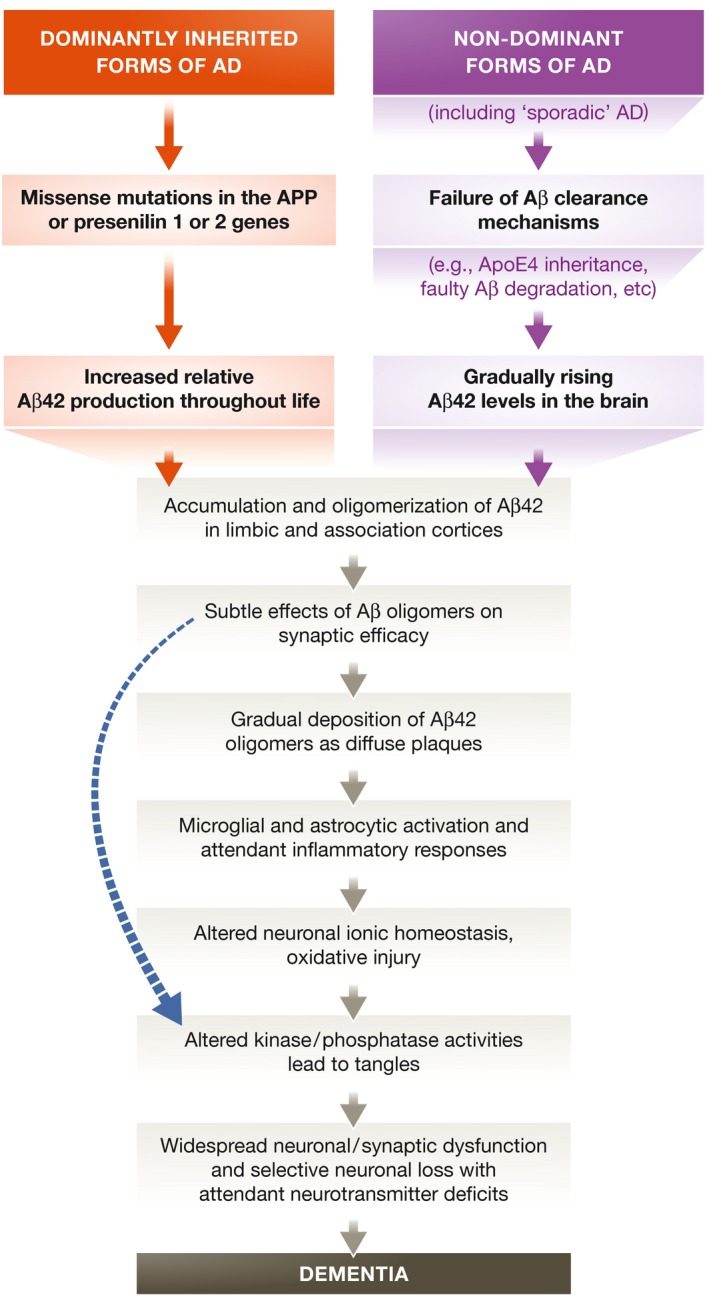
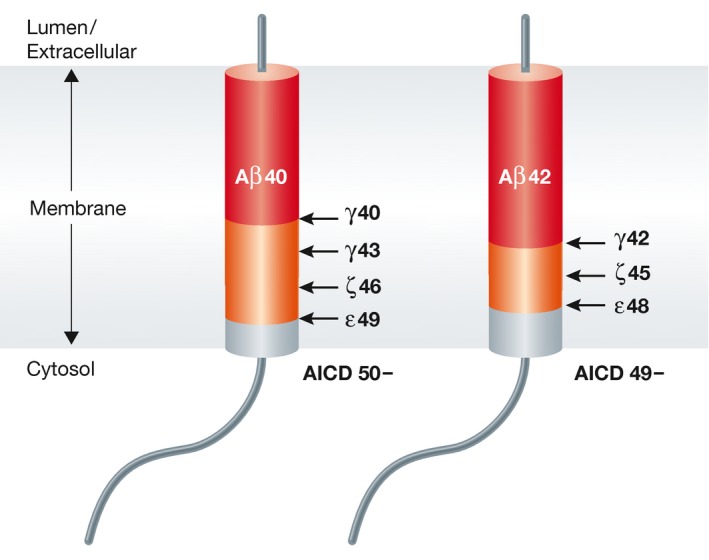
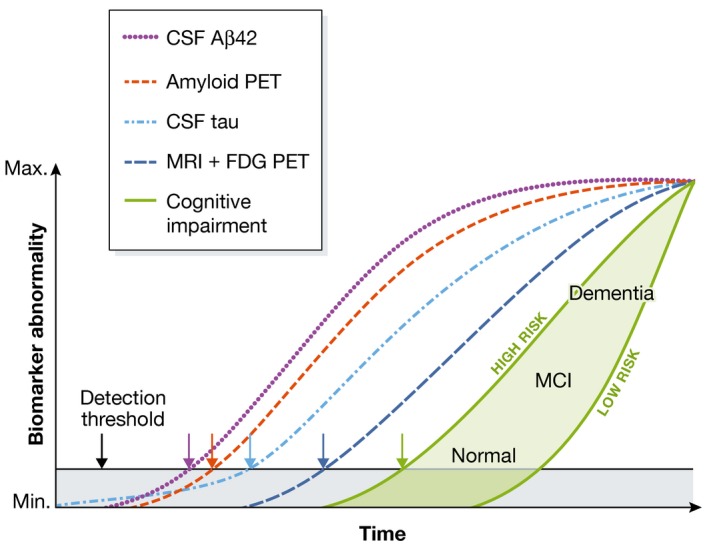
Despite continuing debate about the amyloid β-protein (or Aβ hypothesis, new lines of evidence from laboratories and clinics worldwide support the concept that an imbalance between production and clearance of Aβ42 and related Aβ peptides is a very early, often initiating factor in Alzheimer's disease (AD). Confirmation that presenilin is the catalytic site of γ-secretase has provided a linchpin: all dominant mutations causing early-onset AD occur either in the substrate (amyloid precursor protein, APP) or the protease (presenilin) of the reaction that generates Aβ. Duplication of the wild-type APP gene in Down's syndrome leads to Aβ deposits in the teens, followed by microgliosis, astrocytosis, and neurofibrillary tangles typical of AD Apolipoprotein E4, which predisposes to AD in > 40% of cases, has been found to impair Aβ clearance from the brain. Soluble oligomers of Aβ42 isolated from AD patients' brains can decrease synapse number, inhibit long-term potentiation, and enhance long-term synaptic depression in rodent hippocampus, and injecting them into healthy rats impairs memory. The human oligomers also induce hyperphosphorylation of tau at AD-relevant epitopes and cause neuritic dystrophy in cultured neurons. Crossing human APP with human tau transgenic mice enhances tau-positive neurotoxicity. In humans, new studies show that low cerebrospinal fluid (CSF) Aβ42 and amyloid-PET positivity precede other AD manifestations by many years. Most importantly, recent trials of three different Aβ antibodies (solanezumab, crenezumab, and aducanumab) have suggested a slowing of cognitive decline in post hoc analyses of mild AD subjects. Although many factors contribute to AD pathogenesis, Aβ dyshomeostasis has emerged as the most extensively validated and compelling therapeutic target.
Overview
The claims and statistics of this paper haven’t been checked yet.
Free: it reads the open-access text and checks the first 5 claims that cite a source we can check. Create a free account to check every claim.
Integrity signals
Registry
Cites
Statistics
Figures
Verification
Claims the paper makes
The claims and statistics of this paper haven’t been checked yet.
Free: it reads the open-access text and checks the first 5 claims that cite a source we can check. Create a free account to check every claim.
Claims other papers make about this one
Each is checked against this paper’s own text: does it say what the citing paper says it does?
The source backs part of the claim, not all of it — or backs it for a different population, condition or comparison.
In the citing paper
“Oxidative stress, mitochondrial dysfunction, astrocytic and microglial activation, membrane perturbation, and loss of ionic homeostasis are, at the cellular level, some of the events downstream the Aβ1-42 aggregation and accumulation (Selkoe and Hardy, 2016).”
From Exploring the Therapeutic Potential of Phytochemicals in Alzheimer’s Disease: Focus on Polyphenols and Monoterpenes (2022) · cites this paper as Selkoe and Hardy, 2016
Experimental — accuracy not yet measuredThe source backs part of the claim, not all of it — or backs it for a different population, condition or comparison.
In the citing paper
“Elevated levels of oligomers have been associated with AD, as they are found in AD brains and are considered the most toxic and pathogenic form of Aβ [4,5,6,7,18].”
From Treatment of Alzheimer’s Disease: Beyond Symptomatic Therapies (2023) · cites this paper as [4]
Experimental — accuracy not yet measuredThe source backs part of the claim, not all of it — or backs it for a different population, condition or comparison.
In the citing paper
“Synaptic dysfunction and synapse loss are key hallmarks of AD, present in the early stages of the disease before clinical symptoms appear [79,86,156].”
From Role of Oxidative Damage in Alzheimer’s Disease and Neurodegeneration: From Pathogenic Mechanisms to Biomarker Discovery (2021) · cites this paper as [79]
Experimental — accuracy not yet measuredThe source backs part of the claim, not all of it — or backs it for a different population, condition or comparison.
In the citing paper
“Moreover, the evidence from a failure of reversal of cognitive declines in amyloid-targeting drug trials supports this assumption; for example, patients with AD in whose brains Aβ plaques were virtually cleared by anti-amyloid immunotherapy did not show cognitive benefit [62].”
From Clinical trials of new drugs for Alzheimer disease (2020) · cites this paper as [62]
Experimental — accuracy not yet measuredThe source backs part of the claim, not all of it — or backs it for a different population, condition or comparison.
In the citing paper
“Early-stage AD is characterized primarily by the accumulation of Aβ plaques and subtle synaptic dysfunction, whereas late-stage AD involves extensive neurodegeneration, widespread neuroinflammation, and pronounced BBB disruption [157, 158].”
From Targeted Nanoparticles for Drug Delivery Across the Blood–Brain Barrier in Early and Late Stages of Alzheimer's Disease: A Review (2026) · cites this paper as [157]
Experimental — accuracy not yet measured
26 more claims about this paper
Create a free account to see every claim other papers make about this one.
Self-check
Percentages, sums and reported differences re-computed from the paper’s own numbers.
The self-check needs the paper’s full text.
Citations
Cites
Neuropathological stageing of Alzheimer-related changes.
Braak, H., & Braak, E. (1991) · Acta Neuropathologica · doi:10.1007/bf00308809 · Cited by 16,123 · cited 1×
“An elegant histopathological staging system created by Braak and Braak (1991) is now widely used to establish the severity of AD neuropathology.”
MethodThe Amyloid Hypothesis of Alzheimer’s Disease: Progress and Problems on the Road to Therapeutics
Hardy, J., & Selkoe, D. J. (2002) · Science · doi:10.1126/science.1072994 · Cited by 13,864
Self-citationAmyloid oligomers exacerbate tau pathology in a mouse model of tauopathy
Selenica, M.-L. B., Brownlow, M., Jimenez, J. P., Lee, D. C., Pena, G., Dickey, C. A., Gordon, M. N., & Morgan, D. (2013) · Neurodegenerative Diseases · doi:10.1159/000337230 · Cited by 10,359
Corder, E. H., Saunders, A. M., Strittmatter, W. J., Schmechel, D. E., Gaskell, P. C., Small, G. W., Roses, A. D., Haines, J. L., & Pericak-Vance, M. A. (1993) · Science · doi:10.1126/science.8346443 · Cited by 9,429 · cited 1×
“Cell biology of new AD risk genes Although the importance of ApoE4 as the major risk factor for AD was discovered in 1993 (Corder et al, 1993), it is only since the advent of genomewide association studies and, more recently, exome and genome sequencing that other risk loci for late-onset disease…”
BackgroundAlzheimer's disease: the amyloid cascade hypothesis
Hardy, J. A., & Higgins, G. A. (1992) · Science · doi:10.1126/science.1566067 · Cited by 7,484 · cited 2×
“The amyloid (or Ab) hypothesis (Beyreuther & Masters, 1991; Hardy & Allsop, 1991; Selkoe, 1991; Hardy & Higgins, 1992) has become the dominant model of AD pathogenesis and is guiding the development of potential treatments.”
BackgroundSelf-citationGlenner, G. G., & Wong, C. W. (1984) · Biochemical and Biophysical Research Communications · doi:10.1016/s0006-291x(84)80190-4 · Cited by 5,404
Imaging brain amyloid in Alzheimer's disease with Pittsburgh Compound‐B
Klunk, W. E., Engler, H., Nordberg, A., Wang, Y., Blomqvist, G., Holt, D. P., Bergström, M., Savitcheva, I., Huang, G., Estrada, S., et al. (2004) · Annals of Neurology · doi:10.1002/ana.20009 · Cited by 4,496 · cited 1×
“…fibrillar amyloid burden (but not yet soluble Ab oligomers) by PET scanning, initially with the thioflavin T derivative, Pittsburgh compound B (Klunk et al, 2004); and (iii) the ability to analyze APP metabolism in healthy and diseased humans by quantifying heavy isotope-labeled Ab peptides…”
BackgroundJack, C. R., Knopman, D. S., Jagust, W. J., Petersen, R. C., Weiner, M. W., Aisen, P. S., Shaw, L. M., Vemuri, P., Wiste, H. J., Weigand, S. D., et al. (2013) · The Lancet Neurology · doi:10.1016/s1474-4422(12)70291-0 · Cited by 4,396
Meta-Analysis of 74,046 Individuals Identifies 11 New Susceptibility Loci for Alzheimer’s Disease
(EADI), E. A. D. I., Lambert, J.-C., (GERAD), G. A. E. R. I. A. D., Alzheimer's Disease Genetic Consortium (ADGC), (CHARGE), C. F. H. A. A. R. I. G. E., Ibrahim-Verbaas, C. A., Harold, D., Naj, A. C., Sims, R., Bellenguez, C., et al. (2013) · Nature Genetics · doi:10.1038/ng.2802 · Cited by 4,336 · cited 2×
“This category includes SORL1, BIN1, and PICALM (Rogaeva et al, 2007; Lambert et al, 2013; Zhao et al, 2015).”
BackgroundSelf-citationCorrelative Memory Deficits, Aβ Elevation, and Amyloid Plaques in Transgenic Mice
Hsiao, K., Chapman, P., Nilsen, S., Eckman, C., Harigaya, Y., Younkin, S., Yang, F., & Cole, G. (1996) · Science · doi:10.1126/science.274.5284.99 · Cited by 4,210 · cited 1×
“Early APP mouse models (e.g. Games et al, 1995; Hsiao et al, 1996) suffered from reliance on high transgene expression to drive plaque deposition and from a lack of tangle cytopathology and neuronal death.”
Background
Research works printed but not linked: 3
- Cummings J, Cho W, Ward M, Friesenhahn M, Brunstein F, Honigberg L, Clayton D, Mortensen D, Ho C, Paul R (2014) paper presented at the Alzheimer's Association International Conference (AAIC), Copenhagen, Denmark, 16 July 2014
- Mann DMA, Yuonis N, Jones D, Stoddart DW (1992) The time course of pathological events in Down's Syndrome with particular reference to the involvement of microglial cells and deposits of b/A4. Neurodegeneration 1: 201– 215
- Sevigny J, Chiao P, Williams L, Miao X, O'Gorman J (2015) Randomized, double‐blind Phase 1B study of BIIB037, an anti‐amyloid beta monoclonal antibody, in patients with prodromal or mild Alzheimer's disease. Neurogener Dis 15(Suppl 1): 311
Cited by
Ageing as a risk factor for neurodegenerative disease
Hou, Y., Dan, X., Babbar, M., Wei, Y., Hasselbalch, S. G., Croteau, D. L., & Bohr, V. A. (2019) · Nature Reviews Neurology · doi:10.1038/s41582-019-0244-7 · Cited by 3,310
Alzheimer Disease: An Update on Pathobiology and Treatment Strategies
Long, J. M., & Holtzman, D. M. (2019) · Cell · doi:10.1016/j.cell.2019.09.001 · Cited by 3,204
“This hypothesis has been the leading model of AD pathogenesis since it was first proposed, although portions have been revised or supplemented over time (Musiek and Holtzman, 2015; Selkoe and Hardy, 2016).”
Lane, C. A., Hardy, J., & Schott, J. M. (2018) · European Journal of Neurology · doi:10.1111/ene.13439 · Cited by 2,616
“It is important to note, however, that many of these studies have been complicated by concern over target engagement and patient selection [72]: not only did a proportion of individuals recruited for some of these trials not have evidence for AD pathology [28], but most studies have targeted patients with laterstage A…”
BackgroundResultSelf-citationOxidative stress and the amyloid beta peptide in Alzheimer’s disease
Cheignon, C., Tomas, M., Bonnefont-Rousselot, D., Faller, P., Hureau, C., & Collin, F. (2018) · Redox Biology · doi:10.1016/j.redox.2017.10.014 · Cited by 2,185
“early 1990s [31–34] has become a dominant model for AD pathogenesis [35], although still controversial [36,37].”
BackgroundGut microbiome alterations in Alzheimer’s disease
Vogt, N. M., Kerby, R. L., Dill-McFarland, K. A., Harding, S. J., Merluzzi, A. P., Johnson, S. C., Carlsson, C. M., Asthana, S., Zetterberg, H., Blennow, K., et al. (2017) · Scientific Reports · doi:10.1038/s41598-017-13601-y · Cited by 2,137
How neuroinflammation contributes to neurodegeneration
Ransohoff, R. M. (2016) · Science · doi:10.1126/science.aag2590 · Cited by 1,967
Amyloid Beta: Structure, Biology and Structure-Based Therapeutic Development
Chen, G.-F., Xu, T.-H., Yan, Y., Zhou, Y.-R., Jiang, Y., Melcher, K., & Xu, H. E. (2017) · Acta Pharmacologica Sinica · doi:10.1038/aps.2017.28 · Cited by 1,965
The Amyloid-β Pathway in Alzheimer’s Disease
Hampel, H., Hardy, J., Blennow, K., Chen, C., Perry, G., Kim, S. H., Villemagne, V. L., Aisen, P., Vendruscolo, M., Iwatsubo, T., et al. (2021) · Molecular Psychiatry · doi:10.1038/s41380-021-01249-0 · Cited by 1,952
Self-citationMicroglia in Alzheimer’s disease
Hansen, D. V., Hanson, J. E., & Sheng, M. (2018) · Journal of Cell Biology · doi:10.1083/jcb.201709069 · Cited by 1,935
“Knockout or inhibition of C3, which should block all pathways of complement activation, is also reported to provide neuroprotection (Shi et al., 2015, 2017a; Hong et al., 2016; for different results, see Wyss-Coray et al., 2002; Maier et al., 2008), though it appears to increase amyloid burden…”
BackgroundDonanemab in Early Alzheimer’s Disease
Mintun, M. A., Lo, A. C., Duggan Evans, C., Wessels, A. M., Ardayfio, P. A., Andersen, S. W., Shcherbinin, S., Sparks, J., Sims, J. R., Brys, M., et al. (2021) · New England Journal of Medicine · doi:10.1056/nejmoa2100708 · Cited by 1,728
Microglia in neurodegeneration
Hickman, S., Izzy, S., Sen, P., Morsett, L., & El Khoury, J. (2018) · Nature Neuroscience · doi:10.1038/s41593-018-0242-x · Cited by 1,710
Apolipoprotein E and Alzheimer disease: pathobiology and targeting strategies
Yamazaki, Y., Zhao, N., Caulfield, T. R., Liu, C.-C., & Bu, G. (2019) · Nature Reviews Neurology · doi:10.1038/s41582-019-0228-7 · Cited by 1,425
Two Randomized Phase 3 Studies of Aducanumab in Early Alzheimer's Disease
Budd Haeberlein, S., Aisen, P. S., Barkhof, F., Chalkias, S., Chen, T., Cohen, S., Dent, G., Hansson, O., Harrison, K., von Hehn, C., et al. (2022) · The Journal of Prevention of Alzheimer's Disease · doi:10.14283/jpad.2022.30 · Cited by 1,367
“Localized superficial siderosis 14 (3) 52 (10) 73 (13) 10 (2) 51 (9) 89 (16)”
BackgroundInfluentialAdeno-Associated Virus (AAV) as a Vector for Gene Therapy
Naso, M. F., Tomkowicz, B., Perry, W. L., & Strohl, W. R. (2017) · BioDrugs · doi:10.1007/s40259-017-0234-5 · Cited by 1,362
“Attempts to clear these plaques with plaque-specific antibodies have shown signs of limiting this process in animals and early-stage clinical trials [109, 110]; However, larger studies have all shown to be inconclusive at best, or failures at worst.”
BackgroundTrial of Solanezumab for Mild Dementia Due to Alzheimer’s Disease
Honig, L. S., Vellas, B., Woodward, M., Boada, M., Bullock, R., Borrie, M., Hager, K., Andreasen, N., Scarpini, E., Liu-Seifert, H., et al. (2018) · New England Journal of Medicine · doi:10.1056/nejmoa1705971 · Cited by 1,049
Fibril structure of amyloid-β(1–42) by cryo–electron microscopy
Gremer, L., Schölzel, D., Schenk, C., Reinartz, E., Labahn, J., Ravelli, R. B. G., Tusche, M., Lopez-Iglesias, C., Hoyer, W., Heise, H., et al. (2017) · Science · doi:10.1126/science.aao2825 · Cited by 1,041
Sala Frigerio, C., Wolfs, L., Fattorelli, N., Thrupp, N., Voytyuk, I., Schmidt, I., Mancuso, R., Chen, W.-T., Woodbury, M. E., Srivastava, G., et al. (2019) · Cell Reports · doi:10.1016/j.celrep.2019.03.099 · Cited by 926
“This has caused severe criticism on the amyloid cascade hypothesis for AD, raising questions about its validity in sporadic AD (Behl and Ziegler, 2017; Harrison and Owen, 2016; Herrup, 2015; Karran and Hardy, 2014; Makin, 2018; Selkoe and Hardy, 2016).”
BackgroundA critical appraisal of amyloid-β-targeting therapies for Alzheimer disease
Panza, F., Lozupone, M., Logroscino, G., & Imbimbo, B. P. (2019) · Nature Reviews Neurology · doi:10.1038/s41582-018-0116-6 · Cited by 965
Spatial Transcriptomics and In Situ Sequencing to Study Alzheimer’s Disease
Chen, W.-T., Lu, A., Craessaerts, K., Pavie, B., Sala Frigerio, C., Corthout, N., Qian, X., Laláková, J., Kühnemund, M., Voytyuk, I., et al. (2020) · Cell · doi:10.1016/j.cell.2020.06.038 · Cited by 949
The Amyloid-β Oligomer Hypothesis: Beginning of the Third Decade
Cline, E. N., Bicca, M. A., Viola, K. L., & Klein, W. L. (2018) · Journal of Alzheimer's Disease · doi:10.3233/jad-179941 · Cited by 870
“dence that AD is a transmissible prion-like disease [5], experimental data support the idea that A Os may spread from cell-to-cell and brain region-toregion in a prion-like manner.”
BackgroundInfluentialVascular Cognitive Impairment and Dementia
Iadecola, C., Duering, M., Hachinski, V., Joutel, A., Pendlebury, S. T., Schneider, J. A., & Dichgans, M. (2019) · Journal of the American College of Cardiology · doi:10.1016/j.jacc.2019.04.034 · Cited by 801
“With advances in the understanding of the molecular pathology of AD in the 1990s (9), the term dementia became synonymous with AD, and the cognitive impact of vascular pathology was over-looked compared with neurodegenerative pathology (e.”
BackgroundAlzheimer's disease: experimental models and reality
Drummond, E., & Wisniewski, T. (2017) · Acta Neuropathologica · doi:10.1007/s00401-016-1662-x · Cited by 810
“These mice develop NFTs, neurodegeneration, atrophy and motor deficits.”
BackgroundResultInfluentialAtomic-resolution structure of a disease-relevant Aβ(1–42) amyloid fibril
Wälti, M. A., Ravotti, F., Arai, H., Glabe, C. G., Wall, J. S., Böckmann, A., Güntert, P., Meier, B. H., & Riek, R. (2016) · Proceedings of the National Academy of Sciences · doi:10.1073/pnas.1600749113 · Cited by 808
“(2015) Peptide dimer structure in an Aβ(1-42) fibril visualized with cryo-EM.”
BackgroundInfluentialA systemic view of Alzheimer disease — insights from amyloid-β metabolism beyond the brain
Wang, J., Gu, B. J., Masters, C. L., & Wang, Y.-J. (2017) · Nature Reviews Neurology · doi:10.1038/nrneurol.2017.111 · Cited by 808
APP mouse models for Alzheimer’s disease preclinical studies.
Sasaguri, H., Nilsson, P., Hashimoto, S., Nagata, K., Saito, T., De Strooper, B., Hardy, J., Vassar, R., Winblad, B., & Saido, T. C. (2017) · The EMBO Journal · doi:10.15252/embj.201797397 · Cited by 793
“The existence of familial mutations that directly affect A b production and influence AD risk is often cited as evidence that A b accumulation is central to AD pathogenesis (amyloid cascade hypothesis: Selkoe & Hardy, 2016).”
Self-citationMolecular Mechanisms of TDP-43 Misfolding and Pathology in Amyotrophic Lateral Sclerosis
Prasad, A., Bharathi, V., Sivalingam, V., Girdhar, A., & Patel, B. K. (2019) · Frontiers in Molecular Neuroscience · doi:10.3389/fnmol.2019.00025 · Cited by 774
“Notably, oligomeric Aβ-42 has already been implicated to be of high relevance to the neuro-toxicity in the Alzheimer’s disease patients (Selkoe and Hardy, 2016).”
BackgroundTREM2 Is a Receptor for β-Amyloid that Mediates Microglial Function
Zhao, Y., Wu, X., Li, X., Jiang, L.-L., Gui, X., Liu, Y., Sun, Y., Zhu, B., Piña-Crespo, J. C., Zhang, M., et al. (2018) · Neuron · doi:10.1016/j.neuron.2018.01.031 · Cited by 763
Next generation antibody drugs: pursuit of the 'high-hanging fruit'
Carter, P. J., & Lazar, G. A. (2018) · Nature Reviews Drug Discovery · doi:10.1038/nrd.2017.227 · Cited by 754
White matter changes in Alzheimer’s disease: A focus on myelin and oligodendrocytes
Nasrabady, S. E., Rizvi, B., Goldman, J. E., & Brickman, A. M. (2018) · Acta Neuropathologica Communications · doi:10.1186/s40478-018-0515-3 · Cited by 723
“These pathological changes are believed to result in neurodegeneration, which can be appreciated with structural neuroimaging as regional and global atrophy [73].”
Overcoming the Blood–Brain Barrier: The Role of Nanomaterials in Treating Neurological Diseases
Furtado, D., Björnmalm, M., Ayton, S., Bush, A. I., Kempe, K., & Caruso, F. (2018) · Advanced Materials · doi:10.1002/adma.201801362 · Cited by 708
Clinical trials of new drugs for Alzheimer disease
Huang, L.-K., Chao, S.-P., & Hu, C.-J. (2020) · Journal of Biomedical Science · doi:10.1186/s12929-019-0609-7 · Cited by 702
Randomized trial of verubecestat for mild-to-moderate Alzheimer's disease
Egan, M. F., Kost, J., Tariot, P. N., Aisen, P. S., Cummings, J. L., Vellas, B., Sur, C., Mukai, Y., Voss, T., Furtek, C., et al. (2018) · New England Journal of Medicine · doi:10.1056/nejmoa1706441 · Cited by 685
Nguyen, P. H., Ramamoorthy, A., Sahoo, B. R., Zheng, J., Faller, P., Straub, J. E., Dominguez, L., Shea, J.-E., Dokholyan, N. V., De Simone, A., et al. (2021) · Chemical Reviews · doi:10.1021/acs.chemrev.0c01122 · Cited by 678
Function and therapeutic value of astrocytes in neurological diseases
Lee, H.-G., Wheeler, M. A., & Quintana, F. J. (2022) · Nature Reviews Drug Discovery · doi:10.1038/s41573-022-00390-x · Cited by 662
A vicious cycle of β amyloid−dependent neuronal hyperactivation
Zott, B., Simon, M. M., Hong, W., Unger, F., Chen-Engerer, H.-J., Frosch, M. P., Sakmann, B., Walsh, D. M., & Konnerth, A. (2019) · Science · doi:10.1126/science.aay0198 · Cited by 640
Ovod, V., Ramsey, K. N., Mawuenyega, K. G., Bollinger, J. G., Hicks, T., Schneider, T., Sullivan, M., Paumier, K., Holtzman, D. M., Morris, J. C., et al. (2017) · Alzheimer's & Dementia · doi:10.1016/j.jalz.2017.06.2266 · Cited by 585
“Aggregation and accumulation of amyloid b (Ab), particularly Ab42, is implicated in the pathogenesis of AD [1] with overproduction in autosomal-dominant AD [2] and”
BackgroundWang, C., & Holtzman, D. M. (2020) · Neuropsychopharmacology · doi:10.1038/s41386-019-0478-5 · Cited by 615
Peptide-Based Vaccines: Current Progress and Future Challenges
Malonis, R. J., Lai, J. R., & Vergnolle, O. (2020) · Chemical Reviews · doi:10.1021/acs.chemrev.9b00472 · Cited by 602
“87 Amyloid precursor protein (APP) is an integral membrane protein that is expressed in many tissues, and particularly concentrated in neuronal synapses.”
BackgroundCryo-EM structure and polymorphism of Aβ amyloid fibrils purified from Alzheimer’s brain tissue
Kollmer, M., Close, W., Funk, L., Rasmussen, J., Bsoul, A., Schierhorn, A., Schmidt, M., Sigurdson, C. J., Jucker, M., & Fändrich, M. (2019) · Nature Communications · doi:10.1038/s41467-019-12683-8 · Cited by 595
Treatment Combinations for Alzheimer’s Disease: Current and Future Pharmacotherapy Options
Cummings, J. L., Tong, G., & Ballard, C. (2019) · Journal of Alzheimer's Disease · doi:10.3233/jad-180766 · Cited by 588
“The amyloid cascade hypothesis of AD posits that accumulation of Aβ dysregulates synaptic and neuronal function, creating the intracellular conditions for formation of neurofibrillary tangles, leading to neuronal loss and further compromise of neurotransmitter function [6].”
BackgroundInfluentialMicroglia in Neuroinflammation and Neurodegeneration: From Understanding to Therapy
Muzio, L., Viotti, A., & Martino, G. (2021) · Frontiers in Neuroscience · doi:10.3389/fnins.2021.742065 · Cited by 581
“The investigation of the natural history of the disease indicates that the deposition of Aβ occurs early in the disease and is followed by tau pathology (Selkoe and Hardy, 2016).”
BackgroundAmyloid-β-independent regulators of tau pathology in Alzheimer disease
van der Kant, R., Goldstein, L. S. B., & Ossenkoppele, R. (2020) · Nature reviews. Neuroscience · doi:10.1038/s41583-019-0240-3 · Cited by 580
Half a century of amyloids: past, present and future
Ke, P. C., Zhou, R., Serpell, L. C., Riek, R., Knowles, T. P. J., Lashuel, H. A., Gazit, E., Hamley, I. W., Davis, T. P., Fändrich, M., et al. (2020) · Chemical Society Reviews · doi:10.1039/c9cs00199a · Cited by 568
Anti-Amyloid-β Monoclonal Antibodies for Alzheimer’s Disease: Pitfalls and Promise
van Dyck, C. H. (2018) · Biological Psychiatry · doi:10.1016/j.biopsych.2017.08.010 · Cited by 568
“Converging evidence over the past 2 decades has suggested that the most neurotoxic species of Aβ is the soluble oligomer (1,53), which has emerged as the central target for disease-modifying treatments, including mAbs.”
Alzheimer’s disease: Recent treatment strategies
Vaz, M., & Silvestre, S. (2020) · European Journal of Pharmacology · doi:10.1016/j.ejphar.2020.173554 · Cited by 547
Randomized trial of verubecestat for prodromal Alzheimer's disease
Egan, M. F., Kost, J., Voss, T., Mukai, Y., Aisen, P. S., Cummings, J. L., Tariot, P. N., Vellas, B., van Dyck, C. H., Boada, M., et al. (2019) · New England Journal of Medicine · doi:10.1056/nejmoa1812840 · Cited by 545
González-Reyes, R. E., Nava-Mesa, M. O., Vargas-Sánchez, K., Ariza-Salamanca, D., & Mora-Muñoz, L. (2017) · Frontiers in Molecular Neuroscience · doi:10.3389/fnmol.2017.00427 · Cited by 527
“…pathogenesis of AD, the most widely accepted is the amyloid hypothesis, which states that A β dyshomeostasis is responsible for the cognitive phenotype of the disease, acting upstream and contributing to other molecular and cellular alterations observed in this condition (Selkoe and Hardy, 2016).”
BackgroundChitosan oligosaccharide: Biological activities and potential therapeutic applications
Muanprasat, C., & Chatsudthipong, V. (2017) · Pharmacology & Therapeutics · doi:10.1016/j.pharmthera.2016.10.013 · Cited by 520
Current state of Alzheimer’s fluid biomarkers
Molinuevo, J. L., Ayton, S., Batrla, R., Bednar, M. M., Bittner, T., Cummings, J., Fagan, A. M., Hampel, H., Mielke, M. M., Mikulskis, A., et al. (2018) · Acta Neuropathologica · doi:10.1007/s00401-018-1932-x · Cited by 518
Gut microbiota and dysbiosis in Alzheimer's disease: Implications for pathogenesis and treatment
Liu, S., Gao, J., Zhu, M., Liu, K., & Zhang, H.-L. (2020) · Molecular Neurobiology · doi:10.1007/s12035-020-02073-3 · Cited by 516
“Over the ensuing decades, this hypothesis has evolved from a neuron-centric linear cascade, which postulates that Aβ results in hyperphosphorylated tau and neurodegeneration, to an integrative model that also involves feedback and feedforward responses of impaired vasculature, oxidative stress (OS), microgliosis, and…”
BackgroundChitosan oligosaccharide (COS): An overview
Naveed, M., Phil, L., Sohail, M., Hasnat, M., Baig, M. M. F. A., Ihsan, A. U., Shumzaid, M., Kakar, M. U., Mehmood Khan, T., Akabar, M., et al. (2019) · International Journal of Biological Macromolecules · doi:10.1016/j.ijbiomac.2019.01.192 · Cited by 508
The probabilistic model of Alzheimer disease: the amyloid hypothesis revised
Frisoni, G. B., Altomare, D., Thal, D. R., Ribaldi, F., van der Kant, R., Ossenkoppele, R., Blennow, K., Cummings, J., van Duijn, C., Nilsson, P. M., et al. (2022) · Nature Reviews Neuroscience · doi:10.1038/s41583-021-00533-w · Cited by 513
Oxidative Stress in Neurodegenerative Diseases: From a Mitochondrial Point of View
Cenini, G., Lloret, A., & Cascella, R. (2019) · Oxidative Medicine and Cellular Longevity · doi:10.1155/2019/2105607 · Cited by 499
“The aberrant protein aggregation results in multifactorial neuronal dysfunction affecting synaptic signaling, mitochondrial function, neuroinflammation, and neuronal loss [58, 59].”
BackgroundCosta, L. G., Cole, T. B., Dao, K., Chang, Y.-C., Coburn, J., & Garrick, J. M. (2020) · Pharmacology & Therapeutics · doi:10.1016/j.pharmthera.2020.107523 · Cited by 484
Converging pathways in neurodegeneration, from genetics to mechanisms
Gan, L., Cookson, M. R., Petrucelli, L., & La Spada, A. R. (2018) · Nature Neuroscience · doi:10.1038/s41593-018-0237-7 · Cited by 479
Seyfried, N. T., Dammer, E. B., Swarup, V., Nandakumar, D., Duong, D. M., Yin, L., Deng, Q., Nguyen, T., Hales, C. M., Wingo, T., et al. (2017) · Cell Systems · doi:10.1016/j.cels.2016.11.006 · Cited by 477
“Although amyloid-beta (Aβ) deposition in the brain is hypothesized to be a central force driving AD pathogenesis (Selkoe and Hardy, 2016), individuals remain cognitively normal for many years despite accumulating aggregates of Aβ plaques and tau neurofibrillary tangles (Sperling et al., 2011).”
Chen, S. G., Stribinskis, V., Rane, M. J., Demuth, D. R., Gozal, E., Roberts, A. M., Jagadapillai, R., Liu, R., Choe, K., Shivakumar, B., et al. (2016) · Scientific Reports · doi:10.1038/srep34477 · Cited by 463
“The precise role of protein aggregation and inflammation in neurodegeneration remains unclear 33 .”
An Inflammation-Centric View of Neurological Disease: Beyond the Neuron
Skaper, S. D., Facci, L., Zusso, M., & Giusti, P. (2018) · Frontiers in Cellular Neuroscience · doi:10.3389/fncel.2018.00072 · Cited by 457
“Alzheimer Disease Alzheimer disease is the most prevalent chronic, progressive neurodegenerative disease, and cause of dementia (Selkoe and Hardy, 2016).”
BackgroundAntibiotics, gut microbiota, and Alzheimer’s disease
Angelucci, F., Cechova, K., Amlerova, J., & Hort, J. (2019) · Journal of Neuroinflammation · doi:10.1186/s12974-019-1494-4 · Cited by 454
Current understanding of metal ions in the pathogenesis of Alzheimer’s disease
Wang, L., Yin, Y.-L., Liu, X.-Z., Shen, P., Zheng, Y.-G., Lan, X.-R., Lu, C.-B., & Wang, J.-Z. (2020) · Translational Neurodegeneration · doi:10.1186/s40035-020-00189-z · Cited by 454
“Background Alzheimer’s disease (AD) is the most common neurodegenerative disorder characterized pathologically by massive extracellular deposition of amyloid-β (Aβ) forming senile plaques and intracellular accumulation of the abnormally modified tau proteins forming neurofibrillary tangles (NFTs) [1, 2].”
BackgroundAgeing, Cellular Senescence and Neurodegenerative Disease
Kritsilis, M., V. Rizou, S., Koutsoudaki, P. N., Evangelou, K., Gorgoulis, V. G., & Papadopoulos, D. (2018) · International Journal of Molecular Sciences · doi:10.3390/ijms19102937 · Cited by 448
“Cognitive decline in AD is associated with the disseminated formation of extracellular amyloid plaques, intracellular neurofibrillary tangles comprising of hyperphosphorylated tau proteins, as well as neuronal and synaptic loss [183].”
BackgroundThe role of astrocytes in amyloid production and Alzheimer's disease
Frost, G. R., & Li, Y.-M. (2017) · Open Biology · doi:10.1098/rsob.170228 · Cited by 435
Ramzan, F., Khan, M. U. G., Rehmat, A., Iqbal, S., Saba, T., Rehman, A., & Mehmood, Z. (2020) · Journal of Medical Systems · doi:10.1007/s10916-019-1475-2 · Cited by 432
“AD pathogenesis is believed to be triggered due to the overproduction of amyloid-β (A β ) [1, 2] and hyper phosphorylation of tau [3, 4] protein.”
BackgroundSynaptic Impairment in Alzheimer’s Disease: A Dysregulated Symphony
Forner, S., Baglietto-Vargas, D., Martini, A. C., Trujillo-Estrada, L., & LaFerla, F. M. (2017) · Trends in Neurosciences · doi:10.1016/j.tins.2017.04.002 · Cited by 430
Kennedy, M. E., Stamford, A. W., Chen, X., Cox, K., Cumming, J. N., Dockendorf, M. F., Egan, M., Ereshefsky, L., Hodgson, R. A., Hyde, L. A., et al. (2016) · Science Translational Medicine · doi:10.1126/scitranslmed.aad9704 · Cited by 428
“Although this lack of success has been cited as evidence against the amyloid hypothesis, the treatments evaluated to date have lacked convincing evidence of substantial and sustainedCNSAb reduction at doses having an acceptable tolerability profile (2, 24).”
BackgroundDrug candidates in clinical trials for Alzheimer’s disease
Hung, S.-Y., & Fu, W.-M. (2017) · Journal of Biomedical Science · doi:10.1186/s12929-017-0355-7 · Cited by 420
“Compelling preclinical and emerging clinical evidence supports a key role for Aβ dyshomeostasis in initiating AD [33].”
BackgroundExtracellular vesicles: novel promising delivery systems for therapy of brain diseases.
Rufino-Ramos, D., Albuquerque, P. R., Carmona, V., Perfeito, R., Nobre, R. J., & Pereira de Almeida, L. (2017) · Journal of Controlled Release · doi:10.1016/j.jconrel.2017.07.001 · Cited by 418
Fecal Microbiota Transplantation in Neurological Disorders
Vendrik, K. E. W., Ooijevaar, R. E., de Jong, P. R. C., Laman, J. D., van Oosten, B. W., van Hilten, J. J., Ducarmon, Q. R., Keller, J. J., Kuijper, E. J., & Contarino, M. F. (2020) · Frontiers in Cellular and Infection Microbiology · doi:10.3389/fcimb.2020.00098 · Cited by 413
The role of CREB and BDNF in neurobiology and treatment of Alzheimer's disease
Amidfar, M., de Oliveira, J., Kucharska, E., Budni, J., & Kim, Y.-K. (2020) · Life Sciences · doi:10.1016/j.lfs.2020.118020 · Cited by 410
Pathological mechanisms and therapeutic strategies for Alzheimer’s disease
Tam, K., & Ju, Y. (2022) · Neural Regeneration Research · doi:10.4103/1673-5374.320970 · Cited by 395
“Cholinergic deficiency (Ferreira-Vieira et al., 2016), amyloid beta (Aβ) toxicity (Selkoe and Hardy, 2016), tau protein hyperphosphorylation (Lewis and Dickson, 2016), synaptic dysfunction (Briggs et al., 2016), oxidative-stress (Kumar and Singh, 2015), and neuroinflammation (Calsolaro and Edison,…”
BackgroundErickson, M. A., & Banks, W. A. (2018) · Pharmacological Reviews · doi:10.1124/pr.117.014647 · Cited by 378
“Ab accumulation, aggregation, and deposition in the CNS are thought to be a causative pathologic event in AD (Selkoe and Hardy, 2016).”
BackgroundEpigenetic Regulation in Neurodegenerative Diseases
Berson, A., Nativio, R., Berger, S. L., & Bonini, N. M. (2018) · Trends in Neurosciences · doi:10.1016/j.tins.2018.05.005 · Cited by 387
Dementia in Down syndrome: unique insights for Alzheimer disease research
Lott, I. T., & Head, E. (2019) · Nature Reviews Neurology · doi:10.1038/s41582-018-0132-6 · Cited by 383
Sun, L., Zhou, R., Yang, G., & Shi, Y. (2017) · Proceedings of the National Academy of Sciences · doi:10.1073/pnas.1618657114 · Cited by 382
“These observations led to refinement of the amyloid hypothesis, which identifies increased ratios of longer Aβ peptides over shorter ones as a key early event in AD development (18).”
BackgroundBiomarkers for Alzheimer’s disease—preparing for a new era of disease-modifying therapies
Zetterberg, H., & Bendlin, B. B. (2021) · Molecular Psychiatry · doi:10.1038/s41380-020-0721-9 · Cited by 377
Insulin and Insulin Resistance in Alzheimer’s Disease
Sędzikowska, A., & Szablewski, L. (2021) · International Journal of Molecular Sciences · doi:10.3390/ijms22189987 · Cited by 377
Silent hippocampal seizures and spikes identified by foramen ovale electrodes in Alzheimer's disease
Lam, A. D., Deck, G., Goldman, A., Eskandar, E. N., Noebels, J., & Cole, A. J. (2017) · Nature Medicine · doi:10.1038/nm.4330 · Cited by 374
“Despite extraordinary advances in the molecular pathology of AD 4 , the structural basis for the early fluctuating course of cognitive decline in AD remains elusive and cannot be explained from purely microscopic or macroscopic pathological standpoints.”
α-synuclein in the pathophysiology of Alzheimer’s disease
Twohig, D., & Nielsen, H. M. (2019) · Molecular Neurodegeneration · doi:10.1186/s13024-019-0320-x · Cited by 374
Autophagy in Alzheimer’s disease pathogenesis: Therapeutic potential and future perspectives
Zhang, Z., Yang, X., Song, Y.-Q., & Tu, J. (2021) · Ageing Research Reviews · doi:10.1016/j.arr.2021.101464 · Cited by 369
The glymphatic system: Current understanding and modeling
Bohr, T., Hjorth, P. G., Holst, S. C., Hrabětová, S., Kiviniemi, V., Lilius, T., Lundgaard, I., Mardal, K.-A., Martens, E. A., Mori, Y., et al. (2022) · iScience · doi:10.1016/j.isci.2022.104987 · Cited by 368
“(The amyloid hypothesis for Alzheimer’s disease is debated, however (Selkoe and Hardy, 2016).”
Structural and kinetic basis for the selectivity of aducanumab for aggregated forms of amyloid-β
Arndt, J. W., Qian, F., Smith, B. A., Quan, C., Kilambi, K. P., Bush, M. W., Walz, T., Pepinsky, R. B., Bussière, T., Hamann, S., et al. (2018) · Scientific Reports · doi:10.1038/s41598-018-24501-0 · Cited by 365
“N min min (3) r i Irmsd i r i i Irmsd i r i”
BackgroundLuo, R., Su, L.-Y., Li, G., Yang, J., Liu, Q., Yang, L.-X., Zhang, D.-F., Zhou, H., Xu, M., Fan, Y., et al. (2020) · Autophagy · doi:10.1080/15548627.2019.1596488 · Cited by 364
Takata, K., Kozaki, T., Lee, C. Z. W., Thion, M. S., Otsuka, M., Lim, S., Utami, K. H., Fidan, K., Park, D. S., Malleret, B., et al. (2017) · Immunity · doi:10.1016/j.immuni.2017.06.017 · Cited by 351
Wnt signaling pathway: A comprehensive review
Hayat, R., Manzoor, M., & Hussain, A. (2022) · Cell Biology International · doi:10.1002/cbin.11797 · Cited by 344
“AD is a brain‐related disorder linked with aging, with synaptic loss and dementia (Selkoe & Hardy, 2016).”
BackgroundHealth benefits of dietary marine DHA/EPA-enriched glycerophospholipids
Zhang, T.-T., Xu, J., Wang, Y.-M., & Xue, C.-H. (2019) · Progress in Lipid Research · doi:10.1016/j.plipres.2019.100997 · Cited by 339
Functional brain architecture is associated with the rate of tau accumulation in Alzheimer’s disease
Franzmeier, N., Neitzel, J., Rubinski, A., Smith, R., Strandberg, O., Ossenkoppele, R., Hansson, O., Ewers, M., (ADNI), A. D. N. I., Weiner, M., et al. (2020) · Nature Communications · doi:10.1038/s41467-019-14159-1 · Cited by 333
Myeloid Cells in the Central Nervous System
Herz, J., Filiano, A. J., Wiltbank, A. T., Yogev, N., & Kipnis, J. (2017) · Immunity · doi:10.1016/j.immuni.2017.06.007 · Cited by 332
Sharma, P., Srivastava, P., Seth, A., Tripathi, P. N., Banerjee, A. G., & Shrivastava, S. K. (2019) · Progress in Neurobiology · doi:10.1016/j.pneurobio.2018.12.006 · Cited by 331
Neuroinflammation in Alzheimer’s Disease
Onyango, I. G., Jauregui, G. V., Čarná, M., Bennett, J. P., & Stokin, G. B. (2021) · Biomedicines · doi:10.3390/biomedicines9050524 · Cited by 330
The clinical promise of biomarkers of synapse damage or loss in Alzheimer’s disease
the Synaptic Health Endpoints Working Group, Colom-Cadena, M., Spires-Jones, T., Zetterberg, H., Blennow, K., Caggiano, A., DeKosky, S. T., Fillit, H., Harrison, J. E., Schneider, L. S., et al. (2020) · Alzheimer's Research & Therapy · doi:10.1186/s13195-020-00588-4 · Cited by 328
Wójtowicz, S., Strosznajder, A. K., Jeżyna, M., & Strosznajder, J. B. (2020) · Neurochemical Research · doi:10.1007/s11064-020-02993-5 · Cited by 327
An overview of spirooxindole as a promising scaffold for novel drug discovery
Zhou, L.-M., Qu, R.-Y., & Yang, G.-F. (2020) · Expert Opinion on Drug Discovery · doi:10.1080/17460441.2020.1733526 · Cited by 316
“slightly to moderate, moderate to severe stage of AD, respectively [154].”
BackgroundImbalance between firing homeostasis and synaptic plasticity drives early-phase Alzheimer’s disease
Styr, B., & Slutsky, I. (2018) · Nature Neuroscience · doi:10.1038/s41593-018-0080-x · Cited by 318
“Ca2+ levels drop (1) even though spiking levels remain the same (2).”
BackgroundInnate Immunity and Neurodegeneration
Labzin, L. I., Heneka, M. T., & Latz, E. (2018) · Annual Review of Medicine · doi:10.1146/annurev-med-050715-104343 · Cited by 319
Microbiota in neuroinflammation and synaptic dysfunction: a focus on Alzheimer’s disease
Bairamian, D., Sha, S., Rolhion, N., Sokol, H., Dorothée, G., Lemere, C. A., & Krantic, S. (2022) · Molecular Neurodegeneration · doi:10.1186/s13024-022-00522-2 · Cited by 314
Liss, J. L., Seleri Assunção, S., Cummings, J., Atri, A., Geldmacher, D. S., Candela, S. F., Devanand, D. P., Fillit, H. M., Susman, J., Mintzer, J., et al. (2021) · Journal of Internal Medicine · doi:10.1111/joim.13244 · Cited by 312
Hadoux, X., Hui, F., Lim, J. K. H., Masters, C. L., Pébay, A., Chevalier, S., Ha, J., Loi, S., Fowler, C. J., Rowe, C., et al. (2019) · Nature Communications · doi:10.1038/s41467-019-12242-1 · Cited by 304
Biomarker modeling of Alzheimer’s disease using PET-based Braak staging
Therriault, J., Pascoal, T. A., Lussier, F. Z., Tissot, C., Chamoun, M., Bezgin, G., Servaes, S., Benedet, A. L., Ashton, N. J., Karikari, T. K., et al. (2022) · Nature Aging · doi:10.1038/s43587-022-00204-0 · Cited by 308
“Despite some advantages, it is important to emphasize that biomarker modeling of AD using PET-based Braak staging may be less well positioned to detect and model very early AD changes that are considered to precede tau aggregation, such amyloid-β accumulation 21 .”
Jeremic, D., Jiménez-Díaz, L., & Navarro-López, J. D. (2021) · Ageing Research Reviews · doi:10.1016/j.arr.2021.101496 · Cited by 306
“However, as argued by Selkoe and Hardy (2016), detection of modest amounts of neurofibrillary change in limbic regions of young or middle-aged individuals dying of other causes does not imply that such individuals would necessarily have developed AD had they lived longer (Selkoe and Hardy, 2016).”
InfluentialAmyloid-beta peptide and tau protein crosstalk in Alzheimer’s disease
Villegas, S., Roda, A., Serra-Mir, G., Montoliu-Gaya, L., & Tiessler, L. (2022) · Neural Regeneration Research · doi:10.4103/1673-5374.332127 · Cited by 306
Metadata
- Authors
- Selkoe, D. J., & Hardy, J.
- Affiliations
- Brigham and Women's Hospital (US)
- UCL Queen Square Institute of Neurology (GB)
- Corresponding author
- Hardy, John
- Venue
- EMBO Molecular Medicine
- Published
- 2016-03-29
- Volume
- 8
- Issue
- 6
- Pages
- 595-608
- ISSN
- 1757-4676 (ISSN-L)
- 1757-4684
- PMC
- PMC4888851
- OpenAlex
- W2329336071
- Cited by
- 6,164
- References
- 137
- Citations by year
- 2026: 553 · 2025: 637 · 2024: 656 · 2023: 658 · 2022: 679 · 2021: 734 · 2020: 728 · 2019: 533 · 2018: 500 · 2017: 388 · 2016: 92
- FWCI
- 59.19
- Type
- journal article
- Language
- en
- Open access
- gold
- doi.org
- Licence
- other-oa
- creativecommons.org/licenses/by/4.0/ (tdm)
- creativecommons.org/licenses/by/4.0/ (vor)
- Locations
- EMBO Molecular Medicine (publishedVersion, other-oa)
- PubMed Central (publishedVersion, cc-by)
- PubMed (publishedVersion)
- Digital Access to Scholarship at Harvard (DASH) (Harvard University) (submittedVersion, cc-by)
- DOAJ (DOAJ: Directory of Open Access Journals) (submittedVersion)
- Funders
- National Institute on Aging (AG06173, AG015379)
- MRC
- ARUK
- Wellcome Trust
- Topics
- Life Sciences › Neuroscience › Cellular and Molecular Neuroscience › Alzheimer's disease research and treatments
- Health Sciences › Medicine › Psychiatry and Mental health › Dementia and Cognitive Impairment Research
- Life Sciences › Neuroscience › Neurology › Neuroinflammation and Neurodegeneration Mechanisms
- Keywords
- Alzheimer's disease, amyloid hypothesis, amyloid-beta, amyloid-beta 42, amyloid precursor protein, presenilin, gamma-secretase, Down syndrome, APOE ε4, amyloid-beta oligomers, tau hyperphosphorylation, amyloid PET, cerebrospinal fluid biomarkers, anti-amyloid antibodies, solanezumab, crenezumab, aducanumab, amyloid clearance, neurofibrillary tangles, synaptic dysfunction
- MeSH terms
- Alzheimer Disease, Animals, Brain, Humans, Mice, Transgenic, Amyloid beta-Peptides, Amyloid beta-Protein Precursor, Rats, Presenilins
About these checks
Registry, retraction, Cites and statistics results are computed, not judged, with one exception: a printed reference that no index lists is read once by a model before it counts as a citation error. Claims are extracted by a model and kept only when their quote appears verbatim in the text; each cited source is then checked, with a model’s help, for whether it says what the claim relies on. Those verdicts can be wrong — read the claim’s quote and the cited source before relying on one.
Statistics and arithmetic are recomputed, not judged.
Confidence bands are shown only for fields calibrated on our annotated test set. None is calibrated yet, so no band is shown.
What counts as a claim ›How we measure confidence ›How we check this ›
Are you an author, or do you see a problem with this page? Request a review
Data sources
Bibliographic data: Semantic Scholar, OpenAlex, Crossref.
Contains information from the Semantic Scholar Academic Graph Datasets, made available under the ODC Attribution License (ODC-BY 1.0).
Semantic Scholar’s data is described in: Kinney, R., et al. (2023). The Semantic Scholar Open Data Platform. arXiv:2301.10140.
