

The amyloid hypothesis of Alzheimer's disease at 25 years
Open accessThe DOI matches its Crossref record; 136 of the 137 references it cites were found in a registry or an index.
Abstract
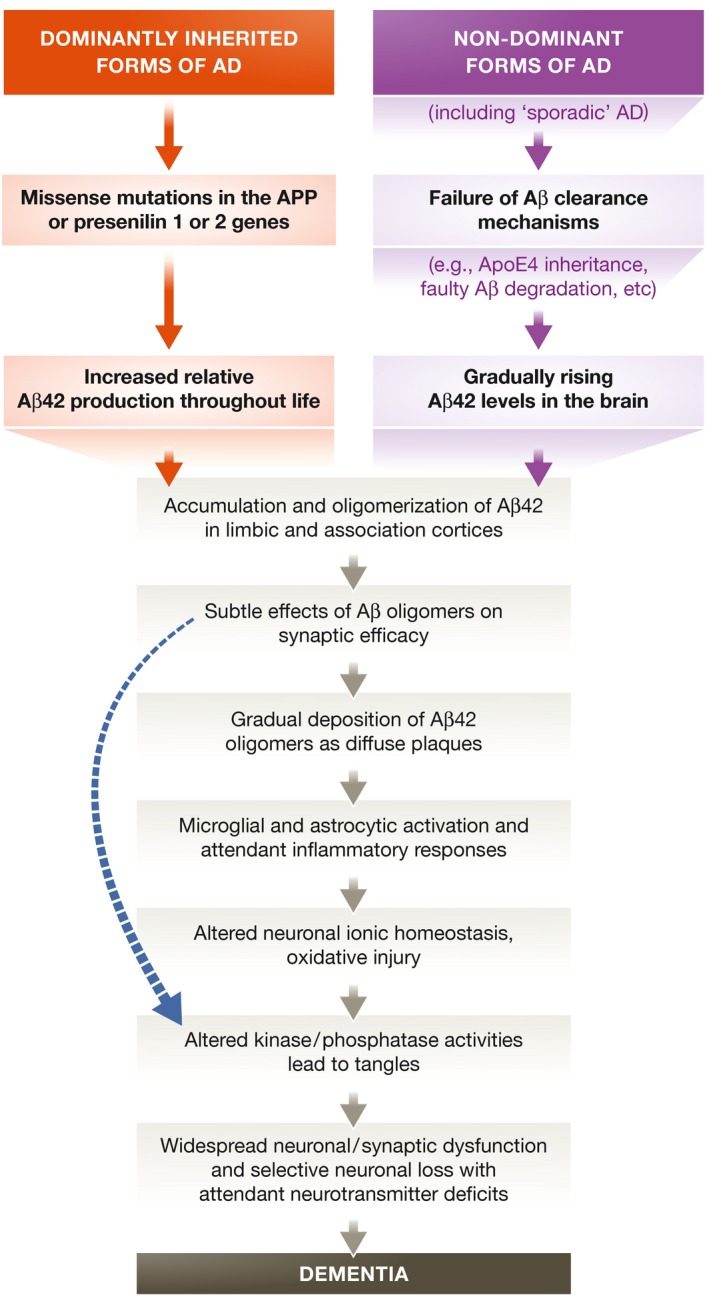
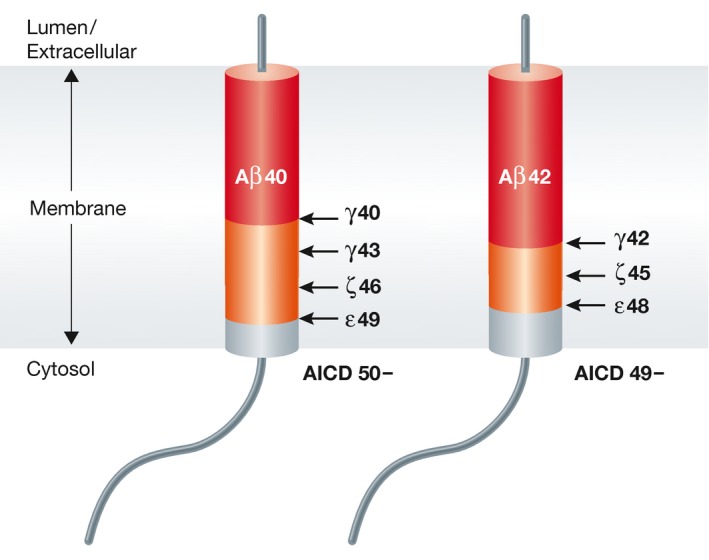
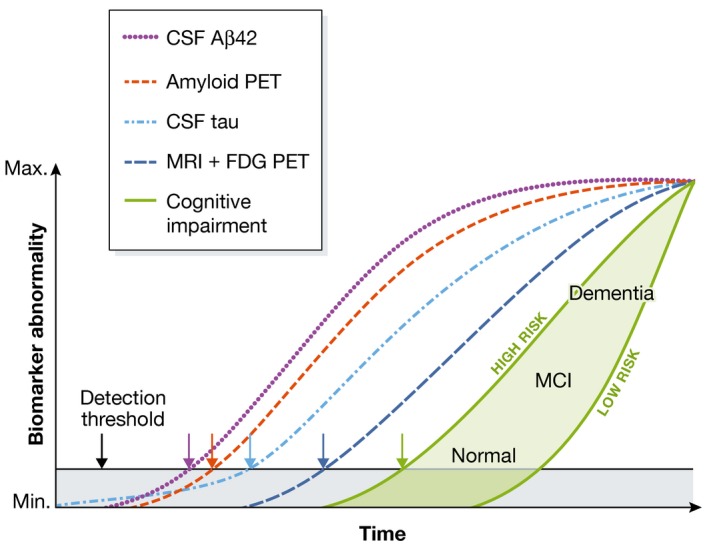
Despite continuing debate about the amyloid β-protein (or Aβ hypothesis, new lines of evidence from laboratories and clinics worldwide support the concept that an imbalance between production and clearance of Aβ42 and related Aβ peptides is a very early, often initiating factor in Alzheimer's disease (AD). Confirmation that presenilin is the catalytic site of γ-secretase has provided a linchpin: all dominant mutations causing early-onset AD occur either in the substrate (amyloid precursor protein, APP) or the protease (presenilin) of the reaction that generates Aβ. Duplication of the wild-type APP gene in Down's syndrome leads to Aβ deposits in the teens, followed by microgliosis, astrocytosis, and neurofibrillary tangles typical of AD Apolipoprotein E4, which predisposes to AD in > 40% of cases, has been found to impair Aβ clearance from the brain. Soluble oligomers of Aβ42 isolated from AD patients' brains can decrease synapse number, inhibit long-term potentiation, and enhance long-term synaptic depression in rodent hippocampus, and injecting them into healthy rats impairs memory. The human oligomers also induce hyperphosphorylation of tau at AD-relevant epitopes and cause neuritic dystrophy in cultured neurons. Crossing human APP with human tau transgenic mice enhances tau-positive neurotoxicity. In humans, new studies show that low cerebrospinal fluid (CSF) Aβ42 and amyloid-PET positivity precede other AD manifestations by many years. Most importantly, recent trials of three different Aβ antibodies (solanezumab, crenezumab, and aducanumab) have suggested a slowing of cognitive decline in post hoc analyses of mild AD subjects. Although many factors contribute to AD pathogenesis, Aβ dyshomeostasis has emerged as the most extensively validated and compelling therapeutic target.
Overview
The claims and statistics of this paper haven’t been checked yet.
Free: it reads the open-access text and checks the first 5 claims that cite a source we can check. Create a free account to check every claim.
Integrity signals
Registry
Cites
Statistics
Figures
Verification
Claims the paper makes
The claims and statistics of this paper haven’t been checked yet.
Free: it reads the open-access text and checks the first 5 claims that cite a source we can check. Create a free account to check every claim.
Claims other papers make about this one
Each is checked against this paper’s own text: does it say what the citing paper says it does?
The source backs part of the claim, not all of it — or backs it for a different population, condition or comparison.
In the citing paper
“Oxidative stress, mitochondrial dysfunction, astrocytic and microglial activation, membrane perturbation, and loss of ionic homeostasis are, at the cellular level, some of the events downstream the Aβ1-42 aggregation and accumulation (Selkoe and Hardy, 2016).”
From Exploring the Therapeutic Potential of Phytochemicals in Alzheimer’s Disease: Focus on Polyphenols and Monoterpenes (2022) · cites this paper as Selkoe and Hardy, 2016
Experimental — accuracy not yet measuredThe source backs part of the claim, not all of it — or backs it for a different population, condition or comparison.
In the citing paper
“Elevated levels of oligomers have been associated with AD, as they are found in AD brains and are considered the most toxic and pathogenic form of Aβ [4,5,6,7,18].”
From Treatment of Alzheimer’s Disease: Beyond Symptomatic Therapies (2023) · cites this paper as [4]
Experimental — accuracy not yet measuredThe source backs part of the claim, not all of it — or backs it for a different population, condition or comparison.
In the citing paper
“Synaptic dysfunction and synapse loss are key hallmarks of AD, present in the early stages of the disease before clinical symptoms appear [79,86,156].”
From Role of Oxidative Damage in Alzheimer’s Disease and Neurodegeneration: From Pathogenic Mechanisms to Biomarker Discovery (2021) · cites this paper as [79]
Experimental — accuracy not yet measuredThe source backs part of the claim, not all of it — or backs it for a different population, condition or comparison.
In the citing paper
“Moreover, the evidence from a failure of reversal of cognitive declines in amyloid-targeting drug trials supports this assumption; for example, patients with AD in whose brains Aβ plaques were virtually cleared by anti-amyloid immunotherapy did not show cognitive benefit [62].”
From Clinical trials of new drugs for Alzheimer disease (2020) · cites this paper as [62]
Experimental — accuracy not yet measuredThe source backs part of the claim, not all of it — or backs it for a different population, condition or comparison.
In the citing paper
“Early-stage AD is characterized primarily by the accumulation of Aβ plaques and subtle synaptic dysfunction, whereas late-stage AD involves extensive neurodegeneration, widespread neuroinflammation, and pronounced BBB disruption [157, 158].”
From Targeted Nanoparticles for Drug Delivery Across the Blood–Brain Barrier in Early and Late Stages of Alzheimer's Disease: A Review (2026) · cites this paper as [157]
Experimental — accuracy not yet measured
26 more claims about this paper
Create a free account to see every claim other papers make about this one.
Self-check
Percentages, sums and reported differences re-computed from the paper’s own numbers.
The self-check needs the paper’s full text.
Citations
Cites
Neuropathological stageing of Alzheimer-related changes.
Braak, H., & Braak, E. (1991) · Acta Neuropathologica · doi:10.1007/bf00308809 · Cited by 16,123 · cited 1×
“An elegant histopathological staging system created by Braak and Braak (1991) is now widely used to establish the severity of AD neuropathology.”
MethodThe Amyloid Hypothesis of Alzheimer’s Disease: Progress and Problems on the Road to Therapeutics
Hardy, J., & Selkoe, D. J. (2002) · Science · doi:10.1126/science.1072994 · Cited by 13,864
Self-citationAmyloid oligomers exacerbate tau pathology in a mouse model of tauopathy
Selenica, M.-L. B., Brownlow, M., Jimenez, J. P., Lee, D. C., Pena, G., Dickey, C. A., Gordon, M. N., & Morgan, D. (2013) · Neurodegenerative Diseases · doi:10.1159/000337230 · Cited by 10,359
Corder, E. H., Saunders, A. M., Strittmatter, W. J., Schmechel, D. E., Gaskell, P. C., Small, G. W., Roses, A. D., Haines, J. L., & Pericak-Vance, M. A. (1993) · Science · doi:10.1126/science.8346443 · Cited by 9,429 · cited 1×
“Cell biology of new AD risk genes Although the importance of ApoE4 as the major risk factor for AD was discovered in 1993 (Corder et al, 1993), it is only since the advent of genomewide association studies and, more recently, exome and genome sequencing that other risk loci for late-onset disease…”
BackgroundAlzheimer's disease: the amyloid cascade hypothesis
Hardy, J. A., & Higgins, G. A. (1992) · Science · doi:10.1126/science.1566067 · Cited by 7,484 · cited 2×
“The amyloid (or Ab) hypothesis (Beyreuther & Masters, 1991; Hardy & Allsop, 1991; Selkoe, 1991; Hardy & Higgins, 1992) has become the dominant model of AD pathogenesis and is guiding the development of potential treatments.”
BackgroundSelf-citationGlenner, G. G., & Wong, C. W. (1984) · Biochemical and Biophysical Research Communications · doi:10.1016/s0006-291x(84)80190-4 · Cited by 5,404
Imaging brain amyloid in Alzheimer's disease with Pittsburgh Compound‐B
Klunk, W. E., Engler, H., Nordberg, A., Wang, Y., Blomqvist, G., Holt, D. P., Bergström, M., Savitcheva, I., Huang, G., Estrada, S., et al. (2004) · Annals of Neurology · doi:10.1002/ana.20009 · Cited by 4,496 · cited 1×
“…fibrillar amyloid burden (but not yet soluble Ab oligomers) by PET scanning, initially with the thioflavin T derivative, Pittsburgh compound B (Klunk et al, 2004); and (iii) the ability to analyze APP metabolism in healthy and diseased humans by quantifying heavy isotope-labeled Ab peptides…”
BackgroundJack, C. R., Knopman, D. S., Jagust, W. J., Petersen, R. C., Weiner, M. W., Aisen, P. S., Shaw, L. M., Vemuri, P., Wiste, H. J., Weigand, S. D., et al. (2013) · The Lancet Neurology · doi:10.1016/s1474-4422(12)70291-0 · Cited by 4,396
Meta-Analysis of 74,046 Individuals Identifies 11 New Susceptibility Loci for Alzheimer’s Disease
(EADI), E. A. D. I., Lambert, J.-C., (GERAD), G. A. E. R. I. A. D., Alzheimer's Disease Genetic Consortium (ADGC), (CHARGE), C. F. H. A. A. R. I. G. E., Ibrahim-Verbaas, C. A., Harold, D., Naj, A. C., Sims, R., Bellenguez, C., et al. (2013) · Nature Genetics · doi:10.1038/ng.2802 · Cited by 4,336 · cited 2×
“This category includes SORL1, BIN1, and PICALM (Rogaeva et al, 2007; Lambert et al, 2013; Zhao et al, 2015).”
BackgroundSelf-citationCorrelative Memory Deficits, Aβ Elevation, and Amyloid Plaques in Transgenic Mice
Hsiao, K., Chapman, P., Nilsen, S., Eckman, C., Harigaya, Y., Younkin, S., Yang, F., & Cole, G. (1996) · Science · doi:10.1126/science.274.5284.99 · Cited by 4,210 · cited 1×
“Early APP mouse models (e.g. Games et al, 1995; Hsiao et al, 1996) suffered from reliance on high transgene expression to drive plaque deposition and from a lack of tangle cytopathology and neuronal death.”
Background
Research works printed but not linked: 3
- Cummings J, Cho W, Ward M, Friesenhahn M, Brunstein F, Honigberg L, Clayton D, Mortensen D, Ho C, Paul R (2014) paper presented at the Alzheimer's Association International Conference (AAIC), Copenhagen, Denmark, 16 July 2014
- Mann DMA, Yuonis N, Jones D, Stoddart DW (1992) The time course of pathological events in Down's Syndrome with particular reference to the involvement of microglial cells and deposits of b/A4. Neurodegeneration 1: 201– 215
- Sevigny J, Chiao P, Williams L, Miao X, O'Gorman J (2015) Randomized, double‐blind Phase 1B study of BIIB037, an anti‐amyloid beta monoclonal antibody, in patients with prodromal or mild Alzheimer's disease. Neurogener Dis 15(Suppl 1): 311
Cited by
Items 101–200 of 1,163
APOE2: protective mechanism and therapeutic implications for Alzheimer’s disease
Li, Z., Shue, F., Zhao, N., Shinohara, M., & Bu, G. (2020) · Molecular Neurodegeneration · doi:10.1186/s13024-020-00413-4 · Cited by 306
“APOE*ε2 and Aβ production An imbalance between Aβ production and clearance is considered a crucial event initiating the amyloid cascade in AD [195].”
BackgroundRegulation of beta-amyloid production in neurons by astrocyte-derived cholesterol
Wang, H., Kulas, J. A., Wang, C., Holtzman, D. M., Ferris, H. A., & Hansen, S. B. (2021) · Proceedings of the National Academy of Sciences · doi:10.1073/pnas.2102191118 · Cited by 301
Trem2 restrains the enhancement of tau accumulation and neurodegeneration by β-amyloid pathology
Lee, S.-H., Meilandt, W. J., Xie, L., Gandham, V. D., Ngu, H., Barck, K. H., Rezzonico, M. G., Imperio, J., Lalehzadeh, G., Huntley, M. A., et al. (2021) · Neuron · doi:10.1016/j.neuron.2021.02.010 · Cited by 300
van Oostveen, W. M., & de Lange, E. C. M. (2021) · International Journal of Molecular Sciences · doi:10.3390/ijms22042110 · Cited by 297
“All other disease characteristics, such as the formation of NFTs out of hyperphosphorylated tau, and neurodegeneration, are seen a result of this accumulation [12,83,88].”
BackgroundGanguly, G., Chakrabarti, S., Chatterjee, U., & Saso, L. (2017) · Drug Design, Development and Therapy · doi:10.2147/dddt.s130514 · Cited by 294
Challenges and hopes for Alzheimer’s disease
Tatulian, S. A. (2022) · Drug Discovery Today · doi:10.1016/j.drudis.2022.01.016 · Cited by 291
A walk through tau therapeutic strategies
Jadhav, S., Avila, J., Schöll, M., Kovacs, G. G., Kövari, E., Skrabana, R., Evans, L. D., Kontsekova, E., Malawska, B., de Silva, R., et al. (2019) · Acta Neuropathologica Communications · doi:10.1186/s40478-019-0664-z · Cited by 290
Chen, X.-Q., & Mobley, W. C. (2019) · Frontiers in Neuroscience · doi:10.3389/fnins.2019.00659 · Cited by 289
The amyloid cascade hypothesis: an updated critical review
Kepp, K. P., Robakis, N. K., Høilund-Carlsen, P. F., Sensi, S. L., & Vissel, B. (2023) · Brain · doi:10.1093/brain/awad159 · Cited by 284
Pan, R.-Y., Ma, J., Kong, X.-X., Wang, X.-F., Li, S.-S., Qi, X.-L., Yan, Y.-H., Cheng, J., Liu, Q., Jin, W., et al. (2019) · Science Advances · doi:10.1126/sciadv.aau6328 · Cited by 288
Exosomes in the Pathology of Neurodegenerative Diseases
Howitt, J., & Hill, A. F. (2016) · Journal of Biological Chemistry · doi:10.1074/jbc.r116.757955 · Cited by 288
Restoring Wnt/β-catenin signaling is a promising therapeutic strategy for Alzheimer’s disease
Jia, L., Piña-Crespo, J., & Li, Y. (2019) · Molecular Brain · doi:10.1186/s13041-019-0525-5 · Cited by 288
“AD-associated APP mutants suppress Wnt/β-catenin signaling in AD brain APP mutations can cause early-onset FAD [115, 116].”
BackgroundInfluentialAlzheimer’s Disease: An Update and Insights Into Pathophysiology
Abubakar, M. B., Sanusi, K. O., Ugusman, A., Mohamed, W., Kamal, H., Ibrahim, N. H., Khoo, C. S., & Kumar, J. (2022) · Frontiers in Aging Neuroscience · doi:10.3389/fnagi.2022.742408 · Cited by 279
The good, the bad, and the opportunities of the complement system in neurodegenerative disease
Schartz, N. D., & Tenner, A. J. (2020) · Journal of Neuroinflammation · doi:10.1186/s12974-020-02024-8 · Cited by 286
VDAC1, mitochondrial dysfunction, and Alzheimer’s disease
Shoshan-Barmatz, V., Nahon-Crystal, E., Shteinfer-Kuzmine, A., & Gupta, R. (2018) · Pharmacological Research · doi:10.1016/j.phrs.2018.03.010 · Cited by 286
Rutin prevents tau pathology and neuroinflammation in a mouse model of Alzheimer’s disease
Sun, X.-Y., Li, L.-J., Dong, Q.-X., Zhu, J., Huang, Y.-R., Hou, S.-J., Yu, X.-L., & Liu, R.-T. (2021) · Journal of Neuroinflammation · doi:10.1186/s12974-021-02182-3 · Cited by 281
“For more than three decades, the amyloid hypothesis proposes that Aβ is the driving force of AD, which triggers a deleterious cascade involving tau pathology and neurodegeneration [31].”
BackgroundMa, Q., Zhao, Z., Sagare, A. P., Wu, Y., Wang, M., Owens, N. C., Verghese, P. B., Herz, J., Holtzman, D. M., & Zlokovic, B. V. (2018) · Molecular Neurodegeneration · doi:10.1186/s13024-018-0286-0 · Cited by 281
Cellular Senescence in Neurodegenerative Diseases
Martínez-Cué, C., & Rueda, N. (2020) · Frontiers in Cellular Neuroscience · doi:10.3389/fncel.2020.00016 · Cited by 281
Alqahtani, T., Deore, S. L., Kide, A. A., Shende, B. A., Sharma, R., Dadarao Chakole, R., Nemade, L. S., Kishor Kale, N., Borah, S., Shrikant Deokar, S., et al. (2023) · Mitochondrion · doi:10.1016/j.mito.2023.05.007 · Cited by 274
Microglia facilitate loss of perineuronal nets in the Alzheimer's disease brain
Crapser, J. D., Spangenberg, E. E., Barahona, R. A., Arreola, M. A., Hohsfield, L. A., & Green, K. N. (2020) · EBioMedicine · doi:10.1016/j.ebiom.2020.102919 · Cited by 280
Organophosphorus Compounds at 80: Some Old and New Issues
Costa, L. G. (2018) · Toxicological Sciences · doi:10.1093/toxsci/kfx266 · Cited by 278
“Its most common symptom is memory loss for recent events, with diffuse cortical and hippocampal atrophy, and accumulation of abnormally folded amyloid beta and of tau proteins in amyloid plaques and neuronal tangles (Khan and Bloom, 2016; Selkoe and Hardy, 2016).”
BackgroundClearance of cerebral Aβ in Alzheimer’s disease: reassessing the role of microglia and monocytes
Zuroff, L., Daley, D., Black, K. L., & Koronyo-Hamaoui, M. (2017) · Cellular and Molecular Life Sciences · doi:10.1007/s00018-017-2463-7 · Cited by 275
“Growing evidence indicates that Aβ exerts its neurotoxic effects in both an alloform- and conformation-dependent manner [7].”
BackgroundTau-based therapies in neurodegeneration: opportunities and challenges
Li, C., & Götz, J. (2017) · Nature Reviews Drug Discovery · doi:10.1038/nrd.2017.155 · Cited by 272
Suárez-Calvet, M., Araque Caballero, M. Á., Kleinberger, G., Bateman, R. J., Fagan, A. M., Morris, J. C., Levin, J., Danek, A., Ewers, M., Haass, C., et al. (2016) · Science Translational Medicine · doi:10.1126/scitranslmed.aag1767 · Cited by 272
“This is consistent with the amyloid cascade hypothesis, which states that amyloid is the driving force of AD pathogenesis (5, 49).”
Shaping the Nrf2-ARE-related pathways in Alzheimer’s and Parkinson’s diseases
Fão, L., Mota, S. I., & Rego, A. C. (2019) · Ageing Research Reviews · doi:10.1016/j.arr.2019.100942 · Cited by 270
Mitochondrial Calcium: Effects of Its Imbalance in Disease
Matuz-Mares, D., González-Andrade, M., Araiza-Villanueva, M. G., Vilchis-Landeros, M. M., & Vázquez-Meza, H. (2022) · Antioxidants · doi:10.3390/antiox11050801 · Cited by 266
T cell responses in the central nervous system
Korn, T., & Kallies, A. (2017) · Nature Reviews Immunology · doi:10.1038/nri.2016.144 · Cited by 268
De Chiara, G., Piacentini, R., Fabiani, M., Mastrodonato, A., Marcocci, M. E., Limongi, D., Napoletani, G., Protto, V., Coluccio, P., Celestino, I., et al. (2019) · PLOS Pathogens · doi:10.1371/journal.ppat.1007617 · Cited by 266
“Their key role in AD, especially as oligomers, has been fully investigated [52, 53].”
Immunotherapy for Alzheimer’s disease: targeting β-amyloid and beyond
Song, C., Shi, J., Zhang, P., Zhang, Y., Xu, J., Zhao, L., Zhang, R., Wang, H., & Chen, H. (2022) · Translational Neurodegeneration · doi:10.1186/s40035-022-00292-3 · Cited by 266
Li, S., & Selkoe, D. J. (2020) · Journal of Neurochemistry · doi:10.1111/jnc.15007 · Cited by 263
“Growing but not definitive evidence suggests that AD is precipitated in considerable part by the progressive cerebral accumulation of a range of oligomeric assemblies of amyloid β-protein (Aβ) (Selkoe & Hardy, 2016).”
Self-citationA Perspective on Multi-target Drugs for Alzheimer’s Disease
Benek, O., Korabecny, J., & Soukup, O. (2020) · Trends in Pharmacological Sciences · doi:10.1016/j.tips.2020.04.008 · Cited by 260
Proteomic landscape of Alzheimer’s Disease: novel insights into pathogenesis and biomarker discovery
Bai, B., Vanderwall, D., Li, Y., Wang, X., Poudel, S., Wang, H., Dey, K. K., Chen, P.-C., Yang, K., & Peng, J. (2021) · Molecular Neurodegeneration · doi:10.1186/s13024-021-00474-z · Cited by 257
Ciudad, S., Puig, E., Botzanowski, T., Meigooni, M., Arango, A. S., Do, J., Mayzel, M., Bayoumi, M., Chaignepain, S., Maglia, G., et al. (2020) · Nature Communications · doi:10.1038/s41467-020-16566-1 · Cited by 255
Lymphatic drainage system of the brain: A novel target for intervention of neurological diseases
Sun, B.-L., Wang, L.-H., Yang, T., Sun, J.-Y., Mao, L.-L., Yang, M.-F., Yuan, H., Colvin, R. A., & Yang, X.-Y. (2018) · Progress in Neurobiology · doi:10.1016/j.pneurobio.2017.08.007 · Cited by 255
Presenilin-1 mutations and Alzheimer’s disease.
Kelleher, R. J., & Shen, J. (2017) · Proceedings of the National Academy of Sciences · doi:10.1073/pnas.1619574114 · Cited by 255
Mitochondria and Calcium in Alzheimer’s Disease: From Cell Signaling to Neuronal Cell Death
Calvo-Rodriguez, M., & Bacskai, B. J. (2021) · Trends in Neurosciences · doi:10.1016/j.tins.2020.10.004 · Cited by 254
Unger, M. S., Li, E., Scharnagl, L., Poupardin, R., Altendorfer, B., Mrowetz, H., Hutter-Paier, B., Weiger, T. M., Heneka, M. T., Attems, J., et al. (2020) · Brain, Behavior, and Immunity · doi:10.1016/j.bbi.2020.05.070 · Cited by 248
Saito, T., Mihira, N., Matsuba, Y., Sasaguri, H., Hashimoto, S., Narasimhan, S., Zhang, B., Murayama, S., Higuchi, M., Lee, V. M. Y., et al. (2019) · Journal of Biological Chemistry · doi:10.1074/jbc.ra119.009487 · Cited by 248
Batista, A. F., Forny‐Germano, L., Clarke, J. R., Lyra e Silva, N. M., Brito‐Moreira, J., Boehnke, S. E., Winterborn, A., Coe, B. C., Lablans, A., Vital, J. F., et al. (2018) · The Journal of Pathology · doi:10.1002/path.5056 · Cited by 246
“AβOs are small, diffusible aggregates of the Aβ peptide that accumulates in AD brains [43,85] and have been shown to cause defective neuronal insulin signaling [5,7,45].”
BackgroundNrf2: a dark horse in Alzheimer's disease treatment
Osama, A., Zhang, J., Yao, J., Yao, X., & Fang, J. (2020) · Ageing Research Reviews · doi:10.1016/j.arr.2020.101206 · Cited by 242
Memantine for the Treatment of Dementia: A Review on its Current and Future Applications
Folch, J., Busquets, O., Ettcheto, M., Sánchez-López, E., Castro-Torres, R. D., Verdaguer, E., Garcia, M. L., Olloquequi, J., Casadesús, G., Beas-Zarate, C., et al. (2018) · Journal of Alzheimer s Disease · doi:10.3233/jad-170672 · Cited by 245
Amyloidosis in Alzheimer’s Disease: Pathogeny, Etiology, and Related Therapeutic Directions
Ma, C., Hong, F., & Yang, S. (2022) · Molecules · doi:10.3390/molecules27041210 · Cited by 243
Avgerinos, K. I., Ferrucci, L., & Kapogiannis, D. (2021) · Ageing Research Reviews · doi:10.1016/j.arr.2021.101339 · Cited by 240
Angiotensin-converting enzyme in innate and adaptive immunity
Bernstein, K. E., Khan, Z., Giani, J. F., Cao, D.-Y., Bernstein, E. A., & Shen, X. Z. (2018) · Nature Reviews Nephrology · doi:10.1038/nrneph.2018.15 · Cited by 241
Andrade, S., Ramalho, M. J., Loureiro, J. A., & Pereira, M. D. C. (2019) · International Journal of Molecular Sciences · doi:10.3390/ijms20092313 · Cited by 240
“First, tau monomers aggregate and form oligomers that aggregate into a β-sheet conformation, forming NFTs [10].”
BackgroundInfluentialNLRP3 Inflammasome Inhibitor Ameliorates Amyloid Pathology in a Mouse Model of Alzheimer’s Disease
Yin, J., Zhao, F., Chojnacki, J. E., Fulp, J., Klein, W. L., Zhang, S., & Zhu, X. (2018) · Molecular Neurobiology · doi:10.1007/s12035-017-0467-9 · Cited by 232
“However, the mechanisms that lead to neuronal loss and pathogenesis of AD are not completely understood [2].”
Alzheimer’s Disease: From Firing Instability to Homeostasis Network Collapse
Frere, S., & Slutsky, I. (2018) · Neuron · doi:10.1016/j.neuron.2017.11.028 · Cited by 237
Neuroprotective Herbs for the Management of Alzheimer’s Disease
Gregory, J., Vengalasetti, Y. V., Bredesen, D. E., & Rao, R. V. (2021) · Biomolecules · doi:10.3390/biom11040543 · Cited by 236
Mitrea, L., Nemeş, S.-A., Szabo, K., Teleky, B.-E., & Vodnar, D.-C. (2022) · Frontiers in Medicine · doi:10.3389/fmed.2022.813204 · Cited by 237
“Intracellular accumulation of neurofibrillary tangles composed of hyper-phosphorylated τprotein and extracellular plaques that consist of amyloid-β (Aβ) peptide defines the pathology of AD (196).”
BackgroundNakajima, A., & Ohizumi, Y. (2019) · International Journal of Molecular Sciences · doi:10.3390/ijms20143380 · Cited by 235
Neuronal cell death mechanisms in Alzheimer’s disease: An insight
Goel, P., Chakrabarti, S., Goel, K., Bhutani, K., Chopra, T., & Bali, S. (2022) · Frontiers in Molecular Neuroscience · doi:10.3389/fnmol.2022.937133 · Cited by 234
“(De Strooper and Karran, 2016) Recently the “Aβ oligomer hypothesis” has supplanted this “amyloid cascade hypothesis” and provides a wealth of insights on the fact that it is AβOs and not amyloid plaques that play a central role in AD pathogenesis (Selkoe and Hardy, 2016).”
BackgroundDewanjee, S., Chakraborty, P., Bhattacharya, H., Chacko, L., Singh, B., Chaudhary, A., Javvaji, K., Pradhan, S. R., Vallamkondu, J., Dey, A., et al. (2022) · Free Radical Biology and Medicine · doi:10.1016/j.freeradbiomed.2022.09.032 · Cited by 229
Mancuso, C., & Santangelo, R. (2018) · Pharmacological Research · doi:10.1016/j.phrs.2017.12.009 · Cited by 232
“of A peptides might be an early and initiating pathological feature responsible for the synaptic dysfunction and cognitive decline in AD [14].”
BackgroundMarzi, S. J., Leung, S. K., Ribarska, T., Hannon, E., Smith, A. R., Pishva, E., Poschmann, J., Moore, K., Troakes, C., Al-Sarraj, S., et al. (2018) · Nature Neuroscience · doi:10.1038/s41593-018-0253-7 · Cited by 232
Apolipoprotein E and Alzheimer’s disease: Findings, hypotheses, and potential mechanisms
Koutsodendris, N., Nelson, M. R., Rao, A., & Huang, Y. (2022) · Annual Review of Pathology Mechanisms of Disease · doi:10.1146/annurev-pathmechdis-030421-112756 · Cited by 231
(ADNI), A. D. N. I., Deming, Y., The Alzheimer Disease Genetic Consortium (ADGC), Li, Z., Kapoor, M., Harari, O., Del-Aguila, J. L., Black, K., Carrell, D., Cai, Y., et al. (2017) · Acta Neuropathologica · doi:10.1007/s00401-017-1685-y · Cited by 231
“Numerous studies have explored how APOE influences amyloid pathology in AD [67].”
BackgroundAlzheimer’s Disease: Key Insights from Two Decades of Clinical Trial Failures
Kim, C. K., Lee, Y. R., Ong, L., Gold, M., Kalali, A., & Sarkar, J. (2022) · Journal of Alzheimer s Disease · doi:10.3233/jad-215699 · Cited by 241
“of one hypothesis against another” [5].”
Imaging biomarkers in neurodegeneration: current and future practices
Young, P. N. E., Estarellas, M., Coomans, E., Srikrishna, M., Beaumont, H., Maass, A., Venkataraman, A. V., Lissaman, R., Jiménez, D., Betts, M. J., et al. (2020) · Alzheimer's Research & Therapy · doi:10.1186/s13195-020-00612-7 · Cited by 225
What Happens with the Circuit in Alzheimer's Disease in Mice and Humans?
Zott, B., Busche, M. A., Sperling, R. A., & Konnerth, A. (2018) · Annual Review of Neuroscience · doi:10.1146/annurev-neuro-080317-061725 · Cited by 221
“Aβ peptides are derived from the neuronal amyloid precursor protein (APP) following enzymatic cleavage by β- and γ-secretases (Hardy & Selkoe 2002, Selkoe & Hardy 2016).”
BackgroundOchalek, A., Mihalik, B., Avci, H. X., Chandrasekaran, A., Téglási, A., Bock, I., Giudice, M. L., Táncos, Z., Molnár, K., László, L., et al. (2017) · Alzheimer's Research & Therapy · doi:10.1186/s13195-017-0317-z · Cited by 225
“demonstrated in rodent models and neuronal cell lines (reviewed in [65, 66]).”
BackgroundHabchi, J., Chia, S., Limbocker, R., Mannini, B., Ahn, M., Perni, M., Hansson, O., Arosio, P., Kumita, J. R., Challa, P. K., et al. (2017) · Proceedings of the National Academy of Sciences · doi:10.1073/pnas.1615613114 · Cited by 223
Rösler, T. W., Tayaranian Marvian, A., Brendel, M., Nykänen, N.-P., Höllerhage, M., Schwarz, S. C., Hopfner, F., Koeglsperger, T., Respondek, G., Schweyer, K., et al. (2019) · Progress in Neurobiology · doi:10.1016/j.pneurobio.2019.101644 · Cited by 224
Dietary Regulation of Oxidative Stress in Chronic Metabolic Diseases
Jiang, S., Liu, H., & Li, C. (2021) · Foods · doi:10.3390/foods10081854 · Cited by 221
“Neuronal functions are impaired, which further leads to neuroinflammation and neuronal loss [37,38].”
BackgroundAzman, K. F., & Zakaria, R. (2022) · International Journal of Molecular Sciences · doi:10.3390/ijms23126827 · Cited by 221
Untangling Genetic Risk for Alzheimer’s Disease
Pimenova, A. A., Raj, T., & Goate, A. M. (2018) · Biological Psychiatry · doi:10.1016/j.biopsych.2017.05.014 · Cited by 223
“underlies the pathological and behavioral changes o bserved in AD patients (10).”
BackgroundSomatic genomic changes in single Alzheimer’s disease neurons
Miller, M. B., Huang, A. Y., Kim, J., Zhou, Z., Kirkham, S. L., Maury, E. A., Ziegenfuss, J. S., Reed, H. C., Neil, J. E., Rento, L., et al. (2022) · Nature · doi:10.1038/s41586-022-04640-1 · Cited by 223
“The pattern of genomic SNV accumulation in AD neurons appears to be distinct from an accentuation of normal ageing, as suggested by (1) the abundance of signature C, which is present but limited in the brain of neurotypical control individuals; and (2) signature-specific transcriptional influences.”
BackgroundJiwaji, Z., Tiwari, S. S., Avilés-Reyes, R. X., Hooley, M., Hampton, D., Torvell, M., Johnson, D. A., McQueen, J., Baxter, P., Sabari-Sankar, K., et al. (2022) · Nature Communications · doi:10.1038/s41467-021-27702-w · Cited by 223
Michaels, T. C. T., Šarić, A., Habchi, J., Chia, S., Meisl, G., Vendruscolo, M., Dobson, C. M., & Knowles, T. P. J. (2018) · Annual Review of Physical Chemistry · doi:10.1146/annurev-physchem-050317-021322 · Cited by 219
Emerging Microglia Biology Defines Novel Therapeutic Approaches for Alzheimer’s Disease
Lewcock, J. W., Schlepckow, K., Di Paolo, G., Tahirovic, S., Monroe, K. M., & Haass, C. (2020) · Neuron · doi:10.1016/j.neuron.2020.09.029 · Cited by 221
Tau Protein Interaction Partners and Their Roles in Alzheimer’s Disease and Other Tauopathies
Sinsky, J., Pichlerova, K., & Hanes, J. (2021) · International Journal of Molecular Sciences · doi:10.3390/ijms22179207 · Cited by 220
“Besides tau pathology, the next widely accepted model of AD progression is the Aβ hypothesis, which is considered to be upstream of tau pathology by many researchers [630,631].”
BackgroundMoving fluid biomarkers for Alzheimer’s disease from research tools to routine clinical diagnostics
Zetterberg, H., & Blennow, K. (2021) · Molecular Neurodegeneration · doi:10.1186/s13024-021-00430-x · Cited by 219
“Fluid biomarkers for Aβ pathology Extracellular deposition of Aβ into plaques is the key pathological feature of AD, and has been proposed as a major pathogenic event in the disease [8].”
BackgroundMulti-target design strategies for the improved treatment of Alzheimer's disease
Zhang, P., Xu, S., Zhu, Z., & Xu, J. (2019) · European Journal of Medicinal Chemistry · doi:10.1016/j.ejmech.2019.05.020 · Cited by 212
“Despite continuing arguments for the amyloid hypothesis [18], the growing consensus is that anti-amyloid drugs will be most effective in the early AD process [21].”
BackgroundMicroglia contribute to the propagation of Aβ into unaffected brain tissue
d’Errico, P., Ziegler-Waldkirch, S., Aires, V., Hoffmann, P., Mezö, C., Erny, D., Monasor, L. S., Liebscher, S., Ravi, V. M., Joseph, K., et al. (2022) · Nature Neuroscience · doi:10.1038/s41593-021-00951-0 · Cited by 214
Peripheral immune system in aging and Alzheimer’s disease
Cao, W., & Zheng, H. (2018) · Molecular Neurodegeneration · doi:10.1186/s13024-018-0284-2 · Cited by 214
Goedert, M., & Spillantini, M. G. (2017) · Molecular Brain · doi:10.1186/s13041-017-0298-7 · Cited by 213
“From genetic data, it is known that a dysfunction of the amyloid precursor protein (APP) initiates the disease process in familial AD [4].”
BackgroundRecent progress of drug nanoformulations targeting to brain
Khan, A. R., Yang, X., Fu, M., & Zhai, G. (2018) · Journal of Controlled Release · doi:10.1016/j.jconrel.2018.10.004 · Cited by 213
Mouse Models of Alzheimer’s Disease
Yokoyama, M., Kobayashi, H., Tatsumi, L., & Tomita, T. (2022) · Frontiers in Molecular Neuroscience · doi:10.3389/fnmol.2022.912995 · Cited by 213
“Of note, this variant reduced β-secretase cleavage and total Aβ production, supporting the notion that brain Aβ deposition is a central mechanism in the pathogenesis of AD (Hardy and Selkoe, 2002; Selkoe and Hardy, 2016; Karran and De Strooper, 2022).”
BackgroundKlein, G., Delmar, P., Voyle, N., Rehal, S., Hofmann, C., Abi-Saab, D., Andjelkovic, M., Ristic, S., Wang, G., Bateman, R., et al. (2019) · Alzheimer's Research & Therapy · doi:10.1186/s13195-019-0559-z · Cited by 212
Microglia in Brain Development, Homeostasis, and Neurodegeneration
Bohlen, C. J., Friedman, B. A., Dejanovic, B., & Sheng, M. (2019) · Annual Review of Genetics · doi:10.1146/annurev-genet-112618-043515 · Cited by 212
Morris, G. P., Clark, I. A., & Vissel, B. (2018) · Acta Neuropathologica · doi:10.1007/s00401-018-1918-8 · Cited by 212
“A widely held idea has been that anti-Aβ clinical trials have failed simply because treatments were commenced too late in the disease process [244].”
BackgroundGao, X.-L., Sui, Y., Liu, S., & Sun, Y.-P. (2019) · Neural Regeneration Research · doi:10.4103/1673-5374.255995 · Cited by 211
“…2015 31.5408 2017 2019 ▂▂▃▃▃ SCHELTENS P, LANCET (Scheltens et al., 2016) 2016 50.9821 2017 2019 ▂▂▃▃▃ CUMMINGS JL, ALZHEIMERS RES THER (Cummings et al., 2014) 2014 28.8266 2017 2019 ▂▂▃▃▃ SELKOE DJ, EMBO MOL MED (Selkoe and Hardy, 2016) 2016 87.2972 2017 2019 ▂▂▃▃▃ SEVIGNY J, NATURE (Sevigny et…”
BackgroundInfluentialSomatic APP gene recombination in Alzheimer’s disease and normal neurons
Lee, M.-H., Siddoway, B., Kaeser, G. E., Segota, I., Rivera, R., Romanow, W. J., Liu, C. S., Park, C., Kennedy, G., Long, T., et al. (2018) · Nature · doi:10.1038/s41586-018-0718-6 · Cited by 210
Wang, H., Dey, K. K., Chen, P.-C., Li, Y., Niu, M., Cho, J.-H., Wang, X., Bai, B., Jiao, Y., Chepyala, S. R., et al. (2020) · Molecular Neurodegeneration · doi:10.1186/s13024-020-00384-6 · Cited by 243
Zhang, W., Xu, C., Sun, J., Shen, H.-M., Wang, J., & Yang, C. (2022) · Acta Pharmaceutica Sinica B · doi:10.1016/j.apsb.2022.01.008 · Cited by 205
A Close Look at BACE1 Inhibitors for Alzheimer’s Disease Treatment
Das, B., & Yan, R. (2019) · CNS Drugs · doi:10.1007/s40263-019-00613-7 · Cited by 201
Li, Y., Zhang, J., Wan, J., Liu, A., & Sun, J. (2020) · Biomedicine & Pharmacotherapy · doi:10.1016/j.biopha.2020.110887 · Cited by 197
Fang, J., Zhang, P., Zhou, Y., Chiang, C.-W., Tan, J., Hou, Y., Stauffer, S., Li, L., Pieper, A. A., Cummings, J., et al. (2021) · Nature Aging · doi:10.1038/s43587-021-00138-z · Cited by 206
Bharadwaj, P., Wijesekara, N., Liyanapathirana, M., Newsholme, P., Ittner, L., Fraser, P., & Verdile, G. (2017) · Journal of Alzheimer's Disease · doi:10.3233/jad-161192 · Cited by 202
“The major component of amyloid plaques, the amyloid- protein (A ), plays a key role in AD pathogenesis that results in synaptic loss and cognitive dysfunction (reviewed in [10]) and is thought to accumulate early in the disease process [11].”
Cellular communities reveal trajectories of brain ageing and Alzheimer’s disease
Green, G. S., Fujita, M., Yang, H.-S., Taga, M., Cain, A., McCabe, C., Comandante-Lou, N., White, C. C., Schmidtner, A. K., Zeng, L., et al. (2024) · Nature · doi:10.1038/s41586-024-07871-6 · Cited by 204
Nicoll, J. A. R., Buckland, G. R., Harrison, C. H., Page, A., Harris, S., Love, S., Neal, J. W., Holmes, C., & Boche, D. (2019) · Brain · doi:10.1093/brain/awz142 · Cited by 202
“The amyloid cascade hypothesis states that amyloid-b abnormalities play a key initiating role in Alzheimer’s disease pathophysiology, making amyloid-b a target for the treatment or prevention of the disease (Selkoe and Hardy, 2016).”
BackgroundInfluentialGABAergic Inhibitory Interneuron Deficits in Alzheimer’s Disease: Implications for Treatment
Xu, Y., Zhao, M., Han, Y., & Zhang, H. (2020) · Frontiers in Neuroscience · doi:10.3389/fnins.2020.00660 · Cited by 203
“A novel AppNL−F/NL−F knock-in AD model mouse shows age-dependent accumulation of Aβ, neuroinflammation, and neurodegeneration similar to AD patients (Wang et al., 2017c; Shah et al., 2018).”
ResultKinetic fingerprints differentiate the mechanisms of action of anti-Aβ antibodies
Linse, S., Scheidt, T., Bernfur, K., Vendruscolo, M., Dobson, C. M., Cohen, S. I. A., Sileikis, E., Lundqvist, M., Qian, F., O’Malley, T., et al. (2020) · Nature Structural & Molecular Biology · doi:10.1038/s41594-020-0505-6 · Cited by 201
AL amyloidosis: from molecular mechanisms to targeted therapies
Merlini, G. (2017) · Hematology · doi:10.1182/asheducation-2017.1.1 · Cited by 200
Relationship Between Amyloid-β Deposition and Blood–Brain Barrier Dysfunction in Alzheimer’s Disease
Wang, D., Chen, F., Han, Z., Yin, Z., Ge, X., & Lei, P. (2021) · Frontiers in Cellular Neuroscience · doi:10.3389/fncel.2021.695479 · Cited by 197
An Overview of the Nrf2/ARE Pathway and Its Role in Neurodegenerative Diseases
Zgorzynska, E., Dziedzic, B., & Walczewska, A. (2021) · International Journal of Molecular Sciences · doi:10.3390/ijms22179592 · Cited by 198
“To date, views on the amyloid or tau pathologies in AD compete with each other (arguments for “the amyloid hypothesis”, see [98], for “tau axis hypothesis”, see [99]).”
BackgroundAge-Associated Changes in the Immune System and Blood–Brain Barrier Functions
Erickson, M. A., & Banks, W. A. (2019) · International Journal of Molecular Sciences · doi:10.3390/ijms20071632 · Cited by 198
“Amyloid beta transport: Accumulation and deposition of the amyloid beta (Aβ) protein in the brain is a pathological hallmark of AD and contributes to neurodegeneration [109].”
BackgroundRamakrishna, K., Nalla, L. V., Naresh, D., Venkateswarlu, K., Viswanadh, M. K., Nalluri, B. N., Chakravarthy, G., Duguluri, S., Singh, P., Rai, S. N., et al. (2023) · Diseases · doi:10.3390/diseases11030089 · Cited by 192
Why Is Research on Amyloid-β Failing to Give New Drugs for Alzheimer’s Disease?
Doig, A. J., del Castillo-Frias, M. P., Berthoumieu, O., Tarus, B., Nasica-Labouze, J., Sterpone, F., Nguyen, P. H., Hooper, N. M., Faller, P., & Derreumaux, P. (2017) · ACS Chemical Neuroscience · doi:10.1021/acschemneuro.7b00188 · Cited by 198
Challenges for Alzheimer's Disease Therapy: Insights from Novel Mechanisms Beyond Memory Defects
Frozza, R. L., Lourenco, M. V., & De Felice, F. G. (2018) · Frontiers in Neuroscience · doi:10.3389/fnins.2018.00037 · Cited by 198
“The amyloid cascade hypothesis suggests that brain accumulation of the amyloid-β peptide (Aβ), produced by sequential cleavage of the amyloid precursor protein (APP) by the β- and γ-secretase enzymes, is a central event in AD (Karran et al., 2011; Selkoe and Hardy, 2016).”
BackgroundProteostasis Failure in Neurodegenerative Diseases: Focus on Oxidative Stress
Höhn, A., Tramutola, A., & Cascella, R. (2020) · Oxidative Medicine and Cellular Longevity · doi:10.1155/2020/5497046 · Cited by 192
Metadata
- Authors
- Selkoe, D. J., & Hardy, J.
- Affiliations
- Brigham and Women's Hospital (US)
- UCL Queen Square Institute of Neurology (GB)
- Corresponding author
- Hardy, John
- Venue
- EMBO Molecular Medicine
- Published
- 2016-03-29
- Volume
- 8
- Issue
- 6
- Pages
- 595-608
- ISSN
- 1757-4676 (ISSN-L)
- 1757-4684
- PMC
- PMC4888851
- OpenAlex
- W2329336071
- Cited by
- 6,164
- References
- 137
- Citations by year
- 2026: 553 · 2025: 637 · 2024: 656 · 2023: 658 · 2022: 679 · 2021: 734 · 2020: 728 · 2019: 533 · 2018: 500 · 2017: 388 · 2016: 92
- FWCI
- 59.19
- Type
- journal article
- Language
- en
- Open access
- gold
- doi.org
- Licence
- other-oa
- creativecommons.org/licenses/by/4.0/ (tdm)
- creativecommons.org/licenses/by/4.0/ (vor)
- Locations
- EMBO Molecular Medicine (publishedVersion, other-oa)
- PubMed Central (publishedVersion, cc-by)
- PubMed (publishedVersion)
- Digital Access to Scholarship at Harvard (DASH) (Harvard University) (submittedVersion, cc-by)
- DOAJ (DOAJ: Directory of Open Access Journals) (submittedVersion)
- Funders
- National Institute on Aging (AG06173, AG015379)
- MRC
- ARUK
- Wellcome Trust
- Topics
- Life Sciences › Neuroscience › Cellular and Molecular Neuroscience › Alzheimer's disease research and treatments
- Health Sciences › Medicine › Psychiatry and Mental health › Dementia and Cognitive Impairment Research
- Life Sciences › Neuroscience › Neurology › Neuroinflammation and Neurodegeneration Mechanisms
- Keywords
- Alzheimer's disease, amyloid hypothesis, amyloid-beta, amyloid-beta 42, amyloid precursor protein, presenilin, gamma-secretase, Down syndrome, APOE ε4, amyloid-beta oligomers, tau hyperphosphorylation, amyloid PET, cerebrospinal fluid biomarkers, anti-amyloid antibodies, solanezumab, crenezumab, aducanumab, amyloid clearance, neurofibrillary tangles, synaptic dysfunction
- MeSH terms
- Alzheimer Disease, Animals, Brain, Humans, Mice, Transgenic, Amyloid beta-Peptides, Amyloid beta-Protein Precursor, Rats, Presenilins
About these checks
Registry, retraction, Cites and statistics results are computed, not judged, with one exception: a printed reference that no index lists is read once by a model before it counts as a citation error. Claims are extracted by a model and kept only when their quote appears verbatim in the text; each cited source is then checked, with a model’s help, for whether it says what the claim relies on. Those verdicts can be wrong — read the claim’s quote and the cited source before relying on one.
Statistics and arithmetic are recomputed, not judged.
Confidence bands are shown only for fields calibrated on our annotated test set. None is calibrated yet, so no band is shown.
What counts as a claim ›How we measure confidence ›How we check this ›
Are you an author, or do you see a problem with this page? Request a review
Data sources
Bibliographic data: Semantic Scholar, OpenAlex, Crossref.
Contains information from the Semantic Scholar Academic Graph Datasets, made available under the ODC Attribution License (ODC-BY 1.0).
Semantic Scholar’s data is described in: Kinney, R., et al. (2023). The Semantic Scholar Open Data Platform. arXiv:2301.10140.
