

The amyloid hypothesis of Alzheimer's disease at 25 years
Open accessThe DOI matches its Crossref record; 136 of the 137 references it cites were found in a registry or an index.
Abstract
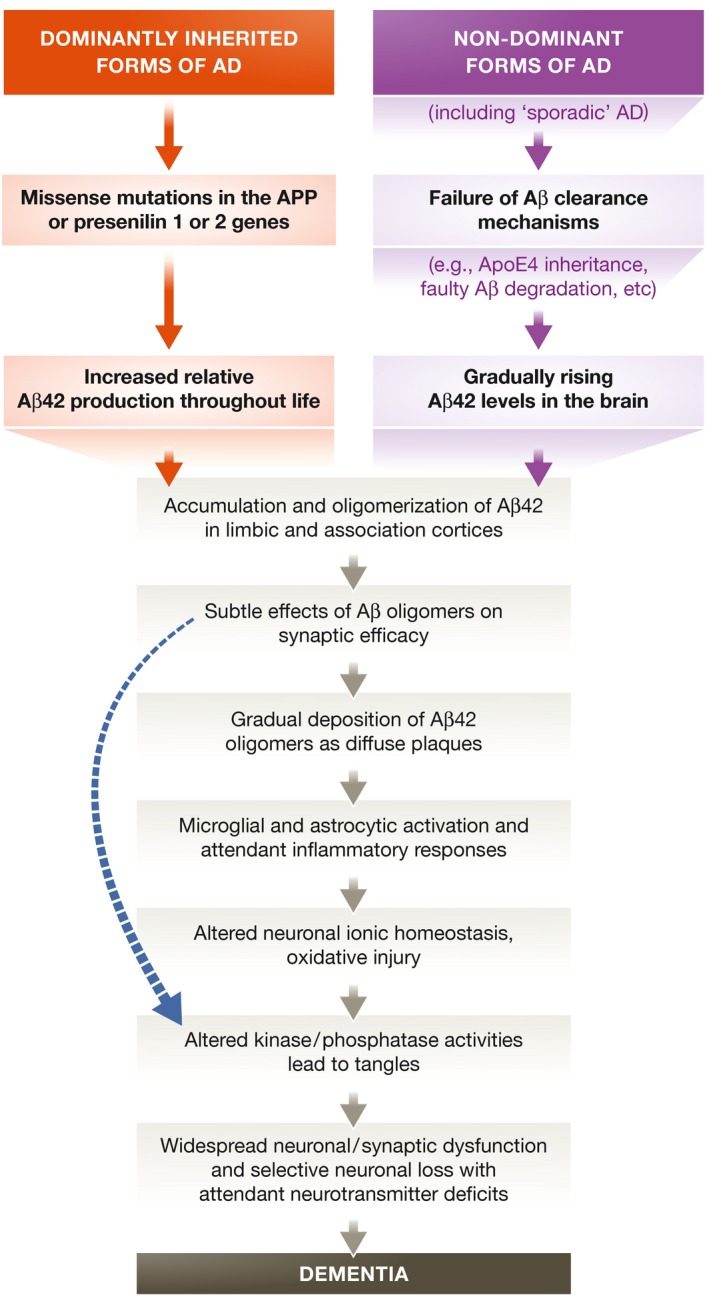
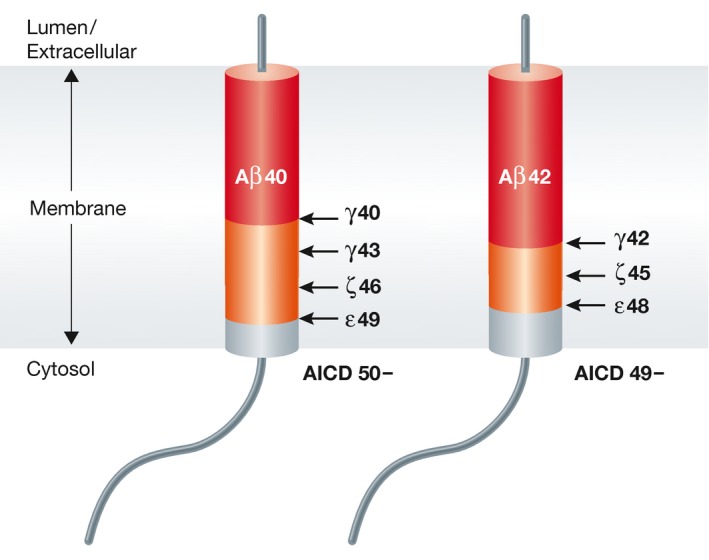
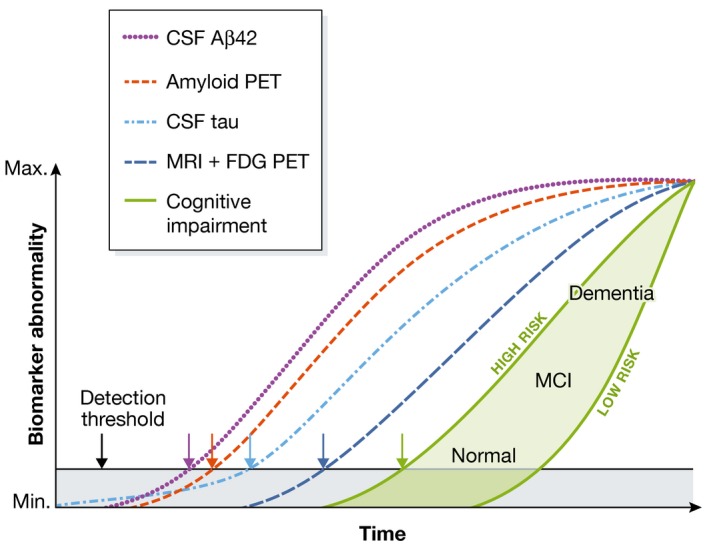
Despite continuing debate about the amyloid β-protein (or Aβ hypothesis, new lines of evidence from laboratories and clinics worldwide support the concept that an imbalance between production and clearance of Aβ42 and related Aβ peptides is a very early, often initiating factor in Alzheimer's disease (AD). Confirmation that presenilin is the catalytic site of γ-secretase has provided a linchpin: all dominant mutations causing early-onset AD occur either in the substrate (amyloid precursor protein, APP) or the protease (presenilin) of the reaction that generates Aβ. Duplication of the wild-type APP gene in Down's syndrome leads to Aβ deposits in the teens, followed by microgliosis, astrocytosis, and neurofibrillary tangles typical of AD Apolipoprotein E4, which predisposes to AD in > 40% of cases, has been found to impair Aβ clearance from the brain. Soluble oligomers of Aβ42 isolated from AD patients' brains can decrease synapse number, inhibit long-term potentiation, and enhance long-term synaptic depression in rodent hippocampus, and injecting them into healthy rats impairs memory. The human oligomers also induce hyperphosphorylation of tau at AD-relevant epitopes and cause neuritic dystrophy in cultured neurons. Crossing human APP with human tau transgenic mice enhances tau-positive neurotoxicity. In humans, new studies show that low cerebrospinal fluid (CSF) Aβ42 and amyloid-PET positivity precede other AD manifestations by many years. Most importantly, recent trials of three different Aβ antibodies (solanezumab, crenezumab, and aducanumab) have suggested a slowing of cognitive decline in post hoc analyses of mild AD subjects. Although many factors contribute to AD pathogenesis, Aβ dyshomeostasis has emerged as the most extensively validated and compelling therapeutic target.
Overview
The claims and statistics of this paper haven’t been checked yet.
Free: it reads the open-access text and checks the first 5 claims that cite a source we can check. Create a free account to check every claim.
Integrity signals
Registry
Cites
Statistics
Figures
Verification
Claims the paper makes
The claims and statistics of this paper haven’t been checked yet.
Free: it reads the open-access text and checks the first 5 claims that cite a source we can check. Create a free account to check every claim.
Claims other papers make about this one
Each is checked against this paper’s own text: does it say what the citing paper says it does?
The source backs part of the claim, not all of it — or backs it for a different population, condition or comparison.
In the citing paper
“Oxidative stress, mitochondrial dysfunction, astrocytic and microglial activation, membrane perturbation, and loss of ionic homeostasis are, at the cellular level, some of the events downstream the Aβ1-42 aggregation and accumulation (Selkoe and Hardy, 2016).”
From Exploring the Therapeutic Potential of Phytochemicals in Alzheimer’s Disease: Focus on Polyphenols and Monoterpenes (2022) · cites this paper as Selkoe and Hardy, 2016
Experimental — accuracy not yet measuredThe source backs part of the claim, not all of it — or backs it for a different population, condition or comparison.
In the citing paper
“Elevated levels of oligomers have been associated with AD, as they are found in AD brains and are considered the most toxic and pathogenic form of Aβ [4,5,6,7,18].”
From Treatment of Alzheimer’s Disease: Beyond Symptomatic Therapies (2023) · cites this paper as [4]
Experimental — accuracy not yet measuredThe source backs part of the claim, not all of it — or backs it for a different population, condition or comparison.
In the citing paper
“Synaptic dysfunction and synapse loss are key hallmarks of AD, present in the early stages of the disease before clinical symptoms appear [79,86,156].”
From Role of Oxidative Damage in Alzheimer’s Disease and Neurodegeneration: From Pathogenic Mechanisms to Biomarker Discovery (2021) · cites this paper as [79]
Experimental — accuracy not yet measuredThe source backs part of the claim, not all of it — or backs it for a different population, condition or comparison.
In the citing paper
“Moreover, the evidence from a failure of reversal of cognitive declines in amyloid-targeting drug trials supports this assumption; for example, patients with AD in whose brains Aβ plaques were virtually cleared by anti-amyloid immunotherapy did not show cognitive benefit [62].”
From Clinical trials of new drugs for Alzheimer disease (2020) · cites this paper as [62]
Experimental — accuracy not yet measuredThe source backs part of the claim, not all of it — or backs it for a different population, condition or comparison.
In the citing paper
“Early-stage AD is characterized primarily by the accumulation of Aβ plaques and subtle synaptic dysfunction, whereas late-stage AD involves extensive neurodegeneration, widespread neuroinflammation, and pronounced BBB disruption [157, 158].”
From Targeted Nanoparticles for Drug Delivery Across the Blood–Brain Barrier in Early and Late Stages of Alzheimer's Disease: A Review (2026) · cites this paper as [157]
Experimental — accuracy not yet measured
26 more claims about this paper
Create a free account to see every claim other papers make about this one.
Self-check
Percentages, sums and reported differences re-computed from the paper’s own numbers.
The self-check needs the paper’s full text.
Citations
Cites
Neuropathological stageing of Alzheimer-related changes.
Braak, H., & Braak, E. (1991) · Acta Neuropathologica · doi:10.1007/bf00308809 · Cited by 16,123 · cited 1×
“An elegant histopathological staging system created by Braak and Braak (1991) is now widely used to establish the severity of AD neuropathology.”
MethodThe Amyloid Hypothesis of Alzheimer’s Disease: Progress and Problems on the Road to Therapeutics
Hardy, J., & Selkoe, D. J. (2002) · Science · doi:10.1126/science.1072994 · Cited by 13,864
Self-citationAmyloid oligomers exacerbate tau pathology in a mouse model of tauopathy
Selenica, M.-L. B., Brownlow, M., Jimenez, J. P., Lee, D. C., Pena, G., Dickey, C. A., Gordon, M. N., & Morgan, D. (2013) · Neurodegenerative Diseases · doi:10.1159/000337230 · Cited by 10,359
Corder, E. H., Saunders, A. M., Strittmatter, W. J., Schmechel, D. E., Gaskell, P. C., Small, G. W., Roses, A. D., Haines, J. L., & Pericak-Vance, M. A. (1993) · Science · doi:10.1126/science.8346443 · Cited by 9,429 · cited 1×
“Cell biology of new AD risk genes Although the importance of ApoE4 as the major risk factor for AD was discovered in 1993 (Corder et al, 1993), it is only since the advent of genomewide association studies and, more recently, exome and genome sequencing that other risk loci for late-onset disease…”
BackgroundAlzheimer's disease: the amyloid cascade hypothesis
Hardy, J. A., & Higgins, G. A. (1992) · Science · doi:10.1126/science.1566067 · Cited by 7,484 · cited 2×
“The amyloid (or Ab) hypothesis (Beyreuther & Masters, 1991; Hardy & Allsop, 1991; Selkoe, 1991; Hardy & Higgins, 1992) has become the dominant model of AD pathogenesis and is guiding the development of potential treatments.”
BackgroundSelf-citationGlenner, G. G., & Wong, C. W. (1984) · Biochemical and Biophysical Research Communications · doi:10.1016/s0006-291x(84)80190-4 · Cited by 5,404
Imaging brain amyloid in Alzheimer's disease with Pittsburgh Compound‐B
Klunk, W. E., Engler, H., Nordberg, A., Wang, Y., Blomqvist, G., Holt, D. P., Bergström, M., Savitcheva, I., Huang, G., Estrada, S., et al. (2004) · Annals of Neurology · doi:10.1002/ana.20009 · Cited by 4,496 · cited 1×
“…fibrillar amyloid burden (but not yet soluble Ab oligomers) by PET scanning, initially with the thioflavin T derivative, Pittsburgh compound B (Klunk et al, 2004); and (iii) the ability to analyze APP metabolism in healthy and diseased humans by quantifying heavy isotope-labeled Ab peptides…”
BackgroundJack, C. R., Knopman, D. S., Jagust, W. J., Petersen, R. C., Weiner, M. W., Aisen, P. S., Shaw, L. M., Vemuri, P., Wiste, H. J., Weigand, S. D., et al. (2013) · The Lancet Neurology · doi:10.1016/s1474-4422(12)70291-0 · Cited by 4,396
Meta-Analysis of 74,046 Individuals Identifies 11 New Susceptibility Loci for Alzheimer’s Disease
(EADI), E. A. D. I., Lambert, J.-C., (GERAD), G. A. E. R. I. A. D., Alzheimer's Disease Genetic Consortium (ADGC), (CHARGE), C. F. H. A. A. R. I. G. E., Ibrahim-Verbaas, C. A., Harold, D., Naj, A. C., Sims, R., Bellenguez, C., et al. (2013) · Nature Genetics · doi:10.1038/ng.2802 · Cited by 4,336 · cited 2×
“This category includes SORL1, BIN1, and PICALM (Rogaeva et al, 2007; Lambert et al, 2013; Zhao et al, 2015).”
BackgroundSelf-citationCorrelative Memory Deficits, Aβ Elevation, and Amyloid Plaques in Transgenic Mice
Hsiao, K., Chapman, P., Nilsen, S., Eckman, C., Harigaya, Y., Younkin, S., Yang, F., & Cole, G. (1996) · Science · doi:10.1126/science.274.5284.99 · Cited by 4,210 · cited 1×
“Early APP mouse models (e.g. Games et al, 1995; Hsiao et al, 1996) suffered from reliance on high transgene expression to drive plaque deposition and from a lack of tangle cytopathology and neuronal death.”
Background
Research works printed but not linked: 3
- Cummings J, Cho W, Ward M, Friesenhahn M, Brunstein F, Honigberg L, Clayton D, Mortensen D, Ho C, Paul R (2014) paper presented at the Alzheimer's Association International Conference (AAIC), Copenhagen, Denmark, 16 July 2014
- Mann DMA, Yuonis N, Jones D, Stoddart DW (1992) The time course of pathological events in Down's Syndrome with particular reference to the involvement of microglial cells and deposits of b/A4. Neurodegeneration 1: 201– 215
- Sevigny J, Chiao P, Williams L, Miao X, O'Gorman J (2015) Randomized, double‐blind Phase 1B study of BIIB037, an anti‐amyloid beta monoclonal antibody, in patients with prodromal or mild Alzheimer's disease. Neurogener Dis 15(Suppl 1): 311
Cited by
Items 601–700 of 1,163
Enantiomeric Aβ peptides inhibit the fluid shear stress response of PIEZO1
Maneshi, M. M., Ziegler, L., Sachs, F., Hua, S. Z., & Gottlieb, P. A. (2018) · Scientific Reports · doi:10.1038/s41598-018-32572-2 · Cited by 87
“We formed outside/out patches from the hP1 cell line and tested whether 10 μM of Aβ (1-40) or Aβ (1-42) (Peptide Method I) inhibited channel activity, a concentration that blocked the shear response.”
InfluentialPhospholipase C families: Common themes and versatility in physiology and pathology
Katan, M., & Cockcroft, S. (2020) · Progress in Lipid Research · doi:10.1016/j.plipres.2020.101065 · Cited by 89
Hao, C., Wang, W., Wang, S., Zhang, L., & Guo, Y. (2017) · Marine Drugs · doi:10.3390/md15040089 · Cited by 92
“Moreover, some disease-modifying therapies have been under development for Alzheimer’s disease, such as BACE inhibitors, and anti-β-amyloid antibodies are in Phase 2 and 3 trials [59].”
BackgroundBorroni, E., Bohrmann, B., Grueninger, F., Prinssen, E., Nave, S., Loetscher, H., Chinta, S. J., Rajagopalan, S., Rane, A., Siddiqui, A., et al. (2017) · The Journal of Pharmacology and Experimental Therapeutics · doi:10.1124/jpet.117.241653 · Cited by 86
Brody, D. L., Jiang, H., Wildburger, N., & Esparza, T. J. (2017) · Alzheimer's Research & Therapy · doi:10.1186/s13195-017-0293-3 · Cited by 87
Xu, R., Wang, J., Xu, J., Song, X., Huang, H., Feng, Y., & Fu, C. (2020) · International Journal of Nanomedicine · doi:10.2147/ijn.s236922 · Cited by 92
Salech, F., Ponce, D. P., Paula-Lima, A. C., SanMartín, C. D., & Behrens, M. I. (2020) · Frontiers in Aging Neuroscience · doi:10.3389/fnagi.2020.00255 · Cited by 100
“The most accepted hypothesis for the pathogenesis of AD proposes that the initial event is the deposit of Aβ, followed by the intracellular accumulation of hyperphosphorylated tau, leading to mitochondrial dysfunction oxidative, synaptic damage and neuronal death associated with inflammation and an immune reaction (Se…”
BackgroundVisser, P. J., Reus, L. M., Gobom, J., Jansen, I., Dicks, E., van der Lee, S. J., Tsolaki, M., Verhey, F. R. J., Popp, J., Martinez-Lage, P., et al. (2022) · Molecular Neurodegeneration · doi:10.1186/s13024-022-00521-3 · Cited by 87
“Background The amyloid cascade hypothesis poses that Alzheimer’s disease (AD) starts with amyloid beta (Aβ) aggregation followed by tau pathology [1].”
BackgroundMa, J., Chen, M., Liu, G.-H., Gao, M., Chen, N.-H., Toh, C. H., Hsu, J.-L., Wu, K.-Y., Huang, C.-M., Lin, C.-M., et al. (2025) · Molecular Psychiatry · doi:10.1038/s41380-024-02778-0 · Cited by 96
“From the perspective of network neuroscience, our fi ndings provide novel insights that the glymphatic system is protective of neural interaction in the human brain, which can also be the missing link between glymphatic functioning and the pathologies of neurodegenerative diseases (e.g., AD).”
Yang, J., Liang, J., Hu, N., He, N., Liu, B., Liu, G., & Qin, Y. (2024) · CNS Neuroscience & Therapeutics · doi:10.1111/cns.70091 · Cited by 121
García-González, L., Pilat, D., Baranger, K., & Rivera, S. (2019) · Frontiers in Aging Neuroscience · doi:10.3389/fnagi.2019.00244 · Cited by 88
“The precise neurotoxicity mechanisms of Aβ are still poorly understood, probably reflecting a combination of events triggered by its accumulation, including stimulation of Tau hyperphosphorylation and subsequent formation of neurofibrillary tangles (NFTs), promotion of inflammation and also synaptic dysfunctions (Beni…”
BackgroundMartini, F., Rosa, S. G., Klann, I. P., Fulco, B. C. W., Carvalho, F. B., Rahmeier, F. L., Fernandes, M. D. C., & Nogueira, C. W. (2018) · Journal of Psychiatric Research · doi:10.1016/j.jpsychires.2018.11.021 · Cited by 90
Brain injury-induced dysfunction of the blood brain barrier as a risk for dementia
Abrahamson, E. E., & Ikonomovic, M. D. (2020) · Experimental Neurology · doi:10.1016/j.expneurol.2020.113257 · Cited by 86
Wang, J., Sun, B.-L., Xiang, Y., Tian, D.-Y., Zhu, C., Li, W.-W., Liu, Y.-H., Bu, X.-L., Shen, L.-L., Jin, W.-S., et al. (2020) · Translational Psychiatry · doi:10.1038/s41398-020-00918-y · Cited by 87
Wang, C., Cai, X., Wang, R., Zhai, S., Zhang, Y., Hu, W., Zhang, Y., & Wang, D. (2020) · Journal of Neuroinflammation · doi:10.1186/s12974-020-01976-1 · Cited by 94
Díaz‐Zúñiga, J., More, J., Melgar‐Rodríguez, S., Jiménez-Unión, M., Villalobos-Orchard, F., Muñoz‐Manríquez, C., Monasterio, G., Valdés, J. L., Vernal, R., & Paula-Lima, A. C. (2020) · Frontiers in Immunology · doi:10.3389/fimmu.2020.588036 · Cited by 108
Modeling Alzheimer’s Disease in Caenorhabditis elegans
Álvarez, J., Álvarez-Illera, P., Domingo, J. S., Fonteríz, R. I., & Montero, M. (2022) · Biomedicines · doi:10.3390/biomedicines10020288 · Cited by 100
“This process induces tau phosphorylation and its aggregation into NFTs, as well as other toxicity phenomena, including ER stress, alterations of Ca2+ homeostasis, mitochondrial dysfunction, neuroinflammation and neuronal death [1,2].”
BackgroundVillain, N., Planche, V., & Levy, R. (2022) · Revue Neurologique · doi:10.1016/j.neurol.2022.06.012 · Cited by 87
Thal, D. R., & Tomé, S. O. (2022) · Brain Research Bulletin · doi:10.1016/j.brainresbull.2022.10.006 · Cited by 84
Step by step: towards a better understanding of the genetic architecture of Alzheimer’s disease
Lambert, J.-C., Ramirez, A., Grenier-Boley, B., & Bellenguez, C. (2023) · Molecular Psychiatry · doi:10.1038/s41380-023-02076-1 · Cited by 87
“Even though the amyloid cascade hypothesis has been regularly modi fi ed to take account of developments in our knowledge of AD [6, 7], it now appears to be too simplistic and does not encompass the complexity and diversity of the pathophysiological processes involved in the common forms of the…”
BackgroundDrug development for Alzheimer’s disease: Review
Lao, K., Ji, N., Zhang, X., Qiao, W., Tang, Z., & Gou, X. (2019) · Journal of drug targeting · doi:10.1080/1061186x.2018.1474361 · Cited by 86
Cognitive outcomes in trials of two BACE inhibitors in Alzheimer's disease
Wessels, A. M., Lines, C., Stern, R. A., Kost, J., Voss, T., Mozley, L. H., Furtek, C., Mukai, Y., Aisen, P. S., Cummings, J. L., et al. (2020) · Alzheimer's & Dementia · doi:10.1002/alz.12164 · Cited by 86
Aβ propagation and strains: Implications for the phenotypic diversity in Alzheimer's disease
Condello, C., & Stöehr, J. (2018) · Neurobiology of Disease · doi:10.1016/j.nbd.2017.03.014 · Cited by 86
On the Role of Store-Operated Calcium Entry in Acute and Chronic Neurodegenerative Diseases
Secondo, A., Bagetta, G., & Amantea, D. (2018) · Frontiers in Molecular Neuroscience · doi:10.3389/fnmol.2018.00087 · Cited by 91
“Thus, inhibiting amyloid-β generation, facilitating its clearance and blocking oligomerization might represent promising strategies to block AD progression (Selkoe and Hardy, 2016).”
BackgroundMicci, M.-A., Krishnan, B., Bishop, E., Zhang, W.-R., Guptarak, J., Grant, A., Zolochevska, O., Tumurbaatar, B., Franklin, W., Marino, C., et al. (2019) · Molecular Neurodegeneration · doi:10.1186/s13024-019-0322-8 · Cited by 86
Uddin, M. S., Kabir, M. T., Tewari, D., Mathew, B., & Aleya, L. (2020) · Science of The Total Environment · doi:10.1016/j.scitotenv.2019.134836 · Cited by 86
EEG time signature in Alzheimer´s disease: Functional brain networks falling apart
Smailovic, U., Koenig, T., Laukka, E. J., Kalpouzos, G., Andersson, T., Winblad, B., & Jelic, V. (2019) · NeuroImage: Clinical · doi:10.1016/j.nicl.2019.102046 · Cited by 84
Sayed, A., Bahbah, E. I., Kamel, S., Barreto, G. E., Ashraf, G. M., & Elfil, M. (2020) · Journal of Neuroimmunology · doi:10.1016/j.jneuroim.2020.577398 · Cited by 97
Combating deleterious phase transitions in neurodegenerative disease
Darling, A. L., & Shorter, J. (2021) · Biochimica et Biophysica Acta (BBA) - Molecular Cell Research · doi:10.1016/j.bbamcr.2021.118984 · Cited by 85
“Alzheimer’s disease (AD) is a progressive fatal neurodegenerative disease with no cure or effective treatments [114].”
BackgroundOligodendrocytes in Alzheimer’s disease pathophysiology
Kedia, S., & Simons, M. (2025) · Nature Neuroscience · doi:10.1038/s41593-025-01873-x · Cited by 86
Chen, Z.-L., Revenko, A. S., Singh, P., MacLeod, A. R., Norris, E. H., & Strickland, S. (2017) · Blood · doi:10.1182/blood-2016-11-753202 · Cited by 84
“Amyloid beta (Ab) is generally recognized as a primary driver of the disease.(1,2) It is also known that AD patients suffer extensive neuronal death.”
BackgroundRichter, M. C., Ludewig, S., Winschel, A., Abel, T., Bold, C., Salzburger, L. R., Klein, S., Han, K., Weyer, S. W., Fritz, A., et al. (2018) · The EMBO Journal · doi:10.15252/embj.201798335 · Cited by 85
“Alzheimer’s disease (AD) is characterized by the accumulation of b -amyloid peptides (A b ) that are derived from the amyloid precursor protein (APP) by proteolytic cleavage (Selkoe & Hardy, 2016).”
Chae, M.-S., Yoo, Y. K., Kim, J., Kim, T. G., & Hwang, K. S. (2018) · Sensors and Actuators B Chemical · doi:10.1016/j.snb.2018.06.010 · Cited by 87
Kim, D. K., Han, D., Park, J., Choi, H., Park, J.-C., Cha, M.-Y., Woo, J., Byun, M. S., Lee, D. Y., Kim, Y., et al. (2019) · Experimental & Molecular Medicine · doi:10.1038/s12276-019-0326-z · Cited by 85
Viral Involvement in Alzheimer’s Disease
Sait, A., Angeli, C., Doig, A. J., & Day, P. J. R. (2021) · ACS Chemical Neuroscience · doi:10.1021/acschemneuro.0c00719 · Cited by 85
Synaptic dysfunction in early phases of Alzheimer's Disease
(2022) · Handbook of Clinical Neurology · doi:10.1016/b978-0-12-819410-2.00022-9 · Cited by 83
Multiscale optical and optoacoustic imaging of amyloid-β deposits in mice
Ni, R., Chen, Z., Deán‐Ben, X. L., Voigt, F. F., Kirschenbaum, D. S., Shi, G., Villois, A., Zhou, Q., Crimi, A., Arosio, P., et al. (2022) · Nature Biomedical Engineering · doi:10.1038/s41551-022-00906-1 · Cited by 91
Walker, L. C. (2020) · Free Neuropathology · doi:10.17879/freeneuropathology-2020-3025 · Cited by 174
Kell, D. B., & Pretorius, E. (2016) · Progress in Biophysics and Molecular Biology · doi:10.1016/j.pbiomolbio.2016.08.006 · Cited by 97
Melatonin induces mechanisms of brain resilience against neurodegeneration
Corpas, R., Griñán‐Ferré, C., Palomera‐Ávalos, V., Porquet, D., de Frutos, P. G., Cozzolino, S. M. F., Rodríguez-Farré, E., Pallàs, M., Sanfeliu, C., & Cardoso, B. R. (2018) · Journal of Pineal Research · doi:10.1111/jpi.12515 · Cited by 90
Pitt, J., Wilcox, K. C., Tortelli, V., Diniz, L. P., Oliveira, M. S., Dobbins, C., Yu, X.-W., Nandamuri, S., Gomes, F. C. A., DiNunno, N., et al. (2017) · Molecular Biology of the Cell · doi:10.1091/mbc.e17-06-0416 · Cited by 84
“The major Aβ species implicated in AD pathogenesis comprise soluble AβOs (Mucke and Selkoe, 2012; Selkoe and Hardy, 2016; DiChiara et al., 2017).”
BackgroundPrion Protein as a Toxic Acceptor of Amyloid-β Oligomers
Purro, S. A., Nicoll, A. J., & Collinge, J. (2017) · Biological Psychiatry · doi:10.1016/j.biopsych.2017.11.020 · Cited by 88
“AD itself incorporates a mêlée of genetic and apparently sporadic conditions that can co-exist with an ever greater number of co-pathologies as age-at-onset increases (8).”
BackgroundEmerging Roles of Complement in Psychiatric Disorders
Druart, M., & Le Magueresse, C. (2019) · Frontiers in Psychiatry · doi:10.3389/fpsyt.2019.00573 · Cited by 84
“In Alzheimer’s disease (AD), the accumulation of extracellular Amyloid-beta (Aβ) peptides contributes to pathogenesis (100).”
BackgroundNeuropathological assessment of the Alzheimer spectrum
Jellinger, K. A. (2020) · Journal of Neural Transmission · doi:10.1007/s00702-020-02232-9 · Cited by 89
Current Biomarkers for Alzheimer’s Disease: From CSF to Blood
Zou, K., Abdullah, M., & Michikawa, M. (2020) · Journal of Personalized Medicine · doi:10.3390/jpm10030085 · Cited by 83
PKR involvement in Alzheimer’s disease
Hugon, J., Mouton-Liger, F., Dumurgier, J., & Paquet, C. (2017) · Alzheimer's Research & Therapy · doi:10.1186/s13195-017-0308-0 · Cited by 82
“The cause of AD is not known, but the Aβ peptide could be toxic according to the “amyloid cascade hypothesis” [3].”
BackgroundUddin, M. S., Al Mamun, A., Kabir, M. T., Ashraf, G. M., Bin-Jumah, M. N., & Abdel-Daim, M. M. (2021) · Molecular Neurobiology · doi:10.1007/s12035-020-02116-9 · Cited by 86
EphBs and ephrin-Bs: Trans-synaptic organizers of synapse development and function
Henderson, N. T., & Dalva, M. B. (2018) · Molecular and Cellular Neuroscience · doi:10.1016/j.mcn.2018.07.002 · Cited by 89
Lehrbach, N. J., & Ruvkun, G. (2019) · eLife · doi:10.7554/elife.44425 · Cited by 92
“In Alzheimer’s disease, Ab forms aggregates that may play an important role in pathogenesis (Selkoe and Hardy, 2016).”
BackgroundAdewuyi, E. O., O’Brien, E. K., Nyholt, D. R., Porter, T., & Laws, S. M. (2022) · Communications Biology · doi:10.1038/s42003-022-03607-2 · Cited by 83
Ratan, Y., Rajput, A., Maleysm, S., Pareek, A., Jain, V., Pareek, A., Kaur, R., & Singh, G. (2023) · Biomedicines · doi:10.3390/biomedicines11051398 · Cited by 82
“For over three decades, the amyloid hypothesis, proposed by G. Higgins, J. Hardi [49], and D. Selkoe [50], has been the dominant and most widely accepted mechanistic theory of how AD develops.”
BackgroundTwo decades of new drug discovery and development for Alzheimer's disease
Liu, Z., Zhang, A., Sun, H., Han, Y., Kong, L., & Wang, X. (2017) · RSC Advances · doi:10.1039/c6ra26737h · Cited by 83
Macdonald, I. R., Maxwell, S. P., Reid, G. A., Cash, M. K., DeBay, D. R., & Darvesh, S. (2017) · Journal of Alzheimer s Disease · doi:10.3233/jad-170164 · Cited by 92
“The amyloid hypothesis posits that the imbalance between production and clearance of A 42 leads to accumulation of this peptide early and this may be the initiating factor for development of AD [58].”
BackgroundMeng, Y., Goubran, M., Rabin, J. S., McSweeney, M., Ottoy, J., Pople, C. B., Huang, Y., Storace, A., Ozzoude, M., Bethune, A., et al. (2023) · Brain · doi:10.1093/brain/awac459 · Cited by 83
Current structure predictors are not learning the physics of protein folding
Outeiral, C., Nissley, D. A., & Deane, C. M. (2022) · Bioinformatics · doi:10.1093/bioinformatics/btab881 · Cited by 82
“Some of the most prevalent aging-related pathologies, like Alzheimer’s (Selkoe and Hardy, 2016) or Parkinson’s disease (Kalia and Lang, 2015), originate when the delicate proteostasis machinery fails to ensure that proteins are correctly folded.”
Iraji, A., Firuzi, O., Khoshneviszadeh, M., Tavakkoli, M., Mahdavi, M. R., Nadri, H., Edraki, N., & Miri, R. (2017) · European Journal of Medicinal Chemistry · doi:10.1016/j.ejmech.2017.09.057 · Cited by 86
“The hallmarks of AD are n accumulation of amyloid beta (A β) around neurons and neurofibrillary tangles of hyperphospho rylated tau protein within the cells [2].”
BackgroundGao, W., Wang, W., Dong, X., & Sun, Y. (2020) · Small · doi:10.1002/smll.202002804 · Cited by 82
Litwiniuk, A., Bik, W., Kalisz, M., & Baranowska-Bik, A. (2021) · International Journal of Molecular Sciences · doi:10.3390/ijms22115603 · Cited by 82
“The typical histopathological features include amyloid β (Aβ) formation and accumulation, mitochondrial damage, loss of synapses, activation of microglia (gliosis) and astrocytes (astrocytosis), phosphorylation of tau, and neurofibrillary tangles formation (NFT) [21].”
BackgroundRole of Calcium Modulation in the Pathophysiology and Treatment of Alzheimer’s Disease
Baracaldo-Santamaría, D., Avendaño-Lopez, S. S., Ariza-Salamanca, D. F., Rodríguez-Giraldo, M., Calderón‐Ospina, C., González-Reyes, R. E., & Nava-Mesa, M. O. (2023) · International Journal of Molecular Sciences · doi:10.3390/ijms24109067 · Cited by 95
“The Aβ oligomers obtained directly from the brains of AD patients were shown to impair LTP and enhance long-term depression (LTD) in mouse hippocampal slices [56].”
BackgroundOxidative stress–mediated neuroinflammation in Alzheimer’s disease
Firdous, S. M., Khan, S. A., & Maity, A. (2024) · Naunyn-Schmiedeberg s Archives of Pharmacology · doi:10.1007/s00210-024-03188-3 · Cited by 100
“Synaptic dysfunction and the loss of synapses are fundamental signs of AD, emerging before the onset of clinical symptoms (Selkoe and Hardy 2016).”
Faustino, C. M. C., Rijo, P. M., & Reis, C. P. (2017) · Pharmacological Research · doi:10.1016/j.phrs.2017.03.020 · Cited by 88
Egan, M. F., Mukai, Y., Voss, T., Kost, J., Stone, J., Furtek, C., Mahoney, E., Cummings, J. L., Tariot, P. N., Aisen, P. S., et al. (2019) · Alzheimer's Research & Therapy · doi:10.1186/s13195-019-0520-1 · Cited by 81
Fracassi, A., Marcatti, M., Zolochevska, O., Tabor, N., Woltjer, R., Moreno, S., & Taglialatela, G. (2021) · The Journal of Neuroscience · doi:10.1523/jneurosci.0295-20.2020 · Cited by 81
“Several mechanisms have been proposed to explain AD pathogenesis, among which is the so-called amyloid cascade, involving a critical role of Ab peptide (Hardy and Higgins, 1992; Selkoe and Hardy, 2016).”
BackgroundTen Challenges of the Amyloid Hypothesis of Alzheimer’s Disease
Kepp, K. P. (2016) · Journal of Alzheimer's Disease · doi:10.3233/jad-160550 · Cited by 81
“However, many of these plaques are diffuse and not directly related to pathogenicity [101]; thus the sig-nificance of the plaque deposits to disease progress needs to be further addressed.”
InfluentialCaselli, R. J., Beach, T. G., Knopman, D. S., & Graff-Radford, N. R. (2017) · Mayo Clinic Proceedings · doi:10.1016/j.mayocp.2017.02.011 · Cited by 81
“For the past 25 years, the amyloid hypothesis, which, simply stated, posits the accumulation of Ab amyloid in the brain as the inciting event that triggers neurodegeneration causing AD, has been the prevailing paradigm for AD pathogenesis, and has therefore guided the development of disease-modifying treatments.(39) E…”
Wang, Y., Fan, D., Zhao, G., Feng, J., Wei, D., Zhang, N., Cao, W., Du, B., & Wei, Q. L. (2018) · Biosensors and Bioelectronics · doi:10.1016/j.bios.2018.08.026 · Cited by 84
Ubiquitin, Autophagy and Neurodegenerative Diseases
Watanabe, Y., Taguchi, K., & Tanaka, M. (2020) · Cells · doi:10.3390/cells9092022 · Cited by 92
Microvascular Alterations in Alzheimer's Disease
Steinman, J., Sun, H.-S., & Feng, Z.-P. (2021) · Frontiers in Cellular Neuroscience · doi:10.3389/fncel.2020.618986 · Cited by 81
“A counterargument in support of the AH is Aβ deposition may be an early event that initiates AD pathology and cognitive decline (Selkoe and Hardy, 2016).”
BackgroundInfluentialGe, K., Li, Z., Wang, A., Bai, Z., Zhang, X., Zheng, X., Liu, Z., & Gao, F. (2023) · ACS Nano · doi:10.1021/acsnano.2c08499 · Cited by 86
Hernandez, A. M., Urbanke, H., Gillman, A. L., Lee, J., Ryazanov, S., Agbemenyah, H. Y., Benito, E., Jain, G., Kaurani, L., Grigorian, G., et al. (2017) · EMBO Molecular Medicine · doi:10.15252/emmm.201707825 · Cited by 83
“These range from therapeutic approaches that aim to modulate causative factors including Ab-toxicity via antibody-based therapies (Selkoe & Hardy, 2016), small molecules that modulated APP processing (Vassar et al, 2014), small molecules that are thought to target toxic amyloid species directly…”
BackgroundEvidence of intraneuronal Aβ accumulation preceding tau pathology in the entorhinal cortex
Welikovitch, L. A., Carmo, S. D., Maglóczky, Z., Szocsics, P., Lőke, J., Freund, T. F., & Cuello, A. C. (2018) · Acta Neuropathologica · doi:10.1007/s00401-018-1922-z · Cited by 89
Quintela-López, T., Ortiz-Sanz, C., Serrano-Regal, M. P., Gaminde-Blasco, A., Valero, J., Baleriola, J., Sánchez-Gómez, M. V., Matute, C., & Alberdi, E. (2019) · Cell Death & Disease · doi:10.1038/s41419-019-1636-8 · Cited by 80
Merlo, S., Spampinato, S. F., & Sortino, M. A. (2018) · CNS Neuroscience & Therapeutics · doi:10.1111/cns.13050 · Cited by 86
Liu, R., Yang, J., Liu, L., Lü, Z., Shi, Z., Ji, W., Shen, J., & Zhang, X. (2019) · Advanced Science · doi:10.1002/advs.201901555 · Cited by 85
Jang, J., Kim, K., Yoon, J., & Park, C. B. (2020) · Biomaterials · doi:10.1016/j.biomaterials.2020.120165 · Cited by 81
Multifunctional roles of zinc in Alzheimer’s disease
Xie, Z., Wu, H., & Zhao, J. (2020) · NeuroToxicology · doi:10.1016/j.neuro.2020.07.003 · Cited by 89
Collaborators, G. 2. D. (2021) · Neuroepidemiology · doi:10.1159/000515393 · Cited by 87
Salvadores, N., Moreno‐González, I., Gamez, N., Quiroz, G., Vegas‐Gomez, L., Escandón, M., Jiménez, S., Vitórica, J., Gutiérrez, A., Soto, C. A., et al. (2022) · Acta Neuropathologica Communications · doi:10.1186/s40478-022-01332-9 · Cited by 92
Pfundstein, G., Nikonenko, A. G., & Sytnyk, V. (2022) · Frontiers in Cell and Developmental Biology · doi:10.3389/fcell.2022.969547 · Cited by 98
“It proposes that aggregates of the amyloid-β (Aβ) peptide, the primary component of senile plaques formed in brains of people with AD, are themain causative agents in AD pathogenesis (Hardy and Allsop, 1991; Selkoe, 1991; Hardy and Higgins, 1992; Selkoe and Hardy, 2016; Karran and De Strooper, 2022).”
BackgroundDrobiova, H., Sindhu, S. T. A. K., Ahmad, R., Haddad, D., Al‐Mulla, F., & Madhoun, A. S. A. (2023) · Frontiers in Cell and Developmental Biology · doi:10.3389/fcell.2023.1211217 · Cited by 108
An overview of the genes and biomarkers in Alzheimer’s disease
Krishnamurthy, H. K., Jayaraman, V., Krishna, K., Wang, T., Bei, K., Changalath, C., & Rajasekaran, J. J. (2024) · Ageing Research Reviews · doi:10.1016/j.arr.2024.102599 · Cited by 99
“This finding was further supported by other studies which showed that A β 42/A β 40 ratio and A β 42/A β 38 ratio in the CSF can differentiate AD from other dementias better than just the CSF A β 42 levels (Janelidze, et al., 2016; Selkoe and Hardy, 2016).”
Omar, S. H., Scott, C. J., Hamlin, A. S., & Obied, H. K. (2018) · Fitoterapia · doi:10.1016/j.fitote.2018.05.011 · Cited by 79
The role of drebrin in neurons
Shirao, T., Hanamura, K., Koganezawa, N., Ishizuka, Y., Yamazaki, H., & Sekino, Y. (2017) · Journal of Neurochemistry · doi:10.1111/jnc.13988 · Cited by 79
“Drebrin decrease is now a hallmark of the AD brain (Kojima & Shirao 2007) (Ma et al. 2015), as well as amyloid plaques (senile plaques) and neurofibrillary tangles (Selkoe & Hardy 2016).”
BackgroundClinical aspects and biomarkers of Alzheimer's disease in Down syndrome
Zis, P., & Strydom, A. (2018) · Free Radical Biology and Medicine · doi:10.1016/j.freeradbiomed.2017.08.024 · Cited by 79
“DS is therefore comparable to Aβ overproduction associated with several other FAD mutations, while reduced clearance of Aβ is implicated in SAD [5].”
Cao, J., Zhong, M. B., Toro, C. A., Zhang, L., & Cai, D. (2019) · Neuroscience Letters · doi:10.1016/j.neulet.2019.03.016 · Cited by 79
Selective autophagy as a therapeutic target for neurological diseases
Xu, W., Ocak, U., Gao, L., Tu, S., Lenahan, C., Zhang, J., & Shao, A. (2020) · Cellular and Molecular Life Sciences · doi:10.1007/s00018-020-03667-9 · Cited by 90
Terahertz technology in intraoperative neurodiagnostics: A review
Chernomyrdin, N. V., Musina, G. R., Nikitin, P. V., Dolganova, I. N., Kucheryavenko, A. S., Алексеева, А. И., Wang, Y., Xu, D., Shi, Q., Tuchin, V. V., et al. (2022) · Opto-Electronic Advances · doi:10.29026/oea.2023.220071 · Cited by 85
Cummings, J. L. (2025) · Neurotherapeutics · doi:10.1016/j.neurot.2025.e00570 · Cited by 96
“Aggregation of monomers leads to dimers, trimers, and more complex species eventually forming oligomers, proto fi brils, and fi brils that aggregate into amyloid plaques [6] (Fig.”
InfluentialAmyloid β Modification: A Key to the Sporadic Alzheimer's Disease?
Barykin, E. P., Mitkevich, V. A., Kozin, S. A., & Makarov, A. А. (2017) · Frontiers in Genetics · doi:10.3389/fgene.2017.00058 · Cited by 90
“…Russian Academy of Sciences, Moscow, Russia Keywords: beta amyloid, post-translational Modifications (PTM), proteostasis, Sporadic Alzheimer’s disease, proteinopathies, Aging Last year marked 25 years of research into the amyloid hypothesis of Alzheimer’s disease (AD) (Selkoe and Hardy, 2016).”
BackgroundAleksis, R., Oleskovs, F., Jaudzems, K., Pahnke, J., & Biverstål, H. (2017) · Biochimie · doi:10.1016/j.biochi.2017.07.011 · Cited by 93
Hypothesis: JNK signaling is a therapeutic target of neurodegenerative diseases
Zhao, Y., Kuca, K., Wu, W., Wang, X., Nepovimova, E., Musilek, K., & Wu, Q. (2022) · Alzheimer's & Dementia · doi:10.1002/alz.12370 · Cited by 79
Ullah, R., Park, T. J., Huang, X., & Kim, M. O. (2021) · Ageing Research Reviews · doi:10.1016/j.arr.2021.101451 · Cited by 78
“…the amyloid hypothesis proposes that disturbances in Aβ peptide metabolism result in increased amounts of Aβ peptide deposition in the brain, which is thought to be central to AD pathogenesis (Mawuenyega et al., 2010b; Selkoe and Hardy, 2016; Tarasoff-Conway et al., 2015; Yoon and Jo, 2012a).”
BackgroundAmyloid, APP, and Electrical Activity of the Brain
Hefter, D., Ludewig, S., Draguhn, A., & Korte, M. (2020) · The Neuroscientist · doi:10.1177/1073858419882619 · Cited by 78
Formaldehyde toxicity in age-related neurological dementia
Kou, Y., Zhao, H., Cui, D., Han, H., & Tong, Z. (2021) · Ageing Research Reviews · doi:10.1016/j.arr.2021.101512 · Cited by 87
Aβ-oligomers: A potential therapeutic target for Alzheimer's disease
Ghosh, S., Ali, R., & Verma, S. K. (2023) · International Journal of Biological Macromolecules · doi:10.1016/j.ijbiomac.2023.124231 · Cited by 87
Amyloid-β and Phosphorylated Tau are the Key Biomarkers and Predictors of Alzheimer’s Disease
Pradeepkiran, J. A., Baig, J., Islam, M. A., Kshirsagar, S., & Reddy, P. H. (2024) · Aging and Disease · doi:10.14336/ad.2024.0286 · Cited by 103
Ghadami, S. A., Chia, S., Ruggeri, F. S., Meisl, G., Bemporad, F., Habchi, J., Cascella, R., Dobson, C. M., Vendruscolo, M., Knowles, T. P. J., et al. (2020) · Biomacromolecules · doi:10.1021/acs.biomac.9b01475 · Cited by 82
Hoyt, K. R., & Obrietan, K. (2022) · Molecular Neurodegeneration · doi:10.1186/s13024-022-00537-9 · Cited by 77
“Notably, the appearance of AD biomarkers can occur over an extended period prior to initiation of cognitive impairment, with reports showing cerebrospinal fluid Aβ42 can precede the first signs of cognitive impairment by over 10 years, whereas abnormal levels of tau are detected shortly before the first signs of cogni…”
BackgroundNeuropathological Mechanisms Associated with Pesticides in Alzheimer’s Disease
Tang, B. L. (2020) · Toxics · doi:10.3390/toxics8020021 · Cited by 86
Serafino, A., Giovannini, D., Rossi, S., & Cozzolino, M. (2020) · Expert Opinion on Drug Discovery · doi:10.1080/17460441.2020.1746266 · Cited by 84
“Since neuropathological evidence indicated Aβ aggregates (amyloid plaques) as one of the major hallmarks of AD, and over 200 mutations in the amyloid precursor protein (APP) have been identified in familial AD brain [99,100], in the past 25 years the targeting of Aβ has driven the drug discovery research for this neur…”
Background
Metadata
- Authors
- Selkoe, D. J., & Hardy, J.
- Affiliations
- Brigham and Women's Hospital (US)
- UCL Queen Square Institute of Neurology (GB)
- Corresponding author
- Hardy, John
- Venue
- EMBO Molecular Medicine
- Published
- 2016-03-29
- Volume
- 8
- Issue
- 6
- Pages
- 595-608
- ISSN
- 1757-4676 (ISSN-L)
- 1757-4684
- PMC
- PMC4888851
- OpenAlex
- W2329336071
- Cited by
- 6,164
- References
- 137
- Citations by year
- 2026: 553 · 2025: 637 · 2024: 656 · 2023: 658 · 2022: 679 · 2021: 734 · 2020: 728 · 2019: 533 · 2018: 500 · 2017: 388 · 2016: 92
- FWCI
- 59.19
- Type
- journal article
- Language
- en
- Open access
- gold
- doi.org
- Licence
- other-oa
- creativecommons.org/licenses/by/4.0/ (tdm)
- creativecommons.org/licenses/by/4.0/ (vor)
- Locations
- EMBO Molecular Medicine (publishedVersion, other-oa)
- PubMed Central (publishedVersion, cc-by)
- PubMed (publishedVersion)
- Digital Access to Scholarship at Harvard (DASH) (Harvard University) (submittedVersion, cc-by)
- DOAJ (DOAJ: Directory of Open Access Journals) (submittedVersion)
- Funders
- National Institute on Aging (AG06173, AG015379)
- MRC
- ARUK
- Wellcome Trust
- Topics
- Life Sciences › Neuroscience › Cellular and Molecular Neuroscience › Alzheimer's disease research and treatments
- Health Sciences › Medicine › Psychiatry and Mental health › Dementia and Cognitive Impairment Research
- Life Sciences › Neuroscience › Neurology › Neuroinflammation and Neurodegeneration Mechanisms
- Keywords
- Alzheimer's disease, amyloid hypothesis, amyloid-beta, amyloid-beta 42, amyloid precursor protein, presenilin, gamma-secretase, Down syndrome, APOE ε4, amyloid-beta oligomers, tau hyperphosphorylation, amyloid PET, cerebrospinal fluid biomarkers, anti-amyloid antibodies, solanezumab, crenezumab, aducanumab, amyloid clearance, neurofibrillary tangles, synaptic dysfunction
- MeSH terms
- Alzheimer Disease, Animals, Brain, Humans, Mice, Transgenic, Amyloid beta-Peptides, Amyloid beta-Protein Precursor, Rats, Presenilins
About these checks
Registry, retraction, Cites and statistics results are computed, not judged, with one exception: a printed reference that no index lists is read once by a model before it counts as a citation error. Claims are extracted by a model and kept only when their quote appears verbatim in the text; each cited source is then checked, with a model’s help, for whether it says what the claim relies on. Those verdicts can be wrong — read the claim’s quote and the cited source before relying on one.
Statistics and arithmetic are recomputed, not judged.
Confidence bands are shown only for fields calibrated on our annotated test set. None is calibrated yet, so no band is shown.
What counts as a claim ›How we measure confidence ›How we check this ›
Are you an author, or do you see a problem with this page? Request a review
Data sources
Bibliographic data: Semantic Scholar, OpenAlex, Crossref.
Contains information from the Semantic Scholar Academic Graph Datasets, made available under the ODC Attribution License (ODC-BY 1.0).
Semantic Scholar’s data is described in: Kinney, R., et al. (2023). The Semantic Scholar Open Data Platform. arXiv:2301.10140.
