

The amyloid hypothesis of Alzheimer's disease at 25 years
Open accessThe DOI matches its Crossref record; 136 of the 137 references it cites were found in a registry or an index.
Abstract
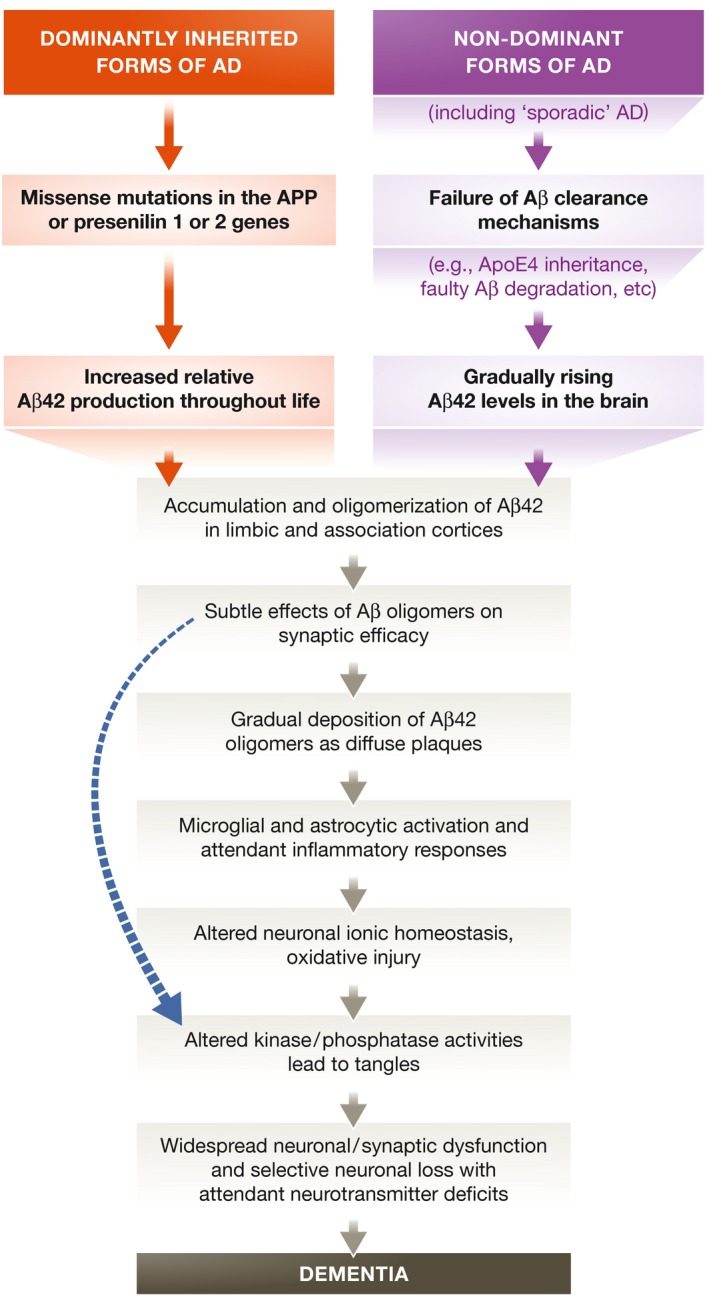
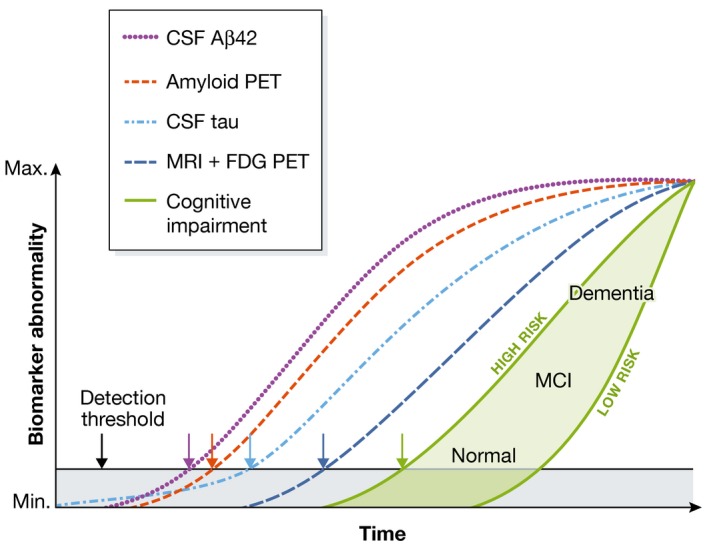
Despite continuing debate about the amyloid β-protein (or Aβ hypothesis, new lines of evidence from laboratories and clinics worldwide support the concept that an imbalance between production and clearance of Aβ42 and related Aβ peptides is a very early, often initiating factor in Alzheimer's disease (AD). Confirmation that presenilin is the catalytic site of γ-secretase has provided a linchpin: all dominant mutations causing early-onset AD occur either in the substrate (amyloid precursor protein, APP) or the protease (presenilin) of the reaction that generates Aβ. Duplication of the wild-type APP gene in Down's syndrome leads to Aβ deposits in the teens, followed by microgliosis, astrocytosis, and neurofibrillary tangles typical of AD Apolipoprotein E4, which predisposes to AD in > 40% of cases, has been found to impair Aβ clearance from the brain. Soluble oligomers of Aβ42 isolated from AD patients' brains can decrease synapse number, inhibit long-term potentiation, and enhance long-term synaptic depression in rodent hippocampus, and injecting them into healthy rats impairs memory. The human oligomers also induce hyperphosphorylation of tau at AD-relevant epitopes and cause neuritic dystrophy in cultured neurons. Crossing human APP with human tau transgenic mice enhances tau-positive neurotoxicity. In humans, new studies show that low cerebrospinal fluid (CSF) Aβ42 and amyloid-PET positivity precede other AD manifestations by many years. Most importantly, recent trials of three different Aβ antibodies (solanezumab, crenezumab, and aducanumab) have suggested a slowing of cognitive decline in post hoc analyses of mild AD subjects. Although many factors contribute to AD pathogenesis, Aβ dyshomeostasis has emerged as the most extensively validated and compelling therapeutic target.
Overview
The claims and statistics of this paper haven’t been checked yet.
Free: it reads the open-access text and checks the first 5 claims that cite a source we can check. Create a free account to check every claim.
Integrity signals
Registry
Cites
Statistics
Figures
Verification
Claims the paper makes
The claims and statistics of this paper haven’t been checked yet.
Free: it reads the open-access text and checks the first 5 claims that cite a source we can check. Create a free account to check every claim.
Claims other papers make about this one
Each is checked against this paper’s own text: does it say what the citing paper says it does?
The source backs part of the claim, not all of it — or backs it for a different population, condition or comparison.
In the citing paper
“Oxidative stress, mitochondrial dysfunction, astrocytic and microglial activation, membrane perturbation, and loss of ionic homeostasis are, at the cellular level, some of the events downstream the Aβ1-42 aggregation and accumulation (Selkoe and Hardy, 2016).”
From Exploring the Therapeutic Potential of Phytochemicals in Alzheimer’s Disease: Focus on Polyphenols and Monoterpenes (2022) · cites this paper as Selkoe and Hardy, 2016
Experimental — accuracy not yet measuredThe source backs part of the claim, not all of it — or backs it for a different population, condition or comparison.
In the citing paper
“Elevated levels of oligomers have been associated with AD, as they are found in AD brains and are considered the most toxic and pathogenic form of Aβ [4,5,6,7,18].”
From Treatment of Alzheimer’s Disease: Beyond Symptomatic Therapies (2023) · cites this paper as [4]
Experimental — accuracy not yet measuredThe source backs part of the claim, not all of it — or backs it for a different population, condition or comparison.
In the citing paper
“Synaptic dysfunction and synapse loss are key hallmarks of AD, present in the early stages of the disease before clinical symptoms appear [79,86,156].”
From Role of Oxidative Damage in Alzheimer’s Disease and Neurodegeneration: From Pathogenic Mechanisms to Biomarker Discovery (2021) · cites this paper as [79]
Experimental — accuracy not yet measuredThe source backs part of the claim, not all of it — or backs it for a different population, condition or comparison.
In the citing paper
“Moreover, the evidence from a failure of reversal of cognitive declines in amyloid-targeting drug trials supports this assumption; for example, patients with AD in whose brains Aβ plaques were virtually cleared by anti-amyloid immunotherapy did not show cognitive benefit [62].”
From Clinical trials of new drugs for Alzheimer disease (2020) · cites this paper as [62]
Experimental — accuracy not yet measuredThe source backs part of the claim, not all of it — or backs it for a different population, condition or comparison.
In the citing paper
“Early-stage AD is characterized primarily by the accumulation of Aβ plaques and subtle synaptic dysfunction, whereas late-stage AD involves extensive neurodegeneration, widespread neuroinflammation, and pronounced BBB disruption [157, 158].”
From Targeted Nanoparticles for Drug Delivery Across the Blood–Brain Barrier in Early and Late Stages of Alzheimer's Disease: A Review (2026) · cites this paper as [157]
Experimental — accuracy not yet measured
26 more claims about this paper
Create a free account to see every claim other papers make about this one.
Self-check
Percentages, sums and reported differences re-computed from the paper’s own numbers.
The self-check needs the paper’s full text.
Citations
Cites
Neuropathological stageing of Alzheimer-related changes.
Braak, H., & Braak, E. (1991) · Acta Neuropathologica · doi:10.1007/bf00308809 · Cited by 16,123 · cited 1×
“An elegant histopathological staging system created by Braak and Braak (1991) is now widely used to establish the severity of AD neuropathology.”
MethodThe Amyloid Hypothesis of Alzheimer’s Disease: Progress and Problems on the Road to Therapeutics
Hardy, J., & Selkoe, D. J. (2002) · Science · doi:10.1126/science.1072994 · Cited by 13,864
Self-citationAmyloid oligomers exacerbate tau pathology in a mouse model of tauopathy
Selenica, M.-L. B., Brownlow, M., Jimenez, J. P., Lee, D. C., Pena, G., Dickey, C. A., Gordon, M. N., & Morgan, D. (2013) · Neurodegenerative Diseases · doi:10.1159/000337230 · Cited by 10,359
Corder, E. H., Saunders, A. M., Strittmatter, W. J., Schmechel, D. E., Gaskell, P. C., Small, G. W., Roses, A. D., Haines, J. L., & Pericak-Vance, M. A. (1993) · Science · doi:10.1126/science.8346443 · Cited by 9,429 · cited 1×
“Cell biology of new AD risk genes Although the importance of ApoE4 as the major risk factor for AD was discovered in 1993 (Corder et al, 1993), it is only since the advent of genomewide association studies and, more recently, exome and genome sequencing that other risk loci for late-onset disease…”
BackgroundAlzheimer's disease: the amyloid cascade hypothesis
Hardy, J. A., & Higgins, G. A. (1992) · Science · doi:10.1126/science.1566067 · Cited by 7,484 · cited 2×
“The amyloid (or Ab) hypothesis (Beyreuther & Masters, 1991; Hardy & Allsop, 1991; Selkoe, 1991; Hardy & Higgins, 1992) has become the dominant model of AD pathogenesis and is guiding the development of potential treatments.”
BackgroundSelf-citationGlenner, G. G., & Wong, C. W. (1984) · Biochemical and Biophysical Research Communications · doi:10.1016/s0006-291x(84)80190-4 · Cited by 5,404
Imaging brain amyloid in Alzheimer's disease with Pittsburgh Compound‐B
Klunk, W. E., Engler, H., Nordberg, A., Wang, Y., Blomqvist, G., Holt, D. P., Bergström, M., Savitcheva, I., Huang, G., Estrada, S., et al. (2004) · Annals of Neurology · doi:10.1002/ana.20009 · Cited by 4,496 · cited 1×
“…fibrillar amyloid burden (but not yet soluble Ab oligomers) by PET scanning, initially with the thioflavin T derivative, Pittsburgh compound B (Klunk et al, 2004); and (iii) the ability to analyze APP metabolism in healthy and diseased humans by quantifying heavy isotope-labeled Ab peptides…”
BackgroundJack, C. R., Knopman, D. S., Jagust, W. J., Petersen, R. C., Weiner, M. W., Aisen, P. S., Shaw, L. M., Vemuri, P., Wiste, H. J., Weigand, S. D., et al. (2013) · The Lancet Neurology · doi:10.1016/s1474-4422(12)70291-0 · Cited by 4,396
Meta-Analysis of 74,046 Individuals Identifies 11 New Susceptibility Loci for Alzheimer’s Disease
(EADI), E. A. D. I., Lambert, J.-C., (GERAD), G. A. E. R. I. A. D., Alzheimer's Disease Genetic Consortium (ADGC), (CHARGE), C. F. H. A. A. R. I. G. E., Ibrahim-Verbaas, C. A., Harold, D., Naj, A. C., Sims, R., Bellenguez, C., et al. (2013) · Nature Genetics · doi:10.1038/ng.2802 · Cited by 4,336 · cited 2×
“This category includes SORL1, BIN1, and PICALM (Rogaeva et al, 2007; Lambert et al, 2013; Zhao et al, 2015).”
BackgroundSelf-citationCorrelative Memory Deficits, Aβ Elevation, and Amyloid Plaques in Transgenic Mice
Hsiao, K., Chapman, P., Nilsen, S., Eckman, C., Harigaya, Y., Younkin, S., Yang, F., & Cole, G. (1996) · Science · doi:10.1126/science.274.5284.99 · Cited by 4,210 · cited 1×
“Early APP mouse models (e.g. Games et al, 1995; Hsiao et al, 1996) suffered from reliance on high transgene expression to drive plaque deposition and from a lack of tangle cytopathology and neuronal death.”
Background
Research works printed but not linked: 3
- Cummings J, Cho W, Ward M, Friesenhahn M, Brunstein F, Honigberg L, Clayton D, Mortensen D, Ho C, Paul R (2014) paper presented at the Alzheimer's Association International Conference (AAIC), Copenhagen, Denmark, 16 July 2014
- Mann DMA, Yuonis N, Jones D, Stoddart DW (1992) The time course of pathological events in Down's Syndrome with particular reference to the involvement of microglial cells and deposits of b/A4. Neurodegeneration 1: 201– 215
- Sevigny J, Chiao P, Williams L, Miao X, O'Gorman J (2015) Randomized, double‐blind Phase 1B study of BIIB037, an anti‐amyloid beta monoclonal antibody, in patients with prodromal or mild Alzheimer's disease. Neurogener Dis 15(Suppl 1): 311
Cited by
Items 701–800 of 1,163
miR-204-3p/Nox4 Mediates Memory Deficits in a Mouse Model of Alzheimer’s Disease
Tao, W., Yu, L., Shu, S., Liu, Y., Zhuang, Z., Xu, S., Bao, X., Gu, Y., Cai, F., Song, W., et al. (2020) · Molecular Therapy · doi:10.1016/j.ymthe.2020.09.006 · Cited by 83
“Alternatively, APP is cleaved by a-secretase and g-secretase in the nonamyloidogenic pathway.3 Persuasive evidence has demonstrated that Ab-induced mitochondrial dysfunction and oxidative stress play a critical role in the pathogenesis of AD.”
BackgroundInfluentialThermodynamic and kinetic design principles for amyloid-aggregation inhibitors
Michaels, T. C. T., Šarić, A., Meisl, G., Heller, G. T., Curk, S., Arosio, P., Linse, S. S., Dobson, C. M., Vendruscolo, M., & Knowles, T. P. J. (2020) · Proceedings of the National Academy of Sciences · doi:10.1073/pnas.2006684117 · Cited by 80
A disease with a sweet tooth: exploring the Warburg effect in Alzheimer’s disease
Atlante, A., Lidia de, B. A. R. I., Bobba, A., & Amadoro, G. (2017) · Biogerontology · doi:10.1007/s10522-017-9692-x · Cited by 80
“…Pharmacology (IFT), National Research Council (CNR), Via Fosso del Cavaliere 100, 00133 Rome, Italy hyperphosphorylated/truncated tau protein forms in aggregated neurofibrillary tangles within neurons; (iii) synaptic damage; (iv) atrophy with neuronal loss and (v) gliosis (Selkoe and Hardy 2016).”
BackgroundEsteve, P., Rueda‐Carrasco, J., Mateo, M. I., Martín‐Bermejo, M. J., Draffin, J. E., Pereyra, G., Sandonís, Á., Crespo, I., Moreno, I., Aso, E., et al. (2019) · Nature Neuroscience · doi:10.1038/s41593-019-0432-1 · Cited by 87
Single molecule sensing of amyloid-β aggregation by confined glass nanopores
Yu, R., Lu, S., Xu, S., Li, Y., Xu, Q. J., Ying, Y., & Long, Y. (2019) · Chemical Science · doi:10.1039/c9sc03260f · Cited by 78
Baby, N., Alagappan, N., Dheen, S. T., & Sajikumar, S. (2020) · Aging Cell · doi:10.1111/acel.13046 · Cited by 75
“…(1–42) has been identified as a primary cause for amyloid plaque formation, loss of neurons and synaptic failure in the hippocampus, leading to deficits in synaptic plasticity and memory (Chen et al., 2000; Selkoe & Hardy, 2016; Sharma, Dierkes, & Sajikumar, 2017; Sheng, Sabatini, & Südhof, 2012).”
BackgroundNanoparticle-mediated approaches for Alzheimer’s disease pathogenesis, diagnosis, and therapeutics
Hettiarachchi, S. D., Zhou, Y., Seven, E., Lakshmana, M. K., Kaushik, A. K., Chand, H. S., & Leblanc, R. M. (2019) · Journal of Controlled Release · doi:10.1016/j.jconrel.2019.10.034 · Cited by 76
Upregulation of RIN3 induces endosomal dysfunction in Alzheimer’s disease
Shen, R., Zhao, X., He, L., Ding, Y., Xu, W., Lin, S., Fang, S., Yang, W., Sung, K., Spencer, B., et al. (2020) · Translational Neurodegeneration · doi:10.1186/s40035-020-00206-1 · Cited by 75
Human Herpesviruses 6A and 6B in Brain Diseases: Association versus Causation
Komaroff, A. L., Pellett, P. E., & Jacobson, S. (2020) · Clinical Microbiology Reviews · doi:10.1128/cmr.00143-20 · Cited by 89
Cao, J., Amakye, W. K., Qi, C., Liu, X., Ma, J., & Ren, J. (2021) · European Journal of Nutrition · doi:10.1007/s00394-021-02543-x · Cited by 77
“As one of the hypothesis of AD pathogenesis, β-amyloid (Aβ) is considered as a major cause of AD [43].”
BackgroundDa, Z., Yang, K., Guo, H., Zeng, J., Wang, S., Xu, H., Ge, A., Zeng, L., Chen, S., & Ge, J. (2023) · Biomedicine & Pharmacotherapy · doi:10.1016/j.biopha.2023.114312 · Cited by 80
Lanke, V., Moolamalla, S. T. R., Roy, D., & Vinod, P. K. (2018) · Frontiers in Aging Neuroscience · doi:10.3389/fnagi.2018.00153 · Cited by 76
“AD is linked to the accumulation of amyloid plaques and neurofibrillary tangles (NFTs), which are aggregates of amyloid β (Aβ) and hyperphosphorylated Tau protein, respectively (Ballatore et al., 2007; Selkoe and Hardy, 2016).”
Backgroundβ-barrel Oligomers as Common Intermediates of Peptides Self-Assembling into Cross-β Aggregates
Sun, Y., Ge, X., Xing, Y., Wang, B., & Ding, F. (2018) · Scientific Reports · doi:10.1038/s41598-018-28649-7 · Cited by 82
Batista, A. F., Bodart‐Santos, V., Felice, F. G. D., & Ferreira, S. T. (2018) · CNS Drugs · doi:10.1007/s40263-018-0593-6 · Cited by 77
The Bewildering Effect of AMPK Activators in Alzheimer’s Disease: Review of the Current Evidence
Assefa, B. T., Tafere, G. G., Wondafrash, D. Z., & Gidey, M. T. (2020) · BioMed Research International · doi:10.1155/2020/9895121 · Cited by 74
Abnormal Mitochondrial Quality Control in Neurodegenerative Diseases
Yan, X., Wang, B., Hu, Y., Wang, S., & Zhang, X. (2020) · Frontiers in Cellular Neuroscience · doi:10.3389/fncel.2020.00138 · Cited by 79
Grammatikopoulou, M. G., Goulis, D. G., Gkiouras, K., Theodoridis, X., Gkouskou, K. K., Evangeliou, A., Dardiotis, E., & Bogdanos, D. P. (2020) · Advances in Nutrition · doi:10.1093/advances/nmaa073 · Cited by 75
Circular RNA Encoded Amyloid Beta peptides—A Novel Putative Player in Alzheimer’s Disease
Mo, D., Li, X., Raabe, C. A., Rozhdestvensky, T. S., Skryabin, B. V., & Brosius, J. (2020) · Cells · doi:10.3390/cells9102196 · Cited by 78
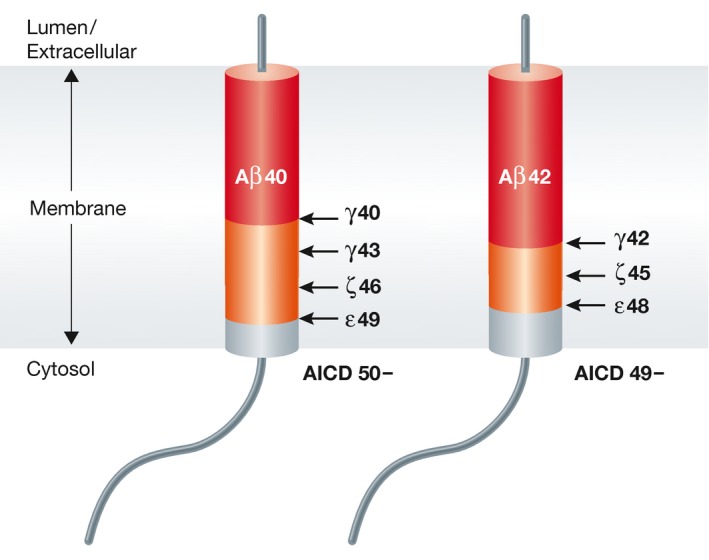
“Aβ peptides are generated from full-length amyloid beta precursor proteins (APP) via sequential proteolytic processing by beta (β) and gamma (γ) secretases [13,14].”
BackgroundD’Mello, S. R. (2021) · International Journal of Molecular Sciences · doi:10.3390/ijms22115911 · Cited by 85
“APP is the protein from which Aβ peptide is derived from by proteolysis while PS1 or PS2 are the catalytic components of the γ-secretase complex, which along with b-secretase/BACE1, cleaves APP to produce Aβ.”
BackgroundUpdate on Biomarkers For Amyloid Pathology in Alzheimer’s Disease
Ashton, N. J., Schöll, M., Heurling, K., Gkanatsiou, E., Portelius, E., Höglund, K., Brinkmalm, G., Hye, A., Blennow, K., & Zetterberg, H. (2018) · Biomarkers in Medicine · doi:10.2217/bmm-2017-0433 · Cited by 75
Enriched environment enhances β‐adrenergic signaling to prevent microglia inflammation by amyloid‐β
Xu, H., Rajsombath, M. M., Weikop, P., & Selkoe, D. J. (2018) · EMBO Molecular Medicine · doi:10.15252/emmm.201808931 · Cited by 74
Self-citationAbushakra, S., Porsteinsson, A., Scheltens, P., Sadowsky, C., Vellas, B., Cummings, J., Gauthier, S., Hey, J. A., Power, A., Wang, P., et al. (2017) · The Journal of Prevention of Alzheimer's Disease · doi:10.14283/jpad.2017.26 · Cited by 75
Arnsten, A. F. T., Datta, D., Leslie, S., Yang, S.-T., Wang, M., & Nairn, A. C. (2019) · Proceedings of the National Academy of Sciences · doi:10.1073/pnas.1903671116 · Cited by 74
“While the rare, early onset, autosomal dominant form of AD arises from genetic insults in amyloid precursor protein (APP) processing (1), the etiology of LOAD is complex and largely unknown.”
BackgroundInfluentialWu, Y., Wu, H., Zeng, J., Pluimer, B., Dong, S., Xie, X., Guo, X., Ge, T., Liang, X., Feng, S., et al. (2021) · Acta Neuropathologica Communications · doi:10.1186/s40478-021-01178-7 · Cited by 73
Nanocarrier mediated drug delivery as an impeccable therapeutic approach against Alzheimer’s disease
Taliyan, R., Kakoty, V., Sarathlal, K. C., Kharavtekar, S. S., Karennanavar, C. R., Choudhary, Y. K., Singhvi, G., Riadi, Y., Dubey, S. K., & Kesharwani, P. (2022) · Journal of Controlled Release · doi:10.1016/j.jconrel.2022.01.044 · Cited by 80
La Barbera, L., Mauri, E., D’Amelio, M., & Gori, M. (2022) · Frontiers in Neuroscience · doi:10.3389/fnins.2022.939855 · Cited by 74
“Alzheimer’s disease is a complicated and multifactorial disorder, and many hypotheses have been developed, including Aβ (Selkoe and Hardy, 2016), tau (Arnsten et al.”
BackgroundAltendorfer, B., Unger, M. S., Poupardin, R., Hoog, A., Asslaber, D., Gratz, I. K., Mrowetz, H., Benedetti, A., de Sousa, D. M. B., Greil, R., et al. (2022) · The Journal of Immunology · doi:10.4049/jimmunol.2100737 · Cited by 80
Ghahremani, M., Wang, M., Chen, H., Zetterberg, H., Smith, E. E., Ismail, Z., & Initiative, A. D. N. (2022) · Neurology · doi:10.1212/wnl.0000000000201517 · Cited by 80
Viles, J. H. (2023) · Angewandte Chemie International Edition · doi:10.1002/anie.202215785 · Cited by 83
Therapeutic potential of nuclear receptor agonists in Alzheimer's disease
Moutinho, M., & Landreth, G. E. (2017) · Journal of Lipid Research · doi:10.1194/jlr.r075556 · Cited by 74
The Role of Genetics in Advancing Precision Medicine for Alzheimer’s Disease—A Narrative Review
Freudenberg-Hua, Y., Li, W., & Davies, P. (2018) · Frontiers in Medicine · doi:10.3389/fmed.2018.00108 · Cited by 74
“A recent review presented a large body of evidence from over 25 years of research supporting the generalizability of amyloid hypothesis (51).”
BackgroundPiccialli, I., Tedeschi, V., Caputo, L., D’Errico, S., Ciccone, R., De Feo, V., Secondo, A., & Pannaccione, A. (2022) · Frontiers in Pharmacology · doi:10.3389/fphar.2022.876614 · Cited by 73
“Oxidative stress, mitochondrial dysfunction, astrocytic and microglial activation, membrane perturbation, and loss of ionic homeostasis are, at the cellular level, some of the events downstream the Aβ1-42 aggregation and accumulation (Selkoe and Hardy, 2016).”
BackgroundInfluentialShim, H. S., Horner, J. W., Wu, C.-J., Li, J., Lan, Z. D., Jiang, S., Xu, X., Hsu, W.-H., Zal, T., Flores, I. I., et al. (2021) · Nature Aging · doi:10.1038/s43587-021-00146-z · Cited by 73
Johnson, E. C. B., Ho, K., Yu, G.-Q., Das, M., Sanchez, P. E., Djukic, B., Lopez, I., Yu, X., Gill, M., Zhang, W., et al. (2020) · Molecular Neurodegeneration · doi:10.1186/s13024-020-00393-5 · Cited by 73
“Although FAD mutations, and AD in general, are widely thought to erode brain functions by promoting the cerebral accumulation of Aβ [8, 151, 154], our results highlight the complexity of APP and its potential roles in the pathogenesis of AD, as well as the challenges involved in trying to ascribe functional abnormalit…”
BackgroundGrochowska, K. M., Yuanxiang, P., Bär, J., Raman, R., Brugal, G., Sahu, G., Schweizer, M., Bikbaev, A., Schilling, S., Demuth, H., et al. (2017) · EMBO reports · doi:10.15252/embr.201643519 · Cited by 73
“Numerous studies indicate that soluble A b oligomers play a key role in the onset of synaptic dysfunction in early stage AD [1,2].”
FMN reduces Amyloid-β toxicity in yeast by regulating redox status and cellular metabolism
Chen, X., Ji, B., Hao, X., Li, X., Eisele, F., Nyström, T., & Petranović, D. (2020) · Nature Communications · doi:10.1038/s41467-020-14525-4 · Cited by 85
The role of amyloids in Alzheimer's and Parkinson's diseases
Salahuddin, P., Fatima, M. T., Uversky, V. N., Khan, R. H., Islam, Z., & Furkan, M. (2021) · International Journal of Biological Macromolecules · doi:10.1016/j.ijbiomac.2021.08.197 · Cited by 82
Inverse Correlation Between Alzheimer’s Disease and Cancer: Short Overview
Zabłocka, A., Kazana, W., Sochocka, M., Stańczykiewicz, B., Janusz, M., Leszek, J., & Orzechowska, B. (2021) · Molecular Neurobiology · doi:10.1007/s12035-021-02544-1 · Cited by 72
“Selkoe and Hardy pay attention to the important role of innate immune system in the pathogenesis of AD [89].”
BackgroundGenomics and Functional Genomics of Alzheimer's Disease
Kamboh, M. I. (2022) · Neurotherapeutics · doi:10.1007/s13311-021-01152-0 · Cited by 73
Wang, J., Fan, D., Li, H.-Y., He, C.-Y., Shen, Y., Zeng, G., Chen, D., Yi, X., Ma, Y., Yu, J., et al. (2022) · Molecular Neurodegeneration · doi:10.1186/s13024-021-00512-w · Cited by 81
“Impaired clearance of β-amyloid (Aβ) is considered as the main cause of sporadic AD, which accounts for 99% of total cases [1].”
Cortese, G. P., & Burger, C. (2016) · Behavioural Brain Research · doi:10.1016/j.bbr.2016.08.027 · Cited by 72
Gajardo‐Gómez, R., Labra, V. C., Maturana, C. J., Shoji, K. F., Santibáñez, C. A., Sáez, J. C., Giaume, C., & Orellana, J. A. (2016) · Glia · doi:10.1002/glia.23080 · Cited by 79
“Although the origin of AD remains unknown, the abnormal accumulation of amyloid-b peptide (Ab) at amy- loid plaques constitutes one of the major histopathological hallmarks observed in postmortem AD brains (Selkoe and Hardy, 2016).”
BackgroundTahmasebinia, F., & Emadi, S. (2017) · BioMetals · doi:10.1007/s10534-017-0005-2 · Cited by 75
“generative disease described firstly by Alois Alzheimer in 1906 (Selkoe and Hardy 2016).”
BackgroundInfluentialYi, J. H., Baek, S. J., Heo, S., Park, H. J., Kwon, H., Lee, S., Jung, J.-W., Park, S. J., Kim, B. C., Lee, Y. C., et al. (2017) · Neuropharmacology · doi:10.1016/j.neuropharm.2017.10.028 · Cited by 79
“This may due to the fact that the time course of AD onset is similar Tau hyperphosphorylation, rather than to Ab deposition (Selkoe and Hardy, 2016).”
Modulation of Disordered Proteins with a Focus on Neurodegenerative Diseases and Other Pathologies
Martinelli, A. H. S., Lopes, F. C., John, E. B. D. O., Carlini, C. R., & Ligabue‐Braun, R. (2019) · International Journal of Molecular Sciences · doi:10.3390/ijms20061322 · Cited by 106
Franzmeier, N., Koutsouleris, N., Benzinger, T., Goate, A., Karch, C. M., Fagan, A. M., McDade, E., Duering, M., Dichgans, M., Levin, J., et al. (2020) · Alzheimer's & Dementia · doi:10.1002/alz.12032 · Cited by 73
Hormesis in Health and Chronic Diseases
Li, X., Yang, T., & Sun, Z. (2019) · Trends in Endocrinology and Metabolism · doi:10.1016/j.tem.2019.08.007 · Cited by 82
“Excessive Aβ deposits causes synaptoxicity and memory dysfunction [39].”
BackgroundLewandowski, C. T., Maldonado Weng, J., & LaDu, M. J. (2020) · Neurobiology of Disease · doi:10.1016/j.nbd.2020.104811 · Cited by 72
Klinger, D., Hill, B. L., Barda, N., Halperin, E., Gofrit, O. N., Greenblatt, C. L., Rappoport, N., Linial, M., & Bercovier, H. (2021) · Vaccines · doi:10.3390/vaccines9050491 · Cited by 77
Chhatwal, J. P., Schultz, S. A., McDade, E., Schultz, A. P., Liu, L., Hanseeuw, B. J., Joseph-Mathurin, N., Feldman, R., Fitzpatrick, C. D., Sparks, K. P., et al. (2022) · The Lancet Neurology · doi:10.1016/s1474-4422(21)00375-6 · Cited by 72
Iyaswamy, A., Wang, X., Krishnamoorthi, S., Kaliyamoorthy, V., Sreenivasmurthy, S. G., Durairajan, S. S. K., Song, J., Tong, B. C., Zhu, Z., Su, C.-F., et al. (2022) · Redox Biology · doi:10.1016/j.redox.2022.102280 · Cited by 79
“Thus, reducing the level of soluble toxic Aβ oligomers and inhibiting their formation are considered to be primary promising therapeutic approaches to treating AD, particularly in the early stage [9].”
BackgroundAlzheimer’s Disease and ncRNAs
Maoz, R., Garfinkel, B. P., & Soreq, H. (2017) · Advances in experimental medicine and biology · doi:10.1007/978-3-319-53889-1_18 · Cited by 78
Phil, L., Naveed, M., Mohammad, I. S., Li, B., & Di, B. (2018) · Biomedicine & Pharmacotherapy · doi:10.1016/j.biopha.2018.03.108 · Cited by 76
Progression of Alzheimer’s disease, tau propagation, and its modifiable risk factors
Takeda, S. (2019) · Neuroscience Research · doi:10.1016/j.neures.2018.08.005 · Cited by 71
More, J., Galusso, N., Veloso, P., Montecinos, L., Finkelstein, J. P., Sánchez, G., Bull, R., Valdés, J. L., Hidalgo, C., & Paula-Lima, A. C. (2018) · Frontiers in Aging Neuroscience · doi:10.3389/fnagi.2018.00399 · Cited by 78
Smit, T., Deshayes, N. A. C., Borchelt, D. R., Kamphuis, W., Middeldorp, J., & Hol, E. M. (2021) · Glia · doi:10.1002/glia.23981 · Cited by 71
Sideris, D. I., Danial, J. S. H., Emin, D., Ruggeri, F. S., Xia, Z., Zhang, Y. P., Lobanova, E., Dakin, H., De, S., Miller, A., et al. (2021) · Brain Communications · doi:10.1093/braincomms/fcab147 · Cited by 71
“The aggregation of the amyloid beta 42 peptide (Ab42) is believed to play a key role in the initiation and development of the disease.(2) It is widely accepted that small soluble Ab42 aggregates are toxic, likely through a variety of mechanisms, including the permeabilization of cell membranes through nonspecific bind…”
BackgroundCalcium Ions in the Physiology and Pathology of the Central Nervous System
Pikor, D., Hurła, M., Słowikowski, B. K., Szymanowicz, O., Poszwa, J., Banaszek, N., Drelichowska, A., Jagodziński, P. P., Kozubski, W. P., & Dorszewska, J. (2024) · International Journal of Molecular Sciences · doi:10.3390/ijms252313133 · Cited by 95
Benzo[ g ]coumarin-Based Fluorescent Probes for Bioimaging Applications
Jung, Y., Jung, J., Huh, Y., & Kim, D. (2018) · Journal of Analytical Methods in Chemistry · doi:10.1155/2018/5249765 · Cited by 79
Dysregulated Wnt Signalling in the Alzheimer’s Brain
Aghaizu, N. D., Jin, H., & Whiting, P. J. (2020) · Brain Sciences · doi:10.3390/brainsci10120902 · Cited by 70
Latimer, C. S., Keene, C. D., Flanagan, M. E., Hemmy, L. S., Lim, K. O., White, L. R., Montine, K. S., & Montine, T. J. (2017) · Journal of Neuropathology & Experimental Neurology · doi:10.1093/jnen/nlx030 · Cited by 70
Lv, M., Yang, S., Cai, L., Qin, L., Li, B., & Wan, Z. (2018) · Molecular Nutrition & Food Research · doi:10.1002/mnfr.201800621 · Cited by 69
Binding modes of thioflavin T and Congo red to the fibril structure of amyloid-β(1–42)
Frieg, B., Gremer, L., Heise, H., Willbold, D., & Gohlke, H. (2020) · Chemical Communications · doi:10.1039/d0cc01161d · Cited by 72
Yan, Q., Wang, W., Weng, J., Zhang, Z., Yin, L., Yang, Q., Guo, F., Wang, X., Chen, F., & Yang, G. (2020) · Drug Delivery · doi:10.1080/10717544.2020.1797240 · Cited by 75
“…characterized by a gradual decline in learning, memory, and executive function, which is the production of amyloid plaques and neurofibrillary tangles in the brain, as well as the loss of neurons associated with memory and learning (Hager et al., 2001; Selkoe & Hardy, 2016; Sevigny et al., 2016).”
BackgroundParodi‐Rullán, R., Ghiso, J., Cabrera, E., Rostagno, A., & Fossati, S. (2020) · Aging Cell · doi:10.1111/acel.13258 · Cited by 69
“Although it remains unclear what primarily triggers and drives the progression of AD, different lines of investigation point to a central role of Aβ and support the relevance of oligomeric conformations of the peptide in the disease pathogenesis (Selkoe & Hardy, 2016).”
BackgroundImpact of Testosterone on Alzheimer’s Disease
Bianchi, V. E. (2022) · The World Journal of Men s Health · doi:10.5534/wjmh.210175 · Cited by 81
“AD is characterized by an abnormal Aβ deposition in neuron and extracellular plaque formation responsible for the pathologic events, causing neuronal degeneration [3] and synapsis dysfunction [4].”
BackgroundCD33 isoforms in microglia and Alzheimer's disease: Friend and foe
Eskandari‐Sedighi, G., Jung, J., & Macauley, M. S. (2022) · Molecular Aspects of Medicine · doi:10.1016/j.mam.2022.101111 · Cited by 75
Engineering antibody and protein therapeutics to cross the blood–brain barrier
Zhao, P., Zhang, N., & An, Z. (2022) · Antibody Therapeutics · doi:10.1093/abt/tbac028 · Cited by 91
“In the amyloid hypothesis, the amyloid-β (Aβ) peptide causes synaptic dysfunction and neurodegeneration [64].”
Xu, Q., Su, Z., Yang, W., Zhong, M., Xian, Y., & Lin, Z. (2023) · Journal of Neuroinflammation · doi:10.1186/s12974-023-02704-1 · Cited by 79
Advanced Techniques for Detecting Protein Misfolding and Aggregation in Cellular Environments
Bai, Y., Zhang, S., Dong, H. Y., Liu, Y., Liu, C., & Zhang, X. (2023) · Chemical Reviews · doi:10.1021/acs.chemrev.3c00494 · Cited by 78
Celecoxib Prevents Cognitive Impairment and Neuroinflammation in Soluble Amyloid β-treated Rats
Mhillaj, E., Morgese, M. G., Tucci, P., Furiano, A., Luongo, L., Bové, M., Maione, S., Cuomo, V., Schiavone, S., & Trabace, L. (2018) · Neuroscience · doi:10.1016/j.neuroscience.2017.12.046 · Cited by 78
An in vitro paradigm to assess potential anti-Aβ antibodies for Alzheimer’s disease
Jin, M., O’Nuallain, B., Hong, W., Boyd, J., Lagomarsino, V. N., O’Malley, T. T., Liu, W., Vanderburg, C. R., Frosch, M. P., Young-Pearse, T., et al. (2018) · Nature Communications · doi:10.1038/s41467-018-05068-w · Cited by 69
Self-citationIntroduction of pathogenic mutations into the mouse Psen1 gene by Base Editor and Target-AID
Sasaguri, H., Nagata, K., Sekiguchi, M., Fujioka, R., Matsuba, Y., Hashimoto, S., Sato, K., Kurup, D., Yokota, T., & Saido, T. C. (2018) · Nature Communications · doi:10.1038/s41467-018-05262-w · Cited by 70
SAR by kinetics for drug discovery in protein misfolding diseases
Chia, S., Habchi, J., Michaels, T. C. T., Cohen, S. I. A., Linse, S. S., Dobson, C. M., Knowles, T. P. J., & Vendruscolo, M. (2018) · Proceedings of the National Academy of Sciences · doi:10.1073/pnas.1807884115 · Cited by 71
DISC1 a key molecular lead in psychiatry and neurodevelopment: No-More Disrupted-in-Schizophrenia 1
Niwa, M., Cash-Padgett, T. V., Kubo, K.-I., Saito, A., Ishii, K., Sumitomo, A., Taniguchi, Y., Ishizuka, K., Jaaro-Peled, H., Tomoda, T., et al. (2016) · Molecular Psychiatry · doi:10.1038/mp.2016.154 · Cited by 76
Ciccone, L., Shi, C., di Lorenzo, D., Van Baelen, A.-C., & Tonali, N. (2020) · Molecules · doi:10.3390/molecules25102439 · Cited by 69
“the accumulation of Aβ exacerbates Tau’s pathology [6,55,56].”
BackgroundImaging and Molecular Mechanisms of Alzheimer’s Disease: A Review
Femminella, G. D., Thayanandan, T., Calsolaro, V., Komici, K., Rengo, G., Corbi, G., & Ferrara, N. (2018) · International Journal of Molecular Sciences · doi:10.3390/ijms19123702 · Cited by 79
“Aβ is thought to be the trigger or the driver of the disease process, mainly based on evidence from familial AD cases, leading to the amyloid hypothesis of AD [5].”
BackgroundCarter, C. J. (2017) · Journal of Alzheimer's Disease Reports · doi:10.3233/adr-170017 · Cited by 69
“In the context of the amyloid hypothesis which posits a causal role for A in AD [46], this places pathogens upstream of A , and logically as causal, both in terms of A production and in relation to AD.”
BackgroundResultParambi, D. G. T., Alharbi, K. S., Kumar, R., Harilal, S., Batiha, G. E., Martins, N. A., Hendawy, O. M., Musa, A., Panda, D. S., & Mathew, B. (2021) · Molecular Neurobiology · doi:10.1007/s12035-021-02555-y · Cited by 82
Coskuner‐Weber, O., Mirzanli, O., & Uversky, V. N. (2022) · Biophysical Reviews · doi:10.1007/s12551-022-00968-0 · Cited by 74
“There have been studies reporting that one of the early events of neuronal dysfunction is the accumulation of Aβ42 peptide that seeds the formation of amyloid plaques (Selkoe and Hardy 2016).”
BackgroundPonezumab in mild‐to‐moderate Alzheimer's disease: Randomized phase II PET‐PIB study
Landen, J. W., Andreasen, N., Cronenberger, C. L., Schwartz, P. F., Börjesson‐Hanson, A., Östlund, H., Sattler, C. A., Binneman, B., & Bednar, M. M. (2017) · Alzheimer's & Dementia: Translational Research & Clinical Interventions · doi:10.1016/j.trci.2017.05.003 · Cited by 69
“A recent review of the amyloid hypothesis by Selkoe [26] suggests that Ab dyshomeostasis has emerged as the most extensively validated and compelling therapeutic target.”
BackgroundZheng, H. X., Zhou, Q., Du, Y., Li, C., Xu, P., Li, L., Xiao, J., & Gao, H. (2017) · Biochimica et Biophysica Acta (BBA) - Molecular Basis of Disease · doi:10.1016/j.bbadis.2017.10.028 · Cited by 74
Dysregulation of Rab5‐mediated endocytic pathways in Alzheimer's disease
Xu, W., Fang, F., Ding, J., & Wu, C. (2018) · Traffic · doi:10.1111/tra.12547 · Cited by 69
“marked significantly by synaptic loss, selective neuronal death, neurotransmitter loss and neuroinflammation.(1,3,4,6,8,10,11) At present, there”
Wallin, C., Hiruma, Y., Wärmländer, S. K. T. S., Huvent, I., Jarvet, J., Abrahams, J. P., Gräslund, A., Lippens, G. M., & Luo, J. (2018) · Journal of the American Chemical Society · doi:10.1021/jacs.7b13623 · Cited by 72
Bourgeois, A., Lauritzen, I., Lorivel, T., Bauer, C., Checler, F., & Pardossi-Piquard, R. (2018) · Neurobiology of Aging · doi:10.1016/j.neurobiolaging.2018.06.038 · Cited by 68
Olive Biophenols Reduces Alzheimer’s Pathology in SH-SY5Y Cells and APPswe Mice
Omar, S. H., Scott, C., Hamlin, A. S., & Obied, H. K. (2018) · International Journal of Molecular Sciences · doi:10.3390/ijms20010125 · Cited by 76
Wang, C., Guo, Y., Zhou, M., Xue, C., Chang, Y., Zhang, T., & Wang, Y. (2019) · Food & Function · doi:10.1039/c8fo01822g · Cited by 71
“Amyloid‐beta accumulation cycle” as a prevention and/or therapy target for Alzheimer's disease
Rao, C. V., Asch, A. S., Carr, D. J. J., & Yamada, H. Y. (2020) · Aging Cell · doi:10.1111/acel.13109 · Cited by 72
“The amount of amyloid-beta is a result of the balance between generation and catabolism; thus, pathways involved in amyloid-beta generation and catabolism have been of major research interest and are candidates for AD drug targeting (Hardy & Selkoe, 2002; Selkoe & Hardy, 2016).”
BackgroundExploring the Role of PSEN Mutations in the Pathogenesis of Alzheimer’s Disease
Kabir, M. T., Uddin, M. S., Setu, J. R., Ashraf, G. M., Bin-Jumah, M. N., & Abdel‐Daim, M. M. (2020) · Neurotoxicity Research · doi:10.1007/s12640-020-00232-x · Cited by 78
“Indeed, the aptitude to elevate the ratio of Aβ42/Aβ40 has been extensively regarded as an invariant and vital feature of PSEN1-bearing pathogenic mutations (Selkoe and Hardy 2016).”
Backgroundd’Abramo, C., D'adamio, L., & Giliberto, L. (2020) · Journal of Personalized Medicine · doi:10.3390/jpm10030116 · Cited by 79
Elucidating the Neuropathologic Mechanisms of SARS-CoV-2 Infection
Pacheco‐Herrero, M., Soto-Rojas, L. O., Harrington, C. R., Flores-Martinez, Y. M., Villegas-Rojas, M. M., León-Aguilar, A. M., Martínez-Gómez, P. A., Campa-Córdoba, B. B., Apátiga-Pérez, R., Corniel-Taveras, C. N., et al. (2021) · Frontiers in Neurology · doi:10.3389/fneur.2021.660087 · Cited by 79
Bile acid receptors and signaling crosstalk in the liver, gut and brain
Ferrell, J. M., & Chiang, J. Y. L. (2021) · Liver Research · doi:10.1016/j.livres.2021.07.002 · Cited by 77
Belsare, K. D., Wu, H., Mondal, D., Bond, A., Castillo, E., Jin, J., Jo, H., Roush, A. E., Pilla, K. B., Sali, A., et al. (2022) · Proceedings of the National Academy of Sciences · doi:10.1073/pnas.2114486119 · Cited by 68
“Human genetic studies on heritable mutations in APP and PSEN causing early-onset familial AD (3) argue that pathogenic A β drives tau neurofibrillary tangle formation; in contrast, mutations in MAPT do not lead to A β pathology nor cause AD, but rather a rare genetic form of early-onset primary…”
Uchida, Y., Kan, H., Sakurai, K., Oishi, K., & Matsukawa, N. (2023) · Frontiers in Aging Neuroscience · doi:10.3389/fnagi.2023.1111448 · Cited by 89
“It also plays a role in the clearance of Aβ and tau proteins to protect from AD pathogenesis (Selkoe and Hardy, 2016).”
BackgroundBaranger, K., Giannoni, P., Girard, S. D., Girot, S., Gaven, F., Stephan, D., Migliorati, M., Khrestchatisky, M., Bockaert, J., Marchetti, E., et al. (2017) · Neuropharmacology · doi:10.1016/j.neuropharm.2017.08.031 · Cited by 75
“Proteolytic processing of APP and Aβ metabolism is central in AD pathogenesis (Selkoe and Hardy, 2016).”
BackgroundPourbadie, H. G., Sayyah, M., Khoshkholgh-Sima, B., Choopani, S., Nategh, M., Motamedi, F., & Shokrgozar, M. A. (2018) · Neurobiology of Aging · doi:10.1016/j.neurobiolaging.2018.06.020 · Cited by 68
The Involvement of Peripheral and Brain Insulin Resistance in Late Onset Alzheimer’s Dementia
Folch, J., Olloquequi, J., Ettcheto, M., Busquets, O., Sánchez-López, E., Cano, A., Espinosa-Jiménez, T., García, M. L., Beas-Zarate, C., Casadesús, G., et al. (2019) · Frontiers in Aging Neuroscience · doi:10.3389/fnagi.2019.00236 · Cited by 68
Modulation of γ- and β-secretases as early prevention against Alzheimer's disease
Voytyuk, I., De Strooper, B., & Chávez-Gutiérrez, L. (2018) · Biological Psychiatry · doi:10.1016/j.biopsych.2017.08.001 · Cited by 67
“Introduction Despite the current widespread criticism on the amyloid hypothesis for Alzheimer’s disease (AD), drug targets in this pathway remain by far the most rational ones in the field (1).”
Alzheimer's disease: Innate immunity gone awry?
VanItallie, T. B. (2017) · Metabolism · doi:10.1016/j.metabol.2017.01.014 · Cited by 67
Liu, F., Wang, W., Sang, J., Jia, L., & Lu, F. (2018) · ACS Chemical Neuroscience · doi:10.1021/acschemneuro.8b00441 · Cited by 70
Metadata
- Authors
- Selkoe, D. J., & Hardy, J.
- Affiliations
- Brigham and Women's Hospital (US)
- UCL Queen Square Institute of Neurology (GB)
- Corresponding author
- Hardy, John
- Venue
- EMBO Molecular Medicine
- Published
- 2016-03-29
- Volume
- 8
- Issue
- 6
- Pages
- 595-608
- ISSN
- 1757-4676 (ISSN-L)
- 1757-4684
- PMC
- PMC4888851
- OpenAlex
- W2329336071
- Cited by
- 6,164
- References
- 137
- Citations by year
- 2026: 553 · 2025: 637 · 2024: 656 · 2023: 658 · 2022: 679 · 2021: 734 · 2020: 728 · 2019: 533 · 2018: 500 · 2017: 388 · 2016: 92
- FWCI
- 59.19
- Type
- journal article
- Language
- en
- Open access
- gold
- doi.org
- Licence
- other-oa
- creativecommons.org/licenses/by/4.0/ (tdm)
- creativecommons.org/licenses/by/4.0/ (vor)
- Locations
- EMBO Molecular Medicine (publishedVersion, other-oa)
- PubMed Central (publishedVersion, cc-by)
- PubMed (publishedVersion)
- Digital Access to Scholarship at Harvard (DASH) (Harvard University) (submittedVersion, cc-by)
- DOAJ (DOAJ: Directory of Open Access Journals) (submittedVersion)
- Funders
- National Institute on Aging (AG06173, AG015379)
- MRC
- ARUK
- Wellcome Trust
- Topics
- Life Sciences › Neuroscience › Cellular and Molecular Neuroscience › Alzheimer's disease research and treatments
- Health Sciences › Medicine › Psychiatry and Mental health › Dementia and Cognitive Impairment Research
- Life Sciences › Neuroscience › Neurology › Neuroinflammation and Neurodegeneration Mechanisms
- Keywords
- Alzheimer's disease, amyloid hypothesis, amyloid-beta, amyloid-beta 42, amyloid precursor protein, presenilin, gamma-secretase, Down syndrome, APOE ε4, amyloid-beta oligomers, tau hyperphosphorylation, amyloid PET, cerebrospinal fluid biomarkers, anti-amyloid antibodies, solanezumab, crenezumab, aducanumab, amyloid clearance, neurofibrillary tangles, synaptic dysfunction
- MeSH terms
- Alzheimer Disease, Animals, Brain, Humans, Mice, Transgenic, Amyloid beta-Peptides, Amyloid beta-Protein Precursor, Rats, Presenilins
About these checks
Registry, retraction, Cites and statistics results are computed, not judged, with one exception: a printed reference that no index lists is read once by a model before it counts as a citation error. Claims are extracted by a model and kept only when their quote appears verbatim in the text; each cited source is then checked, with a model’s help, for whether it says what the claim relies on. Those verdicts can be wrong — read the claim’s quote and the cited source before relying on one.
Statistics and arithmetic are recomputed, not judged.
Confidence bands are shown only for fields calibrated on our annotated test set. None is calibrated yet, so no band is shown.
What counts as a claim ›How we measure confidence ›How we check this ›
Are you an author, or do you see a problem with this page? Request a review
Data sources
Bibliographic data: Semantic Scholar, OpenAlex, Crossref.
Contains information from the Semantic Scholar Academic Graph Datasets, made available under the ODC Attribution License (ODC-BY 1.0).
Semantic Scholar’s data is described in: Kinney, R., et al. (2023). The Semantic Scholar Open Data Platform. arXiv:2301.10140.
