

Thermal proteome profiling for interrogating protein interactions
Open accessThe DOI matches its Crossref record; 81 of the 81 references it cites were found in a registry or an index.
Abstract
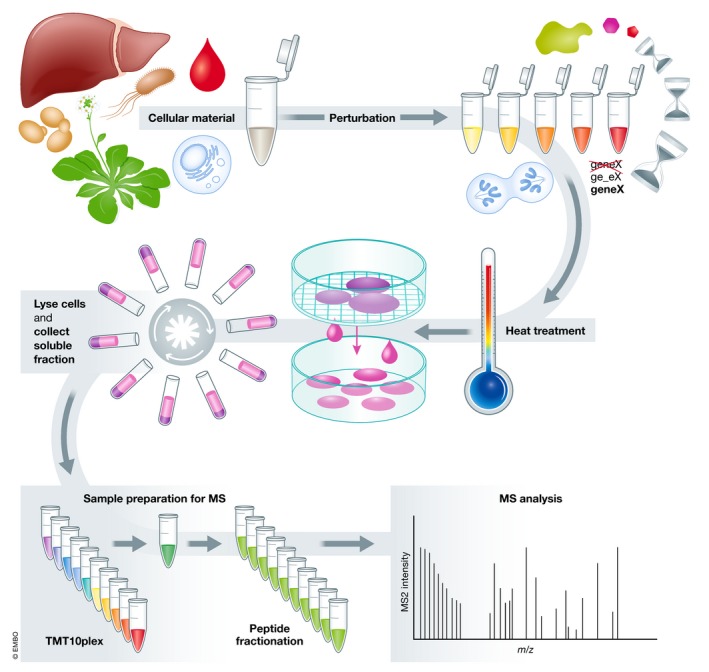
Thermal proteome profiling (TPP) is based on the principle that, when subjected to heat, proteins denature and become insoluble. Proteins can change their thermal stability upon interactions with small molecules (such as drugs or metabolites), nucleic acids or other proteins, or upon post‐translational modifications. TPP uses multiplexed quantitative mass spectrometry‐based proteomics to monitor the melting profile of thousands of expressed proteins. Importantly, this approach can be performed in vitro , in situ , or in vivo . It has been successfully applied to identify targets and off‐targets of drugs, or to study protein–metabolite and protein–protein interactions. Therefore, TPP provides a unique insight into protein state and interactions in their native context and at a proteome‐wide level, allowing to study basic biological processes and their underlying mechanisms.
Overview
The claims and statistics of this paper haven’t been checked yet.
Free: it reads the open-access text and checks the first 5 claims that cite a source we can check. Create a free account to check every claim.
Integrity signals
Registry
Cites
Statistics
Figures

Verification
Claims the paper makes
The claims and statistics of this paper haven’t been checked yet.
Free: it reads the open-access text and checks the first 5 claims that cite a source we can check. Create a free account to check every claim.
Claims other papers make about this one
Each is checked against this paper’s own text: does it say what the citing paper says it does?
The source backs part of the claim, not all of it — or backs it for a different population, condition or comparison.
In the citing paper
“Especially in combination with quantitative changes measured by e.g., phosphoproteomics, TPP can be used to identify functionally relevant alterations and link them to signaling and phenotypic consequences (Savitski et al, 2014; Mateus et al, 2020).”
From Network integration of thermal proteome profiling with multi-omics data decodes PARP inhibition (2024) · cites this paper as Mateus et al, 2020
Experimental — accuracy not yet measuredThe source backs part of the claim, not all of it — or backs it for a different population, condition or comparison.
In the citing paper
“TPP has been used successfully in the past for drug profiling, but it generates complex data that are difficult to interpret and potentially benefit from integration with other data types (Savitski et al, 2014; Perrin et al, 2020; Mateus et al, 2020).”
From Network integration of thermal proteome profiling with multi-omics data decodes PARP inhibition (2024) · cites this paper as Mateus et al, 2020
Experimental — accuracy not yet measuredThe cited source says what the claim attributes to it.
In the citing paper
“Thermal proteome profiling (TPP, Savitski et al, 2014) is a mass-spectrometry (MS) based functional proteomics method that can identify shifts in protein thermal stability across different conditions (Mateus et al, 2020).”
From Network integration of thermal proteome profiling with multi-omics data decodes PARP inhibition (2024) · cites this paper as Mateus et al, 2020
The cited source says what the claim attributes to it.
In the citing paper
“In this case, thermal (de)stabilization can correspond to a variety of effects ranging from drug binding to complex formation among others (Mateus et al, 2020).”
From Network integration of thermal proteome profiling with multi-omics data decodes PARP inhibition (2024) · cites this paper as Mateus et al, 2020
Self-check
Percentages, sums and reported differences re-computed from the paper’s own numbers.
The self-check needs the paper’s full text.
Citations
Cites
limma powers differential expression analyses for RNA-sequencing and microarray studies
Ritchie, M. E., Phipson, B., Wu, D., Hu, Y., Law, C. W., Shi, W., & Smyth, G. K. (2015) · Nucleic Acids Research · doi:10.1093/nar/gkv007 · Cited by 40,458
Cox, J., & Mann, M. (2008) · Nature Biotechnology · doi:10.1038/nbt.1511 · Cited by 14,855
Universal sample preparation method for proteome analysis
Wiśniewski, J. R., Zougman, A., Nagaraj, N., & Mann, M. (2009) · Nature Methods · doi:10.1038/nmeth.1322 · Cited by 8,352
Global quantification of mammalian gene expression control
Schwanhäusser, B., Busse, D., Li, N., Dittmar, G., Schuchhardt, J., Wolf, J., Chen, W., & Selbach, M. (2011) · Nature · doi:10.1038/nature10098 · Cited by 6,566 · cited 2×
“…upon ligand binding, or changes to protein interactions or conformation, termed limited proteolysis (LiP; Feng et al , 2014; Leuenberger et al , 2017; Schopper et al , 2017; Piazza et al , 2018), or the inferring of stability of proteins from rates of oxidation (SPROX; Strickland et al , 2013).”
Tacconelli, E., Carrara, E., Savoldi, A., Harbarth, S., Mendelson, M., Monnet, D. L., Pulcini, C., Kahlmeter, G., Kluytmans, J., Carmeli, Y., et al. (2018) · The Lancet Infectious Diseases · doi:10.1016/s1473-3099(17)30753-3 · Cited by 6,142 · cited 1×
“Similarly, the redox state of a protein can also alter its melting behavior (Sun et al , 2019), and we anticipate that similar stabilization events are yet to be identified for other types of post-translational modifications.”
Biomolecular condensates: organizers of cellular biochemistry
Banani, S. F., Lee, H. O., Hyman, A. A., & Rosen, M. K. (2017) · Nature Reviews Molecular Cell Biology · doi:10.1038/nrm.2017.7 · Cited by 6,100
In-gel digestion for mass spectrometric characterization of proteins and proteomes
Shevchenko, A., Tomas, H., Havli, J., Olsen, J. V., & Mann, M. (2006) · Nature Protocols · doi:10.1038/nprot.2006.468 · Cited by 4,942
Ross, P. L., Huang, Y. N., Marchese, J. N., Williamson, B., Parker, K., Hattan, S., Khainovski, N., Pillai, S., Dey, S., Daniels, S., et al. (2004) · Molecular & Cellular Proteomics · doi:10.1074/mcp.m400129-mcp200 · Cited by 4,401 · cited 2×
“However, isobaric tags for relative and absolute quantitation (iTRAQ; Ross et al , 2004) have also been used (Huber et al , 2015), but limit the multiplexing capacity (i.e., fewer temperatures or compound concentrations can be multiplexed), which will generally result in longer analysis time.”
Liquid phase condensation in cell physiology and disease
Shin, Y., & Brangwynne, C. P. (2017) · Science · doi:10.1126/science.aaf4382 · Cited by 4,152
Huber, W., von Heydebreck, A., Sültmann, H., Poustka, A., & Vingron, M. (2002) · Bioinformatics · doi:10.1093/bioinformatics/18.suppl_1.s96 · Cited by 2,440
Mass-spectrometric exploration of proteome structure and function
Aebersold, R., & Mann, M. (2016) · Nature · doi:10.1038/nature19949 · Cited by 2,334 · cited 1×
“The advent of mass spectrometry-based proteomics has transformed the study of protein biology, by allowing for a global view of the proteome in its native context (Aebersold & Mann, 2016).”
Monitoring Drug Target Engagement in Cells and Tissues Using the Cellular Thermal Shift Assay
Molina, D. M., Jafari, R., Ignatushchenko, M., Seki, T., Larsson, E. A., Dan, C., Sreekumar, L., Cao, Y., & Nordlund, P. (2013) · Science · doi:10.1126/science.1233606 · Cited by 2,261 · cited 4×
“3 min, which was initially shown to be sufficient to induce intra-cellular protein aggregation (Martinez Molina et al , 2013).”
InfluentialAntibacterial drug discovery in the resistance era
Brown, E. D., & Wright, G. D. (2016) · Nature · doi:10.1038/nature17042 · Cited by 2,247
A draft map of the human proteome
Kim, M.-S., Pinto, S. M., Getnet, D., Nirujogi, R. S., Manda, S. S., Chaerkady, R., Madugundu, A. K., Kelkar, D. S., Isserlin, R., Jain, S., et al. (2014) · Nature · doi:10.1038/nature13302 · Cited by 2,198
Single-pot, solid-phase-enhanced sample preparation for proteomics experiments
Hughes, C. S., Moggridge, S., Müller, T., Sorensen, P. H., Morin, G. B., & Krijgsveld, J. (2019) · Nature Protocols · doi:10.1038/s41596-018-0082-x · Cited by 1,941
Mass-spectrometry-based draft of the human proteome
Wilhelm, M., Schlegl, J., Hahne, H., Gholami, A. M., Lieberenz, M., Savitski, M. M., Ziegler, E., Butzmann, L., Gessulat, S., Marx, H., et al. (2014) · Nature · doi:10.1038/nature13319 · Cited by 1,820 · cited 1×
“This encompasses, for example, the study of protein abundances (Kim et al , 2014; Wilhelm et al , 2014), turnover (Schwanhausser et al , 2011), localization (Geladaki et al , 2019), or post-translational modifications (Potel et al , 2018).”
Self-citationPolymer physics of intracellular phase transitions
Brangwynne, C. P., Tompa, P., & Pappu, R. V. (2015) · Nature Physics · doi:10.1038/nphys3532 · Cited by 1,553
The cellular thermal shift assay for evaluating drug target interactions in cells
Jafari, R., Almqvist, H., Axelsson, H., Ignatushchenko, M., Lundbäck, T., Nordlund, P., & Molina, D. M. (2014) · Nature Protocols · doi:10.1038/nprot.2014.138 · Cited by 1,474
McAlister, G. C., Nusinow, D. P., Jedrychowski, M. P., Wühr, M., Huttlin, E. L., Erickson, B. K., Rad, R., Haas, W., & Gygi, S. P. (2014) · Analytical Chemistry · doi:10.1021/ac502040v · Cited by 1,263 · cited 1×
“In addition, MS3 approaches in which peptide fragments are further selected and fragmented can be used (Ting et al , 2011; McAlister et al , 2014).”
Ultrasensitive proteome analysis using paramagnetic bead technology
Hughes, C. S., Foehr, S., Garfield, D. A., Furlong, E. E., Steinmetz, L. M., & Krijgsveld, J. (2014) · Molecular Systems Biology · doi:10.15252/msb.20145625 · Cited by 1,225
Tracking cancer drugs in living cells by thermal profiling of the proteome
Savitski, M. M., Reinhard, F. B. M., Franken, H., Werner, T., Savitski, M. F., Eberhard, D., Molina, D. M., Jafari, R., Dovega, R. B., Klaeger, S., et al. (2014) · Science · doi:10.1126/science.1255784 · Cited by 1,187 · cited 26×
“Using this approach, it has been possible to deconvolute drug targets (Savitski et al , 2014, 2018; Huber et al , 2015; Reinhard et al , 2015; Becher et al , 2016; Mateus et al , 2016, 2018; Kitagawa et al , 2017; Azimi et al , 2018; Hu et al , 2019) and enzyme substrates (preprint: Saei et al ,…”
InfluentialSelf-citationMS3 eliminates ratio distortion in isobaric multiplexed quantitative proteomics
Ting, L., Rad, R., Gygi, S. P., & Haas, W. (2011) · Nature Methods · doi:10.1038/nmeth.1714 · Cited by 1,009 · cited 1×
“In addition, MS3 approaches in which peptide fragments are further selected and fragmented can be used (Ting et al , 2011; McAlister et al , 2014).”
Phase separation in biology; functional organization of a higher order
Mitrea, D. M., & Kriwacki, R. W. (2016) · Cell Communication and Signaling · doi:10.1186/s12964-015-0125-7 · Cited by 726
Franken, H., Mathieson, T., Childs, D., Sweetman, G. M. A., Werner, T., Tögel, I., Doce, C., Gade, S., Bantscheff, M., Drewes, G., et al. (2015) · Nature Protocols · doi:10.1038/nprot.2015.101 · Cited by 659
Self-citationAlberti, S. (2017) · Current Biology · doi:10.1016/j.cub.2017.08.069 · Cited by 647
A selective inhibitor of PRMT5 with in vivo and in vitro potency in MCL models
Chan-Penebre, E., Kuplast, K. G., Majer, C. R., Boriack-Sjodin, P. A., Wigle, T. J., Johnston, L. D., Rioux, N., Munchhof, M. J., Jin, L., Jacques, S. L., et al. (2015) · Nature Chemical Biology · doi:10.1038/nchembio.1810 · Cited by 569
A Map of Protein-Metabolite Interactions Reveals Principles of Chemical Communication
Piazza, I., Kochanowski, K., Cappelletti, V., Fuhrer, T., Noor, E., Sauer, U., & Picotti, P. (2018) · Cell · doi:10.1016/j.cell.2017.12.006 · Cited by 556
MTH1 inhibition eradicates cancer by preventing sanitation of the dNTP pool
Gad, H., Koolmeister, T., Jemth, A.-S., Eshtad, S., Jacques, S. A., Ström, C. E., Svensson, L. M., Schultz, N., Lundbäck, T., Einarsdottir, B. O., et al. (2014) · Nature · doi:10.1038/nature13181 · Cited by 514
Addressing Accuracy and Precision Issues in iTRAQ Quantitation
Karp, N. A., Huber, W., Sadowski, P. G., Charles, P. D., Hester, S. V., & Lilley, K. S. (2010) · Molecular & Cellular Proteomics · doi:10.1074/mcp.m900628-mcp200 · Cited by 495
The functional landscape of the human phosphoproteome
Ochoa, D., Jarnuczak, A. F., Viéitez, C., Gehre, M., Soucheray, M., Mateus, A., Kleefeldt, A. A., Hill, A., Garcia-Alonso, L., Stein, F., et al. (2020) · Nature Biotechnology · doi:10.1038/s41587-019-0344-3 · Cited by 491 · cited 4×
“…et al , 2014), which can be further aided by enzymatic digestion of certain cell structures [e.g., addition of DNAse to reduce the viscosity of the lysate (Becher et al , 2018), or lysozyme or zymolyase to digest the bacterial or yeast cell walls (Mateus et al , 2018; Ochoa et al , 2019)].”
InfluentialSelf-citationMeier, F., Beck, S., Grassl, N., Lubeck, M., Park, M. A., Raether, O., & Mann, M. (2015) · Journal of Proteome Research · doi:10.1021/acs.jproteome.5b00932 · Cited by 423
Cell-wide analysis of protein thermal unfolding reveals determinants of thermostability
Leuenberger, P., Ganscha, S., Kahraman, A., Cappelletti, V., Boersema, P. J., von Mering, C., Claassen, M., & Picotti, P. (2017) · Science · doi:10.1126/science.aai7825 · Cited by 411
Global analysis of protein structural changes in complex proteomes
Feng, Y., De Franceschi, G., Kahraman, A., Soste, M., Melnik, A., Boersema, P. J., de Laureto, P. P., Nikolaev, Y., Oliveira, A. P., & Picotti, P. (2014) · Nature Biotechnology · doi:10.1038/nbt.2999 · Cited by 407
Stereospecific targeting of MTH1 by (S)-crizotinib as an anticancer strategy
Huber, K. V. M., Salah, E., Radic, B., Gridling, M., Elkins, J. M., Stukalov, A., Jemth, A.-S., Göktürk, C., Sanjiv, K., Strömberg, K., et al. (2014) · Nature · doi:10.1038/nature13194 · Cited by 395
Systematic analysis of protein turnover in primary cells
Mathieson, T., Franken, H., Kosinski, J., Kurzawa, N., Zinn, N., Sweetman, G., Poeckel, D., Ratnu, V. S., Schramm, M., Becher, I., et al. (2018) · Nature Communications · doi:10.1038/s41467-018-03106-1 · Cited by 379
Self-citationMeier, F., Geyer, P. E., Virreira Winter, S., Cox, J., & Mann, M. (2018) · Nature Methods · doi:10.1038/s41592-018-0003-5 · Cited by 348
Phase Separation: Linking Cellular Compartmentalization to Disease
Aguzzi, A., & Altmeyer, M. (2016) · Trends in Cell Biology · doi:10.1016/j.tcb.2016.03.004 · Cited by 338
Thermal proteome profiling monitors ligand interactions with cellular membrane proteins
Reinhard, F. B. M., Eberhard, D., Werner, T., Franken, H., Childs, D., Doce, C., Savitski, M. F., Huber, W., Bantscheff, M., Savitski, M. M., et al. (2015) · Nature Methods · doi:10.1038/nmeth.3652 · Cited by 315
Self-citationSchopper, S., Kahraman, A., Leuenberger, P., Feng, Y., Piazza, I., Müller, O., Boersema, P. J., & Picotti, P. (2017) · Nature Protocols · doi:10.1038/nprot.2017.100 · Cited by 288
Proteome Integral Solubility Alteration: A High-Throughput Proteomics Assay for Target Deconvolution
Gaetani, M., Sabatier, P., Saei, A. A., Beusch, C. M., Yang, Z., Lundström, S. L., & Zubarev, R. A. (2019) · Journal of Proteome Research · doi:10.1021/acs.jproteome.9b00500 · Cited by 287 · cited 11×
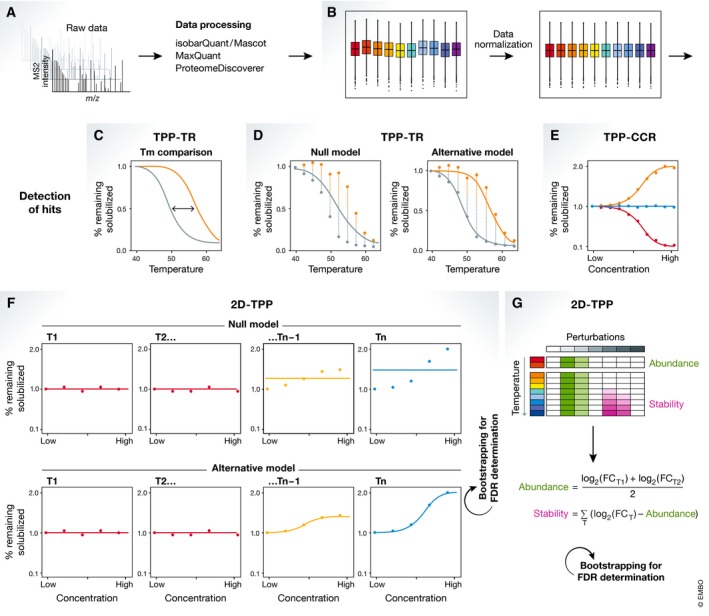
“For TPP-TR experiments, the first proposed analysis strategy was the comparison of melting points between defined conditions (Savitski et al , 2014; Franken et al , 2015; Fig 3C).”
InfluentialMeasuring and Managing Ratio Compression for Accurate iTRAQ/TMT Quantification
Savitski, M. M., Mathieson, T., Zinn, N., Sweetman, G., Doce, C., Becher, I., Pachl, F., Kuster, B., & Bantscheff, M. (2013) · Journal of Proteome Research · doi:10.1021/pr400098r · Cited by 276
Self-citationProteome-wide solubility and thermal stability profiling reveals distinct regulatory roles for ATP
Sridharan, S., Kurzawa, N., Werner, T., Günthner, I., Helm, D., Huber, W., Bantscheff, M., & Savitski, M. M. (2019) · Nature Communications · doi:10.1038/s41467-019-09107-y · Cited by 267
Self-citationIon Coalescence of Neutron Encoded TMT 10-Plex Reporter Ions
Werner, T., Sweetman, G., Savitski, M. F., Mathieson, T., Bantscheff, M., & Savitski, M. M. (2014) · Analytical Chemistry · doi:10.1021/ac500140s · Cited by 258
Self-citationThermal profiling reveals phenylalanine hydroxylase as an off-target of panobinostat
Becher, I., Werner, T., Doce, C., Zaal, E. A., Tögel, I., Khan, C. A., Rueger, A., Muelbaier, M., Salzer, E., Berkers, C. R., et al. (2016) · Nature Chemical Biology · doi:10.1038/nchembio.2185 · Cited by 251 · cited 14×
“An extension of this approach is the 2 D-TPP, in which a TPP-CCR experiment is performed at multiple temperatures (Becher et al , 2016 ).”
InfluentialSelf-citationPervasive Protein Thermal Stability Variation during the Cell Cycle
Becher, I., Andrés-Pons, A., Romanov, N., Stein, F., Schramm, M., Baudin, F., Helm, D., Kurzawa, N., Mateus, A., Mackmull, M.-T., et al. (2018) · Cell · doi:10.1016/j.cell.2018.03.053 · Cited by 230
Self-citationCombining LOPIT with differential ultracentrifugation for high-resolution spatial proteomics
Geladaki, A., Kočevar Britovšek, N., Breckels, L. M., Smith, T. S., Vennard, O. L., Mulvey, C. M., Crook, O. M., Gatto, L., & Lilley, K. S. (2019) · Nature Communications · doi:10.1038/s41467-018-08191-w · Cited by 225
Thermal proximity coaggregation for system-wide profiling of protein complex dynamics in cells
Tan, C. S. H., Go, K. D., Bisteau, X., Dai, L., Yong, C. H., Prabhu, N., Ozturk, M. B., Lim, Y. T., Sreekumar, L., Lengqvist, J., et al. (2018) · Science · doi:10.1126/science.aan0346 · Cited by 224 · cited 3×
“…al , 2016; Mateus et al , 2016, 2018; Kitagawa et al , 2017; Azimi et al , 2018; Hu et al , 2019) and enzyme substrates (preprint: Saei et al , 2018), study metabolic shifts (Becher et al , 2018; Dai et al , 2018; Mateus et al , 2018), or identify protein – protein interactions (Tan et al , 2018).”
Multiplexed Proteome Dynamics Profiling Reveals Mechanisms Controlling Protein Homeostasis
Savitski, M. M., Zinn, N., Faelth-Savitski, M., Poeckel, D., Gade, S., Becher, I., Muelbaier, M., Wagner, A. J., Strohmer, K., Werner, T., et al. (2018) · Cell · doi:10.1016/j.cell.2018.02.030 · Cited by 218
Self-citationDziekan, J. M., Yu, H., Chen, D., Dai, L., Wirjanata, G., Larsson, A., Prabhu, N., Sobota, R. M., Bozdech, Z., & Nordlund, P. (2019) · Science Translational Medicine · doi:10.1126/scitranslmed.aau3174 · Cited by 218
Proteome-wide drug and metabolite interaction mapping by thermal-stability profiling
Huber, K. V. M., Olek, K. M., Müller, A. C., Tan, C. S. H., Bennett, K. L., Colinge, J., & Superti-Furga, G. (2015) · Nature Methods · doi:10.1038/nmeth.3590 · Cited by 210
High-Resolution Enabled TMT 8-plexing
Werner, T., Becher, I., Sweetman, G., Doce, C., Savitski, M. M., & Bantscheff, M. (2012) · Analytical Chemistry · doi:10.1021/ac301553x · Cited by 189
Self-citationThermal proteome profiling in bacteria: probing protein state in vivo
Mateus, A., Bobonis, J., Kurzawa, N., Stein, F., Helm, D., Hevler, J., Typas, A., & Savitski, M. M. (2018) · Molecular Systems Biology · doi:10.15252/msb.20188242 · Cited by 189
Self-citationThompson, A., Wölmer, N., Koncarevic, S., Selzer, S., Böhm, G., Legner, H., Schmid, P., Kienle, S., Penning, P., Höhle, C., et al. (2019) · Analytical Chemistry · doi:10.1021/acs.analchem.9b04474 · Cited by 186 · cited 5×
“…applied without any perturbation (other than temperature) to study the melting behavior of proteins in situ , unraveling diverse properties of cellular systems, such as that physically interacting proteins have similar melting profiles (Becher et al , 2018; Mateus et al , 2018; Tan et al , 2018).”
InfluentialIdentifying drug targets in tissues and whole blood with thermal-shift profiling
Perrin, J., Werner, T., Kurzawa, N., Rutkowska, A., Childs, D. D., Kalxdorf, M., Poeckel, D., Stonehouse, E., Strohmer, K., Heller, B., et al. (2020) · Nature Biotechnology · doi:10.1038/s41587-019-0388-4 · Cited by 178 · cited 8×
“Biological fluids, such as blood, can also be collected (Perrin et al , 2020).”
InfluentialSelf-citationPotel, C. M., Lin, M.-H., Heck, A. J. R., & Lemeer, S. (2018) · Nature Methods · doi:10.1038/nmeth.4580 · Cited by 175
Modulation of Protein-Interaction States through the Cell Cycle
Dai, L., Zhao, T., Bisteau, X., Sun, W., Prabhu, N., Lim, Y. T., Sobota, R. M., Kaldis, P., & Nordlund, P. (2018) · Cell · doi:10.1016/j.cell.2018.03.065 · Cited by 168
Mateus, A., Määttä, T. A., & Savitski, M. M. (2016) · Proteome Science · doi:10.1186/s12953-017-0122-4 · Cited by 156
Self-citationHigh throughput discovery of functional protein modifications by Hotspot Thermal Profiling
Huang, J. X., Lee, G., Cavanaugh, K. E., Chang, J. W., Gardel, M. L., & Moellering, R. E. (2019) · Nature Methods · doi:10.1038/s41592-019-0499-3 · Cited by 133
Strickland, E. C., Geer, M. A., Tran, D. T., et al. (2012) · Nature Protocols · doi:10.1038/nprot.2012.146 · Cited by 125
Impact of phosphorylation on thermal stability of proteins
Potel, C. M., Kurzawa, N., Becher, I., Typas, A., Mateus, A., & Savitski, M. M. (2021) · Nature Methods · doi:10.1038/s41592-021-01177-5 · Cited by 103 · cited 1×
“This encompasses, for example, the study of protein abundances (Kim et al , 2014; Wilhelm et al , 2014), turnover (Schwanhausser et al , 2011), localization (Geladaki et al , 2019), or post-translational modifications (Potel et al , 2018).”
Self-citationEASI-tag enables accurate multiplexed and interference-free MS2-based proteome quantification
Winter, S. V., Meier, F., Wichmann, C., Cox, J., Mann, M., & Meissner, F. (2018) · Nature Methods · doi:10.1038/s41592-018-0037-8 · Cited by 99
Nonparametric Analysis of Thermal Proteome Profiles Reveals Novel Drug-binding Proteins*
Childs, D., Bach, K., Franken, H., Anders, S., Kurzawa, N., Bantscheff, M., Savitski, M. M., & Huber, W. K. (2019) · Molecular & Cellular Proteomics · doi:10.1074/mcp.tir119.001481 · Cited by 96
Self-citation(2020) · doi:10.15252/embj.2019102246 · Cited by 89
Dual blockade of the lipid kinase PIP4Ks and mitotic pathways leads to cancer-selective lethality
Kitagawa, M., Liao, P.-J., Lee, K. H., Wong, J., Shang, S. C., Minami, N., Sampetrean, O., Saya, H., Lingyun, D., Prabhu, N., et al. (2017) · Nature Communications · doi:10.1038/s41467-017-02287-5 · Cited by 80
Targeting CDK2 overcomes melanoma resistance against BRAF and Hsp90 inhibitors
Azimi, A., Caramuta, S., Seashore-Ludlow, B. A., Boström, J., Robinson, J. L., Edfors, F., Tuominen, R., Kemper, K., Krijgsman, O., Peeper, D. S., et al. (2018) · Molecular Systems Biology · doi:10.15252/msb.20177858 · Cited by 72
System-wide identification and prioritization of enzyme substrates by thermal analysis
Saei, A. A., Beusch, C. M., Sabatier, P., Astorga‐Wells, J., Gharibi, H., Meng, Z., Chernobrovkin, A. L., Rodin, S., Näreoja, K., Thorsell, A. G., et al. (2021) · Nature Communications · doi:10.1038/s41467-021-21540-6 · Cited by 72
Hu, D., Yang, C., Lok, C., Xing, F., Lee, P., Fung, Y. M. E., Jiang, H., & Che, C. (2019) · Angewandte Chemie International Edition · doi:10.1002/anie.201904131 · Cited by 59
Lim, Y. T., Prabhu, N., Dai, L., Go, K. D., Chen, D., Sreekumar, L., Egeblad, L., Eriksson, S., Chen, L., Veerappan, S., et al. (2018) · PLoS ONE · doi:10.1371/journal.pone.0208273 · Cited by 54
An Unbiased Chemical Proteomics Method Identifies FabI as the Primary Target of 6-OH-BDE-47
Peng, H., Guo, H., Pogoutse, O., Wan, C., Hu, L. Z., Ni, Z., & Emili, A. (2016) · Environmental Science & Technology · doi:10.1021/acs.est.6b03541 · Cited by 51
Xu, M., Moresco, J. J., Chang, M., Mukim, A., Smith, D., Diedrich, J. K., Yates, J. R., & Jones, K. A. (2018) · PLOS Pathogens · doi:10.1371/journal.ppat.1007071 · Cited by 51
Proteome-wide Analysis of Protein Thermal Stability in the Model Higher Plant Arabidopsis thaliana
Volkening, J. D., Stecker, K. E., & Sussman, M. R. (2018) · Molecular & Cellular Proteomics · doi:10.1074/mcp.ra118.001124 · Cited by 49
Ishii, T., Okai, T., Iwatani-Yoshihara, M., Mochizuki, M., Unno, S., Kuno, M., Yoshikawa, M., Shibata, S., Nakakariya, M., Yogo, T., et al. (2017) · Scientific Reports · doi:10.1038/s41598-017-12513-1 · Cited by 48
Detection of Chemical Engagement of Solute Carrier Proteins by a Cellular Thermal Shift Assay
Hashimoto, M., Girardi, E., Eichner, R., & Superti‐Furga, G. (2018) · ACS Chemical Biology · doi:10.1021/acschembio.8b00270 · Cited by 47
Monitoring structural modulation of redox-sensitive proteins in cells with MS-CETSA
Sun, W., Dai, L., Yu, H., Puspita, B., Zhao, T., Li, F., Tan, J. L., Lim, Y. T., Chen, M. W., Sobota, R. M., et al. (2019) · Redox Biology · doi:10.1016/j.redox.2019.101168 · Cited by 43
Hu, D., Yang, C., Lok, C., Xing, F., Lee, P., Fung, Y. M. E., Jiang, H., & Che, C. (2019) · Angewandte Chemie · doi:10.1002/ange.201904131 · Cited by 37
Peck Justice, S. A., Qi, G., Wijeratne, H. R. S., Victorino, J. F., Simpson, E. R., Wijeratne, A. B., & Mosley, A. L. (2019) · doi:10.1101/2019.12.30.891267 · Cited by 28
Impact of phosphorylation on thermal stability of proteinsPreprint
Potel, C. M., Kurzawa, N., Becher, I., et al. (2020) · bioRxiv (Cold Spring Harbor Laboratory) · doi:10.1101/2020.01.14.903849 · Cited by 28
Self-citationPeck Justice, S. A., Barron, M. P., Qi, G. D., Wijeratne, H. R. S., Victorino, J. F., Simpson, E. R., Vilseck, J. Z., Wijeratne, A. B., & Mosley, A. L. (2020) · Journal of Biological Chemistry · doi:10.1074/jbc.ra120.014576 · Cited by 28
Target Discovery Using Thermal Proteome Profiling
Sridharan, S., Günthner, I., Becher, I., Savitski, M. M., & Bantscheff, M. (2019) · Wiley eBooks · doi:10.1002/9781118970195.ch11 · Cited by 14
Self-citationSystem-wide identification and prioritization of enzyme substrates by thermal analysis (SIESTA)Preprint
Saei, A. A., Beusch, C. M., Sabatier, P., Wells, J. A., Chernobrovkin, A., Rodin, S., Näreoja, K., Thorsell, A.-G., Karlberg, T., Cheng, Q., et al. (2018) · bioRxiv (Cold Spring Harbor Laboratory) · doi:10.1101/423418 · Cited by 10
Towards a systematic map of the functional role of protein phosphorylationPreprint
Viéitez, C., Busby, B. P., Ochoa, D., Mateus, A., Galardini, M., Jawed, A., Memon, D., Potel, C. M., Vonesch, S. C., Szu‐Tu, C., et al. (2019) · bioRxiv (Cold Spring Harbor Laboratory) · doi:10.1101/872770 · Cited by 9
Self-citation
Cited by
Overcoming cancer therapeutic bottleneck by drug repurposing
Zhang, Z., Zhou, L., Xie, N., Nice, E. C., Zhang, T., Cui, Y., & Huang, C. (2020) · Signal Transduction and Targeted Therapy · doi:10.1038/s41392-020-00213-8 · Cited by 516
Impact of phosphorylation on thermal stability of proteins
Potel, C. M., Kurzawa, N., Becher, I., Typas, A., Mateus, A., & Savitski, M. M. (2021) · Nature Methods · doi:10.1038/s41592-021-01177-5 · Cited by 103
“5) and gain experimental depth; and (3) we implemented a robust data analysis approach including two data-normalization steps and multiple-testing correction (Supplementary Discussion, ‘Performing multiple testing correction’, and Supplementary Table 1).”
BackgroundMethodSelf-citationKurzawa, N., Becher, I., Sridharan, S., Franken, H., Mateus, A., Anders, S., Bantscheff, M., Huber, W., & Savitski, M. M. (2020) · Nature Communications · doi:10.1038/s41467-020-19529-8 · Cited by 53
Self-citationAdvancing Targeted Protein Degradation via Multiomics Profiling and Artificial Intelligence
Duran-Frigola, M., Cigler, M., & Winter, G. E. (2023) · Journal of the American Chemical Society · doi:10.1021/jacs.2c11098 · Cited by 50
Molecular profiling of sponge deflation reveals an ancient relaxant-inflammatory response
Ruperti, F., Becher, I., Stokkermans, A., Wang, L., Marschlich, N., Potel, C., Maus, E., Stein, F., Drotleff, B., Schippers, K. J., et al. (2024) · Current Biology · doi:10.1016/j.cub.2023.12.021 · Cited by 23
Self-citation
Metadata
- Authors
- Mateus, A., Kurzawa, N., Becher, I., Sridharan, S., Helm, D., Stein, F., Typas, A., & Savitski, M. M.
- Affiliations
- European Molecular Biology Laboratory (DE)
- Heidelberg University (DE)
- Corresponding author
- Savitski, Mikhail M
- ORCID
- Venue
- Molecular Systems Biology
- Published
- 2020-03-01
- Volume
- 16
- Issue
- 3
- Pages
- e9232-e9232
- ISSN
- 1744-4292 (ISSN-L)
- PMC
- PMC7057112
- OpenAlex
- W3009760307
- Cited by
- 258
- References
- 81
- Citations by year
- 2026: 38 · 2025: 42 · 2024: 52 · 2023: 46 · 2022: 41 · 2021: 29 · 2020: 9
- FWCI
- 3.71
- Type
- journal article
- Language
- en
- Open access
- gold
- doi.org
- Licence
- other-oa
- creativecommons.org/licenses/by/4.0/ (tdm)
- creativecommons.org/licenses/by/4.0/ (vor, 4 d)
- Locations
- Molecular Systems Biology (publishedVersion, other-oa)
- PubMed Central (publishedVersion, cc-by)
- PubMed (publishedVersion)
- DOAJ (DOAJ: Directory of Open Access Journals) (submittedVersion, cc-by-sa)
- Funders
- European Molecular Biology Laboratory (664726)
- Topics
- Physical Sciences › Chemistry › Spectroscopy › Advanced Proteomics Techniques and Applications
- Physical Sciences › Chemistry › Physical and Theoretical Chemistry › thermodynamics and calorimetric analyses
- Life Sciences › Biochemistry, Genetics and Molecular Biology › Molecular Biology › Heat shock proteins research
- Keywords
- thermal proteome profiling, protein-protein interaction, protein-metabolite interactions, protein thermal stability, protein denaturation, drug target identification, off-target effects, post-translational modification
- MeSH terms
- Humans, Protein Binding, Proteins, Mass Spectrometry, Thermodynamics, Proteomics, Protein Stability, Biophysical Phenomena, Protein Interaction Maps
About these checks
Registry, retraction, Cites and statistics results are computed, not judged, with one exception: a printed reference that no index lists is read once by a model before it counts as a citation error. Claims are extracted by a model and kept only when their quote appears verbatim in the text; each cited source is then checked, with a model’s help, for whether it says what the claim relies on. Those verdicts can be wrong — read the claim’s quote and the cited source before relying on one.
Statistics and arithmetic are recomputed, not judged.
Confidence bands are shown only for fields calibrated on our annotated test set. None is calibrated yet, so no band is shown.
What counts as a claim ›How we measure confidence ›How we check this ›
Are you an author, or do you see a problem with this page? Request a review
Data sources
Bibliographic data: Semantic Scholar, OpenAlex, Crossref.
Contains information from the Semantic Scholar Academic Graph Datasets, made available under the ODC Attribution License (ODC-BY 1.0).
Semantic Scholar’s data is described in: Kinney, R., et al. (2023). The Semantic Scholar Open Data Platform. arXiv:2301.10140.
