

The DOI matches its Crossref record; 37 of the 37 references it cites were found in a registry or an index.
Prevalence and characteristics of autism spectrum disorder among children aged 8 years—Autism and Developmental Disabilities Monitoring Network, 11 sites, United States, 2018.
Open accessAbstract
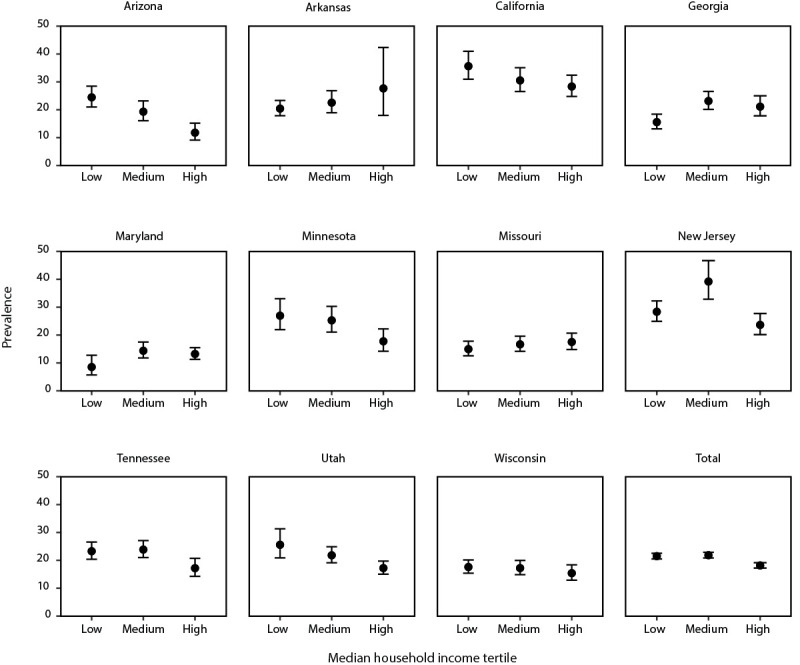
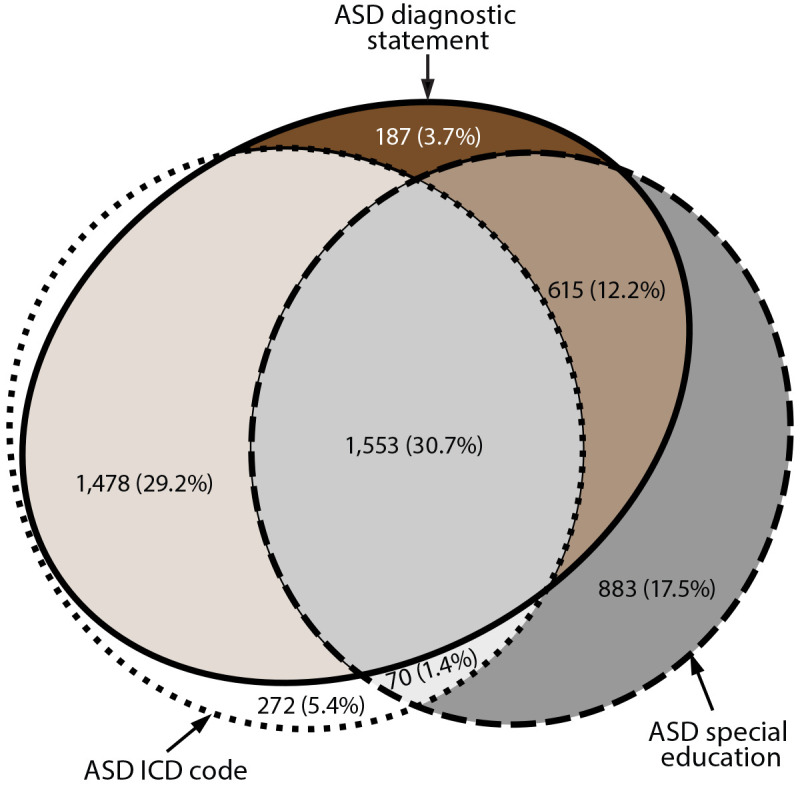
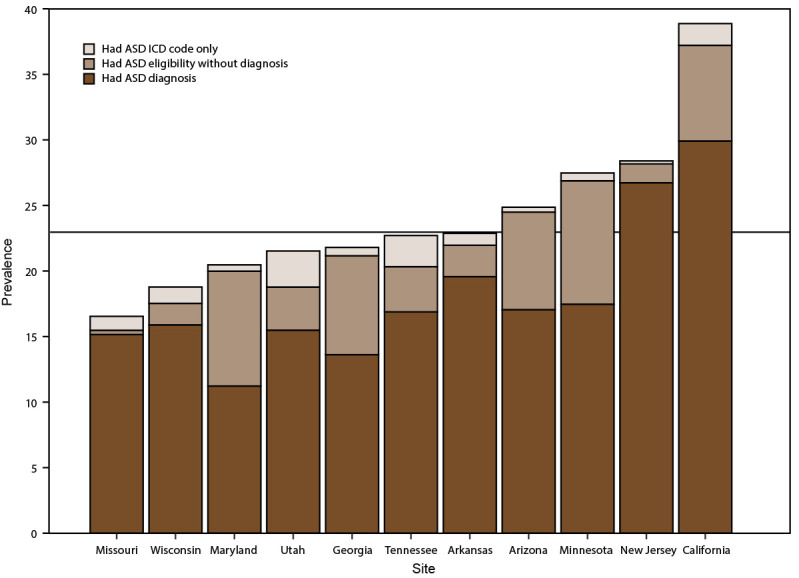
PROBLEM/CONDITION: Autism spectrum disorder (ASD). PERIOD COVERED: 2018. DESCRIPTION OF SYSTEM: The Autism and Developmental Disabilities Monitoring (ADDM) Network conducts active surveillance of ASD. This report focuses on the prevalence and characteristics of ASD among children aged 8 years in 2018 whose parents or guardians lived in 11 ADDM Network sites in the United States (Arizona, Arkansas, California, Georgia, Maryland, Minnesota, Missouri, New Jersey, Tennessee, Utah, and Wisconsin). To ascertain ASD among children aged 8 years, ADDM Network staff review and abstract developmental evaluations and records from community medical and educational service providers. In 2018, children met the case definition if their records documented 1) an ASD diagnostic statement in an evaluation (diagnosis), 2) a special education classification of ASD (eligibility), or 3) an ASD International Classification of Diseases (ICD) code. RESULTS: For 2018, across all 11 ADDM sites, ASD prevalence per 1,000 children aged 8 years ranged from 16.5 in Missouri to 38.9 in California. The overall ASD prevalence was 23.0 per 1,000 (one in 44) children aged 8 years, and ASD was 4.2 times as prevalent among boys as among girls. Overall ASD prevalence was similar across racial and ethnic groups, except American Indian/Alaska Native children had higher ASD prevalence than non-Hispanic White (White) children (29.0 versus 21.2 per 1,000 children aged 8 years). At multiple sites, Hispanic children had lower ASD prevalence than White children (Arizona, Arkansas, Georgia, and Utah), and non-Hispanic Black (Black) children (Georgia and Minnesota). The associations between ASD prevalence and neighborhood-level median household income varied by site. Among the 5,058 children who met the ASD case definition, 75.8% had a diagnostic statement of ASD in an evaluation, 18.8% had an ASD special education classification or eligibility and no ASD diagnostic statement, and 5.4% had an ASD ICD code only. ASD prevalence per 1,000 children aged 8 years that was based exclusively on documented ASD diagnostic statements was 17.4 overall (range: 11.2 in Maryland to 29.9 in California). The median age of earliest known ASD diagnosis ranged from 36 months in California to 63 months in Minnesota. Among the 3,007 children with ASD and data on cognitive ability, 35.2% were classified as having an intelligence quotient (IQ) score ≤70. The percentages of children with ASD with IQ scores ≤70 were 49.8%, 33.1%, and 29.7% among Black, Hispanic, and White children, respectively. Overall, children with ASD and IQ scores ≤70 had earlier median ages of ASD diagnosis than children with ASD and IQ scores >70 (44 versus 53 months). INTERPRETATION: In 2018, one in 44 children aged 8 years was estimated to have ASD, and prevalence and median age of identification varied widely across sites. Whereas overall ASD prevalence was similar by race and ethnicity, at certain sites Hispanic children were less likely to be identified as having ASD than White or Black children. The higher proportion of Black children compared with White and Hispanic children classified as having intellectual disability was consistent with previous findings. PUBLIC HEALTH ACTION: The variability in ASD prevalence and community ASD identification practices among children with different racial, ethnic, and geographical characteristics highlights the importance of research into the causes of that variability and strategies to provide equitable access to developmental evaluations and services. These findings also underscore the need for enhanced infrastructure for diagnostic, treatment, and support services to meet the needs of all children.
Overview
The claims and statistics of this paper haven’t been checked yet.
Run the check — free, no account needed. It reads the open-access text and checks the sources it cites.
Integrity signals
Registry
Cites
Statistics
Figures
Verification
Claims the paper makes
The claims and statistics of this paper haven’t been checked yet.
Run the check — free, no account needed. It reads the open-access text and checks the sources it cites.
Claims other papers make about this one
Each is checked against this paper’s own text: does it say what the citing paper says it does?
In the citing paper
“California has had the highest prevalence among children aged 4 years and 8 years since joining the ADDM Network in 2018 (6,10,11,13)”
In the citing paper
“Surveillance was conducted using the same surveillance methods and case definitions used in 2018 and 2020 (6,13).”
In the citing paper
“No evidence of heterogeneity of the male-to-female ratio among children aged 4 years across sites was observed; however, the overall male-to-female ratio for children aged 4 years was lower than the 4.2 male-to-female ratio for children aged 8 years (11).”
In the citing paper
“The site in California had the highest cumulative incidence of ASD by age 48 months and the fewest cases of suspected ASD and was the only site where prevalence among children aged 4 years was higher than among children aged 8 years (11).”
In the citing paper
“The combined prevalence of ASD and suspected ASD (19.7 per 1,000 children aged 4 years) was still lower than ASD prevalence observed among children aged 8 years (23.0 per 1,000 children aged 8 years) (11).”
In the citing paper
“Children with co-occurring intellectual disability are more likely to be identified earlier than children without intellectual disability, as indicated by an earlier median age at identification among this group (11) as well as the consistently higher proportion of children with intellectual disability at age 4 years (8,13) than at age 8 years (9,11,17).”
In the citing paper
“Consistent with findings among children aged 8 years (11), a higher proportion of Black children aged 4 years with ASD have co-occurring intellectual disability.”
In the citing paper
“The 2018 estimate for children aged 4 years was lower than the 23.0 per 1,000 ASD prevalence among children aged 8 years (11), a finding consistent with previous reports (8,13).”
In the citing paper
“Adding the children identified with ASD to those suspected of having ASD at age 4 years is still less than the prevalence of ASD by age 8 years at all sites except California (11).”
Self-check
Percentages, sums and reported differences re-computed from the paper’s own numbers.
The self-check needs the paper’s full text.
Citations
Cites
Diagnostic and Statistical Manual of Mental Disorders
American Psychiatric Association (2013) · doi:10.1176/appi.books.9780890425596 · Cited by 116,369
Baio, J., Wiggins, L., Christensen, D. L., Maenner, M. J., Daniels, J., Warren, Z., Kurzius-Spencer, M., Zahorodny, W., Robinson, C., Rosenberg, et al. (2018) · MMWR. Surveillance Summaries · doi:10.15585/mmwr.ss6706a1 · Cited by 6,078
Self-citationMaenner, M. J., Shaw, K. A., Baio, J., EdS1, Washington, A., Patrick, M., DiRienzo, M., Christensen, D. L., Wiggins, L. D., Pettygrove, S., et al. (2020) · MMWR. Surveillance Summaries · doi:10.15585/mmwr.ss6904a1 · Cited by 3,780 · cited 5×
“Recommended ICD codes were described previously (10).”
BackgroundMethodInfluentialSelf-citationLord, C., Elsabbagh, M., Baird, G., & Veenstra-Vanderweele, J. (2018) · The Lancet · doi:10.1016/s0140-6736(18)31129-2 · Cited by 2,819
Christensen, D. L., Baio, J., Braun, K. V. N., Bilder, D., Charles, J., Constantino, J. N., Daniels, J., Durkin, M. S., Fitzgerald, R. T., Kurzius-Spencer, M., et al. (2016) · MMWR. Surveillance Summaries · doi:10.15585/mmwr.ss6503a1 · Cited by 1,964
Self-citationPrevalence of Autism in a US Metropolitan Area
Yeargin-Allsopp, M., Rice, C., Karapurkar, T., Doernberg, N., Boyle, C., & Murphy, C. (2003) · JAMA · doi:10.1001/jama.289.1.49 · Cited by 1,248
Poverty and Child Health in the United States
Gitterman, B. A., Flanagan, P., Cotton, W. H., Dilley, K. J., Duffee, J. H., Green, A. E., Keane, V. A., Krugman, S., Linton, J. M., McKelvey, C. D., et al. (2016) · PEDIATRICS · doi:10.1542/peds.2016-0339 · Cited by 789
Research works printed but not linked: 1
- New Jersey Administrative Code. Title 6A, Chapter 14. https://www.state.nj.us/education/code/current/title6a/chap14.pdf
Cited by
Sorted by citations
Items 201–300 of 1,004
Dynamic Viewing Pattern Analysis: Towards Large-Scale Screening of Children With ASD in Remote Areas
Xia, C., Zhang, D., Li, K., Li, H., Chen, M., Min, W., & Han, J. (2022) · IEEE Transactions on Biomedical Engineering · doi:10.1109/tbme.2022.3223736 · Cited by 26
“According to a report released by the US Centers for Disease Control and Prevention (CDC), the probability of ASD in children under the age of 8 years in the United States was 1/68 in 2014, 1/59 in 2018, and 1/44 in 2021 [2].”
MethodMouat, J. S., Li, X., Neier, K. E., Zhu, Y., Mordaunt, C. E., Merrill, M. A. L., Lehmler, H., Jones, M. P., Lein, P. J., Schmidt, R. J., et al. (2023) · Environmental Research · doi:10.1016/j.envres.2023.115227 · Cited by 26
“Diagnoses of ASD have been increasing over the past several decades and are currently estimated to affect approximately 1 in 44 children in the United States (Maenner, 2021).”
Backgroundda Silva, A. C. F., Barbosa, T. D. S., & Gavião, M. B. D. (2023) · International Journal of Environmental Research and Public Health · doi:10.3390/ijerph20021151 · Cited by 25
Behl, S., Mehta, S., & Pandey, M. K. (2023) · Frontiers in Molecular Neuroscience · doi:10.3389/fnmol.2023.1130922 · Cited by 25
Sohl, K., Levinstein, L., James, A., Greer, S. A., Boles, K., Curran, A. B., Mahurin, M. A., Mazurek, M. O., & Nanclares-Nogués, V. (2023) · Journal of Developmental & Behavioral Pediatrics · doi:10.1097/dbp.0000000000001172 · Cited by 25
“Using the competencies of all clinicians can lead to faster diagnoses, decreased costs, and greater access at a critical time for all those needing evaluation and care for ASD.”
BackgroundInfluentialMetabolomic analysis of maternal mid-gestation plasma and cord blood in autism spectrum disorders
Che, X., Roy, A., Bresnahan, M. A., Mjaaland, S., Reichborn‐Kjennerud, T., Magnus, P. M., Stoltenberg, C., Shang, Y., Zhang, K., Susser, E., et al. (2023) · Molecular Psychiatry · doi:10.1038/s41380-023-02051-w · Cited by 26
Health conditions in autism: Defining the trajectory from adolescence to early adulthood
Malow, B. A., Qian, Y., Ames, J., Alexeeff, S., & Croen, L. (2023) · Autism Research · doi:10.1002/aur.2960 · Cited by 28
“%) sleep problems in children (Malow et al., 2017).”
The Role of Oxidative Stress in Autism Spectrum Disorder: A Narrative Literature Review
Membrino, V., Paolo, A. D., Alia, S., Papiri, G., & Vignini, A. (2023) · Oxygen · doi:10.3390/oxygen3010004 · Cited by 24
Avalos, L. A., Chandran, A., Churchill, M. L., Gao, X., Ames, J., Nozadi, S. S., Roubinov, D. S., Brennan, P. A., Bush, N. R., Camargo, C. A., et al. (2023) · Autism Research · doi:10.1002/aur.2988 · Cited by 24
“The prevalence of ASD has been increasing over the past few decades, with recent reports documenting a prevalence of 1 in 44 among 8-year-old children, and a four-fold higher prevalence in boys than girls (Maenner et al., 2021).”
Automated diagnosis of autism with artificial intelligence: State of the art
Valizadeh, A., Moassefi, M., Nakhostin-Ansari, A., Some’eh, S. H., Hosseini-Asl, S. H., Torbati, M. S., Aghajani, R., Ghorbani, Z. M., Oskouie, I. M., Aghajani, F., et al. (2023) · Reviews in the Neurosciences · doi:10.1515/revneuro-2023-0050 · Cited by 29
Transcriptomic sex differences in postmortem brain samples from patients with psychiatric disorders
Xia, Y., Xia, C., Jiang, Y. W., Chen, Y., Zhou, J., Dai, R., Han, C., Mao, Z., Liu, C., Chen, C., et al. (2024) · Science Translational Medicine · doi:10.1126/scitranslmed.adh9974 · Cited by 26
Rohacek, A., Baxter, E. L., Sullivan, W. E., Roane, H. S., & Antshel, K. M. (2022) · Journal of Autism and Developmental Disorders · doi:10.1007/s10803-022-05493-3 · Cited by 24
“The risk for emotional and behavioral problems and associated psychosocial and educational impairments, coupled with the increasing number of children diagnosed with ASD (e.g., 1 in 44 children; Maenner, 2021), have resulted in an increased need for efficacious interventions.”
BackgroundModeling Autism Spectrum Disorders with Induced Pluripotent Stem Cell-Derived Brain Organoids
Santos, J. L. D. S., Araújo, C. D. A., Rocha, C. A. G., Costa‐Ferro, Z. S. M., & Souza, B. S. D. F. (2023) · Biomolecules · doi:10.3390/biom13020260 · Cited by 29
“0 per 1000 (1:44) among children aged eight years, and it is four times more common in boys than in girls [2].”
Luo, L., Chen, J., Wu, Q., Yuan, B., Hu, C., Yang, T., Wei, H., & Li, T. (2023) · Environmental Toxicology and Pharmacology · doi:10.1016/j.etap.2023.104090 · Cited by 24
How autistic adults’ priorities for autism research differ by gender identity: A mixed-methods study
Putnam, O. C., Eddy, G., Goldblum, J., Swisher, M., & Harrop, C. (2023) · Women s Health · doi:10.1177/17455057231160342 · Cited by 36
“If so, please specify” and Q2, “If you could choose one thing about autism to be researched in the coming decade, what would it be?” revealed five key themes present among answers to both Q1 and Q2: (1) Characterization, (2) Societal Change, (3) Well-Being and Trauma, (4) Diagnosis and Healthcare, and (5) Accessibilit…”
BackgroundMethodInfluentialMultimodal job interview simulator for training of autistic individuals
Adiani, D., Breen, M., Migovich, M., Wade, J. W., Hunt, S., Tauseef, M., Khan, N., Colopietro, K., Lanthier, M., Swanson, A. R., et al. (2023) · Assistive Technology · doi:10.1080/10400435.2023.2188907 · Cited by 24
“Autism Spectrum Disorder (ASD) is a neurodevelopmental disorder, with a prevalence of 1 in 44 children in the US (Maenner et al., 2021), characterized by persistent deficits in social communication and interaction (e.g., reduced facial expressions, differences in perceived eye-contact), as well as…”
BackgroundSex differences in the temporal dynamics of autistic children’s natural conversations
Cho, S., Cola, M., Knox, A., Pelella, M. R., Russell, A. R. B., Hauptmann, A., Covello, M., Cieri, C., Liberman, M., Schultz, R. T., et al. (2023) · Molecular Autism · doi:10.1186/s13229-023-00545-6 · Cited by 24
Autism spectrum disorder research: knowledge mapping of progress and focus between 2011 and 2022
Jiang, M., Lu, T., Yang, K., Li, X., Zhao, L., Zhang, D., Li, J., & Wang, L. (2023) · Frontiers in Psychiatry · doi:10.3389/fpsyt.2023.1096769 · Cited by 26
“The present study comprehensively combines Bibliometrix package, CiteSpace, and VOSviewer to (1) dynamically assess quantitative indicators of ASD research publications and use different index indicators to measure the quality of research; (2) further identify the most contributing countries, institutions, journals, a…”
BackgroundMethodGoldblum, J., McFayden, T. C., Bristol, S. K., Putnam, O. C., Wylie, A. C., & Harrop, C. (2023) · Journal of Autism and Developmental Disorders · doi:10.1007/s10803-023-06104-5 · Cited by 28
Wang, H., Liu, S., Xie, L., & Wang, J. (2023) · BMC Pediatrics · doi:10.1186/s12887-023-04292-8 · Cited by 27
“According to present epidemiological investigations, the estimated prevalence rate of ASD hovers around 1 in 100 children; however, certain regions within the United States report significantly higher rates, reaching as steep as 1 in 44 [6].”
BackgroundA comprehensive analysis towards exploring the promises of AI-related approaches in autism research
Pandya, S., Jain, S., & Verma, J. P. V. (2023) · Computers in Biology and Medicine · doi:10.1016/j.compbiomed.2023.107801 · Cited by 33
Mumenin, N., Yousuf, M. A., Nashiry, M. A., Azad, A., Alyami, S. A., Lió, P., & Moni, M. A. (2024) · IET Computer Vision · doi:10.1049/cvi2.12271 · Cited by 23
Murphy, M. S. Q., Abdulaziz, K. E., Lavigne, É., Erwin, E., Guo, Y., Dingwall‐Harvey, A. L. J., Stieb, D. M., Walker, M. C., Wen, S. W., & Shin, H. H. (2024) · Environmental Research · doi:10.1016/j.envres.2024.119706 · Cited by 23
Feng, S., Gong, Y., Xia, L., Lang, Y., Shen, Y., Li, H., Feng, W., Chen, F., & Chen, Y. (2024) · Advanced Materials · doi:10.1002/adma.202405655 · Cited by 23
Casseus, M. (2022) · Autism · doi:10.1177/13623613221083279 · Cited by 23
“…developmental (e.g. language disorder, learning disability, intellectual disability, nonverbal learning disabilities, and sensory integration disorder) and neurological conditions (e.g. encephalopathy, cerebral palsy, epilepsy, and brain injury; Levy et al., 2010; Maenner et al., 2021).”
BackgroundZhao, J., Lu, Y., Wu, X., Fujun, Z., Fei, F., Wu, X., Ding, X., & Wang, M. (2022) · Frontiers in Public Health · doi:10.3389/fpubh.2022.925475 · Cited by 23
Replication study for ADOS ‐2 cut‐offs to assist evaluation of autism spectrum disorder
Hong, J. S., Singh, V., Kalb, L. G., Reetzke, R., Ludwig, N. N., Pfeiffer, D. L., Holingue, C., Menon, D. U., Lu, Q., Ashkar, A., et al. (2022) · Autism Research · doi:10.1002/aur.2801 · Cited by 24
“1Center for Autism and Related Disorders, Kennedy Krieger Institute, Baltimore, Maryland, USA 2Department of Psychiatry and Behavioral Sciences, Johns Hopkins University School of Medicine, Baltimore, Maryland, USA 3Department of Mental Health, Johns Hopkins University Bloomberg School of Public Health, Baltimore, Mar…”
Associations between parental psychiatric disorders and autism spectrum disorder in the offspring
Chien, Y., Wu, C., Chang, Y., Cheong, M.-L. J., Yao, T., & Tsai, H. (2022) · Autism Research · doi:10.1002/aur.2835 · Cited by 21
“The overall prevalence is estimated at around 1% of the population worldwide (Newschaffer et al., 2007), and has increased gradually to 1 in 44 children in recent decades (Maenner et al., 2021).”
Backgroundde Moraes, Í. A. P., Lima, J. A. S., Silva, N. M., Simcsik, A. O., Silveira, A. C., de Menezes, L. D. C., de Araújo, L. V., Crocetta, T. B., Voos, M. C., Tonks, J., et al. (2022) · International Journal of Environmental Research and Public Health · doi:10.3390/ijerph192214668 · Cited by 23
“ASD is more frequently diagnosed in boys than girls, with the proportion 4–5:1 [2,4].”
BackgroundInfluentialTranslational Neuroscience Approaches to Understanding Autism
Veenstra-VanderWeele, J. M., O’Reilly, K. C., Dennis, M. Y., Uribe‐Salazar, J. M., & Amaral, D. G. (2023) · American Journal of Psychiatry · doi:10.1176/appi.ajp.20230153 · Cited by 25
Developing a virtual reality healthcare product based on data-driven concepts: A case study
Qu, J., Zhang, Y., Tang, W., Cheng, W., Zhang, Y., & Bu, L. (2023) · Advanced Engineering Informatics · doi:10.1016/j.aei.2023.102118 · Cited by 23
The dopamine hypothesis of autism spectrum disorder: A comprehensive analysis of the evidence
Pavăl, D. (2023) · International review of neurobiology · doi:10.1016/bs.irn.2023.08.009 · Cited by 25
Xiang, X., Yang, T., Chen, J., Chen, L., Dai, Y., Zhang, J., Li, L., Jia, F., Wu, L., Hao, Y., et al. (2023) · BMC Psychiatry · doi:10.1186/s12888-023-04667-2 · Cited by 23
Chen, Y., Drye, M., Chen, Q., Fecher, M., Liu, G., & Guthrie, W. (2023) · The Journal of Pediatrics · doi:10.1016/j.jpeds.2023.113514 · Cited by 25
Ingersoll, B. R., Frost, K. M., Straiton, D., Ramos, A. P., & Howard, M. (2023) · Journal of Autism and Developmental Disorders · doi:10.1007/s10803-023-06092-6 · Cited by 22
“…trained profession - als, lengthy waitlists, and family resource limitations (e.g., There has been substantial growth in the prevalence of autism (Maenner et al., 2021 ), with high levels of unmet service needs for autistic children and their families (Karpur et al., 2019 ), particularly among…”
A multimodal neural signature of face processing in autism within the fusiform gyrus
Floris, D. L., Llera, A., Zabihi, M., Moessnang, C., Jones, E. J. H., Mason, L., Haartsen, R., Holz, N. E., Mei, T., Elleaume, C., et al. (2025) · Nature Mental Health · doi:10.1038/s44220-024-00349-4 · Cited by 27
“Autism is a lifelong neurodevelopmental condition with a prevalence of 1 in 36 children 1 .”
Mahmood, M. A., Jamel, L., Alturki, N. M., & Tawfeek, M. A. (2025) · Scientific Reports · doi:10.1038/s41598-025-96014-6 · Cited by 29
RetractedFang, Z., Zhou, Y., Chen, K. G., Wang, J., Liu, X., & Jia, P. (2025) · Frontiers in Neuroscience · doi:10.3389/fnins.2025.1587818 · Cited by 24
Velloso, F. J., Wadhwa, A., Kumari, E., Carcea, I., Bozdagi-Gunal, O., & Levison, S. W. (2021) · Brain Behavior and Immunity · doi:10.1016/j.bbi.2021.12.015 · Cited by 24
Parents taking action adapted to parents of Black autistic children: Pilot results
Dababnah, S., Kim, I., Magaña, S., & Zhu, Y. (2022) · Journal of Policy and Practice in Intellectual Disabilities · doi:10.1111/jppi.12423 · Cited by 22
Rollins, P. R., & Froy, A. M. D. (2022) · Journal of Autism and Developmental Disorders · doi:10.1007/s10803-022-05599-8 · Cited by 22
Banerjee, A., Mutlu, O. C., Kline, A., Surabhi, S., Washington, P. Y., & Wall, D. P. (2022) · JMIR Formative Research · doi:10.2196/39917 · Cited by 35
“Autism spectrum disorder (ASD) affects 1 in 44 children and is the fastest growing developmental disability in the United States [1].”
BackgroundAnxiety in Autism Spectrum Disorder: Clinical Characteristics and the Role of the Family
Guerrera, S., Pontillo, M., Tata, M. C., Vincenzo, C. D., Bellantoni, D., Napoli, E., Valeri, G., & Vicari, S. (2022) · Brain Sciences · doi:10.3390/brainsci12121597 · Cited by 26
Fragile X-Associated Neuropsychiatric Disorders (FXAND) in Young Fragile X Premutation Carriers
Aishworiya, R., Protic, D. D., Tang, S. J., Schneider, A., Tassone, F., & Hagerman, R. J. (2022) · Genes · doi:10.3390/genes13122399 · Cited by 21
“3% prevalence rates in the general population [34,35].”
BackgroundGao, X., Xian-min, L., & Drani, S. (2023) · Behavioral Sciences · doi:10.3390/bs13020136 · Cited by 22
“2 times more prevalent in boys than in girls [3].”
BackgroundStructural and genetic diversity in the secreted mucins MUC5AC and MUC5B
Plender, E. G., Prodanov, T., Hsieh, P., Nizamis, E., Harvey, W. T., Sulovari, A., Munson, K. M., Kaufman, E. J., O’Neal, W. K., Valdmanis, P. N., et al. (2024) · The American Journal of Human Genetics · doi:10.1016/j.ajhg.2024.06.007 · Cited by 22
Contribution of autosomal rare and de novo variants to sex differences in autism
Koko, M., Satterstrom, F. K., Aleksić, B., Artomov, M., Barbosa, M., Benetti, E., Betancur, C., Biscaldi-Schafer, M., Børglum, A. D., Brand, H., et al. (2025) · The American Journal of Human Genetics · doi:10.1016/j.ajhg.2025.01.016 · Cited by 21
Güller, B., & Yaylacı, F. (2022) · International Journal of Developmental Disabilities · doi:10.1080/20473869.2022.2095689 · Cited by 21
Neuroanatomical Alterations in the CNTNAP2 Mouse Model of Autism Spectrum Disorder
Gandhi, T., Canepa, C. R., Adeyelu, T. T., Adeniyi, P. A., & Lee, C. C. (2023) · Brain Sciences · doi:10.3390/brainsci13060891 · Cited by 22
Taylor, J. L., DaWalt, L. S., Burke, M. M., Slaughter, J. C., & Xu, M. (2023) · Autism Research · doi:10.1002/aur.3001 · Cited by 21
“Over the past three decades, the prevalence rate of autism has risen dramatically, with approximately 1 in 44 children now identified with this condition (Maenner et al., 2021).”
BackgroundFaulkner, I. E., Pajak, R. Z., Harte, M., Glazier, J. D., & Hager, R. (2024) · Frontiers in Cellular Neuroscience · doi:10.3389/fncel.2024.1449151 · Cited by 25
Hu, C., Yang, F., Yang, T., Chen, J., Dai, Y., Jia, F., Wu, L., Hao, Y., Li, L., Zhang, J., et al. (2022) · Frontiers in Psychiatry · doi:10.3389/fpsyt.2022.796554 · Cited by 21
GIACOMO, A. D., Medicamento, S., Pedaci, C., Giambersio, D., Giannico, O. V., Petruzzelli, M. G., Simone, M., Corsalini, M., Marzulli, L., & Matera, E. (2022) · International Journal of Environmental Research and Public Health · doi:10.3390/ijerph19074006 · Cited by 21
“Nowadays, one in every 44 newborns is diagnosed with ASD, and the male-to-female ratio is four to one [3].”
BackgroundSalgado, N. D. M., Pantoja, J. C., Viana, R. P. F., & Pereira, R. G. V. (2022) · Research Society and Development · doi:10.33448/rsd-v11i13.35748 · Cited by 76
Shin, H., Oh, J., Schmidt, R. J., & Pearce, E. N. (2022) · Endocrinology and Metabolism · doi:10.3803/enm.2022.1598 · Cited by 21
“The prevalence of ASD has risen steadily in the last two decades [4]; in the United States in 2018, one of every 44 children (3 to 8 years old) was estimated to have ASD [5].”
BackgroundSong, A., Kauffman, E. M., Hamra, G. B., Dickerson, A. S., Croen, L., Hertz‐Picciotto, I., Schmidt, R. J., Newschaffer, C. J., Fallin, M. D., Lyall, K., et al. (2023) · Environmental Research · doi:10.1016/j.envres.2023.115978 · Cited by 21
Jin, Y.-R., Sung, Y.-S., Koh, C., Chu, S. Y., Yang, H., & Lin, L. (2023) · American Journal of Occupational Therapy · doi:10.5014/ajot.2023.050283 · Cited by 21
“All of the children were male because males are 4 times more likely than females to be diagnosed with ASD (Maenner et al., 2021).”
Child Health Needs and the Developmental–Behavioral Pediatrics Workforce Supply: 2020–2040
Baum, R., Berman, B. D., Fussell, J. J., Patel, R. V., Roizen, N., Voigt, R. G., & Leslie, L. K. (2024) · PEDIATRICS · doi:10.1542/peds.2023-063678h · Cited by 21
Trajectory of depressive symptoms over adolescence in autistic and neurotypical youth
Corbett, B. A., Muscatello, R. A., McGonigle, T., Vandekar, S., Burroughs, C., & Sparks, S. (2024) · Molecular Autism · doi:10.1186/s13229-024-00600-w · Cited by 28
Sales-Millán, A. D., Reyes-Ferreira, P., Garrido, J. F. A., Guillé, I. C., Barrientos-Ríos, R., & Velázquez-Aragón, J. A. (2024) · International Journal of Molecular Sciences · doi:10.3390/ijms25126701 · Cited by 22
Leifler, E., Borg, A., & Bölte, S. (2022) · Journal of Autism and Developmental Disorders · doi:10.1007/s10803-022-05643-7 · Cited by 20
“The coming into effect of these policies has been paralleled by an increasing number of children diagnosed with autism, attention-deficit hyper-activity disorder (ADHD), and other neurodevelopmental disorders (NDDs) (Danielson et al., 2016; Maenner et al., 2021 ).”
BackgroundThe Early Childhood Signs of Autism in Females: a Systematic Review
Chellew, T., Barbaro, J., & Freeman, N. C. (2022) · Review Journal of Autism and Developmental Disorders · doi:10.1007/s40489-022-00337-3 · Cited by 26
“The prevalence of autism is estimated to be one in 44 children (Maenner et al., 2021), with approximately four males to every female receiving a diagnosis of autism (Fombonne, 2009; Maenner et al., 2021).”
Stallworthy, I. C., Berry, D. J., Davis, S. C., Wolff, J. J., Burrows, C. A., Swanson, M. R., Grzadzinski, R., Botteron, K. N., Dager, S. R., Estes, A. M., et al. (2022) · Developmental Science · doi:10.1111/desc.13336 · Cited by 23
“Although the median age of diagnosis in the USA is 38 months of age (Maenner, 2021), the social behavioral signs of ASD likelihood may emerge within the first year of life (e.g., W. Jones & Klin, 2013; M. Miller, Iosif, et al., 2017; Nyström et al., 2019; I. Stallworthy et al., 2021).”
BackgroundHustyi, K. M., Ryan, A., & Hall, S. S. (2022) · Research in Autism · doi:10.1016/j.rasd.2022.102074 · Cited by 22
The combination of autism and exceptional cognitive ability increases risk for suicidal ideation
Casten, L. G., Thomas, T., Doobay, A. F., Foley‐Nicpon, M., Kramer, S., Nickl‐Jockschat, T., Abel, T. G., Assouline, S. G., & Michaelson, J. J. (2022) · Neurobiology of Learning and Memory · doi:10.1016/j.nlm.2022.107698 · Cited by 22
Hughes, M. M., Shaw, K. A., Patrick, M., DiRienzo, M., Bakian, A. V., Bilder, D. A., Durkin, M. S., Hudson, A., Spivey, M. H., DaWalt, L. S., et al. (2023) · Journal of Adolescent Health · doi:10.1016/j.jadohealth.2022.12.010 · Cited by 20
Self-citationDevelopmental pyrethroid exposure causes a neurodevelopmental disorder phenotype in mice
Curtis, M. A., Dhamsania, R. K., Branco, R. C., Guo, J., Creeden, J. F., Neifer, K. L., Black, C. A., Winokur, E. J., Andari, E., Dias, B. G., et al. (2023) · PNAS Nexus · doi:10.1093/pnasnexus/pgad085 · Cited by 21
Girolamo, T. M., Shen, L., Monroe‐Gulick, A., Rice, M. L., & Eigsti, I. (2023) · Autism · doi:10.1177/13623613231166749 · Cited by 21
“Although language in autistic individuals is widely heterogeneous (Magiati et al., 2014), knowledge gaps about the language abilities of autistic individuals with language impairment (LI) limit the ability to develop and provide supports (Interagency Autism Coordinating Committee [IACC], 2020;…”
BackgroundComportamento alimentar de crianças com transtorno do espectro autista
Lemes, M. A., Garcia, G. P., do Carmo, B. L., Santiago, B. A., Teixeira, D. D. B., Agostinho, F., & Cola, P. C. (2023) · Jornal Brasileiro de Psiquiatria · doi:10.1590/0047-2085000000414 · Cited by 20
Yuan, G., Zhu, Z., Guo, H., Yang, H., Zhang, J., Zhang, K., Zhang, X., Lu, X., Du, J., Shi, H., et al. (2026) · Journal of Autism and Developmental Disorders · doi:10.1007/s10803-024-06665-z · Cited by 20
Meijer, J., Vieira, B. H., Elleaume, C., Baranczuk‐Turska, Z., Langer, N., & Floris, D. L. (2024) · Journal of Psychopathology and Clinical Science · doi:10.1037/abn0000914 · Cited by 19
Wang, X.-N., Zhang, T., Han, B.-C., Luo, W., Liu, W.-H., Yang, Z., Disi, A., Sun, Y., & Yang, J.-C. (2024) · Current Medical Science · doi:10.1007/s11596-024-2938-3 · Cited by 22
Altered Blood Brain Barrier Permeability and Oxidative Stress in Cntnap2 Knockout Rat Model
Memis, I., Mittal, R., Furar, E., White, I., Eshraghi, R. S., Mittal, J., & Eshraghi, A. A. (2022) · Journal of Clinical Medicine · doi:10.3390/jcm11102725 · Cited by 21
“According to the US Centers of Disease Control and Prevention (CDC), the incidence of ASD is about 1 in 44 children and is steadily increasing [4].”
MethodGray, H. L., Pang, T., Agazzi, H. C., Shaffer‐Hudkins, E., Kim, E., Miltenberger, R. G., Waters, K. A., Jiménez, C., Harris, M., & Stern, M. (2022) · Contemporary Clinical Trials · doi:10.1016/j.cct.2022.106814 · Cited by 23
Angrand, L., Masson, J.-D., Rubio‐Casillas, A., Nosten‐Bertrand, M., & Crépeaux, G. (2022) · Toxics · doi:10.3390/toxics10090518 · Cited by 20
“data are more than three times higher than the first prevalence estimation of 1 in 150 children between 2000 and 2002 [36].”
BackgroundKim, J. I., Kim, B.-N., Lee, Y. A., Shin, C. H., Hong, Y., & Lim, Y. (2022) · International Journal of Hygiene and Environmental Health · doi:10.1016/j.ijheh.2022.114047 · Cited by 20
Wang, L., Zhang, H., Shang, C., Liang, H., Liu, W., Han, B., Xia, W. T., Zou, M., & Sun, C. (2022) · Autism Research · doi:10.1002/aur.2836 · Cited by 19
“ASD is one of the most common worldwide neurodevelopmental disorders with deficits in social communication and limited and repetitive behaviors (Maenner et al., 2021).”
BackgroundLate diagnosis of autism spectrum disorder—Journey, parents' concerns, and sex influences
Davidovitch, M., Gazit, S., Patalon, T., Leitner, Y., & Rotem, R. S. (2022) · Autism Research · doi:10.1002/aur.2869 · Cited by 22
“The prevalence of autism spectrum disorder (ASD) has increased dramatically over the last three decades and reached more than 1% worldwide (Zeidan et al., 2022) and more than 2% in the United States (Maenner et al., 2021).”
BackgroundPersonal victimization experiences of autistic and non-autistic children
Libster, N., Knox, A., Engin, S., Geschwind, D. H., Parish‐Morris, J., & Kasari, C. L. (2022) · Molecular Autism · doi:10.1186/s13229-022-00531-4 · Cited by 28
Cary, E. L., Pacheco, D., Kaplan‐Kahn, E. A., McKernan, E. P., Matsuba, E. S. M., Prieve, B. A., & Russo, N. N. (2023) · Journal of Autism and Developmental Disorders · doi:10.1007/s10803-022-05866-8 · Cited by 26
“…behav - ioral challenges (e.g., children putting their hands over their Autism 1 is a neurodevelopmental disorder that affects 1 in 44 children (Maenner, 2021) and is characterized by persistent deficits in social communication and interaction, and the presence of restricted, repetitive…”
Prenatal Sex Hormone Exposure Is Associated with the Development of Autism Spectrum Disorder
Li, M., Usui, N., & Shimada, S. (2023) · International Journal of Molecular Sciences · doi:10.3390/ijms24032203 · Cited by 24
“ASD development and sex differences in ASD and ASD-like behaviors The prevalence and characteristics of ASD Children aged 8 years in 2018 whose parents or guardians lived in 11 ADDM Network sites in the United States The overall ASD prevalence estimate was one in 44 children aged 8 years in 2018 [7]”
Classification of Autism Spectrum Disorder Using rs-fMRI data and Graph Convolutional Networks
Yang, T., Alduailij, M. A., Bozdag, S., & Saeed, F. (2022) · IEEE International Conference on Big Data (BigData) · doi:10.1109/bigdata55660.2022.10021070 · Cited by 19
“…the early interventional measures such as applied behavioral analysis (ABA) – in addition to being satisfactory to parents, and medical staff alike – more optimistically, can and does, modify the ASD patterns to improve the health, level of functioning and well-being of the children [10], [11].”
BackgroundKim, D. H. J., Iosif, A.-M., Ramirez-Celis, A., Ashwood, P., Ames, J., Lyall, K., Berger, K., Croen, L., & van de Water, J. A. (2023) · Brain, behavior, and immunity · doi:10.1016/j.bbi.2023.05.002 · Cited by 14
“Autism spectrum disorder (ASD) is a complex neurodevelopmental disorder with a 4:1 male-to-female ratio (Maenner, 2021; Werling and Geschwind, 2013).”
Preeclampsia promotes autism in offspring via maternal inflammation and fetal NFκB signaling
Liu, X., Liu, H., Gu, N.-H., Pei, J., Lin, X.-H., & Zhao, W. (2023) · Life Science Alliance · doi:10.26508/lsa.202301957 · Cited by 19
“increasing each year, with rates reaching ~1 in 44 children in the US (3, 5).”
BackgroundIwamoto, B. K., Neece, C. L., Nair, A., Rockwood, N., Fenning, R. M., Krantz, M. L., & Dyk, T. R. V. (2023) · Research in Autism · doi:10.1016/j.rasd.2023.102197 · Cited by 19
Gentilini, D., Cavagnola, R., Possenti, I., Calzari, L., Ranucci, F., Nola, M., Olivola, M., Brondino, N., & Politi, P. (2023) · Current Neuropharmacology · doi:10.2174/1570159x21666230725142338 · Cited by 21
Faruk, M. O., Rahman, M. S., Rana, M. S., Mahmud, S., Neyma, M. A., Karim, M. S., & Alam, N. (2023) · PLoS ONE · doi:10.1371/journal.pone.0289220 · Cited by 21
“in 44 youngsters has an ASD diagnosis, and all socioeconomic, racial, and ethnic groups can be affected by this disorder [6].”
BackgroundHassen, I. B., Abid, R., Waer, F. B., Masmoudi, L., Sahli, S., Driss, T., & Hammouda, O. (2023) · Children · doi:10.3390/children10091480 · Cited by 19
“In 2020, the Centers for Disease Control and Prevention reported that approximately 1 in 54 children is diagnosed with ASD, according to 2016 data based on tracking within 11 communities in the United States [2].”
BackgroundIuzzini-Seigel, J., Delaney, A. L., & Kent, R. D. (2022) · Perspectives of the ASHA Special Interest Groups · doi:10.1044/2021_persp-20-00283 · Cited by 19
Xie, X., Lei, X., Xiao, C.-Y., Li, Y., & Lei, X. (2022) · Frontiers in Psychiatry · doi:10.3389/fpsyt.2022.982696 · Cited by 18
Transparent deep learning to identify autism spectrum disorders (ASD) in EHR using clinical notes
Gondy Leroy, A., Andrews, J., Preece, M., Jaswani, A., Song, H., Galindo, M. K., Rice, S. A., & Rice, S. A. (2024) · Journal of the American Medical Informatics Association · doi:10.1093/jamia/ocae080 · Cited by 21
Self-citationKilmer, M., & Ames, A. J. (2022) · Journal of Pediatric Nursing · doi:10.1016/j.pedn.2022.04.014 · Cited by 19
Prkn knockout mice show autistic-like behaviors and aberrant synapse formation
Huo, Y., Lü, W., Tian, Y., Hou, Q., & Man, H. (2022) · iScience · doi:10.1016/j.isci.2022.104573 · Cited by 19
Chenausky, K. V., Norton, A. C., Tager-Flusberg, H. B., & Gottfried Schlaug, A. (2022) · Annals of the New York Academy of Sciences · doi:10.1111/nyas.14817 · Cited by 19
Amer, Y. S., Alenezi, S., Bashiri, F. A., Alawami, A. H., Alhazmi, A. S., Aladamawi, S. A., Alnemary, F., Alqahtani, Y. J., Buraik, M. W., AlSuwailem, S. S., et al. (2022) · Children · doi:10.3390/children9071050 · Cited by 18
Behavioral Skills Training with Adult Interventionists: a Systematic Review
Smith, S. G., Mattson, S. L., Aguilar, J., Pyle, N., & Higbee, T. S. (2022) · Review Journal of Autism and Developmental Disorders · doi:10.1007/s40489-022-00339-1 · Cited by 18
“I Was Like a Bird Without Wings”: Autistic Women’s Retrospective Experiences in General Schools
Zakai-Mashiach, M. (2022) · Journal of Autism and Developmental Disorders · doi:10.1007/s10803-022-05717-6 · Cited by 28
“Autism Spectrum Disorder (ASD) is described as the most prevalent of all neurodevelopmental disorders with one in 44 children estimated to have ASD in the U.S. (Maenner et al., 2021).”
BackgroundSociodemographic Changes and Oral Health Inequities: Dental Workforce Considerations
Inglehart, M. R., Albino, J. E. N., Feine, J. S., & Okunseri, C. E. (2022) · JDR Clinical & Translational Research · doi:10.1177/23800844221116832 · Cited by 18
“…for patients with special health care needs, such as for the 23% of US citizens 12 y and older who experience hearing loss (Goman and Lin 2016), the 1 in 44 children in the United States with autism spectrum disorder diagnoses (Maenner et al. 2021), and the 1 in 9 people aged 65 y and older (11”
BackgroundEcholalia from a transdiagnostic perspective
McFayden, T., Kennison, S., & Bowers, J. M. (2022) · Autism & Developmental Language Impairments · doi:10.1177/23969415221140464 · Cited by 13
“In such cases of atypical or interfering echolalia presentations in early childhood,many clinicians view this behavior as a key indicator of autism spectrum disorder (i.e., autism; Ganos et al., 2012), a neurodevelopmental disorder that affects as many as 1 in 44 individuals (Maenner et al., 2021).”
BackgroundSpicer‐Cain, H., Camilleri, B., Hasson, N., & Botting, N. (2023) · American Journal of Speech-Language Pathology · doi:10.1044/2022_ajslp-22-00040 · Cited by 18
Metadata
- Authors
- Maenner, M. J., Shaw, K. A., Bakian, A. V., Bilder, D. A., Durkin, M. S., Esler, A., Furnier, S. M., Hallas, L., Hall-Lande, J., Hudson, A., Hughes, M. M., Patrick, M., Pierce, K., Poynter, J. N., Salinas, A., Shenouda, J., Vehorn, A., Warren, Z., Constantino, J. N., DiRienzo, M., Fitzgerald, R. T., Grzybowski, A., Spivey, M. H., Pettygrove, S., Zahorodny, W., Ali, A., Andrews, J. G., Baroud, T., Gutierrez, J., Hewitt, A., Lee, L.-C., Lopez, M., Mancilla, K. C., McArthur, D., Schwenk, Y. D., Washington, A., Williams, S., & Cogswell, M. E.
- Affiliations
- Centers for Disease Control and Prevention (US)
- University of Utah (US)
- University of Wisconsin–Madison (US)
- University of Minnesota (US)
- University of Arkansas for Medical Sciences (US)
- University of California San Diego (US)
- Rutgers New Jersey Medical School (US)
- Vanderbilt University Medical Center (US)
- Washington University in St. Louis (US)
- Johns Hopkins University (US)
- University of Arizona (US)
- United States Department of Health and Human Services (US)
- Corresponding author
- Maenner, Matthew J.
- ORCID
- Maenner, Matthew J.
- Bakian, Amanda V.
- Bilder, Deborah A.
- Durkin, Maureen S.
- Esler, Amy
- Furnier, Sarah M.
- Hughes, Michelle M.
- Patrick, Mary
- Pierce, Karen
- Poynter, Jenny N.
- Shenouda, Josephine
- Warren, Zachary
- Constantino, John N.
- DiRienzo, Monica
- Fitzgerald, Robert T.
- Pettygrove, Sydney
- Zahorodny, Walter
- Ali, Akilah
- Andrews, Jennifer G.
- Lee, Li-Ching
- Lopez, Maya
- McArthur, Dedria
- Washington, Anita
- Cogswell, Mary E.
- Venue
- MMWR. Surveillance Summaries
- Published
- 2021-12-03
- Volume
- 70
- Issue
- 11
- Pages
- 1-16
- ISSN
- 1545-8636 (ISSN-L)
- 1546-0738
- PMC
- PMC8639024
- OpenAlex
- W3216151710
- Cited by
- 1,818
- References
- 37
- Citations by year
- 2026: 101 · 2025: 270 · 2024: 438 · 2023: 553 · 2022: 438 · 2021: 8
- FWCI
- 193.23
- Type
- journal article
- Language
- en
- Open access
- diamond
- doi.org
- Licence
- public-domain
- Locations
- MMWR Surveillance Summaries (publishedVersion, public-domain)
- PubMed Central (publishedVersion, public-domain)
- PubMed (publishedVersion)
- Funders
- Eunice Kennedy Shriver National Institute of Child Health and Human Development (P50HD103537)
- Topics
- Life Sciences › Neuroscience › Cognitive Neuroscience › Autism Spectrum Disorder Research
- Health Sciences › Medicine › Psychiatry and Mental health › Child Nutrition and Feeding Issues
- Social Sciences › Psychology › Clinical Psychology › Family and Disability Support Research
- Keywords
- autism spectrum disorder, autism prevalence, special education eligibility, ICD-10 codes, sex differences, racial and ethnic disparities, American Indian and Alaska Native children, median household income, neighborhood socioeconomic status, United States states and territories
- MeSH terms
- Autism Spectrum Disorder, Race Factors, Child, Ethnicity, Female, Geography, Humans, Male, Population Surveillance, United States, Prevalence, Racial Groups, Health Status Disparities, Epidemiological Monitoring
About these checks
Registry, retraction, Cites and statistics results are computed, not judged, with one exception: a printed reference that no index lists is read once by a model before it counts as a citation error. Claims are extracted by a model and kept only when their quote appears verbatim in the text; each cited source is then checked, with a model’s help, for whether it says what the claim relies on. Those verdicts can be wrong — read the claim’s quote and the cited source before relying on one.
Statistics and arithmetic are recomputed, not judged.
Confidence bands are shown only for fields calibrated on our annotated test set. None is calibrated yet, so no band is shown.
What counts as a claim ›How we measure confidence ›How we check this ›
Are you an author, or do you see a problem with this page? Request a review
