

The DOI matches its Crossref record; 37 of the 37 references it cites were found in a registry or an index.
Prevalence and characteristics of autism spectrum disorder among children aged 8 years—Autism and Developmental Disabilities Monitoring Network, 11 sites, United States, 2018.
Open accessAbstract
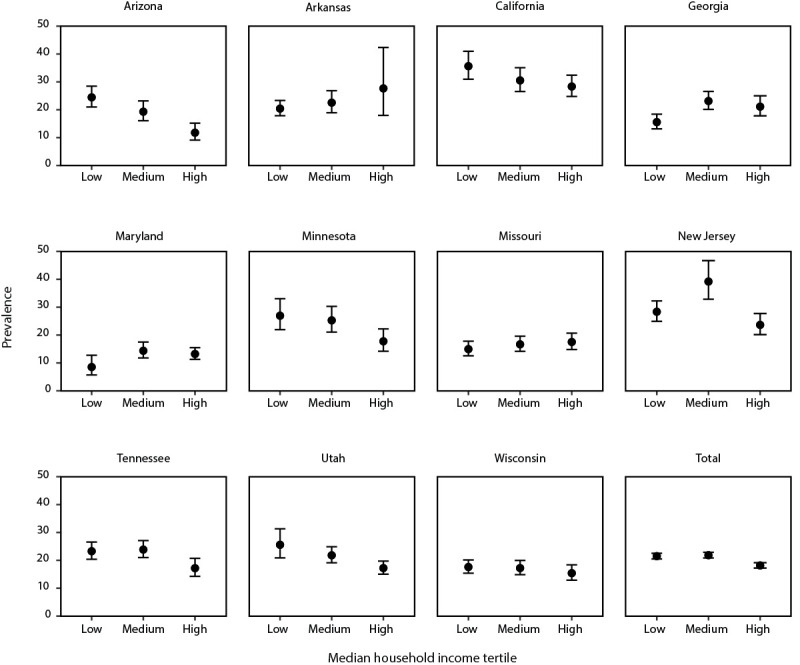
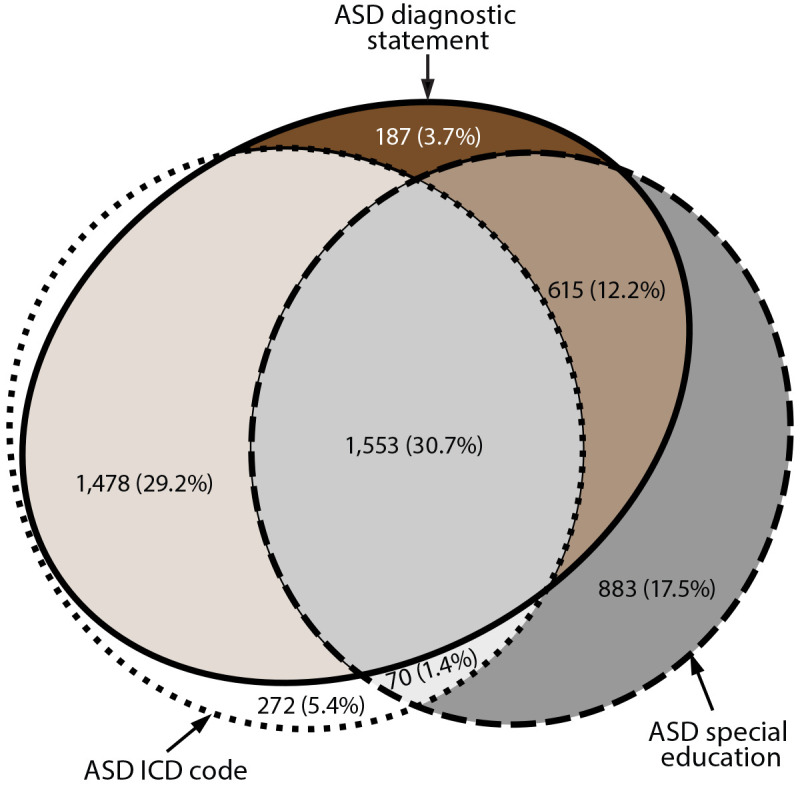
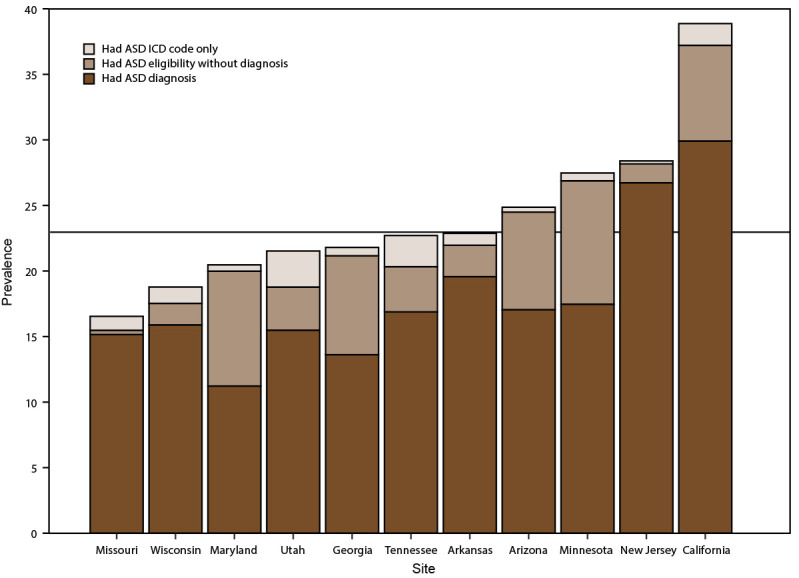
PROBLEM/CONDITION: Autism spectrum disorder (ASD). PERIOD COVERED: 2018. DESCRIPTION OF SYSTEM: The Autism and Developmental Disabilities Monitoring (ADDM) Network conducts active surveillance of ASD. This report focuses on the prevalence and characteristics of ASD among children aged 8 years in 2018 whose parents or guardians lived in 11 ADDM Network sites in the United States (Arizona, Arkansas, California, Georgia, Maryland, Minnesota, Missouri, New Jersey, Tennessee, Utah, and Wisconsin). To ascertain ASD among children aged 8 years, ADDM Network staff review and abstract developmental evaluations and records from community medical and educational service providers. In 2018, children met the case definition if their records documented 1) an ASD diagnostic statement in an evaluation (diagnosis), 2) a special education classification of ASD (eligibility), or 3) an ASD International Classification of Diseases (ICD) code. RESULTS: For 2018, across all 11 ADDM sites, ASD prevalence per 1,000 children aged 8 years ranged from 16.5 in Missouri to 38.9 in California. The overall ASD prevalence was 23.0 per 1,000 (one in 44) children aged 8 years, and ASD was 4.2 times as prevalent among boys as among girls. Overall ASD prevalence was similar across racial and ethnic groups, except American Indian/Alaska Native children had higher ASD prevalence than non-Hispanic White (White) children (29.0 versus 21.2 per 1,000 children aged 8 years). At multiple sites, Hispanic children had lower ASD prevalence than White children (Arizona, Arkansas, Georgia, and Utah), and non-Hispanic Black (Black) children (Georgia and Minnesota). The associations between ASD prevalence and neighborhood-level median household income varied by site. Among the 5,058 children who met the ASD case definition, 75.8% had a diagnostic statement of ASD in an evaluation, 18.8% had an ASD special education classification or eligibility and no ASD diagnostic statement, and 5.4% had an ASD ICD code only. ASD prevalence per 1,000 children aged 8 years that was based exclusively on documented ASD diagnostic statements was 17.4 overall (range: 11.2 in Maryland to 29.9 in California). The median age of earliest known ASD diagnosis ranged from 36 months in California to 63 months in Minnesota. Among the 3,007 children with ASD and data on cognitive ability, 35.2% were classified as having an intelligence quotient (IQ) score ≤70. The percentages of children with ASD with IQ scores ≤70 were 49.8%, 33.1%, and 29.7% among Black, Hispanic, and White children, respectively. Overall, children with ASD and IQ scores ≤70 had earlier median ages of ASD diagnosis than children with ASD and IQ scores >70 (44 versus 53 months). INTERPRETATION: In 2018, one in 44 children aged 8 years was estimated to have ASD, and prevalence and median age of identification varied widely across sites. Whereas overall ASD prevalence was similar by race and ethnicity, at certain sites Hispanic children were less likely to be identified as having ASD than White or Black children. The higher proportion of Black children compared with White and Hispanic children classified as having intellectual disability was consistent with previous findings. PUBLIC HEALTH ACTION: The variability in ASD prevalence and community ASD identification practices among children with different racial, ethnic, and geographical characteristics highlights the importance of research into the causes of that variability and strategies to provide equitable access to developmental evaluations and services. These findings also underscore the need for enhanced infrastructure for diagnostic, treatment, and support services to meet the needs of all children.
Overview
The claims and statistics of this paper haven’t been checked yet.
Run the check — free, no account needed. It reads the open-access text and checks the sources it cites.
Integrity signals
Registry
Cites
Statistics
Figures
Verification
Claims the paper makes
The claims and statistics of this paper haven’t been checked yet.
Run the check — free, no account needed. It reads the open-access text and checks the sources it cites.
Claims other papers make about this one
Each is checked against this paper’s own text: does it say what the citing paper says it does?
In the citing paper
“California has had the highest prevalence among children aged 4 years and 8 years since joining the ADDM Network in 2018 (6,10,11,13)”
In the citing paper
“Surveillance was conducted using the same surveillance methods and case definitions used in 2018 and 2020 (6,13).”
In the citing paper
“No evidence of heterogeneity of the male-to-female ratio among children aged 4 years across sites was observed; however, the overall male-to-female ratio for children aged 4 years was lower than the 4.2 male-to-female ratio for children aged 8 years (11).”
In the citing paper
“The site in California had the highest cumulative incidence of ASD by age 48 months and the fewest cases of suspected ASD and was the only site where prevalence among children aged 4 years was higher than among children aged 8 years (11).”
In the citing paper
“The combined prevalence of ASD and suspected ASD (19.7 per 1,000 children aged 4 years) was still lower than ASD prevalence observed among children aged 8 years (23.0 per 1,000 children aged 8 years) (11).”
In the citing paper
“Children with co-occurring intellectual disability are more likely to be identified earlier than children without intellectual disability, as indicated by an earlier median age at identification among this group (11) as well as the consistently higher proportion of children with intellectual disability at age 4 years (8,13) than at age 8 years (9,11,17).”
In the citing paper
“Consistent with findings among children aged 8 years (11), a higher proportion of Black children aged 4 years with ASD have co-occurring intellectual disability.”
In the citing paper
“The 2018 estimate for children aged 4 years was lower than the 23.0 per 1,000 ASD prevalence among children aged 8 years (11), a finding consistent with previous reports (8,13).”
In the citing paper
“Adding the children identified with ASD to those suspected of having ASD at age 4 years is still less than the prevalence of ASD by age 8 years at all sites except California (11).”
Self-check
Percentages, sums and reported differences re-computed from the paper’s own numbers.
The self-check needs the paper’s full text.
Citations
Cites
Diagnostic and Statistical Manual of Mental Disorders
American Psychiatric Association (2013) · doi:10.1176/appi.books.9780890425596 · Cited by 116,369
Baio, J., Wiggins, L., Christensen, D. L., Maenner, M. J., Daniels, J., Warren, Z., Kurzius-Spencer, M., Zahorodny, W., Robinson, C., Rosenberg, et al. (2018) · MMWR. Surveillance Summaries · doi:10.15585/mmwr.ss6706a1 · Cited by 6,078
Self-citationMaenner, M. J., Shaw, K. A., Baio, J., EdS1, Washington, A., Patrick, M., DiRienzo, M., Christensen, D. L., Wiggins, L. D., Pettygrove, S., et al. (2020) · MMWR. Surveillance Summaries · doi:10.15585/mmwr.ss6904a1 · Cited by 3,780 · cited 5×
“Recommended ICD codes were described previously (10).”
BackgroundMethodInfluentialSelf-citationLord, C., Elsabbagh, M., Baird, G., & Veenstra-Vanderweele, J. (2018) · The Lancet · doi:10.1016/s0140-6736(18)31129-2 · Cited by 2,819
Christensen, D. L., Baio, J., Braun, K. V. N., Bilder, D., Charles, J., Constantino, J. N., Daniels, J., Durkin, M. S., Fitzgerald, R. T., Kurzius-Spencer, M., et al. (2016) · MMWR. Surveillance Summaries · doi:10.15585/mmwr.ss6503a1 · Cited by 1,964
Self-citationPrevalence of Autism in a US Metropolitan Area
Yeargin-Allsopp, M., Rice, C., Karapurkar, T., Doernberg, N., Boyle, C., & Murphy, C. (2003) · JAMA · doi:10.1001/jama.289.1.49 · Cited by 1,248
Poverty and Child Health in the United States
Gitterman, B. A., Flanagan, P., Cotton, W. H., Dilley, K. J., Duffee, J. H., Green, A. E., Keane, V. A., Krugman, S., Linton, J. M., McKelvey, C. D., et al. (2016) · PEDIATRICS · doi:10.1542/peds.2016-0339 · Cited by 789
Research works printed but not linked: 1
- New Jersey Administrative Code. Title 6A, Chapter 14. https://www.state.nj.us/education/code/current/title6a/chap14.pdf
Cited by
Sorted by citations
Items 701–800 of 1,004
Sinclair, J., Aslan, B., Agabio, R., Anilkumar, A., Brosnan, M., Day, E., Dowling, N. A., Flood, C., Grant, J. E., Halliday, R., et al. (2023) · Comprehensive Psychiatry · doi:10.1016/j.comppsych.2023.152393 · Cited by 7
“Autism spectrum conditions (hereafter autism) are a family of neurodevelopmental conditions affecting more than 1% of people worldwide [2,3] and are considered a major public health concern [4 – 6].”
Sibling-Based Treatments for Autism Spectrum Disorder: A Systematic Review
McDowell, C. N., & Bryant, M. E. (2023) · International Journal of Systemic Therapy · doi:10.1080/2692398x.2023.2223120 · Cited by 7
“As of 2021, the CDC currently estimates that 1 in 44 children in the United States will be diagnosed with ASD, with boys being four times more likely than girls to receive a diagnosis (Maenner et al., 2021).”
BackgroundHatfield, D. P., Must, A., Kennedy, W., Staiano, A. E., Slavet, J., Sabelli, R. A., Curtin, C., Bandini, L. G., Nauta, P., Stuetzle, C. S., et al. (2023) · Frontiers in Pediatrics · doi:10.3389/fped.2023.1198000 · Cited by 7
Kıyat, E., Aktepe, E., Doğuç, D. K., Bedir, M., Ertürk, E., & Işık, Ü. (2024) · International Journal of Developmental Disabilities · doi:10.1080/20473869.2023.2301185 · Cited by 7
Li, W., Song, C., Hu, L., Wu, L., & Zhu, Z.-W. (2024) · Journal of Zhejiang University SCIENCE B · doi:10.1631/jzus.b2300354 · Cited by 7
“At the Autism and Devel‐ opmental Disabilities Monitoring (ADDM) Network sites, ASD prevalence estimate has increased from 18.5 per 1000 children (one in 54) aged 8 years in the surveillance year 2016 to 23.0 (one in 44) in the surveillance year 2018 (Maenner et al., 2020, 2021).”
InfluentialMazurek, M. O., Nevill, R. E., Orlando, K., Page, K. D., Howard, M., & Davis, B. (2024) · Journal of Autism and Developmental Disorders · doi:10.1007/s10803-024-06445-9 · Cited by 7
Sex heterogeneity of dynamic brain activity and functional connectivity in autism spectrum disorder
Lu, H., Dong, Q., Gao, L., Xue, Z., Niu, X., Zhou, R., & Guo, X. (2024) · Autism Research · doi:10.1002/aur.3227 · Cited by 7
Cervical Cancer Screening and Prevention Uptake in Females with Autism Spectrum Disorder
Chen, Y., Powers, J., McDougle, C. J., Zürcher, N. R., & Thom, R. P. (2024) · Journal of Autism and Developmental Disorders · doi:10.1007/s10803-024-06565-2 · Cited by 7
“According to the most recent estimates from the Centers for Disease Control and Prevention (CDC), ASD affects approximately 1 in 36 children in the United States (U.S.) (Maenner et al., 2021).”
Li, H., Zhang, Q., Duan, T., Li, J., Shi, L., Hua, Q., Li, D., Ji, G., Wang, K., & Zhu, C. (2024) · Scientific Reports · doi:10.1038/s41598-024-72339-6 · Cited by 7
Patrick, M., Williams, A. R., Shaw, K. A., Durkin, M. S., Hall‐Lande, J., Vehorn, A. C., & Hughes, M. M. (2025) · Annals of Epidemiology · doi:10.1016/j.annepidem.2025.02.014 · Cited by 7
Self-citationGünaydın, M., Doğan, Ö., Günay, F., Uytun, M. Ç., Buyukceran, O. C., & Öztop, D. B. (2025) · Acta Neuropsychiatrica · doi:10.1017/neu.2025.10017 · Cited by 7
Huang, Z., Wei, A., Yuan, H., Huang, S., Chen, X., Han, Y., & Li, X. (2025) · BMC Pediatrics · doi:10.1186/s12887-025-05922-z · Cited by 7
“Prevalence rates of ASD vary widely across regions, with notable increased in the US from 6.7‰ in 2000 to 23.0‰ in 2018 [1, 2], particularly prevalent in Korea (26.4‰) [3].”
InfluentialStankovic, I., Smit, P., Cross, J., Rai, A., Wolujewicz, P., Greening, D. W., & Colak, D. (2025) · Translational Psychiatry · doi:10.1038/s41398-025-03607-w · Cited by 8
Golden, D., Liang, L.-Y., & Getchell, N. (2022) · Journal of Behavioral and Brain Science · doi:10.4236/jbbs.2022.126016 · Cited by 8
Latinx caregivers and autism identification: what we know a scoping review
Luelmo, P., Larios, R. J., & Castellón, F. A. (2022) · International Journal of Developmental Disabilities · doi:10.1080/20473869.2022.2114777 · Cited by 10
“Similarly, the Maenner et al. report (2021) suggest that diagnosis/identification disparities have decreased for Latinx children.”
BackgroundMoody, C. T., Schiltz, H. K., Ratto, A. B., Gulsrud, A. C., & Laugeson, E. A. (2022) · International review of research in developmental disabilities · doi:10.1016/bs.irrdd.2022.05.007 · Cited by 7
Jogo Digital Educativo para Auxílio a Crianças com Autismo
Sampaio, L. P., & Pereira, C. P. (2022) · Anais do ... Simpósio Brasileiro de Informática na Educação/Anais do Simpósio Brasileiro de Informática na Educação · doi:10.5753/sbie.2022.225806 · Cited by 7
“597DOI: 10.5753/sbie.2022.225806 De acordo com o Centers for Disease Control and Prevention (CDC) [Maenner et al. 2021], por meio de uma pesquisa realizada em 2018 e divulgada em 2021, foi identificada que a prevalência do autismo é cerca de 1 em 44 pessoas, ou seja, levando em consideração a…”
BackgroundInfluentialContinuity of trajectories of autism symptom severity from infancy to childhood
Franchini, M., Smith, I. M., Sacrey, L.-A. R., Duku, E., Brian, J. A., Bryson, S. E., Vaillancourt, T., Armstrong, V. L., Szatmári, P., Roberts, W., et al. (2022) · Journal of Child Psychology and Psychiatry · doi:10.1111/jcpp.13744 · Cited by 11
Kyvelidou, A., DeVeney, S. L., & Katsavelis, D. (2023) · International Journal of Environmental Research and Public Health · doi:10.3390/ijerph20021234 · Cited by 7
“Specifically, based on the Centers for Disease Control and Prevention Autism Developmental Disabilities Monitoring about one in 44 children has been identified with ASD [1].”
Method[Recent research on neurodevelopmental disorders in children].
Zhu, H., Yuan, C., & Liu, Z. (2023) · PubMed Central · doi:10.7499/j.issn.1008-8830.2208171 · Cited by 8
Ji, Y., Ji, Y., Zhu, H., Cheng, S., Zou, X., & Zhu, F.-L. (2023) · Frontiers in Psychiatry · doi:10.3389/fpsyt.2023.1151596 · Cited by 8
“2:1, and the prevalence of ASD in both males and females is substantially affected by their cognitive performance (2).”
BackgroundStrathearn, L., Momany, A. M., Kovács, E. H. C., Guiler, W., & Ladd‐Acosta, C. (2022) · Neurobiology of Learning and Memory · doi:10.1016/j.nlm.2023.107761 · Cited by 6
Guidelines for research and design of software for children with ASD in e-health
Bondioli, M., Buzzi, M. C., Buzzi, M., Chessa, S., Jaccheri, L., Senette, C., & Pelagatti, S. (2023) · Universal Access in the Information Society · doi:10.1007/s10209-023-01013-x · Cited by 7
Potential barriers to early diagnosis of autism in Turkey: an evaluative study
Yaylacı, F., & Güller, B. (2023) · Children s Health Care · doi:10.1080/02739615.2023.2232723 · Cited by 8
Ault, S., Helsabeck, N. P., Breitenstein, S. M., Tucker, S., Havercamp, S. M., & Ford, J. L. (2024) · Journal of Pediatric Nursing · doi:10.1016/j.pedn.2024.01.005 · Cited by 10
Profiles of structural language and nonverbal intellectual abilities in verbal autistic adults
Manenti, M., Ferré, S., Tuller, L., Houy‐Durand, E., Bonnet‐Brilhault, F., & Prévost, P. (2024) · Research in Autism · doi:10.1016/j.rasd.2024.102361 · Cited by 7
Williams, A. R., Amoakohene, E., Maenner, M. J., Zahorodny, W. M., DiRienzo, M., Grzybowski, A., Hall‐Lande, J., Pas, E. T., Bakian, A. V., Lopez, M. L. C., et al. (2024) · Paediatric and Perinatal Epidemiology · doi:10.1111/ppe.13077 · Cited by 7
Self-citationAbnormal Development of the Corpus Callosum in Autism Spectrum Disorder: An MRI Study
Badhe, S., Nivins, S., Kulkarni, P., Jose, A., Manek, D., Badhe, S. B., Sane, H. M., Gokulchandran, N., Badhe, P. B., & Sharma, A. K. (2024) · Topics in Magnetic Resonance Imaging · doi:10.1097/rmr.0000000000000312 · Cited by 7
A cross‐dataset study on automatic detection of autism spectrum disorder from text data
Wawer, A., Chojnicka, I., Sarzyńska‐Wawer, J., & Krawczyk, M. (2024) · Acta Psychiatrica Scandinavica · doi:10.1111/acps.13737 · Cited by 6
Cognitive, adaptive and daily life functioning in adults with 22q11.2 deletion syndrome
Vingerhoets, C., Ruiz-Fernandez, J., von Scheibler, E. N. M. M., Vergaelen, E., Volbragt, N., Soons, N., Serrarens, C., Vogels, A., Boot, E., van Amelsvoort, T., et al. (2024) · BJPsych Open · doi:10.1192/bjo.2024.745 · Cited by 7
AutiBots: Jogo Digital Educativo para Desenvolvimento Cognitivo e Motor de Crianças com Autismo
Sampaio, L. P., & Pereira, C. P. (2025) · Revista Brasileira de Informática na Educação · doi:10.5753/rbie.2025.3300 · Cited by 7
Assessment Tools for Autism Spectrum Disorder (ASD) Developed in India: A Scoping Review
Sreelakshmi, A. C. A., Patil, R., Veena, K. D., Aroor, S., Rajashekhar, B., & Dhyani, V. S. (2025) · Review Journal of Autism and Developmental Disorders · doi:10.1007/s40489-025-00495-0 · Cited by 9
Lee, M. H., Min, A., Park, C., & Kim, I. (2022) · Journal of Autism and Developmental Disorders · doi:10.1007/s10803-022-05532-z · Cited by 7
“The estimated prevalence of children with autism is 1 out of 44 children (Maenner et al., 2021).”
BackgroundKim, A. J. H., Zisman, C. R., & Holingue, C. (2022) · Current topics in behavioral neurosciences · doi:10.1007/7854_2022_371 · Cited by 7
Sibling Influences on Trajectories of Maladaptive Behaviors in Autism
Rosen, N. E., Schiltz, H. K., & Lord, C. (2022) · Journal of Clinical Medicine · doi:10.3390/jcm11185349 · Cited by 7
TAMUR, Y., & Celasın, N. Ş. (2022) · Turkish Journal of Family Medicine & Primary Care · doi:10.21763/tjfmpc.1041206 · Cited by 7
“'OSB Bilgi Ölçeği' Cronbach Alpha Katsayısı (ikili 0,71 üçlü: 0,74), İletişim Becerileri' Alt Boyutu (ikili: 0,48 üçlü: 0,47), 'Sosyal Beceriler' Alt Boyutu (ikili: 0,70 üçlü: 0,65), 'Bilişsel Beceriler' Alt Boyutu (ikili: 0,44 üçlü: 0,37), 'Dil Becerileri' Alt Boyutu (ikili: 0,34 üçlü: 0,33), 'Davranış Özellikleri' A…”
BackgroundInfluentialEffects of arginine vasopressin on the transcriptome of prefrontal cortex in autistic rat model
Zhou, B., Yan, X., Yang, L., Zheng, X., Chen, Y., Liu, Y., Ren, Y., Peng, J.-G., Zhang, Y., Huang, J., et al. (2022) · Journal of Cellular and Molecular Medicine · doi:10.1111/jcmm.17578 · Cited by 6
Anderson, C., Iampieri, A., Franklin, L., Daniels, A. M., Diehl, K., & Law, J. K. (2022) · Journal of Autism and Developmental Disorders · doi:10.1007/s10803-022-05774-x · Cited by 7
“Autism spectrum disorder (ASD), which currently effects 1 in 44 U.S. children (Maenner et al., 2021), is characterized by difficulty understanding and responding to the social world in a natural, intuitive fashion as well as restrictive, repetitive behaviors, activities, and interests (American Psy…”
BackgroundEffect of Physical Activity Interventions in Autism Spectrum Disorder
YILMAZ, D. A. (2022) · International Journal of Disabilities Sports & Health Sciences · doi:10.33438/ijdshs.1162884 · Cited by 7
Holloway, J. M., Gray, H. L., Buro, A. W., Thomas, J., Sauls, R., & Howard, A. M. (2022) · Review Journal of Autism and Developmental Disorders · doi:10.1007/s40489-022-00349-z · Cited by 9
“In addition to persistent impairments in social interaction and restrictive behaviors (Maenner et al., 2021), individuals with ASD are likely to develop chronic non-communicable diseases such as obesity, hypertension, and dyslipidemia (Dhaliwal et al., 2019; Goldstein & Korczak, 2020; WHO, 2019).”
A Bibliometric Study on the Social Validity of Telepractice in Autism Spectrum Disorder
González-García, R. J., Rico, G. M., Mora, C. T. E., & García‐Grau, P. (2022) · International Journal of Environmental Research and Public Health · doi:10.3390/ijerph20010419 · Cited by 7
Digital Platform for Monitoring and Comprehensive Support of Children with Autism Spectrum Disorders
Nigmatullina, I., Sheymardanov, S., & Abramskiy, M. M. (2023) · Lecture notes in networks and systems · doi:10.1007/978-981-19-7660-5_50 · Cited by 7
Xie, Y., Wang, H., Hu, B., Zhang, X., Liu, A., Cai, C., Li, S., Chen, C., Wang, Z., Yin, Z., et al. (2022) · Children · doi:10.3390/children10010080 · Cited by 7
“The CDC data indicate that the prevalence of ASD has increased from an estimated 1 in 166 in 2004 to 1 in 44 in 2018, or almost tripled [7].”
Din, Q. M. U., & Jayanthy, A. K. (2022) · Traitement du signal · doi:10.18280/ts.390619 · Cited by 7
Hirata, Y., & Ozawa, E. (2023) · Heliyon · doi:10.1016/j.heliyon.2023.e13791 · Cited by 15
James, S., Hallur, S., Anbar, J. S., Matthews, N. L., Pierce, K., & Smith, C. J. (2023) · Autism Research · doi:10.1002/aur.2927 · Cited by 7
“Nonetheless, a male bias in prevalence has consistently been found across data sources, although decreases in the male to female ratio have emerged in recent years due to greater increases in prevalence among girls than boys (Maenner et al., 2021).”
BackgroundInfluentialSelf-citationNader, D. T., Dunlop, B., Tomaszewski, B. R., Sam, A. M., Hume, K., Aljuaid, M., & Odom, S. L. (2023) · Research in Autism · doi:10.1016/j.rasd.2023.102144 · Cited by 7
Angell, A. M., Lindly, O. J., Floríndez, D. C., Floríndez, L. I., Duker, L. I. S., Zuckerman, K. E., Yin, L., & Solomon, O. (2023) · Autism · doi:10.1177/13623613231163056 · Cited by 9
“Despite recent evidence of a reduction in some racial disparities in autism rates, Latino children continue to be under-identified with autism compared to non-Latino children (Maenner et al., 2021).”
Clark, G. T., & Reuterskiöld, C. (2023) · Journal of Speech Language and Hearing Research · doi:10.1044/2023_jslhr-22-00549 · Cited by 7
A Survey of Community Providers on Feeding Problems in Autism Spectrum Disorder
Burrell, T. L., Sharp, W. G., Gillespie, S. E., Pickard, K. E., Brasher, S. N., Buckley, D., & Scahill, L. D. (2023) · Journal of Autism and Developmental Disorders · doi:10.1007/s10803-023-06013-7 · Cited by 9
Zhao, Y., Su, B., Zhu, D., Guan, X., Ding, R., Guo, D., Lu, F., & He, P. (2023) · Autism Research · doi:10.1002/aur.2970 · Cited by 7
“The prevalence of ASD has increased in recent decades (Baio et al., 2018; Maenner et al., 2021).”
BackgroundA Multi-Site Anti-Interference Neural Network for ASD Classification
Lv, W., Li, F., Luo, S., & Xiang, J. (2023) · Algorithms · doi:10.3390/a16070315 · Cited by 7
“Recent studies show that 23 out of every 1000 eight-year-olds in the United States have ASD [2].”
BackgroundEarly-stage autism diagnosis using action videos and contrastive feature learning
Rani, A., Yadav, P., & Verma, Y. (2023) · Multimedia Systems · doi:10.1007/s00530-023-01132-8 · Cited by 7
“The number of individuals suffering from autism has increased over the last few year [12].”
BackgroundSandhu, A., Rawat, K., Gautam, V., Bhatia, A., Grover, S., Saini, L. K., & Saha, L. (2024) · Pharmacology Biochemistry and Behavior · doi:10.1016/j.pbb.2024.173721 · Cited by 7
Musachio, E. A. S., Andrade, S. S., Meichtry, L. B., Fernandes, E. J., de Almeida, P. P., Janner, D. E., Dahleh, M. M. M., Guerra, G. P., & Prigol, M. (2024) · Neurotoxicology and Teratology · doi:10.1016/j.ntt.2024.107348 · Cited by 7
Kamali, M., Sivapalan, S., Kata, A., Kim, N. J., Shanmugalingam, N., Duku, E., Zwaigenbaum, L., & Georgiades, S. (2022) · BMC Health Services Research · doi:10.1186/s12913-022-07789-7 · Cited by 8
Hoffmann, A., Thurman, A. J., Sterling, A. M., Kover, S. T., Finestack, L. H., Berry‐Kravis, E., Edgin, J. O., Drayton, A., Fombonne, E. J., & Abbeduto, L. (2022) · Brain Sciences · doi:10.3390/brainsci12050575 · Cited by 7
Gluten-Free and Casein-Free Diet for Children with Autism Spectrum Disorder: a Systematic Review
Batarseh, H., AbuMweis, S. S., Almakanin, H. A., & Anderson, C. (2022) · Advances in Neurodevelopmental Disorders · doi:10.1007/s41252-022-00268-4 · Cited by 7
Do Parental Comorbidities Affect the Severity of Autism Spectrum Disorder?
Aldera, H., Hilabi, A. S., Elzahrani, M. R., Alhamadh, M. S., Alqirnas, M. Q., Alkahtani, R. M., & Masuadi, E. (2022) · Cureus · doi:10.7759/cureus.32702 · Cited by 7
“However, in the United States, the rate is estimated to be one in 44 individuals, indicating even higher rates when individuals are well monitored [2,3,17].”
BackgroundRapid Screening of Children With Autism Spectrum Disorders Through Face Image Classification
Zheng, Y., & Liu, L. (2022) · International Conference on Intelligent Education and Intelligent Research (IEIR) · doi:10.1109/ieir56323.2022.10050070 · Cited by 7
“interaction with society and humans, which is a significant barrier to development from 0-3 years of age, and the effects of autism spectrum disorders will continue to expand as the child grows, and the effects can last a lifetime [6].”
BackgroundCDC's Revised Developmental Milestone Checklists.
Zubler, J. M., & Whitaker, T. M. (2022) · PubMed · Cited by 7
To tell or not to tell – disclosure of autism in the workplace
Nimante, D., Laganovska, E., & Osgood, R. (2023) · International Journal of Developmental Disabilities · doi:10.1080/20473869.2023.2193489 · Cited by 6
“As we know from research, the label ASD is one of the most rapidly and increasingly identified disorders in the world; every year there are more persons diagnosed with ASD (Maenner et al. 2021).”
BackgroundPeer Interactions of School-Aged Girls on the Autism Spectrum: A Scoping Review
Tso, M., Strnadová, I., Danker, J., & O'Neill, S. C. (2023) · Australasian Journal of Special and Inclusive Education · doi:10.1017/jsi.2023.2 · Cited by 6
“According to the United States Centers for Disease Control and Prevention, the prevalence of autism in children is 2.3% (Maenner et al., 2021).”
MethodInfluentialDiagnosis of autism in a rare case of tyrosine hydroxylase deficiency: a case report
Reyes, Z. M. D., Lynch, E., Henry, J., Simone, L. D., & Sobotka, S. A. (2023) · BMC Medical Genomics · doi:10.1186/s12920-023-01510-1 · Cited by 6
“Although ASD is a common neurodevelopmental disorder increasing in prevalence, now diagnosed in 1 in 44 children [56], it may also be possible that genetic variants in the TH gene may be associated with ASD.”
BackgroundCardon, G. J., McQuarrie, M., Calton, S., & Gabrielsen, T. P. (2023) · Research in Autism · doi:10.1016/j.rasd.2023.102263 · Cited by 10
Barreto, C., Curtin, A., Topoglu, Y., Day‐Watkins, J., Garvin, B., Foster, G., Ormanoglu, Z., Sheridan, E., Connell, J. E., Bennett, D. S., et al. (2024) · Brain Sciences · doi:10.3390/brainsci14050503 · Cited by 8
“In the USA, for instance, one out of every thirty-six children was diagnosed with ASD by age 8 years in 2020 against one out of sixty-eight in 2010 and one out of a hundred and fifty in 2000 [3,4].”
BackgroundHayat, A. A., Meny, A. H., Millman, R. F., Salahuddin, N., Ahuja, R., & Sami, W. (2024) · Cureus · doi:10.7759/cureus.61271 · Cited by 6
“…[17] to 114/10,000 in Qatar [18] and 290/10,000 in East Nigeria [19], which is comparable to or higher than the global prevalence of 230/10,000 [20] despite arguments that autism is underrepresented in these regions due to issues of inadequate diagnostic services [21], poor adaptation of…”
BackgroundEquine-assisted services for motor outcomes of autistic children: A systematic review
Meera, B., Fields, B., Healy, S., & Columna, L. A. (2024) · Autism · doi:10.1177/13623613241255294 · Cited by 6
Muffels, I. J. J., Sadek, M., Kozicz, T., & Morava, É. (2024) · Journal of Inherited Metabolic Disease · doi:10.1002/jimd.12769 · Cited by 6
A Comparison of Parent-Reported Severe Autism With Mild/Moderate Autism Among US Children
Carbone, P. S., Stipelman, C. H., Villalobos, M., Ellzey, A., Stuart, A. L., Stoddard, G. J., & Campbell, K. M. (2024) · Journal of Developmental & Behavioral Pediatrics · doi:10.1097/dbp.0000000000001306 · Cited by 6
“40 In addition, we found parents of children with severe autism reported a much higher percentage of severe language and developmental delay, further suggesting underreporting of intellectual disability.”
Whole‐genome sequencing analysis of Japanese autism spectrum disorder trios
Furukawa, S., Kushima, I., Kato, H., Kimura, H., Nawa, Y., Aleksić, B., Banno, M., Yamamoto, M., Uematsu, M., Nagasaki, Y., et al. (2024) · Psychiatry and Clinical Neurosciences · doi:10.1111/pcn.13767 · Cited by 7
Autonomic Disequilibrium at Rest in Autistic Children and Adults
Bufo, M. R., Guidotti, M., Lemaire, M., Malvy, J., Houy‐Durand, E., Bonnet‐Brilhault, F., Briend, F., Aguillon-Hernandez, N., & Wardak, C. (2025) · Applied Psychophysiology and Biofeedback · doi:10.1007/s10484-025-09696-z · Cited by 7
“With a prevalence estimated around 1% in the world (Maenner et al., 2021; Matson & Neal, 2009), it is defined by “persistent deficits in social communication and social interaction” and “restricted, repetitive patterns of behavior, interests, or activities” (DSM-5, 2013).”
Song, Y., Kong, X., Fu, W., & Song, F. (2025) · Journal of Autism and Developmental Disorders · doi:10.1007/s10803-025-06791-2 · Cited by 6
Anchieta, M. V., Alves, N. T., da Fonsêca, É. K. G., & Osório, F. D. L. (2025) · European Child & Adolescent Psychiatry · doi:10.1007/s00787-025-02697-7 · Cited by 10
“Data from the World Health Organization [60] for the USA indicated approximately one in 160 children diagnosed with ASD by that time and more recent data indicates a significant rise in prevalence, with one in 44 children being diagnosed with ASD in the USA [36].”
Corrêa, G. G. D. S., Soares, F. V. M., de Vasconcelos, Z. F. M., da Costa, A. C. C., & Rocha, A. D. (2025) · Jornal de Pediatria · doi:10.1016/j.jped.2024.12.008 · Cited by 7
Veseli, E., Mehrabanian, M., & Ammar, N. (2025) · BDJ · doi:10.1038/s41415-025-8666-7 · Cited by 7
Galvan, J., Silva, M. W. P. A. E., dos Santos, R. T. C., da Silva, M., Bilynkievycz, I. F., & Alves, F. B. T. (2022) · Editora Poisson eBooks · doi:10.36229/978-65-5866-155-9.cap.06 · Cited by 6
School psychologists and autism identification: Present challenges and potential solutions
Margiano, S. G., Sassu, K. A., Dale, B. A., Caemmerer, J. M., Bray, M. A., & Peters, E. (2022) · Psychology in the Schools · doi:10.1002/pits.22799 · Cited by 6
Zhong, N., Grimm, R. P., Kanne, S. M., & Mazurek, M. O. (2022) · Autism Research · doi:10.1002/aur.2845 · Cited by 5
“Because more males than females have ASD (Halladay et al., 2015; Maenner et al., 2021), many diagnostic and outcomes measures for ASD were based on symptoms more frequently observed in males.”
BackgroundAutism Spectrum as an Etiologic Systemic Disorder: A Protocol for an Umbrella Review
Lopes, L. T., Rodrigues, J. M., Marangoni, C. B., Oliveira, K., Abreu, M., Ribeiro, V., Anastácio, Z. F. C., & Machado, J. P. (2022) · Healthcare · doi:10.3390/healthcare10112200 · Cited by 8
“Autism Spectrum Disorder Autism spectrum disorder (ASD) is the most common neurodevelopmental disorder, affecting 1/44 children in 2018 [1,2].”
BackgroundRosenfeld, K., & Brooks, R. (2023) · Journal of Occupational Therapy Schools & Early Intervention · doi:10.1080/19411243.2023.2215756 · Cited by 6
“There is a similar rise in prevalence of ASD in the United States, most recently averaging 1 in 44 8-year-old children having a diagnosis (Maenner et al., 2021).”
Abdullahi, I., Sadka, N., Gilbert, M., & Barbaro, J. (2023) · Brain Sciences · doi:10.3390/brainsci13060903 · Cited by 6
Ng, R., Kalinousky, A. J., Fahrner, J. A., Bjornsson, H. T., & Harris, J. R. (2023) · American Journal of Medical Genetics Part A · doi:10.1002/ajmg.a.63351 · Cited by 6
Messer, D. J., Henry, L. A., & Danielsson, H. (2023) · Brain Sciences · doi:10.3390/brainsci13101377 · Cited by 6
Psychometric properties of the 10-item Autism Quotient in an acute psychiatric sample
Hudson, C. C., Bajwa, H., Beard, C., & Björgvinsson, Þ. (2023) · Research in Autism · doi:10.1016/j.rasd.2023.102299 · Cited by 6
Ochi, K., Kojima, M., Ono, N., Kuroda, M., Owada, K., Sagayama, S., & Yamasue, H. (2023) · Autism Research · doi:10.1002/aur.3080 · Cited by 6
Villarreal, V., Katusic, M. Z., Myers, S. M., Weaver, A. L., Nocton, J. J., & Voigt, R. G. (2024) · Journal of Developmental & Behavioral Pediatrics · doi:10.1097/dbp.0000000000001232 · Cited by 6
Liu, M., Yu, W., Xu, D., Wang, M., Peng, B., Jiang, H., & Dai, Y. (2024) · Frontiers in Neuroscience · doi:10.3389/fnins.2024.1356241 · Cited by 6
Wu, T., Yin, X., Xu, L., & Yu, J. (2024) · Journal of Neuroscience Methods · doi:10.1016/j.jneumeth.2024.110157 · Cited by 6
Erickson, C. A., Pérez‐Cano, L., Pedapati, E. V., Painbeni, E., Bonfils, G., Schmitt, L., Sachs, H., Nelson, M. N., Stefano, L. A. D., Westerkamp, G. C., et al. (2024) · Biomedicines · doi:10.3390/biomedicines12071430 · Cited by 6
“In 2020, the Autism and Developmental Disabilities Monitoring Network reported that the prevalence of ASD in the United States was 3.8-fold higher among boys as compared to girls (43.0 versus 11.4) [2].”
BackgroundInfluentialXu, D., Sun, Z., Yang, Y., Cai, K., Zhu, L., Qi, K., Liu, Z., Shi, Y., Liu, Y., Qiao, Z., et al. (2024) · Journal of Autism and Developmental Disorders · doi:10.1007/s10803-024-06555-4 · Cited by 6
“According to pub - lished data, the prevalence of ASD among 8-years-old in the United States has increased to 1 in 36 (Maenner et al., 2021 ), Similarly, the prevalence among Chinese children aged 6–12 years is as high as 1 in 143 (Zhou et al., 2020 ).”
Predicting autism from young Infants’ empathic responding: A prospective study
Paz, Y., Roth‐Hanania, R., Gabis, L. V., Orlitsky, T., Zilka-Cohen, N., Zahn‐Waxler, C., & Davidov, M. (2024) · Development and Psychopathology · doi:10.1017/s0954579424001226 · Cited by 6
Kılıçaslan, F., Öz, Ö., & Mutlu, M. B. (2024) · International Journal of Developmental Neuroscience · doi:10.1002/jdn.10397 · Cited by 7
Adapting individual placement and support for unemployed adults with autism spectrum disorder
Florence, A. C., Elwyn, G. J., Mueser, K. T., McGurk, S. R., Liebmann, E. P., McLaren, J., & Drake, R. E. (2025) · Journal of Vocational Rehabilitation · doi:10.1177/10522263241310028 · Cited by 6
“With the expansion of diagnostic criteria (King & Bearman, 2009), the prevalence of ASD has increased over the past two decades, estimated at 2.3% among children in 2018 and in adults about 1% (Maenner et al., 2021).”
InfluentialNasrallah, M., Moghrabi, A. E., Kayal, M., Matar, D., Alwan, I. H., & Fakhoury, M. (2025) · International Journal of Developmental Disabilities · doi:10.1080/20473869.2025.2456800 · Cited by 8
Watanabe, T., Nishida, K., & Kumazaki, H. (2025) · Asian Journal of Psychiatry · doi:10.1016/j.ajp.2025.104423 · Cited by 9
(Cyber)bullying Victimization of Autistic College Students
DiRienzo, F. P., Maher, C. A., Hayes, B. E., & Daigle, L. E. (2025) · Journal of School Violence · doi:10.1080/15388220.2025.2478065 · Cited by 6
Shank3 mutation manifests in abnormal gastrointestinal morphology and function in mice
Eberly, G. L., Manthey, M., Pang, K. K. L., Hussein, H., Paniagua, E. V., Machen, S., Klingensmith, S. M., & Anikeeva, P. (2025) · Frontiers in Neuroscience · doi:10.3389/fnins.2025.1552369 · Cited by 7
“In the United States, approximately 1 in 36 children have been diagnosed with ASD; up to 80% of those diagnosed also experience gastrointestinal (GI) comorbidities including constipation and diarrhea (Adams et al., 2011; Bjørklund et al., 2020; Maenner, 2021; Deng et al., 2022).”
Hashemi, F., Hoepner, L., Hashemi, H., Hoseini, M., Omeragić, E., Hamidinejad, F. S., Haluza, D., Mititelu, M., & Guo, C. (2025) · Environmental Pollution · doi:10.1016/j.envpol.2025.126700 · Cited by 6
Age of machine learning: new trends in autism spectrum disorder prediction
Xu, W., Li, H., Li, J., & Jin, M. (2025) · Frontiers in Microbiology · doi:10.3389/fmicb.2025.1492484 · Cited by 6
Metadata
- Authors
- Maenner, M. J., Shaw, K. A., Bakian, A. V., Bilder, D. A., Durkin, M. S., Esler, A., Furnier, S. M., Hallas, L., Hall-Lande, J., Hudson, A., Hughes, M. M., Patrick, M., Pierce, K., Poynter, J. N., Salinas, A., Shenouda, J., Vehorn, A., Warren, Z., Constantino, J. N., DiRienzo, M., Fitzgerald, R. T., Grzybowski, A., Spivey, M. H., Pettygrove, S., Zahorodny, W., Ali, A., Andrews, J. G., Baroud, T., Gutierrez, J., Hewitt, A., Lee, L.-C., Lopez, M., Mancilla, K. C., McArthur, D., Schwenk, Y. D., Washington, A., Williams, S., & Cogswell, M. E.
- Affiliations
- Centers for Disease Control and Prevention (US)
- University of Utah (US)
- University of Wisconsin–Madison (US)
- University of Minnesota (US)
- University of Arkansas for Medical Sciences (US)
- University of California San Diego (US)
- Rutgers New Jersey Medical School (US)
- Vanderbilt University Medical Center (US)
- Washington University in St. Louis (US)
- Johns Hopkins University (US)
- University of Arizona (US)
- United States Department of Health and Human Services (US)
- Corresponding author
- Maenner, Matthew J.
- ORCID
- Maenner, Matthew J.
- Bakian, Amanda V.
- Bilder, Deborah A.
- Durkin, Maureen S.
- Esler, Amy
- Furnier, Sarah M.
- Hughes, Michelle M.
- Patrick, Mary
- Pierce, Karen
- Poynter, Jenny N.
- Shenouda, Josephine
- Warren, Zachary
- Constantino, John N.
- DiRienzo, Monica
- Fitzgerald, Robert T.
- Pettygrove, Sydney
- Zahorodny, Walter
- Ali, Akilah
- Andrews, Jennifer G.
- Lee, Li-Ching
- Lopez, Maya
- McArthur, Dedria
- Washington, Anita
- Cogswell, Mary E.
- Venue
- MMWR. Surveillance Summaries
- Published
- 2021-12-03
- Volume
- 70
- Issue
- 11
- Pages
- 1-16
- ISSN
- 1545-8636 (ISSN-L)
- 1546-0738
- PMC
- PMC8639024
- OpenAlex
- W3216151710
- Cited by
- 1,818
- References
- 37
- Citations by year
- 2026: 101 · 2025: 270 · 2024: 438 · 2023: 553 · 2022: 438 · 2021: 8
- FWCI
- 193.23
- Type
- journal article
- Language
- en
- Open access
- diamond
- doi.org
- Licence
- public-domain
- Locations
- MMWR Surveillance Summaries (publishedVersion, public-domain)
- PubMed Central (publishedVersion, public-domain)
- PubMed (publishedVersion)
- Funders
- Eunice Kennedy Shriver National Institute of Child Health and Human Development (P50HD103537)
- Topics
- Life Sciences › Neuroscience › Cognitive Neuroscience › Autism Spectrum Disorder Research
- Health Sciences › Medicine › Psychiatry and Mental health › Child Nutrition and Feeding Issues
- Social Sciences › Psychology › Clinical Psychology › Family and Disability Support Research
- Keywords
- autism spectrum disorder, autism prevalence, special education eligibility, ICD-10 codes, sex differences, racial and ethnic disparities, American Indian and Alaska Native children, median household income, neighborhood socioeconomic status, United States states and territories
- MeSH terms
- Autism Spectrum Disorder, Race Factors, Child, Ethnicity, Female, Geography, Humans, Male, Population Surveillance, United States, Prevalence, Racial Groups, Health Status Disparities, Epidemiological Monitoring
About these checks
Registry, retraction, Cites and statistics results are computed, not judged, with one exception: a printed reference that no index lists is read once by a model before it counts as a citation error. Claims are extracted by a model and kept only when their quote appears verbatim in the text; each cited source is then checked, with a model’s help, for whether it says what the claim relies on. Those verdicts can be wrong — read the claim’s quote and the cited source before relying on one.
Statistics and arithmetic are recomputed, not judged.
Confidence bands are shown only for fields calibrated on our annotated test set. None is calibrated yet, so no band is shown.
What counts as a claim ›How we measure confidence ›How we check this ›
Are you an author, or do you see a problem with this page? Request a review
