

The DOI matches its Crossref record; 37 of the 37 references it cites were found in a registry or an index.
Prevalence and characteristics of autism spectrum disorder among children aged 8 years—Autism and Developmental Disabilities Monitoring Network, 11 sites, United States, 2018.
Open accessAbstract
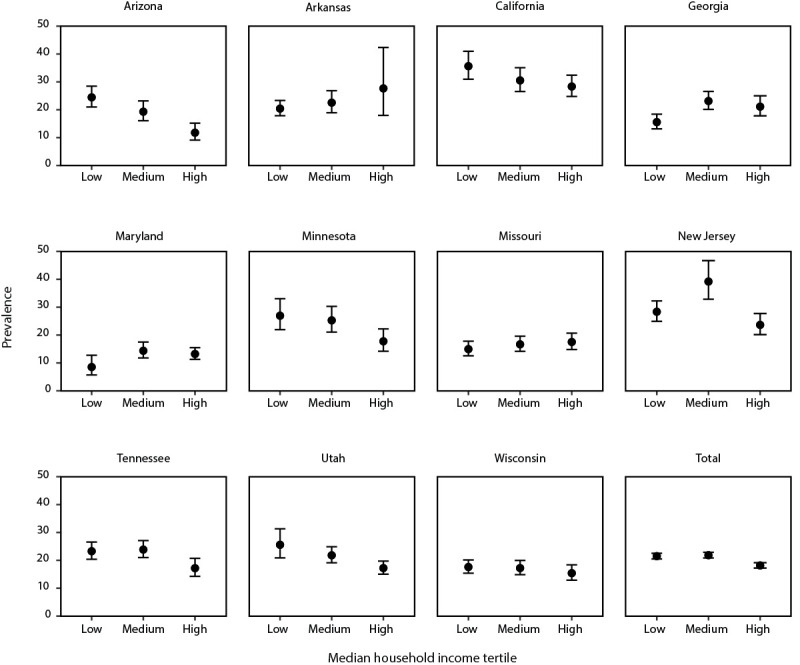
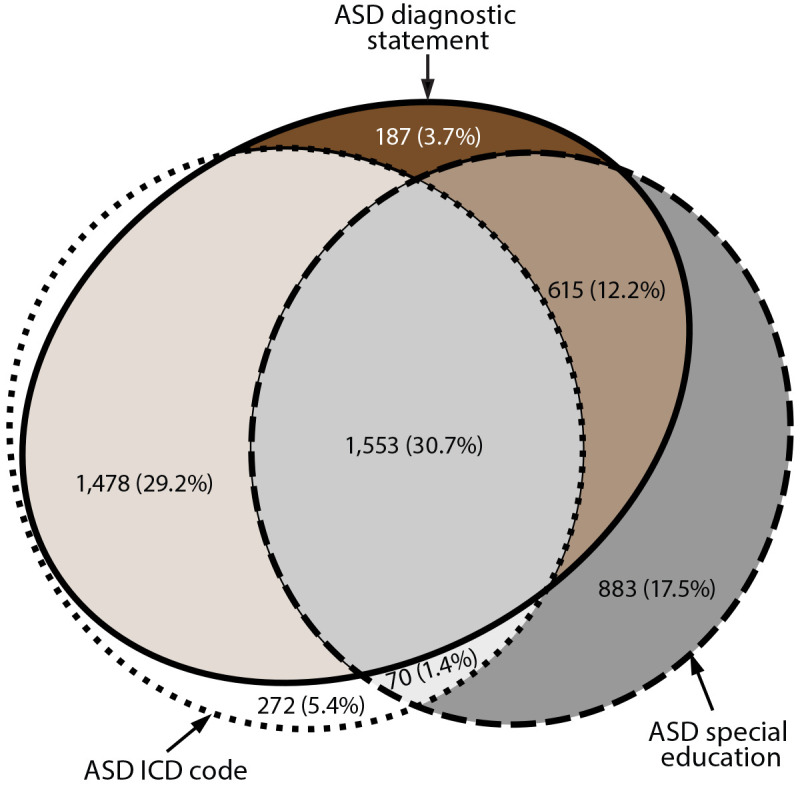
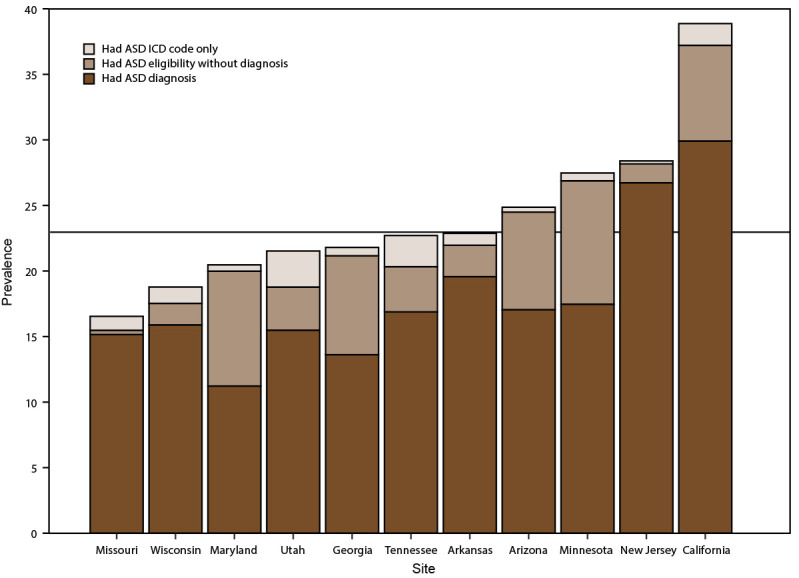
PROBLEM/CONDITION: Autism spectrum disorder (ASD). PERIOD COVERED: 2018. DESCRIPTION OF SYSTEM: The Autism and Developmental Disabilities Monitoring (ADDM) Network conducts active surveillance of ASD. This report focuses on the prevalence and characteristics of ASD among children aged 8 years in 2018 whose parents or guardians lived in 11 ADDM Network sites in the United States (Arizona, Arkansas, California, Georgia, Maryland, Minnesota, Missouri, New Jersey, Tennessee, Utah, and Wisconsin). To ascertain ASD among children aged 8 years, ADDM Network staff review and abstract developmental evaluations and records from community medical and educational service providers. In 2018, children met the case definition if their records documented 1) an ASD diagnostic statement in an evaluation (diagnosis), 2) a special education classification of ASD (eligibility), or 3) an ASD International Classification of Diseases (ICD) code. RESULTS: For 2018, across all 11 ADDM sites, ASD prevalence per 1,000 children aged 8 years ranged from 16.5 in Missouri to 38.9 in California. The overall ASD prevalence was 23.0 per 1,000 (one in 44) children aged 8 years, and ASD was 4.2 times as prevalent among boys as among girls. Overall ASD prevalence was similar across racial and ethnic groups, except American Indian/Alaska Native children had higher ASD prevalence than non-Hispanic White (White) children (29.0 versus 21.2 per 1,000 children aged 8 years). At multiple sites, Hispanic children had lower ASD prevalence than White children (Arizona, Arkansas, Georgia, and Utah), and non-Hispanic Black (Black) children (Georgia and Minnesota). The associations between ASD prevalence and neighborhood-level median household income varied by site. Among the 5,058 children who met the ASD case definition, 75.8% had a diagnostic statement of ASD in an evaluation, 18.8% had an ASD special education classification or eligibility and no ASD diagnostic statement, and 5.4% had an ASD ICD code only. ASD prevalence per 1,000 children aged 8 years that was based exclusively on documented ASD diagnostic statements was 17.4 overall (range: 11.2 in Maryland to 29.9 in California). The median age of earliest known ASD diagnosis ranged from 36 months in California to 63 months in Minnesota. Among the 3,007 children with ASD and data on cognitive ability, 35.2% were classified as having an intelligence quotient (IQ) score ≤70. The percentages of children with ASD with IQ scores ≤70 were 49.8%, 33.1%, and 29.7% among Black, Hispanic, and White children, respectively. Overall, children with ASD and IQ scores ≤70 had earlier median ages of ASD diagnosis than children with ASD and IQ scores >70 (44 versus 53 months). INTERPRETATION: In 2018, one in 44 children aged 8 years was estimated to have ASD, and prevalence and median age of identification varied widely across sites. Whereas overall ASD prevalence was similar by race and ethnicity, at certain sites Hispanic children were less likely to be identified as having ASD than White or Black children. The higher proportion of Black children compared with White and Hispanic children classified as having intellectual disability was consistent with previous findings. PUBLIC HEALTH ACTION: The variability in ASD prevalence and community ASD identification practices among children with different racial, ethnic, and geographical characteristics highlights the importance of research into the causes of that variability and strategies to provide equitable access to developmental evaluations and services. These findings also underscore the need for enhanced infrastructure for diagnostic, treatment, and support services to meet the needs of all children.
Overview
The claims and statistics of this paper haven’t been checked yet.
Run the check — free, no account needed. It reads the open-access text and checks the sources it cites.
Integrity signals
Registry
Cites
Statistics
Figures
Verification
Claims the paper makes
The claims and statistics of this paper haven’t been checked yet.
Run the check — free, no account needed. It reads the open-access text and checks the sources it cites.
Claims other papers make about this one
Each is checked against this paper’s own text: does it say what the citing paper says it does?
In the citing paper
“California has had the highest prevalence among children aged 4 years and 8 years since joining the ADDM Network in 2018 (6,10,11,13)”
In the citing paper
“Surveillance was conducted using the same surveillance methods and case definitions used in 2018 and 2020 (6,13).”
In the citing paper
“No evidence of heterogeneity of the male-to-female ratio among children aged 4 years across sites was observed; however, the overall male-to-female ratio for children aged 4 years was lower than the 4.2 male-to-female ratio for children aged 8 years (11).”
In the citing paper
“The site in California had the highest cumulative incidence of ASD by age 48 months and the fewest cases of suspected ASD and was the only site where prevalence among children aged 4 years was higher than among children aged 8 years (11).”
In the citing paper
“The combined prevalence of ASD and suspected ASD (19.7 per 1,000 children aged 4 years) was still lower than ASD prevalence observed among children aged 8 years (23.0 per 1,000 children aged 8 years) (11).”
In the citing paper
“Children with co-occurring intellectual disability are more likely to be identified earlier than children without intellectual disability, as indicated by an earlier median age at identification among this group (11) as well as the consistently higher proportion of children with intellectual disability at age 4 years (8,13) than at age 8 years (9,11,17).”
In the citing paper
“Consistent with findings among children aged 8 years (11), a higher proportion of Black children aged 4 years with ASD have co-occurring intellectual disability.”
In the citing paper
“The 2018 estimate for children aged 4 years was lower than the 23.0 per 1,000 ASD prevalence among children aged 8 years (11), a finding consistent with previous reports (8,13).”
In the citing paper
“Adding the children identified with ASD to those suspected of having ASD at age 4 years is still less than the prevalence of ASD by age 8 years at all sites except California (11).”
Self-check
Percentages, sums and reported differences re-computed from the paper’s own numbers.
The self-check needs the paper’s full text.
Citations
Cites
Diagnostic and Statistical Manual of Mental Disorders
American Psychiatric Association (2013) · doi:10.1176/appi.books.9780890425596 · Cited by 116,369
Baio, J., Wiggins, L., Christensen, D. L., Maenner, M. J., Daniels, J., Warren, Z., Kurzius-Spencer, M., Zahorodny, W., Robinson, C., Rosenberg, et al. (2018) · MMWR. Surveillance Summaries · doi:10.15585/mmwr.ss6706a1 · Cited by 6,078
Self-citationMaenner, M. J., Shaw, K. A., Baio, J., EdS1, Washington, A., Patrick, M., DiRienzo, M., Christensen, D. L., Wiggins, L. D., Pettygrove, S., et al. (2020) · MMWR. Surveillance Summaries · doi:10.15585/mmwr.ss6904a1 · Cited by 3,780 · cited 5×
“Recommended ICD codes were described previously (10).”
BackgroundMethodInfluentialSelf-citationLord, C., Elsabbagh, M., Baird, G., & Veenstra-Vanderweele, J. (2018) · The Lancet · doi:10.1016/s0140-6736(18)31129-2 · Cited by 2,819
Christensen, D. L., Baio, J., Braun, K. V. N., Bilder, D., Charles, J., Constantino, J. N., Daniels, J., Durkin, M. S., Fitzgerald, R. T., Kurzius-Spencer, M., et al. (2016) · MMWR. Surveillance Summaries · doi:10.15585/mmwr.ss6503a1 · Cited by 1,964
Self-citationPrevalence of Autism in a US Metropolitan Area
Yeargin-Allsopp, M., Rice, C., Karapurkar, T., Doernberg, N., Boyle, C., & Murphy, C. (2003) · JAMA · doi:10.1001/jama.289.1.49 · Cited by 1,248
Poverty and Child Health in the United States
Gitterman, B. A., Flanagan, P., Cotton, W. H., Dilley, K. J., Duffee, J. H., Green, A. E., Keane, V. A., Krugman, S., Linton, J. M., McKelvey, C. D., et al. (2016) · PEDIATRICS · doi:10.1542/peds.2016-0339 · Cited by 789
Research works printed but not linked: 1
- New Jersey Administrative Code. Title 6A, Chapter 14. https://www.state.nj.us/education/code/current/title6a/chap14.pdf
Cited by
Sorted by citations
Items 401–500 of 1,004
Hu, L., Du, X., Jiang, Z., Song, C., & Liu, D. (2023) · European Journal of Clinical Pharmacology · doi:10.1007/s00228-023-03545-w · Cited by 14
“The increasing prevalence of ASD has caused widespread concern and placed significant burdens on patients and families [2, 3].”
BackgroundChen, W., Liu, X., Huang, Z., Guo, C., Feng, F., Zhang, Y., Gao, Y., Zheng, K., Huang, J., Yu, J., et al. (2023) · Frontiers in Psychiatry · doi:10.3389/fpsyt.2023.1211684 · Cited by 14
Hussain, A., John, J. R., Dissanayake, C., Frost, G., Girdler, S. J., Karlov, L., Masi, A., Alach, T., & Eapen, V. (2023) · BMC Pediatrics · doi:10.1186/s12887-023-04236-2 · Cited by 21
“The global prevalence rate of autism is rising with the current estimate at 1 in 44 children [2].”
BackgroundNagda, R., Le, T. Q., Lin, B., & Tanbonliong, T. S. (2023) · Special Care in Dentistry · doi:10.1111/scd.12922 · Cited by 14
Kim, H.-Y., Kim, S. A., Lee, H., & Dodds, R. L. (2023) · Journal of Autism and Developmental Disorders · doi:10.1007/s10803-023-06145-w · Cited by 14
Chen, C., Lin, C., & Lin, M. (2023) · Frontiers in Psychiatry · doi:10.3389/fpsyt.2023.1254453 · Cited by 16
Neighborhood Disadvantage and Autism Spectrum Disorder in a Population With Health Insurance
Yu, X., Rahman, M. M., Carter, S., Lin, J. C., Chow, T., Lurmann, F., Chen, J., Martinez, M. P., Schwartz, J. D., Eckel, S. P., et al. (2023) · JAMA Psychiatry · doi:10.1001/jamapsychiatry.2023.4347 · Cited by 13
Environmental Exposure to Pesticides and the Risk of Child Neurodevelopmental Disorders
Parrón-Carrillo, R., Soriano, B. J. N., Parrón-Carreño, T., Lozano‐Paniagua, D., & Trigueros, R. (2024) · Medicina · doi:10.3390/medicina60030475 · Cited by 14
“However, the Centers for Disease Control and Prevention established an increasing trend for diagnosing autism spectrum disorders in some communities (1.85% of children aged 8 years) [14].”
BackgroundInfluentialDuvall, S. W., Greene, R. K., Phelps, R. A., Rutter, T. M., Markwardt, S., Painter, J. G., Cordova, M., Calamé, B., Doyle, O. J., Nigg, J. T., et al. (2024) · Journal of Autism and Developmental Disorders · doi:10.1007/s10803-024-06329-y · Cited by 14
“This distinction is particularly important given many widely cited prevalence studies of ASD rely on caregiver report (Blumberg et al., 2013) and school records (Maenner et al., 2021, 2023) of ASD diagnoses, suggesting that current rates may, in fact, overestimate the prevalence of ASD.”
InfluentialInnate Immune Dysfunction and Neuroinflammation in Autism Spectrum Disorder (ASD)
Hughes, H. K., Moreno, R. J., & Ashwood, P. (2024) · FOCUS The Journal of Lifelong Learning in Psychiatry · doi:10.1176/appi.focus.24022004 · Cited by 21
Fan, Q., Ding, M., Cheng, W., Su, L., Zhang, Y., Liu, Q., & Wu, Z. (2024) · Frontiers in Neurology · doi:10.3389/fneur.2024.1387060 · Cited by 14
Lagod, P. P., Abdelli, L. S., & Naser, S. A. (2024) · International Journal of Molecular Sciences · doi:10.3390/ijms25158093 · Cited by 17
The early life exposome and autism risk: a role for the maternal microbiome?
Gesù, C. M. D., & Buffington, S. A. (2024) · Gut Microbes · doi:10.1080/19490976.2024.2385117 · Cited by 16
Autism, youth suicide, and psychedelics: A review of the 21st century evidence
Chen, M., Su, T., Hsu, J.-W., & Tsai, S. (2024) · Journal of the Chinese Medical Association · doi:10.1097/jcma.0000000000001150 · Cited by 14
GABA and glutamate measurements in temporal cortex of autistic children
Saleh, M. G., Bloy, L., Blaskey, L. G., & Roberts, T. P. L. (2024) · Autism Research · doi:10.1002/aur.3253 · Cited by 14
Gong, H., Yao, L., Deng, S., Lv, K., Luo, J., Luo, Y., Du, Z., Wu, L.-F., Liu, T., Wang, X., et al. (2024) · Pharmacological Research · doi:10.1016/j.phrs.2024.107568 · Cited by 14
Altın, Y., Boşnak, Ö., & Turhan, C. (2025) · Journal of Autism and Developmental Disorders · doi:10.1007/s10803-025-06741-y · Cited by 22
“This represents an increase from the previous CDC report, published in 2021, which concluded that one in 44 children is affected by ASD (Maenner et al., 2021).”
Dick, K., Kaczmarek, E., Ducharme, R., Bowie, A. C., Dingwall‐Harvey, A. L. J., Howley, H. E. A., Hawken, S., WALKER, M. C., & Armour, C. M. (2025) · Scientific Reports · doi:10.1038/s41598-025-90216-8 · Cited by 23
Gill, P. S., Dweep, H., Rose, S., Wickramasinghe, P., Vyas, K. K., McCullough, S. S., Porter-Gill, P. A., & Frye, R. E. (2022) · Journal of Personalized Medicine · doi:10.3390/jpm12060920 · Cited by 14
“Autism spectrum disorder (ASD) is an enigmatic neurodevelopment disorder that affects approximately 2% of children [1].”
BackgroundTamon, H., Itahashi, T., Yamaguchi, S., Tachibana, Y., Fujino, J., Igarashi, M., Kawashima, M., Takahashi, R., Shinohara, N. A., Noda, Y., et al. (2022) · BMC Psychiatry · doi:10.1186/s12888-022-04249-8 · Cited by 14
Eldeeb, S. Y., Ludwig, N. N., Wieckowski, A. T., Dieckhaus, M. F. S., Algur, Y., Ryan, V., Dufek, S., Stahmer, A. C., & Robins, D. L. (2023) · Autism · doi:10.1177/13623613231154728 · Cited by 15
Analysis of the Brazilian-Portuguese Content on Autism Spectrum Disorder Available on YouTube Videos
Cavalcante, J. C., Sales, M. F., de Sousa, R. R., Souto, D. O., Gonçalves, R. V., Camargos, A. C. R., & Leite, H. R. (2023) · Physical & Occupational Therapy In Pediatrics · doi:10.1080/01942638.2023.2199843 · Cited by 15
“The higher number of videos published on ASD from 2016 to 2018 might be associated with advances in screening and early diagnosis criteria for ASD (Maenner et al., 2021).”
BackgroundDysregulation of Immune Mediators and Synaptic Plasticity in Central Nervous System Disorders
Imbriani, P., D’Ambra, C., Mori, R. D., Ionta, M., Renna, A., & Bonsi, P. (2026) · Cells · doi:10.3390/cells15020201 · Cited by 15
“The prevalence of ASD has increased significantly over the last few decades [215].”
Esler, A., Sample, J. M., Hall‐Lande, J., Harris, B., Rice, C. E., Poynter, J. N., Kirby, R. S., & Wiggins, L. D. (2022) · Journal of Autism and Developmental Disorders · doi:10.1007/s10803-022-05475-5 · Cited by 15
“Since the first prevalence estimates were reported by the Autism and Developmental Disabilities Monitoring (ADDM) Network in 2000 (Centers for Disease Control and Prevention [CDC], 2007), autism spectrum disorder (ASD) detection has increased resulting in a 175% increase in measured prevalence with one in 44 8-year-ol…”
BackgroundSelf-citationFostering social connectedness among adolescents and adults with autism: A qualitative analysis
Tomfohrde, O., Hudock, R. L., Kremer, K. B., Fatiha, N., & Weiler, L. M. (2022) · Psychology in the Schools · doi:10.1002/pits.22759 · Cited by 13
McDonald, R. G., Khawar, S., Yacoub, N., Cargill, M. I., Lerner, M. D., & Kang, E. (2022) · Seminars in Speech and Language · doi:10.1055/s-0042-1750763 · Cited by 17
Lahiri, R., Nasir, M., Kumar, M., Kim, S. H., Bishop, S. L., Lord, C., & Narayanan, S. S. (2022) · JASA Express Letters · doi:10.1121/10.0013421 · Cited by 17
“Autism spectrum disorder (ASD) (Baio, 2018; Maenner et al., 2021) is a developmental condition primarily characterised by differences in social communication skills and abilities along with restricted repetitive behavior, interests, and movements.”
BackgroundGardner, L. M., Cederberg, C. D., Hangauer, J., & Campbell, J. M. (2022) · Research in Developmental Disabilities · doi:10.1016/j.ridd.2022.104371 · Cited by 13
The Prevalence of Autism Spectrum Disorders in the Russian Federation: A Retrospective Study
Ustinova, N. V., Namazova-Baranova, L. S., Basova, A. Y., Soloshenko, M. А., Vishneva, Е. A., Suleymanova, Z. Y., & Lapshin, M. S. (2022) · Consortium Psychiatricum · doi:10.17816/cp211 · Cited by 18
da Silva, V. A. R., Pauna, H. F., Lavinsky, J., Hyppolito, M. Â., Vianna, M. F., Gouveia, M. D. C. L., Massuda, E. T., Hamerschmidt, R. D. A., Bahmad, F., Cal, R. V. R., et al. (2022) · Brazilian Journal of Otorhinolaryngology · doi:10.1016/j.bjorl.2022.11.002 · Cited by 14
Prevalence of Autism Spectrum Disorder in the United States is Stable in the COVID-19 Era
Wang, X., Weng, X., Pan, N., Li, X., Lin, L., & Jin, J. (2023) · Journal of Autism and Developmental Disorders · doi:10.1007/s10803-023-05915-w · Cited by 13
“However, caution should be taken since the ASD prevalence and its trend reported in different national surveys (Guifeng Xu, 2018; Lebrun-Harris et al., 2022; Maenner et al., 2021; Qian Li et al., 2022) showed inconsistent data reports (Li & He, 2022; Qian Li et al., 2022).”
ResultPearson, J. N., Malone, K. M., Stewart-Ginsburg, J. H., Manns, L. D., Martin, D. L. M., & Palazzo, K. M. (2023) · Journal of Disability & Religion · doi:10.1080/23312521.2023.2178993 · Cited by 13
Vu, M., Duhig, A. M., Tibrewal, A., Campbell, C. M., Gaur, A., Salomon, C., Gupta, A., Kruse, M., & Taraman, S. (2023) · Journal of Managed Care & Specialty Pharmacy · doi:10.18553/jmcp.2023.29.4.378 · Cited by 15
Autism services in low-resource areas
Masri, A. T., Nasir, A. K., Irshaid, A., Irshaid, F. Y., Alomari, F., Khatib, F. A., Al-Qudah, A. A., Nafi, O., Almomani, M. A., & Bashtawi, M. A. (2023) · Neurosciences · doi:10.17712/nsj.2023.2.20220098 · Cited by 13
Individualized Education Programs and Transition Planning for Adolescents With Autism
Hughes, M. M., Kirby, A. V., Davis, J. L., Bilder, D. A., Patrick, M., Lopez, M. L. C., DaWalt, L. S., Pas, E. T., Bakian, A. V., Shaw, K. A., et al. (2023) · PEDIATRICS · doi:10.1542/peds.2022-060199 · Cited by 13
Self-citationGupta, N., & Gupta, M. (2023) · CNS Spectrums · doi:10.1017/s1092852923002389 · Cited by 15
Conceptualizing Epigenetics and the Environmental Landscape of Autism Spectrum Disorders
Torres, G., Mourad, M., Iqbal, S., Moses‐Fynn, E., Pandita, A., Siddhartha, S. S., Sood, R. A., Srinivasan, K., Subbaiah, R. T., Tiwari, A., et al. (2023) · Genes · doi:10.3390/genes14091734 · Cited by 18
Che, X., Gross, S. M., Wang, G., Hong, X., Pearson, C., Bartell, T. R., & Wang, X. (2023) · PubMed Central · doi:10.1097/pn9.0000000000000047 · Cited by 13
“[11] About 1 in 44 US children aged 8 years were autistic in 2018[12]; and approximately 6 million US children (9.”
BackgroundUsing pharmacotherapy to address sleep disturbances in autism spectrum disorders
Mammarella, V., Orecchio, S., Cameli, N., Occhipinti, S., Marcucci, L., Meo, G. D., Innocenti, A., Ferri, R., & Bruni, O. (2023) · Expert Review of Neurotherapeutics · doi:10.1080/14737175.2023.2267761 · Cited by 14
Casale, L., Gentles, S. J., McLaughlin, J., & Schneider, M. (2023) · PLoS ONE · doi:10.1371/journal.pone.0293656 · Cited by 13
Socio-economic status and autism spectrum disorder: A case-control study in Bangladesh
Khan, M. S., Kabir, M. A., & Tareq, S. M. (2024) · Preventive Medicine Reports · doi:10.1016/j.pmedr.2024.102614 · Cited by 15
The spectrum of pre‐mRNA splicing in autism
Engal, E., Zhang, Z., Geminder, O., Jaffe‐Herman, S., Kay, G., Ben‐Hur, A., & Salton, M. (2024) · Wiley Interdisciplinary Reviews - RNA · doi:10.1002/wrna.1838 · Cited by 14
“In western societies, the estimated prevalence of ASD exceeds 2% (Maenner MJ & Bakian, 2021).”
BackgroundPostma, J. K., Harrison, M., Kutcher, S., Webster, R. J., Cloutier, M., Bourque, D. K., Yu, A. C., & Carter, M. T. (2024) · American Journal of Medical Genetics Part A · doi:10.1002/ajmg.a.63791 · Cited by 13
“…than males to receive a genetic diagnosis (OR, 3.21; 95% CI: 1.52, 6.82) in this predominantly male cohort (73%); a proportion which is in line with literature reports of the sex discrepancy in ASD (Maenner, 2021 (Campistol et al., 2016; Schiff et al., 2011), and these numbers are similar (0.9”
InfluentialKing, C., Rogers, L. G., Jansen, J., Sivayokan, B., Neyhard, J., Warnes, E., Hall, S. E., & Plakke, B. (2024) · Physiology & Behavior · doi:10.1016/j.physbeh.2024.114638 · Cited by 16
Maternal Prenatal Cannabis Use and Child Autism Spectrum Disorder
Avalos, L. A., Shenkute, M., Alexeeff, S., Oberman, N. R., Croen, L., Davignon, M. N., Adams, S. R., Ansley, D. R., Castellanos, C. L., & Young‐Wolff, K. C. (2024) · JAMA Network Open · doi:10.1001/jamanetworkopen.2024.40301 · Cited by 15
Boulton, K., Hilton, M., Sutton, E., & Guastella, A. J. (2025) · Journal of Medical Internet Research · doi:10.2196/58693 · Cited by 13
“Given the growing prevalence of conditions like autism [1], an increase in the number of health information technologies focused on these conditions is relevant and has the potential to provide children and families with a variety of support tools.”
Genomic Strategies for Understanding the Pathophysiology of Autism Spectrum Disorder
Doi, M., Li, M., Usui, N., & Shimada, S. (2022) · Frontiers in Molecular Neuroscience · doi:10.3389/fnmol.2022.930941 · Cited by 13
Development and Psychometric Evaluation of the Open-Source Challenging Behavior Scale (OS-CBS)
Frazier, T. W., Khaliq, I. N., Scullin, K. M., Uljarević, M., Shih, A. J., & Karpur, A. (2022) · Journal of Autism and Developmental Disorders · doi:10.1007/s10803-022-05750-5 · Cited by 13
“The most recent US population estimate indicates a 2.3% prevalence for ASD (Maenner et al., 2021) and an 17.8% prevalence for all DD (Zablotsky et al., 2019).”
InfluentialLin, X., Zhou, R., Liang, D., Xia, L., Zeng, L., & Chen, X. (2022) · Frontiers in Psychiatry · doi:10.3389/fpsyt.2022.976827 · Cited by 13
“It is estimated that one in 44 children aged 8 in the United States has autism (1).”
BackgroundStoccoro, A., Gallo, R., Calderoni, S., Cagiano, R., Muratori, F., Migliore, L., Grossi, E., & Coppedè, F. (2022) · Epigenomics · doi:10.2217/epi-2022-0179 · Cited by 13
Lin, C.-W., Ellegood, J., Tamada, K., Miura, I., Konda, M., Takeshita, K., Atarashi, K., Lerch, J. P., Wakana, S., McHugh, T. J., et al. (2023) · Molecular Psychiatry · doi:10.1038/s41380-023-01999-z · Cited by 17
“Autism spectrum disorder (ASD) is a neurodevelopmental disorder with complex genetic architecture and heterogeneity, which have impeded the development of therapeutic strategies for this disease with a 2.3% prevalence rate in 2018 [1].”
BackgroundInfluentialApplying a public health approach to autism research: A framework for action
Schendel, D., Roux, A. M., Hassrick, E. M., Lyall, K., Shea, L., Vivanti, G., Wieckowski, A. T., Newschaffer, C. J., & Robins, D. L. (2022) · Autism Research · doi:10.1002/aur.2689 · Cited by 14
“Most recently, it was estimated that 2.27% of the nation’s 8-year-old children in 2018 had autism (Maenner et al., 2021), making it more common in childhood than intellectual disability, cerebral palsy, epilepsy, vision impairment or hearing loss, Type 1/Type 2 diabetes or cancer (American Cancer…”
BackgroundInfluentialRetinoic Acid Supplementation Rescues the Social Deficits in Fmr1 Knockout Mice
Yang, L., Xia, Z., Feng, J., Zhang, M., Miao, P., Nie, Y., Zhang, X., Hao, Z., & Hu, R. (2022) · Frontiers in Genetics · doi:10.3389/fgene.2022.928393 · Cited by 13
“ASD affects approximately one in 44 children, and the incidence is 4-fold higher inmales than females (Maenner et al., 2021).”
BackgroundMaciver, D., Roy, A. S., Johnston, L., Boilson, M., Curnow, E., Johnstone‐Cooke, V., & Rutherford, M. (2025) · Autism · doi:10.1177/13623613251383343 · Cited by 17
“In the United States, it was reported that 1 in 36 children aged 8 had been diagnosed autistic in 2020 (Maenner et al., 2021).”
Eilenberg, J. S., Kizildag, D., Blakey, A. O., Cardona, N. D., Oberoi, A. R., Broder‐Fingert, S., Feinberg, E., & Long, K. A. (2021) · Academic Pediatrics · doi:10.1016/j.acap.2021.12.025 · Cited by 13
Zhao, M., You, Y., Li, J., Healy, S., Taylor, A., Zhang, Z., Li, L., & Zou, L. (2022) · International Journal of Mental Health Promotion · doi:10.32604/ijmhp.2022.021361 · Cited by 16
Zhao, Z., Wei, J., Xing, J., Zhang, X., Qu, X., Hu, X., & Lu, J. (2022) · Journal of Autism and Developmental Disorders · doi:10.1007/s10803-022-05685-x · Cited by 12
“Data from the United States reported that the prevalence of ASD has increased up to 1/44 now (Maenner et al., 2021).”
BackgroundMoro, J. D. S., Rodrigues, T. D., Kammer, P. V., de Camargo, A. R., & Bolan, M. (2022) · Journal of Autism and Developmental Disorders · doi:10.1007/s10803-022-05820-8 · Cited by 12
Eshraghi, A. A., Memis, I., Wang, F., White, I., Furar, E., Mittal, J., Moosa, M., Atkins, C. M., & Mittal, R. (2022) · PLoS ONE · doi:10.1371/journal.pone.0275937 · Cited by 12
Lindly, O. J., Henderson, D. E., Vining, C. B., Bear, C. R., Nozadi, S. S., & Bia, S. (2023) · International Journal of Environmental Research and Public Health · doi:10.3390/ijerph20085523 · Cited by 15
“before a child turns three years old is possible and has increased [3,4].”
BackgroundMethodMesleh, A. G., Ehtewish, H., de la Fuente, A., Shammari, H. A., Ghazal, I., Al‐Faraj, F., Alshaban, F. A. W., Abdesselem, H., Emara, M. M., Alajez, N. M., et al. (2023) · International Journal of Molecular Sciences · doi:10.3390/ijms24087443 · Cited by 14
“7% [6], and in the United States, ASD cases are reported in 1 in every 44 children [7].”
BackgroundHenderson, T. B., Ludden, B. J., & Romero, R. A. A. (2023) · Behavior Analysis in Practice · doi:10.1007/s40617-023-00787-z · Cited by 12
A Scoping Review of Diagnosis of Autism Spectrum Disorder in Primary Care
Johnson, N. L., Fial, A., Hecke, A. V. V., Whitmore, K. E., Meyer, K., Peña, S., Carlson, M., & Koth, K. A. (2023) · Journal of Pediatric Health Care · doi:10.1016/j.pedhc.2023.04.003 · Cited by 12
Holingue, C., Pfeiffer, D. L., Ludwig, N. N., Reetzke, R., Hong, J. S., Kalb, L. G., & Landa, R. J. (2023) · Autism Research · doi:10.1002/aur.2972 · Cited by 12
“Roughly 1 in 3 autistic children have ID (Maenner et al., 2021).”
The genetics of autism spectrum disorder in an East African familial cohort
Tuncay, İ. O., DeVries, D., Gogate, A., Kaur, K. J., Kumar, A., Xing, C., Goodspeed, K., Seyoum-Tesfa, L., & Chahrour, M. H. (2023) · Cell Genomics · doi:10.1016/j.xgen.2023.100322 · Cited by 13
“ASD affects 1 in 44 children in the United States (US).(7) The reported prevalence is geographically variable within the US, presumably due to decreased surveillance where access to assessment, diagnosis, and services are limited.”
BackgroundYoon, S., Santos, M. D., Forrest, M. P., Pratt, C. P., Khalatyan, N., Mohler, P. J., Savas, J. N., & Penzes, P. (2023) · Cell Reports · doi:10.1016/j.celrep.2023.112784 · Cited by 13
Tian, L., Ma, S., Li, Y., Zhao, M., Xu, C., Wang, C., Zhang, X., & Gao, L. (2023) · Frontiers in Neuroscience · doi:10.3389/fnins.2023.1188648 · Cited by 12
Yang, Y., Wang, H., Hai-ping, X., Yao, M., & Yu, D. (2023) · Autism Research · doi:10.1002/aur.3006 · Cited by 12
“Over the past 10 years, there has been a sharp rise in the prevalence of ASD, which was estimated to be 1 in 44 for US children aged 8 in 2018 (Maenner et al., 2021).”
BackgroundHarker, S. A., Al-Hassan, L., Huentelman, M. J., Braden, B. B., & Lewis, C. R. (2023) · International Journal of Molecular Sciences · doi:10.3390/ijms242115988 · Cited by 11
Stephens, A. M., Briggs, A. M., Loder‐Lafferty, B. H., Barr, J., & Miller, A. (2023) · Behavior Analysis in Practice · doi:10.1007/s40617-023-00896-9 · Cited by 12
“The Autism and Developmental Disabilities Monitoring Network recently estimated that autism spectrum disorder (ASD) now affects 1 in 44 of the nation’s children (Maenner et al., 2021).”
Powell, T., Parker, J., Kitson, H., & Rogalewski, M. (2024) · Autism in Adulthood · doi:10.1089/aut.2023.0031 · Cited by 10
Woodhouse, E., Hollingdale, J., Davies, L., Al‐Attar, Z., Young, S., Vinter, L. P., Agyemang, K., Bartlett, C., Berryessa, C. M., Chaplin, E., et al. (2024) · BMC Medicine · doi:10.1186/s12916-024-03320-3 · Cited by 20
“Reported diagnosis rates are three times higher in biological males than females [10, 11] but the biological male:female ratio is debated due to potential sex differences in detection, referral and assessment.”
BackgroundInfluentialLiu, J., Girault, J. B., Nishino, T., Shen, M. D., Kim, S. H., Burrows, C. A., Elison, J. T., Marrus, N. M., Wolff, J. J., Botteron, K. N., et al. (2024) · Cerebral Cortex · doi:10.1093/cercor/bhae092 · Cited by 13
Wang, L., Qin, Y., Yang, S., Jin, D., Zhu, Y., Li, X., Li, W., Wang, Y., & Jin, C. (2024) · Human Brain Mapping · doi:10.1002/hbm.26750 · Cited by 13
Hirai, T., Umeda, N., Harada, T., Okumura, A., Nakayasu, C., Ohto‐Nakanishi, T., Tsuchiya, K. J., Nishimura, T., & Matsuzaki, H. (2024) · Psychiatry and Clinical Neurosciences · doi:10.1111/pcn.13710 · Cited by 16
“…factors (interleukin-1RA, tumor necrosis factor-α , serpin E1, vascular cell adhesion molecule 1, vascular endothelial growth factor D, epidermal growth factor, and colony-stimulating factors 1 and 2) in cord blood plasma and maternal mid-pregnancy plasma were associated with increased ASD risk.”
BackgroundWhole-genome sequencing identifies novel genes for autism in Chinese trios
Chang, S., Liu, J. J., Zhao, Y., Pang, T., Zheng, X., Song, Z., Zhang, A., Gao, X., Luo, L., Guo, Y., et al. (2024) · Science China Life Sciences · doi:10.1007/s11427-023-2564-8 · Cited by 13
Kang, N., Sargsyan, S., Chough, I., Petrick, L. M., Liao, J., Wu, C., Pavlovic, N., Lurmann, F., Martinez, M. P., McConnell, R., et al. (2024) · Environmental Pollution · doi:10.1016/j.envpol.2024.124729 · Cited by 11
Unraveling the relative abundance of psychobiotic bacteria in children with Autism Spectrum Disorder
Darwesh, M.-A. K., Bakr, W., Omar, T. E. I., El‐Kholy, M. A., & Azzam, N. F. A. E. M. (2024) · Scientific Reports · doi:10.1038/s41598-024-72962-3 · Cited by 13
Smith-Young, J., Pike, A. D., Swab, M., & Chafe, R. (2024) · JBI Evidence Synthesis · doi:10.11124/jbies-23-00332 · Cited by 14
Kasitipradit, K., Thongkorn, S., Kanlayaprasit, S., Saeliw, T., Lertpeerapan, P., Panjabud, P., Jindatip, D., Hu, V. W., Kikkawa, T., Osumi, N., et al. (2025) · Scientific Reports · doi:10.1038/s41598-025-86392-2 · Cited by 14
Karpur, A., Vasudevan, V., Frazier, T. W., & Shih, A. J. (2022) · Disability and health journal · doi:10.1016/j.dhjo.2022.101323 · Cited by 14
Buranova, N., Dampf, M., Stevenson, B., & Sohl, K. (2022) · Clinical Pediatrics · doi:10.1177/00099228221090710 · Cited by 12
Autism spectrum disorder: Comorbidity and demographics in a clinical sample
Kılıçaslan, F., & Tufan, A. E. (2022) · International Journal of Developmental Disabilities · doi:10.1080/20473869.2022.2074242 · Cited by 12
“Although ASD can be reliably diagnosed as early as two years old, most children are still being diagnosed after four years of age (Maenner et al. 2021).”
InfluentialLin, Y., Wang, G., Yang, Y., Jin, X., Huang, H., Zhang, Y., & Jin, Z. (2022) · Journal of Autism and Developmental Disorders · doi:10.1007/s10803-022-05603-1 · Cited by 15
“However, the average age of diagnosis is about 4 years old in United States(Maenner et al., 2021) and ASD patients are most often diagnosed at older ages in low- and middle- income countries(Rudra et al., 2017).”
BackgroundInfluentialJoshi, G., & Wilens, T. E. (2022) · Child and Adolescent Psychiatric Clinics of North America · doi:10.1016/j.chc.2022.03.012 · Cited by 13
Differences in Prediction May Underlie Language Disorder in Autism
Weismer, S. E., & Saffran, J. R. (2022) · Frontiers in Psychology · doi:10.3389/fpsyg.2022.897187 · Cited by 14
Shanghai Autism Early Development: An Integrative Chinese ASD Cohort
Dai, Y., Liu, Y., Zhang, L., Ren, T., Wang, H., Yu, J., Liu, X., Chen, Z., Deng, L., Tao, M., et al. (2022) · Neuroscience Bulletin · doi:10.1007/s12264-022-00904-y · Cited by 12
Venker, C. E., & Johnson, J. R. (2022) · Frontiers in Psychology · doi:10.3389/fpsyg.2022.929589 · Cited by 12
Ruble, L. A., Ogle, L. N., & McGrew, J. H. (2022) · Psychology in the Schools · doi:10.1002/pits.22800 · Cited by 13
Distinct social attention profiles in preschoolers with autism contrasted to fragile X syndrome
Wall, C. A., Shic, F., Varanasi, S., & Roberts, J. E. (2022) · Autism Research · doi:10.1002/aur.2857 · Cited by 13
“Thirty-one percent of those with ASD have co-occurring intellectual disability (ID) (Maenner et al., 2021), and yet, despite the growing body of research utilizing eye-tracking methods to understand social attention in ASD, very little of this work has included children with co-occurring ID…”
BackgroundInfluentialBurman, D., Ramanujam, K., Manzar, M. D., Chattu, V. K., Spence, D. W., Zaki, N. F. W., Jahrami, H., & Pandi-Perumal, S. R. (2023) · Sleep and Vigilance · doi:10.1007/s41782-022-00222-3 · Cited by 12
Gandhi, T., Liu, C., Adeyelu, T. T., Canepa, C. R., & Lee, C. C. (2023) · Frontiers in Behavioral Neuroscience · doi:10.3389/fnbeh.2023.1114789 · Cited by 13
Non-invasive brain stimulation for patient with autism: a systematic review and meta-analysis
Liu, A., Gong, C., Wang, B., Sun, J., & Jiang, Z. (2023) · Frontiers in Psychiatry · doi:10.3389/fpsyt.2023.1147327 · Cited by 16
“According to 2020, Recent data from the Centers for Disease Control and Prevention show that The overall ASD prevalence aged 8 years rises to 1 in 44, which is already more than the sum of the world’s three major diseases (AIDS, cancer, diabetes) (5).”
MethodChang, J., & Goin‐Kochel, R. P. (2020) · Autism Research · doi:10.1002/aur.2339 · Cited by 12
Juvenile handling rescues autism-related effects of prenatal exposure to valproic acid
Seiffe, A., Ramírez, M. F., Sempé, L., & Depino, A. M. (2022) · Scientific Reports · doi:10.1038/s41598-022-11269-7 · Cited by 13
“223; juvenile treatment × time: F (4, 192) = 0.”
BackgroundInfluentialThe Global Burden of Disease Epidemiology—When Big Data Impute the Nonexistent
Roman-Urrestarazu, A., & van Kessel, R. (2024) · JAMA Pediatrics · doi:10.1001/jamapediatrics.2023.6507 · Cited by 11
Taha, H. A., Issa, A., Muhanna, Z., Al-Shehab, M., Wadi, T., Awamleh, S., Ateiwi, Y. A., Abusido, M., & Berggren, V. (2025) · Frontiers in Microbiology · doi:10.3389/fmicb.2025.1648118 · Cited by 13
Williams, Z. J. (2022) · JAMA Network Open · doi:10.1001/jamanetworkopen.2022.9503 · Cited by 11
Reetzke, R., Singh, V., Hong, J. S., Holingue, C., Kalb, L. G., Ludwig, N. N., Menon, D. U., Pfeiffer, D. L., & Landa, R. J. (2022) · Frontiers in Psychology · doi:10.3389/fpsyg.2022.936392 · Cited by 20
“, 2016), and increasing prevalence (1 in 44; Maenner, 2021).”
BackgroundInfluentialAller, T. B., Barrett, T. S., Levin, M. E., & McClain, M. B. (2022) · Journal of Contextual Behavioral Science · doi:10.1016/j.jcbs.2022.09.001 · Cited by 14
Metadata
- Authors
- Maenner, M. J., Shaw, K. A., Bakian, A. V., Bilder, D. A., Durkin, M. S., Esler, A., Furnier, S. M., Hallas, L., Hall-Lande, J., Hudson, A., Hughes, M. M., Patrick, M., Pierce, K., Poynter, J. N., Salinas, A., Shenouda, J., Vehorn, A., Warren, Z., Constantino, J. N., DiRienzo, M., Fitzgerald, R. T., Grzybowski, A., Spivey, M. H., Pettygrove, S., Zahorodny, W., Ali, A., Andrews, J. G., Baroud, T., Gutierrez, J., Hewitt, A., Lee, L.-C., Lopez, M., Mancilla, K. C., McArthur, D., Schwenk, Y. D., Washington, A., Williams, S., & Cogswell, M. E.
- Affiliations
- Centers for Disease Control and Prevention (US)
- University of Utah (US)
- University of Wisconsin–Madison (US)
- University of Minnesota (US)
- University of Arkansas for Medical Sciences (US)
- University of California San Diego (US)
- Rutgers New Jersey Medical School (US)
- Vanderbilt University Medical Center (US)
- Washington University in St. Louis (US)
- Johns Hopkins University (US)
- University of Arizona (US)
- United States Department of Health and Human Services (US)
- Corresponding author
- Maenner, Matthew J.
- ORCID
- Maenner, Matthew J.
- Bakian, Amanda V.
- Bilder, Deborah A.
- Durkin, Maureen S.
- Esler, Amy
- Furnier, Sarah M.
- Hughes, Michelle M.
- Patrick, Mary
- Pierce, Karen
- Poynter, Jenny N.
- Shenouda, Josephine
- Warren, Zachary
- Constantino, John N.
- DiRienzo, Monica
- Fitzgerald, Robert T.
- Pettygrove, Sydney
- Zahorodny, Walter
- Ali, Akilah
- Andrews, Jennifer G.
- Lee, Li-Ching
- Lopez, Maya
- McArthur, Dedria
- Washington, Anita
- Cogswell, Mary E.
- Venue
- MMWR. Surveillance Summaries
- Published
- 2021-12-03
- Volume
- 70
- Issue
- 11
- Pages
- 1-16
- ISSN
- 1545-8636 (ISSN-L)
- 1546-0738
- PMC
- PMC8639024
- OpenAlex
- W3216151710
- Cited by
- 1,818
- References
- 37
- Citations by year
- 2026: 101 · 2025: 270 · 2024: 438 · 2023: 553 · 2022: 438 · 2021: 8
- FWCI
- 193.23
- Type
- journal article
- Language
- en
- Open access
- diamond
- doi.org
- Licence
- public-domain
- Locations
- MMWR Surveillance Summaries (publishedVersion, public-domain)
- PubMed Central (publishedVersion, public-domain)
- PubMed (publishedVersion)
- Funders
- Eunice Kennedy Shriver National Institute of Child Health and Human Development (P50HD103537)
- Topics
- Life Sciences › Neuroscience › Cognitive Neuroscience › Autism Spectrum Disorder Research
- Health Sciences › Medicine › Psychiatry and Mental health › Child Nutrition and Feeding Issues
- Social Sciences › Psychology › Clinical Psychology › Family and Disability Support Research
- Keywords
- autism spectrum disorder, autism prevalence, special education eligibility, ICD-10 codes, sex differences, racial and ethnic disparities, American Indian and Alaska Native children, median household income, neighborhood socioeconomic status, United States states and territories
- MeSH terms
- Autism Spectrum Disorder, Race Factors, Child, Ethnicity, Female, Geography, Humans, Male, Population Surveillance, United States, Prevalence, Racial Groups, Health Status Disparities, Epidemiological Monitoring
About these checks
Registry, retraction, Cites and statistics results are computed, not judged, with one exception: a printed reference that no index lists is read once by a model before it counts as a citation error. Claims are extracted by a model and kept only when their quote appears verbatim in the text; each cited source is then checked, with a model’s help, for whether it says what the claim relies on. Those verdicts can be wrong — read the claim’s quote and the cited source before relying on one.
Statistics and arithmetic are recomputed, not judged.
Confidence bands are shown only for fields calibrated on our annotated test set. None is calibrated yet, so no band is shown.
What counts as a claim ›How we measure confidence ›How we check this ›
Are you an author, or do you see a problem with this page? Request a review
