

The DOI matches its Crossref record; 37 of the 37 references it cites were found in a registry or an index.
Prevalence and characteristics of autism spectrum disorder among children aged 8 years—Autism and Developmental Disabilities Monitoring Network, 11 sites, United States, 2018.
Open accessAbstract
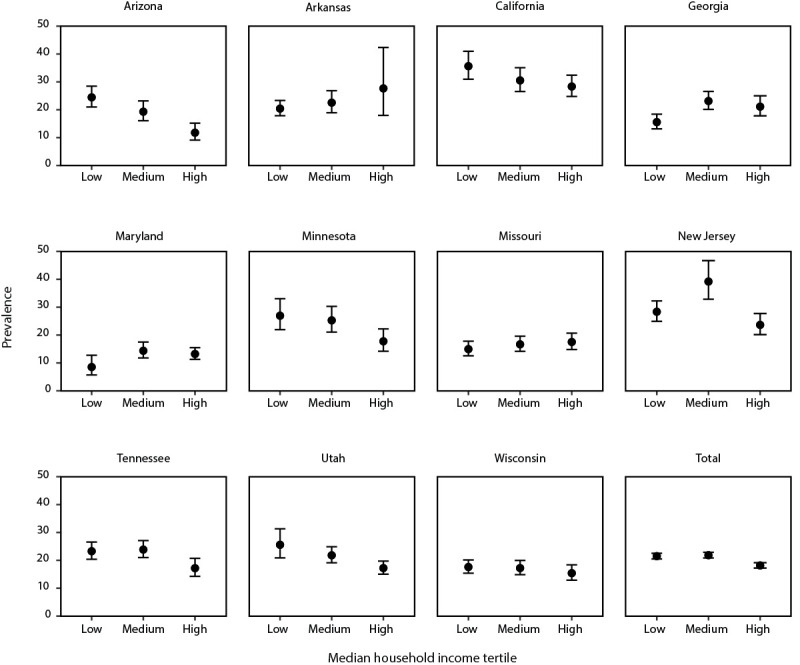
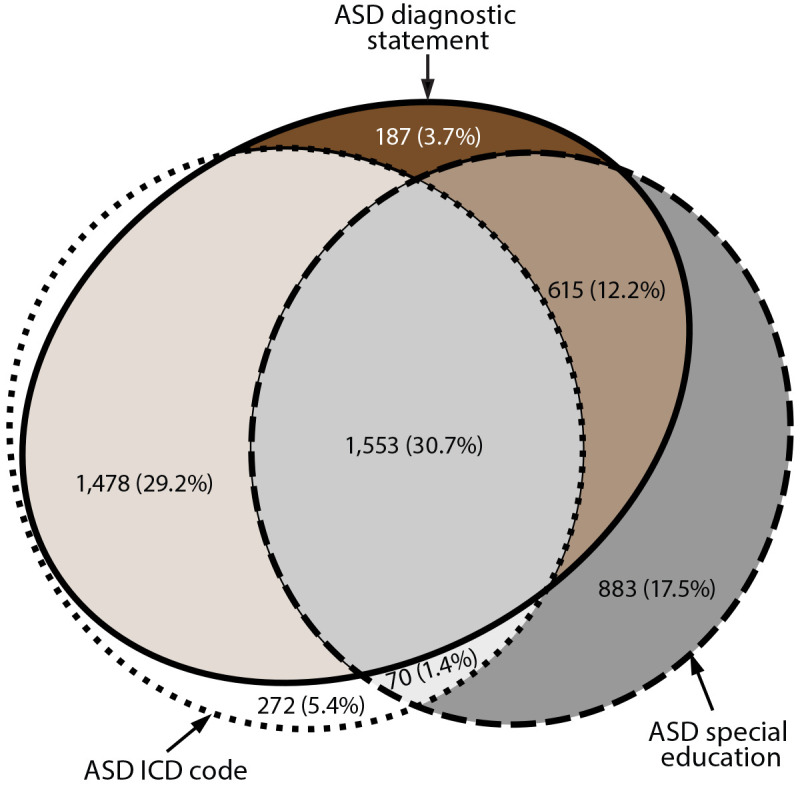
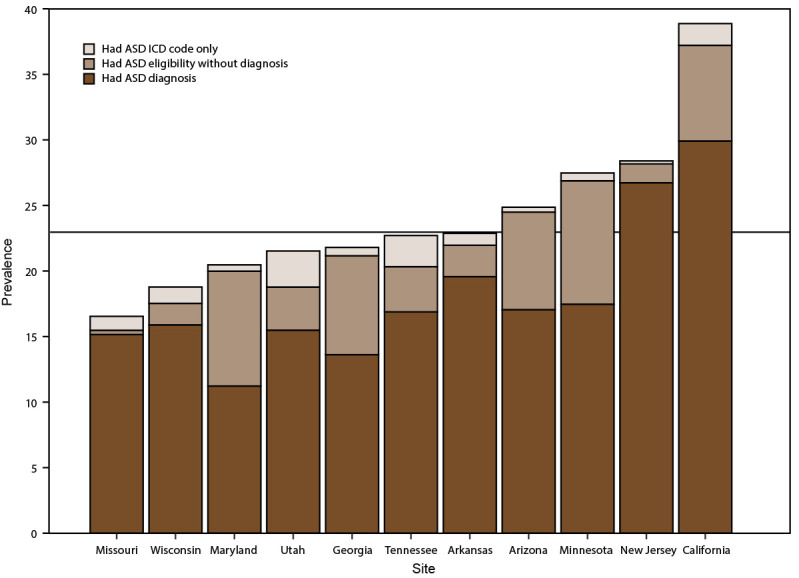
PROBLEM/CONDITION: Autism spectrum disorder (ASD). PERIOD COVERED: 2018. DESCRIPTION OF SYSTEM: The Autism and Developmental Disabilities Monitoring (ADDM) Network conducts active surveillance of ASD. This report focuses on the prevalence and characteristics of ASD among children aged 8 years in 2018 whose parents or guardians lived in 11 ADDM Network sites in the United States (Arizona, Arkansas, California, Georgia, Maryland, Minnesota, Missouri, New Jersey, Tennessee, Utah, and Wisconsin). To ascertain ASD among children aged 8 years, ADDM Network staff review and abstract developmental evaluations and records from community medical and educational service providers. In 2018, children met the case definition if their records documented 1) an ASD diagnostic statement in an evaluation (diagnosis), 2) a special education classification of ASD (eligibility), or 3) an ASD International Classification of Diseases (ICD) code. RESULTS: For 2018, across all 11 ADDM sites, ASD prevalence per 1,000 children aged 8 years ranged from 16.5 in Missouri to 38.9 in California. The overall ASD prevalence was 23.0 per 1,000 (one in 44) children aged 8 years, and ASD was 4.2 times as prevalent among boys as among girls. Overall ASD prevalence was similar across racial and ethnic groups, except American Indian/Alaska Native children had higher ASD prevalence than non-Hispanic White (White) children (29.0 versus 21.2 per 1,000 children aged 8 years). At multiple sites, Hispanic children had lower ASD prevalence than White children (Arizona, Arkansas, Georgia, and Utah), and non-Hispanic Black (Black) children (Georgia and Minnesota). The associations between ASD prevalence and neighborhood-level median household income varied by site. Among the 5,058 children who met the ASD case definition, 75.8% had a diagnostic statement of ASD in an evaluation, 18.8% had an ASD special education classification or eligibility and no ASD diagnostic statement, and 5.4% had an ASD ICD code only. ASD prevalence per 1,000 children aged 8 years that was based exclusively on documented ASD diagnostic statements was 17.4 overall (range: 11.2 in Maryland to 29.9 in California). The median age of earliest known ASD diagnosis ranged from 36 months in California to 63 months in Minnesota. Among the 3,007 children with ASD and data on cognitive ability, 35.2% were classified as having an intelligence quotient (IQ) score ≤70. The percentages of children with ASD with IQ scores ≤70 were 49.8%, 33.1%, and 29.7% among Black, Hispanic, and White children, respectively. Overall, children with ASD and IQ scores ≤70 had earlier median ages of ASD diagnosis than children with ASD and IQ scores >70 (44 versus 53 months). INTERPRETATION: In 2018, one in 44 children aged 8 years was estimated to have ASD, and prevalence and median age of identification varied widely across sites. Whereas overall ASD prevalence was similar by race and ethnicity, at certain sites Hispanic children were less likely to be identified as having ASD than White or Black children. The higher proportion of Black children compared with White and Hispanic children classified as having intellectual disability was consistent with previous findings. PUBLIC HEALTH ACTION: The variability in ASD prevalence and community ASD identification practices among children with different racial, ethnic, and geographical characteristics highlights the importance of research into the causes of that variability and strategies to provide equitable access to developmental evaluations and services. These findings also underscore the need for enhanced infrastructure for diagnostic, treatment, and support services to meet the needs of all children.
Overview
The claims and statistics of this paper haven’t been checked yet.
Run the check — free, no account needed. It reads the open-access text and checks the sources it cites.
Integrity signals
Registry
Cites
Statistics
Figures
Verification
Claims the paper makes
The claims and statistics of this paper haven’t been checked yet.
Run the check — free, no account needed. It reads the open-access text and checks the sources it cites.
Claims other papers make about this one
Each is checked against this paper’s own text: does it say what the citing paper says it does?
In the citing paper
“California has had the highest prevalence among children aged 4 years and 8 years since joining the ADDM Network in 2018 (6,10,11,13)”
In the citing paper
“Surveillance was conducted using the same surveillance methods and case definitions used in 2018 and 2020 (6,13).”
In the citing paper
“No evidence of heterogeneity of the male-to-female ratio among children aged 4 years across sites was observed; however, the overall male-to-female ratio for children aged 4 years was lower than the 4.2 male-to-female ratio for children aged 8 years (11).”
In the citing paper
“The site in California had the highest cumulative incidence of ASD by age 48 months and the fewest cases of suspected ASD and was the only site where prevalence among children aged 4 years was higher than among children aged 8 years (11).”
In the citing paper
“The combined prevalence of ASD and suspected ASD (19.7 per 1,000 children aged 4 years) was still lower than ASD prevalence observed among children aged 8 years (23.0 per 1,000 children aged 8 years) (11).”
In the citing paper
“Children with co-occurring intellectual disability are more likely to be identified earlier than children without intellectual disability, as indicated by an earlier median age at identification among this group (11) as well as the consistently higher proportion of children with intellectual disability at age 4 years (8,13) than at age 8 years (9,11,17).”
In the citing paper
“Consistent with findings among children aged 8 years (11), a higher proportion of Black children aged 4 years with ASD have co-occurring intellectual disability.”
In the citing paper
“The 2018 estimate for children aged 4 years was lower than the 23.0 per 1,000 ASD prevalence among children aged 8 years (11), a finding consistent with previous reports (8,13).”
In the citing paper
“Adding the children identified with ASD to those suspected of having ASD at age 4 years is still less than the prevalence of ASD by age 8 years at all sites except California (11).”
Self-check
Percentages, sums and reported differences re-computed from the paper’s own numbers.
The self-check needs the paper’s full text.
Citations
Cites
Diagnostic and Statistical Manual of Mental Disorders
American Psychiatric Association (2013) · doi:10.1176/appi.books.9780890425596 · Cited by 116,369
Baio, J., Wiggins, L., Christensen, D. L., Maenner, M. J., Daniels, J., Warren, Z., Kurzius-Spencer, M., Zahorodny, W., Robinson, C., Rosenberg, et al. (2018) · MMWR. Surveillance Summaries · doi:10.15585/mmwr.ss6706a1 · Cited by 6,078
Self-citationMaenner, M. J., Shaw, K. A., Baio, J., EdS1, Washington, A., Patrick, M., DiRienzo, M., Christensen, D. L., Wiggins, L. D., Pettygrove, S., et al. (2020) · MMWR. Surveillance Summaries · doi:10.15585/mmwr.ss6904a1 · Cited by 3,780 · cited 5×
“Recommended ICD codes were described previously (10).”
BackgroundMethodInfluentialSelf-citationLord, C., Elsabbagh, M., Baird, G., & Veenstra-Vanderweele, J. (2018) · The Lancet · doi:10.1016/s0140-6736(18)31129-2 · Cited by 2,819
Christensen, D. L., Baio, J., Braun, K. V. N., Bilder, D., Charles, J., Constantino, J. N., Daniels, J., Durkin, M. S., Fitzgerald, R. T., Kurzius-Spencer, M., et al. (2016) · MMWR. Surveillance Summaries · doi:10.15585/mmwr.ss6503a1 · Cited by 1,964
Self-citationPrevalence of Autism in a US Metropolitan Area
Yeargin-Allsopp, M., Rice, C., Karapurkar, T., Doernberg, N., Boyle, C., & Murphy, C. (2003) · JAMA · doi:10.1001/jama.289.1.49 · Cited by 1,248
Poverty and Child Health in the United States
Gitterman, B. A., Flanagan, P., Cotton, W. H., Dilley, K. J., Duffee, J. H., Green, A. E., Keane, V. A., Krugman, S., Linton, J. M., McKelvey, C. D., et al. (2016) · PEDIATRICS · doi:10.1542/peds.2016-0339 · Cited by 789
Research works printed but not linked: 1
- New Jersey Administrative Code. Title 6A, Chapter 14. https://www.state.nj.us/education/code/current/title6a/chap14.pdf
Cited by
Sorted by citations
Items 801–900 of 1,004
Use of non‐directive therapy for adolescents with autism spectrum disorder: A systematic review
Casper-White, R., Shloim, N., & Hebron, J. (2021) · Counselling and Psychotherapy Research · doi:10.1002/capr.12504 · Cited by 6
Traditional Chinese medicine intervention for autism spectrum disorders: Retraction
Xiang, F., Li, K., Jiang, Q., Zhang, Y., Gong, Z., Zhi, H., Yu, J., Li, W., & Li, J. (2022) · Medicine · doi:10.1097/md.0000000000028957 · Cited by 6
RetractedWang, Z., Cheong, L. S., Tian, J., Wang, H. Y., Yuan, Y., & Zhang, Q. (2022) · Journal of Special Education Technology · doi:10.1177/01626434221095031 · Cited by 6
“The prevalence of ASD is increasing, it currently affects approximately 1 in every 44 children who are under 8 years of age, a significant increase from the previous estimate of 1 in 54 children (Maenner et al., 2021).”
BackgroundDo Autism-Specific and General Developmental Screens Have Complementary Clinical Value?
STURNER, R. A., Bergmann, P. E., Howard, B. J., Bet, K., Stewart, L., & Attar, S. M. (2022) · Journal of Autism and Developmental Disorders · doi:10.1007/s10803-022-05541-y · Cited by 6
“The prevalence of Autism Spectrum Disorders (henceforth autism) has been increasing in recent years, and is now reported as one in 44 children (Maenner et al., 2021) by age 8.”
BackgroundCorrelation Between Sialidase NEU1 mRNA Expression Changes in Autism Spectrum Disorder
Zhang, H., Gu, Y., He, W., Kuo, F., Zhang, Y., Wang, D., He, L., Yang, Y., Wang, H., & Chen, Y. (2022) · Frontiers in Psychiatry · doi:10.3389/fpsyt.2022.870374 · Cited by 6
Sun, Y., Yan, Y., & Kang, X. (2022) · Molecules · doi:10.3390/molecules27144417 · Cited by 6
Drapalik, K. N., Grodberg, D., & Ventola, P. E. (2022) · JMIR Pediatrics and Parenting · doi:10.2196/32520 · Cited by 6
“2 times as likely to hold an ASD diagnosis than females [2].”
BackgroundMihăilescu, I., Andrei, L. E., Frunza, A. A., Manea, M., & Rad, F. (2022) · Brain Sciences · doi:10.3390/brainsci12081069 · Cited by 8
Treatment Fidelity and Outcome in CBT for Youth with Autism: The MEYA Fidelity Scale
McLeod, B. D., Wood, J. J., Cecilione, J. L., Dunn, D., Kendall, P. C., Storch, E. A., Cho, A. C., & Rosenau, K. A. (2022) · Journal of Clinical Child & Adolescent Psychology · doi:10.1080/15374416.2022.2124515 · Cited by 7
“Autism affects as much as 1 out of every 44 youth in the US and is associated with functional impairments, high mental health burden, and poor lifetime prognosis (Baio et al., 2018; Christensen et al., 2016; Maenner et al., 2021).”
Genomic strategies to untangle the etiology of autism: A primer
Vashisth, S., & Chahrour, M. H. (2022) · Autism Research · doi:10.1002/aur.2844 · Cited by 11
“As of 2021, ASD affects 1 in 44 children in the United States, with a male to female ratio of approximately 4:1 (Maenner et al., 2021).”
BackgroundAssessing the feasibility of using the ketogenic diet in autism spectrum disorder
Albers, J., Kraja, G., Eller, D., Eck, K., McBrian, D. K., & Bain, J. (2022) · Journal of Human Nutrition and Dietetics · doi:10.1111/jhn.13115 · Cited by 7
Neurological and neurodevelopmental manifestations in children and adolescents with Down syndrome
Baumer, N., & O’Neill, M. E. (2022) · International review of research in developmental disabilities · doi:10.1016/bs.irrdd.2022.09.004 · Cited by 7
[Diversity and functional prediction of gut microbiota in children with autism spectrum disorder].
Liu, Z., Wu, D., Qu, A.-N., & Wang, L. (2022) · PubMed Central · doi:10.7499/j.issn.1008-8830.2207130 · Cited by 6
Grogan, P., Yaari, M., Jellett, R., Unwin, K. L., & Dissanayake, C. (2023) · Research in Autism · doi:10.1016/j.rasd.2023.102102 · Cited by 6
Societal Attitudes Towards Autism (SATA): Validation of the Greek Version in the General Population
Zarokanellou, V., Gryparis, A., Papatheodorou, P., Tatsis, G., Tafiadis, D., Papadopoulos, A. A., Voniati, L., & Siafaka, V. (2023) · Journal of Autism and Developmental Disorders · doi:10.1007/s10803-022-05842-2 · Cited by 8
“In the last 30 years, epidemiological studies (IQ < 70) implying that most of these children attend regular elementary schools (Maenner et al. 2021; Zeidan et al., 2022).”
BackgroundAutism spectrum disorder knowledge scale: Chinese revision of the general population version
Su, L., Lin, Z., Li, Y., & Wei, L. (2023) · BMC Psychiatry · doi:10.1186/s12888-023-04538-w · Cited by 6
Choice behavior in autistic adults: What drives the extreme switching phenomenon?
Zeif, D., Yakobi, O., & Yechiam, E. (2023) · PLoS ONE · doi:10.1371/journal.pone.0282296 · Cited by 7
“It affects approximately one in 44 children in the United States [1].”
BackgroundToxoplasmosis and cytomegalovirus infection and their role in Egyptian autistic children
Hassan, Z. R., Zekry, K. M., Heikal, E. A., Ibrahim, H. F., Khirala, S. K., El-Hamid, S. M. A., Amin, D. R., Seliem, N., El-Aal, G. N. A., Alkherkhisy, M. M., et al. (2023) · Parasitology Research · doi:10.1007/s00436-023-07818-2 · Cited by 6
Dance/Movement Therapy for Children with Autism Spectrum Disorder in China: Clinical Case Study
Fan, X., & Ko, K. S. (2023) · American Journal of Dance Therapy · doi:10.1007/s10465-023-09385-6 · Cited by 6
Wright, F. V., Wright, A., Bauve, C., & Evans, K. (2023) · Disability and Rehabilitation · doi:10.1080/09638288.2023.2198257 · Cited by 6
Fidelity to the ACT SMART Toolkit: an instrumental case study of implementation strategy fidelity
Tschida, J. E., & Drahota, A. (2023) · Implementation Science Communications · doi:10.1186/s43058-023-00434-2 · Cited by 6
“However, despite their potential to improve outcomes for autistic youth and reduce individual and societal costs [16–18], barriers to community-level identification and intervention remain [3, 19].”
BackgroundBlasi, F. D. D., Costanzo, A. A., Finocchiaro, M., Stimoli, M. A., Zuccarello, R., Buono, S., Ferri, R., & Zoccolotti, P. (2023) · Education Sciences · doi:10.3390/educsci13101026 · Cited by 9
Mesleh, A. G., Ehtewish, H., Lennard, K. S., Abdesselem, H., Alshaban, F. A. W., Decock, J. V., Alajez, N. M., Arredouani, A., Emara, M. M., Albagha, O., et al. (2023) · Frontiers in Molecular Neuroscience · doi:10.3389/fnmol.2023.1222506 · Cited by 6
Adams, D., Stainer, M. J., Simpson, K., Paynter, J. M., & Westerveld, M. F. (2023) · Journal of Autism and Developmental Disorders · doi:10.1007/s10803-023-06186-1 · Cited by 6
“It is, therefore, an important addition to the literature given that a proportion of autistic students may experience intellectual (Maenner et al., 2021) or language challenges (Kwok et al., 2015) which can impact the validity of direct standardised assessments.”
So, W., Wong, E., Ng, W., Fuego, J., Lay, S., So, M., Lee, Y., Chan, W., Chua, L., Lam, H., et al. (2024) · Autism Research · doi:10.1002/aur.3087 · Cited by 6
Trajectories of Competitive Employment of Autistic Adults through Late Midlife
Hickey, E., DaWalt, L. S., Hong, J., Taylor, J. L., & Seltzer, M. M. (2024) · Healthcare · doi:10.3390/healthcare12020265 · Cited by 6
Troxel, M., Kraper, C. K., Verbalis, A. D., Safer‐Lichtenstein, J., Seese, S., Ratto, A. B., Myrick, Y., Armour, A. C., Pugliese, C. E., Strang, J. F., et al. (2024) · Journal of Clinical Child & Adolescent Psychology · doi:10.1080/15374416.2024.2303723 · Cited by 7
“This is considered late; the median age of autism identification in the U.S. is preschool-age (between 36 and 63 months; Maenner et al., 2021), and characteristics of autism often emerge as early as 14–18 months of age (Pierce et al., 2019).”
InfluentialMcKenna, K. J., Fiori, K. P., & Chambers, E. C. (2024) · Clinical Pediatrics · doi:10.1177/00099228241241896 · Cited by 6
Berg, J., Sideridis, G. D., DePillis, R., & Harstad, E. B. (2024) · Journal of Autism and Developmental Disorders · doi:10.1007/s10803-024-06454-8 · Cited by 6
Autism screening and diagnostic outcomes among toddlers born preterm
Hamner, T., Liz, G. P., Kelly, K., Nanovic, S., Turchi, R. M., FEIN, D. A., & Robins, D. L. (2024) · Developmental Medicine & Child Neurology · doi:10.1111/dmcn.16045 · Cited by 6
Pediatric Media Guidance for Parents of Children on the Autism Spectrum: A Thematic Analysis
Alper, M., Christiansen, E., Allen, A. A., & Mello, S. (2021) · Health Communication · doi:10.1080/10410236.2021.2020982 · Cited by 6
“The U.S. Centers for Disease Control (CDC) estimates that 1 in 44 eightyear-olds had an autism diagnosis in 2018, up from an estimated 1 in 166 in 2005 (Maenner et al., 2021).”
BackgroundmiR-92a-2-5p Regulates the Proliferation and Differentiation of ASD-Derived Neural Progenitor Cells
Zhuang, W., Liu, H., He, Z., Ju, J., Gao, Q., Shan, Z., & Lei, L. (2022) · Current Issues in Molecular Biology · doi:10.3390/cimb44060166 · Cited by 5
“Unfortunately, the morbidity of ASD is higher than expected, and the alarming increase in ASD reported over the last two decades also highlights an important public health issue [2,3].”
BackgroundMansouri, M., Pouretemad, H., Bigdeli, M., & Ardalan, M. (2022) · European Journal of Neuroscience · doi:10.1111/ejn.15837 · Cited by 6
Chung, S., & Son, J.-W. (2023) · Journal of korean Academy of Child and Adolescent Psychiatry · doi:10.5765/jkacap.230004 · Cited by 7
Impacts of socially assistive robots on improving the quality of life in children with autism
Taheri, A. (2022) · Elsevier eBooks · doi:10.1016/b978-0-12-818872-9.00125-4 · Cited by 6
Tharp, M. E., Han, C. Z., Talukdar, M., Balak, C. D., Fitzpatrick, C., O’Connor, C., Preißl, S., Buchanan, J., Nott, A., Escoubet, L., et al. (2024) · bioRxiv (Cold Spring Harbor Laboratory) · doi:10.1101/2024.06.06.597433 · Cited by 6
Database-assisted screening of autism spectrum disorder related gene set
Kereszturi, É. (2024) · Molecular Brain · doi:10.1186/s13041-024-01127-0 · Cited by 5
Catubigan, R. V. (2023) · Discourse and Communication for Sustainable Education · doi:10.2478/dcse-2023-0006 · Cited by 5
Johnson, N. L., Bekhet, A. K., Zint, E., Wang, J., Peña, S., Hecke, A. V. V., Garnier‐Villarreal, M., & Ng, A. V. (2024) · Western Journal of Nursing Research · doi:10.1177/01939459241253221 · Cited by 5
Incidence of Nonsynostotic Plagiocephaly and Developmental Disorders
Lynch, M. E., White, M. J., Rabatin, A. E., Brandenburg, J. E., Theuer, A. B., Viet, K. M., Hollman, J. H., & Driscoll, S. W. (2024) · Archives of Pediatrics and Adolescent Medicine · doi:10.1001/jamapediatrics.2024.2304 · Cited by 5
Slater, C. N., Schroeder, K., Fultz, A. K., Kuschner, E. S., O’Malley, L., Johnson, K., Benvenuti, T. A., Chittams, J. L., Quinn, R. J., Thomas, J. G., et al. (2024) · Journal of Human Nutrition and Dietetics · doi:10.1111/jhn.13365 · Cited by 5
Effects of Cannabidiol Isolated or in Association With Risperidone in an Animal Model of Autism
da Costa, M. D. A., Fernandes, G. Z., Maiochi, E., Ebs, M. F. P., Darós, F. D. S., Bolan, S. J., Costa, R. R. N., de Rezende, V. L., da Silva, G. C., de Bitencourt, R. M., et al. (2024) · Developmental Neurobiology · doi:10.1002/dneu.22955 · Cited by 10
“Besides, there is an increase in the dissemination of information and a more equitable diagnostic process, especially for socially vulnerable individuals (Maenner et al. 2021, 2023; Baio, Wiggins, and Christensen 2018).”
Vocal and Facial Behavior During Affect Production in Autism Spectrum Disorder
Kothare, H., Ramanarayanan, V., Neumann, M., Liscombe, J., Richter, V., Lampinen, L. A., Bai, A., Preciado, C., Brogan, K., & Demopoulos, C. (2024) · Journal of Speech Language and Hearing Research · doi:10.1044/2024_jslhr-23-00080 · Cited by 5
Yagafarova, A., Dowling, E., LaMonica, T., Hantula, D. A., Nosek, J. T., & Jimenez‐Gomez, C. (2025) · Behavioral Interventions · doi:10.1002/bin.2075 · Cited by 5
Moreno, R. J., Azzam, Y. W., Eng, S. J., Rose, D. R., & Ashwood, P. (2025) · Biomolecules · doi:10.3390/biom15020207 · Cited by 5
The effect of modulation Piezo2 by IGF-1 on tactile hypersensitivity in BTBR model mice
Zhai, J., Hao, H., Xu, Z., Tomoda, A., Zhang, X., Wang, X., Liu, Y., Cao, X., Li, D., Zhang, Y., et al. (2025) · Life Sciences · doi:10.1016/j.lfs.2025.123449 · Cited by 5
Genetic analysis and prenatal diagnosis of 15q11-q13 microduplication syndrome
Ma, Y., Ru, Y., Yan, X., Song, X., & Zhan, F. (2025) · The Journal of Maternal-Fetal & Neonatal Medicine · doi:10.1080/14767058.2025.2505752 · Cited by 5
“At least 78 million individuals are affected by ASD globally, rendering it one of the most rapidly increasing conditions worldwide [2].”
Access to services for autistic people across Europe
Ikhsan, S. N. B. M., Holt, R., Man, J., Parsons, T. A., Schalbroeck, R., Ruigrok, A. N. V., Baranger, A., Allison, C. L., Doherty, M., den Bosch, K. V., et al. (2025) · Molecular Autism · doi:10.1186/s13229-025-00664-2 · Cited by 5
“Studies on the prevalence of autism indicate high numbers worldwide—1 in 100 people in Europe are diagnosed [1], 1 in 36 children aged 8 years old in the US are autistic [2], and diagnosis rates in the United Kingdom (UK) have increased by 787% between 1998 and 2018 [3].”
Weissberg, O., Harari, R., Dogun, C., Getselter, D., & Elliott, E. (2025) · Translational Psychiatry · doi:10.1038/s41398-025-03468-3 · Cited by 5
“Clinical diagnosis is characterized by impaired social communication and language development, as well as repetitive and stereotypical behaviors, and prevalence has risen during the last decades to 1 out of 44 eight-year-old children in the USA [3] and about 1% of the worldwide population.”
Büyük, D. Ş., & Özmen, D. (2025) · Child Care Health and Development · doi:10.1111/cch.70148 · Cited by 5
Varia, J. C., Herbert, M. R., & Hooker, B. S. (2025) · Molecular Neurobiology · doi:10.1007/s12035-025-05589-8 · Cited by 8
“Current estimates by the CDC [331, 484] and national and state estimates of adults by Dietz et al .”
X Chromosome Inactivation Timing is Not eXACT: Implications for Autism Spectrum Disorders
LaSalle, J. M. (2022) · Frontiers in Genetics · doi:10.3389/fgene.2022.864848 · Cited by 7
Irish, J. E. N. (2022) · HERD Health Environments Research & Design Journal · doi:10.1177/19375867221111467 · Cited by 5
“Current estimates are that 1:44 have the condition (Maenner et al., 2021), a neurodevelopmental disorder (American Psychiatric Association [APA], 2013).”
BackgroundGüller, B., & Yaylacı, F. (2022) · Uludağ Üniversitesi Tıp Fakültesi Dergisi · doi:10.32708/uutfd.1124107 · Cited by 5
A Road Map for Academic Developmental-Behavioral Pediatric Practices to Increase Access
Godwin, D. L., Cervantes, J., Torres, J. Y., Ostermaier, K. K., Berry, L. N., & Voigt, R. G. (2022) · Journal of Developmental & Behavioral Pediatrics · doi:10.1097/dbp.0000000000001132 · Cited by 5
Adiani, D., Colopietro, K., Wade, J. W., Migovich, M., Vogus, T. J., & Sarkar, N. (2023) · Signals · doi:10.3390/signals4020019 · Cited by 6
“Autism spectrum disorder (ASD) is a lifelong neurological and developmental disorder, with a prevalence of 1 in 44 children in the United States (US) [1], which affects an individual’s ability to learn, as well as to communicate and interact socially.”
BackgroundPaisley: Preliminary validation of a novel app‐based e‐Screener for ASD in children 18–36 months
Honaker, M., Weitlauf, A. S., Swanson, A. R., Hooper, M. A., Sarkar, N., Wade, J. W., & Warren, Z. E. (2023) · Autism Research · doi:10.1002/aur.2997 · Cited by 5
“Although Autism Spectrum Disorder (ASD) is very common (Maenner et al., 2021), obtaining a diagnosis can be a difficult journey (Constantino et al., 2020; Wiggins et al., 2020).”
BackgroundSelf-citationWheeler, K., Favela, A., Hamrick, J., Dillard, M. K., Marzban, F., & Banda, D. R. (2023) · Journal of Intellectual Disabilities · doi:10.1177/17446295231225520 · Cited by 7
“…(ASD) is a lifelong neurodevelopmental disorder (American Psychiatric Association, 2013), and the prevalence rate has continued to increase in the United States in recent years, with most recent estimates indicating that 1 in 36 individuals has an autism spectrum disorder (Maenner et al., 2021).”
Turkish Validation of the Rapid Interactive Screening Test for Autism in Toddlers
Kadak, M. T., Serdengeçti, N., Yazıcı, M. S., Sandıkçı, T., Okuyan, A. A., Koyuncu, Z., Meral, Y., Haşimoğlu, A., Çalışkan, Y., Bayraktar, G., et al. (2023) · Autism · doi:10.1177/13623613231217801 · Cited by 5
“According to the latest Centers for Disease Control and Prevention (CDC) report, the prevalence in the United States is about one in 44 children (Maenner et al., 2021).”
BackgroundBui, D. T., Ton, A. N. V., Nguyen, C. T. D., Nguyen, S. H., Tran, H. K., Xuân, N. T., Nguyen, H. T. T., Pham, G. L. T., Tran, D. S., Harrington, J., et al. (2024) · Scientific Reports · doi:10.1038/s41598-024-52777-y · Cited by 6
Cerebellar phenotypes in germline PTEN mutation carriers
Gambini, D., Ferrero, S., Bulfamante, G., Pisani, L., Corbo, M., & Kuhn, E. (2024) · Neuropathology and Applied Neurobiology · doi:10.1111/nan.12970 · Cited by 5
“According to Autism and Developmental Disabilities Monitoring (ADDM) Network data from the Centers for Disease Control and Prevention (CDC), about 1 in 36 children is diagnosed with ASD, with an incidence nearly 4 times more frequent in boys than among girls [45].”
MethodGu, T., Jin, C., Lin, L., Wang, X., Li, X., Jing, J., & Cao, M. (2024) · Frontiers in Psychiatry · doi:10.3389/fpsyt.2024.1363406 · Cited by 7
Pillar Mothers: Perspective on the Adaptation Process of Mothers of Autistic Children
Périard-Larivée, D., Godbout, E., Bégin, J., St-Laurent, D., de Serres-Lafontaine, A., Pauw, S. S. W. D., & Bussières, È. (2024) · Journal of Child and Family Studies · doi:10.1007/s10826-024-02863-6 · Cited by 6
“Furthermore, the majority of autistic children have one or more co-occurring dif fi culties (e.g., attention de fi cit, anxiety, learning disabilities, epilepsy, etc.) (Maenner et al., 2021; Public Health Agency of Canada, 2021).”
Bhat, A. N. (2024) · Autism Research · doi:10.1002/aur.3189 · Cited by 5
“Autism spectrum disorder (ASD) is one the most prevalent developmental disorders with 1 in every 36 children in the US having an ASD diagnosis (Maenner et al., 2021).”
Omelańczuk, I., & Pisula, E. (2024) · Journal of Autism and Developmental Disorders · doi:10.1007/s10803-024-06517-w · Cited by 5
Casseus, M., Shoval, H. A., Erasmus, A. J., & Cheng, J. (2024) · Research in Autism · doi:10.1016/j.rasd.2024.102490 · Cited by 5
Parental Perceptions of Community and Professional Attitudes Toward Autism
Thayer, N. M., Marsack‐Topolewski, C. N., & Wilson, K. P. (2024) · Journal of Autism and Developmental Disorders · doi:10.1007/s10803-024-06554-5 · Cited by 5
Tian, Y., Qiao, H., Odamah, K., Zhu, L., & Man, H. (2025) · iScience · doi:10.1016/j.isci.2025.111868 · Cited by 6
Discovery of eQTL Alleles Associated with Autism Spectrum Disorder: A Case–Control Study
Hickman, A. R., Selee, B., Pauly, R., Husain, B., Hang, Y., & Feltus, F. A. (2022) · Journal of Autism and Developmental Disorders · doi:10.1007/s10803-022-05631-x · Cited by 5
Mobile and online consumer tools to screen for autism do not promote equity
Sanders, B., Bedrick, S. D., Broder‐Fingert, S., Brown, S. A., Dolata, J. K., Fombonne, E. J., Reeder, J. A., Vazquez, L. A. R., Fuchu, P., Morales, Y., et al. (2022) · Autism · doi:10.1177/13623613221114280 · Cited by 5
“Autism spectrum disorder (ASD) affects one in 44 children (Maenner et al., 2021) and early treatment can be very effective.”
BackgroundAn Intelligent Hybrid Ensemble Gene Selection Model for Autism Using DNN
Anurekha, G., & Geetha, P. (2022) · Intelligent Automation & Soft Computing · doi:10.32604/iasc.2023.029127 · Cited by 5
“The prevalence of the disease is increasing worldwide, and the estimated probability of occurrence in the United States is one in 44 children [2].”
BackgroundYang, S., Han, D., Zhou, H., Chen, Y., Zhang, K., Chen, S., Yang, R., Cao, X., Grodberg, D., Zhao, X., et al. (2022) · Journal of Autism and Developmental Disorders · doi:10.1007/s10803-022-05730-9 · Cited by 5
“…Autism and Developmental Disabilities Monitoring (ADDM) Network, the identified prevalence increased from 1 in 150 children in 2000 to 1 in 44 children in 2018 (https:// www. cdc. gov/ ncbddd/ autism/ data) (Maenner et al., 2021), which may represent a trend of increasing ASD prevalence globally.”
BackgroundEpidemiology of ASD in Preschool-age Children in Japan
Saito, M., Sakamoto, Y., & Terui, A. (2022) · IntechOpen eBooks · doi:10.5772/intechopen.108674 · Cited by 5
Dauchez, T., Camelot, G., Levy, C., Rajerison, T. A., Briot, K., Pizano, A., Geoffray, M., Landrieu, L., Bouvard, M. P., & Amestoy, A. (2022) · Children · doi:10.3390/children9121886 · Cited by 5
“3% [6] and a male-to-female ratio of approximately 3:1 [7].”
BackgroundEom, H., Kim, M., Yoo, J. K., Bae, E., Yi, J., & Lee, J. Y. (2022) · Annals of Child Neurology · doi:10.26815/acn.2022.00360 · Cited by 6
“…in ASD prevalence were monitored for many years, there was a slight difference in overall ASD prevalence in America among races, which were defined as including White (non-Hispanic) and Black (non-Hispanic), Hispanic, Asian/Pacific Islanders, and American Indian/Alaska Native children [14].”
AutoENP: An Auto Rating Pipeline for Expressing Needs via Pointing Protocol
Chen, B., Ren, W., Liu, H., Li, H., Xu, X., Zhou, B., & Xu, Q. (2022) · Proceedings - International Conference on Pattern Recognition/Proceedings/International Conference on Pattern Recognition · doi:10.1109/icpr56361.2022.9956342 · Cited by 5
“According to the CDC’s report in 2021 [1], one in every 44 8-year-old children has ASD in America.”
MethodEn Route to Co-designing Inclusive Play With and For Autistic Children
Hijab, M. H. F., & Al‐Thani, D. (2022) · International Conference on Behavioral, Economic, and Socio-Cultural Computing · doi:10.1109/besc57393.2022.9995240 · Cited by 5
“The prevalence of autistic individuals is recently growing; in 2018, approximately 1 in 44 children in the United States were diagnosed with autism[4].”
BackgroundBefi, M., Bemmel, V., Samelson, D., Sneed, L., & Hoobing, J. (2023) · The Family Journal · doi:10.1177/10664807231157025 · Cited by 5
“This often-complicated journey has been found to be difficult and stressful for many families (Bravo-Benítez et al., 2019; Gentles et al., 2020; Heiman, 2021; Makino et al., 2021).”
BackgroundInfluentialIdentifying activity level related movement features of children with ASD based on ADOS videos
Jin, X., Zhu, H., Cao, W., Zou, X., & Chen, J. (2023) · Scientific Reports · doi:10.1038/s41598-023-30628-6 · Cited by 7
The influence of Spanish language on autism spectrum disorder screening: a systematic review
Morgan, C. H., Abdul-Chani, M. M., Sherrod, G., King, K. P., & Guest, K. C. (2023) · International Journal of Developmental Disabilities · doi:10.1080/20473869.2023.2193490 · Cited by 5
“ASD has a prevalence rate of 1 in 44 children, and prevalence is similar across racial and ethnic groups (Maenner et al. 2021).”
Autism Spectrum Disorder in Two Unrelated Patients with Homozygous Variants in Either ALG8 or ALG11
Uzunyayla‐Inci, G., Kıykım, E., Zübarioğlu, T., Yeşil, G., & Zeybek, A. Ç. A. (2023) · Molecular Syndromology · doi:10.1159/000530118 · Cited by 5
Resting-state EEG patterns of preschool-aged boys with autism spectrum disorder: A pilot study
Zhao, Q., Luo, Y., Mei, X., & Shao, Z. (2023) · Applied Neuropsychology Child · doi:10.1080/21622965.2023.2211702 · Cited by 6
“The rising prevalence of the disorder has brought tremendous pressure on affected families and society (Maenner et al., 2021).”
Akman, Ö. A., & Esnafoğlu, E. (2023) · International Journal of Developmental Disabilities · doi:10.1080/20473869.2023.2213923 · Cited by 5
Xiao, Q., Xu, H., Chu, Z., Feng, Q., & Zhang, Y. (2023) · IEEE Transactions on Biomedical Engineering · doi:10.1109/tbme.2023.3294223 · Cited by 5
“According to the report [2], about one in 44 children aged eight years were living with ASD in 2018, which is higher than their previous estimates.”
ResultSacrey, L.-A. R., Zwaigenbaum, L., Elshamy, Y., Smith, I. M., Brian, J. A., & Wass, S. V. (2023) · Autism Research · doi:10.1002/aur.2983 · Cited by 6
“Autism spectrum disorder (ASD) is a neurodevelopmental condition that is diagnosed in roughly 1 in 44 children (Maenner et al., 2021) and manifests as differences in social communication and the presence of patterns of restricted repetitive interests and/or behavior (American Psychiatric…”
BackgroundYoung, K., Harris, B., Hall‐Lande, J., & Esler, A. (2023) · Journal of Autism and Developmental Disorders · doi:10.1007/s10803-023-06059-7 · Cited by 7
“…for Disease Control and Pre-vention’s [CDC] Autism Developmental Disabilities Monitoring [ADDM] network reveal shifting demographic trends in autism identification suggesting racial/ethnic differences in autism prevalence have decreased over the past few years (Maenner et al., 2020, 2021, 2023).”
Self-citationAutism Spectrum Disorder in Children With Perinatal Ischemic Stroke Varies by Stroke Type
Wu, C., Zhang, B., Trenor, C. C., Rivkin, M. J., Danehy, A. R., & Lehman, L. L. (2023) · Journal of Child Neurology · doi:10.1177/08830738231188395 · Cited by 5
“We found an approximately 3-fold higher prevalence of autism spectrum disorder in our perinatal ischemic stroke population compared to the general US population, consistent with a Swedish National Registry.15 Among our cohort of children with perinatal ischemic stroke, the average age at autism spectrum disorder diagn…”
BackgroundResultInfluentialConnective differences between patients with depression with and without ASD: A case-control study
Kaneko, T., Nakamura, T., Ryokawa, A., Washizuka, S., Kitoh, Y., & Fujinaga, Y. (2023) · PLoS ONE · doi:10.1371/journal.pone.0289735 · Cited by 5
Chihuri, S., Blanchard, A., DiGuiseppi, C. G., & Li, G. (2024) · Journal of Autism and Developmental Disorders · doi:10.1007/s10803-023-06091-7 · Cited by 5
“On average, children are diagnosed with ASD around age 4 to 5 years even though ASD can be accurately diagnosed at 24 months (Maenner et al., 2021 ; McNally Keehn et al., 2020) Later diagnosis, particularly among minority, low income, and rural children (McNally Keehn et al., 2020), may result in…”
Autism spectrum disorder and Coffin–Siris syndrome—Case report
Milutinovic, L., Grujičić, R., Mandić-Maravić, V., Joksić, I., Ljubomirovic, N., & Pejovic-Milovancevic, M. M. (2023) · Frontiers in Psychiatry · doi:10.3389/fpsyt.2023.1199710 · Cited by 5
“In 2018, one in 44 children aged 8 years was estimated to have ASD (1).”
BackgroundRispoli, M. J., Richards, C. D., Borosh, A. M., Shannon, E. N., & Mason, R. (2023) · Journal of Behavioral Education · doi:10.1007/s10864-023-09527-3 · Cited by 5
Novianto, A., & Anasanti, M. D. (2023) · IJCCS (Indonesian Journal of Computing and Cybernetics Systems) · doi:10.22146/ijccs.83585 · Cited by 5
“ASD has been reported in people of all races, ethnic, and economic and social groups and is more significant than four times as typical in boys than in girls [6].”
BackgroundMethodGoodson, R., Wagner, J. A., Sandritter, T. L., Staggs, V. S., Soden, S. E., & Nadler, C. B. (2023) · Journal of Developmental & Behavioral Pediatrics · doi:10.1097/dbp.0000000000001215 · Cited by 5
Elangovan, P., Ramasamy, G., Sundaram, M., & Ramasamy, M. (2023) · Cureus · doi:10.7759/cureus.47128 · Cited by 5
“Furthermore, it was observed that ASD was notably more prevalent among boys, with a rate 4.2 times higher compared to girls [2].”
ResultInfluentialBarzotto, M. B. M., Gonçalves, M. M. D. Q., Bueno, F. G., Virtuoso, S., & Sanches, A. C. C. (2023) · Cuadernos de Educación y Desarrollo · doi:10.55905/cuadv15n12-112 · Cited by 7
Early autism diagnosis based on path signature and Siamese unsupervised feature compressor
Yin, Z., Ding, X., Zhang, X., Wu, Z., Wang, L., Xu, X., & Li, G. (2024) · Cerebral Cortex · doi:10.1093/cercor/bhae069 · Cited by 8
Mohammadi, A., Ghazavi, Z., & Moghadam, M. F. (2024) · Iranian Journal of Nursing and Midwifery Research · doi:10.4103/ijnmr.ijnmr_20_22 · Cited by 5
Hsiao, M., Chien, Y., Tai, Y., Chen, H., Shih, H.-H., Chen, L., Chen, Y., Soong, W., Chiu, Y., Tsai, W., et al. (2024) · Autism Research · doi:10.1002/aur.3213 · Cited by 7
“%) neurodevelopmental disorder characterized by social communication and interaction impairments and the presence of restricted/repetitive behavior and interests (APA, 2013; Chen et al., 2019; Maenner et al., 2021; Zeidan et al., 2022).”
Simcoe, K., Stainbrook, J. A., Chazin, K. T., Schnelle, E., Wagner, L., Hooper, M. A., Juárez, A. O. R., & Warren, Z. E. (2024) · Autism · doi:10.1177/13623613241273081 · Cited by 5
Self-citationBurkett, K., Brown, C. L., Pickler, R. H., Stanton‐Chapman, T. L., Sharps, P. W., Jacquez, F., Smith, T. C., Holland, A., Heeman, A., & Froehlich, T. E. (2024) · Journal of Developmental & Behavioral Pediatrics · doi:10.1097/dbp.0000000000001327 · Cited by 5
Metadata
- Authors
- Maenner, M. J., Shaw, K. A., Bakian, A. V., Bilder, D. A., Durkin, M. S., Esler, A., Furnier, S. M., Hallas, L., Hall-Lande, J., Hudson, A., Hughes, M. M., Patrick, M., Pierce, K., Poynter, J. N., Salinas, A., Shenouda, J., Vehorn, A., Warren, Z., Constantino, J. N., DiRienzo, M., Fitzgerald, R. T., Grzybowski, A., Spivey, M. H., Pettygrove, S., Zahorodny, W., Ali, A., Andrews, J. G., Baroud, T., Gutierrez, J., Hewitt, A., Lee, L.-C., Lopez, M., Mancilla, K. C., McArthur, D., Schwenk, Y. D., Washington, A., Williams, S., & Cogswell, M. E.
- Affiliations
- Centers for Disease Control and Prevention (US)
- University of Utah (US)
- University of Wisconsin–Madison (US)
- University of Minnesota (US)
- University of Arkansas for Medical Sciences (US)
- University of California San Diego (US)
- Rutgers New Jersey Medical School (US)
- Vanderbilt University Medical Center (US)
- Washington University in St. Louis (US)
- Johns Hopkins University (US)
- University of Arizona (US)
- United States Department of Health and Human Services (US)
- Corresponding author
- Maenner, Matthew J.
- ORCID
- Maenner, Matthew J.
- Bakian, Amanda V.
- Bilder, Deborah A.
- Durkin, Maureen S.
- Esler, Amy
- Furnier, Sarah M.
- Hughes, Michelle M.
- Patrick, Mary
- Pierce, Karen
- Poynter, Jenny N.
- Shenouda, Josephine
- Warren, Zachary
- Constantino, John N.
- DiRienzo, Monica
- Fitzgerald, Robert T.
- Pettygrove, Sydney
- Zahorodny, Walter
- Ali, Akilah
- Andrews, Jennifer G.
- Lee, Li-Ching
- Lopez, Maya
- McArthur, Dedria
- Washington, Anita
- Cogswell, Mary E.
- Venue
- MMWR. Surveillance Summaries
- Published
- 2021-12-03
- Volume
- 70
- Issue
- 11
- Pages
- 1-16
- ISSN
- 1545-8636 (ISSN-L)
- 1546-0738
- PMC
- PMC8639024
- OpenAlex
- W3216151710
- Cited by
- 1,818
- References
- 37
- Citations by year
- 2026: 101 · 2025: 270 · 2024: 438 · 2023: 553 · 2022: 438 · 2021: 8
- FWCI
- 193.23
- Type
- journal article
- Language
- en
- Open access
- diamond
- doi.org
- Licence
- public-domain
- Locations
- MMWR Surveillance Summaries (publishedVersion, public-domain)
- PubMed Central (publishedVersion, public-domain)
- PubMed (publishedVersion)
- Funders
- Eunice Kennedy Shriver National Institute of Child Health and Human Development (P50HD103537)
- Topics
- Life Sciences › Neuroscience › Cognitive Neuroscience › Autism Spectrum Disorder Research
- Health Sciences › Medicine › Psychiatry and Mental health › Child Nutrition and Feeding Issues
- Social Sciences › Psychology › Clinical Psychology › Family and Disability Support Research
- Keywords
- autism spectrum disorder, autism prevalence, special education eligibility, ICD-10 codes, sex differences, racial and ethnic disparities, American Indian and Alaska Native children, median household income, neighborhood socioeconomic status, United States states and territories
- MeSH terms
- Autism Spectrum Disorder, Race Factors, Child, Ethnicity, Female, Geography, Humans, Male, Population Surveillance, United States, Prevalence, Racial Groups, Health Status Disparities, Epidemiological Monitoring
About these checks
Registry, retraction, Cites and statistics results are computed, not judged, with one exception: a printed reference that no index lists is read once by a model before it counts as a citation error. Claims are extracted by a model and kept only when their quote appears verbatim in the text; each cited source is then checked, with a model’s help, for whether it says what the claim relies on. Those verdicts can be wrong — read the claim’s quote and the cited source before relying on one.
Statistics and arithmetic are recomputed, not judged.
Confidence bands are shown only for fields calibrated on our annotated test set. None is calibrated yet, so no band is shown.
What counts as a claim ›How we measure confidence ›How we check this ›
Are you an author, or do you see a problem with this page? Request a review
