

The DOI matches its Crossref record; 37 of the 37 references it cites were found in a registry or an index.
Prevalence and characteristics of autism spectrum disorder among children aged 8 years—Autism and Developmental Disabilities Monitoring Network, 11 sites, United States, 2018.
Open accessAbstract
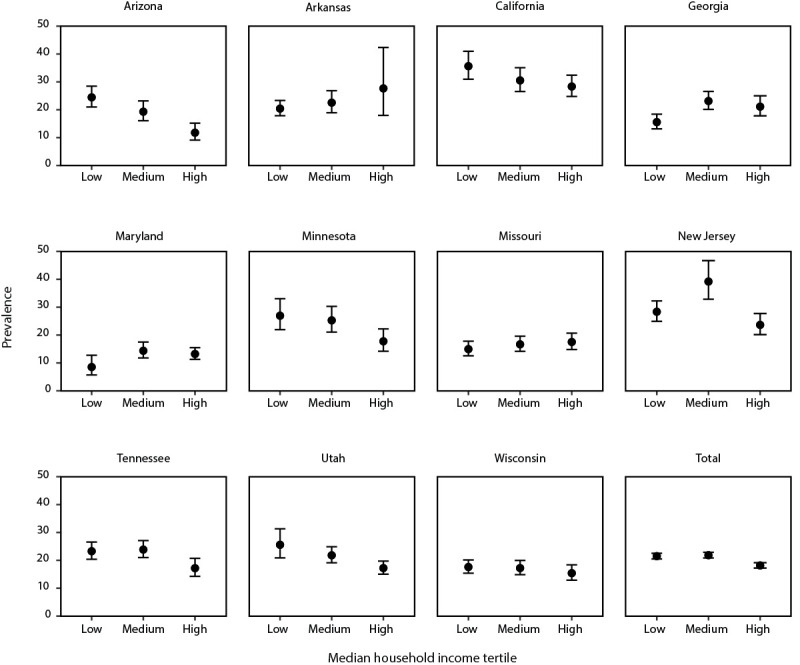
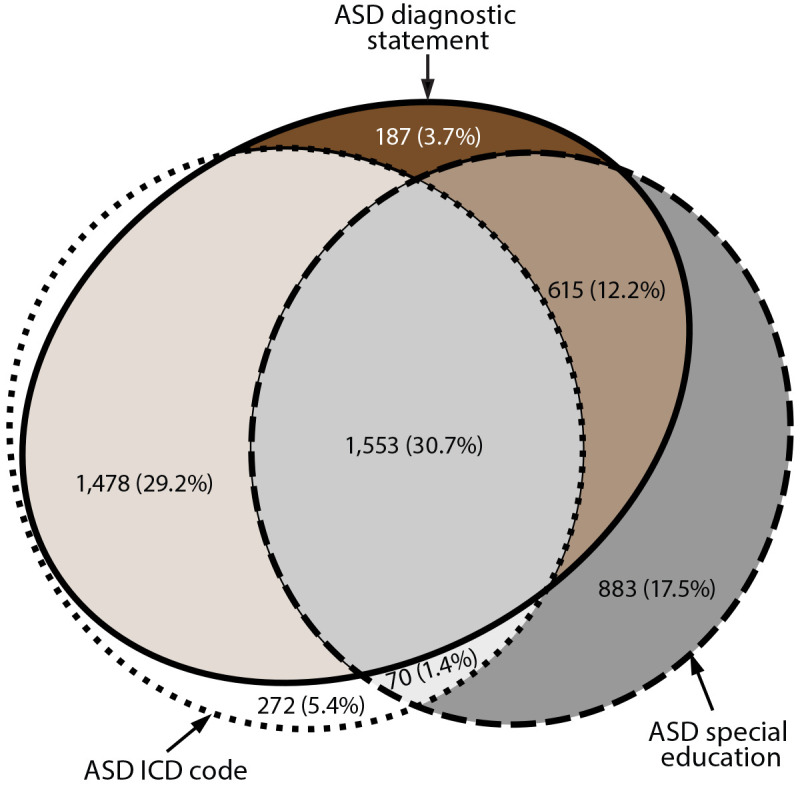
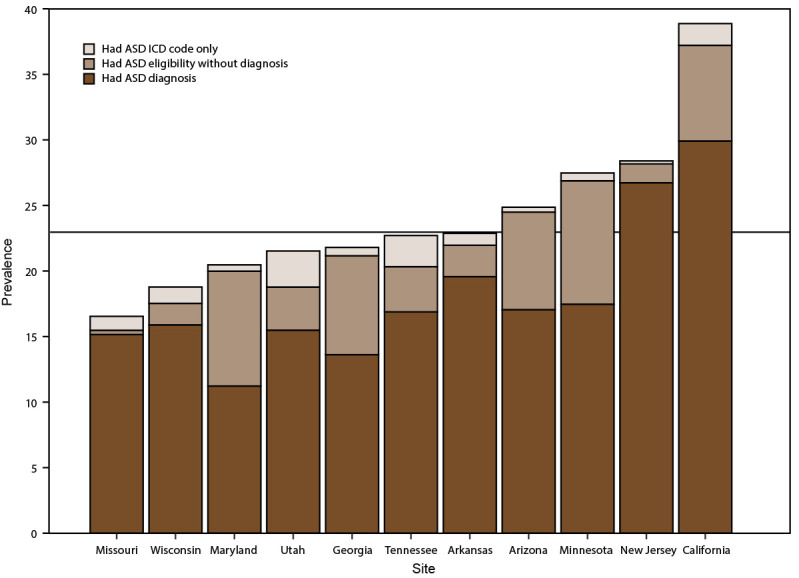
PROBLEM/CONDITION: Autism spectrum disorder (ASD). PERIOD COVERED: 2018. DESCRIPTION OF SYSTEM: The Autism and Developmental Disabilities Monitoring (ADDM) Network conducts active surveillance of ASD. This report focuses on the prevalence and characteristics of ASD among children aged 8 years in 2018 whose parents or guardians lived in 11 ADDM Network sites in the United States (Arizona, Arkansas, California, Georgia, Maryland, Minnesota, Missouri, New Jersey, Tennessee, Utah, and Wisconsin). To ascertain ASD among children aged 8 years, ADDM Network staff review and abstract developmental evaluations and records from community medical and educational service providers. In 2018, children met the case definition if their records documented 1) an ASD diagnostic statement in an evaluation (diagnosis), 2) a special education classification of ASD (eligibility), or 3) an ASD International Classification of Diseases (ICD) code. RESULTS: For 2018, across all 11 ADDM sites, ASD prevalence per 1,000 children aged 8 years ranged from 16.5 in Missouri to 38.9 in California. The overall ASD prevalence was 23.0 per 1,000 (one in 44) children aged 8 years, and ASD was 4.2 times as prevalent among boys as among girls. Overall ASD prevalence was similar across racial and ethnic groups, except American Indian/Alaska Native children had higher ASD prevalence than non-Hispanic White (White) children (29.0 versus 21.2 per 1,000 children aged 8 years). At multiple sites, Hispanic children had lower ASD prevalence than White children (Arizona, Arkansas, Georgia, and Utah), and non-Hispanic Black (Black) children (Georgia and Minnesota). The associations between ASD prevalence and neighborhood-level median household income varied by site. Among the 5,058 children who met the ASD case definition, 75.8% had a diagnostic statement of ASD in an evaluation, 18.8% had an ASD special education classification or eligibility and no ASD diagnostic statement, and 5.4% had an ASD ICD code only. ASD prevalence per 1,000 children aged 8 years that was based exclusively on documented ASD diagnostic statements was 17.4 overall (range: 11.2 in Maryland to 29.9 in California). The median age of earliest known ASD diagnosis ranged from 36 months in California to 63 months in Minnesota. Among the 3,007 children with ASD and data on cognitive ability, 35.2% were classified as having an intelligence quotient (IQ) score ≤70. The percentages of children with ASD with IQ scores ≤70 were 49.8%, 33.1%, and 29.7% among Black, Hispanic, and White children, respectively. Overall, children with ASD and IQ scores ≤70 had earlier median ages of ASD diagnosis than children with ASD and IQ scores >70 (44 versus 53 months). INTERPRETATION: In 2018, one in 44 children aged 8 years was estimated to have ASD, and prevalence and median age of identification varied widely across sites. Whereas overall ASD prevalence was similar by race and ethnicity, at certain sites Hispanic children were less likely to be identified as having ASD than White or Black children. The higher proportion of Black children compared with White and Hispanic children classified as having intellectual disability was consistent with previous findings. PUBLIC HEALTH ACTION: The variability in ASD prevalence and community ASD identification practices among children with different racial, ethnic, and geographical characteristics highlights the importance of research into the causes of that variability and strategies to provide equitable access to developmental evaluations and services. These findings also underscore the need for enhanced infrastructure for diagnostic, treatment, and support services to meet the needs of all children.
Overview
The claims and statistics of this paper haven’t been checked yet.
Run the check — free, no account needed. It reads the open-access text and checks the sources it cites.
Integrity signals
Registry
Cites
Statistics
Figures
Verification
Claims the paper makes
The claims and statistics of this paper haven’t been checked yet.
Run the check — free, no account needed. It reads the open-access text and checks the sources it cites.
Claims other papers make about this one
Each is checked against this paper’s own text: does it say what the citing paper says it does?
The source backs part of the claim, not all of it — or backs it for a different population, condition or comparison.
In the citing paper
“Surveillance was conducted using the same surveillance methods and case definitions used in 2018 and 2020 (6,13).”
From Prevalence and Early Identification of Autism Spectrum Disorder Among Children Aged 4 and 8 Years — Autism and Developmental Disabilities Monitoring Network, 16 Sites, United States, 2022 (2025) · cites this paper as [13]
Experimental — accuracy not yet measuredThe cited source says what the claim attributes to it.
In the citing paper
“The 2018 estimate for children aged 4 years was lower than the 23.0 per 1,000 ASD prevalence among children aged 8 years (11), a finding consistent with previous reports (8,13).”
In the citing paper
“California has had the highest prevalence among children aged 4 years and 8 years since joining the ADDM Network in 2018 (6,10,11,13)”
In the citing paper
“No evidence of heterogeneity of the male-to-female ratio among children aged 4 years across sites was observed; however, the overall male-to-female ratio for children aged 4 years was lower than the 4.2 male-to-female ratio for children aged 8 years (11).”
In the citing paper
“The site in California had the highest cumulative incidence of ASD by age 48 months and the fewest cases of suspected ASD and was the only site where prevalence among children aged 4 years was higher than among children aged 8 years (11).”
In the citing paper
“The combined prevalence of ASD and suspected ASD (19.7 per 1,000 children aged 4 years) was still lower than ASD prevalence observed among children aged 8 years (23.0 per 1,000 children aged 8 years) (11).”
In the citing paper
“Children with co-occurring intellectual disability are more likely to be identified earlier than children without intellectual disability, as indicated by an earlier median age at identification among this group (11) as well as the consistently higher proportion of children with intellectual disability at age 4 years (8,13) than at age 8 years (9,11,17).”
In the citing paper
“Consistent with findings among children aged 8 years (11), a higher proportion of Black children aged 4 years with ASD have co-occurring intellectual disability.”
In the citing paper
“Adding the children identified with ASD to those suspected of having ASD at age 4 years is still less than the prevalence of ASD by age 8 years at all sites except California (11).”
Self-check
Percentages, sums and reported differences re-computed from the paper’s own numbers.
The self-check needs the paper’s full text.
Citations
Cites
Diagnostic and Statistical Manual of Mental Disorders
American Psychiatric Association (2013) · doi:10.1176/appi.books.9780890425596 · Cited by 116,369
Baio, J., Wiggins, L., Christensen, D. L., Maenner, M. J., Daniels, J., Warren, Z., Kurzius-Spencer, M., Zahorodny, W., Robinson, C., Rosenberg, et al. (2018) · MMWR. Surveillance Summaries · doi:10.15585/mmwr.ss6706a1 · Cited by 6,078
Self-citationMaenner, M. J., Shaw, K. A., Baio, J., EdS1, Washington, A., Patrick, M., DiRienzo, M., Christensen, D. L., Wiggins, L. D., Pettygrove, S., et al. (2020) · MMWR. Surveillance Summaries · doi:10.15585/mmwr.ss6904a1 · Cited by 3,780 · cited 5×
“Recommended ICD codes were described previously (10).”
BackgroundMethodInfluentialSelf-citationLord, C., Elsabbagh, M., Baird, G., & Veenstra-Vanderweele, J. (2018) · The Lancet · doi:10.1016/s0140-6736(18)31129-2 · Cited by 2,819
Christensen, D. L., Baio, J., Braun, K. V. N., Bilder, D., Charles, J., Constantino, J. N., Daniels, J., Durkin, M. S., Fitzgerald, R. T., Kurzius-Spencer, M., et al. (2016) · MMWR. Surveillance Summaries · doi:10.15585/mmwr.ss6503a1 · Cited by 1,964
Self-citationPrevalence of Autism in a US Metropolitan Area
Yeargin-Allsopp, M., Rice, C., Karapurkar, T., Doernberg, N., Boyle, C., & Murphy, C. (2003) · JAMA · doi:10.1001/jama.289.1.49 · Cited by 1,248
Poverty and Child Health in the United States
Gitterman, B. A., Flanagan, P., Cotton, W. H., Dilley, K. J., Duffee, J. H., Green, A. E., Keane, V. A., Krugman, S., Linton, J. M., McKelvey, C. D., et al. (2016) · PEDIATRICS · doi:10.1542/peds.2016-0339 · Cited by 789
Research works printed but not linked: 1
- New Jersey Administrative Code. Title 6A, Chapter 14. https://www.state.nj.us/education/code/current/title6a/chap14.pdf
Cited by
Sorted by citations
Maenner, M. J., Warren, Z., Williams, A. R., Amoakohene, E., Bakian, A. V., Bilder, D. A., Durkin, M. S., Fitzgerald, R. T., Furnier, S. M., Hughes, M. M., et al. (2023) · MMWR. Surveillance Summaries · doi:10.15585/mmwr.ss7202a1 · Cited by 2,706
“These gaps narrowed over time until ASD prevalence among Black and Hispanic matched prevalence among White children for the first time in 2016 and 2018, respectively (11,12).”
BackgroundMethodInfluentialSelf-citationAutism Spectrum Disorder: A Review
Hirota, T., & King, B. H. (2023) · JAMA · doi:10.1001/jama.2022.23661 · Cited by 957
Shaw, K. A., Williams, S., Patrick, M. E., Valencia-Prado, M., Durkin, M. S., Howerton, E. M., Ladd-Acosta, C. M., Pas, E. T., Bakian, A. V., Bartholomew, P., et al. (2025) · MMWR. Surveillance Summaries · doi:10.15585/mmwr.ss7402a1 · Cited by 867
“For example, California has had the highest prevalence among children aged 4 years and 8 years since joining the ADDM Network in 2018 ( 6 , 10,11,13 ) and has a local initiative (the Get SET Early model).”
InfluentialSelf-citationFu, J. M., Satterstrom, F. K., Peng, M., Brand, H., Collins, R. L., Dong, S., Wamsley, B., Klei, L., Wang, L., Hao, S. P., et al. (2022) · Nature Genetics · doi:10.1038/s41588-022-01104-0 · Cited by 640
“05 genes and the GD loci: (1) the excess is due to a female protective effect; or (2) it arises from an ascertainment bias by which females diagnosed with ASD tend to be affected more severely than males50.”
BackgroundMethodCandidate biomarkers in psychiatric disorders: state of the field
Abi‐Dargham, A., Moeller, S. J., Ali, F., DeLorenzo, C., Domschke, K., Horga, G., Jutla, A., Kotov, R., Paulus, M. P., Rubio, J. M., et al. (2023) · World Psychiatry · doi:10.1002/wps.21078 · Cited by 421
Neurodevelopmental outcomes of preterm infants
Song, I. G. (2022) · Korean Journal of Pediatrics · doi:10.3345/cep.2022.00822 · Cited by 367
The global prevalence of autism spectrum disorder: A three-level meta-analysis
Talantseva, O. I., Romanova, R. S., Shurdova, E. M., Dolgorukova, T. A., Sologub, P. S., Titova, O. S., Kleeva, D. F., & Grigorenko, E. L. (2023) · Frontiers in Psychiatry · doi:10.3389/fpsyt.2023.1071181 · Cited by 318
“The most recent report, dated 2018, revealed that ASD affects approximately 230 per 10,000 children (14), indicating that its prevalence has increased by 243% since the first ADDM Network study in 2000 (14).”
BackgroundOrganoid intelligence (OI): the new frontier in biocomputing and intelligence-in-a-dish
Smirnova, L., Caffo, B. S., Gracias, D. H., Huang, Q., Pantoja, I. E. M., Tang, B., Zack, D. J., Berlinicke, C. A., Boyd, J. L., Harris, T. D., et al. (2023) · Frontiers in Science · doi:10.3389/fsci.2023.1017235 · Cited by 329
Innate immune dysfunction and neuroinflammation in autism spectrum disorder (ASD)
Hughes, H. K., Moreno, R. J., & Ashwood, P. (2022) · Brain Behavior and Immunity · doi:10.1016/j.bbi.2022.12.001 · Cited by 293
“The prevalence of ASD has risen substantially over the past several decades to 1 in 44 children (Maenner, 2021).”
Rogers, J. P., Oldham, C. M., Fricchione, G. L., Northoff, G., Wilson, J. E., Mann, S. C., Francis, A., Wieck, A., Wachtel, L. E., Lewis, G., et al. (2023) · Journal of Psychopharmacology · doi:10.1177/02698811231158232 · Cited by 277
“As the US Center for Disease Control estimated an incidence of autism as 1 in 44 children, it is likely that clinicians will care for individuals with autism and catatonia (Maenner et al., 2021).”
Neuroinflammation and Oxidative Stress in the Pathogenesis of Autism Spectrum Disorder
Usui, N., Kobayashi, H., & Shimada, S. (2023) · International Journal of Molecular Sciences · doi:10.3390/ijms24065487 · Cited by 278
Sex Differences in Autism Spectrum Disorder: Diagnostic, Neurobiological, and Behavioral Features
Napolitano, A., Schiavi, S., Rosa, P. L., Rossi‐Espagnet, M. C., Petrillo, S., Bottino, F., Tagliente, E., Longo, D., Lupi, E., Casula, L., et al. (2022) · Frontiers in Psychiatry · doi:10.3389/fpsyt.2022.889636 · Cited by 286
“In this context, rodent models have been useful for ASD research in several ways: (1) they present a controllable intact biological system to understand the complex interaction of mutated gene products with other proteins, helping to define convergent molecular pathways that that can later be targeted for treatment; (…”
BackgroundMethodInfluentialAn Update on Psychopharmacological Treatment of Autism Spectrum Disorder
Aishworiya, R., Valica, T., Hagerman, R., & Restrepo, B. (2022) · Neurotherapeutics · doi:10.1007/s13311-022-01183-1 · Cited by 233
Disparities in Pediatric Mental and Behavioral Health Conditions
Hoffmann, J. A., Alegria, M. M., Álvarez, K., Anosike, A., Shah, P., Simon, K. M., & Lee, L. K. (2022) · PEDIATRICS · doi:10.1542/peds.2022-058227 · Cited by 212
Self-citationShaw, K. A., Maenner, M. J., Bakian, A. V., Bilder, D. A., Durkin, M. S., Furnier, S. M., Hughes, M. M., Patrick, M., Pierce, K., Salinas, A., et al. (2021) · MMWR. Surveillance Summaries · doi:10.15585/mmwr.ss7010a1 · Cited by 165
“Comparisons were made with the group of children aged 8 years for the same 11 sites (11).”
BackgroundMethodResultInfluentialSelf-citationAutism Diagnosis Among US Children and Adults, 2011-2022
Grosvenor, L. P., Croen, L., Lynch, F. L., Marafino, B. J., Maye, M. P., Penfold, R. B., Simon, G. E., & Ames, J. (2024) · JAMA Network Open · doi:10.1001/jamanetworkopen.2024.42218 · Cited by 143
Moridian, P., Ghassemi, N., Jafari, M., Salloum‐Asfar, S., Sadeghi, D., Khodatars, M., Shoeibi, A., Khosravi, A., Ling, S. H., Subaşı, A., et al. (2022) · Frontiers in Molecular Neuroscience · doi:10.3389/fnmol.2022.999605 · Cited by 141
Multiple Classification of Brain MRI Autism Spectrum Disorder by Age and Gender Using Deep Learning
Nogay, H. S., & Adeli, H. (2024) · Journal of Medical Systems · doi:10.1007/s10916-023-02032-0 · Cited by 122
The Reach and Accuracy of Information on Autism on TikTok
Aragon-Guevara, D., Castle, G., Sheridan, E., & Vivanti, G. (2023) · Journal of Autism and Developmental Disorders · doi:10.1007/s10803-023-06084-6 · Cited by 135
Wang, T., Chen, B., Luo, M., Xie, L., Lu, M., Lu, X., Zhang, S., Wei, L., Zhou, X., Yao, B., et al. (2023) · Microbiome · doi:10.1186/s40168-023-01656-1 · Cited by 118
“The increasing incidence of ASD worldwide has become a public health problem of global concern [1–3].”
BackgroundMegerian, J. T., Dey, S., Melmed, R. D., Coury, D. L., Lerner, M., Nicholls, C. J., Sohl, K., Rouhbakhsh, R., Narasimhan, A., Romain, J. E., et al. (2022) · npj Digital Medicine · doi:10.1038/s41746-022-00598-6 · Cited by 119
“Despite documented bene fi ts of early intervention, the mean age of ASD diagnosis in the US remains high at over 4 years 1,9 – 11 .”
Li, Q., Li, Y., Liu, B., Chen, Q., Xing, X., Xu, G., & Yang, W. (2022) · Archives of Pediatrics and Adolescent Medicine · doi:10.1001/jamapediatrics.2022.1846 · Cited by 108
Tian, J., Gao, X., & Yang, L. (2022) · Frontiers in Neuroscience · doi:10.3389/fnins.2022.780407 · Cited by 136
“Usually, the RRBs in children with ASD are more excessive and diverse than those in TD children and result in severe impairments (Bodfish et al., 2000; Richler et al., 2007; Mandy et al., 2011; Harrop et al., 2014).”
BackgroundMazzone, L., Dooling, S. W., Volpe, E., Uljarević, M., Waters, J. L., Sabatini, A., Arturi, L., Abate, R., Riccioni, A., Siracusano, M., et al. (2023) · Cell Host & Microbe · doi:10.1016/j.chom.2023.11.021 · Cited by 113
Assessment of Autism Spectrum Disorder
Yu, Y., Ozonoff, S. J., & Miller, M. R. (2023) · Assessment · doi:10.1177/10731911231173089 · Cited by 141
Prevalence and Disparities in the Detection of Autism Without Intellectual Disability
Shenouda, J., Barrett, E. S., Davidow, A. L., Sidwell, K., Lescott, C., Halperin, W., Silenzio, V., & Zahorodny, W. M. (2023) · PEDIATRICS · doi:10.1542/peds.2022-056594 · Cited by 122
Self-citationRole of Gut Microbiota in Neurological Disorders and Its Therapeutic Significance
Tiwari, P., Dwivedi, R., Bansal, M., Tripathi, M., & Dada, R. (2023) · Journal of Clinical Medicine · doi:10.3390/jcm12041650 · Cited by 108
Dargenio, V. N., Dargenio, C., Castellaneta, S., De Giacomo, A., Laguardia, M., Schettini, F., Francavilla, R., & Cristofori, F. (2023) · Nutrients · doi:10.3390/nu15071620 · Cited by 98
Autistic adults have poorer quality healthcare and worse health based on self-report data
Weir, E. M., Allison, C. L., & Baron‐Cohen, S. (2022) · Molecular Autism · doi:10.1186/s13229-022-00501-w · Cited by 112
Association Between Autism Spectrum Disorders and Cardiometabolic Diseases
Dhanasekara, C. S., Ancona, D., Cortes, L., Hu, A., Rimu, A. H., Robohm-Leavitt, C., Payne, D., Wakefield, S. M., Mastergeorge, A. M., & Kahathuduwa, C. N. (2023) · Archives of Pediatrics and Adolescent Medicine · doi:10.1001/jamapediatrics.2022.5629 · Cited by 107
Diagnosed Developmental Disabilities in Children Aged 3–17 Years: United States, 2019–2021
Zablotsky, B., Ng, A. E., Black, L. I., & Blumberg, S. J. (2023) · doi:10.15620/cdc:129520 · Cited by 95
Ahmad, I., Rashid, J., Faheem, M., Akram, A., Khan, N. A., & Amin, R. U. (2024) · Healthcare Technology Letters · doi:10.1049/htl2.12073 · Cited by 110
RetractedAutism spectrum disorder: pathogenesis, biomarker, and intervention therapy
Zhuang, H., Liang, Z., Ma, G., Qureshi, A., Ran, X., Feng, C., Liu, X., Yan, X., & Shen, L. (2024) · MedComm · doi:10.1002/mco2.497 · Cited by 111
Hung, L. Y., & Margolis, K. G. (2024) · Nature Reviews Gastroenterology & Hepatology · doi:10.1038/s41575-023-00857-1 · Cited by 96
Modern Biomarkers for Autism Spectrum Disorder: Future Directions
Jensen, A., Lane, A. L., Werner, B. A., McLees, S. E., Fletcher, T. S., & Frye, R. E. (2022) · Molecular Diagnosis & Therapy · doi:10.1007/s40291-022-00600-7 · Cited by 98
“ASD [1], it is growing increasingly important to identify, diagnose, treat, and understand this disorder.”
BackgroundNeo, W. S., Foti, D., Keehn, B., & Kelleher, B. (2023) · Translational Psychiatry · doi:10.1038/s41398-023-02681-2 · Cited by 114
“However, epidemiological and meta-analytic studies suggest that ASD is more typically diagnosed between 43 and 50 months of age [6, 7].”
BackgroundThe earlier the better: An RCT of treatment timing effects for toddlers on the autism spectrum
Guthrie, W., Wetherby, A. M., Woods, J., Schatschneider, C., Holland, R. D., Morgan, L., & Lord, C. E. (2023) · Autism · doi:10.1177/13623613231159153 · Cited by 101
“Unfortunately, the median age of diagnosis (50 months; Maenner et al., 2021) continues to be well above the age at which children can often be reliably diagnosed (Guthrie et al., 2013; Pierce et al., 2019).”
REMOVED: Deep learning with image-based autism spectrum disorder analysis: A systematic review
Uddin, M. Z., Shahriar, M. A., Mahamood, M. N., Alnajjar, F., Pramanik, M. I., & Ahad, M. A. R. (2023) · Engineering Applications of Artificial Intelligence · doi:10.1016/j.engappai.2023.107185 · Cited by 98
RetractedWei, Q., Cao, H., Shi, Y., Xu, X., & Li, T. (2022) · Journal of Biomedical Informatics · doi:10.1016/j.jbi.2022.104254 · Cited by 101
Wu, J., Zhang, J., Chen, X., Wettschurack, K., Que, Z., Deming, B. A., Olivero-Acosta, M. I., Cui, N., Eaton, M., Zhao, Y., et al. (2024) · Molecular Psychiatry · doi:10.1038/s41380-024-02518-4 · Cited by 75
Talaat, F. M., Ali, Z. H., Mostafa, R. R., & El-Rashidy, N. M. (2024) · Soft Computing · doi:10.1007/s00500-023-09477-y · Cited by 80
“It might be modest to really severe, which is why the word ‘‘spectrum’’ is included in the disorder’s name (Maenner et al. 2021).”
RetractedCTNNB1 in neurodevelopmental disorders
Zhuang, W., Ye, T., Wang, W., Song, W., & Tan, T. (2023) · Frontiers in Psychiatry · doi:10.3389/fpsyt.2023.1143328 · Cited by 86
Barbaro, J., Sadka, N., Gilbert, M., Beattie, E., Li, X., Ridgway, L., Lawson, L. P., & Dissanayake, C. (2022) · JAMA Network Open · doi:10.1001/jamanetworkopen.2021.46415 · Cited by 76
The contribution of copy number variants to psychiatric symptoms and cognitive ability
Mollon, J., Almasy, L. A., Jacquemont, S., & Glahn, D. C. (2023) · Molecular Psychiatry · doi:10.1038/s41380-023-01978-4 · Cited by 78
“are in the borderline range (IQ=71–85) [142].”
Li, Y.-A., Chen, Z., Li, X., Gu, M., Xia, N., Chen, G., Zhou, Z.-W., Yasin, G., Xie, H., Wei, X., et al. (2022) · Frontiers in Pediatrics · doi:10.3389/fped.2022.972809 · Cited by 89
“Besides, data sources could have led to heterogeneous results, such as data derived from health records or parents’ report, and from nationally representative population or selected sites (5, 31, 32).”
BackgroundInfluentialEpigenomic signatures reveal mechanistic clues and predictive markers for autism spectrum disorder
LaSalle, J. M. (2023) · Molecular Psychiatry · doi:10.1038/s41380-022-01917-9 · Cited by 83
Jiang, X., Chen, X., Su, J., & Liu, N. (2024) · BMC Psychiatry · doi:10.1186/s12888-024-05729-9 · Cited by 73
“This marked an increase of 17.8% from the 2018 prevalence of 22.7/1000 (1/44) [17] and a 32.97% increase from the 2016 prevalence [18] of 18.5/1000 (1/54).”
InfluentialClarke, L., & Fung, L. K. (2022) · Autism · doi:10.1177/13623613221102016 · Cited by 71
“Despite the fact that the current ASD prevalence is estimated to be one in every 44 children in the United States (Maenner et al., 2021), the healthcare system has not adapted to meet the needs of these individuals.”
BackgroundInfluentialHe, X., Liu, W., Tang, F., Chen, X., & Song, G. (2023) · Nutrients · doi:10.3390/nu15061415 · Cited by 74
“In addition, prevalence data from both the United States and China suggest that the prevalence of ASD is higher in men than in women [8,9].”
BackgroundBhat, A. N. (2022) · Autism Research · doi:10.1002/aur.2870 · Cited by 67
Li, Q., Li, Y., Zheng, J., Yan, X., Huang, J., Xu, Y., Zeng, X., Shen, T., Xing, X., Chen, Q., et al. (2023) · Scientific Reports · doi:10.1038/s41598-023-44472-1 · Cited by 67
Analysis of Race and Sex Bias in the Autism Diagnostic Observation Schedule (ADOS-2)
Kalb, L. G., Singh, V., Hong, J. S., Holingue, C., Ludwig, N. N., Pfeiffer, D. L., Reetzke, R., Gross, A. L., & Landa, R. J. (2022) · JAMA Network Open · doi:10.1001/jamanetworkopen.2022.9498 · Cited by 67
He, J., Gong, X., Hu, B., Lin, L., Lin, X., Gong, W., Zhang, B., Cao, M., Xu, Y., Xia, R., et al. (2023) · Scientific Reports · doi:10.1038/s41598-023-46566-2 · Cited by 74
Pham, A. V., & Charles, L. C. (2023) · Current Psychiatry Reports · doi:10.1007/s11920-023-01417-9 · Cited by 69
Bhat, A. N., Boulton, A. J., & Tulsky, D. S. (2022) · Autism Research · doi:10.1002/aur.2711 · Cited by 60
West, K., Yin, X., Rutherford, E. M., Wee, B., Choi, J., Chrisman, B., Dunlap, K., Hannibal, R. L., Hartono, W., Lin, M., et al. (2022) · Scientific Reports · doi:10.1038/s41598-022-21327-9 · Cited by 67
Ward, J. H., Weir, E., Allison, C., & Baron-Cohen, S. (2023) · Molecular Autism · doi:10.1186/s13229-023-00565-2 · Cited by 60
“…recently published research suggesting that autism may be more prevalent among non-white (and particularly Black) individuals, it is urgent that more research is conducted on the rates of co-occurring physical and mental health conditions among individuals with diverse ethnic backgrounds [62].”
BackgroundThe Current View on the Paradox of Pain in Autism Spectrum Disorders
Bogdanova, O. V., Bogdanov, V. B., Pizano, A., Bouvard, M. P., Cazalets, J., Mellen, N. M., & Amestoy, A. (2022) · Frontiers in Psychiatry · doi:10.3389/fpsyt.2022.910824 · Cited by 70
“3% (3), a male-to-female ratio around 3:1 (4).”
Dougherty, J. D., Marrus, N. M., Maloney, S. E., Yip, B. H. K., Sandin, S., Turner, T. N., Selmanovic, D., Kroll, K. L., Gutmann, D. H., Constantino, J. N., et al. (2022) · Neuron · doi:10.1016/j.neuron.2022.06.020 · Cited by 73
Self-citationIdentifying autism symptom severity trajectories across childhood
Waizbard‐Bartov, E., Ferrer, E. E., Heath, B. E., Rogers, S. J., Nordahl, C. W., Solomon, M., & Amaral, D. G. (2022) · Autism Research · doi:10.1002/aur.2674 · Cited by 58
“Autism spectrum disorder (ASD) is a neurodevelopmental condition currently affecting 1 out of every 44 children in the United States (Maenner et al., 2021).”
BackgroundChi, N., Washington, P. Y., Kline, A., Husic, A., Hou, C., He, C., Dunlap, K., & Wall, D. P. (2022) · JMIR Pediatrics and Parenting · doi:10.2196/35406 · Cited by 57
“Autism prevalence has rapidly increased in recent years: according to the Centers for Disease Control and Prevention, autism rates have tripled since 2000 to 1 in 44 children in 2018 [2].”
MethodSleep in Children with Autism Spectrum Disorder: A Narrative Review and Systematic Update
Schwichtenberg, A., Janis, A., Lindsay, A., Desai, H., Sahu, A., Kellerman, A., Chong, P., Abel, E. A., & Yatcilla, J. (2022) · Current Sleep Medicine Reports · doi:10.1007/s40675-022-00234-5 · Cited by 58
“The field is ready for a shift toward more (1) interventionbased and implementation science studies, (2) global and age representation, and (3) mechanistic understanding. A long line of work documents elevated rates of sleep problems and their association with several aspects of development 56 Current Sleep Medicine R…”
BackgroundInfluentialMeta-analysis of the Modified Checklist for Autism in Toddlers, Revised/Follow-up for Screening
Aishworiya, R., Ma, V. K., STEWART, S. L., Hagerman, R. J., & Feldman, H. M. (2023) · PEDIATRICS · doi:10.1542/peds.2022-059393 · Cited by 57
Chronic Effects of Dietary Pesticides on the Gut Microbiome and Neurodevelopment
Gama, J. S., Neves, B. C., & Pereira, A. (2022) · Frontiers in Microbiology · doi:10.3389/fmicb.2022.931440 · Cited by 58
“Autism Spectrum Disorders (ASDs) are a group of developmental disabilities that can cause significant social, communication and behavioral deficits which affect approximately 1 in 44 children in the United States (Maenner et al., 2021).”
BackgroundInfluentialZhu, F.-L., Wang, S., Liu, W., Zhu, H., Li, M., & Zou, X. (2023) · Frontiers in Psychiatry · doi:10.3389/fpsyt.2023.1039293 · Cited by 59
“Inclusion criteria for toddlers with DD included the following: (1) isolated developmental delay (involving single domain); (2) multiple developmental delays—two or more domains or developmental lines affected; (3) global developmental delay (GDD)—significant delay in most of the developmental domains (21).”
BackgroundInfluentialLi, X., Ruan, C., Zibrila, A. I., Musa, M., Wu, Y., Zhang, Z., Liu, H., & Salimeen, M. (2022) · Medicine · doi:10.1097/md.0000000000032061 · Cited by 54
“The Centers for Disease Control and Prevention (CDC) currently estimated that 1 in 68 children are diagnosed with ASD[21] with a male-to-female ratio of 4:1, resulting in numbers of 1 in 42 boys and 1 in 189 girls.”
BackgroundCasseus, M., Kim, W. J., & Horton, D. B. (2023) · Autism Research · doi:10.1002/aur.2894 · Cited by 53
“Increased neurodevelopmental disorders, greater level of ASD severity, repetitive behaviors, and language and social deficits were also observed in children with ASD + ADHD (Gadow et al., 2009; Gordon-Lipkin et al., 2018; Mulligan et al., 2009).”
BackgroundResultInfluentialThe Gut-Brain-Immune Axis in Autism Spectrum Disorders: A State-of-Art Report
Puricelli, C., Rolla, R., Gigliotti, C. L., Boggio, E. M., Beltrami, E., Dianzani, U., & Keller, R. (2022) · Frontiers in Psychiatry · doi:10.3389/fpsyt.2021.755171 · Cited by 64
Are the diagnostic rates of autistic females increasing? An examination of state‐wide trends
Harrop, C., Tomaszewski, B. R., Putnam, O. C., Klein, C. B., Lamarche, E., & Klinger, L. G. (2024) · Journal of Child Psychology and Psychiatry · doi:10.1111/jcpp.13939 · Cited by 65
Maternal tobacco smoking and offspring autism spectrum disorder or traits in ECHO cohorts
Hertz‐Picciotto, I., Korrick, S., Ladd‐Acosta, C., Karagas, M. R., Lyall, K., Schmidt, R. J., Dunlop, A. L., Croen, L., Dabelea, D., Daniels, J. L., et al. (2022) · Autism Research · doi:10.1002/aur.2665 · Cited by 53
Primary Care Framework to Monitor Preterm Infants for Neurodevelopmental Outcomes in Early Childhood
Davis, B. E., Leppert, M. L. O., German, K. R., Lehmann, C. U., Adams-Chapman, I. S., Noritz, G. H., Agrawal, R., Foster, J. E. A., Fremion, E., Frierson, S. L., et al. (2023) · PEDIATRICS · doi:10.1542/peds.2023-062511 · Cited by 59
Gaze Patterns in Children With Autism Spectrum Disorder to Emotional Faces: Scanpath and Similarity
Zhou, W., Yang, M., Tang, J., Wang, J., & Hu, B. (2024) · IEEE Transactions on Neural Systems and Rehabilitation Engineering · doi:10.1109/tnsre.2024.3361935 · Cited by 51
“The Morbidity and Mortality Weekly Report (MMWR) [2] from Centers for Disease Control and Prevention (CDC) released that the overall ASD prevalence rose to 23.0 per 1000 (one in 44) children aged 8 years.”
BackgroundInfluentialShan, L., Feng, J., Wang, T., Xu, Z., & Jia, F. (2022) · Frontiers in Psychiatry · doi:10.3389/fpsyt.2021.794238 · Cited by 50
“Previous studies have mostly explored the comorbidities of GDD/ID in children with ASD from the perspective of ASD (5, 8).”
BackgroundMethodOsman, A., Mervosh, N. L., Strat, A. N., Euston, T. J., Zipursky, G., Pollak, R. M., Meckel, K. R., Tyler, S. R., Chan, K. L., Grice, A. B., et al. (2020) · Brain Behavior and Immunity · doi:10.1016/j.bbi.2023.08.020 · Cited by 49
Early identification of autism spectrum disorder based on machine learning with eye-tracking data
Wei, Q., Dong, W., Yu, D., Wang, K., Yang, T., Xiao, Y., Long, D., Xiong, H., Chen, J., Xu, X., et al. (2024) · Journal of Affective Disorders · doi:10.1016/j.jad.2024.04.049 · Cited by 57
A systematic review of social support for siblings of children with neurodevelopmental disorders
Kirchhofer, S. M., Orm, S., Haukeland, Y. B., Fredriksen, T., Wakefield, C. E., & Fjermestad, K. W. (2022) · Research in Developmental Disabilities · doi:10.1016/j.ridd.2022.104234 · Cited by 54
Chen, Y.-H., Chen, Q.-S., Kong, L., & Liu, G.-D. (2022) · BMJ Health & Care Informatics · doi:10.1136/bmjhci-2022-100544 · Cited by 49
“We compared the prediction performance of the models using the augmented variables with our base case models.”
Neurological and psychiatric disorders among autistic adults: a population healthcare record study
Underwood, J. F. G., DelPozo‐Baños, M., Frizzati, A., Rai, D., John, A. M., & Hall, J. (2022) · Psychological Medicine · doi:10.1017/s0033291722002884 · Cited by 55
Yang, Y., Fang, F., Arnberg, F. K., Kuja‐Halkola, R., D'Onofrio, B. M., Larsson, H., Brikell, I., Chang, Z., Andreassen, O. A., Lichtenstein, P., et al. (2024) · The Lancet Regional Health - Europe · doi:10.1016/j.lanepe.2024.101105 · Cited by 55
“5,6 The current evidence on sex differences in psychiatric disorders is mainly based on prevalence studies, 7 – 9 without differentiating incident cases from prevalent and recurrent cases.”
CRISPR activation for SCN2A-related neurodevelopmental disorders
Tamura, S., Nelson, A. D., Spratt, P. W. E., Hamada, E. C., Zhou, X., Kyoung, H., Li, Z., Arnould, C., Barskyi, V., Krupkin, B., et al. (2025) · Nature · doi:10.1038/s41586-025-09522-w · Cited by 52
Nebel, M. B., Lidstone, D. E., Wang, L., Benkeser, D. C., Mostofsky, S. H., & Risk, B. B. (2022) · NeuroImage · doi:10.1016/j.neuroimage.2022.119296 · Cited by 50
Allen, K., Harrington, J. W., Quetsch, L. B., Masse, J. J., Cooke, C. G., & Paulson, J. F. (2022) · Journal of Autism and Developmental Disorders · doi:10.1007/s10803-022-05428-y · Cited by 62
“Since 2000, prevalence rates have increased by over 150% leading ASD to become an urgent public health concern (Maenner et al., 2021).”
BackgroundPenner, M., Senman, L., Andoni, L. Y., Dupuis, A., Anagnostou, E. A., Kao, S., Solish, A., Shouldice, M., Ferguson, G., & Brian, J. A. (2023) · JAMA Network Open · doi:10.1001/jamanetworkopen.2022.52879 · Cited by 45
Washington, P. Y., & Wall, D. P. (2023) · Annual Review of Biomedical Data Science · doi:10.1146/annurev-biodatasci-020722-125454 · Cited by 52
“It is estimated that 1 In 44 children in the United States have autism [1], with the prevalence continuing to rise.”
BackgroundManter, M. A., Birtwell, K. B., Bath, J., Friedman, N. D. B., Keary, C. J., Neumeyer, A. M., Palumbo, M. L., Thom, R. P., Stonestreet, E., Brooks, H., et al. (2025) · BMC Medicine · doi:10.1186/s12916-024-03814-0 · Cited by 51
Barbaresi, W. J., Cacia, J., Friedman, S., Fussell, J. J., Hansen, R. L., Hofer, J., Roizen, N., Stein, R. E. K., Vanderbilt, D. L., & Sideridis, G. D. (2022) · Archives of Pediatrics and Adolescent Medicine · doi:10.1001/jamapediatrics.2022.3605 · Cited by 44
Microglia: Synaptic modulator in autism spectrum disorder
Hu, C., Li, H., Li, J., Luo, X., & Hao, Y. (2022) · Frontiers in Psychiatry · doi:10.3389/fpsyt.2022.958661 · Cited by 50
Wang, S., Chen, D., Yang, Y., Zhu, L., Xiong, X., & Chen, A. (2023) · Autism Research · doi:10.1002/aur.3004 · Cited by 56
Lagod, P. P., & Naser, S. A. (2023) · International Journal of Molecular Sciences · doi:10.3390/ijms242417432 · Cited by 54
Shiani, A., Sharafi, K., Omer, A. K., Kiani, A., Matin, B. K., Massahi, T., & Ebrahimzadeh, G. (2022) · The Science of The Total Environment · doi:10.1016/j.scitotenv.2022.159246 · Cited by 44
Maggio, M. G., Calatozzo, P., Cerasa, A., Pioggia, G., Quartarone, A., & Calabrò, R. S. (2022) · Brain Sciences · doi:10.3390/brainsci12111427 · Cited by 43
“ASD is more common among boys than among girls (3/4:1) [5], and the syndrome occurs early in life with symptoms appearing within the first 2 years.”
BackgroundMethodInfluentialSex, hormones and cerebrovascular function: from development to disorder
Collignon, A., Dion‐Albert, L., Ménard, C., & Coelho‐Santos, V. (2024) · Fluids and Barriers of the CNS · doi:10.1186/s12987-023-00496-3 · Cited by 50
Kuo, S. S., van der Merwe, C., Fu, J. M., Carey, C. E., Talkowski, M. E., Bishop, S. L., & Robinson, E. (2022) · Archives of Pediatrics and Adolescent Medicine · doi:10.1001/jamapediatrics.2022.2423 · Cited by 50
Computer-Aided Autism Spectrum Disorder Diagnosis With Behavior Signal Processing
Cheng, M., Zhang, Y., Xie, Y., Pan, Y., Li, X., Liu, W., Yu, C., Zhang, D., Xing, Y., Huang, X., et al. (2023) · IEEE Transactions on Affective Computing · doi:10.1109/taffc.2023.3238712 · Cited by 41
Diversity and Classification of Genetic Variations in Autism Spectrum Disorder
Kereszturi, É. (2023) · International Journal of Molecular Sciences · doi:10.3390/ijms242316768 · Cited by 51
Zhang, F., Zhang, Y., Li, G., & Luo, H. (2023) · Children · doi:10.3390/children11010041 · Cited by 52
“Moreover, the prevalence of ASD in children has continued to rise [67,68].”
BackgroundGut microbiome and serum amino acid metabolome alterations in autism spectrum disorder
Chang, X., Zhang, Y., Chen, X., Li, S., Mei, H., Xiao, H., Ma, X., Liu, Z., & Li, R. (2024) · Scientific Reports · doi:10.1038/s41598-024-54717-2 · Cited by 46
Racial Differences in the Prevalence of Autism Spectrum Disorder: A Systematic Review
Gallin, Z., Kolevzon, A. M., Reichenberg, A., Hankerson, S. H., & Kolevzon, A. L. (2024) · Journal of Autism and Developmental Disorders · doi:10.1007/s10803-024-06403-5 · Cited by 49
“…with the Centers for Disease Control (CDC) Autism and Developmental Disabilities Monitoring (ADDM) Network (Baio, 2012, 2014; Baio et al., 2018; Christensen et al., 2016; Dur-kin et al., 2017; Maenner et al., 2020, 2021, 2023; Mandell et al., 2009; Rice, 2007, 2009; Shaw et al., 2020, 2023).”
InfluentialOh, J., Shin, H., Kannan, K., Busgang, S. A., Schmidt, R. J., Schweitzer, J. B., Hertz‐Picciotto, I., & Bennett, D. H. (2022) · Environmental Research · doi:10.1016/j.envres.2022.114322 · Cited by 41
Systematic Review of Virtual Reality in Behavioral Interventions for Individuals with Autism
Carnett, A., Neely, L. C., Gardiner, S., Kirkpatrick, M., Quarles, J. P., & Christopher, K. (2022) · Advances in Neurodevelopmental Disorders · doi:10.1007/s41252-022-00287-1 · Cited by 46
Metadata
- Authors
- Maenner, M. J., Shaw, K. A., Bakian, A. V., Bilder, D. A., Durkin, M. S., Esler, A., Furnier, S. M., Hallas, L., Hall-Lande, J., Hudson, A., Hughes, M. M., Patrick, M., Pierce, K., Poynter, J. N., Salinas, A., Shenouda, J., Vehorn, A., Warren, Z., Constantino, J. N., DiRienzo, M., Fitzgerald, R. T., Grzybowski, A., Spivey, M. H., Pettygrove, S., Zahorodny, W., Ali, A., Andrews, J. G., Baroud, T., Gutierrez, J., Hewitt, A., Lee, L.-C., Lopez, M., Mancilla, K. C., McArthur, D., Schwenk, Y. D., Washington, A., Williams, S., & Cogswell, M. E.
- Affiliations
- Centers for Disease Control and Prevention (US)
- University of Utah (US)
- University of Wisconsin–Madison (US)
- University of Minnesota (US)
- University of Arkansas for Medical Sciences (US)
- University of California San Diego (US)
- Rutgers New Jersey Medical School (US)
- Vanderbilt University Medical Center (US)
- Washington University in St. Louis (US)
- Johns Hopkins University (US)
- University of Arizona (US)
- United States Department of Health and Human Services (US)
- Corresponding author
- Maenner, Matthew J.
- ORCID
- Maenner, Matthew J.
- Bakian, Amanda V.
- Bilder, Deborah A.
- Durkin, Maureen S.
- Esler, Amy
- Furnier, Sarah M.
- Hughes, Michelle M.
- Patrick, Mary
- Pierce, Karen
- Poynter, Jenny N.
- Shenouda, Josephine
- Warren, Zachary
- Constantino, John N.
- DiRienzo, Monica
- Fitzgerald, Robert T.
- Pettygrove, Sydney
- Zahorodny, Walter
- Ali, Akilah
- Andrews, Jennifer G.
- Lee, Li-Ching
- Lopez, Maya
- McArthur, Dedria
- Washington, Anita
- Cogswell, Mary E.
- Venue
- MMWR. Surveillance Summaries
- Published
- 2021-12-03
- Volume
- 70
- Issue
- 11
- Pages
- 1-16
- ISSN
- 1545-8636 (ISSN-L)
- 1546-0738
- PMC
- PMC8639024
- OpenAlex
- W3216151710
- Cited by
- 1,818
- References
- 37
- Citations by year
- 2026: 101 · 2025: 270 · 2024: 438 · 2023: 553 · 2022: 438 · 2021: 8
- FWCI
- 193.23
- Type
- journal article
- Language
- en
- Open access
- diamond
- doi.org
- Licence
- public-domain
- Locations
- MMWR Surveillance Summaries (publishedVersion, public-domain)
- PubMed Central (publishedVersion, public-domain)
- PubMed (publishedVersion)
- Funders
- Eunice Kennedy Shriver National Institute of Child Health and Human Development (P50HD103537)
- Topics
- Life Sciences › Neuroscience › Cognitive Neuroscience › Autism Spectrum Disorder Research
- Health Sciences › Medicine › Psychiatry and Mental health › Child Nutrition and Feeding Issues
- Social Sciences › Psychology › Clinical Psychology › Family and Disability Support Research
- Keywords
- autism spectrum disorder, autism prevalence, special education eligibility, ICD-10 codes, sex differences, racial and ethnic disparities, American Indian and Alaska Native children, median household income, neighborhood socioeconomic status, United States states and territories
- MeSH terms
- Autism Spectrum Disorder, Race Factors, Child, Ethnicity, Female, Geography, Humans, Male, Population Surveillance, United States, Prevalence, Racial Groups, Health Status Disparities, Epidemiological Monitoring
About these checks
Registry, retraction, Cites and statistics results are computed, not judged, with one exception: a printed reference that no index lists is read once by a model before it counts as a citation error. Claims are extracted by a model and kept only when their quote appears verbatim in the text; each cited source is then checked, with a model’s help, for whether it says what the claim relies on. Those verdicts can be wrong — read the claim’s quote and the cited source before relying on one.
Statistics and arithmetic are recomputed, not judged.
Confidence bands are shown only for fields calibrated on our annotated test set. None is calibrated yet, so no band is shown.
What counts as a claim ›How we measure confidence ›How we check this ›
Are you an author, or do you see a problem with this page? Request a review
