

The DOI matches its Crossref record; 37 of the 37 references it cites were found in a registry or an index.
Prevalence and characteristics of autism spectrum disorder among children aged 8 years—Autism and Developmental Disabilities Monitoring Network, 11 sites, United States, 2018.
Open accessAbstract
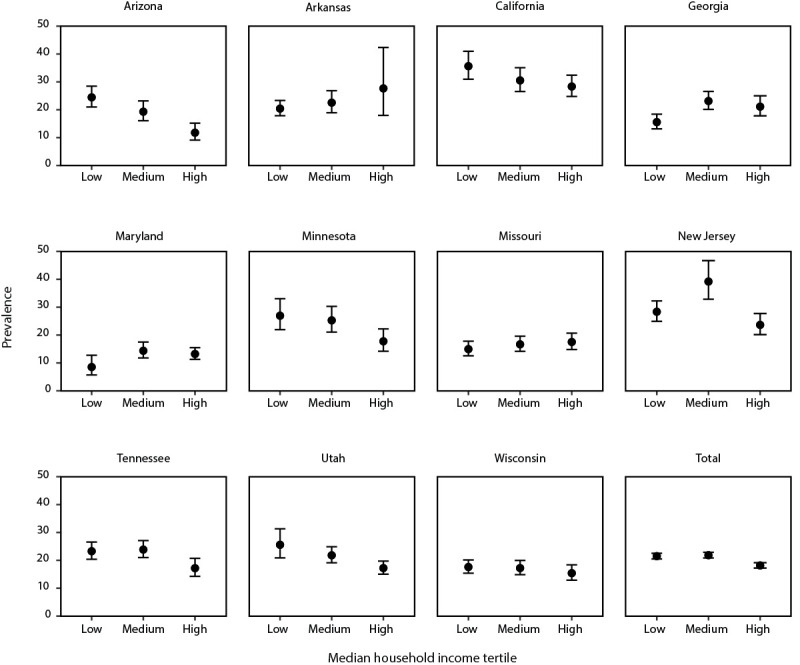
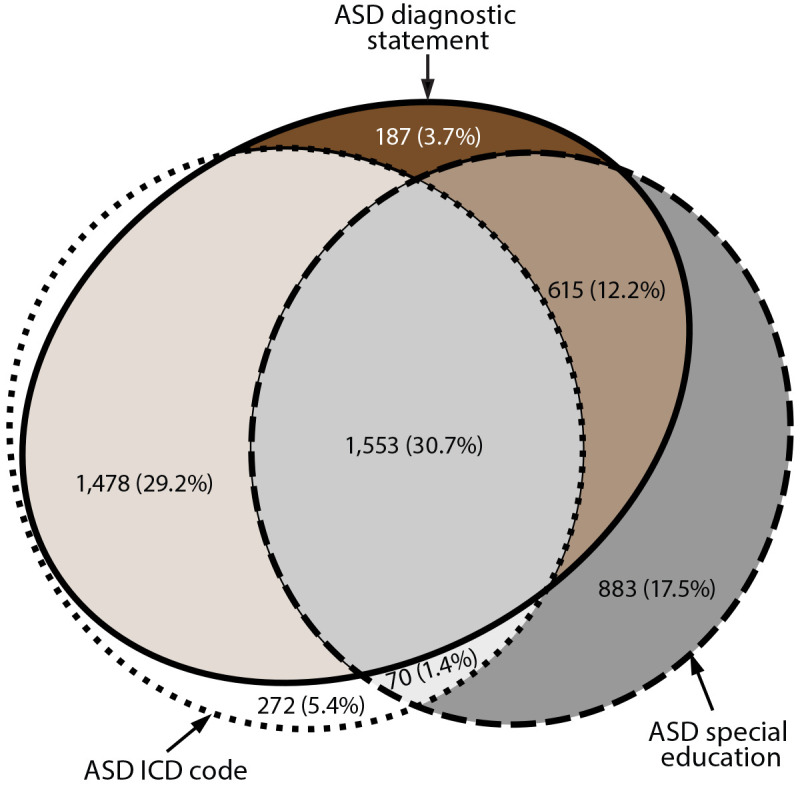
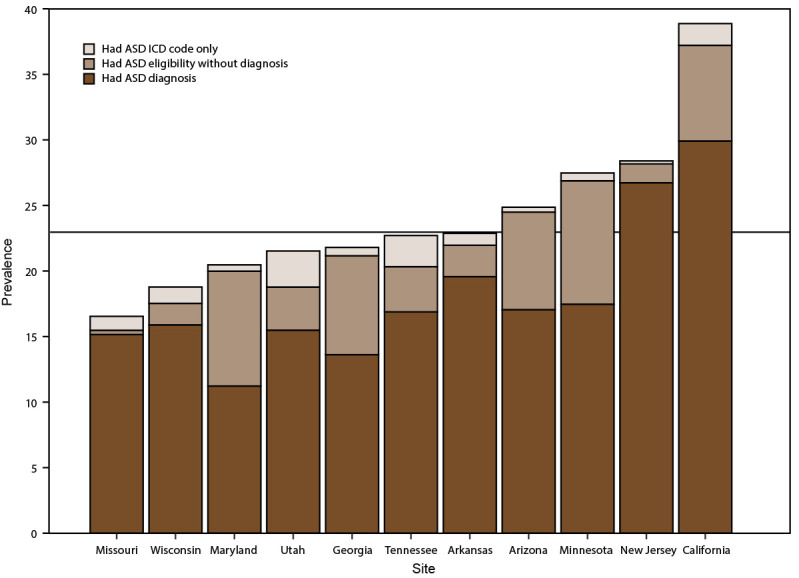
PROBLEM/CONDITION: Autism spectrum disorder (ASD). PERIOD COVERED: 2018. DESCRIPTION OF SYSTEM: The Autism and Developmental Disabilities Monitoring (ADDM) Network conducts active surveillance of ASD. This report focuses on the prevalence and characteristics of ASD among children aged 8 years in 2018 whose parents or guardians lived in 11 ADDM Network sites in the United States (Arizona, Arkansas, California, Georgia, Maryland, Minnesota, Missouri, New Jersey, Tennessee, Utah, and Wisconsin). To ascertain ASD among children aged 8 years, ADDM Network staff review and abstract developmental evaluations and records from community medical and educational service providers. In 2018, children met the case definition if their records documented 1) an ASD diagnostic statement in an evaluation (diagnosis), 2) a special education classification of ASD (eligibility), or 3) an ASD International Classification of Diseases (ICD) code. RESULTS: For 2018, across all 11 ADDM sites, ASD prevalence per 1,000 children aged 8 years ranged from 16.5 in Missouri to 38.9 in California. The overall ASD prevalence was 23.0 per 1,000 (one in 44) children aged 8 years, and ASD was 4.2 times as prevalent among boys as among girls. Overall ASD prevalence was similar across racial and ethnic groups, except American Indian/Alaska Native children had higher ASD prevalence than non-Hispanic White (White) children (29.0 versus 21.2 per 1,000 children aged 8 years). At multiple sites, Hispanic children had lower ASD prevalence than White children (Arizona, Arkansas, Georgia, and Utah), and non-Hispanic Black (Black) children (Georgia and Minnesota). The associations between ASD prevalence and neighborhood-level median household income varied by site. Among the 5,058 children who met the ASD case definition, 75.8% had a diagnostic statement of ASD in an evaluation, 18.8% had an ASD special education classification or eligibility and no ASD diagnostic statement, and 5.4% had an ASD ICD code only. ASD prevalence per 1,000 children aged 8 years that was based exclusively on documented ASD diagnostic statements was 17.4 overall (range: 11.2 in Maryland to 29.9 in California). The median age of earliest known ASD diagnosis ranged from 36 months in California to 63 months in Minnesota. Among the 3,007 children with ASD and data on cognitive ability, 35.2% were classified as having an intelligence quotient (IQ) score ≤70. The percentages of children with ASD with IQ scores ≤70 were 49.8%, 33.1%, and 29.7% among Black, Hispanic, and White children, respectively. Overall, children with ASD and IQ scores ≤70 had earlier median ages of ASD diagnosis than children with ASD and IQ scores >70 (44 versus 53 months). INTERPRETATION: In 2018, one in 44 children aged 8 years was estimated to have ASD, and prevalence and median age of identification varied widely across sites. Whereas overall ASD prevalence was similar by race and ethnicity, at certain sites Hispanic children were less likely to be identified as having ASD than White or Black children. The higher proportion of Black children compared with White and Hispanic children classified as having intellectual disability was consistent with previous findings. PUBLIC HEALTH ACTION: The variability in ASD prevalence and community ASD identification practices among children with different racial, ethnic, and geographical characteristics highlights the importance of research into the causes of that variability and strategies to provide equitable access to developmental evaluations and services. These findings also underscore the need for enhanced infrastructure for diagnostic, treatment, and support services to meet the needs of all children.
Overview
The claims and statistics of this paper haven’t been checked yet.
Run the check — free, no account needed. It reads the open-access text and checks the sources it cites.
Integrity signals
Registry
Cites
Statistics
Figures
Verification
Claims the paper makes
The claims and statistics of this paper haven’t been checked yet.
Run the check — free, no account needed. It reads the open-access text and checks the sources it cites.
Claims other papers make about this one
Each is checked against this paper’s own text: does it say what the citing paper says it does?
In the citing paper
“California has had the highest prevalence among children aged 4 years and 8 years since joining the ADDM Network in 2018 (6,10,11,13)”
In the citing paper
“Surveillance was conducted using the same surveillance methods and case definitions used in 2018 and 2020 (6,13).”
In the citing paper
“No evidence of heterogeneity of the male-to-female ratio among children aged 4 years across sites was observed; however, the overall male-to-female ratio for children aged 4 years was lower than the 4.2 male-to-female ratio for children aged 8 years (11).”
In the citing paper
“The site in California had the highest cumulative incidence of ASD by age 48 months and the fewest cases of suspected ASD and was the only site where prevalence among children aged 4 years was higher than among children aged 8 years (11).”
In the citing paper
“The combined prevalence of ASD and suspected ASD (19.7 per 1,000 children aged 4 years) was still lower than ASD prevalence observed among children aged 8 years (23.0 per 1,000 children aged 8 years) (11).”
In the citing paper
“Children with co-occurring intellectual disability are more likely to be identified earlier than children without intellectual disability, as indicated by an earlier median age at identification among this group (11) as well as the consistently higher proportion of children with intellectual disability at age 4 years (8,13) than at age 8 years (9,11,17).”
In the citing paper
“Consistent with findings among children aged 8 years (11), a higher proportion of Black children aged 4 years with ASD have co-occurring intellectual disability.”
In the citing paper
“The 2018 estimate for children aged 4 years was lower than the 23.0 per 1,000 ASD prevalence among children aged 8 years (11), a finding consistent with previous reports (8,13).”
In the citing paper
“Adding the children identified with ASD to those suspected of having ASD at age 4 years is still less than the prevalence of ASD by age 8 years at all sites except California (11).”
Self-check
Percentages, sums and reported differences re-computed from the paper’s own numbers.
The self-check needs the paper’s full text.
Citations
Cites
Diagnostic and Statistical Manual of Mental Disorders
American Psychiatric Association (2013) · doi:10.1176/appi.books.9780890425596 · Cited by 116,369
Baio, J., Wiggins, L., Christensen, D. L., Maenner, M. J., Daniels, J., Warren, Z., Kurzius-Spencer, M., Zahorodny, W., Robinson, C., Rosenberg, et al. (2018) · MMWR. Surveillance Summaries · doi:10.15585/mmwr.ss6706a1 · Cited by 6,078
Self-citationMaenner, M. J., Shaw, K. A., Baio, J., EdS1, Washington, A., Patrick, M., DiRienzo, M., Christensen, D. L., Wiggins, L. D., Pettygrove, S., et al. (2020) · MMWR. Surveillance Summaries · doi:10.15585/mmwr.ss6904a1 · Cited by 3,780 · cited 5×
“Recommended ICD codes were described previously (10).”
BackgroundMethodInfluentialSelf-citationLord, C., Elsabbagh, M., Baird, G., & Veenstra-Vanderweele, J. (2018) · The Lancet · doi:10.1016/s0140-6736(18)31129-2 · Cited by 2,819
Christensen, D. L., Baio, J., Braun, K. V. N., Bilder, D., Charles, J., Constantino, J. N., Daniels, J., Durkin, M. S., Fitzgerald, R. T., Kurzius-Spencer, M., et al. (2016) · MMWR. Surveillance Summaries · doi:10.15585/mmwr.ss6503a1 · Cited by 1,964
Self-citationPrevalence of Autism in a US Metropolitan Area
Yeargin-Allsopp, M., Rice, C., Karapurkar, T., Doernberg, N., Boyle, C., & Murphy, C. (2003) · JAMA · doi:10.1001/jama.289.1.49 · Cited by 1,248
Poverty and Child Health in the United States
Gitterman, B. A., Flanagan, P., Cotton, W. H., Dilley, K. J., Duffee, J. H., Green, A. E., Keane, V. A., Krugman, S., Linton, J. M., McKelvey, C. D., et al. (2016) · PEDIATRICS · doi:10.1542/peds.2016-0339 · Cited by 789
Research works printed but not linked: 1
- New Jersey Administrative Code. Title 6A, Chapter 14. https://www.state.nj.us/education/code/current/title6a/chap14.pdf
Cited by
Sorted by citations
Items 501–600 of 1,004
Mundy, P. C. (2023) · Autism Research · doi:10.1002/aur.2910 · Cited by 11
“…of intellectual development wherein 35% of children are comorbid for intellectual disability and another 23% are affected by intellectual disturbance or borderline intellectual difficulties (IQ = 71–85), but 42% function in the average or above average range (IQ > 85%, Maenner et al., 2021).”
BackgroundRollins, P. R., Rangel-Uribe, C., Rojas, R., & Brantley, S. (2023) · Journal of Autism and Developmental Disorders · doi:10.1007/s10803-023-06003-9 · Cited by 11
“The national prevalence of children on the autism spectrum was estimated by the U.S. Centers for Disease Control and Prevention at 1 in 44 however, autism prevalence varied across US states (Maenner et al., 2021) 1 .”
Kellom, K. S., Flaherty, C. M., Cacia, J., Christiansen, A., Cordero, L., Hah, J., Kennelly, A., Ortiz, P. N., Stefanski, K. J., Wozniak, S. N., et al. (2023) · Journal of Developmental & Behavioral Pediatrics · doi:10.1097/dbp.0000000000001198 · Cited by 11
“These systemic barriers contribute to long-recognized racial, ethnic, and socioeconomic disparities in autism spectrum disorder (ASD) diagnosis.(8,9) Home-based telehealth is a promising way to mitigate barriers to ASD assessments because it allows DBP clinicians to observe a child’s play and social skills in a natura…”
BackgroundKalfiřt, L., Su, C., Fu, C.-P., Lee, S., & Yang, A. (2023) · Healthcare · doi:10.3390/healthcare11131898 · Cited by 12
“In 2018, it was estimated that the prevalence of ASD among American children was 1 in 44 children compared to an estimation of 1 in 54 children from 2016 [2,3].”
BackgroundPassive and social screen time in children with autism and in association with obesity
Must, A., Eliasziw, M., Stanish, H., Curtin, C., Bandini, L., & Bowling, A. (2023) · Frontiers in Pediatrics · doi:10.3389/fped.2023.1198033 · Cited by 12
“Current data suggest approximately 2% of the pediatric population has autism with an estimated male-to-female ratio of about 4 to 1 (12).”
BackgroundBilder, D. A., Worsham, W., SULLIVAN, S. A., Esplin, M. S., Burghardt, P. R., Fraser, A. M., & Bakian, A. V. (2023) · Molecular Autism · doi:10.1186/s13229-023-00562-5 · Cited by 11
“Autism is a neurodevelopmental condition affecting approximately 2% of the population [1].”
BackgroundSelf-citationChoueiri, R., Garrison, W. T., Tokatli, V., Daneshvar, N., Belgrad, J., Zhu, G., & Zhang, B. (2023) · Child Neurology Open · doi:10.1177/2329048x231203817 · Cited by 11
“However, even when early screening via parent questionnaires and interview occurs in Primary Care (PC) and Early Intervention (EI) settings, there continues to be both missed cases and a significant time delay in the formal neurodevelopmental evaluation and diagnosis of ASD.(4,8) Building capacity and skills in the ea…”
Background"But the Bumpies Hurt!": Autism and the Importance of Identity-first Language
Pineo, E. (2022) · Including Disability · doi:10.51357/id.vi2.194 · Cited by 13
Siegel, J. F., McGrath, K., Muniz, E. L. D. S., Siasoco, V., Chandan, P., Noonan, E., & Bonuck, K. A. (2023) · Medical Education Online · doi:10.1080/10872981.2023.2271224 · Cited by 11
Jasenovec, T., Radošinská, D., Janšáková, K., Kopčíková, M., Tomova, A., Snurikova, D., Vrbjar, N., & Radošinská, J. (2023) · Antioxidants · doi:10.3390/antiox12122054 · Cited by 11
Dollion, N., Poirier, M., Auffret, F., François, N., Plusquellec, P., Grandgeorge, M., Handi’Chiens, & Mira, F. (2024) · PLoS ONE · doi:10.1371/journal.pone.0295702 · Cited by 12
Sesay, M. M., McCracken, C., Stewart, C. C., Simon, G. E., Penfold, R. B., Ahmedani, B. K., Rossom, R. C., Lu, C. Y., Beck, A. L., Coleman, K. J., et al. (2024) · Autism · doi:10.1177/13623613231220687 · Cited by 11
Hijab, M. H. F., Khatab, S., Aswadi, N. A., Neves, J., Qaraqe, M., Othman, A., Alsulaiti, N., & Al‐Thani, D. (2024) · Frontiers in Education · doi:10.3389/feduc.2024.1273757 · Cited by 11
Douglas, S. N., Dada, S., Tönsing, K. M., Samuels, A. E., & Owusu, P. (2024) · Review Journal of Autism and Developmental Disorders · doi:10.1007/s40489-024-00436-3 · Cited by 11
“Within the United States, autism spectrum disorder 1 (ASD) is estimated to impact 1 in every 44 children (Maenner et al., 2021).”
Lavigne, É., Abdulaziz, K. E., Murphy, M. S. Q., Stanescu, C., Dingwall‐Harvey, A. L. J., Stieb, D. M., Walker, M. C., Wen, S. W., & Shin, H. H. (2024) · Environmental Research · doi:10.1016/j.envres.2024.118828 · Cited by 11
Peng, X., Xue, Y., Dong, H., Ma, C., Jia, F., & Du, L. (2024) · BMC Pediatrics · doi:10.1186/s12887-024-04814-y · Cited by 11
Yan, X., Li, Y., Li, Q., Li, Q., Xu, G., Lu, J., & Yang, W. (2026) · Journal of Autism and Developmental Disorders · doi:10.1007/s10803-024-06390-7 · Cited by 11
“…2022b) and 2.47% in 2014 to 2016 (Maenner et al., 2021) based on the data from National Health Inter-view Survey (NHIS), and also higher than the prevalence of 2.30% among children aged 8 years in 2018 from the Autism and Developmental Disabilities Monitoring Network (ADDM) (Maenner et al., 2021).”
InfluentialMapping the Behavioral Signatures of Shank3b Mice in Both Sexes
Liu, J., Ye, J., Ji, C., Ren, W., He, Y., Xu, F., & Wang, L. (2024) · Neuroscience Bulletin · doi:10.1007/s12264-024-01237-8 · Cited by 11
Power, M., Kennedy, S., Cleary, F., Mills, I., Kinsella, S., & Celdrán, A. H. (2024) · IEEE Access · doi:10.1109/access.2024.3438361 · Cited by 11
“In the United States, the rate of children diagnosed with autism increased from a rate of 1:150 to 1:44 between 2000 and 2018 [4].”
BackgroundZhao, Y., Lu, F., Ding, R., Zhu, D., Zhang, R., Sun, S., He, P., & Zheng, X. (2024) · Autism · doi:10.1177/13623613241290388 · Cited by 12
“Second, consistent with the results reported in previous studies (Maenner et al., 2021; H. Zhou et al., 2020), the sex prevalence ratios (male/female) remained stable at 4.2– 4.5.”
InfluentialJin, F., & Wang, Z. (2024) · Frontiers in Neuroscience · doi:10.3389/fnins.2024.1514678 · Cited by 12
Alder, M. L., Johnson, C. R., Zauszniewski, J. A., Malow, B. A., Burant, C. J., & Scahill, L. D. (2022) · Journal of Autism and Developmental Disorders · doi:10.1007/s10803-022-05661-5 · Cited by 11
Marrus, N. M., Koth, K. A., Hellings, J. A., McDonald, R. G., Gwynette, M. F., Muhle, R., Lohr, W. D., & Vasa, R. A. (2022) · Autism · doi:10.1177/13623613221112197 · Cited by 12
“…spectrum disorder (ASD) and intellectual disability (ID) are both prevalent neurodevelopmental disorders, with estimates in the United States of approximately 2% of children (1 in 44) having ASD (Maenner et al., 2021) and 1%−2% of children having ID (Maulik et al., 2011; Zablotsky et al., 2019).”
BackgroundVitamin D receptor gene variants and serum vitamin D in childhood autism spectrum disorder
Zhang, Z., Liu, J., Jiang, G., & Yu, H. Y. (2022) · Molecular Biology Reports · doi:10.1007/s11033-022-07829-9 · Cited by 12
Language Skill Differences Further Distinguish Social Sub-types in Children with Autism
Zhao, W., Li, Q., Zhang, X., Song, X., Zhu, S., Shou, X., Meng, F., Xu, X., Zhang, R., & Kendrick, K. M. (2022) · Journal of Autism and Developmental Disorders · doi:10.1007/s10803-022-05759-w · Cited by 11
Dănciulescu, T., & ZAHARIA, A. L. (2022) · The Arts in Psychotherapy · doi:10.1016/j.aip.2022.101987 · Cited by 11
Identifying neurodevelopmental disabilities from nationalised preschool health check
Mujoo, H., Bowden, N., Thabrew, H., Kokaua, J., Audas, R. P., & Taylor, B. J. (2023) · Australian & New Zealand Journal of Psychiatry · doi:10.1177/00048674231151606 · Cited by 11
“Australian & New Zealand Journal of Psychiatry, 57(8) (Maenner et al., 2021; Maulik et al., 2011; Thomas et al., 2015).”
BackgroundFu, P., Luo, S., Liu, Z., Furuhara, K., Tsuji, T., Higashida, H., Yokoyama, S., Zhong, J., & Tsuji, C. (2023) · Brain Sciences · doi:10.3390/brainsci13020316 · Cited by 11
“According to the United States Centers for Disease Control and Prevention, approximately one in 44 children aged 8 years was estimated to have ASD in 2018 [2].”
MethodDufault, R., Crider, R. A., Deth, R. C., Schnoll, R., Gilbert, S. G., Lukiw, W. J., & Hitt, A. L. (2023) · World Journal of Clinical Pediatrics · doi:10.5409/wjcp.v12.i2.25 · Cited by 11
Sabegh, A. M., Samadzadehaghdam, N., Seyedarabi, H., & Ghadiri, T. (2023) · Research on Biomedical Engineering · doi:10.1007/s42600-023-00275-x · Cited by 11
A survey on technological tools and systems for diagnosis and therapy of autism spectrum disorder
Bondioli, M., Chessa, S., Kocian, A., & Pelagatti, S. (2023) · Human-Computer Interaction · doi:10.1080/07370024.2023.2242345 · Cited by 12
“The situation in the United States is similar (Maenner et al., 2021).”
BackgroundCarter, M., Casey, S., O’Keeffe, G. W., Gibson, L., Gallagher, L., & Murray, D. M. (2022) · Frontiers in Psychiatry · doi:10.3389/fpsyt.2022.823096 · Cited by 14
Duration of untreated autism in rural America: emerging public health crisis
Gupta, M., Gupta, N., & Moll, J. (2022) · CNS Spectrums · doi:10.1017/s1092852922000141 · Cited by 11
Interpretation and Use of Standardized Language Assessments for Diverse School-Age Individuals
Girolamo, T. M., Ghali, S., Campos, I., & Ford, A. L. B. (2022) · Perspectives of the ASHA Special Interest Groups · doi:10.1044/2022_persp-21-00322 · Cited by 12
Velladath, S. U., Kulkarni, M. M., Rege, S., Santhosh, S. E., Tiwari, S., John, S., Nayak, R., Aroor, S., Biju, S., & Mohammed, C. A. (2022) · Medical Journal Armed Forces India · doi:10.1016/j.mjafi.2022.06.018 · Cited by 11
Ji, Y., Xu, M., Liu, X., Dai, Y., Zhou, L., Li, F., & Zhang, L. (2022) · Frontiers in Psychiatry · doi:10.3389/fpsyt.2022.1072272 · Cited by 11
“The most recent report in 2021 suggested that the prevalence of autism had reached 1/44 in the United States (1).”
BackgroundInfluentialCorredor-Waldron, A. M., & Currie, J. (2023) · National Bureau of Economic Research · doi:10.3386/w31493 · Cited by 11
Bender, A., Voytek, B., & Schaworonkow, N. (2023) · bioRxiv (Cold Spring Harbor Laboratory) · doi:10.1101/2023.10.13.562301 · Cited by 11
Meta-Synthesis of Autistic Adults’ First-Person Perspectives About Mental Health-Related Services
Andoni, L., Eisenhower, A., Gudknecht, J., & Levitt, H. M. (2026) · Autism in Adulthood · doi:10.1089/aut.2023.0167 · Cited by 11
“…of the co-occurrence of ASD and ID in the general population, it is estimated that around 30 – 40% of autistic adults have co-occurring ID. 93,94 As such, future research should utilize existing methods to more effectively and intentionally elicit perspectives from autistic adults with ID.…”
Quetsch, L. B., Bradley, R. S., Theodorou, L. L., Newton, K. A., & McNeil, C. B. (2022) · Journal of Autism and Developmental Disorders · doi:10.1007/s10803-022-05755-0 · Cited by 12
Jeba Berlin, S., Pandian, D., Rajagopalan, S. S., & Jayagopi, D. B. (2022) · Proceedings - International Conference on Image Processing · doi:10.1109/icip46576.2022.9897867 · Cited by 10
Kiffmeyer, E. A., Cosgrove, J. A., Siganos, J. K., Bien, H. E., Vipond, J. E., Vogt, K. R., & Kloth, A. D. (2022) · NeuroSci · doi:10.3390/neurosci3040045 · Cited by 13
Hong, J. S., Perrin, J., Singh, V., Kalb, L. G., Cross, E. A., Wodka, E. L., Richter, C., & Landa, R. J. (2022) · Journal of Autism and Developmental Disorders · doi:10.1007/s10803-022-05871-x · Cited by 10
“Current epidemiologic estimates in the US indicate that ASD occurs in 1 out of 44 children (Maenner, 2021) and causes significant burden for individuals, their family, and society (Baxter et al., 2015; Kohane et al., 2012; Lavelle et al., 2014; Marsack-Topolewski & Church, 2019; Ou et al., 2015;…”
Nishimura, T., Takahashi, N., Okumura, A., Harada, T., Iwabuchi, T., Nakayasu, C., Rahman, M. S., Uchiyama, S., Wakuta, M., Nomura, Y., et al. (2023) · Psychiatry and Clinical Neurosciences · doi:10.1111/pcn.13529 · Cited by 10
“0 per 1000 (one in 44) in the United States.(3) ASD has been consistently found to be more common in males, with a male-to-female ratio of approximately 4:1.”
BackgroundInfluentialDouglas, S. N., Bagawan, A. H., & West, P. A. (2023) · Review Journal of Autism and Developmental Disorders · doi:10.1007/s40489-023-00360-y · Cited by 10
“One in every 44 children in the USA are diagnosed with an autism spectrum disorder (ASD; Maenner et al., 2021).”
O’Brien, E. M., Stricker, P. A., Harris, K. A., Liu, H., Griffis, H. M., & Muhly, W. T. (2023) · Anesthesia & Analgesia · doi:10.1213/ane.0000000000006426 · Cited by 11
“1 Thus, due to the potential bias of having an overly skewed male-exposed population, and the effect this may have on postoperative pain and additional outcomes, we chose sex as a potentially confounding variable, as well as race and ethnicity.”
BackgroundMartin, G. E., Lee, M., Bicknell, K., Goodkind, A., Maltman, N., & Losh, M. C. (2023) · Frontiers in Neurology · doi:10.3389/fneur.2023.1155691 · Cited by 17
“Analyses were conducted to (1) examine group differences and change over time within each context (standardized assessment, narrative, semi-naturalistic conversation), (2) compare each group’s performance across contexts at visit one, and (3) explore the utility of computational analysis of pragmatic competence during…”
BackgroundMethodInfluentialĆirović, M., Jeličić, L., Maksimović, S., Fatić, S., Marisavljević, M., Matić, T. B., & Subotić, M. (2023) · Diagnostics · doi:10.3390/diagnostics13182878 · Cited by 12
microRNA as a Maternal Marker for Prenatal Stress-Associated ASD, Evidence from a Murine Model
Woo, T., King, C., Ahmed, N. I., Cordes, M., Nistala, S., Will, M. J., Bloomer, C., Kibiryeva, N., Rivera, R. M., Talebizadeh, Z., et al. (2023) · Journal of Personalized Medicine · doi:10.3390/jpm13091412 · Cited by 12
“Autism Spectrum Disorder (ASD) is a complex and heterogeneous neurodevelopmental disorder that affects an estimated 1 in 44 children in the United States [1].”
BackgroundA Multisystem Approach to Improving Autism Care
Habayeb, S., Inge, A. P., Myrick, Y., Hastings, A., Long, M., Hoffman, S. B., Parker, S., Theodorou, P., Soutullo, O. R., BEERS, L. S., et al. (2023) · PEDIATRICS · doi:10.1542/peds.2022-060584 · Cited by 10
Deng, L., He, W.-Z., Zhang, Q., Wei, L., Dai, Y., Liu, Y., Chen, Z., Ren, T., Zhang, L.-L., Gong, J., et al. (2023) · Child and Adolescent Psychiatry and Mental Health · doi:10.1186/s13034-023-00690-z · Cited by 12
Guo, Z., Chheang, V., Li, J., Barner, K. E., Bhat, A. N., & Barmaki, R. (2023) · IEEE/ACM Conference on Connected Health: Applications, Systems and Engineering Technologies · doi:10.1145/3580252.3586976 · Cited by 10
Tian, Y., Yu, F., Yun, E. J., Lin, J., & Man, H. (2024) · EMBO Reports · doi:10.1038/s44319-024-00073-1 · Cited by 11
“ASD is prevalent in about 1% of the global population, and this number continues to increase (Maenner et al, 2021).”
BackgroundChen, Y., Xue, Y., Jia, L., Yang, M., Huang, G., & Xie, J. (2024) · Medicine · doi:10.1097/md.0000000000037284 · Cited by 12
“In multiple studies conducted in the United States, the prevalence has progressed from 1 in 68 in 1990 to 1 in 59 in 2014 and to 1 in 44 in 2018, [2] the male-to-female ratio was 4.3: 1.”
InfluentialHe, C., Zhou, H., Chen, L., & Liu, Z. (2024) · Molecular Neurobiology · doi:10.1007/s12035-024-04309-y · Cited by 10
“The prevalence of ASD is increasing each year due to the advances in screening and diagnosis, with males being 8.4 times more likely to be diagnosed than females [4].”
InfluentialSandhu, A., Rawat, K., Gautam, V., Kumar, A., Sharma, A., Bhatia, A., Grover, S., Saini, L. K., & Saha, L. (2024) · Progress in Neuro-Psychopharmacology and Biological Psychiatry · doi:10.1016/j.pnpbp.2024.111126 · Cited by 11
Singh, J. S., Brasher, S. N., Sarrett, J. C., Barger, B. D., Guerra, K. A. S., Dilly, L. J., Rubin, I. L., Stapel‐Wax, J. L., Benevides, T. W., & Fernàndez‐Carriba, S. (2025) · Journal of Racial and Ethnic Health Disparities · doi:10.1007/s40615-024-02280-x · Cited by 12
Physical-intellectual badminton teaching intervention for children with intellectual disabilities
Wang, Y., Zhou, D., Liu, C., Long, L., & Cheng, G. (2025) · Frontiers in Psychology · doi:10.3389/fpsyg.2025.1445620 · Cited by 10
Autism Spectrum Disorder Phenotypes Based on Sleep Dimensions and Core Autism Symptoms
Lenker, K. P., Li, Y., Fernández‐Mendoza, J., Mayes, S. D., & Calhoun, S. L. (2025) · Journal of Autism and Developmental Disorders · doi:10.1007/s10803-025-06822-y · Cited by 10
Gao, X., Fu, N., Ben, Q., & Bu, X. (2025) · Nutrition Reviews · doi:10.1093/nutrit/nuaf050 · Cited by 12
Qin, M., Wang, Y., Chen, B., Sun, S., Hu, Q., Chen, L., & Xu, S. (2025) · Research in Developmental Disabilities · doi:10.1016/j.ridd.2025.105076 · Cited by 11
Yao, D., Wang, S., Li, F., Gao, M., & Shao, J. (2022) · Frontiers in Psychiatry · doi:10.3389/fpsyt.2022.923757 · Cited by 10
“Inclusion criteria: (1) Aged 1–3 years; (2) The diagnosis of ASD was performed independently by a developmental pediatrician and a psychiatrist using the DSM- 5 (20) in combination with the ADOS-2 (21, 22); (3) Excluding other organic diseases, hearing disorders, neurodevelopmental disorders, genetic metabolism diseas…”
BackgroundMethodGolan, O., Terner, M., Israel‐Yaacov, S., Allison, C. L., & Baron‐Cohen, S. (2022) · Autism · doi:10.1177/13623613221117020 · Cited by 11
“According to the latest report from the U.S. Department of Health and Human Services, one in 44 eight-year-olds is diagnosed with autism (Maenner et al., 2021).”
Manosso, L. M., Broseghini, L. D. R., Campos, J. M. B., Padilha, A. P. Z., Botelho, M. E. M., da Costa, M. D. A., Abelaira, H. M., Gonçalves, C. L., & Réus, G. Z. (2022) · Brain Research Bulletin · doi:10.1016/j.brainresbull.2022.09.024 · Cited by 10
Promoting Paraeducators’ Use of Evidence-Based Practices for Students With Autism
Sam, A. M., Steinbrenner, J. R. D., Odom, S. L., Nowell, S. W., Waters, V., Perkins, Y., White, M. E., Swaminathan, H., & Rogers, H. J. (2022) · Exceptional Children · doi:10.1177/00144029221135572 · Cited by 10
“The Centers for Disease Control and Prevention has reported the prevalence rate as 1 in 44 students (Maenner et al., 2021), with this rate having risen over the past decade.”
BackgroundDellapiazza, F., Michelon, C., Rattaz, C., Picot, M., & Baghdadli, A. (2022) · Frontiers in Psychiatry · doi:10.3389/fpsyt.2022.998195 · Cited by 10
“In the past ASD was thought to be a rare condition, affecting about one in 2,000 individuals while the Centers for Disease Control and Prevention (CDC) in United States estimated in 2021 the prevalence at 1 in 44 children (2, 3).”
BackgroundA Comparison of the Clinical Presentation of Preterm Birth and Autism Spectrum Disorder
Mendez, A. I., Tokish, H., McQueen, E., Chawla, S., Klin, A. J., Maitre, N. L., & Klaiman, C. (2023) · Clinics in Perinatology · doi:10.1016/j.clp.2022.11.001 · Cited by 10
Zappala, C., Barrios, C. D., & Depino, A. M. (2023) · NeuroToxicology · doi:10.1016/j.neuro.2023.05.009 · Cited by 10
Association Between Early Developmental Milestones and Autism Spectrum Disorder
Alhozyel, E., Elbedour, L., Balaum, R., Meiri, G., Michaelovski, A., Dinstein, I., Davidovitch, N., Kerub, O., & Menashe, I. (2023) · Research on Child and Adolescent Psychopathology · doi:10.1007/s10802-023-01085-6 · Cited by 12
“This evidence has led the American Academy of Pediatrics to recommend ASD screening for all children aged 18–24 months (Hyman et al., 2020), but even so, the average age of diagnosis has not fallen significantly in the past two decades (Maenner et al., 2021).”
BackgroundWang, L., Lin, H., Tsai, M., Chang, Y., & Chang, Y.-C. (2023) · Scientific Reports · doi:10.1038/s41598-023-36787-w · Cited by 13
Marinopoulou, M., Billstedt, E., Wessman, C., Bornehag, C., & Hallerbäck, M. U. (2023) · Child Psychiatry & Human Development · doi:10.1007/s10578-023-01562-5 · Cited by 12
Yoshikawa, Y., Muramatsu, T., Sakai, K., Haraguchi, H., Kudo, A., Ishiguro, H., Mimura, M., & Kumazaki, H. (2023) · Frontiers in Psychiatry · doi:10.3389/fpsyt.2023.1198433 · Cited by 10
“The Centers for Disease Control and Prevention (CDC) in the US estimates that one in 44 children has ASD (2).”
BackgroundMethodInfluentialKong, X., Kang, J., & Liu, K. (2023) · Journal of Psychiatric Research · doi:10.1016/j.jpsychires.2023.08.006 · Cited by 11
From Data to Insights: Machine Learning Empowers Prognostic Biomarker Prediction in Autism
Mehmetbeyoğlu, E., Duman, A., Taheri, S., Özkul, Y., & Rassoulzadegan, M. (2023) · Journal of Personalized Medicine · doi:10.3390/jpm13121713 · Cited by 11
Dufault, R., Adler, K. M., Carpenter, D. O., Gilbert, S. G., & Crider, R. A. (2024) · World Journal of Psychiatry · doi:10.5498/wjp.v14.i1.159 · Cited by 11
Hazan, S., Haroon, J. M., Jordan, S., & Walker, S. J. (2024) · Journal of Medical Cases · doi:10.14740/jmc4209 · Cited by 11
“In the United States, the prevalence of ASD has risen in recent decades, with current estimates of approximately 1 in 44 children aged 8 years [5].”
BackgroundLei, X., Xie, X., Yang, J., & Li, Y. (2024) · Psychiatry Research · doi:10.1016/j.psychres.2024.115954 · Cited by 10
Zhang, K., Yuan, Y., Chen, J., Wang, G., Chen, Q., & Luo, M. (2022) · Brain Sciences · doi:10.3390/brainsci12020283 · Cited by 11
“The incidence of ASD has been increasing in recent years, with an estimated 1 in 44 children diagnosed with the disorder, according to the Centers for Disease Control of the USA [2].”
BackgroundInfluentialZhang, Z., Hou, M., Ou, H., Wang, D., Li, Z., Zhang, H., & Lu, J. (2022) · Frontiers in Endocrinology · doi:10.3389/fendo.2022.1067529 · Cited by 9
Tseng, A., DuBois, M. C., Biagianti, B., Brumley, C., & Jacob, S. (2023) · Journal of Clinical Medicine · doi:10.3390/jcm12041635 · Cited by 11
“In recent years, the prevalence of ASD has reached an estimated 1-in-44 in the United States [13], and the lifetime cost of care has been associated with approximately $3.6 million [14].”
BackgroundInfluentialBrain organoids: are they for real?
Quirion, R. (2023) · Frontiers in Science · doi:10.3389/fsci.2023.1148127 · Cited by 10
Physical Activity and Mental Health of Parents of Children With Autism Spectrum Disorder
Zhang, X., Kern, Z. G., & Yun, J. (2023) · Adapted Physical Activity Quarterly · doi:10.1123/apaq.2022-0175 · Cited by 13
Pettinato, F., Valle, M. S., Cioni, M., Cirnigliaro, L., Rizzo, R., Barone, R., Bosco, G., & Casabona, A. (2024) · Journal of NeuroEngineering and Rehabilitation · doi:10.1186/s12984-024-01520-9 · Cited by 9
Adaptation of autism spectrum screening questionnaire (ASSQ) for use in Georgian school settings
Zirakashvili, M., Gabunia, M., Mebonia, N., Mikiashvili, T., Lomidze, G., Bishop, S. L., LEVENTHAL, B. L., & Kim, Y. S. (2022) · Journal of Public Mental Health · doi:10.1108/jpmh-03-2022-0028 · Cited by 9
An initial trial of OPT-In-Early: An online training program for caregivers of autistic children
Dai, Y. G., Thomas, R. P., Brennan, L. C., Luu, M.-L., Hughes-Lika, J., Reilly, M., Moreno, P., Obe, B., Ahmed, K. B., Berry, L. N., et al. (2022) · Autism · doi:10.1177/13623613221142408 · Cited by 9
“In particular, systemic inequities in access to diagnosis and early intervention in the United States affect Black and Latinx families and compound socioeconomic disparities (Angell et al., 2018; Durkin et al., 2015; Maenner et al., 2021; Zuckerman et al., 2014).”
BackgroundKnowledge about childhood autism among nurses in family health centers in southeast Turkey
Kılıçaslan, F., Karataş, H., Kulu, H., & Solmaz, A. (2022) · International Journal of Developmental Disabilities · doi:10.1080/20473869.2022.2149063 · Cited by 9
“ASD constitutes a special group that draws attention with its increasing prevalence and awareness level in the world and in our country in recent years (Oner and Munir 2020, Maenner et al. 2021, Kilicaslan and Tufan 2022).”
InfluentialLiu, Z., Yang, X., Guo, P., Wang, F., Xia, W., Chen, Y., Zou, M., & Sun, C. (2023) · Frontiers in Psychiatry · doi:10.3389/fpsyt.2022.994166 · Cited by 9
“2 and susceptibility to autism spectrum disorder Zehui Liu1, Xiaolei Yang2, Peiwen Guo1, Feng Wang1, Wei Xia1, Yuxin Chen3, Mingyang Zou1* and Caihong Sun1* 1Department of Children’s and Adolescent Health, Public Health College, Harbin Medical University, Harbin, China, 2Department of Preventive Medicine, School of Pu…”
BackgroundInfluentialAutism Spectrum Disorder in Females and Borderline Personality Disorder: The Diagnostic Challenge
Pires, S., Felgueiras, P., Borges, S., & Jorge, J. C. (2023) · Cureus · doi:10.7759/cureus.40279 · Cited by 9
“However, recent studies have found that it is likely to be lower [3,4].”
BackgroundImproving Student Attitudes Toward Autistic Individuals: A Systematic Review
Settanni, E., Kern, L., & Blasko, A. M. (2023) · Journal of Autism and Developmental Disorders · doi:10.1007/s10803-023-06082-8 · Cited by 10
Financial literacy among autistic adults
Galizzi, M., Hillier, A. J., & Schena, D. A. (2023) · Journal of Consumer Affairs · doi:10.1111/joca.12564 · Cited by 9
Rahmatinia, M., Mohseni-Bandpei, A., Khodagholi, F., Abdollahifar, M., Torkmahalleh, M. A., Moghaddam, M. H., Hopke, P. K., Ghavimehr, E., Bazzazpour, S., & Shahsavani, A. (2023) · Environmental Pollution · doi:10.1016/j.envpol.2023.122804 · Cited by 9
Lau, S., Czuczman, N. M., Dennett, L., Hicks, M., & Ospina, M. B. (2024) · JAACAP Open · doi:10.1016/j.jaacop.2024.02.007 · Cited by 10
“33 The ecological study 25 also found greater ID and SLD prevalence among AI/AN children compared to White children (OR ¼ 1.47; 95% CI ¼ 1.43, 1.51; and OR ¼ 1.66; 95% CI ¼ 1.64, 1.68, respectively).”
InfluentialDickson, K. S., Galligan, M. R. L., Holt, T., Kenworthy, L. E., Anthony, L. G., Roesch, S. C., & Brookman-Frazee, L. I. (2024) · Journal of Autism and Developmental Disorders · doi:10.1007/s10803-024-06365-8 · Cited by 10
“Comprised of a constellation of social communication challenges and restricted or repetitive behaviors and interests, autism is prevalent and contributes to healthcare and service needs throughout the lifespan (Maenner et al., 2021; Pellec-chia autistic individuals.”
Kilili-Lesta, M., Giannakou, K., & Voniati, L. (2024) · Advances in Neurodevelopmental Disorders · doi:10.1007/s41252-024-00412-2 · Cited by 10
“In 2014 in the United States (US), 1.7% of children aged 8 years old held the diagnosis based on the Center for Disease Control data from 11 sites/states (Baio et al., 2018), which increased to 2.3% in 2018 (Maenner et al., 2021) and to 2.8% in 2020 (Maen-ner, 2023).”
InfluentialYu, C., Wang, S., Zhang, D., Zhang, Y., Cen, C., You, Z., Zou, X., Deng, H., & Li, M. (2024) · IEEE Transactions on Learning Technologies · doi:10.1109/tlt.2024.3451462 · Cited by 11
“[4].”
Understanding autistic youths’ menstrual product preferences and caregivers’ product choices
Lundy, K. M., Fischer, A. J., Illapperuma-Wood, C. R., & Schultz, B. K. (2024) · Autism · doi:10.1177/13623613241275280 · Cited by 11
“One out of every 100 persons worldwide meets the criteria for an autism diagnosis (Zeidan et al., 2022); within the United States, one in 44 eight-year-olds and four males for every female receive a diagnosis (Loomes et al., 2017; Maenner et al., 2021).”
Ham, A., Chang, A. Y., Li, H., Bain, J., Goldman, J. E., Sulzer, D., Veenstra-VanderWeele, J. M., & Tang, G. (2024) · Molecular Psychiatry · doi:10.1038/s41380-024-02741-z · Cited by 16
Xie, K., Sun, Y., Li, X., Yang, S., Wang, M., Zhang, Y., Wang, Q., Wu, K., Kong, D., Guo, T., et al. (2024) · European Archives of Psychiatry and Clinical Neuroscience · doi:10.1007/s00406-024-01922-9 · Cited by 9
“The increasing incidence of ASD has highlighted the urgent need for a comprehensive investigation of the molecular profiles and roles of different biosamples in ASD [42].”
Accuracy of the Screening Tool for Autism in Toddlers and Young Children in the primary care setting
Keehn, R. M., Minshawi, N. F., Tang, Q., Enneking, B. A., Ryan, T., Martin, A. M., Paxton, A., Monahan, P. O., Ciccarelli, M. R., & Keehn, B. (2024) · Autism · doi:10.1177/13623613241292850 · Cited by 9
Zhang, C., Yang, L., Wang, F., Liu, M., Liu, Z., Zou, M., & Wu, L. (2024) · ACS Applied Materials & Interfaces · doi:10.1021/acsami.4c11663 · Cited by 9
Metadata
- Authors
- Maenner, M. J., Shaw, K. A., Bakian, A. V., Bilder, D. A., Durkin, M. S., Esler, A., Furnier, S. M., Hallas, L., Hall-Lande, J., Hudson, A., Hughes, M. M., Patrick, M., Pierce, K., Poynter, J. N., Salinas, A., Shenouda, J., Vehorn, A., Warren, Z., Constantino, J. N., DiRienzo, M., Fitzgerald, R. T., Grzybowski, A., Spivey, M. H., Pettygrove, S., Zahorodny, W., Ali, A., Andrews, J. G., Baroud, T., Gutierrez, J., Hewitt, A., Lee, L.-C., Lopez, M., Mancilla, K. C., McArthur, D., Schwenk, Y. D., Washington, A., Williams, S., & Cogswell, M. E.
- Affiliations
- Centers for Disease Control and Prevention (US)
- University of Utah (US)
- University of Wisconsin–Madison (US)
- University of Minnesota (US)
- University of Arkansas for Medical Sciences (US)
- University of California San Diego (US)
- Rutgers New Jersey Medical School (US)
- Vanderbilt University Medical Center (US)
- Washington University in St. Louis (US)
- Johns Hopkins University (US)
- University of Arizona (US)
- United States Department of Health and Human Services (US)
- Corresponding author
- Maenner, Matthew J.
- ORCID
- Maenner, Matthew J.
- Bakian, Amanda V.
- Bilder, Deborah A.
- Durkin, Maureen S.
- Esler, Amy
- Furnier, Sarah M.
- Hughes, Michelle M.
- Patrick, Mary
- Pierce, Karen
- Poynter, Jenny N.
- Shenouda, Josephine
- Warren, Zachary
- Constantino, John N.
- DiRienzo, Monica
- Fitzgerald, Robert T.
- Pettygrove, Sydney
- Zahorodny, Walter
- Ali, Akilah
- Andrews, Jennifer G.
- Lee, Li-Ching
- Lopez, Maya
- McArthur, Dedria
- Washington, Anita
- Cogswell, Mary E.
- Venue
- MMWR. Surveillance Summaries
- Published
- 2021-12-03
- Volume
- 70
- Issue
- 11
- Pages
- 1-16
- ISSN
- 1545-8636 (ISSN-L)
- 1546-0738
- PMC
- PMC8639024
- OpenAlex
- W3216151710
- Cited by
- 1,818
- References
- 37
- Citations by year
- 2026: 101 · 2025: 270 · 2024: 438 · 2023: 553 · 2022: 438 · 2021: 8
- FWCI
- 193.23
- Type
- journal article
- Language
- en
- Open access
- diamond
- doi.org
- Licence
- public-domain
- Locations
- MMWR Surveillance Summaries (publishedVersion, public-domain)
- PubMed Central (publishedVersion, public-domain)
- PubMed (publishedVersion)
- Funders
- Eunice Kennedy Shriver National Institute of Child Health and Human Development (P50HD103537)
- Topics
- Life Sciences › Neuroscience › Cognitive Neuroscience › Autism Spectrum Disorder Research
- Health Sciences › Medicine › Psychiatry and Mental health › Child Nutrition and Feeding Issues
- Social Sciences › Psychology › Clinical Psychology › Family and Disability Support Research
- Keywords
- autism spectrum disorder, autism prevalence, special education eligibility, ICD-10 codes, sex differences, racial and ethnic disparities, American Indian and Alaska Native children, median household income, neighborhood socioeconomic status, United States states and territories
- MeSH terms
- Autism Spectrum Disorder, Race Factors, Child, Ethnicity, Female, Geography, Humans, Male, Population Surveillance, United States, Prevalence, Racial Groups, Health Status Disparities, Epidemiological Monitoring
About these checks
Registry, retraction, Cites and statistics results are computed, not judged, with one exception: a printed reference that no index lists is read once by a model before it counts as a citation error. Claims are extracted by a model and kept only when their quote appears verbatim in the text; each cited source is then checked, with a model’s help, for whether it says what the claim relies on. Those verdicts can be wrong — read the claim’s quote and the cited source before relying on one.
Statistics and arithmetic are recomputed, not judged.
Confidence bands are shown only for fields calibrated on our annotated test set. None is calibrated yet, so no band is shown.
What counts as a claim ›How we measure confidence ›How we check this ›
Are you an author, or do you see a problem with this page? Request a review
