

The DOI matches its Crossref record; 37 of the 37 references it cites were found in a registry or an index.
Prevalence and characteristics of autism spectrum disorder among children aged 8 years—Autism and Developmental Disabilities Monitoring Network, 11 sites, United States, 2018.
Open accessAbstract
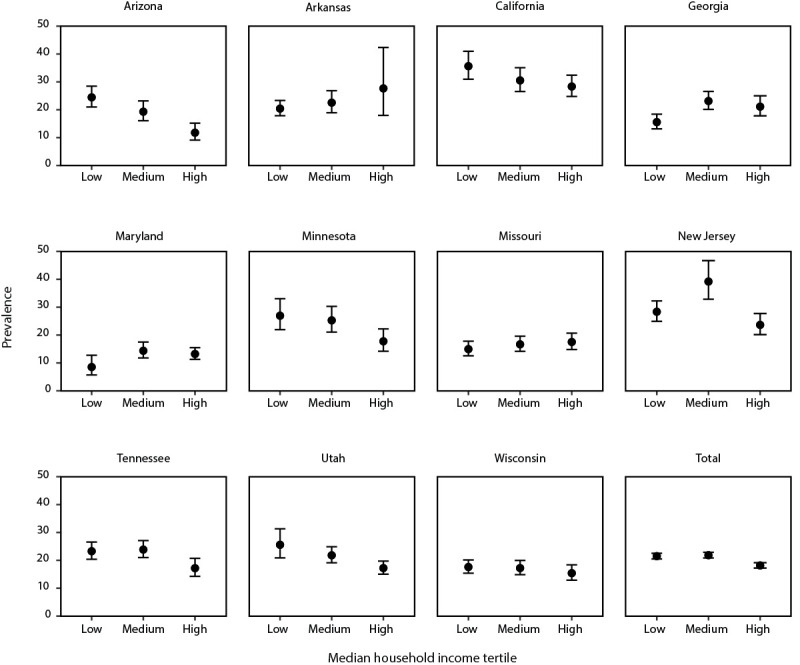
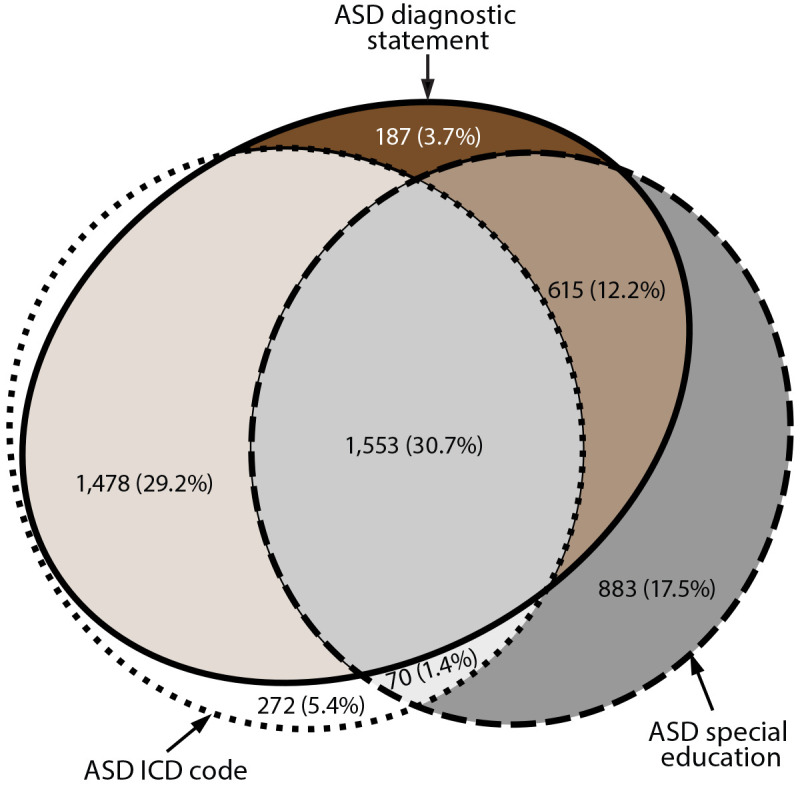
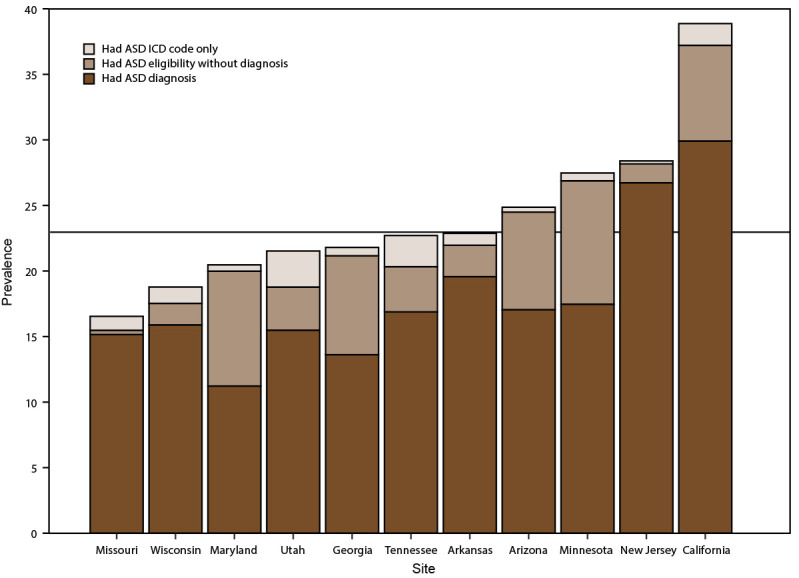
PROBLEM/CONDITION: Autism spectrum disorder (ASD). PERIOD COVERED: 2018. DESCRIPTION OF SYSTEM: The Autism and Developmental Disabilities Monitoring (ADDM) Network conducts active surveillance of ASD. This report focuses on the prevalence and characteristics of ASD among children aged 8 years in 2018 whose parents or guardians lived in 11 ADDM Network sites in the United States (Arizona, Arkansas, California, Georgia, Maryland, Minnesota, Missouri, New Jersey, Tennessee, Utah, and Wisconsin). To ascertain ASD among children aged 8 years, ADDM Network staff review and abstract developmental evaluations and records from community medical and educational service providers. In 2018, children met the case definition if their records documented 1) an ASD diagnostic statement in an evaluation (diagnosis), 2) a special education classification of ASD (eligibility), or 3) an ASD International Classification of Diseases (ICD) code. RESULTS: For 2018, across all 11 ADDM sites, ASD prevalence per 1,000 children aged 8 years ranged from 16.5 in Missouri to 38.9 in California. The overall ASD prevalence was 23.0 per 1,000 (one in 44) children aged 8 years, and ASD was 4.2 times as prevalent among boys as among girls. Overall ASD prevalence was similar across racial and ethnic groups, except American Indian/Alaska Native children had higher ASD prevalence than non-Hispanic White (White) children (29.0 versus 21.2 per 1,000 children aged 8 years). At multiple sites, Hispanic children had lower ASD prevalence than White children (Arizona, Arkansas, Georgia, and Utah), and non-Hispanic Black (Black) children (Georgia and Minnesota). The associations between ASD prevalence and neighborhood-level median household income varied by site. Among the 5,058 children who met the ASD case definition, 75.8% had a diagnostic statement of ASD in an evaluation, 18.8% had an ASD special education classification or eligibility and no ASD diagnostic statement, and 5.4% had an ASD ICD code only. ASD prevalence per 1,000 children aged 8 years that was based exclusively on documented ASD diagnostic statements was 17.4 overall (range: 11.2 in Maryland to 29.9 in California). The median age of earliest known ASD diagnosis ranged from 36 months in California to 63 months in Minnesota. Among the 3,007 children with ASD and data on cognitive ability, 35.2% were classified as having an intelligence quotient (IQ) score ≤70. The percentages of children with ASD with IQ scores ≤70 were 49.8%, 33.1%, and 29.7% among Black, Hispanic, and White children, respectively. Overall, children with ASD and IQ scores ≤70 had earlier median ages of ASD diagnosis than children with ASD and IQ scores >70 (44 versus 53 months). INTERPRETATION: In 2018, one in 44 children aged 8 years was estimated to have ASD, and prevalence and median age of identification varied widely across sites. Whereas overall ASD prevalence was similar by race and ethnicity, at certain sites Hispanic children were less likely to be identified as having ASD than White or Black children. The higher proportion of Black children compared with White and Hispanic children classified as having intellectual disability was consistent with previous findings. PUBLIC HEALTH ACTION: The variability in ASD prevalence and community ASD identification practices among children with different racial, ethnic, and geographical characteristics highlights the importance of research into the causes of that variability and strategies to provide equitable access to developmental evaluations and services. These findings also underscore the need for enhanced infrastructure for diagnostic, treatment, and support services to meet the needs of all children.
Overview
The claims and statistics of this paper haven’t been checked yet.
Run the check — free, no account needed. It reads the open-access text and checks the sources it cites.
Integrity signals
Registry
Cites
Statistics
Figures
Verification
Claims the paper makes
The claims and statistics of this paper haven’t been checked yet.
Run the check — free, no account needed. It reads the open-access text and checks the sources it cites.
Claims other papers make about this one
Each is checked against this paper’s own text: does it say what the citing paper says it does?
In the citing paper
“California has had the highest prevalence among children aged 4 years and 8 years since joining the ADDM Network in 2018 (6,10,11,13)”
In the citing paper
“Surveillance was conducted using the same surveillance methods and case definitions used in 2018 and 2020 (6,13).”
In the citing paper
“No evidence of heterogeneity of the male-to-female ratio among children aged 4 years across sites was observed; however, the overall male-to-female ratio for children aged 4 years was lower than the 4.2 male-to-female ratio for children aged 8 years (11).”
In the citing paper
“The site in California had the highest cumulative incidence of ASD by age 48 months and the fewest cases of suspected ASD and was the only site where prevalence among children aged 4 years was higher than among children aged 8 years (11).”
In the citing paper
“The combined prevalence of ASD and suspected ASD (19.7 per 1,000 children aged 4 years) was still lower than ASD prevalence observed among children aged 8 years (23.0 per 1,000 children aged 8 years) (11).”
In the citing paper
“Children with co-occurring intellectual disability are more likely to be identified earlier than children without intellectual disability, as indicated by an earlier median age at identification among this group (11) as well as the consistently higher proportion of children with intellectual disability at age 4 years (8,13) than at age 8 years (9,11,17).”
In the citing paper
“Consistent with findings among children aged 8 years (11), a higher proportion of Black children aged 4 years with ASD have co-occurring intellectual disability.”
In the citing paper
“The 2018 estimate for children aged 4 years was lower than the 23.0 per 1,000 ASD prevalence among children aged 8 years (11), a finding consistent with previous reports (8,13).”
In the citing paper
“Adding the children identified with ASD to those suspected of having ASD at age 4 years is still less than the prevalence of ASD by age 8 years at all sites except California (11).”
Self-check
Percentages, sums and reported differences re-computed from the paper’s own numbers.
The self-check needs the paper’s full text.
Citations
Cites
Diagnostic and Statistical Manual of Mental Disorders
American Psychiatric Association (2013) · doi:10.1176/appi.books.9780890425596 · Cited by 116,369
Baio, J., Wiggins, L., Christensen, D. L., Maenner, M. J., Daniels, J., Warren, Z., Kurzius-Spencer, M., Zahorodny, W., Robinson, C., Rosenberg, et al. (2018) · MMWR. Surveillance Summaries · doi:10.15585/mmwr.ss6706a1 · Cited by 6,078
Self-citationMaenner, M. J., Shaw, K. A., Baio, J., EdS1, Washington, A., Patrick, M., DiRienzo, M., Christensen, D. L., Wiggins, L. D., Pettygrove, S., et al. (2020) · MMWR. Surveillance Summaries · doi:10.15585/mmwr.ss6904a1 · Cited by 3,780 · cited 5×
“Recommended ICD codes were described previously (10).”
BackgroundMethodInfluentialSelf-citationLord, C., Elsabbagh, M., Baird, G., & Veenstra-Vanderweele, J. (2018) · The Lancet · doi:10.1016/s0140-6736(18)31129-2 · Cited by 2,819
Christensen, D. L., Baio, J., Braun, K. V. N., Bilder, D., Charles, J., Constantino, J. N., Daniels, J., Durkin, M. S., Fitzgerald, R. T., Kurzius-Spencer, M., et al. (2016) · MMWR. Surveillance Summaries · doi:10.15585/mmwr.ss6503a1 · Cited by 1,964
Self-citationPrevalence of Autism in a US Metropolitan Area
Yeargin-Allsopp, M., Rice, C., Karapurkar, T., Doernberg, N., Boyle, C., & Murphy, C. (2003) · JAMA · doi:10.1001/jama.289.1.49 · Cited by 1,248
Poverty and Child Health in the United States
Gitterman, B. A., Flanagan, P., Cotton, W. H., Dilley, K. J., Duffee, J. H., Green, A. E., Keane, V. A., Krugman, S., Linton, J. M., McKelvey, C. D., et al. (2016) · PEDIATRICS · doi:10.1542/peds.2016-0339 · Cited by 789
Research works printed but not linked: 1
- New Jersey Administrative Code. Title 6A, Chapter 14. https://www.state.nj.us/education/code/current/title6a/chap14.pdf
Cited by
Sorted by citations
Items 101–200 of 1,004
Tuncay, İ. O., Parmalee, N. L., Khalil, R., Kaur, K. J., Kumar, A., Jimale, M., Howe, J., Goodspeed, K., Evans, P., Alzghoul, L., et al. (2022) · npj Genomic Medicine · doi:10.1038/s41525-022-00284-2 · Cited by 38
“To better interpret the functional impact of these variants, we annotated them using three publicly available ChIP-seq and ATAC-seq datasets: (1) chromatin state segmentation from nine human cell lines(33), (2) maps of the activating histone modification H3K4me3 in human prefrontal cortex from 11 individuals(34), and…”
MethodAdvances in Supporting Parents in Interventions for Autism Spectrum Disorder
Bradshaw, J. L., Wolfe, K., Hock, R., & Scopano, L. (2022) · Pediatric Clinics of North America · doi:10.1016/j.pcl.2022.04.002 · Cited by 45
The importance of low IQ to early diagnosis of autism
Denisova, K., & Lin, Z. (2022) · Autism Research · doi:10.1002/aur.2842 · Cited by 45
“According to the most recent ASD surveillance estimates in the US, 35% of 8-year-old children with ASD have Intellectual Disability (ID) (IQ 70, Maenner et al., 2021).”
BackgroundMethodNielsen, T. C., Nassar, N., Boulton, K., Guastella, A. J., & Lain, S. J. (2023) · Journal of Autism and Developmental Disorders · doi:10.1007/s10803-022-05887-3 · Cited by 40
“As expected, we found that ASD prevalence increased over the study period, however the 4.1% average annual increase is slower than previous studies in Australia (May et al., 2020; Nassar et al., 2009) and the United States (Nevi-son & Blaxill, 2017; Zablotsky et al., 2019; Baio et al., 2018; Maenner et al., 2021).”
BackgroundResultInfluentialSex Differences in the Developmental Trajectories of Autism Spectrum Disorder
McFayden, T. C., Putnam, O. C., Grzadzinski, R., & Harrop, C. (2023) · Current Developmental Disorders Reports · doi:10.1007/s40474-023-00270-y · Cited by 45
“Autism spectrum disorder (ASD) is a neurodevelopmental disorder characterized by differences in social communication (SC) and the presence of repetitive/restricted behaviors (RRBs) [1], recently estimated to be diagnosed in one out of every 44 children [1].”
BackgroundPurine signaling pathway dysfunction in autism spectrum disorders: Evidence from multiple omics data
Dai, S. Y., Lin, J., Hou, Y., Luo, X., Shen, Y., & Ou, J. (2023) · Frontiers in Molecular Neuroscience · doi:10.3389/fnmol.2023.1089871 · Cited by 37
Effects of Physical Exercise on Gross Motor Skills in Children with Autism Spectrum Disorder
Castaño, P. R. L., Suárez, D. P. M., González, E. R., Robledo-Castro, C., Martínez, C. H., Cadena, H. P. G., Vargas, P. A. S., & Montenegro, L. C. G. (2023) · Journal of Autism and Developmental Disorders · doi:10.1007/s10803-023-06031-5 · Cited by 38
“In the United States, the overall prevalence rate of ASD was 23.0 per 1000 (1 in 44) 8-year-old children have ASD (Maenner et al., 2021).”
InfluentialRare variants and the oligogenic architecture of autism
Wang, T., Zhao, P. A., & Eichler, E. E. (2022) · Trends in Genetics · doi:10.1016/j.tig.2022.03.009 · Cited by 37
Developmental brain structural atypicalities in autism: a voxel-based morphometry analysis
Wang, H., Ma, Z., Xu, L., Yang, L., Ji, Z.-Z., Tang, X., Liu, J., Li, X., Cao, Q., & Liu, J. (2022) · Child and Adolescent Psychiatry and Mental Health · doi:10.1186/s13034-022-00443-4 · Cited by 44
Designing virtual reality tools for students with Autism Spectrum Disorder: A systematic review
Lorenzo, G., Newbutt, N. A., & Lorenzo-Lledó, . (2023) · Education and Information Technologies · doi:10.1007/s10639-022-11545-z · Cited by 46
“This condition, according to De Luca et al. (2021), has an estimated worldwide incidence of approximately 1%, while other research has indicated that one of 44 of all 8-year-olds have autism (Maenner et al., 2021).”
ResultYang, T., Chen, L., Dai, Y., Jia, F., Hao, Y., Li, L., Zhang, J., Wu, L., Ke, X., Yi, M., et al. (2022) · Frontiers in Nutrition · doi:10.3389/fnut.2022.851980 · Cited by 37
“, CNS infection, seizure disorder, diabetes, tuberous sclerosis) or sensory impairments, such as significant vision or hearing loss and (2) had a history of language impairments, or social developmental disorders.”
BackgroundMethodInfluentialSelf‐reported cognitive decline among middle and older age autistic adults
Klein, C. B., McQuaid, G. A., Charlton, R. A., Klinger, L. G., & Wallace, G. L. (2022) · Autism Research · doi:10.1002/aur.2877 · Cited by 37
“Further, the present sample was drawn from the SPARK sample which has higher rates of autistic individuals designated female at birth than current diagnostic rates in ASD (Maenner et al., 2021).”
BackgroundMurakami, Y., Imamura, Y., Kasahara, Y., Yoshida, C., Momono, Y., Fang, K., Sakai, D., Konishi, Y., & Nishiyama, T. (2023) · Cells · doi:10.3390/cells12071087 · Cited by 36
“0 per 1000) children aged 8 years were estimated to have ASD, and the ASD prevalence has kept increasing in the last decade [15,16].”
Perry, N., Sun, C., Munro, M., Boulton, K., & Guastella, A. J. (2024) · npj Digital Medicine · doi:10.1038/s41746-024-01355-7 · Cited by 51
Patterns of Food Selectivity among Children with Autism Spectrum Disorders
Byrska, A., Błażejczyk, I., Faruga, A., Potaczek, M., Wilczyński, K. M., & Janas-Kozik, M. (2023) · doi:10.20944/preprints202307.0875.v1 · Cited by 37
Wieckowski, A. T., Zuckerman, K. E., Broder‐Fingert, S., & Robins, D. L. (2022) · Autism Research · doi:10.1002/aur.2832 · Cited by 38
“…the current barriers to timely autism diagnoses, it provides a complementary approach to some other emerging approaches which evaluate PCP training with continued consultation, mentorship, or practice (e.g., Hine et al., 2020; Mazurek et al., 2019; Mazurek et al., 2020; McNally Keehn et al., 2020).”
BackgroundSong, C., Jiang, Z., Hu, L.-F., Li, W., Liu, X., Wang, Y., Jin, W.-Y., & Zhu, Z.-W. (2022) · Frontiers in Psychiatry · doi:10.3389/fpsyt.2022.993077 · Cited by 36
“The proportion of ASD combined with intellectual disability (ID) is about 33–35% (2, 6), with more comorbidities, such as epilepsy and self-injurious behavior (7, 8), and more medical expenses (9), but they may be less effective in social skills training through behavioral interventions (10).”
BackgroundWei, Q., Xu, X., Xu, X., & Qian, C. (2023) · Psychiatry Research · doi:10.1016/j.psychres.2023.115050 · Cited by 41
Atherton, G., Morimoto, Y., Nakashima, S., & Cross, L. (2023) · Journal of Cross-Cultural Psychology · doi:10.1177/00220221231169945 · Cited by 43
“This is slightly less than Western countries like the United States (one in 44 children, Maenner et al., 2021) and Eastern countries like Korea (one in 38, Y. S. Kim et al., 2011) but higher than other Western countries like the United Kingdom (one in 100, National Institute of Health and Care…”
BackgroundAdaptive Behavior Profiles in Autism Spectrum Disorder
Saulnier, C. A., Klaiman, C., & McQueen, E. (2022) · Current Psychiatry Reports · doi:10.1007/s11920-022-01381-w · Cited by 47
Autism spectrum disorders detection based on multi-task transformer neural network
Gao, L., Wang, Z., Long, Y., Zhang, X., Su, H., Yu, Y., & Hong, J. (2024) · BMC Neuroscience · doi:10.1186/s12868-024-00870-3 · Cited by 35
Gabellone, A., Marzulli, L., Matera, E., Petruzzelli, M. G., Margari, A., Giannico, O. V., & Margari, L. (2022) · Journal of Clinical Medicine · doi:10.3390/jcm11123294 · Cited by 37
Saeliw, T., Permpoon, T., Iadsee, N., Tencomnao, T., Hu, V. W., Sarachana, T., GREEN, D. J., & Sae‐Lee, C. (2022) · Scientific Reports · doi:10.1038/s41598-022-18232-6 · Cited by 35
“Genes with differently methylated loci were analyzed in publicly available gene expression datasets from publicly available datasets accessed via GEO using the following inclusion criteria: (1) the study must include ASD cases and controls; (2) the study must use microarray/RNA-seq technology; and (3) the study must u…”
MethodChu, S. S., Nguyen, H. A., Lin, D., Bhatti, M. S., Jones, C. E., Do, A. H., Frostig, R. D., Nenadić, Z., Xu, X., Lim, M. M., et al. (2022) · Biosensors and Bioelectronics · doi:10.1016/j.bios.2022.114941 · Cited by 35
Thongkorn, S., Kanlayaprasit, S., Kasitipradit, K., Lertpeerapan, P., Panjabud, P., Hu, V. W., Jindatip, D., & Sarachana, T. (2023) · Biology of Sex Differences · doi:10.1186/s13293-023-00496-w · Cited by 33
“KMT2C/D COMPASS complex-associated diseases [KCDCOM-ADs]: an emerging class of congenital regulopathies.”
BackgroundAdvances in neurexin studies and the emerging role of neurexin-2 in autism spectrum disorder
Khoja, S., Haile, M. T., & Chen, L. Y. (2023) · Frontiers in Molecular Neuroscience · doi:10.3389/fnmol.2023.1125087 · Cited by 36
Combining voice and language features improves automated autism detection
MacFarlane, H., Salem, A. C., Chen, L., Asgari, M., & Fombonne, E. J. (2022) · Autism Research · doi:10.1002/aur.2733 · Cited by 34
“Recent reviews have placed the worldwide prevalence rate between 0.043% and 2.68% (Fombonne et al., 2021), with prevalence in the United States estimated to be 2.3% (Maenner et al., 2021).”
BackgroundInfluentialPrenatal Exposure to Per- and Polyfluoroalkyl Substances and Childhood Autism-related Outcomes
Ames, J., Burjak, M., Avalos, L. A., Braun, J. M., Bulka, C. M., Croen, L., Dunlop, A. L., Ferrara, A. M., Fry, R. C., Hedderson, M. M., et al. (2023) · Epidemiology · doi:10.1097/ede.0000000000001587 · Cited by 38
“Some college, no degree 278 (20) 223 (18) 202 (21)”
Autism and the criminal justice system: An analysis of 93 cases
Slavny‐Cross, R., Allison, C. L., Griffiths, S., & Baron‐Cohen, S. (2022) · Autism Research · doi:10.1002/aur.2690 · Cited by 33
“Although intellectual disability is common among autistic people (35.2% according to Maenner et al., 2021), the majority of autistic people have an intelligence quotient (IQ) score ≥ 70 (Maenner et al., 2021), making their social and communication difficulties harder to identify.”
InfluentialMemantine for autism spectrum disorder
Brignell, A., Marraffa, C., Williams, K. J., & May, T. (2022) · Cochrane Database of Systematic Reviews · doi:10.1002/14651858.cd013845.pub2 · Cited by 36
Human pluripotent stem cell (hPSC) and organoid models of autism: opportunities and limitations
Kilpatrick, S., Irwin, C. L., & Singh, K. K. (2023) · Translational Psychiatry · doi:10.1038/s41398-023-02510-6 · Cited by 34
“1038/s41398-023-02510-6 ASD OVERVIEW AND 2D/3D MODELING Autism spectrum disorder (ASD) is a highly prevalent neurodevelopmental disorder (NDD) that impacts as many as 1/44 of children in the United States [1].”
BackgroundEASDM: Explainable Autism Spectrum Disorder Model Based on Deep Learning
Atlam, E.-S., Masud, M., Rokaya, M., Meshref, H., Gad, I., & Almars, A. M. (2024) · Journal of Disability Research · doi:10.57197/jdr-2024-0003 · Cited by 33
Zhao, F., Li, N., Pan, H., Chen, X., Li, Y., Zhang, H., Mao, N., & Cheng, D. (2022) · Frontiers in Human Neuroscience · doi:10.3389/fnhum.2022.918969 · Cited by 34
Future Prospects for Epigenetics in Autism Spectrum Disorder
Williams, L. A., & LaSalle, J. M. (2022) · Molecular Diagnosis & Therapy · doi:10.1007/s40291-022-00608-z · Cited by 39
“0/1000 children (1 in 44 children) [2].”
BackgroundZhu, J., Meng, H., Zhang, L., & Li, Y. (2023) · Journal of Translational Medicine · doi:10.1186/s12967-023-04218-z · Cited by 33
“2 times higher than that of girls [1].”
BackgroundCommon Intersection of Autism and Gender Diversity in Youth
Strang, J. F., van der Miesen, A. I. R., Fischbach, A. L., Wolff, M., Harris, M. C., & Klomp, S. E. (2023) · Child and Adolescent Psychiatric Clinics of North America · doi:10.1016/j.chc.2023.06.001 · Cited by 33
A mixed methods study of autistic adults' mental health therapy experiences
Mazurek, M. O., Pappagianopoulos, J., Brunt, S., Sadikova, E., Nevill, R., Menezes, M., & Harkins, C. (2023) · Clinical Psychology & Psychotherapy · doi:10.1002/cpp.2835 · Cited by 33
Ullah, F., Abuali, N. A., Ullah, A., Ullah, R., Siddiqui, U. A., & Siddiqui, A. A. (2023) · Sensors · doi:10.3390/s23031672 · Cited by 38
“[5] discussed in the recent CDC estimates that in eight-year-old children, 23 out of 1000 (i.”
Gan, H., Su, Y., Zhang, L., Huang, G., Lai, C., Lv, Y. H., & Li, Y. (2023) · Frontiers in Pediatrics · doi:10.3389/fped.2023.1120728 · Cited by 45
“The articles included crosssectional studies (17), clinical trials (3), cohort studies (2), casecontrol studies (2), and randomized control trials (1).”
BackgroundKim, S.-W., Lee, H., Song, D. Y., Lee, G., Ji, J., Park, J. W., Han, J. H., Lee, J., Byun, H. J., Son, J. H., et al. (2024) · Genome Medicine · doi:10.1186/s13073-024-01385-6 · Cited by 33
Ayoub, M. J., Keegan, L., Tager-Flusberg, H. B., & Gill, S. V. (2022) · Brain Sciences · doi:10.3390/brainsci12050602 · Cited by 34
“, it is estimated that 1 in every 44 children are diagnosed with Autism Spectrum Disorder (ASD) [1].”
BackgroundSingla, R., Mishra, A., & Cao, R. (2022) · Translational Psychiatry · doi:10.1038/s41398-022-02120-8 · Cited by 35
“3%) children in the United States have been identified with autism in 2018 [83].”
BackgroundKato, Y., Yokokura, M., Iwabuchi, T., Murayama, C., Harada, T., Goto, T., Tamayama, T., Kameno, Y., Wakuda, T., Kuwabara, H., et al. (2022) · American Journal of Psychiatry · doi:10.1176/appi.ajp.22010014 · Cited by 32
Su, W.-C., Culotta, M. L., Tsuzuki, D., & Bhat, A. N. (2022) · Scientific Reports · doi:10.1038/s41598-022-08689-w · Cited by 35
Ji, S.-I., Park, H.-S., Yoon, S., & Hong, S. (2023) · Journal of korean Academy of Child and Adolescent Psychiatry · doi:10.5765/jkacap.220027 · Cited by 31
Loftus, T., Mathersul, D. C., Ooi, M., & Yau, S. H. (2023) · Frontiers in Psychiatry · doi:10.3389/fpsyt.2023.1079471 · Cited by 35
“While prevalence rates vary across studies, it is estimated approximately one in 44 Americans have a diagnosis of ASD (3).”
BackgroundKaplan, Z. B., Pearce, E. N., Lee, S. Y., Shin, H., & Schmidt, R. J. (2023) · Thyroid · doi:10.1089/thy.2023.0391 · Cited by 34
“Given that ASD is a relatively rare condition among the general population, 63 it is possible that effect estimates for hyperthyroidism were underpowered in some studies.”
Otero, A. M., Connolly, M. G., Gonzalez-Ricon, R., Wang, S. S., Allen, J. M., & Antonson, A. M. (2024) · Molecular Psychiatry · doi:10.1038/s41380-024-02648-9 · Cited by 33
Oral Health Preventive Program in Patients with Autism Spectrum Disorder
Carli, E., Pasini, M., Pardossi, F., Capotosti, I., Narzisi, A., & Lardani, L. (2022) · Children · doi:10.3390/children9040535 · Cited by 31
“N. 10–06/05/2019 AOUP, Pisa, Italy,) and was in accordance both with the ethical standards of the 1964 Declaration of Helsinki and the Italian Association of Psychology (AIP).”
BackgroundMalwane, M. I., Nguyen, E. B., Trejo, S., Kim, E. Y., & Calderon, J. C. (2022) · Cureus · doi:10.7759/cureus.25825 · Cited by 31
“Approximately one in 44 children have been diagnosed with ASD in the US, according to the Centers for Disease Control and Prevention (CDC) Autism and Developmental Disabilities Monitoring (ADDM) Network [5].”
BackgroundMethodRoles of the Notch signaling pathway and microglia in autism
Zhang, Y., Wang, T., Li, Y., Deng, Y.-N., & Shen, F. (2022) · Behavioural Brain Research · doi:10.1016/j.bbr.2022.114131 · Cited by 31
Ou, J., Smith, R. C., Tobe, R. H., Lin, J., Arriaza, J., Fahey, J. W., Liu, R., Zeng, Y., Liu, Y., Huang, L., et al. (2022) · Journal of Autism and Developmental Disorders · doi:10.1007/s10803-022-05784-9 · Cited by 33
“Autism spectrum disorder (ASD) is a neurodevelopmental condition impacting about 2.3% of school age children (Maenner et al., 2021).”
InfluentialVirtual reality enhances the social skills of children with autism spectrum disorder: a review
Chen, J., Hu, J., Zhang, K., Zeng, X., Ma, Y., Lu, W., Zhang, K., & Wang, G. (2022) · Interactive Learning Environments · doi:10.1080/10494820.2022.2146139 · Cited by 37
“…has estimated that 1 in 150 children had been ident-i fi ed with ASD in 2000, with this fi gure rising to 1 in 44 in 2018, according to the Autism and Developmental Disabilities Monitoring (ADDM) Network funded by the U.S. Center for Disease Control and Prevention (CDC) (Maenner et al., 2021).”
Engelhard, M., Henao, R., Berchuck, S. I., Chen, J., Eichner, B., Herkert, D., Kollins, S. H., Olson, A., Perrin, E. M., Rogers, U. A., et al. (2023) · JAMA Network Open · doi:10.1001/jamanetworkopen.2022.54303 · Cited by 30
Privacy, Safety, and Security in Extended Reality: User Experience Challenges for Neurodiverse Users
Jones, D., Ghasemi, S., Gračanin, D., & Azab, M. (2023) · Lecture notes in computer science · doi:10.1007/978-3-031-35822-7_33 · Cited by 30
Prevalence of Autism Among Medicaid-Enrolled Adults
Rubenstein, E., Tewolde, S., Michals, A. L., Fox, M. P., & Wang, N. (2023) · JAMA Psychiatry · doi:10.1001/jamapsychiatry.2023.3708 · Cited by 30
The influence of asthma on neuroinflammation and neurodevelopment: From epidemiology to basic models
Tamayo, J. M., Osman, H. C., Schwartzer, J. J., & Ashwood, P. (2023) · Brain Behavior and Immunity · doi:10.1016/j.bbi.2023.12.003 · Cited by 32
“Like ADHD, ASD represents a prevalent disorder that appears to be on the rise (Maenner et al., 2021), and asthma and ASD represent two of the most common childhood afflictions.”
Shenouda, J., Barrett, E. S., Davidow, A. L., Sidwell, K., Halperin, W., Silenzio, V., & Zahorodny, W. M. (2022) · Archives of Pediatrics and Adolescent Medicine · doi:10.1001/jamapediatrics.2022.2366 · Cited by 30
Self-citationMidya, V., Alcala, C. S., Rechtman, E., Gregory, J. K., Kannan, K., Hertz‐Picciotto, I., Teitelbaum, S. L., Gennings, C., Rosa, M. J., & Valvi, D. (2023) · Environmental Science & Technology · doi:10.1021/acs.est.3c00848 · Cited by 32
Autism Screening in Toddlers and Adults Using Deep Learning and Fair AI Techniques
Priyadarshini, I. (2023) · Future Internet · doi:10.3390/fi15090292 · Cited by 30
“Maenner et al. (2021) [12] performed an extensive analysis of ASD using Applied behavior analysis (ABA).”
MethodThe gut-immune-brain axis in neurodevelopment and neurological disorders
Park, J. C., & Im, S. (2022) · Microbiome Research Reports · doi:10.20517/mrr.2022.11 · Cited by 34
Understanding aggression in autism across childhood: Comparisons with a non‐autistic sample
Quetsch, L. B., Brown, C. E., Onovbiona, H., Bradley, R. S., Aloia, L. S., & Kanne, S. M. (2023) · Autism Research · doi:10.1002/aur.2930 · Cited by 29
“While dissemination efforts for evidence-based autism service accessibility is underway, there remains a severe service gap that may worsen as improved identification and diagnostic services outpace the rate at which specialist providers enter the field (Maenner et al., 2021).”
BackgroundMatthews, J. S., & Adams, J. B. (2023) · Journal of Personalized Medicine · doi:10.3390/jpm13101448 · Cited by 29
“Autism spectrum disorder (ASD) is a complex neurodevelopmental disorder involving deficits in communication, behavior, and social interaction that affects 1 in 44 children, and 4.2 times as many boys than girls [1].”
BackgroundInfluentialLarge increase in ASD prevalence in Israel between 2017 and 2021
Dinstein, I., Solomon, S., Zats, M., Shusel, R., Lottner, R., Gershon, B. B., Meiri, G., Menashe, I., & Shmueli, D. (2024) · Autism Research · doi:10.1002/aur.3085 · Cited by 35
Lin, P., Zhang, Q., Sun, J., Li, Q., Li, D., Zhu, M., Fu, X., Zhao, L., Wang, M., Lou, X., et al. (2024) · Frontiers in Psychiatry · doi:10.3389/fpsyt.2023.1318637 · Cited by 32
Duan, K., Eyler, L. T., Pierce, K., Lombardo, M. V., Datko, M., Hagler, D. J., Taluja, V., Zahiri, J., Campbell, K. M., Barnes, C. C., et al. (2024) · Nature Communications · doi:10.1038/s41467-024-48952-4 · Cited by 28
Self-citationExceptional Abilities in Autism: Theories and Open Questions
Uddin, L. Q. (2022) · Current Directions in Psychological Science · doi:10.1177/09637214221113760 · Cited by 44
Amplitude of low frequency fluctuations during resting state fMRI in autistic children
Achuthan, S. K., Coburn, K. L., Beckerson, M. E., & Kana, R. K. (2022) · Autism Research · doi:10.1002/aur.2846 · Cited by 31
“2023;16:84–98.wileyonlinelibrary.com/journal/aur United States (Maenner, 2021).”
Assistive Technology for Adults on the Autism Spectrum: A Systematic Survey
Wang, M., & Jeon, M. (2023) · International Journal of Human-Computer Interaction · doi:10.1080/10447318.2022.2163568 · Cited by 34
“Researchers from the United States contributed 17 (53”
BackgroundMethodInfluentialLinking autism spectrum disorders and parkinsonism: clinical and genetic association
Mai, A. S., Yau, C. E., Tseng, F. S., Foo, Q. X. J., Wang, Q., & Tan, E. (2023) · Annals of Clinical and Translational Neurology · doi:10.1002/acn3.51736 · Cited by 28
Therapeutic strategies for autism: targeting three levels of the central dogma of molecular biology
Hong, D., & Iakoucheva, L. M. (2023) · Translational Psychiatry · doi:10.1038/s41398-023-02356-y · Cited by 32
Bibliometric Analysis of Research Themes and Trends of the Co-Occurrence of Autism and ADHD
Liu, A., Lu, Y., Gong, C., Sun, J., Wang, B., & Jiang, Z. (2023) · Neuropsychiatric Disease and Treatment · doi:10.2147/ndt.s404801 · Cited by 32
“29 Keywords can directly reflect research hotspots.”
Zhao, Y., Lu, F., Wang, X., Luo, Y., Zhang, R., He, P., & Zheng, X. (2023) · Asian Journal of Psychiatry · doi:10.1016/j.ajp.2023.103877 · Cited by 31
Prince, N., Marzal, L. N. P., Markidi, A., Ahmed, S., Adolfs, Y., Pasterkamp, R. J., Kumar, H., Roeselers, G., Garssen, J., Kraneveld, A. D., et al. (2024) · Acta Pharmacologica Sinica · doi:10.1038/s41401-024-01268-x · Cited by 30
Familial confounding in the associations between maternal health and autism
Khachadourian, V., Arildskov, E. S., Grove, J., O’Reilly, P. F., Buxbaum, J. D., Reichenberg, A., Sandin, S., Croen, L., Schendel, D., Hansen, S. N., et al. (2025) · Nature Medicine · doi:10.1038/s41591-024-03479-5 · Cited by 30
Violent behavior in autism spectrum disorders: Who's at risk?
Pozzo, J. D., Roché, M. W., & Silverstein, S. M. (2018) · Aggression and Violent Behavior · doi:10.1016/j.avb.2018.01.007 · Cited by 33
Zhao, X., Zhu, S., Cao, Y., Cheng, P., Lin, Y., Sun, Z., Jiang, W., & Du, Y. (2022) · Neuropsychiatric Disease and Treatment · doi:10.2147/ndt.s349247 · Cited by 28
“In 2018, the prevalence of ASD is reported to be 1 in 44 children aged 8 years and is on the rise.(1) Besides, low self-care ability and increased unemployment or underemployment are commonly present among patients with ASD when they reach adulthood.”
BackgroundPochakom, A., Mu, C., Rho, J. M., Tompkins, T. A., Mayengbam, S., & Shearer, J. (2022) · Brain Sciences · doi:10.3390/brainsci12060781 · Cited by 30
“ASD is one of the fastest-growing neurodevelopmental disorders in North America, with an estimated prevalence of 1 in 44 children [2].”
BackgroundLee, N., McQuaid, G. A., Grosman, H. E., Jayaram, S., & Wallace, G. L. (2022) · Journal of Autism and Developmental Disorders · doi:10.1007/s10803-022-05804-8 · Cited by 41
“Autism spectrum disorder (ASD) impacts greater than 2% of children and adults in the United States (Dietz et al., 2020; Maenner et al., 2021).”
Tourism and neurodiversity: a problematisation and research agenda
Jepson, A. S., Stadler, R., & Garrod, B. (2023) · Current Issues in Tourism · doi:10.1080/13683500.2023.2233040 · Cited by 27
“…an agenda makes good business sense for tourism industry organizations which are potentially losing market share by not o ff ering inclusive and equitable products and services, for example 1 in 100 children worldwide are autistic (WHO, 2022), (e.g. USA = 1 in 44 children, Maenner et al. (2021)).”
BackgroundBjørklund, G., Mkhitaryan, M., Sahakyan, E., Fereshetyan, K., Meguid, N. A., Hemimi, M., Nashaat, N. H., & Yenkoyan, K. B. (2024) · Molecular Neurobiology · doi:10.1007/s12035-024-03941-y · Cited by 27
Maternal Allergic Asthma Induces Prenatal Neuroinflammation
Tamayo, J. M., Rose, D. R., Church, J. S., Schwartzer, J. J., & Ashwood, P. (2022) · Brain Sciences · doi:10.3390/brainsci12081041 · Cited by 27
“Rates of ASD diagnosis continue to rise, with current estimates at 1 in 44 children in the US [1].”
BackgroundSong, C., Jiang, Z., Liu, D., & Wu, L. (2022) · Frontiers in Psychiatry · doi:10.3389/fpsyt.2022.960672 · Cited by 31
Evidence-Based Practices in The Public School: The Role of Preservice Teacher Training
Lauderdale-Littin, S. (2018) · lnternational Electronic Journal of Elementary Education · doi:10.26822/iejee.2018336195 · Cited by 34
Digital interventions for autism spectrum disorders: A systematic review and meta‐analysis
Wang, T., Ma, Y., Du, X., Li, C., Peng, Z., Wang, Y., & Zhou, H. (2024) · Pediatric Investigation · doi:10.1002/ped4.12417 · Cited by 37
Promises, Pitfalls, and Clinical Applications of Artificial Intelligence in Pediatrics
Bhargava, H., Salomon, C., Suresh, S., Chang, A. C., Kilian, R., van Stijn, D., Oriol, A., Low, D. H., Knebel, A., & Taraman, S. (2024) · Journal of Medical Internet Research · doi:10.2196/49022 · Cited by 26
“While autism diagnosis is possible as early as the age of 18 months, the average age of diagnosis in the United States remains older than 4 years [20,21].”
Hsu, Y.-H., Chen, C., Lin, Y., & Li, C. (2022) · Journal of Autism and Developmental Disorders · doi:10.1007/s10803-022-05453-x · Cited by 32
“The prevalence rate estimated from the nationally represented surveillance for children aged 8 in the USA in 2018 was 2.30% (Maenner et al., 2021).”
BackgroundInfluentialSocial Support and Parenting Stress in Hispanic Parents of Children with Autism Spectrum Disorder
Martinez, V. C., & Turnage, D. M. (2022) · Issues in Mental Health Nursing · doi:10.1080/01612840.2022.2100949 · Cited by 26
“The incidence of ASD in the United States (US) is steadily increasing and currently affects 1 in 44 children, with a similar prevalence rate among Hispanic children (Maenner et al., 2021).”
BackgroundPervin, M. M., Ahmed, H. U., & Hagmayer, Y. (2022) · Frontiers in Psychiatry · doi:10.3389/fpsyt.2022.834783 · Cited by 35
“S, based on a sample of 8year-old children (13) and one in 100 in the UK (14).”
MethodIndifference or hypersensitivity? Solving the riddle of the pain profile in individuals with autism
Hoffman, T., Bar‐Shalita, T., Granovsky, Y., Gal, E., Levi, M. K., Dori, Y., Buxbaum, C., Yarovinsky, N., & Weissman‐Fogel, I. (2022) · Pain · doi:10.1097/j.pain.0000000000002767 · Cited by 26
“52 More than 80% of autistic people experience sensory modulating disturbances, 12,40 a phenomenon which in the general population is often associated with sensory and painhypersensitivity to daily stimuli.”
BackgroundGuo, X., Zhang, X., Chen, H., Zhai, G., Cao, Y., Zhang, T., & Gao, L. (2023) · Cerebral Cortex · doi:10.1093/cercor/bhad040 · Cited by 27
Dey, I., Chakrabarty, S., Nandi, R., Shekhar, R., Singhi, S., Nayar, S., Ram, J. R., Mukerji, S., & Chakrabarti, B. (2023) · Autism · doi:10.1177/13623613231154067 · Cited by 26
“The prevalence of autism is estimated to be over 1% globally (Elsabbagh et al., 2012; Spectrum, 2022), with some high-income countries reporting considerably higher estimates (Maenner et al., 2021).”
BackgroundNitschke, A. S., do Valle, H. A., Vallance, B. A., Bickford, C., Ip, A., Lanphear, N. E., Lanphear, B. P., Weikum, W., Oberlander, T. F., & Hanley, G. E. (2023) · Paediatric and Perinatal Epidemiology · doi:10.1111/ppe.12972 · Cited by 28
Feinberg, J. I., Schrott, R., Ladd‐Acosta, C., Newschaffer, C. J., Hertz‐Picciotto, I., Croen, L., Fallin, M. D., Feinberg, A. P., & Volk, H. E. (2023) · Molecular Psychiatry · doi:10.1038/s41380-023-02046-7 · Cited by 26
Mabry, S., Wilson, E. N., Bradshaw, J. L., Gardner, J. J., Fadeyibi, O., Vera, E., Osikoya, O., Cushen, S. C., Karamichos, D., Goulopoulou, S., et al. (2023) · Biology of Sex Differences · doi:10.1186/s13293-023-00557-0 · Cited by 28
Bai, C., Wang, Y., Zhang, Y., Wang, X., Cheng, Z., Yu, W., Zhang, H., Li, X., Zhu, K., Wang, Y., et al. (2023) · Autism Research · doi:10.1002/aur.2936 · Cited by 26
“The prevalence of ASD has been increasing in recent years; the Centers for Disease Control and Prevention reported a prevalence of 1 in 44 in children aged 8 years in 2021 (Maenner et al., 2021).”
BackgroundBidirectional genetic overlap between autism spectrum disorder and cognitive traits
Hope, S., Shadrin, A. A., Lin, A., Bahrami, S., Rødevand, L. N., Frei, O., Hübenette, S. J., Cheng, W., Hindley, G., Nag, H. E., et al. (2023) · Translational Psychiatry · doi:10.1038/s41398-023-02563-7 · Cited by 28
“Recent studies suggest that 35% of ASD patients have an intellectual disability [2].”
BackgroundLi, Y., Feng, Y., Zhong, J., Zou, Z., Lan, W., Shen, Y., Gong, J.-H., Zhao, B., Tong, C., Sit, C. H. P., et al. (2023) · Review Journal of Autism and Developmental Disorders · doi:10.1007/s40489-023-00418-x · Cited by 35
“The median worldwide prevalence of children with ASD is 1/100 (Elsabbagh et al., 2012; Zeidan et al., 2022), and the prevalence of ASD in children under the age of 8 in the United States is 1:44 (Maenner et al., 2021).”
Physical and Pharmacologic Restraint in Hospitalized Children With Autism Spectrum Disorder
Calabrese, M. E. A., Sideridis, G. D., & Weitzman, C. C. (2023) · PEDIATRICS · doi:10.1542/peds.2023-062172 · Cited by 27
Agarwal, R., Wuyke, G. M., Sharma, U., Burke, S. L., Howard, M. M., Li, T., Sánchez, M., & Bastida, E. (2022) · Review Journal of Autism and Developmental Disorders · doi:10.1007/s40489-022-00340-8 · Cited by 32
Metadata
- Authors
- Maenner, M. J., Shaw, K. A., Bakian, A. V., Bilder, D. A., Durkin, M. S., Esler, A., Furnier, S. M., Hallas, L., Hall-Lande, J., Hudson, A., Hughes, M. M., Patrick, M., Pierce, K., Poynter, J. N., Salinas, A., Shenouda, J., Vehorn, A., Warren, Z., Constantino, J. N., DiRienzo, M., Fitzgerald, R. T., Grzybowski, A., Spivey, M. H., Pettygrove, S., Zahorodny, W., Ali, A., Andrews, J. G., Baroud, T., Gutierrez, J., Hewitt, A., Lee, L.-C., Lopez, M., Mancilla, K. C., McArthur, D., Schwenk, Y. D., Washington, A., Williams, S., & Cogswell, M. E.
- Affiliations
- Centers for Disease Control and Prevention (US)
- University of Utah (US)
- University of Wisconsin–Madison (US)
- University of Minnesota (US)
- University of Arkansas for Medical Sciences (US)
- University of California San Diego (US)
- Rutgers New Jersey Medical School (US)
- Vanderbilt University Medical Center (US)
- Washington University in St. Louis (US)
- Johns Hopkins University (US)
- University of Arizona (US)
- United States Department of Health and Human Services (US)
- Corresponding author
- Maenner, Matthew J.
- ORCID
- Maenner, Matthew J.
- Bakian, Amanda V.
- Bilder, Deborah A.
- Durkin, Maureen S.
- Esler, Amy
- Furnier, Sarah M.
- Hughes, Michelle M.
- Patrick, Mary
- Pierce, Karen
- Poynter, Jenny N.
- Shenouda, Josephine
- Warren, Zachary
- Constantino, John N.
- DiRienzo, Monica
- Fitzgerald, Robert T.
- Pettygrove, Sydney
- Zahorodny, Walter
- Ali, Akilah
- Andrews, Jennifer G.
- Lee, Li-Ching
- Lopez, Maya
- McArthur, Dedria
- Washington, Anita
- Cogswell, Mary E.
- Venue
- MMWR. Surveillance Summaries
- Published
- 2021-12-03
- Volume
- 70
- Issue
- 11
- Pages
- 1-16
- ISSN
- 1545-8636 (ISSN-L)
- 1546-0738
- PMC
- PMC8639024
- OpenAlex
- W3216151710
- Cited by
- 1,818
- References
- 37
- Citations by year
- 2026: 101 · 2025: 270 · 2024: 438 · 2023: 553 · 2022: 438 · 2021: 8
- FWCI
- 193.23
- Type
- journal article
- Language
- en
- Open access
- diamond
- doi.org
- Licence
- public-domain
- Locations
- MMWR Surveillance Summaries (publishedVersion, public-domain)
- PubMed Central (publishedVersion, public-domain)
- PubMed (publishedVersion)
- Funders
- Eunice Kennedy Shriver National Institute of Child Health and Human Development (P50HD103537)
- Topics
- Life Sciences › Neuroscience › Cognitive Neuroscience › Autism Spectrum Disorder Research
- Health Sciences › Medicine › Psychiatry and Mental health › Child Nutrition and Feeding Issues
- Social Sciences › Psychology › Clinical Psychology › Family and Disability Support Research
- Keywords
- autism spectrum disorder, autism prevalence, special education eligibility, ICD-10 codes, sex differences, racial and ethnic disparities, American Indian and Alaska Native children, median household income, neighborhood socioeconomic status, United States states and territories
- MeSH terms
- Autism Spectrum Disorder, Race Factors, Child, Ethnicity, Female, Geography, Humans, Male, Population Surveillance, United States, Prevalence, Racial Groups, Health Status Disparities, Epidemiological Monitoring
About these checks
Registry, retraction, Cites and statistics results are computed, not judged, with one exception: a printed reference that no index lists is read once by a model before it counts as a citation error. Claims are extracted by a model and kept only when their quote appears verbatim in the text; each cited source is then checked, with a model’s help, for whether it says what the claim relies on. Those verdicts can be wrong — read the claim’s quote and the cited source before relying on one.
Statistics and arithmetic are recomputed, not judged.
Confidence bands are shown only for fields calibrated on our annotated test set. None is calibrated yet, so no band is shown.
What counts as a claim ›How we measure confidence ›How we check this ›
Are you an author, or do you see a problem with this page? Request a review
