

Targeted therapies for KRAS-mutant non-small cell lung cancer: from preclinical studies to clinical development—a narrative review
Open accessThe DOI matches its Crossref record; 124 of the 124 references it cites were found in a registry or an index.
Abstract
Background and Objective: Non-small cell lung cancer (NSCLC) with Kirsten rat sarcoma viral oncogene homolog (KRAS) driver alterations harbors a poor prognosis with standard therapies, including chemotherapy and/or immunotherapy with anti-programmed cell death protein 1 (anti-PD-1) or anti-programmed death ligand-1 (anti-PD-L1) antibodies. Selective KRAS G12C inhibitors have been shown to provide significant clinical benefit in pretreated NSCLC patients with KRAS G12C mutation. Methods: In this review, we describe KRAS and the biology of KRAS-mutant tumors and review data from preclinical studies and clinical trials on KRAS-targeted therapies in NSCLC patients with KRAS G12C mutation. Key Content and Findings: KRAS is the most frequently mutated oncogene in human cancer. The G12C is the most common KRAS mutation found in NSCLC. Sotorasib is the first, selective KRAS G12C inhibitor to receive approval based on demonstration of significant clinical benefit and tolerable safety profile in previously treated, KRAS G12C-mutated NSCLC. Adagrasib, a highly selective covalent inhibitor of KRAS G12C, has also shown efficacy in pretreated patients and other novel KRAS inhibitors are being under evaluation in early-phase studies. Similarly to other oncogene-directed therapies, mechanisms of intrinsic and acquired resistance limiting the activity of these agents have been described. Conclusions: The discovery of selective KRAS G12C inhibitors has changed the therapeutic scenario of KRAS G12C-mutant NSCLC. Various studies testing KRAS inhibitors in different settings of disease, as single-agent or in combination with targeted agents for synthetic lethality and immunotherapy, are currently ongoing in this molecularly-defined subgroup of patients to further improve clinical outcomes.
Overview
The claims and statistics of this paper haven’t been checked yet.
Free: it reads the open-access text and checks the first 5 claims that cite a source we can check. Create a free account to check every claim.
Integrity signals
Registry
Cites
Statistics
Figures
Verification
Claims the paper makes
The claims and statistics of this paper haven’t been checked yet.
Free: it reads the open-access text and checks the first 5 claims that cite a source we can check. Create a free account to check every claim.
Claims other papers make about this one
Each is checked against this paper’s own text: does it say what the citing paper says it does?
The source backs part of the claim, not all of it — or backs it for a different population, condition or comparison.
In the citing paper
“For example, in the ClinicalTrials.gov cohort NCT04185883, although the combination of sotorasib and SHP2 inhibitor demonstrated a synergistic effect in treatment-naive patients harboring the KRAS G12C mutation, the efficacy of this combination was less pronounced in the population that had previously received KRAS G12C inhibitors (15).”
From YAP/TAZ mediates resistance to KRAS inhibitors through inhibiting proapoptosis and activating the SLC7A5/mTOR axis (2024) · cites this paper as [15]
Experimental — accuracy not yet measuredIn the citing paper
“according to the most recent ACCR report, it had an overall remission rate of 58%, with a median duration of treatment of 9.5 months and median duration of remission of 12.6 months.”
From Recent advances in targeting the “undruggable” proteins: from drug discovery to clinical trials (2023) · cites this paper as [60]
Self-check
Percentages, sums and reported differences re-computed from the paper’s own numbers.
The self-check needs the paper’s full text.
Citations
Cites
1 retracted
Systematic identification of Celastrol-binding proteins reveals that Shoc2 is inhibited by Celastrol
Xiao-pei, H., Chen, J., Xue, W., Dong, Y.-F., Yan, L., Zhang, X., Pan, Y., Wen-jun, C., & Jiangbo, Z. (2018) · Bioscience Reports · doi:10.1042/bsr20181233 · Cited by 19
RetractedComprehensive molecular characterization of human colon and rectal cancer
The Cancer Genome Atlas Network (2012) · Nature · doi:10.1038/nature11252 · Cited by 8,499
mTOR Signaling in Growth, Metabolism, and Disease
Saxton, R. A., & Sabatini, D. M. (2017) · Cell · doi:10.1016/j.cell.2017.02.004 · Cited by 7,555
Comprehensive molecular profiling of lung adenocarcinoma
The Cancer Genome Atlas Research Network (2014) · Nature · doi:10.1038/nature13385 · Cited by 5,732
The GTPase superfamily: conserved structure and molecular mechanism
Bourne, H. R., Sanders, D. A., & McCormick, F. (1991) · Nature · doi:10.1038/349117a0 · Cited by 3,392 · cited 1×
“The HVR comprises the CAAX motif, which has a key role in plasma localization (19,23).”
BackgroundTargeting RAS signalling pathways in cancer therapy
Downward, J. (2003) · Nature Reviews Cancer · doi:10.1038/nrc969 · Cited by 3,256
K-Ras(G12C) inhibitors allosterically control GTP affinity and effector interactions
Ostrem, J. M., Peters, U., Sos, M. L., Wells, J. A., & Shokat, K. M. (2013) · Nature · doi:10.1038/nature12796 · Cited by 2,557 · cited 2×
“This region was covalently bound by specific small molecules that have been shown to completely block SOS-catalyzed nucleotide exchange and to lock GDP-bound KRAS G12C in its inactive state (66,67) These preliminary data on specific inhibitors, provided the evidence that mutant-KRAS could be targetable, while sparing…”
BackgroundThe Clinical KRAS(G12C) Inhibitor AMG 510 Drives Anti-Tumour Immunity
Canon, J., Rex, K., Saiki, A. Y., Mohr, C., Cooke, K., Bagal, D., Gaida, K., Holt, T., Knutson, C. G., Koppada, N., et al. (2019) · Nature · doi:10.1038/s41586-019-1694-1 · Cited by 2,277 · cited 2×
“In preclinical studies, Sotorasib showed to be able to almost totally inhibit ERK-phosphorylation, a downstream effector of KRAS, and tumor cell growth in KRAS G12Cmutant cell lines in vitro and in vivo in xenograft models (69).”
BackgroundmTOR Signaling in Growth, Metabolism, and Disease
Saxton, R. A., & Sabatini, D. M. (2017) · Cell · doi:10.1016/j.cell.2017.03.035 · Cited by 2,070
A Comprehensive Survey of Ras Mutations in Cancer
Prior, I. A., Lewis, P. D., & Mattos, C. (2012) · Cancer Research · doi:10.1158/0008-5472.can-11-2612 · Cited by 2,063 · cited 1×
“KRAS mutations are mainly represented by single-base missense mutations, almost all clustering in three hotspots at codon 12, 13, and 61 (10,11).”
BackgroundIntegrated genomic characterization of pancreatic ductal adenocarcinoma
Raphael, B. J., Hruban, R. H., Aguirre, A. J., Moffitt, R. A., Yeh, J. J., Stewart, C., Robertson, A. G., Cherniack, A. D., Gupta, M., Getz, G., et al. (2017) · Cancer Cell · doi:10.1016/j.ccell.2017.07.007 · Cited by 2,019
Drugging the undruggable RAS: Mission Possible?
Cox, A. D., Fesik, S. W., Kimmelman, A. C., Luo, J., & Der, C. J. (2014) · Nature Reviews Drug Discovery · doi:10.1038/nrd4389 · Cited by 1,997 · cited 4×
“The intrinsic biochemical characteristics of RAS led to consider it as an “undruggable” target in lung cancer (9,19).”
BackgroundInfluentialRAS Proteins and Their Regulators in Human Disease
Simanshu, D. K., Nissley, D. V., & McCormick, F. (2017) · Cell · doi:10.1016/j.cell.2017.06.009 · Cited by 1,943 · cited 6×
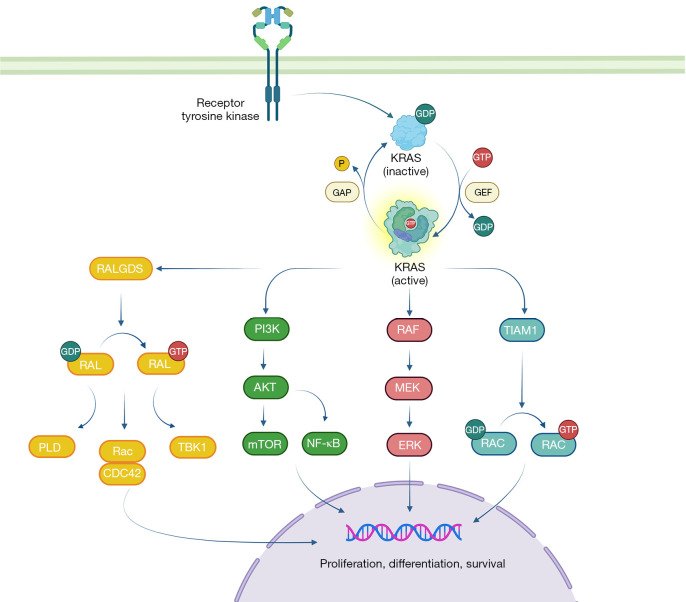
“These two cellular states result from activation by guanine exchange factors (GEFs), such as son of sevenless (SOS), that catalyze the loading of GTP, and inactivation by GTP hydrolysis enhanced by GTPase-activating proteins (GAP), such as neurofibromin 1 (NF1) (15,16,29).”
BackgroundInfluentialGEFs and GAPs: Critical Elements in the Control of Small G Proteins
Bos, J. L., Rehmann, H., & Wittinghofer, A. (2007) · Cell · doi:10.1016/j.cell.2007.05.018 · Cited by 1,903 · cited 4×
“Other differences in co-mutated gene include U2AF1, most frequently mutated in KRAS G12other and NF1 in KRAS G13 than in other KRAS mutation subtypes (39).”
BackgroundInfluentialRAS oncogenes: the first 30 years
Malumbres, M., & Barbacid, M. (2003) · Nature Reviews Cancer · doi:10.1038/nrc1097 · Cited by 1,902 · cited 1×
“21037/tlcr-22-639 multiple signaling pathways involved in cell proliferation, differentiation and survival (15,21,22).”
BackgroundSotorasib for Lung Cancers with KRAS p.G12C Mutation
Skoulidis, F., Li, B. T., Dy, G. K., Price, T. J., Falchook, G. S., Wolf, J., Italiano, A., Schuler, M., Borghaei, H., Barlesi, F., et al. (2021) · New England Journal of Medicine · doi:10.1056/nejmoa2103695 · Cited by 1,849 · cited 3×
“Among patients harboring KEAP1 mutations, a response was seen in 23% of those in the subgroup with mutations in both STK11 and KEAP1, and 14% in the subgroup with wild-type STK11 and mutated KEAP1 (72).”
BackgroundMethodInfluentialRAS oncogenes: weaving a tumorigenic web
Pylayeva-Gupta, Y., Grabocka, E., & Bar-Sagi, D. (2011) · Nature Reviews Cancer · doi:10.1038/nrc3106 · Cited by 1,789 · cited 1×
“21037/tlcr-22-639 multiple signaling pathways involved in cell proliferation, differentiation and survival (15,21,22).”
BackgroundKRAS G12C Inhibition with Sotorasib in Advanced Solid Tumors
Hong, D. S., Fakih, M. G., Strickler, J. H., Desai, J., Durm, G. A., Shapiro, G. I., Falchook, G. S., Price, T. J., Sacher, A., Denlinger, C. S., et al. (2020) · New England Journal of Medicine · doi:10.1056/nejmoa1917239 · Cited by 1,733
STK11/LKB1 Mutations and PD-1 Inhibitor Resistance in KRAS -Mutant Lung Adenocarcinoma
Skoulidis, F., Goldberg, M. E., Greenawalt, D. M., Hellmann, M. D., Awad, M. M., Gainor, J. F., Schrock, A. B., Hartmaier, R. J., Trabucco, S. E., Gay, L., et al. (2018) · Cancer Discovery · doi:10.1158/2159-8290.cd-18-0099 · Cited by 1,641 · cited 3×
“Skoulidis F, Goldberg ME, Greenawalt DM, et al. STK11/LKB1 Mutations and PD-1 Inhibitor Resistance in KRAS-Mutant Lung Adenocarcinoma.”
BackgroundHallin, J., Engstrom, L. D., Hargis, L., Calinisan, A., Aranda, R., Briere, D. M., Sudhakar, N., Bowcut, V., Baer, B. R., Ballard, J. A., et al. (2020) · Cancer Discovery · doi:10.1158/2159-8290.cd-19-1167 · Cited by 1,304 · cited 1×
“In preclinical studies, adagrasib potently inhibited KRAS-dependent signal transduction and cancer cell viability selectively in KRAS G12C cell lines and demonstrated pronounced anti-tumor activity across multiple KRAS G12C-positive cell line- and patientderived xenograft models (75).”
BackgroundAcquired Resistance to KRAS G12C Inhibition in Cancer
Awad, M. M., Liu, S., Rybkin, I. I., Arbour, K. C., Dilly, J., Zhu, V. W., Johnson, M. L., Heist, R. S., Patil, T., Riely, G. J., et al. (2021) · New England Journal of Medicine · doi:10.1056/nejmoa2105281 · Cited by 1,247
Genomic Landscape of Non-Small Cell Lung Cancer in Smokers and Never-Smokers
Govindan, R., Ding, L., Griffith, M., Subramanian, J., Dees, N. D., Kanchi, K. L., Maher, C. A., Fulton, R., Fulton, L., Wallis, J., et al. (2012) · Cell · doi:10.1016/j.cell.2012.08.024 · Cited by 1,146
The Frequency of Ras Mutations in Cancer
Prior, I. A., Hood, F. E., & Hartley, J. L. (2020) · Cancer Research · doi:10.1158/0008-5472.can-19-3682 · Cited by 1,130 · cited 8×
“KRAS mutations are mainly represented by single-base missense mutations, almost all clustering in three hotspots at codon 12, 13, and 61 (10,11).”
BackgroundInfluentialKRAS Mutation: From Undruggable to Druggable in Cancer
Huang, L., Guo, Z., Wang, F., & Fu, L. (2021) · Signal Transduction and Targeted Therapy · doi:10.1038/s41392-021-00780-4 · Cited by 1,127 · cited 12×
“21037/tlcr-22-639 affecting tumor progression and anti-tumor immune response (19,51).”
BackgroundInfluentialRAS-targeted therapies: is the undruggable drugged?
Moore, A. R., Rosenberg, S. C., McCormick, F., & Malek, S. (2020) · Nature Reviews Drug Discovery · doi:10.1038/s41573-020-0068-6 · Cited by 1,103
Adagrasib in Non–Small-Cell Lung Cancer Harboring a KRAS G12C Mutation
Jänne, P. A., Riely, G. J., Gadgeel, S. M., Heist, R. S., Ou, S.-H. I., Pacheco, J. M., Johnson, M. L., Sabari, J. K., Leventakos, K., Yau, E., et al. (2022) · New England Journal of Medicine · doi:10.1056/nejmoa2204619 · Cited by 1,061
Co-occurring genomic alterations in non-small-cell lung cancer biology and therapy
Skoulidis, F., & Heymach, J. V. (2019) · Nature Reviews Cancer · doi:10.1038/s41568-019-0179-8 · Cited by 1,019 · cited 3×
“It has been suggested that STK11/KEAP1 mutations could have negative impact on responses to immune checkpoint inhibitors (ICIs) due to the association with a ‘cold’ immune TME, characterized by a lower PD-L1 expression and levels of tumor-infiltrating lymphocytes (TILs) (53,54).”
BackgroundRAS isoforms and mutations in cancer at a glance
Hobbs, G. A., Der, C. J., & Rossman, K. L. (2016) · Journal of Cell Science · doi:10.1242/jcs.182873 · Cited by 973 · cited 1×
“The frequency and type of mutation vary by tissue type, suggesting the presence of specific local factors that may conditionate RAS-dependent oncogenesis in distinct cancers (11,34).”
BackgroundSkoulidis, F., Byers, L. A., Diao, L., Papadimitrakopoulou, V. A., Tong, P., Izzo, J., Behrens, C., Kadara, H., Parra, E. R., Canales, J. R., et al. (2015) · Cancer Discovery · doi:10.1158/2159-8290.cd-14-1236 · Cited by 936 · cited 2×
“It has been suggested that STK11/KEAP1 mutations could have negative impact on responses to immune checkpoint inhibitors (ICIs) due to the association with a ‘cold’ immune TME, characterized by a lower PD-L1 expression and levels of tumor-infiltrating lymphocytes (TILs) (53,54).”
BackgroundLindeman, N. I., Cagle, P. T., Aisner, D. L., Arcila, M. E., Beasley, M. B., Bernicker, E. H., Colasacco, C., Dacic, S., Hirsch, F. R., Kerr, K., et al. (2018) · Archives of Pathology & Laboratory Medicine · doi:10.5858/arpa.2017-0388-cp · Cited by 936
Biochemical and Structural Analysis of Common Cancer-Associated KRAS Mutations
Hunter, J. C., Manandhar, A., Carrasco, M. A., Gurbani, D., Gondi, S., & Westover, K. D. (2015) · Molecular Cancer Research · doi:10.1158/1541-7786.mcr-15-0203 · Cited by 786 · cited 2×
“, the KRAS G12C has been associated with a higher intrinsic hydrolysis rate relative to other mutants (44).”
BackgroundIdentification of MRTX1133, a Noncovalent, Potent, and Selective KRAS G12D Inhibitor
Wang, X., Allen, S., Blake, J. F., Bowcut, V., Briere, D. M., Calinisan, A., Dahlke, J. R., Fell, J. B., Fischer, J. P., Gunn, R. J., et al. (2022) · Journal of Medicinal Chemistry · doi:10.1021/acs.jmedchem.1c01688 · Cited by 769 · cited 2×
“See references (80-84) for detailed description of acquired”
BackgroundDiscovery of a Covalent Inhibitor of KRAS G12C (AMG 510) for the Treatment of Solid Tumors
Lanman, B. A., Allen, J. R., Allen, J. G., Amegadzie, A. K., Ashton, K. S., Booker, S. K., Chen, J. J., Chen, N., Frohn, M. J., Goodman, G., et al. (2020) · Journal of Medicinal Chemistry · doi:10.1021/acs.jmedchem.9b01180 · Cited by 765
Selective inhibition of oncogenic KRAS output with small molecules targeting the inactive state
Patricelli, M. P., Janes, M. R., Li, L.-S., Hansen, R., Peters, U., Kessler, L. V., Chen, Y., Kucharski, J. M., Feng, J., Ely, T., et al. (2016) · Cancer Discovery · doi:10.1158/2159-8290.cd-15-1105 · Cited by 759 · cited 3×
“Modification and optimization of the first compounds, led to the development of a series of mutant-specific compounds, including ARS-853 and ARS1620 (67,68), tested in preclinical trials and more active inhibitors, including AMG510 and MRTX849, that entered in clinical studies (16-19).”
BackgroundAllele-specific inhibitors inactivate mutant KRAS G12C by a trapping mechanism
Lito, P., Solomon, M., Li, L.-S., Hansen, R., & Rosen, N. (2016) · Science · doi:10.1126/science.aad6204 · Cited by 691
Jänne, P. A., Shaw, A. T., Pereira, J. R., Jeannin, G., Vansteenkiste, J., Barrios, C., Franke, F. A., Grinsted, L., Zazulina, V., Smith, P., et al. (2013) · The Lancet Oncology · doi:10.1016/s1470-2045(12)70489-8 · Cited by 655
Dearden, S., Stevens, J., Wu, Y.-L., & Blowers, D. (2013) · Annals of Oncology · doi:10.1093/annonc/mdt205 · Cited by 646
Lindeman, N. I., Cagle, P. T., Aisner, D. L., Arcila, M. E., Beasley, M. B., Bernicker, E. H., Colasacco, C., Dacic, S., Hirsch, F. R., Kerr, K., et al. (2018) · Journal of Thoracic Oncology · doi:10.1016/j.jtho.2017.12.001 · Cited by 645
Jordan, E. J., Kim, H. R., Arcila, M. E., Barron, D., Chakravarty, D., Gao, J., Chang, M. T., Ni, A., Kundra, R., Jonsson, P., et al. (2017) · Cancer Discovery · doi:10.1158/2159-8290.cd-16-1337 · Cited by 643
Dogan, S., Shen, R., Ang, D. C., Johnson, M. L., D'Angelo, S. P., Paik, P. K., Brzostowski, E. B., Riely, G. J., Kris, M. G., Zakowski, M. F., et al. (2012) · Clinical Cancer Research · doi:10.1158/1078-0432.ccr-11-3265 · Cited by 639 · cited 3×
“In large studies, the KRAS G12C represented the 40–41% of all KRAS mutations in NSCLC patients (12,35,39), followed by G12V and G12D.”
BackgroundRapid non-uniform adaptation to conformation-specific KRAS(G12C) inhibition
Xue, J. Y., Zhao, Y., Aronowitz, J., Mai, T. T., Vides, A., Qeriqi, B., Kim, D., Li, C., de Stanchina, E., Mazutis, L., et al. (2020) · Nature · doi:10.1038/s41586-019-1884-x · Cited by 543 · cited 2×
“Concomitant inhibition of KRAS G12C and EGFR signaling, either by targeting EGFR or SHP2, attenuated this adaptive reactivation of GTP-KRAS (91).”
BackgroundIhle, N. T., Byers, L. A., Kim, E. S., Saintigny, P., Lee, J. J., Blumenschein, G. R., Tsao, A., Liu, S., Larsen, J. E., Wang, J., et al. (2012) · JNCI: Journal of the National Cancer Institute · doi:10.1093/jnci/djr523 · Cited by 532
Tanaka, N., Lin, J. J., Li, C., Ryan, M. B., Zhang, J., Kiedrowski, L. A., Michel, A. G., Syed, M. U., Fella, K. A., Sakhi, M., et al. (2021) · Cancer Discovery · doi:10.1158/2159-8290.cd-21-0365 · Cited by 527 · cited 4×
“Moreover, this class of drugs may be effective in overcoming some type of acquired resistance mechanisms, as demonstrated by the ability of RM-018 to bind and inhibit mutant KRAS with secondary Y96D mutation conferring resistance to different KRAS G12C inhibitors binding the GDP-state, including adagrasib, in patientd…”
BackgroundInfluentialTargeting the MAPK pathway in KRAS-driven tumors
Drosten, M., & Barbacid, M. (2020) · Cancer Cell · doi:10.1016/j.ccell.2020.03.013 · Cited by 512 · cited 3×
“Transl Lung Cancer Res 2023;12(2):346-368 | https://dx.doi.org/10.21037/tlcr-22-639 phospholipase C-ε (PLCε) (16,19,30).”
InfluentialVertical Pathway Inhibition Overcomes Adaptive Feedback Resistance to KRASG12C Inhibition
Ryan, M. B., Fece de la Cruz, F., Phat, S., Myers, D. T., Wong, E., Shahzade, H. A., Hong, C. B., & Corcoran, R. B. (2020) · Clinical Cancer Research · doi:10.1158/1078-0432.ccr-19-3523 · Cited by 496 · cited 2×
“Of note, inhibition of SHP2, which mediates signaling from multiple RTKs to RAS, abrogated this feedback reactivation, and combined KRAS G12C/ SHP2 inhibition drove sustained RAS pathway suppression and improved efficacy in vitro and in vivo (88).”
BackgroundDiverse alterations associated with resistance to KRAS(G12C) inhibition
Zhao, Y., Murciano-Goroff, Y. R., Xue, J. Y., Ang, A., Lucas, J., Mai, T. T., Da Cruz Paula, A. F., Saiki, A. Y., Mohn, D., Achanta, P., et al. (2021) · Nature · doi:10.1038/s41586-021-04065-2 · Cited by 479 · cited 1×
“Of note, targeted inhibition of ERK signaling intermediates enhanced the antiproliferative effect of G12C inhibitor treatment in models with acquired RAS or BRAF mutations (94).”
BackgroundArbour, K. C., Jordan, E., Kim, H. R., Dienstag, J., Yu, H. A., Sanchez-Vega, F., Lito, P., Berger, M., Solit, D. B., Hellmann, M., et al. (2018) · Clinical Cancer Research · doi:10.1158/1078-0432.ccr-17-1841 · Cited by 466
Hanna, N. H., Schneider, B. J., Temin, S., Baker, S., Brahmer, J., Ellis, P. M., Gaspar, L. E., Haddad, R. Y., Hesketh, P. J., Jain, D., et al. (2020) · Journal of Clinical Oncology · doi:10.1200/jco.19.03022 · Cited by 456
Self-citationFat1 deletion promotes hybrid EMT state, tumour stemness and metastasis
Pastushenko, I., Mauri, F., Song, Y., de Cock, F., Meeusen, B., Swedlund, B., Impens, F., Van Haver, D., Opitz, M., Thery, M., et al. (2021) · Nature · doi:10.1038/s41586-020-03046-1 · Cited by 429
Ricciuti, B., Arbour, K. C., Lin, J. J., Vajdi, A., Vokes, N., Hong, L., Zhang, J., Tolstorukov, M. Y., Li, Y. Y., Spurr, L. F., et al. (2022) · Journal of Thoracic Oncology · doi:10.1016/j.jtho.2021.10.013 · Cited by 394
Hillig, R. C., Sautier, B., Schroeder, J., Moosmayer, D., Hilpmann, A., Stegmann, C. M., Werbeck, N. D., Briem, H., Boemer, U., Weiske, J., et al. (2019) · Proceedings of the National Academy of Sciences · doi:10.1073/pnas.1812963116 · Cited by 388
A model for RAS mutation patterns in cancers: finding the sweet spot
Li, S., Balmain, A., & Counter, C. M. (2018) · Nature Reviews Cancer · doi:10.1038/s41568-018-0076-6 · Cited by 384 · cited 4×
“Indeed, in lung cancer, in which KRAS-activating mutation is the most prevalent oncogenic driver (20–30% of cases), the dominant substitution is G12C (glycine to cysteine), whereas G12D being the most common mutation in pancreatic and CRC (11-13).”
BackgroundInfluentialMutant KRAS-driven cancers depend on PTPN11/SHP2 phosphatase
Ruess, D. A., Heynen, G. J., Ciecielski, K. J., Ai, J., Berninger, A., Kabacaoglu, D., Görgülü, K., Dantes, Z., Wörmann, S. M., Diakopoulos, K. N., et al. (2018) · Nature Medicine · doi:10.1038/s41591-018-0024-8 · Cited by 370
Targeting RAS Membrane Association: Back to the Future for Anti-RAS Drug Discovery?
Cox, A. D., Der, C. J., & Philips, M. R. (2015) · Clinical Cancer Research · doi:10.1158/1078-0432.ccr-14-3214 · Cited by 351
Expanding the Reach of Precision Oncology by Drugging All KRAS Mutants
Hofmann, M. H., Gerlach, D., Misale, S., Petronczki, M., & Kraut, N. (2022) · Cancer Discovery · doi:10.1158/2159-8290.cd-21-1331 · Cited by 336 · cited 2×
“See references (80-84) for detailed description of acquired”
BackgroundOu, S.-H. I., Jänne, P. A., Leal, T. A., Rybkin, I. I., Sabari, J. K., Barve, M. A., Bazhenova, L., Johnson, M. L., Velastegui, K. L., Cilliers, C., et al. (2022) · Journal of Clinical Oncology · doi:10.1200/jco.21.02752 · Cited by 322 · cited 1×
“The most common grade 3-4 TRAE was fatigue (15%) (77).”
BackgroundCrystal structure of human KRAS G12C covalently bound to a phthalazine inhibitor: 6pgo
Mohr, C. (2019) · Worldwide Protein Data Bank · doi:10.2210/pdb6pgo/pdb · Cited by 314
KRAS-Mutant non-small cell lung cancer: From biology to therapy
Ferrer, I., Zugazagoitia, J., Herbertz, S., John, W., Paz-Ares, L., & Schmid-Bindert, G. (2018) · Lung Cancer · doi:10.1016/j.lungcan.2018.07.013 · Cited by 311
Sun, C., Hobor, S., Bertotti, A., Zecchin, D., Huang, S., Galimi, F., Cottino, F., Prahallad, A., Grernrum, W., Tzani, A., et al. (2014) · Cell Reports · doi:10.1016/j.celrep.2014.02.045 · Cited by 304
Hanna, N. H., Robinson, A. G., Temin, S., Baker, S., Brahmer, J. R., Ellis, P. M., Gaspar, L. E., Haddad, R. Y., Hesketh, P. J., Jain, D., et al. (2021) · Journal of Clinical Oncology · doi:10.1200/jco.20.03570 · Cited by 300
Self-citationKoga, T., Suda, K., Fujino, T., Ohara, S., Hamada, A., Nishino, M., Chiba, M., Shimoji, M., Takemoto, T., Arita, T., et al. (2021) · Journal of Thoracic Oncology · doi:10.1016/j.jtho.2021.04.015 · Cited by 265 · cited 2×
“generated a total of 142 cell clones resistant to sotorasib and adagrasib, of which 124 harbored secondary KRAS mutations potentially responsible for resistance (92).”
BackgroundK-ras Mutation Subtypes in NSCLC and Associated Co-occuring Mutations in Other Oncogenic Pathways
Scheffler, M., Ihle, M. A., Hein, R., Merkelbach-Bruse, S., Scheel, A. H., Siemanowski, J., Brägelmann, J., Kron, A., Abedpour, N., Ueckeroth, F., et al. (2019) · Journal of Thoracic Oncology · doi:10.1016/j.jtho.2018.12.013 · Cited by 264 · cited 1×
“Patients with Q61X mutations showed the highest prevalence of BRAF mutations (55).”
BackgroundKRAS G12C NSCLC Models Are Sensitive to Direct Targeting of KRAS in Combination with PI3K Inhibition
Misale, S., Fatherree, J. P., Cortez, E., Li, C., Bilton, S., Timonina, D., Myers, D. T., Lee, D., Gomez-Caraballo, M., Greenberg, M., et al. (2019) · Clinical Cancer Research · doi:10.1158/1078-0432.ccr-18-0368 · Cited by 259 · cited 13×
“A heterogenous response to ARS-1620 was observed in a panel of 8 KRAS-G12C cell lines in both 2D and 3D cultures.”
BackgroundInfluentialA Comparative Analysis of Individual RAS Mutations in Cancer Biology
Muñoz-Maldonado, C., Zimmer, Y., & Medová, M. (2019) · Frontiers in Oncology · doi:10.3389/fonc.2019.01088 · Cited by 254
Inhibition of SHP2-mediated dephosphorylation of Ras suppresses oncogenesis
Bunda, S., Burrell, K., Heir, P., Zeng, L., Alamsahebpour, A., Kano, Y., Raught, B., Zhang, Z.-Y., Zadeh, G., & Ohh, M. (2015) · Nature Communications · doi:10.1038/ncomms9859 · Cited by 249 · cited 1×
“Furthermore, SHP2 can activate KRAS through dephosphorylation of some regulatory molecules, including p120GAP (19,31,32).”
BackgroundAdachi, Y., Ito, K., Hayashi, Y., Kimura, R., Tan, T. Z., Yamaguchi, R., & Ebi, H. (2020) · Clinical Cancer Research · doi:10.1158/1078-0432.ccr-20-2077 · Cited by 249
Targeting KRAS(G12C): From Inhibitory Mechanism to Modulation of Antitumor Effects in Patients
Kim, D., Xue, J. Y., & Lito, P. (2020) · Cell · doi:10.1016/j.cell.2020.09.044 · Cited by 239 · cited 6×
“Recent preclinical and clinical studies have returned encouraging results for target therapy in KRAS G12Cmutant-NSCLC by development of covalent, irreversible inhibitors (16-19), that will be discussed in the next paragraphs.”
BackgroundInfluentialEl Osta, B., Behera, M., Kim, S., Berry, L. D., Sica, G., Pillai, R. N., Owonikoko, T. K., Kris, M. G., Johnson, B. E., Kwiatkowski, D. J., et al. (2019) · Journal of Thoracic Oncology · doi:10.1016/j.jtho.2019.01.020 · Cited by 232
K-Ras4A splice variant is widely expressed in cancer and uses a hybrid membrane-targeting motif
Tsai, F. D., Lopes, M. S., Zhou, M., Court, H., Ponce, O., Fiordalisi, J. J., Gierut, J. J., Cox, A. D., Haigis, K. M., & Philips, M. R. (2015) · Proceedings of the National Academy of Sciences · doi:10.1073/pnas.1412811112 · Cited by 226
Development of combination therapies to maximize the impact of KRAS-G12C inhibitors in lung cancer
Molina-Arcas, M., Moore, C., Rana, S., van Maldegem, F., Mugarza, E., Romero-Clavijo, P., Herbert, E., Horswell, S., Li, L.-S., Janes, M. R., et al. (2019) · Science Translational Medicine · doi:10.1126/scitranslmed.aaw7999 · Cited by 203 · cited 3×
“showed that combination of IGF1R with mTOR inhibitors caused a strong inhibition of PI3K/AKT and mTOR pathways (90).”
BackgroundCharacterization of KRAS Mutation Subtypes in Non–small Cell Lung Cancer
Judd, J., Abdel Karim, N., Khan, H., Naqash, A. R., Baca, Y., Xiu, J., VanderWalde, A. M., Mamdani, H., Raez, L. E., Nagasaka, M., et al. (2021) · Molecular Cancer Therapeutics · doi:10.1158/1535-7163.mct-21-0201 · Cited by 194
Kinase-mediated RAS signaling via membraneless cytoplasmic protein granules
Tulpule, A., Guan, J., Neel, D. S., Allegakoen, H. R., Lin, Y. P., Brown, D., Chou, Y.-T., Heslin, A., Chatterjee, N., Perati, S., et al. (2021) · Cell · doi:10.1016/j.cell.2021.03.031 · Cited by 189 · cited 1×
“, echinoderm microtubule-associated protein-like 4 (EML4)-ALK] assembly into membrane-free cytoplasmic protein granules, which act as subcellular platform to coordinate local activation of RAS and downstream pathway independently of the lipid membrane (33).”
BackgroundKitai, H., Ebi, H., Tomida, S., Floros, K. V., Kotani, H., Adachi, Y., Oizumi, S., Nishimura, M., Faber, A. C., & Yano, S. (2016) · Cancer Discovery · doi:10.1158/2159-8290.cd-15-1377 · Cited by 162
MEK inhibition induces MYOG and remodels super-enhancers in RAS-driven rhabdomyosarcoma
Yohe, M. E., Gryder, B. E., Shern, J. F., Song, Y. K., Chou, H.-C., Sindiri, S., Mendoza, A., Patidar, R., Zhang, X., Guha, R., et al. (2018) · Science Translational Medicine · doi:10.1126/scitranslmed.aan4470 · Cited by 145
GEFs and GAPs: Critical Elements in the Control of Small G Proteins
Bos, J. L., Rehmann, H., & Wittinghofer, A. (2007) · Cell · doi:10.1016/j.cell.2007.07.001 · Cited by 140
Therapy for Stage IV Non–Small-Cell Lung Cancer Without Driver Alterations: ASCO Living Guideline
Singh, N., Temin, S., Baker, S., Blanchard, E. M., Brahmer, J. R., Celano, P., Duma, N., Ellis, P. M., Elkins, I. B., Haddad, R. Y., et al. (2022) · Journal of Clinical Oncology · doi:10.1200/jco.22.00825 · Cited by 138
Self-citationPrognostic Impact of KRAS Mutation Subtypes in 677 Patients with Metastatic Lung Adenocarcinomas
Yu, H. A., Sima, C. S., Shen, R., Kass, S., Gainor, J., Shaw, A., Hames, M., Iams, W., Aston, J., Lovly, C. M., et al. (2015) · Journal of Thoracic Oncology · doi:10.1097/jto.0000000000000432 · Cited by 137
Antitumor Activity in RAS -Driven Tumors by Blocking AKT and MEK
Tolcher, A. W., Khan, K., Ong, M., Banerji, U., Papadimitrakopoulou, V., Gandara, D. R., Patnaik, A., Baird, R. D., Olmos, D., Garrett, C. R., et al. (2015) · Clinical Cancer Research · doi:10.1158/1078-0432.ccr-14-1901 · Cited by 137
Sabari, J. K., Velcheti, V., Shimizu, K., Strickland, M. R., Heist, R. S., Singh, M., Nayyar, N., Giobbie-Hurder, A., Digumarthy, S. R., Gainor, J. F., et al. (2022) · Clinical Cancer Research · doi:10.1158/1078-0432.ccr-22-0383 · Cited by 135
KRAS G13D sensitivity to neurofibromin-mediated GTP hydrolysis
Rabara, D., Tran, T. H., Dharmaiah, S., Stephens, R. M., McCormick, F., Simanshu, D. K., & Holderfield, M. (2019) · Proceedings of the National Academy of Sciences · doi:10.1073/pnas.1908353116 · Cited by 128 · cited 1×
“Moreover, KRAS mutations at codons 12 and 61 have been shown to be insensitive to NF1 GAP-mediated hydrolysis (48).”
BackgroundAfatinib restrains K-RAS–driven lung tumorigenesis
Moll, H. P., Pranz, K., Musteanu, M., Grabner, B., Hruschka, N., Mohrherr, J., Aigner, P., Stiedl, P., Brcic, L., Laszlo, V., et al. (2018) · Science Translational Medicine · doi:10.1126/scitranslmed.aao2301 · Cited by 125
Kerr, D. L., Haderk, F., & Bivona, T. G. (2021) · Current Opinion in Chemical Biology · doi:10.1016/j.cbpa.2020.11.007 · Cited by 124 · cited 1×
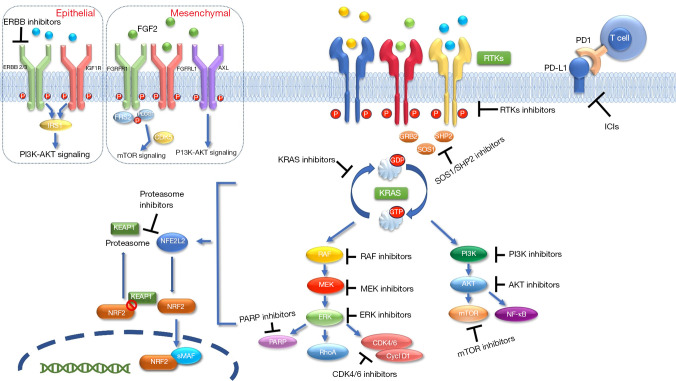
“SHP2 inhibitors stabilize the auto-inhibited conformation of the enzyme and thereby disrupt SOS1mediated nucleotide exchange of KRAS and may have immunomodulatory effects in T cells and macrophages to elicit antitumor immune responses (97).”
BackgroundBiernacka, A., Tsongalis, P. D., Peterson, J. D., de Abreu, F. B., Black, C. C., Gutmann, E. J., Liu, X., Tafe, L. J., Amos, C. I., & Tsongalis, G. J. (2016) · Cancer Genetics · doi:10.1016/j.cancergen.2016.03.001 · Cited by 120
Therapy for Stage IV Non–Small-Cell Lung Cancer With Driver Alterations: ASCO Living Guideline
Singh, N., Temin, S., Baker, S., Blanchard, E. M., Brahmer, J. R., Celano, P., Duma, N., Ellis, P. M., Elkins, I. B., Haddad, R. Y., et al. (2022) · Journal of Clinical Oncology · doi:10.1200/jco.22.00824 · Cited by 118
Self-citationNon-Small-Cell Lung Cancer Signaling Pathways, Metabolism, and PD-1/PD-L1 Antibodies
Santarpía, M., Aguilar, A., CHAIB-OUKADOUR, I., Cardona, A. F., Fancelli, S., Laguía, F., Bracht, J. W. P., Cao, P., Molina‐Vila, M. Á., Karachaliou, N., et al. (2020) · Cancers · doi:10.3390/cancers12061475 · Cited by 117
Self-citationThe ERBB network facilitates KRAS-driven lung tumorigenesis
Kruspig, B., Monteverde, T., Neidler, S., Hock, A., Kerr, E., Nixon, C., Clark, W., Hedley, A., Laing, S., Coffelt, S. B., et al. (2018) · Science Translational Medicine · doi:10.1126/scitranslmed.aao2565 · Cited by 111 · cited 2×
“Previous studies have shown that either afatinib or neratinib (multi-ERBB inhibitors) suppresses formation of KRAS G12D-driven lung tumors and inhibition of the ERBB3 network enhances the therapeutic benefit of MEK inhibition (87,117).”
BackgroundLi, B. T., Falchook, G. S., Durm, G. A., Burns, T. F., Skoulidis, F., Ramalingam, S. S., Spira, A. I., Bestvina, C. M., Goldberg, S. B., Veluswamy, R., et al. (2022) · Journal of Thoracic Oncology · doi:10.1016/j.jtho.2022.07.025 · Cited by 110
Cell Type–Specific Adaptive Signaling Responses to KRASG12C Inhibition
Solanki, H. S., Welsh, E. A., Fang, B., Izumi, V., Darville, L., Stone, B., Franzese, R., Chavan, S., Kinose, F., Imbody, D., et al. (2021) · Clinical Cancer Research · doi:10.1158/1078-0432.ccr-20-3872 · Cited by 106 · cited 16×
“The data support that HER2/HER3 signaling is associated with an epithelial subtype related to co-treatment activity with a KRAS G12C inhibitor plus a pan-HER inhibitor (96).”
BackgroundResultInfluentialSTK11/LKB1 and KEAP1 mutations in non-small cell lung cancer: Prognostic rather than predictive?
Di Federico, A., De Giglio, A., Parisi, C., & Gelsomino, F. (2021) · European Journal of Cancer · doi:10.1016/j.ejca.2021.08.011 · Cited by 105
Synthetic Lethal Interaction of SHOC2 Depletion with MEK Inhibition in RAS-Driven Cancers
Sulahian, R., Kwon, J. J., Walsh, K. H., Pailler, E., Bosse, T. L., Thaker, M., Almanza, D., Dempster, J. M., Pan, J., Piccioni, F., et al. (2019) · Cell Reports · doi:10.1016/j.celrep.2019.08.090 · Cited by 90
Kras and tumor immunity: friend or foe?
Cullis, J., Das, S., & Bar-Sagi, D. (2018) · Cold Spring Harbor Perspectives in Medicine · doi:10.1101/cshperspect.a031849 · Cited by 85
Comprehensive molecular profiling of lung adenocarcinoma
Lander, E. S. (2014) · DSpace@MIT (Massachusetts Institute of Technology) · Cited by 84
Palmitoylation as a Key Regulator of Ras Localization and Function
Busquets-Hernández, C., & Triola, G. (2021) · Frontiers in Molecular Biosciences · doi:10.3389/fmolb.2021.659861 · Cited by 81
Jones, G. G., del Río, I. B., Sari, S., Sekerim, A., Young, L. C., Hartig, N., Areso Zubiaur, I., El-Bahrawy, M. A., Hynds, R. E., Lei, W., et al. (2019) · Nature Communications · doi:10.1038/s41467-019-10367-x · Cited by 80
Brana, I., Shapiro, G., Johnson, M. L., Yu, H. A., Robbrecht, D., Tan, D. S.-W., Siu, L. L., Minami, H., Steeghs, N., Hengelage, T., et al. (2021) · Journal of Clinical Oncology · doi:10.1200/jco.2021.39.15_suppl.3005 · Cited by 79
Pharmacological Induction of RAS-GTP Confers RAF Inhibitor Sensitivity in KRAS Mutant Tumors
Yen, I., Shanahan, F., Merchant, M., Orr, C., Hunsaker, T., Durk, M., La, H., Zhang, X., Martin, S. E., Lin, E., et al. (2018) · Cancer Cell · doi:10.1016/j.ccell.2018.09.002 · Cited by 78
The New Antitumor Drug ABTL0812 Inhibits the Akt/mTORC1 Axis by Upregulating Tribbles-3 Pseudokinase
Erazo, T., Lorente, M., López-Plana, A., Muñoz-Guardiola, P., Fernández-Nogueira, P., García-Martínez, J. A., Bragado, P., Fuster, G., Salazar, M., Espadaler, J., et al. (2016) · Clinical Cancer Research · doi:10.1158/1078-0432.ccr-15-1808 · Cited by 76
Nagasaka, M., Potugari, B., Nguyen, A., Sukari, A., Azmi, A. S., & Ou, S.-H. I. (2021) · Cancer Treatment Reviews · doi:10.1016/j.ctrv.2021.102309 · Cited by 76
Ou, S. I., Koczywas, M., Ulahannan, S., Janne, P., Pacheco, J., Burris, H., McCoach, C., Wang, J. S., Gordon, M., Haura, E., et al. (2020) · Journal of Thoracic Oncology · doi:10.1016/j.jtho.2019.12.041 · Cited by 73
Plowman, S. J., Berry, R. L., Bader, S. A., Luo, F., Arends, M. J., Harrison, D. J., Hooper, M. L., & Patek, C. E. (2006) · PubMed · Cited by 69
Affinity of guanine nucleotide binding proteins for their ligands: facts and artefacts
Goody, R. S., Frech, M., & Wittinghofer, A. (1991) · Trends in Biochemical Sciences · doi:10.1016/0968-0004(91)90134-h · Cited by 68
Santarpia, M., Massafra, M., Gebbia, V., D’Aquino, A., Garipoli, C., Altavilla, G., & Rosell, R. (2021) · Translational Lung Cancer Research · doi:10.21037/tlcr-20-1113 · Cited by 68
Self-citationCytoplasmic protein granules organize kinase-mediated RAS signalingPreprint
Tulpule, A., Guan, J., Neel, D. S., Lin, Y., Heslin, A., Allegakoen, H. R., Perati, S., Ramirez, A. D., Shi, X.-Y., Yang, B., et al. (2019) · bioRxiv · doi:10.1101/704312 · Cited by 63
SMARCA4 mutations in KRAS ‐mutant lung adenocarcinoma: a multi‐cohort analysis
Liu, L., Ahmed, T., Petty, W. J., Grant, S. C., Ruiz, J., Lycan, T. W., Topaloĝlu, Ü., Chou, P., Miller, L. D., Hawkins, G. A., et al. (2020) · Molecular Oncology · doi:10.1002/1878-0261.12831 · Cited by 60
Sticking it to KRAS: Covalent Inhibitors Enter the Clinic
McCormick, F. (2020) · Cancer Cell · doi:10.1016/j.ccell.2019.12.009 · Cited by 56 · cited 1×
“Therefore, in about 1 hour, 95% the KRAS G12C protein cycles through the GDP-bound state in which it is vulnerable to attack (46).”
BackgroundKRAS G12C mutations in Asia: a landscape analysis of 11,951 Chinese tumor samples
Loong, H. H.-F., Du, N., Cheng, C., Lin, H., Guo, J., Lin, G., Li, M., Jiang, T., Shi, Z., Cui, Y., et al. (2020) · Translational Lung Cancer Research · doi:10.21037/tlcr-20-455 · Cited by 54
SHOC2 complex-driven RAF dimerization selectively contributes to ERK pathway dynamics
Boned del Río, I., Young, L. C., Sari, S., Jones, G. G., Ringham-Terry, B., Hartig, N., Rejnowicz, E., Lei, W., Bhamra, A., Surinova, S., et al. (2019) · Proceedings of the National Academy of Sciences · doi:10.1073/pnas.1902658116 · Cited by 50
Burge, R. A., & Hobbs, G. A. (2022) · Advances in cancer research · doi:10.1016/bs.acr.2021.07.004 · Cited by 48
Intrinsic GTPase activity of K-RAS monitored by native mass spectrometry
Moghadamchargari, Z., Huddleston, J., Shirzadeh, M., Zheng, X., Clemmer, D. E., M. Raushel, F., Russell, D. H., & Laganowsky, A. (2019) · Biochemistry · doi:10.1021/acs.biochem.9b00532 · Cited by 38 · cited 1×
“However, other studies have shown different results in terms of GTP hydrolysis rates for G12C and for other mutant proteins (45,47), suggesting that the activity of GDP-bound KRAS G12C inhibitors does not exclusively rely on this biochemical property.”
ResultGenomic landscape of non-small-cell lung cancer in smokers and never-smokers
Sritharan, N. (2013) · Thorax · doi:10.1136/thoraxjnl-2013-203400 · Cited by 31
Capelletto, E., Bironzo, P., Denis, L. J., Koustenis, A. G., Bungaro, M., & Novello, S. (2022) · Future Oncology · doi:10.2217/fon-2021-1582 · Cited by 28
Identification of KRASG12C Mutations in Circulating Tumor DNA in Patients With Cancer
Thein, K. Z., Biter, A. B., Banks, K. C., Duda, A. W., Saam, J. R., Roszik, J., Jankú, F., Skoulidis, F., Heymach, J. V., Kopetz, S., et al. (2022) · JCO Precision Oncology · doi:10.1200/po.21.00547 · Cited by 26
Rosell, R., Aguilar, A., Pedraz‐Valdunciel, C., & CHAIB-OUKADOUR, I. (2021) · Nature Cancer · doi:10.1038/s43018-021-00289-3 · Cited by 23
Self-citationSacher, A. G., Patel, M. R., Miller, W. H., Desai, J., Garralda, E., Bowyer, S. E., Kim, T. W., Miguel, M. D., Falcón, A., Krebs, M., et al. (2022) · Journal of Thoracic Oncology · doi:10.1016/j.jtho.2022.07.023 · Cited by 22
SHOC2 Is a Critical Modulator of Sensitivity to EGFR–TKIs in Non–Small Cell Lung Cancer Cells
Terai, H., Hamamoto, J., Emoto, K., Masuda, T., Manabe, T., Kuronuma, S., Kobayashi, K., Masuzawa, K., Ikemura, S., Nakayama, S., et al. (2021) · Molecular Cancer Research · doi:10.1158/1541-7786.mcr-20-0664 · Cited by 21
The ERBB network facilitates KRAS-driven lung tumorigenesisPreprint
Kruspig, B., Monteverde, T., Neidler, S., et al. (2018) · bioRxiv (Cold Spring Harbor Laboratory) · doi:10.1101/290700 · Cited by 19
Örd, D., Örd, T., Biene, T., & Örd, T. (2016) · Biochimica et Biophysica Acta (BBA) - Molecular Cell Research · doi:10.1016/j.bbamcr.2016.08.003 · Cited by 19
Splice variants of RAS-translational significance
Rásó, E. (2020) · Cancer and Metastasis Reviews · doi:10.1007/s10555-020-09920-8 · Cited by 19
Roh, J.-I., Lee, J., Sung, Y.-H., Oh, J., Hyeon, D. Y., Kim, Y., Lee, S., Devkota, S., Kim, H. J., Park, B.-M., et al. (2020) · Oncogene · doi:10.1038/s41388-020-01399-5 · Cited by 18
Dy, G. K., Govindan, R., Velcheti, V., Falchook, G. S., Italiano, A., Wolf, J., Sacher, A. G., Takahashi, T., Ramalingam, S. S., Dooms, C., et al. (2022) · Cancer Research · doi:10.1158/1538-7445.am2022-ct008 · Cited by 16
Bressler, K. R., Ross, J. A., Ilnytskyy, S., Dungen, K. V., Taylor, K., Patel, K., Zovoilis, A., Kovalchuk, I., & Thakor, N. (2020) · Cell Stress and Chaperones · doi:10.1007/s12192-020-01174-1 · Cited by 14
Nichols, R. J., Cregg, J., Schulze, C. J., Wang, Z., Yang, K., Jiang, J., Whalen, D. M., Hansen, R., Garrenton, L. S., Bermingham, A., et al. (2021) · Cancer Research · doi:10.1158/1538-7445.am2021-1261 · Cited by 14
Tan, C., Mandell, J. D., Dasari, K., Cannataro, V. L., Alfaro-Murillo, J. A., & Townsend, J. P. (2021) · Lung Cancer · doi:10.1016/j.lungcan.2021.10.008 · Cited by 7
Bracht, J. W. P., Karachaliou, N., Lanman, R. B., Dix, D., Faull, I., Nagy, R. J., Lopez, N. R., Palmero, R., Viteri, S., Majem, M., et al. (2019) · Journal of Clinical Oncology · doi:10.1200/jco.2019.37.15_suppl.9055 · Cited by 2
Self-citation
Cited by
Recent advances in targeting the “undruggable” proteins: from drug discovery to clinical trials
Xie, X., Yu, T., Li, X., Zhang, N., Foster, L. J., Peng, C., Huang, W., & He, G. (2023) · Signal Transduction and Targeted Therapy · doi:10.1038/s41392-023-01589-z · Cited by 396
MYC and KRAS cooperation: from historical challenges to therapeutic opportunities in cancer
Casacuberta‐Serra, S., González-Larreategui, Í., Capitán-Leo, D., & Soucek, L. (2024) · Signal Transduction and Targeted Therapy · doi:10.1038/s41392-024-01907-z · Cited by 100
Advances in Non-Small Cell Lung Cancer: Current Insights and Future Directions
Garg, P., Singhal, S., Kulkarni, P., Horne, D. A., Malhotra, J. D., Salgia, R., & Singhal, S. S. (2024) · Journal of Clinical Medicine · doi:10.3390/jcm13144189 · Cited by 94
Jamalinia, M., & Weiskirchen, R. (2025) · Annals of Translational Medicine · doi:10.21037/atm-25-34 · Cited by 88
Predictive Biomarkers and Resistance Mechanisms of Checkpoint Inhibitors in Malignant Solid Tumors
Pavelescu, L. A., Enache, R. M., Roşu, O. A., Profir, M., Creţoiu, S. M., & Gașpar, B. S. (2024) · International Journal of Molecular Sciences · doi:10.3390/ijms25179659 · Cited by 66
Metadata
- Authors
- Santarpia, M., Ciappina, G., Spagnolo, C. C., Squeri, A., Passalacqua, M. I., Aguilar, A., Gonzalez-Cao, M., Giovannetti, E., Silvestris, N., & Rosell, R.
- Affiliations
- University of Messina (IT)
- Amsterdam University Medical Centers (NL)
- Instituto Oncológico Dr. Rosell (ES)
- Corresponding author
- Rosell, Rafael
- ORCID
- Venue
- Translational Lung Cancer Research
- Publisher
- AME Publishing Company
- Published
- 2023-02
- Volume
- 12
- Issue
- 2
- Pages
- 346-368
- ISSN
- 2218-6751 (ISSN-L)
- 2226-4477
- PMC
- PMC9989806
- OpenAlex
- W4321458456
- Cited by
- 65
- References
- 122
- Citations by year
- 2026: 20 · 2025: 24 · 2024: 10 · 2023: 11
- FWCI
- 3.01
- Type
- journal article
- Language
- en
- Open access
- diamond
- doi.org
- Licence
- cc-by-nc-nd
- Locations
- Translational Lung Cancer Research (publishedVersion, cc-by-nc-nd)
- PubMed Central (publishedVersion, cc-by-nc-nd)
- PubMed (publishedVersion)
- Pure Amsterdam UMC (publishedVersion, cc-by)
- Topics
- Health Sciences › Medicine › Pulmonary and Respiratory Medicine › Lung Cancer Treatments and Mutations
- Life Sciences › Biochemistry, Genetics and Molecular Biology › Molecular Biology › Protein Kinase Regulation and GTPase Signaling
- Life Sciences › Biochemistry, Genetics and Molecular Biology › Cancer Research › Cancer Genomics and Diagnostics
- Keywords
- KRAS G12C mutation, non-small cell lung cancer, KRAS inhibitors, sotorasib, adagrasib, acquired drug resistance, synthetic lethality, combination therapy with immunotherapy, targeted therapy
About these checks
Registry, retraction, Cites and statistics results are computed, not judged, with one exception: a printed reference that no index lists is read once by a model before it counts as a citation error. Claims are extracted by a model and kept only when their quote appears verbatim in the text; each cited source is then checked, with a model’s help, for whether it says what the claim relies on. Those verdicts can be wrong — read the claim’s quote and the cited source before relying on one.
Statistics and arithmetic are recomputed, not judged.
Confidence bands are shown only for fields calibrated on our annotated test set. None is calibrated yet, so no band is shown.
What counts as a claim ›How we measure confidence ›How we check this ›
Are you an author, or do you see a problem with this page? Request a review
Data sources
Bibliographic data: Semantic Scholar, OpenAlex, Crossref.
Contains information from the Semantic Scholar Academic Graph Datasets, made available under the ODC Attribution License (ODC-BY 1.0).
Semantic Scholar’s data is described in: Kinney, R., et al. (2023). The Semantic Scholar Open Data Platform. arXiv:2301.10140.
