

Hamiltonian Simulation by Qubitization
Open accessThe DOI matches its Crossref record; 50 of the 50 references it cites were found in a registry or an index.
Abstract
We present the problem of approximating the time-evolution operatore−iH^tto errorϵ, where the HamiltonianH^=(⟨G|⊗I^)U^(|G⟩⊗I^)is the projection of a unitary oracleU^onto the state|G⟩created by another unitary oracle. Our algorithm solves this with a query complexityO(t+log(1/ϵ))to both oracles that is optimal with respect to all parameters in both the asymptotic and non-asymptotic regime, and also with low overhead, using at most two additional ancilla qubits. This approach to Hamiltonian simulation subsumes important prior art considering Hamiltonians which ared-sparse or a linear combination of unitaries, leading to significant improvements in space and gate complexity, such as a quadratic speed-up for precision simulations. It also motivates useful new instances, such as whereH^is a density matrix. A key technical result is `qubitization', which uses the controlled version of these oracles to embed anyH^in an invariantSU(2)subspace. A large class of operator functions ofH^can then be computed with optimal query complexity, of whiche−iH^tis a special case.
Overview
The claims and statistics of this paper haven’t been checked yet.
Free: it reads the open-access text and checks the first 5 claims that cite a source we can check. Create a free account to check every claim.
Integrity signals
Registry
Cites
Statistics
Figures
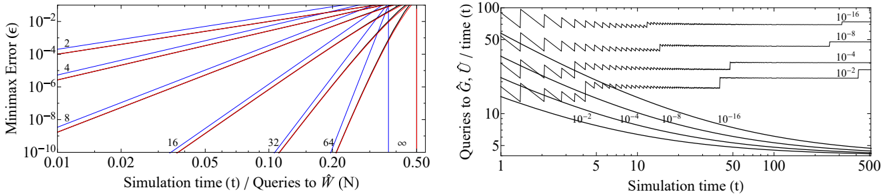
Verification
Claims the paper makes
The claims and statistics of this paper haven’t been checked yet.
Free: it reads the open-access text and checks the first 5 claims that cite a source we can check. Create a free account to check every claim.
Claims other papers make about this one
Each is checked against this paper’s own text: does it say what the citing paper says it does?
In the citing paper
“Trotterization methods are commonly employed, and allow discretization errors that are controlled polynomially in dt, with a number of unitary operations that scales linearly in the number of Hamiltonian terms and simulation time IV .”
From Beyond-classical computation in quantum simulation (2025) · cites this paper as [105]
In the citing paper
“There are many other Hamiltonian simulation methods, an example of a powerful and sophisticated method being qubitization [166] and quantum signal processing [167], which have the provably optimal asymptotic scaling, although it is unclear whether this will translate to better practical applications.”
From The prospects of quantum computing in computational molecular biology (2021) · cites this paper as [166]
Self-check
Percentages, sums and reported differences re-computed from the paper’s own numbers.
The self-check needs the paper’s full text.
Citations
Cites
A fast quantum mechanical algorithm for database search
Grover, L. K. (1996) · Proceedings of the twenty-eighth annual ACM symposium on Theory of computing - STOC '96 · doi:10.1145/237814.237866 · Cited by 8,830 · cited 1×
“After all, (cid:104) G | ˆ S ˆ U ˆ S ˆ U | G (cid:105) = ˆ I implies that ˆ S ˆ U is a reflection when controlled by input state | G (cid:105) , and it is well-known that a Grover iterate [25, 45] is the product of two reflection about start and target subspaces.”
BackgroundQuantum Algorithm for Linear Systems of Equations
Harrow, A. W., Hassidim, A., & Lloyd, S. (2009) · Physical Review Letters · doi:10.1103/physrevlett.103.150502 · Cited by 3,325 · cited 1×
“ralized by Aharonov and Ta-Shma [3] to sparse Hamiltonians. Celebrated achievements over the years [20,8,32,10,33] have each ignited a urry of activity in diverse applications from quantum algorithms [26,19,21,15] to quantum chemistry [46,44,40,41,4,29,39]. In this dawning era of the small quantum computer [5,23], the…”
BackgroundLloyd, S. (1996) · Science · doi:10.1126/science.273.5278.1073 · Cited by 3,088 · cited 2×
“The first explicit quantum algorithms were discovered by Lloyd [31] for local interactions, and then generalized by Aharonov and Ta-Shma [3] to sparse Hamiltonians.”
Method(1964) · doi:10.1115/1.3625776 · Cited by 1,796
Superconducting quantum circuits at the surface code threshold for fault tolerance
Barends, R., Kelly, J., Megrant, A., Veitia, A., Sank, D., Jeffrey, E., White, T. C., Mutus, J., Fowler, A. G., Campbell, B., et al. (2014) · Nature · doi:10.1038/nature13171 · Cited by 1,733
Quantum principal component analysis
Lloyd, S., Mohseni, M., & Rebentrost, P. (2014) · Nature Physics · doi:10.1038/nphys3029 · Cited by 1,385 · cited 2×
“Celebrated achievements over the years [20, 8, 32, 10, 33] have each ignited a flurry of activity in diverse applications from quantum algorithms [26, 19, 21, 15] to quantum chemistry [46, 44, 40, 41, 4, 29, 39].”
BackgroundMethodA computer program for designing optimum FIR linear phase digital filters
McClellan, J., Parks, T., & Rabiner, L. (1973) · IEEE Transactions on Audio and Electroacoustics · doi:10.1109/tau.1973.1162525 · Cited by 1,139 · cited 1×
“We present a systematic framework that furnishes the optimal complexity and a concrete procedure for almost any f and show how an exact connection is made between query complexity and the theory of best function approximations with polynomials [33, 36].”
MethodScalable Quantum Simulation of Molecular Energies
O’Malley, P. J. J., Babbush, R., Kivlichan, I. D., Romero, J., McClean, J. R., Barends, R., Kelly, J., Roushan, P., Tranter, A., Ding, N., et al. (2016) · Physical Review X · doi:10.1103/physrevx.6.031007 · Cited by 1,059 · cited 1×
“Celebrated achievements over the years [3–7] have each ignited a flurry of activity in diverse applications from quantum algorithms [8–11] to quantum chemistry [12–18].”
BackgroundExponential algorithmic speedup by a quantum walk
Childs, A. M., Cleve, R., Deotto, E., Farhi, E., Gutmann, S., & Spielman, D. A. (2003) · Proceedings of the thirty-fifth annual ACM symposium on Theory of computing · doi:10.1145/780542.780552 · Cited by 825
Demonstration of a small programmable quantum computer with atomic qubits
Debnath, S., Linke, N. M., Figgatt, C., Landsman, K. A., Wright, K., & Monroe, C. (2016) · Nature · doi:10.1038/nature18648 · Cited by 777 · cited 1×
“In this dawning era of the small quantum computer [5, 23], the relevance and necessity of space and gate efficient procedures for practical Hamiltonian simulation has intensified.”
Background
Research works printed but not linked: 2
- R. Kothari, Efficient algorithms in quantum query complexity, Ph.D. thesis, University of Waterloo (2014).
- M. Abramowitz, I. A. Stegun, and Others, "Handbook of mathematical functions," Applied mathematics series 55, 62 (1966).
Cited by
Quantum computational chemistry
McArdle, S., Endo, S., Aspuru-Guzik, A., Benjamin, S. C., & Yuan, X. (2020) · Reviews of Modern Physics · doi:10.1103/revmodphys.92.015003 · Cited by 1,621
Quantum Chemistry in the Age of Quantum Computing
Cao, Y., Romero, J., Olson, J. P., Degroote, M., Johnson, P. D., Kieferová, M., Kivlichan, I. D., Menke, T., Peropadre, B., Sawaya, N. P. D., et al. (2019) · Chemical Reviews · doi:10.1021/acs.chemrev.8b00803 · Cited by 1,560
Machine learning & artificial intelligence in the quantum domain: a review of recent progress
Dunjko, V., & Briegel, H. J. (2018) · Reports on Progress in Physics · doi:10.1088/1361-6633/aab406 · Cited by 1,055
The Variational Quantum Eigensolver: A review of methods and best practices
Tilly, J., Chen, H., Cao, S., Picozzi, D., Setia, K., Li, Y., Grant, E., Wossnig, L., Rungger, I., Booth, G. H., et al. (2022) · Physics Reports · doi:10.1016/j.physrep.2022.08.003 · Cited by 1,031
Quantum Algorithms for Quantum Chemistry and Quantum Materials Science
Bauer, B., Bravyi, S., Motta, M., & Chan, G. K.-L. (2020) · Chemical Reviews · doi:10.1021/acs.chemrev.9b00829 · Cited by 848
Practical quantum advantage in quantum simulation
Daley, A. J., Bloch, I., Kokail, C., Flannigan, S., Pearson, N., Troyer, M., & Zoller, P. (2022) · Nature · doi:10.1038/s41586-022-04940-6 · Cited by 669
“…that provide more efficient convergence with the error tolerance, which can be implemented on fault-tolerant digital quantum computers 63–66 , giving fault-tolerant devices a clear advantage for the high-accuracy calculations needed, for example, for many applications in quantum…”
BackgroundA Survey on quantum computing technology
Gyongyosi, L., & Imre, S. (2019) · Computer Science Review · doi:10.1016/j.cosrev.2018.11.002 · Cited by 646
Hybrid Quantum-Classical Algorithms and Quantum Error Mitigation
Endo, S., Cai, Z., Benjamin, S. C., & Yuan, X. (2021) · Journal of the Physical Society of Japan · doi:10.7566/jpsj.90.032001 · Cited by 566
Toward the first quantum simulation with quantum speedup
Childs, A. M., Maslov, D., Nam, Y., Ross, N. J., & Su, Y. (2018) · Proceedings of the National Academy of Sciences · doi:10.1073/pnas.1801723115 · Cited by 551
“The QSP algorithm of Low and Chuang (16, 17) effectively implements a linear combination of unitary operators by a different mechanism.”
BackgroundMethodInfluentialGilyén, A., Su, Y., Low, G. H., & Wiebe, N. (2019) · Proceedings of the 51st Annual ACM SIGACT Symposium on Theory of Computing · doi:10.1145/3313276.3316366 · Cited by 542
“(Flexible) Quantum Signal Processing [44] [43] [41] [42] Quantum Singular Value Transf.”
BackgroundMethodInfluentialSelf-citationTheory of Trotter Error with Commutator Scaling
Childs, A. M., Su, Y., Tran, M. C., Wiebe, N., & Zhu, S. (2021) · Physical Review X · doi:10.1103/physrevx.11.011020 · Cited by 451
Assessing requirements to scale to practical quantum advantagePreprint
Beverland, M. E., Murali, P., Troyer, M., Svore, K. M., Hoefler, T., Kliuchnikov, V., Low, G. H., Soeken, M., Sundaram, A., & Vaschillo, A. (2022) · arXiv (Cornell University) · doi:10.48550/arxiv.2211.07629 · Cited by 443
Self-citationQuTiP 5: The Quantum Toolbox in Python
Lambert, N., Giguère, E., Menczel, P., Li, B., Hopf, P., Suárez, G., Labarias, M. A. G., Lishman, J., Gadhvi, R., Agarwal, R., et al. (2025) · Physics Reports · doi:10.1016/j.physrep.2025.10.001 · Cited by 430
A Game of Surface Codes: Large-Scale Quantum Computing with Lattice Surgery
Litinski, D. (2019) · Quantum · doi:10.22331/q-2019-03-05-128 · Cited by 408
“In the specific case of quantum chemistry simulations, their T count can be reduced significantly by using more advanced algorithms [45–47], which also profit from arbitrary-angle rotations.”
MethodEncoding Electronic Spectra in Quantum Circuits with Linear T Complexity
Babbush, R., Gidney, C., Berry, D. W., Wiebe, N., McClean, J., Paler, A., Fowler, A., & Neven, H. (2018) · Physical Review X · doi:10.1103/physrevx.8.041015 · Cited by 383
“The essential simulation primitive deployed here (a quantum walk operator based on select and prepare) was first introduced as a subroutine to the qubitization approach for Hamiltonian time-evolution [25].”
BackgroundMethodInfluentialGrand Unification of Quantum Algorithms
Martyn, J. M., Rossi, Z. M., Tan, A. K., & Chuang, I. L. (2021) · PRX Quantum · doi:10.1103/prxquantum.2.040203 · Cited by 366
“The concept demonstrated in this subsection is essentially that of qubitization [8], which forms a core tenet of QSVT.”
BackgroundMethodInfluentialSelf-citationQuantum Algorithms: A Survey of Applications and End-to-end Complexities
Dalzell, A. M., McArdle, S., Berta, M., Bienias, P., Chen, C.-F., Gilyén, A., Hann, C. T., Kastoryano, M. J., Khabiboulline, E. T., Kubica, A., et al. (2023) · RWTH Publications (RWTH Aachen) · doi:10.18154/rwth-2026-02888 · Cited by 363
Potential of quantum computing for drug discovery
Cao, Y., Romero, J., & Aspuru-Guzik, A. (2018) · IBM Journal of Research and Development · doi:10.1147/jrd.2018.2888987 · Cited by 357
“More recently, an alternative approach called qubitization [175–177], where the evolution employs a quantum walk operator, has been proposed with near-optimal asymptotic performance.”
BackgroundRandom Compiler for Fast Hamiltonian Simulation
Campbell, E. (2019) · Physical Review Letters · doi:10.1103/physrevlett.123.070503 · Cited by 355
Low-Depth Quantum Simulation of Materials
Babbush, R., Wiebe, N., McClean, J., McClain, J., Neven, H., & Chan, G. K.-L. (2018) · Physical Review X · doi:10.1103/physrevx.8.011044 · Cited by 335
“With the exception of [9, 11, 13, 74, 78], all prior papers which analyze the time-evolution of electronic structure Hamiltonians use the Trotter-Suzuki decomposition.”
BackgroundQuantum Simulation for High-Energy Physics
Bauer, C. W., Davoudi, Z., Balantekin, A. B., Bhattacharya, T., Carena, M., de Jong, W. A., Draper, P., El-Khadra, A., Gemelke, N., Hanada, M., et al. (2023) · PRX Quantum · doi:10.1103/prxquantum.4.027001 · Cited by 326
Quantum Algorithm for Simulating Real Time Evolution of Lattice Hamiltonians
Haah, J., Hastings, M. B., Kothari, R., & Low, G. H. (2021) · SIAM Journal on Computing · doi:10.1137/18m1231511 · Cited by 312
“The best Hamiltonian simulation algorithms for sparse Hamiltonians [11], [13], [14] have query complexity O(nT polylog(nT/ )), but the assumed oracle for the entries requires O(n) gates to implement, yielding an algorithm that uses O(n(2)T polylog(nT/ )) gates.”
BackgroundMethodInfluentialSelf-citationHamiltonian Simulation in the Interaction Picture
Low, G. H., & Wiebe, N. (2018) · arXiv (Cornell University) · doi:10.48550/arxiv.1805.00675 · Cited by 51
“In contrast, the cost of simulation in the plane-wave dual basis [14] applies the ‘Qubitization’ technique [10] and has gate complexity that scales like Õ((‖ζ‖1+N)Nt), and also has a polynomial dependence on the nuclear charges ζj .”
BackgroundMethodInfluentialSelf-citationEven More Efficient Quantum Computations of Chemistry Through Tensor Hypercontraction
Lee, J., Berry, D. W., Gidney, C., Huggins, W. J., McClean, J. R., Wiebe, N., & Babbush, R. (2021) · PRX Quantum · doi:10.1103/prxquantum.2.030305 · Cited by 304
Dong, Y., Lin, L., & Tong, Y. (2022) · PRX Quantum · doi:10.1103/prxquantum.3.040305 · Cited by 304
“It is worth mentioning that the concept of “qubitization” [25, 48] No HE Here σ min = cos λ max 2 , σ max = cos λ min 2 , respectively (note that cos( x/ 2) is a monotonically decreasing function on [0 , π ]).”
BackgroundOptimal Scaling Quantum Linear-Systems Solver via Discrete Adiabatic Theorem
Costa, P. C. S., An, D., Sanders, Y. R., Su, Y., Babbush, R., & Berry, D. W. (2022) · PRX Quantum · doi:10.1103/prxquantum.3.040303 · Cited by 292
SupermarQ: A Scalable Quantum Benchmark Suite
Tomesh, T., Gokhale, P., Omole, V., Ravi, G. S., Smith, K. N., Viszlai, J., Wu, X.-C., Hardavellas, N., Martonosi, M. R., & Chong, F. T. (2022) · 2022 IEEE International Symposium on High-Performance Computer Architecture (HPCA) · doi:10.1109/hpca53966.2022.00050 · Cited by 139
A Survey of Quantum Computing for FinancePreprint
Herman, D., Googin, C., Liu, X., Galda, A., Safro, I., Sun, Y., Pistoia, M., & Alexeev, Y. (2022) · RePEc: Research Papers in Economics · doi:10.48550/arxiv.2201.02773 · Cited by 262
Quantum computing enhanced computational catalysis
von Burg, V., Low, G. H., Häner, T., Steiger, D. S., Reiher, M., Roetteler, M., & Troyer, M. (2020) · arXiv · doi:10.48550/arxiv.2007.14460 · Cited by 258
“(28) 47 In particular, following the work of Low and Chuang [33], this circuit |0〉a |ψ〉s B [Tj [H]] = B [H ] REF B [H ]† REF · · · B [H ] |0〉a Tj [H] |ψ〉s + · · · Alternate B [H] and B [H]† j times.”
BackgroundMethodInfluentialSelf-citationQuantum computing enhanced computational catalysis
von Burg, V., Low, G. H., Häner, T., Steiger, D. S., Reiher, M., Roetteler, M., & Troyer, M. (2021) · Physical Review Research · doi:10.1103/physrevresearch.3.033055 · Cited by 252
“(28) 47 In particular, following the work of Low and Chuang [33], this circuit |0〉a |ψ〉s B [Tj [H]] = B [H ] REF B [H ]† REF · · · B [H ] |0〉a Tj [H] |ψ〉s + · · · Alternate B [H] and B [H]† j times.”
BackgroundMethodInfluentialSelf-citationQuantum Simulation of Partial Differential Equations via Schrödingerization
Jin, S., Liu, N., & Yu, Y. (2024) · Physical Review Letters · doi:10.1103/physrevlett.133.230602 · Cited by 250
“There are quantum simulation protocols in terms of query complexity that scale linearly in t [12] using sparse access or linearly in t up to logarithmic factors [20].”
Efficient phase-factor evaluation in quantum signal processing
Dong, Y., Meng, X., Whaley, K. B., & Lin, L. (2021) · Physical Review A · doi:10.1103/physreva.103.042419 · Cited by 139
“This technique is called qubitization [22].”
BackgroundGeneralized Quantum Signal Processing
Motlagh, D., & Wiebe, N. (2024) · PRX Quantum · doi:10.1103/prxquantum.5.020368 · Cited by 246
“…the gate and query complexity of the underlying simulation method by on average a factor of 2 relative to the method described in Theorem 2 of [3] owing to the fact that each iteration in the circuit of Figure 1 requires queries to both controlled-U and controlled-U † ; whereas, each…”
MethodFaster ground state preparation and high-precision ground energy estimation with fewer qubits
Ge, Y., Tura, J., & Cirac, J. I. (2019) · Journal of Mathematical Physics · doi:10.1063/1.5027484 · Cited by 244
Improved quantum algorithms for linear and nonlinear differential equations
Krovi, H. (2023) · Quantum · doi:10.22331/q-2023-02-02-913 · Cited by 243
Variational Quantum Simulation of General Processes
Endo, S., Sun, J., Li, Y., Benjamin, S. C., & Yuan, X. (2020) · Physical Review Letters · doi:10.1103/physrevlett.125.010501 · Cited by 237
Lin, L., & Tong, Y. (2020) · Quantum · doi:10.22331/q-2020-11-11-361 · Cited by 239
“A well-known quantum eigenstate filtering algorithm is phase estimation [40], which relies on Hamiltonian simulation [10, 11, 42, 43, 44, 45] and the quantum Fourier transform.”
MethodInfluentialHow to Build a Quantum Supercomputer: Scaling from Hundreds to Millions of QubitsPreprint
Mohseni, M., Scherer, A., Johnson, K. G., Wertheim, O., Otten, M., Anand, N., Aadit, N. A., Alexeev, Y., Ben-Shach, G., Bresniker, K., et al. (2024) · arXiv (Cornell University) · doi:10.48550/arxiv.2411.10406 · Cited by 237
The prospects of quantum computing in computational molecular biology
Outeiral, C., Strahm, M., Shi, J., Morris, G. M., Benjamin, S. C., & Deane, C. M. (2021) · WIREs Computational Molecular Science · doi:10.1002/wcms.1481 · Cited by 232
“There are many other Hamiltonian simulation methods, an example of a powerful and sophisticated method being qubitization [166] and quantum signal processing [167], which have the provably optimal asymptotic scaling, although it is unclear whether this will translate to better practical…”
MethodSuzuki, Y., Endo, S., Fujii, K., & Tokunaga, Y. (2022) · PRX Quantum · doi:10.1103/prxquantum.3.010345 · Cited by 125
“These papers utilize quantum simulation with Trotterization [50] and 0.850 0.875 0.900 0.925 0.950 0.975 1.000 1.025 0 qubitization [51] as a subroutine, respectively.”
MethodInfluentialQuantum SDP-Solvers: Better upper and lower bounds
van Apeldoorn, J., Gilyén, A., Gribling, S., & de Wolf, R. (2020) · Quantum · doi:10.22331/q-2020-02-14-230 · Cited by 82
Explicit Quantum Circuits for Block Encodings of Certain Sparse Matrices
Camps, D., Lin, L., Beeumen, R. V., & Yang, C. (2024) · SIAM Journal on Matrix Analysis and Applications · doi:10.1137/22m1484298 · Cited by 226
Qubitization of Arbitrary Basis Quantum Chemistry Leveraging Sparsity and Low Rank Factorization
Berry, D. W., Gidney, C., Motta, M., McClean, J. R., & Babbush, R. (2019) · Quantum · doi:10.22331/q-2019-12-02-208 · Cited by 222
Optimizing quantum optimization algorithms via faster quantum gradient computation
Gilyén, A., Arunachalam, S., & Wiebe, N. (2019) · Proceedings of the Thirtieth Annual ACM-SIAM Symposium on Discrete Algorithms · doi:10.1137/1.9781611975482.87 · Cited by 103
“Low and Chuang [35] showed how to implement an optimal Hamiltonian simulation circuit given a blockencoding of the Hamiltonian.”
BackgroundTrading T gates for dirty qubits in state preparation and unitary synthesis
Low, G. H., Kliuchnikov, V., & Schaeffer, L. (2024) · Quantum · doi:10.22331/q-2024-06-17-1375 · Cited by 73
Self-citationAsymptotically Optimal Circuit Depth for Quantum State Preparation and General Unitary Synthesis
Sun, X., Tian, G., Yang, S., Yuan, P., & Zhang, S. (2023) · IEEE Transactions on Computer-Aided Design of Integrated Circuits and Systems · doi:10.1109/tcad.2023.3244885 · Cited by 222
Quantum Computing: Lecture NotesPreprint
de Wolf, R. (2019) · arXiv (Cornell University) · doi:10.48550/arxiv.1907.09415 · Cited by 225
Quantum Computing for High-Energy Physics: State of the Art and Challenges
Di Meglio, A., Jansen, K., Tavernelli, I., Alexandrou, C., Arunachalam, S., Bauer, C. W., Borras, K., Carrazza, S., Crippa, A., Croft, V., et al. (2024) · PRX Quantum · doi:10.1103/prxquantum.5.037001 · Cited by 215
“Examples of decomposition methods include product formulas (see below), linear combinations of unitaries [255], quantum signal processing [256] and qubitization [257].”
MethodQuantum Algorithms for Simulating the Lattice Schwinger Model
Shaw, A. F., Lougovski, P., Stryker, J. R., & Wiebe, N. (2020) · Quantum · doi:10.22331/q-2020-08-10-306 · Cited by 214
“3 Comparison to Qubitization and Linear Combination of Unitaries Methods One aspect in which the second-order Trotter formulas that we use perform well relative to popular methods, such as qubitization [69], linear combinations of unitaries [69–71] or their classicallycontrolled analogue QDRIFT [72, 73], is that the c…”
BackgroundMethodNear-term quantum algorithms for linear systems of equations with regression loss functions
Huang, H.-Y., Bharti, K., & Rebentrost, P. (2021) · New Journal of Physics · doi:10.1088/1367-2630/ac325f · Cited by 213
Chen, S., Cotler, J. S., Huang, H.-Y., & Li, J. Z. (2023) · Nature Communications · doi:10.1038/s41467-023-41217-6 · Cited by 215
“Fault-tolerant quantum computing promises to offer speed-ups to various computational problems, including simulating quantum systems [1, 2, 3, 4, 5], factoring large numbers [6, 7], performing optimization [8, 9, 10, 11], and solving linear systems of equations [12].”
Improved techniques for preparing eigenstates of fermionic Hamiltonians
Berry, D. W., Kieferová, M., Scherer, A., Sanders, Y. R., Low, G. H., Wiebe, N., Gidney, C., & Babbush, R. (2018) · npj Quantum Information · doi:10.1038/s41534-018-0071-5 · Cited by 140
“Next, we summarize how qubitization works.(37) One assumes black-box access to a signal oracle V that encodes H in the form:”
BackgroundSelf-citationQuantum walk and its application domains: A systematic review
Kadian, K., Garhwal, S., & Kumar, A. (2021) · Computer Science Review · doi:10.1016/j.cosrev.2021.100419 · Cited by 204
Berry, D. W., Childs, A. M., Ostrander, A., & Wang, G. (2017) · Communications in Mathematical Physics · doi:10.1007/s00220-017-3002-y · Cited by 201
“More recent work has streamlined these algorithms and improved their dependence on other parameters [6, 7, 15, 8, 14, 16].”
BackgroundQuantum gradient descent and Newton’s method for constrained polynomial optimization
Rebentrost, P., Schuld, M., Wossnig, L., Petruccione, F., & Lloyd, S. (2019) · New Journal of Physics · doi:10.1088/1367-2630/ab2a9e · Cited by 196
“Further exponentially-precise Hamiltonian simulation methods were shown in [39, 40], which may find application in the gradient descent problem.”
MethodQuantum eigenvalue estimation via time series analysis
Somma, R. D. (2019) · New Journal of Physics · doi:10.1088/1367-2630/ab5c60 · Cited by 142
Ciavarella, A., Klco, N., & Savage, M. J. (2021) · Physical Review D · doi:10.1103/physrevd.103.094501 · Cited by 193
Perspective on the Current State-of-the-Art of Quantum Computing for Drug Discovery Applications
Blunt, N. S., Camps, J., Crawford, O., Izsák, R., Leontica, S., Mirani, A., Moylett, A. E., Scivier, S. A., Sünderhauf, C., Schopf, P., et al. (2022) · Journal of Chemical Theory and Computation · doi:10.1021/acs.jctc.2c00574 · Cited by 192
Alexeev, Y., Amsler, M., Barroca, M. A., Bassini, S., Battelle, T., Camps, D., Casanova, D., Choi, Y. J., Chong, F. T., Chung, C., et al. (2024) · Future Generation Computer Systems · doi:10.1016/j.future.2024.04.060 · Cited by 192
Digital Quantum Simulation of the Schwinger Model and Symmetry Protection with Trapped Ions
Nguyen, N. H., Tran, M. C., Zhu, Y., Green, A., Alderete, C. H., Davoudi, Z., & Linke, N. M. (2022) · PRX Quantum · doi:10.1103/prxquantum.3.020324 · Cited by 191
Near-optimal ground state preparation
Lin, L., & Tong, Y. (2020) · Quantum · doi:10.22331/q-2020-12-14-372 · Cited by 187
Time-dependent Hamiltonian simulation with L 1 -norm scaling
Berry, D. W., Childs, A. M., Su, Y., Wang, X., & Wiebe, N. (2020) · Quantum · doi:10.22331/q-2020-04-20-254 · Cited by 186
“Then the problem can be greatly simplified and it has been thoroughly studied by previous works on quantum simulation [1, 4, 5, 7– 9, 13, 16, 18, 19, 29, 31–33, 35, 36].”
MethodHamiltonian Simulation by Uniform Spectral AmplificationPreprint
Low, G. H., & Chuang, I. L. (2017) · arXiv (Cornell University) · doi:10.48550/arxiv.1707.05391 · Cited by 185
“by qubitization [17] (Sec.”
BackgroundMethodInfluentialSelf-citationQuantum algorithm for linear regression
Wang, G. (2017) · Physical Review A · doi:10.1103/physreva.96.012335 · Cited by 143
Product Decomposition of Periodic Functions in Quantum Signal Processing
Haah, J. (2019) · Quantum · doi:10.22331/q-2019-10-07-190 · Cited by 183
“The correspondence between W and H might seem contrived at this stage, but when H is represented as a linear combination of unitaries [5, 6], it is possible to construct such W as a quantum circuit [3].”
BackgroundNoisy intermediate-scale quantum computers
Cheng, B., Deng, X., Gu, X. Q., He, Y., Hu, G., Huang, P., Li, J., Lin, B., Lu, D., Lu, Y., et al. (2023) · Frontiers of Physics · doi:10.1007/s11467-022-1249-z · Cited by 182
Nearly Optimal Lattice Simulation by Product Formulas
Childs, A. M., & Su, Y. (2019) · Physical Review Letters · doi:10.1103/physrevlett.123.050503 · Cited by 181
Compilation of Fault-Tolerant Quantum Heuristics for Combinatorial Optimization
Sanders, Y. R., Berry, D. W., Costa, P. C. S., Tessler, L. W., Wiebe, N., Gidney, C., Neven, H., & Babbush, R. (2020) · PRX Quantum · doi:10.1103/prxquantum.1.020312 · Cited by 103
Black-Box Quantum State Preparation without Arithmetic
Sanders, Y. R., Low, G. H., Scherer, A., & Berry, D. W. (2019) · Physical Review Letters · doi:10.1103/physrevlett.122.020502 · Cited by 108
“State preparation is invoked, for example, in the discrete-time quantum walk approach to Hamiltonian simulation [3–5], and in the linear combination of unitaries (LCU) technique [6–10].”
MethodSelf-citationHeisenberg-Limited Ground-State Energy Estimation for Early Fault-Tolerant Quantum Computers
Lin, L., & Tong, Y. (2022) · PRX Quantum · doi:10.1103/prxquantum.3.010318 · Cited by 176
Universal quantum Hamiltonians
Cubitt, T. S., Montanaro, A., & Piddock, S. (2018) · Proceedings of the National Academy of Sciences · doi:10.1073/pnas.1804949115 · Cited by 179
Quantum Krylov subspace algorithms for ground- and excited-state energy estimation
Cortes, C. L., & Gray, S. K. (2022) · Physical Review A · doi:10.1103/physreva.105.022417 · Cited by 175
“…near-term, it is worth mentioning that a non-orthogonal basis defined by the function, f ( ˆ H ) = exp i arccos ( ˆ Hτ ) , as used in qubitization [38], would provide an effective way to estimate both ground and excited-state energies with equivalent circuit depths as a single Trotter time step…”
MethodKivlichan, I. D., Gidney, C., Berry, D. W., Wiebe, N., McClean, J., Sun, W., Jiang, Z., Rubin, N., Fowler, A., Aspuru-Guzik, A., et al. (2020) · Quantum · doi:10.22331/q-2020-07-16-296 · Cited by 173
“Recent work has further reduced these scalings via application of linear combinations of unitaries [19] methods such as Taylor series [20, 21] and qubitization [22] either in combination with quantum signal processing [23] or used directly in phase estimation [24–27].”
MethodQuantum State Preparation with Optimal Circuit Depth: Implementations and Applications
Zhang, X.-M., Li, T., & Yuan, X. (2022) · Physical Review Letters · doi:10.1103/physrevlett.129.230504 · Cited by 173
Emerging quantum computing algorithms for quantum chemistry
Motta, M., & Rice, J. E. (2022) · WIREs Computational Molecular Science · doi:10.1002/wcms.1580 · Cited by 173
Low rank representations for quantum simulation of electronic structure
Motta, M., Ye, E., McClean, J. R., Li, Z., Minnich, A. J., Babbush, R., & Chan, G. K.-L. (2018) · arXiv · doi:10.48550/arxiv.1808.02625 · Cited by 173
Faster quantum simulation by randomization
Childs, A. M., Ostrander, A., & Su, Y. (2019) · Quantum · doi:10.22331/q-2019-09-02-182 · Cited by 171
“Although other simulation algorithms have better asymptotic performance as a function of various parameters [5– 8, 17, 23, 24], the product formula algorithm (especially with the first-order formula) is widely used in experimental implementations [3, 11, 21], due to its simplicity and the fact that…”
Low rank representations for quantum simulation of electronic structure
Motta, M., Ye, E., McClean, J. R., Li, Z., Minnich, A. J., Babbush, R., & Chan, G. K.-L. (2021) · npj Quantum Information · doi:10.1038/s41534-021-00416-z · Cited by 171
Liu, Y., Singh, S., Smith, K. C., Crane, E., Martyn, J. M., Eickbusch, A., Schuckert, A., Li, R. D., Sinanan-Singh, J., Soley, M. B., et al. (2026) · PRX Quantum · doi:10.1103/4rf7-9tfx · Cited by 171
Self-citationStandard model physics and the digital quantum revolution: thoughts about the interface
Klco, N., Roggero, A., & Savage, M. J. (2022) · Reports on Progress in Physics · doi:10.1088/1361-6633/ac58a4 · Cited by 166
Methodology of Resonant Equiangular Composite Quantum Gates
Low, G. H., Yoder, T. J., & Chuang, I. L. (2016) · Physical Review X · doi:10.1103/physrevx.6.041067 · Cited by 159
Self-citationQuantum simulation of chemistry with sublinear scaling in basis size
Babbush, R., Berry, D. W., McClean, J. R., & Neven, H. (2019) · npj Quantum Information · doi:10.1038/s41534-019-0199-y · Cited by 96
Quantum linear systems algorithms: a primerPreprint
Dervovic, D., Herbster, M., Mountney, P., Severini, S., Usher, N., & Wossnig, L. (2018) · arXiv (Cornell University) · doi:10.48550/arxiv.1802.08227 · Cited by 157
Elfving, V. E., Broer, B. W., Webber, M., Gavartin, J. L., Halls, M. D., Lorton, K. P., & Bochevarov, A. D. (2020) · arXiv (Cornell University) · doi:10.48550/arxiv.2009.12472 · Cited by 51
“[126] Low, G.”
Block-encoding structured matrices for data input in quantum computing
Sünderhauf, C., Campbell, E. T., & Camps, J. (2024) · Quantum · doi:10.22331/q-2024-01-11-1226 · Cited by 154
“Many modern quantum algorithms for chemistry are based on phase estimation via qubitisation [16–20], an application of quantum walks [21, 22].”
BackgroundMethodQuantum many-body simulations on digital quantum computers: State-of-the-art and future challenges
Fauseweh, B. (2024) · Nature Communications · doi:10.1038/s41467-024-46402-9 · Cited by 152
“Beyond the previously discussed VQE approach, other methods have been proposed to prepare ground states, e.g. for fermionic Hamiltonians using antisymmetrization of initial states, QPE and qubitzation 153,154 .”
Exponential Quantum Speedup in Simulating Coupled Classical Oscillators
Babbush, R., Berry, D. W., Kothari, R., Somma, R. D., & Wiebe, N. (2023) · Physical Review X · doi:10.1103/physrevx.13.041041 · Cited by 152
Quantum complexity of time evolution with chaotic Hamiltonians
Balasubramanian, V., DeCross, M. P., Kar, A., & Parrikar, O. (2020) · Journal of High Energy Physics · doi:10.1007/jhep01(2020)134 · Cited by 151
“ent one step of a reversible computationally-universal classical cellular automaton.30 27Hamiltonian simulation has been studied in the context of complexity classes previously in quantum computation [62]. 28PSPACE is the class of problems that can be solved given polynomial space and BQP is the class of problems that…”
BackgroundEfficient Quantum Gibbs Samplers with Kubo–Martin–Schwinger Detailed Balance Condition
Ding, Z., Li, B., & Lin, L. (2025) · Communications in Mathematical Physics · doi:10.1007/s00220-025-05235-3 · Cited by 150
Finding Angles for Quantum Signal Processing with Machine PrecisionPreprint
Chao, R., Ding, D., Gilyén, A., Huang, C., & Szegedy, M. (2020) · arXiv (Cornell University) · doi:10.48550/arxiv.2003.02831 · Cited by 149
Quantum algorithm for the advection–diffusion equation simulated with the lattice Boltzmann method
Budinski, L. (2021) · Quantum Information Processing · doi:10.1007/s11128-021-02996-3 · Cited by 146
“However, since this block-diagonal matrix is a non-unitary, implementation of the corresponding operator is performed by applying the linear combination of unitaries approach [44].”
MethodTime-marching based quantum solvers for time-dependent linear differential equations
Fang, D., Lin, L., & Tong, Y. (2023) · Quantum · doi:10.22331/q-2023-03-20-955 · Cited by 146
Quantum Algorithms: A Survey of Applications and End-to-end Complexities
Dalzell, A. M., McArdle, S., Berta, M., Bienias, P., Chen, C.-F., Gilyén, A., Hann, C. T., Kastoryano, M. J., Khabiboulline, E. T., Kubica, A., et al. (2025) · Cambridge University Press eBooks · doi:10.1017/9781009639651 · Cited by 147
Computational advantage of quantum random sampling
Hangleiter, D., & Eisert, J. (2023) · Reviews of Modern Physics · doi:10.1103/revmodphys.95.035001 · Cited by 145
Kim, I. H., Liu, Y.-H., Pallister, S., Pol, W., Roberts, S., & Lee, E. (2022) · Physical Review Research · doi:10.1103/physrevresearch.4.023019 · Cited by 96
“However, an attractive alternative that has led to the most efficient resource estimates for quantum chemistry simulations is “qubitization”, where one can implement alternative functions of the Hamiltonian; up to errors due to rotation gate synthesis, some unitaries can be implemented exactly [41].”
BackgroundMethodInfluentialSupermarQ: A Scalable Quantum Benchmark Suite
Tomesh, T., Gokhale, P., Omole, V., Ravi, G. S., Smith, K. N., Viszlai, J., Wu, X.-C., Hardavellas, N., Martonosi, M. R., & Chong, F. T. (2022) · arXiv · doi:10.48550/arxiv.2202.11045 · Cited by 143
“There are many quantum algorithms for Hamiltonian simulation which are known to possess exponential speedups over classical methods [37], [80].”
BackgroundFaster Digital Quantum Simulation by Symmetry Protection
Tran, M. C., Su, Y., Carney, D., & Taylor, J. M. (2021) · PRX Quantum · doi:10.1103/prxquantum.2.010323 · Cited by 142
“Examples of such algorithms include most modern quantum simulation algorithms from the Suzuki-Trotter product formulas [4] to algorithms based on linear combinations of unitaries [5–8].”
BackgroundMethodInfluentialTong, Y., An, D., Wiebe, N., & Lin, L. (2021) · Physical Review A · doi:10.1103/physreva.104.032422 · Cited by 86
Mind the gaps: The fraught road to quantum advantagePreprint
Eisert, J., & Preskill, J. P. (2025) · arXiv (Cornell University) · doi:10.48550/arxiv.2510.19928 · Cited by 144
Dynamic linear response quantum algorithm
Roggero, A., & Carlson, J. (2019) · Physical Review C · doi:10.1103/physrevc.100.034610 · Cited by 140
Metadata
- Authors
- Low, G. H., & Chuang, I. L.
- Affiliations
- Massachusetts Institute of Technology (US)
- Venue
- Quantum
- Published
- 2019-07-12
- Volume
- 3
- Pages
- 163
- ISSN
- 2521-327X (ISSN-L)
- OpenAlex
- W2535738892
- Cited by
- 854
- References
- 46
- Citations by year
- 2026: 120 · 2025: 216 · 2024: 160 · 2023: 137 · 2022: 92 · 2021: 70 · 2020: 43 · 2019: 15
- FWCI
- 25.21
- Type
- journal article
- Language
- en
- Open access
- gold
- doi.org
- Locations
- Quantum (publishedVersion, cc-by)
- arXiv (Cornell University) (acceptedVersion)
- DOAJ (DOAJ: Directory of Open Access Journals) (submittedVersion)
- arXiv (Cornell University) (cc-by)
- Topics
- Physical Sciences › Computer Science › Artificial Intelligence › Quantum Computing Algorithms and Architecture
- Physical Sciences › Physics and Astronomy › Atomic and Molecular Physics, and Optics › Quantum many-body systems
- Physical Sciences › Physics and Astronomy › Atomic and Molecular Physics, and Optics › Quantum Mechanics and Applications
- Keywords
- Hamiltonian simulation, qubitization, evolution operator, query complexity, sparse Hamiltonians, linear combination of unitaries, ancilla qubits, operator functions, quantum algorithms
About these checks
Registry, retraction, Cites and statistics results are computed, not judged, with one exception: a printed reference that no index lists is read once by a model before it counts as a citation error. Claims are extracted by a model and kept only when their quote appears verbatim in the text; each cited source is then checked, with a model’s help, for whether it says what the claim relies on. Those verdicts can be wrong — read the claim’s quote and the cited source before relying on one.
Statistics and arithmetic are recomputed, not judged.
Confidence bands are shown only for fields calibrated on our annotated test set. None is calibrated yet, so no band is shown.
What counts as a claim ›How we measure confidence ›How we check this ›
Are you an author, or do you see a problem with this page? Request a review
Data sources
Bibliographic data: Semantic Scholar, OpenAlex, Crossref.
Contains information from the Semantic Scholar Academic Graph Datasets, made available under the ODC Attribution License (ODC-BY 1.0).
Semantic Scholar’s data is described in: Kinney, R., et al. (2023). The Semantic Scholar Open Data Platform. arXiv:2301.10140.
