

Aluminium toxicosis: a review of toxic actions and effects
Open accessThe DOI matches its Crossref record; 432 of the 436 references it cites were found in a registry or an index; 37 of the 297 sources its claims cite were checked for support.
Abstract
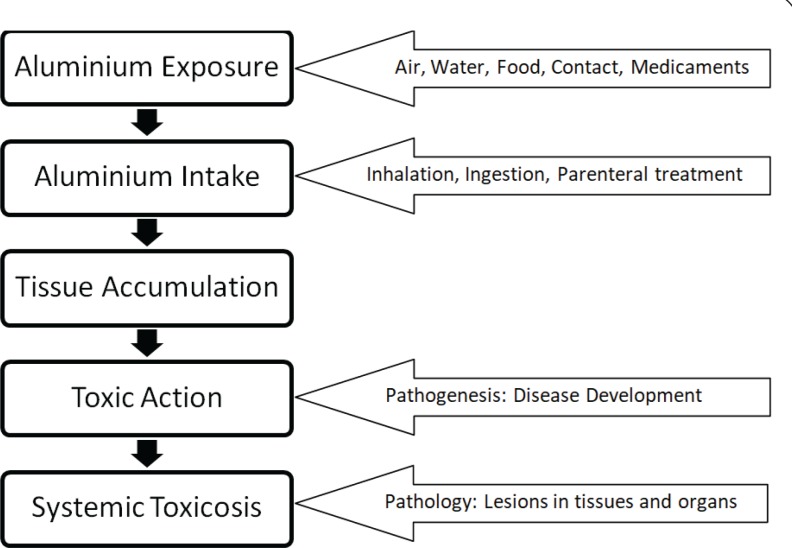
Aluminium (Al) is frequently accessible to animal and human populations to the extent that intoxications may occur. Intake of Al is by inhalation of aerosols or particles, ingestion of food, water and medicaments, skin contact, vaccination, dialysis and infusions. Toxic actions of Al induce oxidative stress, immunologic alterations, genotoxicity, pro-inflammatory effect, peptide denaturation or transformation, enzymatic dysfunction, metabolic derangement, amyloidogenesis, membrane perturbation, iron dyshomeostasis, apoptosis, necrosis and dysplasia. The pathological conditions associated with Al toxicosis are desquamative interstitial pneumonia, pulmonary alveolar proteinosis, granulomas, granulomatosis and fibrosis, toxic myocarditis, thrombosis and ischemic stroke, granulomatous enteritis, Crohn’s disease, inflammatory bowel diseases, anemia, Alzheimer’s disease, dementia, sclerosis, autism, macrophagic myofasciitis, osteomalacia, oligospermia and infertility, hepatorenal disease, breast cancer and cyst, pancreatitis, pancreatic necrosis and diabetes mellitus. The review provides a broad overview of Al toxicosis as a background for sustained investigations of the toxicology of Al compounds of public health importance.
Overview
CoChat Summary
TL;DR
This narrative review synthesizes exposure routes, toxic actions, and systemic effects of aluminium (Al), arguing that Al toxicosis is a multifaceted disease driven mainly by oxidative stress. It links Al exposure to pulmonary, cardiovascular, gastrointestinal, hematologic, neurologic, musculoskeletal, reproductive, hepato-renal/pancreatic, and mammary pathology.
Key findings
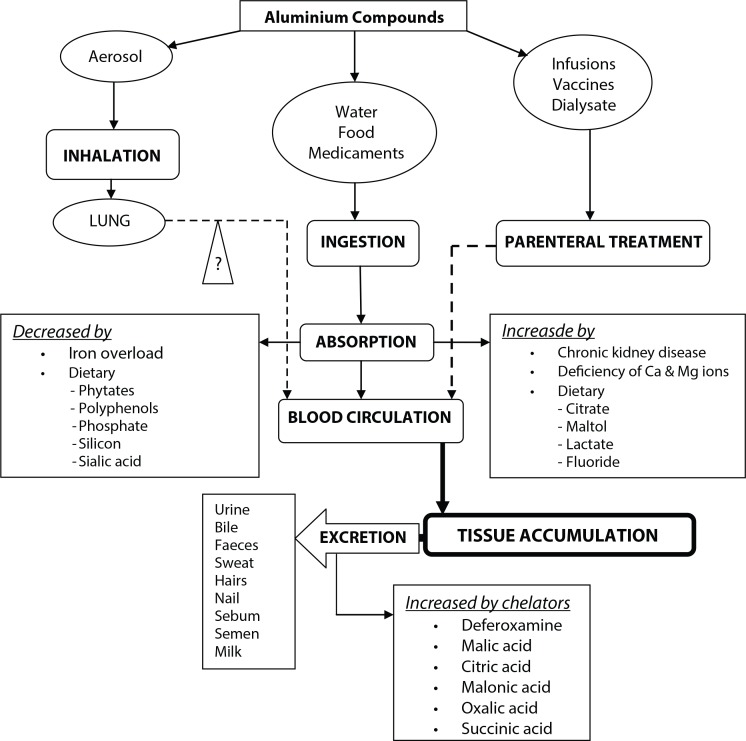
- Al enters via inhalation, ingestion, skin contact, vaccination, dialysis, and infusions; gastrointestinal absorption is the main systemic route, with absorption from water (about 0.3%) greater than from food (about 0.1%). About 90% of circulating Al is bound to transferrin, normal serum Al is about 1–3 μg/L, total body burden is about 30–50 mg/kg, and the kidneys eliminate about 95% in urine.
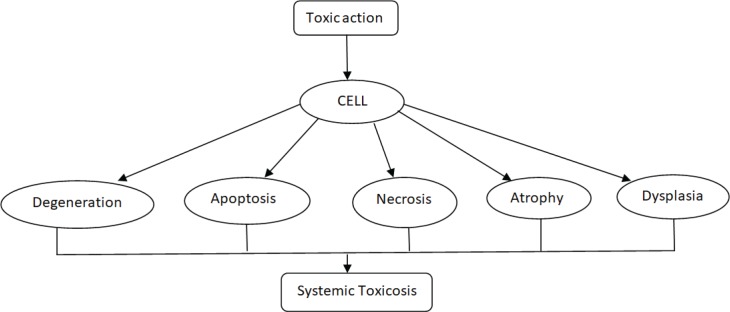
- Reported toxic actions include oxidative stress, lipid peroxidation, pro-inflammatory effects, immunosuppression, genotoxicity, protein denaturation/transformation, enzymatic dysfunction, metabolic impairment, amyloidogenesis, membrane perturbation, iron dyshomeostasis, apoptosis, necrosis, and dysplasia.
- Associated pathological conditions include desquamative interstitial pneumonia, pulmonary alveolar proteinosis, granulomas/fibrosis, toxic myocarditis, thrombosis and ischemic stroke, granulomatous enteritis, Crohn’s disease, inflammatory bowel diseases, anemia, Alzheimer’s disease, dementia, sclerosis, autism, macrophagic myofasciitis, osteomalacia, oligospermia and infertility, hepatorenal disease, breast cancer and cyst, pancreatitis, pancreatic necrosis, and diabetes mellitus.
- Selected quantitative findings: daily human Al intake from food is 3.4–9 mg/day; antacids contain 104–208 mg Al per tablet/capsule/5 ml; intravenous pharmaceutical products contained 684–5977 μg/g Al; breast cancer cases had higher breast-tissue Al than controls (5.8 versus 3.8 nmol/g); brain Al was >10 μg/g dry weight in 5 of 12 familial Alzheimer’s disease donors and up to 19 μg/g dry weight in autism; rat testes accumulated 3.35 μg/g Al after 60 days at human dietary levels.
Methods
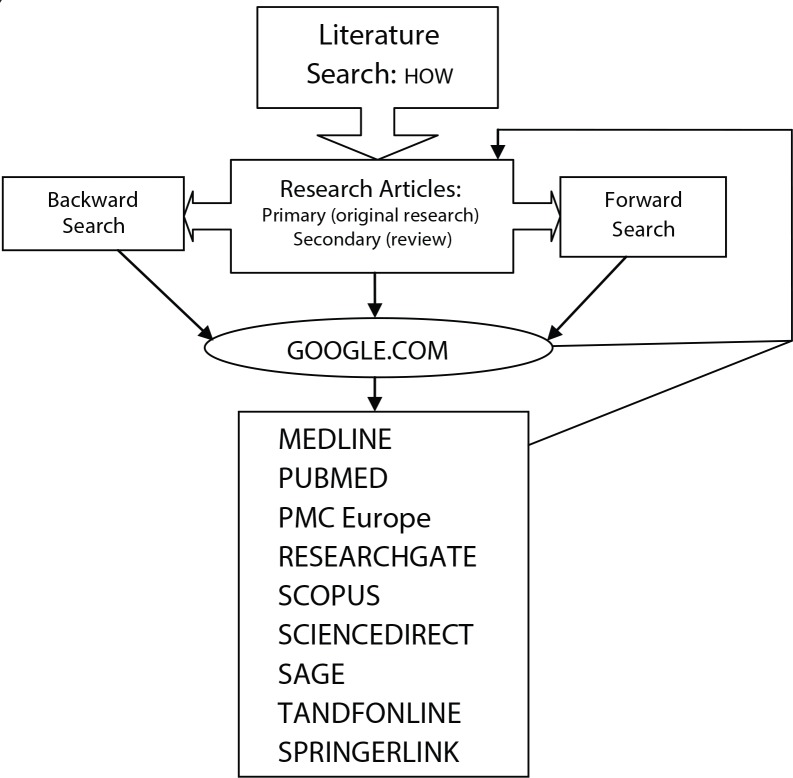
- Narrative literature review, not a meta-analysis or critical evaluation of published data; the search began in 2013 and looked backward, using Google/Google Scholar, MEDLINE, PubMed, PMC Europe, ResearchGate, Scopus, ScienceDirect, Sage, Taylor & Francis Online, and SpringerLink, with backward and forward citation searching.
- Major themes were exposure modalities, toxic actions, and effects in cells, tissues, and body systems; articles from reputable journals with thematic content were included, while peripheral articles were excluded, and the literature was summarized and narrated after cognitive reflection and integration.
Limitations
- Paper-stated: the review was intended to collate, synthesize, and integrate published reports “without meta-analysis and critical evaluation of published data,” and it is explicitly a narrative review with a broad thematic approach.
- Paper-stated: multisystemic co-morbidities from Al toxicosis are rarely reported in epidemiological cohorts; convergence of toxic actions across multiple organ systems is often observed in experimental animal models and “lacks validity in observational studies in human or animal populations,” so longitudinal studies are needed.
- Evident from the text: the search strategy is broad and narrative rather than systematic, with no formal quality assessment or risk-of-bias appraisal; the evidence base is heterogeneous across human, animal, in vitro, and case-report studies, and the review itself notes unresolved contradictions, such as “mutagenesis, cell proliferation and impaired mitosis” being “gray areas requiring clarification.”
Model-written summary. Check it against the paper before relying on it.
Integrity signals
Registry
Cites
Statistics
Figures
Verification
Claims the paper makes
33 Valid · 6 Not valid · 152 Not checked · 31 Own results and interpretations
At least one cited source doesn’t support this claim or points to a different paper, and none confirmed it — see the verdicts below.
In the paper
“Reactive airways dysfunction syndrome was rarely reported among Al smelter workers (Wesdock and Arnold, 2014).”
§ Aluminium toxicosis: a review of toxic actions and effects > Systemic toxicosis > Pulmonary effect
What the sources say
- Disputedcites Wesdock and Arnold, 2014 matched to “Occupational and Environmental Health in the Aluminum Industry: Key Points for Health Practitioners” (2014) sourceExperimental — accuracy not yet measured
The Respiratory Disorders section says that, to date, reactive airways dysfunction syndrome had not been reported among aluminum smelter workers. That contradicts the claim that it was reported, albeit rarely. (LLM, conf=0.84)
Checked by a reasoning model — may be wrong.
plain- Asserted: passes — The authors put it forward as true.
- Checkable: passes — It can be checked against evidence.
- Load-bearing: unclear — It is unclear whether the paper’s conclusions depend on it.
- Based: passes — The paper gives a reason why it holds.
- Disputed
The cited sources support only part of this claim — read each source’s verdict below.
In the paper
“The Al ion has no physiological role in metabolic processes (Exley and House, 2011) but it can be a metallic toxicant to humans and animals (Becaria et al., 2002) when there is high body burden of the metal after natural or unnatural exposure (Exley, 2013).”
§ Aluminium toxicosis: a review of toxic actions and effects > Introduction
What the sources say
- Partly supportedcites Exley, 2013 matched to “Human exposure to aluminium” (2013) sourceExperimental — accuracy not yet measured
In “The body burden of aluminium,” the paper describes body burden as the outcome of exposure and excretion and says a higher-than-normal burden is assumed to increase susceptibility to aluminium. But it cautions that body burden may not accurately predict toxicity; the Conclusions instead emphasize biologically available aluminium. The claim’s high-burden condition is therefore stronger than the source supports. (LLM, conf=0.85)
- Supportedcites Becaria et al., 2002 matched to “Aluminum as a toxicant” (2002) source
The citation to Becaria et al. supports the statement that aluminum can be toxic to humans and animals. The Introduction describes causal effects in humans, while the Inflammatory response section reports effects in experimental animals. The separate claim about high body burden and exposure is cited to Exley (2013), not Becaria et al. (LLM, conf=0.93)
plainstates a possible cause- Asserted: passes — The authors put it forward as true.
- Checkable: passes — It can be checked against evidence.
- Load-bearing: passes — The paper’s conclusions depend on it.
- Based: passes — The paper gives a reason why it holds.
- Partly supported
Every source the paper cites for this claim was checked and supports it.
In the paper
“Many antacids contain 104–208 mg of Al per tablet, capsule or 5 ml of suspension (Zhou and Yokel, 2005).”
§ Aluminium toxicosis: a review of toxic actions and effects > Exposure to aluminium > Aluminium intake
What the sources say
- Supportedcites Zhou and Yokel, 2005 matched to “The Chemical Species of Aluminum Influences Its Paracellular Flux across and Uptake into Caco-2 Cells, a Model of Gastrointestinal Absorption” (2005) source
The Introduction states that many antacids contain 300–600 mg of aluminium hydroxide, equivalent to approximately 104–208 mg of aluminium, per tablet, capsule or 5 ml. This directly supports the cited sentence. (LLM, conf=0.94)
plain- Asserted: passes — The authors put it forward as true.
- Checkable: passes — It can be checked against evidence.
- Load-bearing: unclear — It is unclear whether the paper’s conclusions depend on it.
- Based: passes — The paper gives a reason why it holds.
- Supported
The cited sources support only part of this claim — read each source’s verdict below.
In the paper
“Daily intakes of Al in humans from food range from 3.4 to 9 mg/day (Pennington and Schoen, 1995; Biego et al., 1998; Yang et al., 2014).”
§ Aluminium toxicosis: a review of toxic actions and effects > Exposure to aluminium > Aluminium intake
What the sources say
- Not checked — no full text of the sourcecites Pennington and Schoen, 1995 matched to “Estimates of dietary exposure to aluminium” (1995) source
- Not checked — no full text of the sourcecites Biego et al., 1998 matched to “Daily intake of essential minerals and metallic micropollutants from foods in France” (1998) source
- Partly supportedcites Yang et al., 2014 matched to “Dietary Exposure to Aluminium and Health Risk Assessment in the Residents of Shenzhen, China” (2014) sourceExperimental — accuracy not yet measured
The Introduction identifies food as the largest contributor to aluminium intake, and Results > Dietary Aluminium exposure reports dietary intake for Shenzhen residents as 1.263 mg/kg body weight per week on average. Our copy does not give the claimed range of 3.4–9 mg/day; searches for that range and for daily intake figures did not find it. (LLM, conf=0.78)
plain- Asserted: passes — The authors put it forward as true.
- Checkable: passes — It can be checked against evidence.
- Load-bearing: unclear — It is unclear whether the paper’s conclusions depend on it.
- Based: passes — The paper gives a reason why it holds.
The cited sources support only part of this claim — read each source’s verdict below.
In the paper
“The largest source of airborne Al-containing particles is the dust from soil and rocks (Lee and Von Lehmden, 1973; Sorenson et al., 1974).”
§ Aluminium toxicosis: a review of toxic actions and effects > Exposure to aluminium > Aluminium intake
What the sources say
- Could not verifycites Lee and Von Lehmden, 1973 matched to “Trace Metal Pollution in the Environment” (1973) sourceExperimental — accuracy not yet measured
The Industrial Materials section (page unavailable) identifies aluminum in coal fly ash, but does not discuss soil or rock dust as a source of airborne aluminum. A search for soil and rock dust found no passage comparing aluminum sources or identifying the largest one. (LLM, conf=0.72)
- Partly supportedcites Sorenson et al., 1974 matched to “Aluminum in the Environment and Human Health” (1974) sourceExperimental — accuracy not yet measured
In “Aluminum in the Atmosphere and Atmospheric Precipitations” (page not supplied), the paper says soil and soil dust appeared to be the main source of larger aluminium-associated aerosol particles, particularly at remote sites. It also points to a terrestrial origin for atmospheric aluminium generally, but does not establish that soil and rock dust is the largest source of all airborne aluminium-containing particles. (LLM, conf=0.82)
plainstates a cause- Asserted: passes — The authors put it forward as true.
- Checkable: passes — It can be checked against evidence.
- Load-bearing: unclear — It is unclear whether the paper’s conclusions depend on it.
- Based: passes — The paper gives a reason why it holds.
- Could not verify
125 more claims · 17 with their cited sources checked
Create a free account to see all 222 claims and to verify the 29 references still open.
- It may state two separate claims as one. 86
- Probably not a substantial claim. 11
Self-check
Percentages, sums and reported differences re-computed from the paper’s own numbers.
Each contradiction between two passages listed here was confirmed by an independent check.
Rated major: it would touch a result — a value a result rests on, reported and recomputed p-values on opposite sides of the significance level, two passages that conflict with no sign which is right, or a cited work retracted before this paper was published.
In the paper
§ Aluminium toxicosis: a review of toxic actions and effects > Systemic toxicosis > Reproductive and developmental effects
“Testicular and epididymal weights and serum testosterone and luteinizing hormone levels were reduced by Al exposure (Reza and Palan, 2006; Mouro et al., 2017).”
§ Aluminium toxicosis: a review of toxic actions and effects > Systemic toxicosis > Reproductive and developmental effects
“After intraperitoneal treatment at 50 mg/kg for 20 days, blood testosterone and LH levels were increased in male rats, but FSH level was not affected (Resa and Palan, 2006).”
Rated minor: it would not touch a result — a value no result rests on, a p-value that stays on the same side of the significance level, or a conflict that is clerical, resolved elsewhere in the paper, or outside its own findings.
In the paper
§ Aluminium toxicosis: a review of toxic actions and effects > Literature search justification and methods
“another summarized the physiological alterations in the musculoskeletal, respiratory, cardiovascular, hepatobiliary, endocrine, urinary and reproductive systems(Nayak, 2000).”
§ Aluminium toxicosis: a review of toxic actions and effects > References
“Nayak P Aluminum: impacts and disease Environ Res 2002 89 101 115 12123643”
Rated minor: it would not touch a result — a value no result rests on, a p-value that stays on the same side of the significance level, or a conflict that is clerical, resolved elsewhere in the paper, or outside its own findings.
In the paper
§ Aluminium toxicosis: a review of toxic actions and effects > Exposure to aluminium > Absorption, distribution and elimination of aluminium
“The total body burden of Al in healthy humans has been reported to be approximately 30–50 mg/kg body weight”
§ Aluminium toxicosis: a review of toxic actions and effects > Exposure to aluminium > Absorption, distribution and elimination of aluminium
“About one-half of the total body Al is in the skeleton, and the levels in human bone tissue range from 5 to 10 mg/kg”
Citations
Cites
Items 401–432 of 432
EFFECTS OF ALUMINIUM CHLORIDE EXPOSURE ON THE HISTOLOGY OF THE LIVER OF ADULT WISTAR RATS
Buraimoh, A. A. (2012) · IOSR Journal of Pharmacy (IOSRPHR) · doi:10.9790/3013-0230525533 · Cited by 9
Issa, A. M., Salim, M. S., Zidan, H., Mohamed, A. F., & Farrag, A.-R. H. (2014) · International Journal of Chemical Engineering and Applications · doi:10.7763/ijcea.2014.v5.411 · Cited by 9 · cited 2×
“It is unlikely that parenteral Al administrations are a major source of Al exposure to livestock or pets (Issa et al., 2014).”
BackgroundShort-term oral toxicity study of aluminium in rats.
(1986) · PubMed · Cited by 9
Chronic Effect of Aluminium Ingestion on Bone in Calcium‐Deficient Rats
Konishi, Y., Yagyu, K., Kinebuchi, H., Saito, N., Yamaguchi, T., & Ohtsuki, A. Y. (1996) · Pharmacology & Toxicology · doi:10.1111/j.1600-0773.1996.tb00231.x · Cited by 8 · cited 1×
“Longterm oral exposure to Al results in an increase in Al levels in the bone (Ahn et al., 1995; Konishi et al., 1996) that is responsible for the bone disease.”
BackgroundOccurrence of Aluminum, Lead, and Trihalomethanes in Drinking Water from the Great Lakes
Henshaw, P. F., Bewtra, J. K., & Biswas, N. (1993) · Journal of Great Lakes Research · doi:10.1016/s0380-1330(93)71238-1 · Cited by 8 · cited 2×
“The use of Al compounds as coagulating agents in the treatment of water for drinking could increase its Al content (Qureshi and Malmberg, 1985; Henshaw et al., 1993; Cech and Montera, 2000).”
BackgroundAluminum levels in children with chronic renal failure who consume low-phosphorus infant formula
Andreoli, S. P. (1990) · The Journal of Pediatrics · doi:10.1016/s0022-3476(05)82893-8 · Cited by 8
Deferoxamine and aluminum clearance in pediatric hemodialysis patients
Ogborn, M. R., Dorcas, V. C., & Crocker, J. F. S. (1991) · Pediatric Nephrology · doi:10.1007/bf00852849 · Cited by 8 · cited 1×
“It has also been used successfully to treat Al toxicity in children (Warady et al., 1986; Ogborn et al., 1991).”
Nam, S. M., Kim, J. W., Yoo, D. Y., Kim, W., Jung, H. Y., Hwang, I. K., Seong, J. K., & Yoon, Y. S. (2014) · Biological Trace Element Research · doi:10.1007/s12011-013-9861-y · Cited by 8
Håglin, L., Essén-Gustavsson, B., & Lindholm, A. (1994) · Acta Veterinaria Scandinavica · doi:10.1186/bf03548331 · Cited by 8 · cited 1×
“2019; Vol. 12(2): 45–70 Copyright © 2019 SETOX & Institute of Experimental Pharmacology and Toxicology, CEM SASc. hydroxide supplementation (Haglin et al., 1994).”
BackgroundAn Experimental Animal-model of Aluminum Overload
Florence, A., Gauthier, A., Ponsar, C., et al. (1994) · DIAL (Catholic University of Leuven) · Cited by 8
(2014) · PubMed · Cited by 7
Fanti, P., Kindy, M. S., Mohapatra, S., et al. (2006) · American Journal of Physiology-Endocrinology and Metabolism · doi:10.1152/ajpendo.2006.263.6.e1113 · Cited by 7 · cited 2×
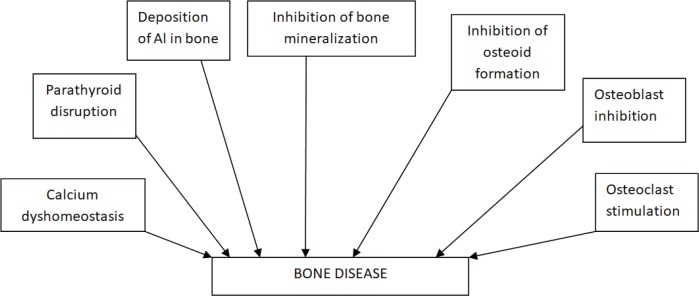
“The mineralization of bone is impaired by decreased calcium absorption (Orihuela, 2007), because Al inhibits the synthesis of calbindin, a calcium-binding protein involved in transcellular transport of calcium in enterocytes and inhibits the stimulation of synthesis of osteocalcin (the bone matrix protein) in osteobla…”
BackgroundAluminium Acetate: Role in Oxidative Metabolism of Albino Mice
Sushma, N. J., Sivaiah, U., Suraj, N. J., et al. (2006) · International Journal of Zoological Research · doi:10.3923/ijzr.2007.48.52 · Cited by 6
To Study Various Concentrations of Magnesium and Aluminium on Amylin Hormone Conformation
Mirhashemi, S. M., & Aarabi, M. H. (2011) · Pakistan Journal of Biological Sciences · doi:10.3923/pjbs.2011.653.657 · Cited by 6 · cited 1×
“Fibrillation and aggregation of human islet amyloid polypeptide hormone (amylin) was stimulated by Al exposure leading to formation of β-pleated sheet structure (Mirhashemi and Aarabi, 2011; Mirhashemi and Shahabaddin, 2011; Xu et al., 2016), which may predispose pancreatic β-cell to damage.”
BackgroundAluminum metabolism and toxicity in renal failure: a review.
Gh, M., To, L., & Tv, S. (1986) · PubMed · Cited by 6
Zatta, P., Lain, E., & Cagnolini, C. (2000) · European Journal of Biochemistry · doi:10.1046/j.1432-1327.2000.01328.x · Cited by 6
Ohsaka, Y., & Nomura, Y. (2016) · Acta Physiologica Hungarica · doi:10.1556/036.103.2016.1.4 · Cited by 5 · cited 1×
“2006; Sushma et al., 2007; Ohsaka and Nomura, 2016).”
Folic acid improve developmental toxicity induced by aluminum sulphates
Yassa, H. A., George, S. M., & Mohamed, H. K. (2017) · Environmental Toxicology and Pharmacology · doi:10.1016/j.etap.2017.01.005 · Cited by 5 · cited 2×
“Exposure to Al sulphate during gestation caused reduction in maternal body weight, reduction in fetal weight and crown rump length, and impairment of fetal bone development and preossification (Yassa et al., 2017).”
BackgroundKüçük, M., Kalaycı, R., Çevik, A., et al. (2001) · Biological Trace Element Research · doi:10.1385/bter:80:2:181 · Cited by 4
Orihuela, D. (2007) · Journal of Inorganic Biochemistry · doi:10.1016/j.jinorgbio.2007.06.009 · Cited by 4 · cited 2×
“The mineralization of bone is impaired by decreased calcium absorption (Orihuela, 2007), because Al inhibits the synthesis of calbindin, a calcium-binding protein involved in transcellular transport of calcium in enterocytes and inhibits the stimulation of synthesis of osteocalcin (the bone matrix protein) in osteobla…”
BackgroundParathyroid Glands in Chronic Aluminum Intoxication
Cournot-Witmer, G., & Plachot, J.-J. (1990) · Ultrastructural Pathology · doi:10.3109/01913129009076125 · Cited by 4
(2003) · Assiut University Bulletin for Environmental Researches · doi:10.21608/auber.2003.150957 · Cited by 4
Igwenagu, E., Igbokwe, I. O., & Egbe-Nwiyi, T. N. (2020) · Comparative Clinical Pathology · doi:10.1007/s00580-019-03028-4 · Cited by 4 · cited 3×
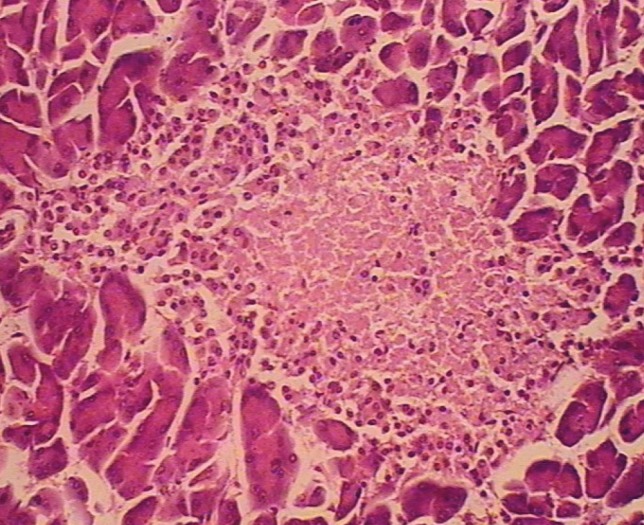
“Rats had moderate pancreatic islet necrosis after intermediate oral exposure (50 mg/kg for 28 days) to Al chloride (Figure 9) which was associated with impaired fasting blood glucose and impaired oral glucose tolerance (Igwenagu, 2017; Igwenagu et al., 2019).”
BackgroundSelf-citationEffects of Subchronic Aluminum Exposure on Liver Function in Rats
Bai, Chong-sheng, Wang, et al. (2012) · 东北农业大学学报:英文版 · Cited by 4
Effects of Sub-chronic Aluminum Exposure on Renal Structure in Rats
Li, Y., Liu, J., & Cao, Z. (2015) · Journal of Northeast Agricultural University (English edition) · doi:10.1016/s1006-8104(15)30031-3 · Cited by 3 · cited 3×
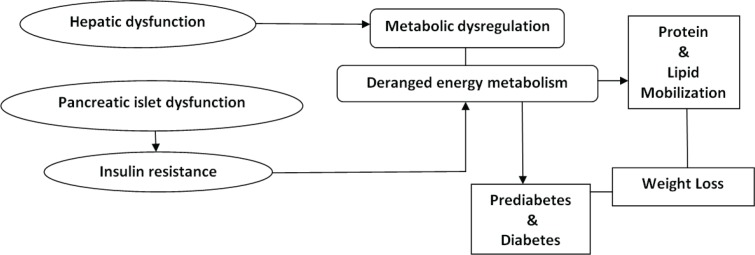
“These metabolic perturbations (Figure 5) may be responsible for the reports of body weight loss and decreased production performance (like egg production) in animals exposed to Al (Wisser et al., 1990; Capdevielle and Scanes, 1995; Li et al., 2015).”
BackgroundEffects of subchronic aluminum exposure on liver function in rats
Chong-sheng, B., Fan, W., Han-song, Z., & Yan-fei, L. (2012) · Journal of Northeast Agricultural University (English Edition) · doi:10.1016/s1006-8104(13)60039-2 · Cited by 3 · cited 4×
“Abnormal increases in levels of malondealdehyde (MDA) and thiobarbituric acid reactive substances (TBARS) were reported along with decreased levels of antioxidants such as GSH, GPx, SOD, and CAT in tissue homogenates of rats exposed to Al (Anane and Creppy, 2001; Gonzalez et al., 2007; Newairy et al., 2009; Khattab et…”
BackgroundInfluentialLEACHING OF ALUMINUM FROM ALUMINUM DISHES AND PACKAGES
Liukkonen, L. H., & Piepponen, S. (1992) · Cited by 3
Effect of aluminum toxicity and Bacopa monnieri on plasma cortisol level in Wistar albino rats
Vasanthan, S., & Joshi, P. (2018) · National Journal of Physiology Pharmacy and Pharmacology · doi:10.5455/njppp.2018.8.0310701042018 · Cited by 3
Obukhova, T. I., Ln, B., Lg, T., & Karpova, E. A. (2015) · PubMed · Cited by 2
Effects of aluminum ions on K+-induced contraction in ileal longitudinal smooth muscle
Nasu, T., & Suzuki, N. (1998) · Comparative Biochemistry and Physiology Part C: Pharmacology, Toxicology and Endocrinology · doi:10.1016/s0742-8413(98)00034-6 · Cited by 2
(2007) · Cited by 2
Effect of aluminum toxicity and Bacopa monnieri on hexokinase enzyme activity in Wistar albino rats
S, V., & Joshi, P. (2018) · National Journal of Physiology, Pharmacy and Pharmacology · doi:10.5455/njppp.2018.8.0825721082018 · Cited by 2
Research works printed but not linked: 8
- Anon Drinking Water and Health 1982 4 Washington, DC National Research Council, National Academy Press 155 201
- Anon Toxicological profile for aluminum 2008c Atlanta, GA United States Department of Health and Human Services, Public Health Service, Agency for Toxic Substances and Disease Registry http://www.atsdr.cdc.gov/tox-profiles/tp22.pdf Accessed 27 January 2016. 37983316
- Igbokwe NA Characterization of the osmotic stability of Sahel goat erythrocytes in ionic and non-ionic hypotonic media 2016 Maiduguri, Nigeria Department of Physiology, Pharmacology and Biochemistry, Faculty of Veterinary Medicine, University of Maiduguri PhD thesis
- Igwenagu E Pathologic effects of oral aluminium administration in non-diabetic and diabetic rats 2017 Maiduguri, Nigeria MVSc dissertation, Department of Veterinary Pathology, University of Maiduguri
- Klaassen CD Gilma AG Rall TW Nies AS Taylor P Heavy metals and heavy-metal antagonists Goodman and Gilman’s: The Pharmacological Basis of Therapeutics 1990 New York Pergamon Press 1592 1614,
- Lewis RJ Hawley’s Condensed Chemical Dictionary 2001 14th edn New Jersey, USA Wiley-Interscience 39 46
- Martin RB Aluminum speciation in biology Ciba Found Symp 1992 16 95 125 1490427
- Pandey G Jain GC A review on toxic effects of aluminium exposure on male reproductive system and probable mechanisms of toxicity Intl J Toxicol Appl Pharmacol 2013 3 3 48 57
Cited by
Heavy metals: toxicity and human health effects
Jomova, K., Alomar, S. Y., Nepovimova, E., Kuca, K., & Valko, M. (2025) · Archives of Toxicology · doi:10.1007/s00204-024-03903-2 · Cited by 983
Krämer, J., Kang, R., Grimm, L. M., De Cola, L., Picchetti, P., & Biedermann, F. (2022) · Chemical Reviews · doi:10.1021/acs.chemrev.1c00746 · Cited by 449
Khan, S., Chen, X., Almahri, A., Allehyani, E. S., Alhumaydhi, F. A., Ibrahim, M. M., & Ali, S. (2021) · Journal of Environmental Chemical Engineering · doi:10.1016/j.jece.2021.106381 · Cited by 234
Teschke, R. (2022) · International Journal of Molecular Sciences · doi:10.3390/ijms232012213 · Cited by 177
“Exposure to Al may also result in disruption of the iron homeostasis, with iron overload in the liver [14].”
BackgroundInfluentialHeavy metals contamination in water, sediments and fish of freshwater ecosystems in Pakistan
Afzaal, M., Hameed, S., Liaqat, I., Khan, A. A. A., Mannan, H. A., Ashraf, R. S., & Altaf, M. (2022) · Water Practice & Technology · doi:10.2166/wpt.2022.039 · Cited by 203
Metadata
- Authors
- Igbokwe, I. O., Igwenagu, E., & Igbokwe, N. A.
- Affiliations
- University of Maiduguri (NG)
- Corresponding author
- Igbokwe, Ikechukwu Onyebuchi
- Venue
- Interdisciplinary Toxicology
- Publisher
- Walter de Gruyter GmbH
- Published
- 2019-10-01
- Volume
- 12
- Issue
- 2
- Pages
- 45-70
- ISSN
- 1337-6853 (ISSN-L)
- 1337-9569
- PMC
- PMC7071840
- OpenAlex
- W3007206954
- Cited by
- 395
- References
- 436
- Citations by year
- 2026: 47 · 2025: 58 · 2024: 81 · 2023: 67 · 2022: 82 · 2021: 48 · 2020: 11 · 2019: 1
- FWCI
- 3.17
- Type
- journal article
- Language
- en
- Open access
- diamond
- doi.org
- Licence
- Locations
- Interdisciplinary Toxicology (publishedVersion, cc-by-nc-nd)
- PubMed Central (publishedVersion, cc-by-nc-nd)
- PubMed (publishedVersion)
- DOAJ (DOAJ: Directory of Open Access Journals) (submittedVersion)
- Topics
- Life Sciences › Agricultural and Biological Sciences › Plant Science › Aluminum toxicity and tolerance in plants and animals
- Physical Sciences › Environmental Science › Health, Toxicology and Mutagenesis › Heavy Metal Exposure and Toxicity
- Health Sciences › Nursing › Nutrition and Dietetics › Trace Elements in Health
- Keywords
- aluminum toxicity, oxidative stress, genotoxicity, immunotoxicity, amyloidogenesis, iron dysregulation, apoptosis, Alzheimer's disease, macrophagic myofasciitis, osteomalacia, pancreatic necrosis, diabetes mellitus, granulomatous enteritis, Crohn's disease, toxic myocarditis, inhalation exposure, dietary aluminium intake
About these checks
Registry, retraction, Cites and statistics results are computed, not judged, with one exception: a printed reference that no index lists is read once by a model before it counts as a citation error. Claims are extracted by a model and kept only when their quote appears verbatim in the text; each cited source is then checked, with a model’s help, for whether it says what the claim relies on. Those verdicts can be wrong — read the claim’s quote and the cited source before relying on one.
The claim verdicts this report counts are experimental: their accuracy is not yet measured.
A language model drew the claims from the paper on 2026-10-10, under version 3 of the claim definition (model deepseek-v4.1-flash, prompt extract-v3).
A second model labelled each claim on 2026-10-10 (model jev-1.13-20260917, definition revision gold-guideline-v0.2).
Cited sources are checked with a language model’s help (gpt-6-sol).
Statistics and arithmetic are recomputed, not judged.
Confidence bands are shown only for fields calibrated on our annotated test set. None is calibrated yet, so no band is shown.
What counts as a claim ›How we measure confidence ›How we check this ›
Are you an author, or do you see a problem with this page? Request a review
Data sources
Bibliographic data: Semantic Scholar, OpenAlex, Crossref.
Contains information from the Semantic Scholar Academic Graph Datasets, made available under the ODC Attribution License (ODC-BY 1.0).
Semantic Scholar’s data is described in: Kinney, R., et al. (2023). The Semantic Scholar Open Data Platform. arXiv:2301.10140.
