

Simulation-Based Learning in Higher Education: A Meta-Analysis
Open accessThe DOI matches its Crossref record; 172 of the 173 references it cites were found in a registry or an index; 3 of the 59 sources its claims cite were checked for support.
Abstract
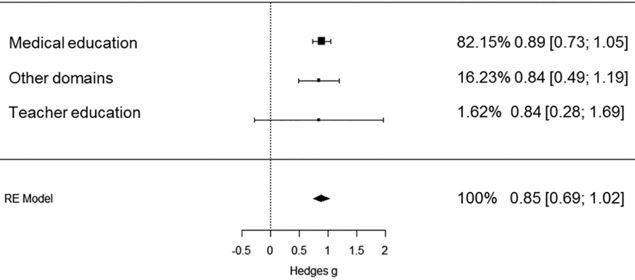
Simulation-based learning offers a wide range of opportunities to practice complex skills in higher education and to implement different types of scaffolding to facilitate effective learning. This meta-analysis includes 145 empirical studies and investigates the effectiveness of different scaffolding types and technology in simulation-based learning environments to facilitate complex skills. The simulations had a large positive overall effect: g = 0.85, SE = 0.08; CIs [0.69, 1.02]. Technology use and scaffolding had positive effects on learning. Learners with high prior knowledge benefited more from reflection phases; learners with low prior knowledge learned better when supported by examples. Findings were robust across different higher education domains (e.g., medical and teacher education, management). We conclude that (1) simulations are among the most effective means to facilitate learning of complex skills across domains and (2) different scaffolding types can facilitate simulation-based learning during different phases of the development of knowledge and skills.
Overview
CoChat Summary
TL;DR
This meta-analysis of 145 studies (10,532 participants) finds that simulation-based learning in higher education has a large positive overall effect on complex skills (g = 0.85, 95% CI [0.69, 1.02]). Effects vary by simulation features and prior knowledge, with examples/prompts helping lower-prior-knowledge learners and reflection phases helping higher-prior-knowledge learners.
Key findings
- Overall effect: g = 0.85, SE = 0.08, 95% CI [0.69, 1.02], N = 145 studies, 10,532 participants; heterogeneity was high: Q(409) = 4213.93, p < .0001, τ² = 1.2, I² = 95.86%.
- By complex skill: technical performance g = 1.06 (SE = 0.15), general problem solving g = 0.88 (SE = 0.11), diagnosing g = 0.82 (SE = 0.21), management g = 0.72 (SE = 0.30), teamwork g = 0.50 (SE = 0.08), communication g = 0.44 (SE = 0.15).
- Simulation features: live model g = 2.27 (N = 3), mixed g = 1.56, mannequin g = 0.96, virtual object g = 0.75, role play g = 0.63, document g = 0.31; technology: simulator g = 1.07, virtual reality g = 0.85, screen-based g = 0.68, no technology g = 0.74; high authenticity g = 0.86 vs low g = 0.58; duration: <1 hr g = 0.65, hours g = 0.81, days g = 0.80, >1 month g = 1.31 (N = 4).
- Scaffolding × prior knowledge: examples helped low-education learners (g = 1.15 vs high-education g = 0.56); prompts helped unfamiliar contexts (g = 0.85 vs no prompts g = 0.63) but not familiar contexts (g = 0.33 vs no prompts g = 0.96); reflection phases helped postgraduate learners (g = 1.10 vs no reflection g = 0.86) but not graduate/undergraduate learners (g = 0.52 vs no reflection g = 0.81).
Methods
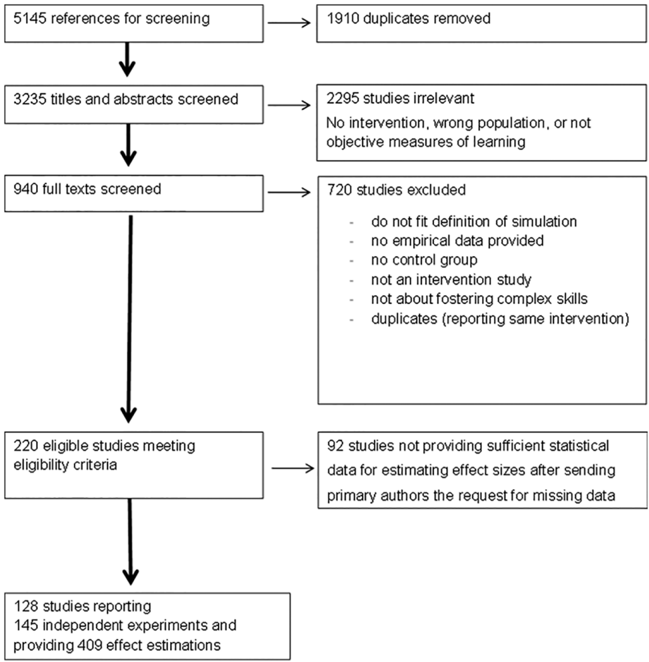
- Meta-analysis of 145 empirical studies (from 128 articles, 1979–2018) yielding 409 effect estimates and 10,532 participants; searched PsycINFO, PsycARTICLES, ERIC, and MEDLINE through April 2018; included experimental/quasi-experimental or within-subject pre-post studies with a control condition and objective measures of complex skills.
- Coded moderators included simulation type, technology use, duration, authenticity, scaffolding (examples, prompts, reflection phases), knowledge convey, prior knowledge (familiarity of context, level of education), complex skill type, domain, study design, and publication type.
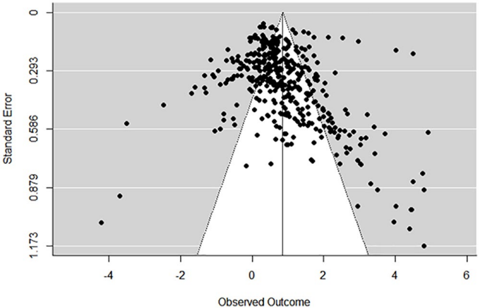
- Used Hedges’ g, random-effects models, robust variance estimation for correlated effects, pretest adjustment when available, heterogeneity Q/I², and publication-bias checks (Egger’s test, trim and fill); metaregression on control variables.
Limitations
- Stated: the focus is on complex skills involving interaction with people, so findings do not straightforwardly generalize to STEM domains such as science, mathematics, engineering, or informatics; a large proportion of findings come from medical education, so caution is needed for other domains, especially regarding technology, simulation type, outcome measures, and moderators.
- Stated: many primary studies gave little treatment description, insufficient for coding some moderators or finer distinctions; many implemented multiple instructional support measures, making specific effects hard to determine; the scaffolding framework may omit other supports such as feedback or fading/adding instruction; combinations could only be partially investigated; prior knowledge operationalization had drawbacks and explained only 4% of heterogeneity; implementation quality was assumed similar; large unexplained heterogeneity requires caution.
- Evident from the text: heterogeneity was very high (I² = 95.86%, τ² = 1.2), and several moderator estimates rest on very small numbers (e.g., live model N = 3, all scaffolding types N = 2, duration >1 month N = 4), so subgroup effects are unstable; presence/absence comparisons for examples, prompts, and reflections often did not reach significance.
Model-written summary. Check it against the paper before relying on it.
Integrity signals
Registry
Cites
Statistics
Figures

Verification
Claims the paper makes
1 Valid · 3 Not valid · 48 Not checked · 181 Own results and interpretations
At least one cited source doesn’t support this claim or points to a different paper, and none confirmed it — see the verdicts below.
In the paper
“However, they only focused on comparing simulations with a duration of more than 1 day with simulations of less than 1 day.”
§ Simulation-Based Learning in Higher Education: A Meta-Analysis > Simulations in Educational Contexts
What the sources say
- Disputedcites Cook et al., 2013 matched to “Technology-Enhanced Simulation to Assess Health Professionals: A Systematic Review of Validity Evidence, Research Methods, and Reporting Quality” (2013) sourceExperimental — accuracy not yet measured
Our copy of Cook et al. (2013) contains no duration contrast whatsoever: searches for 'simulation duration more than one day versus less than one day' and related phrasings returned only the study-coding tables. Those tables (sections 'List of all included studies, sorted by year of publication, with validity evidence and QUADAS-2 ratings (N=417 except for QUADAS-2)', pp. 17, 21, 23, 27, 32-35, and the parallel full-citation list, pp. 4-14) show the review's actual focus: charting validity evidence (content/response/process, internal structure, relations to other variables, consequences, reliability), methodological quality (MERSQI, selection/flow indices, RoB indices, QUADAS-2) and reporting across 417 technology-enhanced simulation assessment studies spanning many topics and instruments. That is contrary to the claim that the review 'only focused on comparing simulations with a duration of more than 1 day with simulations of less than 1 day'. Our copy is truncated at the end, but the retrieved structure of the review already contradicts the characterization; no alternative source for the duration comparison is named in our copy. (LLM, conf=0.72)
Checked by a reasoning model — may be wrong.
plain- Asserted: passes — The authors put it forward as true.
- Checkable: passes — It can be checked against evidence.
- Load-bearing: passes — The paper’s conclusions depend on it.
- Based: passes — The paper gives a reason why it holds.
- Disputed
The cited sources that could be checked couldn’t confirm or dispute this claim.
In the paper
“In their meta-analysis, Cook et al. (2013) provided supportive evidence of the effectiveness of distributed and repetitive practice (effects above .60)in the acquisition of complex skills in medical education.”
§ Simulation-Based Learning in Higher Education: A Meta-Analysis > Simulations in Educational Contexts
What the sources say
- Could not verifycites Cook et al., 2013 matched to “Technology-Enhanced Simulation to Assess Health Professionals: A Systematic Review of Validity Evidence, Research Methods, and Reporting Quality” (2013) sourceExperimental — accuracy not yet measured
Our copy of Cook et al. (2013) contains only the appendix material — the 'List of all included studies, sorted by year of publication, with full journal citation' (pp. 2-16) and the parallel table 'with validity evidence and QUADAS-2 ratings (N=417)' (pp. 20-35), which catalogue simulation-based ASSESSMENT validation studies with MERSQI scores, not pooled effects. Searches for 'distributed and repetitive practice', 'meta-analysis', 'effect size / Hedges g / random-effects', 'learning principles / repetition', and the paper's objective returned no narrative text at all, so nothing in our copy reports an effectiveness meta-analysis or effect magnitudes above .60. The copy is also flagged truncated, so the results/discussion where such a finding would appear may be missing; absence here is not evidence of a contrary statement, and no alternative source is named in the passages we hold. (LLM, conf=0.68)
plainstates a cause- Asserted: passes — The authors put it forward as true.
- Checkable: passes — It can be checked against evidence.
- Load-bearing: unclear — It is unclear whether the paper’s conclusions depend on it.
- Based: passes — The paper gives a reason why it holds.
- Could not verify
The cited sources support only part of this claim — read each source’s verdict below.
In the paper
“All these scaffolding measures were found to be beneficial for developing diagnostic competences (Chernikova et al., 2019).”
§ Simulation-Based Learning in Higher Education: A Meta-Analysis > Added Value of Instructional Support
What the sources say
- Partly supportedcites Chernikova et al., 2019 matched to “Facilitating Diagnostic Competences in Higher Education—a Meta-Analysis in Medical and Teacher Education” (2020) sourceExperimental — accuracy not yet measured
The meta-analysis does state broadly that all scaffolding types help ('as long as learners are able to practice problem-solving, all of the different types of scaffolding are beneficial', Theoretical Significance; echoed in Summary and Conclusion: roles, prompts and reflection phases 'have clear positive effects', with 'no indication for different effect sizes of different types of scaffolding'). But the claim drops the source's binding condition — the benefit holds only where learners' own problem-solving is preserved — and the source's results are not uniformly significant: in Effect of Scaffolding, settings with vs. without examples 'did not reach statistical significance' (Q(1,35)=2.85, p=.06), and Limitations warns that 'conclusions about the effectiveness of each scaffolding type should be made with caution'. So the flat 'all these scaffolding measures were found to be beneficial' overstates an explicitly conditional and hedged finding. (LLM, conf=0.72)
plainstates a cause- Asserted: passes — The authors put it forward as true.
- Checkable: passes — It can be checked against evidence.
- Load-bearing: passes — The paper’s conclusions depend on it.
- Based: passes — The paper gives a reason why it holds.
- Partly supported
A result the paper reports from its own data — it cites no other source for it, so there is none to check. The quote shows it is in the paper.
In the paper
“The 145 eligible studies (from 128 articles published in the period 1979-2018) provided 409 effect estimations (Figure 1).”
§ Simulation-Based Learning in Higher Education: A Meta-Analysis > Results of Literature Search
plainn = 10,532- Asserted: passes — The authors put it forward as true.
- Checkable: passes — It can be checked against evidence.
- Load-bearing: passes — The paper’s conclusions depend on it.
- Based: passes — The paper gives a reason why it holds.
A result the paper reports from its own data — it cites no other source for it, so there is none to check. The quote shows it is in the paper.
In the paper
“The most frequent combinations of instructional support measures were knowledge convey together with examples (82 effects), knowledge convey with reflection phases (62 effects), and examples with reflection phases (43 effects).”
§ Simulation-Based Learning in Higher Education: A Meta-Analysis > Results of Literature Search
plain- Asserted: passes — The authors put it forward as true.
- Checkable: passes — It can be checked against evidence.
- Load-bearing: unclear — It is unclear whether the paper’s conclusions depend on it.
- Based: passes — The paper gives a reason why it holds.
120 more claims
Create a free account to see all 233 claims and to verify the 44 references still open.
- It may state two separate claims as one. 61
- Probably not a substantial claim. 61
Claims other papers make about this one
Each is checked against this paper’s own text: does it say what the citing paper says it does?
In the citing paper
“Chernikova and colleagues have demonstrated in a meta-analysis that simulations of professional situations, such as interactions in a classroom for teachers, can be a beneficial tool during teacher training as they expose teachers to authentic problems in their fields51.”
From On opportunities and challenges of large multimodal foundation models in education (2025) · cites this paper as [51]
In the citing paper
“Meta-analytic findings indicate that simulations are among the most effective means to facilitate the learning of complex skills across domains, with technology-based and scaffolded simulations showing robust positive effects on learning outcomes [11].”
In the citing paper
“While several earlier reviews have examined the general benefits of simulation in nursing education [17], few have focused specifically on its role in bridging the theory–practice gap.”
From The impact of clinical simulation on bridging the theory–practice gap in nursing education: a systematic review (2025) · cites this paper as [17]
In the citing paper
“High-fidelity simulations were particularly associated with enhanced clinical judgment and decision-making accuracy [17, 29, 30].”
From The impact of clinical simulation on bridging the theory–practice gap in nursing education: a systematic review (2025) · cites this paper as [17]
In the citing paper
“These findings are supported by meta-analytic evidence from Chernikova et al., who concluded that simulation-based learning substantially improves decision-making and problem-solving skills in higher education, especially when paired with active learning strategies and structured debriefing [17].”
From The impact of clinical simulation on bridging the theory–practice gap in nursing education: a systematic review (2025) · cites this paper as [17]
Statistics recomputed
Every reported test result, recomputed from its test statistic and degrees of freedom. A result shows as not adding up only once an independent check has confirmed it.
- ConsistentQ(409) = 4213.93reported p < .0001 · recomputed p < .001
“Q (409) = 4213.93,p < .0001”
Self-check
Percentages, sums and reported differences re-computed from the paper’s own numbers.
Each contradiction between two passages listed here was confirmed by an independent check.
Rated major: it would touch a result — a value a result rests on, reported and recomputed p-values on opposite sides of the significance level, two passages that conflict with no sign which is right, or a cited work retracted before this paper was published.
In the paper
§ Simulation-Based Learning in Higher Education: A Meta-Analysis > Discussion
“However, the effects are greater if learners are unfamiliar with the context and the task.”
§ Simulation-Based Learning in Higher Education: A Meta-Analysis > Prior Professional Knowledge
“learners showed a lower increase of complex skills in an unfamiliar context (g = 0.67, SE = 0.10) than in a familiar context (g = 0.83, SE = 0.13)”
Rated minor: it would not touch a result — a value no result rests on, a p-value that stays on the same side of the significance level, or a conflict that is clerical, resolved elsewhere in the paper, or outside its own findings.
In the paper
§ Simulation-Based Learning in Higher Education: A Meta-Analysis > Results of Literature Search
“Most studies focused on general problem solving (51) or the technical performance of a particular complex procedure (56); the other outcomes were communication skills (24), diagnosing (18), managing critical situations (18), and collaboration and teamwork (5).”
§ Simulation-Based Learning in Higher Education: A Meta-Analysis > Conclusion
“2,493 (27) 0.46 91.03% | 911 (18) 0.76 92.02% | 6,010 (58) 0.47 91.23% | 2,543 (21) 1.04 97.15% | 810 (5) 0.03 66.07% | 2,933 (63) 1.25 91.10%”
Rated minor: it would not touch a result — a value no result rests on, a p-value that stays on the same side of the significance level, or a conflict that is clerical, resolved elsewhere in the paper, or outside its own findings.
In the paper
“(2) prompts as the only scaffolding method (N = 11)”
§ Simulation-Based Learning in Higher Education: A Meta-Analysis > Level of Education as an Indicator of Prior Knowledge and Experience
Reported 11 · recomputed 12
Rated minor: it would not touch a result — a value no result rests on, a p-value that stays on the same side of the significance level, or a conflict that is clerical, resolved elsewhere in the paper, or outside its own findings.
In the paper
§ Simulation-Based Learning in Higher Education: A Meta-Analysis > Discussion
“Despite these differences, simulations had effects that can be categorized as large positive effects for all but one type of skill.The exception is teamwork, where the meta-analysis found a medium positive effect only.”
§ Simulation-Based Learning in Higher Education: A Meta-Analysis > Overall Effect of Simulation-Based Learning on Complex Skills (Research Question 1)
“Communication and collaboration skills (teamwork) are only moderately facilitated by simulation-based learning (g = 0.44, SE = 0.15, and g = 0.50, SE = 0.08, respectively)”
Rated minor: it would not touch a result — a value no result rests on, a p-value that stays on the same side of the significance level, or a conflict that is clerical, resolved elsewhere in the paper, or outside its own findings.
In the paper
§ Simulation-Based Learning in Higher Education: A Meta-Analysis > Level of Education as an Indicator of Prior Knowledge and Experience
“however, introducing prompts was related to higher learning outcomes in the high-level group.”
§ Simulation-Based Learning in Higher Education: A Meta-Analysis > Level of Education as an Indicator of Prior Knowledge and Experience
“Similarly, introducing prompts for a high (postgraduate learners and practitioners) level (g = 0.50, SE = 0.36) was not beneficial for learning compared with simulations without prompts (g = 0.91, SE = 0.11).”
Citations
Cites
Measuring inconsistency in meta-analyses
Higgins, J. P. T., Thompson, S. G., Deeks, J. J., & Altman, D. G. (2003) · BMJ · doi:10.1136/bmj.327.7414.557 · Cited by 63,139 · cited 1×
“The thresholds suggested by Higgins et al. (2003) were used to interpret the I 2 (25% for low heterogeneity, 50% for medium, 75% for high heterogeneity).”
MethodBorenstein, M., Hedges, L. V., Higgins, J. P. T., & Rothstein, H. R. (2009) · doi:10.1002/9780470743386 · Cited by 14,225
Hattie, J., & Timperley, H. (2007) · Review of Educational Research · doi:10.3102/003465430298487 · Cited by 12,905
THE ROLE OF TUTORING IN PROBLEM SOLVING *
Wood, D., Bruner, J. S., & Ross, G. (1976) · Journal of Child Psychology and Psychiatry · doi:10.1111/j.1469-7610.1976.tb00381.x · Cited by 8,851 · cited 1×
“Scaffolding enables a learner to solve problems through modifying tasks and reducing possible pathways, and through hints helping the learner to coordinate the steps in problem solving or interaction (Quintana et al., 2004), by taking over some elements of learning material (Wood et al., 1976).”
BackgroundKirschner, P. A., Sweller, J., & Clark, R. E. (2006) · Educational Psychologist · doi:10.1207/s15326985ep4102_1 · Cited by 7,776 · cited 2×
“…suggesting that including simulations in a later phase of a higher education program after students already know theoretical concepts is promising in order to not overwhelm learners and block too much of their cognitive capacity for solving a problem in a simulation (e.g., Kirschner et al., 2006).”
BackgroundFunnel plots for detecting bias in meta-analysis
Sterne, J. A. C., & Egger, M. (2001) · Journal of Clinical Epidemiology · doi:10.1016/s0895-4356(01)00377-8 · Cited by 3,779 · cited 1×
“We have a relatively small sample of empirical studies and apply a range of techniques to identify possible biases (Egger’s test, trim and fill) and improve the generalizability of the results (Sterne & Egger, 2001).”
MethodEducational Psychology: A Cognitive View
Gagné, R. M., Ausubel, D. P., & Gagné, R. M. (1969) · American Educational Research Journal · doi:10.3102/00028312006002287 · Cited by 3,302
Educational Psychology: A Cognitive View
Gagné, R. M., Ausubel, D. P., & Gagne, R. M. (1969) · American Educational Research Journal · doi:10.2307/1161899 · Cited by 3,278
HMELO-SILVER, C. E., DUNCAN, R. G., & CHINN, C. A. (2007) · Educational Psychologist · doi:10.1080/00461520701263368 · Cited by 2,641 · cited 1×
“…problems, especially in early stages of expertise development, should be accompanied by scaffolding to maximize learning and avoid cognitive overload, distraction, or focusing on superficial features of a situation (see the discussions of Hmelo-Silver et al., 2007; Kirschner et al., 2006).”
BackgroundReflection and reflective practice in health professions education: a systematic review
Mann, K., Gordon, J., & MacLeod, A. (2009) · Advances in Health Sciences Education · doi:10.1007/s10459-007-9090-2 · Cited by 2,175 · cited 1×
“Reflection phases, on the other hand, allow learners to think about goals, analyze their own performance, and plan further steps (e.g., Mann et al., 2009), but they do not provide much guidance during the problem solving.”
Background
Research works printed but not linked: 4
- Funke, J. (Ed.). (2006). Denken und Problemlösen (pp. 375-446).
- Henninger, M., & Mandl, H. (2000). Vom Wissen zum Handeln-ein Ansatz zur Förderung kommunikativen Handelns [From knowledge to action-An approach for fostering communicative behavior]. In H. Mandl & J. Gerstenmaier (Eds.), Die Kluft zwischen Wissen und Handeln (pp. 197-219).
- Raven, J. (2000). Psychometrics, cognitive ability, and occupational performance. Review of Psychology, 7(1-2), 51-74.
- Veritas Health Innovation. (2019). Covidence systematic review software (online ver- sion) [Computer software]. https://www.covidence.org
Cited by
Items 101–200 of 1,412
Aldreabi, H., Halalsheh, N. Z., Alrawashdeh, M. N., Alnajdawi, A. M., Alsawalqa, R. O., & Al-Shboul, M. A. (2023) · Frontiers in Education · doi:10.3389/feduc.2023.1226718 · Cited by 34
Alfaro–Ponce, B., Durán-González, R., Morales–Maure, L., & Sanabria-Z, J. (2024) · Humanities and Social Sciences Communications · doi:10.1057/s41599-024-02853-5 · Cited by 34
“In the case of students in educational institutions, the bridges to counteract the lack of proximity to these phenomena have been constructed beyond books and laboratories, expanding from audiovisual interactive media to integrating new technologies for their simulation (Chernikova et al., 2020).”
Learning to teach with simulation: historical insights
Ledger, S., Mailizar, M., Gregory, S., Tanti, M., Gibson, D., & Kruse, S. (2024) · Journal of Computers in Education · doi:10.1007/s40692-024-00313-2 · Cited by 31
Stürmer, K., Fütterer, T., Kron, S., Sommerhoff, D., & Ufer, S. (2024) · European Journal of Psychology of Education · doi:10.1007/s10212-024-00837-2 · Cited by 34
“…authenticity in the design of a learning environment, especially functional correspondence, meaning how a simulation approximates practices concerning a professional task that must be mastered, is associated with higher learning gains for learners (Chernikova et al., 2020; Chernikova et al., 2023).”
Nickl, M., Sommerhoff, D., Radkowitsch, A., Huber, S. A., Bauer, E., Ufer, S., Plass, J. L., & Seidel, T. (2024) · Learning and Instruction · doi:10.1016/j.learninstruc.2024.101994 · Cited by 34
“This learning effect aligns with the findings of Chernikova, Heitzmann, Stadler, et al. (2020), which showed that simulation-based learning produced a significant effect size of g = 0.85.”
InfluentialSelf-citationKaldheim, H. K. A., Fossum, M., Munday, J., Creutzfeldt, J., & Slettebø, Å. (2021) · International Journal of Educational Research · doi:10.1016/j.ijer.2021.101801 · Cited by 35
Kasperski, R., & Hemi, M. E. (2022) · European Journal of Teacher Education · doi:10.1080/02619768.2022.2134006 · Cited by 30
“The findings expand the meta-analysis of Chernikova et al. (2020), which indicated that FTF clinical simulations that rely on real live actors were superior to virtual (non-clinical/avatar) simulations, role-playing, and event analysis, in the development of complex skills.”
InfluentialKaldheim, H. K. A., Fossum, M., Munday, J., Creutzfeldt, J., & Slettebø, Å. (2022) · Journal of Clinical Nursing · doi:10.1111/jocn.16377 · Cited by 33
Personalizing simulation-based learning in higher education
Bauer, E., Heitzmann, N., Bannert, M., Chernikova, O., Fischer, M. R., Frenzel, A. C., Gartmeier, M., Hofer, S. I., Holzberger, D., Kasneci, E., et al. (2025) · Learning and Individual Differences · doi:10.1016/j.lindif.2025.102746 · Cited by 33
Self-citationWood, Y., Zegwaard, K. E., & Fox-Turnbull, W. H. (2020) · Research Commons (University of Waikato) · Cited by 73
Elcokany, N. M., Abdelhafez, A. I., Sharaby, V. M. S., & Belal, S. (2021) · Healthcare · doi:10.3390/healthcare9091228 · Cited by 34
““Computer-based learning is a technique, using technology to simplify real experiences with guided experiences and considered one of the simulations that can be used in clinical teaching” [2].”
BackgroundAltınbaş, B. C., Çalık, K. Y., Küçük, E., Kırkbir, İ. B., Güner, S. G., Tezel, M., Özmen, G. Ç., Erdöl, H., & Bulut, H. K. (2025) · BMC Nursing · doi:10.1186/s12912-025-04004-w · Cited by 30
Rico, H. F., Pacheco, M. A. D. L. P., MENDOZA, A. P., & Portnoy, I. (2023) · Cogent Education · doi:10.1080/2331186x.2023.2236450 · Cited by 28
“According to Chernikova et al. (2020) and M. A. de la Puente Pacheco et al. (2021), this suggests a potential gap between educational investment and the caliber of learning outcomes.”
BackgroundNyström, S., & Ahn, S.-E. (2023) · Teaching and Teacher Education · doi:10.1016/j.tate.2023.104409 · Cited by 31
Wang, X.-M., Yu, X.-H., Yu, D., Hwang, G., & Lan, M. (2024) · Educational Research Review · doi:10.1016/j.edurev.2024.100661 · Cited by 32
Castaneda, L. M., Bindman, S. W., & Divanji, R. A. (2021) · Journal of Research on Technology in Education · doi:10.1080/15391523.2021.1950083 · Cited by 31
“Research from a variety of fields has demonstrated the value of virtual simulations for learning information and skills as a result of immersion (Chen et al., 2020; Chernikova et al., 2020; Harman et al., 2017; Kaplan et al., 2021; Krokos et al., 2019; Pantelidis, 2010).”
BackgroundIntroduction: Meeting the Challenges of Workplace English Communication in the 21st Century
Oliveri, M. E., Slomp, D., Elliot, N., & Rupp, A. A. (2021) · The Journal of Writing Analytics · doi:10.37514/jwa-j.2021.5.1.01 · Cited by 27
Fink, M. C., Eisenlauer, V., & Ertl, B. (2023) · Computers & Education X Reality · doi:10.1016/j.cexr.2023.100043 · Cited by 32
Impact Of Simulation Design Elements on Undergraduate Nursing Education: A Systematic Review
Jackson, M., McTier, L., Brooks, L. A., & Wynne, R. M. (2024) · Clinical Simulation in Nursing · doi:10.1016/j.ecns.2024.101519 · Cited by 31
Playing to learn: developing self-directed learning skills through serious games
Pacheco-Velazquez, E. A., Rodés, V., Glasserman‐Morales, L. D., & Carlos-Arroyo, M. (2024) · Journal of International Education in Business · doi:10.1108/jieb-08-2023-0054 · Cited by 26
Enhancing student nurses’ ethical skills via simulation-based learning: barriers and opportunities
Rasesemola, R. M., & Molabe, M. (2025) · BMC Nursing · doi:10.1186/s12912-025-02742-5 · Cited by 30
“In addition to the transformative solutions raised in this study, virtual simulation approach could also be adopted to help address the learning gap by providing ongoing clinical practice for student nurses in situations where face-to-face is not possible [51].”
Tripepi, M. (2022) · Journal of Microbiology and Biology Education · doi:10.1128/jmbe.00269-21 · Cited by 26
“studies, especially during the Covid-19 pandemic, have discussed the important role that online simulations can play in advancing student learning, both when in-person laboratories are not possible and as a supplement to in-person laboratories (5, 6).”
BackgroundSchons, C., Obersteiner, A., Reinhold, F., Fischer, F., & Reiss, K. M. (2022) · Journal für Mathematik-Didaktik · doi:10.1007/s13138-022-00210-0 · Cited by 26
“However, in view of evidence that simulation-based learning is highly effective (Chernikova et al. 2020b), we had expected notable learning effects from the simulation even in the version without scaffolding.”
BackgroundInfluentialSelf-citationNorris, J. M., Sasayama, S., & Kim, M. (2023) · ETS Research Report Series · doi:10.1002/ets2.12366 · Cited by 26
Using simulation-based learning to inform preservice teachers’ professional development
Flavian, H., & Levin, O. (2023) · Teaching Education · doi:10.1080/10476210.2023.2240716 · Cited by 29
“The aim of SBL is to enhance teacher education and to overcome teachers’ challenges by having PSTs experience both present and future-based scenarios relevant to their developing professional skills (Chernikova et al., 2020; Levin & Flavian, 2022).”
BackgroundKelleci, Ö., Aksoy, N. C., Kulaksız, T., Kaplan, H. A., Durmaz, B. N., Özcan, M., & Kalkavan, B. (2024) · Education and Information Technologies · doi:10.1007/s10639-024-12657-4 · Cited by 30
“Simulation design includes feedback, which provides many opportunities for supporting teaching (Chernikova et al., 2020) as PTs receive feedback on their performance in lesson planning and teaching in virtual classrooms based on artificial intelligence.”
Virtual reality trends and challenges in teacher education: a systematic literature review
Zhu, Y., & Su, Y.-S. (2025) · Interactive Learning Environments · doi:10.1080/10494820.2025.2482585 · Cited by 25
“Therefore, VR-supported teacher training programs are generally considered the ideal choice for teachers to engage in practical exercises and to master complex competence (Chernikova et al., 2020).”
Leuders, T., Loibl, K., Sommerhoff, D., Herppich, S., & Praetorius, A. (2022) · Journal für Mathematik-Didaktik · doi:10.1007/s13138-022-00199-6 · Cited by 31
Pipetting in virtual reality can predict real-life pipetting performance.
Petersen, G. B., Klingenberg, S., & Makransky, G. (2022) · Technology Mind and Behavior · doi:10.1037/tmb0000076 · Cited by 28
Gao, F., Qiu, J., Chen, L., Li, L., Ji, M., & Zhang, R. (2023) · BMC Medical Education · doi:10.1186/s12909-023-04589-3 · Cited by 30
“In comparison with either no intervention or other instructional methods, simulation-based medical education improves the knowledge, procedural skills, behavior, teamwork and communication of medical students [9, 10].”
BackgroundResultHussien, R. M., Khalil, T. A., Nashwan, A. J., Al‐Najjar, H., & Khedr, M. A. (2025) · Nurse Education in Practice · doi:10.1016/j.nepr.2025.104470 · Cited by 24
Healthcare Simulation Standards of Best PracticeⓇ Facilitation
DiGregorio, H., Todd, A. D., Blackwell, B., Brennan, B. A., Repsha, C. L., Shelton, C. M., Vaughn, J., Wands, L., Wruble, E., & Yeager, C. (2025) · Clinical Simulation in Nursing · doi:10.1016/j.ecns.2025.101776 · Cited by 30
Die web-basierte Bürosimulation LUCA – Funktionen, Einsatzmöglichkeiten und Forschungsausblick
Rausch, A., Deutscher, V. K., Seifried, J., Brandt, S., & Winther, E. (2021) · Zeitschrift für Berufs- und Wirtschaftspädagogik · doi:10.25162/zbw-2021-0017 · Cited by 31
“Weiterhin fließen Überlegungen des Simulation-based Learning (zu den Effekten von Simulation-based Learning siehe z. B. die Metaanalysen von Chernikova et al. 2020, sowie Cook 2014) und des Scenario-based Learning (z. B. Clark 2013; Errington 2010, 2011) ein, welches auf Ansätze der Situated…”
BackgroundMeasuring the Impact of Simulation-Based Teaching on Entrepreneurial Skills of the MBA/DBA Students
Salamzadeh, A., Tajpour, M., & Hosseini, E. (2022) · Springer eBooks · doi:10.1007/978-3-030-84292-5_4 · Cited by 32
Maričić, M., Cvjetičanin, S., Anđić, B., Marić, M. R., & Petojević, A. V. (2023) · Journal of Research on Technology in Education · doi:10.1080/15391523.2023.2196460 · Cited by 26
“On the basis of meta-analysis research, Chernikova et al. (2020) concluded that simulation-based learning is an admirable way to gain complex skills in higher education, and that scaffolding can enhance education effectiveness.”
Factors influencing acceptance and trust of chatbots in juvenile offenders’ risk assessment training
Raiche, A.-P., Dauphinais, L., Duval, M., Luca, G. D., Rivest‐Hénault, D., Vaughan, T., Proulx, C., & Guay, J. (2023) · Frontiers in Psychology · doi:10.3389/fpsyg.2023.1184016 · Cited by 27
“Simulations can range in complexity and presentation, for example peer-to-peer role play or using live actors to portray patients (Chernikova et al., 2020).”
BackgroundMethodInfluentialLahlali, A., Chafiq, N., Radid, M., Moundy, K., & Srour, C. (2023) · International Journal of Emerging Technologies in Learning (iJET) · doi:10.3991/ijet.v18i12.39755 · Cited by 24
McMains, J. C., Larkins, M. C., Doherty, A. M., Horiates, J., Alachraf, K., Gordon, J. A., Fletcher, J., & Brewer, K. L. (2023) · Cureus · doi:10.7759/cureus.41216 · Cited by 24
“participants and greatly enhances the acquisition of technical and manual skills [5,6].”
BackgroundMuukkonen, H., & Kajamaa, A. M. (2024) · Journal of the Learning Sciences · doi:10.1080/10508406.2024.2344794 · Cited by 29
“Innovative learning environments and game-based techniques, such as organization simulation, are especially useful, as they are more engaging for students than lectures (Wright-Maley, 2015), and promote students’ IDL (Arora, 2012) and learning outcomes (Chernikova et al., 2020).”
BackgroundSuriyanisa, S., Syamsuri, S., Ramadhan, I., & Wijaya, T. (2024) · Didaktika Jurnal Kependidikan · doi:10.58230/27454312.558 · Cited by 24
The Effect of Online Education on the Teachers’ Working Time Efficiency
Tsekhmister, Y. V., Yakovenko, O. O., Мізюк, В., Sliusar, A. M., & Pochynkova, M. M. (2022) · Journal of Curriculum and Teaching · doi:10.5430/jct.v11n6p44 · Cited by 24
Using an AI-based avatar for interviewer training at Children’s Advocacy Centers: Proof of Concept
Baugerud, G. A., Johnson, M. S., Dianiska, R. E., Røed, R. K., Powell, M. B., Lamb, M. E., Hassan, S. Z., Sabet, S. S., Hicks, S. A., Salehi, P., et al. (2024) · Child Maltreatment · doi:10.1177/10775595241263017 · Cited by 26
“The burgeoning fi eld of technology-enhanced learning has offered an array of solutions to traditional educational constraints in various disciplines, including psychology (Chernikova et al., 2020; Crompton et al., 2020).”
Albrecht, T., Nikendei, C., & Praetorius, M. (2021) · Otolaryngology · doi:10.1177/01945998211032897 · Cited by 23
“Simulation-based learning provides a fruitful setting to enable important learning and offers a variety of opportunities to practice complex skills.(3,4) Otoscopy simulators to date use interchangeable ear pieces with different diseases or a small 2-dimensional screen, serving as the tympanic membrane, where physiolog…”
BackgroundLee, Y.-I., & Yu, T. (2025) · The International Journal of Management Education · doi:10.1016/j.ijme.2025.101140 · Cited by 31
Kramar, U., & Knez, M. (2025) · Sustainability · doi:10.3390/su17062694 · Cited by 22
Duchatelet, D., & Donche, V. (2022) · Studies In Educational Evaluation · doi:10.1016/j.stueduc.2022.101129 · Cited by 22
Integrating motivated goal achievement in maritime simulator training
Simen, H., & Mallam, S. (2023) · WMU Journal of Maritime Affairs · doi:10.1007/s13437-023-00309-2 · Cited by 23
Levin, O., Frei-Landau, R., & Goldberg, C. (2023) · Frontiers in Education · doi:10.3389/feduc.2023.1116626 · Cited by 27
“, 2014), and yet others measure participants’ satisfaction with the use of simulations (Chernikova et al., 2020).”
BackgroundMethodTselegkaridis, S., Sapounidis, T., & Papakostas, D. K. (2024) · Information · doi:10.3390/info15050245 · Cited by 23
Collaboration and emotions during simulation-based learning in general management courses
Hühn, C., & Rausch, A. (2022) · Studies In Educational Evaluation · doi:10.1016/j.stueduc.2022.101130 · Cited by 21
Dexter, S. L., Moraguez, D., & Clement, D. (2022) · Journal of Educational Administration · doi:10.1108/jea-07-2021-0141 · Cited by 24
Tavan, A., Monemi, E., Keshavarz, F., Kazemi, B., & Nematollahi, M. (2022) · BMC Nursing · doi:10.1186/s12912-022-00938-7 · Cited by 21
“Simulation-based education not only increases learners’ knowledge but also improves their skills [18].”
BackgroundSolan, D., & Shtub, A. (2023) · The International Journal of Management Education · doi:10.1016/j.ijme.2023.100787 · Cited by 23
Braunstein, A., Deutscher, V. K., Seifried, J., Winther, E., & Rausch, A. (2021) · Studies In Educational Evaluation · doi:10.1016/j.stueduc.2021.101098 · Cited by 22
Meier, J., Spliethoff, L., Hesse, P., Abele, S., Renkl, A., & Glogger‐Frey, I. (2021) · Studies In Educational Evaluation · doi:10.1016/j.stueduc.2021.101117 · Cited by 21
Radkowitsch, A., Sommerhoff, D., Nickl, M., Codreanu, E., Ufer, S., & Seidel, T. (2023) · Teaching and Teacher Education · doi:10.1016/j.tate.2023.104172 · Cited by 20
Self-citationAlsaraireh, A. M., Madhavanprabhakaran, G. K., Raghavan, D., Arulappan, J., & Khalaf, A. (2023) · Teaching and learning in nursing · doi:10.1016/j.teln.2023.10.009 · Cited by 20
Ludwig, S., Rausch, A., Deutscher, V. K., & Seifried, J. (2024) · Computers & Education · doi:10.1016/j.compedu.2024.105093 · Cited by 20
Dairo, Y. M., Hunter, K. A., & Ishaku, T. (2024) · BMC Medical Education · doi:10.1186/s12909-024-05718-2 · Cited by 26
“Several studies suggest that simulation placements can increase the capacity for practical placements [9, 11–13].”
BackgroundChatGPT-Based Simulation Helps to Develop the Pre-Service Mathematics Teachers’ Critical Thinking
Prof. Dr., C. A., Drushlyak, M., Lukashova, T., Prof. Dr., D. O. M., Shamonia, V., Assoc. Prof. Dr., D. O. C. S., Semenikhina, O., & Prof. Dr., D. O. C. S. (2025) · International Journal of Instruction · doi:10.29333/iji.2025.1819a · Cited by 19
Nasirun, H., Mulyono, S., Hapsari, A. W. D., Wiradinata, H. H., & Ratu, M. (2026) · Nurse Education in Practice · doi:10.1016/j.nepr.2026.104847 · Cited by 25
Reflective processes in clinical simulations from the perspective of the simulation actors
Levin, O. (2022) · Reflective Practice · doi:10.1080/14623943.2022.2103106 · Cited by 19
“In the teacher-education, SBL is adapted from simulation models used in the professional military and healthcare fields (Chernikova et al., 2020).”
MethodHildreth, A. F., Maggio, L. A., Iteen, A., Wojahn, A. L., Cook, D. A., & Battista, A. (2023) · AEM Education and Training · doi:10.1002/aet2.10848 · Cited by 20
Using machine learning for continuous updating of meta-analysis in educational context
Chernikova, O., Stadler, M. J., Melev, I., & Fischer, F. (2024) · Computers in Human Behavior · doi:10.1016/j.chb.2024.108215 · Cited by 22
Self-citationKim, L., Imjai, N., Kaewjomnong, A., Dowpiset, K., & Aujirapongpan, S. (2025) · The International Journal of Management Education · doi:10.1016/j.ijme.2025.101138 · Cited by 24
Multidisciplinary Problem-Based Learning (MPBL) Approach in Undergraduate Programs
Rajabzadeh, A. R., Mehrtash, M., & Srinivasan, S. (2022) · Lecture notes in networks and systems · doi:10.1007/978-3-030-96296-8_41 · Cited by 23
Occhiuto, K., Sewell, K. M., & Asakura, K. (2022) · Journal of Social Work Education · doi:10.1080/10437797.2022.2089306 · Cited by 20
“In higher education generally (Chernikova et al., 2020), and social work education specifically (Kourgiantakis et al., 2020), recent evidence syntheses found SBL to be an effective method for building student competence.”
MethodRaghunathan, K., Houghty, G. S., Siswadi, Y., Eka, N. G. A., Bourke, S. L., Cardwell, R., Copnell, B., Duncan, R., & Moss, C. (2025) · Clinical Simulation in Nursing · doi:10.1016/j.ecns.2025.101686 · Cited by 19
Castro, F. E. V., Raipura, S., Conboy, H. M., Haas, P. J., Osterweil, L. J., & Arroyo, I. (2023) · ACM Technical Symposium on Computer Science Education (SIGCSE) · doi:10.1145/3545945.3569753 · Cited by 19
Emotional, behavioural, and conceptual dimensions of teacher-parent simulations
Levin, O. (2023) · Teachers and Teaching · doi:10.1080/13540602.2023.2236948 · Cited by 19
“In SBL, the professional arena is simulated for learning and practising skills in a safe space (Chernikova et al., 2020), wherein the PSTs can make choices, take action, and partake in complex situations without the risk of harming or offending students or parents (Kaufman & Ireland, 2019).”
Teaching electric circuits using tangible and graphical user interfaces: A meta-analysis
Tselegkaridis, S., Sapounidis, T., & Stamovlasis, D. (2023) · Education and Information Technologies · doi:10.1007/s10639-023-12164-y · Cited by 20
“…teaching through virtual labs and GUIs has been a common practice for years and was not created for the needs of the pandemic (Baran et al., 2020; Chernikova et al., 2020; Foronda et al., 2020; Reeves & Crippen, 2021; 1 3 Education and Information Technologies (2024) 29:8647–8671 Tselegkaridis &…”
Hallinger, P., Banoğlu, K., & Gümüş, S. (2025) · Leadership and Policy in Schools · doi:10.1080/15700763.2024.2447315 · Cited by 19
“Scaffolding encompasses a variety of strategies (e.g., goal setting, pacing, structured reflection) that instructors can use to support learning with simulations (Chernikova et al., 2020).”
Swaryandini, G., Graham, J., Griffith, S., Grilo, V., Ruzzante, F., Zhang, X., Yeung, S. K., Mangiarulo, M., Basarkod, G., Ng, C., et al. (2025) · Nature Human Behaviour · doi:10.1038/s41562-025-02253-y · Cited by 19
“These authentic curricula may enhance motivational engagement with cognitive strategies 80 , a recommendation also supported in critical thinking education literature 39,41,44 .”
InfluentialWang, M., Zhu, J., Hwang, G., Chang, S., Yang, Q., & Zhang, D. (2025) · Journal of Computer Assisted Learning · doi:10.1111/jcal.70139 · Cited by 17
Ziying, L., Yongchun, H., & Qiaoping, Z. (2026) · Computers and Education Open · doi:10.1016/j.caeo.2026.100330 · Cited by 17
Artificial intelligence innovations challenges and emerging trends in engineering education
Rahman, A., Khandakar, A., Ayari, M. A., Naji, K. K., Al-Ali, A. K., Sellami, A., & Alhazbi, S. (2026) · Discover Education · doi:10.1007/s44217-026-01137-1 · Cited by 19
Lämsä, J., Kotkajuuri, J., Lehtinen, A., Koskinen, P., Mäntylä, T., Kilpeläinen, J., & Hämäläinen, R. (2022) · Frontiers in Education · doi:10.3389/feduc.2022.942224 · Cited by 18
“, 2013), and in various disciplines as a part of formal education (Chernikova et al., 2020).”
BackgroundExploring the use of Online Simulations in Teaching Dialogue Skills
Hulsbergen, M. H., de Jong, J. R., & van der Smagt, M. J. (2022) · Psychology Learning & Teaching · doi:10.1177/14757257221138936 · Cited by 19
“Simulation-based learning appears to be an effective means to facilitate the learning of a variety of complex skills in a variety of academic settings (Chernikova et al., 2020).”
BackgroundThe Use of Virtual Reality Technology in Intelligent Transportation Systems Education
Pense, C., Tektaş, M., Kanj, H., & Ali, N. (2022) · Sustainability · doi:10.3390/su15010300 · Cited by 17
“One way to achieve this is by adopting modern technologies, such as simulation-based learning and virtual reality [2–14].”
BackgroundMethodInfluentialThe Use of Simulation in Nursing Education Programs: A Cross-Sectional Interuniversity Study
Chabrera, C., Aldomà, M., Bazo‐Hernández, L., Faro, M., Farrés‐Tarafa, M., Gil-Mateu, E., Gómez‐Ibáñez, R., Insa, E., Medel, D., Peñataro‐Pintado, E., et al. (2024) · Nursing Forum · doi:10.1155/2024/1091530 · Cited by 17
Tomé, A. M. C., Rosa, M., & Silva, E. (2024) · Advances in healthcare information systems and administration book series · doi:10.4018/979-8-3693-3661-8.ch004 · Cited by 17
Jiang, T., Fang, Y., Goh, J., & Hu, S. (2024) · Automation in Construction · doi:10.1016/j.autcon.2024.105580 · Cited by 17
Implementing Pretraining to Optimise Learning in Immersive Virtual Reality
Delgado, C. Y., & Mayer, R. E. (2024) · Journal of Computer Assisted Learning · doi:10.1111/jcal.13099 · Cited by 17
Levin, O., Frei-Landau, R., & Goldberg, C. (2025) · PLoS ONE · doi:10.1371/journal.pone.0317255 · Cited by 19
Competency Based-Learning and Quality Education in the New Normal Modality of Teaching
Mallillin, L. L. D., Laurel, R. D., Mallillin, J. B., Carag, E. A., & Guingab-CARAG, C. (2021) · East African Scholars Journal of Education Humanities and Literature · doi:10.36349/easjehl.2021.v04i04.002 · Cited by 17
Anbari, H., & Kerari, A. (2025) · Behavioral Sciences · doi:10.3390/bs15070984 · Cited by 19
“A study developed by Chernikova et al. (2020) evaluated the impact of simulations on learning outcomes and observed a substantial average effect.”
Co-designing AI-powered learning analytics: bringing students and teachers together
Alfredo, R., Milesi, M. E., Echeverría, V., Gašević, D., Shum, S. B., Zhao, L., Yan, L., Jin, Y., Fan, J. X., Pammer‐Schindler, V., et al. (2025) · International Journal of Educational Technology in Higher Education · doi:10.1186/s41239-025-00572-8 · Cited by 18
“…in controlled, safe environments (Adib-Hajbaghery & Sharifi, 2017), with their full potential realized through structured reflection practices (Dewey, 1933; Schön, 2017) that enable students to inter-nalize experiences and translate insights into future clinical practice (Chernikova et al., 2020).”
Teaching Simulations Supported by Artificial Intelligence in the Real World
Chaturvedi, I., Cambria, E., & Welsch, R. E. (2023) · Education Sciences · doi:10.3390/educsci13020187 · Cited by 16
“Providing labs for computational simulation and interactive classrooms for brainstorming ideas are essential in creating an environment for understanding big data problems [1].”
BackgroundUsing Video-Based Simulations to Foster pPCK/ePCK—New Thoughts on the Refined Consensus Model of PCK
Irmer, M., Traub, D., Böhm, M., Förtsch, C., & Neuhaus, B. J. (2023) · Education Sciences · doi:10.3390/educsci13030261 · Cited by 18
Ahn, S.-E., & Nyström, S. (2023) · Vocations and Learning · doi:10.1007/s12186-023-09312-3 · Cited by 17
“…the outcomes of simulation training, concluding that it is an effective teaching method for students to train on specific tasks, apply knowledge, and develop their ability to work independently (e.g. Chernikova et al., 2020; Cook et al., 2011; Issenberg et al., 2005, cf Jossberger et al., 2015).”
MethodLevin, O., Hemi, M. E., & Kasperski, R. (2023) · Teaching in Higher Education · doi:10.1080/13562517.2023.2251894 · Cited by 16
“Simulation-based learning (SBL) is a reflective learning approach that has developed as a tool for effectively practicing and coping with complex situations that professionals encounter in their daily work (Chernikova et al. 2020).”
Asadi, S., Allison, J., Khurana, M., & Nilashi, M. (2024) · Education and Information Technologies · doi:10.1007/s10639-024-12476-7 · Cited by 16
“However, even though several articles examine the influence of simulation-based learning tools in higher education institutions (Chernikova et al., 2020), works dealing with the topic under the view of computer networks and simulation are still scarce, and tend to focus on individualized case…”
Zhou, L., Cai, C., Wu, R., & Qi, Y. (2025) · BMC Medical Education · doi:10.1186/s12909-025-07236-1 · Cited by 18
“Research evidence indicates that simulation-based training exhibits particular efficacy in developing complex procedural skills that require intensive hands-on practice [23, 29].”
Efficacy of a Second-Grade Science Program: Increasing Science Outcomes for All Students
Doabler, C. T., Therrien, W. J., Longhi, M. A., Roberts, G. J., Hess, K. E., Maddox, S. A., Uy, J., Lovette, G. E., Fall, A., Kimmel, G. L., et al. (2021) · Remedial and Special Education · doi:10.1177/0741932521989091 · Cited by 16
“First, this study leveraged simulation-based learning (Chernikova et al., 2020) to teach early science concepts (e.”
BackgroundDubovi, I., & Itzhaki, M. (2022) · Nurse Educator · doi:10.1097/nne.0000000000001269 · Cited by 16
Meinlschmidt, G., Koc, S., Boerner, E., Tegethoff, M., Simacek, T., Schirmer, L., & Schneider, M. (2025) · BMC Medical Education · doi:10.1186/s12909-025-07307-3 · Cited by 15
“Meta-ana-lytic findings indicate that simulations are among the most effective means to facilitate the learning of complex skills across domains, with technology-based and scaffolded simulations showing robust positive effects on learning outcomes [11].”
Simulation-Based Education and Nursing Student Learning Motivations: A Scoping Review
Nojima, K., Yoshida, R., Sato, S., Fukuda, T., & Kakinuma, K. (2025) · Cureus · doi:10.7759/cureus.84375 · Cited by 15
“The SBL concept has been widely acknowledged for its potential to enhance cognitive, psychomotor, and affective learning domains [8,9].”
Mayer, A., Domingues, V. D. S., Hege, I., Kononowicz, A. A., Moles, M. L., Martínez‐Jarreta, B., Rodríguez-Molina, D., Sousa‐Pinto, B., Sudacka, M., & Morin, L. (2022) · International Journal of Environmental Research and Public Health · doi:10.3390/ijerph19106175 · Cited by 16
“(iii) Learner-related: We included the role of the learner in the VP scenario as a criterion, as this is an important factor in simulation-based environments [43].”
BackgroundRichters, C., Stadler, M. J., Radkowitsch, A., Schmidmaier, R., Fischer, M. R., & Fischer, F. (2023) · Large-scale Assessments in Education · doi:10.1186/s40536-023-00151-1 · Cited by 15
“A large number of primary studies and several meta-analyses have yielded positive effects of simulation-based learning and have provided recommendations for their implementation (e.g., Chernikova et al., 2020; Cook et al., 2013).”
BackgroundSelf-citationYeh, C., & Yang, Y. (2024) · Nurse Education in Practice · doi:10.1016/j.nepr.2024.103932 · Cited by 15
Metadata
- Authors
- Chernikova, O., Heitzmann, N., Stadler, M., Holzberger, D., Seidel, T., & Fischer, F.
- Affiliations
- Ludwig-Maximilians-Universität München (DE)
- Technical University of Munich (DE)
- Venue
- Review of Educational Research
- Published
- 2020-06-15
- Volume
- 90
- Issue
- 4
- Pages
- 499-541
- ISSN
- 0034-6543 (ISSN-L)
- 1935-1046
- OpenAlex
- W3039587732
- Semantic Scholar
- af60f6e1157bbec85ef6f0012608e01e0a6bd6a9
- Cited by
- 1,072
- References
- 171
- Citations by year
- 2026: 206 · 2025: 267 · 2024: 214 · 2023: 174 · 2022: 129 · 2021: 69 · 2020: 10
- FWCI
- 32.44
- Type
- journal article
- Language
- en
- Open access
- hybrid
- doi.org
- Locations
- Review of Educational Research (publishedVersion, cc-by)
- Open access LMU (Ludwid Maxmilian's Universitat Munchen) (submittedVersion, cc-by)
- mediaTUM – the media and publications repository of the Technical University Munich (Technical University Munich) (submittedVersion, other-oa)
- mediaTUM – the media and publications repository of the Technical University Munich (Technical University Munich) (submittedVersion)
- Funders
- Deutsche Forschungsgemeinschaft (DFG 2385)
- Topics
- Social Sciences › Education › Innovative Teaching Methodologies in Social Sciences
- Social Sciences › Education › Simulation-Based Education in Healthcare
- Social Sciences › Psychology › Developmental and Educational Psychology › Innovative Teaching and Learning Methods
- Keywords
- simulation-based training, scaffolding, complex skills, higher education, prior knowledge, reflection, examples, educational technology, medical education, teacher professional development, management education
About these checks
Registry, retraction, Cites and statistics results are computed, not judged, with one exception: a printed reference that no index lists is read once by a model before it counts as a citation error. Claims are extracted by a model and kept only when their quote appears verbatim in the text; each cited source is then checked, with a model’s help, for whether it says what the claim relies on. Those verdicts can be wrong — read the claim’s quote and the cited source before relying on one.
The claim verdicts this report counts are experimental: their accuracy is not yet measured.
A language model drew the claims from the paper on 2026-11-16, under version 3 of the claim definition (model deepseek-v4.1-flash, prompt extract-v3).
A second model labelled each claim on 2026-11-16 (model jev-1.13-20260917, definition revision gold-guideline-v0.2).
Cited sources are checked with a language model’s help (qwen3.8-omni-flash).
Statistics and arithmetic are recomputed, not judged.
Confidence bands are shown only for fields calibrated on our annotated test set. None is calibrated yet, so no band is shown.
What counts as a claim ›How we measure confidence ›How we check this ›
Are you an author, or do you see a problem with this page? Request a review
Data sources
Bibliographic data: Semantic Scholar, OpenAlex, Crossref.
Contains information from the Semantic Scholar Academic Graph Datasets, made available under the ODC Attribution License (ODC-BY 1.0).
Semantic Scholar’s data is described in: Kinney, R., et al. (2023). The Semantic Scholar Open Data Platform. arXiv:2301.10140.
