

Simulation-Based Learning in Higher Education: A Meta-Analysis
Open accessThe DOI matches its Crossref record; 172 of the 173 references it cites were found in a registry or an index; 3 of the 59 sources its claims cite were checked for support.
Abstract
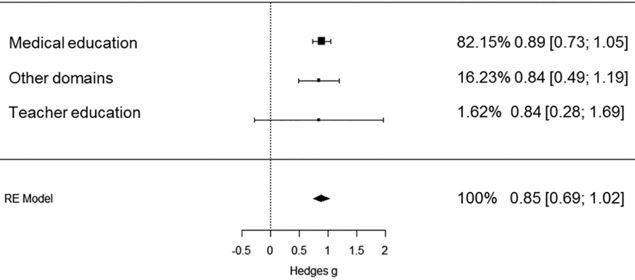
Simulation-based learning offers a wide range of opportunities to practice complex skills in higher education and to implement different types of scaffolding to facilitate effective learning. This meta-analysis includes 145 empirical studies and investigates the effectiveness of different scaffolding types and technology in simulation-based learning environments to facilitate complex skills. The simulations had a large positive overall effect: g = 0.85, SE = 0.08; CIs [0.69, 1.02]. Technology use and scaffolding had positive effects on learning. Learners with high prior knowledge benefited more from reflection phases; learners with low prior knowledge learned better when supported by examples. Findings were robust across different higher education domains (e.g., medical and teacher education, management). We conclude that (1) simulations are among the most effective means to facilitate learning of complex skills across domains and (2) different scaffolding types can facilitate simulation-based learning during different phases of the development of knowledge and skills.
Overview
CoChat Summary
TL;DR
This meta-analysis of 145 studies (10,532 participants) finds that simulation-based learning in higher education has a large positive overall effect on complex skills (g = 0.85, 95% CI [0.69, 1.02]). Effects vary by simulation features and prior knowledge, with examples/prompts helping lower-prior-knowledge learners and reflection phases helping higher-prior-knowledge learners.
Key findings
- Overall effect: g = 0.85, SE = 0.08, 95% CI [0.69, 1.02], N = 145 studies, 10,532 participants; heterogeneity was high: Q(409) = 4213.93, p < .0001, τ² = 1.2, I² = 95.86%.
- By complex skill: technical performance g = 1.06 (SE = 0.15), general problem solving g = 0.88 (SE = 0.11), diagnosing g = 0.82 (SE = 0.21), management g = 0.72 (SE = 0.30), teamwork g = 0.50 (SE = 0.08), communication g = 0.44 (SE = 0.15).
- Simulation features: live model g = 2.27 (N = 3), mixed g = 1.56, mannequin g = 0.96, virtual object g = 0.75, role play g = 0.63, document g = 0.31; technology: simulator g = 1.07, virtual reality g = 0.85, screen-based g = 0.68, no technology g = 0.74; high authenticity g = 0.86 vs low g = 0.58; duration: <1 hr g = 0.65, hours g = 0.81, days g = 0.80, >1 month g = 1.31 (N = 4).
- Scaffolding × prior knowledge: examples helped low-education learners (g = 1.15 vs high-education g = 0.56); prompts helped unfamiliar contexts (g = 0.85 vs no prompts g = 0.63) but not familiar contexts (g = 0.33 vs no prompts g = 0.96); reflection phases helped postgraduate learners (g = 1.10 vs no reflection g = 0.86) but not graduate/undergraduate learners (g = 0.52 vs no reflection g = 0.81).
Methods
- Meta-analysis of 145 empirical studies (from 128 articles, 1979–2018) yielding 409 effect estimates and 10,532 participants; searched PsycINFO, PsycARTICLES, ERIC, and MEDLINE through April 2018; included experimental/quasi-experimental or within-subject pre-post studies with a control condition and objective measures of complex skills.
- Coded moderators included simulation type, technology use, duration, authenticity, scaffolding (examples, prompts, reflection phases), knowledge convey, prior knowledge (familiarity of context, level of education), complex skill type, domain, study design, and publication type.
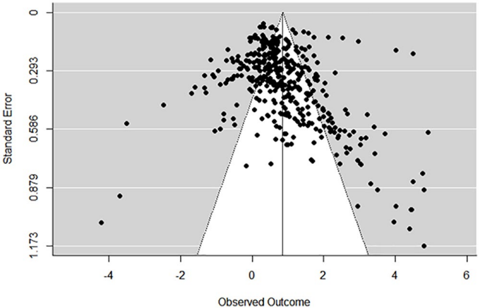
- Used Hedges’ g, random-effects models, robust variance estimation for correlated effects, pretest adjustment when available, heterogeneity Q/I², and publication-bias checks (Egger’s test, trim and fill); metaregression on control variables.
Limitations
- Stated: the focus is on complex skills involving interaction with people, so findings do not straightforwardly generalize to STEM domains such as science, mathematics, engineering, or informatics; a large proportion of findings come from medical education, so caution is needed for other domains, especially regarding technology, simulation type, outcome measures, and moderators.
- Stated: many primary studies gave little treatment description, insufficient for coding some moderators or finer distinctions; many implemented multiple instructional support measures, making specific effects hard to determine; the scaffolding framework may omit other supports such as feedback or fading/adding instruction; combinations could only be partially investigated; prior knowledge operationalization had drawbacks and explained only 4% of heterogeneity; implementation quality was assumed similar; large unexplained heterogeneity requires caution.
- Evident from the text: heterogeneity was very high (I² = 95.86%, τ² = 1.2), and several moderator estimates rest on very small numbers (e.g., live model N = 3, all scaffolding types N = 2, duration >1 month N = 4), so subgroup effects are unstable; presence/absence comparisons for examples, prompts, and reflections often did not reach significance.
Model-written summary. Check it against the paper before relying on it.
Integrity signals
Registry
Cites
Statistics
Figures

Verification
Claims the paper makes
1 Valid · 3 Not valid · 48 Not checked · 181 Own results and interpretations
At least one cited source doesn’t support this claim or points to a different paper, and none confirmed it — see the verdicts below.
In the paper
“However, they only focused on comparing simulations with a duration of more than 1 day with simulations of less than 1 day.”
§ Simulation-Based Learning in Higher Education: A Meta-Analysis > Simulations in Educational Contexts
What the sources say
- Disputedcites Cook et al., 2013 matched to “Technology-Enhanced Simulation to Assess Health Professionals: A Systematic Review of Validity Evidence, Research Methods, and Reporting Quality” (2013) sourceExperimental — accuracy not yet measured
Our copy of Cook et al. (2013) contains no duration contrast whatsoever: searches for 'simulation duration more than one day versus less than one day' and related phrasings returned only the study-coding tables. Those tables (sections 'List of all included studies, sorted by year of publication, with validity evidence and QUADAS-2 ratings (N=417 except for QUADAS-2)', pp. 17, 21, 23, 27, 32-35, and the parallel full-citation list, pp. 4-14) show the review's actual focus: charting validity evidence (content/response/process, internal structure, relations to other variables, consequences, reliability), methodological quality (MERSQI, selection/flow indices, RoB indices, QUADAS-2) and reporting across 417 technology-enhanced simulation assessment studies spanning many topics and instruments. That is contrary to the claim that the review 'only focused on comparing simulations with a duration of more than 1 day with simulations of less than 1 day'. Our copy is truncated at the end, but the retrieved structure of the review already contradicts the characterization; no alternative source for the duration comparison is named in our copy. (LLM, conf=0.72)
Checked by a reasoning model — may be wrong.
plain- Asserted: passes — The authors put it forward as true.
- Checkable: passes — It can be checked against evidence.
- Load-bearing: passes — The paper’s conclusions depend on it.
- Based: passes — The paper gives a reason why it holds.
- Disputed
The cited sources that could be checked couldn’t confirm or dispute this claim.
In the paper
“In their meta-analysis, Cook et al. (2013) provided supportive evidence of the effectiveness of distributed and repetitive practice (effects above .60)in the acquisition of complex skills in medical education.”
§ Simulation-Based Learning in Higher Education: A Meta-Analysis > Simulations in Educational Contexts
What the sources say
- Could not verifycites Cook et al., 2013 matched to “Technology-Enhanced Simulation to Assess Health Professionals: A Systematic Review of Validity Evidence, Research Methods, and Reporting Quality” (2013) sourceExperimental — accuracy not yet measured
Our copy of Cook et al. (2013) contains only the appendix material — the 'List of all included studies, sorted by year of publication, with full journal citation' (pp. 2-16) and the parallel table 'with validity evidence and QUADAS-2 ratings (N=417)' (pp. 20-35), which catalogue simulation-based ASSESSMENT validation studies with MERSQI scores, not pooled effects. Searches for 'distributed and repetitive practice', 'meta-analysis', 'effect size / Hedges g / random-effects', 'learning principles / repetition', and the paper's objective returned no narrative text at all, so nothing in our copy reports an effectiveness meta-analysis or effect magnitudes above .60. The copy is also flagged truncated, so the results/discussion where such a finding would appear may be missing; absence here is not evidence of a contrary statement, and no alternative source is named in the passages we hold. (LLM, conf=0.68)
plainstates a cause- Asserted: passes — The authors put it forward as true.
- Checkable: passes — It can be checked against evidence.
- Load-bearing: unclear — It is unclear whether the paper’s conclusions depend on it.
- Based: passes — The paper gives a reason why it holds.
- Could not verify
The cited sources support only part of this claim — read each source’s verdict below.
In the paper
“All these scaffolding measures were found to be beneficial for developing diagnostic competences (Chernikova et al., 2019).”
§ Simulation-Based Learning in Higher Education: A Meta-Analysis > Added Value of Instructional Support
What the sources say
- Partly supportedcites Chernikova et al., 2019 matched to “Facilitating Diagnostic Competences in Higher Education—a Meta-Analysis in Medical and Teacher Education” (2020) sourceExperimental — accuracy not yet measured
The meta-analysis does state broadly that all scaffolding types help ('as long as learners are able to practice problem-solving, all of the different types of scaffolding are beneficial', Theoretical Significance; echoed in Summary and Conclusion: roles, prompts and reflection phases 'have clear positive effects', with 'no indication for different effect sizes of different types of scaffolding'). But the claim drops the source's binding condition — the benefit holds only where learners' own problem-solving is preserved — and the source's results are not uniformly significant: in Effect of Scaffolding, settings with vs. without examples 'did not reach statistical significance' (Q(1,35)=2.85, p=.06), and Limitations warns that 'conclusions about the effectiveness of each scaffolding type should be made with caution'. So the flat 'all these scaffolding measures were found to be beneficial' overstates an explicitly conditional and hedged finding. (LLM, conf=0.72)
plainstates a cause- Asserted: passes — The authors put it forward as true.
- Checkable: passes — It can be checked against evidence.
- Load-bearing: passes — The paper’s conclusions depend on it.
- Based: passes — The paper gives a reason why it holds.
- Partly supported
A result the paper reports from its own data — it cites no other source for it, so there is none to check. The quote shows it is in the paper.
In the paper
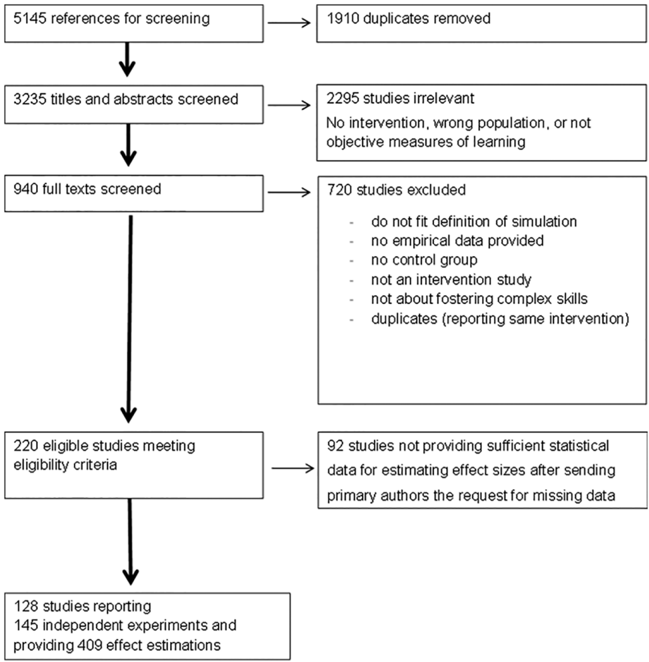
“The 145 eligible studies (from 128 articles published in the period 1979-2018) provided 409 effect estimations (Figure 1).”
§ Simulation-Based Learning in Higher Education: A Meta-Analysis > Results of Literature Search
plainn = 10,532- Asserted: passes — The authors put it forward as true.
- Checkable: passes — It can be checked against evidence.
- Load-bearing: passes — The paper’s conclusions depend on it.
- Based: passes — The paper gives a reason why it holds.
A result the paper reports from its own data — it cites no other source for it, so there is none to check. The quote shows it is in the paper.
In the paper
“The most frequent combinations of instructional support measures were knowledge convey together with examples (82 effects), knowledge convey with reflection phases (62 effects), and examples with reflection phases (43 effects).”
§ Simulation-Based Learning in Higher Education: A Meta-Analysis > Results of Literature Search
plain- Asserted: passes — The authors put it forward as true.
- Checkable: passes — It can be checked against evidence.
- Load-bearing: unclear — It is unclear whether the paper’s conclusions depend on it.
- Based: passes — The paper gives a reason why it holds.
120 more claims
Create a free account to see all 233 claims and to verify the 44 references still open.
- It may state two separate claims as one. 61
- Probably not a substantial claim. 61
Claims other papers make about this one
Each is checked against this paper’s own text: does it say what the citing paper says it does?
In the citing paper
“Chernikova and colleagues have demonstrated in a meta-analysis that simulations of professional situations, such as interactions in a classroom for teachers, can be a beneficial tool during teacher training as they expose teachers to authentic problems in their fields51.”
From On opportunities and challenges of large multimodal foundation models in education (2025) · cites this paper as [51]
In the citing paper
“Meta-analytic findings indicate that simulations are among the most effective means to facilitate the learning of complex skills across domains, with technology-based and scaffolded simulations showing robust positive effects on learning outcomes [11].”
In the citing paper
“While several earlier reviews have examined the general benefits of simulation in nursing education [17], few have focused specifically on its role in bridging the theory–practice gap.”
From The impact of clinical simulation on bridging the theory–practice gap in nursing education: a systematic review (2025) · cites this paper as [17]
In the citing paper
“High-fidelity simulations were particularly associated with enhanced clinical judgment and decision-making accuracy [17, 29, 30].”
From The impact of clinical simulation on bridging the theory–practice gap in nursing education: a systematic review (2025) · cites this paper as [17]
In the citing paper
“These findings are supported by meta-analytic evidence from Chernikova et al., who concluded that simulation-based learning substantially improves decision-making and problem-solving skills in higher education, especially when paired with active learning strategies and structured debriefing [17].”
From The impact of clinical simulation on bridging the theory–practice gap in nursing education: a systematic review (2025) · cites this paper as [17]
Statistics recomputed
Every reported test result, recomputed from its test statistic and degrees of freedom. A result shows as not adding up only once an independent check has confirmed it.
- ConsistentQ(409) = 4213.93reported p < .0001 · recomputed p < .001
“Q (409) = 4213.93,p < .0001”
Self-check
Percentages, sums and reported differences re-computed from the paper’s own numbers.
Each contradiction between two passages listed here was confirmed by an independent check.
Rated major: it would touch a result — a value a result rests on, reported and recomputed p-values on opposite sides of the significance level, two passages that conflict with no sign which is right, or a cited work retracted before this paper was published.
In the paper
§ Simulation-Based Learning in Higher Education: A Meta-Analysis > Discussion
“However, the effects are greater if learners are unfamiliar with the context and the task.”
§ Simulation-Based Learning in Higher Education: A Meta-Analysis > Prior Professional Knowledge
“learners showed a lower increase of complex skills in an unfamiliar context (g = 0.67, SE = 0.10) than in a familiar context (g = 0.83, SE = 0.13)”
Rated minor: it would not touch a result — a value no result rests on, a p-value that stays on the same side of the significance level, or a conflict that is clerical, resolved elsewhere in the paper, or outside its own findings.
In the paper
§ Simulation-Based Learning in Higher Education: A Meta-Analysis > Results of Literature Search
“Most studies focused on general problem solving (51) or the technical performance of a particular complex procedure (56); the other outcomes were communication skills (24), diagnosing (18), managing critical situations (18), and collaboration and teamwork (5).”
§ Simulation-Based Learning in Higher Education: A Meta-Analysis > Conclusion
“2,493 (27) 0.46 91.03% | 911 (18) 0.76 92.02% | 6,010 (58) 0.47 91.23% | 2,543 (21) 1.04 97.15% | 810 (5) 0.03 66.07% | 2,933 (63) 1.25 91.10%”
Rated minor: it would not touch a result — a value no result rests on, a p-value that stays on the same side of the significance level, or a conflict that is clerical, resolved elsewhere in the paper, or outside its own findings.
In the paper
“(2) prompts as the only scaffolding method (N = 11)”
§ Simulation-Based Learning in Higher Education: A Meta-Analysis > Level of Education as an Indicator of Prior Knowledge and Experience
Reported 11 · recomputed 12
Rated minor: it would not touch a result — a value no result rests on, a p-value that stays on the same side of the significance level, or a conflict that is clerical, resolved elsewhere in the paper, or outside its own findings.
In the paper
§ Simulation-Based Learning in Higher Education: A Meta-Analysis > Discussion
“Despite these differences, simulations had effects that can be categorized as large positive effects for all but one type of skill.The exception is teamwork, where the meta-analysis found a medium positive effect only.”
§ Simulation-Based Learning in Higher Education: A Meta-Analysis > Overall Effect of Simulation-Based Learning on Complex Skills (Research Question 1)
“Communication and collaboration skills (teamwork) are only moderately facilitated by simulation-based learning (g = 0.44, SE = 0.15, and g = 0.50, SE = 0.08, respectively)”
Rated minor: it would not touch a result — a value no result rests on, a p-value that stays on the same side of the significance level, or a conflict that is clerical, resolved elsewhere in the paper, or outside its own findings.
In the paper
§ Simulation-Based Learning in Higher Education: A Meta-Analysis > Level of Education as an Indicator of Prior Knowledge and Experience
“however, introducing prompts was related to higher learning outcomes in the high-level group.”
§ Simulation-Based Learning in Higher Education: A Meta-Analysis > Level of Education as an Indicator of Prior Knowledge and Experience
“Similarly, introducing prompts for a high (postgraduate learners and practitioners) level (g = 0.50, SE = 0.36) was not beneficial for learning compared with simulations without prompts (g = 0.91, SE = 0.11).”
Citations
Cites
Measuring inconsistency in meta-analyses
Higgins, J. P. T., Thompson, S. G., Deeks, J. J., & Altman, D. G. (2003) · BMJ · doi:10.1136/bmj.327.7414.557 · Cited by 63,139 · cited 1×
“The thresholds suggested by Higgins et al. (2003) were used to interpret the I 2 (25% for low heterogeneity, 50% for medium, 75% for high heterogeneity).”
MethodBorenstein, M., Hedges, L. V., Higgins, J. P. T., & Rothstein, H. R. (2009) · doi:10.1002/9780470743386 · Cited by 14,225
Hattie, J., & Timperley, H. (2007) · Review of Educational Research · doi:10.3102/003465430298487 · Cited by 12,905
THE ROLE OF TUTORING IN PROBLEM SOLVING *
Wood, D., Bruner, J. S., & Ross, G. (1976) · Journal of Child Psychology and Psychiatry · doi:10.1111/j.1469-7610.1976.tb00381.x · Cited by 8,851 · cited 1×
“Scaffolding enables a learner to solve problems through modifying tasks and reducing possible pathways, and through hints helping the learner to coordinate the steps in problem solving or interaction (Quintana et al., 2004), by taking over some elements of learning material (Wood et al., 1976).”
BackgroundKirschner, P. A., Sweller, J., & Clark, R. E. (2006) · Educational Psychologist · doi:10.1207/s15326985ep4102_1 · Cited by 7,776 · cited 2×
“…suggesting that including simulations in a later phase of a higher education program after students already know theoretical concepts is promising in order to not overwhelm learners and block too much of their cognitive capacity for solving a problem in a simulation (e.g., Kirschner et al., 2006).”
BackgroundFunnel plots for detecting bias in meta-analysis
Sterne, J. A. C., & Egger, M. (2001) · Journal of Clinical Epidemiology · doi:10.1016/s0895-4356(01)00377-8 · Cited by 3,779 · cited 1×
“We have a relatively small sample of empirical studies and apply a range of techniques to identify possible biases (Egger’s test, trim and fill) and improve the generalizability of the results (Sterne & Egger, 2001).”
MethodEducational Psychology: A Cognitive View
Gagné, R. M., Ausubel, D. P., & Gagné, R. M. (1969) · American Educational Research Journal · doi:10.3102/00028312006002287 · Cited by 3,302
Educational Psychology: A Cognitive View
Gagné, R. M., Ausubel, D. P., & Gagne, R. M. (1969) · American Educational Research Journal · doi:10.2307/1161899 · Cited by 3,278
HMELO-SILVER, C. E., DUNCAN, R. G., & CHINN, C. A. (2007) · Educational Psychologist · doi:10.1080/00461520701263368 · Cited by 2,641 · cited 1×
“…problems, especially in early stages of expertise development, should be accompanied by scaffolding to maximize learning and avoid cognitive overload, distraction, or focusing on superficial features of a situation (see the discussions of Hmelo-Silver et al., 2007; Kirschner et al., 2006).”
BackgroundReflection and reflective practice in health professions education: a systematic review
Mann, K., Gordon, J., & MacLeod, A. (2009) · Advances in Health Sciences Education · doi:10.1007/s10459-007-9090-2 · Cited by 2,175 · cited 1×
“Reflection phases, on the other hand, allow learners to think about goals, analyze their own performance, and plan further steps (e.g., Mann et al., 2009), but they do not provide much guidance during the problem solving.”
Background
Research works printed but not linked: 4
- Funke, J. (Ed.). (2006). Denken und Problemlösen (pp. 375-446).
- Henninger, M., & Mandl, H. (2000). Vom Wissen zum Handeln-ein Ansatz zur Förderung kommunikativen Handelns [From knowledge to action-An approach for fostering communicative behavior]. In H. Mandl & J. Gerstenmaier (Eds.), Die Kluft zwischen Wissen und Handeln (pp. 197-219).
- Raven, J. (2000). Psychometrics, cognitive ability, and occupational performance. Review of Psychology, 7(1-2), 51-74.
- Veritas Health Innovation. (2019). Covidence systematic review software (online ver- sion) [Computer software]. https://www.covidence.org
Cited by
Items 701–800 of 1,412
Sofwan, S., Wibowo, S., Waspodo, M., & Hartono, R. (2024) · Indonesian Journal of Pedagogy and Teacher Education · doi:10.58723/ijopate.v2i3.335 · Cited by 1
Raurell‐Torredà, M., Obejo-Alamillos, C., Turégano, C., Esteban‐Sepúlveda, S., Adalid-Villaronga, R., Estrada-Masllorens, J. M., Guerrero, J. A. S., Basco-Prado, L., Zaragoza‐García, I., & Fernández-Cervilla, A. B. (2025) · Clinical Simulation in Nursing · doi:10.1016/j.ecns.2024.101681 · Cited by 1
Student Acceptance of Digital Entrustable Professional Activities: Protocol for a Cohort Study
Domann, M., Richters, C., & Stadler, M. J. (2025) · JMIR Research Protocols · doi:10.2196/59326 · Cited by 1
“While both EPAs and simulations have been part of extensive research efforts individually, their integration into a digital EPA format offers a new development for these two teaching methods [1,3,4].”
InfluentialSelf-citationUsing Forum Theatre in nursing simulations
Mitchell, A. (2025) · British Journal of Nursing · doi:10.12968/bjon.2024.0305 · Cited by 1
Using an Interactive Decision Model to Train and Evaluate High-Flow Nasal Cannula Therapy Knowledge
Plummer, K. J., Sowa, J. M., Papenfuss, S. B., & Jackson, K. M. (2025) · Respiratory Care · doi:10.1089/respcare.12343 · Cited by 1
“6,7 However, barriers such as high costs, 8,9 lack of faculty expertise, 10 limited skill coverage, 11 and insuf fi cient learner scaffolding 12 hinder their implementation.”
Arezina, J., Morrissey, S., & Harrison, W. (2025) · Ultrasound · doi:10.1177/1742271x251320549 · Cited by 2
“17,39 Aspects of the BWE made the assessment less authentic, such as differences in the system controls compared to ultrasound equipment and not having the capability for TV examinations.”
Tselegkaridis, S., Sapounidis, T., Tokatlidis, C., & Papakostas, D. (2025) · IEEE Transactions on Education · doi:10.1109/te.2025.3551927 · Cited by 1
“However, their utilization increased during the pandemic as a means of supporting sanitary measures [18], [19], [20].”
Hodge, T. J., Potter, L., & Helsby, C. J. (2025) · Cureus · doi:10.7759/cureus.82013 · Cited by 1
Tselegkaridis, S., Sapounidis, T., Rapti, S., & Papakostas, D. (2025) · Research in Science & Technological Education · doi:10.1080/02635143.2025.2491073 · Cited by 1
“Therefore, the use of a simulator offers a visualization of reality without cost or risk (Campbell et al. 2002; Chernikova et al. 2020; Hodge, Scott Hinton, and Lightner 2001; Sapounidis et al. 2023; Tselegkaridis and Sapounidis 2021).”
Nurhanafi, K., Zarkasi, A., Putri, E. R., Putri, D. R. P. S., Syahrir, S., & Ummah, A. R. (2025) · Mitra Mahajana Jurnal Pengabdian Masyarakat · doi:10.37478/mahajana.v6i1.4935 · Cited by 1
“Simulasi merupakan salah satu alternatif yang baik untuk menambah pengalaman belajar bagi peserta didik pada pembelajaran sains (Chernikova et al., 2020) (Hillmayr et al., 2020) (Sari et al., 2020).”
Gialogo, D. L. (2025) · Psychology and Education A Multidisciplinary Journal · doi:10.70838/pemj.350908 · Cited by 1
Kerr, A. (2025) · Pacific Journal of Technology Enhanced Learning · doi:10.24135/pjtel.v7i1.206 · Cited by 1
“However, using simulations in education also presents challenges, such as ensuring user satisfaction and addressing limitations in usability and accessibility (Chernikova et al., 2020; O'Brien & Toms, 2008).”
InfluentialSimulation in medical graduation: teaching of pharmacology
Santos, A. F. P., Gabrielli, Â., Lima, A. C. L., Bruch, G. E., & Almeida-Santos, A. F. (2025) · Revista Brasileira de Educação Médica · doi:10.1590/1981-5271v49.2-2023-0171 · Cited by 1
Exploring the Effects of Simulation-Based Instruction for Neural Networks
Wong, T.-S., & Lin, Y.-T. (2025) · IEEE Global Engineering Education Conference (EDUCON) · doi:10.1109/educon62633.2025.11016568 · Cited by 1
“These tools are valuable in various fields, such as engineering and science, where they enhance understanding and motivation [16][17].”
Yip, A., Yip, Y., Tsui, Z., & Chan, C. K. J. (2025) · COVID · doi:10.3390/covid5060092 · Cited by 1
Team building and communication: “Sim Wars” game-based learning and peer-to-peer mentoring
Gomez, N. A. G., Hauglum, S. D., Mitzova-Vladinov, G., Acevedo, D., & Ocampo-Salazar, A. F. (2025) · Clinical Simulation in Nursing · doi:10.1016/j.ecns.2025.101761 · Cited by 1
Eye movements as predictors of student experiences during nursing simulation learning events
Lee, M., Vatral, C., Cohn, C., Davalos, E., Jessee, M. A., Biswas, G., & Levin, D. T. (2025) · Cognitive Research Principles and Implications · doi:10.1186/s41235-025-00640-7 · Cited by 1
“The use of simulation training is now common practice in many fields because it allows for high-fidelity learning experiences without any real-world risk (e.g., pilot training, medical education, police enforcement, and army training; Chernikova et al., 2020).”
Butsadi, C., Howimanporn, S., Hutamarn, S., Pratumsuwan, P., & Chookaew, S. (2025) · Lecture notes in educational technology · doi:10.1007/978-981-96-8931-6_17 · Cited by 1
The effectiveness of virtual linguistic simulations in preparing for real communicative situations
Bilous, N., Diachuk, L., Dovzhenko, I. V., Tsymbalysta, O., & Poznikhirenko, Y. (2025) · Revista EDaPECI · doi:10.29276/redapeci.2025.25.222340.186-200 · Cited by 2
Impact of Formative Feedback on Skill Acquisition in Simulation-Based Training
Awan, A. H., Abdullah, Z., Baig, M. Z., Parvez, F., Jabeen, N., & Gul, N. (2025) · Pakistan Journal of Health Sciences · doi:10.54393/pjhs.v6i7.3294 · Cited by 1
The use of role-play in sexuality education: An integrative review
McKenney, E. E. (2025) · Health Education Journal · doi:10.1177/00178969251370244 · Cited by 1
“However, role-play as an active, simulation-based strategy may aid in the practice and generalisation of material learned (Chernikova et al., 2020; Kilgour et al., 2015; Woodhouse, 2019).”
Dittrich, L. (2025) · Technology Knowledge and Learning · doi:10.1007/s10758-025-09898-8 · Cited by 1
“Simulation-based learning (SBL) techniques are used across different fields (Chernikova et al., 2020 ; Hopwood et al., 2016 ) to bring professional education closer to practice.”
A hybrid fuzzy AHP-ANN approach for evaluating simulation models in tourism training
Vinh, N. Q., Thai, N. V., & Ha, T. T. H. (2025) · Cogent Social Sciences · doi:10.1080/23311886.2025.2556471 · Cited by 2
“While prior works (e.g., chernikova et al., 2020; Newman et al., 2017) emphasized Psychological safety as a key determinant of simulation effectiveness—particularly in Western educational contexts—this research identified social interaction as the most influential factor in the Vietnamese setting.”
InfluentialSchultz-Pernice, F., Hofer, S. I., Sailer, M., Heitzmann, N., & Fischer, F. (2025) · Springer eBooks · doi:10.1007/978-3-662-69557-9_22 · Cited by 1
Self-citationEffects of heterogeneity simulations on beliefs
Baier‐Mosch, F., Dignath, C., & Kunter, M. (2025) · Learning and Instruction · doi:10.1016/j.learninstruc.2025.102258 · Cited by 1
Dias, J. M., Abraham, M. S., Subu, M. A., Al‐Yateem, N., Ahmed, F. R., Abdillahi, R. A., Saleh, N. J., Ali, S. M., Hashi, K. A., & Mottershead, R. (2025) · F1000Research · doi:10.12688/f1000research.167350.2 · Cited by 1
Designing authentic language learning simulations to support student engagement
Montgomery, C., Balzotti, J., & Hansen, D. L. (2025) · Foreign Language Annals · doi:10.1111/flan.70036 · Cited by 2
Integrating Artificial Intelligence into Simulation Design: Rebel Recruitment in Azura’s Civil War
Dunlop, E., & Karim, S. (2025) · Journal of Political Science Education · doi:10.1080/15512169.2025.2584397 · Cited by 1
“Evidence suggests that simulations increase enjoyment, student knowledge and skills, and student retention in class, especially when combined with other approaches to active learning (Chernikova et al., 2020; Hendrikson 2021).”
Digital Industrial Solutions for Enhancing Student Motivation and Prepare Them for Industry 4.0
Hristov, G., Kinaneva, D., Zahariev, P., Georgiev, G., & Beloev, I. H. (2025) · International Conference on Energy Efficiency and Agricultural Engineering (EE&AE) · doi:10.1109/eeae65901.2025.11273603 · Cited by 1
“Numerous studies have emphasized the need to align engineering education with the competencies demanded by Industry 4.0, such as digital literacy, data-driven decision-making, and interdisciplinary collaboration [7], [8], [9], [10].”
InfluentialQuan, Z., Wu, J., & Zhang, J. (2025) · Asia Pacific Journal of Education · doi:10.1080/02188791.2025.2596922 · Cited by 1
Simut, C., Kiss, J. F., Orţan, F., & Mandrea, L. (2025) · SCIENTIA MORALITAS - International Journal of Multidisciplinary Research · doi:10.5281/zenodo.16415277 · Cited by 1
Diquito, T. J. A., & Magallon, S. V. (2025) · International Journal of Evaluation and Research in Education (IJERE) · doi:10.11591/ijere.v14i5.33483 · Cited by 1
From Confusion to Understanding: Optimizing Computer Simulations for Projectile Motion
BATLOLONA, J. R., Jamaludin, & Barus, C. S. A. (2025) · Jurnal Penelitian dan Pengembangan Pendidikan · doi:10.23887/jppp.v9i2.93519 · Cited by 1
Moldamurat, K., Spada, L. L., Zeeshan, N., Bakyt, M., Kuanysh, A., Zhanibek, K. B., & Tilenbayev, A. (2025) · Journal of Robotics and Control (JRC) · doi:10.18196/jrc.v6i4.26275 · Cited by 4
Zulianto, R. E., Rusilowati, A., & Sarwi, S. (2025) · Unnes Science Education Journal · doi:10.15294/usej.v14i3.36047 · Cited by 1
“Simulation-based learning offers a realistic learning experience and can be an effective approach for developing complex skills (Chernikova et al., 2020) The reliability was measured using Cronbach’s alpha.”
Jolly, S., Montagu, A., Vater, L., & Davies, E. (2026) · Education Sciences · doi:10.3390/educsci16010132 · Cited by 3
Sangurima, W. E. J. (2026) · ASCE MAGAZINE · doi:10.70577/asce.v5i1.585 · Cited by 1
Exploring the Perception of Ayurveda Graduates Regarding Simulation-Based Teaching-Learning
Sawarkar, G. R., Kuchewar, V. V., Patel, S. A., & Sawarkar, P. G. (2026) · Journal of Pharmacy And Bioallied Sciences · doi:10.4103/jpbs.jpbs_549_25 · Cited by 1
“[15] Additionally, incorporating a standardized patient program can ease the transition from simulation to real‑world practice.”
IMPROVING STUDENTS’ ABILITY IN READING COMPREHENSION NEWS ITEM TEXT BY USING GRAPHIC ORGANIZER
Marginingsih, M. (2025) · FRASA English Education and Literature Journal · doi:10.47701/frasa.v7i1.5242 · Cited by 1
Dorle, A., Borkar, A., Bankar, N. J., Badge, A. K., & Tiwade, Y. R. (2026) · Journal of Education and Health Promotion · doi:10.4103/jehp.jehp_300_24 · Cited by 1
“[7,44]”
Montoro-Bombú, R., Costa, A. D., Pinheiro, V., Coelhoso, F., Nascimento, P. A., Abranja, N., Farinho, P., Rosa, C., Ribeiros, I., Picado, L., et al. (2026) · Education Sciences · doi:10.3390/educsci16040619 · Cited by 1
Bartolac, A., Jokić, C. S., Arokki, H., Bostancı, H., Emir, A., Kuikkaniemi, A., Magerat, L., Pechstädt, K., Unger, J., & Vergauwen, K. (2026) · Australian Occupational Therapy Journal · doi:10.1111/1440-1630.70086 · Cited by 1
Ahn, S., Schooley, R. C., Graefe, B., & Chuan, C. (2026) · Emerald Group Publishing Limited eBooks · doi:10.1108/978-1-80686-665-620261006 · Cited by 1
Ngam, B. N., Rooney, D. M., Kim, E., Tchinde, M. J., El-Hayek, K. M., Barnard, M. L., Jeffcoach, D. R., Snell, M. J., & Kim, G. J. (2026) · Current Problems in Surgery · doi:10.1016/j.cpsurg.2026.102065 · Cited by 1
Al-Rahbi, A., Agarwal, H., Sirasanagandla, S. R., Azmi, M. O., Badi, Q. A., Kolekar, A., Rachoori, S., Kumar, R. S., Sakr, H. F., & Joseph, M. A. (2026) · Frontiers in Medicine · doi:10.3389/fmed.2026.1781197 · Cited by 1
“Simulation-based education is a learner-centered strategy that utilizes realistic scenarios or environments to replicate clinical situations and physiological processes, thereby enabling students to practice and refine their skills in a safe and controlled setting (11).”
Hamash, M., Tiernan, P., Tabbaa, L., & Young, G. W. (2026) · International Journal of Human-Computer Interaction · doi:10.1080/10447318.2026.2690094 · Cited by 1
Jiang, J., Rahbarimanesh, A., & Maqbool, R. (2026) · Project Leadership and Society · doi:10.1016/j.plas.2026.100233 · Cited by 4
Lvova, A. S., Savenkov, A. I., Suleymanov, R. S., & Фортунатов, А. А. (2026) · Uchenye zapiski universiteta imeni P F Lesgafta · doi:10.5930/1994-4683-2026-6-154-164 · Cited by 1
Active learning in practice: a simulation-based intervention in introductory accounting education
Ngalim, S. M., & Selamat, A. I. (2026) · Journal of Accounting Education · doi:10.1016/j.jaccedu.2026.101034 · Cited by 2
Levin, O., Ophir, L., & Hagshoury, T. (2026) · Education Sciences · doi:10.3390/educsci16071097 · Cited by 1
Duncan, J., Counihan, C., Gibson, L., Nichol, D., & Mulholland, K. (2026) · Frontiers in Education · doi:10.3389/feduc.2026.1896986 · Cited by 1
Cabanban, I. D., Vidal, E. T., Viadoy, K. M., Talabucon, C., Padua, S. M. J., Lazaro, H. S., Lao, L., Genito, K., Cordero, J. V., Co, Y. G., et al. (2026) · Asian Journal of Educational Leadership Management and Pedagogy · doi:10.65166/3ek7jk08 · Cited by 1
Metricized Scaffolds: AI-Enabled Simulation Training and Transfer in Human Resource Development
Xie, N., Liu, Y., Wang, Y., & Wang, Y. (2026) · Administrative Sciences · doi:10.3390/admsci16080372 · Cited by 1
Simulation-Based Education in a Counseling Skills Course: A Mixed-Methods Pilot Study
Gantt‐Howrey, A., Meshesha, H. S., Huang, R., Horn, E. A. D., Howells, R., & Adedapo, A. O. (2026) · Journal of Technology in Counselor Education and Supervision · doi:10.61888/2692-4129.1149 · Cited by 1
Development of a Virtual Laboratory Stand Using Simscape for Mechatronic Engineering Education
Pintilie, I., Glodean, D., & Lăpuşan, C. (2026) · Education Sciences · doi:10.3390/educsci16091460 · Cited by 1
Sebayang, S. A. M., Maisyarah, R., Faried, A. I., & Lubis, A. N. (2025) · Proceedings of The International Conference on Computer Science Engineering Social Science and Multi-Disciplinary Studies · doi:10.64803/cessmuds.v1.83 · Cited by 1
Zulkafli, S. A., Mohamad, M., Saibon, J., & Saibon, R. A. (2026) · Journal of Islamic Social Economics and Development · doi:10.55573/jised.118325 · Cited by 1
Margaret, N. I., Susilawati, S., & Yulianawati, D. (2026) · Cokroaminoto Journal of Primary Education · doi:10.30605/cjpe.9.4.2026.9644 · Cited by 1
“Research on simulation-based learning indicates that instructional support needs to be aligned with students' needs and prior knowledge (Chernikova et al., 2020).”
Sasson, O., Apartsin, A., & Aperstein, Y. (2026) · Education Sciences · doi:10.3390/educsci16101752 · Cited by 1
Danielsson, A., & Hyams–Ssekasi, D. (2022) · Advances in game-based learning book series · doi:10.4018/978-1-6684-4287-6.ch016 · Cited by 1
Sjöberg, D., Rantatalo, O., Baxter, R., & Gyllencreutz, L. (2025) · Learning Culture and Social Interaction · doi:10.1016/j.lcsi.2025.100924 · Cited by 1
The 5-stage approach: a simulation-based education framework
Browne, E. A. (2025) · Journal of Paramedic Practice · doi:10.12968/jpar.2024.0108 · Cited by 1
Pywell, S., Wallace, C., Wallace, S., & Davies, M. (2025) · Frontiers in Public Health · doi:10.3389/fpubh.2025.1694834 · Cited by 1
“Ongoing debate exists across HE as to the most appropriate way to teach within universities and the value and limitations of digital formats (28–31).”
Piotopoulos, S., & Sakkopoulos, E. (2025) · International Conference on Information, Intelligence, Systems & Applications (IISA) · doi:10.1109/iisa66859.2025.11311214 · Cited by 1
“This might take the form of managing resources such as time and budget and simulating real life with possible obstructions and exemptions [45].”
Transforming Legal Education in the Age of AI: Towards a Critical and Experiential Pedagogy
Bennett, T. (2025) · Advances in computational intelligence and robotics book series · doi:10.4018/979-8-3373-3451-6.ch009 · Cited by 2
Stavik, T. A., Gjeilo, K. H., & Gundrosen, S. (2026) · Sykepleien Forskning · doi:10.4220/sykepleienf.2025.101813en · Cited by 1
Amalliyah, N. (2026) · Jurnal Inovasi Matematika · doi:10.35438/inomatika.v8i1.567 · Cited by 1
Caponnetto, V., Ventura, F., Marcelli, S., Masotta, V., Paoli, I., Azzellino, G., Petrucci, C., Lancia, L., & Dante, A. (2026) · Lecture notes in networks and systems · doi:10.1007/978-3-032-15743-0_23 · Cited by 1
Wahyuni, E. S., Titin, T., Faturrahman, M. A., Virda, D. A., & Wahyuningsih, D. (2026) · JPBI (Jurnal Pendidikan Biologi Indonesia) · doi:10.22219/jpbi.v12i1.42986 · Cited by 1
Holzberger, D., Radkowitsch, A., Heitzmann, N., Nickl, M., Brandl, L., Stadler, M. J., Obersteiner, A., Chernikova, O., Pickal, A. J., Richters, C., et al. (2026) · Journal of Educational Psychology · doi:10.1037/edu0001010 · Cited by 1
Self-citationSuyidno, S., Mısbah, M., Mastuang, M., Komariyah, L., Qamariah, Q., Amiruddin, M. Z. B., & Rahman, N. F. A. (2026) · Online Learning In Educational Research (OLER) · doi:10.58524/oler.v6i1.1000 · Cited by 1
“Although several studies have reviewed the use of simulation in education (Azhari et al., 2024; Banda & Nzabahimana, 2021; Chernikova et al., 2020; Pellas et al., 2021), most of them focus on specific domains, particularly medical and nursing education (Koukourikos et al., 2021; Sezgin & Bektas,…”
Neuber, K., & Kleinknecht, M. (2026) · Frontiers in Education · doi:10.3389/feduc.2026.1789590 · Cited by 1
Sari, D. W., Kugai, H., Takaoka, M., Sudarsiwi, N. P., Rizki Fitryasari, P. K., Matsumoto, H., Wu, J., Nasifah, I. A., Habibie, A. N., Pratiwi, D. A., et al. (2026) · Journal of Applied Gerontology · doi:10.1177/07334648261437960 · Cited by 1
Consequential feedback as a mechanism of action in educational leadership simulations
Gat, Y., Quinlan, K. M., & Pitt, E. (2026) · Assessment & Evaluation in Higher Education · doi:10.1080/02602938.2026.2653880 · Cited by 1
LIBRA: A simulation-based gender equality training programme for student leaders in higher education
Scott, M. K., Lucey, S., Power, M., Lucey, S. M., & Condron, C. M. (2026) · Advances in Simulation · doi:10.1186/s41077-025-00404-9 · Cited by 1
“Chernikova et al. [18] and Cleland et al. [15] provide meta-analyses and case studies on the sociocultural complexities of simulation-based education.”
Asimbaya, M. E. C., Murillo, L. K. C., & Cobos, A. C. A. (2026) · Ciencia Latina Revista Científica Multidisciplinar · doi:10.37811/cl_rcm.v10i2.23368 · Cited by 1
Modelling and Measuring Professional Vision in Medical Education: A Cognitive Process Framework
Seidel, T., Kosel, C., Böheim, R., Gartmeier, M., & Berberat, P. O. (2026) · International Medical Education · doi:10.3390/ime5020052 · Cited by 1
“Importantly, the process-oriented measurement approaches outlined in this paper also enable formative evaluation of learning environments [54,57].”
Self-citationMacauley, K., Burket, K., Kargela, M., Krawczyk, K., McQuade, A., Sabus, C. H., Rucker, J., Goldberg, N., Ross, S., & Buzzard, P. (2026) · Journal of Physical Therapy Education · doi:10.1097/jte.0000000000000484 · Cited by 1
Artificial Intelligence in Social Work: Bridging Technology and Humanity
An, R., & Lindsey, M. A. (2026) · Springer eBooks · doi:10.1007/978-3-032-18443-6 · Cited by 1
Simulation-based instruction: student enjoyment of a computer-based practical activity
Merghani, T. H., Khan, N. A., Taha, H., & Alawad, A. O. (2026) · Journal of Medical Education Development · doi:10.66224/edcj.19.1.74 · Cited by 1
Alves, I., Carvalho, P. F., Esteves, A., & Jorge, J. A. (2026) · Computer Applications in Engineering Education · doi:10.1002/cae.70256 · Cited by 1
Holographic conversational agents for education
Gohel, R., Saravi, S., Yang, Y., Batmaz, F., Derakhshan, P., Grogan, S., Burger, Y., Harland, R., Nevisi, H., & Storey, G. (2026) · Virtual Reality · doi:10.1007/s10055-026-01476-2 · Cited by 1
Taha, N., & Thebian, S. (2025) · Global Partners in Education Journal · Cited by 1
Class-Card: A Role-Playing Simulation of Instructional Experiences for Pre-service Teachers
Dessus, P., Chabert, J., Pernin, J.-P., & Wanlin, P. (2020) · Lecture notes in computer science · doi:10.1007/978-3-030-63464-3_27 · Cited by 1
“85), simulations are among the most effective means to facilitate learning of complex skills and scaffolding types including feedback and reflection can enhance this effect [13].”
BackgroundDevelopment of Simulation Based RISDA Learning Process for Electronic Technology Education
Phacharoen, E., & Akatimagool, S. (2020) · International STEM Education Conference (iSTEM-Ed) · doi:10.1109/istem-ed50324.2020.9332744 · Cited by 1
Schwabe, U., & Braun, E. (2021) · Journal of Supranational Policies of Education (JOSPOE) · doi:10.15366/jospoe2021.13.005 · Cited by 1
“A recent meta-analysis concludes that complex skills like problem-solving and communication can effectively facilitated with simulations by using recent technologies (Chernikova et al. 2020).”
BackgroundVirtual Enterprise Simulation Game as an Environment for Collaborative Creativity and Learning
Tuhkala, A., Syynimaa, K., Lainema, K., Lämsä, J., Lainema, T., & Hämäläinen, R. (2021) · Palgrave studies in creativity and culture · doi:10.1007/978-3-030-77066-2_8 · Cited by 2
The future of cross-functional technical training
Ardakani, E. P., Reid, B. T., & Khare, S. (2021) · Second International Meeting for Applied Geoscience & Energy · doi:10.1190/segam2021-3594956.1 · Cited by 1
A Simple Agent Based Modeling Tool for Plastic and Debris Tracking in Oceans
Murukutla, S. A., Koushik, S. B., Chinthala, S. P. R., Bobbillapati, A., & Kandaswamy, S. (2021) · Lecture notes in computer science · doi:10.1007/978-3-030-85739-4_12 · Cited by 2
Roache-Fedchenko, A. (2013) · Syracuse University Libraries (Syracuse University) · Cited by 2
Simulieren statt Studieren in der Lehrerbildung? Medizindidaktik und Religionspädagogik im Dialog
Riegger, M., & Rotthoff, T. (2022) · Religionspädagogische Beiträge · doi:10.20377/rpb-156 · Cited by 1
Liu, L., Donbavand, S., Hoskins, B., Janmaat, J. G., & Kavadias, D. (2021) · MDPI eBooks · doi:10.3390/books978-3-0365-2634-8 · Cited by 1
Microcore: Using Online Playable Cases to Increase Student Engagement in Online Writing Environments
Balzotti, J., Haws, K. S., Rogers, A., McDonald, J. K., & Baker, M. (2022) · Journal of Applied Instructional Design · doi:10.51869/113/bhrmb1 · Cited by 1
Social Challenges and Actions for Thinking and Reasoning in the Digital Age
de Aldama, C., & García-Pérez, D. (2023) · Springer eBooks · doi:10.1007/978-3-030-87624-1_3-1 · Cited by 1
Bannister, P. (2023) · Advances in educational technologies and instructional design book series · doi:10.4018/978-1-6684-6081-8.ch014 · Cited by 1
Gutmann, M. R., Jentges, E., & MacKevett, D. (2023) · European journal of training and development · doi:10.1108/ejtd-11-2022-0132 · Cited by 1
Act It Out! Using Simulations for Professional Development to Build Cultural Responsivity
Campbell, D. (2023) · Perspectives of the ASHA Special Interest Groups · doi:10.1044/2023_persp-22-00099 · Cited by 1
Level I Fieldwork: Could Simulation be the Answer? A Descriptive Study
Coss, D., Lazaro, S. L. D. S., & Brady, K. (2023) · Journal of Occupational Therapy Education · doi:10.26681/jote.2023.070312 · Cited by 1
“Simulation is an effective way to educate students whether they are beginners or advanced learners (Chernikova et al., 2020).”
InfluentialSaefudin, I., Yuliansyah, T., Nabilah, R. A., & Rusanti, A. (2023) · International Journal of Science and Society · doi:10.54783/ijsoc.v5i4.770 · Cited by 1
Metadata
- Authors
- Chernikova, O., Heitzmann, N., Stadler, M., Holzberger, D., Seidel, T., & Fischer, F.
- Affiliations
- Ludwig-Maximilians-Universität München (DE)
- Technical University of Munich (DE)
- Venue
- Review of Educational Research
- Published
- 2020-06-15
- Volume
- 90
- Issue
- 4
- Pages
- 499-541
- ISSN
- 0034-6543 (ISSN-L)
- 1935-1046
- OpenAlex
- W3039587732
- Semantic Scholar
- af60f6e1157bbec85ef6f0012608e01e0a6bd6a9
- Cited by
- 1,072
- References
- 171
- Citations by year
- 2026: 206 · 2025: 267 · 2024: 214 · 2023: 174 · 2022: 129 · 2021: 69 · 2020: 10
- FWCI
- 32.44
- Type
- journal article
- Language
- en
- Open access
- hybrid
- doi.org
- Locations
- Review of Educational Research (publishedVersion, cc-by)
- Open access LMU (Ludwid Maxmilian's Universitat Munchen) (submittedVersion, cc-by)
- mediaTUM – the media and publications repository of the Technical University Munich (Technical University Munich) (submittedVersion, other-oa)
- mediaTUM – the media and publications repository of the Technical University Munich (Technical University Munich) (submittedVersion)
- Funders
- Deutsche Forschungsgemeinschaft (DFG 2385)
- Topics
- Social Sciences › Education › Innovative Teaching Methodologies in Social Sciences
- Social Sciences › Education › Simulation-Based Education in Healthcare
- Social Sciences › Psychology › Developmental and Educational Psychology › Innovative Teaching and Learning Methods
- Keywords
- simulation-based training, scaffolding, complex skills, higher education, prior knowledge, reflection, examples, educational technology, medical education, teacher professional development, management education
About these checks
Registry, retraction, Cites and statistics results are computed, not judged, with one exception: a printed reference that no index lists is read once by a model before it counts as a citation error. Claims are extracted by a model and kept only when their quote appears verbatim in the text; each cited source is then checked, with a model’s help, for whether it says what the claim relies on. Those verdicts can be wrong — read the claim’s quote and the cited source before relying on one.
The claim verdicts this report counts are experimental: their accuracy is not yet measured.
A language model drew the claims from the paper on 2026-11-16, under version 3 of the claim definition (model deepseek-v4.1-flash, prompt extract-v3).
A second model labelled each claim on 2026-11-16 (model jev-1.13-20260917, definition revision gold-guideline-v0.2).
Cited sources are checked with a language model’s help (qwen3.8-omni-flash).
Statistics and arithmetic are recomputed, not judged.
Confidence bands are shown only for fields calibrated on our annotated test set. None is calibrated yet, so no band is shown.
What counts as a claim ›How we measure confidence ›How we check this ›
Are you an author, or do you see a problem with this page? Request a review
Data sources
Bibliographic data: Semantic Scholar, OpenAlex, Crossref.
Contains information from the Semantic Scholar Academic Graph Datasets, made available under the ODC Attribution License (ODC-BY 1.0).
Semantic Scholar’s data is described in: Kinney, R., et al. (2023). The Semantic Scholar Open Data Platform. arXiv:2301.10140.
