

Simulation-Based Learning in Higher Education: A Meta-Analysis
Open accessThe DOI matches its Crossref record; 172 of the 173 references it cites were found in a registry or an index; 3 of the 59 sources its claims cite were checked for support.
Abstract
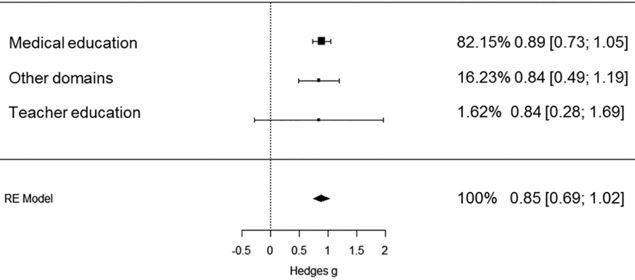
Simulation-based learning offers a wide range of opportunities to practice complex skills in higher education and to implement different types of scaffolding to facilitate effective learning. This meta-analysis includes 145 empirical studies and investigates the effectiveness of different scaffolding types and technology in simulation-based learning environments to facilitate complex skills. The simulations had a large positive overall effect: g = 0.85, SE = 0.08; CIs [0.69, 1.02]. Technology use and scaffolding had positive effects on learning. Learners with high prior knowledge benefited more from reflection phases; learners with low prior knowledge learned better when supported by examples. Findings were robust across different higher education domains (e.g., medical and teacher education, management). We conclude that (1) simulations are among the most effective means to facilitate learning of complex skills across domains and (2) different scaffolding types can facilitate simulation-based learning during different phases of the development of knowledge and skills.
Overview
CoChat Summary
TL;DR
This meta-analysis of 145 studies (10,532 participants) finds that simulation-based learning in higher education has a large positive overall effect on complex skills (g = 0.85, 95% CI [0.69, 1.02]). Effects vary by simulation features and prior knowledge, with examples/prompts helping lower-prior-knowledge learners and reflection phases helping higher-prior-knowledge learners.
Key findings
- Overall effect: g = 0.85, SE = 0.08, 95% CI [0.69, 1.02], N = 145 studies, 10,532 participants; heterogeneity was high: Q(409) = 4213.93, p < .0001, τ² = 1.2, I² = 95.86%.
- By complex skill: technical performance g = 1.06 (SE = 0.15), general problem solving g = 0.88 (SE = 0.11), diagnosing g = 0.82 (SE = 0.21), management g = 0.72 (SE = 0.30), teamwork g = 0.50 (SE = 0.08), communication g = 0.44 (SE = 0.15).
- Simulation features: live model g = 2.27 (N = 3), mixed g = 1.56, mannequin g = 0.96, virtual object g = 0.75, role play g = 0.63, document g = 0.31; technology: simulator g = 1.07, virtual reality g = 0.85, screen-based g = 0.68, no technology g = 0.74; high authenticity g = 0.86 vs low g = 0.58; duration: <1 hr g = 0.65, hours g = 0.81, days g = 0.80, >1 month g = 1.31 (N = 4).
- Scaffolding × prior knowledge: examples helped low-education learners (g = 1.15 vs high-education g = 0.56); prompts helped unfamiliar contexts (g = 0.85 vs no prompts g = 0.63) but not familiar contexts (g = 0.33 vs no prompts g = 0.96); reflection phases helped postgraduate learners (g = 1.10 vs no reflection g = 0.86) but not graduate/undergraduate learners (g = 0.52 vs no reflection g = 0.81).
Methods
- Meta-analysis of 145 empirical studies (from 128 articles, 1979–2018) yielding 409 effect estimates and 10,532 participants; searched PsycINFO, PsycARTICLES, ERIC, and MEDLINE through April 2018; included experimental/quasi-experimental or within-subject pre-post studies with a control condition and objective measures of complex skills.
- Coded moderators included simulation type, technology use, duration, authenticity, scaffolding (examples, prompts, reflection phases), knowledge convey, prior knowledge (familiarity of context, level of education), complex skill type, domain, study design, and publication type.
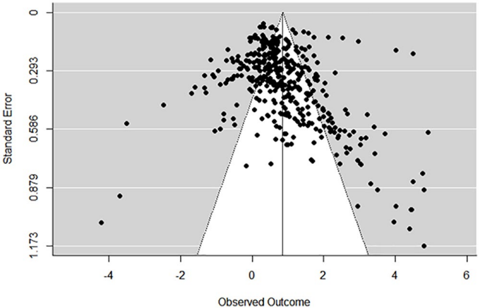
- Used Hedges’ g, random-effects models, robust variance estimation for correlated effects, pretest adjustment when available, heterogeneity Q/I², and publication-bias checks (Egger’s test, trim and fill); metaregression on control variables.
Limitations
- Stated: the focus is on complex skills involving interaction with people, so findings do not straightforwardly generalize to STEM domains such as science, mathematics, engineering, or informatics; a large proportion of findings come from medical education, so caution is needed for other domains, especially regarding technology, simulation type, outcome measures, and moderators.
- Stated: many primary studies gave little treatment description, insufficient for coding some moderators or finer distinctions; many implemented multiple instructional support measures, making specific effects hard to determine; the scaffolding framework may omit other supports such as feedback or fading/adding instruction; combinations could only be partially investigated; prior knowledge operationalization had drawbacks and explained only 4% of heterogeneity; implementation quality was assumed similar; large unexplained heterogeneity requires caution.
- Evident from the text: heterogeneity was very high (I² = 95.86%, τ² = 1.2), and several moderator estimates rest on very small numbers (e.g., live model N = 3, all scaffolding types N = 2, duration >1 month N = 4), so subgroup effects are unstable; presence/absence comparisons for examples, prompts, and reflections often did not reach significance.
Model-written summary. Check it against the paper before relying on it.
Integrity signals
Registry
Cites
Statistics
Figures

Verification
Claims the paper makes
1 Valid · 3 Not valid · 48 Not checked · 181 Own results and interpretations
At least one cited source doesn’t support this claim or points to a different paper, and none confirmed it — see the verdicts below.
In the paper
“However, they only focused on comparing simulations with a duration of more than 1 day with simulations of less than 1 day.”
§ Simulation-Based Learning in Higher Education: A Meta-Analysis > Simulations in Educational Contexts
What the sources say
- Disputedcites Cook et al., 2013 matched to “Technology-Enhanced Simulation to Assess Health Professionals: A Systematic Review of Validity Evidence, Research Methods, and Reporting Quality” (2013) sourceExperimental — accuracy not yet measured
Our copy of Cook et al. (2013) contains no duration contrast whatsoever: searches for 'simulation duration more than one day versus less than one day' and related phrasings returned only the study-coding tables. Those tables (sections 'List of all included studies, sorted by year of publication, with validity evidence and QUADAS-2 ratings (N=417 except for QUADAS-2)', pp. 17, 21, 23, 27, 32-35, and the parallel full-citation list, pp. 4-14) show the review's actual focus: charting validity evidence (content/response/process, internal structure, relations to other variables, consequences, reliability), methodological quality (MERSQI, selection/flow indices, RoB indices, QUADAS-2) and reporting across 417 technology-enhanced simulation assessment studies spanning many topics and instruments. That is contrary to the claim that the review 'only focused on comparing simulations with a duration of more than 1 day with simulations of less than 1 day'. Our copy is truncated at the end, but the retrieved structure of the review already contradicts the characterization; no alternative source for the duration comparison is named in our copy. (LLM, conf=0.72)
Checked by a reasoning model — may be wrong.
plain- Asserted: passes — The authors put it forward as true.
- Checkable: passes — It can be checked against evidence.
- Load-bearing: passes — The paper’s conclusions depend on it.
- Based: passes — The paper gives a reason why it holds.
- Disputed
The cited sources that could be checked couldn’t confirm or dispute this claim.
In the paper
“In their meta-analysis, Cook et al. (2013) provided supportive evidence of the effectiveness of distributed and repetitive practice (effects above .60)in the acquisition of complex skills in medical education.”
§ Simulation-Based Learning in Higher Education: A Meta-Analysis > Simulations in Educational Contexts
What the sources say
- Could not verifycites Cook et al., 2013 matched to “Technology-Enhanced Simulation to Assess Health Professionals: A Systematic Review of Validity Evidence, Research Methods, and Reporting Quality” (2013) sourceExperimental — accuracy not yet measured
Our copy of Cook et al. (2013) contains only the appendix material — the 'List of all included studies, sorted by year of publication, with full journal citation' (pp. 2-16) and the parallel table 'with validity evidence and QUADAS-2 ratings (N=417)' (pp. 20-35), which catalogue simulation-based ASSESSMENT validation studies with MERSQI scores, not pooled effects. Searches for 'distributed and repetitive practice', 'meta-analysis', 'effect size / Hedges g / random-effects', 'learning principles / repetition', and the paper's objective returned no narrative text at all, so nothing in our copy reports an effectiveness meta-analysis or effect magnitudes above .60. The copy is also flagged truncated, so the results/discussion where such a finding would appear may be missing; absence here is not evidence of a contrary statement, and no alternative source is named in the passages we hold. (LLM, conf=0.68)
plainstates a cause- Asserted: passes — The authors put it forward as true.
- Checkable: passes — It can be checked against evidence.
- Load-bearing: unclear — It is unclear whether the paper’s conclusions depend on it.
- Based: passes — The paper gives a reason why it holds.
- Could not verify
The cited sources support only part of this claim — read each source’s verdict below.
In the paper
“All these scaffolding measures were found to be beneficial for developing diagnostic competences (Chernikova et al., 2019).”
§ Simulation-Based Learning in Higher Education: A Meta-Analysis > Added Value of Instructional Support
What the sources say
- Partly supportedcites Chernikova et al., 2019 matched to “Facilitating Diagnostic Competences in Higher Education—a Meta-Analysis in Medical and Teacher Education” (2020) sourceExperimental — accuracy not yet measured
The meta-analysis does state broadly that all scaffolding types help ('as long as learners are able to practice problem-solving, all of the different types of scaffolding are beneficial', Theoretical Significance; echoed in Summary and Conclusion: roles, prompts and reflection phases 'have clear positive effects', with 'no indication for different effect sizes of different types of scaffolding'). But the claim drops the source's binding condition — the benefit holds only where learners' own problem-solving is preserved — and the source's results are not uniformly significant: in Effect of Scaffolding, settings with vs. without examples 'did not reach statistical significance' (Q(1,35)=2.85, p=.06), and Limitations warns that 'conclusions about the effectiveness of each scaffolding type should be made with caution'. So the flat 'all these scaffolding measures were found to be beneficial' overstates an explicitly conditional and hedged finding. (LLM, conf=0.72)
plainstates a cause- Asserted: passes — The authors put it forward as true.
- Checkable: passes — It can be checked against evidence.
- Load-bearing: passes — The paper’s conclusions depend on it.
- Based: passes — The paper gives a reason why it holds.
- Partly supported
A result the paper reports from its own data — it cites no other source for it, so there is none to check. The quote shows it is in the paper.
In the paper
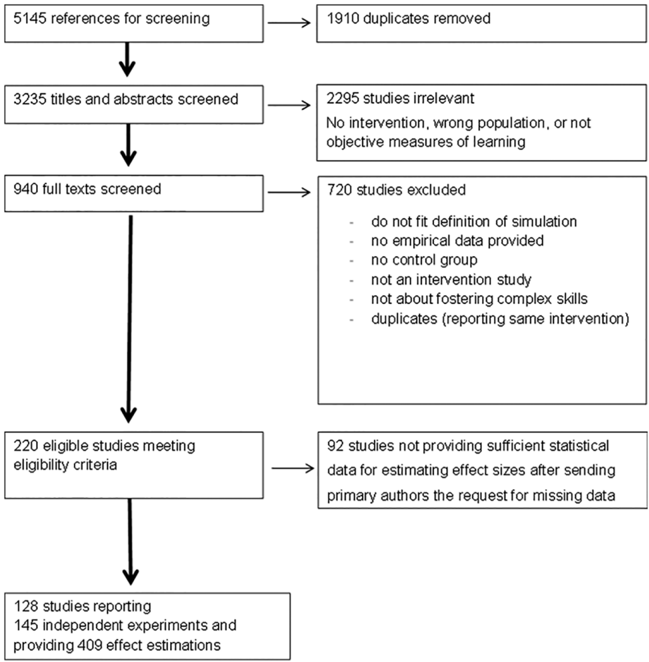
“The 145 eligible studies (from 128 articles published in the period 1979-2018) provided 409 effect estimations (Figure 1).”
§ Simulation-Based Learning in Higher Education: A Meta-Analysis > Results of Literature Search
plainn = 10,532- Asserted: passes — The authors put it forward as true.
- Checkable: passes — It can be checked against evidence.
- Load-bearing: passes — The paper’s conclusions depend on it.
- Based: passes — The paper gives a reason why it holds.
A result the paper reports from its own data — it cites no other source for it, so there is none to check. The quote shows it is in the paper.
In the paper
“The most frequent combinations of instructional support measures were knowledge convey together with examples (82 effects), knowledge convey with reflection phases (62 effects), and examples with reflection phases (43 effects).”
§ Simulation-Based Learning in Higher Education: A Meta-Analysis > Results of Literature Search
plain- Asserted: passes — The authors put it forward as true.
- Checkable: passes — It can be checked against evidence.
- Load-bearing: unclear — It is unclear whether the paper’s conclusions depend on it.
- Based: passes — The paper gives a reason why it holds.
120 more claims
Create a free account to see all 233 claims and to verify the 44 references still open.
- It may state two separate claims as one. 61
- Probably not a substantial claim. 61
Claims other papers make about this one
Each is checked against this paper’s own text: does it say what the citing paper says it does?
In the citing paper
“Chernikova and colleagues have demonstrated in a meta-analysis that simulations of professional situations, such as interactions in a classroom for teachers, can be a beneficial tool during teacher training as they expose teachers to authentic problems in their fields51.”
From On opportunities and challenges of large multimodal foundation models in education (2025) · cites this paper as [51]
In the citing paper
“Meta-analytic findings indicate that simulations are among the most effective means to facilitate the learning of complex skills across domains, with technology-based and scaffolded simulations showing robust positive effects on learning outcomes [11].”
In the citing paper
“While several earlier reviews have examined the general benefits of simulation in nursing education [17], few have focused specifically on its role in bridging the theory–practice gap.”
From The impact of clinical simulation on bridging the theory–practice gap in nursing education: a systematic review (2025) · cites this paper as [17]
In the citing paper
“High-fidelity simulations were particularly associated with enhanced clinical judgment and decision-making accuracy [17, 29, 30].”
From The impact of clinical simulation on bridging the theory–practice gap in nursing education: a systematic review (2025) · cites this paper as [17]
In the citing paper
“These findings are supported by meta-analytic evidence from Chernikova et al., who concluded that simulation-based learning substantially improves decision-making and problem-solving skills in higher education, especially when paired with active learning strategies and structured debriefing [17].”
From The impact of clinical simulation on bridging the theory–practice gap in nursing education: a systematic review (2025) · cites this paper as [17]
Statistics recomputed
Every reported test result, recomputed from its test statistic and degrees of freedom. A result shows as not adding up only once an independent check has confirmed it.
- ConsistentQ(409) = 4213.93reported p < .0001 · recomputed p < .001
“Q (409) = 4213.93,p < .0001”
Self-check
Percentages, sums and reported differences re-computed from the paper’s own numbers.
Each contradiction between two passages listed here was confirmed by an independent check.
Rated major: it would touch a result — a value a result rests on, reported and recomputed p-values on opposite sides of the significance level, two passages that conflict with no sign which is right, or a cited work retracted before this paper was published.
In the paper
§ Simulation-Based Learning in Higher Education: A Meta-Analysis > Discussion
“However, the effects are greater if learners are unfamiliar with the context and the task.”
§ Simulation-Based Learning in Higher Education: A Meta-Analysis > Prior Professional Knowledge
“learners showed a lower increase of complex skills in an unfamiliar context (g = 0.67, SE = 0.10) than in a familiar context (g = 0.83, SE = 0.13)”
Rated minor: it would not touch a result — a value no result rests on, a p-value that stays on the same side of the significance level, or a conflict that is clerical, resolved elsewhere in the paper, or outside its own findings.
In the paper
§ Simulation-Based Learning in Higher Education: A Meta-Analysis > Results of Literature Search
“Most studies focused on general problem solving (51) or the technical performance of a particular complex procedure (56); the other outcomes were communication skills (24), diagnosing (18), managing critical situations (18), and collaboration and teamwork (5).”
§ Simulation-Based Learning in Higher Education: A Meta-Analysis > Conclusion
“2,493 (27) 0.46 91.03% | 911 (18) 0.76 92.02% | 6,010 (58) 0.47 91.23% | 2,543 (21) 1.04 97.15% | 810 (5) 0.03 66.07% | 2,933 (63) 1.25 91.10%”
Rated minor: it would not touch a result — a value no result rests on, a p-value that stays on the same side of the significance level, or a conflict that is clerical, resolved elsewhere in the paper, or outside its own findings.
In the paper
“(2) prompts as the only scaffolding method (N = 11)”
§ Simulation-Based Learning in Higher Education: A Meta-Analysis > Level of Education as an Indicator of Prior Knowledge and Experience
Reported 11 · recomputed 12
Rated minor: it would not touch a result — a value no result rests on, a p-value that stays on the same side of the significance level, or a conflict that is clerical, resolved elsewhere in the paper, or outside its own findings.
In the paper
§ Simulation-Based Learning in Higher Education: A Meta-Analysis > Discussion
“Despite these differences, simulations had effects that can be categorized as large positive effects for all but one type of skill.The exception is teamwork, where the meta-analysis found a medium positive effect only.”
§ Simulation-Based Learning in Higher Education: A Meta-Analysis > Overall Effect of Simulation-Based Learning on Complex Skills (Research Question 1)
“Communication and collaboration skills (teamwork) are only moderately facilitated by simulation-based learning (g = 0.44, SE = 0.15, and g = 0.50, SE = 0.08, respectively)”
Rated minor: it would not touch a result — a value no result rests on, a p-value that stays on the same side of the significance level, or a conflict that is clerical, resolved elsewhere in the paper, or outside its own findings.
In the paper
§ Simulation-Based Learning in Higher Education: A Meta-Analysis > Level of Education as an Indicator of Prior Knowledge and Experience
“however, introducing prompts was related to higher learning outcomes in the high-level group.”
§ Simulation-Based Learning in Higher Education: A Meta-Analysis > Level of Education as an Indicator of Prior Knowledge and Experience
“Similarly, introducing prompts for a high (postgraduate learners and practitioners) level (g = 0.50, SE = 0.36) was not beneficial for learning compared with simulations without prompts (g = 0.91, SE = 0.11).”
Citations
Cites
Measuring inconsistency in meta-analyses
Higgins, J. P. T., Thompson, S. G., Deeks, J. J., & Altman, D. G. (2003) · BMJ · doi:10.1136/bmj.327.7414.557 · Cited by 63,139 · cited 1×
“The thresholds suggested by Higgins et al. (2003) were used to interpret the I 2 (25% for low heterogeneity, 50% for medium, 75% for high heterogeneity).”
MethodBorenstein, M., Hedges, L. V., Higgins, J. P. T., & Rothstein, H. R. (2009) · doi:10.1002/9780470743386 · Cited by 14,225
Hattie, J., & Timperley, H. (2007) · Review of Educational Research · doi:10.3102/003465430298487 · Cited by 12,905
THE ROLE OF TUTORING IN PROBLEM SOLVING *
Wood, D., Bruner, J. S., & Ross, G. (1976) · Journal of Child Psychology and Psychiatry · doi:10.1111/j.1469-7610.1976.tb00381.x · Cited by 8,851 · cited 1×
“Scaffolding enables a learner to solve problems through modifying tasks and reducing possible pathways, and through hints helping the learner to coordinate the steps in problem solving or interaction (Quintana et al., 2004), by taking over some elements of learning material (Wood et al., 1976).”
BackgroundKirschner, P. A., Sweller, J., & Clark, R. E. (2006) · Educational Psychologist · doi:10.1207/s15326985ep4102_1 · Cited by 7,776 · cited 2×
“…suggesting that including simulations in a later phase of a higher education program after students already know theoretical concepts is promising in order to not overwhelm learners and block too much of their cognitive capacity for solving a problem in a simulation (e.g., Kirschner et al., 2006).”
BackgroundFunnel plots for detecting bias in meta-analysis
Sterne, J. A. C., & Egger, M. (2001) · Journal of Clinical Epidemiology · doi:10.1016/s0895-4356(01)00377-8 · Cited by 3,779 · cited 1×
“We have a relatively small sample of empirical studies and apply a range of techniques to identify possible biases (Egger’s test, trim and fill) and improve the generalizability of the results (Sterne & Egger, 2001).”
MethodEducational Psychology: A Cognitive View
Gagné, R. M., Ausubel, D. P., & Gagné, R. M. (1969) · American Educational Research Journal · doi:10.3102/00028312006002287 · Cited by 3,302
Educational Psychology: A Cognitive View
Gagné, R. M., Ausubel, D. P., & Gagne, R. M. (1969) · American Educational Research Journal · doi:10.2307/1161899 · Cited by 3,278
HMELO-SILVER, C. E., DUNCAN, R. G., & CHINN, C. A. (2007) · Educational Psychologist · doi:10.1080/00461520701263368 · Cited by 2,641 · cited 1×
“…problems, especially in early stages of expertise development, should be accompanied by scaffolding to maximize learning and avoid cognitive overload, distraction, or focusing on superficial features of a situation (see the discussions of Hmelo-Silver et al., 2007; Kirschner et al., 2006).”
BackgroundReflection and reflective practice in health professions education: a systematic review
Mann, K., Gordon, J., & MacLeod, A. (2009) · Advances in Health Sciences Education · doi:10.1007/s10459-007-9090-2 · Cited by 2,175 · cited 1×
“Reflection phases, on the other hand, allow learners to think about goals, analyze their own performance, and plan further steps (e.g., Mann et al., 2009), but they do not provide much guidance during the problem solving.”
Background
Research works printed but not linked: 4
- Funke, J. (Ed.). (2006). Denken und Problemlösen (pp. 375-446).
- Henninger, M., & Mandl, H. (2000). Vom Wissen zum Handeln-ein Ansatz zur Förderung kommunikativen Handelns [From knowledge to action-An approach for fostering communicative behavior]. In H. Mandl & J. Gerstenmaier (Eds.), Die Kluft zwischen Wissen und Handeln (pp. 197-219).
- Raven, J. (2000). Psychometrics, cognitive ability, and occupational performance. Review of Psychology, 7(1-2), 51-74.
- Veritas Health Innovation. (2019). Covidence systematic review software (online ver- sion) [Computer software]. https://www.covidence.org
Cited by
Items 601–700 of 1,412
Chen, X., & Siripala, W. (2026) · Frontiers in Education · doi:10.3389/feduc.2026.1851770 · Cited by 2
Impact of the Use of Simulators on Training and Specialization in the Navy
Barrionuevo, Ó., Guarda, T., & Victor, J. A. (2021) · Smart innovation, systems and technologies · doi:10.1007/978-981-16-4884-7_14 · Cited by 2
Relating Work-Integrated Learning to Employability Skills in the Post-COVID-19 Era
Aliu, J., & Aigbavboa, C. O. (2022) · Advances in sustainability science and technology · doi:10.1007/978-981-16-9101-0_3 · Cited by 2
Development and Evaluation of a Virtual Training Content for Plumbing and Wiring
Shin, J., Lee, S., Kim, S., & Jeong, G.-C. (2022) · Journal of Digital Contents Society · doi:10.9728/dcs.2022.23.2.183 · Cited by 2
Fu, J., Sun, M., & Wang, M. (2022) · Sustainability · doi:10.3390/su14106036 · Cited by 4
“This is consistent with previous research on simulation-supported learning [6,14,51], suggesting that simulations have inherent entertainment value that can enhance learners’ motivation.”
BackgroundResultInfluentialPribadi, M. P., Nasharudin, N. A. M., & Hassan, L. (2022) · International Journal of Academic Research in Business and Social Sciences · doi:10.6007/ijarbss/v12-i6/13942 · Cited by 2
“…might occur because the simulation aspect provided in both trainings provide the ‘by doing’ learning experiences which have been reported to enable deeper student engagements and promotes lifelong learning (Chernikova et al., 2020) in addition to being fun and enjoyable (Shellman and Turan, 2006).”
BackgroundMemon, S. A., Sumanarathna, N., & Adhikari, A. (2022) · Lecture notes in educational technology · doi:10.1007/978-981-16-9812-5_14 · Cited by 2
Purnomo, D. M. J., Bunyamin, A., Gunawan, W., Widianingsih, I., Sulistyani, W., & Firmansyah, I. (2021) · Jurnal Teknologi Industri Pertanian · doi:10.24961/j.tek.ind.pert.2021.31.3.371 · Cited by 2
Baserrah, S. (2021) · Sustainable Leadership and Academic Excellence International Conference (SLAE) · doi:10.1109/slae54202.2021.9788105 · Cited by 2
Problem representation and diagnostic accuracy during an OSCE
Valentine, J., Tackett, S. A., Bord, S., Zink, K. L., Botta, J., & Jung, J. J. (2022) · Advances in Health Sciences Education · doi:10.1007/s10459-022-10126-6 · Cited by 3
“…literature has shown an association between problem representation and diagnostic accuracy, but has been unable to empirically prove that an educational intervention teaching problem representation enhances accurate diagnosis (Chang et al., 1998; Nendaz & Bordage, 2002; Chernikova et al., 2020).”
BackgroundMedisinsk og naturvitskapleg kunnskap som grunnlag for utøving av sjukepleie
Sægrov, S., Kyte, L., Kleiven, O. T., Dahl, H., Lindaas, I., & Valaker, I. (2022) · Nordisk Sygeplejeforskning · doi:10.18261/nsf.12.3.5 · Cited by 2
Evans, K. D., Mohammad, S. H., Stigall-Weikle, N., Yang, Q., & Sommerich, C. M. (2022) · Journal of diagnostic medical sonography · doi:10.1177/87564793221123020 · Cited by 2
Nguyen, T. T., Nguyen, T. V., Hoang, N. T., Ha, T. H., & Ton, T. N. A. (2022) · Advances in Medical Education and Practice · doi:10.2147/amep.s386007 · Cited by 2
Bertozzi, S., Ferri, P., Cortini, C., Mentasti, R., Scalorbi, S., Lorenzo, R. D., Rovesti, S., Alberti, S., & Rubbi, I. (2022) · Lecture notes in networks and systems · doi:10.1007/978-3-031-20257-5_14 · Cited by 3
Nguyen, T. T., Hoang, N. T., Nguyen, T. V., & Ha, H. T. (2022) · Advances in Medical Education and Practice · doi:10.2147/amep.s386043 · Cited by 2
“Besides, applying simulation software is an alternative solution and has been used by many institutions.(3,17,18) However, commercial software is currently quite expensive with many requirements related to the infrastructure.”
MethodSimulation-Supported Engineering Curriculum
Kumar, S., & Milanovic, I. M. (2022) · World Engineering Education Forum - Global Engineering Deans Council (WEEF-GEDC) · doi:10.1109/weef-gedc54384.2022.9996267 · Cited by 4
“Technology has allowed the implementation of new strategies that facilitate student-centric instruction and learning such as simulations, simulation-based games, apps, mobile devices, and virtual environments [5-10].”
BackgroundOnline Learner Engagement in Higher Education: Part 2 – Practice
Brad, B. E. L. L. (2023) · International Journal of Educational Spectrum · doi:10.47806/ijesacademic.1302115 · Cited by 2
Working Across Boundaries: School Leaders Redefining Communities of Practice Through Twitter
Bailey, J., Kaiser, F. J., Rhone, R., & Atchley, S. (2023) · NASSP Bulletin · doi:10.1177/01926365231198523 · Cited by 3
“As a result, scholars have continued to investigate formal pre-service and in-service school leadership professional learning (Bailey et al., 2022; Chernikova et al., 2020; Davis, 2016; Drake, 2020; Oliver et al., 2018).”
BackgroundBichkov, S. O., Черкова, Н. В., Dushyk, L., & Panov, S. (2023) · Reports of Vinnytsia National Medical University · doi:10.31393/reports-vnmedical-2023-27(3)-12 · Cited by 2
Why students engage in simulation and how it prepares them for work
Biggins, D. R., Holley, D., Goldsmith, B., & Priego‐Hernández, J. (2023) · Journal of Learning Development in Higher Education · doi:10.47408/jldhe.vi29.1110 · Cited by 2
Potarazu, D., Herur-Raman, A., Cho, E. Y., Doan, T., Ganguli, S., Oltorik, C., Srivastava, A., Koizumi, N., Yu, Y., Li, M., et al. (2023) · Global Surgical Education - Journal of the Association for Surgical Education · doi:10.1007/s44186-023-00184-8 · Cited by 2
“Previous studies examining the role of 3D-printed models have been shown to improve learning in medical trainees [1, 2, 10–18].”
Fostering an “investigating mindset”: Why is it important in digital forensic science education?
Horsman, G., Ryser, E., & Shavers, B. (2023) · Wiley Interdisciplinary Reviews Forensic Science · doi:10.1002/wfs2.1511 · Cited by 3
HOW TO DEAL WITH BURNOUT DURING ONLINE LEARNING IN MEDICAL EDUCATION? A SYSTEMATIC REVIEW
Arigi, L. A. G., Mustika, R., & Greviana, N. (2023) · Jurnal Pendidikan Kedokteran Indonesia The Indonesian Journal of Medical Education · doi:10.22146/jpki.75898 · Cited by 3
Alemu, F. M., Yimer, N. B., Kasegn, B. B., Kassie, B. A., Ibrahim, I. Y., Abdo, A. A., & Worke, M. D. (2023) · BMC Medical Education · doi:10.1186/s12909-023-04968-w · Cited by 2
“Since simulation-based learning for cesarean sections is a tried-and-true approach to instructing medical professionals [36], it revealed improvement in students’ competency, quality of client care, and better patient prognosis.”
BackgroundLópez-Navarrete, A., Zimmermann-Vildoso, M., Poveda, V. D. B., & Nogueira, L. D. S. (2024) · JBI Evidence Synthesis · doi:10.11124/jbies-23-00348 · Cited by 3
Application of Agent-Based Modelling in Learning Process
Stojkovikj, N., Lazarova, L. K., Stojanova, A., Miteva, M., Zlatanovska, B., & Kocaleva, M. (2024) · Informatica · doi:10.31449/inf.v48i1.4086 · Cited by 2
Sritharan, M., Siraj, S., Brunton, G., & Dubrowski, A. (2024) · JMIR Research Protocols · doi:10.2196/53167 · Cited by 2
“It is fundamental that high-quality training for health care providers is available in both low-and high-income environments to strengthen the use of SBE globally [8].”
BackgroundInfluentialBrunner, B., & Grafl-Kekeiss, A. (2024) · R&E-SOURCE · doi:10.53349/resource.2024.i4.a1232 · Cited by 2
“Dabei erleichtern unterschiedliche Formen von Unterstützungsstrukturen die Entwicklung von Wissen und Fähigkeiten auf verschiedenen Ebenen (Chernikova et al., 2020).”
BackgroundAsim, Z., Sorooshain, S., Sami, W., Mahmood, M., Yusof, Y., Sarwat, S., & Vasudevan, A. (2024) · Advances in higher education and professional development book series · doi:10.4018/979-8-3693-1698-6.ch015 · Cited by 3
Makawi, F. E. (2023) · JURNAL PENELITIAN ILMU PENDIDIKAN · doi:10.21831/jpipfip.v16i2.60791 · Cited by 2
Project-Based Learning’s Role in Muhammadiyah Education
Nuraeni, H. A. (2024) · Advances in Social Science, Education and Humanities Research/Advances in social science, education and humanities research · doi:10.2991/978-2-38476-242-2_28 · Cited by 2
15. Utvikling av samarbeidskompetanse gjennom simuleringer i grunnleggende profesjonsutdanninger
Giskeødegård, M. F., Wahl, A. M., & Sellberg, C. (2024) · Universitetsforlaget eBooks · doi:10.18261/9788215071800-24-15 · Cited by 2
Exploring Simulation for Immersive Learning Experiences in the Digital, Open, and Distance Classroom
Sapuan, D. A., & Chan, J. I. L. (2024) · Journal of Learning for Development · doi:10.56059/jl4d.v11i2.1254 · Cited by 2
“Extant studies have indicated that simulations have the potential for ODL instructors to create immersive and interactive environments that foster active participation and effective communication (Beaudry, 2016; Buil et al., 2020; Caruso, 2019; Chernikova et al., 2020).”
BackgroundCostabile, M., Panadgoo, S., & Birbeck, D. (2024) · Journal of Applied Learning & Teaching · doi:10.37074/jalt.2024.7.2.15 · Cited by 2
A Systematic Literature Review on the Use of Simulators to Train Undergraduate Students in Logistics
Rodriguez-Garcia, E. E., Elizondo-Noriega, A., Camou-Grijalva, F. L., Romero-Araiza, A., Piñal-Moctezuma, J. F., Sandoval-Jaramillo, M. A., Tapia-Tlatelpa, T., & Díaz, F. S. (2024) · Portland International Conference on Management of Engineering and Technology (PICMET) · doi:10.23919/picmet64035.2024.10653134 · Cited by 2
“Through the utilization of training simulators, learners are submerged into authentic scenarios, cultivating an experiential learning milieu that fosters the refinement of critical decision-making abilities, strategic acumen, and comprehensive competence in supply chain and logistics management [4].”
BackgroundInfluentialHarnessing the Power of Simulation Games for Effective Teaching in Business Schools
Salunkhe, H. A., Vankina, L., Roy, B., & Acharya, S. P. K. (2024) · International Conference on Trends in Quantum Computing and Emerging Business Technologies (TQCEBT) · doi:10.1109/tqcebt59414.2024.10545045 · Cited by 2
“Similarly, Chernikova et al. (2020) investigated the effectiveness of simulation-based learning.”
BackgroundScaffolding Adult-Gerontology Acute Care Nurse Practitioner Program Outcomes Through Simulation
Guido‐Sanz, F., Blackwell, C. W., Anderson, M., Díaz, D. A., & Talbert, S. (2024) · The Journal for Nurse Practitioners · doi:10.1016/j.nurpra.2024.105083 · Cited by 2
Past Meets the Future—ChatGPT Integrated Pedagogy to Teach the 1947 Partition in Secondary Classes
Bisht, P., & Pujari, J. P. (2024) · Springer eBooks · doi:10.1007/978-3-031-65691-0_4 · Cited by 2
Exploring Grade 9 Students' Perspectives on Game-Based Learning in Social Studies
Tolentino, L. J. H., Tecson, B. C., Nojadera, C. J. M., Cunanan, S. L. R., Garcia, G. B. G., & Gallardo, B. O. (2024) · Journal of Humanities and Education Development · doi:10.22161/jhed.6.6.2 · Cited by 3
Gürol, A., Ilhan-Findikoglu, D., Gürol, M., Fındıkoğlu, F., & YEŞİLKAYA, M. (2025) · Education Sciences · doi:10.3390/educsci15010067 · Cited by 2
A Unique Simulation Methodology for Practicing Clinical Decision Making
Amar, S., & Bitan, Y. (2025) · Journal of Medical Education and Curricular Development · doi:10.1177/23821205241310077 · Cited by 5
“33,34 However, this report for the questionnaire was selective, and monitoring this awareness during the following courses and groups is required.”
Fitri, F., Afriadi, B., & Humulhaer, S. (2024) · International Journal of Business Law and Education · doi:10.56442/ijble.v5i2.1031 · Cited by 2
Speaking up for patient safety: Bringing simulation to the classroom
Catena, R., & MacLean, H. (2025) · Teaching and learning in nursing · doi:10.1016/j.teln.2025.02.023 · Cited by 2
Prodromou, A., & Sophocleous, H. (2025) · IGI Global eBooks · doi:10.4018/979-8-3693-9040-5.ch003 · Cited by 2
Virtual rat web: A versatile simulation tool for pharmacology education in a variety of settings
Okabe, S., Goto, T., Hirayama, D., & Nishimura, Y. (2025) · European Journal of Pharmacology · doi:10.1016/j.ejphar.2025.177618 · Cited by 2
Martins, L. A. C., Szalewski, L., Michalska, A., Kalinowski, P., Cavalcanti, M. D. G. P., & Różyło‐Kalinowska, I. (2025) · Dentomaxillofacial Radiology · doi:10.1093/dmfr/twaf039 · Cited by 2
Cognitive Load Theory Principles for Designing a Virtual Physics Environment
Holmer, S., Zander, D., Waye, J., & Jakobsson, K. (2024) · Interaction design & architecture(s)/ID&A Interaction design & architecture(s) · doi:10.55612/s-5002-063-002 · Cited by 2
Henderson, J. D., Cole, R., Hildreth, A. F., Myers, M., Henderson, J. J., & Shen, C. (2025) · Military Medicine · doi:10.1093/milmed/usaf202 · Cited by 2
Pilot Trainees Benefit from Modelling and Adaptive Feedback
Abdullah, Y. A., Guevarra, M., Cai, M., Yan, J., Taylor, M. E., & Epp, C. D. (2025) · ACM Conference on User Modeling, Adaptation and Personalization (UMAP) · doi:10.1145/3699682.3728337 · Cited by 2
Alakoum, A., & Nica, E. (2025) · Emerald Group Publishing Limited eBooks · doi:10.1108/978-1-83708-432-620251002 · Cited by 2
Fuerea, B. G., Rizac, R. I., Botez, A. R., & Militaru, M. (2025) · Veterinary Sciences · doi:10.3390/vetsci12080769 · Cited by 2
“…technological revolution in educational methodologies, which has since progressed from basic computer-assisted instruction to sophisticated simulations [2,3], virtual laboratories [4], and most recently comprehensive digital platforms that facilitate remote access to educational resources [5].”
Jiang, R. B., Liu, Q., & Ren, J. (2025) · Systems and Soft Computing · doi:10.1016/j.sasc.2025.200386 · Cited by 2
Assefa, Y., Gebremeskel, M. M., Moges, B. T., Tilwani, S. A., Azmera, Y. A., & Majeed, H. (2025) · Teacher Development · doi:10.1080/13664530.2025.2554970 · Cited by 2
“Introducing customizable and elective modules tailored to specific fields could enhance relevance and impact (Chernikova et al. 2020).”
Young, M. K., & Rouse, A. G. (2025) · Reading and Writing · doi:10.1007/s11145-025-10718-9 · Cited by 2
Alsolami, E. (2025) · European Journal of Education · doi:10.1111/ejed.70409 · Cited by 3
Angkananard, T., Issarasenarak, P., Teerawattananon, P., Kosulawath, M., Samrejphol, V., & Okanurak, K. (2022) · International Journal of Medical Education · doi:10.5116/ijme.62c2.c33c · Cited by 2
O’Dell, R. K. M., Scott, A. B., Nealon, M. J., & Franzino, B. N. (2023) · International Studies Perspectives · doi:10.1093/isp/ekad011 · Cited by 2
Ludwig, S., Rausch, A., & Taub, M. (2025) · Learning and Instruction · doi:10.1016/j.learninstruc.2025.102255 · Cited by 2
Duke, B. (2022) · E- Revista de Estudos Interculturais · doi:10.34630/erei.vi10.4752 · Cited by 2
Teaching and Learning in Tourism: The Case of Tourism Laboratory
Dinis, G., Melo, C., & Sousa, J. (2021) · Smart innovation, systems and technologies · doi:10.1007/978-981-16-5063-5_45 · Cited by 3
Chinengundu, T. (2022) · Advances in educational technologies and instructional design book series · doi:10.4018/978-1-7998-9561-9.ch007 · Cited by 2
Empathic Patterns in Complex Discourse
Weinberger, Y., Levi-Keren, M., Landler-Pardo, G., & Elyashiv, R. A. (2022) · Journal of Organizational Psychology · doi:10.33423/jop.v22i1.5109 · Cited by 2
Pharmacy students' perceptions of an oncology pharmacy simulation
Khan, R., Orchard, A., & Vally, M. (2022) · Currents in Pharmacy Teaching and Learning · doi:10.1016/j.cptl.2022.05.001 · Cited by 2
Zakirman, Z., Fendriani, Y., & Rahayu, C. (2022) · Journal of Physics Conference Series · doi:10.1088/1742-6596/2309/1/012058 · Cited by 2
Nguyen, T. T., Hoang, N. T., Lê, C. V., Nguyen, T. V., & Ha, T. H. (2022) · Universal Journal of Public Health · doi:10.13189/ujph.2022.100411 · Cited by 2
Dymar, N., Kruty, K., Desnova, I., Kondratska, G. D., & Yaremenko, S. (2022) · Apuntes Universitarios · doi:10.17162/au.v12i4.1253 · Cited by 2
The effectiveness of instrument simulator in online practice course as a virtual laboratory
Kurniawati, P., & Purbaningtias, T. E. (2022) · AIP conference proceedings · doi:10.1063/5.0112801 · Cited by 2
Learning-Teaching Processes in Online Clinical Simulation within Disciplinary Training of Literature
Levin, O., & Segev, Y. (2023) · L1 Educational Studies in Language and Literature · doi:10.21248/l1esll.2023.23.1.381 · Cited by 3
Kaur, H., Kaur, S., Singh, A., Grover, U., Maheshwari, C., & Chawla, S. S. (2023) · Current Medicine Research and Practice · doi:10.4103/cmrp.cmrp_15_23 · Cited by 2
Pearson, M. (2023) · Facts & Frictions Emerging Debates Pedagogies and Practices in Contemporary Journalism · doi:10.22215/ff/v3.i1.13 · Cited by 2
“Simulation-based learning also occurs in other fields, including teacher education, engineering, and management (Chernikova et al, 2020).”
BackgroundAn Effective Project Management Simulation for Distance Education
Angolia, M., & Reed, A. H. (2021) · The Journal of Technology Management and Applied Engineering · doi:10.31274/jtmae.14132 · Cited by 2
“Meta-data research by Chernikova et. al.”
ProjectStir: A driving car application to measure driving performance with game-centric approaches
Fajar, M., Satria, T. G., Panggabean, F. M., David, & Pratama, G. D. (2024) · Software Impacts · doi:10.1016/j.simpa.2024.100617 · Cited by 2
Júnior, F. M. C., Monteiro, P. B., Cardozo, I. C., Queiroz, P. V. D. S., Vieira, A. R. M., da Silva, J. P., Santos, S. B. L., & Santos, E. D. S. (2023) · Revista Foco · doi:10.54751/revistafoco.v16n5-108 · Cited by 2
Newton, J., & Critchley, A. (2023) · Research Square · doi:10.21203/rs.3.rs-3228921/v2 · Cited by 2
Patterson, A. L. (2024) · ScholarWorks (Walden University) · Cited by 2
Romero Vilchez, T. S. (2023) · LA Referencia (Red Federada de Repositorios Institucionales de Publicaciones Científicas) · Cited by 2
Krishtofik, I. S. (2021) · SHS Web of Conferences · doi:10.1051/shsconf/20219801008 · Cited by 1
Battista, A., Konopasky, A., & Durning, S. J. (2021) · FASEB BioAdvances · doi:10.1096/fba.2020-00109 · Cited by 1
Student Perception of Skills and Simulation Delivery within an Undergraduate Nursing Curriculum.
Cust, F. H., Friend, A. J., Browne, E., & Woodrow-Hirst, B. (2021) · The Journal of Practice Teaching in Health and Social Work · doi:10.1921/jpts.v18i3.1715 · Cited by 1
“In a recent meta-analysis, (Chernikova et al., 2020) conducted a review of 145 empirical studies, looking at both the simulation technologies and scaffolding methods used.”
BackgroundMethodResultInfluentialStudents' experience and perceived value of a clinical simulation centre
Mortimer, C., & Ooms, A. (2022) · Journal of Paramedic Practice · doi:10.12968/jpar.2022.14.6.250 · Cited by 1
Facilitating Collaborative Learning with Virtual Reality Simulations, Gaming and Pair Programming
Näykki, P., Fagerlund, J., Silvennoinen, M., Manu, M., Nousiainen, T., Juntunen, M., & Vesisenaho, M. (2022) · Learning and analytics in intelligent systems · doi:10.1007/978-3-031-04662-9_14 · Cited by 3
Wahab, I. A., Shamsuddin, N., Alwi, S., Wahab, M. S. A., Ali, M., Long, C. M., Hisham, S. A., & Jamil, N. (2022) · Education in Medicine Journal · doi:10.21315/eimj2022.14.4.4 · Cited by 2
“Findings from pre-pandemic empirical studies from schools and higher education underscore the importance of simulation-based learning for knowledge and skills, but the majority of studies referred to on-site simulation (21).”
Birley Place: a digital community to enhance student learning
Jack, K., Wilkinson, R., Hannan, E., & Hamshire, C. (2023) · Elsevier eBooks · doi:10.1016/b978-0-323-95500-3.00004-3 · Cited by 1
Building a Culture of Disaster Preparedness in the Health Sector: Strengthening Community Capacity
Fasrini, U. U., Susanto, T. H. W. D. E. H., & Yunanda, R. (2023) · Poltekita Jurnal Pengabdian Masyarakat · doi:10.33860/pjpm.v4i3.2403 · Cited by 1
“The participatory method required relevant case scenarios, simulations, and assignments, especially in groups (Chernikova et al., 2020; de Sousa, 2021).”
BackgroundMethodDeveloping a Simulated Experience to Capture the Bidding Process in a Cost-Estimating Course
Ray, V., Freije, E., & Johnson, M. (2024) · ASEE Annual Conference & Exposition · doi:10.18260/1-2--44650 · Cited by 1
Бардась, А. В., & Замковий, М. Ю. (2023) · Economic Bulletin of Dnipro University of Technology · doi:10.33271/ebdut/84.081 · Cited by 1
ASK AND CLARIFY ABOUT STUDENT SHARING OF THE CONCEPT OF REFLECTION
Buhaerah, B., Haq, M. A., & Nurfaizah, N. (2024) · Prima Jurnal Pendidikan Matematika · doi:10.31000/prima.v8i1.8311 · Cited by 1
Gousseva, N., Pluymaekers, M., & Hulsbergen, M. H. (2024) · Research and Practice in Technology Enhanced Learning · doi:10.58459/rptel.2024.19036 · Cited by 2
Netsch, D. S., Rolstad, B. S., Ermer-Seltun, J., & Bruch, S. (2024) · Journal of Wound Ostomy and Continence Nursing · doi:10.1097/won.0000000000001071 · Cited by 1
“19 They concluded that simulations such as the VCP we developed provide a wide range of practice opportunities and offer one of the most effective ways of designing learning environments in higher education.”
BackgroundPENGARUH SIMULATION-BASED LEARNING TERHADAP CRITICAL THINKING MAHASISWA KEPERAWATAN
Ruhdiyat, A. (2023) · DIAGNOSA Jurnal Ilmu Kesehatan dan Keperawatan · doi:10.59581/diagnosa-widyakarya.v1i1.678 · Cited by 1
Tan, A. C. H., Della, C. N., Jasin, J., Lim, L. H. I., Wang, V. C. X., Ong, C. M., Ang, Y. M. E., & Molina-Cristóbal, A. (2024) · ASEE Annual Conference & Exposition · doi:10.18260/1-2--47305 · Cited by 1
Low-fidelity Medical Simulation: Relevance in the Learning of Dental Students in South Africa
Riahi, Z., Hadyaoui, D., Kalghoum, I., & Boukhris, H. (2024) · The Journal of Contemporary Dental Practice · doi:10.5005/jp-journals-10024-3695 · Cited by 1
Simulation-based Learning in Aviation Management Studies using SIMIO Software
Trasberg, V., & Nõmmik, A. (2024) · SNE Simulation Notes Europe · doi:10.11128/sne.34.en.10701 · Cited by 1
Morris, C. T., Perryman, T., & Shahinuzzaman, M. (2024) · Journal of Special Education Technology · doi:10.1177/01626434241289950 · Cited by 1
“In general, whether they are recent or dated reviews of simulated learning, the available studies prove to be plentiful and report positive effects on pre-professional student participants (Chernikova et al., 2020).”
InfluentialKanofsky, S., Hodwitz, K., Tzakas, P., Nyhof-Young, J. M., & Walsh, C. M. (2024) · Simulation in Healthcare The Journal of the Society for Simulation in Healthcare · doi:10.1097/sih.0000000000000823 · Cited by 1
Franco, D., Vanderlinde, R., & Valcke, M. (2024) · European Journal of Education · doi:10.1111/ejed.12834 · Cited by 1
Patraca, E. M., Vidal-Reyes, L., Reyes-Osorio, Y. A., Reyes, T. R., & Álvarez, F. N. (2023) · IPSUMTEC. · doi:10.61117/ipsumtec.v6i5.239 · Cited by 1
WNSWE: Web-Based Network Simulator for Web Engineering Education
Heil, S., Schröder, L., & Gaedke, M. (2024) · Lecture notes in computer science · doi:10.1007/978-981-96-0576-7_36 · Cited by 1
AI-Driven Innovations in Pedagogical and Andragogical Approaches: A Case Study Analysis
Asrifan, A., Shafa, S., Octaberlina, L. R., Ersyad, Z. M., Hermansyah, S., & Amri, N. A. (2024) · Advances in educational technologies and instructional design book series · doi:10.4018/979-8-3693-6130-6.ch009 · Cited by 3
Cook, W. A., & Wilson, T. M. (2024) · Journal of Behavioral and Applied Management · doi:10.21818/001c.126837 · Cited by 1
“Another approach is to have students complete theory coursework before starting simulation play (TB4) (Chernikova et al., 2020).”
Influential
Metadata
- Authors
- Chernikova, O., Heitzmann, N., Stadler, M., Holzberger, D., Seidel, T., & Fischer, F.
- Affiliations
- Ludwig-Maximilians-Universität München (DE)
- Technical University of Munich (DE)
- Venue
- Review of Educational Research
- Published
- 2020-06-15
- Volume
- 90
- Issue
- 4
- Pages
- 499-541
- ISSN
- 0034-6543 (ISSN-L)
- 1935-1046
- OpenAlex
- W3039587732
- Semantic Scholar
- af60f6e1157bbec85ef6f0012608e01e0a6bd6a9
- Cited by
- 1,072
- References
- 171
- Citations by year
- 2026: 206 · 2025: 267 · 2024: 214 · 2023: 174 · 2022: 129 · 2021: 69 · 2020: 10
- FWCI
- 32.44
- Type
- journal article
- Language
- en
- Open access
- hybrid
- doi.org
- Locations
- Review of Educational Research (publishedVersion, cc-by)
- Open access LMU (Ludwid Maxmilian's Universitat Munchen) (submittedVersion, cc-by)
- mediaTUM – the media and publications repository of the Technical University Munich (Technical University Munich) (submittedVersion, other-oa)
- mediaTUM – the media and publications repository of the Technical University Munich (Technical University Munich) (submittedVersion)
- Funders
- Deutsche Forschungsgemeinschaft (DFG 2385)
- Topics
- Social Sciences › Education › Innovative Teaching Methodologies in Social Sciences
- Social Sciences › Education › Simulation-Based Education in Healthcare
- Social Sciences › Psychology › Developmental and Educational Psychology › Innovative Teaching and Learning Methods
- Keywords
- simulation-based training, scaffolding, complex skills, higher education, prior knowledge, reflection, examples, educational technology, medical education, teacher professional development, management education
About these checks
Registry, retraction, Cites and statistics results are computed, not judged, with one exception: a printed reference that no index lists is read once by a model before it counts as a citation error. Claims are extracted by a model and kept only when their quote appears verbatim in the text; each cited source is then checked, with a model’s help, for whether it says what the claim relies on. Those verdicts can be wrong — read the claim’s quote and the cited source before relying on one.
The claim verdicts this report counts are experimental: their accuracy is not yet measured.
A language model drew the claims from the paper on 2026-11-16, under version 3 of the claim definition (model deepseek-v4.1-flash, prompt extract-v3).
A second model labelled each claim on 2026-11-16 (model jev-1.13-20260917, definition revision gold-guideline-v0.2).
Cited sources are checked with a language model’s help (qwen3.8-omni-flash).
Statistics and arithmetic are recomputed, not judged.
Confidence bands are shown only for fields calibrated on our annotated test set. None is calibrated yet, so no band is shown.
What counts as a claim ›How we measure confidence ›How we check this ›
Are you an author, or do you see a problem with this page? Request a review
Data sources
Bibliographic data: Semantic Scholar, OpenAlex, Crossref.
Contains information from the Semantic Scholar Academic Graph Datasets, made available under the ODC Attribution License (ODC-BY 1.0).
Semantic Scholar’s data is described in: Kinney, R., et al. (2023). The Semantic Scholar Open Data Platform. arXiv:2301.10140.
