

Simulation-Based Learning in Higher Education: A Meta-Analysis
Open accessThe DOI matches its Crossref record; 172 of the 173 references it cites were found in a registry or an index; 3 of the 59 sources its claims cite were checked for support.
Abstract
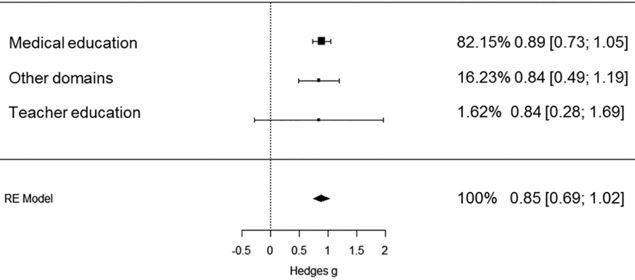
Simulation-based learning offers a wide range of opportunities to practice complex skills in higher education and to implement different types of scaffolding to facilitate effective learning. This meta-analysis includes 145 empirical studies and investigates the effectiveness of different scaffolding types and technology in simulation-based learning environments to facilitate complex skills. The simulations had a large positive overall effect: g = 0.85, SE = 0.08; CIs [0.69, 1.02]. Technology use and scaffolding had positive effects on learning. Learners with high prior knowledge benefited more from reflection phases; learners with low prior knowledge learned better when supported by examples. Findings were robust across different higher education domains (e.g., medical and teacher education, management). We conclude that (1) simulations are among the most effective means to facilitate learning of complex skills across domains and (2) different scaffolding types can facilitate simulation-based learning during different phases of the development of knowledge and skills.
Overview
CoChat Summary
TL;DR
This meta-analysis of 145 studies (10,532 participants) finds that simulation-based learning in higher education has a large positive overall effect on complex skills (g = 0.85, 95% CI [0.69, 1.02]). Effects vary by simulation features and prior knowledge, with examples/prompts helping lower-prior-knowledge learners and reflection phases helping higher-prior-knowledge learners.
Key findings
- Overall effect: g = 0.85, SE = 0.08, 95% CI [0.69, 1.02], N = 145 studies, 10,532 participants; heterogeneity was high: Q(409) = 4213.93, p < .0001, τ² = 1.2, I² = 95.86%.
- By complex skill: technical performance g = 1.06 (SE = 0.15), general problem solving g = 0.88 (SE = 0.11), diagnosing g = 0.82 (SE = 0.21), management g = 0.72 (SE = 0.30), teamwork g = 0.50 (SE = 0.08), communication g = 0.44 (SE = 0.15).
- Simulation features: live model g = 2.27 (N = 3), mixed g = 1.56, mannequin g = 0.96, virtual object g = 0.75, role play g = 0.63, document g = 0.31; technology: simulator g = 1.07, virtual reality g = 0.85, screen-based g = 0.68, no technology g = 0.74; high authenticity g = 0.86 vs low g = 0.58; duration: <1 hr g = 0.65, hours g = 0.81, days g = 0.80, >1 month g = 1.31 (N = 4).
- Scaffolding × prior knowledge: examples helped low-education learners (g = 1.15 vs high-education g = 0.56); prompts helped unfamiliar contexts (g = 0.85 vs no prompts g = 0.63) but not familiar contexts (g = 0.33 vs no prompts g = 0.96); reflection phases helped postgraduate learners (g = 1.10 vs no reflection g = 0.86) but not graduate/undergraduate learners (g = 0.52 vs no reflection g = 0.81).
Methods
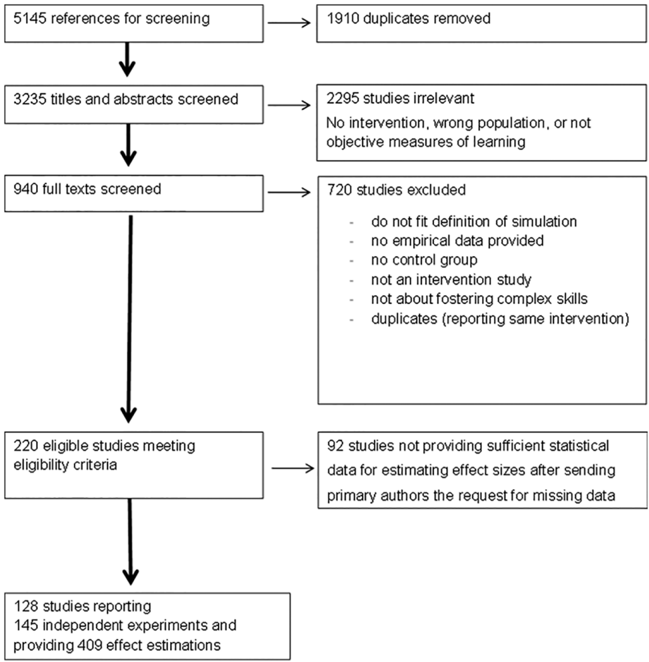
- Meta-analysis of 145 empirical studies (from 128 articles, 1979–2018) yielding 409 effect estimates and 10,532 participants; searched PsycINFO, PsycARTICLES, ERIC, and MEDLINE through April 2018; included experimental/quasi-experimental or within-subject pre-post studies with a control condition and objective measures of complex skills.
- Coded moderators included simulation type, technology use, duration, authenticity, scaffolding (examples, prompts, reflection phases), knowledge convey, prior knowledge (familiarity of context, level of education), complex skill type, domain, study design, and publication type.
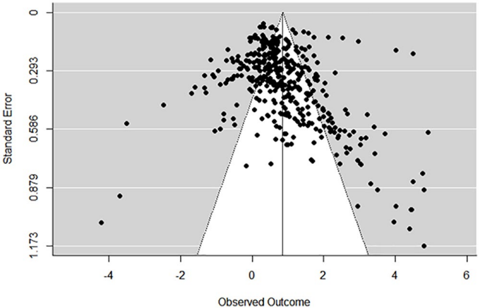
- Used Hedges’ g, random-effects models, robust variance estimation for correlated effects, pretest adjustment when available, heterogeneity Q/I², and publication-bias checks (Egger’s test, trim and fill); metaregression on control variables.
Limitations
- Stated: the focus is on complex skills involving interaction with people, so findings do not straightforwardly generalize to STEM domains such as science, mathematics, engineering, or informatics; a large proportion of findings come from medical education, so caution is needed for other domains, especially regarding technology, simulation type, outcome measures, and moderators.
- Stated: many primary studies gave little treatment description, insufficient for coding some moderators or finer distinctions; many implemented multiple instructional support measures, making specific effects hard to determine; the scaffolding framework may omit other supports such as feedback or fading/adding instruction; combinations could only be partially investigated; prior knowledge operationalization had drawbacks and explained only 4% of heterogeneity; implementation quality was assumed similar; large unexplained heterogeneity requires caution.
- Evident from the text: heterogeneity was very high (I² = 95.86%, τ² = 1.2), and several moderator estimates rest on very small numbers (e.g., live model N = 3, all scaffolding types N = 2, duration >1 month N = 4), so subgroup effects are unstable; presence/absence comparisons for examples, prompts, and reflections often did not reach significance.
Model-written summary. Check it against the paper before relying on it.
Integrity signals
Registry
Cites
Statistics
Figures

Verification
Claims the paper makes
1 Valid · 3 Not valid · 48 Not checked · 181 Own results and interpretations
At least one cited source doesn’t support this claim or points to a different paper, and none confirmed it — see the verdicts below.
In the paper
“However, they only focused on comparing simulations with a duration of more than 1 day with simulations of less than 1 day.”
§ Simulation-Based Learning in Higher Education: A Meta-Analysis > Simulations in Educational Contexts
What the sources say
- Disputedcites Cook et al., 2013 matched to “Technology-Enhanced Simulation to Assess Health Professionals: A Systematic Review of Validity Evidence, Research Methods, and Reporting Quality” (2013) sourceExperimental — accuracy not yet measured
Our copy of Cook et al. (2013) contains no duration contrast whatsoever: searches for 'simulation duration more than one day versus less than one day' and related phrasings returned only the study-coding tables. Those tables (sections 'List of all included studies, sorted by year of publication, with validity evidence and QUADAS-2 ratings (N=417 except for QUADAS-2)', pp. 17, 21, 23, 27, 32-35, and the parallel full-citation list, pp. 4-14) show the review's actual focus: charting validity evidence (content/response/process, internal structure, relations to other variables, consequences, reliability), methodological quality (MERSQI, selection/flow indices, RoB indices, QUADAS-2) and reporting across 417 technology-enhanced simulation assessment studies spanning many topics and instruments. That is contrary to the claim that the review 'only focused on comparing simulations with a duration of more than 1 day with simulations of less than 1 day'. Our copy is truncated at the end, but the retrieved structure of the review already contradicts the characterization; no alternative source for the duration comparison is named in our copy. (LLM, conf=0.72)
Checked by a reasoning model — may be wrong.
plain- Asserted: passes — The authors put it forward as true.
- Checkable: passes — It can be checked against evidence.
- Load-bearing: passes — The paper’s conclusions depend on it.
- Based: passes — The paper gives a reason why it holds.
- Disputed
The cited sources that could be checked couldn’t confirm or dispute this claim.
In the paper
“In their meta-analysis, Cook et al. (2013) provided supportive evidence of the effectiveness of distributed and repetitive practice (effects above .60)in the acquisition of complex skills in medical education.”
§ Simulation-Based Learning in Higher Education: A Meta-Analysis > Simulations in Educational Contexts
What the sources say
- Could not verifycites Cook et al., 2013 matched to “Technology-Enhanced Simulation to Assess Health Professionals: A Systematic Review of Validity Evidence, Research Methods, and Reporting Quality” (2013) sourceExperimental — accuracy not yet measured
Our copy of Cook et al. (2013) contains only the appendix material — the 'List of all included studies, sorted by year of publication, with full journal citation' (pp. 2-16) and the parallel table 'with validity evidence and QUADAS-2 ratings (N=417)' (pp. 20-35), which catalogue simulation-based ASSESSMENT validation studies with MERSQI scores, not pooled effects. Searches for 'distributed and repetitive practice', 'meta-analysis', 'effect size / Hedges g / random-effects', 'learning principles / repetition', and the paper's objective returned no narrative text at all, so nothing in our copy reports an effectiveness meta-analysis or effect magnitudes above .60. The copy is also flagged truncated, so the results/discussion where such a finding would appear may be missing; absence here is not evidence of a contrary statement, and no alternative source is named in the passages we hold. (LLM, conf=0.68)
plainstates a cause- Asserted: passes — The authors put it forward as true.
- Checkable: passes — It can be checked against evidence.
- Load-bearing: unclear — It is unclear whether the paper’s conclusions depend on it.
- Based: passes — The paper gives a reason why it holds.
- Could not verify
The cited sources support only part of this claim — read each source’s verdict below.
In the paper
“All these scaffolding measures were found to be beneficial for developing diagnostic competences (Chernikova et al., 2019).”
§ Simulation-Based Learning in Higher Education: A Meta-Analysis > Added Value of Instructional Support
What the sources say
- Partly supportedcites Chernikova et al., 2019 matched to “Facilitating Diagnostic Competences in Higher Education—a Meta-Analysis in Medical and Teacher Education” (2020) sourceExperimental — accuracy not yet measured
The meta-analysis does state broadly that all scaffolding types help ('as long as learners are able to practice problem-solving, all of the different types of scaffolding are beneficial', Theoretical Significance; echoed in Summary and Conclusion: roles, prompts and reflection phases 'have clear positive effects', with 'no indication for different effect sizes of different types of scaffolding'). But the claim drops the source's binding condition — the benefit holds only where learners' own problem-solving is preserved — and the source's results are not uniformly significant: in Effect of Scaffolding, settings with vs. without examples 'did not reach statistical significance' (Q(1,35)=2.85, p=.06), and Limitations warns that 'conclusions about the effectiveness of each scaffolding type should be made with caution'. So the flat 'all these scaffolding measures were found to be beneficial' overstates an explicitly conditional and hedged finding. (LLM, conf=0.72)
plainstates a cause- Asserted: passes — The authors put it forward as true.
- Checkable: passes — It can be checked against evidence.
- Load-bearing: passes — The paper’s conclusions depend on it.
- Based: passes — The paper gives a reason why it holds.
- Partly supported
A result the paper reports from its own data — it cites no other source for it, so there is none to check. The quote shows it is in the paper.
In the paper
“The 145 eligible studies (from 128 articles published in the period 1979-2018) provided 409 effect estimations (Figure 1).”
§ Simulation-Based Learning in Higher Education: A Meta-Analysis > Results of Literature Search
plainn = 10,532- Asserted: passes — The authors put it forward as true.
- Checkable: passes — It can be checked against evidence.
- Load-bearing: passes — The paper’s conclusions depend on it.
- Based: passes — The paper gives a reason why it holds.
A result the paper reports from its own data — it cites no other source for it, so there is none to check. The quote shows it is in the paper.
In the paper
“The most frequent combinations of instructional support measures were knowledge convey together with examples (82 effects), knowledge convey with reflection phases (62 effects), and examples with reflection phases (43 effects).”
§ Simulation-Based Learning in Higher Education: A Meta-Analysis > Results of Literature Search
plain- Asserted: passes — The authors put it forward as true.
- Checkable: passes — It can be checked against evidence.
- Load-bearing: unclear — It is unclear whether the paper’s conclusions depend on it.
- Based: passes — The paper gives a reason why it holds.
120 more claims
Create a free account to see all 233 claims and to verify the 44 references still open.
- It may state two separate claims as one. 61
- Probably not a substantial claim. 61
Claims other papers make about this one
Each is checked against this paper’s own text: does it say what the citing paper says it does?
In the citing paper
“Chernikova and colleagues have demonstrated in a meta-analysis that simulations of professional situations, such as interactions in a classroom for teachers, can be a beneficial tool during teacher training as they expose teachers to authentic problems in their fields51.”
From On opportunities and challenges of large multimodal foundation models in education (2025) · cites this paper as [51]
In the citing paper
“Meta-analytic findings indicate that simulations are among the most effective means to facilitate the learning of complex skills across domains, with technology-based and scaffolded simulations showing robust positive effects on learning outcomes [11].”
In the citing paper
“While several earlier reviews have examined the general benefits of simulation in nursing education [17], few have focused specifically on its role in bridging the theory–practice gap.”
From The impact of clinical simulation on bridging the theory–practice gap in nursing education: a systematic review (2025) · cites this paper as [17]
In the citing paper
“High-fidelity simulations were particularly associated with enhanced clinical judgment and decision-making accuracy [17, 29, 30].”
From The impact of clinical simulation on bridging the theory–practice gap in nursing education: a systematic review (2025) · cites this paper as [17]
In the citing paper
“These findings are supported by meta-analytic evidence from Chernikova et al., who concluded that simulation-based learning substantially improves decision-making and problem-solving skills in higher education, especially when paired with active learning strategies and structured debriefing [17].”
From The impact of clinical simulation on bridging the theory–practice gap in nursing education: a systematic review (2025) · cites this paper as [17]
Statistics recomputed
Every reported test result, recomputed from its test statistic and degrees of freedom. A result shows as not adding up only once an independent check has confirmed it.
- ConsistentQ(409) = 4213.93reported p < .0001 · recomputed p < .001
“Q (409) = 4213.93,p < .0001”
Self-check
Percentages, sums and reported differences re-computed from the paper’s own numbers.
Each contradiction between two passages listed here was confirmed by an independent check.
Rated major: it would touch a result — a value a result rests on, reported and recomputed p-values on opposite sides of the significance level, two passages that conflict with no sign which is right, or a cited work retracted before this paper was published.
In the paper
§ Simulation-Based Learning in Higher Education: A Meta-Analysis > Discussion
“However, the effects are greater if learners are unfamiliar with the context and the task.”
§ Simulation-Based Learning in Higher Education: A Meta-Analysis > Prior Professional Knowledge
“learners showed a lower increase of complex skills in an unfamiliar context (g = 0.67, SE = 0.10) than in a familiar context (g = 0.83, SE = 0.13)”
Rated minor: it would not touch a result — a value no result rests on, a p-value that stays on the same side of the significance level, or a conflict that is clerical, resolved elsewhere in the paper, or outside its own findings.
In the paper
§ Simulation-Based Learning in Higher Education: A Meta-Analysis > Results of Literature Search
“Most studies focused on general problem solving (51) or the technical performance of a particular complex procedure (56); the other outcomes were communication skills (24), diagnosing (18), managing critical situations (18), and collaboration and teamwork (5).”
§ Simulation-Based Learning in Higher Education: A Meta-Analysis > Conclusion
“2,493 (27) 0.46 91.03% | 911 (18) 0.76 92.02% | 6,010 (58) 0.47 91.23% | 2,543 (21) 1.04 97.15% | 810 (5) 0.03 66.07% | 2,933 (63) 1.25 91.10%”
Rated minor: it would not touch a result — a value no result rests on, a p-value that stays on the same side of the significance level, or a conflict that is clerical, resolved elsewhere in the paper, or outside its own findings.
In the paper
“(2) prompts as the only scaffolding method (N = 11)”
§ Simulation-Based Learning in Higher Education: A Meta-Analysis > Level of Education as an Indicator of Prior Knowledge and Experience
Reported 11 · recomputed 12
Rated minor: it would not touch a result — a value no result rests on, a p-value that stays on the same side of the significance level, or a conflict that is clerical, resolved elsewhere in the paper, or outside its own findings.
In the paper
§ Simulation-Based Learning in Higher Education: A Meta-Analysis > Discussion
“Despite these differences, simulations had effects that can be categorized as large positive effects for all but one type of skill.The exception is teamwork, where the meta-analysis found a medium positive effect only.”
§ Simulation-Based Learning in Higher Education: A Meta-Analysis > Overall Effect of Simulation-Based Learning on Complex Skills (Research Question 1)
“Communication and collaboration skills (teamwork) are only moderately facilitated by simulation-based learning (g = 0.44, SE = 0.15, and g = 0.50, SE = 0.08, respectively)”
Rated minor: it would not touch a result — a value no result rests on, a p-value that stays on the same side of the significance level, or a conflict that is clerical, resolved elsewhere in the paper, or outside its own findings.
In the paper
§ Simulation-Based Learning in Higher Education: A Meta-Analysis > Level of Education as an Indicator of Prior Knowledge and Experience
“however, introducing prompts was related to higher learning outcomes in the high-level group.”
§ Simulation-Based Learning in Higher Education: A Meta-Analysis > Level of Education as an Indicator of Prior Knowledge and Experience
“Similarly, introducing prompts for a high (postgraduate learners and practitioners) level (g = 0.50, SE = 0.36) was not beneficial for learning compared with simulations without prompts (g = 0.91, SE = 0.11).”
Citations
Cites
Measuring inconsistency in meta-analyses
Higgins, J. P. T., Thompson, S. G., Deeks, J. J., & Altman, D. G. (2003) · BMJ · doi:10.1136/bmj.327.7414.557 · Cited by 63,139 · cited 1×
“The thresholds suggested by Higgins et al. (2003) were used to interpret the I 2 (25% for low heterogeneity, 50% for medium, 75% for high heterogeneity).”
MethodBorenstein, M., Hedges, L. V., Higgins, J. P. T., & Rothstein, H. R. (2009) · doi:10.1002/9780470743386 · Cited by 14,225
Hattie, J., & Timperley, H. (2007) · Review of Educational Research · doi:10.3102/003465430298487 · Cited by 12,905
THE ROLE OF TUTORING IN PROBLEM SOLVING *
Wood, D., Bruner, J. S., & Ross, G. (1976) · Journal of Child Psychology and Psychiatry · doi:10.1111/j.1469-7610.1976.tb00381.x · Cited by 8,851 · cited 1×
“Scaffolding enables a learner to solve problems through modifying tasks and reducing possible pathways, and through hints helping the learner to coordinate the steps in problem solving or interaction (Quintana et al., 2004), by taking over some elements of learning material (Wood et al., 1976).”
BackgroundKirschner, P. A., Sweller, J., & Clark, R. E. (2006) · Educational Psychologist · doi:10.1207/s15326985ep4102_1 · Cited by 7,776 · cited 2×
“…suggesting that including simulations in a later phase of a higher education program after students already know theoretical concepts is promising in order to not overwhelm learners and block too much of their cognitive capacity for solving a problem in a simulation (e.g., Kirschner et al., 2006).”
BackgroundFunnel plots for detecting bias in meta-analysis
Sterne, J. A. C., & Egger, M. (2001) · Journal of Clinical Epidemiology · doi:10.1016/s0895-4356(01)00377-8 · Cited by 3,779 · cited 1×
“We have a relatively small sample of empirical studies and apply a range of techniques to identify possible biases (Egger’s test, trim and fill) and improve the generalizability of the results (Sterne & Egger, 2001).”
MethodEducational Psychology: A Cognitive View
Gagné, R. M., Ausubel, D. P., & Gagné, R. M. (1969) · American Educational Research Journal · doi:10.3102/00028312006002287 · Cited by 3,302
Educational Psychology: A Cognitive View
Gagné, R. M., Ausubel, D. P., & Gagne, R. M. (1969) · American Educational Research Journal · doi:10.2307/1161899 · Cited by 3,278
HMELO-SILVER, C. E., DUNCAN, R. G., & CHINN, C. A. (2007) · Educational Psychologist · doi:10.1080/00461520701263368 · Cited by 2,641 · cited 1×
“…problems, especially in early stages of expertise development, should be accompanied by scaffolding to maximize learning and avoid cognitive overload, distraction, or focusing on superficial features of a situation (see the discussions of Hmelo-Silver et al., 2007; Kirschner et al., 2006).”
BackgroundReflection and reflective practice in health professions education: a systematic review
Mann, K., Gordon, J., & MacLeod, A. (2009) · Advances in Health Sciences Education · doi:10.1007/s10459-007-9090-2 · Cited by 2,175 · cited 1×
“Reflection phases, on the other hand, allow learners to think about goals, analyze their own performance, and plan further steps (e.g., Mann et al., 2009), but they do not provide much guidance during the problem solving.”
Background
Research works printed but not linked: 4
- Funke, J. (Ed.). (2006). Denken und Problemlösen (pp. 375-446).
- Henninger, M., & Mandl, H. (2000). Vom Wissen zum Handeln-ein Ansatz zur Förderung kommunikativen Handelns [From knowledge to action-An approach for fostering communicative behavior]. In H. Mandl & J. Gerstenmaier (Eds.), Die Kluft zwischen Wissen und Handeln (pp. 197-219).
- Raven, J. (2000). Psychometrics, cognitive ability, and occupational performance. Review of Psychology, 7(1-2), 51-74.
- Veritas Health Innovation. (2019). Covidence systematic review software (online ver- sion) [Computer software]. https://www.covidence.org
Cited by
Items 301–400 of 1,412
Bagci, M., Mehler, A., Abrami, G., Schrottenbacher, P., Spiekermann, C., Konca, M., Schreiber, J., Saukel, K., Quintino, M., & Engel, J. (2025) · Technology Knowledge and Learning · doi:10.1007/s10758-025-09837-7 · Cited by 9
Nursing Students’ Preferences for Learning Medical and Bioscience Subjects: A Qualitative Study
Kyte, L., Lindaas, I., Dahl, H., Valaker, I., Kleiven, O. T., & Sægrov, S. (2023) · Nursing Reports · doi:10.3390/nursrep13020055 · Cited by 13
“Simulation-based learning (SBE) may be a way of introducing this complexity [40].”
BackgroundEffectiveness of simulation-based learning in Malaysian higher education: a case study of MonsoonSIM
Khalil, A. M., Lee, K. L., Kamaruzzaman, Z. A., & Ong, C. A. (2024) · Asian Education and Development Studies · doi:10.1108/aeds-09-2023-0125 · Cited by 11
Goldsworthy, S., Ferreira, C., Shajani, Z., Snell, D., & Perez, G. (2022) · Clinical Simulation in Nursing · doi:10.1016/j.ecns.2022.02.001 · Cited by 9
AwangHarun, S., Hashim, N. H. M., & Kadiman, S. (2022) · Frontiers in Surgery · doi:10.3389/fsurg.2022.749092 · Cited by 10
Αντωνιάδου, Μ., Sokratous, S., Dimitriou, E. C., & Tzoutzas, I. G. (2025) · Hygiene · doi:10.3390/hygiene5020024 · Cited by 8
“Additionally, a live knowledge assessment was conducted before the seminars to gauge the students’ baseline understanding [46].”
‘Reflecting on every move’: the role of video in simulation-based learning for teacher Education
Levin, O. (2025) · European Journal of Teacher Education · doi:10.1080/02619768.2025.2519774 · Cited by 10
AI-Enhanced Cyber Science Education: Innovations and Impacts
Triplett, W. J. (2025) · Information · doi:10.3390/info16090721 · Cited by 8
Vella, R., Baker, E., Akerjordet, K., & Thyer, L. (2025) · Scandinavian Journal of Trauma Resuscitation and Emergency Medicine · doi:10.1186/s13049-025-01456-6 · Cited by 8
Hu, B., Jia, W., Mi, S., & Bi, H. (2025) · Journal of Science Education and Technology · doi:10.1007/s10956-025-10264-7 · Cited by 10
“Consequently, the relevant moderating variables must be re-evaluated within the context of scientific disciplines (Chernikova et al., 2020; Dekkers & Donatti, 1981; Sitzmann, 2011).”
Popov, V., Nguyen, S., & Ochôa, X. (2025) · Learning and Instruction · doi:10.1016/j.learninstruc.2025.102267 · Cited by 10
Bridging the skills gap through Agile methodologies in Vocational Software Development Education
Sa’adah, U., Yuhana, U. L., Rochimah, S., & Rasyid, M. B. A. (2025) · Array · doi:10.1016/j.array.2025.100614 · Cited by 10
Bauer, E., Sailer, M., Kiesewetter, J., Fischer, M. R., Gurevych, I., & Fischer, F. (2023) · Zeitschrift für Pädagogische Psychologie · doi:10.1024/1010-0652/a000363 · Cited by 8
Self-citationATICI, E. K., & Turhan, M. (2024) · Education and Information Technologies · doi:10.1007/s10639-024-12866-x · Cited by 8
“Simulations foster critical thinking, decision making, and problem-solving skills during the learning process, necessitating active learner engagement (Chernikova et al., 2020).”
InfluentialRole-playing the future: a simulation-based exploration of AI in social work
Share, P., & Pender, J. (2024) · Ubiquity Proceedings · doi:10.5334/uproc.149 · Cited by 9
Student perspectives of simulated learning to improve their dysphagia management
Adams, S. N., Kater, K.-A., & Seedat, J. (2024) · South African Journal of Communication Disorders · doi:10.4102/sajcd.v71i1.1060 · Cited by 8
“Additionally, simulations can be tailored to specific learning objectives and offer a realism that surpasses traditional role play, although there are still limitations when using mannequins for dysphagia (Chernikova et al., 2020).”
BackgroundKienitz, A., Krebs, M.-C., & Eitel, A. (2025) · Computers & Education · doi:10.1016/j.compedu.2025.105277 · Cited by 8
Using Simulation to Leverage Digital Transformation of SMEs: A European Perspective
Ramos, I. M. P., North, K., Thalmann, S., Aramburu, N., Hermann, A., Gräslund, K., & Barros, V. (2022) · Hawaii International Conference on System Sciences (HICSS) · doi:10.24251/hicss.2022.595 · Cited by 8
Roslan, A. F., Pheh, K. S., Mahadevan, R., Bujang, S. M., Subramaniam, P., Yahya, H. F., & Chan, L. F. (2023) · Frontiers in Psychiatry · doi:10.3389/fpsyt.2023.1009754 · Cited by 9
Role Play: Actualizing the IEP Meeting for Pre-Service Teachers
Toledo, C. (2022) · The Qualitative Report · doi:10.46743/2160-3715/2023.5635 · Cited by 9
Lin, Y.-C., & Hou, H. (2023) · The Asia-Pacific Education Researcher · doi:10.1007/s40299-023-00740-2 · Cited by 9
“Chernikova et al. (2020) indicated that simulation can promote the learning of complex cross-domain skills, and board games are suitable for learners to engage in role simulation because of their face-to-face interactive feature that facilitates learner interaction and provides peer scaffolding.”
Franco, D., Vanderlinde, R., & Valcke, M. (2023) · Education Sciences · doi:10.3390/educsci13100971 · Cited by 9
La Arquitectura Cognitiva en la Educación Superior: Más que una Teoría, una Necesidad
Pinargote, I. M. A., Sempértegui, M. L. C., Iturralde, D. D. O., Cepeda, H. C. B., & Cabrera, S. E. L. (2024) · Arandu-UTIC. · doi:10.69639/arandu.v11i1.236 · Cited by 11
“Además, “la simulación basada en el aprendizaje tiene grandes efectos positivos generales en el avance de una amplia gama de habilidades complejas en una variedad de dominios en la educación superior” (Chernikova et al., 2020, p. 501).”
BackgroundCohen, N., & Katz, C. (2021) · Child Abuse & Neglect · doi:10.1016/j.chiabu.2021.105138 · Cited by 8
Baihaqi, H. K., Jumadi, J., Mardiani, A., & Religia, R. (2021) · Momentum Physics Education Journal · doi:10.21067/mpej.v5i2.5567 · Cited by 9
“Real-life situations or hands-on experiences make students have an opportunity to engage in real-life problem solving and practice without systematic guidance from the teacher which possibly cause risks (Chernikova et al., 2020).”
BackgroundPreuß, A. K. (2021) · Simulation & Gaming · doi:10.1177/10468781211049822 · Cited by 11
“What elements of the simulation create the adequate degree of authenticity that induces the “ right ” amount of immersion (Chernikova et al., 2020)?”
BackgroundResultInfluentialWhat does implementing case‐centered teaching of evaluation look like in practice?
Kallemeyn, L. M., Roseveare, C., Steinberg, M., & Tovey, T. L. S. (2021) · New Directions for Evaluation · doi:10.1002/ev.20482 · Cited by 8
“…instances of case-centered teaching and learning are indistinguishable from other forms of pedagogy, such as authentic or situated (e.g., Webster-Wright, 2009), simulation (e.g., Chernikova et al., 2020), problem based (e.g., Dolmans et al., 2016), and experiential learning (e.g., Morris, 2020).”
BackgroundRudinsky, S. L., Spalding, C. N., Conley, S. P., Everett, L., & Cole, R. (2022) · AEM Education and Training · doi:10.1002/aet2.10782 · Cited by 8
Does Scientific Evaluation Matter? Improving Digital Simulation Games by Design-Based Research
Ivens, S., & Oberle, M. (2020) · Social Sciences · doi:10.3390/socsci9090155 · Cited by 10
“Empirical studies about simulation-based learning in education, in general, show that simulations have a more positive effect when used in combination with modern technology, like VR or digitalization (Chernikova et al. 2020).”
BackgroundYakkou, H., Chillali, A., Elyamani, N. E. E. K., & khattabi, K. E. (2024) · Heliyon · doi:10.1016/j.heliyon.2024.e34770 · Cited by 10
“Through more practically applying knowledge in a safe setting, this technique enhances other teaching and learning modalities, particularly experience, This idea is consistent with what the researcher Olga Cher-nikova found in his research [30].”
Mustapha, A., Okwori, R. O., Kutiriko, A. A., & Egigogo, A. R. (2024) · Ceddi Journal of Education · doi:10.56134/cje.v3i2.68 · Cited by 7
“Yet, Chernikova et al., (2020) observed that a distinct void is apparent in exploring the effects of simulation in vocational and technical education, specifically in MVM trades, leading to a global shortage of literature on this topic.s MVM, a specialized subset of mechanical engineering, is…”
Exploring Simulated Practice in Teacher Education: Opportunities to Professionalize the Teacher Role
Aagaard, T., Bueie, A. A., & Frøytlog, J. I. J. (2025) · Education Sciences · doi:10.3390/educsci15020182 · Cited by 7
Instruction and guidance in healthcare simulation: a scoping review
Bevis, Z. J., Nestel, D., Kumar, A., Gibson, S., Kavanagh, M., Rosado, C., Chianáin, L. N., & Battista, A. (2025) · Journal of Healthcare Simulation · doi:10.54531/seny1267 · Cited by 8
Mixed Reality Learning Systems with Head-Mounted Displays in Higher Education: A Systematic Review
Liu, S., Toreini, P., & Maedche, A. (2025) · Technology Knowledge and Learning · doi:10.1007/s10758-025-09912-z · Cited by 9
“Simulation-based learning is particularly applied in contexts involv - ing risk or cost efficiency, such as medical training, engineering, or physics (Lateef, 2010; Chernikova et al., 2020 ).”
Competency-Based Training in Fashion Design Education: Graduate Competencies and Job Performance
Adu, C., Biney-Aidoo, V., Okai-Mensah, C. K., & Desmond, A. A. (2025) · Advances in Social Science, Education and Humanities Research/Advances in social science, education and humanities research · doi:10.2991/978-2-38476-527-0_5 · Cited by 8
Kelleci, Ö., Kulaksız, T., Aksoy, N. C., Durmaz, B. N., Uçar, F. M., Özcan, M., & Kalkavan, B. (2026) · Education and Information Technologies · doi:10.1007/s10639-026-13951-z · Cited by 7
“Thus, PSTs can improve complex skills on a controlled and simplified platform through practice (Chernikova et al., 2020 ).”
InfluentialFuture of Social Work Education: A Guide to Developing, Implementing, and Assessing e-Simulations
Wolfe-Taylor, S. N., Khaja, K., Wilkerson, D., & Deck, C. K. (2022) · Advances in Social Work · doi:10.18060/24912 · Cited by 7
Collaborative Learning in Computer Labs for Science Education: A Systematic Review
Salih, H. J. M., Arif, J. Y., & Sabri, S. Q. (2024) · Ascarya Journal of Islamic Science Culture and Social Studies · doi:10.53754/iscs.v4i1.659 · Cited by 8
“Chernikova et al. (2020) discovered that students who participated in simulation-based learning exhibited superior conceptual understanding and problem-solving skills in comparison to those who used traditional learning methods.”
BackgroundResultInfluentialMwalabu, G., Msosa, A., Tjoflåt, I., Urstad, K. H., Bø, B., Risa, C. F., Mapulanga, P., & Msiska, M. (2024) · Journal of Nursing Management · doi:10.1155/2024/1776533 · Cited by 7
“Te use of SBE in student supervision helps students gain a deeper understanding of issues and concepts and improves their problem-solving and decision-making skills through scafolding [20].”
Transforming Logistics Education by a Virtual Logistics Simulation Generator: UX Pilot Study
Soledad, M., Rodés, V., Pacheco-Velazquez, E. A., & Ramirez-Echeverri, S. (2024) · IEEE Gaming, Entertainment, and Media Conference (GEM) · doi:10.1109/gem61861.2024.10585758 · Cited by 7
“In Logistics Education, the utilization of gamified modeling and simulation frameworks has demonstrated the potential to optimize solutions for real-world challenges while enhancing planning methodologies within industry and business settings domains [2], [6], [14], [15].”
BackgroundRezayi, S., Ghotbi, N., Shahmoradi, L., Ardali, Z. R., & Choobsaz, H. (2024) · BMC Medical Education · doi:10.1186/s12909-024-05547-3 · Cited by 7
“…designed to teach a specific task, and simulated patients (either classmates, actors, or volunteers trained to play the role of a patient) [8] Computerized simulated learning environments are employed worldwide in professional education and health sciences, including physiotherapy, to…”
BackgroundScience and practice of nursing: The impact of technology
Olorunfemi, O., & Akinyemi, T. A. (2024) · Digital Medicine · doi:10.1097/dm-2024-00003 · Cited by 9
Nyström, S., & Ahn, S.-E. (2025) · Journal of Vocational Education and Training · doi:10.1080/13636820.2025.2449659 · Cited by 8
“While there is an interest in learning outcomes of simulation training (e.g. Chernikova et al. 2020; Cook 2014; Rooney, Boud, and Kelly 2015), there are few studies that focus on VET students’ experience of simulation training.”
Collaboration in Action: A Comparison of Mixed Reality Simulation and Live Role-Play
Qualls, L. W., Kelley, M. H., Hirsch, S. E., & Ura, S. K. (2025) · Journal of Special Education Technology · doi:10.1177/01626434251314009 · Cited by 7
“…way that mimics a parent, experienced educator, or student (Brownell et al., 2019; Luke et al., 2021); however, simulations with low levels of authenticity still have a more signi fi cant effect on learning compared to instructional practices that do not include simulation (Chernikova et al., 2020).”
Simulations in Teacher Education: Learning to Diagnose Cognitive Engagement
Roeben, M., Vejvoda, J., Murböck, J., Fischer, F., Schultz-Pernice, F., Lohr, A., Stadler, M. J., Sailer, M., & Heitzmann, N. (2025) · Education Sciences · doi:10.3390/educsci15030261 · Cited by 9
Self-citationRavi, M. (2025) · Computer Applications in Engineering Education · doi:10.1002/cae.70038 · Cited by 7
Andersen, D. F., Cronemberger, F. A., Kim, H.-J., Bahaddin, B., Tomoaia‐Cotisel, A., Gordon, D., Mashayekhi, A. N., & Luna‐Reyes, L. F. (2025) · Journal of Public Affairs Education · doi:10.1080/15236803.2025.2500771 · Cited by 7
“Simulations are a common way of understanding and learning about a topic in a variety of domains (Chernikova et al., 2020; Harsell et al., 2022; Proserpio & Magni, 2012; Seaton & Boyd, 2008).”
Popov, V., Gabelica, C., Tomaka, S., & Danciu, T. (2025) · Cognition Technology & Work · doi:10.1007/s10111-025-00835-4 · Cited by 7
Lehrerbildung in der Hochschule
Gröschner, A., & de Zordo, L. (2021) · Springer eBooks · doi:10.1007/978-3-658-24734-8_58-1 · Cited by 7
Cano, J. S. (2022) · International Journal of Technology in Education and Science · doi:10.46328/ijtes.368 · Cited by 7
“The current study supports previous research findings suggesting that computer simulations in teaching improve learners' learning outcomes (DeCaporale-Ryan et al., 2016; Mceneaney, 2016; Gunda & Dongeni, 2017; Olga et al., 2020).”
InfluentialSimulation in social work education: a qualitative study of standardized clients’ experiences
Sewell, K. M., Occhiuto, K., Tarshis, S., Kalmanovitch, A., & Todd, S. (2023) · Social Work Education · doi:10.1080/02615479.2023.2194318 · Cited by 7
“While research has shown the value of SBL in higher education, and social work specifically in preparing students for practice (Chernikova et al., 2020; Kourgiantakis et al., 2020), concerns and critiques merit ongoing research of this experiential learning pedagogy from the perspective of all…”
Fecke, J., Afzal, E., & Braun, E. (2023) · Proceedings. · doi:10.22318/icls2023.197799 · Cited by 11
Higher Education Management Based on Intelligent Decision Support System
Ya, L., Gao, Z., & Xu, X. (2024) · International Conference on Internet Technology and Educational Informatization (ITEI) · doi:10.4108/eai.24-11-2023.2343592 · Cited by 9
Integration of simulation technology with assessment in initial teacher education
Kett, N., Spray, E., Rutherford, N., & Rendoth, T. (2024) · Australasian Journal of Educational Technology · doi:10.14742/ajet.9450 · Cited by 8
The role of digital technology in facilitating epistemic fluency in professional education
Korseberg, L., & Stalheim, O. R. (2024) · Professional Development in Education · doi:10.1080/19415257.2024.2421489 · Cited by 7
“…the use of digital technology has increasingly come to play an important role, as digital tools and technologies may ‘provide a safe environment to train on risky operations that can be difficult to get sufficient practice on in real life’ (Giskeødegård et al. 2024, p. 3, Chernikova et al .”
Salafia, M. A., & Pérez-Ochoa, M. E. (2025) · BMC Medical Education · doi:10.1186/s12909-025-07070-5 · Cited by 7
Khathlan, N. A., Adhab, F. A., Jasim, H. A., Furaish, S. A., Mutairi, W. A., & Yami, B. H. A. (2022) · Saudi Journal of Medicine and Medical Sciences · doi:10.4103/sjmms.sjmms_839_20 · Cited by 8
“Our finding of SCE being a useful tool for RT educational purposes is in line with studies from other clinical domains such as medical, dental, and nursing education.[5,6,24,25]”
ResultTeaching Note—Ecological Devastation Bus Tour: A New Pedagogy for Environmental Social Work?
Magruder, K. J., Mitschke, D. B., & Slater, H. M. (2022) · Journal of Social Work Education · doi:10.1080/10437797.2022.2062506 · Cited by 7
“These and other approaches, such as simulation-based learning, can be effective in learning new concepts and challenging assumptions and existing paradigms (Chernikova et al., 2020).”
BackgroundAndikos, A. F., Giatman, M., & Sukardi, S. (2024) · Data & Metadata · doi:10.56294/dm2024.415 · Cited by 7
Shure, V., Rösken-Winter, B., & Lehmann, M. (2021) · The Journal of Mathematical Behavior · doi:10.1016/j.jmathb.2021.100916 · Cited by 8
Fendt, M., Muth, X., & Edelsbrunner, P. A. (2025) · Learning and Individual Differences · doi:10.1016/j.lindif.2025.102782 · Cited by 6
Davies, A. J., & Burnes, L. (2025) · Policing A Journal of Policy and Practice · doi:10.1093/police/paaf016 · Cited by 6
DeCaro, M. S., McClellan, D., Patrick, R. J., Powe, A. M., Franco, D., Chastain, R. J., Fuselier, L., & Hieb, J. (2025) · British Journal of Educational Psychology · doi:10.1111/bjep.70007 · Cited by 8
Røe, Y., Harring, A. K. V., Alvestad, V., & Knutsen, I. R. (2025) · Journal of Interprofessional Care · doi:10.1080/13561820.2025.2539860 · Cited by 6
“It offers an opportunity to engage students in structured, high-fidelity learning environments that replicate complex clinical scenarios while ensuring psychological safety (Chernikova et al., 2020; Motola et al., 2013).”
Chow, K. M., Ngan, H. Y., & Chan, C. S. M. (2025) · BMC Nursing · doi:10.1186/s12912-025-04096-4 · Cited by 6
“To overcome these challenges, approximations of practice, such as simulations, are designed to allow students to engage with real-life problems and effectively develop complex skills in a controlled and safe environment [1].”
Su, C.-Y. (2026) · Journal of Science Education and Technology · doi:10.1007/s10956-025-10288-z · Cited by 7
Using and Adapting Simulated Teaching Experiences to Support Preservice Teacher Learning
Mikeska, J. N., Webb, J., Bondurant, L., Kwon, M., Imasiku, L., Domjan, H., & Howell, H. (2021) · Advances in educational technologies and instructional design book series · doi:10.4018/978-1-7998-8298-5.ch004 · Cited by 6
Kim, G. M., Lim, J. Y., & Kim, J. (2024) · Journal of Korean Academy of Psychiatric and Mental Health Nursing · doi:10.12934/jkpmhn.2024.33.4.431 · Cited by 7
“Studies have demonstrated that online practicums effectively enhance nursing students ’ motivation to learn, satisfaction with the learning experience, confidence in abilities, motivation to apply learning, and problem-solving capabilities [17].”
Aripin, N., Kurniati, T., Festiyed, F., Asrizal, A., Diliarosta, S., Helendra, H., & Mufit, F. (2024) · Jurnal Pendidikan MIPA · doi:10.23960/jpmipa/v25i3.pp1480-1497 · Cited by 6
Vedova, C. B. D., Denyer, G. S., & Costabile, M. (2025) · Biochemistry and Molecular Biology Education · doi:10.1002/bmb.21895 · Cited by 8
“22,23 Extensive research has also been conducted in the domain of medical education wherein simulations have been employed to enhance the diagnostic competencies and psychomotor skills of aspiring physicians, nurses, and emergency response personnel.”
Exploring extensive reading implementation in higher education: A TPACK-based analysis
Harimurti, K. F., Wulyani, A. N., & Setyowati, L. (2025) · Journal on English as a Foreign Language · doi:10.23971/jefl.v15i1.8638 · Cited by 6
Dahlberg, G. M., & Gustavsson, S. (2025) · Instructional Science · doi:10.1007/s11251-025-09714-x · Cited by 6
“…before the start of the session, learners may get guidance during the performance of the task or receive a set of prompts or checklists and they may be asked to reflect on their task performance and self-evaluate their progress (Chernikova et al., 2020a; Messina Dahlberg & Gustavsson, 2024).”
Hu, X.-N., Zhang, J., Li, L., Lan, M., & Li, H. (2025) · Journal of Educational Computing Research · doi:10.1177/07356331251336473 · Cited by 7
“This has had a positive impact on the pedagogical skills of pre-service teachers (Chernikova et al., 2020; Kelleci Alkan et al., 2024), stimulating their interest in teaching (Huang et al., 2023a) and enhancing their sense of self-ef fi cacy (Bautista & Boone, 2015).”
Moraguez, D., Dexter, S. L., & Clement, D. (2025) · Journal of School Leadership · doi:10.1177/10526846251343561 · Cited by 6
“Multiple forms of simulations have been used across many fi elds to successfully promote learning outcomes (Chernikova et al., 2020; Cook et al., 2013; Hallinger & Wang, 2020).”
Reverse training transfer: The social dynamics of developing safe work practices
Wahl, A. M., & Hybertsen, I. D. (2025) · Safety Science · doi:10.1016/j.ssci.2025.106920 · Cited by 6
Wegner, M., Karagoez, B. S., Wippel, D., Enzmann, F., Niehoff, A., Salem, O., & Dorweiler, B. (2025) · Polymers · doi:10.3390/polym17121700 · Cited by 6
Friesen, D. K., Rebello, L., Reel, R. M., Espinosa, V., & Bard, B. L. G. D. (2025) · Cureus · doi:10.7759/cureus.87059 · Cited by 9
“These studies consistently show that SIM is effective in improving technical skills, clinical decision-making, and teamwork [15,16].”
Barr, M., Relja, R., Ward, P., Hill, J., Tran, Q. P., Hoang, D. T. Q., & Moganathas, P. (2025) · Journal of Marketing Management · doi:10.1080/0267257x.2025.2554134 · Cited by 6
Erniati, E., Nadirah, S., Nurdin, N., Ubadah, U., & Anirah, A. (2025) · QALAMUNA Jurnal Pendidikan Sosial dan Agama · doi:10.37680/qalamuna.v17i2.7269 · Cited by 6
“Regarding the need for frequency and variety of teaching simulations, Krajčovič, Gabajová, Matys, Furmannová, & Dulina (2022) and (Chernikova et al., 2020) Suggest incorporating information technology into the teaching process, such as using virtual reality for simulation.”
Peltzer, N., Kuhn, J., Stadler, M. J., Cera, R., Hoyer, C., Flegr, S., Fischer, M. R., & Richters, C. (2026) · Computers & Education · doi:10.1016/j.compedu.2026.105612 · Cited by 7
Self-citationMichel, S., Kosel, C., Seidel, T., & Förster, M. (2026) · Frontline Learning Research · doi:10.14786/flr.v13i4.1663 · Cited by 8
Self-citationShure, V., & Rösken-Winter, B. (2022) · Research in Mathematics Education · doi:10.1080/14794802.2021.1988689 · Cited by 7
“…been identified with positive outcomes in higher education, including in teacher education, demonstrating that simulations like scriptwriting tasks support the development of diagnostic competencies such as diagnosing learning difficulties or developing a course of action (Chernikova et al., 2020).”
BackgroundSimulation in Anesthesia for Perioperative Neuroscience: Present and Future
Nakatani, R., Patel, K., & Chowdhury, T. (2023) · Journal of Neurosurgical Anesthesiology · doi:10.1097/ana.0000000000000939 · Cited by 6
Anwar, K. K., Nurmiaty, N., Arum, D. N. S., Banudi, L., Yustiari, Y., & Arsulfa, A. (2024) · Journal of Public Health and Development · doi:10.55131/jphd/2024/220208 · Cited by 8
“29 It is important to note that the lack of improvement in knowledge scores cannot be attributed solely to mothers not reading the module.”
EXPLORING SCAFFOLDING APPROACH TO TEACH ENGLISH IN HIGHER EDUCATION
Evenddy, S. S., Gailea, N., & Syafrizal, S. (2024) · Jurnal Visi Ilmu Pendidikan · doi:10.26418/jvip.v16i1.73541 · Cited by 6
“Simulation-based learning provides chances to rehearse intricate skills in higher education and employ various forms of scaffolding to support efficient learning (Chernikova et al., 2020).”
BackgroundKumschick, I. R., Tschopp, C., Troesch, L. M., & Tettenborn, A. (2024) · Education Sciences · doi:10.3390/educsci14090966 · Cited by 6
Intervention skills – a neglected field of research in medical education and beyond
Richters, C., Schmidmaier, R., Popov, V., Schredelseker, J., Fischer, F., & Fischer, M. R. (2024) · GMS journal for medical education · doi:10.3205/zma001703 · Cited by 8
Self-citationZellner, J., Ebenbeck, N., & Gebhardt, M. (2024) · QfI - Qualifizierung für Inklusion Online-Zeitschrift zur Forschung über Aus- Fort- und Weiterbildung pädagogischer Fachkräfte · doi:10.21248/qfi.162 · Cited by 6
“Eine Meta-Analyse zum simulationsbasierten Lernen komplexer Fertig-keiten hebt die Bedeutung der Authentizität als Moderator hervor (Chernikova et al., 2020).”
Behling, F., Weidenhiller, P., Förtsch, C., & Neuhaus, B. J. (2025) · International Journal of Science Education · doi:10.1080/09500693.2025.2468744 · Cited by 6
“In previous studies we were able to provide tentative evidence that activating pre-service biology teachers’ prior knowledge leads to a significant increase in their pPCK (Irmer et al., 2023), mirroring similar findings by Chernikova et al. (2020a) and Cherni-kova et al. (2020b).”
Levin, O., Assor, A., Yitzhaki, N., Ophir, L., & Hagshoury, T. (2025) · The Journal of Experimental Education · doi:10.1080/00220973.2024.2446188 · Cited by 6
Simulation in Nursing Education: A Narrative Review of Strategies, Outcomes, and Challenges
Agustini, N. L. P. I. B., Suyasa, I. G. P. D., Israfil, I., Indrayani, N. L. D., & Artsanthia, J. (2025) · Adi Husada Nursing Journal · doi:10.37036/ahnj.v11i1.622 · Cited by 6
Plch, L., Barvík, D., & Zounek, J. (2022) · International Journal of Educational Research · doi:10.1016/j.ijer.2022.102113 · Cited by 7
Hamamous, A., & Benjelloun, N. (2022) · International Journal of Instruction · doi:10.29333/iji.2023.16147a · Cited by 6
From Asymptomatics to Zombies: Visualization-Based Education of Disease Modeling for Children
Mcneill, G., Sondag, M., Powell, S., Asplin, P., Turkay, Ç., Moller, F., & Archambault, D. (2023) · CHI Conference on Human Factors in Computing Systems · doi:10.1145/3544548.3581573 · Cited by 6
“[13], introducing a simulation early in the learning process supports the restructuring of knowledge into higher order concepts.”
BackgroundMatsubara, P., Steinmacher, I., Gadelha, B., & Conte, T. U. (2023) · ACM/IEEE International Conference on Software Engineering: Companion Proceedings (ICSE-Companion) · doi:10.1109/icse48619.2023.00068 · Cited by 6
“They provide opportunities to adjust aspects of reality to facilitate learning and practice in varied ways, such as by addressing infrequent events or by enabling immediate feedback on the learners’ actions [37].”
BackgroundGuerrero, J. G. (2023) · Clinical Simulation in Nursing · doi:10.1016/j.ecns.2023.101444 · Cited by 6
Mayweg-Paus, E., Enders, N., Bohndick, C., & Rückmann, J. (2023) · ZeHf – Zeitschrift für empirische Hochschulforschung · doi:10.3224/zehf.v7i1.07 · Cited by 6
Pickering, M. E., Jopp, R., Wheeler, M. A., & Topple, C. (2024) · Australasian Journal of Educational Technology · doi:10.14742/ajet.9296 · Cited by 10
“…the use of a mixed-reality simulation, further supporting prior studies on simulations in general, which suggest such activities enable students to develop workplace relevant knowledge and skills (Chernikova et al., 2020) and demonstrate such skills to potential employers (Evans & Kerridge, 2021).”
BackgroundMethodBichler, S., Sailer, M., Bauer, E., Kiesewetter, J., Härtl, H., Fischer, M. R., & Fischer, F. (2024) · European Journal of Psychology of Education · doi:10.1007/s10212-024-00874-x · Cited by 6
“A promising approach for teachers to gain and train these necessary diagnostic reasoning skills is simulation-based learning (Chernikova et al., 2020b).”
InfluentialSelf-citationOnline-Planspiele als Wegbereiter für internationale und digitale Hochschullehre
Ivens, S., & Kaiser, K. (2021) · Springer eBooks · doi:10.1007/978-3-658-32849-8_30 · Cited by 6
Metadata
- Authors
- Chernikova, O., Heitzmann, N., Stadler, M., Holzberger, D., Seidel, T., & Fischer, F.
- Affiliations
- Ludwig-Maximilians-Universität München (DE)
- Technical University of Munich (DE)
- Venue
- Review of Educational Research
- Published
- 2020-06-15
- Volume
- 90
- Issue
- 4
- Pages
- 499-541
- ISSN
- 0034-6543 (ISSN-L)
- 1935-1046
- OpenAlex
- W3039587732
- Semantic Scholar
- af60f6e1157bbec85ef6f0012608e01e0a6bd6a9
- Cited by
- 1,072
- References
- 171
- Citations by year
- 2026: 206 · 2025: 267 · 2024: 214 · 2023: 174 · 2022: 129 · 2021: 69 · 2020: 10
- FWCI
- 32.44
- Type
- journal article
- Language
- en
- Open access
- hybrid
- doi.org
- Locations
- Review of Educational Research (publishedVersion, cc-by)
- Open access LMU (Ludwid Maxmilian's Universitat Munchen) (submittedVersion, cc-by)
- mediaTUM – the media and publications repository of the Technical University Munich (Technical University Munich) (submittedVersion, other-oa)
- mediaTUM – the media and publications repository of the Technical University Munich (Technical University Munich) (submittedVersion)
- Funders
- Deutsche Forschungsgemeinschaft (DFG 2385)
- Topics
- Social Sciences › Education › Innovative Teaching Methodologies in Social Sciences
- Social Sciences › Education › Simulation-Based Education in Healthcare
- Social Sciences › Psychology › Developmental and Educational Psychology › Innovative Teaching and Learning Methods
- Keywords
- simulation-based training, scaffolding, complex skills, higher education, prior knowledge, reflection, examples, educational technology, medical education, teacher professional development, management education
About these checks
Registry, retraction, Cites and statistics results are computed, not judged, with one exception: a printed reference that no index lists is read once by a model before it counts as a citation error. Claims are extracted by a model and kept only when their quote appears verbatim in the text; each cited source is then checked, with a model’s help, for whether it says what the claim relies on. Those verdicts can be wrong — read the claim’s quote and the cited source before relying on one.
The claim verdicts this report counts are experimental: their accuracy is not yet measured.
A language model drew the claims from the paper on 2026-11-16, under version 3 of the claim definition (model deepseek-v4.1-flash, prompt extract-v3).
A second model labelled each claim on 2026-11-16 (model jev-1.13-20260917, definition revision gold-guideline-v0.2).
Cited sources are checked with a language model’s help (qwen3.8-omni-flash).
Statistics and arithmetic are recomputed, not judged.
Confidence bands are shown only for fields calibrated on our annotated test set. None is calibrated yet, so no band is shown.
What counts as a claim ›How we measure confidence ›How we check this ›
Are you an author, or do you see a problem with this page? Request a review
Data sources
Bibliographic data: Semantic Scholar, OpenAlex, Crossref.
Contains information from the Semantic Scholar Academic Graph Datasets, made available under the ODC Attribution License (ODC-BY 1.0).
Semantic Scholar’s data is described in: Kinney, R., et al. (2023). The Semantic Scholar Open Data Platform. arXiv:2301.10140.
