

The DOI matches its Crossref record; 94 of the 98 references it cites were found in a registry or an index; 80 of the 174 sources its claims cite were checked for support.
Endocytosis and Physiology: Insights from Disabled-2 Deficient Mice
Open accessAbstract
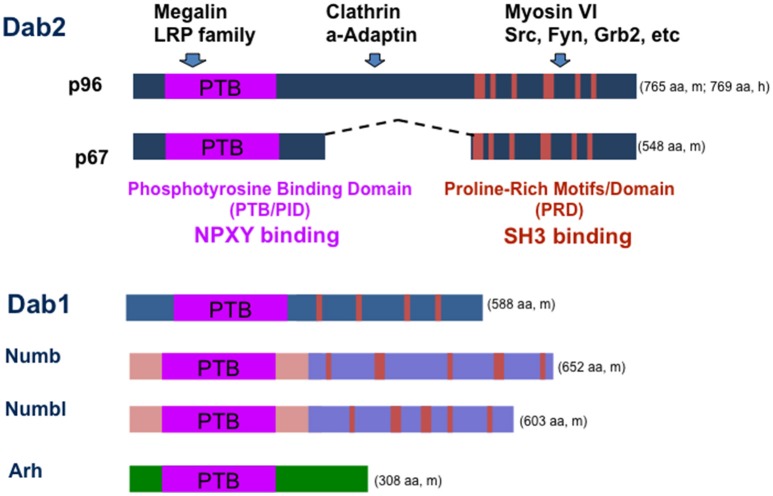
Disabled-2 (Dab2) is a clathrin and cargo binding endocytic adaptor protein, and cell biology studies revealed that Dab2 plays a role in cellular trafficking of a number of transmembrane receptors and signaling proteins. A PTB/PID domain located in the N-terminus of Dab2 binds the NPXY motif(s) present at the cytoplasmic tails of certain transmembrane proteins/receptors. The membrane receptors reported to bind directly to Dab2 include LDL receptor and its family members LRP1 and LRP2 (megalin), growth factor receptors EGFR and FGFR, and the cell adhesion receptor beta1 integrin. Dab2 also serves as an adaptor in signaling pathways. Particularly, Dab2 facilitates the endocytosis of the Ras activating Grb2/Sos1 signaling complex, controls its disassembly, and thereby regulates the Ras/MAPK signaling pathway. Cellular analyses have suggested several diverse functions for the widely expressed proteins, and Dab2 is also considered a tumor suppressor, as loss or reduced expression is found in several cancer types. Dab2 null mutant mice were generated and investigated to determine if the findings from cellular studies might be important and relevant in intact animals. Dab2 conditional knockout mice mediated through a Sox2-Cre transgene have no obvious developmental defects and have a normal life span despite that the Dab2 protein is essentially absent in the mutant mice. The conditional knockout mice were grossly normal, though more recent investigation of the Dab2-deficient mice revealed several phenotypes, which can be accounted for by several previously suggested mechanisms. The studies of mutant mice established that Dab2 plays multiple physiological roles through its endocytic functions and modulation of signal pathways.
Overview
AI snapshot
Written from the paper’s full text.
TL;DR
This review synthesizes cell-culture and mouse-knockout evidence that Disabled-2 (Dab2), a clathrin/cargo-binding endocytic adaptor, has multiple physiological roles despite Dab2-null mice being largely normal. Phenotypes in cholesterol homeostasis, kidney protein reuptake, mammary involution, tumor risk, and diet-induced adipose expansion are attributed mainly to Dab2’s endocytic functions and modulation of Ras/MAPK signaling.
Key findings
- Dab2 conditional knockout mice generated with Sox2-Cre have no obvious developmental defects and a normal life span, with Dab2 protein essentially absent; unchallenged mice are grossly normal.
- Reported phenotypes include mild proteinuria, increased serum cholesterol, delayed mammary involution, resistance to high-fat/high-calorie diet-induced weight gain in juvenile mice, and increased tumor incidence in aged mice at about 10%, mainly in uterus, ovary, liver, mammary gland, and colon.
- In LDL receptor endocytosis, Dab2 loss alone causes only a small increase in serum cholesterol, but in the absence of Arh, additional Dab2 loss greatly augments serum LDL and cholesterol to levels similar to LDL receptor null mice; Dab2 is expressed in liver sinusoidal endothelial cells, not hepatocytes.
- Loss of Dab2 expression occurs in about 90% of ovarian cancers and is an early event; Dab2 is proposed as a tumor suppressor, with tumor suppressor functions attributed to suppressing Ras/MAPK signaling, epithelial organization, and cell adhesion/migration.
Methods
- Narrative review integrating published cell-culture studies, genetic mouse models (including constitutive and conditional knockouts such as Sox2-Cre and aP2-Cre), and prior phenotypic characterizations.
- Expression profiling uses public GeneAtlas microarray datasets for mouse and human tissues, with Dab2 mRNA ranked by abundance and averaged across probe sets.
- Main analysis is qualitative synthesis of Dab2 mutant phenotypes (summarized in Table 1) and proposed mechanisms, especially endocytosis and Ras/MAPK regulation; no new primary experimental cohort is reported.
Limitations
- The paper states that the described phenotypes are likely incomplete and that additional Dab2 physiological functions will continue to be uncovered.
- The paper notes that redundancy with similar adaptors, especially Arh and Numb, may obscure physiological impacts, and that some speculated cellular functions may not be physiological due to low tissue expression.
- The paper identifies unresolved mechanisms, including how Dab2-mediated LDL endocytosis in sinusoidal endothelial cells affects hepatocyte cholesterol synthesis and whether Dab2-positive pericytes are pre-adipocytes; evident from the text, the review also relies on cited literature including a “submitted” manuscript and does not use a systematic search or meta-analysis.
Model-written summary. Check it against the paper before relying on it.
Integrity signals
Registry
Cites
Statistics
Figures
Verification
Claims the paper makes
35 Partly supported · 23 Supported · 20 No full text of the sources · 18 Own interpretation · 16 Not checked yet · 13 No basis given · 9 Sources not found · 5 Supported so far · 4 Own result · 2 Not supported · 2 Couldn’t confirm · 1 Mixed support · accuracy not yet measured
At least one cited source doesn’t support this claim or points to a different paper, and none confirmed it — see the verdicts below.
In the paper
“Tumors/multiple types | Uterine hyperproliferation, Ovarian epithelial growth, Increased tumor incidence”
§ Endocytosis and Physiology: Insights from Disabled-2 Deficient Mice > Introduction
What the sources say
- Not checked — no full text of the sourcecites Yang et al., 2006 source
- Disputedcites Moore et al., 2013 sourceExperimental — accuracy not yet measured
The Discussion (page unavailable) says ovarian surface epithelia in Dab2-deficient mice are monolayered and intact, contrary to the claimed epithelial growth. The Results report more preneoplastic lesions in the ovaries of aged mice with a dab2-deleted genotype, but do not describe ovarian epithelial growth. (LLM, conf=0.87)
Checked by a reasoning model — may be wrong.
plaindirect- Asserted: passes — The authors put it forward as true.
- Checkable: passes — It can be checked against evidence.
- Load-bearing: unclear — It is unclear whether the paper’s conclusions depend on it.
- Based: passes — The paper gives a reason why it holds.
Some cited sources support this claim and some don’t — read each source’s verdict below.
In the paper
“The functions of Dab2 in macrophages were suggested to promote inflammation in brain (Jokubaitis et al., 2013), adipose tissue (Adamson et al., 2016), rat spinal cord injury (Ahn et al., 2011, 2015), and central nervous system (Moon et al., 2005).”
§ Endocytosis and Physiology: Insights from Disabled-2 Deficient Mice > Roles of Dab2 in immune cells
What the sources say
- Partly supportedcites Jokubaitis et al., 2013 sourceExperimental — accuracy not yet measured
The Discussion reports that Dab2-dependent macrophage/microglial responses worsen inflammatory tissue damage in experimental autoimmune encephalomyelitis (EAE). But the study locates its EAE findings in the spinal cord, not specifically the brain; the Background mentions brain injury only when describing another study's finding of Dab2 up-regulation, not a demonstrated pro-inflammatory function there. (LLM, conf=0.86)
- Disputedcites Adamson et al., 2016 sourceExperimental — accuracy not yet measured
For the adipose-tissue clause attributed to Adamson et al., the Introduction reports that deleting Dab2 exacerbated adipose tissue inflammation in high-fat-fed mice. The Methods passage likewise says deletion of Dab2 in myeloid cells worsened that inflammation. The source therefore describes DAB2 as restraining, not promoting, inflammation in this setting. (LLM, conf=0.94)
Checked by a reasoning model — may be wrong.
- Not matchedcites Ahn et al., 2011, 2015
Couldn’t be matched to a paper in Crossref, so it can’t be checked.
hedgedconditional- Asserted: passes — The authors put it forward as true.
- Checkable: passes — It can be checked against evidence.
- Load-bearing: unclear — It is unclear whether the paper’s conclusions depend on it.
- Based: passes — The paper gives a reason why it holds.
- Partly supported
Every source the paper cites for this claim was checked and supports it.
In the paper
“The lack of more noticeable differences in the mammary glands of Dab2 null mice may be due to the compensation of other endocytic adaptors, such as Numb and Arh.”
§ Endocytosis and Physiology: Insights from Disabled-2 Deficient Mice > Roles of Dab2 in mammary involution
What the sources say
- Supportedcites Tao et al., 2014 source
The Discussion explicitly proposes that compensation by the endocytic adaptors Numb and ARH may explain why Dab2-knockout mammary glands show only subtle differences. It also reports increased Numb and ARH protein levels in Dab2-null mammary epithelial cells (Figure 9). (LLM, conf=0.95)
hedgedconditional- Asserted: passes — The authors put it forward as true.
- Checkable: passes — It can be checked against evidence.
- Load-bearing: passes — The paper’s conclusions depend on it.
- Based: passes — The paper gives a reason why it holds.
- Supported
The sources with a verdict support this claim; the rest weren’t checked yet, have no full text we could read, or their verdicts aren’t rated yet.
In the paper
“The increased TGF-beta-stimulated Ras/MAPK activation and subsequent induction of higher expression of survival genes (Boucher et al., 2000; Balmanno and Cook, 2009) may explain the prolonged survival of mammary epithelial cells of Dab2-null mice during involution (Tao et al., 2014).”
§ Endocytosis and Physiology: Insights from Disabled-2 Deficient Mice > Roles of Dab2 in mammary involution
What the sources say
- Not checked — no full text of the sourcecites Boucher et al., 2000 source
- Not checked — no full text of the sourcecites Balmanno and Cook, 2009 source
- Supportedcites Tao et al., 2014 source
The Discussion proposes that unsuppressed TGF-beta-induced Ras/MAPK activation may explain the prolonged survival of Dab2-null mammary epithelial cells during involution. Its Figure 8 description links that pathway to expression of cell-survival genes, while the Results report increased Bcl-2 in Dab2-null glands. (LLM, conf=0.94)
hedgedconditional- Asserted: passes — The authors put it forward as true.
- Checkable: passes — It can be checked against evidence.
- Load-bearing: passes — The paper’s conclusions depend on it.
- Based: passes — The paper gives a reason why it holds.
The cited sources support only part of this claim — read each source’s verdict below.
In the paper
“Immune system/Treg | No obvious phenotype in vivo; failed to suppress T cells”
- Also stated in: § Roles of Dab2 in immune cells · plain
“However, mice with Dab2 deletion in Treg cells are healthy in appearance and do not show phenotypes related to autoimmunity defects even at 1 year of age”
§ Endocytosis and Physiology: Insights from Disabled-2 Deficient Mice > Introduction
What the sources say
- Partly supportedcites Jain et al., 2009 sourceExperimental — accuracy not yet measured
In Results and Discussion, Dab2 conditional-knockout mice appeared healthy, lacked overt autoimmunity, and had phenotypically similar Treg cells under unperturbed conditions. But the same section reports an in vivo defect: their Treg cells failed to moderate established colitis. Thus, 'no obvious phenotype in vivo' is supported only for the unperturbed mice, not as a general statement about Treg function in vivo. (LLM, conf=0.88)
plain- Asserted: passes — The authors put it forward as true.
- Checkable: passes — It can be checked against evidence.
- Load-bearing: passes — The paper’s conclusions depend on it.
- Based: passes — The paper gives a reason why it holds.
- Also stated in: § Roles of Dab2 in immune cells · plain
The cited sources support only part of this claim — read each source’s verdict below.
In the paper
“Liver/sinusoidal endothelial cells | Increased serum cholesterol”
- Also stated in: § Function in LDL uptake and cholesterol homeostasis · plain
“Deletion of Dab2 gene in mice only results in a small increase of serum cholesterol level (Moore et al., 2013)”
§ Endocytosis and Physiology: Insights from Disabled-2 Deficient Mice > Introduction
What the sources say
- Supportedcites Moore et al., 2013 source
The Results section (‘Role of Dab2 in cholesterol metabolism in vivo’) reports a small but statistically significant increase in serum total cholesterol in Dab2-deficient mice compared with littermate controls. The Discussion also describes increased serum cholesterol in the mutant mice. (LLM, conf=0.94)
- Partly supportedcites Tao et al., 2016a sourceExperimental — accuracy not yet measured
The Results report increased serum cholesterol in mice lacking both Dab2 and Arh, not in Dab2-null mice alone. The Discussion says Dab2 ablation alone has a relatively minor impact on serum cholesterol and reports increased liver cholesterol in those mice; liver cholesterol is not serum cholesterol. No page numbers are available in our copy. (LLM, conf=0.83)
plaindirect- Asserted: passes — The authors put it forward as true.
- Checkable: passes — It can be checked against evidence.
- Load-bearing: passes — The paper’s conclusions depend on it.
- Based: passes — The paper gives a reason why it holds.
- Also stated in: § Function in LDL uptake and cholesterol homeostasis · plain
The cited sources support only part of this claim — read each source’s verdict below.
In the paper
“Tumors/multiple types | Uterine hyperproliferation, Ovarian epithelial growth, Increased tumor incidence”
§ Endocytosis and Physiology: Insights from Disabled-2 Deficient Mice > Introduction
What the sources say
- Not checked — no full text of the sourcecites Yang et al., 2006 source
- Partly supportedcites Moore et al., 2013 sourceExperimental — accuracy not yet measured
The Results section (“Characterization of dab2 conditional mutant mice”; page unavailable) reports an increased incidence of preneoplastic lesions in aged mice with a dab2-deleted genotype. It does not report increased tumor incidence: the authors say studies of tumor phenotypes will be reported elsewhere. The claim also omits that these were conditional mutants rather than constitutive Dab2-null mice. (LLM, conf=0.88)
plaindirect- Asserted: passes — The authors put it forward as true.
- Checkable: passes — It can be checked against evidence.
- Load-bearing: unclear — It is unclear whether the paper’s conclusions depend on it.
- Based: passes — The paper gives a reason why it holds.
The cited sources support only part of this claim — read each source’s verdict below.
In the paper
“though impact of Dab2 deletion on cardiac development is not notable (Morris et al., 2002b; Moore et al., 2013).”
§ Endocytosis and Physiology: Insights from Disabled-2 Deficient Mice > Dab2 in the regulation of cellular signaling pathways
What the sources say
- Partly supportedcites Morris et al., 2002b sourceExperimental — accuracy not yet measured
The rescue section (page unavailable) reports that mice with Dab2 deleted from the embryo proper appeared normal, were born and survived, supporting no obvious developmental defect under that condition. It does not assess cardiac development specifically; complete Dab2 deletion instead caused early embryonic lethality, as reported in the targeting section (page unavailable). (LLM, conf=0.82)
- Partly supportedcites Moore et al., 2013 sourceExperimental — accuracy not yet measured
The Results section on conditional mutant mice reports no detectable developmental defects, and the Conclusion says Dab2 is dispensable for organ development when deletion is restricted to the embryo proper. These findings support a limited developmental impact, but the paper does not specifically assess cardiac development; constitutive deletion instead caused early embryonic lethality. (LLM, conf=0.83)
plain- Asserted: passes — The authors put it forward as true.
- Checkable: passes — It can be checked against evidence.
- Load-bearing: unclear — It is unclear whether the paper’s conclusions depend on it.
- Based: passes — The paper gives a reason why it holds.
- Partly supported
The cited sources support only part of this claim — read each source’s verdict below.
In the paper
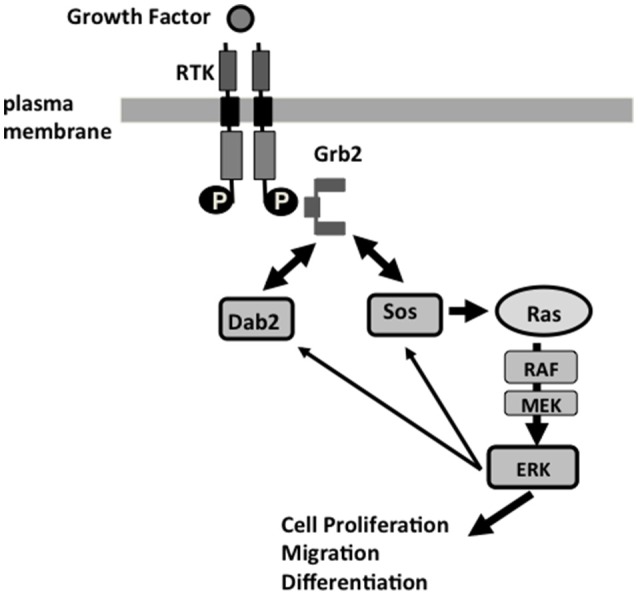
“By competing with Sos1 for binding to Grb2, Dab2 acts as a negative regulator for Ras/MAPK pathway (Xu et al., 1998; Zhou and Hsieh, 2001).”
§ Endocytosis and Physiology: Insights from Disabled-2 Deficient Mice > Dab2 in the regulation of cellular signaling pathways
What the sources say
- Not matchedcites Xu et al., 1998
Couldn’t be matched to a paper in Crossref, so it can’t be checked.
- Supportedcites Zhou and Hsieh, 2001 source
The Results state that DOC-2/DAB2 and SOS compete for the same binding site on Grb2. The Discussion says this interaction inhibits the MAP kinase pathway by preventing Grb2 from recruiting SOS. Our copy calls the competing protein “SOS” rather than “Sos1.” (LLM, conf=0.93)
plaindirect- Asserted: passes — The authors put it forward as true.
- Checkable: passes — It can be checked against evidence.
- Load-bearing: passes — The paper’s conclusions depend on it.
- Based: passes — The paper gives a reason why it holds.
- Not matched
The cited sources support only part of this claim — read each source’s verdict below.
In the paper
“Indeed, a role of Dab2 in suppressing Ras/MAPK activation accounts for embryonic development (Yang et al., 2009) and several physiological phenotypes observed in Dab2 null mice (Tao et al., 2014, 2016b).”
§ Endocytosis and Physiology: Insights from Disabled-2 Deficient Mice > Dab2 in the regulation of cellular signaling pathways
What the sources say
- Partly supportedcites Yang et al., 2009 sourceExperimental — accuracy not yet measured
The Results and Discussion (page not provided) link Dab2-mediated suppression of c-Fos to extraembryonic endoderm organization and show that eliminating c-fos partially rescues early embryonic lethality. They do not establish that Dab2 suppresses Ras/MAPK activation; the Discussion instead describes regulation of activated MAPK’s nuclear entry as an untested hypothesis and identifies an additional c-Fos-independent requirement in development. The separate claim about physiological phenotypes is cited to Tao et al., not this paper. (LLM, conf=0.88)
- Not matchedcites Tao et al., 2014, 2016b
Couldn’t be matched to a paper in Crossref, so it can’t be checked.
plaindirect- Asserted: passes — The authors put it forward as true.
- Checkable: passes — It can be checked against evidence.
- Load-bearing: passes — The paper’s conclusions depend on it.
- Based: passes — The paper gives a reason why it holds.
- Partly supported
- It may state two separate claims as one. 51
- Probably not a substantial claim. 17
- The quote only partly states this claim. 1
At least one cited source doesn’t support this claim or points to a different paper, and none confirmed it — see the verdicts below.
In the paper
“Dab2 null mice are produced at an expected ratio and the mice are essentially phenotypically normal in unchallenged conditions (Moore et al., 2013).”
§ Endocytosis and Physiology: Insights from Disabled-2 Deficient Mice > Roles of Dab2 in adipocyte differentiation
What the sources say
- Disputedcites Moore et al., 2013 sourceExperimental — accuracy not yet measured
The Results section on constitutive null embryos reports that dab2 (-/-) embryos die around E5.5 and none survived to E9.5. The expected Mendelian ratio and absence of obvious developmental defects are reported instead for conditional Sox2-Cre mutants, in which Dab2 deletion was restricted to the embryo proper. (LLM, conf=0.88)
Checked by a reasoning model — may be wrong.
plain- Asserted: passes — The authors put it forward as true.
- Checkable: passes — It can be checked against evidence.
- Load-bearing: unclear — It is unclear whether the paper’s conclusions depend on it.
- Based: passes — The paper gives a reason why it holds.
It may state two separate claims as one.
- Disputed
The sources with a verdict support this claim; the rest weren’t checked yet, have no full text we could read, or their verdicts aren’t rated yet.
In the paper
“The rapid cell death and tissue regression during mammary involution is a tightly controlled process (Furth et al., 1997; Furth, 1999), and TGF-beta signaling is known to play a crucial role (Bierie et al., 2009).”
§ Endocytosis and Physiology: Insights from Disabled-2 Deficient Mice > Roles of Dab2 in mammary involution
What the sources say
- Not checked — no full text of the sourcecites Furth et al., 1997 source
- Not checked — no full text of the sourcecites Furth, 1999 source
- Supportedcites Bierie et al., 2009 source
The section “TGF-β Signaling Promotes Cell Death and Suppresses Lactation During the Second Stage of Mammary Involution” reports that TGF-β signaling promotes commitment to cell death during involution. Bierie et al. is cited for the TGF-β clause, not the preceding description of involution as tightly controlled. (LLM, conf=0.92)
boosteddirect- Asserted: passes — The authors put it forward as true.
- Checkable: passes — It can be checked against evidence.
- Load-bearing: passes — The paper’s conclusions depend on it.
- Based: passes — The paper gives a reason why it holds.
Probably not a substantial claim. It may state two separate claims as one.
The cited sources support only part of this claim — read each source’s verdict below.
In the paper
“In the dab2-deficient embryos, extra-embryonic endoderm cells are present but fail to sort and form primitive and subsequent visceral endoderm epithelia. Rather, the extra-embryonic endoderm cells intermingle with the ectoderm cells”
§ Endocytosis and Physiology: Insights from Disabled-2 Deficient Mice > Dab2 identification and a brief history
What the sources say
- Not matchedcites Yang et al., 2002a, 2007, 2009
Couldn’t be matched to a paper in Crossref, so it can’t be checked.
- Supportedcites Moore et al., 2013 source
The Discussion reports that extraembryonic endoderm cells are present in Dab2-deficient embryos but intermingle with epiblast cells instead of forming a surface epithelial layer. The Results describe failure to organize primitive endoderm at E4.5 and disorganization of visceral endoderm at E5.5. The paper calls the intermixed cells “epiblast,” rather than “ectoderm.” (LLM, conf=0.91)
plaindirect- Asserted: passes — The authors put it forward as true.
- Checkable: passes — It can be checked against evidence.
- Load-bearing: passes — The paper’s conclusions depend on it.
- Based: passes — The paper gives a reason why it holds.
It may state two separate claims as one.
- Not matched
The cited sources support only part of this claim — read each source’s verdict below.
In the paper
“Also, participation in the clathrin-mediated endocytosis and trafficking of E-cadherin explains its affects on epithelial organization (Yang et al., 2007).”
§ Endocytosis and Physiology: Insights from Disabled-2 Deficient Mice > Dab2 as an endocytosis adaptor
What the sources say
- Partly supportedcites Yang et al., 2007 sourceExperimental — accuracy not yet measured
The Discussion says Dab2 is important for E-cadherin distribution and suggests that Dab2-mediated clathrin-coated endocytosis removes E-cadherin from the apical surface. The Abstract proposes loss of polarity as the mechanism behind defective epithelial surface positioning. The citing sentence presents that proposed explanation as established. (LLM, conf=0.82)
plaindirect- Asserted: passes — The authors put it forward as true.
- Checkable: passes — It can be checked against evidence.
- Load-bearing: passes — The paper’s conclusions depend on it.
- Based: passes — The paper gives a reason why it holds.
It may state two separate claims as one.
- Partly supported
The cited sources support only part of this claim — read each source’s verdict below.
In the paper
“Dab2 proteins also contain clathrin binding, NPF, and DPF motifs, which bind components of endocytic vesicles such as clathrin, alpha-adaptin, and EPS-15, respectively (Traub, 2003).”
§ Endocytosis and Physiology: Insights from Disabled-2 Deficient Mice > Dab2 as an endocytosis adaptor
What the sources say
- Partly supportedcites Traub, 2003 sourceExperimental — accuracy not yet measured
The “ARH, Disabled-2, and numb” section says Dab2 has clathrin-box and/or AP-2 appendage-binding sequences and describes PTB adaptors as binding clathrin and AP-2. It does not identify NPF or DPF motifs in Dab2, or establish the claimed respective binding of those motifs to alpha-adaptin and EPS-15. (LLM, conf=0.86)
plaindirect- Asserted: passes — The authors put it forward as true.
- Checkable: passes — It can be checked against evidence.
- Load-bearing: passes — The paper’s conclusions depend on it.
- Based: passes — The paper gives a reason why it holds.
It may state two separate claims as one.
- Partly supported
The cited sources support only part of this claim — read each source’s verdict below.
In the paper
“its expression was found to be absent or very low in virgin mammary epithelial cells, but is greatly induced in mammary glands during pregnancy and lactation (Tao et al., 2014).”
§ Endocytosis and Physiology: Insights from Disabled-2 Deficient Mice > Roles of Dab2 in mammary involution
What the sources say
- Partly supportedcites Tao et al., 2014 sourceExperimental — accuracy not yet measured
The Results section, “Induction of Dab2 expression in mammary glands during pregnancy and lactation,” reports that Dab2 was essentially undetectable in virgin mammary epithelial cells and was massively induced during lactation. It reports only a low level during pregnancy, so “greatly induced” overstates the pregnancy finding. (LLM, conf=0.86)
plaincorrelational- Asserted: passes — The authors put it forward as true.
- Checkable: passes — It can be checked against evidence.
- Load-bearing: unclear — It is unclear whether the paper’s conclusions depend on it.
- Based: passes — The paper gives a reason why it holds.
It may state two separate claims as one.
- Partly supported
The cited sources support only part of this claim — read each source’s verdict below.
In the paper
“Dab2 is essential for mouse embryonic development and gene deletion in mice causes early embryonic lethality at a stage prior to gastrulation (Morris et al., 2002b; Yang et al., 2002a, 2007).”
§ Endocytosis and Physiology: Insights from Disabled-2 Deficient Mice > Dab2 identification and a brief history
What the sources say
- Supportedcites Morris et al., 2002b source
The 'Targeting of the Dab2 locus' section reports that homozygous Dab2 mutation is lethal in early development and that null embryos implant but fail to undergo gastrulation. This supports the claim about gene deletion in mice; the paper separately notes that deletion limited to the embryo proper does not cause this lethality. Page numbers were not provided in the supplied passages. (LLM, conf=0.93)
- Not matchedcites Yang et al., 2002a, 2007
Couldn’t be matched to a paper in Crossref, so it can’t be checked.
plaindirect- Asserted: passes — The authors put it forward as true.
- Checkable: passes — It can be checked against evidence.
- Load-bearing: passes — The paper’s conclusions depend on it.
- Based: passes — The paper gives a reason why it holds.
It may state two separate claims as one.
- Supported
Every source the paper cites for this claim was checked and supports it.
In the paper
“For mammary morphology, the impact of Dab2 deletion is most obvious at day 3 of forced involution; however, no permanent changes in mammary glands of Dab2 null mice are noted.”
§ Endocytosis and Physiology: Insights from Disabled-2 Deficient Mice > Roles of Dab2 in mammary involution
What the sources say
- Supportedcites Tao et al., 2014 source
The Results section on delayed mammary involution says the differences were most noticeable on day 3 of forced involution. It reports that they became minimal by day 5 and describes the effect as transient, supporting the statement that no permanent morphological change was noted. (LLM, conf=0.91)
plain- Asserted: passes — The authors put it forward as true.
- Checkable: passes — It can be checked against evidence.
- Load-bearing: unclear — It is unclear whether the paper’s conclusions depend on it.
- Based: passes — The paper gives a reason why it holds.
It may state two separate claims as one.
- Supported
The sources with a verdict support this claim; the rest weren’t checked yet, have no full text we could read, or their verdicts aren’t rated yet.
In the paper
“Analyses in embryoid bodies and cultured cells support that Dab2 is critical for the surface targeting and restriction of cell adhesion molecules and the establishment and maintenance of epithelial polarity”
§ Endocytosis and Physiology: Insights from Disabled-2 Deficient Mice > Dab2 identification and a brief history
What the sources say
- Not checked — no full text of the sourcecites Rula et al., 2007 source
- Supportedcites Moore et al., 2013 source
The Background describes Dab2-mediated polarized trafficking of adhesion molecules, including integrins and E-cadherin. The Discussion (mechanism of epithelial organization; loss of Dab2 in epithelial disorganization and cancer) links reduced trafficking to failure to establish polarity and loss of Dab2 to epithelial depolarization in embryos and embryoid bodies. These passages support the claim as a summary of the cell and embryoid-body findings, rather than a claim that Dab2 is required for polarity in every tissue. (LLM, conf=0.86)
plaindirect- Asserted: passes — The authors put it forward as true.
- Checkable: passes — It can be checked against evidence.
- Load-bearing: passes — The paper’s conclusions depend on it.
- Based: passes — The paper gives a reason why it holds.
It may state two separate claims as one.
Every source the paper cites for this claim was checked and supports it.
In the paper
“In the studies of primary mammary epithelial cells in cultures, Dab2 deletion appears to influence Grb2-mediated TGF-beta Ras/MAPK activation, but does not alter the phosphorylation and activation of the Smad family proteins, which is the canonical pathway of TGF-beta signaling (Tao et al., 2014).”
§ Endocytosis and Physiology: Insights from Disabled-2 Deficient Mice > Roles of Dab2 in mammary involution
What the sources say
- Supportedcites Tao et al., 2014 source
The Results section reports that Dab2 deletion increased Grb2–Sos association and left TGF-beta-stimulated MAPK activation unsuppressed in primary mammary epithelial cells. It also reports preserved Smad2 phosphorylation and activation; the Discussion states that Dab2 deletion had no detectable effect on Smad2 activation and identifies Smad signaling as the canonical pathway. (LLM, conf=0.92)
hedgeddirect- Asserted: passes — The authors put it forward as true.
- Checkable: passes — It can be checked against evidence.
- Load-bearing: passes — The paper’s conclusions depend on it.
- Based: passes — The paper gives a reason why it holds.
It may state two separate claims as one.
- Supported
The sources with a verdict support this claim; the rest weren’t checked yet, have no full text we could read, or their verdicts aren’t rated yet.
In the paper
“Dab2 is able to recruit LDL receptor into clathrin-coated pits and facilitate endocytosis”
§ Endocytosis and Physiology: Insights from Disabled-2 Deficient Mice > Function in LDL uptake and cholesterol homeostasis
What the sources say
- Not checked — no full text of the sourcecites Maurer and Cooper, 2006 source
- Supportedcites Mulkearns and Cooper, 2012 source
The Introduction says Dab2 recruits cargo to clathrin-coated pits and identifies LDLR as a receptor bound by this adaptor family. It also describes a Dab2-dependent pathway for LDLR internalization; the Results report that depleting Dab2 inhibited LDLR endocytosis and that wild-type Dab2 rescued it. (LLM, conf=0.93)
plaindirect- Asserted: passes — The authors put it forward as true.
- Checkable: passes — It can be checked against evidence.
- Load-bearing: passes — The paper’s conclusions depend on it.
- Based: passes — The paper gives a reason why it holds.
It may state two separate claims as one.
Every source the paper cites for this claim was checked and supports it.
In the paper
“It was reported that Dab2 serves as an adaptor linking the transforming growth factor beta (TGF-beta) receptors with the Smad family proteins, facilitating TGF-beta signal transduction pathway (Hocevar et al., 2001).”
§ Endocytosis and Physiology: Insights from Disabled-2 Deficient Mice > Dab2 in the regulation of cellular signaling pathways
What the sources say
- Supportedcites Hocevar et al., 2001 source
The Introduction states that Dab2 functions as an adaptor bridging the TGF-β receptor complex to the Smad pathway. It also reports that Dab2 restores TGF-β-induced Smad responses in a signaling-mutant cell line. (LLM, conf=0.94)
plaindirect- Asserted: passes — The authors put it forward as true.
- Checkable: passes — It can be checked against evidence.
- Load-bearing: fails — The paper’s conclusions may not depend on it.
- Based: passes — The paper gives a reason why it holds.
Probably not a substantial claim. The paper’s conclusions may not depend on it.
- Supported
The cited sources support only part of this claim — read each source’s verdict below.
In the paper
“Indeed, endocytosis and trafficking of cell surface receptors and signaling components have been suggested to account for its activities in modulating multiple cellular signaling pathways, including Ras/MAPK”
§ Endocytosis and Physiology: Insights from Disabled-2 Deficient Mice > Dab2 as an endocytosis adaptor
What the sources say
- Not matchedcites Xu et al., 1998
Couldn’t be matched to a paper in Crossref, so it can’t be checked.
- Not matchedcites He et al., 2001
Couldn’t be matched to a paper in Crossref, so it can’t be checked.
- Partly supportedcites Zhou and Hsieh, 2001 sourceExperimental — accuracy not yet measured
The Abstract and Discussion (pages unavailable) support Dab2’s modulation of the Ras/MAPK pathway through binding Grb2 and interrupting its interaction with SOS. They do not support endocytosis or trafficking as the mechanism, or address Dab2’s modulation of TGF-beta and Wnt pathways. (LLM, conf=0.85)
hedgeddirect- Asserted: passes — The authors put it forward as true.
- Checkable: passes — It can be checked against evidence.
- Load-bearing: passes — The paper’s conclusions depend on it.
- Based: passes — The paper gives a reason why it holds.
The quote only partly states this claim.
- Not matched
Every source the paper cites for this claim was checked and supports it.
In the paper
“Nevertheless, a surprising finding is that Dab2 is not expressed in hepatocytes, but rather in the sinusoidal endothelial cells in liver (Tao et al., 2016a).”
§ Endocytosis and Physiology: Insights from Disabled-2 Deficient Mice > Function in LDL uptake and cholesterol homeostasis
What the sources say
- Supportedcites Tao et al., 2016a source
The Results section states that Dab2 is not expressed in hepatocytes and concludes that it is expressed in liver sinusoidal endothelial cells. The Discussion repeats this finding. (LLM, conf=0.95)
plain- Asserted: passes — The authors put it forward as true.
- Checkable: passes — It can be checked against evidence.
- Load-bearing: passes — The paper’s conclusions depend on it.
- Based: passes — The paper gives a reason why it holds.
It may state two separate claims as one.
- Supported
The cited sources support only part of this claim — read each source’s verdict below.
In the paper
“Another study indicates that Dab2 facilitates the cellular endocytosis and trafficking of TGF-beta receptor (Penheiter et al., 2010).”
§ Endocytosis and Physiology: Insights from Disabled-2 Deficient Mice > Dab2 in the regulation of cellular signaling pathways
What the sources say
- Partly supportedcites Penheiter et al., 2010 sourceExperimental — accuracy not yet measured
The Introduction reports that Dab2 knockdown disrupts TGF-β receptor recycling and endosomal trafficking, supporting the trafficking part of the claim. It also states that knockdown does not affect receptor internalization; the Discussion likewise reports no effect on TGF-β receptor internalization. Thus the paper does not support saying Dab2 facilitates the receptor's initial endocytosis. (LLM, conf=0.92)
hedgeddirect- Asserted: passes — The authors put it forward as true.
- Checkable: passes — It can be checked against evidence.
- Load-bearing: fails — The paper’s conclusions may not depend on it.
- Based: passes — The paper gives a reason why it holds.
Probably not a substantial claim. The paper’s conclusions may not depend on it. It may state two separate claims as one.
- Partly supported
The sources with a verdict support this claim; the rest weren’t checked yet, have no full text we could read, or their verdicts aren’t rated yet.
In the paper
“Therefore, Dab2 functions in endocytic trafficking to sustain cell polarity and thus epithelial organization, and hence loss of Dab2 leads to endoderm epithelial disorganization and failure of the embryos”
§ Endocytosis and Physiology: Insights from Disabled-2 Deficient Mice > Dab2 identification and a brief history
What the sources say
- Not checked — no full text of the sourcecites Rula et al., 2007 source
- Supportedcites Yang et al., 2007 source
The Discussion proposes that Dab2-mediated trafficking establishes and maintains epithelial polarity, which supports epithelial organization. Figure 6 states that Dab2-deficient endoderm cells lose polarity and surface positioning, mix with inner-cell-mass cells, and cause embryo failure; the section on early mouse embryos reports disorganized knockout embryos lacking a recognizable endoderm layer by E5.5. (LLM, conf=0.92)
- Supportedcites Moore et al., 2013 source
The Discussion section on epithelial organization describes Dab2-mediated endocytic trafficking as a mechanism for establishing endoderm cell polarity and reports disorganization when Dab2 is lost (page unavailable). The Conclusion reports early embryonic lethality following dab2 deletion (page unavailable). (LLM, conf=0.92)
plaindirect- Asserted: passes — The authors put it forward as true.
- Checkable: passes — It can be checked against evidence.
- Load-bearing: passes — The paper’s conclusions depend on it.
- Based: passes — The paper gives a reason why it holds.
It may state two separate claims as one.
The cited sources support only part of this claim — read each source’s verdict below.
In the paper
“However, despite rigorous investigation, these phenotypes were not found, and only subtle differences were observed between control and Dab2-deficient mice (Tao et al., 2014).”
§ Endocytosis and Physiology: Insights from Disabled-2 Deficient Mice > Roles of Dab2 in mammary involution
What the sources say
- Partly supportedcites Tao et al., 2014 sourceExperimental — accuracy not yet measured
The Discussion says that only subtle differences in mammary functions were observed, and the Results report minimal effects on milk production and nursing. But the Results section on delayed mammary involution reports delayed cell clearance and differences in apoptosis and survival markers, so the claim that cell-survival phenotypes were not found is too broad. (LLM, conf=0.84)
plain- Asserted: passes — The authors put it forward as true.
- Checkable: passes — It can be checked against evidence.
- Load-bearing: passes — The paper’s conclusions depend on it.
- Based: passes — The paper gives a reason why it holds.
It may state two separate claims as one.
- Partly supported
The cited sources support only part of this claim — read each source’s verdict below.
In the paper
“The most prominent phenotype of Dab2 knockout mice was their striking lean body composition under a high fat and high caloric diet, although the weight of the mutant mice was indistinguishable from wild-type littermates on a regular chow.”
§ Endocytosis and Physiology: Insights from Disabled-2 Deficient Mice > Roles of Dab2 in adipocyte differentiation
What the sources say
- Partly supportedcites Tao et al., 2016b sourceExperimental — accuracy not yet measured
The Results section reports that Dab2-null mice were leaner on a high-fat diet and had weights similar to wild-type mice on normal chow. But it also says the lean phenotype occurred when the high-fat diet began in juvenile mice and was absent when it began after six months of age. The claim omits that age qualification. (LLM, conf=0.86)
plain- Asserted: passes — The authors put it forward as true.
- Checkable: passes — It can be checked against evidence.
- Load-bearing: passes — The paper’s conclusions depend on it.
- Based: passes — The paper gives a reason why it holds.
It may state two separate claims as one.
- Partly supported
Every source the paper cites for this claim was checked and supports it.
In the paper
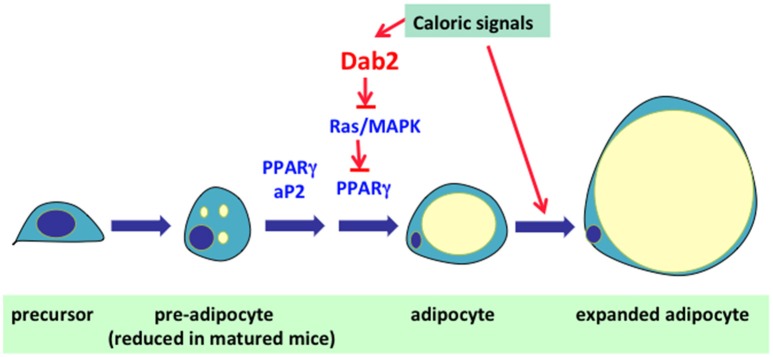
“The preliminary result suggests that Dab2 suppresses MAPK and allows the unsuppressed activity of PPARγ to induce adipocyte differentiation.”
§ Endocytosis and Physiology: Insights from Disabled-2 Deficient Mice > Roles of Dab2 in adipocyte differentiation
What the sources say
- Supportedcites Tao et al., 2016b source
The Discussion describes a model in which Dab2 suppresses Ras/Erk1/2 signaling, allowing PPARγ to enter the nucleus and promote adipogenic differentiation. The Results further report that inhibiting Erk1/2 increased PPARγ levels and partially restored differentiation in Dab2-null cells. (LLM, conf=0.94)
hedgeddirect- Asserted: passes — The authors put it forward as true.
- Checkable: passes — It can be checked against evidence.
- Load-bearing: passes — The paper’s conclusions depend on it.
- Based: passes — The paper gives a reason why it holds.
It may state two separate claims as one.
- Supported
The cited sources support only part of this claim — read each source’s verdict below.
In the paper
“Sox2-Cre is expressed in the inner cell mass and delete Dab2 gene in a mosaic fashion, and the embryo proper is essentially depleted of Dab2 allele by E9.5 (Moore et al., 2013).”
§ Endocytosis and Physiology: Insights from Disabled-2 Deficient Mice > Roles of Dab2 in adipocyte differentiation
What the sources say
- Partly supportedcites Moore et al., 2013 sourceExperimental — accuracy not yet measured
The Results (Characterization of dab2 conditional mutant mice; page unavailable) report that Sox2-Cre produced mosaic mutants and that the undeleted Dab2 allele was undetectable in the embryo proper by E9.5. The paper describes Sox2 expression in the epiblast, but does not establish the claim that Sox2-Cre is expressed in the inner cell mass specifically. (LLM, conf=0.84)
plaindirect- Asserted: passes — The authors put it forward as true.
- Checkable: passes — It can be checked against evidence.
- Load-bearing: passes — The paper’s conclusions depend on it.
- Based: passes — The paper gives a reason why it holds.
It may state two separate claims as one.
- Partly supported
Every source the paper cites for this claim was checked and supports it.
In the paper
“Induction of Dab2 expression likely acts as a feedback loop for the hormonal induction of mammary gland expansion during pregnancy and lactation, and the presence of Dab2 allows efficient cell death and clearance in mammary involution.”
§ Endocytosis and Physiology: Insights from Disabled-2 Deficient Mice > Roles of Dab2 in mammary involution
What the sources say
- Supportedcites Tao et al., 2014 source
The Discussion (page unavailable) proposes that hormone-induced Dab2 expression may provide feedback for growth control, matching the claim’s qualified language. It also reports that Dab2 deficiency delays epithelial cell death and clearance during mammary involution. (LLM, conf=0.90)
hedgedconditional- Asserted: passes — The authors put it forward as true.
- Checkable: passes — It can be checked against evidence.
- Load-bearing: passes — The paper’s conclusions depend on it.
- Based: passes — The paper gives a reason why it holds.
It may state two separate claims as one.
- Supported
Every source the paper cites for this claim was checked and supports it.
In the paper
“In additional analysis, it was observed that Dab2-deficient Treg cells failed to alleviate established colitis, suggesting a role of Dab2 in regulating lymphocyte infiltration and accumulation in the colon.”
§ Endocytosis and Physiology: Insights from Disabled-2 Deficient Mice > Roles of Dab2 in immune cells
What the sources say
- Supportedcites Jain et al., 2009 source
In Results and Discussion, under “Dab2 deficiency alters Treg cell function,” the paper reports that Dab2-deficient Treg cells failed to moderate established colitis and were defective in regulating ongoing lymphocyte infiltration and accumulation in the colon. This directly supports the citing sentence. (LLM, conf=0.95)
hedgedconditional- Asserted: passes — The authors put it forward as true.
- Checkable: passes — It can be checked against evidence.
- Load-bearing: passes — The paper’s conclusions depend on it.
- Based: passes — The paper gives a reason why it holds.
It may state two separate claims as one.
- Supported
The cited sources support only part of this claim — read each source’s verdict below.
In the paper
“However, mice with Dab2 deletion in Treg cells are healthy in appearance and do not show phenotypes related to autoimmunity defects even at 1 year of age, indicating that the Dab2 is dispensable for Treg cells in maintaining T cell tolerance (Jain et al., 2009).”
§ Endocytosis and Physiology: Insights from Disabled-2 Deficient Mice > Roles of Dab2 in immune cells
What the sources say
- Partly supportedcites Jain et al., 2009 sourceExperimental — accuracy not yet measured
The Results and Discussion section reports that Dab2-deficient mice appeared healthy and had no overt autoimmunity at 10–12 months, suggesting that their Treg cells maintained naïve T cell tolerance. The claim omits that qualifier: the same section reports that Dab2-deficient Treg cells failed to control established colitis, so the paper does not establish that Dab2 is dispensable for Treg-mediated tolerance generally. Page numbers are not provided in our copy. (LLM, conf=0.88)
hedged- Asserted: passes — The authors put it forward as true.
- Checkable: passes — It can be checked against evidence.
- Load-bearing: passes — The paper’s conclusions depend on it.
- Based: passes — The paper gives a reason why it holds.
It may state two separate claims as one.
- Partly supported
A result the paper reports from its own data — it cites no other source for it, so there is none to check. The quote shows it is in the paper.
In the paper
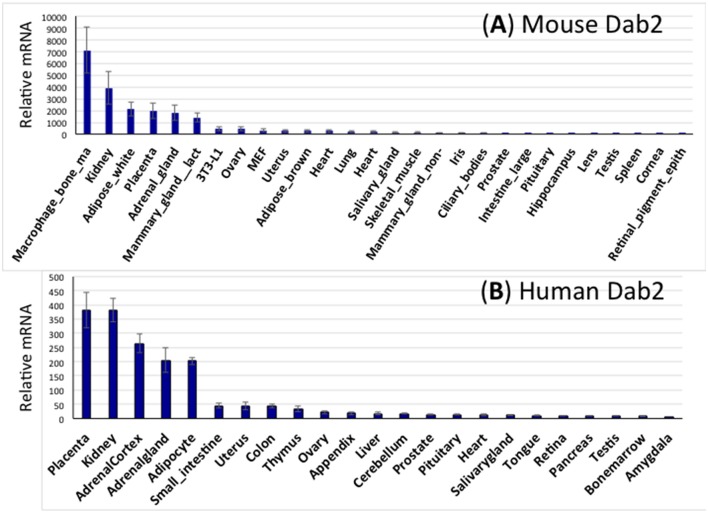
“In adults, Dab2 mRNA is present in most tissues at a low level, but is noticeably higher in macrophages, kidney, white adipose tissues, adrenal, and lactating mammary glands”
§ Endocytosis and Physiology: Insights from Disabled-2 Deficient Mice > Dab2 expression and tissue distribution
plaincorrelational- Asserted: passes — The authors put it forward as true.
- Checkable: passes — It can be checked against evidence.
- Load-bearing: unclear — It is unclear whether the paper’s conclusions depend on it.
- Based: passes — The paper gives a reason why it holds.
It may state two separate claims as one.
The paper states this without a source or data behind it here, so there is nothing to check it against. The quote shows it is in the paper.
In the paper
“Disabled-2 (Dab2) is a clathrin and cargo binding endocytic adaptor protein”
§ Endocytosis and Physiology: Insights from Disabled-2 Deficient Mice > Abstract
plain- Asserted: passes — The authors put it forward as true.
- Checkable: passes — It can be checked against evidence.
- Load-bearing: passes — The paper’s conclusions depend on it.
- Based: fails — The paper may give no reason why it holds.
Probably not a substantial claim. The paper may give no reason why it holds.
The paper states this without a source or data behind it here, so there is nothing to check it against. The quote shows it is in the paper.
In the paper
“Dab2 conditional knockout mice mediated through a Sox2-Cre transgene have no obvious developmental defects and have a normal life span”
§ Endocytosis and Physiology: Insights from Disabled-2 Deficient Mice > Abstract
plain- Asserted: passes — The authors put it forward as true.
- Checkable: passes — It can be checked against evidence.
- Load-bearing: passes — The paper’s conclusions depend on it.
- Based: passes — The paper gives a reason why it holds.
It may state two separate claims as one.
- Rests on an assumption: The Dab2 protein is essentially absent in the Sox2-Cre conditional knockout mutant mice.
The paper states this without a source or data behind it here, so there is nothing to check it against. The quote shows it is in the paper.
In the paper
“Although, Dab2 constitutive knockout mice are early embryonic lethal, cre-lox approach enables the study of its functions in physiology.”
§ Endocytosis and Physiology: Insights from Disabled-2 Deficient Mice > Introduction
plain- Asserted: passes — The authors put it forward as true.
- Checkable: passes — It can be checked against evidence.
- Load-bearing: passes — The paper’s conclusions depend on it.
- Based: passes — The paper gives a reason why it holds.
Probably not a substantial claim.
The paper states this without a source or data behind it here, so there is nothing to check it against. The quote shows it is in the paper.
In the paper
“Dab2 is also considered a tumor suppressor, as loss or reduced expression is found in several cancer types.”
§ Endocytosis and Physiology: Insights from Disabled-2 Deficient Mice > Abstract
plaincorrelational- Asserted: passes — The authors put it forward as true.
- Checkable: passes — It can be checked against evidence.
- Load-bearing: fails — The paper’s conclusions may not depend on it.
- Based: fails — The paper may give no reason why it holds.
Probably not a substantial claim. The paper’s conclusions may not depend on it. The paper may give no reason why it holds.
The paper states this without a source or data behind it here, so there is nothing to check it against. The quote shows it is in the paper.
In the paper
“A PTB/PID domain located in the N-terminus of Dab2 binds the NPXY motif(s) present at the cytoplasmic tails of certain transmembrane proteins/receptors.”
§ Endocytosis and Physiology: Insights from Disabled-2 Deficient Mice > Abstract
plaindirect- Asserted: passes — The authors put it forward as true.
- Checkable: passes — It can be checked against evidence.
- Load-bearing: fails — The paper’s conclusions may not depend on it.
- Based: passes — The paper gives a reason why it holds.
Probably not a substantial claim. The paper’s conclusions may not depend on it.
The paper states this without a source or data behind it here, so there is nothing to check it against. The quote shows it is in the paper.
In the paper
“Dab2 facilitates the endocytosis of the Ras activating Grb2/Sos1 signaling complex, controls its disassembly, and thereby regulates the Ras/MAPK signaling pathway.”
§ Endocytosis and Physiology: Insights from Disabled-2 Deficient Mice > Abstract
plaindirect- Asserted: passes — The authors put it forward as true.
- Checkable: passes — It can be checked against evidence.
- Load-bearing: passes — The paper’s conclusions depend on it.
- Based: passes — The paper gives a reason why it holds.
It may state two separate claims as one.
The paper states this without a source or data behind it here, so there is nothing to check it against. The quote shows it is in the paper.
In the paper
“The membrane receptors reported to bind directly to Dab2 include LDL receptor and its family members LRP1 and LRP2 (megalin), growth factor receptors EGFR and FGFR, and the cell adhesion receptor beta1 integrin.”
§ Endocytosis and Physiology: Insights from Disabled-2 Deficient Mice > Abstract
plaincorrelational- Asserted: passes — The authors put it forward as true.
- Checkable: passes — It can be checked against evidence.
- Load-bearing: unclear — It is unclear whether the paper’s conclusions depend on it.
- Based: passes — The paper gives a reason why it holds.
It may state two separate claims as one.
The paper states this without a source or data behind it here, so there is nothing to check it against. The quote shows it is in the paper.
In the paper
“In primary cultures of mammary epithelial cells isolated from either virgin or pregnant mice, Dab2 expression can be induced by estrogen, progesterone, and prolactin, individually and also synergistically.”
§ Endocytosis and Physiology: Insights from Disabled-2 Deficient Mice > Roles of Dab2 in mammary involution
plaindirect- Asserted: passes — The authors put it forward as true.
- Checkable: passes — It can be checked against evidence.
- Load-bearing: unclear — It is unclear whether the paper’s conclusions depend on it.
- Based: passes — The paper gives a reason why it holds.
It may state two separate claims as one.
A conclusion the paper draws from its own results — it cites no other source for it, so there is none to check. The quote shows it is in the paper.
In the paper
“Characterization of Dab2 null mice revealed several phenotypes, both expected and surprised, and verified the links between cellular functions in endocytosis and signaling to the identified physiological functions”
§ Endocytosis and Physiology: Insights from Disabled-2 Deficient Mice > Introduction
plaincorrelational- Asserted: passes — The authors put it forward as true.
- Checkable: passes — It can be checked against evidence.
- Load-bearing: passes — The paper’s conclusions depend on it.
- Based: passes — The paper gives a reason why it holds.
It may state two separate claims as one.
In the paper
“Thus, a scenario is presented that Dab2 also mediates the endocytosis and trafficking of components of various signaling pathways. By doing so, Dab2 acts to modulate cellular signalings.”
§ Endocytosis and Physiology: Insights from Disabled-2 Deficient Mice > Dab2 as an endocytosis adaptor
What the sources say
- Not matchedcites Xu et al., 1998
Couldn’t be matched to a paper in Crossref, so it can’t be checked.
hedgeddirect- Asserted: passes — The authors put it forward as true.
- Checkable: passes — It can be checked against evidence.
- Load-bearing: passes — The paper’s conclusions depend on it.
- Based: passes — The paper gives a reason why it holds.
It may state two separate claims as one.
- Not matched
None of the sources cited for this claim have been checked yet.
In the paper
“while Arh mutation significantly elevates serum LDL and cholesterol levels in mice (Jones et al., 2003, 2007; Harada-Shiba et al., 2004) and also human (Garcia et al., 2001)”
§ Endocytosis and Physiology: Insights from Disabled-2 Deficient Mice > Function in LDL uptake and cholesterol homeostasis
What the sources say
plaindirect- Asserted: passes — The authors put it forward as true.
- Checkable: passes — It can be checked against evidence.
- Load-bearing: passes — The paper’s conclusions depend on it.
- Based: passes — The paper gives a reason why it holds.
It may state two separate claims as one.
A result the paper reports from its own data — it cites no other source for it, so there is none to check. The quote shows it is in the paper.
In the paper
“mammalian Dab2 is most similar to Dab1, Numb, Numbl, and Arh, which are all endocytic adaptor proteins”
§ Endocytosis and Physiology: Insights from Disabled-2 Deficient Mice > Dab2 identification and a brief history
plaincorrelational- Asserted: passes — The authors put it forward as true.
- Checkable: passes — It can be checked against evidence.
- Load-bearing: fails — The paper’s conclusions may not depend on it.
- Based: passes — The paper gives a reason why it holds.
Probably not a substantial claim. The paper’s conclusions may not depend on it.
None of the sources cited for this claim could be matched to a paper in Crossref, so there is nothing to check it against.
In the paper
“Several spliced isoforms including p96, p93, and p67 were identified as the protein products of the Dab2 gene (Xu et al., 1995; Sheng et al., 2000a, 2001).”
§ Endocytosis and Physiology: Insights from Disabled-2 Deficient Mice > Dab2 identification and a brief history
What the sources say
- Not matchedcites Xu et al., 1995
Couldn’t be matched to a paper in Crossref, so it can’t be checked.
- Not matchedcites Sheng et al., 2000a, 2001
Couldn’t be matched to a paper in Crossref, so it can’t be checked.
plaindirect- Asserted: passes — The authors put it forward as true.
- Checkable: passes — It can be checked against evidence.
- Load-bearing: fails — The paper’s conclusions may not depend on it.
- Based: passes — The paper gives a reason why it holds.
Probably not a substantial claim. The paper’s conclusions may not depend on it.
- Not matched
In the paper
“No redundancy between Dab1 and Dab2 activity has been found or reported, likely because of their divergent tissue expression.”
§ Endocytosis and Physiology: Insights from Disabled-2 Deficient Mice > Dab2 as an endocytosis adaptor
What the sources say
- Not checked — no full text of the sourcecites Howell et al., 1997 source
hedged- Asserted: passes — The authors put it forward as true.
- Checkable: passes — It can be checked against evidence.
- Load-bearing: unclear — It is unclear whether the paper’s conclusions depend on it.
- Based: passes — The paper gives a reason why it holds.
It may state two separate claims as one.
In the paper
“Thus, Grb2 recruits Sos1 to membrane receptors to mediate Ras activation (McCormick, 1993).”
§ Endocytosis and Physiology: Insights from Disabled-2 Deficient Mice > Dab2 in the regulation of cellular signaling pathways
What the sources say
- Not checked — no full text of the sourcecites McCormick, 1993 source
plaindirect- Asserted: passes — The authors put it forward as true.
- Checkable: passes — It can be checked against evidence.
- Load-bearing: passes — The paper’s conclusions depend on it.
- Based: passes — The paper gives a reason why it holds.
Probably not a substantial claim.
None of the sources cited for this claim have been checked yet.
In the paper
“another study found that Dab2 dose not impact the canonical TGF-beta pathway but Dab2 loss in head and neck cancer compromised the tumor suppressor function of TGF-beta, while enabling its tumor-promoting activities, and concluded that Dab2 is a molecular switch for TGF-beta from a tumor suppressor to a promoter (Hannigan et al., 2010).”
§ Endocytosis and Physiology: Insights from Disabled-2 Deficient Mice > Dab2 in the regulation of cellular signaling pathways
What the sources say
- Not checked yetcites Hannigan et al., 2010 source
Checked before — its earlier verdict is held back until a new check runs.
plaindirect- Asserted: passes — The authors put it forward as true.
- Checkable: passes — It can be checked against evidence.
- Load-bearing: passes — The paper’s conclusions depend on it.
- Based: passes — The paper gives a reason why it holds.
Probably not a substantial claim. It may state two separate claims as one.
- Not checked yet
In the paper
“An initial survey indicated that Dab2 is expressed widely in most tissues and particularly abundantly in the kidney (Fazili et al., 1999)”
§ Endocytosis and Physiology: Insights from Disabled-2 Deficient Mice > Roles of Dab2 in kidney: protein re-uptake
What the sources say
- Not checked — no full text of the sourcecites Fazili et al., 1999 source
hedged- Asserted: passes — The authors put it forward as true.
- Checkable: passes — It can be checked against evidence.
- Load-bearing: passes — The paper’s conclusions depend on it.
- Based: passes — The paper gives a reason why it holds.
It may state two separate claims as one.
None of the sources cited for this claim have been checked yet.
In the paper
“kidney was confirmed to be one of the highest expressing tissues profiled from a large public expression database (Figure 2), and the expressing cells was found later to be the kidney epithelial cells lining the proximal convoluted tubule (Moore et al., 2013).”
§ Endocytosis and Physiology: Insights from Disabled-2 Deficient Mice > Roles of Dab2 in kidney: protein re-uptake
What the sources say
- Not checked yetcites Moore et al., 2013 source
Checked before — its earlier verdict is held back until a new check runs.
plain- Asserted: passes — The authors put it forward as true.
- Checkable: passes — It can be checked against evidence.
- Load-bearing: unclear — It is unclear whether the paper’s conclusions depend on it.
- Based: passes — The paper gives a reason why it holds.
It may state two separate claims as one.
- Not checked yet
None of the sources cited for this claim have been checked yet.
In the paper
“In mammals, Dab2 is widely expressed (Xu et al., 1998; Fazili et al., 1999), but Dab1 is restricted to brain (Howell et al., 1997; Sheldon et al., 1997).”
§ Endocytosis and Physiology: Insights from Disabled-2 Deficient Mice > Dab2 identification and a brief history
What the sources say
plain- Asserted: passes — The authors put it forward as true.
- Checkable: passes — It can be checked against evidence.
- Load-bearing: fails — The paper’s conclusions may not depend on it.
- Based: passes — The paper gives a reason why it holds.
Probably not a substantial claim. The paper’s conclusions may not depend on it. It may state two separate claims as one.
In the paper
“was first isolated from a murine macrophage cell line as a phospho-protein, p96, involved in CSF-1 signal transduction (Xu et al., 1995)”
§ Endocytosis and Physiology: Insights from Disabled-2 Deficient Mice > Dab2 identification and a brief history
What the sources say
- Not matchedcites Xu et al., 1995
Couldn’t be matched to a paper in Crossref, so it can’t be checked.
plain- Asserted: passes — The authors put it forward as true.
- Checkable: passes — It can be checked against evidence.
- Load-bearing: fails — The paper’s conclusions may not depend on it.
- Based: passes — The paper gives a reason why it holds.
Probably not a substantial claim. The paper’s conclusions may not depend on it.
- Not matched
A claim is checked only against the cited paper’s full text, never its abstract, and none is available for its sources.
In the paper
“An interest to examine a potential role of Dab2 in mammary glands was prompted by the findings that Dab2 expression is lost in breast cancer (Sheng et al., 2000b) and in carcinogen-induced rodent mammary tumors (Schwahn and Medina, 1998; Medina, 2002).”
§ Endocytosis and Physiology: Insights from Disabled-2 Deficient Mice > Roles of Dab2 in mammary involution
What the sources say
plain- Asserted: passes — The authors put it forward as true.
- Checkable: passes — It can be checked against evidence.
- Load-bearing: passes — The paper’s conclusions depend on it.
- Based: passes — The paper gives a reason why it holds.
It may state two separate claims as one.
In the paper
“Through the PRD, Sos1 binds strongly to the two SH3 domains of the signaling adaptor Grb2, which associates with phosphorylated and activated transmembrane signaling receptors through the SH2 domain of Grb2.”
§ Endocytosis and Physiology: Insights from Disabled-2 Deficient Mice > Dab2 in the regulation of cellular signaling pathways
What the sources say
- Not checked — no full text of the sourcecites McCormick, 1993 source
boostedcorrelational- Asserted: passes — The authors put it forward as true.
- Checkable: passes — It can be checked against evidence.
- Load-bearing: passes — The paper’s conclusions depend on it.
- Based: passes — The paper gives a reason why it holds.
It may state two separate claims as one.
In the paper
“Sequence alignment indicated that mammalian Dab2 and a neuron specific isoform Dab1 are orthologs of the Drosophila Disabled gene”
§ Endocytosis and Physiology: Insights from Disabled-2 Deficient Mice > Dab2 identification and a brief history
What the sources say
- Not checked — no full text of the sourcecites Gertler et al., 1989 source
hedgedcorrelational- Asserted: passes — The authors put it forward as true.
- Checkable: passes — It can be checked against evidence.
- Load-bearing: fails — The paper’s conclusions may not depend on it.
- Based: passes — The paper gives a reason why it holds.
Probably not a substantial claim. The paper’s conclusions may not depend on it. It may state two separate claims as one.
In the paper
“The model suggests a role for Dab2 in mediating the endocytosis of signaling complexes and regulating signaling at the endosomes”
§ Endocytosis and Physiology: Insights from Disabled-2 Deficient Mice > Dab2 in the regulation of cellular signaling pathways
What the sources say
- Not checked — no full text of the sourcecites Vieira et al., 1996 source
hedgedconditional- Asserted: passes — The authors put it forward as true.
- Checkable: passes — It can be checked against evidence.
- Load-bearing: passes — The paper’s conclusions depend on it.
- Based: passes — The paper gives a reason why it holds.
It may state two separate claims as one.
A conclusion the paper draws from its own results — it cites no other source for it, so there is none to check. The quote shows it is in the paper.
In the paper
“and likely loss of Dab2 contributes but is not sufficiently to cause tumorigenesis.”
§ Endocytosis and Physiology: Insights from Disabled-2 Deficient Mice > Dab2 in tumor suppression
hedgedconditional- Asserted: passes — The authors put it forward as true.
- Checkable: passes — It can be checked against evidence.
- Load-bearing: passes — The paper’s conclusions depend on it.
- Based: passes — The paper gives a reason why it holds.
It may state two separate claims as one.
A conclusion the paper draws from its own results — it cites no other source for it, so there is none to check. The quote shows it is in the paper.
In the paper
“In sum, although Dab2 null mice are largely normal, slight challenges were able to reveal several physiological changes.”
§ Endocytosis and Physiology: Insights from Disabled-2 Deficient Mice > Conclusions
plain- Asserted: passes — The authors put it forward as true.
- Checkable: passes — It can be checked against evidence.
- Load-bearing: passes — The paper’s conclusions depend on it.
- Based: passes — The paper gives a reason why it holds.
It may state two separate claims as one.
In the paper
“Systematic analysis of a large panel of ovarian carcinomas showed that loss of Dab2 expression occurs in about 90% of ovarian cancer, and is an early event in ovarian tumorigenicity (Fazili et al., 1999).”
§ Endocytosis and Physiology: Insights from Disabled-2 Deficient Mice > Dab2 in tumor suppression
What the sources say
- Not checked — no full text of the sourcecites Fazili et al., 1999 source
plaincorrelational- Asserted: passes — The authors put it forward as true.
- Checkable: passes — It can be checked against evidence.
- Load-bearing: unclear — It is unclear whether the paper’s conclusions depend on it.
- Based: passes — The paper gives a reason why it holds.
It may state two separate claims as one.
In the paper
“A suggestive observation is that the loss of Dab2 expression occurs in an epithelial layer, and correlates closely with morphological transformation from a benign monolayer to malignant multiple layered ovarian cancer (Yang et al., 2002b).”
§ Endocytosis and Physiology: Insights from Disabled-2 Deficient Mice > Dab2 in tumor suppression
What the sources say
- Not checked — no full text of the sourcecites Yang et al., 2002b source
hedgedcorrelational- Asserted: passes — The authors put it forward as true.
- Checkable: passes — It can be checked against evidence.
- Load-bearing: unclear — It is unclear whether the paper’s conclusions depend on it.
- Based: passes — The paper gives a reason why it holds.
It may state two separate claims as one.
A conclusion the paper draws from its own results — it cites no other source for it, so there is none to check. The quote shows it is in the paper.
In the paper
“and also Dab2 is not required for normal function and turnover of adipocytes.”
§ Endocytosis and Physiology: Insights from Disabled-2 Deficient Mice > Roles of Dab2 in adipocyte differentiation
plain- Asserted: passes — The authors put it forward as true.
- Checkable: passes — It can be checked against evidence.
- Load-bearing: passes — The paper’s conclusions depend on it.
- Based: passes — The paper gives a reason why it holds.
It may state two separate claims as one.
In the paper
“which were observed to have frequent uterine hyperproliferation and atypia, and increased ovarian epithelial growth and changes (Yang et al., 2006)”
§ Endocytosis and Physiology: Insights from Disabled-2 Deficient Mice > Dab2 in tumor suppression
What the sources say
- Not checked — no full text of the sourcecites Yang et al., 2006 source
plaindirect- Asserted: passes — The authors put it forward as true.
- Checkable: passes — It can be checked against evidence.
- Load-bearing: passes — The paper’s conclusions depend on it.
- Based: passes — The paper gives a reason why it holds.
It may state two separate claims as one.
None of the sources cited for this claim have been checked yet.
In the paper
“A mechanism was suggested that the Dab2-deficient Treg cells are poor suppressors in vitro due to a deficiency in gap junctions for transferring cAMP to effector T cells, because of a role for Dab2 in endocytic trafficking of connexins, components of the gap junctions (Jain et al., 2009).”
§ Endocytosis and Physiology: Insights from Disabled-2 Deficient Mice > Roles of Dab2 in immune cells
What the sources say
- Not checked yetcites Jain et al., 2009 source
Checked before — its earlier verdict is held back until a new check runs.
hedgeddirect- Asserted: passes — The authors put it forward as true.
- Checkable: passes — It can be checked against evidence.
- Load-bearing: passes — The paper’s conclusions depend on it.
- Based: passes — The paper gives a reason why it holds.
Probably not a substantial claim. It may state two separate claims as one.
- Not checked yet
A conclusion the paper draws from its own results — it cites no other source for it, so there is none to check. The quote shows it is in the paper.
In the paper
“Thus, unsuppressed Ras/MAPK activation in pre-adipocytes that inhibits the differentiation accounts for the phenotype of resistance to high fat diet-induced weight gain in Dab2 null mice.”
§ Endocytosis and Physiology: Insights from Disabled-2 Deficient Mice > Roles of Dab2 in adipocyte differentiation
plaindirect- Asserted: passes — The authors put it forward as true.
- Checkable: passes — It can be checked against evidence.
- Load-bearing: passes — The paper’s conclusions depend on it.
- Based: passes — The paper gives a reason why it holds.
It may state two separate claims as one.
In the paper
“Dab2 cDNA was first cloned from a macrophage cDNA library (Xu et al., 1995), and macrophages are one of the cell types with highest Dab2 expressing (Figure 3).”
§ Endocytosis and Physiology: Insights from Disabled-2 Deficient Mice > Roles of Dab2 in immune cells
What the sources say
- Not matchedcites Xu et al., 1995
Couldn’t be matched to a paper in Crossref, so it can’t be checked.
plaincorrelational- Asserted: passes — The authors put it forward as true.
- Checkable: passes — It can be checked against evidence.
- Load-bearing: fails — The paper’s conclusions may not depend on it.
- Based: passes — The paper gives a reason why it holds.
Probably not a substantial claim. The paper’s conclusions may not depend on it. It may state two separate claims as one.
- Not matched
In the paper
“Studies of cultured cells suggested that Dab2 acts in macrophage spreading and adhesion (Rosenbauer et al., 2002).”
§ Endocytosis and Physiology: Insights from Disabled-2 Deficient Mice > Roles of Dab2 in immune cells
What the sources say
- Not checked — no full text of the sourcecites Rosenbauer et al., 2002 source
hedgedconditional- Asserted: passes — The authors put it forward as true.
- Checkable: passes — It can be checked against evidence.
- Load-bearing: fails — The paper’s conclusions may not depend on it.
- Based: passes — The paper gives a reason why it holds.
Probably not a substantial claim. The paper’s conclusions may not depend on it.
A conclusion the paper draws from its own results — it cites no other source for it, so there is none to check. The quote shows it is in the paper.
In the paper
“the absence of the endocytosis adaptor protein impacts diverse physiological functions in whole mice, including cholesterol homeostasis, kidney function, mammary involution, tumor risk, and high calorie-induced adipose expansion, to name the most noticeable few (Table 1).”
§ Endocytosis and Physiology: Insights from Disabled-2 Deficient Mice > Conclusions
plaindirect- Asserted: passes — The authors put it forward as true.
- Checkable: passes — It can be checked against evidence.
- Load-bearing: passes — The paper’s conclusions depend on it.
- Based: passes — The paper gives a reason why it holds.
It may state two separate claims as one.
A conclusion the paper draws from its own results — it cites no other source for it, so there is none to check. The quote shows it is in the paper.
In the paper
“Also, some speculated cellular functions may not be physiological due to low expression in the tissues and cell types and the phenotypes observed in cultured cells do not present in the whole animals.”
§ Endocytosis and Physiology: Insights from Disabled-2 Deficient Mice > Conclusions
hedgedconditional- Asserted: passes — The authors put it forward as true.
- Checkable: passes — It can be checked against evidence.
- Load-bearing: passes — The paper’s conclusions depend on it.
- Based: passes — The paper gives a reason why it holds.
It may state two separate claims as one.
A claim is checked only against the cited paper’s full text, never its abstract, and none is available for its sources.
In the paper
“Follow up studies corroborated the loss of Dab2 expression in ovarian and breast cancer and its cell growth suppressive activity, and substantiated the proposal for Dab2 as a tumor suppressor (Mok et al., 1998; Fazili et al., 1999).”
§ Endocytosis and Physiology: Insights from Disabled-2 Deficient Mice > Dab2 in tumor suppression
What the sources say
plaindirect- Asserted: passes — The authors put it forward as true.
- Checkable: passes — It can be checked against evidence.
- Load-bearing: unclear — It is unclear whether the paper’s conclusions depend on it.
- Based: passes — The paper gives a reason why it holds.
It may state two separate claims as one.
The paper states this without a source or data behind it here, so there is nothing to check it against. The quote shows it is in the paper.
In the paper
“Dab2 is initially expressed and mediates endocytosis in the blastocyst stages”
§ Endocytosis and Physiology: Insights from Disabled-2 Deficient Mice > Conclusions
plaindirect- Asserted: passes — The authors put it forward as true.
- Checkable: passes — It can be checked against evidence.
- Load-bearing: passes — The paper’s conclusions depend on it.
- Based: passes — The paper gives a reason why it holds.
It may state two separate claims as one.
The paper relies on this without support.
The Dab2 protein is essentially absent in the Sox2-Cre conditional knockout mutant mice.
“despite that the Dab2 protein is essentially absent in the mutant mice”
Claims other papers make about this one
Each is checked against this paper’s own text: does it say what the citing paper says it does?
The source backs part of the claim, not all of it — or backs it for a different population, condition or comparison.
In the citing paper
“An earlier study suggests that deletion of Dab2 in liver endothelial cells results in an elevated level of serum LDL and cholesterol [135].”
From Insights of Endocytosis Signaling in Health and Disease (2023) · cites this paper as [135]
Experimental — accuracy not yet measured
Self-check
Percentages, sums and reported differences re-computed from the paper’s own numbers.
Each contradiction between two passages listed here was confirmed by an independent check.
Rated minor: it would not touch a result — a value no result rests on, a p-value that stays on the same side of the significance level, or a conflict that is clerical, resolved elsewhere in the paper, or outside its own findings.
In the paper
§ Endocytosis and Physiology: Insights from Disabled-2 Deficient Mice > Dab2 identification and a brief history
“The homology is highest at the C-terminus, defined by a domain known as PTB/PID (Phospho-Tyrosine Binding or Phosphotyrosine Interacting Domain) domain (Bork and Margolis, 1995).”
§ Endocytosis and Physiology: Insights from Disabled-2 Deficient Mice > Dab2 as an endocytosis adaptor
“At the N-terminus, Dab2 possesses a PTB/PID domain that can bind an NPXY (Asn-Pro-X-Tyr, X represents any amino acid) motif found in a subset of cell surface receptors (Bork and Margolis, 1995).”
Rated minor: it would not touch a result — a value no result rests on, a p-value that stays on the same side of the significance level, or a conflict that is clerical, resolved elsewhere in the paper, or outside its own findings.
In the paper
§ Endocytosis and Physiology: Insights from Disabled-2 Deficient Mice > Roles of Dab2 in kidney: protein re-uptake
“kidney was confirmed to be one of the highest expressing tissues profiled from a large public expression database (Figure 2)”
§ Endocytosis and Physiology: Insights from Disabled-2 Deficient Mice > Dab2 in the regulation of cellular signaling pathways
“Figure: Figure 2 Dab2 modulation of Ras/MAPK pathway at the endosomal membranes, and Dab2 function in a feedback mechanism of the Ras/MAPK pathway.”
Citations
Cites
Signals for Sorting of Transmembrane Proteins to Endosomes and Lysosomes
Bonifacino, J. S., & Traub, L. M. (2003) · Annual Review of Biochemistry · doi:10.1146/annurev.biochem.72.121801.161800 · Cited by 2,040
Non-Smad pathways in TGF-β signaling
Zhang, Y. E. (2008) · Cell Research · doi:10.1038/cr.2008.328 · Cited by 1,834
Signaling cross-talk between TGF-β/BMP and other pathways
Guo, X., & Wang, X. (2008) · Cell Research · doi:10.1038/cr.2008.302 · Cited by 1,077
Moustakas, A., & Heldin, C.-H. (2005) · Journal of Cell Science · doi:10.1242/jcs.02554 · Cited by 958
Control of EGF receptor signaling by clathrin-mediated endocytosis
Vieira, A. V., Lamaze, C., & Schmid, S. L. (1996) · Science · doi:10.1126/science.274.5295.2086 · Cited by 883
Neuronal position in the developing brain is regulated by mouse disabled-1
Howell, B. W., Hawkes, R., Soriano, P., & Cooper, J. A. (1997) · Nature · doi:10.1038/39607 · Cited by 692
Scrambler and yotari disrupt the disabled gene and produce a reeler -like phenotype in mice
Sheldon, M., Rice, D. S., D'Arcangelo, G., Yoneshima, H., Nakajima, K., Mikoshiba, K., Howell, B. W., Cooper, J. A., Goldowitz, D., & Curran, T. (1997) · Nature · doi:10.1038/39601 · Cited by 638
Garcia, C. K., Wilund, K., Arca, M., Zuliani, G., Fellin, R., Maioli, M., Calandra, S., Bertolini, S., Cossu, F., Grishin, N., et al. (2001) · Science · doi:10.1126/science.1060458 · Cited by 624
TGF‐β activates Erk MAP kinase signalling through direct phosphorylation of ShcA
Lee, M. K., Pardoux, C., Hall, M. C., Lee, P. S., Warburton, D., Qing, J., Smith, S. M., & Derynck, R. (2007) · The EMBO Journal · doi:10.1038/sj.emboj.7601818 · Cited by 527
Tumour cell survival signalling by the ERK1/2 pathway
Balmanno, K., & Cook, S. J. (2009) · Cell Death & Differentiation · doi:10.1038/cdd.2008.148 · Cited by 484
Cited by
Sorted by citations
Qiu, C., Huang, S., Park, J., Park, Y., Ko, Y.-A., Seasock, M. J., Bryer, J. S., Xu, X., Song, W., Palmer, M., et al. (2018) · Nature Medicine · doi:10.1038/s41591-018-0194-4 · Cited by 233
Self-citationMolitoris, B. A., Sandoval, R. M., Yadav, S. P. S., & Wagner, M. C. (2022) · Physiological Reviews · doi:10.1152/physrev.00014.2021 · Cited by 148
van de Sluis, B., Wijers, M., & Herz, J. (2017) · Current Opinion in Lipidology · doi:10.1097/mol.0000000000000411 · Cited by 111
Short chain fatty acids delay the development of hepatocellular carcinoma in HBx transgenic mice
McBrearty, N., Arzumanyan, A. L., Bichenkov, E., Merali, S., Merali, C., & Feitelson, M. A. (2021) · Neoplasia · doi:10.1016/j.neo.2021.04.004 · Cited by 71
Lin, J.-P., Mironova, Y. A., Shrager, P., & Giger, R. J. (2017) · eLife · doi:10.7554/elife.30498 · Cited by 64
The ins and outs of endocytic trafficking in platelet functions
Banerjee, M., & Whiteheart, S. W. (2017) · Current Opinion in Hematology · doi:10.1097/moh.0000000000000366 · Cited by 63
Insights of Endocytosis Signaling in Health and Disease
Pathak, C., Vaidya, F. U., Waghela, B. N., Jaiswara, P. K., Gupta, V. K., Kumar, A., Rajendran, B. K., & Ranjan, K. (2023) · International Journal of Molecular Sciences · doi:10.3390/ijms24032971 · Cited by 59
Placental genomics mediates genetic associations with complex health traits and disease
Bhattacharya, A., Freedman, A. N., Avula, V. R., Harris, R., Liu, W., Pan, C., Lusis, A. J., Joseph, R. M., Smeester, L., Hartwell, H. J., et al. (2022) · Nature Communications · doi:10.1038/s41467-022-28365-x · Cited by 58
Endocytic Adaptor Proteins in Health and Disease: Lessons from Model Organisms and Human Mutations
Azarnia Tehran, D., López-Hernández, T., & Maritzen, T. (2019) · Cells · doi:10.3390/cells8111345 · Cited by 44
Primitive Endoderm Differentiation: From Specification to Epithelialization
Bassalert, C., Estrella, L. V., & Chazaud, C. (2018) · Current topics in developmental biology/Current Topics in Developmental Biology · doi:10.1016/bs.ctdb.2017.12.001 · Cited by 43
Min, K., Kim, J. Y., & Lee, S. K. (2020) · International Journal of Biological Sciences · doi:10.7150/ijbs.36595 · Cited by 35
Activation and suppression of hematopoietic integrins in hemostasis and immunity
Nolte, M. A., & Margadant, C. (2019) · Blood · doi:10.1182/blood.2019003336 · Cited by 31
Long, K. R., Rbaibi, Y., Bondi, C. D., Ford, B. R., Poholek, A. C., Boyd‐Shiwarski, C. R., Tan, R. J., Locker, J. D., & Weisz, O. A. (2021) · American Journal of Physiology-Renal Physiology · doi:10.1152/ajprenal.00259.2021 · Cited by 29
Endocytic Adaptors in Cardiovascular Disease
Cui, K., Dong, Y., Wang, B., Cowan, D. B., Chan, S.-L., Shyy, J., & Chen, H. (2020) · Frontiers in Cell and Developmental Biology · doi:10.3389/fcell.2020.624159 · Cited by 23
Leem, J., Jung, W., Park, H., & Kim, K. (2022) · Scientific Reports · doi:10.1038/s41598-022-06811-6 · Cited by 22
The role of disabled-2 (Dab2) in diseases
Ogbu, S. C., Musich, P. R., Zhang, J., Yao, Z. Q., Howe, P. H., & Jiang, Y. Q. (2020) · Gene · doi:10.1016/j.gene.2020.145202 · Cited by 21
Mazanova, A., Shymanskyi, I., Lisakovska, O., Labudzynskyi, D. О., Khomenko, A., & Veliky, M. M. (2022) · Biochimica et Biophysica Acta (BBA) - General Subjects · doi:10.1016/j.bbagen.2022.130136 · Cited by 18
Endosomal sorting sorted – motors, adaptors and lessons from in vitro and cellular studies
Redpath, G., & Ananthanarayanan, V. (2023) · Journal of Cell Science · doi:10.1242/jcs.260749 · Cited by 17
Honda, A., Kita, T., Seshadri, S. V., Misaki, K., Ahmed, Z., Ladbury, J. E., Richardson, G. P., Yonemura, S., & Ladher, R. K. (2018) · Proceedings of the National Academy of Sciences · doi:10.1073/pnas.1719861115 · Cited by 17
Cubilin, the intrinsic factor-vitamin B12 receptor
Kozyraki, R., Verroust, P. J., & Cases, O. (2022) · Vitamins and hormones · doi:10.1016/bs.vh.2022.01.005 · Cited by 16
The LDL receptor: Traffic and function in trophoblast cells under normal and pathological conditions
Aguilera-Olguín, M., & Leiva, A. (2022) · Placenta · doi:10.1016/j.placenta.2022.07.013 · Cited by 15
Tse, J. D., Moore, R. H., Meng, Y. D., Tao, W., Smith, E. R., & Xu, X.-X. (2021) · BMC Developmental Biology · doi:10.1186/s12861-020-00234-0 · Cited by 14
Self-citationNew insights of platelet endocytosis and its implication for platelet function
Zhou, Y., Dong, J., Wang, M., & Liu, Y. (2024) · Frontiers in Cardiovascular Medicine · doi:10.3389/fcvm.2023.1308170 · Cited by 12
Uphoff, K., Suárez, I., van Impel, A., & Schulte‐Merker, S. (2024) · Scientific Reports · doi:10.1038/s41598-024-76590-9 · Cited by 10
Disabled-2: a positive regulator of the early differentiation of myoblasts
Shang, N., Lee, J. T. Y., Huang, T., Wang, C., Lee, T., Mok, S. C., Zhao, H., & Chan, W. Y. (2020) · Cell and Tissue Research · doi:10.1007/s00441-020-03237-2 · Cited by 10
Zhou, J., Jia‐jun, W., & Wei‐jie, Y. (2019) · Cell Biology International · doi:10.1002/cbin.11288 · Cited by 6
Li, Y., Adi, D., Wang, Y.-H., Wang, Y.-T., Li, X., Fu, Z.-Y., Liu, F., Aizezi, A., Abuzhalihan, J., Gai, M., et al. (2023) · PeerJ · doi:10.7717/peerj.15536 · Cited by 3
Expression Pattern of DAB Adaptor Protein 2 in Left- and Right-Side Colorectal Carcinoma
Šustić, I., Racetin, A., Vukojević, K., Benzon, B., Tonkić, A., Šundov, Ž., Puljiz, M., Durdov, M. G., & Filipović, N. (2023) · Genes · doi:10.3390/genes14071306 · Cited by 3
Shah, N. N., Dave, B. P., Shah, K. C., Shah, D. D., Maheshwari, K. G., Chorawala, M. R., Parekh, P. S., & Jani, M. A. (2024) · Naunyn-Schmiedeberg s Archives of Pharmacology · doi:10.1007/s00210-024-03037-3 · Cited by 3
RetractedPandya, D. V., Parikh, R. V., Gena, R. M., Kothari, N. R., Parekh, P. S., Chorawala, M. R., Jani, M. A., Yadav, M. R., & Shah, P. A. (2024) · Molecular Biology Reports · doi:10.1007/s11033-024-09653-9 · Cited by 2
RetractedNon-inositol 1,4,5-trisphosphate (IP3) receptor IP3-binding proteins
Mackrill, J. J. (2023) · Biochimica et Biophysica Acta (BBA) - Molecular Cell Research · doi:10.1016/j.bbamcr.2023.119470 · Cited by 2
McBrearty, N. (2019) · TUScholarShare (Temple University) · Cited by 1
The role of LRP2 in sonic hedgehog dependent adult neurogenesis
Bunatyan, L. (2020) · Refubium (Universitätsbibliothek der Freien Universität Berlin) · doi:10.17169/refubium-26464
Genesis of Epithelial Polarity in Early Mammalian Embryos
Xu, X. X., Smith, E. R., & Salas, P. J. I. (2021) · SCIREA journal of biology. · doi:10.54647/biology18174
Wang, F., Fan, W., Xiao, H., & Zhao, L. (2022) · Annals of Palliative Medicine · doi:10.21037/apm-22-248
Chatziantoniou, C., & Chadjichristos, C. E. (2018) · Faculty Opinions – Post-Publication Peer Review of the Biomedical Literature · doi:10.3410/f.734104561.793551873
Embryonic adipose development and consequences in later life
Schulz, J. M., Tamayo, A., Moulin, C., Altilio, I., & Xu, X. (2023) · SCIREA journal of biology. · doi:10.54647/biology180324
Self-citationGenesis of Epithelial Polarity in Early Mammalian Embryos
Xu, X., & Smith, E. R. (2023) · SCIREA journal of biology. · doi:10.54647/biology180331
Self-citationScharner, V., Hafner, C. M., Metelka, P., Reischmann, L., Lintschinger, J. M., Ulbing, S., Frimmel, N., Gröpel, P., Wagner, M., Willschke, H., et al. (2025) · Scientific Reports · doi:10.1038/s41598-025-29031-0
DAB2 in LGMD R2: a molecular link between disease progression and lipid dysregulation
Bruge, C., Bourg, N., Pellier, E., Miagoux, Q., Benabidès, M., Grossi, N., Hayat, H., Jarrige, M., Polvèche, H., Agostini, V., et al. (2026) · JCI Insight · doi:10.1172/jci.insight.200054
Role of myosin VI and actin dynamics in membrane remodeling during pigmentation
Ripoll, L. (2017) · theses.fr (ABES) · doi:10.70675/e5b4c53cz15caz448fz9261z3fc2f182a5d9
Metadata
- Authors
- Tao, W., Moore, R., Smith, E. R., & Xu, X.-X.
- Affiliations
- University of Miami (US)
- Corresponding author
- Xu, Xiang-Xi
- ORCID
- Tao, Wensi
- Venue
- Frontiers in Cell and Developmental Biology
- Publisher
- Frontiers Media SA
- Published
- 2016-11-25
- Volume
- 4
- Pages
- 129-129
- ISSN
- 2296-634X (ISSN-L)
- PMC
- PMC5122593
- OpenAlex
- W2552899612
- Semantic Scholar
- 45936451c5dbdc9ee20fe41fbc81feb31432fce8
- Cited by
- 43
- References
- 98
- Citations by year
- 2026: 1 · 2025: 2 · 2024: 5 · 2023: 7 · 2022: 7 · 2021: 5 · 2020: 4 · 2019: 4 · 2018: 5 · 2017: 3
- FWCI
- 0.43
- Type
- journal article
- Language
- en
- Open access
- gold
- doi.org
- Licence
- cc-by
- Locations
- Frontiers in Cell and Developmental Biology (publishedVersion, cc-by)
- PubMed Central (publishedVersion, cc-by)
- PubMed (publishedVersion)
- DOAJ (DOAJ: Directory of Open Access Journals) (submittedVersion, cc-by-sa)
- Funders
- National Institutes of Health
- Topics
- Life Sciences › Biochemistry, Genetics and Molecular Biology › Cell Biology › Cellular transport and secretion
- Life Sciences › Biochemistry, Genetics and Molecular Biology › Cell Biology › Caveolin-1 and cellular processes
- Life Sciences › Biochemistry, Genetics and Molecular Biology › Molecular Biology › Receptor Mechanisms and Signaling
- Keywords
- Disabled-2, Dab2, clathrin adaptor proteins, endocytosis, PTB domain, NPXY motif, LDL receptor, LRP1, megalin, beta1 integrin, EGFR, fibroblast growth factor receptor, RAS/MAPK pathway, tumor suppressor, conditional knockout mice, developmental defects
About these checks
Registry, retraction, Cites and statistics results are computed, not judged, with one exception: a printed reference that no index lists is read once by a model before it counts as a citation error. Claims are extracted by a model and kept only when their quote appears verbatim in the text; each cited source is then checked, with a model’s help, for whether it says what the claim relies on. Those verdicts can be wrong — read the claim’s quote and the cited source before relying on one.
A language model drew the claims from the paper on 2026-11-09, under version 3 of the claim definition (model deepseek-v4.1-flash, prompt extract-v3).
A second model labelled each claim on 2026-11-09 (model jev-1.13-20260917, definition revision gold-guideline-v0.2).
Cited sources are checked with a language model’s help (gpt-6-sol).
Statistics and arithmetic are recomputed, not judged.
Confidence bands are shown only for fields calibrated on our annotated test set. None is calibrated yet, so no band is shown.
What counts as a claim ›How we measure confidence ›How we check this ›
Are you an author, or do you see a problem with this page? Request a review
