

The effects of acute exercise on long-term episodic memory: a systematic review and meta-analysis
Open accessThe DOI matches its Crossref record; 139 of the 139 references it cites were found in a registry or an index; none of the 60 sources its claims cite is checked for support yet.
Abstract
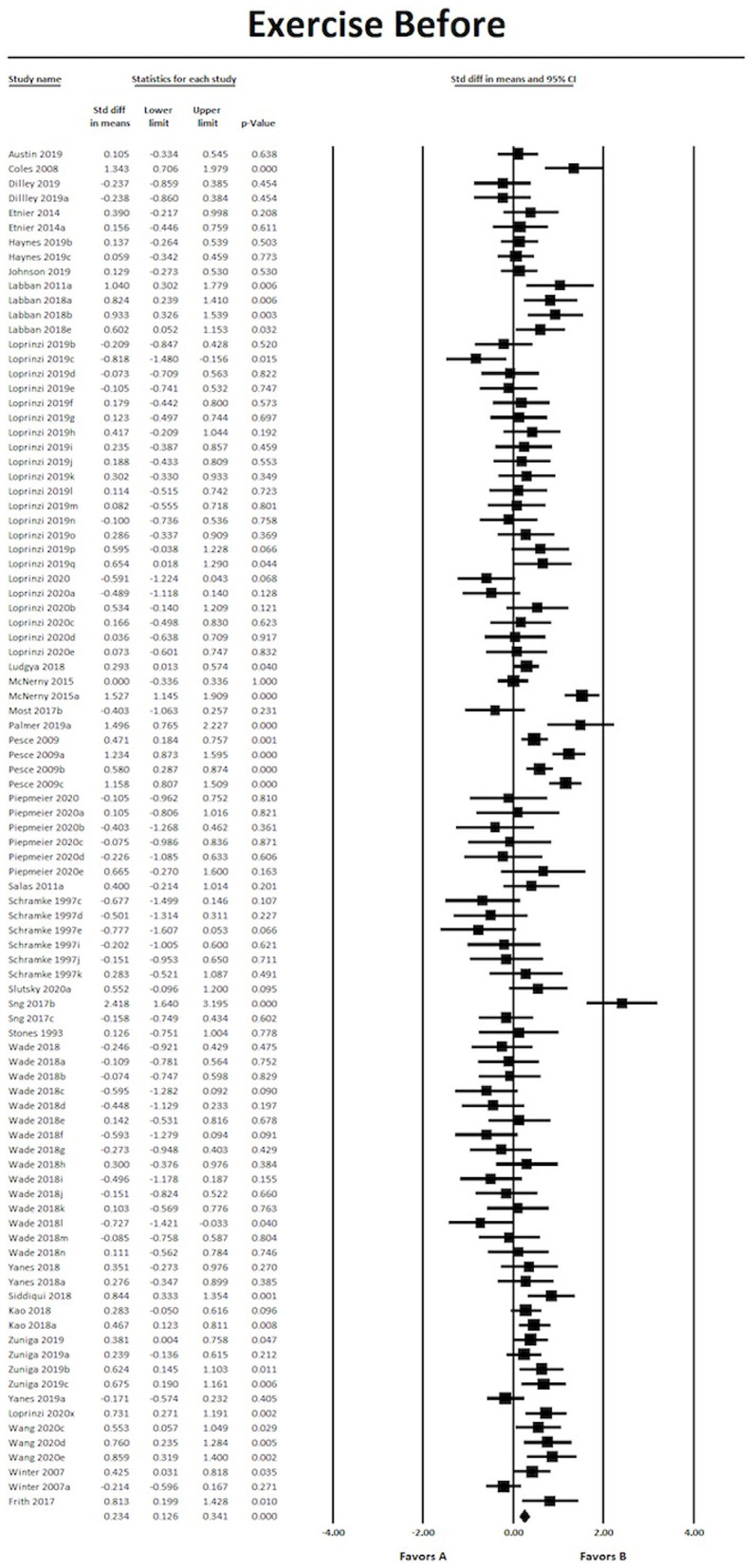
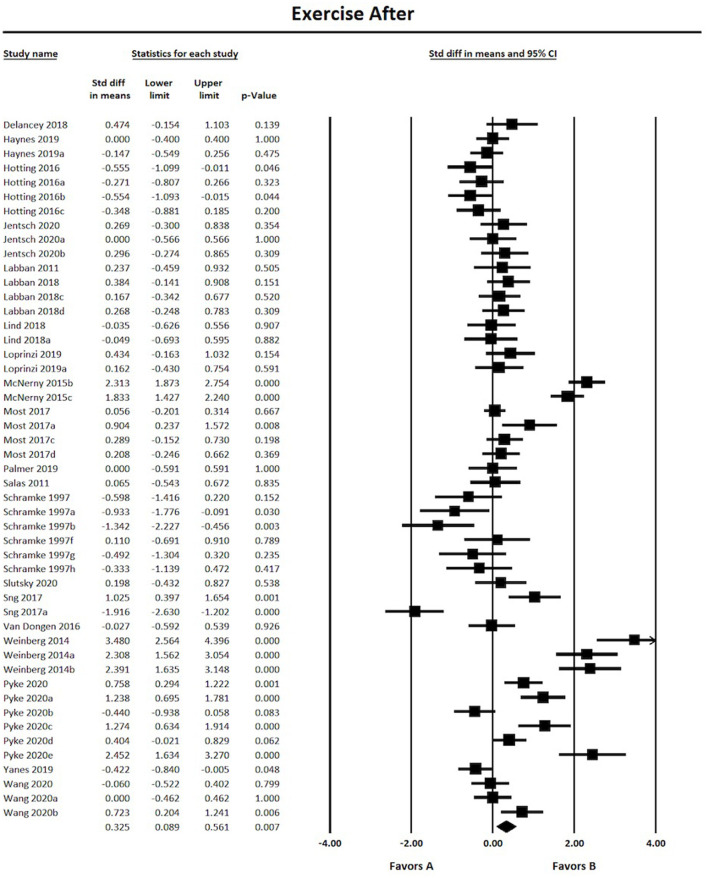
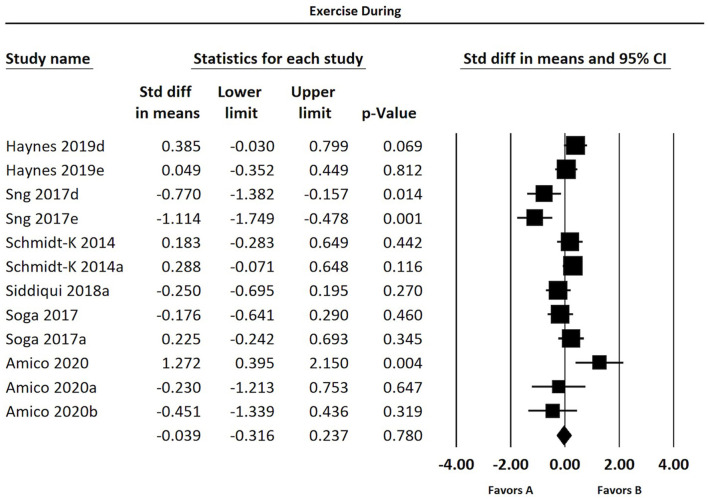
Research findings reveal a relationship between acute bouts of exercise and procedural/declarative memory. Prior systematic reviews report small/moderate effects of acute exercise on episodic long-term declarative memory. A somewhat overlooked issue is the influence of exercise on specific types of episodic memory processing. The primary focus of this systematic review and meta-analysis was to evaluate the effects of acute bouts of exercise prior to, during, and following encoding on free-, cued-recall, and recognition episodic memory. PubMed, Scopus, and EBSCO databases were entered, and 42 experiments were subject to meta-analysis. Exercise prior to encoding improved memory (d = 0.23) and affected free-recall (d = 0.40) tests of memory more than cued-recall (d = 0.08) or recognition (d = −0.06) memory. Exercise following encoding improved memory (d = 0.33) and affected recognition (d = 0.62) memory more than free- (d = 0.19) or cued-recall (d = 0.14) memory. Exercise during encoding did not influence memory (d = −0.04). Moderator analyses revealed that exercise before encoding impacted memory differentially on the basis of age, exercise type, and test-timing. When exercise occurred after encoding, age and exercise type, but not timing of the test influenced memory performance. Exercise before and after encoding has selective effects on episodic memory. Additional experiments that evaluate how bouts of exercise influence memory encoding are warranted. Systematic review registration: PROSPERO, identifier CRD42020202784.
Overview
CoChat Summary
TL;DR
This systematic review and meta-analysis of 42 experiments found that acute exercise before encoding improved episodic memory (d = 0.23), especially free recall, while exercise after encoding improved memory (d = 0.33), especially recognition; exercise during encoding had no effect (d = −0.04). Effects were selective by memory type and moderated by age, exercise type, and test timing.
Key findings
- Exercise before encoding improved memory overall (d = 0.23, 95% CI [0.13, 0.34], p < 0.001) and affected free recall (d = 0.40, 95% CI [0.27, 0.53], p < 0.001) more than cued recall (d = 0.08, ns) or recognition (d = −0.06, ns). Moderators included elementary children (d = 0.70), young adults (d = 0.19), older adults (d = −0.47), aerobic exercise (d = 0.24), cycling (d = 0.61), medium duration (d = 0.64), moderate intensity (d = 0.56), and same-day testing (d = 0.30); Egger’s test indicated publication bias (intercept 1.90, p = 0.002).
- Exercise after encoding improved memory overall (d = 0.33, p = 0.007) and affected recognition (d = 0.62, 95% CI [0.12, 1.13], p = 0.015) more than free recall (d = 0.19, ns) or cued recall (d = 0.14, ns). Moderators included young adults (d = 0.43), older adults (d = −0.94), predominantly female samples (d = 1.15), resistance exercise (d = 2.68), long duration (d = 2.68), and moderate intensity (d = 0.81); Egger’s test showed no evidence of publication bias (intercept 0.71, p = 0.67).
- Exercise during encoding did not influence memory overall (d = −0.04, 95% CI [−0.31, 0.24], p = 0.78); the only significant moderator was elementary-aged children (d = 1.27, CI [0.40, 2.15], p = 0.004). Egger’s test showed no evidence of publication bias (intercept −1.62, p = 0.40).
- A secondary narrative review reinforced the before-encoding findings; the paper also notes that Loprinzi (2019) found null results and Zabriskie and Heath (2019) found exercise during encoding benefited free recall more than exercise before encoding.
Methods
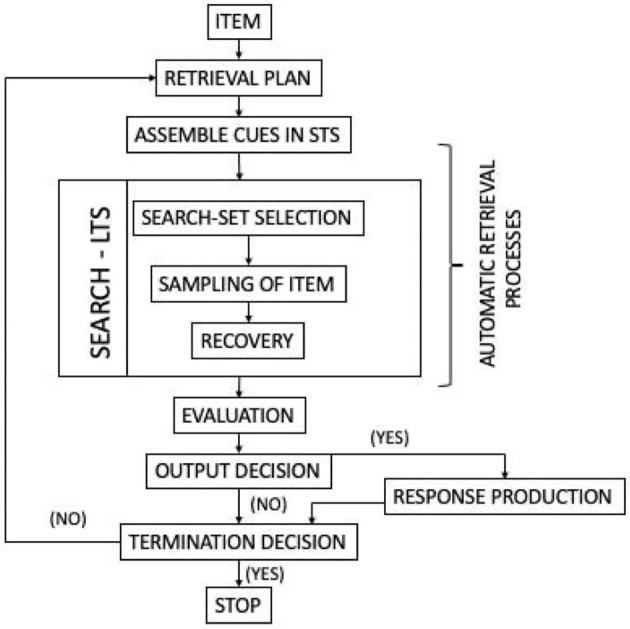
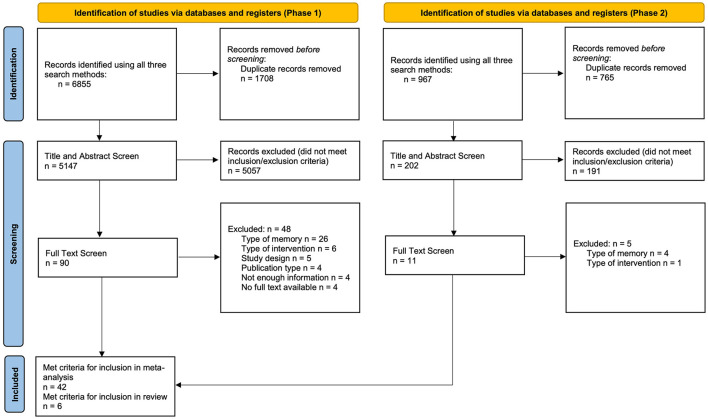
- Systematic review and meta-analysis registered with PROSPERO (CRD42020202784) and reported per PRISMA-P. Searches covered PubMed, Scopus, and EBSCO (six databases: CINAHL Complete, ERIC, MEDLINE, APA PsycArticles, APA PsycInfo, SPORTDiscus with Full Text) in March 2020 and November 2020, plus a follow-up search in February 2023 and manual reference-list searches.
- Inclusion criteria specified human participants aged 5 years or older, acute exercise before, during, or after an encoding task, and memory outcomes including free recall, cued recall, and recognition; excluded designs included cross-sectional, longitudinal, and chronic exercise studies. Forty-two experiments met criteria and were meta-analyzed.
- Three separate meta-analyses were conducted by encoding paradigm (before, during, after). Cohen’s d was calculated or estimated, using Comprehensive Meta-Analysis software; heterogeneity was assessed with Cochran’s Q and I², publication bias with Egger’s regression, and a priori categorical moderators were tested with mixed-effects analyses.
Limitations
- The paper states that results are restricted to episodic long-term memory only; that selecting a single theory (Atkinson and Shiffrin) as the framework is a limitation; that the majority of included experiments were rated poor or fair; that publication bias was evident for exercise prior to encoding; that few studies reported cardiorespiratory fitness; and that varied exercise-intensity metrics made standard thresholds difficult to apply.
- The paper also notes that heterogeneity among exercise protocols may introduce variability, and that analyses for children were based on a limited sample of experiments.
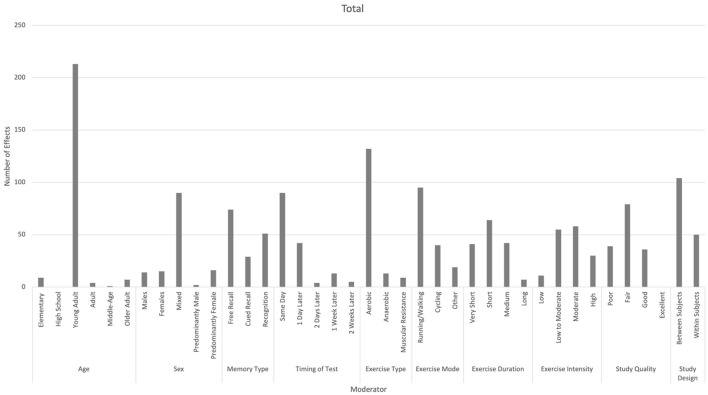
- Evident from the reported tables: heterogeneity was high (I² = 70.81 before encoding, 89.10 after encoding, 69.62 during encoding), and several moderator cells had very few effect-size contributions (e.g., older adults 3–4 effects; resistance exercise 3 effects; no high-school, middle-age, or excellent-quality subgroups).
Model-written summary. Check it against the paper before relying on it.
Integrity signals
Registry
Cites
Statistics
Figures
Verification
Claims the paper makes
0 Valid · 2 Not valid · 44 Not checked · 112 Own results and interpretations
A result the paper reports from its own data — it cites no other source for it, so there is none to check. The quote shows it is in the paper.
In the paper
“Exercise prior to encoding improved memory (d = 0.23)”
§ The effects of acute exercise on long-term episodic memory: a systematic review and meta-analysis > Abstract
plainstates a causen = 42- Asserted: passes — The authors put it forward as true.
- Checkable: passes — It can be checked against evidence.
- Load-bearing: passes — The paper’s conclusions depend on it.
- Based: passes — The paper gives a reason why it holds.
A result the paper reports from its own data — it cites no other source for it, so there is none to check. The quote shows it is in the paper.
In the paper
“Exercise prior to encoding improved memory (d = 0.23) and affected free-recall (d = 0.40) tests of memory more than cued-recall (d = 0.08) or recognition (d = −0.06) memory.”
§ The effects of acute exercise on long-term episodic memory: a systematic review and meta-analysis > Abstract
plainstates a causen = 42- Asserted: passes — The authors put it forward as true.
- Checkable: passes — It can be checked against evidence.
- Load-bearing: passes — The paper’s conclusions depend on it.
- Based: passes — The paper gives a reason why it holds.
A result the paper reports from its own data — it cites no other source for it, so there is none to check. The quote shows it is in the paper.
In the paper
“When exercise occurred after encoding, age and exercise type, but not timing of the test influenced memory performance.”
§ The effects of acute exercise on long-term episodic memory: a systematic review and meta-analysis > Abstract
plain- Asserted: passes — The authors put it forward as true.
- Checkable: passes — It can be checked against evidence.
- Load-bearing: passes — The paper’s conclusions depend on it.
- Based: passes — The paper gives a reason why it holds.
A result the paper reports from its own data — it cites no other source for it, so there is none to check. The quote shows it is in the paper.
In the paper
“Moderator analyses revealed that exercise before encoding impacted memory differentially on the basis of age, exercise type, and test-timing.”
§ The effects of acute exercise on long-term episodic memory: a systematic review and meta-analysis > Abstract
plainstates a cause- Asserted: passes — The authors put it forward as true.
- Checkable: passes — It can be checked against evidence.
- Load-bearing: passes — The paper’s conclusions depend on it.
- Based: passes — The paper gives a reason why it holds.
81 more claims
Create a free account to see all 158 claims and to verify the 55 references still open.
- Probably not a substantial claim. 57
- The quote only partly states this claim. 3
- It may state two separate claims as one. 23
Self-check
Percentages, sums and reported differences re-computed from the paper’s own numbers.
Each contradiction between two passages listed here was confirmed by an independent check.
Rated major: it would touch a result — a value a result rests on, reported and recomputed p-values on opposite sides of the significance level, two passages that conflict with no sign which is right, or a cited work retracted before this paper was published.
In the paper
§ The effects of acute exercise on long-term episodic memory: a systematic review and meta-analysis > Abstract
“exercise before encoding impacted memory differentially on the basis of age, exercise type, and test-timing.”
§ The effects of acute exercise on long-term episodic memory: a systematic review and meta-analysis > 3 Results > 3.2 Quantitative analyses
“| Exercise type | Exercise type | Exercise type | Exercise type | Exercise type | Exercise type | 3.479 | 0.176 |”
Rated major: it would touch a result — a value a result rests on, reported and recomputed p-values on opposite sides of the significance level, two passages that conflict with no sign which is right, or a cited work retracted before this paper was published.
In the paper
§ The effects of acute exercise on long-term episodic memory: a systematic review and meta-analysis > Abstract
“Moderator analyses revealed that exercise before encoding impacted memory differentially on the basis of age, exercise type, and test-timing. When exercise occurred after encoding, age and exercise type, but not timing of the test influenced memory performance.”
§ The effects of acute exercise on long-term episodic memory: a systematic review and meta-analysis > 3 Results > 3.2 Quantitative analyses
“| Timing of test | Timing of test | Timing of test | Timing of test | Timing of test | Timing of test | 8.137 | 0.043 |”
Rated minor: it would not touch a result — a value no result rests on, a p-value that stays on the same side of the significance level, or a conflict that is clerical, resolved elsewhere in the paper, or outside its own findings.
In the paper
§ The effects of acute exercise on long-term episodic memory: a systematic review and meta-analysis > Abstract
“d = 0.33”
§ The effects of acute exercise on long-term episodic memory: a systematic review and meta-analysis > 3 Results > 3.2 Quantitative analyses
“95% CI [0.89, 0.56]”
Rated minor: it would not touch a result — a value no result rests on, a p-value that stays on the same side of the significance level, or a conflict that is clerical, resolved elsewhere in the paper, or outside its own findings.
In the paper
§ The effects of acute exercise on long-term episodic memory: a systematic review and meta-analysis > 4 Discussion
“When exercise preceded encoding, there was a significant improvement in memory performance (d = 0.29)”
§ The effects of acute exercise on long-term episodic memory: a systematic review and meta-analysis > 3 Results > 3.2 Quantitative analyses
“The overall effect size for exercise before memory encoding compared to control conditions was d = 0.23”
Rated minor: it would not touch a result — a value no result rests on, a p-value that stays on the same side of the significance level, or a conflict that is clerical, resolved elsewhere in the paper, or outside its own findings.
In the paper
§ The effects of acute exercise on long-term episodic memory: a systematic review and meta-analysis > 4 Discussion > 4.1 Analyses of moderators of secondary interest
“Exercise intensity performed at low- and moderate-levels resulted in larger positive effects than high intensity exercise”
§ The effects of acute exercise on long-term episodic memory: a systematic review and meta-analysis > 3 Results > 3.2 Quantitative analyses
“| Low | 2 | −0.450* | −0.829 | −0.071 | 0.020 | | |”
2 more findings
Create a free account to see every finding of this check.
Citations
Cites
Measuring inconsistency in meta-analyses
Higgins, J. P. T., Thompson, S. G., Deeks, J. J., & Altman, D. G. (2003) · BMJ · doi:10.1136/bmj.327.7414.557 · Cited by 63,139
Levels of processing: A framework for memory research
Craik, F. I. M., & Lockhart, R. S. (1972) · Journal of Verbal Learning and Verbal Behavior · doi:10.1016/s0022-5371(72)80001-x · Cited by 9,566
Garber, C. E., Blissmer, B., Deschenes, M. R., Franklin, B. A., Lamonte, M. J., Lee, I.-M., Nieman, D. C., & Swain, D. P. (2011) · Medicine & Science in Sports & Exercise · doi:10.1249/mss.0b013e318213fefb · Cited by 9,319
Signal detection theory and psychophysics
Ingleby, J. D. (1967) · Journal of Sound and Vibration · doi:10.1016/0022-460x(67)90197-6 · Cited by 8,509
Downs, S. H., & Black, N. (1998) · Journal of Epidemiology and Community Health · doi:10.1136/jech.52.6.377 · Cited by 8,252
Human Memory: A Proposed System and its Control Processes
Atkinson, R. C., & Shiffrin, R. M. (1968) · Psychology of Learning and Motivation · doi:10.1016/s0079-7421(08)60422-3 · Cited by 7,216
The relation of strength of stimulus to rapidity of habit formation
Yerkes, R. M., & Dodson, J. D. (1908) · Journal of Comparative Neurology and Psychology · doi:10.1002/cne.920180503 · Cited by 6,911
Assessing heterogeneity in meta-analysis: Q statistic or I² index?
Huedo-Medina, T. B., Sánchez-Meca, J., Marín-Martínez, F., & Botella, J. (2006) · Psychological Methods · doi:10.1037/1082-989x.11.2.193 · Cited by 4,256
Memory - A century of consolidation
McGaugh, J. L. (2000) · Science · doi:10.1126/science.287.5451.248 · Cited by 4,250
Be smart, exercise your heart: Exercise effects on brain and cognition
Hillman, C. H., Erickson, K. I., & Kramer, A. F. (2008) · Nature Reviews Neuroscience · doi:10.1038/nrn2298 · Cited by 3,563
Calculation of signal detection theory measures
Stanislaw, H., & Todorov, N. (1999) · Behavior Research Methods, Instruments, & Computers · doi:10.3758/bf03207704 · Cited by 2,673
The Psychology of Learning and Motivation
Ross, B. H. (2012) · Cited by 2,633
The Medial Temporal Lobe and Recognition Memory
Eichenbaum, H., Yonelinas, A. P., & Ranganath, C. (2007) · Annual Review of Neuroscience · doi:10.1146/annurev.neuro.30.051606.094328 · Cited by 2,580
Siddaway, A. P., Wood, A. M., & Hedges, L. V. (2019) · Annual Review of Psychology · doi:10.1146/annurev-psych-010418-102803 · Cited by 2,550
THE AMYGDALA MODULATES THE CONSOLIDATION OF MEMORIES OF EMOTIONALLY AROUSING EXPERIENCES
McGaugh, J. L. (2004) · Annual Review of Neuroscience · doi:10.1146/annurev.neuro.27.070203.144157 · Cited by 2,296
Multiple Resources and Mental Workload
Wickens, C. D. (2008) · Human Factors: The Journal of the Human Factors and Ergonomics Society · doi:10.1518/001872008x288394 · Cited by 2,164 · cited 1×
“…extensively and several theories have been proposed to explain how individuals optimize decision making when placed in conditions in which they simultaneously perform a motor-movement task (e.g., walking) and a cognitive task (e.g., encoding a word list) (see historical review by Wickens, 2008).”
“Constraints on the development of coordination,”
Newell, K. M. (1986) · Motor Development in Children: Aspects of Coordination and Control · doi:10.1007/978-94-009-4460-2_19 · Cited by 2,053 · cited 1×
“…theories of embodiment, which propose that learning emerges from a dynamical interaction among an individual’s body movements, the sensory experiences obtained from the movements, and the context of those movements (Lindgren and Johnson-Glenberg, 2013; Wade and Whiting, 2011; Newell, 1986).”
The effects of acute exercise on cognitive performance: a meta-analysis
Chang, Y. K., Labban, J. D., Gapin, J. I., & Etnier, J. L. (2012) · Brain Research · doi:10.1016/j.brainres.2012.02.068 · Cited by 1,930
Donnelly, J. E., Hillman, C. H., Castelli, D., Etnier, J. L., Lee, S., Tomporowski, P., Lambourne, K., & Szabo-Reed, A. N. (2016) · Medicine & Science in Sports & Exercise · doi:10.1249/mss.0000000000000901 · Cited by 1,864
Self-citationRaaijmakers, J. G., & Shiffrin, R. M. (1981) · Psychological Review · doi:10.1037/0033-295x.88.2.93 · Cited by 1,696
Mechanisms of emotional arousal and lasting declarative memory.
Cahill, L., & McGaugh, J. L. (1998) · Trends in Neurosciences · doi:10.1016/s0166-2236(97)01214-9 · Cited by 1,575
A retrieval model for both recognition and recall.
Gillund, G., & Shiffrin, R. M. (1984) · Psychological Review · doi:10.1037//0033-295x.91.1.1 · Cited by 1,517
Northey, J. M., Cherbuin, N., Pumpa, K. L., Smee, D. J., & Rattray, B. (2018) · British Journal of Sports Medicine · doi:10.1136/bjsports-2016-096587 · Cited by 1,380
The Control of Short-Term Memory
Atkinson, R. C., & Shiffrin, R. M. (1971) · Scientific American · doi:10.1038/scientificamerican0871-82 · Cited by 1,252
The effect of exercise-induced arousal on cognitive task performance: a meta-regression analysis
Lambourne, K., & Tomporowski, P. (2010) · Brain Research · doi:10.1016/j.brainres.2010.03.091 · Cited by 1,105
Self-citationEffects of acute bouts of exercise on cognition
Tomporowski, P. D. (2003) · Acta Psychologica · doi:10.1016/s0001-6918(02)00134-8 · Cited by 1,030
Self-citationHigh impact running improves learning
Winter, B., Breitenstein, C., Mooren, F. C., Voelker, K., Fobker, M., Lechtermann, A., Krueger, K., Fromme, A., Korsukewitz, C., Floel, A., et al. (2007) · Neurobiology of Learning and Memory · doi:10.1016/j.nlm.2006.11.003 · Cited by 1,011
A model for recognition memory: REM—retrieving effectively from memory
Shiffrin, R. M., & Steyvers, M. (1997) · Psychonomic Bulletin & Review · doi:10.3758/bf03209391 · Cited by 928
Exercise and Children’s Intelligence, Cognition, and Academic Achievement
Tomporowski, P. D., Davis, C. L., Miller, P. H., & Naglieri, J. A. (2008) · Educational Psychology Review · doi:10.1007/s10648-007-9057-0 · Cited by 874 · cited 1×
“Theories of Levels of Processing (Amico and Schaefer, 2020), strategy utilization (Craik and Lockhart, 1972), mental engagement (Coles and Tomporowski, 2008; Kahneman, 1973; Hockey et al., 1986), and other cognitive constructs have addressed conditions that affect the degree to which individuals…”
Self-citationPrefrontal–hippocampal interactions in episodic memory
Eichenbaum, H. (2017) · Nature Reviews Neuroscience · doi:10.1038/nrn.2017.74 · Cited by 870 · cited 2×
“…possess several different types of memory, all of which are maintained via underlying brain networks (Schacter et al., 1999; Squire and Wixted, 2011; Eichenbaum, 2017; Loprinzi et al., 2017) and are controlled by cognitive processes that are involved in encoding and retrieval (Wilson and Criss,…”
Motor Development in Children: Aspects of Coordination and Control
(1986) · Springer eBooks · doi:10.1007/978-94-009-4460-2 · Cited by 767
The trilogy of mind: Cognition, affection, and conation
Hilgard, E. R. (1980) · Journal of the History of the Behavioral Sciences · doi:10.1002/1520-6696(198004)16:2<107::aid-jhbs2300160202>3.0.co;2-y · Cited by 763
The Cognitive Neuroscience of Human Memory Since H.M.
Squire, L. R., & Wixted, J. T. (2011) · Annual Review of Neuroscience · doi:10.1146/annurev-neuro-061010-113720 · Cited by 749 · cited 1×
“…is that humans possess several different types of memory, all of which are maintained via underlying brain networks (Schacter et al., 1999; Squire and Wixted, 2011; Eichenbaum, 2017; Loprinzi et al., 2017) and are controlled by cognitive processes that are involved in encoding and…”
Exercise, brain, and cognition across the life span.
Voss, M. W., Nagamatsu, L. S., Liu-Ambrose, T., & Kramer, A. F. (2011) · Journal of Applied Physiology · doi:10.1152/japplphysiol.00210.2011 · Cited by 601
The Influence of Exercise on Cognitive Abilities
Gomez‐Pinilla, F., & Hillman, C. (2013) · Comprehensive Physiology · doi:10.1002/cphy.c110063 · Cited by 599
Singh, A. S., Saliasi, E., van den Berg, V., Uijtdewilligen, L., de Groot, R. H. M., Jolles, J., Andersen, L. B., Bailey, R., Chang, Y.-K., Diamond, A., et al. (2019) · British Journal of Sports Medicine · doi:10.1136/bjsports-2017-098136 · Cited by 588
Self-citationWinters, B. D., Forwood, S. E., Cowell, R. A., Saksida, L. M., & Bussey, T. J. (2004) · The Journal of Neuroscience · doi:10.1523/jneurosci.1346-04.2004 · Cited by 586
Emboldened by Embodiment: Six Precepts for Research on Embodied Learning and Mixed Reality
Lindgren, R., & Johnson-Glenberg, M. (2013) · Educational Researcher · doi:10.3102/0013189x13511661 · Cited by 520
Paas, F., & Sweller, J. (2012) · Educational Psychology Review · doi:10.1007/s10648-011-9179-2 · Cited by 502
The effects of cardiovascular exercise on human memory: a review with meta-analysis
Roig, M., Nordbrandt, S., Geertsen, S. S., & Nielsen, J. B. (2013) · Neuroscience & Biobehavioral Reviews · doi:10.1016/j.neubiorev.2013.06.012 · Cited by 460
A contextual binding theory of episodic memory: systems consolidation reconsidered
Yonelinas, A. P., Ranganath, C., Ekstrom, A. D., & Wiltgen, B. J. (2019) · Nature Reviews Neuroscience · doi:10.1038/s41583-019-0150-4 · Cited by 450
Energetics and Human Information Processing
(1986) · Springer eBooks · doi:10.1007/978-94-009-4448-0 · Cited by 425
The Oxford Handbook of Computational and Mathematical Psychology
(2015) · Oxford Handbooks Online · doi:10.1093/oxfordhb/9780199957996.001.0001 · Cited by 396
The reticular-activating hypofrontality (RAH) model of acute exercise
Dietrich, A., & Audiffren, M. (2011) · Neuroscience & Biobehavioral Reviews · doi:10.1016/j.neubiorev.2011.02.001 · Cited by 365
Enhancing dentate gyrus function with dietary flavanols improves cognition in older adults
Brickman, A. M., Khan, U. A., Provenzano, F. A., Yeung, L.-K., Suzuki, W., Schroeter, H., Wall, M., Sloan, R. P., & Small, S. A. (2014) · Nature Neuroscience · doi:10.1038/nn.3850 · Cited by 347
Plummer, P., Eskes, G., Wallace, S., Giuffrida, C., Fraas, M., Campbell, G., Clifton, K.-L., & Skidmore, E. R. (2013) · Archives of Physical Medicine and Rehabilitation · doi:10.1016/j.apmr.2013.08.002 · Cited by 318
Pesce, C., Crova, C., Cereatti, L., Casella, R., & Bellucci, M. (2009) · Mental Health and Physical Activity · doi:10.1016/j.mhpa.2009.02.001 · Cited by 317
Exercise-Induced Neuroplasticity: A Mechanistic Model and Prospects for Promoting Plasticity
El-Sayes, J., Harasym, D., Turco, C. V., Locke, M. B., & Nelson, A. J. (2019) · The Neuroscientist · doi:10.1177/1073858418771538 · Cited by 302
Physical activity and academic achievement in children: a historical perspective
Howie, E. K., & Pate, R. R. (2012) · Journal of Sport and Health Science · doi:10.1016/j.jshs.2012.09.003 · Cited by 297 · cited 1×
“Several researchers have suggested that acute bouts of exercise may be particularly useful for enhancing cognition in developing children (Tomporowski et al., 2008; Howie and Pate, 2012; Donnelly et al., 2016).”
Effects of acute exercise on executive processing, short-term and long-term memory
Coles, K., & Tomporowski, P. D. (2008) · Journal of Sports Sciences · doi:10.1080/02640410701591417 · Cited by 294
Self-citationDaly-Smith, A. J., Zwolinsky, S., McKenna, J., Tomporowski, P. D., Defeyter, M. A., & Manley, A. (2018) · BMJ Open Sport & Exercise Medicine · doi:10.1136/bmjsem-2018-000341 · Cited by 293
Self-citationExercise, sports, and performance arts benefit cognition via a common process.
Tomporowski, P. D., & Pesce, C. (2019) · Psychological Bulletin · doi:10.1037/bul0000200 · Cited by 290
Self-citationMcGaugh, J. L. (2015) · Annual Review of Psychology · doi:10.1146/annurev-psych-010814-014954 · Cited by 271 · cited 2×
“Acute bouts of exercise are hypothesized to produce systemic changes in physiological arousal and alterations in neural noise that affect neural networks involved in executive processing and mental performance (McMorris, 2016a) and memory storage (McGaugh, 2015; Meeusen et al., 2017).”
Sustained attention in human performance
Warm, J. S. (1984) · Wiley eBooks · Cited by 262
Chen, F.-T., Etnier, J. L., Chan, K.-H., Chiu, P.-K., Hung, T.-M., & Chang, Y.-K. (2020) · Sports Medicine · doi:10.1007/s40279-020-01292-x · Cited by 258
O’Connor, S. R., Tully, M. A., Ryan, B., Bradley, J. M., Baxter, G. D., & McDonough, S. M. (2015) · BMC Research Notes · doi:10.1186/s13104-015-1181-1 · Cited by 250
The Effects of Acute Physical Exercise on Memory, Peripheral BDNF, and Cortisol in Young Adults
Hötting, K., Schickert, N., Kaiser, J., Röder, B., & Schmidt-Kassow, M. (2016) · Neural Plasticity · doi:10.1155/2016/6860573 · Cited by 249
Enactive Metaphors: Learning Through Full-Body Engagement
Gallagher, S., & Lindgren, R. (2015) · Educational Psychology Review · doi:10.1007/s10648-015-9327-1 · Cited by 200
Effects of Acute Exercise on Long-Term Memory
Labban, J. D., & Etnier, J. L. (2011) · Research Quarterly for Exercise and Sport · doi:10.1080/02701367.2011.10599808 · Cited by 193
McMorris, T. (2016) · Physiology & Behavior · doi:10.1016/j.physbeh.2016.08.011 · Cited by 188
Cognitive Load Theory: A Broader View on the Role of Memory in Learning and Education
Paas, F., & Ayres, P. (2014) · Educational Psychology Review · doi:10.1007/s10648-014-9263-5 · Cited by 181
Schmidt-Kassow, M., Deusser, M., Thiel, C., Otterbein, S., Montag, C., Reuter, M., Banzer, W., & Kaiser, J. (2013) · PLoS ONE · doi:10.1371/journal.pone.0064172 · Cited by 177
Exercise and Cognitive Function
(2009) · Wiley eBooks · doi:10.1002/9780470740668 · Cited by 174
van Dongen, E. V., Kersten, I. H. P., Wagner, I. C., Morris, R. G. M., & Fernández, G. (2016) · Current Biology · doi:10.1016/j.cub.2016.04.071 · Cited by 168
Emotional arousal regulation of memory consolidation
McGaugh, J. L. (2017) · Current Opinion in Behavioral Sciences · doi:10.1016/j.cobeha.2017.10.003 · Cited by 168
Potential avenues for exercise to activate episodic memory‐related pathways: a narrative review
Loprinzi, P. D., Edwards, M. K., & Frith, E. (2017) · European Journal of Neuroscience · doi:10.1111/ejn.13644 · Cited by 162
Mavilidi, M. F., Okely, A. D., Chandler, P., Domazet, S. L., & PAAS, F. G. W. C. (2017) · Journal of Experimental Child Psychology · doi:10.1016/j.jecp.2017.09.009 · Cited by 159
Loprinzi, P., Blough, J., Crawford, L., Ryu, S., Zou, L., & Li, H. (2019) · Brain Sciences · doi:10.3390/brainsci9040087 · Cited by 158
Segal, S. K., Cotman, C. W., & Cahill, L. F. (2012) · Journal of Alzheimer's Disease · doi:10.3233/jad-2012-121078 · Cited by 153
Frith, E., Sng, E., & Loprinzi, P. D. (2017) · European Journal of Neuroscience · doi:10.1111/ejn.13719 · Cited by 151
Bowles, B., Crupi, C., Pigott, S. E., Parrent, A. G., Wiebe, S., Janzen, L. A., & Köhler, S. (2010) · Neuropsychologia · doi:10.1016/j.neuropsychologia.2010.05.010 · Cited by 125
Toumpaniari, K., Loyens, S., Mavilidi, M.-F., & Paas, F. (2015) · Educational Psychology Review · doi:10.1007/s10648-015-9316-4 · Cited by 113
Handbook of Embodied Cognition and Sport Psychology
Cappuccio, M., & Press, M. (2019) · The MIT Press eBooks · doi:10.7551/mitpress/10764.001.0001 · Cited by 113
Temporal Effects of Acute Walking Exercise on Learning and Memory Function
Sng, E., Frith, E., & Loprinzi, P. D. (2017) · American Journal of Health Promotion · doi:10.1177/0890117117749476 · Cited by 112
Criss, A. H., & Shiffrin, R. M. (2004) · Psychological Review · doi:10.1037/0033-295x.111.3.800 · Cited by 109
Wanner, P., Cheng, F.-H., & Steib, S. (2020) · Neuroscience & Biobehavioral Reviews · doi:10.1016/j.neubiorev.2020.06.018 · Cited by 107
Schmidt, M., Benzing, V., Wallman-Jones, A., Mavilidi, M.-F., Lubans, D. R., & Paas, F. (2019) · Psychology of Sport and Exercise · doi:10.1016/j.psychsport.2018.12.017 · Cited by 99
Mavilidi, M., Okely, A. D., Chandler, P., & Paas, F. (2017) · Applied Cognitive Psychology · doi:10.1002/acp.3325 · Cited by 96
McMorris, T., & Hale, B. J. (2015) · Journal of Sport and Health Science · doi:10.1016/j.jshs.2014.08.003 · Cited by 93
Enhancing Children’s Cognition With Physical Activity Games
Tomporowski, P. D., McCullick, B. A., & Pesce, C. (2015) · Human Kinetics eBooks · doi:10.5040/9781718209008 · Cited by 92
Self-citationKao, S., Drollette, E. S., Ritondale, J. P., Khan, N. A., & Hillman, C. H. (2018) · Psychology of sport and exercise · doi:10.1016/j.psychsport.2018.05.011 · Cited by 87
Infusing Physical Activities Into the Classroom: Effects on Preschool Children's Geography Learning
Mavilidi, M., Okely, A. D., Chandler, P., & Paas, F. (2016) · Mind, Brain, and Education · doi:10.1111/mbe.12131 · Cited by 85
A single bout of resistance exercise can enhance episodic memory performance
Weinberg, L., Hasni, A., Shinohara, M., & Duarte, A. (2014) · Acta Psychologica · doi:10.1016/j.actpsy.2014.06.011 · Cited by 80
McMorris, T., Hale, B. J., Corbett, J., Robertson, K. M., & Hodgson, C. I. (2015) · Physiology & Behavior · doi:10.1016/j.physbeh.2015.01.010 · Cited by 80
A dynamic approach to recognition memory
Cox, G. E., & Shiffrin, R. M. (2017) · Psychological Review · doi:10.1037/rev0000076 · Cited by 72
The effects of word frequency and context variability in cued recall
Criss, A. H., Aue, W. R., & Smith, L. L. (2010) · Journal of Memory and Language · doi:10.1016/j.jml.2010.10.001 · Cited by 70
Cognitive-Motor Dual Task Interference Effects on Declarative Memory: A Theory-Based Review
Tomporowski, P. D., & Qazi, A. S. (2020) · Frontiers in Psychology · doi:10.3389/fpsyg.2020.01015 · Cited by 66
Self-citationTreadmill walking during vocabulary encoding improves verbal long-term memory
Schmidt-Kassow, M., Zink, N., Mock, J., Thiel, C., Vogt, L., Abel, C., & Kaiser, J. (2014) · Behavioral and Brain Functions · doi:10.1186/1744-9081-10-24 · Cited by 64
The Effect of Acute Exercise on Encoding and Consolidation of Long-Term Memory
Labban, J. D., & Etnier, J. L. (2018) · Journal of Sport and Exercise Psychology · doi:10.1123/jsep.2018-0072 · Cited by 58
Effects of an Acute Bout of Exercise on Memory in 6th Grade Children
Etnier, J., Labban, J. D., Piepmeier, A., Davis, M. E., & Henning, D. A. (2014) · Pediatric Exercise Science · doi:10.1123/pes.2013-0141 · Cited by 56
Lind, R. R., Beck, M. M., Wikman, J., Malarski, K., Krustrup, P., Lundbye‐Jensen, J., & Geertsen, S. S. (2019) · Scandinavian Journal of Medicine & Science in Sports · doi:10.1111/sms.13485 · Cited by 52
Experimental Investigation of the Time Course Effects of Acute Exercise on False Episodic Memory
Siddiqui, A., & Loprinzi, P. D. (2018) · Journal of Clinical Medicine · doi:10.3390/jcm7070157 · Cited by 52
50 years of research sparked by Atkinson and Shiffrin (1968)
Malmberg, K. J., Raaijmakers, J. G. W., & Shiffrin, R. M. (2019) · Memory & Cognition · doi:10.3758/s13421-019-00896-7 · Cited by 51
Ludyga, S., Gerber, M., Brand, S., Pühse, U., & Colledge, F. (2018) · Research Quarterly for Exercise and Sport · doi:10.1080/02701367.2018.1438575 · Cited by 51
Medial temporal lobe activation during episodic encoding and retrieval: a PET study
Schacter, D. L., Curran, T., Reiman, E. M., Chen, K., Bandy, D. J., & Frost, J. T. (1999) · Hippocampus · doi:10.1002/(sici)1098-1063(1999)9:5<575::aid-hipo11>3.0.co;2-k · Cited by 51
Acute Exercise Facilitates Semantically Cued Memory in Nursing Home Residents
Stones, M. J., & Dawe, D. (1993) · Journal of the American Geriatrics Society · doi:10.1111/j.1532-5415.1993.tb01890.x · Cited by 50
A preliminary investigation of acute exercise intensity on memory and BDNF isoform concentrations
Piepmeier, A. T., Etnier, J. L., Wideman, L., Berry, N. T., Kincaid, Z., & Weaver, M. A. (2019) · European Journal of Sport Science · doi:10.1080/17461391.2019.1660726 · Cited by 50
Evolutionary developmental psychology: Current status and future directions
Geary, D. C. (2006) · Developmental Review · doi:10.1016/j.dr.2006.02.005 · Cited by 44
Mind racing: The influence of exercise on long-term memory consolidation
McNerney, M. W., & Radvansky, G. A. (2015) · Memory · doi:10.1080/09658211.2014.962545 · Cited by 42
State-dependent learning in older and younger adults.
Schramke, C. J., & Bauer, R. M. (1997) · Psychology and Aging · doi:10.1037//0882-7974.12.2.255 · Cited by 40
Walking before study enhances free recall but not judgement-of-learning magnitude
Salas, C. R., Minakata, K., & Kelemen, W. L. (2011) · Journal of Cognitive Psychology · doi:10.1080/20445911.2011.532207 · Cited by 36
The list strength effect in cued recall
Wilson, J. H., & Criss, A. H. (2017) · Journal of Memory and Language · doi:10.1016/j.jml.2017.01.006 · Cited by 36
Exercising during learning improves vocabulary acquisition: behavioral and ERP evidence
Schmidt-Kassow, M., Kulka, A., Gunter, T. C., Rothermich, K., & Kotz, S. A. (2010) · Neuroscience Letters · doi:10.1016/j.neulet.2010.06.089 · Cited by 34
Yanes, D., & Loprinzi, P. D. (2018) · Journal of Clinical Medicine · doi:10.3390/jcm7060146 · Cited by 32
Exercise and its mediating effects on cognition
Spirduso, W. W. (2008) · Choice Reviews Online · doi:10.5860/choice.46-1514 · Cited by 31
Neurochemical referees of dueling memory systems.
Gold, P. E., McIntyre, C. K., McNay, E. C., Stefani, M. R., & Korol, D. L. (2001) · American Psychological Association eBooks · doi:10.1037/10413-012 · Cited by 30
The effects of different protocols of physical exercise and rest on long-term memory
Pyke, W., Ifram, F., Coventry, L., Sung, Y., Champion, I., & Javadi, A. (2019) · Neurobiology of Learning and Memory · doi:10.1016/j.nlm.2019.107128 · Cited by 30
The Experimental Effects of Acute Exercise on Long-Term Emotional Memory
Wade, B., & Loprinzi, P. D. (2018) · Journal of Clinical Medicine · doi:10.3390/jcm7120486 · Cited by 28
Acute exercise, memory, and neural activation in young adults
Slutsky‐Ganesh, A. B., Etnier, J. L., & Labban, J. D. (2020) · International Journal of Psychophysiology · doi:10.1016/j.ijpsycho.2020.09.018 · Cited by 27
Acute aerobic exercise improves memory across intensity and fitness levels
Zuniga, K. E., Mueller, M., Santana, A., & Kelemen, W. L. (2018) · Memory · doi:10.1080/09658211.2018.1546875 · Cited by 24
Exercise and Its Mediating Effects on Cognition
Spirduso, W. W., Poon, L. W., & Chodzko-Zajko, W. (2008) · Human Kinetics eBooks · doi:10.5040/9781492597315 · Cited by 24
Delancey, D., Frith, E., Sng, E., & Loprinzi, P. D. (2018) · Journal of Cognitive Enhancement · doi:10.1007/s41465-018-0106-z · Cited by 22
McMorris, T. (2015) · Journal of Applied Physiology · doi:10.1152/japplphysiol.00749.2015 · Cited by 22
IGF-1 in exercise-induced enhancement of episodic memory
Loprinzi, P. D. (2019) · Acta Physiologica · doi:10.1111/apha.13154 · Cited by 22
Acute physical exercise promotes the consolidation of emotional material
Jentsch, V. L., & Wolf, O. T. (2020) · Neurobiology of Learning and Memory · doi:10.1016/j.nlm.2020.107252 · Cited by 21
Dilley, E. K., Zou, L., & Loprinzi, P. D. (2019) · Health Promotion Perspectives · doi:10.15171/hpp.2019.20 · Cited by 20
Memory-related encoding-specificity paradigm: Experimental application to the exercise domain
Yanes, D., Frith, E., & Loprinzi, P. D. (2019) · Europe’s Journal of Psychology · doi:10.5964/ejop.v15i3.1767 · Cited by 20
Effects of Acute Exercise and Learning Strategy Implementation on Memory Function
Loprinzi, P. D., Harris, F., McRaney, K., Chism, M., Deming, R., Jones, T. W., Zou, L., & Tan, M. (2019) · Medicina · doi:10.3390/medicina55090568 · Cited by 19
Physical Activity and Educational Achievement: Insights from Exercise Neuroscience
Howie, E. K., & Pate, R. (2017) · Routledge eBooks · doi:10.4324/9781315305790 · Cited by 19
Evidence for improved memory from 5 minutes of immediate, post-encoding exercise among women
Most, S. B., Kennedy, B. L., & Petras, E. A. (2017) · Cognitive Research Principles and Implications · doi:10.1186/s41235-017-0068-1 · Cited by 19
Loprinzi, P. D., Green, D., Wages, S., Cheke, L. G., & Jones, T. W. (2020) · Journal of Lifestyle Medicine · doi:10.15280/jlm.2020.10.1.7 · Cited by 18
Acute Physical Exercise Can Influence the Accuracy of Metacognitive Judgments
Palmer, M. A., Stefanidis, K. B., Turner, A., Tranent, P. J., Breen, R. J., Kucina, T., Brumby, L. E., Holt, G. A., Fell, J. W., & Sauer, J. D. (2019) · Scientific Reports · doi:10.1038/s41598-019-48861-3 · Cited by 16
Acute Cardiovascular Exercise on Proactive Memory Interference
Haynes, J. T., & Loprinzi, P. D. (2018) · Journal of Cognitive Enhancement · doi:10.1007/s41465-018-0101-4 · Cited by 15
Acute exercise and mindfulness meditation on learning and memory: randomized controlled intervention
Austin, M., & Loprinzi, P. D. (2019) · Health Promotion Perspectives · doi:10.15171/hpp.2019.43 · Cited by 14
Distinct Effects of Acute Aerobic Exercise on Declarative Memory and Procedural Memory Formation
Wang, X., Zhu, R., Zhou, C., & Chen, Y. (2020) · Brain Sciences · doi:10.3390/brainsci10100691 · Cited by 14
Using Resources and Reserves in an Exercise–Cognition Model
Spirduso, W. W., Poon, L. W., & Chodzko-Zajko, W. J. (2008) · Human Kinetics eBooks · doi:10.5040/9781492597315.ch-001 · Cited by 14
“Embodiment as a pedagogical tool to enhance learning,”
Mavilidi, M. F., Ouwehand, K., Schmidt, M., Pesce, C., Tomporowski, P. D., Okely, A., & Paas, F. (2021) · The Body, Embodiment, and Education · doi:10.4324/9781003142010-10 · Cited by 13
Self-citationRunning During Encoding Improves Word Learning for Children
Amico, G., & Schaefer, S. (2020) · Frontiers in Psychology · doi:10.3389/fpsyg.2020.00684 · Cited by 13
Criss, A. H., & Howard, M. W. (2015) · Oxford University Press eBooks · doi:10.1093/oxfordhb/9780199957996.013.8 · Cited by 13
The Effects of Acute Exercise on Retroactive Memory Interference
Loprinzi, P. D., Frith, E., & Crawford, L. K. (2019) · American Journal of Health Promotion · doi:10.1177/0890117119866138 · Cited by 12
Aerobic Exercise During Encoding Impairs Hippocampus-Dependent Memory
Soga, K., Kamijo, K., & Masaki, H. (2017) · Journal of Sport and Exercise Psychology · doi:10.1123/jsep.2016-0254 · Cited by 10
Motor behavior-induced prefrontal cortex activation and episodic memory function
Loprinzi, P. D., Crawford, L. K., Moore, D., Blough, J., Burnett, G. C., Chism, M., & Robinson, G. (2020) · International Journal of Neuroscience · doi:10.1080/00207454.2020.1803307 · Cited by 10
Effects of an aerobic fitness test on short- and long-term memory in elementary-aged children
Etnier, J. L., Sprick, P. M., Labban, J. D., Shih, C.-H., Glass, S. M., & Vance, J. C. (2020) · Journal of Sports Sciences · doi:10.1080/02640414.2020.1778251 · Cited by 10
Acute Exercise, Psychological Stress Induction, and Episodic Memory
Loprinzi, P. D., Koehler, L., Frith, E., Ponce, P., Delancey, D., Joyner, C. N., Ashpole, N. M., Zou, L., & Li, H. (2019) · American Journal of Health Behavior · doi:10.5993/ajhb.43.6.1 · Cited by 9
McSween, M.-P., McMahon, K. L., Maguire, K., Coombes, J. S., Rodriguez, A. D., Erickson, K. I., & Copland, D. A. (2021) · Journal of Aging and Physical Activity · doi:10.1123/japa.2020-0093 · Cited by 8
Effectiveness of studying when coupled with exercise-induced arousal
Zabriskie, H. A., & Heath, E. M. (2019) · International Journal of Exercise Science · doi:10.70252/pilo3518 · Cited by 7
Mental Imagery and Acute Exercise on Episodic Memory Function
Johnson, L. E., Yao, J., Zou, L., Xiao, T., & Loprinzi, P. D. (2019) · Brain Sciences · doi:10.3390/brainsci9090237 · Cited by 7
Effects of acute exercise on memory performance in middle-aged and older adults
Etnier, J. L., Vance, J. C., & Ueno, A. (2021) · Journal of Aging and Physical Activity · doi:10.1123/japa.2020-0208 · Cited by 4
Physical activity and children's episodic memory: a meta-analysis
Schmid, D. G., Scott, N. M., & Tomporowski, P. D. (2024) · Pediatric Exercise Science · doi:10.1123/pes.2023-0020 · Cited by 2
Self-citation
Research works printed but not linked: 1
- Kahneman D. (1973). Attention and Effort. Hoboken, NJ: Prentice-Hall.
Cited by
Physical activity and children's episodic memory: a meta-analysis
Schmid, D. G., Scott, N. M., & Tomporowski, P. D. (2024) · Pediatric Exercise Science · doi:10.1123/pes.2023-0020 · Cited by 2
Self-citationPatrick, Z., Jung, M., McMorris, T., & Loprinzi, P. D. (2025) · Psychological Research · doi:10.1007/s00426-025-02120-5 · Cited by 6
Schmid, D. G., Qazi, A. S., Scott, N. M., & Tomporowski, P. D. (2022) · Psychology of sport and exercise · doi:10.1016/j.psychsport.2022.102332 · Cited by 3
Self-citationAI-Driven Real-Time Exercise Repetition Counting System
Lal, R., Koirala, R., Thota, S. S., & Shaik, K. N. R. (2025) · doi:10.1109/icsc64553.2025.10967723 · Cited by 3
Cognitive-motor entrainment enhances long-term episodic memory retention
Schmid, D. G. (2025) · Acta Psychologica · doi:10.1016/j.actpsy.2025.105470 · Cited by 2
Self-citation
Metadata
- Authors
- Qazi, A. S., Schmid, D., Gridley, N., Lambourne, K., Daly-Smith, A. J., & Tomporowski, P. D.
- Affiliations
- University of Georgia (US)
- Leeds Beckett University (GB)
- ICF International (United States) (US)
- Corresponding author
- Qazi, Ahmed S.
- Venue
- Frontiers in Cognition
- Publisher
- Frontiers Media SA
- Published
- 2024-04-04
- Volume
- 3
- Pages
- 1367569-1367569
- ISSN
- 2813-4532 (ISSN-L)
- PMC
- PMC13281107
- OpenAlex
- W4393946535
- Cited by
- 22
- References
- 138
- Citations by year
- 2026: 11 · 2025: 7 · 2024: 2
- FWCI
- 0.81
- Type
- journal article
- Language
- en
- Open access
- gold
- doi.org
- Licence
- Locations
- Frontiers in Cognition (publishedVersion, cc-by)
- PubMed Central (publishedVersion, cc-by)
- PubMed (publishedVersion)
- Leeds Beckett Repository (Leeds Beckett University) (submittedVersion, cc-by)
- DOAJ (DOAJ: Directory of Open Access Journals) (submittedVersion)
- Zenodo (CERN European Organization for Nuclear Research) (submittedVersion, cc-by)
- Zenodo (CERN European Organization for Nuclear Research) (cc-by)
- Topics
- Life Sciences › Neuroscience › Cognitive Neuroscience › Memory Processes and Influences
- Social Sciences › Psychology › Experimental and Cognitive Psychology › Cognitive Functions and Memory
- Life Sciences › Neuroscience › Cognitive Neuroscience › Memory and Neural Mechanisms
- Keywords
- acute exercise, episodic memory, long-term memory, free recall, cued recall, recognition memory, memory encoding, exercise timing, age differences, exercise type, test timing
About these checks
Registry, retraction, Cites and statistics results are computed, not judged, with one exception: a printed reference that no index lists is read once by a model before it counts as a citation error. Claims are extracted by a model and kept only when their quote appears verbatim in the text; each cited source is then checked, with a model’s help, for whether it says what the claim relies on. Those verdicts can be wrong — read the claim’s quote and the cited source before relying on one.
A language model drew the claims from the paper on 2026-11-24, under version 3 of the claim definition (model deepseek-v4.1-flash, prompt extract-v3).
A second model labelled each claim on 2026-11-24 (model jev-1.13-20260917, definition revision gold-guideline-v0.2).
Statistics and arithmetic are recomputed, not judged.
Confidence bands are shown only for fields calibrated on our annotated test set. None is calibrated yet, so no band is shown.
What counts as a claim ›How we measure confidence ›How we check this ›
Are you an author, or do you see a problem with this page? Request a review
Data sources
Bibliographic data: Semantic Scholar, OpenAlex, Crossref.
Contains information from the Semantic Scholar Academic Graph Datasets, made available under the ODC Attribution License (ODC-BY 1.0).
Semantic Scholar’s data is described in: Kinney, R., et al. (2023). The Semantic Scholar Open Data Platform. arXiv:2301.10140.
