

Strategies to promote liver fibrosis amelioration with involvement of restorative macrophages
Open accessThe DOI matches its Crossref record; 246 of the 246 references it cites were found in a registry or an index; 118 of the 220 sources its claims cite were checked for support.
Abstract
Chronic liver diseases represent a major global health burden, with fibrosis as the common pathological outcome of sustained hepatic injury. Once considered irreversible, liver fibrosis is now recognized as a dynamic and potentially reversible process driven by complex cellular and molecular interactions within the hepatic microenvironment. Among these, hepatic macrophages have emerged as central regulators of both fibrogenesis and fibrosis resolution due to their remarkable phenotypic and functional plasticity. This review integrate experimental, translational, and emerging clinical evidence to propose macrophage reprogramming as a unifying therapeutic framework for liver fibrosis. A broad spectrum of intervention strategies -including gene modulation, pharmacological agents, immunometabolic reprogramming, nanotechnology-based delivery systems, and cell-based therapies- converges on promoting restorative macrophage phenotypes across toxic, metabolic, cholestatic, and inflammatory liver diseases. Particular emphasis is placed on key signaling and metabolic circuits -such as NF-κB, STAT1/3/6, PPARα/γ, AMPK, mitochondrial function, and autophagy- that collectively govern macrophage fate and function. The context-dependent nature of macrophage responses is highlighted, underscoring critical differences between toxic injury models (e.g., CCl 4 ) and chronic metabolic conditions such as MASH, where macrophage heterogeneity and immunometabolic dysregulation impose additional therapeutic challenges. Emerging clinical data indicate that many antifibrotic strategies -despite distinct primary targets- converge on shared pathways of macrophage modulation, reinforcing their role as integrative hubs linking inflammation, metabolism, and tissue repair. Collectively, current findings indicate that durable fibrosis regression is unlikely to be achieved through single-target interventions. Instead, effective therapeutic strategies will require coordinated, temporally defined modulation of macrophages alongside other hepatic cells populations. Elucidation of the hierarchy and timing of macrophage-driven repair processes will be essential for the rational design of next-generation antifibrotic interventions with improved clinical efficacy.
Overview
CoChat Summary
TL;DR
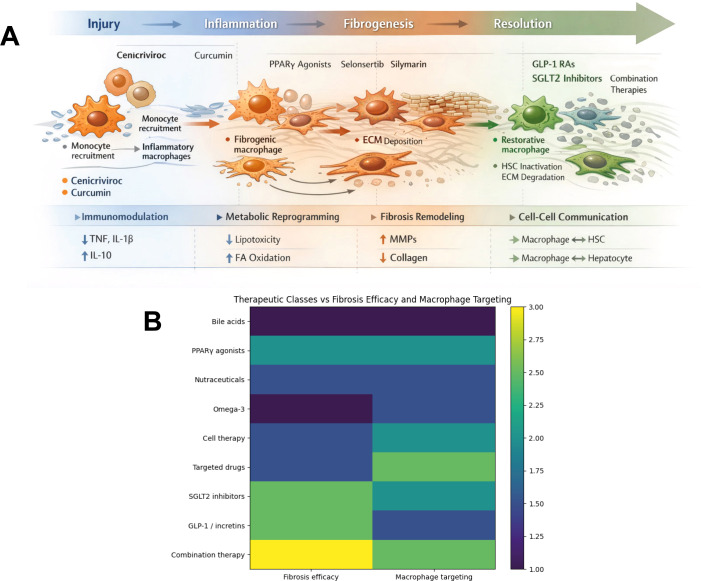
This review argues that liver fibrosis is potentially reversible and that restorative macrophages are central to fibrosis resolution through coordinated immunometabolic reprogramming, efferocytosis, and matrix remodeling. It surveys experimental and clinical evidence showing that many antifibrotic strategies converge on macrophage modulation, with the strongest translational support currently for metabolic therapies such as SGLT2 inhibitors and GLP-1 receptor agonists.
Key findings
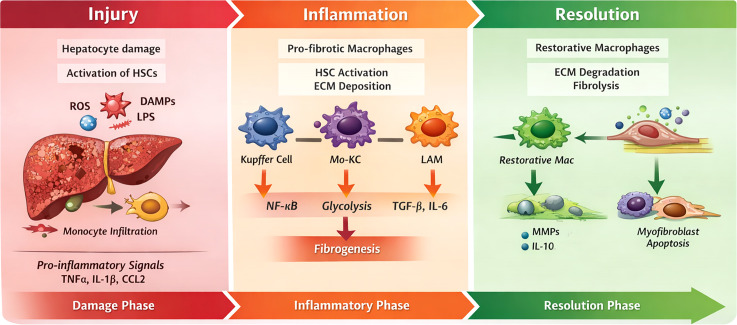
- Restorative macrophages are described as promoting fibrosis resolution by enhancing extracellular matrix degradation, inactivating or eliminating activated HSCs, and supporting tissue repair; they secrete IGF-I and HGF and are linked to increased MMP activity and reduced collagen deposition.
- In mouse models, fibrosis regression is associated with macrophage phenotypes shaped by signaling and metabolic pathways including NF-κB, STATs, PPARs, AMPK, mitochondrial function, and autophagy; for example, TRPM2 activation increases phagocytosis and promotes a restorative phenotype, and SGLT2 inhibition shifts macrophage metabolism from glycolysis to oxidative phosphorylation.
- Clinical evidence summarized in the review includes a randomized trial of pioglitazone in 55 patients, where fibrosis reduction was not statistically significant after 6 months, and later trials of metabolic therapies such as tirzepatide and semaglutide showing fibrosis benefit; semaglutide achieved at least a one-stage fibrosis improvement without worsening steatohepatitis in 36.8% vs 22.4% with placebo at week 72.
- The review states that in a 104-week trial with 695 adults with T2DM on metformin, combined exenatide plus dapagliflozin produced greater improvements in hepatic steatosis and fibrosis markers than either agent alone.
Methods
- Narrative review integrating experimental, translational, and clinical evidence on macrophage reprogramming in liver fibrosis across toxic, metabolic, cholestatic, and inflammatory liver diseases.
- The paper synthesizes studies using murine models (including CCl4, MASH/MASLD, BDL, alcoholic liver disease, and others), human liver tissue/single-cell studies, and clinical trials; it also refers to summary Tables 1–7.
- Main analysis is thematic: it organizes findings by macrophage heterogeneity, mechanistic pathways, therapeutic strategies, risks/context dependence, and translational/clinical evidence.
Limitations
- The paper explicitly notes that most mechanistic studies rely on in vitro work, frequently using RAW264.7 cells, which “do not faithfully recapitulate” liver macrophages and should be interpreted with caution; this is a stated limitation.
- It also states that many antifibrotic studies did not systematically assess temporal dynamics or compare effects across distinct hepatic cell populations, limiting mechanistic clarity; this is a stated limitation.
- Evident from the text: much of the evidence is preclinical and murine, with several clinical interventions showing variable efficacy or limited durability, so direct clinical translation remains uncertain.
Model-written summary. Check it against the paper before relying on it.
Integrity signals
Registry
Cites
Statistics
Figures
Verification
Claims the paper makes
84 Valid · 5 Not valid · 69 Not checked · 45 Own results and interpretations
At least one cited source doesn’t support this claim or points to a different paper, and none confirmed it — see the verdicts below.
In the paper
“CCAAT/enhancer-binding protein α (C/EBPα) promotes restorative polarization in murine macrophages (75, 78).”
§ Strategies to promote liver fibrosis amelioration with involvement of restorative macrophages > Mechanistic basis of restorative macrophages > Other pathways in the transcriptional regulation of restorative macrophages
What the sources say
- Not checked — no full text of the sourcecites [75] Jansakun C Chunglok W Altamura S Muckenthaler M Staffer S Tuma-Kellner S. Myeloid- and hepatocyte-specific deletion of group VIA calcium-independent phospholipase A2 leads to dichotomous opposing phenotypes during MCD diet-induced NASH. Biochim Biophys Acta Mol Basis Dis. (2023) 1869: 166590. doi: 10.1016/j.bbadis.2022.166590. PMID: 36334837 source
- Disputedcites [78] Saijou E Enomoto Y Matsuda M Yuet-Yin Kok C Akira S Tanaka M. Neutrophils alleviate fibrosis in the CCl(4)-induced mouse chronic liver injury model. Hepatol Commun. (2018) 2: 703–17. doi: 10.1002/hep4.1178. PMID: 29881822 PMC5983199 sourceExperimental — accuracy not yet measured
The paper’s background passage (indexed under Abstract; page unavailable) says C/EBPα rises during granulocytic differentiation but falls during the alternative monocytic pathway. It also reports that Trib1 loss, associated with increased C/EBPα, reduced M2-like macrophages; the Discussion instead links C/EBPα to increased neutrophil production. These passages point away from the claimed promotion of restorative macrophage polarization. (LLM, conf=0.86)
Checked by a reasoning model — may be wrong.
plainstates a cause- Asserted: passes — The authors put it forward as true.
- Checkable: passes — It can be checked against evidence.
- Load-bearing: unclear — It is unclear whether the paper’s conclusions depend on it.
- Based: passes — The paper gives a reason why it holds.
At least one cited source doesn’t support this claim or points to a different paper, and none confirmed it — see the verdicts below.
In the paper
“As shown by Weng et al. (65), IL-4Rα deficiency -despite its role in monocyte-to-resolutive macrophage differentiation- can paradoxically exacerbate fibrosis when present during active fibrogenesis, emphasizing the stage- and context-dependent nature of macrophage reprogramming.”
§ Strategies to promote liver fibrosis amelioration with involvement of restorative macrophages > Strategies inducing restorative macrophages in liver fibrosis > NAFLD/NASH (MASLD/MASH) models
What the sources say
- Disputedcites [65] Weng SY Wang X Vijayan S Tang Y Kim YO Padberg K. IL-4 receptor alpha signaling through macrophages differentially regulates liver fibrosis progression and reversal. EBioMedicine. (2018) 29: 92– 103. doi: 10.1016/j.ebiom.2018.01.028. PMID: 29463471 PMC5925448 sourceExperimental — accuracy not yet measured
The Results section (“IL-4Rα Deficiency Retards Progression of Liver Fibrosis”; page unavailable) reports that IL-4Rα-deficient mice developed significantly less fibrosis during active CCl4-induced progression, not more. The Discussion does mention increased fibrosis in IL-4Rα-deficient mice with chronic schistosomiasis, but identifies that as a finding from Vannella et al. (2014), a different disease context. (LLM, conf=0.88)
Checked by a reasoning model — may be wrong.
plainstates a cause- Asserted: passes — The authors put it forward as true.
- Checkable: passes — It can be checked against evidence.
- Load-bearing: passes — The paper’s conclusions depend on it.
- Based: passes — The paper gives a reason why it holds.
- Disputed
Every source the paper cites for this claim was checked and supports it.
In the paper
“Notably, during disease regression, fibrosis resolution was associated not with the emergence of new macrophage subsets but with a shift in population dynamics.”
§ Strategies to promote liver fibrosis amelioration with involvement of restorative macrophages > Liver macrophage heterogeneity and plasticity in fibrosis
What the sources say
- Supportedcites [10] Ganguly S Rosenthal SB Ishizuka K Troutman TD Rohm TV Khader N. Lipid-associated macrophages' promotion of fibrosis resolution during MASH regression requires TREM2. Proc Natl Acad Sci USA. (2024) 121: e2405746121. doi: 10.1073/pnas.2405746121. PMID: 39172787 PMC11363294 source
The Results section reports that during MASH regression, no new transcriptionally distinct macrophage subpopulation emerged, but the relative composition of macrophage clusters changed. The Discussion likewise states that no new subpopulation emerged and that population dynamics changed. The finding concerns MASH regression in the studied mouse models; page numbers were not provided. (LLM, conf=0.93)
plainstates an association- Asserted: passes — The authors put it forward as true.
- Checkable: passes — It can be checked against evidence.
- Load-bearing: passes — The paper’s conclusions depend on it.
- Based: passes — The paper gives a reason why it holds.
- Supported
The cited sources support only part of this claim — read each source’s verdict below.
In the paper
“They secrete growth factors such as insulin-like growth factor-I (IGF-I) and hepatocyte growth factor (HGF), which support tissue repair and regeneration (1–4).”
§ Strategies to promote liver fibrosis amelioration with involvement of restorative macrophages > Introduction
What the sources say
- Not checked — no full text of the sourcecites [1] Ramachandran P Pellicoro A Vernon MA Boulter L Aucott RL Ali A. Differential Ly-6C expression identifies the recruited macrophage phenotype, which orchestrates the regression of murine liver fibrosis. Proc Natl Acad Sci USA. (2012) 109: E3186–95. doi: 10.1073/pnas.1119964109. PMID: 23100531 PMC3503234 source
- Partly supportedcites [2] Borda M Sierra R Cantero MJ Gómez Bustillo S Fiore EJ Giardelli G. The antifibrotic potential of IMT504: modulation of GLAST + Wnt1 + bone marrow stromal progenitors and hepatic microenvironment. Stem Cell Res Ther. (2024) 15: 278. doi: 10.1186/s13287-024-03896-w. PMID: 39227908 PMC11373403 sourceExperimental — accuracy not yet measured
The Results section reports that treated fibrotic-liver macrophages acquired a proregenerative phenotype marked by increased HGF expression. It reports increased HGF and IGF-I mRNA in hepatocytes, not macrophages, and does not establish that restorative macrophages secrete both growth factors. (LLM, conf=0.87)
- Partly supportedcites [3] Watanabe Y Tsuchiya A Seino S Kawata Y Kojima Y Ikarashi S. Mesenchymal stem cells and induced bone marrow-derived macrophages synergistically improve liver fibrosis in mice. Stem Cells Transl Med. (2019) 8: 271–84. doi: 10.1002/sctm.18-0105. PMID: 30394698 PMC6392382 sourceExperimental — accuracy not yet measured
The Introduction describes macrophage-derived proregenerative factors, and the Results report increased HGF mRNA in liver tissue after combined cell therapy (page numbers unavailable). These passages support a role in liver regeneration, but they do not identify macrophages as the source of HGF or show that they secrete it; the copy also does not report macrophage secretion of IGF-I. (LLM, conf=0.86)
- Partly supportedcites [4] Moreno-Lanceta A Medrano-Bosch M Fundora Y Perramón M Aspas J Parra-Robert M. RNF41 orchestrates macrophage-driven fibrosis resolution and hepatic regeneration. Sci Transl Med. (2023) 15: eabq6225. doi: 10.1126/scitranslmed.abq6225. PMID: 37437019 PMC10712730 sourceExperimental — accuracy not yet measured
The Results section reports that conditioned medium from RNF41-treated macrophages stimulated hepatocyte proliferation and that blocking IGF-1 reduced this effect. It does not support the HGF part: HGF was not affected in the treated mice, and the Discussion says IGF-1 rather than HGF participated in the proregenerative effect. (LLM, conf=0.88)
plainstates a cause- Asserted: passes — The authors put it forward as true.
- Checkable: passes — It can be checked against evidence.
- Load-bearing: passes — The paper’s conclusions depend on it.
- Based: passes — The paper gives a reason why it holds.
Every source the paper cites for this claim was checked and supports it.
In the paper
“Transcriptomic analyses further revealed that NF-κB–dependent inflammatory genes are major downstream targets of the histone methyltransferase MLL4 (14), which directly interacts with the NF-κB subunit p65 and is required for its full transcriptional activity.”
§ Strategies to promote liver fibrosis amelioration with involvement of restorative macrophages > Mechanistic basis of restorative macrophages
What the sources say
- Supportedcites [14] Lee J An H Kim CS Lee S. The methyltransferase MLL4 promotes nonalcoholic steatohepatitis by enhancing NF-kappaB signaling. J Biol Chem. (2024) 300: 107984. doi: 10.1016/j.jbc.2024.107984. PMID: 39542242 PMC11665687 source
The Results section on MCDD-dependent transcriptome changes reports that inflammatory-response genes were significantly affected by reduced MLL4 expression. The section on NF-κB as a key mediator identifies NF-κB signaling among the downregulated pathways and reports that MLL4 interacts with p65 and supports its transcriptional activity. Page numbers are not available in our copy. (LLM, conf=0.90)
plainstates a cause- Asserted: passes — The authors put it forward as true.
- Checkable: passes — It can be checked against evidence.
- Load-bearing: passes — The paper’s conclusions depend on it.
- Based: passes — The paper gives a reason why it holds.
- Supported
105 more claims · 34 with their cited sources checked
Create a free account to see all 203 claims and to verify the 17 references still open.
- It may state two separate claims as one. 89
- Borderline: one of the tests for a substantial claim is unclear. 2
- Probably not a substantial claim. 3
- The quote only partly states this claim. 3
Citations
Cites
Identification of splenic reservoir monocytes and their deployment to inflammatory sites
Swirski, F. K., Nahrendorf, M., Etzrodt, M., Wildgruber, M., Cortez-Retamozo, V., Panizzi, P., Figueiredo, J.-L., Kohler, R. H., Chudnovskiy, A., Waterman, P., et al. (2009) · Science · doi:10.1126/science.1175202 · Cited by 2,221
A placebo-controlled trial of pioglitazone in subjects with nonalcoholic steatohepatitis
Belfort, R., Harrison, S. A., Brown, K., Darland, C., Finch, J., Hardies, J., Balas, B., Gastaldelli, A., Tio, F., Pulcini, J., et al. (2006) · New England Journal of Medicine · doi:10.1056/nejmoa060326 · Cited by 1,827
Resolving the fibrotic niche of human liver cirrhosis at single-cell level
Ramachandran, P., Dobie, R., Wilson-Kanamori, J. R., Dora, E. F., Henderson, B. E. P., Luu, N. T., Portman, J. R., Matchett, K. P., Brice, M., Marwick, J. A., et al. (2019) · Nature · doi:10.1038/s41586-019-1631-3 · Cited by 1,784
Liver Macrophages in Tissue Homeostasis and Disease
Krenkel, O., & Tacke, F. (2017) · Nature Reviews Immunology · doi:10.1038/nri.2017.11 · Cited by 1,424
THP-1 cell line: An in vitro cell model for immune modulation approach
Chanput, W., Mes, J. J., & Wichers, H. J. (2014) · International Immunopharmacology · doi:10.1016/j.intimp.2014.08.002 · Cited by 1,393 · cited 1×
“Similar limitations apply to other macrophage-like cell lines, such as human THP-1, a monocytic leukemia-like cell line obtained from 1 year-old kid (239), or human histiocytic lymphoma U937 cells (240).”
Oxidative metabolism and PGC-1β attenuate macrophage-mediated inflammation
Vats, D., Mukundan, L., Odegaard, J. I., Zhang, L., Smith, K. L., Morel, C. R., Greaves, D. R., Murray, P. J., & Chawla, A. (2006) · Cell Metabolism · doi:10.1016/j.cmet.2006.05.011 · Cited by 1,369
Bouhlel, M. A., Derudas, B., Rigamonti, E., Dièvart, R., Brozek, J., Haulon, S., Zawadzki, C., Jude, B., Torpier, G., Marx, N., et al. (2007) · Cell Metabolism · doi:10.1016/j.cmet.2007.06.010 · Cited by 1,325
Phase 3 Trial of Semaglutide in Metabolic Dysfunction–Associated Steatohepatitis
Sanyal, A. J., Newsome, P. N., Kliers, I., Østergaard, L. H., Long, M. T., Kjær, M. S., Cali, A. M. G., Bugianesi, E., Rinella, M. E., Roden, M., et al. (2025) · New England Journal of Medicine · doi:10.1056/nejmoa2413258 · Cited by 1,115
Rodríguez-Prados, J.-C., Través, P. G., Cuenca, J., Rico, D., Aragonés, J., Martín-Sanz, P., Cascante, M., & Boscá, L. (2010) · The Journal of Immunology · doi:10.4049/jimmunol.0901698 · Cited by 1,022
Tirzepatide for metabolic dysfunction-associated steatohepatitis with liver fibrosis
Loomba, R., Hartman, M. L., Lawitz, E. J., Vuppalanchi, R., Boursier, J., Bugianesi, E., Yoneda, M., Behling, C., Cummings, O. W., Tang, Y., et al. (2024) · New England Journal of Medicine · doi:10.1056/nejmoa2401943 · Cited by 1,005
Ramachandran, P., Pellicoro, A., Vernon, M. A., Boulter, L., Aucott, R. L., Ali, A., Hartland, S. N., Snowdon, V. K., Cappon, A., Gordon-Walker, T. T., et al. (2012) · Proceedings of the National Academy of Sciences · doi:10.1073/pnas.1119964109 · Cited by 1,001
Spatial proteogenomics reveals distinct and evolutionarily conserved hepatic macrophage niches
Guilliams, M., Bonnardel, J., Haest, B., Vanderborght, B., Wagner, C., Remmerie, A., Bujko, A., Martens, L., Thoné, T., Browaeys, R., et al. (2022) · Cell · doi:10.1016/j.cell.2021.12.018 · Cited by 985 · cited 4×
“Single-cell RNA-seq studies conducted by independent groups have identi fi ed, in human MASLD, macrophage subsets largely analogous to those previously described in mouse (196 – 198).”
InfluentialFunctional macrophage cell lines transformed by abelson leukemia virus
Raschke, W. C., Baird, S., Ralph, P., & Nakoinz, I. (1978) · Cell · doi:10.1016/0092-8674(78)90101-0 · Cited by 905
AMPK signalling in health and disease
Carling, D. (2017) · Current Opinion in Cell Biology · doi:10.1016/j.ceb.2017.01.005 · Cited by 797
Aithal, G. P., Thomas, J. A., Kaye, P. V., Lawson, A., Ryder, S. D., Spendlove, I., Austin, A. S., Freeman, J. G., Morgan, L., & Webber, J. (2008) · Gastroenterology · doi:10.1053/j.gastro.2008.06.047 · Cited by 721
Friedman, S. L., Ratziu, V., Harrison, S. A., Abdelmalek, M. F., Aithal, G. P., Caballeria, J., Francque, S., Farrell, G., Kowdley, K. V., Craxi, A., et al. (2018) · Hepatology · doi:10.1002/hep.29477 · Cited by 671
Remmerie, A., Martens, L., Thoné, T., Castoldi, A., Seurinck, R., Pavie, B., Roels, J., Vanneste, B., De Prijck, S., Vanhockerhout, M., et al. (2020) · Immunity · doi:10.1016/j.immuni.2020.08.004 · Cited by 592
Macrophage Polarization and Its Role in Liver Disease
Wang, C., Ma, C., Gong, L., Guo, Y., Fu, K., Zhang, Y., Zhou, H., & Li, Y. (2021) · Frontiers in Immunology · doi:10.3389/fimmu.2021.803037 · Cited by 581 · cited 1×
“For instance, PPAR g activation intersects with NF-k B, STAT1, and STAT6 signaling to regulate macrophage polarization (241).”
Loomba, R., Lawitz, E., Mantry, P. S., Jayakumar, S., Caldwell, S. H., Arnold, H., Diehl, A. M., Djedjos, C. S., Han, L., Myers, R. P., et al. (2018) · Hepatology · doi:10.1002/hep.29514 · Cited by 549
Wang, J., & Kubes, P. (2016) · Cell · doi:10.1016/j.cell.2016.03.009 · Cited by 537 · cited 1×
“The spleen serves as a major monocyte reservoir that mobilizes in response to tissue injury (171), while peritoneal macrophages display high migratory capacity and can populate visceral organs, including the liver (172, 173).”
Lauterbach, M. A., Hanke, J. E., Serefidou, M., Mangan, M. S. J., Kolbe, C.-C., Hess, T., Rothe, M., Kaiser, R., Hoss, F., Gehlen, J., et al. (2019) · Immunity · doi:10.1016/j.immuni.2019.11.009 · Cited by 434 · cited 1×
“Supporting this, ACLY expression is upregulated in macrophages during fi brogenesis (194), and its inhibition promotes a shift toward a restorative phenotype (195).”
Li, Y., & Chen, Y. (2019) · Advances in Experimental Medicine and Biology · doi:10.1007/978-981-15-0602-4_4 · Cited by 431 · cited 2×
“Its induction promotes a shift toward a restorative macrophage phenotype, whereas proin fl ammatory stimuli such as LPS suppress autophagic fl ux and favor pro-fi brotic polarization (34, 38 – 40).”
Luo, X., Li, H., Ma, L., Zhou, J., Guo, X., Woo, S.-L., Pei, Y., Knight, L. R., Deveau, M., Chen, Y., et al. (2018) · Gastroenterology · doi:10.1053/j.gastro.2018.09.010 · Cited by 415
Lipogenesis inhibitors: therapeutic opportunities and challenges
Batchuluun, B., Pinkosky, S. L., & Steinberg, G. R. (2022) · Nature Reviews Drug Discovery · doi:10.1038/s41573-021-00367-2 · Cited by 399 · cited 1×
“Mechanistically, ACLY inhibition limits lipid substrate avail-Aquino ability (192), whereas GLP-1RA signaling modulates systemic metabolic and in fl ammatory pathways (193).”
Daemen, S., Gainullina, A., Kalugotla, G., He, L., Chan, M. M., Beals, J. W., Liss, K. H., Klein, S., Feldstein, A. E., Finck, B. N., et al. (2021) · Cell Reports · doi:10.1016/j.celrep.2020.108626 · Cited by 378
Tumor-associated macrophages: an effective player of the tumor microenvironment
Basak, U., Sarkar, T., Mukherjee, S., Chakraborty, S., Dutta, A., Dutta, S., Nayak, D., Kaushik, S., Das, T., & Sa, G. (2023) · Frontiers in Immunology · doi:10.3389/fimmu.2023.1295257 · Cited by 333 · cited 1×
“In humans , tumor-associated macrophages (TAMs) exhibit both pro-or anti-tumorigenic functions depending on the microenvironment (141, 142).”
Boettcher, E., Csako, G., Pucino, F., Wesley, R., & Loomba, R. (2012) · Alimentary Pharmacology & Therapeutics · doi:10.1111/j.1365-2036.2011.04912.x · Cited by 318
Sanyal, A. J., Abdelmalek, M. F., Suzuki, A., Cummings, O. W., & Chojkier, M. (2014) · Gastroenterology · doi:10.1053/j.gastro.2014.04.046 · Cited by 309
The pro-inflammatory effects of miR-155 promote liver fibrosis and alcohol-induced steatohepatitis
Bala, S., Csak, T., Saha, B., Zatsiorsky, J., Kodys, K., Catalano, D., Satishchandran, A., & Szabo, G. (2016) · Journal of Hepatology · doi:10.1016/j.jhep.2016.01.035 · Cited by 303
Ma, P.-F., Gao, C.-C., Yi, J., Zhao, J.-L., Liang, S.-Q., Zhao, Y., Ye, Y.-C., Bai, J., Zheng, Q.-J., Dou, K.-F., et al. (2017) · Journal of Hepatology · doi:10.1016/j.jhep.2017.05.022 · Cited by 284
Baeck, C., Wei, X., Bartneck, M., Fech, V., Heymann, F., Gassler, N., Hittatiya, K., Eulberg, D., Luedde, T., Trautwein, C., et al. (2014) · Hepatology · doi:10.1002/hep.26783 · Cited by 270
Wehr, A., Baeck, C., Heymann, F., Niemietz, P. M., Hammerich, L., Martin, C., Zimmermann, H. W., Pack, O., Gassler, N., Hittatiya, K., et al. (2013) · The Journal of Immunology · doi:10.4049/jimmunol.1202909 · Cited by 268
A randomized trial of silymarin for the treatment of nonalcoholic steatohepatitis
Wah Kheong, C., Nik Mustapha, N. R., & Mahadeva, S. (2017) · Clinical Gastroenterology and Hepatology · doi:10.1016/j.cgh.2017.04.016 · Cited by 264
Ni, Y., Nagashimada, M., Zhuge, F., Zhan, L., Nagata, N., Tsutsui, A., Nakanuma, Y., Kaneko, S., & Ota, T. (2015) · Scientific Reports · doi:10.1038/srep17192 · Cited by 261 · cited 1×
“Additional agents -including carotenoids (29, 148 – 150), omega-3 lipid mediators (151), ketone ester supplementation (152), and the tyrosine kinase inhibitor dasatinib (153)- have also been shown to induce restorative macrophage phenotypes in mouse.”
Karlmark, K. R., Zimmermann, H. W., Roderburg, C., Gassler, N., Wasmuth, H. E., Luedde, T., Trautwein, C., & Tacke, F. (2010) · Hepatology · doi:10.1002/hep.23894 · Cited by 249
Highly Purified Eicosapentaenoic Acid Treatment Improves Nonalcoholic Steatohepatitis
Tanaka, N., Sano, K., Horiuchi, A., Tanaka, E., Kiyosawa, K., & Aoyama, T. (2008) · Journal of Clinical Gastroenterology · doi:10.1097/mcg.0b013e31815591aa · Cited by 248
Rao, J., Wang, H., Ni, M., Wang, Z., Wang, Z., Wei, S., Liu, M., Wang, P., Qiu, J., Zhang, L., et al. (2022) · Gut · doi:10.1136/gutjnl-2021-325150 · Cited by 241
SGLT2 inhibition reprograms systemic metabolism via FGF21-dependent and -independent mechanisms
Osataphan, S., Macchi, C., Singhal, G., Chimene-Weiss, J., Sales, V., Kozuka, C., Dreyfuss, J. M., Pan, H., Tangcharoenpaisan, Y., Morningstar, J., et al. (2019) · JCI Insight · doi:10.1172/jci.insight.123130 · Cited by 228
Bility, M. T., Cheng, L., Zhang, Z., Luan, Y., Li, F., Chi, L., Zhang, L., Tu, Z., Gao, Y., Fu, Y., et al. (2014) · PLoS Pathogens · doi:10.1371/journal.ppat.1004032 · Cited by 227
Itoh, M., Kato, H., Suganami, T., Konuma, K., Marumoto, Y., Terai, S., Sakugawa, H., Kanai, S., Hamaguchi, M., Fukaishi, T., et al. (2013) · PLoS ONE · doi:10.1371/journal.pone.0082163 · Cited by 211 · cited 1×
“In both mice and humans, C-LAMs have been shown to organize into multicellular aggregates termed hepatic crown-like structures (hCLS), which are associated with the progression from simple steatosis to MASH (199).”
Inhibition of ATP-citrate lyase improves NASH, liver fibrosis, and dyslipidemia
Morrow, M. R., Batchuluun, B., Wu, J., Ahmadi, E., Leroux, J. M., Mohammadi-Shemirani, P., Desjardins, E. M., Wang, Z., Tsakiridis, E. E., Lavoie, D. C. T., et al. (2022) · Cell Metabolism · doi:10.1016/j.cmet.2022.05.004 · Cited by 199
Xu, F., Guo, M., Huang, W., Feng, L., Zhu, J., Luo, K., Gao, J., Zheng, B., Kong, L.-D., Pang, T., et al. (2020) · Redox Biology · doi:10.1016/j.redox.2020.101634 · Cited by 196 · cited 1×
“Pyruvate kinase M2 (PKM2) emerges as a key metabolic regulator linking glycolysis and oxidative metabolism in macrophages (22, 23).”
Sun, X., Han, F., Lu, Q., Li, X., Ren, D., Zhang, J., Han, Y., Xiang, Y. K., & Li, J. (2020) · Diabetes · doi:10.2337/db19-0991 · Cited by 193
Torres, D. M., Jones, F. J., Shaw, J. C., Williams, C. D., Ward, J. A., & Harrison, S. A. (2011) · Hepatology · doi:10.1002/hep.24558 · Cited by 183 · cited 2×
“Subsequently, Torres et al. (205) reported that 48 weeks of rosiglitazone therapy, another PPAR g agonist, produced histological improvements in patients with MASH comparable to those observed with rosiglitazone combined with either metformin or losartan, including similar effects on steatosis, in…”
Anstee, Q. M., Neuschwander-Tetri, B. A., Wai-Sun Wong, V., Abdelmalek, M. F., Rodriguez-Araujo, G., Landgren, H., Park, G. S., Bedossa, P., Alkhouri, N., Tacke, F., et al. (2024) · Clinical Gastroenterology and Hepatology · doi:10.1016/j.cgh.2023.04.003 · Cited by 179
Heymann, F., Hammerich, L., Storch, D., Bartneck, M., Huss, S., Rüsseler, V., Gassler, N., Lira, S. A., Luedde, T., Trautwein, C., et al. (2012) · Hepatology · doi:10.1002/hep.24764 · Cited by 177
Glucagon-like Peptide-1 Receptor-based Therapeutics for Metabolic Liver Disease
Yabut, J. M., & Drucker, D. J. (2023) · Endocrine Reviews · doi:10.1210/endrev/bnac018 · Cited by 175
PARP inhibition protects against alcoholic and non-alcoholic steatohepatitis
Mukhopadhyay, P., Horváth, B., Rajesh, M., Varga, Z. V., Gariani, K., Ryu, D., Cao, Z., Holovac, E., Park, O., Zhou, Z., et al. (2017) · Journal of Hepatology · doi:10.1016/j.jhep.2016.10.023 · Cited by 168 · cited 1×
“…and enzymes, such as cathepsin B (CatB), whose serum levels are also elevated in cirrhotic patients (98); dipeptidyl peptidase-4 (DPP-4/CD26) (99, 100); poly[ADP-ribose] polymerase 1 (PARP1), which is also activated in human cirrhotic livers (101); and the glycoprotein chitinase-1 (CHIT1) (26).”
Therapeutic HNF4A mRNA attenuates liver fibrosis in a preclinical model
Yang, T., Poenisch, M., Khanal, R., Hu, Q., Dai, Z., Li, R., Song, G., Yuan, Q., Yao, Q., Shen, X., et al. (2021) · Journal of Hepatology · doi:10.1016/j.jhep.2021.08.011 · Cited by 166
Saadati, S., Sadeghi, A., Mansour, A., Yari, Z., Poustchi, H., Hedayati, M., Hatami, B., & Hekmatdoost, A. (2019) · BMC Gastroenterology · doi:10.1186/s12876-019-1055-4 · Cited by 164
Paracrine cellular senescence exacerbates biliary injury and impairs regeneration
Ferreira-Gonzalez, S., Lu, W.-Y., Raven, A., Dwyer, B., Man, T. Y., O’Duibhir, E., Lewis, P. J. S., Campana, L., Kendall, T. J., Bird, T. G., et al. (2018) · Nature Communications · doi:10.1038/s41467-018-03299-5 · Cited by 161 · cited 1×
“In contrast, TGF-b 1 inhibition attenuated liver fi brosis in a biliary senescence model (127), underscoring the strong context dependence of its effects.”
Early-onset autoimmunity associated with SOCS1 haploinsufficiency
Hadjadj, J., Castro, C. N., Tusseau, M., Stolzenberg, M.-C., Mazerolles, F., Aladjidi, N., Armstrong, M., Ashrafian, H., Cutcutache, I., Ebetsberger-Dachs, G., et al. (2020) · Nature Communications · doi:10.1038/s41467-020-18925-4 · Cited by 156
Watanabe, Y., Tsuchiya, A., Seino, S., Kawata, Y., Kojima, Y., Ikarashi, S., Starkey Lewis, P. J., Lu, W.-Y., Kikuta, J., Kawai, H., et al. (2019) · Stem Cells Translational Medicine · doi:10.1002/sctm.18-0105 · Cited by 155
Ipragliflozin improves the hepatic outcomes of patients with diabetes with NAFLD
Takahashi, H., Kessoku, T., Kawanaka, M., Nonaka, M., Hyogo, H., Fujii, H., Nakajima, T., Imajo, K., Tanaka, K., Kubotsu, Y., et al. (2022) · Hepatology Communications · doi:10.1002/hep4.1696 · Cited by 153
Lipid-associated macrophages' promotion of fibrosis resolution during MASH regression requires TREM2
Ganguly, S., Rosenthal, S. B., Ishizuka, K., Troutman, T. D., Rohm, T. V., Khader, N., Aleman-Muench, G., Sano, Y., Archilei, S., Soroosh, P., et al. (2024) · Proceedings of the National Academy of Sciences · doi:10.1073/pnas.2405746121 · Cited by 145
Role of XBP1 in regulating the progression of non-alcoholic steatohepatitis
Wang, Q., Zhou, H., Bu, Q., Wei, S., Li, L., Zhou, J., Zhou, S., Su, W., Liu, M., Liu, Z., et al. (2022) · Journal of Hepatology · doi:10.1016/j.jhep.2022.02.031 · Cited by 144 · cited 1×
“…factors and epigenetic regulators have been also analyze, including forkhead box O1 (FOXO1), which is also increased in human cirrhotic livers (66); mixed-lineage leukemia protein 4 (MLL4/KMT2D) (14); and X-box binding protein 1 (XBP1), which is also upregulated in MASH patients (105, 106).”
Yang, A.-T., Kim, Y.-O., Yan, X.-Z., Abe, H., Aslam, M., Park, K.-S., Zhao, X.-Y., Jia, J.-D., Klein, T., You, H., et al. (2023) · Cellular and Molecular Gastroenterology and Hepatology · doi:10.1016/j.jcmgh.2022.12.005 · Cited by 144
Lakhia, R., Yheskel, M., Flaten, A., Quittner-Strom, E. B., Holland, W. L., & Patel, V. (2018) · American Journal of Physiology-Renal Physiology · doi:10.1152/ajprenal.00352.2017 · Cited by 140
Cardiorenal protection of SGLT2 inhibitors—Perspectives from metabolic reprogramming
Gao, Y.-M., Feng, S., Wen, Y., Tang, T., Wang, B., & Liu, B. (2022) · EBioMedicine · doi:10.1016/j.ebiom.2022.104215 · Cited by 137
Planagumà, A., Clària, J., Miquel, R., López‐Parra, M., Titos, E., Masferrer, J. L., Arroyo, V., & Rodé, J. (2005) · The FASEB Journal · doi:10.1096/fj.04-2753fje · Cited by 133
Weng, S.-Y., Wang, X., Vijayan, S., Tang, Y., Kim, Y. O., Padberg, K., Regen, T., Molokanova, O., Chen, T., Bopp, T., et al. (2018) · EBioMedicine · doi:10.1016/j.ebiom.2018.01.028 · Cited by 128
Macrophage ATP citrate lyase deficiency stabilizes atherosclerotic plaques
Baardman, J., Verberk, S. G. S., van der Velden, S., Gijbels, M. J. J., van Roomen, C. P. P. A., Sluimer, J. C., Broos, J. Y., Griffith, G. R., Prange, K. H. M., van Weeghel, M., et al. (2020) · Nature Communications · doi:10.1038/s41467-020-20141-z · Cited by 126
Leuschner, M., Güldütuna, S., You, T., Hübner, K., Bhatti, S., & Leuschner, U. (1996) · Journal of Hepatology · doi:10.1016/s0168-8278(96)80327-8 · Cited by 119 · cited 1×
“…and 1996, two studies evaluated the administration of ursodeoxycholic acid (UDCA), a hydrophilic secondary bile acid , in patients with cystic fi brosis – associated liver disease (200) and early-stage primary biliary cirrhosis (201), respectively, reporting modest improvements in liver function.”
Mesenchymal Stem Cell-Derived Extracellular Vesicles in Liver Immunity and Therapy
Wu, R., Fan, X., Wang, Y., Shen, M., Zheng, Y., Zhao, S., & Yang, L. (2022) · Frontiers in Immunology · doi:10.3389/fimmu.2022.833878 · Cited by 117 · cited 1×
“Exosomes derived from human embryonic stem cell spheroids promote restorative polarization by suppressing the miR-1184/DICER1 axis (161), while extracellular vesicles are key mediators of MSC-induced immuno-modulation and tissue repair (162, 163).”
Zhang, P.-W., Chen, F.-X., Li, D., Ling, W.-H., & Guo, H.-H. (2015) · Medicine · doi:10.1097/md.0000000000000758 · Cited by 116
Lee, Y., Ka, S.-O., Cha, H.-N., Chae, Y.-N., Kim, M.-K., Park, S.-Y., Bae, E. J., & Park, B.-H. (2017) · Diabetes · doi:10.2337/db16-1446 · Cited by 114
Chimeric antigen receptor-modified macrophages ameliorate liver fibrosis in preclinical models
Dai, H., Zhu, C., Huai, Q., Xu, W., Zhu, J., Zhang, X., Zhang, X., Sun, B., Xu, H., Zheng, M., et al. (2024) · Journal of Hepatology · doi:10.1016/j.jhep.2024.01.034 · Cited by 114
Della Corte, C., Carpino, G., De Vito, R., De Stefanis, C., Alisi, A., Cianfarani, S., Overi, D., Mosca, A., Stronati, L., Cucchiara, S., et al. (2016) · PLOS ONE · doi:10.1371/journal.pone.0168216 · Cited by 112
Comparison of monocytic cell lines U937 and THP-1 as macrophage models for in vitro studies
Nascimento, C. R., Fernandes, N. A. R., Gonzalez-Maldonado, L., & Rossa, C. (2022) · Biochemistry and Biophysics Reports · doi:10.1016/j.bbrep.2022.101383 · Cited by 111 · cited 1×
“Similar limitations apply to other macrophage-like cell lines, such as human THP-1, a monocytic leukemia-like cell line obtained from 1 year-old kid (239), or human histiocytic lymphoma U937 cells (240).”
Saadati, S., Hatami, B., Yari, Z., Shahrbaf, M. A., Eghtesad, S., Mansour, A., Poustchi, H., Hedayati, M., Aghajanpoor-pasha, M., Sadeghi, A., et al. (2019) · European Journal of Clinical Nutrition · doi:10.1038/s41430-018-0382-9 · Cited by 110
Bansal, R., van Baarlen, J., Storm, G., & Prakash, J. (2015) · Scientific Reports · doi:10.1038/srep18272 · Cited by 107
Campana, L., Starkey Lewis, P. J., Pellicoro, A., Aucott, R. L., Man, J., O’Duibhir, E., Mok, S. E., Ferreira-Gonzalez, S., Livingstone, E., Greenhalgh, S. N., et al. (2018) · The Journal of Immunology · doi:10.4049/jimmunol.1701247 · Cited by 107 · cited 1×
“Campana et al. (60) further demonstrated that efferocytosis activates a STAT3-IL-10 autocrine/ paracrine loop that preserves macrophage scavenging capacity and promotes restorative polarization.”
Manuelpillai, U., Lourensz, D., Vaghjiani, V., Tchongue, J., Lacey, D., Tee, J.-Y., Murthi, P., Chan, J., Hodge, A., & Sievert, W. (2012) · PLoS ONE · doi:10.1371/journal.pone.0038631 · Cited by 106
Ni, Y., Nagashimada, M., Zhan, L., Nagata, N., Kobori, M., Sugiura, M., Ogawa, K., Kaneko, S., & Ota, T. (2015) · Endocrinology · doi:10.1210/en.2014-1776 · Cited by 104
The innate immune receptor TREM-1 promotes liver injury and fibrosis
Nguyen-Lefebvre, A. T., Ajith, A., Portik-Dobos, V., Horuzsko, D. D., Arbab, A. S., Dzutsev, A., Sadek, R., Trinchieri, G., & Horuzsko, A. (2018) · Journal of Clinical Investigation · doi:10.1172/jci98156 · Cited by 104
Hepatic macrophage targeted siRNA lipid nanoparticles treat non-alcoholic steatohepatitis
Zhou, J.-E., Sun, L., Liu, L., Jia, Y., Han, Y., Shao, J., Wang, J., Wang, Y., Yu, L., & Yan, Z. (2022) · Journal of Controlled Release · doi:10.1016/j.jconrel.2022.01.038 · Cited by 104 · cited 3×
“Their effects were mediated, at least in part, through increased CCL2 expression via activation of the ERK/HMGB1/NF-k B signaling axis, promoting recruitment of endogenous macrophages to the fi brotic liver.”
Fan, N., Zhang, X., Zhao, W., Zhao, J., Luo, D., Sun, Y., Li, D., Zhao, C., Wang, Y., Zhang, H., et al. (2022) · International Journal of Biological Sciences · doi:10.7150/ijbs.73890 · Cited by 104
Histidine‐rich glycoprotein promotes macrophage activation and inflammation in chronic liver disease
Bartneck, M., Fech, V., Ehling, J., Govaere, O., Warzecha, K. T., Hittatiya, K., Vucur, M., Gautheron, J., Luedde, T., Trautwein, C., et al. (2016) · Hepatology · doi:10.1002/hep.28418 · Cited by 101
Tian, L., Li, W., Yang, L., Chang, N., Fan, X., Ji, X., Xie, J., Yang, L., & Li, L. (2017) · Frontiers in Immunology · doi:10.3389/fimmu.2017.01214 · Cited by 101
Luo, X.-Y., Meng, X.-J., Cao, D.-C., Wang, W., Zhou, K., Li, L., Guo, M., & Wang, P. (2019) · Stem Cell Research & Therapy · doi:10.1186/s13287-018-1122-8 · Cited by 99
Zhao, Y., Tian, P., Han, F., Zheng, J., Xia, X., Xue, W., Ding, X.-M., & Ding, C. (2017) · Journal of Zhejiang University SCIENCE B · doi:10.1631/jzus.b1700003 · Cited by 96
Tikhanovich, I., Zhao, J., Olson, J., Adams, A., Taylor, R., Bridges, B., Marshall, L., Roberts, B., & Weinman, S. A. (2017) · Journal of Biological Chemistry · doi:10.1074/jbc.m117.778761 · Cited by 92
Tu, Y., Liu, J., Kong, D., Guo, X., Li, J., Long, Z., Peng, J., Wang, Z., Wu, H., Liu, P., et al. (2023) · Free Radical Biology and Medicine · doi:10.1016/j.freeradbiomed.2023.03.014 · Cited by 89
Shih, P.-H., Shiue, S.-J., Chen, C.-N., Cheng, S.-W., Lin, H.-Y., Wu, L.-W., & Wu, M.-S. (2021) · Marine Drugs · doi:10.3390/md19030148 · Cited by 86
Moon, J. S., Hong, J. H., Jung, Y. J., Ferrannini, E., Nauck, M. A., & Lim, S. K. (2022) · Trends in Endocrinology and Metabolism · doi:10.1016/j.tem.2022.03.005 · Cited by 86
Ni, Y., Zhuge, F., Ni, L., Nagata, N., Yamashita, T., Mukaida, N., Kaneko, S., Ota, T., & Nagashimada, M. (2022) · Metabolism · doi:10.1016/j.metabol.2022.155272 · Cited by 86 · cited 1×
“However, Ni et al. reported that both CX3CL1 and its receptor CX3CR1 are upregulated in MASH (114), with CX3CR1 predominantly expressed by activated macrophages.”
Neutrophils alleviate fibrosis in the CCl4-induced mouse chronic liver injury model
Saijou, E., Enomoto, Y., Matsuda, M., Yuet‐Yin Kok, C., Akira, S., Tanaka, M., & Miyajima, A. (2018) · Hepatology Communications · doi:10.1002/hep4.1178 · Cited by 84
Gastaldelli, A., Repetto, E., Guja, C., Hardy, E., Han, J., Jabbour, S. A., & Ferrannini, E. (2020) · Diabetes, Obesity and Metabolism · doi:10.1111/dom.13907 · Cited by 82
Wang, M., Zhang, M., Fu, L., Lin, J., Zhou, X., Zhou, P., Huang, P., Hu, H., & Han, Y. (2020) · Theranostics · doi:10.7150/thno.37301 · Cited by 81
Xu, L., Chen, Y., Nagashimada, M., Ni, Y., Zhuge, F., Chen, G., Li, H., Pan, T., Yamashita, T., Mukaida, N., et al. (2021) · Metabolism · doi:10.1016/j.metabol.2021.154914 · Cited by 81
IL-33 treatment attenuated diet-induced hepatic steatosis but aggravated hepatic fibrosis
Gao, Y., Liu, Y., Yang, M., Guo, X., Zhang, M., Li, H., Li, J., & Zhao, J. (2016) · Oncotarget · doi:10.18632/oncotarget.9259 · Cited by 79
Kobori, M., Ni, Y., Takahashi, Y., Watanabe, N., Sugiura, M., Ogawa, K., Nagashimada, M., Kaneko, S., Naito, S., & Ota, T. (2014) · PLoS ONE · doi:10.1371/journal.pone.0098294 · Cited by 77
Saito, T., Okumoto, K., Haga, H., Nishise, Y., Ishii, R., Sato, C., Watanabe, H., Okada, A., Ikeda, M., Togashi, H., et al. (2011) · Stem Cells and Development · doi:10.1089/scd.2011.0074 · Cited by 75
Wu, B., Liu, J., Li, Y., & Li, J. (2019) · International Journal of Molecular Medicine · doi:10.3892/ijmm.2019.4395 · Cited by 73
Zhou, H., Ma, C., Wang, C., Gong, L., Zhang, Y., & Li, Y. (2021) · European Journal of Pharmacology · doi:10.1016/j.ejphar.2021.173976 · Cited by 73 · cited 2×
“…compounds and pharmaceutical agents such as metformin, glucagon-like peptide-1 receptor agonists (GLP-1RAs) or SGLT2 inhibitors (SGLT2is) - promote restorative macrophage polarization, at least in part, through activation of AMPK-dependent pathways and enhance hepatic autophagy (34, 39, 41 – 44).”
Yang, Y., Wu, X.-Q., Li, W.-X., Huang, H.-M., Li, H.-D., Pan, X.-Y., Li, X.-F., Huang, C., Meng, X.-M., Zhang, L., et al. (2018) · Oncogene · doi:10.1038/s41388-018-0383-0 · Cited by 72
Chronic hepatitis C infection–induced liver fibrogenesis is associated with M2 macrophage activation
Bility, M. T., Nio, K., Li, F., McGivern, D. R., Lemon, S. M., Feeney, E. R., Chung, R. T., & Su, L. (2016) · Scientific Reports · doi:10.1038/srep39520 · Cited by 71
Yao, Q., Li, S., Li, X., Wang, F., & Tu, C. (2020) · Frontiers in Medicine · doi:10.3389/fmed.2020.00071 · Cited by 71
Li, Q., Wu, J., Huang, J., Hu, R., You, H., Liu, L., Wang, D., & Wei, L.-B. (2022) · Frontiers in Pharmacology · doi:10.3389/fphar.2022.859723 · Cited by 70
Wang, Y.-F., Zhang, W.-L., Li, Z.-X., Liu, Y., Tan, J., Yin, H.-Z., Zhang, Z.-C., Piao, X.-J., Ruan, M.-H., Dai, Z.-H., et al. (2024) · Signal Transduction and Targeted Therapy · doi:10.1038/s41392-024-01797-1 · Cited by 69 · cited 1×
“Other examples include the epigenetic regulator methyltransferase-like 4 (METTL4), which is also decreased in MAFLD patients (111), and testosterone, which may also exert protective effects (112).”
Lin, X.-F., Cui, X.-N., Yang, J., Jiang, Y.-F., Wei, T.-J., Xia, L., Liao, X.-Y., Li, F., Wang, D.-D., Li, J., et al. (2024) · Acta Pharmacologica Sinica · doi:10.1038/s41401-024-01389-3 · Cited by 69 · cited 1×
“In this context, Lin et al. (32) showed that SGLT2 inhibition targets PFKFB3, a key glycolytic enzyme, thereby promoting a metabolic shift from glycolysis to oxidative phosphorylation and favoring restorative macrophage polarization.”
Wang, H., Zhang, C., Fang, B., Hou, J., Li, W.-D., Li, L., Li, L., Bi, X., Li, L., Abulizi, A., et al. (2021) · Frontiers in Immunology · doi:10.3389/fimmu.2020.600635 · Cited by 66 · cited 1×
“For example, in alveolar echinococcosis, inhibition of Notch signaling aggravates liver fi brosis (136), and macrophage depletion using clodronate-loaded liposomes prior to Echinococcus multilocularis infection impairs parasite clearance while increasing parasite burden (137).”
Autologous macrophage therapy for liver cirrhosis: a phase 2 open-label randomized controlled trial
Brennan, P. N., MacMillan, M., Manship, T., Moroni, F., Glover, A., Troland, D., MacPherson, I., Graham, C., Aird, R., Semple, S. I. K., et al. (2025) · Nature Medicine · doi:10.1038/s41591-024-03406-8 · Cited by 66 · cited 2×
“A phase II trial reported that infusion of bone marrow – derived monocytes did not signi fi cantly improve liver function, although circulating pro-in fl ammatory cytokines were reduced (213).”
Saha, B., Kodys, K., & Szabo, G. (2016) · Cellular and Molecular Gastroenterology and Hepatology · doi:10.1016/j.jcmgh.2015.12.005 · Cited by 65
Myeloid FoxO1 depletion attenuates hepatic inflammation and prevents nonalcoholic steatohepatitis
Lee, S., Usman, T. O., Yamauchi, J., Chhetri, G., Wang, X., Coudriet, G. M., Zhu, C., Gao, J., McConnell, R., Krantz, K., et al. (2022) · Journal of Clinical Investigation · doi:10.1172/jci154333 · Cited by 64
Han, X., Ding, C., Zhang, G., Pan, R., Liu, Y., Huang, N., Hou, N., Han, F., Xu, W., & Sun, X. (2020) · Biochemical and Biophysical Research Communications · doi:10.1016/j.bbrc.2020.03.032 · Cited by 63 · cited 1×
“…compounds and pharmaceutical agents such as metformin, glucagon-like peptide-1 receptor agonists (GLP-1RAs) or SGLT2 inhibitors (SGLT2is) - promote restorative macrophage polarization, at least in part, through activation of AMPK-dependent pathways and enhance hepatic autophagy (34, 39, 41 – 44).”
Metformin inhibits ROS production by human M2 macrophages via the activation of AMPK
Nassif, R. M., Chalhoub, E., Chedid, P., Hurtado-Nedelec, M., Raya, E., Dang, P. M.-C., Marie, J.-C., & El-Benna, J. (2022) · Biomedicines · doi:10.3390/biomedicines10020319 · Cited by 63
Sirtuin 6—A Key Regulator of Hepatic Lipid Metabolism and Liver Health
Dong, X. C. (2023) · Cells · doi:10.3390/cells12040663 · Cited by 63 · cited 2×
“However, STAT3 signaling can also support pro-fi brotic polarization under speci fi c in fl amma-tory conditions, underscoring its highly context-dependent function (52, 61, 62).”
Galastri, S., Zamara, E., Milani, S., Novo, E., Provenzano, A., Delogu, W., Vizzutti, F., Sutti, S., Locatelli, I., Navari, N., et al. (2012) · Clinical Science · doi:10.1042/cs20110515 · Cited by 62
Melgar-Lesmes, P., Luquero, A., Parra-Robert, M., Mora, A., Ribera, J., Edelman, E. R., & Jiménez, W. (2018) · Nano Letters · doi:10.1021/acs.nanolett.8b02498 · Cited by 61
Ma, C., Wang, C., Zhang, Y., Li, Y., Fu, K., Gong, L., Zhou, H., & Li, Y. (2023) · Biomedicine & Pharmacotherapy · doi:10.1016/j.biopha.2023.114264 · Cited by 61
Zhong, X., & Liu, H. (2018) · Journal of Gastroenterology and Hepatology · doi:10.1111/jgh.13853 · Cited by 60
Shinjo, T., Nakatsu, Y., Iwashita, M., Sano, T., Sakoda, H., Ishihara, H., Kushiyama, A., Fujishiro, M., Fukushima, T., Tsuchiya, Y., et al. (2015) · American Journal of Physiology-Endocrinology and Metabolism · doi:10.1152/ajpendo.00553.2014 · Cited by 59
Videla, L. A., Valenzuela, R., del Campo, A., & Zúñiga‐Hernández, J. (2023) · International Journal of Molecular Sciences · doi:10.3390/ijms242115528 · Cited by 58
Lian, N., Jin, H., Zhang, F., Wu, L., Shao, J., Lu, Y., & Zheng, S. (2016) · IUBMB Life · doi:10.1002/iub.1518 · Cited by 57
He, F., Guo, F., Li, Z., Yu, H., Ma, P., Zhao, J., Feng, L., Li, W., Liu, X., Qin, H., et al. (2015) · Hepatology · doi:10.1002/hep.27394 · Cited by 54
Bai, L., Liu, X., Zheng, Q., Kong, M., Zhang, X., Hu, R., Lou, J., Ren, F., Chen, Y., Zheng, S., et al. (2017) · Scientific Reports · doi:10.1038/s41598-017-11303-z · Cited by 54
M2C Polarization by Baicalin Enhances Efferocytosis via Upregulation of MERTK Receptor
Lai, Y., Putra, R. B. D. S., Aui, S., & Chang, K. (2018) · The American Journal of Chinese Medicine · doi:10.1142/s0192415x18500957 · Cited by 51 · cited 1×
“These macrophages, characterized by enhanced efferocytic capacity (175), improved multiple disease parameters following infusion, including fi brosis.”
Hyperoside attenuates non-alcoholic fatty liver disease through targeting Nr4A1 in macrophages
Sun, B., Zhang, R., Liang, Z., Fan, A., & Kang, D. (2021) · International Immunopharmacology · doi:10.1016/j.intimp.2021.107438 · Cited by 50 · cited 1×
“…as matrix metalloproteinase-10 (MMP10; stromelysin-2) (57); transcription factors including nuclear receptor subfamily 4 group A member 1 (Nr4A1) (120) and nuclear factor erythroid 2 – related Factor 2 (NRF2; NFE2L2) (121); immune receptors such as T-cell immunoglobulin and mucin domain –…”
IRF5 regulates lung macrophages M2 polarization during severe acute pancreatitis in vitro
Sun, K., He, S.-B., Qu, J.-G., Dang, S.-C., Chen, J.-X., Gong, A.-H., Xie, R., & Zhang, J.-X. (2016) · World Journal of Gastroenterology · doi:10.3748/wjg.v22.i42.9368 · Cited by 49
Synergistic anti-inflammatory effect of gut microbiota and lithocholic acid on liver fibrosis
Shao, J., Ge, T., Tang, C., Wang, G., Pang, L., & Chen, Z. (2022) · Inflammation Research · doi:10.1007/s00011-022-01629-4 · Cited by 48
Merli, M., Bertasi, S., Servi, R., Diamanti, S., Martino, F., De Santis, A., Goffredo, F., Quattrucci, S., Antonelli, M., & Angelico, M. (1994) · Journal of Pediatric Gastroenterology and Nutrition · doi:10.1097/00005176-199408000-00010 · Cited by 46
MERTK+/hi M2c Macrophages Induced by Baicalin Alleviate Non-Alcoholic Fatty Liver Disease
Junior, Lai, Y.-S., Nguyen, H. T., Salmanida, F. P., & Chang, K.-T. (2021) · International Journal of Molecular Sciences · doi:10.3390/ijms221910604 · Cited by 46 · cited 1×
“Junior et al. (174) generated MER tyrosine kinase (MERTK) +/hi M2c macrophages by treating BMDMs with baicalin and evaluated their therapeutic potential in a mouse MASLD model.”
Chen, G., Ni, Y., Nagata, N., Xu, L., Zhuge, F., Nagashimada, M., Kaneko, S., & Ota, T. (2019) · Laboratory Investigation · doi:10.1038/s41374-019-0255-4 · Cited by 42
RNF41 orchestrates macrophage-driven fibrosis resolution and hepatic regeneration
Moreno-Lanceta, A., Medrano-Bosch, M., Fundora, Y., Perramón, M., Aspas, J., Parra-Robert, M., Baena, S., Fondevila, C., Edelman, E. R., Jiménez, W., et al. (2023) · Science Translational Medicine · doi:10.1126/scitranslmed.abq6225 · Cited by 42
FABP5 Deficiency Impaired Macrophage Inflammation by Regulating AMPK/NF-κB Signaling Pathway
Hou, Y., Wei, D., Bossila, E. A., Zhang, Z., Li, S., Bao, J., Xu, H., Zhang, L., & Zhao, Y. X. (2022) · The Journal of Immunology · doi:10.4049/jimmunol.2200182 · Cited by 42
Shi, X., Li, Y., Wang, Y., Ding, T., Zhang, X., & Wu, N. (2021) · Toxicology and Applied Pharmacology · doi:10.1016/j.taap.2021.115668 · Cited by 41 · cited 1×
“…and Sappanone A -compounds derived from plants used in TCM-upregulate SIRT1 and PGC-1 a and induce AMPK phosphorylation, thereby supporting mitochondrial biogenesis and metabolic fi tness (183, 184), whereas pro-in fl ammatory stimuli such as LPS-driven polarization suppress SIRT1 expression (185).”
Tian, T., Zhao, C., Li, S., Huang, Z., Guo, Y., Dai, W., Bai, R., Tang, C., Lin, Y., & Gao, J. (2023) · ACS Applied Materials & Interfaces · doi:10.1021/acsami.2c22579 · Cited by 41
Fang, W., Deng, Z., Benadjaoud, F., Yang, C., & Shi, G.-P. (2020) · Translational Research · doi:10.1016/j.trsl.2020.04.011 · Cited by 40
Song, L.-J., Yin, X.-R., Mu, S., Li, J.-H., Gao, H., Zhang, Y., Dong, P., Mei, C., & Hua, Z. (2020) · Frontiers in Immunology · doi:10.3389/fimmu.2020.570524 · Cited by 40
Su, S.-B., Qin, S.-Y., Xian, X.-L., Huang, F.-F., Huang, Q.-L., ZhangDi, H.-J., & Jiang, H.-X. (2021) · Life Sciences · doi:10.1016/j.lfs.2020.118677 · Cited by 40
Yadav, P., Singh, S. K., Rajput, S., Allawadhi, P., Khurana, A., Weiskirchen, R., & Navik, U. (2023) · Pharmacology & Therapeutics · doi:10.1016/j.pharmthera.2023.108563 · Cited by 40 · cited 1×
“Similarly, multiple stem and progenitor cell therapies -including human amniotic epithelial cells (158) and MSCs (125, 159, 160)- exert anti fi brotic effects largely through macrophage reprogramming.”
Liu, Y., He, C.-Y., Yang, X.-M., Chen, W.-C., Zhang, M.-J., Zhong, X.-D., Chen, W.-G., Zhong, B.-L., He, S.-Q., & Sun, H.-T. (2023) · The American Journal of Chinese Medicine · doi:10.1142/s0192415x2350057x · Cited by 38
Zhu, H., Chai, Y., Dong, D., Zhang, N., Liu, W., Ma, T., Wu, R., Lv, Y., & Hu, L. (2018) · Canadian Journal of Gastroenterology and Hepatology · doi:10.1155/2018/6181432 · Cited by 37
Wan, Y., Slevin, E., 小山, 幸., Huang, C., Shetty, A. K., Li, X., Harrison, K., Li, T. X., Zhou, B., Ramos‐Lorenzo, S., et al. (2023) · Hepatology Communications · doi:10.1097/hc9.0000000000000089 · Cited by 37
Salley, T. N., Mishra, M., Tiwari, S., Jadhav, A., & Ndisang, J. F. (2013) · PLoS ONE · doi:10.1371/journal.pone.0079270 · Cited by 35
Fiore, E., Malvicini, M., Bayo, J., Peixoto, E., Atorrasagasti, C., Sierra, R., Rodríguez, M., Gómez Bustillo, S., García, M. G., Aquino, J. B., et al. (2016) · Stem Cell Research & Therapy · doi:10.1186/s13287-016-0424-y · Cited by 35
Self-citationLiu, P., Li, H., Gong, J., Geng, Y., Jiang, M., Xu, H., Xu, Z., & Shi, J. (2022) · Food & Function · doi:10.1039/d1fo03768d · Cited by 34
Carling, D. (2004) · Current Biology · doi:10.1016/j.cub.2004.02.048 · Cited by 34
Fang, L., Li, J., Zeng, H., & Liu, J. (2024) · Primary Care Diabetes · doi:10.1016/j.pcd.2024.03.005 · Cited by 34
Li, B., Wang, L., Qi, X., Liu, Y., Li, J., Lv, J., Zhou, X., Cai, X., Shan, J., & Ma, X. (2023) · The FASEB Journal · doi:10.1096/fj.202202033r · Cited by 34
Li, Y., Sun, J.-P., Wang, J., Lu, W., Xie, L., Lv, J., Li, H., & Yang, S. (2019) · Biochemical and Biophysical Research Communications · doi:10.1016/j.bbrc.2019.06.045 · Cited by 33
Desjardins, E. M., Wu, J., Lavoie, D. C. T., Ahmadi, E., Townsend, L. K., Morrow, M. R., Wang, D., Tsakiridis, E. E., Batchuluun, B., Fayyazi, R., et al. (2023) · Cell Reports Medicine · doi:10.1016/j.xcrm.2023.101193 · Cited by 33
Okamura, T., Hamaguchi, M., Bamba, R., Nakajima, H., Yoshimura, Y., Kimura, T., Nishida, K., Hashimoto, Y., Fukuda, T., Senmaru, T., et al. (2020) · American Journal of Physiology-Gastrointestinal and Liver Physiology · doi:10.1152/ajpgi.00310.2019 · Cited by 32
Zhang, M., Liu, H., Huang, K., Peng, Y., Tao, Y., Zhao, C., Hu, X., & Liu, C. (2020) · Evidence-based Complementary and Alternative Medicine · doi:10.1155/2020/8591892 · Cited by 31
Moore, M. P., Cunningham, R. P., Davis, R. A. H., Deemer, S. E., Roberts, B. M., Plaisance, E. P., & Rector, R. S. (2021) · American Journal of Physiology-Gastrointestinal and Liver Physiology · doi:10.1152/ajpgi.00259.2020 · Cited by 31
Musso, G., Pinach, S., Mariano, F., Saba, F., De Michieli, F., Framarin, L., Berrutti, M., Paschetta, E., Parente, R., Lizet Castillo, Y., et al. (2025) · Hepatology · doi:10.1097/hep.0000000000000937 · Cited by 31 · cited 1×
“In 2025, Musso et al. (209) reported that Meriva ® , a phospholipid-formulated curcumin, signi fi cantly improved liver histology and reduced fi brosis in patients with MASH in a double-blind trial.”
Sanjay, K. V., Vishwakarma, S., Zope, B. R., Mane, V. S., Mohire, S., & Dhakshinamoorthy, S. (2021) · Current Research in Pharmacology and Drug Discovery · doi:10.1016/j.crphar.2021.100051 · Cited by 30
Guo, Y., Zhao, C., Dai, W., Wang, B., Lai, E., Xiao, Y., Tang, C., Huang, Z., & Gao, J. (2023) · International Journal of Biological Sciences · doi:10.7150/ijbs.83530 · Cited by 30
Shi, H., Wang, X., Sloas, C., Gerlach, B., Yurdagul, A., Moore, M. P., Jung, E. J., Mirshahi, F., Ronzoni, L., Sanyal, A. J., et al. (2025) · Science Translational Medicine · doi:10.1126/scitranslmed.adv2106 · Cited by 30
SGLT2 Inhibitors: Multifaceted Therapeutic Agents in Cardiometabolic and Renal Diseases
Checa-Ros, A., Okojie, O.-J., & D’Marco, L. (2025) · Metabolites · doi:10.3390/metabo15080536 · Cited by 30
Nadella, V., Garg, M., Kapoor, S., Barwal, T. S., Jain, A., & Prakash, H. (2020) · Annals of Translational Medicine · doi:10.21037/atm-20-695 · Cited by 29 · cited 1×
“In humans , tumor-associated macrophages (TAMs) exhibit both pro-or anti-tumorigenic functions depending on the microenvironment (141, 142).”
Chan, M. M., Daemen, S., Beals, J. W., Terekhova, M., Yang, B. Q., Fu, C. F., He, L., Park, A. C., Smith, G. I., Razani, B., et al. (2023) · JHEP Reports · doi:10.1016/j.jhepr.2023.100877 · Cited by 29 · cited 1×
“In MASLD and cirrhotic livers, monocyte, monocyte-derived macrophages and LAM precursors are signi fi cantly expanded, with LAMs accounting for a substantial fraction of the monocyte-derived macrophages (9, 196, 197).”
Inhibiting Ferroptosis Prevents the Progression of Steatotic Liver Disease in Obese Mice
Park, G.-C., Bang, S.-Y., Kim, J. M., Shin, S., Cheon, Y.-I., Kim, K. M., Park, H., Sung, E., Lee, M., Lee, J., et al. (2024) · Antioxidants · doi:10.3390/antiox13111336 · Cited by 29 · cited 1×
“In addition, metabolic pathways such as ferroptosis contribute to disease progression, and their modulation has been associated with fi brosis attenuation (104).”
Ryu, J., Kim, E., Kang, M., Song, D., Shin, E., Lee, H., Jung, J. W., Nam, S. H., Kim, J. E., Kim, H., et al. (2021) · The Journal of Pathology · doi:10.1002/path.5548 · Cited by 28 · cited 1×
“Several chemokines upregulated during fi brogenesis -including CCL2, CCL5, CCL20, and CXCL10-induce expression of the N-glycosylated tetraspanin TM4SF5 in macrophages (18).”
Wang, S.-W., Lan, T., Sheng, H., Zheng, F., Lei, M.-K., Wang, L.-X., Chen, H.-F., Xu, C.-Y., & Zhang, F. (2021) · Frontiers in Physiology · doi:10.3389/fphys.2021.687744 · Cited by 28 · cited 2×
“ROR a and KLF4 have also emerged as key regulators of restorative polarization, conferring protection against MASH in murine models (63, 80).”
Kim, E., Um, H., Park, J., Jung, J. W., Kim, J. E., Lee, H., Shin, E.-A., Pinanga, Y., Lee, H., Nam, S. H., et al. (2021) · Cell Reports · doi:10.1016/j.celrep.2021.110018 · Cited by 28
Luo, Q., Wei, R., Cai, Y., Zhao, Q., Liu, Y., & Liu, W. J. (2022) · Frontiers in Medicine · doi:10.3389/fmed.2022.793203 · Cited by 28
Mak, K. M., & Shekhar, A. C. (2023) · The Anatomical Record · doi:10.1002/ar.25333 · Cited by 28
Mechanism of Semaglutide in MASLD Treatment: Where Is the Master Key?
Ezhilarasan, D. (2025) · Journal of Gastroenterology and Hepatology · doi:10.1111/jgh.17037 · Cited by 28
Target Sestrin2 to rescue the damaged organ: mechanistic insight into its function
Ala, M., & Eftekhar, S. P. (2021) · Oxidative Medicine and Cellular Longevity · doi:10.1155/2021/8790369 · Cited by 27 · cited 4×
“…compounds and pharmaceutical agents such as metformin, glucagon-like peptide-1 receptor agonists (GLP-1RAs) or SGLT2 inhibitors (SGLT2is) - promote restorative macrophage polarization, at least in part, through activation of AMPK-dependent pathways and enhance hepatic autophagy (34, 39, 41 – 44).”
InfluentialRen, S., Zhou, R., Tang, Z., Song, Z., Li, N., Shi, X., Liu, Y., & Chu, Y. (2024) · International Immunopharmacology · doi:10.1016/j.intimp.2024.111598 · Cited by 27
The effect of QuYuHuaTanTongLuo Decoction on the non-alcoholic steatohepatitis
Zhang, S.-J., Chen, Z.-X., Jiang, K.-P., Cheng, Y.-H., & Gu, Y.-L. (2008) · Complementary Therapies in Medicine · doi:10.1016/j.ctim.2007.08.004 · Cited by 25 · cited 1×
“In 2008, Zhang et al. (206) compared the TCM herbal formulation QuYuHuaTanTongLuo Decoction (QYHTTLD) with UDCA, used as a control treatment, in patients with MASH treated for six months.”
Tian, L., Chen, J., Yang, M., Chen, L., Qiu, J., Jiang, Y., Tan, X., Qian, Q., Xiao, L., & Dou, X. (2024) · Phytomedicine · doi:10.1016/j.phymed.2024.155776 · Cited by 24 · cited 1×
“These include Biejiaxiaozheng (BJXZ) (13); Ger-Gen-Chyn-Lian-Tang (GGCLT) (154); Jiawei Taohe Chengqi Tang (JTCD) (50); Qizhuyanggan Decoction (QZD) (46); Wuling capsule (155); Xiezhuo Tiaozhi (XZTZ) (156); Yi-Qi-Jian-Pi (YQJPF) (157); and Yinzhihuang (YZH) (54).”
Sphingosine Kinase 1 Aggravates Liver Fibrosis by Mediating Macrophage Recruitment and Polarization
Ding, X., Zhang, X., Cao, J., Chen, S., Chen, Y., Yuan, K., Chen, B., Yang, G., Li, S., Yang, J., et al. (2024) · Cellular and Molecular Gastroenterology and Hepatology · doi:10.1016/j.jcmgh.2024.101406 · Cited by 23
Wang, C.-H., Liu, H.-M., Chang, Z., Lee, M., Hsu, C.-H., & Lee, T.-Y. (2022) · Frontiers in Bioscience-Landmark · doi:10.31083/j.fbl2708242 · Cited by 22
Si-Wu-Tang ameliorates bile duct ligation-induced liver fibrosis via modulating immune environment
Ma, Z., Xue, X., Bai, J., Cai, Y., Jin, X., Jia, K., Ding, M., Lyu, X., & Li, X. (2022) · Biomedicine & Pharmacotherapy · doi:10.1016/j.biopha.2022.113834 · Cited by 22
Attaran, F., Emami, S., Sohrabi, M., Malek, M., Ajdarkosh, H., Khoonsari, M., Ismail-Beigi, F., & Khamseh, M. E. (2023) · BMC Gastroenterology · doi:10.1186/s12876-023-02948-4 · Cited by 22
Li, Y., Chen, L., Sottas, C. M., Raul, M. C., Patel, N. D., Bijja, J. R., Ahmed, S. K., Kapelanski‐Lamoureux, A., Lazaris, A., Metrakos, P. P., et al. (2024) · Metabolism · doi:10.1016/j.metabol.2024.155942 · Cited by 22 · cited 1×
“Atriol, a ligand of the mitochondrial translocator protein (TSPO), restores mitochondrial function in hepatocytes from MASH rats, suppresses pro-in fl ammatory chemokine expression in macrophages, and reduces HSC activation through inhibition of NF-k B signaling (186).”
Yuan, M., Yin, Z., Wang, Z., Xiong, Z., Chen, P., Yao, L., Liu, P., Sun, M., Shu, K., Li, L., et al. (2025) · Biomaterials · doi:10.1016/j.biomaterials.2025.123295 · Cited by 22
Shin, H.-H., Lee, H. W., & Choi, H.-S. (2003) · Experimental & Molecular Medicine · doi:10.1038/emm.2003.24 · Cited by 21 · cited 1×
“7 cells reduces inducible nitric oxide synthase (iNOS) expression and dampens in fl ammatory responses (12, 13).”
Sakai, Y., Chen, G., Ni, Y., Zhuge, F., Xu, L., Nagata, N., Kaneko, S., Ota, T., & Nagashimada, M. (2020) · Endocrinology · doi:10.1210/endocr/bqaa139 · Cited by 20 · cited 1×
“…and enzymes, such as cathepsin B (CatB), whose serum levels are also elevated in cirrhotic patients (98); dipeptidyl peptidase-4 (DPP-4/CD26) (99, 100); poly[ADP-ribose] polymerase 1 (PARP1), which is also activated in human cirrhotic livers (101); and the glycoprotein chitinase-1 (CHIT1)…”
MMP10 alleviates non-alcoholic steatohepatitis by regulating macrophage M2 polarization
Chang, L., Gao, J., Yu, Y., Liao, B., Zhou, Y., Zhang, J., Ma, X., Hou, W., Zhou, T., & Xu, Q. (2023) · International Immunopharmacology · doi:10.1016/j.intimp.2023.111045 · Cited by 20 · cited 3×
“…metabolic cofactor such as tetrahydrobiopterin (BH4) (119); matrix remodeling enzymes such as matrix metalloproteinase-10 (MMP10; stromelysin-2) (57); transcription factors including nuclear receptor subfamily 4 group A member 1 (Nr4A1) (120) and nuclear factor erythroid 2 – related Factor 2…”
Can Dasatinib Ameliorate the Hepatic changes, Induced by Long Term Western Diet, in Mice?
Elsayed, H. R. H., El-Nablaway, M., Othman, B., Abdalla, A. M., Nashar, E. M. E., Abd-Elmonem, M. M., & El‐Gamal, R. (2020) · Annals of Anatomy - Anatomischer Anzeiger · doi:10.1016/j.aanat.2020.151626 · Cited by 19
Canesin, G., Feldbrügge, L., Wei, G., Janovicova, L., Janikova, M., Csizmadia, E., Ariffin, J., Hedblom, A., Herbert, Z. T., Robson, S. C., et al. (2022) · iScience · doi:10.1016/j.isci.2022.104983 · Cited by 19
Moreno-Lanceta, A., Medrano-Bosch, M., Simón-Codina, B., Barber-González, M., Jiménez, W., & Melgar-Lesmes, P. (2023) · Pharmaceutics · doi:10.3390/pharmaceutics15051452 · Cited by 19
GLP-1/GLP-1R axis: from metabolism (obesity and T2DM) to immunity
Kumar, V. (2025) · Open Biology · doi:10.1098/rsob.240303 · Cited by 19 · cited 1×
“Mechanistically, ACLY inhibition limits lipid substrate avail-Aquino ability (192), whereas GLP-1RA signaling modulates systemic metabolic and in fl ammatory pathways (193).”
de Vaca, R. P., Domínguez, M., Guerrero‐Celis, N., Rodríguez‐Aguilera, J. R., & de Sánchez, V. C. (2017) · International Immunopharmacology · doi:10.1016/j.intimp.2017.10.019 · Cited by 18
Hu, Z., Chen, G., Yan, C., Li, Z., Wu, T., Li, L., & Zhang, S. (2023) · Environmental Toxicology · doi:10.1002/tox.23795 · Cited by 18
Li, T., Fu, W., Li, X., Huo, Y., Ji, H., Liang, T., & Zhang, R. (2024) · ACS Applied Materials & Interfaces · doi:10.1021/acsami.4c15494 · Cited by 18
Lee, J., Wang, Y.-C., Hsu, Y.-A., Chen, C.-S., Weng, R.-C., Lu, Y.-P., Chuang, C., & Wan, L. (2023) · Glycobiology · doi:10.1093/glycob/cwad062 · Cited by 17 · cited 1×
“And also secreted factors such as FSTL1 (see above) (25) and galectin-12 (LGALS12) (107).”
Sappanone A Alleviates the Severity of Carbon Tetrachloride-Induced Liver Fibrosis in Mice
Qi, J., Li, L., Yan, X., Hua, W., & Zhou, Z. (2023) · Antioxidants · doi:10.3390/antiox12091718 · Cited by 17
Zhang, Y., Li, J., Li, H., Jiang, J., Guo, C., Zhou, C., Zhou, Z., & Ming, Y. (2022) · Frontiers in Immunology · doi:10.3389/fimmu.2022.980872 · Cited by 16
The role of C/EBP homologous protein (CHOP) in regulating macrophage polarization in RAW264.7 cells
Liu, L., Peng, S., Duan, M., Liu, C., Li, L., Zhang, X., Ren, B., & Tian, H. (2021) · Microbiology and Immunology · doi:10.1111/1348-0421.12937 · Cited by 15 · cited 2×
“ROR a and KLF4 have also emerged as key regulators of restorative polarization, conferring protection against MASH in murine models (63, 80).”
The pivotal role of dysregulated autophagy in the progression of non-alcoholic fatty liver disease
Shen, Q., Yang, M., Wang, S., Chen, X., Chen, S., Zhang, R., Xiong, Z., & Leng, Y. (2024) · Frontiers in Endocrinology · doi:10.3389/fendo.2024.1374644 · Cited by 15 · cited 1×
“…compounds and pharmaceutical agents such as metformin, glucagon-like peptide-1 receptor agonists (GLP-1RAs) or SGLT2 inhibitors (SGLT2is) - promote restorative macrophage polarization, at least in part, through activation of AMPK-dependent pathways and enhance hepatic autophagy (34, 39, 41 – 44).”
A1AT dysregulation of metabolically stressed hepatocytes by Kupffer cells drives MASH and fibrosis
Park, J.-S., Lee, J., Wang, F., Ma, H., Zhou, Z., Lee, Y.-S., Oh, K., Lee, H., Sui, G., Lee, S., et al. (2025) · Experimental & Molecular Medicine · doi:10.1038/s12276-025-01408-1 · Cited by 15
Yu, X., Tian, W., Bao, X., Li, Z., Tu, H., Xu, X., Chen, J., Zhang, Q., Chen, J., Liu, C., et al. (2026) · Hepatology · doi:10.1097/hep.0000000000001427 · Cited by 14
Hooshmand Gharabagh, L., Shargh, A., Mohammad Hosseini Azar, M. R., & Esmaeili, A. (2024) · Clinics and Research in Hepatology and Gastroenterology · doi:10.1016/j.clinre.2023.102279 · Cited by 13
Sun, D., Zhou, X., Wu, T., Li, Z., Huang, S., & Peng, Z. (2026) · Recent Patents on Anti-Cancer Drug Discovery · doi:10.2174/0115748928318948240920044716 · Cited by 13
Spatially restricted and ontogenically distinct hepatic macrophages are required for tissue repair
De Ponti, F. F., Bujko, A., Liu, Z., Collins, P. J., Schuermans, S., Maueröder, C., Amstelveen, S., Thoné, T., Martens, L., McKendrick, J. G., et al. (2025) · Immunity · doi:10.1016/j.immuni.2025.05.013 · Cited by 13
Fu, R., Zu, S.-J., Liu, Y.-J., Li, J.-C., Dang, W.-Z., Liao, L.-P., Liu, L.-P., Chen, P.-Y., Huang, H.-M., Wu, K.-H., et al. (2022) · Bioengineered · doi:10.1080/21655979.2022.2066756 · Cited by 12
Shao, C., Xu, H., Sun, X., Pan, Y., Liang, X., Huang, J., He, Y., Guo, W., Ye, L., & Zhang, J. (2024) · Journal of Ethnopharmacology · doi:10.1016/j.jep.2023.117486 · Cited by 12
Deng, J.-W., Yuan, S., Shi, L.-P., Chen, X., Liu, J., Chen, Z.-W., Tan, K.-Y., Yang, Q., & Cao, W.-F. (2024) · Journal of Ethnopharmacology · doi:10.1016/j.jep.2024.117730 · Cited by 12
Protozoan‐Derived Cytokine‐Transgenic Macrophages Reverse Hepatic Fibrosis
Chen, Y., Wang, J., Zhou, N., Fang, Q., Cai, H., Du, Z., An, R., Liu, D., Chen, X., Wang, X., et al. (2024) · Advanced Science · doi:10.1002/advs.202308750 · Cited by 12
Zhu, M., Cheng, Y., Zuo, L., Bin, B., Shen, H., Meng, T., Wu, Z., Rao, P., Tang, Y., Li, S., et al. (2024) · International Journal of Biological Sciences · doi:10.7150/ijbs.96113 · Cited by 12
Effect of different types of macrophages on hepatic fibrosis in Echinococcus Granulosus mice
Li, B., Liu, Y.-M., Yan, Y., Yang, N., Gao, J., Jiang, T., Shang, X.-Q., Tian, F.-M., Ding, J.-B., & Ma, X.-M. (2019) · Biomedicine & Pharmacotherapy · doi:10.1016/j.biopha.2019.109178 · Cited by 11
Mechanism of TGF‑β1 inhibiting Kupffer cell immune responses in cholestatic cirrhosis
Qian, J., Jiao, Y., Wang, G., Liu, H., Cao, X., & Yang, H. (2020) · Experimental and Therapeutic Medicine · doi:10.3892/etm.2020.8826 · Cited by 11
Li, W., & He, F. (2021) · Cell Transplantation · doi:10.1177/09636897211004090 · Cited by 11
Role of Exosomal Modulation of Macrophages in Liver Fibrosis
Fan, B., Xie, H., Tan, Q., Li, Q., Gong, T., He, B., Li, Y., & Chen, L. (2023) · Journal of Clinical and Translational Hepatology · doi:10.14218/jcth.2023.00381 · Cited by 11
Zhu, L., Lv, B., Gao, Y., & Qin, D. (2025) · Archives of Biochemistry and Biophysics · doi:10.1016/j.abb.2025.110341 · Cited by 11
Cited by
Li, Z., Kwan, X., Liu, Q., Chong, J., Jiang, X., Wang, J., 陈少东, & Liang, H. (2026) · Current Issues in Molecular Biology · doi:10.3390/cimb48100988
Metadata
- Authors
- Aquino, J. B.
- Affiliations
- Consejo Nacional de Investigaciones Científicas y Técnicas (AR)
- Corresponding author
- Aquino, Jorge Benjamin
- Venue
- Frontiers in Immunology
- Publisher
- Frontiers Media SA
- Published
- 2026-05-12
- Volume
- 17
- Pages
- 1792423-1792423
- ISSN
- 1664-3224 (ISSN-L)
- PMC
- PMC13201123
- OpenAlex
- W7160945889
- Semantic Scholar
- 1294f43f6d5e4d3ee79b7e800ccd4d2e6a251298
- Cited by
- 1
- References
- 243
- Citations by year
- 2026: 1
- FWCI
- 0.74
- Type
- journal article
- Language
- en
- Open access
- gold
- doi.org
- Licence
- Locations
- Frontiers in Immunology (publishedVersion, cc-by)
- PubMed (publishedVersion)
- PubMed Central (publishedVersion, cc-by)
- DOAJ (DOAJ: Directory of Open Access Journals) (submittedVersion, cc-by-sa)
- Funders
- Consejo Nacional de Investigaciones Científicas y Técnicas (PIP2022)
- Agencia Nacional de Promoción Científica y Tecnológica (PICT-O-2016-0088)
- Fondo para la Investigación Científica y Tecnológica (PICT-2017-0642, PIP 2022)
- Topics
- Health Sciences › Medicine › Hepatology › Liver physiology and pathology
- Health Sciences › Medicine › Hepatology › Liver Disease Diagnosis and Treatment
- Health Sciences › Medicine › Cardiology and Cardiovascular Medicine › Cardiac Fibrosis and Remodeling
- Keywords
- liver fibrosis, hepatic macrophages, macrophage reprogramming, fibrosis resolution, antifibrotic therapy, chronic liver disease, immunometabolic reprogramming, NF-κB signaling, PPAR signaling, AMPK, autophagy, mitochondrial function, macrophage heterogeneity, cholestatic liver disease, liver injury, cell therapy, nanotechnology drug delivery
- MeSH terms
- Metabolic Reprogramming, Animals, Humans, Liver Cirrhosis, Macrophages, Signal Transduction
About these checks
Registry, retraction, Cites and statistics results are computed, not judged, with one exception: a printed reference that no index lists is read once by a model before it counts as a citation error. Claims are extracted by a model and kept only when their quote appears verbatim in the text; each cited source is then checked, with a model’s help, for whether it says what the claim relies on. Those verdicts can be wrong — read the claim’s quote and the cited source before relying on one.
The claim verdicts this report counts are experimental: their accuracy is not yet measured.
A language model drew the claims from the paper on 2026-10-10, under version 3 of the claim definition (model deepseek-v4.1-flash, prompt extract-v3).
A second model labelled each claim on 2026-10-10 (model jev-1.13-20260917, definition revision gold-guideline-v0.2).
Cited sources are checked with a language model’s help (gpt-6-sol).
Statistics and arithmetic are recomputed, not judged.
Confidence bands are shown only for fields calibrated on our annotated test set. None is calibrated yet, so no band is shown.
What counts as a claim ›How we measure confidence ›How we check this ›
Are you an author, or do you see a problem with this page? Request a review
Data sources
Bibliographic data: Semantic Scholar, OpenAlex, Crossref.
Contains information from the Semantic Scholar Academic Graph Datasets, made available under the ODC Attribution License (ODC-BY 1.0).
Semantic Scholar’s data is described in: Kinney, R., et al. (2023). The Semantic Scholar Open Data Platform. arXiv:2301.10140.
