

The DOI matches its Crossref record; 81 of the 83 references it cites were found in a registry or an index.
Factors regulating microglia activation
Open accessAbstract
Microglia are resident macrophages of the central nervous system (CNS) that display high functional similarities to other tissue macrophages. However, it is especially important to create and maintain an intact tissue homeostasis to support the neuronal cells, which are very sensitive even to minor changes in their environment. The transition from the "resting" but surveying microglial phenotype to an activated stage is tightly regulated by several intrinsic (e.g., Runx-1, Irf8, and Pu.1) and extrinsic factors (e.g., CD200, CX3CR1, and TREM2). Under physiological conditions, minor changes of those factors are sufficient to cause fatal dysregulation of microglial cell homeostasis and result in severe CNS pathologies. In this review, we discuss recent achievements that gave new insights into mechanisms that ensure microglia quiescence.
Overview
The claims and statistics of this paper haven’t been checked yet.
Run the check — free, no account needed. It reads the open-access text and checks the sources it cites.
Integrity signals
Registry
Cites
Statistics
Figures
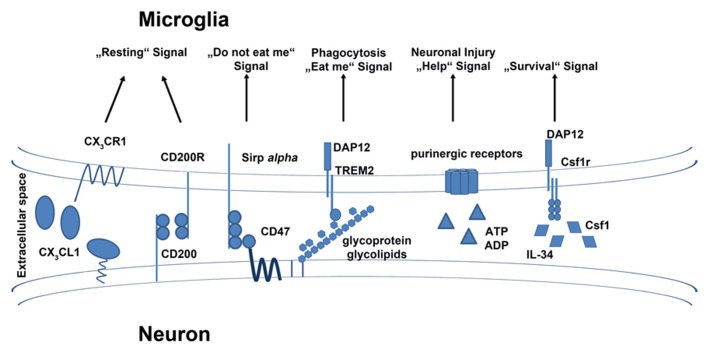
Verification
Claims the paper makes
The claims and statistics of this paper haven’t been checked yet.
Run the check — free, no account needed. It reads the open-access text and checks the sources it cites.
Claims other papers make about this one
Each is checked against this paper’s own text: does it say what the citing paper says it does?
In the citing paper
“highlighting the age-dependent change in microglial plasticity [53, 55].”
From Transcriptional and Epigenetic Regulation of Microglia in Health and Disease (2019) · cites this paper as [55]
In the citing paper
“Further analysis revealed that microglia surface receptors for microglia-neuron crosstalk (CX3CR1, P2RY12, and TREM2) and TLRs for communication with pathogen-associated molecular patterns tended to show a negative correlation between gene expression level and age, highlighting the age-dependent change in microglial plasticity [53, 55].”
From Transcriptional and Epigenetic Regulation of Microglia in Health and Disease (2019) · cites this paper as [55]
In the citing paper
“suggesting their reactive state and reduced plasticity in the adult stage possibly due to repetitive exposure to infectious agents and active removal of cell debris [53, 55].”
From Transcriptional and Epigenetic Regulation of Microglia in Health and Disease (2019) · cites this paper as [55]
In the citing paper
“With maturation and aging, expression of pro-inflammatory genes in adult microglia increase, suggesting their reactive state and reduced plasticity in the adult stage possibly due to repetitive exposure to infectious agents and active removal of cell debris [53, 55].”
From Transcriptional and Epigenetic Regulation of Microglia in Health and Disease (2019) · cites this paper as [55]
In the citing paper
“Microglia represent a heterogeneous cell population accounting for approximately 5–12% of total brain cells. They are distributed unevenly throughout the CNS, as grey matter and specific structures such as the hippocampus, basal ganglia, and substantia nigra typically all exhibit greater densities than the white matter (58–60).”
From The HPA – Immune Axis and the Immunomodulatory Actions of Glucocorticoids in the Brain (2014) · cites this paper as [59]
Self-check
Percentages, sums and reported differences re-computed from the paper’s own numbers.
The self-check needs the paper’s full text.
Citations
Cites
Resting microglial cells are highly dynamic surveillants of brain parenchyma in vivo
Nimmerjahn, A., Kirchhoff, F., & Helmchen, F. (2005) · Science · doi:10.1126/science.1110647 · Cited by 5,827
Fate Mapping Analysis Reveals That Adult Microglia Derive from Primitive Macrophages
Ginhoux, F., Greter, M., Leboeuf, M., Nandi, S., See, P., Gokhan, S., Mehler, M. F., Conway, S. J., Ng, L. G., Stanley, E. R., et al. (2010) · Science · doi:10.1126/science.1194637 · Cited by 5,175
Synaptic Pruning by Microglia Is Necessary for Normal Brain Development
Paolicelli, R. C., Bolasco, G., Pagani, F., Maggi, L., Scianni, M., Panzanelli, P., Giustetto, M., Ferreira, T. A., Guiducci, E., Dumas, L., et al. (2011) · Science · doi:10.1126/science.1202529 · Cited by 4,244
ATP mediates rapid microglial response to local brain injury in vivo
Davalos, D., Grutzendler, J., Yang, G., Kim, J. V., Zuo, Y., Jung, S., Littman, D. R., Dustin, M. L., & Gan, W.-B. (2005) · Nature Neuroscience · doi:10.1038/nn1472 · Cited by 3,913
Microglia: Active sensor and versatile effector cells in the normal and pathologic brain
Hanisch, U.-K., & Kettenmann, H. (2007) · Nature Neuroscience · doi:10.1038/nn1997 · Cited by 3,676
Jung, S., Aliberti, J., Graemmel, P., Sunshine, M. J., Kreutzberg, G. W., Sher, A., & Littman, D. R. (2000) · Molecular and Cellular Biology · doi:10.1128/mcb.20.11.4106-4114.2000 · Cited by 2,632
A Lineage of Myeloid Cells Independent of Myb and Hematopoietic Stem Cells
Schulz, C., Perdiguero, E. G., Chorro, L., Szabo-Rogers, H., Cagnard, N., Kierdorf, K., Prinz, M., Wu, B., Jacobsen, S. E. W., Pollard, J. W., et al. (2012) · Science · doi:10.1126/science.1219179 · Cited by 2,578
Self-citationHeterogeneity in the distribution and morphology of microglia in the normal adult mouse brain
Lawson, L. J., Perry, V. H., Dri, P., & Gordon, S. (1990) · Neuroscience · doi:10.1016/0306-4522(90)90229-w · Cited by 2,045
A new class of membrane-bound chemokine with a CX3C motif
Bazan, J. F., Bacon, K. B., Hardiman, G., Wang, W., Soo, K., Rossi, D., Greaves, D. R., Zlotnik, A., & Schall, T. J. (1997) · Nature · doi:10.1038/385640a0 · Cited by 2,013
Microglial physiology: unique stimuli, specialized responses
Ransohoff, R. M., & Perry, V. H. (2009) · Annual Review of Immunology · doi:10.1146/annurev.immunol.021908.132528 · Cited by 1,858
Cited by
Sorted by citations
A Unique Microglia Type Associated with Restricting Development of Alzheimer’s Disease
Keren-Shaul, H., Spinrad, A., Weiner, A., Matcovitch-Natan, O., Dvir-Szternfeld, R., Ulland, T. K., David, E., Baruch, K., Lara-Astaiso, D., Toth, B., et al. (2017) · Cell · doi:10.1016/j.cell.2017.05.018 · Cited by 5,493
Host microbiota constantly control maturation and function of microglia in the CNS
Erny, D., Hrabě de Angelis, A. L., Jaitin, D., Wieghofer, P., Staszewski, O., David, E., Keren-Shaul, H., Mahlakoiv, T., Jakobshagen, K., Buch, T., et al. (2015) · Nature Neuroscience · doi:10.1038/nn.4030 · Cited by 3,569
Self-citationMicroglial M1/M2 polarization and metabolic states
Orihuela, R., McPherson, C. A., & Harry, G. J. (2016) · British Journal of Pharmacology · doi:10.1111/bph.13139 · Cited by 2,070
Microglia and brain macrophages in the molecular age: from origin to neuropsychiatric disease
Prinz, M., & Priller, J. (2014) · Nature Reviews Neuroscience · doi:10.1038/nrn3722 · Cited by 1,329
Self-citationMicroglial signatures and their role in health and disease
Butovsky, O., & Weiner, H. L. (2018) · Nature Reviews Neuroscience · doi:10.1038/s41583-018-0057-5 · Cited by 1,046
iPSC-derived human microglia-like cells to study neurological diseases
Abud, E. M., Ramirez, R. N., Martinez, E. S., Healy, L. M., Nguyen, C. H. H., Newman, S. A., Yeromin, A. V., Scarfone, V. M., Marsh, S. E., Fimbres, C., et al. (2017) · Neuron · doi:10.1016/j.neuron.2017.03.042 · Cited by 1,154
Setiawan, E., Wilson, A. A., Mizrahi, R., Rusjan, P. M., Miler, L., Rajkowska, G., Suridjan, I., Kennedy, J. L., Rekkas, P. V., Houle, S., et al. (2015) · JAMA Psychiatry · doi:10.1001/jamapsychiatry.2014.2427 · Cited by 939
The Semantics of Microglia Activation: Neuroinflammation, Homeostasis, and Stress
Woodburn, S. C., Bollinger, J. L., & Wohleb, E. S. (2021) · Journal of Neuroinflammation · doi:10.1186/s12974-021-02309-6 · Cited by 783
Integrating neuroimmune systems in the neurobiology of depression
Wohleb, E. S., Franklin, T., Iwata, M., & Duman, R. S. (2016) · Nature Reviews Neuroscience · doi:10.1038/nrn.2016.69 · Cited by 668
AAV Vector Immunogenicity in Humans: A Long Journey to Successful Gene Transfer
Costa Verdera, H., Kuranda, K., & Mingozzi, F. (2020) · Molecular Therapy · doi:10.1016/j.ymthe.2019.12.010 · Cited by 641
Sex-specific features of microglia from adult mice
Villa, A., Gelosa, P., Castiglioni, L., Cimino, M., Rizzi, N., Pepe, G., Lolli, F., Marcello, E., Sironi, L., Vegeto, E., et al. (2018) · Cell Reports · doi:10.1016/j.celrep.2018.05.048 · Cited by 651
Microglial cell dysregulation in brain aging and neurodegeneration
von Bernhardi, R., Eugenín-von Bernhardi, L., & Eugenín, J. (2015) · Frontiers in Aging Neuroscience · doi:10.3389/fnagi.2015.00124 · Cited by 556
Inflammation in neurodegenerative diseases—An update
Amor, S., Peferoen, L. A. N., Vogel, D. Y. S., Breur, M., van der Valk, P., Baker, D., & van Noort, J. M. (2014) · Immunology · doi:10.1111/imm.12233 · Cited by 550
Jurcău, A., & Simion, A. (2021) · International Journal of Molecular Sciences · doi:10.3390/ijms23010014 · Cited by 532
Bidirectional Microglia–Neuron Communication in Health and Disease
Szepesi, Z., Manouchehrian, O., Bachiller, S., & Deierborg, T. (2018) · Frontiers in Cellular Neuroscience · doi:10.3389/fncel.2018.00323 · Cited by 459
Origin of microglia: current concepts and past controversies
Ginhoux, F., & Prinz, M. (2015) · Cold Spring Harbor Perspectives in Biology · doi:10.1101/cshperspect.a020537 · Cited by 446
Self-citationThe HPA – Immune Axis and the Immunomodulatory Actions of Glucocorticoids in the Brain
Bellavance, M.-A., & Rivest, S. (2014) · Frontiers in Immunology · doi:10.3389/fimmu.2014.00136 · Cited by 419
The influence of neuroinflammation in Autism Spectrum Disorder
Matta, S. M., Hill‐Yardin, E. L., & Crack, P. J. (2019) · Brain Behavior and Immunity · doi:10.1016/j.bbi.2019.04.037 · Cited by 431
Glial response during cuprizone-induced de- and remyelination in the CNS: lessons learned
Gudi, V., Gingele, S., Skripuletz, T., & Stangel, M. (2014) · Frontiers in Cellular Neuroscience · doi:10.3389/fncel.2014.00073 · Cited by 375
“The receptors CD200R and SIRP-α, suggested to inhibit activation of microglia or keep them in a resting state (Hoek et al., 2000; Kierdorf and Prinz, 2013), were expressed on microglia at any time either in untreated or cuprizone-challenged animals.”
BackgroundMicroglia in Retinal Degeneration
Rashid, K., Akhtar‐Schäfer, I., & Langmann, T. (2019) · Frontiers in Immunology · doi:10.3389/fimmu.2019.01975 · Cited by 365
Targeting Microglial Activation States as a Therapeutic Avenue in Parkinson’s Disease
Subramaniam, S., & Federoff, H. J. (2017) · Frontiers in Aging Neuroscience · doi:10.3389/fnagi.2017.00176 · Cited by 353
Metabolic Reprograming of Microglia in the Regulation of the Innate Inflammatory Response
Lauro, C., & Limatola, C. (2020) · Frontiers in Immunology · doi:10.3389/fimmu.2020.00493 · Cited by 315
The Microbiota–Gut–Brain Axis and Alzheimer’s Disease: Neuroinflammation Is to Blame?
Megur, A., Baltriukienė, D., Bukelskienė, V., & Burokas, A. (2020) · Nutrients · doi:10.3390/nu13010037 · Cited by 323
Microglia in Health and Disease
Ransohoff, R. M., & Khoury, J. E. (2016) · Cold Spring Harbor Perspectives in Biology · doi:10.1101/cshperspect.a020560 · Cited by 303
Microglial TREM2/DAP12 signaling: a double-edged sword in neural diseases
Konishi, H., & Kiyama, H. (2018) · Frontiers in Cellular Neuroscience · doi:10.3389/fncel.2018.00206 · Cited by 300
Immunometabolism in the Brain: How Metabolism Shapes Microglial Function
Bernier, L., York, E. M., & MacVicar, B. A. (2020) · Trends in Neurosciences · doi:10.1016/j.tins.2020.08.008 · Cited by 308
Kierdorf, K., & Prinz, M. (2017) · Journal of Clinical Investigation · doi:10.1172/jci90602 · Cited by 305
Self-citationNeuroinflammation in Bipolar Depression
Benedetti, F., Aggio, V., Pratesi, M. L., Greco, G., & Furlan, R. (2020) · Frontiers in Psychiatry · doi:10.3389/fpsyt.2020.00071 · Cited by 288
Beyond Activation: Characterizing Microglial Functional Phenotypes
Lier, J., Streit, W. J., & Bechmann, I. (2021) · Cells · doi:10.3390/cells10092236 · Cited by 274
“IRF8 is one of the intrinsic factors regulating the transition from a ramified to an activated microglial morphology [37,38].”
BackgroundGlial and Neuroimmune Mechanisms as Critical Modulators of Drug Use and Abuse
Lacagnina, M. J., Rivera, P. D., & Bilbo, S. D. (2017) · Neuropsychopharmacology · doi:10.1038/npp.2016.121 · Cited by 271
TREM2 Variant p.R47H as a Risk Factor for Sporadic Amyotrophic Lateral Sclerosis
Cady, J., Koval, E. D., Benitez, B. A., Zaidman, C., Jockel-Balsarotti, J., Allred, P., Baloh, R. H., Ravits, J., Simpson, E., Appel, S. H., et al. (2014) · JAMA Neurology · doi:10.1001/jamaneurol.2013.6237 · Cited by 262
Microglia in CNS development: Shaping the brain for the future
Mosser, C., Baptista, S., Arnoux, I., & Audinat, É. (2017) · Progress in Neurobiology · doi:10.1016/j.pneurobio.2017.01.002 · Cited by 289
Fractalkine receptor deficiency impairs microglial and neuronal responsiveness to chronic stress
Milior, G., Lecours, C., Samson, L., Bisht, K., Poggini, S., Pagani, F., Deflorio, C., Lauro, C., Alboni, S., Limatola, C., et al. (2015) · Brain Behavior and Immunity · doi:10.1016/j.bbi.2015.07.024 · Cited by 259
Role of α-Synuclein in Inducing Innate and Adaptive Immunity in Parkinson Disease
Allen Reish, H. E., & Standaert, D. G. (2015) · Journal of Parkinson’s Disease · doi:10.3233/jpd-140491 · Cited by 244
Microglia: Housekeeper of the Central Nervous System
Kabba, J. A., Xu, Y., Christian, H., Ruan, W., Kitchen, C., Xiang, Y., Zhang, L., Saavedra, J. M., & Pang, T. (2017) · Cellular and Molecular Neurobiology · doi:10.1007/s10571-017-0504-2 · Cited by 265
Microglial TNF-α Suppresses Cocaine-Induced Plasticity and Behavioral Sensitization
Lewitus, G. M., Konefal, S., Greenhalgh, A. D., Pribiag, H., Augereau, K., & Stellwagen, D. (2016) · Neuron · doi:10.1016/j.neuron.2016.03.030 · Cited by 256
The Ischemic Environment Drives Microglia and Macrophage Function
Fumagalli, S., Perego, C., Pischiutta, F., Zanier, E. R., & Simoni, M. G. D. (2015) · Frontiers in Neurology · doi:10.3389/fneur.2015.00081 · Cited by 261
The Role of Mitochondria in Inflammation: From Cancer to Neurodegenerative Disorders
Missiroli, S., Genovese, I., Perrone, M., Vezzani, B., Vitto, V. A. M., & Giorgi, C. (2020) · Journal of Clinical Medicine · doi:10.3390/jcm9030740 · Cited by 235
Wohleb, E. S., McKim, D. B., Sheridan, J. F., & Godbout, J. P. (2015) · Frontiers in Neuroscience · doi:10.3389/fnins.2014.00447 · Cited by 420
An Overview of in vitro Methods to Study Microglia
Timmerman, R., Burm, S. M., & Bajramovic, J. J. (2018) · Frontiers in Cellular Neuroscience · doi:10.3389/fncel.2018.00242 · Cited by 243
Microglia Response During Parkinson’s Disease: Alpha-Synuclein Intervention
Ferreira, S. A., & Romero‐Ramos, M. (2018) · Frontiers in Cellular Neuroscience · doi:10.3389/fncel.2018.00247 · Cited by 227
Transcription factor IRF5 drives P2X4R+-reactive microglia gating neuropathic pain
Masuda, T., Iwamoto, S., Yoshinaga, R., Tozaki‐Saitoh, H., Nishiyama, A., Mak, T. W., Tamura, T., Tsuda, M., & Inoue, K. (2014) · Nature Communications · doi:10.1038/ncomms4771 · Cited by 222
Wang, M., Wang, X., Zhao, L., Ma, W., Rodríguez, I. R., Fariss, R. N., & Wong, W. T. (2014) · Journal of Neuroscience · doi:10.1523/jneurosci.3153-13.2014 · Cited by 211
Epigenomic dissection of Alzheimer’s disease pinpoints causal variants and reveals epigenome erosion
Xiong, X., James, B. T., Boix, C. A., Park, Y. P., Galani, K., Victor, M. B., Sun, N., Hou, L., Ho, L.-L., Mantero, J., et al. (2023) · Cell · doi:10.1016/j.cell.2023.08.040 · Cited by 205
de Pablos, R. M., Herrera, A. J., Espinosa-Oliva, A. M., Sarmiento, M., Muñoz, M. F., Machado, A., & Venero, J. L. (2014) · Journal of Neuroinflammation · doi:10.1186/1742-2094-11-34 · Cited by 201
The role of microglia in adult hippocampal neurogenesis
Gemma, C., & Bachstetter, A. D. (2013) · Frontiers in Cellular Neuroscience · doi:10.3389/fncel.2013.00229 · Cited by 202
Communicating systems in the body: how microbiota and microglia cooperate
Erny, D., de Angelis, A. L. H., & Prinz, M. (2016) · Immunology · doi:10.1111/imm.12645 · Cited by 195
Self-citationZawadzka, A., Cieślik, M., & Adamczyk, A. (2021) · International Journal of Molecular Sciences · doi:10.3390/ijms222111516 · Cited by 197
The relation between α-synuclein and microglia in Parkinson’s disease: Recent developments
Sánchez-Guajardo, V., Tentillier, N., & Romero‐Ramos, M. (2015) · Neuroscience · doi:10.1016/j.neuroscience.2015.02.008 · Cited by 178
Neuron–Microglia Interactions in Mental Health Disorders: “For Better, and For Worse”
Wohleb, E. S. (2016) · Frontiers in Immunology · doi:10.3389/fimmu.2016.00544 · Cited by 170
Human Microglia Show Unique Transcriptional Changes in Alzheimer's Disease
Prater, K. E., Green, K. J., Mamde, S., Sun, W., Cochoit, A., Smith, C. L., Chiou, K. L., Heath, L., Rose, S. E., Wiley, J., et al. (2023) · Nature Aging · doi:10.1038/s43587-023-00424-y · Cited by 164
Microglia plasticity during health and disease: An immunological perspective
Shemer, A., Erny, D., Jung, S., & Prinz, M. (2015) · Trends in Immunology · doi:10.1016/j.it.2015.08.003 · Cited by 168
Self-citationStress induced microglial activation contributes to depression
Li, B., Yang, W., Ge, T., Wang, Y., & Cui, R. (2022) · Pharmacological Research · doi:10.1016/j.phrs.2022.106145 · Cited by 151
Human iPSC‐derived microglia: A growing toolset to study the brain's innate immune cells
Hasselmann, J., & Blurton‐Jones, M. (2020) · Glia · doi:10.1002/glia.23781 · Cited by 145
Lecours, C., Bordeleau, M., Cantin, L., Parent, M., Paolo, T. D., & Tremblay, M. (2018) · Frontiers in Cellular Neuroscience · doi:10.3389/fncel.2018.00282 · Cited by 148
Chronic exposure to TGFβ1 regulates myeloid cell inflammatory response in an IRF7-dependent manner
Cohen, M., Matcovitch, O., David, E., Barnett‐Itzhaki, Z., Keren‐Shaul, H., Blecher‐Gonen, R., Jaitin, D. A., Sica, A., Amit, I., & Schwartz, M. (2014) · The EMBO Journal · doi:10.15252/embj.201489293 · Cited by 142
Transcriptional and Epigenetic Regulation of Microglia in Health and Disease
Yeh, H., & Ikezu, T. (2019) · Trends in Molecular Medicine · doi:10.1016/j.molmed.2018.11.004 · Cited by 135
Pinto, B., Morelli, G., Rastogi, M., Savardi, A., Fumagalli, A., Petretto, A., Bartolucci, M., Varea, E., Catelani, T., Contestabile, A., et al. (2020) · Neuron · doi:10.1016/j.neuron.2020.09.010 · Cited by 135
Ślusarczyk, J., Trojan, E., Głombik, K., Budziszewska, B., Kubera, M., Lasoń, W., Popiołek-Barczyk, K., Mika, J., Wędzony, K., & Basta‐Kaim, A. (2015) · Frontiers in Cellular Neuroscience · doi:10.3389/fncel.2015.00082 · Cited by 143
Cholinergic Modulation of Glial Function During Aging and Chronic Neuroinflammation
Gamage, R. V., Wagnon, I. M., Rossetti, I., Childs, R., Niedermayer, G., Chesworth, R., & Gyengési, E. (2020) · Frontiers in Cellular Neuroscience · doi:10.3389/fncel.2020.577912 · Cited by 134
Wohleb, E. S., & Delpech, J.-C. (2016) · Progress in Neuro-Psychopharmacology and Biological Psychiatry · doi:10.1016/j.pnpbp.2016.04.013 · Cited by 132
Cerovic, M., Forloni, G., & Balducci, C. (2019) · Frontiers in Aging Neuroscience · doi:10.3389/fnagi.2019.00284 · Cited by 127
Targeting innate immunity for neurodegenerative disorders of the central nervous system
Andreasson, K. I., Bachstetter, A. D., Colonna, M., Ginhoux, F., Holmes, C., Lamb, B., Landreth, G., Lee, D. C., Low, D., Lynch, M. A., et al. (2016) · Journal of Neurochemistry · doi:10.1111/jnc.13667 · Cited by 126
Microglia: unique and common features with other tissue macrophages
Prinz, M., Tay, T. L., Wolf, Y., & Jung, S. (2014) · Acta Neuropathologica · doi:10.1007/s00401-014-1267-1 · Cited by 126
Self-citationJohnson, F. K., & Kaffman, A. (2017) · Brain Behavior and Immunity · doi:10.1016/j.bbi.2017.06.008 · Cited by 127
Allicin, an Antioxidant and Neuroprotective Agent, Ameliorates Cognitive Impairment
Nadeem, M. S., Kazmi, I. A., Ullah, I., Muhammad, K., & Anwar, F. (2021) · Antioxidants · doi:10.3390/antiox11010087 · Cited by 129
The Gut-Microglia Connection: Implications for Central Nervous System Diseases
Wang, Y., Wang, Z., Wang, Y., Li, F., Jia, J., Song, X., Qin, S., Wang, R., Jin, F., Kitazato, K., et al. (2018) · Frontiers in Immunology · doi:10.3389/fimmu.2018.02325 · Cited by 130
Porro, C., Cianciulli, A., Trotta, T., Lofrumento, D. D., & Panaro, M. A. (2019) · Biology · doi:10.3390/biology8030051 · Cited by 124
Genetic targeting of microglia
Wieghofer, P., Knobeloch, K., & Prinz, M. (2014) · Glia · doi:10.1002/glia.22727 · Cited by 118
Self-citationDecoding the Transcriptional Response to Ischemic Stroke in Young and Aged Mouse Brain
Androvic, P., Kirdajova, D., Tureckova, J., Zucha, D., Rohlova, E., Abaffy, P., Kriska, J., Valny, M., Anderova, M., Kubista, M., et al. (2020) · Cell Reports · doi:10.1016/j.celrep.2020.107777 · Cited by 118
Insights into T‐cell dysfunction in Alzheimer's disease
Dai, L., & Shen, Y. (2021) · Aging Cell · doi:10.1111/acel.13511 · Cited by 123
Lau, S.-F., Chen, C., Fu, W.-Y., Qu, J. Y., Cheung, T. H., Fu, A. K. Y., & Ip, N. Y. (2020) · Cell Reports · doi:10.1016/j.celrep.2020.107530 · Cited by 114
Potential therapeutic effects of curcumin mediated by JAK/STAT signaling pathway: A review
Ashrafizadeh, M., Rafiei, H., Mohammadinejad, R., Afshar, E. G., Farkhondeh, T., & Samarghandian, S. (2020) · Phytotherapy Research · doi:10.1002/ptr.6642 · Cited by 121
Ramírez, K., Trías, J. F., & Sheridan, J. F. (2016) · Current topics in behavioral neurosciences · doi:10.1007/7854_2016_25 · Cited by 113
Ślusarczyk, J., Trojan, E., Głombik, K., Piotrowska, A., Budziszewska, B., Kubera, M., Popiołek-Barczyk, K., Lasoń, W., Mika, J., & Basta‐Kaim, A. (2018) · International Journal of Molecular Sciences · doi:10.3390/ijms19071965 · Cited by 110
The Relationship of Astrocytes and Microglia with Different Stages of Ischemic Stroke
Liang, Z., Lou, Y., Hao, Y., Li, H., Feng, J., & Liu, S. (2023) · Current Neuropharmacology · doi:10.2174/1570159x21666230718104634 · Cited by 113
Anti CD163+, Iba1+, and CD68+ Cells in the Adult Human Inner Ear
O’Malley, J. T., Nadol, J. B., & McKenna, M. J. (2015) · Otology & Neurotology · doi:10.1097/mao.0000000000000879 · Cited by 109
Microglia as Central Protagonists in the Chronic Stress Response
Schramm, E., & Waisman, A. (2022) · Neurology Neuroimmunology & Neuroinflammation · doi:10.1212/nxi.0000000000200023 · Cited by 113
Hippocampal adult neurogenesis: Does the immune system matter?
de Miranda, A. S., Zhang, C., Katsumoto, A., & Teixeira, A. L. (2016) · Journal of the Neurological Sciences · doi:10.1016/j.jns.2016.10.052 · Cited by 103
Chidambaram, H., Das, R. R., & Chinnathambi, S. (2020) · Cell & Bioscience · doi:10.1186/s13578-020-00474-4 · Cited by 97
Glial cell interactions and glaucoma
Chong, R. S., & Martin, K. R. G. (2014) · Current Opinion in Ophthalmology · doi:10.1097/icu.0000000000000125 · Cited by 99
Neuroinflammation, immune system and Alzheimer disease: searching for the missing link
Guerriero, F., Sgarlata, C. S., Francis, M., Maurizi, N., Faragli, A., Perna, S., Rondanelli, M., Rollone, M., & Ricevuti, G. (2016) · Aging Clinical and Experimental Research · doi:10.1007/s40520-016-0637-z · Cited by 98
Microglia heterogeneity, modeling and cell-state annotation in development and neurodegeneration
Fumagalli, L., Nazlie Mohebiany, A., Premereur, J., Polanco Miquel, P., Bijnens, B., Van de Walle, P., Fattorelli, N., & Mancuso, R. (2025) · Nature Neuroscience · doi:10.1038/s41593-025-01931-4 · Cited by 90
Yıldızhan, K., & Nazıroğlu, M. (2020) · Molecular Neurobiology · doi:10.1007/s12035-020-01974-7 · Cited by 94
Boutej, H., Rahimian, R., Thammisetty, S. S., Béland, L., Lalancette–Hébert, M., & Križ, J. (2017) · Cell Reports · doi:10.1016/j.celrep.2017.11.058 · Cited by 96
The emerging tale of microglia in psychiatric disorders
Rahimian, R., Wakid, M., O’Leary, L. A., & Mechawar, N. (2021) · Neuroscience & Biobehavioral Reviews · doi:10.1016/j.neubiorev.2021.09.023 · Cited by 96
Microglia communication: parallels between aging and Alzheimer's disease
Udeochu, J. C., Shea, J. M., & Villeda, S. A. (2016) · Clinical and Experimental Neuroimmunology · doi:10.1111/cen3.12307 · Cited by 87
Microglia metabolism in health and disease
Borst, K., Schwabenland, M., & Prinz, M. (2019) · Neurochemistry International · doi:10.1016/j.neuint.2018.11.006 · Cited by 95
Self-citationFractalkine/CX3CR1 is involved in the cross-talk between neuron and glia in neurological diseases
Luo, P., Chu, S., Zhang, Z., Xia, C., & Chen, N. (2018) · Brain Research Bulletin · doi:10.1016/j.brainresbull.2018.11.017 · Cited by 90
Never-resting microglia: physiological roles in the healthy brain and pathological implications
Sierra, A., Tremblay, M., & Wake, H. (2014) · Frontiers in Cellular Neuroscience · doi:10.3389/fncel.2014.00240 · Cited by 88
Friend, Foe or Both? Immune Activity in Alzheimer’s Disease
Frost, G. R., Jonas, L. A., & Li, Y. (2019) · Frontiers in Aging Neuroscience · doi:10.3389/fnagi.2019.00337 · Cited by 88
Galectin-3: mediator of microglia responses in injured brain
Rahimian, R., Béland, L., & Križ, J. (2017) · Drug Discovery Today · doi:10.1016/j.drudis.2017.11.004 · Cited by 83
Zhu, C., Kros, J. M., van der Weiden, M., Zheng, P., Cheng, C., & Mustafa, D. A. M. (2017) · Acta Neuropathologica Communications · doi:10.1186/s40478-016-0405-5 · Cited by 81
Zhou, N., Liu, K., Sun, Y., Cao, Y., & Yang, J. (2019) · Protein & Cell · doi:10.1007/s13238-018-0599-3 · Cited by 81
Microglia as a critical player in both developmental and late-life CNS pathologies
Derecki, N. C., Katzmarski, N., Kipnis, J., & Meyer-Luehmann, M. (2014) · Acta Neuropathologica · doi:10.1007/s00401-014-1321-z · Cited by 78
SFRP1 modulates astrocyte-to-microglia crosstalk in acute and chronic neuroinflammation
Rueda‐Carrasco, J., Martín‐Bermejo, M. J., Pereyra, G., Mateo, M. I., Borroto, A., Brosseron, F., Kummer, M. P., Schwartz, S., López‐Atalaya, J. P., Alarcón, B., et al. (2021) · EMBO Reports · doi:10.15252/embr.202051696 · Cited by 79
Quick, E. D., Leser, J. S., Clarke, P., & Tyler, K. L. (2014) · Journal of Virology · doi:10.1128/jvi.01994-14 · Cited by 78
Are “Resting” Microglia More “M2”?
Cherry, J. D., Olschowka, J. A., & O’Banion, M. K. (2014) · Frontiers in Immunology · doi:10.3389/fimmu.2014.00594 · Cited by 77
Site-Specific Regulation of P2X7 Receptor Function in Microglia Gates Morphine Analgesic Tolerance
Leduc‐Pessah, H., Weilinger, N. L., Fan, C. Y., Burma, N. E., Thompson, R. J., & Trang, T. (2017) · Journal of Neuroscience · doi:10.1523/jneurosci.0852-17.2017 · Cited by 74
Borjini, N., Fernández, M., Giardino, L., & Calzà, L. (2016) · Journal of Neuroinflammation · doi:10.1186/s12974-016-0757-6 · Cited by 77
Metadata
- Authors
- Kierdorf, K., & Prinz, M.
- Affiliations
- University of Freiburg (DE)
- Corresponding author
- Prinz, Marco
- Venue
- Frontiers in Cellular Neuroscience
- Publisher
- Frontiers Media SA
- Published
- 2013
- Volume
- 7
- Pages
- 44-44
- ISSN
- 1662-5102 (ISSN-L)
- PMC
- PMC3632747
- OpenAlex
- W2149538964
- Cited by
- 360
- References
- 83
- Citations by year
- 2026: 11 · 2025: 19 · 2024: 21 · 2023: 22 · 2022: 22 · 2021: 43 · 2020: 40 · 2019: 30 · 2018: 30 · 2017: 28 · 2016: 23 · 2015: 31 · 2014: 31 · 2013: 7
- FWCI
- 17.17
- Type
- journal article
- Language
- en
- Open access
- gold
- doi.org
- Licence
- cc-by
- Locations
- Frontiers in Cellular Neuroscience (publishedVersion, cc-by)
- Europe PMC (PubMed Central) (publishedVersion, cc-by)
- PubMed Central (publishedVersion, cc-by)
- PubMed (publishedVersion)
- DOAJ (DOAJ: Directory of Open Access Journals) (submittedVersion, cc-by-sa)
- Funders
- Deutsche Forschungsgemeinschaft (PR 577/8-2)
- Bundesministerium für Bildung und Forschung (PR 577/8-2)
- Topics
- Life Sciences › Neuroscience › Neurology › Neuroinflammation and Neurodegeneration Mechanisms
- Life Sciences › Biochemistry, Genetics and Molecular Biology › Molecular Biology › Inflammasome and immune disorders
- Life Sciences › Immunology and Microbiology › Immunology › Phagocytosis and Immune Regulation
- Keywords
- microglial activation, microglial homeostasis, central nervous system, IRF8, PU.1, CD200, CX3CR1, TREM2, neuroinflammation, CNS pathology
About these checks
Registry, retraction, Cites and statistics results are computed, not judged, with one exception: a printed reference that no index lists is read once by a model before it counts as a citation error. Claims are extracted by a model and kept only when their quote appears verbatim in the text; each cited source is then checked, with a model’s help, for whether it says what the claim relies on. Those verdicts can be wrong — read the claim’s quote and the cited source before relying on one.
Statistics and arithmetic are recomputed, not judged.
Confidence bands are shown only for fields calibrated on our annotated test set. None is calibrated yet, so no band is shown.
What counts as a claim ›How we measure confidence ›How we check this ›
Are you an author, or do you see a problem with this page? Request a review
