

The DOI matches its Crossref record; 85 of the 85 references it cites were found in a registry or an index.
Neuroinflammation in the pathogenesis of Alzheimer’s disease. A rational framework for the search of novel therapeutic approaches
Open accessAbstract
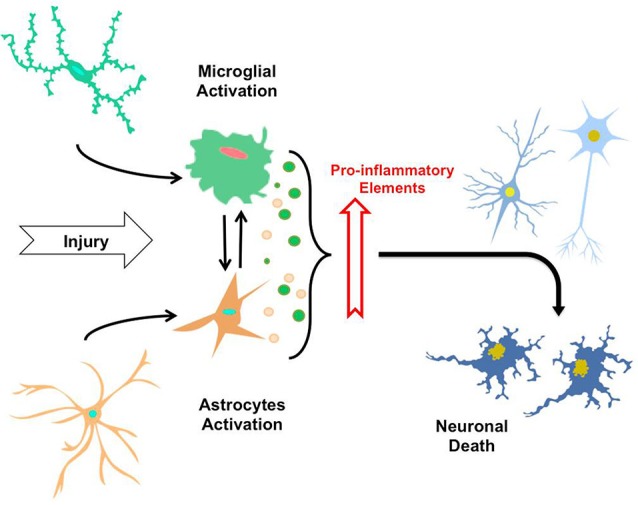
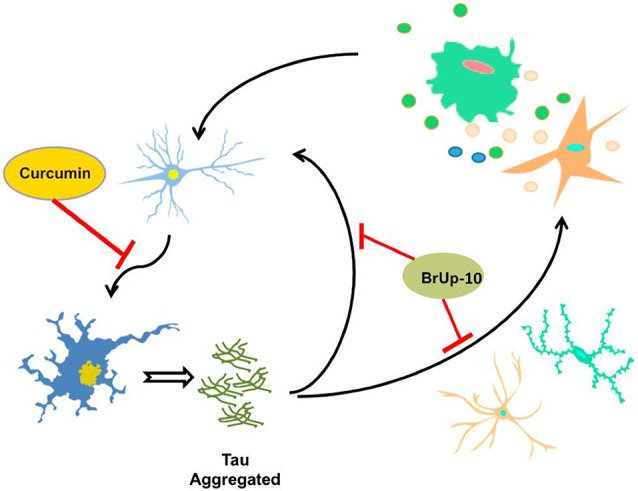
Alzheimer disease (AD) is the most common cause of dementia in people over 60 years old. The molecular and cellular alterations that trigger this disease are still diffuse, one of the reasons for the delay in finding an effective treatment. In the search for new targets to search for novel therapeutic avenues, clinical studies in patients who used anti-inflammatory drugs indicating a lower incidence of AD have been of value to support the neuroinflammatory hypothesis of the neurodegenerative processes and the role of innate immunity in this disease. Neuroinflammation appears to occur as a consequence of a series of damage signals, including trauma, infection, oxidative agents, redox iron, oligomers of τ and β-amyloid, etc. In this context, our theory of Neuroimmunomodulation focus on the link between neuronal damage and brain inflammatory process, mediated by the progressive activation of astrocytes and microglial cells with the consequent overproduction of proinflammatory agents. Here, we discuss about the role of microglial and astrocytic cells, the principal agents in neuroinflammation process, in the development of neurodegenerative diseases such as AD. In this context, we also evaluated the potential relevance of natural anti-inflammatory components, which include curcumin and the novel Andean Compound, as agents for AD prevention and as a coadjuvant for AD treatments.
Overview
The claims and statistics of this paper haven’t been checked yet.
Run the check — free, no account needed. It reads the open-access text and checks the sources it cites.
Integrity signals
Registry
Cites
Statistics
Figures
Verification
Claims the paper makes
The claims and statistics of this paper haven’t been checked yet.
Run the check — free, no account needed. It reads the open-access text and checks the sources it cites.
Claims other papers make about this one
Each is checked against this paper’s own text: does it say what the citing paper says it does?
The source backs part of the claim, not all of it — or backs it for a different population, condition or comparison.
In the citing paper
“it remains unclear whether microglial activation is a primary triggering mechanism or merely a consequence of protein aggregate accumulation [60]”
From Theranostic Nanoplatforms for Alzheimer's Disease: A Critical Analysis of Conceptual Contradictions (2026) · cites this paper as [60]
Experimental — accuracy not yet measuredThe source backs part of the claim, not all of it — or backs it for a different population, condition or comparison.
In the citing paper
“In Alzheimer’s disease, neuroinflammation is primarily thought to be a consequence of a series of damage signals including trauma, oxidation, oligomers of Aβ and tau, and more [67].”
From Age, sex and Alzheimer’s disease: a longitudinal study of 3xTg-AD mice reveals sex-specific disease trajectories and inflammatory responses mirrored in postmortem brains from Alzheimer’s patients (2024) · cites this paper as [67]
Experimental — accuracy not yet measuredIn the citing paper
“Pro-inflammatory cytokines and chemokines secreted into the immediate neurological environment accelerate neuronal injury and eventually neuron death (Aktas et al., 2007; Heckmann et al., 2018; Morales et al.,2014).”
From LC3-Associated Endocytosis Facilitates β-Amyloid Clearance and Mitigates Neurodegeneration in Murine Alzheimer’s Disease (2019) · cites this paper as Morales et al.,2014
Self-check
Percentages, sums and reported differences re-computed from the paper’s own numbers.
The self-check needs the paper’s full text.
Citations
Cites
The Amyloid Hypothesis of Alzheimer’s Disease: Progress and Problems on the Road to Therapeutics
Hardy, J., & Selkoe, D. J. (2002) · Science · doi:10.1126/science.1072994 · Cited by 13,864
Resting microglial cells are highly dynamic surveillants of brain parenchyma in vivo
Nimmerjahn, A., Kirchhoff, F., & Helmchen, F. (2005) · Science · doi:10.1126/science.1110647 · Cited by 5,827
Inflammation and Alzheimer’s disease
Akiyama, H. (2000) · Neurobiology of Aging · doi:10.1016/s0197-4580(00)00124-x · Cited by 4,514
Microglia: Active sensor and versatile effector cells in the normal and pathologic brain
Hanisch, U.-K., & Kettenmann, H. (2007) · Nature Neuroscience · doi:10.1038/nn1997 · Cited by 3,676
Aggarwal, B. B., & Harikumar, K. B. (2008) · The International Journal of Biochemistry & Cell Biology · doi:10.1016/j.biocel.2008.06.010 · Cited by 2,139
Heterogeneity in the distribution and morphology of microglia in the normal adult mouse brain
Lawson, L. J., Perry, V. H., Dri, P., & Gordon, S. (1990) · Neuroscience · doi:10.1016/0306-4522(90)90229-w · Cited by 2,045
Thrombospondins are astrocyte-secreted proteins that promote CNS synaptogenesis
Christopherson, K. S., Ullian, E. M., Stokes, C. C. A., Mullowney, C. E., Hell, J. W., Agah, A., Lawler, J., Mosher, D. F., Bornstein, P., & Barres, B. A. (2005) · Cell · doi:10.1016/j.cell.2004.12.020 · Cited by 1,688
Microglia Shape Adult Hippocampal Neurogenesis through Apoptosis-Coupled Phagocytosis
Sierra, A., Encinas, J. M., Deudero, J. J. P., Chancey, J. H., Enikolopov, G., Overstreet-Wadiche, L. S., Tsirka, S. E., & Maletic-Savatic, M. (2010) · Cell Stem Cell · doi:10.1016/j.stem.2010.08.014 · Cited by 1,622
Microglia in neurodegenerative disease
Perry, V. H., Nicoll, J. A. R., & Holmes, C. (2010) · Nature Reviews Neurology · doi:10.1038/nrneurol.2010.17 · Cited by 1,543
A subset of NSAIDs lower amyloidogenic Aβ42 independently of cyclooxygenase activity
Weggen, S., Eriksen, J. L., Das, P., Sagi, S. A., Wang, R., Pietrzik, C. U., Findlay, K. A., Smith, T. E., Murphy, M. P., Bulter, T., et al. (2001) · Nature · doi:10.1038/35102591 · Cited by 1,388 · cited 1×
“Even in mice, NSAIDs directly affect the development of amyloid in the brain, reducing Aβ-42 peptide levels (Weggen et al., 2001).”
Background
Research works printed but not linked: 1
- Powell, 1999, Dissection of astrocyte-mediated cues in neuronal guidance and process extension, Glia, 26, 73, 10.1002/(sici)1098-1136(199903)26:173::aid-glia83.0.co;2-s · DOI
Cited by
Sorted by citations
Neuroinflammation in Alzheimer's disease: current evidence and future directions
Calsolaro, V., & Edison, P. (2016) · Alzheimer's & Dementia · doi:10.1016/j.jalz.2016.02.010 · Cited by 1,726
Microglia in Neurological Diseases: A Road Map to Brain-Disease Dependent-Inflammatory Response
Bachiller, S., Jiménez-Ferrer, I., Paulus, A., Yang, Y., Swanberg, M., Deierborg, T., & Boza‐Serrano, A. (2018) · Frontiers in Cellular Neuroscience · doi:10.3389/fncel.2018.00488 · Cited by 750
Neuroinflammation as a common feature of neurodegenerative disorders
Guzman-Martinez, L., Maccioni, R. B., Andrade, V., Navarrete, L. P., Pastor, M. G., & Ramos-Escobar, N. (2019) · Frontiers in Pharmacology · doi:10.3389/fphar.2019.01008 · Cited by 702
Self-citationDrug treatments in Alzheimer’s disease
Briggs, R., Kennelly, S. P., & O’Neill, D. (2016) · Clinical Medicine · doi:10.7861/clinmedicine.16-3-247 · Cited by 571
Inflammatory Response in the CNS: Friend or Foe?
Sochocka, M., Diniz, B. S., & Leszek, J. (2017) · Molecular Neurobiology · doi:10.1007/s12035-016-0297-1 · Cited by 573
Heckmann, B. L., Teubner, B. J. W., Tummers, B., Boada-Romero, E., Harris, L., Yang, M., Guy, C. S., Zakharenko, S. S., & Green, D. R. (2019) · Cell · doi:10.1016/j.cell.2019.05.056 · Cited by 503
The Infectious Etiology of Alzheimer’s Disease
Sochocka, M., Zwolińska, K., & Leszek, J. (2017) · Current Neuropharmacology · doi:10.2174/1570159x15666170313122937 · Cited by 399
The contribution of neuroinflammation to amyloid toxicity in Alzheimer's disease
Minter, M. R., Taylor, J. M., & Crack, P. J. (2016) · Journal of Neurochemistry · doi:10.1111/jnc.13411 · Cited by 451
Neuroinflammation in frontotemporal dementia
Bright, F., Werry, E. L., Dobson-Stone, C., Piguet, O., Ittner, L. M., Halliday, G. M., Hodges, J. R., Kiernan, M. C., Loy, C. T., Kassiou, M., et al. (2019) · Nature Reviews Neurology · doi:10.1038/s41582-019-0231-z · Cited by 280
Astrocytic LRP1 Mediates Brain Aβ Clearance and Impacts Amyloid Deposition
Liu, C.-C., Hu, J., Zhao, N., Wang, J., Wang, N., Cirrito, J. R., Kanekiyo, T., Holtzman, D. M., & Bu, G. (2017) · The Journal of Neuroscience · doi:10.1523/jneurosci.3442-16.2017 · Cited by 267
Role of inflammatory molecules in the Alzheimer's disease progression and diagnosis
Bagyinszky, E., Giau, V. V., Shim, K., Suk, K., An, S. S. A., & Kim, S. (2017) · Journal of the Neurological Sciences · doi:10.1016/j.jns.2017.03.031 · Cited by 276
Reich, N., & Hölscher, C. (2022) · Frontiers in Neuroscience · doi:10.3389/fnins.2022.970925 · Cited by 248
Advances in Research on the Bioactivity of Alginate Oligosaccharides
Xing, M., Cao, Q., Wang, Y., Han, X., Zhao, J., Zhang, Q., Ji, A., & Song, S. (2020) · Marine Drugs · doi:10.3390/md18030144 · Cited by 251
Microglial Aβ Receptors in Alzheimer’s Disease
Yu, Y., & Ye, R. D. (2015) · Cellular and Molecular Neurobiology · doi:10.1007/s10571-014-0101-6 · Cited by 247
Andrade, S., Ramalho, M. J., Loureiro, J. A., & Pereira, M. D. C. (2019) · International Journal of Molecular Sciences · doi:10.3390/ijms20092313 · Cited by 240
Plant alkaloids as drug leads for Alzheimer's disease
Ng, Y. P., Or, T. C. T., & Ip, N. Y. (2015) · Neurochemistry International · doi:10.1016/j.neuint.2015.07.018 · Cited by 239
Anti-neuroinflammatory Potential of Natural Products in Attenuation of Alzheimer’s Disease
Shal, B., Ding, W., Ali, H., Kim, Y. S., & Khan, S. (2018) · Frontiers in Pharmacology · doi:10.3389/fphar.2018.00548 · Cited by 234
Cerebrospinal Fluid Shunting Complications in Children
Hanak, B. W., Bonow, R. H., Harris, C. A., & Browd, S. R. (2017) · Pediatric Neurosurgery · doi:10.1159/000452840 · Cited by 233
Impact of Cytokines and Chemokines on Alzheimer’s Disease Neuropathological Hallmarks
Domingues, C., da Cruz e Silva, O. A. B., & Henriques, A. G. (2017) · Current Alzheimer Research · doi:10.2174/1567205014666170317113606 · Cited by 203
Ding, B., Lin, C., Liu, Q., He, Y., Ruganzu, J. B., Jin, H., Peng, X., Ji, S., Ma, Y., & Yang, W. (2020) · Journal of Neuroinflammation · doi:10.1186/s12974-020-01981-4 · Cited by 215
Donepezil-based multi-functional cholinesterase inhibitors for treatment of Alzheimer's disease
Li, Q., He, S., Chen, Y., Feng, F., Qu, W., & Sun, H. (2018) · European Journal of Medicinal Chemistry · doi:10.1016/j.ejmech.2018.09.031 · Cited by 217
Oxidized cholesterol as the driving force behind the development of Alzheimer’s disease
Gamba, P., Testa, G., Gargiulo, S., Staurenghi, E., Poli, G., & Leonarduzzi, G. (2015) · Frontiers in Aging Neuroscience · doi:10.3389/fnagi.2015.00119 · Cited by 180
Challenges for Alzheimer's Disease Therapy: Insights from Novel Mechanisms Beyond Memory Defects
Frozza, R. L., Lourenco, M. V., & Felice, F. G. D. (2018) · Frontiers in Neuroscience · doi:10.3389/fnins.2018.00037 · Cited by 213
Ahmad, M. H., Fatima, M., & Mondal, A. C. (2018) · Journal of Clinical Neuroscience · doi:10.1016/j.jocn.2018.10.034 · Cited by 201
Rojas-Gutierrez, E., Muñoz‐Arenas, G., Treviño, S., Espinosa, B., Chávez, R., Rojas, K., Flores, G., Díaz, A., & Guevara, J. (2017) · Synapse · doi:10.1002/syn.21990 · Cited by 205
Epigenetic regulation of astrocyte function in neuroinflammation and neurodegeneration
Neal, M. P., & Richardson, J. R. (2017) · Biochimica et Biophysica Acta (BBA) - Molecular Basis of Disease · doi:10.1016/j.bbadis.2017.11.004 · Cited by 195
Dupont, A.-C., Largeau, B., Santiago Ribeiro, M., Guilloteau, D., Tronel, C., & Arlicot, N. (2017) · International Journal of Molecular Sciences · doi:10.3390/ijms18040785 · Cited by 182
“, IL-6 release [97]) and may support microglial activation [98], highlighting the vicious circle of”
BackgroundMelatonin and brain inflammaging
Hardeland, R., Cardinali, D. P., Brown, G. M., & Pandi-Perumal, S. R. (2015) · Progress in Neurobiology · doi:10.1016/j.pneurobio.2015.02.001 · Cited by 187
Astrocyte senescence promotes glutamate toxicity in cortical neurons
Limbad, C., Oron, T. R., Alimirah, F., Davalos, A. R., Tracy, T. E., Gan, L., Desprez, P.-Y., & Campisi, J. (2020) · PLOS ONE · doi:10.1371/journal.pone.0227887 · Cited by 183
Hong, W., Mo, F., Zhang, Z., Huang, M., & Wei, X. (2020) · Frontiers in Cell and Developmental Biology · doi:10.3389/fcell.2020.00246 · Cited by 182
The Possibility of an Infectious Etiology of Alzheimer Disease
Ashraf, G. M., Tarasov, V. V., Makhmutovа, A., Chubarev, V. N., Avila-Rodriguez, M., Bachurin, S. O., & Aliev, G. (2019) · Molecular Neurobiology · doi:10.1007/s12035-018-1388-y · Cited by 175
Bourgade, K., Le Page, A., Bocti, C., Witkowski, J. M., Dupuis, G., Frost, E. H., & Fülöp, T. (2016) · Journal of Alzheimer’s Disease · doi:10.3233/jad-150652 · Cited by 161
Anti-Inflammatory Activities of Marine Algae in Neurodegenerative Diseases
Barbalace, M. C., Malaguti, M., Giusti, L., Lucacchini, A., Hrelia, S., & Angeloni, C. (2019) · International Journal of Molecular Sciences · doi:10.3390/ijms20123061 · Cited by 163
Early microglial activation and peripheral inflammation in dementia with Lewy bodies
Surendranathan, A., Su, L., Mak, E., Passamonti, L., Hong, Y. T., Arnold, R., Vázquez Rodríguez, P., Bevan-Jones, W. R., Brain, S. A. E., Fryer, T. D., et al. (2018) · Brain · doi:10.1093/brain/awy265 · Cited by 154
Herbert, J., & Lucassen, P. J. (2016) · Frontiers in Neuroendocrinology · doi:10.1016/j.yfrne.2015.12.001 · Cited by 150
Mathematical model on Alzheimer’s disease
Hao, W., & Friedman, A. (2016) · BMC Systems Biology · doi:10.1186/s12918-016-0348-2 · Cited by 164
Microglial dysfunction connects depression and Alzheimer’s disease
Santos, L. E., Beckman, D., & Ferreira, S. T. (2016) · Brain, Behavior, and Immunity · doi:10.1016/j.bbi.2015.11.011 · Cited by 154
Ikram, M. A., Park, T. J., Ali, T., & Kim, M. O. (2020) · Antioxidants · doi:10.3390/antiox9090902 · Cited by 151
Multi-Target Directed Donepezil-Like Ligands for Alzheimer's Disease
Unzeta, M., Esteban, G., Bolea, I., Fogel, W. A., Ramsay, R. R., Youdim, M. B. H., Tipton, K. F., & Marco, J. L. (2016) · Frontiers in Neuroscience · doi:10.3389/fnins.2016.00205 · Cited by 154
Exercise suppresses neuroinflammation for alleviating Alzheimer’s disease
Wang, M., Zhang, H., Liang, J., Huang, J., & Chen, N. (2023) · Journal of Neuroinflammation · doi:10.1186/s12974-023-02753-6 · Cited by 154
Alterations in Immune Cells and Mediators in the Brain: It's Not Always Neuroinflammation!
Estes, M. L., & McAllister, A. K. (2014) · Brain Pathology · doi:10.1111/bpa.12198 · Cited by 150
Nicotinamide mononucleotide inhibits JNK activation to reverse Alzheimer disease
Yao, Z., Yang, W., Gao, Z., & Jia, P. (2017) · Neuroscience Letters · doi:10.1016/j.neulet.2017.03.027 · Cited by 140
The Role of Neuroinflammation in Dementias
Pasqualetti, G., Brooks, D. J., & Edison, P. (2015) · Current Neurology and Neuroscience Reports · doi:10.1007/s11910-015-0531-7 · Cited by 133
Molecular Insight into the Therapeutic Promise of Flavonoids against Alzheimer’s Disease
Uddin, M. S., Kabir, M. T., Niaz, K., Jeandet, P., Clément, C., Mathew, B., Rauf, A., Rengasamy, K. R. R., Sobarzo‐Sánchez, E., Ashraf, G. M., et al. (2020) · Molecules · doi:10.3390/molecules25061267 · Cited by 135
Sphingosine 1-phosphate signaling at the blood–brain barrier
Prager, B. C., Spampinato, S. F., & Ransohoff, R. M. (2015) · Trends in Molecular Medicine · doi:10.1016/j.molmed.2015.03.006 · Cited by 133
Millan, M. J., Goodwin, G. M., Meyer-Lindenberg, A., & Ove Ögren, S. (2015) · European Neuropsychopharmacology · doi:10.1016/j.euroneuro.2015.01.016 · Cited by 132
Shadfar, S., Hwang, C. J., Lim, M., Choi, D., & Hong, J. T. (2015) · Archives of Pharmacal Research · doi:10.1007/s12272-015-0648-x · Cited by 136
Nitric Oxide: Exploring the Contextual Link with Alzheimer’s Disease
Asiimwe, N., Yeo, S. G., Kim, M.-S., Jung, J., & Jeong, N. Y. (2016) · Oxidative Medicine and Cellular Longevity · doi:10.1155/2016/7205747 · Cited by 125
Zhang, F., Zhong, R., Li, S., Fu, Z., Cheng, C., Cai, H., & Le, W. (2017) · Frontiers in Aging Neuroscience · doi:10.3389/fnagi.2017.00282 · Cited by 128
Findley, C. A., Bartke, A., Hascup, K. N., & Hascup, E. R. (2019) · ASN NEURO · doi:10.1177/1759091419855541 · Cited by 133
TREM2: Potential therapeutic targeting of microglia for Alzheimer's disease
Li, Y., Xu, H., Wang, H., Yang, K., Luan, J., & Wang, S. (2023) · Biomedicine & Pharmacotherapy · doi:10.1016/j.biopha.2023.115218 · Cited by 133
Fard, M. T., & Stough, C. K. K. (2019) · Frontiers in Aging Neuroscience · doi:10.3389/fnagi.2019.00056 · Cited by 124
The Role of Tau Oligomers in the Onset of Alzheimer's Disease Neuropathology
Cárdenas-Aguayo, M. D. C., Gómez-Virgilio, L., DeRosa, S., & Meraz-Ríos, M. A. (2014) · ACS Chemical Neuroscience · doi:10.1021/cn500148z · Cited by 120
Insights into T‐cell dysfunction in Alzheimer's disease
Dai, L., & Shen, Y. (2021) · Aging Cell · doi:10.1111/acel.13511 · Cited by 123
Ruganzu, J. B., Zheng, Q., Wu, X., He, Y., Peng, X., Jin, H., Zhou, J., Ma, R., Ji, S., Ma, Y., et al. (2020) · Experimental Neurology · doi:10.1016/j.expneurol.2020.113506 · Cited by 119
Probiotics ameliorate intestinal pathophysiology in a mouse model of Alzheimer’s disease
Kaur, H., Nagamoto‐Combs, K., Golovko, S. A., Golovko, M. Y., Klug, M. G., & Combs, C. K. (2020) · Neurobiology of Aging · doi:10.1016/j.neurobiolaging.2020.04.009 · Cited by 115
New Frontiers in the Prevention, Diagnosis, and Treatment of Alzheimer’s Disease
Guzmán‐Martínez, L., Calfío, C., Farias, G. A., Vilches, C., Prieto, R., & Maccioni, R. B. (2021) · Journal of Alzheimer s Disease · doi:10.3233/jad-201059 · Cited by 115
Self-citationSlowing the progression of Alzheimer’s disease; what works?
Nelson, L., & Tabet, N. (2015) · Ageing Research Reviews · doi:10.1016/j.arr.2015.07.002 · Cited by 117
N-Palmitoylethanolamine and Neuroinflammation: a Novel Therapeutic Strategy of Resolution
Skaper, S. D., Facci, L., Barbierato, M., Zusso, M., Bruschetta, G., Impellizzeri, D., Cuzzocrea, S., & Giusti, P. (2015) · Molecular Neurobiology · doi:10.1007/s12035-015-9253-8 · Cited by 116
Inflammation and Alzheimer’s Disease: Mechanisms and Therapeutic Implications by Natural Products
Rather, M. A., Khan, A., Alshahrani, S., Rashid, H., Qadri, M. M., Rashid, S., Alsaffar, R. M., Kamal, M. A., & Rehman, M. U. (2021) · Mediators of Inflammation · doi:10.1155/2021/9982954 · Cited by 114
Glucose metabolism and AD: evidence for a potential diabetes type 3
González, A., Calfío, C., Churruca, M., & Maccioni, R. B. (2022) · Alzheimer's Research & Therapy · doi:10.1186/s13195-022-00996-8 · Cited by 112
Self-citationLi, Q., Xing, S., Chen, Y., Liao, Q., Xiong, B., He, S., Lu, W., Liu, Y., Yang, H., Li, Q., et al. (2020) · Journal of Medicinal Chemistry · doi:10.1021/acs.jmedchem.0c01129 · Cited by 106
Zhou, Q., Wang, M., Du, Y., Zhang, W., Bai, M., Zhang, Z., Li, Z., & Miao, J. (2015) · Annals of Neurology · doi:10.1002/ana.24361 · Cited by 105
Yan, N., Liu, Y., Liu, S., Cao, S., Wang, F., Wang, Z., & Xi, S. (2015) · Molecular Neurobiology · doi:10.1007/s12035-015-9380-2 · Cited by 104
Role of transient receptor potential ankyrin 1 channels in Alzheimer’s disease
Lee, K.-I., Lee, H., Lin, H., Tsay, H.-J., Tsai, F.-C., Shyue, S., & Lee, T. (2016) · Journal of Neuroinflammation · doi:10.1186/s12974-016-0557-z · Cited by 113
PET Neuroimaging of Alzheimer's Disease: Radiotracers and Their Utility in Clinical Research
Bao, W., Xie, F., Zuo, C., Guan, Y., & Huang, Y. H. (2021) · Frontiers in Aging Neuroscience · doi:10.3389/fnagi.2021.624330 · Cited by 102
Effects of Tea Catechins on Alzheimer’s Disease: Recent Updates and Perspectives
Ide, K., Matsuoka, N., Yamada, H., Furushima, D., & Kawakami, K. (2018) · Molecules · doi:10.3390/molecules23092357 · Cited by 103
García-Morales, V., González-Acedo, A., Melguizo-Rodríguez, L., Pardo-Moreno, T., Costela-Ruiz, V. J., Montiel-Troya, M., & Ramos-Rodríguez, J. J. (2021) · Biomedicines · doi:10.3390/biomedicines9121910 · Cited by 104
Amylin at the interface between metabolic and neurodegenerative disorders
Lutz, T. A., & Meyer, U. (2015) · Frontiers in Neuroscience · doi:10.3389/fnins.2015.00216 · Cited by 97
McCarthy, R. C., & Kosman, D. J. (2015) · Frontiers in Molecular Neuroscience · doi:10.3389/fnmol.2015.00031 · Cited by 100
Kumar, N., Kumar, V., Anand, P., Kumar, V., Dwivedi, A. R., & Kumar, V. (2022) · Bioorganic & Medicinal Chemistry · doi:10.1016/j.bmc.2022.116742 · Cited by 98
Long, H., Zhou, Z.-W., Cheng, Y., Luo, H., Li, F., Xu, S., & Gao, L. (2022) · Frontiers in Aging Neuroscience · doi:10.3389/fnagi.2022.888989 · Cited by 100
Neuroinflammation in Lewy body dementia
Surendranathan, A., Rowe, J. B., & O'Brien, J. T. (2015) · Parkinsonism & Related Disorders · doi:10.1016/j.parkreldis.2015.10.009 · Cited by 99
Effects of Curcumin on Microglial Cells
Ghasemi, F., Bagheri, H., Barreto, G. E., Read, M. I., & Sahebkar, A. (2019) · Neurotoxicity Research · doi:10.1007/s12640-019-00030-0 · Cited by 97
Naeem, A., Prakash, R., Kumari, N., Ali Khan, M., Quaiyoom Khan, A., Uddin, S., Verma, S., AB Robertson, A., Boltze, J., & Shadab Raza, S. (2024) · Brain, Behavior, and Immunity · doi:10.1016/j.bbi.2023.11.031 · Cited by 96
Zhou, R., Shi, X., Bi, D., Fang, W., Wei, G., & Xu, X. (2015) · Marine Drugs · doi:10.3390/md13095828 · Cited by 96
Is Alzheimer’s disease an inflammasomopathy?
Pereira, C., Santos, A. E., Moreira, P. I., Pereira, A. C., Sousa, F. J., Cardoso, S. M., & Cruz, M. T. (2019) · Ageing Research Reviews · doi:10.1016/j.arr.2019.100966 · Cited by 95
Metabolomics analysis of microbiota-gut-brain axis in neurodegenerative and psychiatric diseases
Konjevod, M., Perković, M. N., Sáiz, J., Štrac, D. Š., Barbas, C., & Rojo, D. (2020) · Journal of Pharmaceutical and Biomedical Analysis · doi:10.1016/j.jpba.2020.113681 · Cited by 99
MSCs vs. iPSCs: Potential in therapeutic applications
Thanaskody, K., Jusop, A. S., Tye, G. J., Zaman, W. S. W. K., Dass, S. A., & Nordin, F. (2022) · Frontiers in Cell and Developmental Biology · doi:10.3389/fcell.2022.1005926 · Cited by 106
Punicalagin inhibits neuroinflammation in LPS‐activated rat primary microglia
Olajide, O. A., Kumar, A., Velagapudi, R., Okorji, U. P., & Fiebich, B. L. (2014) · Molecular Nutrition & Food Research · doi:10.1002/mnfr.201400163 · Cited by 94
Calsolaro, V., & Edison, P. (2015) · CNS Drugs · doi:10.1007/s40263-015-0301-8 · Cited by 93
Xiang, S., Ji, J.-L., Li, S., Cao, X.-P., Xu, W., Tan, L., & Tan, C.-C. (2022) · Frontiers in Aging Neuroscience · doi:10.3389/fnagi.2022.730036 · Cited by 89
Femminella, G. D., Ninan, S., Atkinson, R., Fan, Z., Brooks, D. J., & Edison, P. (2016) · Journal of Alzheimer’s Disease · doi:10.3233/jad-150827 · Cited by 88
Targeting microglia for the treatment of Alzheimer’s disease
McGeer, P. L., & McGeer, E. G. (2014) · Expert Opinion on Therapeutic Targets · doi:10.1517/14728222.2014.988707 · Cited by 92
Song, Y., Hu, M., Zhang, J., Teng, Z., & Chen, C. (2018) · EBioMedicine · doi:10.1016/j.ebiom.2018.11.059 · Cited by 91
Traditional Ayurvedic and herbal remedies for Alzheimer’s disease: from bench to bedside
Sharma, R., Kuča, K., Nepovimová, E., Kabra, A., Rao, M. C., & Prajapati, P. (2019) · Expert Review of Neurotherapeutics · doi:10.1080/14737175.2019.1596803 · Cited by 91
Neuropharmacological Potential and Delivery Prospects of Thymoquinone for Neurological Disorders
Jakaria, M., Cho, D.-Y., Haque, M. E., Karthivashan, G., Kim, I., Ganesan, P., & Choi, D. (2018) · Oxidative Medicine and Cellular Longevity · doi:10.1155/2018/1209801 · Cited by 85
Oxidative Stress and Adult Neurogenesis
Yuan, T., Gu, S., Shan, C., Marchado, S., & Arias-Carrión, Ó. (2015) · Stem Cell Reviews and Reports · doi:10.1007/s12015-015-9603-y · Cited by 84
Mudò, G., Frinchi, M., Nuzzo, D., Scaduto, P., Plescia, F., Massenti, M. F., Carlo, M. D., Cannizzaro, C., Cassata, G., Cicero, L. L., et al. (2019) · Journal of Neuroinflammation · doi:10.1186/s12974-019-1417-4 · Cited by 87
Green Tea Catechins Attenuate Neurodegenerative Diseases and Cognitive Deficits
Afzal, O., Dalhat, M. H., Altamimi, A. S. A., Rasool, R., Alzarea, S. I., Almalki, W. H., Murtaza, B. N., Iftikhar, S., Nadeem, S. I., Nadeem, M. S., et al. (2022) · Molecules · doi:10.3390/molecules27217604 · Cited by 89
Chen, F., Ghosh, A., Lin, J., Zhang, C., Pan, Y., Thakur, A., Singh, K. K., Hong, H., & Tang, S. (2020) · Brain Behavior and Immunity · doi:10.1016/j.bbi.2020.03.022 · Cited by 84
Exercise and Neuroinflammation in Health and Disease
Seo, D.-Y., Heo, J.-W., Ko, J. R., & Kwak, H.-B. (2019) · International Neurourology Journal · doi:10.5213/inj.1938214.107 · Cited by 88
Dietary Flavonoids in the Management of Huntington’s Disease: Mechanism and Clinical Perspective
Khan, H. Z., Ullah, H., Tundis, R., Belwal, T., Devkota, H. P., Daglia, M., Çetin, Z., Saygılı, E. İ., Campos, M. G., Çapanoğlu, E., et al. (2020) · eFood · doi:10.2991/efood.k.200203.001 · Cited by 78
Royea, J., Zhang, L., Tong, X., & Hamel, É. (2017) · Journal of Neuroscience · doi:10.1523/jneurosci.0329-17.2017 · Cited by 78
Ali, W., Ikram, M. A., Park, H. Y., Jo, M. G., Ullah, R., Ahmad, S., Abid, N. B., & Kim, M. O. (2020) · Cells · doi:10.3390/cells9030667 · Cited by 78
Redox Signaling, Neuroinflammation, and Neurodegeneration
Aguilera, G., Colín-González, A. L., Rangel‐López, E., Chavarría, A., & Santamaría, A. (2017) · Antioxidants and Redox Signaling · doi:10.1089/ars.2017.7099 · Cited by 81
Bevan-Jones, W. R., Surendranathan, A., Passamonti, L., Rodríguez, P. V., Arnold, R. J., Mak, E., Su, L., Coles, J., Fryer, T. D., Hong, Y. T., et al. (2017) · BMJ Open · doi:10.1136/bmjopen-2016-013187 · Cited by 75
Therapeutic Potential of Phytoconstituents in Management of Alzheimer’s Disease
Singh, S. P., Nand, S., Maurya, A., Mishra, G., Awasthi, R., Shakya, A., Chellappan, D. K., Dua, K., Vamanu, E., Chaudhary, S. K., et al. (2021) · Evidence-based Complementary and Alternative Medicine · doi:10.1155/2021/5578574 · Cited by 77
Tang, M.-M., Lin, W.-J., Pan, Y.-Q., & Li, Y.-C. (2018) · Frontiers in Cellular Neuroscience · doi:10.3389/fncel.2018.00255 · Cited by 73
“Neuroinflammation, the inflammation of the central nervous system (CNS), is considered as a fundamental process of many pathologic conditions in the brain, such as Alzheimer’s disease and major depressive disorder (Hurley and Tizabi, 2013; Morales et al., 2014).”
BackgroundNeuroinflammation in Alzheimer’s disease: Pleiotropic roles for cytokines and neuronal pentraxins
Swanson, A., Wolf, T., Sitzmann, A., & Willette, A. A. (2018) · Behavioural Brain Research · doi:10.1016/j.bbr.2018.02.015 · Cited by 72
Metadata
- Authors
- Morales, I., Guzmán-MartÃnez, L., Cerda-Troncoso, C., FarÃas, G. A., & Maccioni, R. B.
- Affiliations
- University of Chile (CL)
- Corresponding author
- Maccioni, Ricardo B.
- ORCID
- Maccioni, Ricardo B.
- Venue
- Frontiers in Cellular Neuroscience
- Publisher
- Frontiers Media SA
- Published
- 2014-04-22
- Volume
- 8
- Pages
- 112-112
- ISSN
- 1662-5102 (ISSN-L)
- PMC
- PMC4001039
- OpenAlex
- W2109984042
- Cited by
- 490
- References
- 85
- Citations by year
- 2026: 13 · 2025: 26 · 2024: 43 · 2023: 38 · 2022: 45 · 2021: 40 · 2020: 50 · 2019: 48 · 2018: 45 · 2017: 50 · 2016: 25 · 2015: 50 · 2014: 14
- FWCI
- 3.75
- Type
- journal article
- Language
- en
- Open access
- gold
- doi.org
- Licence
- cc-by
- Locations
- Frontiers in Cellular Neuroscience (publishedVersion, cc-by)
- Europe PMC (PubMed Central) (publishedVersion, cc-by)
- PubMed Central (publishedVersion, cc-by)
- PubMed (publishedVersion)
- Americanae (AECID Library) (publishedVersion, other-oa)
- DOAJ (DOAJ: Directory of Open Access Journals) (submittedVersion)
- LA Referencia (Red Federada de Repositorios Institucionales de Publicaciones Científicas) (submittedVersion, other-oa)
- Universidad de Chile (submittedVersion, cc-by-nc-nd)
- Funders
- Corporación de Fomento de la Producción
- Topics
- Life Sciences › Neuroscience › Neurology › Neuroinflammation and Neurodegeneration Mechanisms
- Life Sciences › Neuroscience › Cellular and Molecular Neuroscience › Alzheimer's disease research and treatments
- Life Sciences › Neuroscience › Neurology › Neurological Disease Mechanisms and Treatments
- Keywords
- Alzheimer's disease, neuroinflammation, neuroimmunomodulation, microglia, astrocytes, innate immunity, anti-inflammatory agents, tau oligomers, amyloid-beta, oxidative stress, iron, curcumin, neurodegeneration, therapeutic target
About these checks
Registry, retraction, Cites and statistics results are computed, not judged, with one exception: a printed reference that no index lists is read once by a model before it counts as a citation error. Claims are extracted by a model and kept only when their quote appears verbatim in the text; each cited source is then checked, with a model’s help, for whether it says what the claim relies on. Those verdicts can be wrong — read the claim’s quote and the cited source before relying on one.
Statistics and arithmetic are recomputed, not judged.
Confidence bands are shown only for fields calibrated on our annotated test set. None is calibrated yet, so no band is shown.
What counts as a claim ›How we measure confidence ›How we check this ›
Are you an author, or do you see a problem with this page? Request a review
