

The DOI matches its Crossref record; 376 of the 376 references it cites were found in a registry or an index.
Phosphoinositides: Roles in the Development of Microglial-Mediated Neuroinflammation and Neurodegeneration
Open accessAbstract
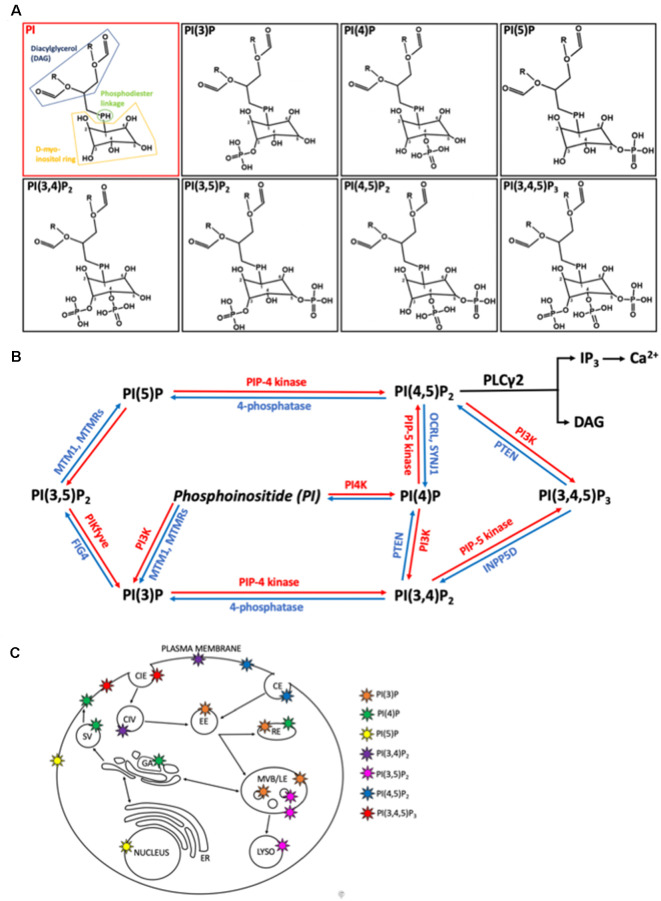
Microglia are increasingly recognized as vital players in the pathology of a variety of neurodegenerative conditions including Alzheimer’s (AD) and Parkinson’s (PD) disease. While microglia have a protective role in the brain, their dysfunction can lead to neuroinflammation and contributes to disease progression. Also, a growing body of literature highlights the seven phosphoinositides, or PIPs, as key players in the regulation of microglial-mediated neuroinflammation. These small signaling lipids are phosphorylated derivates of phosphatidylinositol, are enriched in the brain, and have well-established roles in both homeostasis and disease.Disrupted PIP levels and signaling has been detected in a variety of dementias. Moreover, many known AD disease modifiers identified via genetic studies are expressed in microglia and are involved in phospholipid metabolism. One of these, the enzyme PLCγ2 that hydrolyzes the PIP species PI(4,5)P 2 , displays altered expression in AD and PD and is currently being investigated as a potential therapeutic target.Perhaps unsurprisingly, neurodegenerative conditions exhibiting PIP dyshomeostasis also tend to show alterations in aspects of microglial function regulated by these lipids. In particular, phosphoinositides regulate the activities of proteins and enzymes required for endocytosis, toll-like receptor signaling, purinergic signaling, chemotaxis, and migration, all of which are affected in a variety of neurodegenerative conditions. These functions are crucial to allow microglia to adequately survey the brain and respond appropriately to invading pathogens and other abnormalities, including misfolded proteins. AD and PD therapies are being developed to target many of the above pathways, and although not yet investigated, simultaneous PIP manipulation might enhance the beneficial effects observed. Currently, only limited therapeutics are available for dementia, and although these show some benefits for symptom severity and progression, they are far from curative. Given the importance of microglia and PIPs in dementia development, this review summarizes current research and asks whether we can exploit this information to design more targeted, or perhaps combined, dementia therapeutics. More work is needed to fully characterize the pathways discussed in this review, but given the strength of the current literature, insights in this area could be invaluable for the future of neurodegenerative disease research.
Overview
The claims and statistics of this paper haven’t been checked yet.
Run the check — free, no account needed. It reads the open-access text and checks the sources it cites.
Integrity signals
Registry
Cites
Statistics
Figures
Verification
Claims the paper makes
The claims and statistics of this paper haven’t been checked yet.
Run the check — free, no account needed. It reads the open-access text and checks the sources it cites.
Claims other papers make about this one
Each is checked against this paper’s own text: does it say what the citing paper says it does?
The source backs part of the claim, not all of it — or backs it for a different population, condition or comparison.
In the citing paper
“PI(3,4,5)P3 can be converted back to PI(4,5)P2 by the protein phosphatase and tensin homology (PTEN) or converted into PI(3,4)P2 by SHIP1, which negatively regulates PI3K/Akt signaling (Fig. 2) [89–92].”
From Microglial function, INPP5D/SHIP1 signaling, and NLRP3 inflammasome activation: implications for Alzheimer’s disease (2023) · cites this paper as [90]
Experimental — accuracy not yet measuredThe cited source says what the claim attributes to it.
In the citing paper
“SHIP1 is a phosphatase involved in phosphoinositide signaling.”
From Microglial function, INPP5D/SHIP1 signaling, and NLRP3 inflammasome activation: implications for Alzheimer’s disease (2023) · cites this paper as [90]
Self-check
Percentages, sums and reported differences re-computed from the paper’s own numbers.
The self-check needs the paper’s full text.
Citations
Cites
Items 201–376 of 376
Alzheimer’s disease phospholipase C-gamma-2 (PLCG2) protective variant is a functional hypermorph
Magno, L., Lessard, C. B., Martins, M., Lang, V., Cruz, P., Asi, Y., Katan, M., Bilsland, J., Lashley, T., Chakrabarty, P., et al. (2019) · Alzheimer's Research & Therapy · doi:10.1186/s13195-019-0469-0 · Cited by 143 · cited 1×
“, 2019), appears to protect via increased PLCγ2 activity (Magno et al., 2019).”
BackgroundToll-like receptors and their therapeutic potential in Parkinson’s disease and α-synucleinopathies
Kouli, A., Horne, C. B., & Williams-Gray, C. H. (2019) · Brain Behavior and Immunity · doi:10.1016/j.bbi.2019.06.042 · Cited by 143
TREM2 promotes Aβ phagocytosis by upregulating C/EBPα-dependent CD36 expression in microglia
Kim, S.-M., Mun, B.-R., Lee, S.-J., Joh, Y., Lee, H.-Y., Ji, K.-Y., Choi, H.-R., Lee, E.-H., Kim, E.-M., Jang, J.-H., et al. (2017) · Scientific Reports · doi:10.1038/s41598-017-11634-x · Cited by 143
Microglia and the Purinergic Signaling System
Calovi, S., Mut-Arbona, P., & Sperlágh, B. (2018) · Neuroscience · doi:10.1016/j.neuroscience.2018.12.021 · Cited by 143
Coppolino, M. G., Dierckman, R., Loijens, J. C., Collins, R. F., Pouladi, M. A., Jongstra‐Bilen, J., Schreiber, A. D., Trimble, W. S., Anderson, R. A., & Grinstein, S. (2002) · Journal of Biological Chemistry · doi:10.1074/jbc.m209046200 · Cited by 142
Rangasamy, S. B., Jana, M., Roy, A., Corbett, G. T., Kundu, M., Chandra, S., Mondal, S., Dasarathi, S., Mufson, E. J., Mishra, R. K., et al. (2018) · Journal of Clinical Investigation · doi:10.1172/jci96209 · Cited by 139
Imaging microglial activation in Huntington's disease
Tai, Y., Pavese, N., Gerhard, A., Tabrizi, S. J., Barker, R. A., Brooks, D. J., & Piccini, P. P. (2006) · Brain Research Bulletin · doi:10.1016/j.brainresbull.2006.10.029 · Cited by 137
Gangliosides Trigger Inflammatory Responses via TLR4 in Brain Glia
Jou, I., Lee, J. H., Park, S. Y., Yoon, H. J., Joe, E.-H., & Park, E. J. (2006) · American Journal Of Pathology · doi:10.2353/ajpath.2006.050924 · Cited by 137
do Carmo, M. R. S., Menezes, A. P. F., Nunes, A. C. L., Pliássova, A., Rolo, A. P., Palmeira, C. M., Cunha, R. A., Canas, P. M., & de Andrade, G. M. (2014) · Neuropharmacology · doi:10.1016/j.neuropharm.2014.01.045 · Cited by 137
Caulfield, M. P., Jones, S., Vallis, Y., Buckley, N. J., Kim, G. D., Milligan, G., & Brown, D. A. (1994) · The Journal of Physiology · doi:10.1113/jphysiol.1994.sp020203 · Cited by 134
The endocytic pathway in microglia during health, aging and Alzheimer’s disease
Solé-Domènech, S., Cruz, D. L., Capetillo-Zarate, E., & Maxfield, F. R. (2016) · Ageing Research Reviews · doi:10.1016/j.arr.2016.07.002 · Cited by 133
Toll-Like Receptors in Alzheimer’s Disease: A Therapeutic Perspective
Gambuzza, M., Sofo, V., Salmeri, F., Soraci, L., Marino, S., & Bramanti, P. (2014) · CNS & Neurological Disorders - Drug Targets · doi:10.2174/1871527313666140806124850 · Cited by 131
Phosphoinositides: Regulators of Nervous System Function in Health and Disease
Raghu, P., Joseph, A., Krishnan, H., Singh, P. K., & Saha, S. (2019) · Frontiers in Molecular Neuroscience · doi:10.3389/fnmol.2019.00208 · Cited by 128
Zhang, Q., Wu, H., Wang, Y., Gu, G., Zhang, W., & Xia, R. (2015) · Journal of Neurochemistry · doi:10.1111/jnc.13413 · Cited by 127
Microglial phagocytosis in aging and Alzheimer's disease
Gabandé‐Rodríguez, E., Keane, L., & Capasso, M. (2020) · Journal of Neuroscience Research · doi:10.1002/jnr.24419 · Cited by 127
Interleukin-1β has trophic effects in microglia and its release is mediated by P2X7R pore
Monif, M., Reid, C. A., Powell, K. L., Drummond, K., O’Brien, T. J., & Williams, D. A. (2016) · Journal of Neuroinflammation · doi:10.1186/s12974-016-0621-8 · Cited by 126
Microglia: Brain cells on the move
Smolders, S., Kessels, S., Vangansewinkel, T., Rigo, J., Legendre, P., & Brône, B. (2019) · Progress in Neurobiology · doi:10.1016/j.pneurobio.2019.04.001 · Cited by 126
Synaptic PI(3,4,5)P3 Is Required for Syntaxin1A Clustering and Neurotransmitter Release
Khuong, T. M., Habets, R. L. P., Kuenen, S., Witkowska, A., Kasprowicz, J., Swerts, J., Jahn, R., van den Bogaart, G., & Verstreken, P. (2013) · Neuron · doi:10.1016/j.neuron.2013.01.025 · Cited by 124
A Critical Kinase Cascade In Neurological Disorders: Pi3K, Akt and Mtor
Chong, Z. Z., Shang, Y., Wang, S., & Maiese, K. (2012) · Future Neurology · doi:10.2217/fnl.12.72 · Cited by 122
Broad, A., Kirby, J. A., & Jones, D. E. (2006) · Immunology · doi:10.1111/j.1365-2567.2006.02485.x · Cited by 122
Control of cortical rigidity by the cytoskeleton: Emerging roles for septins
Gilden, J. K., & Krummel, M. F. (2010) · Cytoskeleton · doi:10.1002/cm.20461 · Cited by 121
TLR4-Targeting Therapeutics: Structural Basis and Computer-Aided Drug Discovery Approaches
Ain, Q. U., Batool, M., & Choi, S. (2020) · Molecules · doi:10.3390/molecules25030627 · Cited by 120
DESGESCO (Dementia Genetics Spanish Consortium), E. (. D. E. D. B., van der Lee, S. J., biobank), E. (. D. E. D., IFGC (International FTD-Genomics Consortium), I. (. I. P. D. G. C., IPDGC (The International Parkinson Disease Genomics Consortium), Dementia), R.-F. (. A. M. F. I. F.-T., (NBB), N. B. B., The GIFT (Genetic Investigation in Frontotemporal Dementia and Alzheimer’s Disease) Study Group, Conway, O. J., Jansen, I., et al. (2019) · Acta Neuropathologica · doi:10.1007/s00401-019-02026-8 · Cited by 120
Coffee, ADORA2A, and CYP1A2: the caffeine connection in Parkinson’s disease
Popat, R. A., Eeden, S. K. V. D., Tanner, C. M., Kamel, F., Umbach, D. M., Marder, K. S., Mayeux, R. P., Ritz, B. R., Ross, G. W., Petrovitch, H., et al. (2011) · European Journal of Neurology · doi:10.1111/j.1468-1331.2011.03353.x · Cited by 119
Autophagy as a common pathway in amyotrophic lateral sclerosis
Nguyen, D. K. H., Thombre, R., & Wang, J. (2018) · Neuroscience Letters · doi:10.1016/j.neulet.2018.04.006 · Cited by 118
Key Aging-Associated Alterations in Primary Microglia Response to Beta-Amyloid Stimulation
Caldeira, C., Cunha, C., Vaz, A. R., Falcão, A. S., Barateiro, A., Seixas, E., Fernandes, A., & Brites, D. (2017) · Frontiers in Aging Neuroscience · doi:10.3389/fnagi.2017.00277 · Cited by 117
Siddiqui, T. A., Lively, S. S., Vincent, C. E., & Schlichter, L. C. (2012) · Journal of Neuroinflammation · doi:10.1186/1742-2094-9-250 · Cited by 115
P2X and P2Y Receptors—Role in the Pathophysiology of the Nervous System
Puchałowicz, K., Tarnowski, M., Baranowska‐Bosiacka, I., Chlubek, D., & Dziedziejko, V. (2014) · International Journal of Molecular Sciences · doi:10.3390/ijms151223672 · Cited by 115
Kim, B., Jeong, H., Kim, J.-H., Lee, S. Y., Jou, I., & Joe, E.-H. (2011) · The Journal of Immunology · doi:10.4049/jimmunol.1000212 · Cited by 114
Kiyota, T., Yamamoto, M., Xiong, H., Lambert, M. P., Klein, W. L., Gendelman, H. E., Ransohoff, R. M., & Ikezu, T. (2009) · PLoS ONE · doi:10.1371/journal.pone.0006197 · Cited by 114
Maekawa, M., Shimpei, T., Mochizuki, Y., Kawai, K., Ikeda, Y., Araki, N., Skolnik, E. Y., Taguchi, T., & Arai, H. (2014) · Proceedings of the National Academy of Sciences · doi:10.1073/pnas.1311029111 · Cited by 113
LRRK2 G2019S mutation attenuates microglial motility by inhibiting focal adhesion kinase
Choi, I., Kim, B., Byun, J.-W., Baik, S. H., Huh, Y. H., Kim, J.-H., Mook-Jung, I., Song, W. K., Shin, J.-H., Seo, H., et al. (2015) · Nature Communications · doi:10.1038/ncomms9255 · Cited by 112
Conway, O. J., Carrasquillo, M. M., Wang, X., Bredenberg, J. M., Reddy, J. S., Strickland, S. L., Younkin, C. S., Burgess, J. D., Allen, M., Lincoln, S. J., et al. (2018) · Molecular Neurodegeneration · doi:10.1186/s13024-018-0289-x · Cited by 112
Signaling Pathways Controlling Microglia Chemotaxis
Yang, F., Xie, L., & Chung, C. Y. (2017) · Molecules and Cells · doi:10.14348/molcells.2017.0011 · Cited by 112
Imaging of microglia in patients with neurodegenerative disorders
Politis, M. (2012) · Frontiers in Pharmacology · doi:10.3389/fphar.2012.00096 · Cited by 111
Detection and manipulation of phosphoinositides
Idevall‐Hagren, O., & Camilli, P. V. D. (2014) · Biochimica et Biophysica Acta (BBA) - Molecular and Cell Biology of Lipids · doi:10.1016/j.bbalip.2014.12.008 · Cited by 111
Phosphoinositides and phagocytosis
Gillooly, D. J., Simonsen, A., & Stenmark, H. (2001) · The Journal of Cell Biology · doi:10.1083/jcb.200109001 · Cited by 111
Clinical Trials in Alzheimer’s Disease: A Hurdle in the Path of Remedy
Oxford, A. E., Stewart, E. S., & Rohn, T. T. (2020) · International Journal of Alzheimer s Disease · doi:10.1155/2020/5380346 · Cited by 111
Akt activation is involved in P2Y12 receptor‐mediated chemotaxis of microglia
Irino, Y., Nakamura, Y., Inoue, K., Kohsaka, S., & Ohsawa, K. (2008) · Journal of Neuroscience Research · doi:10.1002/jnr.21610 · Cited by 110
Emerging evidence of signalling roles for PI(3,4)P2 in Class I and II PI3K-regulated pathways
Hawkins, P. T., & Stephens, L. (2016) · Biochemical Society Transactions · doi:10.1042/bst20150248 · Cited by 110
Molecular mechanism of Fast Endophilin-Mediated Endocytosis
Casamento, A., & Boucrot, E. (2020) · Biochemical Journal · doi:10.1042/bcj20190342 · Cited by 110
Purinergic receptors as potential therapeutic targets in Alzheimer's disease
Woods, L. T., Ajit, D., Camden, J. M., Erb, L., & Weisman, G. A. (2015) · Neuropharmacology · doi:10.1016/j.neuropharm.2015.10.031 · Cited by 109
Apolloni, S., Amadio, S., Montilli, C., Volonte, C., & D'Ambrosi, N. (2013) · Human Molecular Genetics · doi:10.1093/hmg/ddt259 · Cited by 109
Neary, J. T., Baker, L., Jorgensen, S. L., & Norenberg, M. D. (1994) · Acta Neuropathologica · doi:10.1007/bf00386249 · Cited by 108
STIM1 Juxtaposes ER to Phagosomes, Generating Ca2+ Hotspots that Boost Phagocytosis
Nunes, P., Cornut, D., Bochet, V., Hasler, U., Oh‐hora, M., Waldburger, J., & Demaurex, N. (2012) · Current Biology · doi:10.1016/j.cub.2012.08.049 · Cited by 107
Villar-Menéndez, I., Porta, S., Buira, S. P., Pereira‐Veiga, T., Díaz-Sánchez, S., Albasanz, J. L., Ferrer, I., Martı́n, M., & Barrachina, M. (2014) · Neurobiology of Disease · doi:10.1016/j.nbd.2014.05.030 · Cited by 105
Transforming growth factor beta in Alzheimer's disease
Chao, C. C., Hu, S., Frey, W. H., A, T., Tourtellotte, W. W., & Peterson, P. K. (1994) · Clinical and Diagnostic Laboratory Immunology · doi:10.1128/cdli.1.1.109-110.1994 · Cited by 103
Beyond the synucleinopathies: alpha synuclein as a driving force in neurodegenerative comorbidities
Visanji, N. P., Lang, A. E., & Kovács, G. G. (2019) · Translational Neurodegeneration · doi:10.1186/s40035-019-0172-x · Cited by 102
P2X7 receptor: A potential therapeutic target for autoimmune diseases
Cao, F., Hu, L., Yao, S.-R., Hu, Y., Wang, D., Fan, Y., Pan, G., Tao, S., Zhang, Q., Pan, H., et al. (2019) · Autoimmunity Reviews · doi:10.1016/j.autrev.2019.06.009 · Cited by 97
del Pozo, M. Á., Lolo, F., & Echarri, A. (2020) · Current Opinion in Cell Biology · doi:10.1016/j.ceb.2020.10.008 · Cited by 97
Brown, D. A., Hughes, S. A., Marsh, S. J., & Tinker, A. (2007) · The Journal of Physiology · doi:10.1113/jphysiol.2007.132498 · Cited by 96
Receptor mobility, the cytoskeleton, and particle binding during phagocytosis
Jaumouillé, V., & Grinstein, S. (2010) · Current Opinion in Cell Biology · doi:10.1016/j.ceb.2010.10.006 · Cited by 94
Polyglutamine expansion in huntingtin alters its interaction with phospholipids
Kegel, K. B., Sapp, E., Alexander, J. S., Valencia, A., Reeves, P., Li, X., Masso, N., Sobin, L. B., D, N. A. M., & DiFiglia, M. (2009) · Journal of Neurochemistry · doi:10.1111/j.1471-4159.2009.06255.x · Cited by 94
Metabolic/signal transduction hypothesis of Alzheimer?s disease and other tauopathies
Iqbal, K., & Grundke, I. (2005) · Acta Neuropathologica · doi:10.1007/s00401-004-0951-y · Cited by 94
Kang, J., & Rivest, S. (2007) · The Journal of Cell Biology · doi:10.1083/jcb.200705046 · Cited by 94
Glial Control of Synapse Number in Healthy and Diseased Brain
Lee, E., & Chung, W. (2019) · Frontiers in Cellular Neuroscience · doi:10.3389/fncel.2019.00042 · Cited by 94
Kiyota, T., Gendelman, H. E., Weir, R. A., Higgins, E. E., Zhang, G., & Jain, M. (2012) · Neurobiology of Aging · doi:10.1016/j.neurobiolaging.2012.08.009 · Cited by 92
Phosphoinositides Regulate P2X4ATP-Gated Channels through Direct Interactions
Bernier, L., Ase, A. R., Chevallier, S., Blais, D., Zhao, Q., Boué‐Grabot, É., Logothetis, D. E., & Séguéla, P. (2008) · Journal of Neuroscience · doi:10.1523/jneurosci.3038-08.2008 · Cited by 92
SH3YL1 regulates dorsal ruffle formation by a novel phosphoinositide-binding domain
Hasegawa, J., Tokuda, E. Y., Tenno, T., Tsujita, K., 澤井, 治., Hiroaki, H., Takenawa, T., & Itoh, T. (2011) · The Journal of Cell Biology · doi:10.1083/jcb.201012161 · Cited by 89
Go, M., Kou, J., Lim, J.-E., Yang, J., & Fukuchi, K.-I. (2016) · Biochemical and Biophysical Research Communications · doi:10.1016/j.bbrc.2016.09.073 · Cited by 89
Lee, J. Y., Lee, J. D., Phipps, S., Noakes, P. G., & Woodruff, T. M. (2015) · Journal of Neuroinflammation · doi:10.1186/s12974-015-0310-z · Cited by 89
Mutant Profilin1 transgenic mice recapitulate cardinal features of motor neuron disease
Fil, D., DeLoach, A., Yadav, S., Alkam, D., MacNicol, M. C., Singh, A., Compadre, C. M., Goellner, J. J., O’Brien, C. A., Fahmi, T., et al. (2016) · Human Molecular Genetics · doi:10.1093/hmg/ddw429 · Cited by 88
Identification of Yeast Cofilin Residues Specific for Actin Monomer and PIP2 Binding
Ojala, P. J., Paavilainen, V. O., & Lappalainen, P. (2001) · Biochemistry · doi:10.1021/bi0117697 · Cited by 88
Bengtsson, T., Jaconi, M. E., Gustafson, M. B., Magnusson, K., Theler, J. M., Lew, D. P., & Stendahl, O. I. (1993) · PubMed · Cited by 87
Franciosi, S., Choi, H. B., Kim, S. U., & McLarnon, J. G. (2004) · Journal of Neuroimmunology · doi:10.1016/j.jneuroim.2004.10.006 · Cited by 87
Phosphoinositide Binding Regulates α-Actinin Dynamics
Fraley, T. S., Pereira, C. B., Tran, T. C., Singleton, C., & Greenwood, J. A. (2005) · Journal of Biological Chemistry · doi:10.1074/jbc.m500631200 · Cited by 84
Cho, H., Lee, D., Lee, S., & Ho, W. (2005) · Proceedings of the National Academy of Sciences · doi:10.1073/pnas.0408844102 · Cited by 82
Desale, S. E., & Chinnathambi, S. (2021) · Cell Communication and Signaling · doi:10.1186/s12964-021-00715-0 · Cited by 81
The evolution of P2X7 antagonists with a focus on CNS indications
Rech, J. C., Bhattacharya, A., Letavic, M. A., & Savall, B. M. (2016) · Bioorganic & Medicinal Chemistry Letters · doi:10.1016/j.bmcl.2016.06.048 · Cited by 80
Differential Association of Phosphatidylinositol 3-Kinase, SHIP-1, and PTEN with Forming Phagosomes
Kamen, L. A., Levinsohn, J. L., & Swanson, J. A. (2007) · Molecular Biology of the Cell · doi:10.1091/mbc.e07-01-0061 · Cited by 79
Muñoz, F. M., Gao, R. Y., Tian, Y., Henstenburg, B. A., Barrett, J. E., & Hu, H. (2017) · Scientific Reports · doi:10.1038/s41598-017-03813-7 · Cited by 79
Phosphoinositides in autophagy: current roles and future insights
Palamiuc, L., Ravi, A., & Emerling, B. M. (2019) · FEBS Journal · doi:10.1111/febs.15127 · Cited by 79
McIntire, L. B., Berman, D. E., Myaeng, J., Staniszewski, A., Arancio, O., Paolo, G. D., & Kim, T. (2012) · Journal of Neuroscience · doi:10.1523/jneurosci.2034-12.2012 · Cited by 78
L‐ DOPA for Parkinson's disease—a bittersweet pill
Lane, E. L. (2018) · European Journal of Neuroscience · doi:10.1111/ejn.14119 · Cited by 78
Ali, W., Ikram, M. A., Park, H. Y., Jo, M. G., Ullah, R., Ahmad, S., Abid, N. B., & Kim, M. O. (2020) · Cells · doi:10.3390/cells9030667 · Cited by 78
A growth factor signaling cascade confined to circular ruffles in macrophages
Welliver, T. P., & Swanson, J. A. (2012) · Biology Open · doi:10.1242/bio.20121784 · Cited by 75
Swiatkowski, P., Murugan, M., Eyo, U. B., Wāng, Y., Rangaraju, S., Oh, S. B., & Wu, L. (2016) · Neuroscience · doi:10.1016/j.neuroscience.2016.01.008 · Cited by 75
Identification of Proteins Involved in Microglial Endocytosis of α-Synuclein
Liu, J., Zhou, Y. F., Wang, Y., Fong, H. K., Murray, T. M., & Zhang, J. (2007) · Journal of Proteome Research · doi:10.1021/pr0701512 · Cited by 74
Multiphasic dynamics of phosphatidylinositol 4-phosphate during phagocytosis
Levin‐Konigsberg, R., Hammond, G. R. V., Balla, T., Camilli, P. V. D., Fairn, G. D., & Grinstein, S. (2016) · Molecular Biology of the Cell · doi:10.1091/mbc.e16-06-0451 · Cited by 74
TOM1 is a PI5P effector involved in the regulation of endosomal maturation
Boal, F., Mansour, R., Gayral, M., Saland, E., Chicanne, G., Xuereb, J.-M., Marcellin, M., Burlet‐Schiltz, O., Sansonetti, P. J., Payrastre, B., et al. (2015) · Journal of Cell Science · doi:10.1242/jcs.166314 · Cited by 73
C9orf72 loss-of-function: a trivial, stand-alone or additive mechanism in C9 ALS/FTD?
Braems, E., Swinnen, B., & Bosch, L. V. D. (2020) · Acta Neuropathologica · doi:10.1007/s00401-020-02214-x · Cited by 72
Inhibition of PIP4Kγ ameliorates the pathological effects of mutant huntingtin protein
Al‐Ramahi, I., Giridharan, S. S. P., Chen, Y., Patnaik, S., Safren, N., Hasegawa, J., de Haro, M., Gee, A. K. W., Titus, S. A., Jeong, H., et al. (2017) · eLife · doi:10.7554/elife.29123 · Cited by 70
Zhu, L., Zhong, M., Zhao, J., Rhee, H., Caesar, I., Knight, E. M., Volpicelli-Daley, L., Bustos, V., Netzer, W., Liu, L., et al. (2013) · Journal of Biological Chemistry · doi:10.1074/jbc.m113.504365 · Cited by 70
Myosin I Links PIP 3 Signaling to Remodeling of the Actin Cytoskeleton in Chemotaxis
Chen, C.-L., Wang, Y., Sesaki, H., & Iijima, M. (2012) · Science Signaling · doi:10.1126/scisignal.2002446 · Cited by 70
McCartney, A. J., Zolov, S. N., Kauffman, E. J., Zhang, Y., Strunk, B. S., Weisman, L. S., & Sutton, M. A. (2014) · Proceedings of the National Academy of Sciences · doi:10.1073/pnas.1411117111 · Cited by 69
Zhou, Z., Hou, J., Mo, Y., Ren, M., Yang, G., Qu, Z., & Hu, Y. (2019) · European Journal of Pharmacology · doi:10.1016/j.ejphar.2019.172857 · Cited by 69
Pourbadie, H. G., Sayyah, M., Khoshkholgh-Sima, B., Choopani, S., Nategh, M., Motamedi, F., & Shokrgozar, M. A. (2018) · Neurobiology of Aging · doi:10.1016/j.neurobiolaging.2018.06.020 · Cited by 68
Campêlo, C. L. D. C., & Silva, R. H. (2017) · Parkinson s Disease · doi:10.1155/2017/4318416 · Cited by 67
Microglia P2Y6 receptor is related to Parkinson’s disease through neuroinflammatory process
Yang, X.-D., Lou, Y., Liu, G., Wang, X., Qian, Y.-W., Ding, J.-Q., Chen, S.-D., & Xiao, Q. (2017) · Journal of Neuroinflammation · doi:10.1186/s12974-017-0795-8 · Cited by 66
Komine, O., Yamashita, H., Fujimori-Tonou, N., Koike, M., Jin, S., Moriwaki, Y., Endo, F., Watanabe, S., Uematsu, S., Akira, S., et al. (2018) · Cell Death and Differentiation · doi:10.1038/s41418-018-0098-3 · Cited by 66
Drouet, V., & Lesage, S. (2014) · BioMed Research International · doi:10.1155/2014/289728 · Cited by 66
Huang, W.-C., Yen, F.-C., Shie, F., Pan, C., Shiao, Y.-J., Yang, C.-N., Huang, F.-L., Sung, Y. J., & Tsay, H. J. (2010) · Journal of Neuroinflammation · doi:10.1186/1742-2094-7-28 · Cited by 65
Podosomes in migrating microglia: components and matrix degradation
Vincent, C., Siddiqui, T. A., & Schlichter, L. C. (2012) · Journal of Neuroinflammation · doi:10.1186/1742-2094-9-190 · Cited by 65
Ueyama, T., Lennartz, M. R., Noda, Y., Kobayashi, T., Shirai, Y., Rikitake, K., Yamasaki, T., Hayashi, S., Sakai, N., Seguchi, H., et al. (2004) · The Journal of Immunology · doi:10.4049/jimmunol.173.7.4582 · Cited by 65
Phosphoinositides: multipurpose cellular lipids with emerging roles in cell death
Phan, T. K., Williams, S. A., Bindra, G. K., Lay, F. T., Poon, I. K. H., & Hulett, M. D. (2019) · Cell Death and Differentiation · doi:10.1038/s41418-018-0269-2 · Cited by 63
Microglia P2Y6 receptors mediate nitric oxide release and astrocyte apoptosis
Quintas, C., Pinho, D., Pereira, C., Saraiva, L., Gonçalves, J., & Queiróz, G. (2014) · Journal of Neuroinflammation · doi:10.1186/s12974-014-0141-3 · Cited by 63
Inflammatory Pathways in Parkinson’s Disease; A BNE Microarray Study
Durrenberger, P. F., Grünblatt, E., Fernando, F. S., Monoranu, C. M., Evans, J., Riederer, P., Reynolds, R., & Dexter, D. T. (2012) · Parkinson's Disease · doi:10.1155/2012/214714 · Cited by 63
Miller, J. R. C., Lo, K., André, R., Moss, D. J. H., Träger, U., Stone, T., Jones, L., Holmans, P., Plagnol, V., & Tabrizi, S. J. (2016) · Human Molecular Genetics · doi:10.1093/hmg/ddw142 · Cited by 62
Transmembrane signaling through phospholipase C in human cortical membranes
Wallace, M. A., & Claro, E. (1993) · Neurochemical Research · doi:10.1007/bf01474676 · Cited by 61
Zhang, Y.-K., Liu, J., Peng, Z., Fan, H., Yao, A., Peng, C., Liu, L., Ju, G., & Kuang, F. (2013) · Journal of Neuroinflammation · doi:10.1186/1742-2094-10-112 · Cited by 60
Spatial recruitment and activation of the Fes kinase by ezrin promotes HGF‐induced cell scattering
Naba, A., Reverdy, C., Louvard, D., & Arpin, M. (2007) · The EMBO Journal · doi:10.1038/sj.emboj.7601943 · Cited by 60
P2X4 receptor channels form large noncytolytic pores in resting and activated microglia
Bernier, L., Ase, A. R., Boué‐Grabot, É., & Séguéla, P. (2012) · Glia · doi:10.1002/glia.22301 · Cited by 60
Oliveira-Giacomelli, Á., M. Albino, C., de Souza, H. D. N., Corrêa-Velloso, J., de Jesus Santos, A. P., Baranova, J., & Ulrich, H. (2019) · Frontiers in Cellular Neuroscience · doi:10.3389/fncel.2019.00476 · Cited by 60
Rietdijk, C. D., Wezel, R. J. A. V., Garssen, J., & Kraneveld, A. D. (2016) · Neuroimmunology and Neuroinflammation · doi:10.20517/2347-8659.2015.28 · Cited by 59
Exploring phosphatidylinositol 5-phosphate 4-kinase function
Bulley, S. J., Clarke, J. H., Droubi, A., Giudici, M.-L., & Irvine, R. F. (2014) · Advances in Biological Regulation · doi:10.1016/j.jbior.2014.09.007 · Cited by 59
Andries, M., Damme, P. V., Robberecht, W., & Bosch, L. V. D. (2006) · Neurobiology of Disease · doi:10.1016/j.nbd.2006.08.018 · Cited by 58
Modulation of the ATP-lnduced Release and Processing of IL-1β in Microglial Cells
Takenouchi, T., Sugama, S., Iwamaru, Y., Hashimoto, M., & Kitani, H. (2009) · Critical Reviews in Immunology · doi:10.1615/critrevimmunol.v29.i4.40 · Cited by 58
A2A Adenosine Receptor Agonists and their Potential Therapeutic Applications. An Update
Guerrero, Á. (2018) · Current Medicinal Chemistry · doi:10.2174/0929867325666180313110254 · Cited by 58
Narayanan, V. S., Guo, Y., & Scarlata, S. (2004) · Biochemistry · doi:10.1021/bi0487140 · Cited by 57
Miranda, A. M., Herman, M., Cheng, R., Nahmani, E., Barrett, G., Micevska, E., Fontaine, G., Potier, M., Head, E., Schmitt, F. A., et al. (2018) · Cell Reports · doi:10.1016/j.celrep.2018.05.011 · Cited by 57
Amyloid-β Induces a Caspase-mediated Cleavage of P2X4 to Promote Purinotoxicity
Varma, R. R., Chai, Y., Troncoso, J. C., Gu, J., Xing, H., Stojilković, S. S., Mattson, M. P., & Haughey, N. J. (2009) · NeuroMolecular Medicine · doi:10.1007/s12017-009-8073-2 · Cited by 56
Liepiņa, I., Czaplewski, C. R., Janmey, P. A., & Liwo, A. (2003) · Biopolymers · doi:10.1002/bip.10375 · Cited by 56
Ca2+-Dependent and Ca2+-Independent ATP Release in Astrocytes
Xiong, Y., Sun, S., Teng, S., Jin, M., & Zhou, Z. (2018) · Frontiers in Molecular Neuroscience · doi:10.3389/fnmol.2018.00224 · Cited by 54
TREM2 Attenuates Aβ1-42-Mediated Neuroinflammation in BV-2 Cells by Downregulating TLR Signaling
Long, H., Zhong, G., Wang, C., Zhang, J., Zhang, Y., Luo, J., & Shi, S. (2019) · Neurochemical Research · doi:10.1007/s11064-019-02817-1 · Cited by 54
Cheng, N., He, R. L., Tian, J., Dinauer, M. C., & Ye, R. D. (2007) · The Journal of Immunology · doi:10.4049/jimmunol.179.11.7720 · Cited by 54
PIP2 Regulates the Ionic Current of P2X Receptors and P2X7Receptor-Mediated Cell Death
Zhao, Q., Yang, M., Ting, A. T., & Logothetis, D. E. (2007) · Channels · doi:10.4161/chan.3914 · Cited by 53
Purinergic Receptors in Neurological Diseases With Motor Symptoms: Targets for Therapy
Oliveira-Giacomelli, Á., Naaldijk, Y., Sardá-Arroyo, L., Gonçalves, M. C. B., Corrêa-Velloso, J., Pillat, M. M., de Souza, H. D. N., & Ulrich, H. (2018) · Frontiers in Pharmacology · doi:10.3389/fphar.2018.00325 · Cited by 50
Zhou, C., Sun, X., Hu, Y., Song, J., Dong, S., Kong, D., Wang, Y., Hua, X., Han, J., Zhou, Y., et al. (2019) · Aging · doi:10.18632/aging.102260 · Cited by 50
Nguyen, T. T. N., Kim, Y. M., Kim, T. D., Le, O. T. T., Kim, J. J., Kang, H. C., Hasegawa, H., Kanaho, Y., Jou, I., & Lee, S. Y. (2013) · Journal of Biological Chemistry · doi:10.1074/jbc.m112.410126 · Cited by 49
Khoja, S., Shah, V. D., Garcia, D., Asatryan, L., Jakowec, M. W., & Davies, D. L. (2016) · Journal of Neurochemistry · doi:10.1111/jnc.13734 · Cited by 49
Sekar, S., & Taghibiglou, C. (2017) · Neuroscience Letters · doi:10.1016/j.neulet.2017.12.049 · Cited by 49
Involvement of P2X and P2Y receptors in microglial activation in vivo
Franke, H., Schepper, C., Illés, P., & Krügel, U. (2007) · Purinergic Signalling · doi:10.1007/s11302-007-9082-y · Cited by 49
The Role of Adenosine Tone and Adenosine Receptors in Huntington's Disease
Blum, D. L., Chern, Y., Domenici, M. R., Buée, L., Lin, C., Rea, W. P., Ferré, S., & Popoli, P. (2018) · Journal of Caffeine and Adenosine Research · doi:10.1089/caff.2018.0006 · Cited by 48
Yu, Q., Cheng, X., Jing, H., Yan, T., Xiao, F., Wu, B., Bi, K., & Jia, Y. (2019) · Metabolic Brain Disease · doi:10.1007/s11011-019-00475-4 · Cited by 48
Morioka, N., Tokuhara, M., Harano, S., Nakamura, Y., Hisaoka‐Nakashima, K., & Nakata, Y. (2013) · Neuropharmacology · doi:10.1016/j.neuropharm.2013.07.017 · Cited by 48
Preparation and characterization of pig plasma and platelet gelsolins
Weeds, A. G., GOOCH, J., Pope, B. J., & Harris, H. E. (1986) · European Journal of Biochemistry · doi:10.1111/j.1432-1033.1986.tb10125.x · Cited by 47
P2Y receptors in Alzheimer's disease
Erb, L., Chen, C., Ajit, D., & Weisman, G. A. (2014) · Biology of the Cell · doi:10.1111/boc.201400043 · Cited by 45
Schlam, D., Bohdanowicz, M., Chatilialoglu, A., Steinberg, B. E., Ueyama, T., Du, G., Grinstein, S., & Fairn, G. D. (2013) · Journal of Biological Chemistry · doi:10.1074/jbc.m113.457606 · Cited by 45
Liu, P.-W., Yue, M.-X., Zhou, R., Niu, J., Huang, D., Xu, T., Luo, P., Liu, X., & Zeng, J. (2017) · Journal of Pain Research · doi:10.2147/jpr.s137131 · Cited by 45
Restoration of microglial function by granulocyte-colony stimulating factor in ALS model mice
Yamasaki, R., Tanaka, M., Fukunaga, M., Tateishi, T., Kikuchi, H., Motomura, K., Matsushita, T., Ohyagi, Y., & Kira, J. (2010) · Journal of Neuroimmunology · doi:10.1016/j.jneuroim.2010.07.002 · Cited by 44
He, R. L., Nanamori, M., Sang, H., Yin, H. X., Dinauer, M. C., & Ye, R. D. (2004) · The Journal of Immunology · doi:10.4049/jimmunol.173.12.7462 · Cited by 44
Understanding Parkinson Disease
Gopalakrishna, A., & Alexander, S. A. (2015) · Journal of Neuroscience Nursing · doi:10.1097/jnn.0000000000000162 · Cited by 42
Microglia P2Y13 Receptors Prevent Astrocyte Proliferation Mediated by P2Y1 Receptors
Quintas, C., Vale, N., Gonçalves, J., & Queiróz, G. (2018) · Frontiers in Pharmacology · doi:10.3389/fphar.2018.00418 · Cited by 41
ATP‐induced cellular stress and mitochondrial toxicity in cells expressing purinergic P2X7 receptor
Seeland, S., Kettiger, H., Murphy, M., Treiber, A., Giller, J., Kiss, A., Sube, R., Krähenbühl, S., Hafner, M., & Huwyler, J. (2015) · Pharmacology Research & Perspectives · doi:10.1002/prp2.123 · Cited by 41
The role of phosphoinositide‐regulated actin reorganization in chemotaxis and cell migration
Wu, C., Lin, M., Wu, D., Huang, Y., Huang, H., & Chen, C. (2014) · British Journal of Pharmacology · doi:10.1111/bph.12777 · Cited by 40
Capani, F., Ellisman, M. H., & Martone, M. E. (2001) · Brain Research · doi:10.1016/s0006-8993(01)03189-4 · Cited by 40
Zhang, S.-X., Duan, L., He, S., Zhuang, G., & Yu, X. (2017) · Cell Research · doi:10.1038/cr.2017.13 · Cited by 40
Chen, L., Hu, L., Zhao, J., Hong, H., Feng, F., Qu, W., & Liu, W. (2016) · Journal of Ethnopharmacology · doi:10.1016/j.jep.2016.03.038 · Cited by 39
Melchjorsen, J., & Paludan, S. R. (2003) · Journal of General Virology · doi:10.1099/vir.0.19159-0 · Cited by 38
Targeting Microglial K ATP Channels to Treat Neurodegenerative Diseases: A Mitochondrial Issue
Rodríguez, M. J., Martínez-Moreno, M., Ortega, F. J., & Mahy, N. (2013) · Oxidative Medicine and Cellular Longevity · doi:10.1155/2013/194546 · Cited by 38
Post-translational regulation of P2X receptor channels: modulation by phospholipids
Bernier, L., Ase, A. R., & Séguéla, P. (2013) · Frontiers in Cellular Neuroscience · doi:10.3389/fncel.2013.00226 · Cited by 38
Papadopoulos, T., Rhee, H. J., Subramanian, D., Paraskevopoulou, F., Mueller, R., Schultz, C., Brose, N., Rhee, J.-S., & Betz, H. (2017) · Journal of Biological Chemistry · doi:10.1074/jbc.m116.771592 · Cited by 38
Vinpocetine regulates levels of circulating TLRs in Parkinson’s disease patients
Ping, Z., Wu, X., Xufang, X., & Shao, L. (2018) · Neurological Sciences · doi:10.1007/s10072-018-3592-y · Cited by 38
Inhibition of P2X4 function by P2Y6 UDP receptors in microglia
Bernier, L., Ase, A. R., Boué‐Grabot, É., & Séguéla, P. (2013) · Glia · doi:10.1002/glia.22574 · Cited by 38
Romdhan, S. B., Sakka, S., Farhat, N., Triki, S., Dammak, M., & Mhiri, C. (2018) · Journal of Molecular Neuroscience · doi:10.1007/s12031-018-1167-2 · Cited by 38
Purinergic Signalling in Parkinson’s Disease: A Multi-target System to Combat Neurodegeneration
Tóth, A., Antal, Z., Bereczki, D., & Sperlágh, B. (2019) · Neurochemical Research · doi:10.1007/s11064-019-02798-1 · Cited by 34
Xian, W., & Janmey, P. A. (2002) · Journal of Molecular Biology · doi:10.1016/s0022-2836(02)00841-0 · Cited by 34
An endosomal LAPF is required for macrophage endocytosis and elimination of bacteria
Li, T., Qin, K., Li, N., Han, C., & Cao, X. (2019) · Proceedings of the National Academy of Sciences · doi:10.1073/pnas.1903896116 · Cited by 34
Deficiency of Toll-like receptors 2, 3 or 4 extends life expectancy in Huntington’s disease mice
Griffioen, K. J. S., Mattson, M. P., & Okun, E. (2018) · Heliyon · doi:10.1016/j.heliyon.2018.e00508 · Cited by 33
Role of membrane biophysics in Alzheimer's–related cell pathways
Zhu, D., Bungart, B. L., Yang, X., Zhumadilov, Z. S., Lee, J. C., & Askarova, S. (2015) · Frontiers in Neuroscience · doi:10.3389/fnins.2015.00186 · Cited by 32
With a little help from my friends: modulation of phagocytosis through TLR activation
Tricker, E. M., & Cheng, G. (2008) · Cell Research · doi:10.1038/cr.2008.78 · Cited by 32
AIP1 Functions as Arf6-GAP to Negatively Regulate TLR4 Signaling
Wan, T., Liu, T., Zhang, H., Tang, S., & Wang, M. (2009) · Journal of Biological Chemistry · doi:10.1074/jbc.m109.069385 · Cited by 31
Polyphosphoinositides in the nucleus: Roadmap of their effectors and mechanisms of interaction
Jacobsen, R. G., Gavgani, F. M., Edson, A. J., Goris, M., Altankhuyag, A., & Lewis, A. E. (2019) · Advances in Biological Regulation · doi:10.1016/j.jbior.2019.04.001 · Cited by 30
Jing, H., Zhu, J.-X., Wang, H.-F., Zhang, W., Zheng, Z.-J., Kong, L.-L., Tan, C.-C., Wang, Z.-X., Tan, L., & Tan, L. (2016) · Oncotarget · doi:10.18632/oncotarget.12648 · Cited by 30
Amyotrophic Lateral Sclerosis (ALS) and Adenosine Receptors
Sebastião, A. M., Rei, N., & Ribeiro, J. A. (2018) · Frontiers in Pharmacology · doi:10.3389/fphar.2018.00267 · Cited by 29
Yousefi, N., Sotoodehnejadnematalahi, F., Heshmati-Fakhr, N., Sayyah, M., Hoseini, M., Ghassemi, S., Aliakbari, S., & Pourbadie, H. G. (2019) · Journal of Molecular Neuroscience · doi:10.1007/s12031-018-1249-1 · Cited by 28
Phosphatidylinositol-3-phosphate regulates response of cells to proteotoxic stress
Kamińska, J., Rzepnikowska, W., Polak, A., Flis, K., Soczewka, P., Bala, K., Sieńko, M., Grynberg, M., Kaliszewski, P., Urbanek, A. N., et al. (2016) · The International Journal of Biochemistry & Cell Biology · doi:10.1016/j.biocel.2016.08.007 · Cited by 27
A Dual Polybasic Motif Determines Phosphoinositide Binding and Regulation in the P2X Channel Family
Bernier, L., Blais, D., Boué‐Grabot, É., & Séguéla, P. (2012) · PLoS ONE · doi:10.1371/journal.pone.0040595 · Cited by 25
Synaptic Pruning in Alzheimer’s Disease: Role of the Complement System
Brucato, F. H., & Benjamin, D. E. (2020) · Global Journal of Medical Research · doi:10.34257/gjmrfvol20is6pg1 · Cited by 24
A novel homozygous SYNJ1 mutation in two siblings with typical Parkinson's disease
Xie, F., Chen, S. X., Cen, Z., Chen, Y., Yang, D., Wang, H.-T., Zhang, B., & Luo, W. F. (2019) · Parkinsonism & Related Disorders · doi:10.1016/j.parkreldis.2019.11.001 · Cited by 24
Lim, H. M., Heo, W., Han, J. W., Baba, Y., Kurosaki, T., Lee, M. G., & Kim, J. Y. (2017) · Mediators of Inflammation · doi:10.1155/2017/8158514 · Cited by 23
Baba, T., Álvarez-Prats, A., Kim, Y. J., Abebe, D. T., Wilson, S., Aldworth, Z., Stopfer, M., Heuser, J. E., & Balla, T. (2020) · Proceedings of the National Academy of Sciences · doi:10.1073/pnas.2007432117 · Cited by 23
ABI3, a component of the WAVE2 complex, is potentially regulated by PI3K/AKT pathway
Moraes, L., Zanchin, N. I. T., & Cerutti, J. M. (2017) · Oncotarget · doi:10.18632/oncotarget.18840 · Cited by 22
The Phosphoinositide Signal Transduction Pathway in the Pathogenesis of Alzheimer’s Disease
Vasco, V. R. L. (2017) · Current Alzheimer Research · doi:10.2174/1567205014666170829100230 · Cited by 21
Wu, B., Kitagawa, K., Zhang, N., Liu, B., & Inagaki, C. (2004) · Journal of Neurochemistry · doi:10.1111/j.1471-4159.2004.02805.x · Cited by 20
Phosphoinositide turnover in Toll-like receptor signaling and trafficking
Le, O. T. T., Nguyen, T. T. N., & Lee, S. Y. (2014) · BMB Reports · doi:10.5483/bmbrep.2014.47.7.088 · Cited by 18
PRR14 is a novel activator of the PI3K pathway promoting lung carcinogenesis
Yang, M., Lewińska, M., Fan, X., Zhu, J., & Yuan, Z.-M. (2016) · Oncogene · doi:10.1038/onc.2016.93 · Cited by 17
Genevini, P., Colombo, M. N., Venditti, R., Marcuzzo, S., Colombo, S. F., Bernasconi, P., Matteis, M. A. D., Borgese, N., & Navone, F. (2019) · Journal of Cell Science · doi:10.1242/jcs.220061 · Cited by 15
Lee, S. Y., Kim, B., Yoon, S., Kim, Y. J., Liu, T., Woo, J. H., Chwae, Y., Joe, E.-H., & Jou, I. (2010) · Experimental & Molecular Medicine · doi:10.3858/emm.2010.42.9.066 · Cited by 15
Lee, S. Y., Kim, B.-K., Jeong, H., Min, K., Liu, T., Park, J., Joe, E.-H., & Jou, I. (2010) · Neurochemistry International · doi:10.1016/j.neuint.2010.07.008 · Cited by 14
Zhang, X., Wang, W.-A., Jiang, L.-X., Liu, H., Zhang, B., Lim, N. K.-H., Li, Q.-Y., & Huang, F.-D. (2017) · Journal of Neuroscience · doi:10.1523/jneurosci.3567-16.2017 · Cited by 14
Tan, M., Li, J., Ma, F., Zhang, X., Zhao, Q., & Cao, X. (2019) · Frontiers in Neuroscience · doi:10.3389/fnins.2019.00116 · Cited by 13
Wu, B., Kitagawa, K., Liu, B., Zhang, N.-Y., Xiong, Z., & Inagaki, C. (2005) · Neuroscience Letters · doi:10.1016/j.neulet.2005.11.026 · Cited by 13
Palmieri, M., Nowell, C. J., Condron, M. M., Gardiner, J., Holmes, A. B., Desai, J., Burgess, A. W., & Catimel, B. (2010) · Analytical Biochemistry · doi:10.1016/j.ab.2010.06.033 · Cited by 12
Neylan, T. C. (2002) · Journal of Neuropsychiatry · doi:10.1176/jnp.14.2.222 · Cited by 9
Zujovic (2000) · doi:10.1002/(sici)1098-1136(20000215)29:4
Research works printed but not linked: 2
- Prince, 2013, Alzheimer’s Disease International. Policy Brief for Heads of Government: The Global Impact of Dementia 2013–2050
- 2015, The Global Impact of Dementia: An Analysis of Prevalence, Incidence, Cost and Trends.
Cited by
Sorted by citations
Terzioglu, G., & Young-Pearse, T. L. (2023) · Molecular Neurodegeneration · doi:10.1186/s13024-023-00674-9 · Cited by 91
Ma, C., Wu, Y., Song, L., Yin, L., Yin, J.-J., Wang, Q., Yu, J., & Xiao, B. (2022) · Neural Regeneration Research · doi:10.4103/1673-5374.355747 · Cited by 37
Lipid mediated brain disorders: A perspective
Singh, A., Kukal, S., Kanojia, N., Singh, M., Saso, L., Kukreti, S., & Kukreti, R. (2023) · Prostaglandins & Other Lipid Mediators · doi:10.1016/j.prostaglandins.2023.106737 · Cited by 27
He, G., He, Y., Ni, H., Wang, K., Zhu, Y., & Bao, Y. (2023) · European Journal of Histochemistry · doi:10.4081/ejh.2023.3766 · Cited by 23
Phosphoinositide signalling in cell motility and adhesion
Hou, X., Ren, C., Jin, J., Chen, Y., Lyu, X.-Y., Bi, K., Carrillo, N. D., Cryns, V. L., Anderson, R. A., Sun, J., et al. (2025) · Nature Cell Biology · doi:10.1038/s41556-025-01647-4 · Cited by 22
Metadata
- Authors
- Ernest James Phillips, T., & Maguire, E.
- Affiliations
- Cardiff University (GB)
- Corresponding author
- Maguire, Emily
- ORCID
- Maguire, Emily
- Venue
- Frontiers in Cellular Neuroscience
- Publisher
- Frontiers Media SA
- Published
- 2021-03-26
- Volume
- 15
- Pages
- 652593-652593
- ISSN
- 1662-5102 (ISSN-L)
- PMC
- PMC8032904
- OpenAlex
- W3140288526
- Cited by
- 33
- References
- 376
- Citations by year
- 2026: 7 · 2025: 7 · 2024: 6 · 2023: 8 · 2022: 2 · 2021: 3
- FWCI
- 0.56
- Type
- journal article
- Language
- en
- Open access
- gold
- doi.org
- Licence
- Locations
- Frontiers in Cellular Neuroscience (publishedVersion, cc-by)
- PubMed Central (publishedVersion, cc-by)
- PubMed (publishedVersion)
- ORCA Online Research @Cardiff (Cardiff University) (acceptedVersion)
- DOAJ (DOAJ: Directory of Open Access Journals) (submittedVersion, cc-by-sa)
- Funders
- Alzheimer's Society
- Cardiff University
- UK Dementia Research Institute
- Medical Research Council
- Topics
- Life Sciences › Neuroscience › Neurology › Neuroinflammation and Neurodegeneration Mechanisms
- Life Sciences › Neuroscience › Cellular and Molecular Neuroscience › Alzheimer's disease research and treatments
- Life Sciences › Neuroscience › Neurology › Neurological Disease Mechanisms and Treatments
- Keywords
- phosphoinositides, microglia, neuroinflammation, neurodegeneration, Alzheimer's disease, Parkinson's disease, PLCγ2, phosphatidylinositol 4,5-bisphosphate, phospholipid metabolism, endocytosis, Toll-like receptor signaling, purinergic signaling, chemotaxis, microglial migration, microglial dysfunction
About these checks
Registry, retraction, Cites and statistics results are computed, not judged, with one exception: a printed reference that no index lists is read once by a model before it counts as a citation error. Claims are extracted by a model and kept only when their quote appears verbatim in the text; each cited source is then checked, with a model’s help, for whether it says what the claim relies on. Those verdicts can be wrong — read the claim’s quote and the cited source before relying on one.
Statistics and arithmetic are recomputed, not judged.
Confidence bands are shown only for fields calibrated on our annotated test set. None is calibrated yet, so no band is shown.
What counts as a claim ›How we measure confidence ›How we check this ›
Are you an author, or do you see a problem with this page? Request a review
