

The DOI matches its Crossref record; 376 of the 376 references it cites were found in a registry or an index.
Phosphoinositides: Roles in the Development of Microglial-Mediated Neuroinflammation and Neurodegeneration
Open accessAbstract
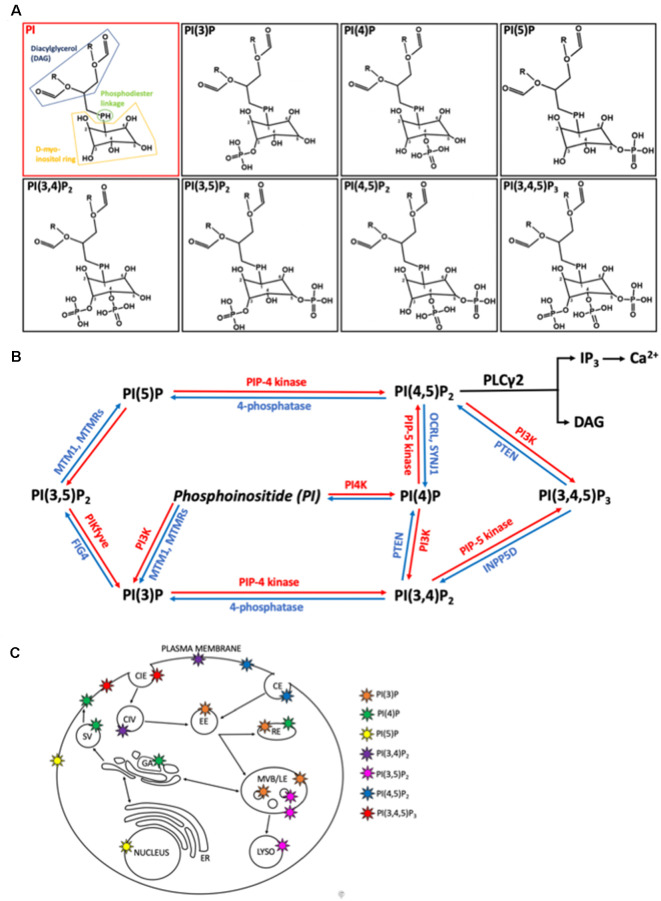
Microglia are increasingly recognized as vital players in the pathology of a variety of neurodegenerative conditions including Alzheimer’s (AD) and Parkinson’s (PD) disease. While microglia have a protective role in the brain, their dysfunction can lead to neuroinflammation and contributes to disease progression. Also, a growing body of literature highlights the seven phosphoinositides, or PIPs, as key players in the regulation of microglial-mediated neuroinflammation. These small signaling lipids are phosphorylated derivates of phosphatidylinositol, are enriched in the brain, and have well-established roles in both homeostasis and disease.Disrupted PIP levels and signaling has been detected in a variety of dementias. Moreover, many known AD disease modifiers identified via genetic studies are expressed in microglia and are involved in phospholipid metabolism. One of these, the enzyme PLCγ2 that hydrolyzes the PIP species PI(4,5)P 2 , displays altered expression in AD and PD and is currently being investigated as a potential therapeutic target.Perhaps unsurprisingly, neurodegenerative conditions exhibiting PIP dyshomeostasis also tend to show alterations in aspects of microglial function regulated by these lipids. In particular, phosphoinositides regulate the activities of proteins and enzymes required for endocytosis, toll-like receptor signaling, purinergic signaling, chemotaxis, and migration, all of which are affected in a variety of neurodegenerative conditions. These functions are crucial to allow microglia to adequately survey the brain and respond appropriately to invading pathogens and other abnormalities, including misfolded proteins. AD and PD therapies are being developed to target many of the above pathways, and although not yet investigated, simultaneous PIP manipulation might enhance the beneficial effects observed. Currently, only limited therapeutics are available for dementia, and although these show some benefits for symptom severity and progression, they are far from curative. Given the importance of microglia and PIPs in dementia development, this review summarizes current research and asks whether we can exploit this information to design more targeted, or perhaps combined, dementia therapeutics. More work is needed to fully characterize the pathways discussed in this review, but given the strength of the current literature, insights in this area could be invaluable for the future of neurodegenerative disease research.
Overview
The claims and statistics of this paper haven’t been checked yet.
Run the check — free, no account needed. It reads the open-access text and checks the sources it cites.
Integrity signals
Registry
Cites
Statistics
Figures
Verification
Claims the paper makes
The claims and statistics of this paper haven’t been checked yet.
Run the check — free, no account needed. It reads the open-access text and checks the sources it cites.
Claims other papers make about this one
Each is checked against this paper’s own text: does it say what the citing paper says it does?
The source backs part of the claim, not all of it — or backs it for a different population, condition or comparison.
In the citing paper
“PI(3,4,5)P3 can be converted back to PI(4,5)P2 by the protein phosphatase and tensin homology (PTEN) or converted into PI(3,4)P2 by SHIP1, which negatively regulates PI3K/Akt signaling (Fig. 2) [89–92].”
From Microglial function, INPP5D/SHIP1 signaling, and NLRP3 inflammasome activation: implications for Alzheimer’s disease (2023) · cites this paper as [90]
Experimental — accuracy not yet measuredThe cited source says what the claim attributes to it.
In the citing paper
“SHIP1 is a phosphatase involved in phosphoinositide signaling.”
From Microglial function, INPP5D/SHIP1 signaling, and NLRP3 inflammasome activation: implications for Alzheimer’s disease (2023) · cites this paper as [90]
Self-check
Percentages, sums and reported differences re-computed from the paper’s own numbers.
The self-check needs the paper’s full text.
Citations
Cites
The role of pattern-recognition receptors in innate immunity: update on Toll-like receptors
Kawai, T., & Akira, S. (2010) · Nature Immunology · doi:10.1038/ni.1863 · Cited by 9,304
MACDONALD, M. (1993) · Cell · doi:10.1016/0092-8674(93)90585-e · Cited by 8,366
Takeda, K., Kaisho, T., & Akira, S. (2003) · Annual Review of Immunology · doi:10.1146/annurev.immunol.21.120601.141126 · Cited by 6,143
Resting microglial cells are highly dynamic surveillants of brain parenchyma in vivo
Nimmerjahn, A., Kirchhoff, F., & Helmchen, F. (2005) · Science · doi:10.1126/science.1110647 · Cited by 5,827
DeJesus-Hernandez, M., Mackenzie, I. R., Boeve, B. F., Boxer, A. L., Baker, M., Rutherford, N. J., Nicholson, A. M., Finch, N. A., Flynn, H., Adamson, J., et al. (2011) · Neuron · doi:10.1016/j.neuron.2011.09.011 · Cited by 4,936 · cited 2×
“The most common cause (of both ALS and FTD) in North America and Europe is a hexanucleotide GGGGCC expansion in the c9orf72 gene (Dejesus-Hernandez et al., 2011; Renton et al., 2011).”
BackgroundA Hexanucleotide Repeat Expansion in C9ORF72 Is the Cause of Chromosome 9p21-Linked ALS-FTD
Renton, A. E., Majounie, E., Waite, A., Simón-Sánchez, J., Rollinson, S., Gibbs, J. R., Schymick, J. C., Laaksovirta, H., van Swieten, J. C., Myllykangas, L., et al. (2011) · Neuron · doi:10.1016/j.neuron.2011.09.010 · Cited by 4,409
Meta-Analysis of 74,046 Individuals Identifies 11 New Susceptibility Loci for Alzheimer’s Disease
(EADI), E. A. D. I., Lambert, J.-C., (GERAD), G. A. E. R. I. A. D., Alzheimer's Disease Genetic Consortium (ADGC), (CHARGE), C. F. H. A. A. R. I. G. E., Ibrahim-Verbaas, C. A., Harold, D., Naj, A. C., Sims, R., Bellenguez, C., et al. (2013) · Nature Genetics · doi:10.1038/ng.2802 · Cited by 4,336
Cell Migration: A Physically Integrated Molecular Process
Lauffenburger, D. A., & Horwitz, A. F. (1996) · Cell · doi:10.1016/s0092-8674(00)81280-5 · Cited by 3,915
ATP mediates rapid microglial response to local brain injury in vivo
Davalos, D., Grutzendler, J., Yang, G., Kim, J. V., Zuo, Y., Jung, S., Littman, D. R., Dustin, M. L., & Gan, W.-B. (2005) · Nature Neuroscience · doi:10.1038/nn1472 · Cited by 3,913
Ageing as a risk factor for neurodegenerative disease
Hou, Y., Dan, X., Babbar, M., Wei, Y., Hasselbalch, S. G., Croteau, D. L., & Bohr, V. A. (2019) · Nature Reviews Neurology · doi:10.1038/s41582-019-0244-7 · Cited by 3,310
Role of Adaptor TRIF in the MyD88-Independent Toll-Like Receptor Signaling Pathway
Yamamoto, M., Sato, S., Hemmi, H., Hoshino, K., Kaisho, T., Sanjo, H., Takeuchi, O., Sugiyama, M., Okabe, M., Takeda, K., et al. (2003) · Science · doi:10.1126/science.1087262 · Cited by 3,286
Shah, M. A., Datson, N. A., Srinidhi, L., Stanton, V. P., MacDonald, M. E., Allard, M. W., Youngman, S., Am, F., Mott, R., Draths, K., et al. (1993) · Cell · Cited by 3,055
McGeer, P. L., Itagaki, S., Boyes, B. E., & McGeer, E. G. (1988) · Neurology · doi:10.1212/wnl.38.8.1285 · Cited by 2,990
Microglia Function in the Central Nervous System During Health and Neurodegeneration
Colonna, M., & Butovsky, O. (2017) · Annual Review of Immunology · doi:10.1146/annurev-immunol-051116-052358 · Cited by 2,894
Parkinson, J. (2002) · Journal of Neuropsychiatry · doi:10.1176/jnp.14.2.223 · Cited by 2,856
Fredholm, B. B., Bättig, K., Holmén, J., Nehlig, A., & Zvartau, E. E. (1999) · Pharmacological Reviews · doi:10.1016/s0031-6997(24)01396-6 · Cited by 2,624
Lane, C. A., Hardy, J., & Schott, J. M. (2018) · European Journal of Neurology · doi:10.1111/ene.13439 · Cited by 2,616
Takeda, K., & Akira, S. (2004) · Seminars in Immunology · doi:10.1016/j.smim.2003.10.003 · Cited by 2,528
Role of Genes and Environments for Explaining Alzheimer Disease
Gatz, M., Reynolds, C. A., Fratiglioni, L., Johansson, B., Mortimer, J. A., Berg, S., Fiske, A., & Pedersen, N. L. (2006) · Archives of General Psychiatry · doi:10.1001/archpsyc.63.2.168 · Cited by 1,798
Bates, G. P., Dorsey, R., Gusella, J. F., Hayden, M. R., Kay, C., Leavitt, B. R., Nance, M., Ross, C. A., Scahill, R. I., Wetzel, R., et al. (2015) · Nature Reviews Disease Primers · doi:10.1038/nrdp.2015.5 · Cited by 1,641
Targeting PI3K in cancer: mechanisms and advances in clinical trials
Yang, J., Nie, J., Ma, X., Wei, Y., Peng, Y., & Wei, X. (2019) · Molecular Cancer · doi:10.1186/s12943-019-0954-x · Cited by 1,581
The P2Y12 receptor regulates microglial activation by extracellular nucleotides
Haynes, S. E., Hollopeter, G., Yang, G., Kurpius, D., Dailey, M. E., Gan, W.-B., & Julius, D. (2006) · Nature Neuroscience · doi:10.1038/nn1805 · Cited by 1,542
Control of microglial neurotoxicity by the fractalkine receptor
Cardona, A. E., Pioro, E. P., Sasse, M. E., Kostenko, V., Cardona, S. M., Dijkstra, I. M., Huang, D., Kidd, G., Dombrowski, S., Dutta, R., et al. (2006) · Nature Neuroscience · doi:10.1038/nn1715 · Cited by 1,531
An english translation of alzheimer’s 1907 paper, “über eine eigenartige erkankung der hirnrinde”
Stelzmann, R. A., Norman Schnitzlein, H., & Reed Murtagh, F. (1995) · Clinical Anatomy · doi:10.1002/ca.980080612 · Cited by 1,455
Cutting Edge: Role of Toll-Like Receptor 1 in Mediating Immune Response to Microbial Lipoproteins
Takeuchi, O., Sato, S., Horiuchi, T., Hoshino, K., Takeda, K., Dong, Z., Modlin, R. L., & Akira, S. (2002) · The Journal of Immunology · doi:10.4049/jimmunol.169.1.10 · Cited by 1,360
Microglial Dysfunction and Defective β-Amyloid Clearance Pathways in Aging Alzheimer's Disease Mice
Hickman, S. E., Allison, E. K., & El Khoury, J. (2008) · The Journal of Neuroscience · doi:10.1523/jneurosci.0616-08.2008 · Cited by 1,329
Amyotrophic lateral sclerosis: a clinical review
Masrori, P., & Damme, P. V. (2020) · European Journal of Neurology · doi:10.1111/ene.14393 · Cited by 1,315
TRAM couples endocytosis of Toll-like receptor 4 to the induction of interferon-β
Kagan, J. C., Su, T., Horng, T., Chow, A. Y., Akira, S., & Medzhitov, R. M. (2008) · Nature Immunology · doi:10.1038/ni1569 · Cited by 1,310
ERM proteins and merlin: integrators at the cell cortex
Bretscher, A., Edwards, K., & Fehon, R. G. (2002) · Nature Reviews Molecular Cell Biology · doi:10.1038/nrm882 · Cited by 1,306
Zhang, W., Wang, T., Pei, Z., Miller, D. S., Wu, X., Block, M. L., Wilson, B., Zhang, W., Zhou, Y., Hong, J.-S., et al. (2005) · The FASEB Journal · doi:10.1096/fj.04-2751com · Cited by 1,265
Simard, A. R., Soulet, D., Gowing, G., Julien, J.-P., & Rivest, S. (2006) · Neuron · doi:10.1016/j.neuron.2006.01.022 · Cited by 1,265
Signal transduction by the lipopolysaccharide receptor, Toll-like receptor-4
Pålsson‐McDermott, E. M., & O'Neill, L. A. J. (2004) · Immunology · doi:10.1111/j.1365-2567.2004.01976.x · Cited by 1,254
Microglia initiate central nervous system innate and adaptive immune responses through multiple TLRs
Olson, J. K., & Miller, S. D. (2004) · The Journal of Immunology · doi:10.4049/jimmunol.173.6.3916 · Cited by 1,215
In vivo imaging of microglial activation with [11C](R)-PK11195 PET in idiopathic Parkinson's disease
Gerhard, A., Pavese, N., Hotton, G., Turkheimer, F., Es, M., Hammers, A., Eggert, K., Oertel, W., Banati, R. B., & Brooks, D. J. (2006) · Neurobiology of Disease · doi:10.1016/j.nbd.2005.08.002 · Cited by 1,200
LPS-TLR4 Signaling to IRF-3/7 and NF-κB Involves the Toll Adapters TRAM and TRIF
Fitzgerald, K. A., Rowe, D. C., Barnes, B. J., Caffrey, D. R., Visintin, A., Latz, E., Monks, B. G., Pitha, P. M., & Golenbock, D. T. (2003) · The Journal of Experimental Medicine · doi:10.1084/jem.20031023 · Cited by 1,193
Huntington's disease: a clinical review
McColgan, P., & Tabrizi, S. J. (2017) · European Journal of Neurology · doi:10.1111/ene.13413 · Cited by 1,156
Heras-Sandoval, D., Pérez-Rojas, J. M., Hernández-Damián, J., & Pedraza-Chaverri, J. (2014) · Cellular Signalling · doi:10.1016/j.cellsig.2014.08.019 · Cited by 1,091
Current understanding of Alzheimer’s disease diagnosis and treatment
Weller, J., & Budson, A. (2018) · F1000Research · doi:10.12688/f1000research.14506.1 · Cited by 1,083
Yamamoto, M., Sato, S., Hemmi, H., Uematsu, S., Hoshino, K., Kaisho, T., Takeuchi, O., Takeda, K., & Akira, S. (2003) · Nature Immunology · doi:10.1038/ni986 · Cited by 1,052
ARUK Consortium, Sims, R., GERAD/PERADES, C., van der Lee, S. J., Naj, A. C., Bellenguez, C., Badarinarayan, N., Jakobsdottir, J., Kunkle, B. W., Boland, A., et al. (2017) · Nature Genetics · doi:10.1038/ng.3916 · Cited by 1,012
Essential role for TIRAP in activation of the signalling cascade shared by TLR2 and TLR4
Yamamoto, M., Sato, S., Hemmi, H., Sanjo, H., Uematsu, S., Kaisho, T., Hoshino, K., Takeuchi, O., Kobayashi, M., Fujita, T., et al. (2002) · Nature · doi:10.1038/nature01182 · Cited by 1,009
Broad Expression of Toll-Like Receptors in the Human Central Nervous System
Bsibsi, M., Ravid, R., Gveric, D. O., & van Noort, J. M. (2002) · Journal of Neuropathology & Experimental Neurology · doi:10.1093/jnen/61.11.1013 · Cited by 1,000
CD14 Controls the LPS-Induced Endocytosis of Toll-like Receptor 4
Zanoni, I., Ostuni, R., Marek, L. R., Barresi, S., Barbalat, R., Barton, G. M., Granucci, F., & Kagan, J. C. (2011) · Cell · doi:10.1016/j.cell.2011.09.051 · Cited by 997
Caveolae as plasma membrane sensors, protectors and organizers
Parton, R. G., & del Pozo, M. Á. (2013) · Nature Reviews Molecular Cell Biology · doi:10.1038/nrm3512 · Cited by 984
Araki, N., Johnson, M. T., & Swanson, J. A. (1996) · The Journal of cell biology · doi:10.1083/jcb.135.5.1249 · Cited by 949
Clathrin- and non-clathrin-mediated endocytic regulation of cell signalling
Roy, C. L., & Wrana, J. L. (2005) · Nature Reviews Molecular Cell Biology · doi:10.1038/nrm1571 · Cited by 888
Purinergic signalling in the nervous system: an overview
Abbracchio, M. P., Burnstock, G., Verkhratsky, A., & Zimmermann, H. (2008) · Trends in Neurosciences · doi:10.1016/j.tins.2008.10.001 · Cited by 888
Microglial activation and dopamine terminal loss in early Parkinson's disease
Ouchi, Y., Yoshikawa, E., Sekine, Y., Futatsubashi, M., Kanno, T., Ogusu, T., & Torizuka, T. (2005) · Annals of Neurology · doi:10.1002/ana.20338 · Cited by 869
Phosphoinositide-Mediated Adaptor Recruitment Controls Toll-like Receptor Signaling
Kagan, J. C., & Medzhitov, R. M. (2006) · Cell · doi:10.1016/j.cell.2006.03.047 · Cited by 868
Septins: the fourth component of the cytoskeleton
Mostowy, S., & Cossart, P. (2012) · Nature Reviews Molecular Cell Biology · doi:10.1038/nrm3284 · Cited by 865
Burns, A., & Iliffe, S. (2009) · BMJ · doi:10.1136/bmj.b158 · Cited by 859
Essential Role of Phosphoinositide Metabolism in Synaptic Vesicle Recycling
Cremona, O., Paolo, G. D., Wenk, M. R., Lüthi, A., Kim, W. T., Takei, K., DANIELL, L. W., Nemoto, Y., Shears, S. B., Flavell, R. A., et al. (1999) · Cell · doi:10.1016/s0092-8674(00)81649-9 · Cited by 836
UDP acting at P2Y6 receptors is a mediator of microglial phagocytosis
Koizumi, S., Shigemoto-Mogami, Y., Nasu-Tada, K., Shinozaki, Y., Ohsawa, K., Tsuda, M., Joshi, B. V., Jacobson, K. A., Kohsaka, S., & Inoue, K. (2007) · Nature · doi:10.1038/nature05704 · Cited by 802
TREM2 mutations implicated in neurodegeneration impair cell surface transport and phagocytosis
Kleinberger, G., Yamanishi, Y., Suárez-Calvet, M., Czirr, E., Lohmann, E., Cuyvers, E., Struyfs, H., Pettkus, N., Wenninger-Weinzierl, A., Mazaheri, F., et al. (2014) · Science Translational Medicine · doi:10.1126/scitranslmed.3009093 · Cited by 798
Microglia in Neurological Diseases: A Road Map to Brain-Disease Dependent-Inflammatory Response
Bachiller, S., Jiménez-Ferrer, I., Paulus, A., Yang, Y., Swanberg, M., Deierborg, T., & Boza‐Serrano, A. (2018) · Frontiers in Cellular Neuroscience · doi:10.3389/fncel.2018.00488 · Cited by 750
Phagocytosis and the actin cytoskeleton
May, R. C., & Machesky, L. M. (2001) · Journal of Cell Science · doi:10.1242/jcs.114.6.1061 · Cited by 715
Zhang, F. X., Kirschning, C., Mancinelli, R., Xu, X.-P., Jin, Y., Faure, E., Mantovani, A., Rothe, M., Muzio, M., & Arditi, M. (1999) · Journal of Biological Chemistry · doi:10.1074/jbc.274.12.7611 · Cited by 702
The role of microglia in amyloid clearance from the AD brain
Lee, C. Y. D., & Landreth, G. E. (2010) · Journal of Neural Transmission · doi:10.1007/s00702-010-0433-4 · Cited by 701
Phagosome maturation: aging gracefully
Vieira, O. V., Botelho, R. J., & Grinstein, S. (2002) · Biochemical Journal · doi:10.1042/bj20020691 · Cited by 696
Lehnardt, S., Lachance, C., Patrizi, S., Lefebvre, S., Follett, P. L., Jensen, F. E., Rosenberg, P. A., Volpe, J. J., & Vartanian, T. K. (2002) · Journal of Neuroscience · doi:10.1523/jneurosci.22-07-02478.2002 · Cited by 692
Miki, H., Miura, K., & Takenawa, T. (1996) · The EMBO Journal · doi:10.1002/j.1460-2075.1996.tb00917.x · Cited by 672
Mechanism of N-Wasp Activation by Cdc42 and Phosphatidylinositol 4,5-Bisphosphate
Rohatgi, R., Ho, H. H., & Kirschner, M. W. (2000) · The Journal of Cell Biology · doi:10.1083/jcb.150.6.1299 · Cited by 653
Dong, X., Shen, D., Wang, X., Dawson, T., Li, X., Zhang, Q., Cheng, X., Zhang, Y., Weisman, L. S., Delling, M., et al. (2010) · Nature Communications · doi:10.1038/ncomms1037 · Cited by 645
Mutations in the profilin 1 gene cause familial amyotrophic lateral sclerosis
Wu, C.-H., Fallini, C., Ticozzi, N., Keagle, P. J., Sapp, P. C., Piotrowska, K., Lowe, P., Koppers, M., McKenna-Yasek, D. M., Baron, D. M., et al. (2012) · Nature · doi:10.1038/nature11280 · Cited by 624
G Protein Signaling Events Are Activated at the Leading Edge of Chemotactic Cells
Parent, C. A., Blacklock, B. J., Froehlich, W. M., Murphy, D. B., & Devreotes, P. N. (1998) · Cell · doi:10.1016/s0092-8674(00)81784-5 · Cited by 617
Regulation of Clathrin-Mediated Endocytosis
Mettlen, M., Chen, P.-H., Srinivasan, S., Danuser, G., & Schmid, S. L. (2018) · Annual Review of Biochemistry · doi:10.1146/annurev-biochem-062917-012644 · Cited by 614
Reciprocal Regulation between Resting Microglial Dynamics and Neuronal Activity In Vivo
Li, Y., Du, X.-F., Liu, C., Wen, Z., & Du, J. (2012) · Developmental Cell · doi:10.1016/j.devcel.2012.10.027 · Cited by 590
Bateman, R. J., Aisen, P. S., De Strooper, B., Fox, N. C., Lemere, C. A., Ringman, J. M., Salloway, S., Sperling, R. A., Windisch, M., & Xiong, C. (2010) · Alzheimer's Research & Therapy · doi:10.1186/alzrt59 · Cited by 573
Um, J. W., Kaufman, A. C., Kostylev, M., Heiss, J. K., Stagi, M., Takahashi, H., Kerrisk, M. E., Vortmeyer, A., Wisniewski, T., Koleske, A. J., et al. (2013) · Neuron · doi:10.1016/j.neuron.2013.06.036 · Cited by 572
Activation of phospholipase Cγ by PI 3‐kinase‐induced PH domain‐mediated membrane targeting
Falasca, M., Logan, S. K., Lehto, V. P., Baccante, G., Lemmon, M. A., & Schlessinger, J. (1998) · The EMBO Journal · doi:10.1093/emboj/17.2.414 · Cited by 567
Extracellular ATP or ADP Induce Chemotaxis of Cultured Microglia through Gi/o-Coupled P2Y Receptors
Honda, S., Sasaki, Y., Ohsawa, K., Imai, Y., Nakamura, Y., Inoue, K., & Kohsaka, S. (2001) · The Journal of Neuroscience · doi:10.1523/jneurosci.21-06-01975.2001 · Cited by 561
Early and Progressive Accumulation of Reactive Microglia in the Huntington Disease Brain
Sapp, E., Kegel, K. B., D, N. A. M., Hashikawa, T., Uchiyama, Y., Tohyama, K., Bhide, P. G., Vonsattel, J., & DiFiglia, M. (2001) · Journal of Neuropathology & Experimental Neurology · doi:10.1093/jnen/60.2.161 · Cited by 558
C9orf72 is required for proper macrophage and microglial function in mice
O’Rourke, J. G., Bogdanik, L., Yáñez, A., Lall, D., Wolf, A. J., Muhammad, A. K. M. G., Ho, R., Carmona, S., Vit, J. P., Zarrow, J., et al. (2016) · Science · doi:10.1126/science.aaf1064 · Cited by 550
Role of the Toll-Like Receptor 4 in Neuroinflammation in Alzheimer’s Disease
Walter, S., Letiembre, M., Liu, Y., Heine, H., Penke, B., Hao, W., Bode, B., Manietta, N., Walter, J., Schulz-Schüffer, W., et al. (2007) · Cellular Physiology and Biochemistry · doi:10.1159/000110455 · Cited by 543
Localized Biphasic Changes in Phosphatidylinositol-4,5-Bisphosphate at Sites of Phagocytosis
Botelho, R. J., Teruel, M., Dierckman, R., Anderson, R., Wells, A., York, J. D., Meyer, T., & Grinstein, S. (2000) · The Journal of Cell Biology · doi:10.1083/jcb.151.7.1353 · Cited by 539
Vieira, O. V., Botelho, R. J., Rameh, L. E., Brachmann, S. M., Matsuo, T., Davidson, H. W., Schreiber, A. D., Backer, J., Cantley, L. C., & Grinstein, S. (2001) · The Journal of Cell Biology · doi:10.1083/jcb.200107069 · Cited by 530
Mutation of FIG4 causes neurodegeneration in the pale tremor mouse and patients with CMT4J
Chow, C. Y., Zhang, Y., Dowling, J. J., Jin, N., Adamska, M., Shiga, K., Szigeti, K., Shy, M. E., Li, J., Zhang, X., et al. (2007) · Nature · doi:10.1038/nature05876 · Cited by 529
The TRPM7 channel is inactivated by PIP2 hydrolysis
Runnels, L. W., Yue, L., & Clapham, D. E. (2002) · Nature Cell Biology · doi:10.1038/ncb781 · Cited by 520
Regulation of the Actin Cytoskeleton-Plasma Membrane Interplay by Phosphoinositides
Saarikangas, J., Zhao, H., & Lappalainen, P. (2010) · Physiological Reviews · doi:10.1152/physrev.00036.2009 · Cited by 515
Microglial P2Y12 is necessary for synaptic plasticity in mouse visual cortex
Sipe, G. O., Lowery, Tremblay, M.-È., Kelly, E. A., Lamantia, C. E., & Majewska, A. K. (2016) · Nature Communications · doi:10.1038/ncomms10905 · Cited by 512
Role of toll-like receptor signalling in A uptake and clearance
Tahara, K., Kim, H.-D., Jin, J.-J., Maxwell, J. A., Li, L., & Fukuchi, K.-I. (2006) · Brain · doi:10.1093/brain/awl249 · Cited by 493
The Role of PI3K/Akt and ERK in Neurodegenerative Disorders
Nand, S., Dilnashin, H., Birla, H., Singh, S. S., Zahra, W., Singh, B. K., Singh, S. P., & Singh, S. P. (2019) · Neurotoxicity Research · doi:10.1007/s12640-019-0003-y · Cited by 490
Multiple Roles for Arf6: Sorting, Structuring, and Signaling at the Plasma Membrane
Donaldson, J. G. (2003) · Journal of Biological Chemistry · doi:10.1074/jbc.r300026200 · Cited by 485
Calcium signaling and neurodegenerative diseases
Борисович, Б. И. (2009) · Trends in Molecular Medicine · doi:10.1016/j.molmed.2009.01.001 · Cited by 480
Koenigsknecht-Talboo, J., & Landreth, G. E. (2005) · The Journal of Neuroscience · doi:10.1523/jneurosci.1808-05.2005 · Cited by 477
The multiplex model of the genetics of Alzheimer's disease
Sims, R., Hill, M., & Williams, J. (2020) · Nature Neuroscience · doi:10.1038/s41593-020-0599-5 · Cited by 466
Madry, C., Kyrargyri, V., Arancibia-Cárcamo, I. L., Jolivet, R., Kohsaka, S., Bryan, R. M., & Attwell, D. (2018) · Neuron · doi:10.1016/j.neuron.2017.12.002 · Cited by 464
Microglial activation correlates with severity in Huntington disease: A clinical and PET study
Pavese, N., Gerhard, A., Tai, Y. F., Ho, A. K., Turkheimer, F., Barker, R. A., Brooks, D. J., & Piccini, P. (2006) · Neurology · doi:10.1212/01.wnl.0000222734.56412.17 · Cited by 462 · cited 1×
“PET studies on human HD post-mortem brains have demonstrated increased activation of microglia in HD compared with controls (Pavese et al., 2006; Politis et al., 2012), with this activation occurring up to 15 years before the predicted age of onset (Tai et al.”
BackgroundPang, S. Y.-Y., Ho, P. W., Liu, H., Leung, C.-T., Li, L., Chang, E. E. S., Ramsden, D. B., & Ho, S. (2019) · Translational Neurodegeneration · doi:10.1186/s40035-019-0165-9 · Cited by 457
Regulation of ion channels by phosphatidylinositol 4,5-bisphosphate
Suh, B., & Hille, B. (2005) · Current Opinion in Neurobiology · doi:10.1016/j.conb.2005.05.005 · Cited by 441
α‐actinin revisited: A fresh look at an old player
Otey, C. A., & Carpén, O. (2004) · Cell Motility and the Cytoskeleton · doi:10.1002/cm.20007 · Cited by 421
Inflammatory Process in Parkinsons Disease: Role for Cytokines
Nagatsu, T., & Sawada, M. (2005) · Current Pharmaceutical Design · doi:10.2174/1381612053381620 · Cited by 412
A requirement for phosphatidylinositol 3-kinase in pseudopod extension
Cox, D., Tseng, C.-C., Bjekic, G., & Greenberg, S. (1999) · Journal of Biological Chemistry · doi:10.1074/jbc.274.3.1240 · Cited by 410
Deleterious Variants of FIG4, a Phosphoinositide Phosphatase, in Patients with ALS
Chow, C. Y., Landers, J. E., Bergren, S. K., Sapp, P. C., Grant, A. E., Jones, J. M., Everett, L., Lenk, G. M., McKenna-Yasek, D. M., Weisman, L. S., et al. (2009) · The American Journal of Human Genetics · doi:10.1016/j.ajhg.2008.12.010 · Cited by 407
Sosna, J., Philipp, S., Albay, R., Reyes-Ruiz, J. M., Baglietto-Vargas, D., LaFerla, F. M., & Glabe, C. G. (2018) · Molecular Neurodegeneration · doi:10.1186/s13024-018-0244-x · Cited by 406
Cotrina, M. L., Lin, J. H.-C., López-Garcı́a, J. C., Naus, C. C. G., & Nedergaard, M. (2000) · The Journal of Neuroscience · doi:10.1523/jneurosci.20-08-02835.2000 · Cited by 388
Proteomic and functional evidence for a P2X7 receptor signalling complex
Kim, M., Jiang, L., Wilson, H. L., North, R. A., & Surprenant, A. (2001) · The EMBO Journal · doi:10.1093/emboj/20.22.6347 · Cited by 379
Cytokines, chemokines, and cytokine receptors in human microglia
Lee, Y. B., Nagai, A., & Kim, S. U. (2002) · Journal of Neuroscience Research · doi:10.1002/jnr.10253 · Cited by 363
Adenosine A2A receptor mediates microglial process retraction
Orr, A. G., Orr, A. L., Traynelis, S. F., Gross, R. E., & Traynelis, S. F. (2009) · Nature Neuroscience · doi:10.1038/nn.2341 · Cited by 361
Autophagy in Parkinson's Disease
Hou, X., Watzlawik, J. O., Fiesel, F. C., & Springer, W. (2020) · Journal of Molecular Biology · doi:10.1016/j.jmb.2020.01.037 · Cited by 361
Factors regulating microglia activation
Kierdorf, K., & Prinz, M. (2013) · Frontiers in Cellular Neuroscience · doi:10.3389/fncel.2013.00044 · Cited by 360
TREM2 deficiency impairs chemotaxis and microglial responses to neuronal injury
Mazaheri, F., Snaidero, N., Kleinberger, G., Madore, C., Daria, A., Werner, G., Krasemann, S., Capell, A., Trümbach, D., Wurst, W., et al. (2017) · The EMBO Reports · doi:10.15252/embr.201743922 · Cited by 351
Matteis, M. A. D., & Godi, A. (2004) · Nature Cell Biology · doi:10.1038/ncb0604-487 · Cited by 351
LPS receptor (CD14): a receptor for phagocytosis of Alzheimer's amyloid peptide
Liu, Y., Walter, S., Stagi, M., Cherny, D., Letièmbre, M., Schulz‐Schaeffer, W., Heine, H., Penke, B., Neumann, H., & Fassbender, K. C. (2005) · Brain · doi:10.1093/brain/awh531 · Cited by 349
Fibrillar Amyloid-β Peptides Activate Microglia via TLR2: Implications for Alzheimer’s Disease
Jana, M., Palencia, C. A., & Pahan, K. (2008) · The Journal of Immunology · doi:10.4049/jimmunol.181.10.7254 · Cited by 338
Fontainhas, A. M., Wang, M., Liang, K. J., Chen, S., Mettu, P., Damani, M., Fariss, R. N., Li, W., & Wong, W. T. (2011) · PLoS ONE · doi:10.1371/journal.pone.0015973 · Cited by 334
Yue, N., Huang, H., Zhu, X., Han, Q., Wang, Y., Li, B., Liu, Q., Wu, G., Zhang, Y., & Yu, J. (2017) · Journal of Neuroinflammation · doi:10.1186/s12974-017-0865-y · Cited by 334
Mutant Huntingtin promotes autonomous microglia activation via myeloid lineage-determining factors
Crotti, A., Benner, C., Kerman, B. E., Gosselin, D., Lagier-Tourenne, C., Zuccato, C., Cattaneo, E., Gage, F. H., Cleveland, D. W., & Glass, C. K. (2014) · Nature Neuroscience · doi:10.1038/nn.3668 · Cited by 333
Eaten alive! Cell death by primary phagocytosis: ‘phagoptosis’
Brown, G. C., & Neher, J. J. (2012) · Trends in Biochemical Sciences · doi:10.1016/j.tibs.2012.05.002 · Cited by 331
Wenk, M. R., & Camilli, P. V. D. (2004) · Proceedings of the National Academy of Sciences · doi:10.1073/pnas.0401874101 · Cited by 327
Cytokines in Parkinson’s disease
Nagatsu, T., Mogi, M., Ichinose, H., & Togari, A. (2000) · Springer eBooks · doi:10.1007/978-3-7091-6284-2_12 · Cited by 327
Role of Phospholipids in Endocytosis, Phagocytosis, and Macropinocytosis
Bohdanowicz, M., & Grinstein, S. (2013) · Physiological Reviews · doi:10.1152/physrev.00002.2012 · Cited by 326
Phosphoinositides in membrane traffic at the synapse
Cremona, O., & Camilli, P. V. D. (2001) · Journal of Cell Science · doi:10.1242/jcs.114.6.1041 · Cited by 324
Crepaldi, T., Gautreau, A. M., Comoglio, P. M., Louvard, D., & Arpin, M. (1997) · The Journal of Cell Biology · doi:10.1083/jcb.138.2.423 · Cited by 321
Adenosine signaling and function in glial cells
Boison, D., Chen, J., & Fredholm, B. B. (2009) · Cell Death and Differentiation · doi:10.1038/cdd.2009.131 · Cited by 319
Martel‐Frachet, V., Racaud‐Sultan, C., Manet-Dupé, S., Marie, C., Paulhe, F., Galmiche, A., Block, M. R., & Albigès‐Rizo, C. (2001) · Journal of Biological Chemistry · doi:10.1074/jbc.m102373200 · Cited by 319
ERM proteins: head-to-tail regulation of actin-plasma membrane interaction
Tsukita, S., Yonemura, S., & Tsukita, S. (1997) · Trends in Biochemical Sciences · doi:10.1016/s0968-0004(96)10071-2 · Cited by 315
Phosphoinositides regulate ion channels
Hille, B., Dickson, E. J., Kruse, M., Vivas, O., & Suh, B.-C. (2015) · Biochimica et Biophysica Acta (BBA) - Molecular and Cell Biology of Lipids · doi:10.1016/j.bbalip.2014.09.010 · Cited by 312
Spatial Sensing in Fibroblasts Mediated by 3′ Phosphoinositides
Haugh, J. M., Codazzi, F., Teruel, M. N., & Meyer, T. (2000) · The Journal of Cell Biology · doi:10.1083/jcb.151.6.1269 · Cited by 303
Daniele, S. G., Béraud, D., Davenport, C., Cheng, K., Yin, H., & Maguire-Zeiss, K. A. (2015) · Science Signaling · doi:10.1126/scisignal.2005965 · Cited by 303
Avignone, E., Ulmann, L., Levavasseur, F., Rassendren, F., & Audinat, É. (2008) · Journal of Neuroscience · doi:10.1523/jneurosci.1820-08.2008 · Cited by 302
Mildner, A., Huang, H., Radke, J., Stenzel, W., & Priller, J. (2017) · Glia · doi:10.1002/glia.23097 · Cited by 301
Richard, K. L., Filali, M., Préfontaine, P., & Rivest, S. (2008) · The Journal of Neuroscience · doi:10.1523/jneurosci.1146-08.2008 · Cited by 298
Leukocytes navigate by compass: roles of PI3Kγ and its lipid products
Rickert, P. (2000) · Trends in Cell Biology · doi:10.1016/s0962-8924(00)01841-9 · Cited by 295
Role of Microglia TLRs in Neurodegeneration
Fiebich, B. L., Batista, C. R. A., Saliba, S. W., Yousif, N. M., & de Oliveira, A. C. P. (2018) · Frontiers in Cellular Neuroscience · doi:10.3389/fncel.2018.00329 · Cited by 291
Intrathecal Chemokine Synthesis in Mild Cognitive Impairment and Alzheimer Disease
Galimberti, D., Schoonenboom, N., Scheltens, P., Fenoglio, C., Bouwman, F., Venturelli, E., Guidi, I., Blankenstein, M. A., Bresolin, N., & Scarpini, E. (2006) · Archives of Neurology · doi:10.1001/archneur.63.4.538 · Cited by 289
Activation of Neuronal NMDA Receptors Triggers Transient ATP-Mediated Microglial Process Outgrowth
Dissing-Olesen, L., LeDue, J. M., Rungta, R. L., Hefendehl, J. K., Choi, H. B., & MacVicar, B. A. (2014) · Journal of Neuroscience · doi:10.1523/jneurosci.0405-14.2014 · Cited by 286
Marshall, J. G., Booth, J. W., Stambolic, V., Mak, T. W., Balla, T., Schreiber, A. D., Meyer, T., & Grinstein, S. (2001) · The Journal of Cell Biology · doi:10.1083/jcb.153.7.1369 · Cited by 281
McLarnon, J. G., Ryu, J. K., Walker, D. G., & Choi, H. B. (2006) · Journal of Neuropathology & Experimental Neurology · doi:10.1097/01.jnen.0000240470.97295.d3 · Cited by 281
Caffeine as a Protective Factor in Dementia and Alzheimer's Disease
Eskelinen, M. H., & Kivipelto, M. (2010) · Journal of Alzheimer s Disease · doi:10.3233/jad-2010-1404 · Cited by 279
The choreography of neuroinflammation in Huntington's disease
Crotti, A., & Glass, C. K. (2015) · Trends in Immunology · doi:10.1016/j.it.2015.04.007 · Cited by 276
Song, M., Jin, J., Lim, J.-E., Kou, J., Pattanayak, A., Rehman, J. A., Kim, H.-D., Tahara, K., Lalonde, R., & Fukuchi, K.-I. (2011) · Journal of Neuroinflammation · doi:10.1186/1742-2094-8-92 · Cited by 273
Translation of the phosphoinositide code by PI effectors
Kutateladze, T. G. (2010) · Nature Chemical Biology · doi:10.1038/nchembio.390 · Cited by 269
West, M. A., Prescott, A. R., Eskelinen, E., Ridley, A. J., & Watts, C. K. W. (2000) · Current Biology · doi:10.1016/s0960-9822(00)00595-9 · Cited by 268
Regulation of Type I Interferon Gene Expression by Interferon Regulatory Factor-3
Schafer, S. L., Lin, R., Moore, P. A., Hiscott, J. B., & Pitha, P. M. (1998) · Journal of Biological Chemistry · doi:10.1074/jbc.273.5.2714 · Cited by 266
TREM2 Variant p.R47H as a Risk Factor for Sporadic Amyotrophic Lateral Sclerosis
Cady, J., Koval, E. D., Benitez, B. A., Zaidman, C., Jockel-Balsarotti, J., Allred, P., Baloh, R. H., Ravits, J., Simpson, E., Appel, S. H., et al. (2014) · JAMA Neurology · doi:10.1001/jamaneurol.2013.6237 · Cited by 262
Pharmacology and structure of P2Y receptors
von Kügelgen, I., & Hoffmann, K. (2015) · Neuropharmacology · doi:10.1016/j.neuropharm.2015.10.030 · Cited by 261
PI(5)P Regulates Autophagosome Biogenesis
Vicinanza, M., Korolchuk, V. I., Ashkenazi, A., Puri, C., Menzies, F. M., Clarke, J. H., & Rubinsztein, D. C. (2015) · Molecular Cell · doi:10.1016/j.molcel.2014.12.007 · Cited by 256
The Dual Role of Microglia in ALS: Mechanisms and Therapeutic Approaches
Geloso, M. C., Corvino, V., Marchese, E., Serrano, A., Michetti, F., & D’Ambrosi, N. (2017) · Frontiers in Aging Neuroscience · doi:10.3389/fnagi.2017.00242 · Cited by 254
Schappe, M. S., Szteyn, K., Stremska, M. E., Mendu, S. K., Downs, T. K., Seegren, P. V., Mahoney, M. A., Dixit, S., Krupa, J. K., Stipes, E. J., et al. (2018) · Immunity · doi:10.1016/j.immuni.2017.11.026 · Cited by 254
Understanding phosphoinositides: rare, dynamic, and essential membrane phospholipids
Dickson, E. J., & Hille, B. (2019) · Biochemical Journal · doi:10.1042/bcj20180022 · Cited by 254
Structure of a Pancreatic ATP-Sensitive Potassium Channel
Li, N., Wu, J.-X., Ding, D., Cheng, J., Gao, N., & Chen, L. (2017) · Cell · doi:10.1016/j.cell.2016.12.028 · Cited by 252
Phosphatidylinositol-4,5- bis phosphate hydrolysis directs actin remodeling during phagocytosis
Scott, C. C., Dobson, W., Botelho, R. J., Coady-Osberg, N., Chavrier, P., Knecht, D. A., Heath, C. M., Stahl, P. D., & Grinstein, S. (2005) · The Journal of Cell Biology · doi:10.1083/jcb.200412162 · Cited by 252
Burnstock, G., & Knight, G. E. (2018) · Purinergic Signalling · doi:10.1007/s11302-017-9593-0 · Cited by 248
The role of calcium signaling in phagocytosis
Nunes, P., & Demaurex, N. (2010) · Journal of Leukocyte Biology · doi:10.1189/jlb.0110028 · Cited by 248
Microglia in Alzheimer's Disease: Exploring How Genetics and Phenotype Influence Risk
McQuade, A., & Blurton-Jones, M. (2019) · Journal of Molecular Biology · doi:10.1016/j.jmb.2019.01.045 · Cited by 244
The actin cytoskeleton in normal and pathological cell motility
Lambrechts, A., Troys, M. V., & Ampè, C. (2004) · The International Journal of Biochemistry & Cell Biology · doi:10.1016/j.biocel.2004.01.024 · Cited by 235
PHOSPHOLIPIDS IN SYNAPTIC FUNCTION
Hawthorne, J. N., & Pickard, M. R. (1979) · Journal of Neurochemistry · doi:10.1111/j.1471-4159.1979.tb04503.x · Cited by 233
Andreone, B. J., Przybyla, L., Llapashtica, C., Rana, A., Davis, S. S., van Lengerich, B., Lin, K., Shi, J., Mei, Y., Astarita, G., et al. (2020) · Nature Neuroscience · doi:10.1038/s41593-020-0650-6 · Cited by 233
Azam, S., Jakaria, M., Kim, I., Kim, J.-S., Haque, M. E., & Choi, D. (2019) · Frontiers in Immunology · doi:10.3389/fimmu.2019.01000 · Cited by 231
Receptor-mediated hydrolysis of plasma membrane messenger PIP2 leads to K+-current desensitization
Kobrinsky, E., Mirshahi, T., Zhang, H., Jin, T., & Logothetis, D. E. (2000) · Nature Cell Biology · doi:10.1038/35019544 · Cited by 228
Dı́az-Hernández, M., Diez-Zaera, M., Sánchez‐Nogueiro, J., Gómez‐Villafuertes, R., Canals, J. M., Alberch, J., Miras‐Portugal, M. T., & Lucas, J. J. (2009) · The FASEB Journal · doi:10.1096/fj.08-122275 · Cited by 228
Screening of innate immune receptors in neurodegenerative diseases: A similar pattern
Letiembre, M., Liu, Y., Walter, S., Hao, W., Pfander, T., Wrede, A., Schulz-Schaeffer, W., & Fassbender, K. (2009) · Neurobiology of Aging · doi:10.1016/j.neurobiolaging.2007.08.018 · Cited by 228
Role of chemokine CCL2 and its receptor CCR2 in neurodegenerative diseases
Bose, S., & Cho, J. (2013) · Archives of Pharmacal Research · doi:10.1007/s12272-013-0161-z · Cited by 226
Schlam, D., Bagshaw, R. D., Freeman, S. A., Collins, R. F., Pawson, T. J., Fairn, G. D., & Grinstein, S. (2015) · Nature Communications · doi:10.1038/ncomms9623 · Cited by 222
Regulation of Dynamic Behavior of Retinal Microglia by CX3CR1 Signaling
Liang, K. J., Lee, J. E., Wang, Y. D., Ma, W., Fontainhas, A. M., Fariss, R. N., & Wong, W. T. (2009) · Investigative Ophthalmology & Visual Science · doi:10.1167/iovs.08-3357 · Cited by 220
Dysregulation of neural calcium signaling in Alzheimer disease, bipolar disorder and schizophrenia
Berridge, M. J. (2013) · Prion · doi:10.4161/pri.21767 · Cited by 218
Sporadic and hereditary amyotrophic lateral sclerosis (ALS)
Ajroud‐Driss, S., & Siddique, T. (2014) · Biochimica et Biophysica Acta (BBA) - Molecular Basis of Disease · doi:10.1016/j.bbadis.2014.08.010 · Cited by 218
Pirt, a Phosphoinositide-Binding Protein, Functions as a Regulatory Subunit of TRPV1
Kim, A. Y., Tang, Z., Liu, Q., Patel, K., Maag, D., Geng, Y., & Dong, X. (2008) · Cell · doi:10.1016/j.cell.2008.02.053 · Cited by 218
Dysregulation of human Toll-like receptor function in aging
Shaw, A. C., Panda, A., Joshi, S. R., Qian, F., Allore, H. G., & Montgomery, R. R. (2011) · Ageing Research Reviews · doi:10.1016/j.arr.2010.10.007 · Cited by 215
The microglial phagocytic role with specific plaque types in the Alzheimer disease brain
D’Andrea, M. R., Cole, G. M., & Ard, M. D. (2004) · Neurobiology of Aging · doi:10.1016/j.neurobiolaging.2003.12.026 · Cited by 215
Adenosine receptor signaling in the brain immune system
Haskó, G., Pacher, P., Vizi, E. S., & Illés, P. (2005) · Trends in Pharmacological Sciences · doi:10.1016/j.tips.2005.08.004 · Cited by 214
Microglia Mediated Neuroinflammation: Focus on PI3K Modulation
Cianciulli, A., Porro, C., Calvello, R., Trotta, T., Lofrumento, D. D., & Panaro, M. A. (2020) · Biomolecules · doi:10.3390/biom10010137 · Cited by 210
Human TBK1: A Gatekeeper of Neuroinflammation
Ahmad, L., Zhang, S.-Y., Casanova, J.-L., & Sancho-Shimizu, V. (2016) · Trends in Molecular Medicine · doi:10.1016/j.molmed.2016.04.006 · Cited by 208
Reduced Phosphoinositide Concentrations in Anterior Temporal Cortex of Alzheimer‐Diseased Brains
Stokes, C. E., & Hawthorne, J. N. (1987) · Journal of Neurochemistry · doi:10.1111/j.1471-4159.1987.tb05619.x · Cited by 206
Gyoneva, S., & Traynelis, S. F. (2013) · Journal of Biological Chemistry · doi:10.1074/jbc.m113.458901 · Cited by 204
Septin-Mediated Uniform Bracing of Phospholipid Membranes
Tanaka-Takiguchi, Y., Kinoshita, M., & Takiguchi, K. (2009) · Current Biology · doi:10.1016/j.cub.2008.12.030 · Cited by 203
α-Synuclein Alters Toll-Like Receptor Expression
Béraud, D., Twomey, M. A., Bloom, B., Mittereder, A., Ton, V., Neitzke, K., Chasovskikh, S., Mhyre, T. R., & Maguire‐Zeiss, K. A. (2011) · Frontiers in Neuroscience · doi:10.3389/fnins.2011.00080 · Cited by 203
Microglia processes block the spread of damage in the brain and require functional chloride channels
Hines, D. J., Hines, R. M., Mulligan, S. J., & MacVicar, B. A. (2009) · Glia · doi:10.1002/glia.20874 · Cited by 202
Toll-like receptor signaling in amyotrophic lateral sclerosis spinal cord tissue
Casula, M., Iyer, A. M., Spliet, W. G. M., Anink, J. J., Steentjes, K., Sta, M., Troost, D., & Aronica, E. (2011) · Neuroscience · doi:10.1016/j.neuroscience.2011.02.001 · Cited by 200
Oligomeric amyloid-β peptide disrupts phosphatidylinositol-4,5-bisphosphate metabolism
Berman, D. E., Dall'Armi, C., Voronov, S. V., McIntire, L. B. J., Zhang, H., Moore, A. Z., Staniszewski, A., Arancio, O., Kim, T.-W., & Di Paolo, G. (2008) · Nature Neuroscience · doi:10.1038/nn.2100 · Cited by 199
Coupling of P2Y receptors to G proteins and other signaling pathways
Erb, L., & Weisman, G. A. (2012) · Wiley Interdisciplinary Reviews Membrane Transport and Signalling · doi:10.1002/wmts.62 · Cited by 198
HTT-lowering reverses Huntington’s disease immune dysfunction caused by NFκB pathway dysregulation
Träger, U., André, R., Lahiri, N., Magnusson, A., Weiss, A., Grueninger, S., McKinnon, C., Sirinathsinghji, E. C., Kahlon, S., Pfister, E. L., et al. (2014) · Brain · doi:10.1093/brain/awt355 · Cited by 196
The role of microglial P2X7: modulation of cell death and cytokine release
He, Y., Taylor, N., Fourgeaud, L., & Bhattacharya, A. (2017) · Journal of Neuroinflammation · doi:10.1186/s12974-017-0904-8 · Cited by 194
Vascular endothelial growth factor in Alzheimer's disease and experimental cerebral ischemia
Kalaria, R. N., Cohen, D., Premkumar, D. R., Nag, S., LaManna, J. C., & Lust, W. D. (1998) · Molecular Brain Research · doi:10.1016/s0169-328x(98)00190-9 · Cited by 190
Toll-Like Receptor 2 Signaling in Response to Brain Injury: An Innate Bridge to Neuroinflammation
Babcock, A. A., Wirenfeldt, M., Holm, T. H., Nielsen, H. H., Dissing‐Olesen, L., Toft‐Hansen, H., Millward, J. M., Landmann, R. M., Rivest, S., Finsen, B. R., et al. (2006) · Journal of Neuroscience · doi:10.1523/jneurosci.4937-05.2006 · Cited by 188
Antonescu, C. N., Aguet, F., Danuser, G. M., & Schmid, S. L. (2011) · Molecular Biology of the Cell · doi:10.1091/mbc.e11-04-0362 · Cited by 180
Shieh, C., Heinrich, A., Serchov, T., van Calker, D., & Biber, K. (2014) · Glia · doi:10.1002/glia.22628 · Cited by 179
Angulo-Pueyo, E., Casadó, V., Mallol, J., Canela, E. I., Viñals, F., Ferrer, I., Lluís, C., & Franco, R. (2003) · Brain Pathology · doi:10.1111/j.1750-3639.2003.tb00475.x · Cited by 179
Phosphatidylinositol(4,5)bisphosphate: diverse functions at the plasma membrane
Katan, M., & Cockcroft, S. (2020) · Essays in Biochemistry · doi:10.1042/ebc20200041 · Cited by 176
Calcium regulation of neural rhythms, memory and Alzheimer's disease
Berridge, M. J. (2013) · The Journal of Physiology · doi:10.1113/jphysiol.2013.257527 · Cited by 176
Choi, H. B., Ryu, J. K., Kim, S. U., & McLarnon, J. G. (2007) · The Journal of Neuroscience · doi:10.1523/jneurosci.5417-06.2007 · Cited by 173
Huntingtin Associates with Acidic Phospholipids at the Plasma Membrane
Kegel, K. B., Sapp, E., Yoder, J. L., Cuiffo, B., Sobin, L. B., Kim, Y. J., Qin, Z., Hayden, M. R., D, N. A. M., Scott, D. L., et al. (2005) · Journal of Biological Chemistry · doi:10.1074/jbc.m503672200 · Cited by 172
Sequential signaling in plasma-membrane domains during macropinosome formation in macrophages
Yoshida, S., Hoppe, A. D., Araki, N., & Swanson, J. A. (2009) · Journal of Cell Science · doi:10.1242/jcs.053207 · Cited by 168
Functions of microglia in the central nervous system—beyond the immune response
Wake, H., Moorhouse, A. J., & Nabekura, J. (2011) · Neuron Glia Biology · doi:10.1017/s1740925x12000063 · Cited by 167
Autophagosome–lysosome fusion triggers a lysosomal response mediated by TLR9 and controlled by OCRL
De Leo, M. G., Staiano, L., Vicinanza, M., Luciani, A., Carissimo, A., Mutarelli, M., Di Campli, A., Polishchuk, E., Di Tullio, G., Morra, V., et al. (2016) · Nature Cell Biology · doi:10.1038/ncb3386 · Cited by 165
Minoretti, P., Gazzaruso, C., Vito, C. D., Emanuele, E., Bianchi, M., Coen, E., Reino, M., & Geroldi, D. (2005) · Neuroscience Letters · doi:10.1016/j.neulet.2005.08.047 · Cited by 164
Targeting Autophagy for the Treatment of Alzheimer’s Disease: Challenges and Opportunities
Liu, J., & Li, L. (2019) · Frontiers in Molecular Neuroscience · doi:10.3389/fnmol.2019.00203 · Cited by 162
Vawter, M. P., Dillon‐Carter, O., Tourtellotte, W. W., Carvey, P. M., & Freed, W. J. (1996) · Experimental Neurology · doi:10.1006/exnr.1996.0200 · Cited by 158
P2Y12receptor‐mediated integrin‐β1 activation regulates microglial process extension induced by ATP
Ohsawa, K., Irino, Y., Sanagi, T., Nakamura, Y., Suzuki, E., Inoue, K., & Kohsaka, S. (2010) · Glia · doi:10.1002/glia.20963 · Cited by 157
Wang, S., Chu, C., Stewart, T., Ginghină, C., Wang, Y., Nie, H., Guo, M., Wilson, B. C., Hong, J., & Zhang, J. (2015) · Proceedings of the National Academy of Sciences · doi:10.1073/pnas.1417883112 · Cited by 156
Park, J., Paik, S. R., Jou, I., & Park, S. M. (2008) · Glia · doi:10.1002/glia.20691 · Cited by 156
Wu, L., Vadakkan, K. I., & Zhuo, M. (2007) · Glia · doi:10.1002/glia.20500 · Cited by 156
Dementia in Parkinson's disease
Hanagasi, H. A., Tüfekçıoğlu, Z., & Emre, M. (2017) · Journal of the Neurological Sciences · doi:10.1016/j.jns.2017.01.012 · Cited by 156
Microglial activation in the pathogenesis of Huntington's disease
Yang, H.-M., Yang, S., Huang, S.-S., Tang, B.-S., & Guo, J.-F. (2017) · Frontiers in Aging Neuroscience · doi:10.3389/fnagi.2017.00193 · Cited by 151
P2X4 Receptor Function in the Nervous System and Current Breakthroughs in Pharmacology
Stokes, L., Layhadi, J. A., Bibič, L., Dhuna, K., & Fountain, S. J. (2017) · Frontiers in Pharmacology · doi:10.3389/fphar.2017.00291 · Cited by 150
Neher, J. J., Neniškytė, U., Hornik, T. C., & Brown, G. C. (2014) · Glia · doi:10.1002/glia.22693 · Cited by 149
Lecours, C., Bordeleau, M., Cantin, L., Parent, M., Paolo, T. D., & Tremblay, M. (2018) · Frontiers in Cellular Neuroscience · doi:10.3389/fncel.2018.00282 · Cited by 148
Mutant huntingtin impairs immune cell migration in Huntington disease
Kwan, W., Träger, U., Davalos, D., Chou, A., Bouchard, J. J., André, R., Miller, A., Weiss, A., Giorgini, F., Cheah, C. S., et al. (2012) · Journal of Clinical Investigation · doi:10.1172/jci64484 · Cited by 145
Gray, M. A., Choy, C. H., Dayam, R. M., Escobar, E. O., Somerville, A., Xiao, X., Ferguson, S. M., & Botelho, R. J. (2016) · Current Biology · doi:10.1016/j.cub.2016.05.070 · Cited by 145
Research works printed but not linked: 2
- Prince, 2013, Alzheimer’s Disease International. Policy Brief for Heads of Government: The Global Impact of Dementia 2013–2050
- 2015, The Global Impact of Dementia: An Analysis of Prevalence, Incidence, Cost and Trends.
Cited by
Sorted by citations
Terzioglu, G., & Young-Pearse, T. L. (2023) · Molecular Neurodegeneration · doi:10.1186/s13024-023-00674-9 · Cited by 91
Ma, C., Wu, Y., Song, L., Yin, L., Yin, J.-J., Wang, Q., Yu, J., & Xiao, B. (2022) · Neural Regeneration Research · doi:10.4103/1673-5374.355747 · Cited by 37
Lipid mediated brain disorders: A perspective
Singh, A., Kukal, S., Kanojia, N., Singh, M., Saso, L., Kukreti, S., & Kukreti, R. (2023) · Prostaglandins & Other Lipid Mediators · doi:10.1016/j.prostaglandins.2023.106737 · Cited by 27
He, G., He, Y., Ni, H., Wang, K., Zhu, Y., & Bao, Y. (2023) · European Journal of Histochemistry · doi:10.4081/ejh.2023.3766 · Cited by 23
Phosphoinositide signalling in cell motility and adhesion
Hou, X., Ren, C., Jin, J., Chen, Y., Lyu, X.-Y., Bi, K., Carrillo, N. D., Cryns, V. L., Anderson, R. A., Sun, J., et al. (2025) · Nature Cell Biology · doi:10.1038/s41556-025-01647-4 · Cited by 22
Metadata
- Authors
- Ernest James Phillips, T., & Maguire, E.
- Affiliations
- Cardiff University (GB)
- Corresponding author
- Maguire, Emily
- ORCID
- Maguire, Emily
- Venue
- Frontiers in Cellular Neuroscience
- Publisher
- Frontiers Media SA
- Published
- 2021-03-26
- Volume
- 15
- Pages
- 652593-652593
- ISSN
- 1662-5102 (ISSN-L)
- PMC
- PMC8032904
- OpenAlex
- W3140288526
- Cited by
- 33
- References
- 376
- Citations by year
- 2026: 7 · 2025: 7 · 2024: 6 · 2023: 8 · 2022: 2 · 2021: 3
- FWCI
- 0.56
- Type
- journal article
- Language
- en
- Open access
- gold
- doi.org
- Licence
- Locations
- Frontiers in Cellular Neuroscience (publishedVersion, cc-by)
- PubMed Central (publishedVersion, cc-by)
- PubMed (publishedVersion)
- ORCA Online Research @Cardiff (Cardiff University) (acceptedVersion)
- DOAJ (DOAJ: Directory of Open Access Journals) (submittedVersion, cc-by-sa)
- Funders
- Alzheimer's Society
- Cardiff University
- UK Dementia Research Institute
- Medical Research Council
- Topics
- Life Sciences › Neuroscience › Neurology › Neuroinflammation and Neurodegeneration Mechanisms
- Life Sciences › Neuroscience › Cellular and Molecular Neuroscience › Alzheimer's disease research and treatments
- Life Sciences › Neuroscience › Neurology › Neurological Disease Mechanisms and Treatments
- Keywords
- phosphoinositides, microglia, neuroinflammation, neurodegeneration, Alzheimer's disease, Parkinson's disease, PLCγ2, phosphatidylinositol 4,5-bisphosphate, phospholipid metabolism, endocytosis, Toll-like receptor signaling, purinergic signaling, chemotaxis, microglial migration, microglial dysfunction
About these checks
Registry, retraction, Cites and statistics results are computed, not judged, with one exception: a printed reference that no index lists is read once by a model before it counts as a citation error. Claims are extracted by a model and kept only when their quote appears verbatim in the text; each cited source is then checked, with a model’s help, for whether it says what the claim relies on. Those verdicts can be wrong — read the claim’s quote and the cited source before relying on one.
Statistics and arithmetic are recomputed, not judged.
Confidence bands are shown only for fields calibrated on our annotated test set. None is calibrated yet, so no band is shown.
What counts as a claim ›How we measure confidence ›How we check this ›
Are you an author, or do you see a problem with this page? Request a review
