

The DOI matches its Crossref record; 168 of the 171 references it cites were found in a registry or an index.
The role of the striatum in social behavior
Open accessAbstract
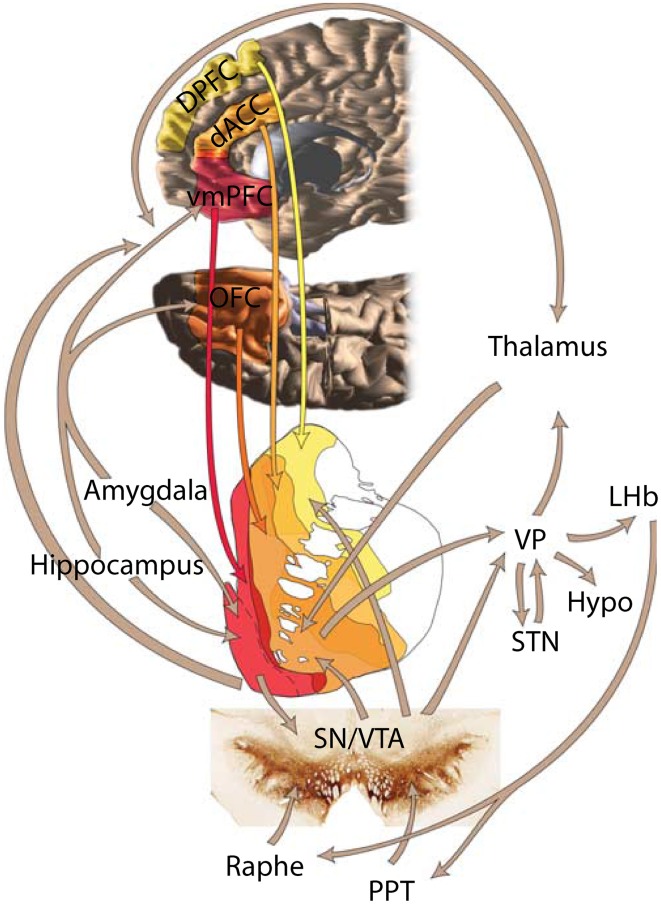
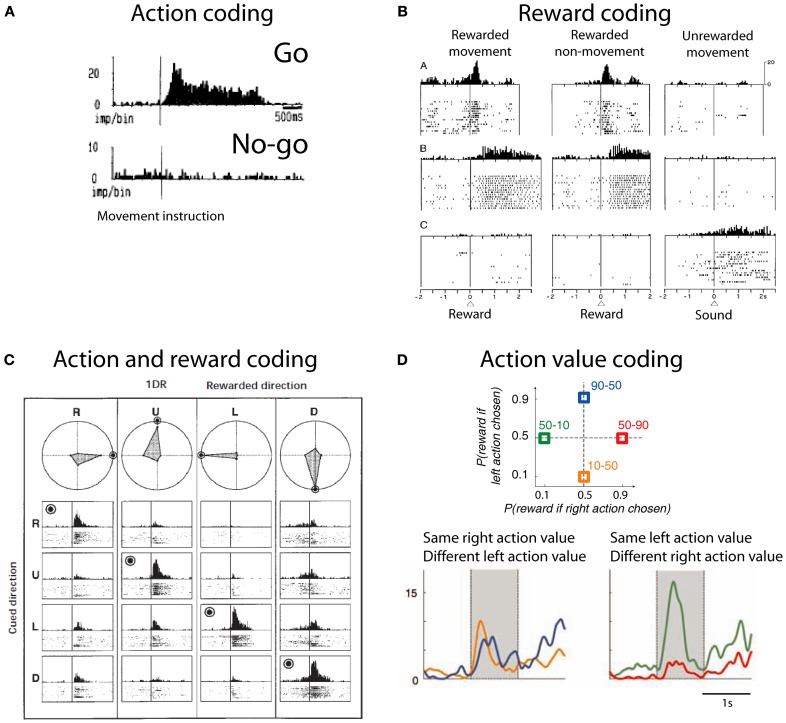
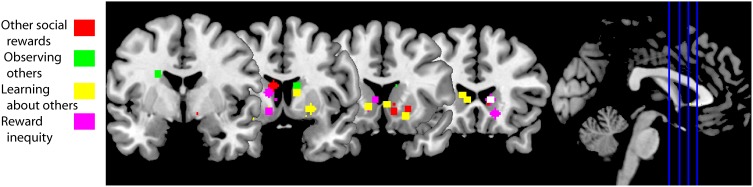
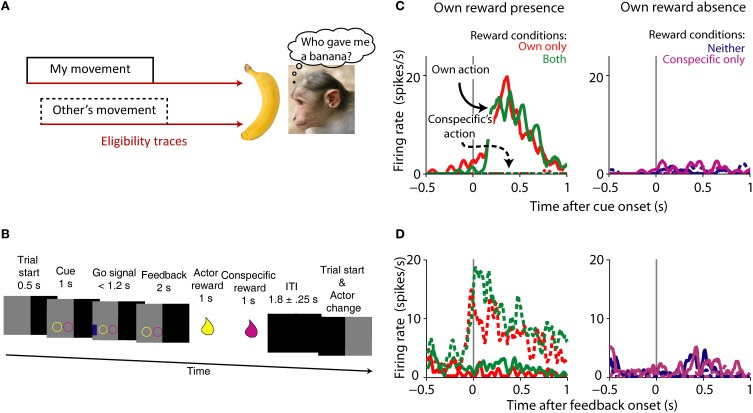
Where and how does the brain code reward during social behavior? Almost all elements of the brain's reward circuit are modulated during social behavior. The striatum in particular is activated by rewards in social situations. However, its role in social behavior is still poorly understood. Here, we attempt to review its participation in social behaviors of different species ranging from voles to humans. Human fMRI experiments show that the striatum is reliably active in relation to others' rewards, to reward inequity and also while learning about social agents. Social contact and rearing conditions have long-lasting effects on behavior, striatal anatomy and physiology in rodents and primates. The striatum also plays a critical role in pair-bond formation and maintenance in monogamous voles. We review recent findings from single neuron recordings showing that the striatum contains cells that link own reward to self or others' actions. These signals might be used to solve the agency-credit assignment problem: the question of whose action was responsible for the reward. Activity in the striatum has been hypothesized to integrate actions with rewards. The picture that emerges from this review is that the striatum is a general-purpose subcortical region capable of integrating social information into coding of social action and reward.
Overview
The claims and statistics of this paper haven’t been checked yet.
Run the check — free, no account needed. It reads the open-access text and checks the sources it cites.
Integrity signals
Registry
Cites
Statistics
Figures
Verification
Claims the paper makes
The claims and statistics of this paper haven’t been checked yet.
Run the check — free, no account needed. It reads the open-access text and checks the sources it cites.
Claims other papers make about this one
Each is checked against this paper’s own text: does it say what the citing paper says it does?
The source backs part of the claim, not all of it — or backs it for a different population, condition or comparison.
In the citing paper
“This activation is mediated by the release of dopamine, a neurotransmitter associated with pleasure and reward (Báez-Mendoza and Schultz, 2013).”
From The impact of digital technology, social media, and artificial intelligence on cognitive functions: a review (2023) · cites this paper as Báez-Mendoza and Schultz, 2013
Experimental — accuracy not yet measuredThe source backs part of the claim, not all of it — or backs it for a different population, condition or comparison.
In the citing paper
“Research has shown that excessive digital use, particularly related to activities such as social media and gaming, can trigger addictive behaviors by activating the brain's reward circuitry.”
From The impact of digital technology, social media, and artificial intelligence on cognitive functions: a review (2023) · cites this paper as Báez-Mendoza and Schultz, 2013
Experimental — accuracy not yet measured
Self-check
Percentages, sums and reported differences re-computed from the paper’s own numbers.
The self-check needs the paper’s full text.
Citations
Cites
Reinforcement Learning: An Introduction
Sutton, R. S., & Barto, A. G. (1998) · IEEE Transactions on Neural Networks · doi:10.1109/tnn.1998.712192 · Cited by 27,225
Reinforcement Learning: An Introduction
Sutton, R. S., & Barto, A. (2005) · IEEE Transactions on Neural Networks · doi:10.1109/tnn.2004.842673 · Cited by 25,268
Axelrod, R., & Hamilton, W. D. (1981) · Science · doi:10.1126/science.7466396 · Cited by 20,065
Theory of games and economic behavior
Garcia, S. R., & Miller, S. J. (2019) · American Mathematical Society eBooks · doi:10.1090/mbk/121/32 · Cited by 16,777
A Theory of Fairness, Competition, and Cooperation
Fehr, E., & Schmidt, K. M. (1999) · The Quarterly Journal of Economics · doi:10.1162/003355399556151 · Cited by 11,264
Five Rules for the Evolution of Cooperation
Nowak, M. A. (2006) · Science · doi:10.1126/science.1133755 · Cited by 5,894
ERC: A Theory of Equity, Reciprocity, and Competition
Bolton, G. E., & Ockenfels, A. (2000) · American Economic Review · doi:10.1257/aer.90.1.166 · Cited by 5,399
An experimental analysis of ultimatum bargaining
Güth, W., Schmittberger, R., & Schwarze, B. (1982) · Journal of Economic Behavior & Organization · doi:10.1016/0167-2681(82)90011-7 · Cited by 4,868
Incorporating Fairness into Game Theory and Economics
Rabin, M. (2011) · Princeton University Press eBooks · doi:10.2307/j.ctvcm4j8j.15 · Cited by 4,614
The reward circuit: linking primate anatomy and human imaging
Haber, S. N., & Knutson, B. (2010) · Neuropsychopharmacology · doi:10.1038/npp.2009.129 · Cited by 3,718
Research works printed but not linked: 3
- Báez-Mendoza R. Hoffman K. L. (2009). Object ontology in temporal lobe ensembles, in Cortical Mechanisms of Vision, 1st Edn., eds Jenkin M. Harris L. (Cambridge: Cambridge University Press), 237– 253
- Dawkins R. (2006). The Selfish Gene: – with a New Introduction by the Author. Oxford: University Press
- Hall F. S. Wilkinson L. S. Humby T. Robbins T. W. (1999). Maternal deprivation of neonatal rats produces enduring changes in dopamine function. Synapse 32, 37– 43 10188636
Cited by
Sorted by citations
The Neurobiology of Human Attachments
Feldman, R. (2017) · Trends in Cognitive Sciences · doi:10.1016/j.tics.2016.11.007 · Cited by 839
Horder, J., Petrinovic, M. M., Méndez, M. A., Bruns, A., Takumi, T., Spooren, W. P. J. M., Barker, G. J., Künnecke, B., & Murphy, D. (2018) · Translational Psychiatry · doi:10.1038/s41398-018-0155-1 · Cited by 321
What is resilience: an affiliative neuroscience approach
Feldman, R. (2020) · World Psychiatry · doi:10.1002/wps.20729 · Cited by 324
Shanmugasundaram, M., & Tamilarasu, A. (2023) · Frontiers in Cognition · doi:10.3389/fcogn.2023.1203077 · Cited by 291
The bacterial peptidoglycan-sensing molecule Pglyrp2 modulates brain development and behavior
Arentsen, T., Qian, Y., Gkotzis, S., Femenia, T., Wang, T., Udekwu, K., Forssberg, H., & Diaz Heijtz, R. (2017) · Molecular Psychiatry · doi:10.1038/mp.2016.182 · Cited by 280
A neural circuit covarying with social hierarchy in macaques
Noonan, M. P., Sallet, J., Mars, R. B., Neubert, F. X., O'Reilly, J. X., Andersson, J. L., Mitchell, A. S., Bell, A. H., Miller, K. L., & Rushworth, M. F. S. (2014) · PLoS Biology · doi:10.1371/journal.pbio.1001940 · Cited by 183
Affective Eye Contact: An Integrative Review
Hietanen, J. K. (2018) · Frontiers in Psychology · doi:10.3389/fpsyg.2018.01587 · Cited by 164
Brain Structural and Functional Damage Network Localization of Suicide
Zhang, X., Xu, R., Ma, H., Qian, Y., & Zhu, J. (2024) · Biological Psychiatry · doi:10.1016/j.biopsych.2024.01.003 · Cited by 160
Pfeiffer, U. J., Schilbach, L., Timmermans, B., Kuzmanovic, B., Georgescu, A. L., Bente, G., & Vogeley, K. (2014) · NeuroImage · doi:10.1016/j.neuroimage.2014.06.061 · Cited by 155
Loh, H. W., Ooi, C. P., Palmer, E., Barua, P. D., Dogan, S., Tuncer, T., Baygin, M., & Acharya, U. R. (2021) · Electronics · doi:10.3390/electronics10141740 · Cited by 144
An insular view of the social decision-making network
Rogers-Carter, M. M., & Christianson, J. P. (2019) · Neuroscience & Biobehavioral Reviews · doi:10.1016/j.neubiorev.2019.06.005 · Cited by 121
Role of basal ganglia neurocircuitry in the pathology of psychiatric disorders
Macpherson, T., & Hikida, T. (2019) · Psychiatry and Clinical Neurosciences · doi:10.1111/pcn.12830 · Cited by 138
Gu, R., Huang, W., Camilleri, J. A., Xu, P., Wei, P., Eickhoff, S. B., & Feng, C. (2019) · Neuroscience & Biobehavioral Reviews · doi:10.1016/j.neubiorev.2019.02.017 · Cited by 127
Martins, D., Rademacher, L., Gabay, A. S., Taylor, R., Richey, J. A., Smith, D. V., Goerlich, K. S., Nawijn, L., Cremers, H. R., Wilson, R., et al. (2021) · Neuroscience & Biobehavioral Reviews · doi:10.1016/j.neubiorev.2020.12.034 · Cited by 119
Neurobehavioral markers of resilience to depression amongst adolescents exposed to child abuse
Dennison, M. J., Sheridan, M. A., Busso, D. S., Jenness, J. L., Peverill, M., Rosen, M. L., & McLaughlin, K. A. (2016) · Journal of Abnormal Psychology · doi:10.1037/abn0000215 · Cited by 117
Landin-Romero, R., Kumfor, F., Leyton, C. E., Irish, M., Hodges, J. R., & Piguet, O. (2017) · NeuroImage · doi:10.1016/j.neuroimage.2016.03.032 · Cited by 116
Neural Mechanisms of Social Cognition in Primates
Wittmann, M. K., Lockwood, P. L., & Rushworth, M. F. S. (2018) · Annual Review of Neuroscience · doi:10.1146/annurev-neuro-080317-061450 · Cited by 115
The zebrafish subcortical social brain as a model for studying social behavior disorders
Geng, Y., & Peterson, R. T. (2019) · Disease Models & Mechanisms · doi:10.1242/dmm.039446 · Cited by 119
The social neuroscience of music: Understanding the social brain through human song.
Greenberg, D. M., Decety, J., & Gordon, I. (2021) · American Psychologist · doi:10.1037/amp0000819 · Cited by 111
On the relationship of online and offline social cognition
Schilbach, L. (2014) · Frontiers in Human Neuroscience · doi:10.3389/fnhum.2014.00278 · Cited by 107
Striatal direct and indirect pathways control decision-making behavior
Macpherson, T., Morita, M., & Hikida, T. (2014) · Frontiers in Psychology · doi:10.3389/fpsyg.2014.01301 · Cited by 105
Molecular and Synaptic Bases of CDKL5 Disorder
Zhu, Y., & Xiong, Z. (2018) · Developmental Neurobiology · doi:10.1002/dneu.22639 · Cited by 99
Male-specific deficits in natural reward learning in a mouse model of neurodevelopmental disorders
Grissom, N. M., McKee, S. E., Schoch, H., Bowman, N., Havekes, R., O'Brien, W. T., Mahrt, E., Siegel, S., Commons, K., Portfors, C., et al. (2018) · Molecular Psychiatry · doi:10.1038/mp.2017.184 · Cited by 92
Adolescent suicide attempts and ideation are linked to brain function during peer interactions
Harms, M. B., Casement, M. D., Teoh, J. Y., Ruiz, S., Scott, H., Wedan, R., & Quevedo, K. (2019) · Psychiatry Research: Neuroimaging · doi:10.1016/j.pscychresns.2019.05.001 · Cited by 87
Shdo, S. M., Ranasinghe, K. G., Gola, K. A., Mielke, C. J., Sukhanov, P., Miller, B. L., & Rankin, K. P. (2017) · Neuropsychologia · doi:10.1016/j.neuropsychologia.2017.02.010 · Cited by 97
10,000 social brains: Sex differentiation in human brain anatomy
Kiesow, H., Dunbar, R. I. M., Kable, J. W., Kalenscher, T., Vogeley, K., Schilbach, L., Marquand, A. F., Wiecki, T. V., & Bzdok, D. (2020) · Science Advances · doi:10.1126/sciadv.aaz1170 · Cited by 89
A neurochemical hypothesis for the origin of hominids
Raghanti, M. A., Edler, M. K., Stephenson, A. R., Munger, E. L., Jacobs, B., Hof, P. R., Sherwood, C. C., Holloway, R. L., & Lovejoy, C. O. (2018) · Proceedings of the National Academy of Sciences · doi:10.1073/pnas.1719666115 · Cited by 85
Fair play: social norm compliance failures in behavioural variant frontotemporal dementia
O’Callaghan, C., Bertoux, M., Irish, M., Shine, J. M., Wong, S., Spiliopoulos, L., Hodges, J. R., & Hornberger, M. (2015) · Brain · doi:10.1093/brain/awv315 · Cited by 90
Fareri, D. S., Gabard-Durnam, L. J., Goff, B., Flannery, J., Gee, D. G., Lumian, D. S., Caldera, C., & Tottenham, N. (2017) · Development and Psychopathology · doi:10.1017/s0954579417001456 · Cited by 90
Bell, V., Raihani, N., & Wilkinson, S. (2021) · Clinical Psychological Science · doi:10.1177/2167702620951553 · Cited by 78
Neural computations underpinning the strategic management of influence in advice giving
Hertz, U., Palminteri, S., Brunetti, S., Olesen, C., Frith, C. D., & Bahrami, B. (2017) · Nature Communications · doi:10.1038/s41467-017-02314-5 · Cited by 77
Tourette syndrome: a disorder of the social decision-making network
Albin, R. L. (2017) · Brain · doi:10.1093/brain/awx204 · Cited by 80
Kolodny, O., & Edelman, S. (2018) · Philosophical Transactions of the Royal Society B Biological Sciences · doi:10.1098/rstb.2017.0052 · Cited by 79
Characterizing the mechanisms of social connection
Delgado, M. R., Fareri, D. S., & Chang, L. J. (2023) · Neuron · doi:10.1016/j.neuron.2023.09.012 · Cited by 88
Zhang, H., Chen, Z., Jia, Z., & Gong, Q. (2014) · Progress in Neuro-Psychopharmacology and Biological Psychiatry · doi:10.1016/j.pnpbp.2014.03.002 · Cited by 72
Vicarious Reinforcement Learning Signals When Instructing Others
Apps, M. A. J., Lesage, E., & Ramnani, N. (2015) · Journal of Neuroscience · doi:10.1523/jneurosci.3669-14.2015 · Cited by 71
Mandić-Maravić, V., Grujičić, R., Milutinovic, L., Munjiza, A., & Pejovic-Milovancevic, M. M. (2022) · Frontiers in Psychiatry · doi:10.3389/fpsyt.2021.787097 · Cited by 75
Schwarz, K., Moessnang, C., Schweiger, J. I., Baumeister, S., Plichta, M. M., Brandeis, D., Banaschewski, T., Wackerhagen, C., Erk, S., Walter, H., et al. (2019) · Schizophrenia Bulletin · doi:10.1093/schbul/sbz075 · Cited by 66
Neural correlates of ingroup bias for prosociality in rats
Bartal, I. B.-A., Breton, J., Sheng, H., Long, K. L. P., Chen, S., Halliday, A., Kenney, J. W., Wheeler, A. L., Frankland, P. W., Shilyansky, C., et al. (2021) · eLife · doi:10.7554/elife.65582 · Cited by 66
Cox, A., Kohls, G., Naples, A. J., Mukerji, C., Coffman, M. C., Rutherford, H. J. V., Mayes, L. C., & McPartland, J. C. (2015) · Social Cognitive and Affective Neuroscience · doi:10.1093/scan/nsv024 · Cited by 77
Cerniglia, L., Bartolomeo, L. D., Capobianco, M., Russo, S. L. M. L., Festucci, F., Tambelli, R., Adriani, W., & Cimino, S. (2019) · Frontiers in Behavioral Neuroscience · doi:10.3389/fnbeh.2019.00212 · Cited by 72
The parental brain and behavior: A target for endocrine disruption
Keller, M., Vandenberg, L. N., & Charlier, T. D. (2019) · Frontiers in Neuroendocrinology · doi:10.1016/j.yfrne.2019.100765 · Cited by 64
Reversible Behavioral Phenotypes in a Conditional Mouse Model of TDP-43 Proteinopathies
Alfieri, J. A., Pino, N. S., & Igaz, L. M. (2014) · Journal of Neuroscience · doi:10.1523/jneurosci.1918-14.2014 · Cited by 60
Mitelman, S. A., Bralet, M., Haznedar, M. M., Hollander, E., Shihabuddin, L., Hazlett, E. A., & Buchsbaum, M. S. (2017) · Brain Imaging and Behavior · doi:10.1007/s11682-017-9721-z · Cited by 63
The neuroscience of active learning and direct instruction
Dubinsky, J. M., & Hamid, A. (2024) · Neuroscience & Biobehavioral Reviews · doi:10.1016/j.neubiorev.2024.105737 · Cited by 121
Gentile, A., Fresegna, D., Federici, M., Musella, A., Rizzo, F. R., Sepman, H., Bullitta, S., Vito, F. D., Haji, N., Rossi, S., et al. (2014) · Neurobiology of Disease · doi:10.1016/j.nbd.2014.11.022 · Cited by 59
Kumar, V. J., Grissom, N. M., McKee, S. E., Schoch, H., Bowman, N., Havekes, R., Kumar, M., Pickup, S., Poptani, H., Reyes, T. M., et al. (2018) · Translational Psychiatry · doi:10.1038/s41398-018-0157-z · Cited by 54
Erdeniz, B., Serin, E., İbadi, Y., & Taş, C. (2017) · Psychiatry Research Neuroimaging · doi:10.1016/j.pscychresns.2017.09.011 · Cited by 54
Mathiak, K. A., Alawi, E. M., Koush, Y., Dyck, M., Cordes, J. S., Gaber, T. J., Zepf, F. D., Palomero‐Gallagher, N., Sarkheil, P., Bergert, S., et al. (2015) · Frontiers in Behavioral Neuroscience · doi:10.3389/fnbeh.2015.00136 · Cited by 55
Cholesteryl ester levels are elevated in the caudate and putamen of Huntington’s disease patients
Phillips, G. R., Hancock, S. E., Brown, S. H. J., Jenner, A. M., Kreilaus, F., Newell, K. A., & Mitchell, T. W. (2020) · Scientific Reports · doi:10.1038/s41598-020-76973-8 · Cited by 49
Toward a neural basis for peer-interaction: what makes peer-learning tick?
Clark, I., & Dumas, G. (2015) · Frontiers in Psychology · doi:10.3389/fpsyg.2015.00028 · Cited by 59
Yoo, T., Cho, H., Lee, J., Park, H., Yoo, Y.-E., Yang, E., Kim, J. Y., Kim, H., & Kim, E. (2018) · Frontiers in Cellular Neuroscience · doi:10.3389/fncel.2018.00341 · Cited by 50
Scarcity disrupts the neural encoding of Black faces: A socioperceptual pathway to discrimination.
Krosch, A. R., & Amodio, D. M. (2019) · Journal of Personality and Social Psychology · doi:10.1037/pspa0000168 · Cited by 46
Howard‐Jones, P. A., & Jay, T. (2016) · Current Opinion in Behavioral Sciences · doi:10.1016/j.cobeha.2016.04.015 · Cited by 56
Blecharz‐Klin, K., Wawer, A., Jawna, K., Pyrzanowska, J., Piechal, A., Mirowska-Guzel, D. M., & Widy‐Tyszkiewicz, E. (2018) · Pharmacology Biochemistry and Behavior · doi:10.1016/j.pbb.2018.03.004 · Cited by 52
Rutkowski, T. P., Purcell, R. H., Pollak, R. M., Grewenow, S. M., Gafford, G. M., Malone, T., Khan, U. A., Schroeder, J. P., Epstein, M. P., Bassell, G. J., et al. (2019) · Molecular Psychiatry · doi:10.1038/s41380-019-0413-5 · Cited by 46
Oettl, L., Scheller, M. F., Filosa, C., Wieland, S., Haag, F., Loeb, C., Durstewitz, D., Shusterman, R., Russo, E., & Kelsch, W. (2020) · Nature Communications · doi:10.1038/s41467-020-17257-7 · Cited by 45
Let's chat: developmental neural bases of social motivation during real‐time peer interaction
Warnell, K. R., Sadikova, E., & Redcay, E. (2017) · Developmental Science · doi:10.1111/desc.12581 · Cited by 45
A neurogenetic analysis of female autism
Jack, A., Sullivan, C. A. W., Aylward, E., Bookheimer, S. Y., Dapretto, M., Gaab, N., Horn, J. D. V., Eilbott, J. A., Jacokes, Z., Torgerson, C. M., et al. (2021) · Brain · doi:10.1093/brain/awab064 · Cited by 51
Some neuroanatomical insights to impulsive aggression in schizophrenia
Leclerc, M., Regenbogen, C., Hamilton, R. H., & Habel, U. (2018) · Schizophrenia Research · doi:10.1016/j.schres.2018.06.016 · Cited by 45
One cranium, two brains not yet introduced: Distinct but complementary views of the social brain
Prounis, G. S., & Ophir, A. G. (2019) · Neuroscience & Biobehavioral Reviews · doi:10.1016/j.neubiorev.2019.11.011 · Cited by 46
Decision neuroscience and neuroeconomics: Recent progress and ongoing challenges
Dennison, J. B., Sazhin, D., & Smith, D. V. (2022) · Wiley Interdisciplinary Reviews Cognitive Science · doi:10.1002/wcs.1589 · Cited by 50
Social and asocial prefrontal cortex neurons: a new look at social facilitation and the social brain
Demolliens, M., Isbaine, F., Takerkart, S., Huguet, P., & Boussaoud, D. (2017) · Social Cognitive and Affective Neuroscience · doi:10.1093/scan/nsx053 · Cited by 36
Yoo, T., Kim, S.-G., Yang, S. H., Kim, H., Kim, E., & Kim, S. Y. (2020) · Molecular Autism · doi:10.1186/s13229-020-00324-7 · Cited by 37
Carnevali, L., Vacondio, F., Rossi, S., Callegari, S., Macchi, E., Spadoni, G., Bedini, A., Rivara, S., Mor, M., & Sgoifo, A. (2015) · European Neuropsychopharmacology · doi:10.1016/j.euroneuro.2015.07.015 · Cited by 34
Directing Technology Addiction Research in Information Systems
Serenko, A., & Turel, O. (2020) · ACM SIGMIS Database the DATABASE for Advances in Information Systems · doi:10.1145/3410977.3410982 · Cited by 37
Phillips, G. R., Saville, J. T., Hancock, S. E., Brown, S. H. J., Jenner, A. M., McLean, C., Fuller, M., Newell, K. A., & Mitchell, T. W. (2021) · Brain Communications · doi:10.1093/braincomms/fcab303 · Cited by 34
Beyond a means of exposure: a new view of the mother in toxicology research
Catanese, M. C., Suvorov, A., & Vandenberg, L. N. (2014) · Toxicology Research · doi:10.1039/c4tx00119b · Cited by 34
Durieux, A. M. S., Fernandes, C., Murphy, D., Labouesse, M. A., Giovanoli, S., Meyer, U., Li, Q., So, P., & McAlonan, G. M. (2015) · Frontiers in Behavioral Neuroscience · doi:10.3389/fnbeh.2015.00343 · Cited by 34
Ariza-Salamanca, D. F., Corrales-Hernández, M. G., Pachón-Londoño, M. J., & Hernández-Duarte, I. (2022) · Frontiers in Molecular Neuroscience · doi:10.3389/fnmol.2022.993671 · Cited by 38
The impact of social networking sites use on health-related outcomes among UK adolescents
Serenko, A., Turel, O., & Bohonis, H. (2021) · Computers in Human Behavior Reports · doi:10.1016/j.chbr.2021.100058 · Cited by 34
Shih, H.-C., Kuo, M.-E., Wu, C., Chao, Y.-P., Huang, H.-W., & Huang, C.-M. (2022) · Brain Sciences · doi:10.3390/brainsci12070830 · Cited by 32
Maïsterrena, A., Matas, E., Mirfendereski, H., Balbous, A., Marchand, S., & Jaber, M. (2022) · Biomolecules · doi:10.3390/biom12111691 · Cited by 32
Stanojlović, M., Pallais, J. P., Vijayakumar, A., & Kotz, C. M. (2019) · Molecular Neurobiology · doi:10.1007/s12035-019-01682-x · Cited by 33
Neuronal Circuits for Social Decision-Making and Their Clinical Implications
Báez-Mendoza, R., Vázquez, Y., Mastrobattista, E. P., & Williams, Z. M. (2021) · Frontiers in Neuroscience · doi:10.3389/fnins.2021.720294 · Cited by 34
Self-citationStanisavljević, A., Perić, I., Gass, P., Inta, D., Lang, U. E., Borgwardt, S., & Filipović, D. (2018) · Neuroscience · doi:10.1016/j.neuroscience.2018.11.015 · Cited by 30
Moderate running exercise prevents excessive immune system activation
Scheffer, D. D. L., Ghisoni, K., Aguiar, A. S., & Latini, A. (2019) · Physiology & Behavior · doi:10.1016/j.physbeh.2019.02.023 · Cited by 31
Yang, W. F. Z., Toller, G., Shdo, S. M., Kotz, S. A., Brown, J. A., Seeley, W. W., Kramer, J. H., Miller, B. L., & Rankin, K. P. (2021) · NeuroImage Clinical · doi:10.1016/j.nicl.2021.102755 · Cited by 29
Ré, D. B., Hilpert, M., Saglimbeni, B., Strait, M. D., Ilievski, V., Coady, M., Talayero, M. J., Wilmsen, K., Chesnais, H., Balac, O., et al. (2021) · Environmental Research · doi:10.1016/j.envres.2021.111557 · Cited by 33
Noritake, A., Ninomiya, T., & Isoda, M. (2021) · Neuroscience & Biobehavioral Reviews · doi:10.1016/j.neubiorev.2021.02.018 · Cited by 29
Islam, A., Takeyama, E., Mamun, M. A., Sato, T., Horikawa, M., Takahashi, Y., Kikushima, K., & Setou, M. (2020) · Metabolites · doi:10.3390/metabo10040153 · Cited by 28
Luduvico, K. P., Spohr, L., Soares, M. S. P., Teixeira, F. C., de Farias, A. S., Bona, N. P., Pedra, N. S., Félix, A. D. O. C., Spanevello, R. M., & Stefanello, F. M. (2020) · Neurochemical Research · doi:10.1007/s11064-020-03064-5 · Cited by 30
Felix, C., Rosano, C., Zhu, X., Flatt, J. D., & Rosso, A. L. (2020) · The Journals of Gerontology Series B · doi:10.1093/geronb/gbaa173 · Cited by 29
Pan, X., Guo, X., Xiong, F., Cheng, G., Lü, Q., & Yan, H. (2015) · Toxicology Letters · doi:10.1016/j.toxlet.2015.04.017 · Cited by 28
Westhoff, B., Blankenstein, N. E., Schreuders, E., Crone, E. A., & van Duijvenvoorde, A. C. K. (2021) · Developmental Cognitive Neuroscience · doi:10.1016/j.dcn.2021.101018 · Cited by 24
Abraham, E., Gilam, G., Kanat‐Maymon, Y., Jacob, Y., Zagoory‐Sharon, O., Hendler, T., & Feldman, R. (2017) · Neuropsychopharmacology · doi:10.1038/npp.2017.71 · Cited by 26
Abraham, E., Posner, J. E., WICKRAMARATNE, P. J., Aw, N., van Dijk, M. T., Cha, J., Weissman, M. M., & Talati, A. (2020) · Social Cognitive and Affective Neuroscience · doi:10.1093/scan/nsaa118 · Cited by 25
A neuronal reward inequity signal in primate striatum
Báez-Mendoza, R., van Coeverden, C., & Schultz, W. (2015) · Journal of Neurophysiology · doi:10.1152/jn.00321.2015 · Cited by 25
Self-citationThe non-human primate striatum undergoes marked prolonged remodeling during postnatal development
Martin, L. J., & Cork, L. C. (2014) · Frontiers in Cellular Neuroscience · doi:10.3389/fncel.2014.00294 · Cited by 25
Pereira, J. A., Sepúlveda, P., Rana, M., Montalba, C., Cristián Tejos, N., Torres, R., Sitaram, R., & Ruíz, S. (2019) · Frontiers in Human Neuroscience · doi:10.3389/fnhum.2019.00446 · Cited by 27
Dahlén, A. D., Schofield, A., Schiöth, H., & Brooks, S. (2022) · Frontiers in Neuroscience · doi:10.3389/fnins.2022.868366 · Cited by 22
Ainsworth, M., Sallet, J., Joly, O., Kyriazis, D., Kriegeskorte, N., Duncan, J., Schüffelgen, U., Rushworth, M. F. S., & Bell, A. H. (2021) · The Journal of Neuroscience · doi:10.1523/jneurosci.0870-20.2021 · Cited by 24
Neurocomputational mechanisms involved in adaptation to fluctuating intentions of others
Philippe, R., Janet, R., Khalvati, K., Rao, R. P. N., Lee, D., & Dreher, J. (2024) · Nature Communications · doi:10.1038/s41467-024-47491-2 · Cited by 31
Social intentions in Parkinson's disease patients: A kinematic study
Straulino, E., Scaravilli, T., & Castiello, U. (2015) · Cortex · doi:10.1016/j.cortex.2015.02.012 · Cited by 24
Chadderdon, A. L., Carns, D. R., Pudalov, L. R., McKernan, L. C., & Honce, J. M. (2020) · Topics in Magnetic Resonance Imaging · doi:10.1097/rmr.0000000000000239 · Cited by 31
The neural computation of human prosocial choices in complex motivational states
Saulin, A., Horn, U., Lotze, M., Kaiser, J., & Hein, G. (2021) · NeuroImage · doi:10.1016/j.neuroimage.2021.118827 · Cited by 25
Henco, L., Brandi, M., Lahnakoski, J. M., Diaconescu, A. O., Mathys, C. D., & Schilbach, L. (2020) · Cortex · doi:10.1016/j.cortex.2020.02.024 · Cited by 25
Huebschman, J. L., Corona, K. S., Guo, Y., & Smith, L. N. (2020) · Frontiers in Molecular Neuroscience · doi:10.3389/fnmol.2020.00161 · Cited by 24
Bai, C., Dong, H., Tao, J., Chen, Y., Xu, H., Lin, J. J., Huang, C., & Dong, Q. (2022) · The Science of The Total Environment · doi:10.1016/j.scitotenv.2022.159733 · Cited by 23
Brown, E. C., Gonzalez-Liencres, C., Taş, C., & Brüne, M. (2015) · Social Neuroscience · doi:10.1080/17470919.2015.1053982 · Cited by 22
Metadata
- Authors
- Báez-Mendoza, R., & Schultz, W.
- Affiliations
- University of Cambridge (GB)
- Corresponding author
- Báez-Mendoza, Raymundo
- Venue
- Frontiers in Neuroscience
- Publisher
- Frontiers Media SA
- Published
- 2013
- Volume
- 7
- Pages
- 233-233
- ISSN
- 1662-453X (ISSN-L)
- PMC
- PMC3857563
- OpenAlex
- W2116794070
- Cited by
- 312
- References
- 171
- Citations by year
- 2026: 18 · 2025: 22 · 2024: 23 · 2023: 27 · 2022: 38 · 2021: 36 · 2020: 26 · 2019: 32 · 2018: 21 · 2017: 22 · 2016: 17 · 2015: 19 · 2014: 11
- FWCI
- 1.59
- Type
- journal article
- Language
- en
- Open access
- gold
- doi.org
- Licence
- cc-by
- Locations
- Frontiers in Neuroscience (publishedVersion, cc-by)
- Europe PMC (PubMed Central) (publishedVersion, cc-by)
- PubMed Central (publishedVersion, cc-by)
- PubMed (publishedVersion)
- DOAJ (DOAJ: Directory of Open Access Journals) (submittedVersion, cc-by-sa)
- Funders
- Wellcome Trust (095495)
- Topics
- Life Sciences › Neuroscience › Cellular and Molecular Neuroscience › Neurotransmitter Receptor Influence on Behavior
- Life Sciences › Neuroscience › Endocrine and Autonomic Systems › Neuroendocrine regulation and behavior
- Life Sciences › Neuroscience › Cognitive Neuroscience › Neural and Behavioral Psychology Studies
- Keywords
- striatum, social behavior, reward coding, social reward, reward inequity, social learning, pair bonding, social contact, rearing conditions, single-unit recording, reward systems
About these checks
Registry, retraction, Cites and statistics results are computed, not judged, with one exception: a printed reference that no index lists is read once by a model before it counts as a citation error. Claims are extracted by a model and kept only when their quote appears verbatim in the text; each cited source is then checked, with a model’s help, for whether it says what the claim relies on. Those verdicts can be wrong — read the claim’s quote and the cited source before relying on one.
Statistics and arithmetic are recomputed, not judged.
Confidence bands are shown only for fields calibrated on our annotated test set. None is calibrated yet, so no band is shown.
What counts as a claim ›How we measure confidence ›How we check this ›
Are you an author, or do you see a problem with this page? Request a review
