

The DOI matches its Crossref record; 168 of the 171 references it cites were found in a registry or an index.
The role of the striatum in social behavior
Open accessAbstract
Where and how does the brain code reward during social behavior? Almost all elements of the brain's reward circuit are modulated during social behavior. The striatum in particular is activated by rewards in social situations. However, its role in social behavior is still poorly understood. Here, we attempt to review its participation in social behaviors of different species ranging from voles to humans. Human fMRI experiments show that the striatum is reliably active in relation to others' rewards, to reward inequity and also while learning about social agents. Social contact and rearing conditions have long-lasting effects on behavior, striatal anatomy and physiology in rodents and primates. The striatum also plays a critical role in pair-bond formation and maintenance in monogamous voles. We review recent findings from single neuron recordings showing that the striatum contains cells that link own reward to self or others' actions. These signals might be used to solve the agency-credit assignment problem: the question of whose action was responsible for the reward. Activity in the striatum has been hypothesized to integrate actions with rewards. The picture that emerges from this review is that the striatum is a general-purpose subcortical region capable of integrating social information into coding of social action and reward.
Overview
The claims and statistics of this paper haven’t been checked yet.
Run the check — free, no account needed. It reads the open-access text and checks the sources it cites.
Integrity signals
Registry
Cites
Statistics
Figures
Verification
Claims the paper makes
The claims and statistics of this paper haven’t been checked yet.
Run the check — free, no account needed. It reads the open-access text and checks the sources it cites.
Claims other papers make about this one
Each is checked against this paper’s own text: does it say what the citing paper says it does?
The source backs part of the claim, not all of it — or backs it for a different population, condition or comparison.
In the citing paper
“This activation is mediated by the release of dopamine, a neurotransmitter associated with pleasure and reward (Báez-Mendoza and Schultz, 2013).”
From The impact of digital technology, social media, and artificial intelligence on cognitive functions: a review (2023) · cites this paper as Báez-Mendoza and Schultz, 2013
Experimental — accuracy not yet measuredThe source backs part of the claim, not all of it — or backs it for a different population, condition or comparison.
In the citing paper
“Research has shown that excessive digital use, particularly related to activities such as social media and gaming, can trigger addictive behaviors by activating the brain's reward circuitry.”
From The impact of digital technology, social media, and artificial intelligence on cognitive functions: a review (2023) · cites this paper as Báez-Mendoza and Schultz, 2013
Experimental — accuracy not yet measured
Self-check
Percentages, sums and reported differences re-computed from the paper’s own numbers.
The self-check needs the paper’s full text.
Citations
Cites
Reinforcement Learning: An Introduction
Sutton, R. S., & Barto, A. G. (1998) · IEEE Transactions on Neural Networks · doi:10.1109/tnn.1998.712192 · Cited by 27,225
Reinforcement Learning: An Introduction
Sutton, R. S., & Barto, A. (2005) · IEEE Transactions on Neural Networks · doi:10.1109/tnn.2004.842673 · Cited by 25,268
Axelrod, R., & Hamilton, W. D. (1981) · Science · doi:10.1126/science.7466396 · Cited by 20,065
Theory of games and economic behavior
Garcia, S. R., & Miller, S. J. (2019) · American Mathematical Society eBooks · doi:10.1090/mbk/121/32 · Cited by 16,777
A Theory of Fairness, Competition, and Cooperation
Fehr, E., & Schmidt, K. M. (1999) · The Quarterly Journal of Economics · doi:10.1162/003355399556151 · Cited by 11,264
Five Rules for the Evolution of Cooperation
Nowak, M. A. (2006) · Science · doi:10.1126/science.1133755 · Cited by 5,894
ERC: A Theory of Equity, Reciprocity, and Competition
Bolton, G. E., & Ockenfels, A. (2000) · American Economic Review · doi:10.1257/aer.90.1.166 · Cited by 5,399
An experimental analysis of ultimatum bargaining
Güth, W., Schmittberger, R., & Schwarze, B. (1982) · Journal of Economic Behavior & Organization · doi:10.1016/0167-2681(82)90011-7 · Cited by 4,868
Incorporating Fairness into Game Theory and Economics
Rabin, M. (2011) · Princeton University Press eBooks · doi:10.2307/j.ctvcm4j8j.15 · Cited by 4,614
The reward circuit: linking primate anatomy and human imaging
Haber, S. N., & Knutson, B. (2010) · Neuropsychopharmacology · doi:10.1038/npp.2009.129 · Cited by 3,718
Oxytocin increases trust in humans
Kosfeld, M., Heinrichs, M., Zak, P. J., Fischbacher, U., & Fehr, E. (2005) · Nature · doi:10.1038/nature03701 · Cited by 3,690
The Synaptic Organization of the Brain
(2004) · Oxford University Press eBooks · doi:10.1093/acprof:oso/9780195159561.001.1 · Cited by 3,574
Theory of Games and Economic Behavior
ROWLAND, E. (1946) · Nature · doi:10.1038/157172a0 · Cited by 3,349
Bardo, M. T., & Hammer, R. P. (1991) · Neuroscience · doi:10.1016/0306-4522(91)90226-e · Cited by 3,229
The oxytocin receptor system: structure, function, and regulation
Gimpl, G., & Fahrenholz, F. (2001) · Physiological Reviews · doi:10.1152/physrev.2001.81.2.629 · Cited by 3,089
The spirit level : why equality is better for everyone
Wilkinson, R. G., & Pickett, K. E. (2010) · Penguin Books · Cited by 2,989
D 1 and D 2 Dopamine Receptor-regulated Gene Expression of Striatonigral and Striatopallidal Neurons
Gerfen, C. R., Engber, T. M., Mahan, L. C., Susel, Z., Chase, T. N., Monsma, F. J., & Sibley, D. R. (1990) · Science · doi:10.1126/science.2147780 · Cited by 2,967
Fairness in Simple Bargaining Experiments
Forsythe, R. S., Horowitz, J. L., Savin, N. E., & Sefton, M. (1994) · Games and Economic Behavior · doi:10.1006/game.1994.1021 · Cited by 2,383
From motivation to action: Functional interface between the limbic system and the motor system
MOGENSON, G., JONES, D., & YIM, C. (1980) · Progress in Neurobiology · doi:10.1016/0301-0082(80)90018-0 · Cited by 2,331
RELATIVE AND ABSOLUTE STRENGTH OF RESPONSE AS A FUNCTION OF FREQUENCY OF REINFORCEMENT 1, 2
Herrnstein, R. J. (1961) · Journal of the Experimental Analysis of Behavior · doi:10.1901/jeab.1961.4-267 · Cited by 2,281
Functional anatomy of the basal ganglia. I. The cortico-basal ganglia-thalamo-cortical loop
Parent, A., & Hazrati, L.-N. (1995) · Brain Research Reviews · doi:10.1016/0165-0173(94)00007-c · Cited by 2,161
Essential role of BDNF in the mesolimbic dopamine pathway in social defeat stress
Berton, O., McClung, C. A., DiLeone, R. J., Krishnan, V., Renthal, W., Russo, S. J., Graham, D., Tsankova, N. M., Bolanos, C. A., Rios, M., et al. (2006) · Science · doi:10.1126/science.1120972 · Cited by 2,129
The brain reward circuitry in mood disorders
Russo, S. J., & Nestler, E. J. (2013) · Nature Reviews Neuroscience · doi:10.1038/nrn3381 · Cited by 1,870
Advances in Behavioral Economics
(2004) · Princeton University Press eBooks · doi:10.1515/9781400829118 · Cited by 1,750
Proceedings of the Royal Society B: Biological Sciences
(2013) · Proceedings of the Royal Society B Biological Sciences · doi:10.1098/rspb · Cited by 1,593
Dunbar, R., & Shultz, S. (2007) · Science · doi:10.1126/science.1145463 · Cited by 1,580
The neurobiology of pair bonding.
Young, L. J., & Wang, Z. (2004) · Nature Neuroscience · doi:10.1038/nn1327 · Cited by 1,523 · cited 1×
“As noted by Wang and Young (Lim et al., 2004b; Young and Wang, 2004), the cellular mechanism might be the co-activation of D2-expressing accumbal neurons by vasopressin and/or oxytocin.”
BackgroundThe neural correlates of maternal and romantic love
Bartels, A., & Zeki, S. (2004) · NeuroImage · doi:10.1016/j.neuroimage.2003.11.003 · Cited by 1,497 · cited 2×
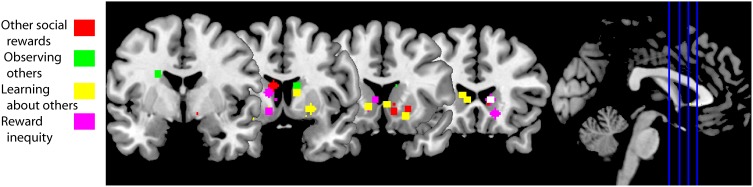
“Studies clustered in “Observing others”: (Bartels and Zeki, 2000, 2004; Aron, 2005; Acevedo et al., 2012).”
BackgroundGame Theory for Applied Economists
Gibbons, R. S. (1992) · Princeton University Press eBooks · doi:10.1515/9781400835881 · Cited by 1,486
The primate basal ganglia: Parallel and integrative networks
Haber, S. N. (2003) · Journal of Chemical Neuroanatomy · doi:10.1016/j.jchemneu.2003.10.003 · Cited by 1,479
A neural basis for social cooperation
Rilling, J. K., Gutman, D. A., Zeh, T. R., Pagnoni, G., Berns, G. S., & Kilts, C. D. (2002) · Neuron · doi:10.1016/s0896-6273(02)00755-9 · Cited by 1,451
Neuronal Coding of Prediction Errors
Schultz, W., & Dickinson, A. (2000) · Annual Review of Neuroscience · doi:10.1146/annurev.neuro.23.1.473 · Cited by 1,427
Self-citationGetting to Know You: Reputation and Trust in a Two-Person Economic Exchange
King-Casas, B., Tomlin, D., Anen, C., Camerer, C. F., Quartz, S. R., & Montague, P. R. (2005) · Science · doi:10.1126/science.1108062 · Cited by 1,345
Role of the Basal Ganglia in the Control of Purposive Saccadic Eye Movements
Hikosaka, O., Takikawa, Y., & Kawagoe, R. (2000) · Physiological Reviews · doi:10.1152/physrev.2000.80.3.953 · Cited by 1,334
Multiple reward signals in the brain
Schultz, W. (2000) · Nature Reviews Neuroscience · doi:10.1038/35044563 · Cited by 1,303
Self-citationEfferent connections of the substantia nigra and ventral tegmental area in the rat
Beckstead, R. M., Domesick, V. B., & Nauta, W. J. H. (1979) · Brain Research · doi:10.1016/0006-8993(79)91001-1 · Cited by 1,293
Oxytocin shapes the neural circuitry of trust and trust adaptation in humans
Baumgartner, T., Heinrichs, M., Vonlanthen, A., Fischbacher, U., & Fehr, E. (2008) · Neuron · doi:10.1016/j.neuron.2008.04.009 · Cited by 1,258
A unifying computational framework for motor control and social interaction
Wolpert, D. M., Doya, K., & Kawato, M. (2003) · Philosophical Transactions of the Royal Society of London. Series B: Biological Sciences · doi:10.1098/rstb.2002.1238 · Cited by 1,228
A Cortical Region Consisting Entirely of Face-Selective Cells
Tsao, D. Y., Freiwald, W. A., Tootell, R. B. H., & Livingstone, M. S. (2006) · Science · doi:10.1126/science.1119983 · Cited by 1,131
Social amnesia in mice lacking the oxytocin gene
Ferguson, J. N., Young, L. J., Hearn, E. F., Matzuk, M. M., Insel, T. R., & Winslow, J. T. (2000) · Nature Genetics · doi:10.1038/77040 · Cited by 1,130
Social utility and decision making in interpersonal contexts.
Loewenstein, G. F., Thompson, L., & Bazerman, M. H. (1989) · Journal of Personality and Social Psychology · doi:10.1037/0022-3514.57.3.426 · Cited by 1,122
Longitudinal topography and interdigitation of corticostriatal projections in the rhesus monkey
Selemon, L. D., & Goldman-Rakic, P. S. (1985) · Journal of Neuroscience · doi:10.1523/jneurosci.05-03-00776.1985 · Cited by 1,074
Schultz, R. T. (2005) · International Journal of Developmental Neuroscience · doi:10.1016/j.ijdevneu.2004.12.012 · Cited by 1,071
Children with Autism Fail to Orient to Naturally Occurring Social Stimuli
Dawson, G., Meltzoff, A. N., Osterling, J., Rinaldi, J., & Brown, E. (1998) · Journal of Autism and Developmental Disorders · doi:10.1023/a:1026043926488 · Cited by 1,065
Neural Responses to Taxation and Voluntary Giving Reveal Motives for Charitable Donations
Harbaugh, W. T., Mayr, U., & Burghart, D. R. (2007) · Science · doi:10.1126/science.1140738 · Cited by 1,046
Insel, T. R. (2010) · Neuron · doi:10.1016/j.neuron.2010.03.005 · Cited by 1,044
Oxytocin in the Medial Amygdala is Essential for Social Recognition in the Mouse
Ferguson, J. N., Aldag, J. M., Insel, T. R., & Young, L. J. (2001) · The Journal of Neuroscience · doi:10.1523/jneurosci.21-20-08278.2001 · Cited by 1,043
Unmyelinated tactile afferents signal touch and project to insular cortex
Olausson, H., Lamarre, Y., Backlund, H., Morin, C., Wallin, B. G., Starck, G., EKHOLM, S. E., Strigo, I. A., Worsley, K. J., Vallbo, Å. B., et al. (2002) · Nature Neuroscience · doi:10.1038/nn896 · Cited by 1,034
The neural basis of romantic love
Bartels, A., & Zeki, S. (2000) · NeuroReport · doi:10.1097/00001756-200011270-00046 · Cited by 1,020
Functional anatomy of the basal ganglia
Yelnik, J. (2002) · Movement Disorders · doi:10.1002/mds.10138 · Cited by 982
Reward, Motivation, and Emotion Systems Associated With Early-Stage Intense Romantic Love
Aron, A., Fisher, H., Mashek, D. J., Strong, G., Li, H., & Brown, L. L. (2005) · Journal of Neurophysiology · doi:10.1152/jn.00838.2004 · Cited by 963
Communication in neuronal networks
Laughlin, S. B., & Sejnowski, T. J. (2003) · Science · doi:10.1126/science.1089662 · Cited by 950
Visual cells in the temporal cortex sensitive to face view and gaze direction
Perrett, D. I., Smith, P., Potter, D. D., Mistlin, A. J., Head, A., Milner, A. D., & Jeeves, M. A. (1985) · Proceedings of the Royal Society B Biological Sciences · doi:10.1098/rspb.1985.0003 · Cited by 944
Representation of Action-Specific Reward Values in the Striatum
Samejima, K., Ueda, Y., Doya, K., & Kimura, M. (2005) · Science · doi:10.1126/science.1115270 · Cited by 939
Human fronto–mesolimbic networks guide decisions about charitable donation
Moll, J., Krueger, F., Zahn, R., Pardini, M., de Oliveira-Souza, R., & Grafman, J. (2006) · Proceedings of the National Academy of Sciences · doi:10.1073/pnas.0604475103 · Cited by 900
Alexander, G. E. (1998) · Cited by 891
Fone, K. C. F., & Porkess, M. V. (2008) · Neuroscience & Biobehavioral Reviews · doi:10.1016/j.neubiorev.2008.03.003 · Cited by 864
Processing of Social and Monetary Rewards in the Human Striatum
Izuma, K., Saito, D. N., & Sadato, N. (2008) · Neuron · doi:10.1016/j.neuron.2008.03.020 · Cited by 855
Oxytocin receptor distribution reflects social organization in monogamous and polygamous voles
Insel, T. R., & Shapiro, L. E. (1992) · Proceedings of the National Academy of Sciences · doi:10.1073/pnas.89.13.5981 · Cited by 833
Social neuroeconomics: the neural circuitry of social preferences
Fehr, E., & Camerer, C. F. (2007) · Trends in Cognitive Sciences · doi:10.1016/j.tics.2007.09.002 · Cited by 779
Neuronal activity in monkey ventral striatum related to the expectation of reward
Schultz, W., Apicella, P., Scarnati, E., & Ljungberg, T. (1992) · Journal of Neuroscience · doi:10.1523/jneurosci.12-12-04595.1992 · Cited by 744
Self-citationPerceptions of moral character modulate the neural systems of reward during the trust game
Delgado, M. R., Frank, R. H., & Phelps, E. A. (2005) · Nature Neuroscience · doi:10.1038/nn1575 · Cited by 729
Künzle, H. (1975) · Brain Research · doi:10.1016/0006-8993(75)90384-4 · Cited by 714
Haber, S. N., Kim, K.-S., Mailly, P., & Calzavara, R. (2006) · The Journal of Neuroscience · doi:10.1523/jneurosci.0271-06.2006 · Cited by 686
Social dominance in monkeys: dopamine D2 receptors and cocaine self-administration
Morgan, D., Grant, K. A., Gage, H. D., Mach, R. H., Kaplan, J. R., Prioleau, O., Nader, S. H., Buchheimer, N., Ehrenkaufer, R. L., & Nader, M. A. (2002) · Nature Neuroscience · doi:10.1038/nn798 · Cited by 674
Social Comparison Affects Reward-Related Brain Activity in the Human Ventral Striatum
Fließbach, K., Weber, B., Trautner, P., Dohmen, T., Sunde, U., Elger, C. E., & Falk, A. (2007) · Science · doi:10.1126/science.1145876 · Cited by 646
Expectation of reward modulates cognitive signals in the basal ganglia
Kawagoe, R., Takikawa, Y., & Hikosaka, O. (1998) · Nature Neuroscience · doi:10.1038/1625 · Cited by 643
Lim, M. M., Wang, Z., Olazábal, D. E., Ren, X., Terwilliger, E. F., & Young, L. J. (2004) · Nature · doi:10.1038/nature02539 · Cited by 628
Hikosaka, O., Sakamoto, M., & Usui, S. (1989) · Journal of Neurophysiology · doi:10.1152/jn.1989.61.4.814 · Cited by 579
Projection subtypes of rat neostriatal matrix cells revealed by intracellular injection of biocytin
Kawaguchi, Y., Wilson, C. J., & Emson, P. C. (1990) · Journal of Neuroscience · doi:10.1523/jneurosci.10-10-03421.1990 · Cited by 569
Functional properties of monkey caudate neurons. I. Activities related to saccadic eye movements
Hikosaka, O., Sakamoto, M., & Usui, S. (1989) · Journal of Neurophysiology · doi:10.1152/jn.1989.61.4.780 · Cited by 533
Bielsky, I. F., Hu, S.-B., Szegda, K. L., Westphal, H., & Young, L. J. (2004) · Neuropsychopharmacology · doi:10.1038/sj.npp.1300360 · Cited by 531
Functional diversity and specificity of neostriatal interneurons
Tepper, J. M., & Bolam, J. P. (2004) · Current Opinion in Neurobiology · doi:10.1016/j.conb.2004.10.003 · Cited by 526
Schultz, W. (2004) · Current Opinion in Neurobiology · doi:10.1016/j.conb.2004.03.017 · Cited by 517
Self-citationSocial Network Size Affects Neural Circuits in Macaques
Sallet, J., Mars, R. B., Noonan, M. P., Andersson, J. L., O’Reilly, J. X., Jbabdi, S., Croxson, P. L., Jenkinson, M., Miller, K. L., & Rushworth, M. F. S. (2011) · Science · doi:10.1126/science.1210027 · Cited by 514
Tidey, J. W., & Miczek, K. A. (1996) · Brain Research · doi:10.1016/0006-8993(96)00159-x · Cited by 496
PET imaging of dopamine D2 receptors during chronic cocaine self-administration in monkeys
Nader, M. A., Morgan, D., Gage, H. D., Nader, S. H., Calhoun, T. L., Buchheimer, N., Ehrenkaufer, R., & Mach, R. H. (2006) · Nature Neuroscience · doi:10.1038/nn1737 · Cited by 481
Aragona, B. J., Liu, Y., Yu, Y. J., Curtis, J. T., Detwiler, J. M., Insel, T. R., & Wang, Z. (2006) · Nature Neuroscience · doi:10.1038/nn1613 · Cited by 473 · cited 5×
“Conversely, DA D1-like receptor activation prevents pair-bond formation (Aragona et al., 2006).”
BackgroundInfluentialNeural evidence for inequality-averse social preferences
Tricomi, E., Rangel, A., Camerer, C. F., & O’Doherty, J. P. (2010) · Nature · doi:10.1038/nature08785 · Cited by 462
Neural correlates of long-term intense romantic love
Acevedo, B. P., Aron, A., Fisher, H. E., & Brown, L. L. (2012) · Social Cognitive and Affective Neuroscience · doi:10.1093/scan/nsq092 · Cited by 441 · cited 5×
“Studies clustered in “Observing others”: (Bartels and Zeki, 2000, 2004; Aron, 2005; Acevedo et al., 2012).”
BackgroundInfluentialMonkeys Pay Per View: Adaptive Valuation of Social Images by Rhesus Macaques
Deaner, R. O., Khera, A. V., & Platt, M. L. (2005) · Current Biology · doi:10.1016/j.cub.2005.01.044 · Cited by 431
Francis, S., Rolls, E. T., Bowtell, R. W., McGlone, F. P., O’Doherty, J. P., Browning, A., Clare, S., & Smith, E. (1999) · Neuroreport · doi:10.1097/00001756-199902250-00003 · Cited by 421
Value Representations in the Primate Striatum during Matching Behavior
Lau, B., & Glimcher, P. W. (2008) · Neuron · doi:10.1016/j.neuron.2008.02.021 · Cited by 419
Perrett, D. I., Smith, P., Potter, D. D., Mistlin, A. J., Head, A., Milner, A. D., & Jeeves, M. A. (1984) · PubMed · Cited by 404
The amygdalostriatal projections in the monkey. An anterograde tracing study
Russchen, F. T., Bakst, I., Amaral, D. G., & Price, J. L. (1985) · Brain Research · doi:10.1016/0006-8993(85)90530-x · Cited by 395 · cited 1×
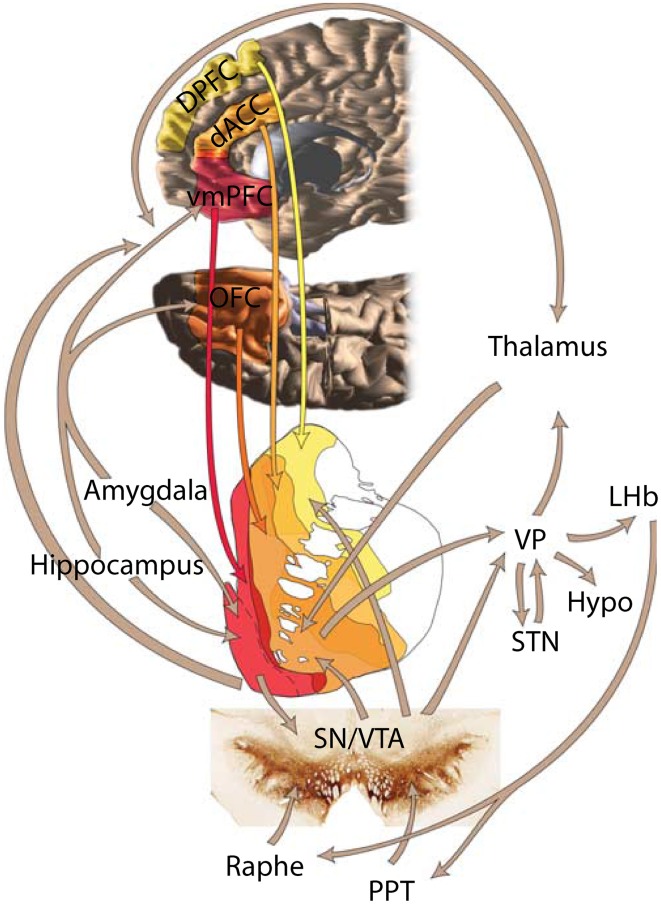
“…of the reward circuit (Figure 1, reviewed in Haber and Knutson, 2010): from striato-nigral midbrain cells (Beckstead et al., 1979), amygdala (Russchen et al., 1985; Fudge et al., 2002), orbitofrontal cortex (OFC) (Haber et al., 2006), and anterior cingulate cortex (ACC) (Selemon and…”
BackgroundDixit, A. K., & Skeath, S. E. (1999) · Medical Entomology and Zoology · Cited by 389
Influence of Reward Expectation on Behavior-Related Neuronal Activity in Primate Striatum
Hollerman, J. R., Tremblay, L., & Schultz, W. (1998) · Journal of Neurophysiology · doi:10.1152/jn.1998.80.2.947 · Cited by 380
Self-citationGeyer, M. A., Wilkinson, L. S., Humby, T., & Robbins, T. W. (1993) · Biological Psychiatry · doi:10.1016/0006-3223(93)90180-l · Cited by 379
Responses to reward in monkey dorsal and ventral striatum
Apicella, P., Ljungberg, T., Scarnati, E., & Schultz, W. (1991) · Experimental Brain Research · doi:10.1007/bf00231732 · Cited by 369
Self-citationNeural mechanisms of observational learning
Burke, C. J., Tobler, P. N., Baddeley, M. C., & Schultz, W. (2010) · Proceedings of the National Academy of Sciences · doi:10.1073/pnas.1003111107 · Cited by 356
Self-citationThe Right and the Good: Distributive Justice and Neural Encoding of Equity and Efficiency
Hsu, M., Anen, C., & Quartz, S. R. (2008) · Science · doi:10.1126/science.1153651 · Cited by 354
A critical role for nucleus accumbens dopamine in partner-preference formation in male prairie voles
Aragona, B. J., Liu, Y., Curtis, J. T., Stephan, F. K., & Wang, Z. (2003) · The Journal of Neuroscience · doi:10.1523/jneurosci.23-08-03483.2003 · Cited by 351
Oram, M. W., & Perrett, D. I. (1996) · Journal of Neurophysiology · doi:10.1152/jn.1996.76.1.109 · Cited by 345
Silva-Gómez, A. B., Rojas, D., Juárez, I., & Flores, G. (2003) · Brain Research · doi:10.1016/s0006-8993(03)03042-7 · Cited by 336
Perrett, D. I., Smith, P., Mistlin, A. J., Chitty, A. J., Head, A., Potter, D. D., Broennimann, R., Milner, A. D., & Jeeves, M. A. (1985) · Behavioural Brain Research · doi:10.1016/0166-4328(85)90089-0 · Cited by 333
Foundations of Neuroeconomic Analysis
Glimcher, P. W. (2010) · Oxford University Press eBooks · doi:10.1093/acprof:oso/9780199744251.001.0001 · Cited by 322
Ross, H. E., Freeman, S. M., Spiegel, L. L., Ren, X., Terwilliger, E. F., & Young, L. J. (2009) · The Journal of Neuroscience · doi:10.1523/jneurosci.5039-08.2009 · Cited by 322
Zingg, H. H., & Laporte, S. A. (2003) · Trends in Endocrinology and Metabolism · doi:10.1016/s1043-2760(03)00080-8 · Cited by 316
Neuronal activity in monkey striatum related to the expectation of predictable environmental events
Apicella, P., Scarnati, E., Ljungberg, T., & Schultz, W. (1992) · Journal of Neurophysiology · doi:10.1152/jn.1992.68.3.945 · Cited by 305
Self-citationOxytocin, vasopressin and pair bonding: implications for autism
Hammock, E. A. D., & Young, L. J. (2006) · Philosophical Transactions of the Royal Society B Biological Sciences · doi:10.1098/rstb.2006.1939 · Cited by 296
Functional Connectome of the Striatal Medium Spiny Neuron
Chuhma, N., Tanaka, K. F., Hen, R., & Rayport, S. (2011) · Journal of Neuroscience · doi:10.1523/jneurosci.3833-10.2011 · Cited by 287
Role of primate basal ganglia and frontal cortex in the internal generation of movements
Romo, R., & Schultz, W. (1992) · Experimental Brain Research · doi:10.1007/bf00227836 · Cited by 271
Self-citationA Key Role for Similarity in Vicarious Reward
Mobbs, D., Yu, R., Meyer, M., Passamonti, L., Seymour, B., Calder, A. J., Schweizer, S., Frith, C. D., & Dalgleish, T. (2009) · Science · doi:10.1126/science.1170539 · Cited by 270
Wilkinson, L. S., Killcross, S., Humby, T., Hall, F. S., Geyer, M. A., & Robbins, T. W. (1994) · Neuropsychopharmacology · doi:10.1038/npp.1994.8 · Cited by 268
Role of primate basal ganglia and frontal cortex in the internal generation of movements
Romo, R., Scarnati, E., & Schultz, W. (1992) · Experimental Brain Research · doi:10.1007/bf00227835 · Cited by 266
Self-citationWidespread corticostriate projections from temporal cortex of the rhesus monkey
Hoesen, G. W. V., Yeterian, E. H., & Lavizzo‐Mourey, R. J. (1981) · The Journal of Comparative Neurology · doi:10.1002/cne.901990205 · Cited by 264
Coding of Reward Risk by Orbitofrontal Neurons Is Mostly Distinct from Coding of Reward Value
O’Neill, M. J., & Schultz, W. (2010) · Neuron · doi:10.1016/j.neuron.2010.09.031 · Cited by 262
Self-citationIsolation rearing in rats: pre- and postsynaptic changes in striatal dopaminergic systems
Hall, F. S., Wilkinson, L. S., Humby, T., Inglis, W., Kendall, D. A., Marsden, C. A., & Robbins, T. W. (1998) · Pharmacology Biochemistry and Behavior · doi:10.1016/s0091-3057(97)00510-8 · Cited by 261
The striatopallidal and striatonigral projections: two distinct fiber systems in primate
Parent, A., Bouchard, C., & Smith, Y. (1984) · Brain Research · doi:10.1016/0006-8993(84)91224-1 · Cited by 259
Agent-Specific Responses in the Cingulate Cortex During Economic Exchanges
Tomlin, D., Kayali, M. A., King‐Casas, B., Anen, C., Camerer, C. F., Quartz, S. R., & Montague, P. R. (2006) · Science · doi:10.1126/science.1125596 · Cited by 252
Insensitivity to social reputation in autism
Izuma, K., Matsumoto, K., Camerer, C. F., & Adolphs, R. (2011) · Proceedings of the National Academy of Sciences · doi:10.1073/pnas.1107038108 · Cited by 243
Representation of visual stimuli in inferior temporal cortex
Gross, C. G. (1992) · Philosophical Transactions of the Royal Society B Biological Sciences · doi:10.1098/rstb.1992.0001 · Cited by 242
Aberrant responses in social interaction of dopamine transporter knockout mice
Rodriguiz, R. M., Chu, R., Caron, M. G., & Wetsel, W. C. (2003) · Behavioural Brain Research · doi:10.1016/s0166-4328(03)00187-6 · Cited by 227
Warm pleasant feelings in the brain
Rolls, E. T., Grabenhorst, F., & Parris, B. A. (2008) · NeuroImage · doi:10.1016/j.neuroimage.2008.03.005 · Cited by 227
Amygdaloid projections to ventromedial striatal subterritories in the primate
Fudge, J. L., Kunishio, K., Walsh, P., Richard, C., & Haber, S. N. (2002) · Neuroscience · doi:10.1016/s0306-4522(01)00546-2 · Cited by 226
Smeltzer, M. D., Curtis, J. T., Aragona, B. J., & Wang, Z. (2006) · Neuroscience Letters · doi:10.1016/j.neulet.2005.10.019 · Cited by 222
Involvement of basal ganglia and orbitofrontal cortex in goal-directed behavior
Hollerman, J. R., Tremblay, L., & Schultz, W. (2000) · Progress in brain research · doi:10.1016/s0079-6123(00)26015-9 · Cited by 219
Self-citationVasopressin, oxytocin and social behaviour
Keverne, E. B., & Curley, J. P. (2004) · Current Opinion in Neurobiology · doi:10.1016/j.conb.2004.10.006 · Cited by 219
Positively Biased Processing of Self-Relevant Social Feedback
Korn, C. W., Prehn, K., Park, S. Q., Walter, H., & Heekeren, H. R. (2012) · Journal of Neuroscience · doi:10.1523/jneurosci.3016-12.2012 · Cited by 206
Wang, Z., Yu, G., Cascio, C., Liu, Y., Gingrich, B., & Insel, T. R. (1999) · Behavioral Neuroscience · doi:10.1037/0735-7044.113.3.602 · Cited by 205
Social status gates social attention in monkeys
Shepherd, S. V., Deaner, R. O., & Platt, M. L. (2006) · Current Biology · doi:10.1016/j.cub.2006.02.013 · Cited by 201
Cavada, C., & Goldman-Rakic, P. S. (1991) · Neuroscience · doi:10.1016/0306-4522(91)90037-o · Cited by 201
Reflexive Social Attention in Monkeys and Humans
Deaner, R. O., & Platt, M. L. (2003) · Current Biology · doi:10.1016/j.cub.2003.08.025 · Cited by 194
Histed, M. H., Pasupathy, A., & Miller, E. K. (2009) · Neuron · doi:10.1016/j.neuron.2009.06.019 · Cited by 187
Martin, L., Spicer, D., Lewis, M., Gluck, J., & Cork, L. C. (1991) · Journal of Neuroscience · doi:10.1523/jneurosci.11-11-03344.1991 · Cited by 186
Action and Outcome Encoding in the Primate Caudate Nucleus
Lau, B., & Glimcher, P. W. (2007) · Journal of Neuroscience · doi:10.1523/jneurosci.3060-07.2007 · Cited by 183
Tonically discharging neurons of monkey striatum respond to preparatory and rewarding stimuli
Apicella, P., Scarnati, E., & Schultz, W. (1991) · Experimental Brain Research · doi:10.1007/bf00230981 · Cited by 183
Self-citationSocial Network Modulation of Reward-Related Signals
Fareri, D. S., Niznikiewicz, M. A., Lee, V. K., & Delgado, M. R. (2012) · Journal of Neuroscience · doi:10.1523/jneurosci.0610-12.2012 · Cited by 175
Neuronal activity in the monkey striatum during the initiation of movements
Schultz, W., & Romo, R. (1988) · Experimental Brain Research · doi:10.1007/bf00247503 · Cited by 171
Self-citationCalzavara, R., Mailly, P., & Haber, S. N. (2007) · European Journal of Neuroscience · doi:10.1111/j.1460-9568.2007.05825.x · Cited by 170
Lim, M. M., Murphy, A. Z., & Young, L. J. (2004) · Journal of Comparative Neurology · doi:10.1002/cne.10973 · Cited by 163
Bault, N., Joffily, M., Rustichini, A., & Coricelli, G. (2011) · Proceedings of the National Academy of Sciences · doi:10.1073/pnas.1100892108 · Cited by 162
Howes, S. R., Dalley, J. W., Morrison, C. H., Robbins, T. W., & Everitt, B. J. (2000) · Psychopharmacology · doi:10.1007/s002130000451 · Cited by 160
Voice Cells in the Primate Temporal Lobe
Perrodin, C., Kayser, C., Logothetis, N. K., & Petkov, C. I. (2011) · Current Biology · doi:10.1016/j.cub.2011.07.028 · Cited by 159
The Neural Basis of Following Advice
Biele, G., Rieskamp, J., Krugel, L. K., & Heekeren, H. R. (2011) · PLoS Biology · doi:10.1371/journal.pbio.1001089 · Cited by 157
Reputation for reciprocity engages the brain reward center
Phan, K. L., Sripada, C. S., Angstadt, M., & McCabe, K. (2010) · Proceedings of the National Academy of Sciences · doi:10.1073/pnas.1008137107 · Cited by 152
Curran, E. J., & Watson, S. J. (1995) · The Journal of Comparative Neurology · doi:10.1002/cne.903610106 · Cited by 148
Everts, H. G. J., & Koolhaas, J. M. (1999) · Behavioural Brain Research · doi:10.1016/s0166-4328(98)00004-7 · Cited by 147
Burkett, J. P., Spiegel, L. L., Inoue, K., Murphy, A. Z., & Young, L. J. (2011) · Neuropsychopharmacology · doi:10.1038/npp.2011.117 · Cited by 133
Reputational Priors Magnify Striatal Responses to Violations of Trust
Fouragnan, E., Chierchia, G., Greiner, S., Neveu, R., Avesani, P., & Coricelli, G. (2013) · The Journal of Neuroscience · doi:10.1523/jneurosci.3086-12.2013 · Cited by 128
Social Signals in Primate Orbitofrontal Cortex
Watson, K. K., & Platt, M. L. (2012) · Current Biology · doi:10.1016/j.cub.2012.10.016 · Cited by 127
Neural Correlates of Social Target Value in Macaque Parietal Cortex
Klein, J. T., Deaner, R. O., & Platt, M. L. (2008) · Current Biology · doi:10.1016/j.cub.2008.02.047 · Cited by 126
Feature-Based Anticipation of Cues that Predict Reward in Monkey Caudate Nucleus
Lauwereyns, J., Takikawa, Y., Kawagoe, R., Kobayashi, S., Koizumi, M., Coe, B. C., Sakagami, M., & Hikosaka, O. (2002) · Neuron · doi:10.1016/s0896-6273(02)00571-8 · Cited by 124
The social neuroscience of reputation
Izuma, K. (2012) · Neuroscience Research · doi:10.1016/j.neures.2012.01.003 · Cited by 119
Ravel, S., Legallet, E., & Apicella, P. (2003) · Journal of Neuroscience · doi:10.1523/jneurosci.23-24-08489.2003 · Cited by 118
Dynamic Encoding of Action Selection by the Medial Striatum
Kimchi, E. Y., & Laubach, M. (2009) · Journal of Neuroscience · doi:10.1523/jneurosci.5206-08.2009 · Cited by 115
Neural correlates of pair-bonding in a monogamous primate
Bales, K. L., Mason, W. A., Catana, C., Cherry, S. R., & Mendoza, S. P. (2007) · Brain Research · doi:10.1016/j.brainres.2007.09.087 · Cited by 112
Schorscher-Petcu, A., Dupré, A., & Tribollet, E. (2009) · Neuroscience Letters · doi:10.1016/j.neulet.2009.06.016 · Cited by 111
Functional Properties of CD8+Lymphocytes in Patients with Pleural Plaque and Malignant Mesothelioma
Kumagai-Τakei, N., Nishimura, Y., Maeda, M., Hayashi, H., Matsuzaki, H., Lee, S. P., Kishimoto, T., Fukuoka, K., Nakano, T., & Otsuki, T. (2014) · Journal of Immunology Research · doi:10.1155/2014/670140 · Cited by 110
Social isolation after a single defeat reduces striatal dopamine transporter binding in rats
Isovich, E., Engelmann, M., Landgraf, R., & Fuchs, E. (2001) · European Journal of Neuroscience · doi:10.1046/j.0953-816x.2001.01492.x · Cited by 96
Pause and rebound: sensory control of cholinergic signaling in the striatum
Schulz, J. M., & Reynolds, J. N. J. (2012) · Trends in Neurosciences · doi:10.1016/j.tins.2012.09.006 · Cited by 95
Resendez, S. L., Dome, M., Gormley, G., Franco, D., Nevárez, N., Hamid, A. A., & Aragona, B. J. (2013) · The Journal of Neuroscience · doi:10.1523/jneurosci.4123-12.2013 · Cited by 93
Neuronal Correlates of Instrumental Learning in the Dorsal Striatum
Kimchi, E. Y., Torregrossa, M. M., Taylor, J. R., & Laubach, M. (2009) · Journal of Neurophysiology · doi:10.1152/jn.00262.2009 · Cited by 92
Activity of striatal neurons reflects social action and own reward
Báez-Mendoza, R., Harris, C., & Schultz, W. (2013) · Proceedings of the National Academy of Sciences · doi:10.1073/pnas.1211342110 · Cited by 83
Self-citationPowell, S. B., Geyer, M. A., Preece, M. A., Pitcher, L. K., Reynolds, G. P., & Swerdlow, N. R. (2003) · Neuroscience · doi:10.1016/s0306-4522(03)00122-2 · Cited by 82
Curtis, J. T., Liu, Y., & Wang, Z. (2001) · Brain Research · doi:10.1016/s0006-8993(01)02343-5 · Cited by 78
Xiang, T., Ray, D., Lohrenz, T. M., Dayan, P., & Montague, P. R. (2012) · PLoS Computational Biology · doi:10.1371/journal.pcbi.1002841 · Cited by 78
Social Information Signaling by Neurons in Primate Striatum
Klein, J. T., & Platt, M. L. (2013) · Current Biology · doi:10.1016/j.cub.2013.03.022 · Cited by 72
Arco, A. D., Zhu, S., Terasmaa, A., Mohammed, A. H. S., & Fuxé, K. (2003) · Psychopharmacology · doi:10.1007/s00213-003-1578-8 · Cited by 71
Reward Prediction Error Signaling in Posterior Dorsomedial Striatum Is Action Specific
Stalnaker, T. A., Calhoon, G. G., Ogawa, M., Roesch, M. R., & Schoenbaum, G. M. (2012) · Journal of Neuroscience · doi:10.1523/jneurosci.0832-12.2012 · Cited by 71
Djouma, E., Card, K., Lodge, D. J., & Lawrence, A. J. (2006) · European Journal of Neuroscience · doi:10.1111/j.1460-9568.2006.04864.x · Cited by 63
Social stimuli and social rewards in primate learning and cognition
Anderson, J. R. (1998) · Behavioural Processes · doi:10.1016/s0376-6357(97)00074-0 · Cited by 57
Ambrose, L. M., Unterwald, E. M., & Bockstaele, E. J. V. (2004) · The Anatomical Record Part A Discoveries in Molecular Cellular and Evolutionary Biology · doi:10.1002/ar.a.20054 · Cited by 48
Kobayashi, S., Kawagoe, R., Takikawa, Y., Koizumi, M., Sakagami, M., & Hikosaka, O. (2006) · Experimental Brain Research · doi:10.1007/s00221-006-0622-4 · Cited by 47
Ventral Striatum Encodes Past and Predicted Value Independent of Motor Contingencies
Goldstein, B. L., Barnett, B. R., Vásquez, G. V. M., Tobia, S. C., Kashtelyan, V., Burton, A. C., Bryden, D. W., & Roesch, M. R. (2012) · Journal of Neuroscience · doi:10.1523/jneurosci.5349-11.2012 · Cited by 39
Inoue, K., Burkett, J. P., & Young, L. J. (2013) · Neuroscience · doi:10.1016/j.neuroscience.2013.03.035 · Cited by 33
Decoding the representation of learned social roles in the human brain
Eger, E., Moretti, L., Dehaene, S., & Sirigu, A. (2013) · Cortex · doi:10.1016/j.cortex.2013.02.008 · Cited by 5
Bubser, M., & Deutch, A. Y. (1999) · Synapse · doi:10.1002/(sici)1098-2396(199904)32:1
Research works printed but not linked: 3
- Báez-Mendoza R. Hoffman K. L. (2009). Object ontology in temporal lobe ensembles, in Cortical Mechanisms of Vision, 1st Edn., eds Jenkin M. Harris L. (Cambridge: Cambridge University Press), 237– 253
- Dawkins R. (2006). The Selfish Gene: – with a New Introduction by the Author. Oxford: University Press
- Hall F. S. Wilkinson L. S. Humby T. Robbins T. W. (1999). Maternal deprivation of neonatal rats produces enduring changes in dopamine function. Synapse 32, 37– 43 10188636
Cited by
Sorted by citations
The Neurobiology of Human Attachments
Feldman, R. (2017) · Trends in Cognitive Sciences · doi:10.1016/j.tics.2016.11.007 · Cited by 839
Horder, J., Petrinovic, M. M., Méndez, M. A., Bruns, A., Takumi, T., Spooren, W. P. J. M., Barker, G. J., Künnecke, B., & Murphy, D. (2018) · Translational Psychiatry · doi:10.1038/s41398-018-0155-1 · Cited by 321
What is resilience: an affiliative neuroscience approach
Feldman, R. (2020) · World Psychiatry · doi:10.1002/wps.20729 · Cited by 324
Shanmugasundaram, M., & Tamilarasu, A. (2023) · Frontiers in Cognition · doi:10.3389/fcogn.2023.1203077 · Cited by 291
The bacterial peptidoglycan-sensing molecule Pglyrp2 modulates brain development and behavior
Arentsen, T., Qian, Y., Gkotzis, S., Femenia, T., Wang, T., Udekwu, K., Forssberg, H., & Diaz Heijtz, R. (2017) · Molecular Psychiatry · doi:10.1038/mp.2016.182 · Cited by 280
Metadata
- Authors
- Báez-Mendoza, R., & Schultz, W.
- Affiliations
- University of Cambridge (GB)
- Corresponding author
- Báez-Mendoza, Raymundo
- Venue
- Frontiers in Neuroscience
- Publisher
- Frontiers Media SA
- Published
- 2013
- Volume
- 7
- Pages
- 233-233
- ISSN
- 1662-453X (ISSN-L)
- PMC
- PMC3857563
- OpenAlex
- W2116794070
- Cited by
- 312
- References
- 171
- Citations by year
- 2026: 18 · 2025: 22 · 2024: 23 · 2023: 27 · 2022: 38 · 2021: 36 · 2020: 26 · 2019: 32 · 2018: 21 · 2017: 22 · 2016: 17 · 2015: 19 · 2014: 11
- FWCI
- 1.59
- Type
- journal article
- Language
- en
- Open access
- gold
- doi.org
- Licence
- cc-by
- Locations
- Frontiers in Neuroscience (publishedVersion, cc-by)
- Europe PMC (PubMed Central) (publishedVersion, cc-by)
- PubMed Central (publishedVersion, cc-by)
- PubMed (publishedVersion)
- DOAJ (DOAJ: Directory of Open Access Journals) (submittedVersion, cc-by-sa)
- Funders
- Wellcome Trust (095495)
- Topics
- Life Sciences › Neuroscience › Cellular and Molecular Neuroscience › Neurotransmitter Receptor Influence on Behavior
- Life Sciences › Neuroscience › Endocrine and Autonomic Systems › Neuroendocrine regulation and behavior
- Life Sciences › Neuroscience › Cognitive Neuroscience › Neural and Behavioral Psychology Studies
- Keywords
- striatum, social behavior, reward coding, social reward, reward inequity, social learning, pair bonding, social contact, rearing conditions, single-unit recording, reward systems
About these checks
Registry, retraction, Cites and statistics results are computed, not judged, with one exception: a printed reference that no index lists is read once by a model before it counts as a citation error. Claims are extracted by a model and kept only when their quote appears verbatim in the text; each cited source is then checked, with a model’s help, for whether it says what the claim relies on. Those verdicts can be wrong — read the claim’s quote and the cited source before relying on one.
Statistics and arithmetic are recomputed, not judged.
Confidence bands are shown only for fields calibrated on our annotated test set. None is calibrated yet, so no band is shown.
What counts as a claim ›How we measure confidence ›How we check this ›
Are you an author, or do you see a problem with this page? Request a review
