

The DOI matches its Crossref record; 23 of the 23 references it cites were found in a registry or an index.
Iowa Gambling Task (IGT): twenty years after—Gambling disorder and IGT
Overview
The claims and statistics of this paper haven’t been checked yet.
Run the check — free, no account needed. It reads the open-access text and checks the sources it cites.
Integrity signals
Registry
Cites
Statistics
Figures
Verification
Claims the paper makes
The claims and statistics of this paper haven’t been checked yet.
Run the check — free, no account needed. It reads the open-access text and checks the sources it cites.
Claims other papers make about this one
Each is checked against this paper’s own text: does it say what the citing paper says it does?
In the citing paper
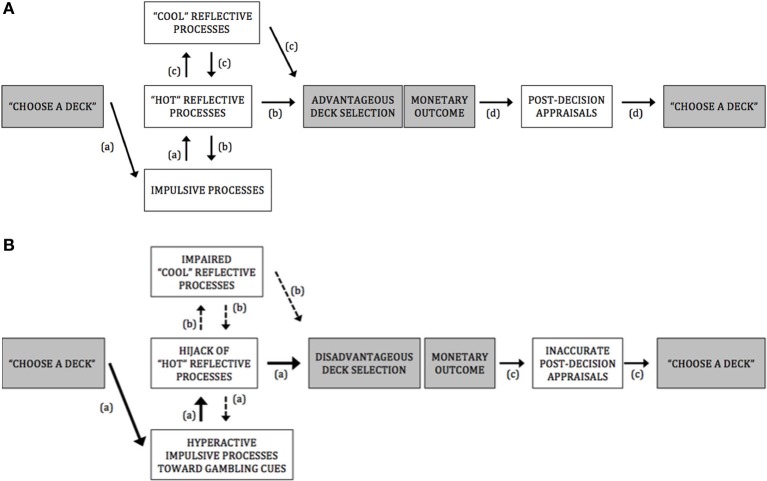
“These data support the dual process account of IGT where it is assumed that “cool” reflective processes are important in overriding “hot” processes that favor short-term gain (Brevers et al., 2013).”
From Performance Under Stress: An Eye-Tracking Investigation of the Iowa Gambling Task (IGT) (2018) · cites this paper as Brevers et al., 2013
In the citing paper
“However, contrary to Brevers et al.’s (2013) suggestion that “hot,” Type I processes guide successful performance, our data indicate that Type II processes guide decision making in the absence of stress.”
From Performance Under Stress: An Eye-Tracking Investigation of the Iowa Gambling Task (IGT) (2018) · cites this paper as Brevers et al., 2013
In the citing paper
“Preston et al. (2007) and Simonovic et al. (2017a) argued that stress disrupts Type II cognitive processes indicating that performance was not primarily dependent on emotional processing and is more consistent with Brevers et al. (2013) dual process account of the IGT.”
From Performance Under Stress: An Eye-Tracking Investigation of the Iowa Gambling Task (IGT) (2018) · cites this paper as Brevers et al., 2013
Self-check
Percentages, sums and reported differences re-computed from the paper’s own numbers.
The self-check needs the paper’s full text.
Citations
Cites
Implicit social cognition: Attitudes, self-esteem, and stereotypes
Greenwald, A. G., & Banaji, M. R. (1995) · Psychological Review · doi:10.1037/0033-295x.102.1.4 · Cited by 6,682
How do you feel — now? The anterior insula and human awareness
(Bud) Craig, A. D. (2009) · Nature Reviews Neuroscience · doi:10.1038/nrn2555 · Cited by 6,657 · cited 1×
“…than controls in areas involved in the reactivity to emotional information (i.e., the amygdala; Gallagher and Chiba, 1996), in the formation of interoceptive representation (the insular cortex; Craig, 2009), and in the regulation of emotional input (i.e., the VMPC; Rolls and Grabenhorst, 2008).”
BackgroundInsensitivity to future consequences following damage to human prefrontal cortex
Bechara, A., Damasio, A. R., Damasio, H., & Anderson, S. W. (1994) · Cognition · doi:10.1016/0010-0277(94)90018-3 · Cited by 6,128
Self-citationReflective and Impulsive Determinants of Social Behavior
Strack, F., & Deutsch, R. (2004) · Personality and Social Psychology Review · doi:10.1207/s15327957pspr0803_1 · Cited by 3,984
The somatic marker hypothesis and the possible functions of the prefrontal cortex
Damasio, A. R. (1996) · Philosophical Transactions of the Royal Society of London. Series B: Biological Sciences · doi:10.1098/rstb.1996.0125 · Cited by 2,847 · cited 2×
“Hence, by overcoming impulsive triggers, “hot” executive processing results in the ability to advantageously weigh short-term gains against long-term losses, that is, to optimally anticipate the potential outcomes of a given decision (Damasio, 1996).”
BackgroundMethodInfluentialDecision making, impulse control and loss of willpower to resist drugs: a neurocognitive perspective
Bechara, A. (2005) · Nature Neuroscience · doi:10.1038/nn1584 · Cited by 2,149 · cited 5×
“…Damien Brevers, Research-Fellow FNRS, Psychological Medicine Laboratory, Faculty of Medicine, Université Libre de Bruxelles, Brugmann-campus, 4 place Van Gehuchten, 1020 Brussels, Belgium e-mail: dbrevers@ulb.ac.be The Iowa Gambling Task (IGT) involves probabilistic learning…”
BackgroundMethodInfluentialSelf-citationImpulse and Self-Control From a Dual-Systems Perspective
Hofmann, W., Friese, M., & Strack, F. (2009) · Perspectives on Psychological Science · doi:10.1111/j.1745-6924.2009.01116.x · Cited by 1,487
Madden, G. J., Petry, N. M., Badger, G. J., & Bickel, W. K. (1997) · Experimental and Clinical Psychopharmacology · doi:10.1037/1064-1297.5.3.256 · Cited by 911
Pathological gambling is linked to reduced activation of the mesolimbic reward system
Reuter, J., Raedler, T., Rose, M., Hand, I., Gläscher, J., & Büchel, C. (2005) · Nature Neuroscience · doi:10.1038/nn1378 · Cited by 734
Associative processes in addiction and reward. The role of amygdala-ventral striatal subsystems
EVERITT, B. J., PARKINSON, J. A., OLMSTEAD, M. C., ARROYO, M., ROBLEDO, P., & ROBBINS, T. W. (1999) · Annals of the New York Academy of Sciences · doi:10.1111/j.1749-6632.1999.tb09280.x · Cited by 708 · cited 2×
“Importantly, this is also the neural system that has been argued to be responsible for the transfer of reward seeking from controlled to automatic and habitual behaviors (Everitt et al., 1999; Everitt and Robbins, 2005).”
BackgroundHongwanishkul, D., Happaney, K. R., Lee, W. S. C., & Zelazo, P. D. (2005) · Developmental Neuropsychology · doi:10.1207/s15326942dn2802_4 · Cited by 654
Implicit cognition and addiction: a tool for explaining paradoxical behavior
Stacy, A. W., & Wiers, R. W. (2010) · Annual Review of Clinical Psychology · doi:10.1146/annurev.clinpsy.121208.131444 · Cited by 607
Post-decision wagering objectively measures awareness
Persaud, N., McLeod, P., & Cowey, A. (2007) · Nature Neuroscience · doi:10.1038/nn1840 · Cited by 454
Leeman, R. F., & Potenza, M. N. (2012) · Psychopharmacology · doi:10.1007/s00213-011-2550-7 · Cited by 448
Gallagher, M., & Chiba, A. A. (1996) · Current Opinion in Neurobiology · doi:10.1016/s0959-4388(96)80076-6 · Cited by 410 · cited 1×
“…pictures, PG exhibited higher brain activation than controls in areas involved in the reactivity to emotional information (i.e., the amygdala; Gallagher and Chiba, 1996), in the formation of interoceptive representation (the insular cortex; Craig, 2009), and in the regulation of emotional…”
BackgroundCue-Induced Brain Activity in Pathological Gamblers
Crockford, D. N., Goodyear, B., Edwards, J., Quickfall, J., & el-Guebaly, N. (2005) · Biological Psychiatry · doi:10.1016/j.biopsych.2005.04.037 · Cited by 375
Goudriaan, A. E., De Ruiter, M. B., Van Den Brink, W., Oosterlaan, J., & Veltman, D. J. (2010) · Addiction Biology · doi:10.1111/j.1369-1600.2010.00242.x · Cited by 327
Pathological gambling: a comprehensive review of biobehavioral findings
Goudriaan, A. E., Oosterlaan, J., de Beurs, E., & Van den Brink, W. (2004) · Neuroscience & Biobehavioral Reviews · doi:10.1016/j.neubiorev.2004.03.001 · Cited by 313
Sonuga-Barke, E. J. S., Dalen, L., Daley, D., & Remington, B. (2002) · Developmental Neuropsychology · doi:10.1207/s15326942dn2103_3 · Cited by 250
Browning, M., Holmes, E. A., & Harmer, C. J. (2010) · Cognitive, Affective, & Behavioral Neuroscience · doi:10.3758/cabn.10.1.8 · Cited by 247
Ventral medial prefrontal cortex and cardiovagal control in conscious humans
Wong, S. W., Massé, N., Kimmerly, D. S., Menon, R. S., & Shoemaker, J. K. (2007) · NeuroImage · doi:10.1016/j.neuroimage.2006.12.027 · Cited by 233
Álvarez-Moya, E. M., Ochoa, C., Jiménez-Murcia, S., Aymamí, M. N., Gómez-Peña, M., Fernández-Aranda, F., Santamaría, J., Moragas, L., Bove, F., & Menchón, J. M. (2011) · Journal of Psychiatry and Neuroscience · doi:10.1503/jpn.090095 · Cited by 94
Séguin, J. R., Arseneault, L., & Tremblay, R. E. (2007) · Cognitive Development · doi:10.1016/j.cogdev.2007.08.006 · Cited by 84 · cited 1×
“…and cognitive determinations of risks and benefits associated with options, and requires the knowledge of the risk/benefit ratio, the ability to retrieve them from memory, and the ability hold them in mind while comparing and contrasting them through working memory processes (Seguin et al., 2007).”
Background
Research works printed but not linked: 99
- Abbott M. W. Volberg R. A. (1995). The New Zealand national survey of problem and pathological gambling. J. Gambl. Stud. 12, 143– 160 10.1007/BF01539171 24233913 · DOI
- Baddeley A. Della Sala S. (1996). Working memory and executive control. Philos. Trans. R. Soc. Lond.B Biol. Sci. 351, 1397– 1403 discussion: 1403–1404. 10.1098/rstb.1996.0123 8941951 · DOI
- Barkley R. (1997). Attention deficit/hyperactivity disorder, self-regulation, and time: towards a more comprehensive theory. J. Dev. Behav. Pediatr. 18, 271– 279 10.1097/00004703-199708000-00009 9276836 · DOI · Paper page
- Bechara A. (2004). The role of emotion in decision-making: evidence from neurological patients with orbitofrontal damage. Brain Cogn. 55, 30– 40 10.1016/j.bandc.2003.04.001 15134841 · DOI
- Bechara A. Damasio H. Tranel D. Damasio A. R. (1997). Deciding advantageously before knowing the advantageous strategy. Science 275, 1293– 1294 10.1126/science.275.5304.1293 9036851 · DOI · Paper page
- Bechara A. Dolan S. Denburg N. Hindes A. Anderson S. W. Nathan P. E. (2001). Decision-making deficits, linked to a dysfunctional ventromedial prefrontal cortex, revealed in alcohol and stimulant abusers. Neuropsychologia 39, 376– 389 10.1016/S0028-3932(00)00136-6 11164876 · DOI
- Bechara A. Tranel D. Damasio H. (2000). Characterization of the decision-making impairment of patients with bilateral lesions of the ventromedial prefrontal cortex. Brain 123, 2189– 2202 10.1093/brain/123.11.2189 11050020 · DOI
- Brand M. (2008). Does the feedback from previous trials influence current decisions? A study on the role of feedback processing in making decisions under explicit risk conditions. J. Neuropsychol. 2, 431– 443 10.1348/174866407X220607 19824172 · DOI
- Brand M. Labudda K. Markowitsch H. J. (2006). Neuropsychological correlates of decision-making in ambiguous and risky situations. Neural Netw. 19, 1266– 1276 10.1016/j.neunet.2006.03.001 16942857 · DOI
- Brand M. Laier C. Pawlikowski M. Markowitsch H. J. (2009). Decision-making with and without feedback: the role of intelligence, strategies, and cognitive styles. J. Clin. Exp. Neuropsychol. 31, 967– 981 10.1080/13803390902776860 19358007 · DOI
- Brand M. Recknor E. C. Grabenhorst F. Bechara A. (2007). Decisions under ambiguity and decisions under risk: correlations with executive functions and comparisons of two different gambling tasks with implicit and explicit rules. J. Clin. Exp. Neuropsychol. 29, 86– 99 10.1080/13803390500507196 17162725 · DOI
- Brevers D. Cleeremans A. Tibboel H. Bechara A. Kornreich C. Verbanck P. (2011a). Reduced attentional blink for gambling-related stimuli in problem gamblers. J. Behav. Ther. Exp. Psychiatry 42, 265– 269 10.1016/j.jbtep.2011.01.005 21349247 · DOI
- Brevers D. Cleeremans A. Bechara A. Laloyaux C. Kornreich C. Verbanck P. (2011b). Time course of attentional bias for gambling information in problem gambling. Psychol. Addict. Behav. 25, 675– 682 10.1037/a0024201 21688874 PMC3792789 · DOI
- Brevers D. Cleeremans A. Goudriaan A. E. Bechara A. Kornreich C. Verbanck P. (2012a). Decision making under ambiguity but not under risk is related to problem gambling severity. Psychiatry Res. 200, 568– 574 10.1016/j.psychres.2012.03.053 22521232 · DOI
- Brevers D. Cleeremans A. Verbruggen F. Bechara A. Kornreich C. Verbanck P. (2012b). Impulsive action but impulsive choice determines problem gambling severity. PLoS ONE 7: e50647 10.1371/journal.pone.0050647 23209796 PMC3507734 · DOI
- Brevers D. Cleeremans A. Hermant C. Tibboel H. Kornreich C. Verbanck P. (2013a). Implicit gambling attitudes in problem gamblers: positive but not negative implicit associations. J. Behav. Ther. Exp. Psychiatry 44, 94– 97 10.1016/j.jbtep.2012.07.008 22940084 · DOI · Paper page
- Brevers D. Cleeremans A. Bechara A. Greisen M. Kornreich C. Verbanck P. (2013b). Impaired self-awareness in pathological gamblers. J. Gambl. Stud. 29, 119– 129 10.1007/s10899-012-9292-2 22273773 · DOI
- Brevers D. Cleeremans A. Bechara A. Kornreich C. Verbanck P. Noël X. (2013c). Impaired metacognitive capacities in problem gamblers. J. Gambl. Stud. [Epub ahead of print]. 10.1007/s10899-010-9348-3 23149513 · DOI
- Cavedini P. Riboldi G. Keller R. D'Annucci A. Bellodi L. (2002). Frontal lobe dysfunction in gambling disorder patients. Biol. Psychiatry 51, 334– 341 10.1016/S0006-3223(01)01227-6 11958785 · DOI · Paper page
- Cisler J. M. Koster E. H. W. (2010). Mechanisms of attentional biases towards threat in anxiety disorders: an integrative review. Clin. Psychol. Rev. 30, 203– 216 10.1016/j.cpr.2009.11.003 20005616 PMC2814889 · DOI · Paper page
- Cohen M. X. Ranganath C. (2005). Behavioral and neural predictors of upcoming decisions. Cogn. Affect. Behav. Neurosci. 5, 117– 126 10.3758/CABN.5.2.117 16180619 · DOI
- Del Cul A. Dehaene S. Reyes P. Bravo E. Slachevsky A. (2009). Causal role of prefrontal cortex in the threshold for access to consciousness. Brain 132, 2531– 2540 10.1093/brain/awp111 19433438 · DOI · Paper page
- de Ruiter M. B. Veltman D. J. Goudriaan A. E. Oosterlaan J. Sjoerds Z. van den Brink W. (2009). Response perseveration and ventral prefrontal sensitivity to reward and punishment in male problem gamblers and smokers. Neuropsychopharmacology 34, 1027– 1038 10.1038/npp.2008.175 18830241 · DOI
- De Wilde B. Goudriaan A. Sabbe B. Hulstijn W. Dom G. (2013). Relapse in pathological gamblers: a pilot study on the predictive value of different impulsivity measures. J Behav. Addict. 2, 23– 30 10.1556/JBA.2.2013.1.4 26165768 · DOI
- Di Chiara G. (1999). Drug addiction as dopamine-dependent associative learning disorder. Eur. J. Pharmacol. 375, 13– 30 10.1016/S0014-2999(99)00372-6 10443561 · DOI
- Dunn B. D. Dalgleish T. Lawrence A. D. (2006). The somatic marker hypothesis: A critical evaluation. Neurosci. Biobehav. Rev. 30, 239– 271 10.1016/j.neubiorev.2005.07.001 16197997 · DOI · Paper page
- Everitt B. J. Robbins T. W. (2005). Neural systems of reinforcement for drug addiction: from actions to habits to compulsion. Nat. Neurosci. 8, 1481– 1489 10.1038/nn1579 16251991 · DOI · Paper page
- Fellows L. K. Farah M. J. (2005). Different underlying impairments in decision-making following ventromedial and dorsolateral frontal lobe damage in humans. Cereb. Cortex 15, 58– 63 10.1093/cercor/bhh108 15217900 · DOI
- Forbush K. T. Shaw M. Graeber M. A. Hovick L. Meyer V. J. Moser D. J. (2008). Neuropsychological characteristics and personality traits in gambling disorder. CNS Spectr. 13, 306– 315 18408650
- Franken I. A. (2003). Drug craving and addiction: integrating psychological and neuropsychopharmacological approaches. Prog. Neuropsychopharmacol. Biol. Psychiatry 27, 563– 579 10.1016/S0278-5846(03)00081-2 12787841 · DOI
- Giancola P. R. Godlaski A. J. Roth R. M. (2012). Identifying component-processes of executive functioning that serve as risk factors for the alcohol-aggression relation. Psychol. Addict. Behav. 26, 201– 211 10.1037/a0025207 21875167 PMC3288328 · DOI
- Goldstein R. Z. Craig A. D. Bechara A. Garavan H. Childress A. R. Paulus M. P. (2009). The neurocircuitry of impaired insight in drug addiction. Trends Cogn.Sci. 13, 372– 380 10.1016/j.tics.2009.06.004 19716751 PMC2844118 · DOI · Paper page
- Goudriaan A. E. Oosterlaan J. de Beurs E. van den Brink W. (2005). Decision making in gambling disorder: a comparison between pathological gamblers, alcohol dependents, persons with Tourette syndrome, and normal controls. Cogn. Brain Res. 23, 137– 151 10.1016/j.cogbrainres.2005.01.017 15795140 · DOI
- Goudriaan A. E. Oosterlaan J. de Beurs E. van den Brink W. (2006). Psychophysiological determinants and concomitants of deficient decision-making in pathological gamblers. Drug Alcohol Depend. 84, 231– 239 10.1016/j.drugalcdep.2006.02.007 16574343 · DOI
- Grant J. E. Odlaug B. L. Chamberlain S. R. Schreiber L. R. N. (2012). Neurocognitive dysfunction in strategic and non-strategic gamblers. Prog. Neuropsychopharmacol. Biol. Psychiatry 38, 336– 340 10.1016/j.pnpbp.2012.05.006 22613186 PMC3389298 · DOI
- Grant S. Contoreggi C. London E. D. (2000). Drug abusers show impaired performance in a laboratory test of decision making. Neuropsychologia 38, 1180– 1187 10.1016/S0028-3932(99)00158-X 10838152 · DOI
- Greenwald A. G. McGhee D. E. Schwartz J. K. (1998). Measuring individual differences in implicit cognition: the implicit association test. J. Pers. Soc. Psychol. 74, 1464-1480 10.1037/0022-3514.74.6.1464 9654756 · DOI · Paper page
- Haruno M. Kawato M. (2006). Different neural correlates of reward expectation and reward expectation error in the putamen and caudate nucleus during stimulus-action-reward association learning. J. Neurophysiol. 95, 948– 959 10.1152/jn.00382.2005 16192338 · DOI · Paper page
- Hofmann W. Friese M. (2008). Impulses got the better of me: alcohol moderates the influence of implicit attitudes toward food cues on eating behavior. J. Abnorm. Psychol. 117, 420– 427 10.1037/0021-843X.117.2.420 18489218 · DOI
- Hofmann W. Friese M. Wiers R. W. (2008). Impulsive versus reflective influences on health behavior: a theoretical framework and empirical review. Health Psychol. Rev. 2, 111– 137 10.1080/17437190802617668 · DOI
- Iudicello J. E. Woods S. P. Cattie J. E. Doyle K. Grant I. (2013). Risky decision-making in HIV-associated neurocognitive disorders (HAND). Clin. Neuropsychol. 27, 256– 275 10.1080/13854046.2012.740077 23181946 PMC3609907 · DOI
- Kerr A. Zelazo P. D. (2004). Development of “hot” executive function: the children's gambling task. Brain Cogn. 55, 148– 157 10.1016/S0278-2626(03)00275-6 15134849 · DOI
- Kertzman S. Lidogoster H. Aizer A. Kotler M. Dannon P. N. (2011). Risk-taking in pathological gamblers is not a result of their impaired inhibition ability. Psychiatry Res. 188, 71– 77 10.1016/j.psychres.2011.02.021 21429591 · DOI
- Knutson B. Fong G. W. Bennett S. M. Adams C. M. Hommer D. (2003). A region of mesial prefrontal cortex tracks monetarily rewarding outcomes: characterization with rapid event-related fMRI. Neuroimage 18, 263– 272 10.1016/S1053-8119(02)00057-5 12595181 · DOI
- Korn D. A. Shaffer H. J. (1999). Gambling and the health of the public: adopting a public health perspective. J. Gambl. Stud. 15, 289– 365 10.1023/A:1023005115932 12766466 · DOI
- Krain A. L. Wilson A. M. Arbuckle R. Castellanos F. X. Milham M. P. (2006). Distinct neural mechanisms of risk and ambiguity: a meta-analysis of decision-making. Neuroimage 32, 477– 484 10.1016/j.neuroimage.2006.02.047 16632383 · DOI · Paper page
- Krawczyk D. C. (2002). Contributions of the prefrontal cortex to the neural basis of human decision-making. Neurosci. Biobehav. Rev. 26, 631– 664 10.1016/S0149-7634(02)00021-0 12479840 · DOI
- Lakey C. E. Goodie A. S. Campbell W. K. (2007). Frequent card playing and gambling disorder: the utility of the Georgia gambling task and Iowa gambling task for predicting pathology. J. Gambl. Stud. 23, 285– 297 10.1007/s10899-006-9034-4 17171543 · DOI
- Ledgerwood D. M. Orr E. S. Kaploun K. A. Milosevic A. Frisch G. R. Rupcich N. (2012). Executive function in pathological gamblers and healthy controls. J. Gambl. Stud. 28, 89– 103 10.1007/s10899-010-9237-6 21253846 · DOI
- Li X. Lu Z. L. D'Argembeau A. Ng M. Bechara A. (2010). The Iowa Gambling Task in FMRI images. Hum. Brain Mapp. 31, 410– 423 10.1002/hbm.20875 19777556 PMC2826566 · DOI
- Linnet J. Møller A. Peterson E. Gjedde A. Doudet D. (2011a). Dopamine release in ventral striatum during Iowa Gambling Task performance is associated with increased excitement levels in gambling disorder. Addiction 106, 383– 390 10.1111/j.1360-0443.2010.03126.x 20883460 · DOI · Paper page
- Linnet J. Møller A. Peterson E. Gjedde A. Doudet D. (2011b). Inverse association between dopaminergic neurotransmission and Iowa Gambling Task performance in pathological gamblers and healthy controls. Scand. J. Psychol. 106, 383– 390 10.1111/j.1360-0443.2010.03126.x 20704689 · DOI · Paper page
- Linnet J. Mouridsen K. Peterson E. Møller A. Doudet D. J. Gjedde A. (2012). Striatal dopamine release codes uncertainty in gambling disorder. Psychiatry Res. 204, 55– 60 10.1016/j.pscychresns.2012.04.012 22889563 · DOI · Paper page
- Linnet J. Peterson E. Doudet D. J. Gjedde A. Møller A. (2010). Dopamine release in ventral striatum of pathological gamblers losing money. Acta Psychiatr. Scand. 122, 326– 333 10.1111/j.1600-0447.2010.01591.x 20712823 · DOI · Paper page
- Linnet J. Rojskjaer S. Nygaard J. Maher B. A. (2006). Episodic chasing in pathological gamblers using the Iowa gambling task. Scand. J. Psychol. 47, 43– 49 10.1111/j.1467-9450.2006.00491.x 16433661 · DOI
- Manes F. Sahakian B. Clark L. Rogers R. Antoun N. Aitken M. (2002). Decision-making processes following damage to the prefrontal cortex. Brain 125, 624– 639 10.1093/brain/awf049 11872618 · DOI · Paper page
- Miedl S. F. Fehr T. Meyer G. Herrmann M. (2010). Neurobiological correlates of problem gambling in a quasi-realistic blackjack scenario as revealed by fMRI. Psychiatry Res. Neuroimaging 181, 165– 173 10.1016/j.pscychresns.2009.11.008 20138482 · DOI
- Monterosso J. Ehrman R. Napier K. L. O'Brien C. P. Childress A. R. (2001). Three decision-making tasks in cocaine-dependent patients: do they measure the same construct? Addiction 96, 1825– 1837 10.1046/j.1360-0443.2001.9612182512.x 11784475 · DOI
- Noël X. Bechara A. Dan B. Hanak C. Verbanck P. (2007). Response inhibition deficit is involved in poor decision making under risk in nonamnesic individuals with alcoholism. Neuropsychology 21, 778– 786 10.1037/0894-4105.21.6.778 17983291 · DOI
- Noël X. Brevers D. Bechara A. (2013). A neurocognitive approach to understanding the neurobiology of addiction. Curr. Opin. Neurobiol. 23, 632– 638 10.1016/j.conb.2013.01.018 23395462 PMC3670974 · DOI
- Oberg S. A. Christie G. J. Tata M. S. (2011). Problem gamblers exhibit reward hypersensitivity in medial frontal cortex during gambling. Neuropsychologia 49, 3768– 3775 10.1016/j.neuropsychologia.2011.09.037 21982697 · DOI
- Palomäki J. Laakasuo M. Salmela M. (2013). ‘This is just so unfair!’: a qualitative analysis of loss-induced emotions and tilting in on-line poker. Int. Gambl. Stud. 13, 255– 270 10.1080/14459795.2013.780631 · DOI
- Peterson E. Moller A. Doudet D. J. Bailey C. J. Vang Hansen K. Rodell A. (2010). Gambling disorder: relation of skin conductance response to dopamine neurotransmission and sensation seeking. Eur. Neurophsychopharmacol. 20, 766– 775 10.1016/j.euroneuro.2010.07.010 20813510 · DOI
- Petry N. M. (2001). Pathological gamblers, with and without substance use disorders, discount delayed rewards at high rates. J Abnorm. Psychol. 110, 482– 487 10.1037/0021-843X.110.3.482 11502091 · DOI
- Petry N. M. Bickel W. K. Arnett M. (1998). Shortened time horizons and insensitivity to future consequences in heroin addicts. Addiction 93, 729– 738 10.1046/j.1360-0443.1998.9357298.x 9692271 · DOI
- Potenza M. N. (2001). The neurobiology of gambling disorder. Semin. Clin. Neuropsychiatr. 6, 217– 226 10.1053/scnp.2001.22929 11447573 · DOI
- Potenza M. N. Steinberg M. A. Skudlarski P. Fulbright R. K. Lacadie C. M. Wilber M. K. (2003). Gambling urges in gambling disorder: a functional magnetic resonance imaging study. Arch. Gen. Psychiatry 60, 828– 836 10.1001/archpsyc.60.8.828 12912766 · DOI · Paper page
- Power Y. Goodyear B. Crockford D. (2012). Neural correlates of pathological gamblers preference for immediate rewards during the iowa gambling task: an FMRI study. J. Gambl. Stud. 28, 623– 636 10.1007/s10899-011-9278-5 22037936 · DOI
- Rahman S. Sahakian B. J. Cardinal R. N. Rogers R. D. Robbins T. W. (2001). Decision-making and neuropsychiatry. Trends Cogn. Sci. 5, 271– 277 10.1016/S1364-6613(00)01650-8 11390298 · DOI
- Redish A. Jensen S. Johnson A. (2008). Addiction as vulnerabilities in the decision process. Behav. Brain Sci. 31, 461– 470 10.1017/S0140525X08004986 18662461 PMC3774323 · DOI
- Robbins T. W. Cador M. Taylor J. R. Everitt B. J. (1989). Limbic-striatal interactions in reward-related processes. Neurosci. Biobehav. Rev. 13, 155– 162 10.1016/S0149-7634(89)80025-9 2682402 · DOI · Paper page
- Robinson T. E. Berridge K. C. (1993). The neural basis of drug craving: an incentive-sensitization theory of addiction. Brain Res. Rev. 18, 247– 291 10.1016/0165-0173(93)90013-P 8401595 · DOI · Paper page
- Roca M. Torralva T. Lopez P. Cetkovich M. Clark L. Manes F. (2008). Executive functions in pathologic gamblers selected in an ecologic setting. Cogn. Behav. Neurol. 21, 1– 4 10.1097/WNN.0b013e3181684358 18327015 · DOI
- Rogers R. D. Owen A. M. Middleton H. C. Williams E. J. Pickard J. D. Sahakian B. J. (1999). Choosing from small, likely rewards and large, unlikely rewards activated inferior and orbital prefrontal cortex. J. Neurosci. 20, 9029– 9038 10516320 PMC6782753
- Rolls E. T. Grabenhorst F. (2008). The orbitofrontal cortex and beyond: from affect to decision-making. Prog. Neurobiol. 86, 216– 244 10.1016/j.pneurobio.2008.09.001 18824074 · DOI
- Rounis E. Maniscalco B. Rothwell J. C. Passingham R. Lau H. (2010). Theta-burst transcranial magnetic stimulation to the prefrontal cortex impairs metacognitive visual awareness. Cogn. Neurosci. 1, 165– 175 10.1080/17588921003632529 24168333 · DOI · Paper page
- Salimpoor V. N. Benovoy M. Larcher K. Dagher A. Zatorre R. J. (2011). Anatomically distinct dopamine release during anticipation and experience of peak emotion to music. Nat. Neurosci. 14, 257– 262 10.1038/nn.2726 21217764 · DOI
- Sato A. Yasuda A. Ohira H. Miyawaki K. Nishikawa M. Kumano H. (2005). Effects of value and reward magnitude on feedback negativity and P300. Neuroreport 16, 407– 411 10.1097/00001756-200503150-00020 15729147 · DOI
- Sewards T. V. Sewards M. A. (2003). Representations of motivational drives in mesial cortex, medial thalamus, hypothalamus and midbrain. Brain Res. Bull. 61, 25– 49 10.1016/S0361-9230(03)00069-8 12788205 · DOI
- Slachevsky A. Pillon B. Fourneret P. Pradat-Diehl P. Jeannerod M. Dubois B. (2001). Preserved adjustment but impaired awareness in a sensory-motor conflict following prefrontal lesions. J. Cogn. Neurosci. 13, 332– 340 10.1162/08989290151137386 11371311 · DOI
- Slachevsky A. Pillon B. Fourneret P. Renié L. Levy R. (2003). The prefrontal cortex and conscious monitoring of action: an experimental study. Neuropsychologia 41, 655– 665 10.1016/S0028-3932(02)00225-7 12591023 · DOI
- Smith R. S. DeCoster J. (2000). Dual-process models in social and cognitive psychology: conceptual integration and links to underlying memory systems. Pers. Soc. Psychol. Rev. 4, 108– 131 10.1207/S15327957PSPR0402_01 · DOI
- Starcke K. Pawlikowski M. Wolf O. T. Altstötter-Gleich C. Brand M. (2011). Decision-making under risk conditions is susceptible to interference by a secondary executive task. Cogn. Process. 12, 177– 182 10.1007/s10339-010-0387-3 21210182 · DOI · Paper page
- Stocco A. Fum D. Napoli A. (2009). Dissociable processes underlying decisions in the iowa gambling task: a new integrative framework. Behav. Brain Funct. 5: 1 10.1186/1744-9081-5-1 19121215 PMC2645419 · DOI · Paper page
- Sutherland M. T. McHugh M. J. Pariyadath V. Stein E. A. (2012). Resting state functional connectivity in addiction: Lessons learned and a road ahead. Neuroimage 62, 2281– 2295 10.1016/j.neuroimage.2012.01.117 22326834 PMC3401637 · DOI
- Tanabe J. Thompson L. Claus E. Dalwani M. Hutchison K. Banich M. T. (2007). Prefrontal cortex activity is reduced in gambling and nongambling substance users during decision-making. Hum. Brain Mapp. 28, 1276– 1286 10.1002/hbm.20344 17274020 PMC6871281 · DOI
- Turatto M. Sandrini M. Miniussi C. (2004). The role of the right dorsolateral prefrontal cortex in visual change awareness. Neuroreport 15, 2549– 2452 10.1097/00001756-200411150-00024 15538193 · DOI
- Turnbull O. H. Evans C. E. Bunce A. Carzolio B. O'Connor J. (2005). Emotion-based learning and central executive resources: an investigation of intuition and the Iowa gambling task. Brain Cogn. 57, 244– 247 10.1016/j.bandc.2004.08.053 15780457 · DOI
- van Holst R. J. van den Brink W. Veltman D. J. Goudriaan A. E. (2010). Why gamblers fail to win: a review of cognitive and neuroimaging findings in gambling disorder. Neurosci. Biobehav. Rev. 34, 87– 107 10.1016/j.neubiorev.2009.07.007 19632269 · DOI
- van Holst R. J. Veltman D. J. Büchel C. Van den Brink W. Goudriaan A. E. (2012). Distorted expectancy coding in problem gambling: is the addictive in the anticipation? Biol. Psychiatry 71, 741– 748 10.1016/j.biopsych.2011.12.030 22342105 · DOI · Paper page
- Verdejo-Garcia A. Bechara A. (2009). A somatic marker theory of addiction. Neuropharmacology 56, 48– 62 10.1016/j.neuropharm.2008.07.035 18722390 PMC2635337 · DOI
- Welte J. W. Barnes G. M. Wieczorek W. F. Tidwell M. C. Parker J. (2002). Gambling participation in the U.S. - results from a national survey. J. Gambl. Stud. 18, 313– 337 10.1023/A:1021019915591 12514913 · DOI
- Whitlow C. T. Liguori A. Livengood L. B. Hart S. L. Mussat-Whitlow B. J. Lamborn C. M. (2004). Long-term heavy marijuana users make costly decisions on a gambling task. Drug Alcohol. Dep. 76, 107– 111 10.1016/j.drugalcdep.2004.04.009 15380295 · DOI
- Wise R. A. Rompre P. P. (1989). Brain dopamine and reward. Annu. Rev. Psychol. 40, 191– 225 10.1146/annurev.ps.40.020189.001203 2648975 · DOI · Paper page
- Wong S. W. Xue G. Bechara A. (2011). Integrating fMRI with psychophysiological measurements in the study of decision-making. J. Neurosci. Psychol. Econ. 4, 85– 94 10.1037/a0023525 21818407 PMC3147053 · DOI
- Yeung N. Botvinick M. M. Cohen J. D. (2004). The neural basis of error detection: Conflict monitoring and the error-related negativity. Psychol. Rev. 111, 931– 959 10.1037/0033-295X.111.4.931 15482068 · DOI · Paper page
- Yi S. Kanetkar V. (2010). Implicit measures of attitudes toward gambling: an exploratory study. J. Gambl. Issues 24, 140– 163 10.4309/jgi.2010.24.9 · DOI
- Zack M. Poulos C. X. (2004). Amphetamine primes motivation to gamble and gambling-related semantic networks in problem gamblers. Neuropsychopharmacology 29, 195– 207 10.1038/sj.npp.1300333 14571257 · DOI
- Zelazo P. D. Müller U. (2002). Executive function in typical and atypical development, in Handbook of Childhood Cognitive Development, ed Goswami U. (Oxford: Blackwell), 445– 469
Cited by
Sorted by citations
Schiebener, J., & Brand, M. (2015) · Neuropsychology Review · doi:10.1007/s11065-015-9285-x · Cited by 168
Neural correlates of cognitive control in gambling disorder: a systematic review of fMRI studies
Moccia, L., Pettorruso, M., De Crescenzo, F., De Risio, L., di Nuzzo, L., Martinotti, G., Bifone, A., Janiri, L., & Di Nicola, M. (2017) · Neuroscience & Biobehavioral Reviews · doi:10.1016/j.neubiorev.2017.04.025 · Cited by 158
Memory systems and the addicted brain
Goodman, J., & Packard, M. G. (2016) · Frontiers in Psychiatry · doi:10.3389/fpsyt.2016.00024 · Cited by 140
Deleuze, J., Nuyens, F., Rochat, L., Rothen, S., Maurage, P., & Billieux, J. (2017) · Journal of Behavioral Addictions · doi:10.1556/2006.6.2017.074 · Cited by 102
Performance Under Stress: An Eye-Tracking Investigation of the Iowa Gambling Task (IGT)
Simonovic, B., Stupple, E. J. N., Gale, M., & Sheffield, D. (2018) · Frontiers in Behavioral Neuroscience · doi:10.3389/fnbeh.2018.00217 · Cited by 61
Metadata
- Authors
- Brevers, D., Bechara, A., Cleeremans, A., & Noël, X.
- Venue
- Frontiers in Psychology
- Publisher
- Frontiers Media SA
- Published
- 2013
- Volume
- 4
- ISSN
- 1664-1078
- PMC
- PMC3786255
- Cited by
- 185
- References
- 23
About these checks
Registry, retraction, Cites and statistics results are computed, not judged, with one exception: a printed reference that no index lists is read once by a model before it counts as a citation error. Claims are extracted by a model and kept only when their quote appears verbatim in the text; each cited source is then checked, with a model’s help, for whether it says what the claim relies on. Those verdicts can be wrong — read the claim’s quote and the cited source before relying on one.
Statistics and arithmetic are recomputed, not judged.
Confidence bands are shown only for fields calibrated on our annotated test set. None is calibrated yet, so no band is shown.
What counts as a claim ›How we measure confidence ›How we check this ›
Are you an author, or do you see a problem with this page? Request a review
