

Consumers in a Sustainable Food Supply Chain (COSUS): Understanding Consumer Behavior to Encourage Food Waste Reduction
Open accessThe DOI matches its Crossref record; 50 of the 50 references it cites were found in a registry or an index.
Abstract
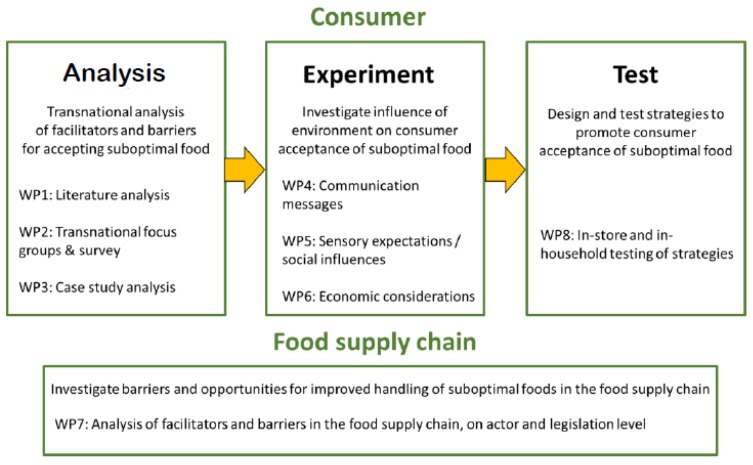
Consumers are directly and indirectly responsible for a significant fraction of food waste which, for a large part, could be avoided if they were willing to accept food that is suboptimal, i.e., food that deviates in sensory characteristics (odd shape, discoloration), or that has a best-before date which is approaching or has passed, but that is still perfectly fine to eat. The choice to accept or discard suboptimal food is taken either before or after purchase (hence, in the retail store or in the household). The aim of the European research project COSUS (Consumers in a sustainable food supply chain) was to increase consumer acceptance of suboptimal food, before and after purchase, by implementing targeted strategies that are based on consumer insights, and that are feasible for and acceptable by the food sector. To reach this aim, different methodological approaches were applied to analyze this issue, to experiment with different aspects, and to test the resulting interventions. Each of these approaches was undertaken by competent consortium partners from Denmark, Germany, Norway, Sweden and The Netherlands. The project finally provides validated strategies to promote the distribution and consumption of suboptimal foods, thereby improving resource efficiency in the food chain and contributing to a more sustainable food supply.
Overview
The claims and statistics of this paper haven’t been checked yet.
Free: it reads the open-access text and checks the first 5 claims that cite a source we can check. Create a free account to check every claim.
Integrity signals
Registry
Cites
Statistics
Figures
Verification
Claims the paper makes
The claims and statistics of this paper haven’t been checked yet.
Free: it reads the open-access text and checks the first 5 claims that cite a source we can check. Create a free account to check every claim.
Claims other papers make about this one
Each is checked against this paper’s own text: does it say what the citing paper says it does?
In the citing paper
“Examples include non-adequate packaging (too large packaging sizes, inappropriate material, contaminated packaging, technical failures in the packaging process) [43][44][45]48,50,51,[55][56][57][58][59][60] or packaging that is too difficult to open [52,53] or to empty [39,54] so that its contents spill or are left in the package.”
From Packaging-Related Food Losses and Waste: An Overview of Drivers and Issues (2019) · cites this paper as [43]
Self-check
Percentages, sums and reported differences re-computed from the paper’s own numbers.
The self-check needs the paper’s full text.
Citations
Cites
Food Security: The Challenge of Feeding 9 Billion People
Godfray, H. C. J., Beddington, J. R., Crute, I. R., Haddad, L., Lawrence, D., Muir, J. F., Pretty, J., Robinson, S., Thomas, S. M., & Toulmin, C. (2010) · Science · doi:10.1126/science.1185383 · Cited by 11,943
(2007) · Cited by 10,092
Food waste within food supply chains: quantification and potential for change to 2050
Parfitt, J., Barthel, M., & Macnaughton, S. (2010) · Philosophical Transactions of the Royal Society B: Biological Sciences · doi:10.1098/rstb.2010.0126 · Cited by 3,197 · cited 3×
“A large share of food wasted by the consumer is avoidable: Consumers throw away food that is in fact fine to eat, but that does not meet expectations in terms of how the food looks or because the best-before date is approaching or has passed [3].”
BackgroundCluster Analysis in Marketing Research: Review and Suggestions for Application
Punj, G., & Stewart, D. W. (1983) · Journal of Marketing Research · doi:10.1177/002224378302000204 · Cited by 2,417 · cited 1×
“Through exploratory factor analysis, the cross-country factorial structure of the data gathered from the online survey was determined [18], and a two-step cluster analysis process [19] was applied to identify the consumer segments.”
MethodTatler, B. W. (2007) · Journal of Vision · doi:10.1167/7.14.4 · Cited by 1,028 · cited 2×
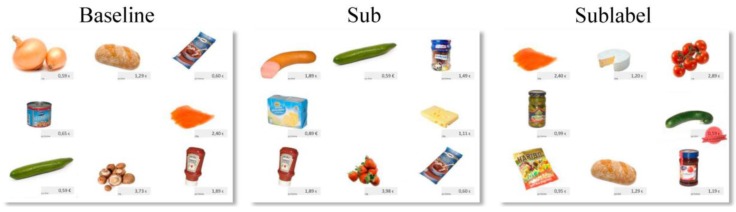
“3 × 3 grid, with the central position left empty to avoid a central gazing bias [30,31].”
BackgroundAN EXAMINATION OF REVERSE LOGISTICS PRACTICES
Rogers, D. S., & Tibben‐Lembke, R. (2001) · Journal of Business Logistics · doi:10.1002/j.2158-1592.2001.tb00007.x · Cited by 953 · cited 1×
“Hence, the supplier operates a “circular supply chain” which is simultaneously forward (for the fresh) and reverse (for the old bread) [55,56].”
BackgroundConsumer-related food waste: causes and potential for action
Aschemann-Witzel, J., De Hooge, I., Amani, P., Bech-Larsen, T., & Oostindjer, M. (2015) · Sustainability · doi:10.3390/su7066457 · Cited by 910 · cited 5×
“odd shape or color, because of other imperfections, or because of being close to the best-before date, without a deteriorating impact on eating quality [3,5].”
BackgroundMethodInfluentialSelf-citationSpaghetti soup: The complex world of food waste behaviours
Quested, T. E., Marsh, E., Stunell, D., & Parry, A. D. (2013) · Resources, Conservation and Recycling · doi:10.1016/j.resconrec.2013.04.011 · Cited by 886 · cited 3×
“However, in the complex issue of consumer-related food waste [5,6], the psychographic characteristics play an important role, as well as does the interplay between sociodemographic and the psychographic, attitudinal consumer characteristics.”
BackgroundAvoiding food waste by Romanian consumers: The importance of planning and shopping routines
Stefan, V., van Herpen, E., Tudoran, A. A., & Lähteenmäki, L. (2013) · Food Quality and Preference · doi:10.1016/j.foodqual.2012.11.001 · Cited by 750 · cited 1×
“Consumers such as those from segment #4 might waste relatively less and have the needed food planning handling capabilities [25], thus, involving these consumers to share their experiences and competences would support the proliferation of strategies to reduce food waste in consumer households.”
BackgroundQuantifying food losses and the potential for reduction in Switzerland
Beretta, C., Stoessel, F., Baier, U., & Hellweg, S. (2013) · Waste Management · doi:10.1016/j.wasman.2012.11.007 · Cited by 584
Current issues in the understanding of consumer food choice
Grunert, K. G. (2002) · Trends in Food Science & Technology · doi:10.1016/s0924-2244(02)00137-1 · Cited by 516 · cited 1×
“Such information is however not noticed by all consumers, and not all types of information are effective in changing consumer behavior [27,28].”
BackgroundKoivupuro, H., Hartikainen, H., Silvennoinen, K., Katajajuuri, J., Heikintalo, N., Reinikainen, A., & Jalkanen, L. (2012) · International Journal of Consumer Studies · doi:10.1111/j.1470-6431.2011.01080.x · Cited by 507
The causes of food waste in the supplier–retailer interface: Evidences from the UK and Spain
Mena, C., Adenso-Diaz, B., & Yurt, O. (2011) · Resources Conservation and Recycling · doi:10.1016/j.resconrec.2010.09.006 · Cited by 473
Alfnes, F., Guttormsen, A. G., Steine, G., & Kolstad, K. (2006) · American Journal of Agricultural Economics · doi:10.1111/j.1467-8276.2006.00915.x · Cited by 409
Tsiros, M., & Heilman, C. M. (2005) · Journal of Marketing · doi:10.1509/jmkg.69.2.114.60762 · Cited by 405
A meta-analysis of consumer willingness to pay for farm animal welfare
Lagerkvist, C. J., & Hess, S. (2011) · European Review of Agricultural Economics · doi:10.1093/erae/jbq043 · Cited by 349 · cited 1×
“Consumers may indicate that they will accept and eat certain foods, but this is not the same as actually buying these products once they are in the store [11].”
BackgroundThis apple is too ugly for me!
de Hooge, I. E., Oostindjer, M., Aschemann-Witzel, J., Normann, A., Loose, S. M., & Almli, V. L. (2017) · Food Quality and Preference · doi:10.1016/j.foodqual.2016.09.012 · Cited by 343
Self-citationCutting Food Waste through Cooperation along the Food Supply Chain
Göbel, C., Langen, N., Blumenthal, A., Teitscheid, P., & Ritter, G. (2015) · Sustainability · doi:10.3390/su7021429 · Cited by 335
Shining in the Center: Central Gaze Cascade Effect on Product Choice
Atalay, A. S., Bodur, H. O., & Rasolofoarison, D. (2012) · Journal of Consumer Research · doi:10.1086/665984 · Cited by 304 · cited 2×
“3 × 3 grid, with the central position left empty to avoid a central gazing bias [30,31].”
BackgroundFat bloom in chocolate and compound coatings
Lonchampt, P., & Hartel, R. W. (2004) · European Journal of Lipid Science and Technology · doi:10.1002/ejlt.200400938 · Cited by 276 · cited 1×
“Fat bloom was manipulated by exposing the chocolate to elevated temperature, so that a whitish coating appeared on the surface [35].”
BackgroundProcessing- and product-related causes for food waste and implications for the food supply chain
Raak, N., Symmank, C., Zahn, S., Aschemann-Witzel, J., & Rohm, H. (2017) · Waste Management · doi:10.1016/j.wasman.2016.12.027 · Cited by 266 · cited 1×
“, as animal feed, or as energy source) [4].”
BackgroundSelf-citationLebersorger, S., & Schneider, F. (2014) · Waste Management · doi:10.1016/j.wasman.2014.06.013 · Cited by 250
Aschemann-Witzel, J., de Hooge, I. E., Rohm, H., Normann, A., Bossle, M. B., Grønhøj, A., & Oostindjer, M. (2017) · Journal of Cleaner Production · doi:10.1016/j.jclepro.2016.11.173 · Cited by 240 · cited 2×
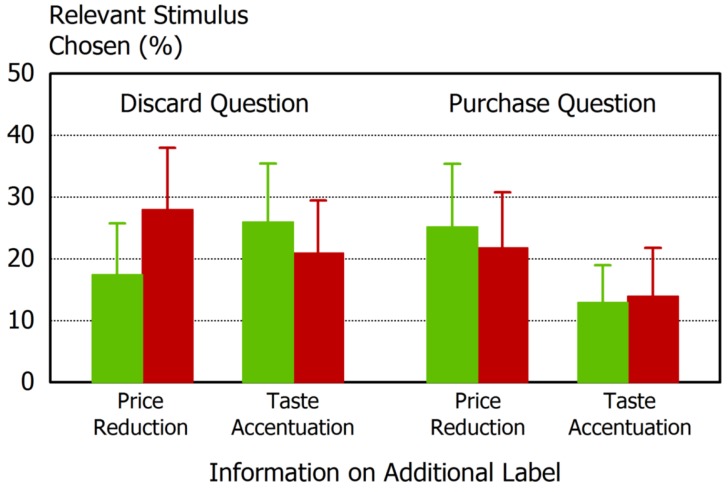
“Price-oriented consumers, in turn, can be expected to react positively to price incentives such as price-reduction of suboptimal food [22] and food redistribution into alternative retail [23].”
BackgroundSelf-citationAutomatically Green: Behavioral Economics and Environmental Protection
Sunstein, C. R., & Reisch, L. (2013) · SSRN Electronic Journal · doi:10.2139/ssrn.2245657 · Cited by 235 · cited 1×
“As policy recommendations for tackling the food waste issue, it becomes apparent that the Un-involved are not motivated in the topic, thus strategies like for example nudging towards food waste avoidance are needed here [21].”
BackgroundAschemann-Witzel, J., Jensen, J. H., Jensen, M. H., & Kulikovskaja, V. (2017) · Appetite · doi:10.1016/j.appet.2017.05.013 · Cited by 231 · cited 2×
“Reluctance towards any waste of food—perceived majorly as a waste of money rather than a waste of environmental resources—was observed among consumers [22].”
BackgroundSelf-citationCross-cultural validity of the food-related lifestyles instrument (FRL) within Western Europe
Scholderer, J., Brunsø, K., Bredahl, L., & Grunert, K. G. (2004) · Appetite · doi:10.1016/j.appet.2003.11.005 · Cited by 197 · cited 3×
“The measure was based on the internationally tested food-related lifestyle scales [9,15] which have been repeatedly used in different cultural contexts (e.”
BackgroundMethodRousseau, S., & Vranken, L. (2013) · Food Policy · doi:10.1016/j.foodpol.2013.01.006 · Cited by 193
Take‐Back Legislation: Consequences for Remanufacturing and Environment
Esenduran, G., Kemahlıoğlu‐Ziya, E., & Swaminathan, J. M. (2016) · Decision Sciences · doi:10.1111/deci.12174 · Cited by 178
The value of retail- and consumer-level fruit and vegetable losses in the United States
BUZBY, J. C., HYMAN, J., STEWART, H., & WELLS, H. F. (2011) · Journal of Consumer Affairs · doi:10.1111/j.1745-6606.2011.01214.x · Cited by 178
Aschemann‐Witzel, J. (2017) · Food Quality and Preference · doi:10.1016/j.foodqual.2017.08.007 · Cited by 166 · cited 1×
“The quantitative experimental survey among 842 Danish consumers focused on foods nearing the best-before date [41].”
BackgroundSelf-citationTesting relationships between values and food-related lifestyle: results from two European countries
Brunsø, K., Scholderer, J., & Grunert, K. G. (2004) · Appetite · doi:10.1016/j.appet.2004.05.001 · Cited by 163 · cited 1×
“The measure was based on the internationally tested food-related lifestyle scales [9,15] which have been repeatedly used in different cultural contexts (e.”
MethodEffects of Expiration Date-Based Pricing on Brand Image Perceptions
Theotokis, A., Pramatari, K. C., & Tsiros, M. (2011) · Journal of Retailing · doi:10.1016/j.jretai.2011.06.003 · Cited by 161 · cited 1×
“It emerged that nearly all Danish retailers applied best-before date based pricing [40] in at least some categories, but that the approach in communicating the action, placing the items, and the layout of the stickers varied widely.”
BackgroundConsumer-Related Food Waste: Role of Food Marketing and Retailers and Potential for Action
Aschemann-Witzel, J., de Hooge, I., & Normann, A. (2016) · Journal of International Food & Agribusiness Marketing · doi:10.1080/08974438.2015.1110549 · Cited by 155 · cited 1×
“Price-dismissive consumers will more likely be open to invest money to avoid food wastage, such as spending more in a restaurant or supermarket that engages in own action to reduce food waste in the supply chain [24].”
BackgroundSelf-citationVisually suboptimal bananas: How ripeness affects consumer expectation and perception
Symmank, C., Zahn, S., & Rohm, H. (2017) · Appetite · doi:10.1016/j.appet.2017.10.002 · Cited by 135 · cited 1×
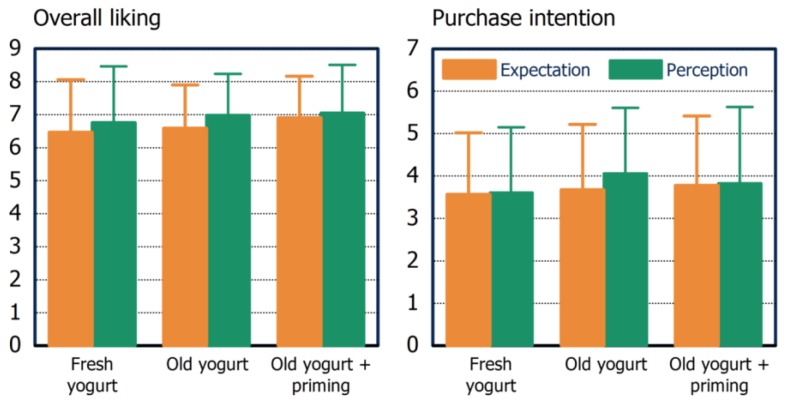
“In a first experiment [34], we systematically manipulated environmental conditions during Cavendish banana storage to obtain regular ripened bananas (ripeness degree, RD 5) and more ripened, visually suboptimal bananas (RD 7).”
MethodSelf-citationBuyer Power and Competition in European Food Retailing
Clarke, R., Davies, S., Dobson, P., & Waterson, M. (2002) · Edward Elgar Publishing eBooks · doi:10.4337/9781781959299 · Cited by 129
Hersleth, M., Lengard, V., Verbeke, W., Guerrero, L., & Næs, T. (2010) · Food Quality and Preference · doi:10.1016/j.foodqual.2010.07.002 · Cited by 122
Constructing sustainable supply chain under double environmental medium regulations
Ji, G., Gunasekaran, A., & Yang, G. (2013) · International Journal of Production Economics · doi:10.1016/j.ijpe.2013.04.012 · Cited by 121 · cited 1×
“Hence, the supplier operates a “circular supply chain” which is simultaneously forward (for the fresh) and reverse (for the old bread) [55,56].”
BackgroundYue, C., Alfnes, F., & Jensen, H. H. (2009) · Journal of Agricultural and Applied Economics · doi:10.1017/s1074070800002534 · Cited by 120 · cited 3×
“Acceptance may be high when the product is free or cheap, particularly for low income groups [10], but the consumer may not be very willing to pay for sustainable foods, in particular without any additional environmental encouragements [12–14].”
BackgroundInfluentialFine-Tuning the Fight Against Food Waste
Aschemann‐Witzel, J., de Hooge, I. E., Almli, V. L., & Oostindjer, M. (2018) · Journal of Macromarketing · doi:10.1177/0276146718763251 · Cited by 113 · cited 1×
“The findings show that differences in self-reported food waste and food waste-related behaviors can be uncovered, and suggest that there is a relationship between food-related lifestyle patterns and food waste (see [20] for more details).”
BackgroundSelf-citationHave an eye on the buckled cucumber: An eye tracking study on visually suboptimal foods
Helmert, J. R., Symmank, C., Pannasch, S., & Rohm, H. (2017) · Food Quality and Preference · doi:10.1016/j.foodqual.2017.03.009 · Cited by 105 · cited 5×
“In an eye tracking study [29], 30 subjects (21 female, 40 ± 14.”
BackgroundInfluentialSelf-citationFood-related lifestyles and their association to obesity in five European countries
Pérez-Cueto, F. J. A., Verbeke, W., de Barcellos, M. D., Kehagia, O., Chryssochoidis, G., Scholderer, J., & Grunert, K. G. (2009) · Appetite · doi:10.1016/j.appet.2009.10.001 · Cited by 103
Retail waste of horticultural products in Sweden
Gustavsson, J., & Stage, J. (2011) · Resources, Conservation and Recycling · doi:10.1016/j.resconrec.2011.01.007 · Cited by 90
Waste not, want not, emit less
Aschemann-Witzel, J. (2016) · Science · doi:10.1126/science.aaf2978 · Cited by 86 · cited 2×
“Supermarkets also varied in the way they exploited price promotions, with one retailer having abolished multi-item offers to avoid food waste [38], while others used it a lot, despite their food waste avoidance actions elsewhere.”
BackgroundSelf-citationKetelhöhn, W. (1998) · European Management Journal · doi:10.1016/s0263-2373(98)00010-3 · Cited by 75 · cited 1×
“, strategy, competences, resources) of the organization, and factors key and crucial to the success [44,45], was employed.”
“Best if Used By …” How Freshness Dating Influences Food Acceptance
Wansink, B., & Wright, A. O. (2006) · Journal of Food Science · doi:10.1111/j.1750-3841.2006.00011.x · Cited by 73
Food Waste Avoidance Actions in Food Retailing: The Case of Denmark
Kulikovskaja, V., & Aschemann-Witzel, J. (2017) · Journal of International Food & Agribusiness Marketing · doi:10.1080/08974438.2017.1350244 · Cited by 66 · cited 1×
“During the mapping study of retail actions in Denmark, twenty-two food waste avoidance actions were identified, categorized as (1) Price-related or pricing; (2) Product-related; (3) Unit-related; (4) Communication about food waste issue; (5) Collaboration with other actors; and (6) In-store management [39].”
BackgroundSelf-citationConsumer knowledge and use of open dates: results of a web-based survey
Kosa, K. M., Cates, S. C., Karns, S., Godwin, S. L., & Chambers, D. (2007) · Journal of Food Protection · doi:10.4315/0362-028x-70.5.1213 · Cited by 45 · cited 2×
“In many cases consumers do not distinguish between the best-before and the use-by date, the latter being an absolute for food safety, while the best-before date is some sort of guarantee given by the producer that the food has still its typical characteristics [28].”
BackgroundConsumer Acceptance of Cosmetically Imperfect Produce
BUNN, D., Feenstra, G., Lynch, L., & Sommer, R. (1990) · Journal of Consumer Affairs · doi:10.1111/j.1745-6606.1990.tb00269.x · Cited by 42
Chinese Urban Consumers Segmentation Based on Modified Food-Related Lifestyle (FRL)
Huang, G., Grunert, K. G., Da-yin, L., & Zhou, Y. (2015) · Journal of International Consumer Marketing · doi:10.1080/08961530.2015.1022922 · Cited by 36
Kouwenhoven, G. A. M., Nalla, V. R., & von Losoncz, T. L. (2012) · The International Food and Agribusiness Management Review · doi:10.22004/ag.econ.133489 · Cited by 33 · cited 1×
“Total food waste in the agri-food supply chain is around 35% [42].”
Background
Research works printed but not linked: 2
- Stuart T. Waste: Uncovering the Global Waste Scandal Penguin London, UK 2009
- Grunert K.G. Ellegaard C. The concept of key success factors: Theory and method Perspectives on Marketing Management Baker M.J. Wiley Chichester, UK 1993 245 274
Cited by
Kamble, S. S., Gunasekaran, A., & Gawankar, S. A. (2020) · International Journal of Production Economics · doi:10.1016/j.ijpe.2019.05.022 · Cited by 1,015
Wang, Y., Yuan, Z., & Tang, Y. (2021) · Resources, Environment and Sustainability · doi:10.1016/j.resenv.2021.100023 · Cited by 230
Cooney, R., de Sousa, D. B., Fernández-Ríos, A., Mellett, S., Rowan, N., Morse, A. P., Hayes, M., Laso, J., Regueiro, L., Wan, A. H., et al. (2023) · Journal of Cleaner Production · doi:10.1016/j.jclepro.2023.136283 · Cited by 210
Packaging-Related Food Losses and Waste: An Overview of Drivers and Issues
Wohner, B., Pauer, E., Heinrich, V., & Tacker, M. (2019) · Sustainability · doi:10.3390/su11010264 · Cited by 185
“While consumers often confuse best before and use by dates, they state that they need more information about the shelf life of food once a package has been opened [42].”
BackgroundCollier, E. S., Oberrauter, L.-M., Normann, A., Norman, C., Svensson, M., Niimi, J., & Bergman, P. (2021) · Appetite · doi:10.1016/j.appet.2021.105643 · Cited by 162
“A similar approach was used previously in a project regarding food waste (Rohm et al., 2017).”
Self-citation
Metadata
- Authors
- Rohm, H., Oostindjer, M., Aschemann-Witzel, J., Symmank, C., L. Almli, V., De Hooge, I., Normann, A., & Karantininis, K.
- Affiliations
- Technische Universität Dresden (DE)
- Norwegian University of Life Sciences (NO)
- MAPP—Research Centre on Value Creation in the Food Sector, Aarhus University, 8210 Aarhus, Denmark
- Nofima AS, Postboks 210, NO-1431 Ås, Norway
- Department of Marketing and Consumer Behaviour, Wageningen University and Research, 6700 EW Wageningen, The Netherlands
- RISE Research Institutes of Sweden (SE)
- Swedish University of Agricultural Sciences (SE)
- Corresponding author
- Rohm, Harald
- Venue
- Foods
- Publisher
- MDPI AG
- Published
- 2017-11-27
- Volume
- 6
- Issue
- 12
- Pages
- 104
- ISSN
- 2304-8158 (ISSN-L)
- PMC
- PMC5742772
- OpenAlex
- W2770970977
- Cited by
- 104
- References
- 50
- Citations by year
- 2026: 10 · 2025: 14 · 2024: 18 · 2023: 11 · 2022: 12 · 2021: 13 · 2020: 9 · 2019: 15 · 2018: 2
- FWCI
- 8.00
- Type
- journal article
- Language
- en
- Open access
- gold
- doi.org
- Licence
- Locations
- Foods (publishedVersion, cc-by)
- Europe PMC (PubMed Central) (publishedVersion, cc-by)
- PubMed Central (publishedVersion, cc-by)
- PubMed (publishedVersion)
- Socio-Environmental Systems Modeling (acceptedVersion, cc-by)
- DOAJ (DOAJ: Directory of Open Access Journals) (submittedVersion, cc-by-sa)
- NORA - Norwegian Open Research Archives (submittedVersion, cc-by-nc-nd)
- NORA - Norwegian Open Research Archives (submittedVersion, other-oa)
- Data Archiving and Networked Services (DANS) (submittedVersion, cc-by)
- Funders
- Strategiske Forskningsråd
- Svenska Forskningsrådet Formas
- Vetenskapsrådet
- Norges Forskningsråd
- Bundesministerium für Ernährung und Landwirtschaft (2814ERA02B)
- Topics
- Life Sciences › Agricultural and Biological Sciences › Food Science › Food Waste Reduction and Sustainability
- Physical Sciences › Environmental Science › Ecology › Agriculture Sustainability and Environmental Impact
- Social Sciences › Sociology and Political Science › Consumer behavior in food and health
- Keywords
- food waste reduction, consumer behavior, consumer acceptance, sensory properties, best before date, food retail, household food waste, food supply chain sustainability, resource efficiency
About these checks
Registry, retraction, Cites and statistics results are computed, not judged, with one exception: a printed reference that no index lists is read once by a model before it counts as a citation error. Claims are extracted by a model and kept only when their quote appears verbatim in the text; each cited source is then checked, with a model’s help, for whether it says what the claim relies on. Those verdicts can be wrong — read the claim’s quote and the cited source before relying on one.
Statistics and arithmetic are recomputed, not judged.
Confidence bands are shown only for fields calibrated on our annotated test set. None is calibrated yet, so no band is shown.
What counts as a claim ›How we measure confidence ›How we check this ›
Are you an author, or do you see a problem with this page? Request a review
Data sources
Bibliographic data: Semantic Scholar, OpenAlex, Crossref.
Contains information from the Semantic Scholar Academic Graph Datasets, made available under the ODC Attribution License (ODC-BY 1.0).
Semantic Scholar’s data is described in: Kinney, R., et al. (2023). The Semantic Scholar Open Data Platform. arXiv:2301.10140.
