

ChatGPT Utility in Healthcare Education, Research, and Practice: Systematic Review on the Promising Perspectives and Valid Concerns
Open accessPublished version of a preprint
The DOI matches its Crossref record; 116 of the 117 references it cites were found in a registry or an index; 110 of the 179 sources its claims cite were checked for support.
Abstract
ChatGPT is an artificial intelligence-powered chatbot. This systematic review synthesised the evidence regarding its application in healthcare education, research, and practice. ChatGPT shows remarkable utilities in summarizing research, translating materials, serving as a virtual tutor, drafting case scenarios, and automating administrative workflows. However, concerns regarding incorrect outputs (hallucinations), lack of analytical depth, risk of plagiarism, and algorithmic bias remain significant across the literature.
Overview
CoChat Summary
TL;DR
This systematic review of 60 records found that ChatGPT was cited as beneficial in 51/60 (85.0%) records for healthcare education, research, and practice, while concerns were raised in 58/60 (96.7%) records. The author concludes that ChatGPT has promising applications but requires cautious, guideline-driven use, and does not currently qualify for scientific authorship under ICMJE/COPE guidelines.
Key findings
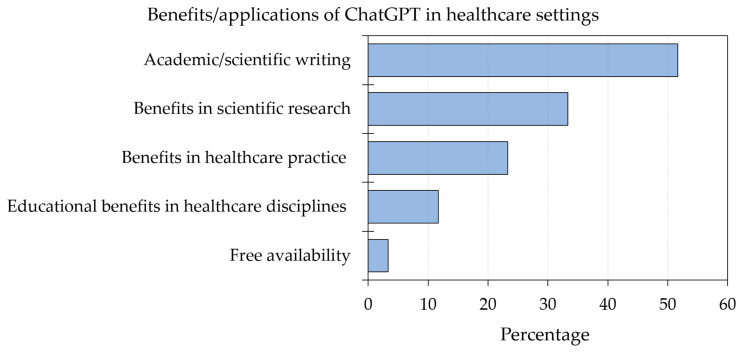
- Benefits were most frequently cited for academic/scientific writing (31 records, 51.7%), followed by scientific research (20, 33.3%), healthcare practice (14, 23.3%), healthcare education (7, 11.7%), and being a free package (2, 3.3%).
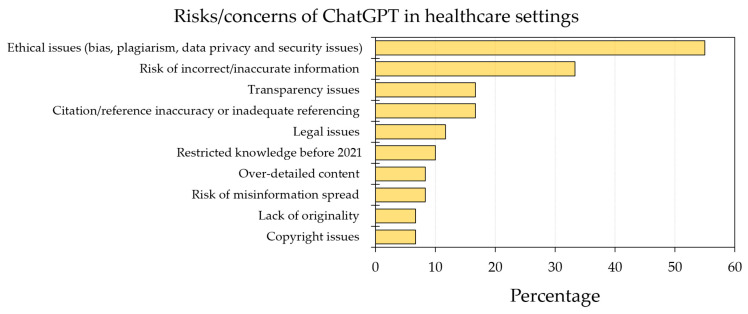
- Ethical concerns were the most common risk category (33 records, 55.0%), including risk of bias (18, 30.0%) and plagiarism (14, 23.3%); incorrect/inaccurate information was cited in 20 records (33.3%), citation/reference inaccuracy in 10 (16.7%), and transparency issues in 10 (16.7%).
- Other reported concerns included legal issues (7, 11.7%), restricted knowledge before 2021 (6, 10.0%), misinformation spread (5, 8.3%), over-detailed content (5, 8.3%), copyright issues (4, 6.7%), and lack of originality (4, 6.7%).
- The review states that ChatGPT does not qualify as an author under current ICMJE/COPE guidelines unless those guidelines are revised, and calls for stakeholder-developed ethics guidance for responsible LLM use in healthcare and academia.
Methods
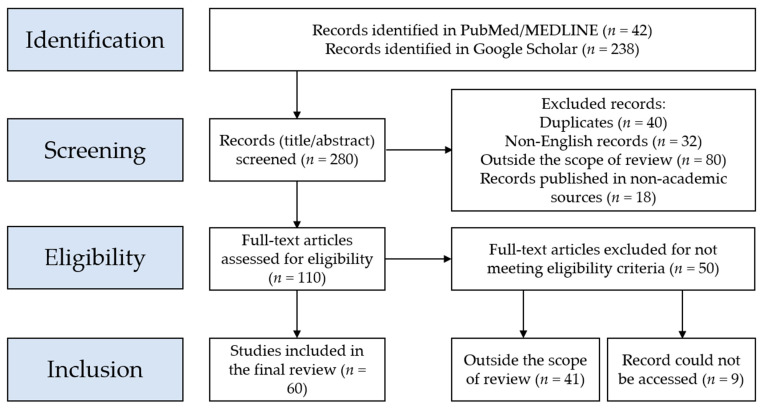
- Systematic review conducted according to PRISMA guidelines, searching PubMed/MEDLINE and Google Scholar for English records on ChatGPT in healthcare practice/research, healthcare education, or academic writing; searches concluded on 16 February 2023.
- PubMed/MEDLINE yielded 42 records and Google Scholar yielded 238 records, totaling 280 records; after duplicate removal (n = 40), non-English exclusion (n = 32), out-of-scope exclusion (n = 80), non-academic source exclusion (n = 18), full-text screening exclusions (n = 41), and inaccessible full texts (n = 9), 60 records were included.
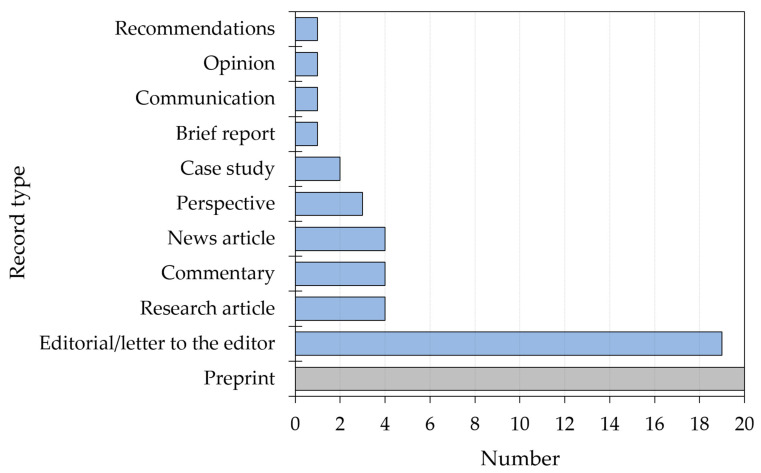
- Each included record was searched for record type, listed benefits/applications, listed risks/concerns, and main conclusions/recommendations regarding ChatGPT in healthcare education, practice, or scientific research/academic writing.
Limitations
- The paper states that included records had variable quality, non-English exclusion may have caused selection bias, inaccessible records may have led to missing relevant data, preprints were not peer reviewed, the literature is growing rapidly with the search ending 16 February 2023, and screening/interpretation was performed by a single author.
- Evident from the text: the review reports descriptive counts of mentions across heterogeneous record types rather than a formal meta-analysis or independent risk-of-bias assessment.
Model-written summary. Check it against the paper before relying on it.
Integrity signals
Registry
Cites
Statistics
Figures
Verification
Claims the paper makes
53 Valid · 1 Not valid · 6 Not checked · 37 Own results and interpretations
Every source the paper cites for this claim was checked and supports it.
In the paper
“This comes in light of the ability of ChatGPT to generate incorrect content that appears plausible from a scientific point of view [81].”
§ ChatGPT Utility in Healthcare Education, Research, and Practice: Systematic Review on the Promising Perspectives and Valid Concerns > 4. Discussion > 4.2. Limitations of ChatGPT Use in Scientific Research
What the sources say
- Supportedcites [81] Cascella M. Montomoli J. Bellini V. Bignami E. Evaluating the Feasibility of ChatGPT in Healthcare: An Analysis of Multiple Clinical and Research Scenarios J. Med. Syst. 2023 47 33 10.1007/s10916-023-01925-4 36869927 PMC9985086 source
In “Reasoning About Public Health Topics,” the paper says ChatGPT can produce believable answers that may be incorrect or nonsensical. In “Possible Misuse of GPT in Medicine and Research,” it describes a scientific abstract that appeared reliable and simulated statistical outputs that could seem plausible to readers. Together, these passages support the claim. (LLM, conf=0.94)
plain- Asserted: passes — The authors put it forward as true.
- Checkable: passes — It can be checked against evidence.
- Load-bearing: passes — The paper’s conclusions depend on it.
- Based: passes — The paper gives a reason why it holds.
- Supported
The sources with a verdict support this claim; the rest weren’t checked yet, have no full text we could read, or their verdicts aren’t rated yet.
In the paper
“This comes in light of the fact that authorship entails legal obligations that are not met by ChatGPT [43,48].”
§ ChatGPT Utility in Healthcare Education, Research, and Practice: Systematic Review on the Promising Perspectives and Valid Concerns > 4. Discussion > 4.2. Limitations of ChatGPT Use in Scientific Research
What the sources say
- Supportedcites [43] Zielinski C. Winker M. Aggarwal R. Ferris L. Heinemann M. Lapeña J. Pai S. Ing E. Citrome L. Chatbots, ChatGPT, and Scholarly Manuscripts WAME Recommendations on ChatGPT and Chatbots in Relation to Scholarly Publications Maced J. Med. Sci. 2023 11 83 86 10.3889/oamjms.2023.11502 37615142 source
The Introduction (p. 2) says chatbots are not legal entities, cannot be held legally liable, and that listing ChatGPT as an author may not be legally defensible. The WAME Recommendations (p. 2) add that chatbots cannot take responsibility for a paper or have the legal standing to sign a statement. (LLM, conf=0.93)
- Not checked — no full text of the sourcecites [48] Liebrenz M. Schleifer R. Buadze A. Bhugra D. Smith A. Generating scholarly content with ChatGPT: Ethical challenges for medical publishing Lancet Digit. Health 2023 5 e105 e106 10.1016/S2589-7500(23)00019-5 36754725 source
plain- Asserted: passes — The authors put it forward as true.
- Checkable: passes — It can be checked against evidence.
- Load-bearing: passes — The paper’s conclusions depend on it.
- Based: passes — The paper gives a reason why it holds.
- Supported
The cited sources support only part of this claim — read each source’s verdict below.
In the paper
“On one hand, ChatGPT, among other LLMs, can be beneficial in conversational and writing tasks, assisting to increase the efficiency and accuracy of the required output [11].”
§ ChatGPT Utility in Healthcare Education, Research, and Practice: Systematic Review on the Promising Perspectives and Valid Concerns > 1. Introduction
What the sources say
- Partly supportedcites [11] Deng J. Lin Y. The Benefits and Challenges of ChatGPT: An Overview Front. Comput. Intell. Syst. 2023 2 81 83 10.54097/fcis.v2i2.4465 sourceExperimental — accuracy not yet measured
Sections 4.1 (Increased Efficiency) and 4.2 (Improved Accuracy) say ChatGPT can make conversations more efficient and generate more accurate responses. The paper does not establish those benefits for writing tasks or for other LLMs, so the broader claim is only partially supported. (LLM, conf=0.88)
plainstates a cause- Asserted: passes — The authors put it forward as true.
- Checkable: passes — It can be checked against evidence.
- Load-bearing: unclear — It is unclear whether the paper’s conclusions depend on it.
- Based: passes — The paper gives a reason why it holds.
- Partly supported
The cited sources support only part of this claim — read each source’s verdict below.
In the paper
“Importantly, the concept of ChatGPT hallucination could be risky if the generated content is not thoroughly evaluated by researchers and health providers with proper expertise [37,56,73,77,79].”
§ ChatGPT Utility in Healthcare Education, Research, and Practice: Systematic Review on the Promising Perspectives and Valid Concerns > 4. Discussion > 4.2. Limitations of ChatGPT Use in Scientific Research
What the sources say
- Not checked — no full text of the sourcecites [37] Shen Y. Heacock L. Elias J. Hentel K.D. Reig B. Shih G. Moy L. ChatGPT and Other Large Language Models Are Double-edged Swords Radiology 2023 230163 10.1148/radiol.230163 36700838 source
- Partly supportedcites [56] Huh S. Are ChatGPT’s knowledge and interpretation ability comparable to those of medical students in Korea for taking a parasitology examination?: A descriptive study J. Educ. Eval. Health Prof. 2023 20 1 10.3352/jeehp.2023.20.1 36627845 PMC9905868 sourceExperimental — accuracy not yet measured
The Background says medical students must evaluate the accuracy of AI-generated medical information before creating reliable information for patients and the public. The Interpretation also reports that some ChatGPT explanations contained incorrect information. These passages support the need for scrutiny, but the paper does not specifically discuss hallucination or evaluation by researchers and health providers. (LLM, conf=0.84)
- Partly supportedcites [73] Duong D. Solomon B.D. Analysis of large-language model versus human performance for genetics questions medRxiv 2023 Preprint 10.1101/2023.01.27.23285115 PMC10999420 37246194 sourceExperimental — accuracy not yet measured
The Discussion (p. 6) says ChatGPT can give plausible explanations for incorrect answers and that its correctness requires additional verification, which is concerning in medical or other high-stakes settings. This supports the risk and need for evaluation, but the paper does not specify that researchers and health providers with proper expertise must perform it. (LLM, conf=0.83)
- Supportedcites [77] Jeblick K. Schachtner B. Dexl J. Mittermeier A. Stüber A.T. Topalis J. Weber T. Wesp P. Sabel B. Ricke J. ChatGPT Makes Medicine Easy to Swallow: An Exploratory Case Study on Simplified Radiology Reports arXiv 2022 10.48550/arxiv.2212.14882 2212.14882 PMC11126432 37794249 source
The Results (Free-text analysis) identify a ChatGPT hallucination that radiologists judged potentially harmful to a patient. The Key Points state that minimizing harm requires supervision by medical experts, supporting the claim’s warning about unevaluated medical content. (LLM, conf=0.90)
- Partly supportedcites [79] Lin Z. Why and how to embrace AI such as ChatGPT in your academic life PsyArXiv 2023 Preprint 10.31234/osf.io/sdx3j PMC10445029 37621662 sourceExperimental — accuracy not yet measured
The “Limitations of generative AI” section says ChatGPT may fabricate facts and false citations (“hallucination”) and urges users to critically evaluate and verify its responses, particularly when reliability is critical. It does not specifically say that researchers and health providers with proper expertise must evaluate the content; that part is more specific than the source. (LLM, conf=0.84)
hedgedstates a possible cause- Asserted: passes — The authors put it forward as true.
- Checkable: passes — It can be checked against evidence.
- Load-bearing: passes — The paper’s conclusions depend on it.
- Based: passes — The paper gives a reason why it holds.
- Rests on an assumption not shown here.
The sources with a verdict support this claim; the rest weren’t checked yet, have no full text we could read, or their verdicts aren’t rated yet.
In the paper
“This is particularly relevant for researchers who are non-native English speakers [23,25,63].”
§ ChatGPT Utility in Healthcare Education, Research, and Practice: Systematic Review on the Promising Perspectives and Valid Concerns > 4. Discussion > 4.1. Benefits of ChatGPT in Scientific Research
What the sources say
- Supportedcites [23] Chen T.J. ChatGPT and Other Artificial Intelligence Applications Speed up Scientific Writing Available online: https://journals.lww.com/jcma/Citation/9900/ChatGPT_and_other_artificial_intelligence.174.aspx (accessed on 16 February 2023) PMC12755446 36791246 source
In the main text (page not provided), Chen says many scientists who are not native English speakers struggle to write in English and describes AI translation and writing tools as ways to overcome that barrier. This supports the claim that language assistance in scientific writing is particularly relevant to those researchers. (LLM, conf=0.91)
- Not checked — no full text of the sourcecites [25] Kitamura F.C. ChatGPT Is Shaping the Future of Medical Writing but Still Requires Human Judgment Radiology 2023 230171 10.1148/radiol.230171 36728749 source
- Supportedcites [63] Gao C.A. Howard F.M. Markov N.S. Dyer E.C. Ramesh S. Luo Y. Pearson A.T. Comparing scientific abstracts generated by ChatGPT to original abstracts using an artificial intelligence output detector, plagiarism detector, and blinded human reviewers bioRxiv 2022 10.1101/2022.12.23.521610 source
The Discussion/Abstract section of our copy states directly that the technology 'could be used by scientists publishing in a language that is not their native language, to improve equity,' alongside the point that generated text 'may help alleviate the burden of writing' and that LLMs are 'a powerful tool to create readable scientific abstracts.' That covers the attributed content — AI-assisted language improvement being especially pertinent for non-native-English researchers — with the source's own hedge ('could be used') slightly weaker than the citing sentence's flat 'is particularly relevant.' No passage in our copy contradicts it. (LLM, conf=0.82)
plainstates an association- Asserted: passes — The authors put it forward as true.
- Checkable: passes — It can be checked against evidence.
- Load-bearing: unclear — It is unclear whether the paper’s conclusions depend on it.
- Based: passes — The paper gives a reason why it holds.
- Supported
42 more claims · 23 with their cited sources checked
Create a free account to see all 97 claims and to verify the 16 references still open.
- Probably not a substantial claim. 31
- It may state two separate claims as one. 27
Claims other papers make about this one
Each is checked against this paper’s own text: does it say what the citing paper says it does?
The source backs part of the claim, not all of it — or backs it for a different population, condition or comparison.
In the citing paper
“The reliance on ChatGPT may result in hindering the development of the skills needed to interpret and respond to social cues, which should be considered in health care education [9,91].”
From Assessing Health Students' Attitudes and Usage of ChatGPT in Jordan: Validation Study (2023) · cites this paper as [9]
Experimental — accuracy not yet measuredThe source backs part of the claim, not all of it — or backs it for a different population, condition or comparison.
In the citing paper
“A recent surge in the use of ChatGPT, in particular for mental health, is emergent for providing crucial personalized advice without clinical explanation, which can hurt user's safety, and thus trust (Sallam, 2023).”
From A review of the explainability and safety of conversational agents for mental health to identify avenues for improvement (2023) · cites this paper as Sallam, 2023
Experimental — accuracy not yet measuredThe source backs part of the claim, not all of it — or backs it for a different population, condition or comparison.
In the citing paper
“ChatGPT plays a crucial role in pandemic management by aiding in the swift and accurate dissemination of critical information.”
From A Systematic Review and Meta-Analysis of Artificial Intelligence Tools in Medicine and Healthcare: Applications, Considerations, Limitations, Motivation and Challenges (2024) · cites this paper as [6]
Experimental — accuracy not yet measuredThe source backs part of the claim, not all of it — or backs it for a different population, condition or comparison.
In the citing paper
“Its natural language processing capabilities enable it to generate coherent responses, making it a valuable tool for healthcare organisations.”
From A Systematic Review and Meta-Analysis of Artificial Intelligence Tools in Medicine and Healthcare: Applications, Considerations, Limitations, Motivation and Challenges (2024) · cites this paper as [6]
Experimental — accuracy not yet measuredThe source backs part of the claim, not all of it — or backs it for a different population, condition or comparison.
In the citing paper
“Specific advantages include its ability to provide rapid updates, preventive measures, and medical guidelines to the public.”
From A Systematic Review and Meta-Analysis of Artificial Intelligence Tools in Medicine and Healthcare: Applications, Considerations, Limitations, Motivation and Challenges (2024) · cites this paper as [6]
Experimental — accuracy not yet measured
31 more claims about this paper
Create a free account to see every claim other papers make about this one.
Citations
Cites
Preferred Reporting Items for Systematic Reviews and Meta-Analyses: the PRISMA statement
Moher, D., Liberati, A., Tetzlaff, J., Altman, D. G., & for the PRISMA Group (2009) · BMJ · doi:10.1136/bmj.b2535 · Cited by 83,823
Preferred Reporting Items for Systematic Reviews and Meta-Analyses: The PRISMA Statement
Moher, D., Liberati, A., Tetzlaff, J., Altman, D. G., & The PRISMA Group (2009) · PLoS Medicine · doi:10.1371/journal.pmed.1000097 · Cited by 64,042 · cited 1×
“The current systematic review was conducted according to the Preferred Reporting Items for Systematic Reviews and Meta-Analyses (PRIMSA) guidelines [21].”
Language Models are Few-Shot Learners
Brown, T. B., Mann, B., Ryder, N., Subbiah, M., Kaplan, J., Dhariwal, P., Neelakantan, A., Shyam, P., Sastry, G., Askell, A., et al. (2020) · arXiv · doi:10.48550/arxiv.2005.14165 · Cited by 23,372 · cited 3×
“The GPT architecture utilizes a neural network to process natural language, thus generating responses based on the context of input text [7].”
BackgroundWang, G., Ma, R., Qiao, G., Wada, K., Aizawa, Y., & Satoh, T. (2015) · Integrative Medicine International · doi:10.1159/000368408 · Cited by 18,657
Kaugeranna, R., Kaugeranna, E., & Aion, (. S. 4. 6. (2023) · DROPS (Schloss Dagstuhl – Leibniz Center for Informatics) · doi:10.4230/lipics.giscience.2023.43 · Cited by 13,690
Machine learning: Trends, perspectives, and prospects
Jordan, M. I., & Mitchell, T. M. (2015) · Science · doi:10.1126/science.aaa8415 · Cited by 9,955
Kung, T. H., Cheatham, M., Medenilla, A., Sillos, C., De Leon, L., Elepaño, C., Madriaga, M., Aggabao, R., Diaz-Candido, G., Maningo, J., et al. (2023) · PLOS Digital Health · doi:10.1371/journal.pdig.0000198 · Cited by 4,115 · cited 2×
“[59] An article showing the ChatGPT raised accuracy which enabled passing the USMLE Accuracy with high concordance and insight; it can facilitate patient communication; improved personalized medicine ChatGPT has a promising potential in medical education; future studies are recommended to consider non-biased approach…”
BackgroundKung, T. H., Cheatham, M., ChatGPT, Medenilla, A., Sillos, C., De Leon, L., Elepaño, C., Madriaga, M., Aggabao, R., Diaz-Candido, G., et al. (2022) · doi:10.1101/2022.12.19.22283643 · Cited by 4,115
Rajpurkar, P., Chen, E., Banerjee, O., & Topol, E. J. (2022) · Nature Medicine · doi:10.1038/s41591-021-01614-0 · Cited by 3,212 · cited 1×
“The promising utility of AI in health care has been outlined previously with possible benefits in personalized medicine, drug discovery, and the analysis of large datasets aside from the potential applications to improve diagnosis and clinical decisions [17,18].”
BackgroundChatting and cheating: Ensuring academic integrity in the era of ChatGPT
Cotton, D. R. E., Cotton, P. A., & Shipway, J. R. (2024) · Innovations in Education and Teaching International · doi:10.1080/14703297.2023.2190148 · Cited by 3,087 · cited 1×
“[62] An EdArXiv 2 preprint on the academic integrity in ChatGPT era Risk of plagiarism; academic dishonesty Careful thinking of educational assessment tools”
Background
Cited by
Items 1,901–2,000 of 3,096
Board 66: Impact of ChatGPT on Student Writing in Construction Management: A Study of Applied Risks
Zhao, T., Wang, G. C., Chance, R., & Buckhalter, C. (2024) · ASEE Annual Conference & Exposition · doi:10.18260/1-2--48363 · Cited by 8
Elinzano, G. B. O., Payawal, B. O., & Ebardo, R. A. (2024) · Lecture notes in electrical engineering · doi:10.1007/978-981-97-2977-7_33 · Cited by 4
Goto, H., Shiraishi, Y., & Okada, S. (2024) · Cureus · doi:10.7759/cureus.70614 · Cited by 4
University Students Using ChatGPT in Project-Based Learning
Economides, A. A., & Perifanou, M. A. (2024) · Communications in computer and information science · doi:10.1007/978-3-031-73990-3_3 · Cited by 7
Exploring the Exciting Possibilities of Visual ChatGPT in Pressure Injury Care: Time for Change?
Göktaş, P., Küçükkaya, A., & Karaçay, P. (2024) · Advances in Skin & Wound Care · doi:10.1097/asw.0000000000000239 · Cited by 4
LLM-based kidney disease diagnostic framework for Pathologists
Syeda, M. Z., Bukhari, S. U. K., Hussain, M., Khan, W. A., & Shah, S. S. H. (2024) · Annual International Conference of the IEEE Engineering in Medicine and Biology Society (EMBC) · doi:10.1109/embc53108.2024.10782599 · Cited by 3
“Healthcare companies have contributed to integrating LLMs into their associations to relieve the load of medical professionals, decrease costs, and improve effectiveness [4].”
ChatGPT (GPT-4V) Performance on the Healthcare Information Technologist Examination in Japan
Ishida, K., & Hanada, E. (2025) · Cureus · doi:10.7759/cureus.76775 · Cited by 6
Xiao, J., Li, M., Cai, R., Huang, H., Yu, H., Huang, L., Li, J. W., Yu, T., Zhang, J., & Cheng, S. (2025) · Journal of Medical Internet Research · doi:10.2196/56737 · Cited by 7
“ChatGPT is an evolving model in natural language processing, as Microsoft and OpenAI continue to develop it, and its potential applications in medical education have garnered a great deal of attention [29].”
Bridging the Gap: A Debate on Sustainability Aspects of Digital Media in Education
Spangenberger, P., & Söbke, H. (2025) · Education Sciences · doi:10.3390/educsci15020241 · Cited by 11
Munguía‐Realpozo, P., Pinto, C. M., Etchegaray‐Morales, I., Ramírez‐Lara, E., Solís-Poblano, J. C., Méndez‐Martínez, S., Vértiz, L. S., & Ayón-Aguilar, J. (2025) · Lupus · doi:10.1177/09612033251324501 · Cited by 4
“15 Within this group of models, ChatGPT (GPT) (Open AI) has been a favorite in the sector.”
Gupta, A. K., Basha, A., Sontam, T. R., Hlavinka, W. J., Croen, B. J., Abdou, C., Abdullah, M. S., & Hamilton, R. G. (2025) · Baylor University Medical Center Proceedings · doi:10.1080/08998280.2025.2470033 · Cited by 5
“18 Kung et al showed that ChatGPT was able to perform at or near the passing threshold for the United States Medical Licensing Exam (USMLE) without requiring specialized input or pretraining, showcasing the program ’ s clinical reasoning and deductive skills.”
Vos, D. J., Yaffe, N. M., Cabrera, C. I., Fowler, N., & D’Anza, B. (2025) · Cureus · doi:10.7759/cureus.82085 · Cited by 3
English-Major Master's Students Regarding the Use of ChatGPT in Learning Research Writing at IUH
Truong, T. A. A., Le, H. K. N., & Nguyen, V. H. Q. (2025) · International journal of AI in language education. · doi:10.54855/ijaile.25216 · Cited by 3
“Despite its speed, ChatGPT sometimes produces erroneous results (Day, 2023; Gordijn & Have, 2023; Hügle, 2023; Sallam, 2023; Tlili et al., 2023; Wen & Wang, 2023).”
Oumano, M., & Pickett, S. M. (2025) · Journal of Nuclear Medicine Technology · doi:10.2967/jnmt.124.269335 · Cited by 5
Lin, S., Jiang, C., Law, K.-M., Yeh, P.-C., Tsai, M., Chou, C., Wang, I., Ting, I., Chen, Y., Chou, C., et al. (2025) · Digital Health · doi:10.1177/20552076251342067 · Cited by 5
Bessas, N., Tzanaki, E., Vavougios, D., & Plagianakos, V. P. (2025) · Social Sciences & Humanities Open · doi:10.1016/j.ssaho.2025.101610 · Cited by 11
Steele, E., Steratore, A., Dilcher, B., & Bandi, K. (2025) · Cureus · doi:10.7759/cureus.88818 · Cited by 4
Thayappa, K., Manake, R., Kyasa, S. B., & Babu, A. (2025) · Cureus · doi:10.7759/cureus.88824 · Cited by 3
“Authors should use ChatGPT judiciously, ensuring thorough plagiarism checks [18].”
With great power comes great responsibility – deductions of using ChatGPT for medical research
Mahmood, S., Khan, M. O., & Hameed, I. (2023) · EXCLI journal · doi:10.17179/excli2023-6163 · Cited by 6
Accelerating medical education with ChatGPT: an implementation guide
Peacock, J. G., Austin, A. L., Shapiro, M., Battista, A., & Samuel, A. (2023) · MedEdPublish · doi:10.12688/mep.19732.1 · Cited by 27
Evaluating the performance of ChatGPT in clinical pharmacyPreprint
Huang, X., Estau, D., Liu, X., Yu, Y., Qin, J., & Li, Z. (2023) · doi:10.22541/au.168253193.31991662/v1 · Cited by 3
ChatGPT in Medical Education: A Precursor for Automation Bias? (Preprint)
Nguyen, T. (2023) · doi:10.2196/preprints.50174 · Cited by 2
Artificial Intelligence in Biomedicine: Systematic ReviewPreprint
Gabashvili, I. S. (2023) · medRxiv · doi:10.1101/2023.07.23.23292672 · Cited by 4
“Of the remaining 12 reviews, the majority (7 reviews, [9-15]) explored the general healthcare field, with the rest being related to medical education (1 review, [16]) or specialized medical areas such as dentistry [17,18], obstetrics and gynecology [19], dermatology [20], or public health [17] (4 reviews).”
BackgroundLos desafíos éticos y científicos de ChatGPT en salud: utopismo, tecnofobia y pragmatismoPreprint
García‐Valiña, L., & Mastroleo, I. (2023) · OSF Preprints (OSF Preprints) · doi:10.31219/osf.io/kvj45 · Cited by 4
Artificial intelligence in healthcare simulation: hype or hope
Rodgers, D. L., Ahmed, R. A., & Misra, A. (2023) · International Journal of Healthcare Simulation · doi:10.54531/nzqf1198 · Cited by 3
Evaluation of ChatGPT's Usefulness and Accuracy in Diagnostic Surgical Pathology.Preprint
Guastafierro, V., Corbitt, D. N., Bressan, A., Fernandes, B., Mintemur, O., Magnoli, F., Ronchi, S., Rosa, S. L., Uccella, S., & Renne, S. (2024) · medRxiv · doi:10.1101/2024.03.12.24304153 · Cited by 2
Most, A. K., Chase, A. M., & Sikora, A. N. (2024) · medRxiv · doi:10.1101/2024.06.29.24309701 · Cited by 4
Ruan, E., Alkattan, A., Elhadad, N., & Rossetti, S. C. (2024) · medRxiv · doi:10.1101/2024.07.29.24311177 · Cited by 9
“We asked participants to indicate their position on nine divisive areas regarding the generative AI tools, which were selected based on published articles, viewpoints, and commentary by clinicians 1,2,5,10-13, 21, 22 .”
BackgroundMethodCaputo, J., Ibrahim, A. H., Davis, D. W., Stone, W. J., Garver, M. J., & Johnson, S. L. (2025) · Kinesiology Review · doi:10.1123/kr.2025-0010 · Cited by 3
Edyko, K., Petryla, P., Ostafin, K., Minkner, M., Bieńkowski, B., Feja, K., Suwała, Z., REKTOR, N., Łuczak, E., & Marchewka, U. (2023) · Journal of Education Health and Sport · doi:10.12775/jehs.2023.46.01.008 · Cited by 7
ChatGPT and its Double-Edged Impact on Higher Education and Research- A Detailed Survey
Jagadeesh, M., Aneesh Saikrishna, P., Ali, A. S., & Athish, B. S. (2023) · International Conference on Recent Trends in Advance Computing (ICRTAC) · doi:10.1109/icrtac59277.2023.10480767 · Cited by 4
ChatGPT-4 frente a evaluación humana para la revisión por pares en cardiología
Fernández‐Cisnal, A., y, P. A., Rama, D. F., García‐Pavía, P., Sanchís, L., & Sanchís, J. M. (2024) · Revista Española de Cardiología · doi:10.1016/j.recesp.2024.02.018 · Cited by 2
Incorporating AI and ML into the classroom
Gutierrez, C., Jalaba, S. M., Kingsley, R., & Bolander, S. (2024) · Elsevier eBooks · doi:10.1016/b978-0-443-23901-4.00029-5 · Cited by 4
Accuracy of a ChatGPT in Diagnosing Urologic Conditions From Cross-sectional Imaging
Cole, M. W., Assani, K. D., Robinson, H. S., Wimbiscus, M. A., Launer, B. M., Chew, R., Cooke, E. A., Chang, S. S., Luckenbaugh, A. N., Joyce, D., et al. (2024) · Urology · doi:10.1016/j.urology.2024.11.036 · Cited by 4
Asaduzzaman, M., Rahman, M. A., Das, N. K., Iqbal, M., Kadir, A. K. M. S., Rabbany, M. G., Shemanto, M. U., Akhter, R., & Kundu, J. (2025) · ENVIRO Dental Journal · doi:10.12944/edj.06.si01.02 · Cited by 2
Extracting Norms from Contracts Via ChatGPT: Opportunities and Challenges
Haque, A., & Singh, M. P. (2025) · Lecture notes in computer science · doi:10.1007/978-3-031-82039-7_8 · Cited by 10
Tanaka, C., Kinoshita, T., Okada, Y., Satoh, K., Homma, Y., Suzuki, K., Yokobori, S., Oda, J., Otomo, Y., & Tagami, T. (2025) · Acute Medicine & Surgery · doi:10.1002/ams2.70042 · Cited by 2
A Review on Conversational AI as a Tool in Academic Writing
Demiröz, H., & Tıkız‐Ertürk, G. (2025) · Eskiyeni (Online)/Eskiyeni · doi:10.37697/eskiyeni.1565854 · Cited by 7
An Assessment of the Performance of Different Chatbots on Shoulder and Elbow Questions
Fares, M. Y., Parmar, T., Boufadel, P., Daher, M., Berg, J., Witt, A., Hill, B. W., Horneff, J. G., Khan, A. Z., & Abboud, J. A. (2025) · Journal of Clinical Medicine · doi:10.3390/jcm14072289 · Cited by 4
“The use of AI within the scientific community has garnered much attention recently, with numerous studies exploring the risks and benefits associated with its educational and clinical use [6–11].”
Évaluation des modèles d’intelligence artificielle dans la gestion clinique de la lombalgie commune
André, F., Armengaud, P., & Couquet, G. (2025) · Kinésithérapie la Revue · doi:10.1016/j.kine.2025.02.021 · Cited by 2
Küçük, E., Meral, B., Çalık, K. Y., & Çapık, C. (2025) · International Journal of Human-Computer Interaction · doi:10.1080/10447318.2025.2487876 · Cited by 3
“…et al., 2024; Liu et al., 2023; Ram � ırez-Baraldes et al., 2025), a lack of interpersonal communication (Liu et al., 2023), and an increased risk of privacy and security breaches (Liu et al., 2023; Sallam, 2023), due to its inability to access the most up-to-date medical research or clinical data.”
Patel, K. A., Suriano, C. J., & Janis, J. E. (2025) · Plastic & Reconstructive Surgery Global Open · doi:10.1097/gox.0000000000006698 · Cited by 3
“36,37 Several recent journal articles have analyzed the role of large language models, namely ChatGPT, within the realm of academic plastic surgery.”
ChatGPT’nin Diş Hekimliğinde Kullanım Alanları ve Sınırlamaları
Özdemir, Ö. T., & Güven, Y. (2025) · Selcuk Dental Journal · doi:10.15311/selcukdentj.1503653 · Cited by 2
Large language models and questions from older adults: a human and machine-based evaluation study
Vu, T., Tay, J. T., Hoang, P. T. N., Oya, A., Yamamoto, M., Watanabe, N., Kuriya, Y., & Araki, M. (2025) · Discover Artificial Intelligence · doi:10.1007/s44163-025-00267-z · Cited by 4
A systematic review on ChatGPT and libraries: benefits, challenges and way forward
Safdar, M., Siddique, N., & Khan, M. A. (2025) · Global Knowledge, Memory and Communication · doi:10.1108/gkmc-06-2024-0359 · Cited by 5
Artificial Intelligence and Publishing Ethics: A Narrative Review and SWOT Analysis
Gurnal, P., & Rana, L. (2025) · Cureus · doi:10.7759/cureus.84098 · Cited by 5
“According to ICMJE guidelines, for authorship, four criteria need to be fulfilled, which include substantial contribution in conception, design, and acquisition; drafting and critical review of intellectual content; final approval; and accountability for all aspects of the work [21].”
InfluentialArtificial Intelligence Technologies for Nursing Development: A Review of the Current Literature
Wang, Y., Wang, Z., Lin, W., & Li, Q. (2025) · British Journal of Hospital Medicine · doi:10.12968/hmed.2024.0947 · Cited by 7
Leveraging AI to Enhance Literacy in Students with ASD: Insights and Applications
Lawton, A. (2025) · Georgia Journal of Literacy · doi:10.56887/galiteracy.183 · Cited by 2
“(Sallam et al., 2023).”
Using ChatGPT in ethical dilemmas and policy-related complex decision making: Are we ready yet?
Tal, O., & Connelly, Y. (2025) · Health Policy and Technology · doi:10.1016/j.hlpt.2025.101041 · Cited by 3
Eminovic, S., Levita, B., Dell’Orco, A., Leppig, J. A., Nawabi, J., & Penzkofer, T. (2025) · Journal of Personalized Medicine · doi:10.3390/jpm15060235 · Cited by 2
“LLMs also raise ethical concerns, including legal responsibility and data protection [18,31].”
Probing Large Language Model Hidden States for Adverse Drug Reaction Knowledge
Berkowitz, J. S., Weissenbacher, D., Srinivasan, A., Friedrich, N. A., Cortina, J. M. A., Kivelson, S., Gonzalez‐Hernandez, G., & Tatonetti, N. P. (2025) · Lecture notes in computer science · doi:10.1007/978-3-031-95838-0_6 · Cited by 7
Mirsky, N. A., Munkwitz, S. E., Kassira, W. M., Pathagamage, P., Coelho, P. G., & Thaller, S. R. (2025) · Annals of Plastic Surgery · doi:10.1097/sap.0000000000004435 · Cited by 2
Demir, A. N., & Zaimoğlu, S. (2025) · Bayburt Eğitim Fakültesi Dergisi · doi:10.35675/befdergi.1647707 · Cited by 8
Chat generative pre-trained transformers era: pros and cons between nursing researchers in Egypt
Elpasiony, N. M. A., Sabek, E. M., & Ibrahim, S. S. M. (2025) · BMC Nursing · doi:10.1186/s12912-025-03332-1 · Cited by 2
“After reviewing related studies [12–15, 10, 16], the researchers developed this questionnaire to identify participants’ viewpoint for the pros, cons, and barriers of ChatGPT utilization.”
Bernstein, E., Ramsamooj, A., Millar, K. L., & Lum, Z. C. (2025) · JMIR AI · doi:10.2196/68603 · Cited by 4
“Other uses in medicine included assistance for nonnative English speakers with translation to their native language [15-17].”
The impact of ChatGPT on orthopedic residents’ scientific writing: A quasi-experimental study
Kumar, R., P., A. K. H. P. P., Selvam, A. A., Dhamu, I. M., & Balasubramanian, N. (2025) · Journal of Clinical Orthopaedics and Trauma · doi:10.1016/j.jcot.2025.103116 · Cited by 4
Few-Shot Prompting with Vision Language Model for Pain Classification in Infant Cry Sounds
McCofie, A., Kandiyana, A., Mouton, P. R., Sun, Y., & Goldgof, D. B. (2025) · Proceedings - IEEE Symposium on Computer-Based Medical Systems · doi:10.1109/cbms65348.2025.00174 · Cited by 5
“The use of VLMs in 1 Corresponding author:Anthony McCofie(email:anthonymccofie@usf.edu) clinical settings, has been explored in various health studies [5], [6].”
Öztürk, Y., Ağın, A., Yelmi, B., et al. (2025) · BMC Ophthalmology · doi:10.1186/s12886-025-04256-9 · Cited by 2
“These models can be trained to produce appropriate responses, with GPT 4.0 currently standing as the most advanced version [2–4].”
InfluentialTashtoush, N., Zawiah, M., Sulaiman, S. A. S., AMRAN, F. A., Rahim, S. K., & Harun, S. N. (2025) · Supportive Care in Cancer · doi:10.1007/s00520-025-09800-3 · Cited by 1
“These challenges have been extensively highlighted in previous studies, which also noted the need for training and validation of AI tools before healthcare professionals could be effectively integrated into routine clinical practice [32–36].”
Medina-Zuta, P., Becerra, G., Soloaga, P. S., Adam, M. E. A., Barrenechea, E. Y. K., & Losada, A. V. (2025) · Sociologia & Antropologia · doi:10.1590/2238-38752025v15210 · Cited by 7
Factors Affecting the Acceptance of ChatGPT: A Study of Malaysian University Students
Barry, M., & Haque, A. (2025) · Emerald Group Publishing Limited eBooks · doi:10.1108/978-1-83708-724-220251001 · Cited by 2
Takeshita, Y., Kawazu, T., Hisatomi, M., Okada, S., Fujikura, M., Namba, Y., Yoshida, S., Yoshida, S., Yanagi, Y., & Asaumi, J. (2025) · Technology Knowledge and Learning · doi:10.1007/s10758-025-09891-1 · Cited by 3
“…such as ChatGPT in the medical field is to support clinical practice, research, and education (Amin et al., 2023; Aramaki et al., 2022; Haver et al., 2023; Khurana et al., 2023; Li et al., 2024; Sallam, 2023; Shen et al., 2023; Sun et al., 2023; Thirunavukarasu et al., 2023; Ueda et al., 2023).”
Utrera, C. B., Bravo-Vazquez, A., Bancalero, F. J. M., Suárez-Vega, A., Casuso-Holgado, M. J., & Anarte‐Lazo, E. (2025) · Physiotherapy · doi:10.1016/j.physio.2025.101838 · Cited by 10
Xue, D., & Liao, S. (2025) · Risk Management and Healthcare Policy · doi:10.2147/rmhp.s531777 · Cited by 2
“7– 10 In China, induced abortions account for nearly one-quarter of the global total, with 55.9% of these cases involving repeat abortions.”
InfluentialNaamati-Schneider, L. (2025) · Medical Science Educator · doi:10.1007/s40670-025-02486-6 · Cited by 5
“According to Sallam et al. [27], the use of ChatGPT simplifies complex medical concepts, using analogies and examples for clarity and providing supplementary resources to deepen students’ understanding of challenging topics.”
Yılmaz, D., & Çolpak, E. D. (2025) · European Annals of Dental Sciences · doi:10.52037/eads.2025.0011 · Cited by 4
Automated vulnerability evaluation with large language models and vulnerability ontologies
Ghosh, R., von Stockhausen, H., Schmitt, M., Marica, V. G., Karn, S. K., & Farri, O. (2025) · AI Magazine · doi:10.1002/aaai.70031 · Cited by 5
Mulla, S. J., & Patel, M. N. (2025) · AI & Society · doi:10.1007/s00146-025-02598-y · Cited by 3
“Artificial Intelligence (AI) technologies, particularly through Natural Language Processing (NLP) and large language models (LLMs), has demonstrated immense potential in processing unstructured and largescale data in healthcare education and research (Sallam 2023).”
Furukawa, E., Okuhara, T., Okada, H., Nishiie, Y., & Kiuchi, T. (2025) · Health Informatics Journal · doi:10.1177/14604582251381996 · Cited by 3
Addressing the Learning Gap with Adaptive Learning
Hakkal, S., & Lahcen, A. A. (2025) · Springer eBooks · doi:10.1007/978-3-031-90318-2_15 · Cited by 3
Najdi, J. A., Alameddine, B., Armache, A., Zein, M., Azar, W. S., & Hajj, A. E. (2025) · Scientific Reports · doi:10.1038/s41598-025-13077-1 · Cited by 2
Tian, M., Li, S., Du, W., Yang, S., Zhao, X., Xiong, H., Li, H., Lü, M., Ying, Y., Zhang, J., et al. (2025) · Journal of Medical Systems · doi:10.1007/s10916-025-02283-z · Cited by 3
“By streamlining workflows, reducing costs, and improv - ing health literacy [5 ], LLMs have the potential to signifi - cantly enhance efficiency and quality in medical practice.”
Bosschaerts, K., Kashefi, A., Marez, L. D., Conradie, P. D., Hoecke, S. V., & Ongenae, F. (2025) · Digital Health · doi:10.1177/20552076251381747 · Cited by 9
“10 In a few medical use cases, these LLMs are used as-is, without any prompt engineering, in-context learning or fi ne tuning.”
Olczewski, E., Marcondes, R., & Sens, L. (2025) · Ensaio · doi:10.1590/1983-2117-56809 · Cited by 4
Artificial intelligence in medical imaging: bridging innovation, ethics, and clinical impact
Vadlapudi, V., & Kaladhar, D. S. V. G. K. (2025) · International Journal of Advances in Medicine · doi:10.18203/2349-3933.ijam20253360 · Cited by 3
Pereira, R. A. D. C., Lima, R. R., Gomes, A. C. A., Saldanha, F. A. S., Schwingel, D., Schwingel, P. A., & Gambassi, B. B. (2025) · Scientifica · doi:10.1155/sci5/2632410 · Cited by 4
“As noted in a comprehensive systematic review by Sallam [8], the utility of these tools is marked by both “promising perspectives and valid concerns,” underscoring that their integration requires a cautious, evidence-based approach [9].”
Mwaniki, P., Musau, W., Isaaka, L., Wanyama, C. W., Menon, V., Denniston, A. K., Liu, X., Emmanuel-Fabula, M., Williams, G., Mateen, B. A., et al. (2026) · BMJ Digital Health & AI · doi:10.1136/bmjdh-2026-000081 · Cited by 3
“Importantly, this selective query pattern aligns with primary care practice, where decision support is typically sought when clinical uncertainty exceeds baseline priors; nurses would therefore only engage LLMs when needed, mitigating information burden for non-complex cases.”
Wang, X., Yang, D., Yu, S., & Zhuang, Y. (2025) · Frontiers in Public Health · doi:10.3389/fpubh.2025.1674111 · Cited by 3
P, A. M., Dileep Kumar, M., Sharma, V., Tripathi, R., & Badjatia, A. (2025) · Information Discovery and Delivery · doi:10.1108/idd-05-2025-0111 · Cited by 4
A Scoping Review of Large Language Model Chatbot Use for Alcohol and Other Drug Health Information
Harding, N., Bovopoulos, N., Caspi, D., Martin, C., McPhie, S., Bouadjenek, M. R., Aryal, S., & Hobbs, M. (2025) · Drug and Alcohol Review · doi:10.1111/dar.70068 · Cited by 3
Ghorbian, M., & Ghobaei‐Arani, M. (2025) · Journal Of Big Data · doi:10.1186/s40537-025-01304-5 · Cited by 7
El-Hakim, M., Khaled, H., Fawzy, A., & Anthonappa, R. P. (2025) · Dentistry Journal · doi:10.3390/dj13110531 · Cited by 3
“A review by Sallam highlights ChatGPT’s role in democratizing access to AI tools, especially for education and research [11].”
Bergmann, L., Beckenbach, R., Zach, L., Roth, B., & Tran, U. S. (2025) · Zeitschrift für Psychologie · doi:10.1027/2151-2604/a000609 · Cited by 6
Begum, M., Butt, M. N., & Ullah, S. (2025) · Asian Education and Development Studies · doi:10.1108/aeds-06-2025-0257 · Cited by 2
Ada, M. B. (2026) · ACM Transactions on Computing Education · doi:10.1145/3777904 · Cited by 7
Alkabaa, A. S., & Alamri, N. M. H. (2025) · Computer Applications in Engineering Education · doi:10.1002/cae.70110 · Cited by 7
Yang, M., Luo, T., Herman, K., Li, B., Chappell, S., Glaser, N. J., & Jiang, S. (2025) · Journal of Computing in Higher Education · doi:10.1007/s12528-025-09476-y · Cited by 3
“However, this technological advancement also introduces complexities around issues of ownership or authorship in learning (Bozkurt et al., 2021 ; Sallam, 2023 ; Zawacki-Richter et al., 2019 ).”
Unlocking medical students’ adoption of AIGC tools: a multi-theory perspective
Zhou, Z., Li, Z., Li, Z., Wang, C., Qi, H., & Guo, L. (2025) · Humanities and Social Sciences Communications · doi:10.1057/s41599-025-06078-y · Cited by 2
“Additionally, the generation of case data may pose a risk of compromising patient privacy (Sallam, 2023).”
InfluentialMedical students’ perceptions of AI-generated practice questions as learning tools
Tate, H., Bicknell, B. T., Fiore, P., Galloway, J., Borak, J., & Brooks, W. S. (2025) · Journal of Investigative Medicine · doi:10.1177/10815589251406265 · Cited by 4
“While prior studies have focused on AI accuracy or ethical considerations, 7–9 fewer have explored real-world learner engagement and outcome data.”
Chatbot Underperformance in Biology and Image-Based Questions in Medical Education
Rizzi, J. S., Requena, L. S., Bicudo, A. M., Filho, P. T. H., & Ferretti, R. (2025) · Journal of CME · doi:10.1080/28338073.2025.2596550 · Cited by 3
“Among various chatbots, GPT has outperformed Co-pilot and Gemini in clinical chemistry [4,22] and anatomy assessments [3].”
Tian, K., Jiang, C., & Sun, X. (2025) · Humanities and Social Sciences Communications · doi:10.1057/s41599-025-06163-2 · Cited by 6
“AI technology has rapidly gained popularity in fi elds such as education, healthcare, and the creative industries, and it will continue to establish its credibility (Li, 2019; Sallam, 2023).”
Artificial intelligence in the study of oral lichen planus characteristics: a review
Yang, H., Li, G., & Zhao, C. (2025) · BDJ Open · doi:10.1038/s41405-025-00388-8 · Cited by 4
“Although reported transformation rates vary, several risk factors have been established, including smoking (OR = 4.62), alcohol consumption (OR = 3.22), hepatitis C infection (OR = 3.77), and atrophic or erosive OLP subtypes (OR = 2.70) [20].”
InfluentialEvaluating ChatGPT for research impact assessment: comparative insights from the UK REF
Arsalan, M. H., Mubin, O., Mahmud, A. A., Mehdi, M. R., Gazder, U., & Khan, I. A. (2025) · Scientometrics · doi:10.1007/s11192-025-05498-6 · Cited by 3
Malek, A. N., Prelock, P., Jannesari, A., & Mehrpour, F. (2025) · AI and Ethics · doi:10.1007/s43681-025-00890-7 · Cited by 2
“Prior work has similarly used measures of factual correctness, comprehensiveness, and thematic coherence to benchmark AI performance (Carnino et al. 2024; Kung et al. 2023; Sallam 2023; Wu et al. 2024).”
InfluentialBains, V. K., & BHAWAL, U. K. (2025) · Journal of Healthcare Research and Education · doi:10.25259/jhre_4_2025 · Cited by 2
Xie, G., Liao, J., Tang, X., Fu, H., Liu, D., Deng, L., Wang, T., & Hong, X. (2025) · BMC Medical Education · doi:10.1186/s12909-026-09458-3 · Cited by 5
Ghosh, A., & Huang, C. J. (2025) · Journal of the Society for Clinical Data Management · doi:10.47912/jscdm.438 · Cited by 2
Alnsour, M. M., Al-Ghannam, W., Alraheam, I. A., Sabrah, A. H. A., Oweis, Y. G., & AL-Omiri, M. K. (2025) · BMC Oral Health · doi:10.1186/s12903-025-07281-8 · Cited by 9
“For example, studies have assessed its capabilities in endocrinology, dermatology, oncology, ophthalmology, and general dentistry, with results ranging from useful and accurate to inconsistent and potentially misleading [9, 12–15].”
Rasheed, M. K., Alonayzan, F., Alresheedi, N., Aljasir, R. I., Alhomoud, I. S., & Alrasheedy, A. A. (2025) · International Medical Education · doi:10.3390/ime5010006 · Cited by 8
“In health professions education, where evidence-based information is essential, ChatGPT could provide inaccurate information and generate nonexistent references [7,44].”
InfluentialThe ethics of using artificial intelligence in writing medical research papers
Yu, S., & Hwang, H. (2025) · Kosin Medical Journal · doi:10.7180/kmj.25.141 · Cited by 2
“Recent years have witnessed a rapid convergence of medical publishing and artificial intelligence (AI) [1,2].”
Metadata
- Authors
- Sallam, M.
- Affiliations
- University of Jordan (JO)
- Corresponding author
- Sallam, Malik
- ORCID
- Sallam, Malik
- Venue
- Healthcare
- Publisher
- MDPI AG
- Published
- 2023-03-19
- Volume
- 11
- Issue
- 6
- Pages
- 887
- ISSN
- 2227-9032 (ISSN-L)
- PMC
- PMC10048148
- OpenAlex
- W4327946446
- Semantic Scholar
- dfdf7ff01aa6f691831e663fd29bc71890be39e2
- Cited by
- 3,126
- References
- 114
- Citations by year
- 2026: 561 · 2025: 839 · 2024: 1052 · 2023: 669
- FWCI
- 36.67
- Type
- journal article
- Language
- en
- Open access
- gold
- doi.org
- Licence
- Locations
- Healthcare (publishedVersion, cc-by)
- medRxiv (acceptedVersion, cc-by-nc-nd)
- Preprints.org (acceptedVersion, cc-by)
- PubMed Central (publishedVersion, cc-by)
- PubMed (publishedVersion)
- Topics
- Health Sciences › Medicine › Health Informatics › Artificial Intelligence in Healthcare and Education
- Physical Sciences › Computer Science › Artificial Intelligence › Artificial Intelligence Applications
- Social Sciences › Education › Artificial Intelligence in Education
- Keywords
- ChatGPT, large language models, artificial intelligence in healthcare, healthcare education, health care research, clinical practice, scientific writing, research equity, drug discovery, personalized medicine, health literacy, plagiarism, hallucinations, authorship criteria, AI ethics, infodemic
About these checks
Registry, retraction, Cites and statistics results are computed, not judged, with one exception: a printed reference that no index lists is read once by a model before it counts as a citation error. Claims are extracted by a model and kept only when their quote appears verbatim in the text; each cited source is then checked, with a model’s help, for whether it says what the claim relies on. Those verdicts can be wrong — read the claim’s quote and the cited source before relying on one.
The claim verdicts this report counts are experimental: their accuracy is not yet measured.
A language model drew the claims from the paper on 2026-10-10, under version 3 of the claim definition (model deepseek-v4.1-flash, prompt extract-v3).
A second model labelled each claim on 2026-10-10 (model jev-1.13-20260917, definition revision gold-guideline-v0.2).
Cited sources are checked with a language model’s help (gpt-6-sol and qwen3.8-omni-flash).
Statistics and arithmetic are recomputed, not judged.
Confidence bands are shown only for fields calibrated on our annotated test set. None is calibrated yet, so no band is shown.
What counts as a claim ›How we measure confidence ›How we check this ›
Are you an author, or do you see a problem with this page? Request a review
Data sources
Bibliographic data: Semantic Scholar, OpenAlex, Crossref.
Contains information from the Semantic Scholar Academic Graph Datasets, made available under the ODC Attribution License (ODC-BY 1.0).
Semantic Scholar’s data is described in: Kinney, R., et al. (2023). The Semantic Scholar Open Data Platform. arXiv:2301.10140.
