

ChatGPT Utility in Healthcare Education, Research, and Practice: Systematic Review on the Promising Perspectives and Valid Concerns
Open accessPublished version of a preprint
The DOI matches its Crossref record; 116 of the 117 references it cites were found in a registry or an index; 110 of the 179 sources its claims cite were checked for support.
Abstract
ChatGPT is an artificial intelligence-powered chatbot. This systematic review synthesised the evidence regarding its application in healthcare education, research, and practice. ChatGPT shows remarkable utilities in summarizing research, translating materials, serving as a virtual tutor, drafting case scenarios, and automating administrative workflows. However, concerns regarding incorrect outputs (hallucinations), lack of analytical depth, risk of plagiarism, and algorithmic bias remain significant across the literature.
Overview
CoChat Summary
TL;DR
This systematic review of 60 records found that ChatGPT was cited as beneficial in 51/60 (85.0%) records for healthcare education, research, and practice, while concerns were raised in 58/60 (96.7%) records. The author concludes that ChatGPT has promising applications but requires cautious, guideline-driven use, and does not currently qualify for scientific authorship under ICMJE/COPE guidelines.
Key findings
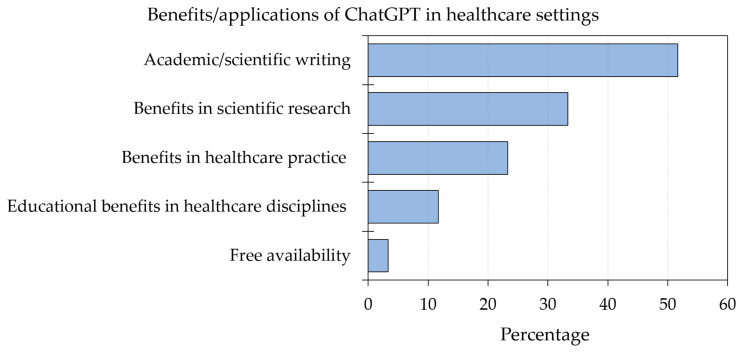
- Benefits were most frequently cited for academic/scientific writing (31 records, 51.7%), followed by scientific research (20, 33.3%), healthcare practice (14, 23.3%), healthcare education (7, 11.7%), and being a free package (2, 3.3%).
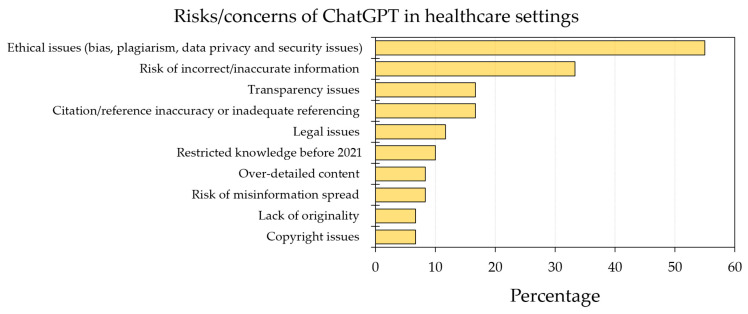
- Ethical concerns were the most common risk category (33 records, 55.0%), including risk of bias (18, 30.0%) and plagiarism (14, 23.3%); incorrect/inaccurate information was cited in 20 records (33.3%), citation/reference inaccuracy in 10 (16.7%), and transparency issues in 10 (16.7%).
- Other reported concerns included legal issues (7, 11.7%), restricted knowledge before 2021 (6, 10.0%), misinformation spread (5, 8.3%), over-detailed content (5, 8.3%), copyright issues (4, 6.7%), and lack of originality (4, 6.7%).
- The review states that ChatGPT does not qualify as an author under current ICMJE/COPE guidelines unless those guidelines are revised, and calls for stakeholder-developed ethics guidance for responsible LLM use in healthcare and academia.
Methods
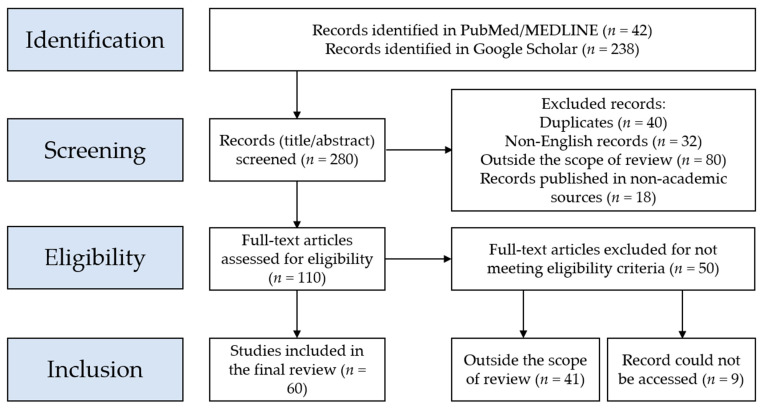
- Systematic review conducted according to PRISMA guidelines, searching PubMed/MEDLINE and Google Scholar for English records on ChatGPT in healthcare practice/research, healthcare education, or academic writing; searches concluded on 16 February 2023.
- PubMed/MEDLINE yielded 42 records and Google Scholar yielded 238 records, totaling 280 records; after duplicate removal (n = 40), non-English exclusion (n = 32), out-of-scope exclusion (n = 80), non-academic source exclusion (n = 18), full-text screening exclusions (n = 41), and inaccessible full texts (n = 9), 60 records were included.
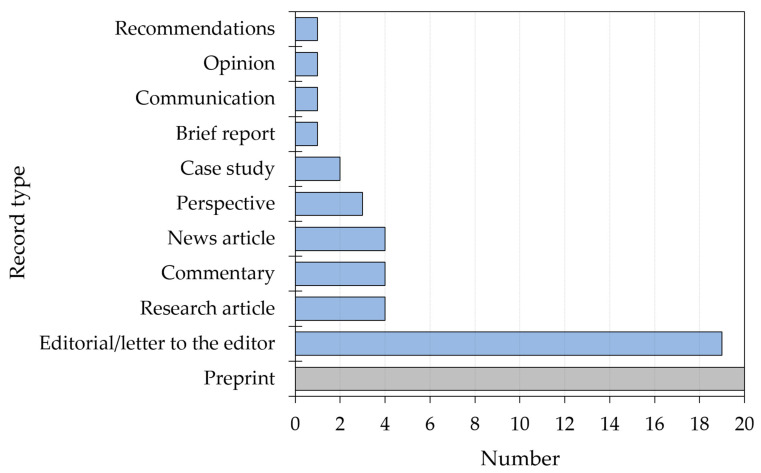
- Each included record was searched for record type, listed benefits/applications, listed risks/concerns, and main conclusions/recommendations regarding ChatGPT in healthcare education, practice, or scientific research/academic writing.
Limitations
- The paper states that included records had variable quality, non-English exclusion may have caused selection bias, inaccessible records may have led to missing relevant data, preprints were not peer reviewed, the literature is growing rapidly with the search ending 16 February 2023, and screening/interpretation was performed by a single author.
- Evident from the text: the review reports descriptive counts of mentions across heterogeneous record types rather than a formal meta-analysis or independent risk-of-bias assessment.
Model-written summary. Check it against the paper before relying on it.
Integrity signals
Registry
Cites
Statistics
Figures
Verification
Claims the paper makes
53 Valid · 1 Not valid · 6 Not checked · 37 Own results and interpretations
Every source the paper cites for this claim was checked and supports it.
In the paper
“This comes in light of the ability of ChatGPT to generate incorrect content that appears plausible from a scientific point of view [81].”
§ ChatGPT Utility in Healthcare Education, Research, and Practice: Systematic Review on the Promising Perspectives and Valid Concerns > 4. Discussion > 4.2. Limitations of ChatGPT Use in Scientific Research
What the sources say
- Supportedcites [81] Cascella M. Montomoli J. Bellini V. Bignami E. Evaluating the Feasibility of ChatGPT in Healthcare: An Analysis of Multiple Clinical and Research Scenarios J. Med. Syst. 2023 47 33 10.1007/s10916-023-01925-4 36869927 PMC9985086 source
In “Reasoning About Public Health Topics,” the paper says ChatGPT can produce believable answers that may be incorrect or nonsensical. In “Possible Misuse of GPT in Medicine and Research,” it describes a scientific abstract that appeared reliable and simulated statistical outputs that could seem plausible to readers. Together, these passages support the claim. (LLM, conf=0.94)
plain- Asserted: passes — The authors put it forward as true.
- Checkable: passes — It can be checked against evidence.
- Load-bearing: passes — The paper’s conclusions depend on it.
- Based: passes — The paper gives a reason why it holds.
- Supported
The sources with a verdict support this claim; the rest weren’t checked yet, have no full text we could read, or their verdicts aren’t rated yet.
In the paper
“This comes in light of the fact that authorship entails legal obligations that are not met by ChatGPT [43,48].”
§ ChatGPT Utility in Healthcare Education, Research, and Practice: Systematic Review on the Promising Perspectives and Valid Concerns > 4. Discussion > 4.2. Limitations of ChatGPT Use in Scientific Research
What the sources say
- Supportedcites [43] Zielinski C. Winker M. Aggarwal R. Ferris L. Heinemann M. Lapeña J. Pai S. Ing E. Citrome L. Chatbots, ChatGPT, and Scholarly Manuscripts WAME Recommendations on ChatGPT and Chatbots in Relation to Scholarly Publications Maced J. Med. Sci. 2023 11 83 86 10.3889/oamjms.2023.11502 37615142 source
The Introduction (p. 2) says chatbots are not legal entities, cannot be held legally liable, and that listing ChatGPT as an author may not be legally defensible. The WAME Recommendations (p. 2) add that chatbots cannot take responsibility for a paper or have the legal standing to sign a statement. (LLM, conf=0.93)
- Not checked — no full text of the sourcecites [48] Liebrenz M. Schleifer R. Buadze A. Bhugra D. Smith A. Generating scholarly content with ChatGPT: Ethical challenges for medical publishing Lancet Digit. Health 2023 5 e105 e106 10.1016/S2589-7500(23)00019-5 36754725 source
plain- Asserted: passes — The authors put it forward as true.
- Checkable: passes — It can be checked against evidence.
- Load-bearing: passes — The paper’s conclusions depend on it.
- Based: passes — The paper gives a reason why it holds.
- Supported
The cited sources support only part of this claim — read each source’s verdict below.
In the paper
“On one hand, ChatGPT, among other LLMs, can be beneficial in conversational and writing tasks, assisting to increase the efficiency and accuracy of the required output [11].”
§ ChatGPT Utility in Healthcare Education, Research, and Practice: Systematic Review on the Promising Perspectives and Valid Concerns > 1. Introduction
What the sources say
- Partly supportedcites [11] Deng J. Lin Y. The Benefits and Challenges of ChatGPT: An Overview Front. Comput. Intell. Syst. 2023 2 81 83 10.54097/fcis.v2i2.4465 sourceExperimental — accuracy not yet measured
Sections 4.1 (Increased Efficiency) and 4.2 (Improved Accuracy) say ChatGPT can make conversations more efficient and generate more accurate responses. The paper does not establish those benefits for writing tasks or for other LLMs, so the broader claim is only partially supported. (LLM, conf=0.88)
plainstates a cause- Asserted: passes — The authors put it forward as true.
- Checkable: passes — It can be checked against evidence.
- Load-bearing: unclear — It is unclear whether the paper’s conclusions depend on it.
- Based: passes — The paper gives a reason why it holds.
- Partly supported
The cited sources support only part of this claim — read each source’s verdict below.
In the paper
“Importantly, the concept of ChatGPT hallucination could be risky if the generated content is not thoroughly evaluated by researchers and health providers with proper expertise [37,56,73,77,79].”
§ ChatGPT Utility in Healthcare Education, Research, and Practice: Systematic Review on the Promising Perspectives and Valid Concerns > 4. Discussion > 4.2. Limitations of ChatGPT Use in Scientific Research
What the sources say
- Not checked — no full text of the sourcecites [37] Shen Y. Heacock L. Elias J. Hentel K.D. Reig B. Shih G. Moy L. ChatGPT and Other Large Language Models Are Double-edged Swords Radiology 2023 230163 10.1148/radiol.230163 36700838 source
- Partly supportedcites [56] Huh S. Are ChatGPT’s knowledge and interpretation ability comparable to those of medical students in Korea for taking a parasitology examination?: A descriptive study J. Educ. Eval. Health Prof. 2023 20 1 10.3352/jeehp.2023.20.1 36627845 PMC9905868 sourceExperimental — accuracy not yet measured
The Background says medical students must evaluate the accuracy of AI-generated medical information before creating reliable information for patients and the public. The Interpretation also reports that some ChatGPT explanations contained incorrect information. These passages support the need for scrutiny, but the paper does not specifically discuss hallucination or evaluation by researchers and health providers. (LLM, conf=0.84)
- Partly supportedcites [73] Duong D. Solomon B.D. Analysis of large-language model versus human performance for genetics questions medRxiv 2023 Preprint 10.1101/2023.01.27.23285115 PMC10999420 37246194 sourceExperimental — accuracy not yet measured
The Discussion (p. 6) says ChatGPT can give plausible explanations for incorrect answers and that its correctness requires additional verification, which is concerning in medical or other high-stakes settings. This supports the risk and need for evaluation, but the paper does not specify that researchers and health providers with proper expertise must perform it. (LLM, conf=0.83)
- Supportedcites [77] Jeblick K. Schachtner B. Dexl J. Mittermeier A. Stüber A.T. Topalis J. Weber T. Wesp P. Sabel B. Ricke J. ChatGPT Makes Medicine Easy to Swallow: An Exploratory Case Study on Simplified Radiology Reports arXiv 2022 10.48550/arxiv.2212.14882 2212.14882 PMC11126432 37794249 source
The Results (Free-text analysis) identify a ChatGPT hallucination that radiologists judged potentially harmful to a patient. The Key Points state that minimizing harm requires supervision by medical experts, supporting the claim’s warning about unevaluated medical content. (LLM, conf=0.90)
- Partly supportedcites [79] Lin Z. Why and how to embrace AI such as ChatGPT in your academic life PsyArXiv 2023 Preprint 10.31234/osf.io/sdx3j PMC10445029 37621662 sourceExperimental — accuracy not yet measured
The “Limitations of generative AI” section says ChatGPT may fabricate facts and false citations (“hallucination”) and urges users to critically evaluate and verify its responses, particularly when reliability is critical. It does not specifically say that researchers and health providers with proper expertise must evaluate the content; that part is more specific than the source. (LLM, conf=0.84)
hedgedstates a possible cause- Asserted: passes — The authors put it forward as true.
- Checkable: passes — It can be checked against evidence.
- Load-bearing: passes — The paper’s conclusions depend on it.
- Based: passes — The paper gives a reason why it holds.
- Rests on an assumption not shown here.
The sources with a verdict support this claim; the rest weren’t checked yet, have no full text we could read, or their verdicts aren’t rated yet.
In the paper
“This is particularly relevant for researchers who are non-native English speakers [23,25,63].”
§ ChatGPT Utility in Healthcare Education, Research, and Practice: Systematic Review on the Promising Perspectives and Valid Concerns > 4. Discussion > 4.1. Benefits of ChatGPT in Scientific Research
What the sources say
- Supportedcites [23] Chen T.J. ChatGPT and Other Artificial Intelligence Applications Speed up Scientific Writing Available online: https://journals.lww.com/jcma/Citation/9900/ChatGPT_and_other_artificial_intelligence.174.aspx (accessed on 16 February 2023) PMC12755446 36791246 source
In the main text (page not provided), Chen says many scientists who are not native English speakers struggle to write in English and describes AI translation and writing tools as ways to overcome that barrier. This supports the claim that language assistance in scientific writing is particularly relevant to those researchers. (LLM, conf=0.91)
- Not checked — no full text of the sourcecites [25] Kitamura F.C. ChatGPT Is Shaping the Future of Medical Writing but Still Requires Human Judgment Radiology 2023 230171 10.1148/radiol.230171 36728749 source
- Supportedcites [63] Gao C.A. Howard F.M. Markov N.S. Dyer E.C. Ramesh S. Luo Y. Pearson A.T. Comparing scientific abstracts generated by ChatGPT to original abstracts using an artificial intelligence output detector, plagiarism detector, and blinded human reviewers bioRxiv 2022 10.1101/2022.12.23.521610 source
The Discussion/Abstract section of our copy states directly that the technology 'could be used by scientists publishing in a language that is not their native language, to improve equity,' alongside the point that generated text 'may help alleviate the burden of writing' and that LLMs are 'a powerful tool to create readable scientific abstracts.' That covers the attributed content — AI-assisted language improvement being especially pertinent for non-native-English researchers — with the source's own hedge ('could be used') slightly weaker than the citing sentence's flat 'is particularly relevant.' No passage in our copy contradicts it. (LLM, conf=0.82)
plainstates an association- Asserted: passes — The authors put it forward as true.
- Checkable: passes — It can be checked against evidence.
- Load-bearing: unclear — It is unclear whether the paper’s conclusions depend on it.
- Based: passes — The paper gives a reason why it holds.
- Supported
42 more claims · 23 with their cited sources checked
Create a free account to see all 97 claims and to verify the 16 references still open.
- Probably not a substantial claim. 31
- It may state two separate claims as one. 27
Claims other papers make about this one
Each is checked against this paper’s own text: does it say what the citing paper says it does?
The source backs part of the claim, not all of it — or backs it for a different population, condition or comparison.
In the citing paper
“The reliance on ChatGPT may result in hindering the development of the skills needed to interpret and respond to social cues, which should be considered in health care education [9,91].”
From Assessing Health Students' Attitudes and Usage of ChatGPT in Jordan: Validation Study (2023) · cites this paper as [9]
Experimental — accuracy not yet measuredThe source backs part of the claim, not all of it — or backs it for a different population, condition or comparison.
In the citing paper
“A recent surge in the use of ChatGPT, in particular for mental health, is emergent for providing crucial personalized advice without clinical explanation, which can hurt user's safety, and thus trust (Sallam, 2023).”
From A review of the explainability and safety of conversational agents for mental health to identify avenues for improvement (2023) · cites this paper as Sallam, 2023
Experimental — accuracy not yet measuredThe source backs part of the claim, not all of it — or backs it for a different population, condition or comparison.
In the citing paper
“ChatGPT plays a crucial role in pandemic management by aiding in the swift and accurate dissemination of critical information.”
From A Systematic Review and Meta-Analysis of Artificial Intelligence Tools in Medicine and Healthcare: Applications, Considerations, Limitations, Motivation and Challenges (2024) · cites this paper as [6]
Experimental — accuracy not yet measuredThe source backs part of the claim, not all of it — or backs it for a different population, condition or comparison.
In the citing paper
“Its natural language processing capabilities enable it to generate coherent responses, making it a valuable tool for healthcare organisations.”
From A Systematic Review and Meta-Analysis of Artificial Intelligence Tools in Medicine and Healthcare: Applications, Considerations, Limitations, Motivation and Challenges (2024) · cites this paper as [6]
Experimental — accuracy not yet measuredThe source backs part of the claim, not all of it — or backs it for a different population, condition or comparison.
In the citing paper
“Specific advantages include its ability to provide rapid updates, preventive measures, and medical guidelines to the public.”
From A Systematic Review and Meta-Analysis of Artificial Intelligence Tools in Medicine and Healthcare: Applications, Considerations, Limitations, Motivation and Challenges (2024) · cites this paper as [6]
Experimental — accuracy not yet measured
31 more claims about this paper
Create a free account to see every claim other papers make about this one.
Citations
Cites
Preferred Reporting Items for Systematic Reviews and Meta-Analyses: the PRISMA statement
Moher, D., Liberati, A., Tetzlaff, J., Altman, D. G., & for the PRISMA Group (2009) · BMJ · doi:10.1136/bmj.b2535 · Cited by 83,823
Preferred Reporting Items for Systematic Reviews and Meta-Analyses: The PRISMA Statement
Moher, D., Liberati, A., Tetzlaff, J., Altman, D. G., & The PRISMA Group (2009) · PLoS Medicine · doi:10.1371/journal.pmed.1000097 · Cited by 64,042 · cited 1×
“The current systematic review was conducted according to the Preferred Reporting Items for Systematic Reviews and Meta-Analyses (PRIMSA) guidelines [21].”
Language Models are Few-Shot Learners
Brown, T. B., Mann, B., Ryder, N., Subbiah, M., Kaplan, J., Dhariwal, P., Neelakantan, A., Shyam, P., Sastry, G., Askell, A., et al. (2020) · arXiv · doi:10.48550/arxiv.2005.14165 · Cited by 23,372 · cited 3×
“The GPT architecture utilizes a neural network to process natural language, thus generating responses based on the context of input text [7].”
BackgroundWang, G., Ma, R., Qiao, G., Wada, K., Aizawa, Y., & Satoh, T. (2015) · Integrative Medicine International · doi:10.1159/000368408 · Cited by 18,657
Kaugeranna, R., Kaugeranna, E., & Aion, (. S. 4. 6. (2023) · DROPS (Schloss Dagstuhl – Leibniz Center for Informatics) · doi:10.4230/lipics.giscience.2023.43 · Cited by 13,690
Machine learning: Trends, perspectives, and prospects
Jordan, M. I., & Mitchell, T. M. (2015) · Science · doi:10.1126/science.aaa8415 · Cited by 9,955
Kung, T. H., Cheatham, M., Medenilla, A., Sillos, C., De Leon, L., Elepaño, C., Madriaga, M., Aggabao, R., Diaz-Candido, G., Maningo, J., et al. (2023) · PLOS Digital Health · doi:10.1371/journal.pdig.0000198 · Cited by 4,115 · cited 2×
“[59] An article showing the ChatGPT raised accuracy which enabled passing the USMLE Accuracy with high concordance and insight; it can facilitate patient communication; improved personalized medicine ChatGPT has a promising potential in medical education; future studies are recommended to consider non-biased approach…”
BackgroundKung, T. H., Cheatham, M., ChatGPT, Medenilla, A., Sillos, C., De Leon, L., Elepaño, C., Madriaga, M., Aggabao, R., Diaz-Candido, G., et al. (2022) · doi:10.1101/2022.12.19.22283643 · Cited by 4,115
Rajpurkar, P., Chen, E., Banerjee, O., & Topol, E. J. (2022) · Nature Medicine · doi:10.1038/s41591-021-01614-0 · Cited by 3,212 · cited 1×
“The promising utility of AI in health care has been outlined previously with possible benefits in personalized medicine, drug discovery, and the analysis of large datasets aside from the potential applications to improve diagnosis and clinical decisions [17,18].”
BackgroundChatting and cheating: Ensuring academic integrity in the era of ChatGPT
Cotton, D. R. E., Cotton, P. A., & Shipway, J. R. (2024) · Innovations in Education and Teaching International · doi:10.1080/14703297.2023.2190148 · Cited by 3,087 · cited 1×
“[62] An EdArXiv 2 preprint on the academic integrity in ChatGPT era Risk of plagiarism; academic dishonesty Careful thinking of educational assessment tools”
Background
Cited by
Items 701–800 of 3,095
Lim, S., Schmälzle, R., & Bente, G. (2025) · Computers in Human Behavior Artificial Humans · doi:10.1016/j.chbah.2025.100172 · Cited by 74
Attitude and utilization of ChatGPT among registered nurses: A cross‐sectional study
Lin, H., Liao, L., Wang, Y., & Chang, L. (2024) · International Nursing Review · doi:10.1111/inr.13012 · Cited by 35
Large language models facilitating modern molecular biology and novel drug development
Liu, X., Lü, Z., Wang, T., & Liu, F. (2024) · Frontiers in Pharmacology · doi:10.3389/fphar.2024.1458739 · Cited by 33
“In particular, the emergence of ChatGPT, with its harnessing of generative models, has heightened global awareness of the vast of generative AI (Sallam, 2023).”
Xu, J. H., & Liu, Q. (2025) · Learning and Motivation · doi:10.1016/j.lmot.2025.102100 · Cited by 48
Perspective: advancing public health education by embedding AI literacy
Acosta, J. A. (2025) · Frontiers in Digital Health · doi:10.3389/fdgth.2025.1584883 · Cited by 41
Hashish, E. A. A., Alsayed, S., & Razek, N. M. F. A. (2025) · PLoS ONE · doi:10.1371/journal.pone.0327981 · Cited by 46
“Attitudes reflect participants’ confidence, enthusiasm, and willingness to incorporate ChatGPT into their academic activities, indicating their level of acceptance and readiness for AI adoption [26].”
Vavekanand, R., Laghari, A. A., & Kumar, T. (2026) · Iran Journal of Computer Science · doi:10.1007/s42044-025-00360-7 · Cited by 34
“…through self-attention layers [14] While several reviews have explored the use of LLMs in healthcare, they typically focus on specific applications like diagnostic support or patient education, without considering the broad range of medical contexts in which LLMs can be applied [12, 13, 15].”
Mohammed, M., Kumar, N., Zawiah, M., Al-Ashwal, F. Y., Bala, A. A., Lawal, B. K., Wada, A. S., Halboup, A. M., Muhammad, S., Ahmad, R., et al. (2023) · Journal of Racial and Ethnic Health Disparities · doi:10.1007/s40615-023-01696-1 · Cited by 34
“It necessitates reevaluating traditional assessment methods and presents new prospects for fostering critical thinking and problem-solving abilities [7, 8].”
A Future of Smarter Digital Health Empowered by Generative Pretrained Transformer
Miao, H., Li, C., & Wang, J. (2023) · Journal of Medical Internet Research · doi:10.2196/49963 · Cited by 27
“…success of GPT in many fields, including but not limited to protein design [21], drug discovery [22], intelligent transportation [23], and health care research and practice [24], intelligent digital health is expected to become even smarter if appropriately integrated with LLMs such as ChatGPT.”
Surapaneni, K. M., Rajajagadeesan, A., Goudhaman, L., Lakshmanan, S., Sundaramoorthi, S., Ravi, D., Rajendiran, K. S., & Swaminathan, P. (2023) · Biochemistry and Molecular Biology Education · doi:10.1002/bmb.21808 · Cited by 30
LLMs are Biased Teachers: Evaluating LLM Bias in Personalized Education
Weissburg, I., Anand, S., Levy, S., & Jeong, H. (2024) · arXiv · doi:10.48550/arxiv.2410.14012 · Cited by 26
“Sallam (2023) highlight domain-specific challenges and the risks of transferring LLM technologies across educational contexts.”
Exploring the use of ChatGPT as a virtual health coach for chronic disease management
Al-Anezi, F. (2024) · Learning Health Systems · doi:10.1002/lrh2.10406 · Cited by 36
“…and accuracy of information significantly affect the users' trust, which may limit their engagement with the application, as observed in. 46,47 48-50 AI-enabled, empathetic technologies could play a significant role in addressing these challenges and facilitate increasing adoption and…”
BackgroundKapsali, M. Z., Livanis, E., Tsalikidis, C., Oikonomou, P., Voultsos, P. P., & Tsaroucha, A. (2024) · Cureus · doi:10.7759/cureus.54759 · Cited by 32
ChatGPT: towards AI subjectivity
D’Amato, K. (2024) · AI & Society · doi:10.1007/s00146-024-01898-z · Cited by 42
“…pessimistic, citing a slew of concerns about “ethical, copyright, transparency, and legal issues, the risk of bias, plagiarism, lack of originality, inaccurate content with risk of hallucination, limited knowledge, incorrect citations, cybersecurity issues, and risk of infodemics” (Sallam 2023).”
Ostrowska, M., Kacała, P., Onolememen, D., Vaughan-Lane, K., Joseph, A. S., Ostrowski, A., Pietruszewska, W., Banaszewski, J., & Wróbel, M. (2024) · European Archives of Oto-Rhino-Laryngology · doi:10.1007/s00405-024-08643-8 · Cited by 31
“Because chatbots are not explicitly trained in medical literature, using that method in healthcare has raised concerns [14].”
BackgroundChatbots Utility in Healthcare Industry: An Umbrella Review
Afsahi, A. M., SeyedAlinaghi, S., Molla, A., Mirzapour, P., Jahani, S., Razi, A., Mojdeganlou, P., Karimi, E., Mehrtak, M., Dadras, O., et al. (2024) · Frontiers in Health Informatics · doi:10.30699/fhi.v13i0.561 · Cited by 28
Is use of ChatGPT cheating? Students of health professions perceptions
Kazley, A. S., Andresen, C., Mund, A., Blankenship, C., & Segal, R. (2025) · Medical Teacher · doi:10.1080/0142159x.2024.2385667 · Cited by 25
“A systematic review regarding ChatGPT use in healthcare found that 85% of the included articles noted benefits including improved scientific writing and research, benefits in healthcare practice and personalized medicine, and improved personalized learning in health-care education [3].”
A Review of Large Language Models in Healthcare: Taxonomy, Threats, Vulnerabilities, and Framework
Hamid, R., & Brohi, S. N. (2024) · Big Data and Cognitive Computing · doi:10.3390/bdcc8110161 · Cited by 32
Veras, M., Dyer, J.-O., Shannon, H., Bogie, B. J. M., Ronney, M., Sekhon, H., Rutherford, D., Silva, P. G. B., & Kairy, D. (2024) · DIGITAL HEALTH · doi:10.1177/20552076241298485 · Cited by 25
“4,7,8 Recently, Sallam et al. (2023) found ‘ perceived risks ’ to be a crucial factor for in fl uencing student attitudes and usage of ChatGPT.”
Fink, A., Nattenmüller, J., Rau, S., Rau, A., Tran, H. D., Bamberg, F., Reisert, M., Kotter, E., Diallo, T. D., & Russe, M. F. (2025) · European Radiology · doi:10.1007/s00330-025-11445-z · Cited by 29
“Even correct chatbot answers can be subject to inaccuracies and hallucinations [10], and the lack of transparency in the sources used raises concerns about accountability [9, 11].”
Şişman, A. Ç., & Acar, A. H. (2025) · BMC Oral Health · doi:10.1186/s12903-025-05732-w · Cited by 33
“Researchers suggest that chatbots could become valuable tools for medical professionals in the future and help alleviate the burden on healthcare systems [10–13].”
Giansanti, D. (2023) · Life · doi:10.3390/life13051130 · Cited by 29
“The need for more attention on the domain of ethics has been recommended, for example in [56], with regard to the applications in healthcare education, research and practice.”
BackgroundMethodInfluentialBilal, M., Jamil, Y., Rana, D., & Shah, H. H. (2023) · Annals of Biomedical Engineering · doi:10.1007/s10439-023-03298-8 · Cited by 34
“Developed by OpenAI, ChatGPT is built on the generative pre-trained transformer (GPT) architecture and is referred to as a chatbot [software able to comprehend and provide replies using a text-based interface] [6].”
Zhou, J., Li, T., Fong, S. J., Dey, N., & Crespo, R. A. G. (2023) · International Journal of Interactive Multimedia and Artificial Intelligence · doi:10.9781/ijimai.2023.04.007 · Cited by 28
Alaniz, L., Vu, C., & Pfaff, M. J. (2023) · Plastic & Reconstructive Surgery Global Open · doi:10.1097/gox.0000000000005339 · Cited by 35
Effectiveness of Generative Artificial Intelligence for Scientific Content Analysis
Platt, M., & Platt, D. (2023) · IEEE International Conference on Application of Information and Communication Technologies (AICT) · doi:10.1109/aict59525.2023.10313167 · Cited by 49
“…to the reliability of LLM in the context of critical tasks, some authors advise ‘extreme caution’ considering the limitations of the technology [15], specifically around the risk of generating inconsistent and hallucinated information, concluding that a ‘human-in-the-loop’ process is necessary…”
BackgroundHsu, H.-P. (2023) · Irish Journal of Technology Enhanced Learning · doi:10.22554/ijtel.v7i2.152 · Cited by 58
“In terms of ChatGPT’s strengths, it was found that ChatGPT can recommend appropriate research questions and suggest potential research design ideas after being prompted with a few keywords (Sallam, 2023).”
BackgroundWorkman, A. D., Rathi, V. K., Lerner, D. K., Palmer, J. N., Adappa, N. D., & Cohen, N. A. (2023) · International Forum of Allergy & Rhinology · doi:10.1002/alr.23310 · Cited by 23
Sallam, M., & Mousa, D. (2024) · Mesopotamian Journal of Artificial Intelligence in Healthcare · doi:10.58496/mjaih/2024/001 · Cited by 40
“Inaccuracies in AI-generated content can jeopardize patient safety and public health [2, 12, 17].”
BackgroundMethodInfluentialSelf-citationGiabbanelli, P. J. (2023) · Winter Simulation Conference · doi:10.1109/wsc60868.2023.10408017 · Cited by 50
“We note that such inventories of candidate tasks for NLG are now abundant in healthcare and medical education (Sallam 2023), business and marketing (Rivas and Zhao 2023), or environmental science (Zhu et al. 2023), but such guidance had yet to be issued for M&S.”
BackgroundAccuracy of Online Artificial Intelligence Models in Primary Care Settings
Kassab, J., Hadi El Hajjar, A., Wardrop, R. M., & Brateanu, A. (2024) · American Journal of Preventive Medicine · doi:10.1016/j.amepre.2024.02.006 · Cited by 25
Rane, N. L. (2026) · Innovations in Business and Strategic Management · doi:10.61577/ibsm.2024.100002 · Cited by 126
Alanezi, F. (2025) · Nutrition and Health · doi:10.1177/02601060241244563 · Cited by 24
“Its issues like privacy and lack of personalization as identi fi ed in this study are few commonly identi fi ed challenges of using ChatGPT in healthcare (Sallam, 2023).”
Modeler in a box: how can large language models aid in the simulation modeling process?
Frydenlund, E. F., Martínez, J., Padilla, J. J., Palacio, K., & Shuttleworth, D. (2024) · SIMULATION · doi:10.1177/00375497241239360 · Cited by 38
Luo, X., Zhang, A., Li, Y., Zhang, Z., Ying, F., Lin, R., Yang, Q., Wang, J., & Huang, G. (2024) · International Journal of Mental Health Nursing · doi:10.1111/inm.13384 · Cited by 38
Sallam, M., Al-Mahzoum, K., Almutawaa, R. A., Alhashash, J. A., Dashti, R. A., AlSafy, D. R., Almutairi, R. A., & Barakat, M. M. (2024) · BMC Research Notes · doi:10.1186/s13104-024-06920-7 · Cited by 41
“This trend was particularly notable in healthcare, where AI models can increase the operational efficiency and improve the quality of delivery of patient care and healthcare education [7, 18–21].”
BackgroundInfluentialSelf-citationChatGPT in healthcare education: a double-edged sword of trends, challenges, and opportunities
Adarkwah, M. A., Badu, S. A., Osei, E. A., Adu-Gyamfi, E., Odame, J., & Schneider, K. (2025) · Discover Education · doi:10.1007/s44217-024-00393-3 · Cited by 44
“A systematic review found that 85% of studies highlighted its benefits, particularly in enhancing scientific writing and research efficiency [42].”
InfluentialUsing large language models for narrative analysis: a novel application of generative AI
Jenner, S., Raidos, D., Anderson, E., Fleetwood, S., Ainsworth, B., Fox, K. J., Kreppner, J., & Barker, M. E. (2025) · Methods in Psychology · doi:10.1016/j.metip.2025.100183 · Cited by 53
Sarhan, S., Badran, A. S., Ghalwash, D. M., Almalahy, H. G., & Abou‐Bakr, A. (2025) · BMC Medical Education · doi:10.1186/s12909-025-07544-6 · Cited by 33
Siam, K., Varela, A., Faruk, M. J. H., Cheng, J. Q., Gu, H., Maruf, A. A., & Aung, Z. (2025) · Scientific Reports · doi:10.1038/s41598-025-31010-4 · Cited by 40
Can ChatGPT rescue or assist with language barriers in healthcare communication?
da Silva, J. A. T. (2023) · Patient Education and Counseling · doi:10.1016/j.pec.2023.107940 · Cited by 28
Cloutier, N. A., & Japkowicz, N. (2023) · IEEE International Conference on Big Data (BigData) · doi:10.1109/bigdata59044.2023.10386772 · Cited by 42
Will ChatGPT be Able to Replace a Spine Surgeon in the Clinical Setting?
Chalhoub, R., Mouawad, A., Aoun, M., Daher, M., El-Sett, P., Kreichati, G. E., Kharrat, K. E., & Sebaaly, A. (2024) · World Neurosurgery · doi:10.1016/j.wneu.2024.02.101 · Cited by 25
Alyasiri, O. M., Salisu, S., Younis, H., Salman, A. M., Sahib, T. M., Akhtom, D., & Hayder, I. M. (2024) · Journal of Stomatology Oral and Maxillofacial Surgery · doi:10.1016/j.jormas.2024.101842 · Cited by 42
Enhancing Resilience through Generative Artificial Intelligence such as ChatGPTPreprint
Paramesha, M., Rane, N., & Rane, J. (2024) · SSRN Electronic Journal · doi:10.2139/ssrn.4832533 · Cited by 35
Luke, W. A. N. V., Seow Chong, L., Ban, K. H., Wong, A. H., Zhi Xiong, C., Shuh Shing, L., Taneja, R., Samarasekera, D. D., & Yap, C. T. (2024) · Medical Teacher · doi:10.1080/0142159x.2024.2308779 · Cited by 24
ChatGPT for Univariate Statistics: Validation of AI-Assisted Data Analysis in Healthcare Research
Ruta, M. R., Gaidici, T., Irwin, C., & Lifshitz, J. (2025) · Journal of Medical Internet Research · doi:10.2196/63550 · Cited by 24
Vitorino, L. M., & Júnior, G. H. Y. (2023) · Revista Brasileira de Enfermagem · doi:10.1590/0034-7167.2023760301 · Cited by 23
How Well Did ChatGPT Perform in Answering Questions on Different Topics in Gross Anatomy?
Bolgova, O., Shypilova, I., Sankova, L., & Mavrych, V. (2023) · European Journal of Medical and Health Sciences · doi:10.24018/ejmed.2023.5.6.1989 · Cited by 31
“Despite demonstrating potential, language models (LLMs) such as ChatGPT have faced challenges in testing clinical knowledge through generative question-answering tasks [12], [13].”
BackgroundSalazar, L. R., Peeples, S., & Brooks, M. E. (2024) · Advances in educational technologies and instructional design book series · doi:10.4018/979-8-3693-0831-8.ch010 · Cited by 29
Peled, T., Sela, H. Y., Weiss, A., Grisaru‐Granovsky, S., Agrawal, S., & Rottenstreich, M. (2024) · International Journal of Gynecology & Obstetrics · doi:10.1002/ijgo.15501 · Cited by 31
“5,6 The potential utility of ChatGPT in clinical medicine is evident.”
InfluentialBogoslov, I. A., Corman, S., & Lungu, A. E. (2024) · Sustainability · doi:10.3390/su16114579 · Cited by 46
Chang, Y., Silalahi, A. D. K., & Lee, K.-Y. (2024) · International Journal of Human-Computer Interaction · doi:10.1080/10447318.2024.2381930 · Cited by 36
“…challenges (Farrokhnia et al., 2023), privacy concerns (Catherine et al., 2023; Mijwil et al., 2023; Paul et al., 2023), issues of trans-parency (Sallam, 2023), and information accuracy (Foroughi et al., 2023), they have primarily focused on identification rather than methods to alleviate such…”
Balta, K. Y., Javidan, A. P., Walser, E., Arntfield, R., & Prager, R. (2025) · Journal of Intensive Care Medicine · doi:10.1177/08850666241267871 · Cited by 26
Ahmed, F. R., Rushdan, E. E., Al‐Yateem, N., Almaazmi, A. N., Subu, M. A., Hijazi, H. H. A., Abdelbasset, W. K., Mottershead, R., Ahmed, A. A., & AbuRuz, M. E. (2024) · Teaching and learning in nursing · doi:10.1016/j.teln.2024.12.002 · Cited by 26
Evaluating ChatGPT’s diagnostic potential for pathology images
Ding, L., Fan, L., Shen, M., Wang, Y., Sheng, K., Zou, Z., An, H., & Jiang, Z. (2025) · Frontiers in Medicine · doi:10.3389/fmed.2024.1507203 · Cited by 30
Correia, A., Hickey, S., & Xu, F. (2025) · Theory Into Practice · doi:10.1080/00405841.2025.2528545 · Cited by 42
“Sallam (2023) highlights fears surrounding these issues, emphasizing the need for educators to be vigilant.”
Evaluating the performance of AI chatbots in responding to dental implant FAQs: A comparative study
Tuzlalı, M., Baki, N., Aral, K., Cüneyt Asım, A. R. A. L., & Bahçe, E. (2025) · BMC Oral Health · doi:10.1186/s12903-025-06863-w · Cited by 31
“This is consistent with prior work suggesting AI chatbots can present complex medical content in an understandable format for laypersons [4, 45, 46].”
InfluentialLiterature Review on the Integration of Generative AI in Programming Education
Nathaniel, J., Oyelere, S. S., Suhonen, J. T., & Tedre, M. (2025) · International Journal of Artificial Intelligence in Education · doi:10.1007/s40593-025-00524-3 · Cited by 71
“Although GenAI has aided code management and production (Sallam, 2023) and has been used for programming tutoring (Zambrano et al., 2023), significant challenges remain in effectively embedding these tools into programming curricula.”
ChatGPT and Artificial Intelligence in Transplantation Research: Is It Always Correct?
Rawashdeh, B., Kim, J., AlRyalat, S. A., Prasad, R., & COOPER, M. M. (2023) · Cureus · doi:10.7759/cureus.42150 · Cited by 29
“ChatGPT has been studied for its potential to improve the efficiency and cost-effectiveness of clinical practices [15].”
InfluentialTowards Artificial Intelligence Applications in Next Generation Cytopathology
Giarnieri, E., & Scardapane, S. (2023) · Biomedicines · doi:10.3390/biomedicines11082225 · Cited by 33
Bringula, R. P. (2023) · AI and Ethics · doi:10.1007/s43681-023-00354-w · Cited by 32
“The findings of both Sallam [37] and Lo [32] converged in highlighting the potential for ChatGPT to generate incorrect or fake information, as well as its ability to bypass plagiarism detectors.”
InfluentialAbu-Ashour, W., Emil, S., & Poenaru, D. (2024) · Journal of Pediatric Surgery · doi:10.1016/j.jpedsurg.2024.01.033 · Cited by 24
Romagnoli, A., Ferrara, F., Langella, R., & Zovi, A. (2024) · Pharmaceutical Research · doi:10.1007/s11095-024-03685-3 · Cited by 33
“If properly implemented, ChatGPT, has the potential to accelerate innovation in healthcare and help promote equity and diversity in research by overcoming language barriers [35].”
Ahmad, B., Saleh, K. A., Alharbi, S., Alqaderi, H. E., & Jeong, Y. N. (2024) · medRxiv · doi:10.1101/2024.05.29.24308155 · Cited by 24
“[4 ,5] However, integrating LLMs into dental education requires careful evaluation to ensure accuracy, reliability, and adherence to evidence-based practices.”
BackgroundFarinosi, M., & Melchior, C. (2025) · European Journal of Education · doi:10.1111/ejed.70094 · Cited by 23
Educating patients on osteoporosis and bone health: Can “ChatGPT” provide high-quality content?
Ghanem, D., Shu, H., Bergstein, V., Marrache, M., Love, A., Hughes, A., Sotsky, R., & Shafiq, B. (2024) · European Journal of Orthopaedic Surgery & Traumatology · doi:10.1007/s00590-024-03990-y · Cited by 23
“…to this, including the model’s vast training data covering a pleth-ora of topics, its neural network architecture which makes it adept at assimilating context and producing appropriate answers, and its continuous learning and iterative versions which make it more refined over time [2, 14].”
ChatGPT Performance in Diagnostic Clinical Microbiology Laboratory-Oriented Case Scenarios
Sallam, M., Al‐Salahat, K., & Al-Ajlouni, E. (2023) · Cureus · doi:10.7759/cureus.50629 · Cited by 33
Self-citationGenerative AI and large language models: A new frontier in reverse vaccinology
Hayawi, K., Shahriar, S., Alashwal, H., & Serhani, M. A. (2024) · Informatics in Medicine Unlocked · doi:10.1016/j.imu.2024.101533 · Cited by 30
Responsible artificial intelligence for addressing equity in oral healthcare
Khoury, Z. H., Ferguson, A., Price, J. B., Sultan, A. S., & Wang, R. (2024) · Frontiers in Oral Health · doi:10.3389/froh.2024.1408867 · Cited by 23
ChatGPT’s Impact on Education and Healthcare: Insights, Challenges, and Ethical Consideration
Hamad, Z. T., Jamil, N., & Belkacem, A. N. (2024) · IEEE Access · doi:10.1109/access.2024.3437374 · Cited by 30
“Salam [10] found that appropriately implementing ChatGPT can accelerate research and innovation in healthcare and promote research equality by over-coming language barriers.”
BackgroundTran, J. T., Burghall, A., Blydt‐Hansen, T. D., Cammer, A. L., Goldberg, A. M., Hamiwka, L. A., Johnson, C., Kehler, C., Phan, V., Rosaasen, N., et al. (2024) · Patient Education and Counseling · doi:10.1016/j.pec.2024.108400 · Cited by 26
ChatGPT risks in academia: Examining university educators’ challenges in Jordan
Gammoh, L. A. (2024) · Education and Information Technologies · doi:10.1007/s10639-024-13009-y · Cited by 31
“…GenAI technologies like ChatGPT in academia, (Baidoo-Anu & Ansah, 2023; Chan & Hu, 2023; Hung & Chen, 2023; İpek et al., 2023; Kasneci et al., 2023; Sallam, 2023a; Sok & Heng, 2023; Warschauer et al., 2023; Yu, 2023), less attention has been given to understanding the challenges faced by academics…”
InfluentialVakili, S. T., Haywood, D., Kirk, D., Abdou, A. M., Gopalakrishnan, R., Sadeghi, S., Guedes, H., Tan, C. J., Thamm, C., Bernard, R., et al. (2024) · JCO Clinical Cancer Informatics · doi:10.1200/cci.24.00119 · Cited by 43
Artificial Intelligence in Uveitis: Innovations in Diagnosis and Therapeutic Strategies
Murugan, S., Sanjay, S., Somanath, A., Mahendradas, P., Patil, A., Kaur, K., & Gurnani, B. (2024) · Clinical ophthalmology · doi:10.2147/opth.s495307 · Cited by 26
“24,25 GPT models are trained on a textual database, learning to generate coherent and contextually appropriate responses based on the abstract relationships between words (tokens) within the neural network.”
Belbase, P., Bhusal, R., Ghimire, S. S., Sharma, S., & Banskota, B. (2024) · Frontiers in Artificial Intelligence · doi:10.3389/frai.2024.1442254 · Cited by 40
Siu, A. H. Y., Gibson, D., Chiu, C., Kwok, A. M. F., Irwin, M., Christie, A., Koh, C., Keshava, A., Reece, M. M., Suen, M., et al. (2024) · Colorectal Disease · doi:10.1111/codi.17267 · Cited by 34
Development and Comparative Evaluation of a Reinstructed GPT ‐4o Model Specialized in Periodontology
Fanelli, F., Saleh, M. H. A., Santamaria, P., Zhurakivska, K., Nibali, L., & Troiano, G. (2024) · Journal Of Clinical Periodontology · doi:10.1111/jcpe.14101 · Cited by 33
“The risk of generating inaccurate or incomplete responses, commonly referred to as ‘hallucination’, is a critical concern (Sallam 2023).”
ŞİMŞEK, N. (2025) · Education and Information Technologies · doi:10.1007/s10639-024-13258-x · Cited by 41
Feng, W., Li, Y., Ma, C., & Yu, L. (2025) · IEEE Access · doi:10.1109/access.2025.3530683 · Cited by 29
“Current research predominantly focuses on popular topics related to ChatGPT, such as its application domains, use cases, and ethical concerns [8], [9], [10].”
ChatGPT and oral cancer: a study on informational reliability
Çıtır, M. (2025) · BMC Oral Health · doi:10.1186/s12903-025-05479-4 · Cited by 30
“Moreover, the sources of the information provided may also be fake [37].”
Can Large Language Models Serve as Reliable Tools for Information in Dentistry? A Systematic Review
Alhazmi, N., Alshehri, A., BaHammam, F. A., Philip, M. R., Nadeem, M., & Khanagar, S. B. (2025) · International Dental Journal · doi:10.1016/j.identj.2025.04.015 · Cited by 30
Can AI-Based ChatGPT Models Accurately Analyze Hand–Wrist Radiographs? A Comparative Study
Yıldırım, A., Çiçek, O., & Genç, Y. S. (2025) · Diagnostics · doi:10.3390/diagnostics15121513 · Cited by 37
ChatGPT-generated versus human direct corrective feedback on L2 writing
Muñoz Muñoz, B. C., Nassaji, H., & Bello Carrillo, F. I. (2025) · System · doi:10.1016/j.system.2025.103805 · Cited by 22
ChatGPT in Medical Education: Bibliometric and Visual Analysis
Zhang, Y., Xie, X., & Xu, Q. (2025) · JMIR Medical Education · doi:10.2196/72356 · Cited by 43
Sahin, G. E., Bayram, G. A., Sierra, A. S., Akdemir, S., Kurc, D., Tarakçı, D., & TUNALI, A. N. (2025) · BMC Medical Education · doi:10.1186/s12909-025-07926-w · Cited by 41
“In this context, AI literacy training is considered a key strategy for managing such risks effectively [11].”
Itani, A., Gronseth, S. L., Musaad, S. M. A., Nguyen, T. T., Mirabile, Y. Z., & Beech, B. M. (2025) · International Journal of Educational Technology in Higher Education · doi:10.1186/s41239-025-00563-9 · Cited by 49
Artificial intelligence in medicine and research – the good, the bad, and the ugly
Grech, V., Cuschieri, S., & Eldawlatly, A. A. (2023) · Saudi Journal of Anaesthesia · doi:10.4103/sja.sja_344_23 · Cited by 34
Enhancing Diabetes Self-management and Education: A Critical Analysis of ChatGPT's Role
Zheng, Y., Wu, Y., Feng, B., Wang, L., Kang, K., & Zhao, A. (2023) · Annals of Biomedical Engineering · doi:10.1007/s10439-023-03317-8 · Cited by 22
Zhou, W., Prater, L., Goldstein, E. V., & Mooney, S. J. (2023) · JMIR Mental Health · doi:10.2196/49359 · Cited by 27
Evaluation of ChatGPT's performance in providing treatment recommendations for pediatric diseases
Wei, Q., Wang, Y., Yao, Z., Cui, Y., Wei, B., Li, T., & Xu, X. (2023) · Pediatric Discovery · doi:10.1002/pdi3.42 · Cited by 27
Cazzato, G., Capuzzolo, M., Parente, P., Arezzo, F., Loizzi, V., Macorano, E., Marzullo, A., Cormio, G., & Ingravallo, G. (2023) · AI · doi:10.3390/ai4040051 · Cited by 25
“…hand, in the literature there is a paucity of information regarding the reliability of ChatGPT in assisting the routine activity of the pathologist [12]; among other papers, a recent manuscript by Schukow C. et al. [12,13] underlined the lack of studies that evaluate this relationship, focusing…”
BackgroundResultInfluentialChatGPT as an aid for pathological diagnosis of cancer
Malik, S., & Zaheer, S. (2023) · Pathology - Research and Practice · doi:10.1016/j.prp.2023.154989 · Cited by 25
ChatGPT in the development of medical questionnaires. The example of the low back pain
Coraci, D., Maccarone, M. C., Regazzo, G., Accordi, G., Papathanasiou, J. V., & Masiero, S. (2023) · European Journal of Translational Myology · doi:10.4081/ejtm.2023.12114 · Cited by 31
Can ChatGPT identify predatory biomedical and dental journals? A cross-sectional content analysis
Al‐Moghrabi, D., Arqub, S. A., Maroulakos, M. P., Pandis, N., & Fleming, P. S. (2024) · Journal of Dentistry · doi:10.1016/j.jdent.2024.104840 · Cited by 27
AI in the ED: Assessing the efficacy of GPT models vs. physicians in medical score calculation
Ben-Haim, G., Braun, A., Eden, H., Burshtein, L., Barash, Y., Ironi, A., & Klang, E. (2024) · The American Journal of Emergency Medicine · doi:10.1016/j.ajem.2024.02.016 · Cited by 22
Xue, E., Bracken-Clarke, D., Iannantuono, G. M., Choo-Wosoba, H., Gulley, J. L., & Floudas, C. S. (2024) · Journal of Medical Internet Research · doi:10.2196/54758 · Cited by 22
“In medicine, LLMs are successfully passing board examinations [1-3] and show potential in information retrieval and finer conceptual application [4].”
BackgroundDuggal, I., & Tripathi, T. (2024) · Journal of Oral Biology and Craniofacial Research · doi:10.1016/j.jobcr.2024.04.003 · Cited by 38
Exploration of ChatGPT in basic education: Advantages, disadvantages, and its impact on school tasks
Castro, R. A. G., Cachicatari, N. A. M., Asté, W. M. B., & Medina, M. P. L. (2024) · Contemporary Educational Technology · doi:10.30935/cedtech/14615 · Cited by 49
“Similarly, many researchers have concluded on the benefits of these technological advances and their inclusion in learning processes in various fields of knowledge (Ghafouri, 2024; Ray, 2023; Sallam, 2023).”
Evaluating ChatGPT's Ability to Answer Common Patient Questions Regarding Hip Fracture
Wrenn, S. P., Mika, A. P., Ponce, R. B., & Mitchell, P. M. (2024) · Journal of the American Academy of Orthopaedic Surgeons · doi:10.5435/jaaos-d-23-00877 · Cited by 25
Metadata
- Authors
- Sallam, M.
- Affiliations
- University of Jordan (JO)
- Corresponding author
- Sallam, Malik
- ORCID
- Sallam, Malik
- Venue
- Healthcare
- Publisher
- MDPI AG
- Published
- 2023-03-19
- Volume
- 11
- Issue
- 6
- Pages
- 887
- ISSN
- 2227-9032 (ISSN-L)
- PMC
- PMC10048148
- OpenAlex
- W4327946446
- Semantic Scholar
- dfdf7ff01aa6f691831e663fd29bc71890be39e2
- Cited by
- 3,126
- References
- 114
- Citations by year
- 2026: 561 · 2025: 839 · 2024: 1052 · 2023: 669
- FWCI
- 36.67
- Type
- journal article
- Language
- en
- Open access
- gold
- doi.org
- Licence
- Locations
- Healthcare (publishedVersion, cc-by)
- medRxiv (acceptedVersion, cc-by-nc-nd)
- Preprints.org (acceptedVersion, cc-by)
- PubMed Central (publishedVersion, cc-by)
- PubMed (publishedVersion)
- Topics
- Health Sciences › Medicine › Health Informatics › Artificial Intelligence in Healthcare and Education
- Physical Sciences › Computer Science › Artificial Intelligence › Artificial Intelligence Applications
- Social Sciences › Education › Artificial Intelligence in Education
- Keywords
- ChatGPT, large language models, artificial intelligence in healthcare, healthcare education, health care research, clinical practice, scientific writing, research equity, drug discovery, personalized medicine, health literacy, plagiarism, hallucinations, authorship criteria, AI ethics, infodemic
About these checks
Registry, retraction, Cites and statistics results are computed, not judged, with one exception: a printed reference that no index lists is read once by a model before it counts as a citation error. Claims are extracted by a model and kept only when their quote appears verbatim in the text; each cited source is then checked, with a model’s help, for whether it says what the claim relies on. Those verdicts can be wrong — read the claim’s quote and the cited source before relying on one.
The claim verdicts this report counts are experimental: their accuracy is not yet measured.
A language model drew the claims from the paper on 2026-10-10, under version 3 of the claim definition (model deepseek-v4.1-flash, prompt extract-v3).
A second model labelled each claim on 2026-10-10 (model jev-1.13-20260917, definition revision gold-guideline-v0.2).
Cited sources are checked with a language model’s help (gpt-6-sol and qwen3.8-omni-flash).
Statistics and arithmetic are recomputed, not judged.
Confidence bands are shown only for fields calibrated on our annotated test set. None is calibrated yet, so no band is shown.
What counts as a claim ›How we measure confidence ›How we check this ›
Are you an author, or do you see a problem with this page? Request a review
Data sources
Bibliographic data: Semantic Scholar, OpenAlex, Crossref.
Contains information from the Semantic Scholar Academic Graph Datasets, made available under the ODC Attribution License (ODC-BY 1.0).
Semantic Scholar’s data is described in: Kinney, R., et al. (2023). The Semantic Scholar Open Data Platform. arXiv:2301.10140.
