

ChatGPT Utility in Healthcare Education, Research, and Practice: Systematic Review on the Promising Perspectives and Valid Concerns
Open accessPublished version of a preprint
The DOI matches its Crossref record; 116 of the 117 references it cites were found in a registry or an index; 110 of the 179 sources its claims cite were checked for support.
Abstract
ChatGPT is an artificial intelligence-powered chatbot. This systematic review synthesised the evidence regarding its application in healthcare education, research, and practice. ChatGPT shows remarkable utilities in summarizing research, translating materials, serving as a virtual tutor, drafting case scenarios, and automating administrative workflows. However, concerns regarding incorrect outputs (hallucinations), lack of analytical depth, risk of plagiarism, and algorithmic bias remain significant across the literature.
Overview
CoChat Summary
TL;DR
This systematic review of 60 records found that ChatGPT was cited as beneficial in 51/60 (85.0%) records for healthcare education, research, and practice, while concerns were raised in 58/60 (96.7%) records. The author concludes that ChatGPT has promising applications but requires cautious, guideline-driven use, and does not currently qualify for scientific authorship under ICMJE/COPE guidelines.
Key findings
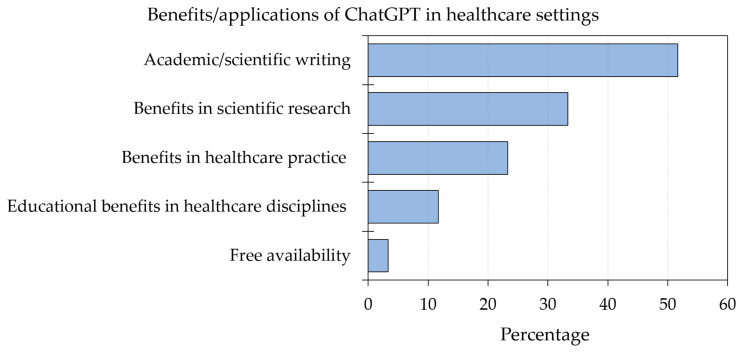
- Benefits were most frequently cited for academic/scientific writing (31 records, 51.7%), followed by scientific research (20, 33.3%), healthcare practice (14, 23.3%), healthcare education (7, 11.7%), and being a free package (2, 3.3%).
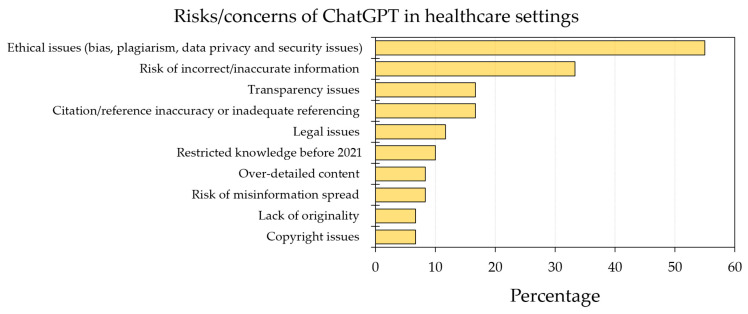
- Ethical concerns were the most common risk category (33 records, 55.0%), including risk of bias (18, 30.0%) and plagiarism (14, 23.3%); incorrect/inaccurate information was cited in 20 records (33.3%), citation/reference inaccuracy in 10 (16.7%), and transparency issues in 10 (16.7%).
- Other reported concerns included legal issues (7, 11.7%), restricted knowledge before 2021 (6, 10.0%), misinformation spread (5, 8.3%), over-detailed content (5, 8.3%), copyright issues (4, 6.7%), and lack of originality (4, 6.7%).
- The review states that ChatGPT does not qualify as an author under current ICMJE/COPE guidelines unless those guidelines are revised, and calls for stakeholder-developed ethics guidance for responsible LLM use in healthcare and academia.
Methods
- Systematic review conducted according to PRISMA guidelines, searching PubMed/MEDLINE and Google Scholar for English records on ChatGPT in healthcare practice/research, healthcare education, or academic writing; searches concluded on 16 February 2023.
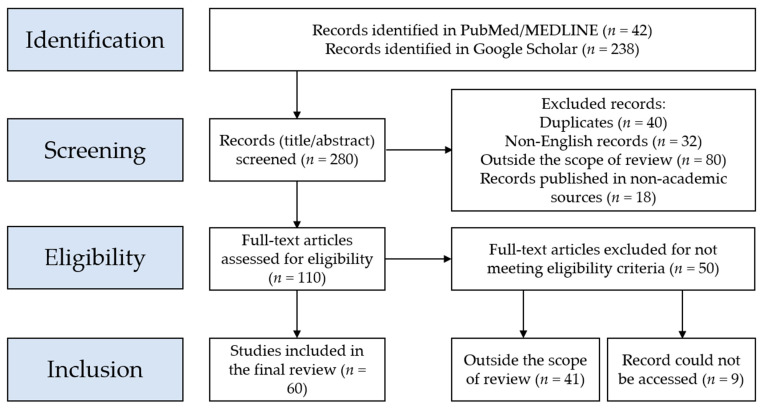
- PubMed/MEDLINE yielded 42 records and Google Scholar yielded 238 records, totaling 280 records; after duplicate removal (n = 40), non-English exclusion (n = 32), out-of-scope exclusion (n = 80), non-academic source exclusion (n = 18), full-text screening exclusions (n = 41), and inaccessible full texts (n = 9), 60 records were included.
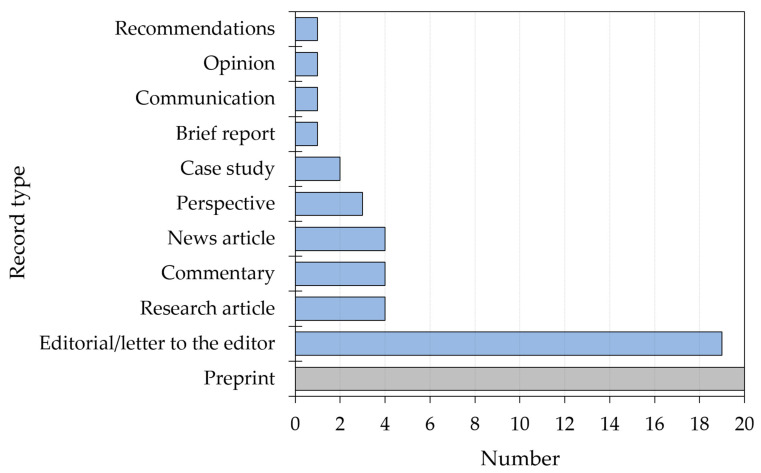
- Each included record was searched for record type, listed benefits/applications, listed risks/concerns, and main conclusions/recommendations regarding ChatGPT in healthcare education, practice, or scientific research/academic writing.
Limitations
- The paper states that included records had variable quality, non-English exclusion may have caused selection bias, inaccessible records may have led to missing relevant data, preprints were not peer reviewed, the literature is growing rapidly with the search ending 16 February 2023, and screening/interpretation was performed by a single author.
- Evident from the text: the review reports descriptive counts of mentions across heterogeneous record types rather than a formal meta-analysis or independent risk-of-bias assessment.
Model-written summary. Check it against the paper before relying on it.
Integrity signals
Registry
Cites
Statistics
Figures
Verification
Claims the paper makes
53 Valid · 1 Not valid · 6 Not checked · 37 Own results and interpretations
Every source the paper cites for this claim was checked and supports it.
In the paper
“This comes in light of the ability of ChatGPT to generate incorrect content that appears plausible from a scientific point of view [81].”
§ ChatGPT Utility in Healthcare Education, Research, and Practice: Systematic Review on the Promising Perspectives and Valid Concerns > 4. Discussion > 4.2. Limitations of ChatGPT Use in Scientific Research
What the sources say
- Supportedcites [81] Cascella M. Montomoli J. Bellini V. Bignami E. Evaluating the Feasibility of ChatGPT in Healthcare: An Analysis of Multiple Clinical and Research Scenarios J. Med. Syst. 2023 47 33 10.1007/s10916-023-01925-4 36869927 PMC9985086 source
In “Reasoning About Public Health Topics,” the paper says ChatGPT can produce believable answers that may be incorrect or nonsensical. In “Possible Misuse of GPT in Medicine and Research,” it describes a scientific abstract that appeared reliable and simulated statistical outputs that could seem plausible to readers. Together, these passages support the claim. (LLM, conf=0.94)
plain- Asserted: passes — The authors put it forward as true.
- Checkable: passes — It can be checked against evidence.
- Load-bearing: passes — The paper’s conclusions depend on it.
- Based: passes — The paper gives a reason why it holds.
- Supported
The sources with a verdict support this claim; the rest weren’t checked yet, have no full text we could read, or their verdicts aren’t rated yet.
In the paper
“This comes in light of the fact that authorship entails legal obligations that are not met by ChatGPT [43,48].”
§ ChatGPT Utility in Healthcare Education, Research, and Practice: Systematic Review on the Promising Perspectives and Valid Concerns > 4. Discussion > 4.2. Limitations of ChatGPT Use in Scientific Research
What the sources say
- Supportedcites [43] Zielinski C. Winker M. Aggarwal R. Ferris L. Heinemann M. Lapeña J. Pai S. Ing E. Citrome L. Chatbots, ChatGPT, and Scholarly Manuscripts WAME Recommendations on ChatGPT and Chatbots in Relation to Scholarly Publications Maced J. Med. Sci. 2023 11 83 86 10.3889/oamjms.2023.11502 37615142 source
The Introduction (p. 2) says chatbots are not legal entities, cannot be held legally liable, and that listing ChatGPT as an author may not be legally defensible. The WAME Recommendations (p. 2) add that chatbots cannot take responsibility for a paper or have the legal standing to sign a statement. (LLM, conf=0.93)
- Not checked — no full text of the sourcecites [48] Liebrenz M. Schleifer R. Buadze A. Bhugra D. Smith A. Generating scholarly content with ChatGPT: Ethical challenges for medical publishing Lancet Digit. Health 2023 5 e105 e106 10.1016/S2589-7500(23)00019-5 36754725 source
plain- Asserted: passes — The authors put it forward as true.
- Checkable: passes — It can be checked against evidence.
- Load-bearing: passes — The paper’s conclusions depend on it.
- Based: passes — The paper gives a reason why it holds.
- Supported
The cited sources support only part of this claim — read each source’s verdict below.
In the paper
“On one hand, ChatGPT, among other LLMs, can be beneficial in conversational and writing tasks, assisting to increase the efficiency and accuracy of the required output [11].”
§ ChatGPT Utility in Healthcare Education, Research, and Practice: Systematic Review on the Promising Perspectives and Valid Concerns > 1. Introduction
What the sources say
- Partly supportedcites [11] Deng J. Lin Y. The Benefits and Challenges of ChatGPT: An Overview Front. Comput. Intell. Syst. 2023 2 81 83 10.54097/fcis.v2i2.4465 sourceExperimental — accuracy not yet measured
Sections 4.1 (Increased Efficiency) and 4.2 (Improved Accuracy) say ChatGPT can make conversations more efficient and generate more accurate responses. The paper does not establish those benefits for writing tasks or for other LLMs, so the broader claim is only partially supported. (LLM, conf=0.88)
plainstates a cause- Asserted: passes — The authors put it forward as true.
- Checkable: passes — It can be checked against evidence.
- Load-bearing: unclear — It is unclear whether the paper’s conclusions depend on it.
- Based: passes — The paper gives a reason why it holds.
- Partly supported
The cited sources support only part of this claim — read each source’s verdict below.
In the paper
“Importantly, the concept of ChatGPT hallucination could be risky if the generated content is not thoroughly evaluated by researchers and health providers with proper expertise [37,56,73,77,79].”
§ ChatGPT Utility in Healthcare Education, Research, and Practice: Systematic Review on the Promising Perspectives and Valid Concerns > 4. Discussion > 4.2. Limitations of ChatGPT Use in Scientific Research
What the sources say
- Not checked — no full text of the sourcecites [37] Shen Y. Heacock L. Elias J. Hentel K.D. Reig B. Shih G. Moy L. ChatGPT and Other Large Language Models Are Double-edged Swords Radiology 2023 230163 10.1148/radiol.230163 36700838 source
- Partly supportedcites [56] Huh S. Are ChatGPT’s knowledge and interpretation ability comparable to those of medical students in Korea for taking a parasitology examination?: A descriptive study J. Educ. Eval. Health Prof. 2023 20 1 10.3352/jeehp.2023.20.1 36627845 PMC9905868 sourceExperimental — accuracy not yet measured
The Background says medical students must evaluate the accuracy of AI-generated medical information before creating reliable information for patients and the public. The Interpretation also reports that some ChatGPT explanations contained incorrect information. These passages support the need for scrutiny, but the paper does not specifically discuss hallucination or evaluation by researchers and health providers. (LLM, conf=0.84)
- Partly supportedcites [73] Duong D. Solomon B.D. Analysis of large-language model versus human performance for genetics questions medRxiv 2023 Preprint 10.1101/2023.01.27.23285115 PMC10999420 37246194 sourceExperimental — accuracy not yet measured
The Discussion (p. 6) says ChatGPT can give plausible explanations for incorrect answers and that its correctness requires additional verification, which is concerning in medical or other high-stakes settings. This supports the risk and need for evaluation, but the paper does not specify that researchers and health providers with proper expertise must perform it. (LLM, conf=0.83)
- Supportedcites [77] Jeblick K. Schachtner B. Dexl J. Mittermeier A. Stüber A.T. Topalis J. Weber T. Wesp P. Sabel B. Ricke J. ChatGPT Makes Medicine Easy to Swallow: An Exploratory Case Study on Simplified Radiology Reports arXiv 2022 10.48550/arxiv.2212.14882 2212.14882 PMC11126432 37794249 source
The Results (Free-text analysis) identify a ChatGPT hallucination that radiologists judged potentially harmful to a patient. The Key Points state that minimizing harm requires supervision by medical experts, supporting the claim’s warning about unevaluated medical content. (LLM, conf=0.90)
- Partly supportedcites [79] Lin Z. Why and how to embrace AI such as ChatGPT in your academic life PsyArXiv 2023 Preprint 10.31234/osf.io/sdx3j PMC10445029 37621662 sourceExperimental — accuracy not yet measured
The “Limitations of generative AI” section says ChatGPT may fabricate facts and false citations (“hallucination”) and urges users to critically evaluate and verify its responses, particularly when reliability is critical. It does not specifically say that researchers and health providers with proper expertise must evaluate the content; that part is more specific than the source. (LLM, conf=0.84)
hedgedstates a possible cause- Asserted: passes — The authors put it forward as true.
- Checkable: passes — It can be checked against evidence.
- Load-bearing: passes — The paper’s conclusions depend on it.
- Based: passes — The paper gives a reason why it holds.
- Rests on an assumption not shown here.
The sources with a verdict support this claim; the rest weren’t checked yet, have no full text we could read, or their verdicts aren’t rated yet.
In the paper
“This is particularly relevant for researchers who are non-native English speakers [23,25,63].”
§ ChatGPT Utility in Healthcare Education, Research, and Practice: Systematic Review on the Promising Perspectives and Valid Concerns > 4. Discussion > 4.1. Benefits of ChatGPT in Scientific Research
What the sources say
- Supportedcites [23] Chen T.J. ChatGPT and Other Artificial Intelligence Applications Speed up Scientific Writing Available online: https://journals.lww.com/jcma/Citation/9900/ChatGPT_and_other_artificial_intelligence.174.aspx (accessed on 16 February 2023) PMC12755446 36791246 source
In the main text (page not provided), Chen says many scientists who are not native English speakers struggle to write in English and describes AI translation and writing tools as ways to overcome that barrier. This supports the claim that language assistance in scientific writing is particularly relevant to those researchers. (LLM, conf=0.91)
- Not checked — no full text of the sourcecites [25] Kitamura F.C. ChatGPT Is Shaping the Future of Medical Writing but Still Requires Human Judgment Radiology 2023 230171 10.1148/radiol.230171 36728749 source
- Supportedcites [63] Gao C.A. Howard F.M. Markov N.S. Dyer E.C. Ramesh S. Luo Y. Pearson A.T. Comparing scientific abstracts generated by ChatGPT to original abstracts using an artificial intelligence output detector, plagiarism detector, and blinded human reviewers bioRxiv 2022 10.1101/2022.12.23.521610 source
The Discussion/Abstract section of our copy states directly that the technology 'could be used by scientists publishing in a language that is not their native language, to improve equity,' alongside the point that generated text 'may help alleviate the burden of writing' and that LLMs are 'a powerful tool to create readable scientific abstracts.' That covers the attributed content — AI-assisted language improvement being especially pertinent for non-native-English researchers — with the source's own hedge ('could be used') slightly weaker than the citing sentence's flat 'is particularly relevant.' No passage in our copy contradicts it. (LLM, conf=0.82)
plainstates an association- Asserted: passes — The authors put it forward as true.
- Checkable: passes — It can be checked against evidence.
- Load-bearing: unclear — It is unclear whether the paper’s conclusions depend on it.
- Based: passes — The paper gives a reason why it holds.
- Supported
42 more claims · 23 with their cited sources checked
Create a free account to see all 97 claims and to verify the 16 references still open.
- Probably not a substantial claim. 31
- It may state two separate claims as one. 27
Claims other papers make about this one
Each is checked against this paper’s own text: does it say what the citing paper says it does?
The source backs part of the claim, not all of it — or backs it for a different population, condition or comparison.
In the citing paper
“The reliance on ChatGPT may result in hindering the development of the skills needed to interpret and respond to social cues, which should be considered in health care education [9,91].”
From Assessing Health Students' Attitudes and Usage of ChatGPT in Jordan: Validation Study (2023) · cites this paper as [9]
Experimental — accuracy not yet measuredThe source backs part of the claim, not all of it — or backs it for a different population, condition or comparison.
In the citing paper
“A recent surge in the use of ChatGPT, in particular for mental health, is emergent for providing crucial personalized advice without clinical explanation, which can hurt user's safety, and thus trust (Sallam, 2023).”
From A review of the explainability and safety of conversational agents for mental health to identify avenues for improvement (2023) · cites this paper as Sallam, 2023
Experimental — accuracy not yet measuredThe source backs part of the claim, not all of it — or backs it for a different population, condition or comparison.
In the citing paper
“ChatGPT plays a crucial role in pandemic management by aiding in the swift and accurate dissemination of critical information.”
From A Systematic Review and Meta-Analysis of Artificial Intelligence Tools in Medicine and Healthcare: Applications, Considerations, Limitations, Motivation and Challenges (2024) · cites this paper as [6]
Experimental — accuracy not yet measuredThe source backs part of the claim, not all of it — or backs it for a different population, condition or comparison.
In the citing paper
“Its natural language processing capabilities enable it to generate coherent responses, making it a valuable tool for healthcare organisations.”
From A Systematic Review and Meta-Analysis of Artificial Intelligence Tools in Medicine and Healthcare: Applications, Considerations, Limitations, Motivation and Challenges (2024) · cites this paper as [6]
Experimental — accuracy not yet measuredThe source backs part of the claim, not all of it — or backs it for a different population, condition or comparison.
In the citing paper
“Specific advantages include its ability to provide rapid updates, preventive measures, and medical guidelines to the public.”
From A Systematic Review and Meta-Analysis of Artificial Intelligence Tools in Medicine and Healthcare: Applications, Considerations, Limitations, Motivation and Challenges (2024) · cites this paper as [6]
Experimental — accuracy not yet measured
31 more claims about this paper
Create a free account to see every claim other papers make about this one.
Citations
Cites
Preferred Reporting Items for Systematic Reviews and Meta-Analyses: the PRISMA statement
Moher, D., Liberati, A., Tetzlaff, J., Altman, D. G., & for the PRISMA Group (2009) · BMJ · doi:10.1136/bmj.b2535 · Cited by 83,823
Preferred Reporting Items for Systematic Reviews and Meta-Analyses: The PRISMA Statement
Moher, D., Liberati, A., Tetzlaff, J., Altman, D. G., & The PRISMA Group (2009) · PLoS Medicine · doi:10.1371/journal.pmed.1000097 · Cited by 64,042 · cited 1×
“The current systematic review was conducted according to the Preferred Reporting Items for Systematic Reviews and Meta-Analyses (PRIMSA) guidelines [21].”
Language Models are Few-Shot Learners
Brown, T. B., Mann, B., Ryder, N., Subbiah, M., Kaplan, J., Dhariwal, P., Neelakantan, A., Shyam, P., Sastry, G., Askell, A., et al. (2020) · arXiv · doi:10.48550/arxiv.2005.14165 · Cited by 23,372 · cited 3×
“The GPT architecture utilizes a neural network to process natural language, thus generating responses based on the context of input text [7].”
BackgroundWang, G., Ma, R., Qiao, G., Wada, K., Aizawa, Y., & Satoh, T. (2015) · Integrative Medicine International · doi:10.1159/000368408 · Cited by 18,657
Kaugeranna, R., Kaugeranna, E., & Aion, (. S. 4. 6. (2023) · DROPS (Schloss Dagstuhl – Leibniz Center for Informatics) · doi:10.4230/lipics.giscience.2023.43 · Cited by 13,690
Machine learning: Trends, perspectives, and prospects
Jordan, M. I., & Mitchell, T. M. (2015) · Science · doi:10.1126/science.aaa8415 · Cited by 9,955
Kung, T. H., Cheatham, M., Medenilla, A., Sillos, C., De Leon, L., Elepaño, C., Madriaga, M., Aggabao, R., Diaz-Candido, G., Maningo, J., et al. (2023) · PLOS Digital Health · doi:10.1371/journal.pdig.0000198 · Cited by 4,115 · cited 2×
“[59] An article showing the ChatGPT raised accuracy which enabled passing the USMLE Accuracy with high concordance and insight; it can facilitate patient communication; improved personalized medicine ChatGPT has a promising potential in medical education; future studies are recommended to consider non-biased approach…”
BackgroundKung, T. H., Cheatham, M., ChatGPT, Medenilla, A., Sillos, C., De Leon, L., Elepaño, C., Madriaga, M., Aggabao, R., Diaz-Candido, G., et al. (2022) · doi:10.1101/2022.12.19.22283643 · Cited by 4,115
Rajpurkar, P., Chen, E., Banerjee, O., & Topol, E. J. (2022) · Nature Medicine · doi:10.1038/s41591-021-01614-0 · Cited by 3,212 · cited 1×
“The promising utility of AI in health care has been outlined previously with possible benefits in personalized medicine, drug discovery, and the analysis of large datasets aside from the potential applications to improve diagnosis and clinical decisions [17,18].”
BackgroundChatting and cheating: Ensuring academic integrity in the era of ChatGPT
Cotton, D. R. E., Cotton, P. A., & Shipway, J. R. (2024) · Innovations in Education and Teaching International · doi:10.1080/14703297.2023.2190148 · Cited by 3,087 · cited 1×
“[62] An EdArXiv 2 preprint on the academic integrity in ChatGPT era Risk of plagiarism; academic dishonesty Careful thinking of educational assessment tools”
Background
Cited by
Items 1,001–1,100 of 3,095
Singal, A., & Goyal, S. (2025) · Surgical and Radiologic Anatomy · doi:10.1007/s00276-025-03707-8 · Cited by 27
“While AI presents promising opportunities for enhancing anatomical education, but along with prospects, they are tempered by shortcomings like inaccuracies, hallucinations, inadequate accountability, risk of data privacy, regulatory or ethical concerns and others [16, 29].”
Alam, Z., Abdullahi, A. S., Alnuaimi, S. N. S., Shaka, H. A. A., Alderei, S. S. S., Alhemeiri, A. A. A., Khorzom, H., Almaskari, H. J. M., Almaamari, K. A., Seiari, K. A., et al. (2025) · Frontiers in Digital Health · doi:10.3389/fdgth.2025.1574263 · Cited by 21
“Recently a study validated an instrument to evaluate attitudes and usage of ChatGPT among students, using a large multinational sample from fi ve Arab countries (19).”
Large Language Model-Based Virtual Patient Simulations in Medical and Nursing Education: A Review
Jo, Y.-W., Lee, M., & Yang, H.-J. (2025) · Applied Sciences · doi:10.3390/app152211917 · Cited by 25
ChatGPT: Information Retrieval from Image using Robotic Process Automation and OCR
Shidaganti, G. I., Sanjana, R., Shubeeksh, K., Raman, V. R. M., & Thakshith, V. (2023) · International Conference on Intelligent Computing and Control Systems (ICICCS) · doi:10.1109/iciccs56967.2023.10142461 · Cited by 15
ChatGPT and Other Natural Language Processing Artificial Intelligence Models in Adult Reconstruction
Magruder, M. L., Delanois, R. E., Nace, J., & Mont, M. A. (2023) · The Journal of Arthroplasty · doi:10.1016/j.arth.2023.06.030 · Cited by 18
ChatGPT-Enabled daVinci Surgical Robot Prototype: Advancements and Limitations
Pandya, A. D. (2023) · Robotics · doi:10.3390/robotics12040097 · Cited by 19
Toribio, N. F. (2023) · Journal of Namibian Studies History Politics Culture · doi:10.59670/jns.v33i.3132 · Cited by 23
ChatGPT and scientific papers in veterinary neurology; is the genie out of the bottle?
Abani, S., Volk, H. A., Decker, S. D., Fenn, J., Rusbridge, C., Charalambous, M., Gonçalves, R., Gutierrez‐Quintana, R., Loderstedt, S., Flegel, T., et al. (2023) · Frontiers in Veterinary Science · doi:10.3389/fvets.2023.1272755 · Cited by 19
Artificial Intelligence–Generated Scientific Literature: A Critical Appraisal
Zybaczyńska, J., Norris, M. R., Modi, S., Brennan, J., Jhaveri, P., Craig, T., & Al‐Shaikhly, T. (2023) · The Journal of Allergy and Clinical Immunology In Practice · doi:10.1016/j.jaip.2023.10.010 · Cited by 26
Thoma, B., Spadafore, M., Sebok‐Syer, S. S., George, B. C., Chan, T. M., & Krumm, A. E. (2023) · Academic Medicine · doi:10.1097/acm.0000000000005605 · Cited by 16
Kharitonova, K., Pérez‐Fernández, D., Gutiérrez-Hernando, J., Gutiérrez-Fandiño, A., Callejas, Z., & Griol, D. (2024) · Behaviour and Information Technology · doi:10.1080/0144929x.2024.2321959 · Cited by 22
Artamonov, A., Bachar-Avnieli, I., Klang, E., Lubovsky, O., Atoun, E., Bermant, A., & Rosinsky, P. J. (2024) · Arthroscopy Sports Medicine and Rehabilitation · doi:10.1016/j.asmr.2024.100923 · Cited by 16
“17 As such, although the development and application of AI in health care are rapidly advancing, it is critical that caution is exercised, and these models ’ limitations and potential risks are continually assessed and addressed.”
BackgroundBeyond the virtual classroom: integrating artificial intelligence in online learning
Correia, A., Hickey, S., & Xu, F. (2024) · Distance Education · doi:10.1080/01587919.2024.2338706 · Cited by 22
“Within the field of education, the capabilities of generative AI have fueled a heated debate regarding cheating, plagiarism, and issues of originality (Sallam, 2023).”
Exploring the potential of ChatGPT to create multiple-choice question exams
Rivera-Rosas, C. N., Calleja-López, J. R. T., Ruibal-Tavares, E., Villanueva-Neri, A., Flores-Félix, C. M., & López, S. T. (2024) · Educación Médica · doi:10.1016/j.edumed.2024.100930 · Cited by 29
Piazza, D., Martorana, F., Curaba, A., Sambataro, D., Valerio, M. R., Firenze, A., Pecorino, B., Scollo, P., Chiàntera, V., Scibilia, G., et al. (2024) · Current Oncology · doi:10.3390/curroncol31050212 · Cited by 17
“A recent systematic review was conducted to investigate the utility of ChatGPT in healthcare [20].”
BackgroundChatGPT Clinical Use in Mental Health Care: Scoping Review of Empirical Evidence
Balan, R., & Gumpel, T. P. (2025) · JMIR Mental Health · doi:10.2196/81204 · Cited by 25
“While numerous AI tools hold potential value for clinical practice, ChatGPT has emerged as the most prominent LLM in the health care domain, surpassing alternatives such as Google’s Gemini [26].”
Decook, R., Muffly, B. T., Mahmood, S., Holland, C. T., Ayeni, A. M., Ast, M. P., Bolognese, M. P., Guild, G. N., Sheth, N. P., Pean, C. A., et al. (2024) · Arthroplasty Today · doi:10.1016/j.artd.2024.101412 · Cited by 17
“[4 ]”
InfluentialUtilizing AI for Physics Problem Solving: A Literature Review and ChatGPT Experience
Mustofa, H. A., Bilad, M. R., & Grendis, N. W. B. (2024) · Lensa Jurnal Kependidikan Fisika · doi:10.33394/j-lkf.v12i1.11748 · Cited by 40
“As noted in previous studies, ChatGPT showcased both promising perspectives and valid concerns (Sallam, 2023).”
ResultGuillari, A., Sansone, V., Giordano, V., Catone, M., & Rea, T. (2024) · BMJ Open · doi:10.1136/bmjopen-2023-081721 · Cited by 24
“21 38 39 Addressing the digital skills gap in the nursing profession At the global and national levels, several initiatives have been launched to promote the widespread adoption of eHealth.”
BackgroundPatel, M. A., Villalobos, F., Shan, K., Tardo, L. M., Horton, L. A., Sguigna, P. V., Blackburn, K. M., Munoz, S. B., Moog, T. M., Smith, A. D., et al. (2024) · Multiple Sclerosis and Related Disorders · doi:10.1016/j.msard.2024.105791 · Cited by 18
Black, G., Rimal, B. P., & Vaidyan, V. M. (2024) · IEEE Transactions on Emerging Topics in Computational Intelligence · doi:10.1109/tetci.2024.3446695 · Cited by 27
“T HE rise of Large language models (LLMs) trained on vast amounts of web data has opened new doors in automating text generation tasks [1], [2], [3].”
Bukar, U. A., Sayeed, M. S., Razak, A., Yogarayan, S., & Sneesl, R. (2024) · Education Sciences · doi:10.3390/educsci14090959 · Cited by 27
Unveiling the risks of ChatGPT in diagnostic surgical pathology
Guastafierro, V., Corbitt, D. N., Bressan, A., Fernandes, B., Mintemur, Ö., Magnoli, F., Ronchi, S., La Rosa, S., Uccella, S., & Renne, S. L. (2025) · Virchows Archiv · doi:10.1007/s00428-024-03918-1 · Cited by 14
“…data analysis, and genetic and protein structure data analysis) [17–22], in question answering regarding both medical student and specialist examinations [10, 23, 24] and as a support tool for healthcare professionals in generating and interpreting clinical notes and diagnostic reports [7, 19, 23].”
Black, G., Vaidyan, V. M., & Comert, G. (2024) · IEEE Access · doi:10.1109/access.2024.3484947 · Cited by 23
“In response to these challenges, recent advances in machine learning—particularly the development of large language models (LLMs)—offer promising solutions [4], [5], [6].”
BackgroundZeng, J., Zou, X., Li, S., Tang, Y., Teng, S., Li, H., Wang, C., Wu, Y., Zhang, L., Zhong, Y., et al. (2024) · Journal of Medical Internet Research · doi:10.2196/51095 · Cited by 17
Roos, J., Martin, R., & Kaczmarczyk, R. (2024) · JMIR Formative Research · doi:10.2196/57592 · Cited by 20
“Large language models (LLMs) have gained attention in medical research and education, with an increasing recognition of their potential applications [1].”
Implementation and evaluation of an optimized surgical clerkship teaching model utilizing ChatGPT
Huang, Y., Xu, B., Wang, X., Luo, Y.-C., Teng, M.-M., & Weng, X. (2024) · BMC Medical Education · doi:10.1186/s12909-024-06575-9 · Cited by 20
Roshani, M. A., Zhou, X., Qiang, Y., Suresh, S., Hicks, S. D., Sethuraman, U., & Zhu, D. (2025) · JMIR AI · doi:10.2196/67363 · Cited by 28
Yang, Y., Li, J., Guo, J., Pang, P. C., Wang, Y., Yang, X., & Im, S. (2025) · IEEE Access · doi:10.1109/access.2025.3549733 · Cited by 20
“Second, data privacy concerns are particularly acute, especially when using closed-source LLMs in healthcare [24], [25], as they require uploading data to the Internet, posing significant privacy and security challenges.”
Grinberg, N., Whitefield, S., Kleinman, S., Ianculovici, C., Wasserman, G., & Peleg, O. (2025) · Clinical Oral Investigations · doi:10.1007/s00784-025-06268-7 · Cited by 22
“AI integration in healthcare has been shown to enhance workflow from initial triage to patient discharge, thereby showingthe potential to revolutionize medical practice worldwide [13, 14].”
Role of chatbots on gastroenterology: Let's chat about the future
Li, L. (2023) · Gastroenterology & Endoscopy · doi:10.1016/j.gande.2023.06.002 · Cited by 17
Evaluating ChatGPT-4 in Otolaryngology–Head and Neck Surgery Board Examination using the CVSA ModelPreprint
Long, C., Lowe, K., dos Santos, A., Zhang, J., Alanazi, A. A., O’Brien, D. C., Wright, E. D., & Côté, D. W. J. (2023) · medRxiv · doi:10.1101/2023.05.30.23290758 · Cited by 14
Digital Transformation: The Role, Potential, and Limitations of ChatGPT in Child Health Education
Elmaoğlu, E., Coşkun, A. B., & Alsaç, S. Y. (2023) · American Journal of Health Education · doi:10.1080/19325037.2023.2277937 · Cited by 18
“11,21 ChatGPT could be a significant tool in child health education, but effective and ethical use of this technology requires careful planning and management.”
BackgroundCusumano, G., D'arrigo, S., Terminella, A., & Lococo, F. (2024) · doi:10.20944/preprints202405.0759.v1 · Cited by 14
Plagiarism, Academic Ethics, and the Utilization of Generative AI in Academic Writing
Koplin, J., & Philosophy Documentation Center (2023) · International Journal of Applied Philosophy · doi:10.5840/ijap2023372202 · Cited by 16
Can ChatGPT outperform a neurosurgical trainee? a prospective comparative study.
Williams, S. C., Starup-Hansen, J., Funnell, J. P., Hanrahan, J. G., Valetopoulou, A., Singh, N., Sinha, S., Muirhead, W. R., & Marcus, H. J. (2025) · British Journal of Neurosurgery · doi:10.1080/02688697.2024.2308222 · Cited by 13
Liu, Q., Hu, A., Gladman, T., & Gallagher, S. (2025) · Innovative Higher Education · doi:10.1007/s10755-025-09790-4 · Cited by 29
“In teaching and learning, educators have recognized ChatGPT’s potential to allow personalized learning and timely feedback for students (Sallam, 2023) and facilitate course design and planning processes (Keiper, 2023).”
Calderón, R., & Herrera, F. (2025) · Humanities and Social Sciences Communications · doi:10.1057/s41599-025-04650-0 · Cited by 24
“While many journals and major publishers (such as Springer-Nature, Elsevier, Lancet or Taylor and Francis) have restricted its use, other publishers and journals consider that the prohibition is unfeasible and simply ask that its use be reported (Sallam, 2023).”
InfluentialHarnessing generative AI in nursing education: A bibliometric review
Borromeo, A. S., Manaloto, A. M., Santos, M. J. M. D., Antonio, R. P., Soyosa, M. D., & Wider, W. (2025) · Teaching and learning in nursing · doi:10.1016/j.teln.2025.04.014 · Cited by 21
Mashburn, P., Weuthen, F. A., Otte, N., Krabbe, H., Fernandez, G. M., Kraus, T., & Krabbe, J. (2025) · Healthcare · doi:10.3390/healthcare13121394 · Cited by 16
“Thus, experts are speaking out against their unregulated use [10].”
Abbas, M., Khan, T. I., & Jam, F. A. (2025) · Journal of Academic Ethics · doi:10.1007/s10805-025-09659-3 · Cited by 63
“The attractiveness of ChatGPT lies in its capacity to provide prompt responses and simulate human-like interactions (Malik et al., 2023 ; Sallam, 2023 ).”
Carriero, S., Cannella, R., Cicchetti, F., Angileri, S. A., Bruno, A., Biondetti, P., Colciago, R. R., D’Antonio, A., Pepa, G. D., Grassi, F., et al. (2025) · Journal of Medical Imaging and Radiation Oncology · doi:10.1111/1754-9485.13880 · Cited by 19
“Another essential aspect that must be considered to properly understand AI functionality is knowing that AI in healthcare presents specific risks, including algorithmic bias, errors and issues, such as AI hallucinations, where models generate incorrect but plausible results [131].”
Assessing medical students’ attitudes, performance, and usage of ChatGPT in Jeddah, Saudi Arabia
Alammari, D. A., Alamari, E., Alamri, R., Alharbi, R. F., Felimban, J., & Aljohani, J. (2025) · Frontiers in Artificial Intelligence · doi:10.3389/frai.2025.1577911 · Cited by 21
“Nevertheless, this highlights the importance of educational programs in educating students about ethical considerations and possible risks they may not yet fully understand (Sallam, 2023; Borji, 2023).”
Artificial intelligence in airway management: a narrative review
Sorbello, M., Via, L. L., Paternò, D. S., Tutino, S., Giudice, E. C. L., Lentini, M., Maniaci, A., & Pappalardo, F. (2026) · British Journal of Anaesthesia · doi:10.1016/j.bja.2025.12.052 · Cited by 20
Lin, C., Akuhata-Huntington, Z., & Hsu, C.-W. (2023) · Journal of Educational Evaluation for Health Professions · doi:10.3352/jeehp.2023.20.17 · Cited by 15
“education—for instance, it could help students to understand complex notions through its explanations [9].”
BackgroundCan ChatGPT diagnose my collapsing dog?
Abani, S., Decker, S. D., Tipold, A., Nessler, J. N., & Volk, H. A. (2023) · Frontiers in Veterinary Science · doi:10.3389/fvets.2023.1245168 · Cited by 18
Toward Value Scenario Generation Through Large Language Models
Jung, H., Seo, W., Song, S., & Na, S. (2023) · ACM Conference on Computer Supported Cooperative Work (CSCW) · doi:10.1145/3584931.3606960 · Cited by 17
“Moreover, considering that LLMs could produce factually incorrect but scientifically plausible outputs (hallucination) [14, 32], the scenarios would prevent researchers from understanding and addressing the problems of vulnerable populations.”
BackgroundSharma, R. K., Bharathy, G. K., Karimi, F., Mishra, A. V., & Prasad, M. (2023) · Information · doi:10.3390/info14100577 · Cited by 25
ChatGPT for Teachers and Students in Science Learning: A Systematic Literature Review
Purnama, I., Edi, F., Ruth Rize Paas Megahati, S., & Wijanarko, T. (2023) · Jurnal Penelitian Pendidikan IPA · doi:10.29303/jppipa.v9i10.5259 · Cited by 18
“…et al., 2023); (Siu, 2023) Language translation (Hassani & Silva, 2023); (Patel & Lam, 2023) Text summarization (Kung et al., 2023); (Thorp, 2023); (Sallam, 2023) Text completion From the table 3 above it can be explained each of them namely generating text: ChatGPT can be used to generate text…”
BackgroundUsing ChatGPT to Generate Research Ideas in Dysphagia: A Pilot Study
Nachalon, Y., Broer, M., & Nativ‐Zeltzer, N. (2023) · Dysphagia · doi:10.1007/s00455-023-10623-9 · Cited by 16
“Concerns exist regarding research integrity since Chat-GPT can generate fake abstracts which are hard to identify as fabricated [9, 10] and no tools or software exist yet to detect these errors [11].”
Threats and opportunities of using ChatGPT in scientific writing—The risk of getting spine less
Ambrosio, L., Schol, J., Pietra, V. A. L., Russo, F., Vadalà, G., & Sakai, D. (2023) · JOR Spine · doi:10.1002/jsp2.1296 · Cited by 18
New evidence-based practice: Artificial intelligence as a barrier breaker
Ferreira, R. M. (2023) · World Journal of Methodology · doi:10.5662/wjm.v13.i5.384 · Cited by 17
Coşkun, A. B., Elmaoğlu, E., Buran, C., & Alsaç, S. Y. (2024) · Journal of Health Reports and Technology · doi:10.5812/jhrt-139748 · Cited by 14
Anghelescu, A., Ciobanu, I., Munteanu, C., Anghelescu, L. A.-M., & Onose, G. (2023) · Balneo and PRM Research Journal · doi:10.12680/balneo.2023.614 · Cited by 24
ChatGPT's Applications in Higher Education: Unmasking Opportunities and Challenges
Sarker, D. R., Eiaz-Ur-Rahman, A. F. M., Sakib, A. R., Terano, H. J. R., & Rahman, M. M. (2023) · Journal of Education Management and Development Studies · doi:10.52631/jemds.v3i4.250 · Cited by 21
“The potential allure of immediate access to information and support may overwhelm the underlying principles of education, namely the cultivation of critical thinking, problem-solving skills, and a comprehensive comprehension of academic subjects (Sallam, 2023).”
BackgroundMethodInfluentialBeware of Artificial Intelligence hallucinations or should we call confabulation?
Berk, H. (2024) · Acta Orthopaedica et Traumatologica Turcica · doi:10.5152/j.aott.2024.130224 · Cited by 15
Performance of ChatGPT on the National Korean Occupational Therapy Licensing Examination
Lee, S.-A., Heo, S., & Park, J. (2024) · Digital Health · doi:10.1177/20552076241236635 · Cited by 14
Can ChatGPT Replace an Otolaryngologist in Guiding Parents on Tonsillectomy?
Moise, A., Centomo-Bozzo, A., Orishchak, O., Alnoury, M. K., & Daniel, S. J. (2024) · Ear Nose & Throat Journal · doi:10.1177/01455613241230841 · Cited by 16
Yuan, S., Li, F., Browning, M. H. E. M., Bardhan, M., Zhang, K., McAnirlin, O., Patwary, M. M., & Reuben, A. (2024) · Frontiers in Psychology · doi:10.3389/fpsyg.2024.1295275 · Cited by 18
“The applications in scientific writing (Lund et al., 2023) and various scientific domains such as healthcare research (Dahmen et al., 2023; Sallam, 2023), environmental research (Agathokleous et al., 2023; Zhu et al., 2023), and environmental planning and design (Fernberg and Chamberlain, 2023;…”
BackgroundFrom Text to Treatment: An Overview of Artificial Intelligence Chatbots in Healthcare
Singh, M., Mittal, M., Dewan, P., Kaur, A., Kaur, G., & Gupta, A. (2024) · International Conference on Computing for Sustainable Global Development · doi:10.23919/indiacom61295.2024.10498497 · Cited by 21
“Medical institutions and practitioners should consider how chatbots can be utilized beyond administrative tasks, especially in areas where their capabilities can enhance patient care, research, and diagnostics [19-26].”
BackgroundAll in How You Ask for It: Simple Black-Box Method for Jailbreak Attacks
Takemoto, K. (2024) · Applied Sciences · doi:10.3390/app14093558 · Cited by 46
“Large Language Models (LLMs) like ChatGPT [1] are highly anticipated for applications across a wide range of fields including education, research, social media, marketing, software engineering, and healthcare [2, 3, 4].”
BackgroundAI chatbots in pet health care: Opportunities and challenges for owners
Jokar, M., Abdous, A., & Rahmanian, V. (2024) · Veterinary Medicine and Science · doi:10.1002/vms3.1464 · Cited by 21
“AI-powered language models, such as chatbots, can improve public health by leveraging natural language processing techniques to facilitate more efficient data analysis and management (Biswas, 2023; Sallam, 2023).”
Borna, S., Gomez-Cabello, C. A., Pressman, S. M., Haider, S. A., Sehgal, A., Leibovich, B. C., Cole, D., & Forte, A. J. (2024) · European Journal of Investigation in Health Psychology and Education · doi:10.3390/ejihpe14050093 · Cited by 26
“Revolutionary NLP-driven large language models like OpenAI’s ChatGPT 3.5 and 4, along with Google’s BARD, have demonstrated significant utility in various healthcare domains, encompassing medical research, patient management, and education [16,37,38].”
MethodInfluentialPugliese, N., Polverini, D., Lombardi, R., Pennisi, G., Ravaioli, F., Armandi, A., Buzzetti, E., Dalbeni, A., Liguori, A., Mantovani, A., et al. (2024) · Journal of Personalized Medicine · doi:10.3390/jpm14060568 · Cited by 21
“These conversational agents, which use natural language processing, have demonstrated efficacy in various healthcare settings, including mental health, chronic disease management and medication adherence [18–20].”
BackgroundZarei, M., Zarei, M., Hamzehzadeh, S., Oliyaei, S. S. B., & Hosseini, M. (2024) · Shiraz E-Medical Journal · doi:10.5812/semj-145840 · Cited by 26
Impact of ChatGPT on the Academic Writing Quality of Senior High School Students
Maghamil, M. C., & Sieras, S. G. (2024) · Journal of English Language Teaching and Applied Linguistics · doi:10.32996/jeltal.2024.6.2.14 · Cited by 34
“Thus, ChatGPT is implemented in the medical field (Sallam, 2023).”
BackgroundSyed, W., Bashatah, A., Alharbi, K. N., Bakarman, S. S., Asiri, S., & Alqahtani, N. (2024) · Medical Science Monitor · doi:10.12659/msm.944993 · Cited by 26
“…in healthcare education and research, which include moral concerns, intellectual property problems, lack of novelty, erroneous content, lack of knowledge base, and erroneous citations, and these findings suggested that using ChatGPT could potentially reduce users’ cognitive abilities [16,25].”
BackgroundChatGPT and Its Role in Academic Libraries: A Discussion
Panda, S. K., Bhatt, A., & Satapathy, A. (2024) · New Review of Academic Librarianship · doi:10.1080/13614533.2024.2381510 · Cited by 24
“ChatGPT is a member of the GPT family of large language models (Sallam, 2023b), which is more powerful and capable of understanding and generating human-like language in a fraction of a second (Lund et al., 2023).”
Fazilat, A. Z., Berry, C. E., Churukian, A. A., Lavin, C. V., Kameni, L. E., Brenac, C., Podda, S., Bruckman, K. C., Lorenz, H. P., Khosla, R. K., et al. (2024) · The Cleft Palate-Craniofacial Journal · doi:10.1177/10556656241266368 · Cited by 14
“6 Despite hesitancy surrounding AI-generated materials, our study found comparable accuracy between material generated by ChatGPT and that from A/P sources.”
Ishida, K., & Hanada, E. (2024) · Cureus · doi:10.7759/cureus.66324 · Cited by 18
“Additionally, it can possibly answer medical questions with a certain degree of accuracy [7,8].”
BackgroundShaheen, A. R., Afflitto, G. G., & Swaminathan, S. S. (2024) · Ophthalmology Science · doi:10.1016/j.xops.2024.100602 · Cited by 13
“25,26 Hu et al utilized ChatGPT to automate the extraction of details from radiologic reports, demonstrating that AI tools can achieve high performances for tasks such as tumor location identi fi cation.”
Bias Perpetuates Bias: ChatGPT Learns Gender Inequities in Academic Surgery Promotions
Desai, P. T., Wang, H., Davis, L., Ullmann, T. M., & DiBrito, S. R. (2024) · Journal of surgical education · doi:10.1016/j.jsurg.2024.07.023 · Cited by 17
ChatGPT-4 Knows Its A B C D E but Cannot Cite Its Source
Ghanem, D., Zhu, A. R., Kagabo, W., Osgood, G. M., & Shafiq, B. (2024) · JBJS Open Access · doi:10.2106/jbjs.oa.24.00099 · Cited by 20
Does using artificial intelligence take the person out of personal statements? We can't tell
Whitrock, J. N., Pratt, C. G., Carter, M. M., Chae, R. C., Price, A. D., Justiniano, C. F., Haren, R. M. V., Silski, L. S., Quillin, R. C., & Shah, S. A. (2024) · Surgery · doi:10.1016/j.surg.2024.08.018 · Cited by 17
Perspectives and experiences of health sciences academics regarding ChatGPT: A qualitative study
Güner, S. G., Yiğit, S., Berşe, S., & Dіrgar, E. (2024) · Medical Teacher · doi:10.1080/0142159x.2024.2413425 · Cited by 20
“…versatility; utility in healthcare research (e.g. literature reviews, time savings); benefits in healthcare practices personalized medicine and (improved health literacy); and benefits in healthcare education (e.g. enhanced personalized learning, critical thinking, and problem-based learning [29].”
InfluentialTeachers’ perceptions of the risks and benefits of AI in higher education: A case study of ERNIE Bot
Wang, N., & Li, M. (2024) · Innovations in Education and Teaching International · doi:10.1080/14703297.2024.2432429 · Cited by 28
“Other scientists share this concern in their scientific works (Sallam, 2023; Taloni et al., 2024).”
A Joint LLM-KG System for Disease Q&A
Sukhwal, P. C., Rajan, V., & Kankanhalli, A. (2024) · IEEE Journal of Biomedical and Health Informatics · doi:10.1109/jbhi.2024.3514659 · Cited by 21
“ChatGPThasbeenfoundtofacilitate healthcareliteracyinrecentstudies[60],[61].”
Slawaska‐Eng, D., Bourgeault‐Gagnon, Y., Cohen, D., Pauyo, T., Belzile, É. L., & Ayeni, O. R. (2024) · Journal of ISAKOS Joint Disorders & Orthopaedic Sports Medicine · doi:10.1016/j.jisako.2024.100376 · Cited by 14
Arantes, J. A. (2024) · Journal of Science Education and Technology · doi:10.1007/s10956-024-10189-7 · Cited by 21
“Sallam (2023) in discussion of healthcare education suggests that despite the benefits of increased personalization and immediate feedback, which GenAI should be in education via a risk-based approach, they suggest that an approach, that places the human is ‘in control’ and is always required to be…”
Bingöl, F. G., Ağagündüz, D., & Bingöl, M. C. (2025) · Journal of Renal Nutrition · doi:10.1053/j.jrn.2025.01.004 · Cited by 20
Kang, D., Wu, H., Yuan, L., Shen, W., Feng, J. H., Zhan, J., Grzybowski, A. E., Sun, W., & Jin, K. (2025) · Ophthalmology and Therapy · doi:10.1007/s40123-025-01105-2 · Cited by 15
Razzaq, K., & Shah, M. H. (2025) · Journal of Cybersecurity and Privacy · doi:10.3390/jcp5020012 · Cited by 23
Exploring the efficacy of ChatGPT in understanding and identifying intimate partner violence
Zhang, Y., Fang, J., Luo, X., Lindsay, D., Madre, N., Paredes, J., Penna, A., Melley, E., & Garcia, T. (2025) · Family Relations · doi:10.1111/fare.13176 · Cited by 18
Potential Benefits and Perils of Incorporating ChatGPT to the Movement Disorders Clinic
Deik, A. (2023) · Journal of Movement Disorders · doi:10.14802/jmd.23072 · Cited by 15
A review: Exploring the role of ChatGPT in the diagnosis and treatment of oral pathologies
Panwar, P., & Gupta, S. (2024) · Oral Oncology Reports · doi:10.1016/j.oor.2024.100225 · Cited by 17
Text Analysis on Early Reactions to ChatGPT as a Tool for Academic Progress or Exploitation
Bukar, U. A., Sayeed, M. S., Razak, A., Yogarayan, S., Amodu, O. A., & Mahmood, R. A. R. (2024) · SN Computer Science · doi:10.1007/s42979-024-02714-7 · Cited by 16
Sallam, M., El‐Sayed, W., Al‐Shorbagy, M. Y., Barakat, M. M., Khatib, S. E., Ghach, W., Alwan, N. H., Hallit, S. R., & Malaeb, D. N. (2024) · Research Square · doi:10.21203/rs.3.rs-3905717/v1 · Cited by 13
Self-citationSeverin, R., & Gagnon, K. (2025) · Journal of Physical Therapy Education · doi:10.1097/jte.0000000000000381 · Cited by 12
Artificial Intelligence: Impact and Challenges to Authors, Journals and Medical Publishing
WCG, P., & A, S. (2023) · Malaysian Orthopaedic Journal · doi:10.5704/moj.2311.001 · Cited by 12
McCrary, M. R., Galambus, J., & Chen, W. (2024) · Journal of Cutaneous Pathology · doi:10.1111/cup.14631 · Cited by 12
“18 These fabricated outputs have been termed “ hallucinations ” and raise concerns over the general usability and safety of outputs in settings where specific factual details are necessary.”
Suárez-García, R. X., Chavez-Castañeda, Q., Orrico-Pérez, R., Valencia-Marin, S., Castañeda-Ramírez, A. E., Quiñones-Lara, E., Ramos-Cortés, C. A., Gaytán-Gómez, A. M., Cortés-Rodríguez, J., Jarquín-Ramírez, J., et al. (2025) · European Journal of Investigation in Health, Psychology and Education · doi:10.3390/ejihpe15080152 · Cited by 18
“Previous attempts to digitize these interactions—using scripted virtual patients or rule-based chatbots—have yielded mixed results, often hindered by limited interactivity, lack of realism, and poor accessibility (Sallam, 2023).”
Yesmin, S. (2023) · Science & Technology Libraries · doi:10.1080/0194262x.2023.2269230 · Cited by 15
Focus Agent: LLM-Powered Virtual Focus Group
Zhang, T., Zhang, X., Cools, R., & Simeone, A. L. (2024) · ACM International Conference on Intelligent Virtual Agents (IVA) · doi:10.1145/3652988.3673918 · Cited by 24
Potter, A., Munsch, C., Watson, E., Hopkins, E., Kitromili, S., O'Neill, I. C., Larbie, J., Niittymaki, E., Ramsay, C., Burke, J., et al. (2025) · Journal of Medical Internet Research · doi:10.2196/66157 · Cited by 25
“…enhancing existing approaches to learning and assessment, AI also enables new modalities, such as personalized learning, which can enable more self-directed learning and may also support learner motivation by connecting data-driven insights to learning experiences, and adaptive learning [249].”
Artificial intelligence in sleep medicine: assessing the diagnostic precision of ChatGPT-4
Patel, A., & Cheung, J. (2025) · Journal of Clinical Sleep Medicine · doi:10.5664/jcsm.11732 · Cited by 12
“15 Studies have demonstrated the efficacy of AI-driven differential diagnosis tools in enhancing physicians ’ diagnostic accuracy 16 and highlighted the diagnostic performance of models such as GPT-3 in generating accurate differential diagnoses for common clinical scenarios.”
AI chatbots in higher education: Students’ beliefs and concerns
Fošner, A., & Aver, B. (2025) · Sustainable Futures · doi:10.1016/j.sftr.2025.100734 · Cited by 28
Comparative analysis of ChatGPT 3.5 and ChatGPT 4 obstetric and gynecological knowledge
Ługowski, F., Babińska, J., Ludwin, A., & Stanirowski, P. J. (2025) · Scientific Reports · doi:10.1038/s41598-025-08424-1 · Cited by 17
Mashekova, A., Zhao, Y., Zarikas, V., Mukhmetov, O., Aidossov, N., Ng, E. Y. K., Wei, D., & Shapatova, M. (2025) · Bioengineering · doi:10.3390/bioengineering12101110 · Cited by 25
ChatGPT Artificial Intelligence Integration in Science Learning Media: Systematic Literature Review
Prananta, A. W., Susanto, N., Purwantoro, A., & Fuadah, N. (2023) · Jurnal Penelitian Pendidikan IPA · doi:10.29303/jppipa.v9i7.4386 · Cited by 19
“, 2023); (Thorp, 2023); (Sallam, 2023) Text completion”
ChatGPT: Implications for Faculty, Students, and Patients: May 19, 2023
Shay, A. (2023) · Clinical Nurse Specialist · doi:10.1097/nur.0000000000000770 · Cited by 12
Metadata
- Authors
- Sallam, M.
- Affiliations
- University of Jordan (JO)
- Corresponding author
- Sallam, Malik
- ORCID
- Sallam, Malik
- Venue
- Healthcare
- Publisher
- MDPI AG
- Published
- 2023-03-19
- Volume
- 11
- Issue
- 6
- Pages
- 887
- ISSN
- 2227-9032 (ISSN-L)
- PMC
- PMC10048148
- OpenAlex
- W4327946446
- Cited by
- 3,126
- References
- 114
- Citations by year
- 2026: 561 · 2025: 839 · 2024: 1052 · 2023: 669
- FWCI
- 36.67
- Type
- journal article
- Language
- en
- Open access
- gold
- doi.org
- Licence
- Locations
- Healthcare (publishedVersion, cc-by)
- medRxiv (acceptedVersion, cc-by-nc-nd)
- Preprints.org (acceptedVersion, cc-by)
- PubMed Central (publishedVersion, cc-by)
- PubMed (publishedVersion)
- Topics
- Health Sciences › Medicine › Health Informatics › Artificial Intelligence in Healthcare and Education
- Physical Sciences › Computer Science › Artificial Intelligence › Artificial Intelligence Applications
- Social Sciences › Education › Artificial Intelligence in Education
- Keywords
- ChatGPT, large language models, artificial intelligence in healthcare, healthcare education, health care research, clinical practice, scientific writing, research equity, drug discovery, personalized medicine, health literacy, plagiarism, hallucinations, authorship criteria, AI ethics, infodemic
About these checks
Registry, retraction, Cites and statistics results are computed, not judged, with one exception: a printed reference that no index lists is read once by a model before it counts as a citation error. Claims are extracted by a model and kept only when their quote appears verbatim in the text; each cited source is then checked, with a model’s help, for whether it says what the claim relies on. Those verdicts can be wrong — read the claim’s quote and the cited source before relying on one.
The claim verdicts this report counts are experimental: their accuracy is not yet measured.
A language model drew the claims from the paper on 2026-10-10, under version 3 of the claim definition (model deepseek-v4.1-flash, prompt extract-v3).
A second model labelled each claim on 2026-10-10 (model jev-1.13-20260917, definition revision gold-guideline-v0.2).
Cited sources are checked with a language model’s help (gpt-6-sol and qwen3.8-omni-flash).
Statistics and arithmetic are recomputed, not judged.
Confidence bands are shown only for fields calibrated on our annotated test set. None is calibrated yet, so no band is shown.
What counts as a claim ›How we measure confidence ›How we check this ›
Are you an author, or do you see a problem with this page? Request a review
Data sources
Bibliographic data: Semantic Scholar, OpenAlex, Crossref.
Contains information from the Semantic Scholar Academic Graph Datasets, made available under the ODC Attribution License (ODC-BY 1.0).
Semantic Scholar’s data is described in: Kinney, R., et al. (2023). The Semantic Scholar Open Data Platform. arXiv:2301.10140.
